1
The London School of Economics and Political Science
The business of development: Borrowers, shareholders,
and the reshaping of multilateral development lending
Chris Humphrey
2
Declaration
I certify that the thesis I have presented for examination for the MPhil/PhD degree of the London School of Economics and Political Science is solely my own work other than where I have clearly indicated that it is the work of others (in which case the extent of any work carried out jointly by me and any other person is clearly identified in it).
The copyright of this thesis rests with the author. Quotation from it is permitted, provided that full acknowledgement is made. This thesis may not be reproduced without my prior written consent.
I warrant that this authorisation does not, to the best of my belief, infringe the rights of any third party.
I declare that my thesis consists of 75,914 words.
Statement of conjoint work
3
Abstract
This thesis seeks to understand how shifts in global economic power affect the policies and practices of multilateral development banks (MDBs). The study proposes three hypotheses. First, the “business” of development lending has changed radically in recent years as a result of the rise of middle income economies that now have a variety of options for sovereign borrowing—a reality thus far largely overlooked in academic research on MDBs. Second, a key factor defining the operational characteristics of the 20-odd MDBs in existence is the relative balance of power between borrower and non-borrower shareholders in MDB governance. Third, the financial pressures inherent in MDBs’ organizational models limit the options for MDB operations and shape how they will react to evolving market conditions.
To test these hypotheses, the study examines several inter-related areas of MDB history and current operations, using as cases the World Bank (controlled by non-borrowing countries), the Inter-American Development Bank (control divided between borrowers and non-borrowers) and the Andean Development Corporation (controlled by borrowing countries). The analysis of the MDBs is complemented with case studies of Colombia and Ecuador, two countries with extensive borrowing histories with all three MDBs, to understand the demand side of development lending from the point of view of borrowing country government officials.
4
Acknowledgements
This thesis could not have been completed without the extraordinarily generous assistance and support of many people in academia, the development community, friends and family. First, I thank the dozens of individuals working in the development banks and country governments who offered their perspectives and patiently corrected my misconceptions. This includes not only those cited in the interview list, but also numerous current and former colleagues at the World Bank, a group of people for which I have great respect, admiration and fondness. Many friends in Washington DC—including fellow alumni of Johns Hopkins SAIS as well as other social and professional acquaintances—were extremely helpful in discussing ideas and providing excellent contacts. My academic colleagues at London School of Economics and, subsequently, University of Zurich were a bottomless intellectual resource that I shamelessly exploited. Participants in the 2011 and 2012 Political Economy of International Organizations conference also provided very valuable feedback on my work. For financial assistance, thanks the Swiss National Science Foundation and the International Development Department at LSE.
My advisor Ken Shadlen was extremely supportive, encouraging and (when needed) demanding, and without his help and conviction this thesis would have even begun, much less get finished. Katharina Michaelowa at the University of Zurich acted as an informal second supervisor, giving valuable feedback on my work. As well, her support enabled me to access research funding in Switzerland and to gain teaching experience. My friends in London and Zurich provided input on my work, put up with my moodiness and complaints, and most importantly gave me many opportunities to enjoy life and come back to my work with new energy.
The financial and moral support of my parents was critical to me. My father, Watts S. Humphrey (1927-2010), didn’t hesitate to offer his help when his somewhat prodigal son chose to start doctoral work at an age when he himself already had seven children and an established career. More than his support, my father’s endless curiosity and openness to new ideas have always been a great inspiration to me.
Lastly, thanks to my son Nicolas. There’s nothing better than a good pillow fight to keep things in perspective.
5
T
ABLE OFC
ONTENTS1 Introduction ... 8
1.1 Theoretical Framework for Analyzing MDBs...10
1.1.1 Defining an MDB...11
1.1.2 Overview of Scholarship on International Organizations ...12
1.2 Hypotheses ...19
1.3 Research Agenda ...21
1.3.1 Delineating the Area of Research...21
1.3.2 Organization of the Thesis ...22
1.3.3 Summary of Chapters...23
1.4 Shareholder Composition and Voting Rules ...26
1.4.1 World Bank ...26
1.4.2 IADB ...29
1.4.3 CAF ...32
2 Financial Pressures and Organizational Convergence in Multilateral Development Banks ... 36
2.1 The World Bank: From New Deal to Wall Street and Part Way Back Again ...38
2.1.1 Wall Street Moves In...40
2.1.2 Wall Street Concerns Shape Early Operating Policies...43
2.1.3 An Embarrassment of Riches and the Birth of IDA...45
2.1.4 Summarizing Findings ...48
2.2 Inter-American Development Bank: Something New Under the Sun? ...50
2.2.1 From Idea to Reality...51
2.2.2 Borrowers’ Honeymoon ...53
2.2.3 Failed Efforts to Diversify Financing Sources ...55
2.2.4 Something New—But Will it be Sustained?...56
2.2.5 Branching Out to Non-Regional Members ...60
2.2.6 Summarizing Findings ...61
2.3 CAF: The Challenges of Going it Alone...63
2.3.1 Early Problems: Raising Resources and Finding Suitable Projects ...65
2.3.2 Changing Direction in the 1980s...69
2.3.3 Coming Into Its Own...72
2.3.4 Summarizing Findings ...75
2.4 Conclusion...77
3 Lending Trends by Multilateral Development Banks in Latin America, 1991-2010... 80
3.1 Empirical Puzzle...82
3.2 Hypotheses ...83
3.3 Regression Estimation Methodology and Results ...86
3.4 Conclusion...96
4 The Politics of Loan Pricing at Multilateral Development Banks ... 100
4.1 Why MDB Loan Pricing is Both Important and Puzzling ...101
4.2 The Impact of Capital Structure on MDB Borrowing in Global Capital Markets105 4.3 Net Income, Reserves and Equity ...109
4.3.1 Uses of Net Income I: Building Reserves to Protect Non-Borrowing Shareholders
110
4.3.2 Uses of Net Income II: Building Equity With Reserves Instead of Paid-In Capital
6
4.3.3 Uses of Net Income III: Allocation to Fund Shareholder Programs ...120
4.3.4 Summary of Net Income Issues...126
4.4 Conclusion...127
5 Non-Financial Characteristics of MDB Lending... 129
5.1 Loan Approval Procedures and Processing Times ...130
5.1.1 World Bank ...131
5.1.2 IADB ...133
5.1.3 CAF ...136
5.2 Environmental and Social Safeguards ...138
5.2.1 Current Safeguard Framework ...139
5.2.2 Summing Up and Linking to Shareholder Interest...148
5.3 Procurement Safeguards ...155
5.4 Impact of Non-Financial Policies on Borrowing ...159
5.4.1 Overall Hassles Impacting Lending Demand...159
5.4.2 Hesitant Moves Toward Reform ...162
5.5 Conclusion...166
6 Case Studies of Borrower Demand: Colombia and Ecuador... 169
6.1 Colombia: A Sophisticated Middle-Income Borrower with a Long-Term View ...172
6.1.1 Price and Technical Assistance are Paramount...175
6.1.2 Diversification, Ownership Structure, Reduced Hassles...177
6.1.3 Budget Support vs. Investment ...181
6.1.4 Competition for a Valued Client ...183
6.1.5 Summarizing Findings ...185
6.2 Ecuador: Political Sensitivities and Short-Term Horizons ...187
6.2.1 The Role of Ideology in Ecuador’s Multilateral Borrowing ...190
6.2.2 Government Need and Alternative Supply Sources...193
6.2.3 Speed and Flexibility are Key Factors; Technical Assistance is Not...195
6.2.4 Competition for a Sensitive Client ...197
6.2.5 Summarizing Findings ...199
6.3 Conclusion...200
7 Conclusion ... 204
7.1 Review of Research Findings and Extensions...207
7.1.1 Hypothesis 1—Shareholder Balance of Power ...207
7.1.2 Hypothesis 2—Borrower Demand ...210
7.1.3 Hypothesis 3—Financial Pressures ...212
7.2 Policy Implications ...215
8 References ... 219
9 Annexes... 240
9.1 Annex 1: Alternative Regression Specifications ...240
9.2 Annex 2: Comparing the Pricing of MDB Loans ...244
[image:6.612.85.525.70.652.2]T
ABLE OFT
ABLES Table 3.1. Variable Description and Sources ...88Table 3.2. Variables and Expected Impact: Demand vs. Supply...89
Table 3.3. Determinants of Lending and Differences Between MDBs, 1991-2010...93
Table 5.1. Loan Approval Procedures and Times ...131
7
Table 7.1. MDBs by Type of Shareholder Arrangements ...209
T
ABLE OFF
IGURES Figure 1.1. Borrower vs. Non-Borrower Voting Shares, 2009...22Figure 1.2. IBRD Voting Shares, 1980-2009 ...28
Figure 1.3. IADB Voting Shares, 1980-2009 ...32
Figure 2.1. IBRD Lending by Sector, 1947-1961 ...44
Figure 2.2. Voting Power at the IADB ...53
Figure 2.3. IADB Commitments by Sector ...59
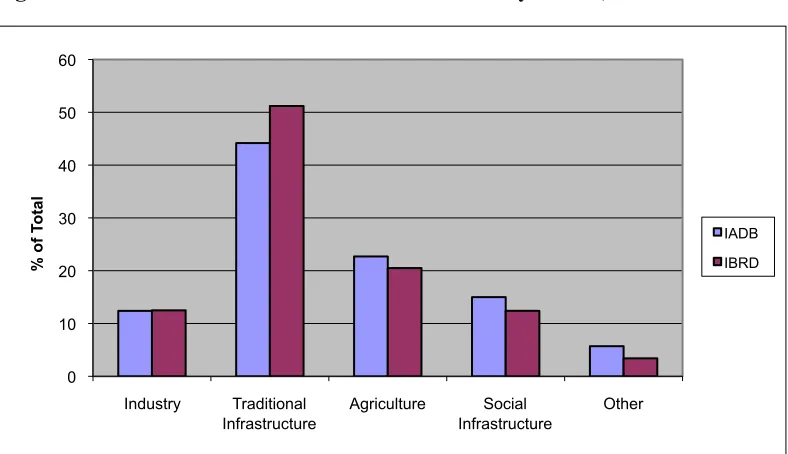
Figure 2.4. World Bank and IADB Commitments by Sector, 1970-1975 ...59
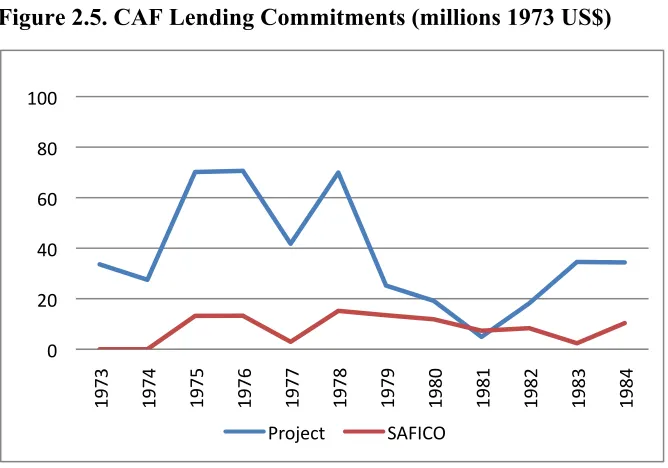
Figure 2.5. CAF Lending Commitments (millions 1973 US$) ...68
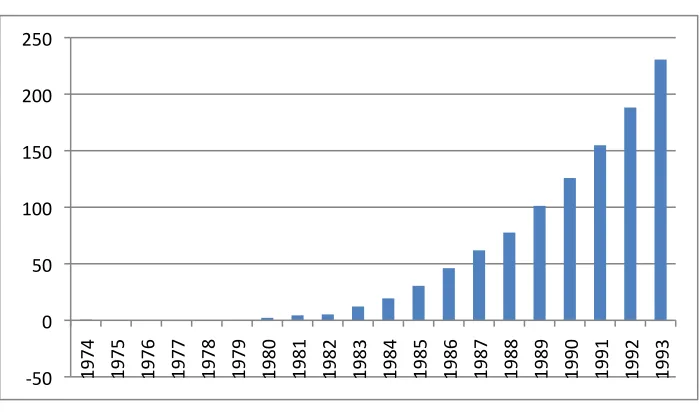
Figure 2.6. CAF Net Income (millions current US$) ...71
Figure 2.7. CAF Reserves + Retained Earnings (millions current US$)...71
Figure 2.8. CAF Project Lending Commitments (millions current US$)...75
Figure 3.1. Annual Lending Commitments by World Bank, IADB and CAF to Five Andean Countries, 1990-2010...82
Figure 4.1. Libor-based Loans (All-in Costs)...102
Figure 4.2. Adjustable Spread Loans (All-in Costs)...102
Figure 4.3. Equity to Loans, 1990-2009 ...111
Figure 4.4. Reserves as a Share of Equity, 1975-2009...116
Figure 4.5. IBRD Net Income Allocations, 1964-2009...122
Figure 6.1. Annual MDB Lending Commitments to Colombia, 1990-2010 (Real 2010 US$ millions) ...174
8
1
I
NTRODUCTION
In academic literature as well as general public perception, the World Bank and other multilateral development banks (MDBs) have long been viewed as domineering organizations able to impose themselves upon developing countries. Since the mid-1990s, however, a number of developing country governments have found themselves in strong financial positions, due to the huge rise in global private capital flows and high foreign exchange income from rising commodity prices and growing export industries. Whether these trends represent a cyclical upswing or a more fundamental shift in the world economy remains to be seen. But there is little doubt that the demand for multilateral lending from many major developing countries is undergoing a structural change. Economies such as China, Indonesia, Brazil, Mexico and Turkey—which together accounted for 43% of the World Bank’s loan portfolio in 2009—now have strong fiscal accounts, low public debt levels, high international reserves and well-established access to international capital markets.
9
The thesis takes this insight about the importance of borrower country demand as a point of departure for analyzing multilateral development lending. How are changing economic conditions in developing countries impacting MDB lending trends, and why? What do countries look for from MDB loans, and what might make them choose to take out a loan or not? Is this change in borrower need impacting the finances of MDBs, and is that in turn leading them to change their behavior to continue being attractive as a source of loans? Academic research is as yet silent on these issues, despite their far-reaching implications for the activities of MDBs and on international development more broadly. The thesis does not suggest that the “supply side” analysis prevalent in the existing literature is misguided—the empirical results of numerous studies clearly show that they have considerable merit—but rather that fully explaining MDB activities in the present day requires complementing these analyses with a better understanding of the preferences of borrowing countries.
10
derived from these shareholder arrangements, I suggest, strongly condition the preferences of countries to borrow from them.
A third new approach taken by this thesis is to take seriously the fact that MDBs are, among other things, organizations with a unique financial structure that deeply shapes that way they act. MDBs are, after all, banks—a fact that much scholarship overlooks. The MDB model, first created with the World Bank in 1944 and since replicated in roughly 20 other organizations, has proved remarkably popular in good measure because it is mostly self-financing: MDBs raise money on capital markets very cheaply, then on-lend at a slightly higher but still attractive financial terms, and use the margin to pay administrative costs. They require only minimal and occasional budgetary contributions from member governments. The world has come to expect MDBs to provide development finance and a number of critical global public goods (such as development expertise, disaster relief and environmental coordination) that are financed almost entirely through the income that MDBs earn from their operations, and not by contributions from governments. How have the financial imperatives facing MDBs affected their development mission? Does the need to access capital markets impact their activities, and if so, how? Is declining demand for lending of some MDBs hampering their ability to finance themselves? Are MDBs changing their behavior and competing to make more loans for financial rather than developmental reasons?
The subsequent sections of this introductory chapter review existing academic theory and empirical research on international organizations and MDBs (1.1), and then develop testable hypotheses based around the three issues discussed above (1.2). The next section (1.3) outlines the empirical research strategy to be pursued in the subsequent five chapters, while the final section of the introduction (1.4) provides an outline of the governance structure of the three MDBs analyzed in the thesis.
1.1 Theoretical Framework for Analyzing MDBs
11
definition of MDBs, and the next gives an overview of the academic literature analyzing the activities of MDBs and discusses its relevance for the current research project. Based on this discussion, I then develop a new theoretical framework for understanding MDBs that focuses on the balance of power between shareholding countries and the increasing importance of demand-side considerations in the MDB-country relationship. As well, I build on aspects of sociological theory to explain actions taken by MDBs to secure the resources they need to survive and thrive.
1.1.1 Defining an MDB
Multilateral development banks are a unique group of international institutions created in the wake of World War II. One useful definition, adopted by this thesis, is as follows:
“Multilateral development banks are international financial intermediaries whose shareholders include both borrowing developing countries and donor developed countries. They mobilize resources from private capital markets and from official sources to make loans to developing countries on better than market terms, they provide technical assistance and advice for economic and social development, and they also provide a range of complementary services to developing countries and the international development community.” (IDS, 2000, p. 4)
12
available if needed (“callable capital”). The MDB can then use i) this capital, ii) the creditworthiness of the totality of member countries, and iii) its own market reputation to raise capital on private markets at favorable rates. This capital is in turn lent on to borrowing country governments at terms (usually) better than they could get on their own.
One key trait that has made the MDB model so attractive to member governments is that it is largely self-financing. Administrative costs are paid for by the interest and charges from MDB financial operations, and wealthy countries are not required to contribute to these costs, other than occasional increases to the capital of the organization if its shareholders wish to expand lending capacity.1 The guarantee capital of any of the MDBs never been called on in their history, and the percentage of paid-in capital has steadily declined. Hence the direct cost to wealthy countries is small, while the benefits they receive—furthering their geopolitical, economic and developmental agendas through an international organization—are considerable (on the direct financial costs of the World Bank to shareholders, see for example Gilbert et al., 1999; Kapur, 2002; and Mohammed, 2004). The need for MDBs to i) secure access to financial markets to access needed capital and ii) maintain relevance to borrowing countries so as to generate sufficient loan income are key factors underpinning this thesis. The ability of each MDB to successfully undertake these two tasks, in light of their particular shareholding composition and operational characteristics, are the main topics to be explored in the subsequent chapters.
1.1.2 Overview of Scholarship on International Organizations
The following sub-section provides an overview of several pertinent theoretical approaches heretofore applied to MDBs in academia, and discusses their advantages and shortcomings for the current research project. Based on this discussion, I then develop a new theoretical framework for understanding MDBs that focuses on the balance of power between shareholding countries and the increasing importance of demand-side
1 Shareholders do regularly contribute to concessional lending windows for the poorest countries of some
13
considerations in the MDB-country relationship. As well, I build on aspects of sociological theory to explain actions taken by MDBs to secure the resources they need to survive and thrive as organizations.
The existing academic literature posits a wide range of theoretical viewpoints to explain MDB activities, which is to be expected. Situated as they are at the junction of international politics, the global economy and the development prospects of millions of the world’s poor, it would be surprising indeed if a single theoretical model were adequate to satisfactorily explain MDB behavior. Approaches include realist considerations of power politics and donor interest (Krasner, 1981; Dreher et al. 2009a and 2009b; Kilby, 2006 and 2011, among many others), a rationalist focus on the rules of the game and incentives among main actors in MDB activities (Mosley et al., 1995; Gutner, 2005; Vaubel, 2006), or more sociology-based constructivist interpretations of norms, professional self-image or organizational adaptation (Barnett and Finnemore 1999 and 2004; Babb, 2003). A growing number of scholars are combining constructivist and rationalist approaches (Chwieroth, 2005; Nielson et al., 2006; Weaver, 2008). These theoretical approaches all have considerable merit, as the evidence found in their support suggests. The purpose of the present thesis is not to argue against their validity, but rather to draw attention to what I see as three important theoretical and empirical gaps, that if filled will offer a more complete understanding of how and why MDBs act in the way they do.
14
In light of the spectacular growth of many large developing countries in recent years as well as the explosion of international capital flows, the scenario of a constant demand function by borrowers is unlikely to be realistic now. Many large developing countries that have been major borrowers from MDBs in the past have in recent years found themselves in much stronger fiscal positions and also with a great many options for sovereign borrowing, often at very low interest rates. If, for example, China does or does not receive loans from the World Bank, one suspects that this has a lot more to do with China’s own calculations rather than any decision by the World Bank’s board. Hence, a more realistic and complete picture of how MDBs function in the global context of the 21st century requires understanding the role played by borrower demand. Why, when a country has a choice, might it borrow from an MDB or not, and why might it prefer borrowing from one MDB over another?
That broad economic shifts are impacting development lending is not news to the MDBs themselves. Since 2000, for example, the World Bank has published numerous strategy papers and undertaken several major reforms specifically in an effort to maintain its attractiveness as a development lender for middle-income countries, including the Cost of Doing Business studies (World Bank, 2001a and 2007a), the Middle-Income Country reviews and strategy (World Bank, 2001b and 2004a), the Investment Lending Reform (World Bank, 2009a) and the recently-approved Program for Results (World Bank, 2011a), among others. More policy-oriented researchers and journalists who follow development issues have also noted these changes, including among others the Center for Global Development (2005), Mallaby (2005) and Einhorn (2006).
15
The only academic research that explicitly considers the role of demand are Mosley et al.’s (1995) fascinating study of World Bank structural adjustment loans in the 1980s and Ratha (2005) and Knack et al.’s (2012) statistical analysis of demand for World Bank loans. Mosley et al. (1995) use in-depth qualitative analysis and game-theoretic modeling to analyze the bargaining process between recipient countries and the World Bank in the design and implementation of structural adjustment programs. In this case the leverage of borrowers came not from reduced financial demand or other options for borrowing, but rather their awareness of the incentives and limitations faced by World Bank officials in their efforts to impose policy conditionality. Ratha (2005) and Knack et al. (2012), by contrast, do explicitly consider variations in demand, by bringing to bear statistical tools to model demand for World Bank loans with aggregate economic indicators as independent variables. While none of these studies directly address the questions posed in this thesis, they do provide very useful insights that I propose to build on, particularly in the country case studies (following Mosley et al.’s lead in attempting to understand the complex political economy motivations of borrowing governments) and in the statistical analysis of MDB lending trends (building on Ratha’s and Knack et al.’s statistical framework and applying it to three different MDBs, instead of just one).
16
While these studies are positive steps to branching academic research out beyond the World Bank, most focus on one institution and do not make significant effort to understand whether, how and why they might differ from one another. Exceptions include Krasner (1981), but that study makes no pretense of being an in-depth piece of comparative research, and rather takes different MDBs as a simple example of realist geopolitical considerations. Babb’s study of the World Bank and the major MDBs (2009) focuses mainly on the role of the U.S. in shaping MDB policy, and groups all the MDBs together as “the banks” without any meaningful attempt to differentiate among them. The only academic studies to date that systematically compare the activities of different MDBs to one another are Gutner’s (2002) book on environmental projects by different MDBs in Europe and Nelson’s (2000) comparison of civil society policies at the World Bank and IADB. Policy-oriented work has considered variance of different MDBs (notably IDS, 2000 and Griffith-Jones et al., 2008), but an analysis of the political economy factors shaping the structure and activities of different MDBs, as this thesis proposes, is lacking.
17
(2009) would be extraordinarily difficult to operationalize, considering the high number of shareholders in each MDB—how does one realistically aggregate and weigh the preferences of the World Bank’s nearly 200 shareholders on every issue of interest?
Some scholars (including Kapur, 2000; Stone, 2008; and Babb, 2009) would argue that analyzing formal voting rules and shareholdings in the style of Lyne et al. (2009) and Gutner (2002) is misguided because, as they suggest, many decisions made at MDBs and other IOs are done through the exercise of informal power, especially by the U.S. While it is undeniable that the U.S. does have informal levers of power in these institutions (through its dominant economic, political and military position in the world), these do not render formal mechanisms and voting power irrelevant. This thesis shows that formal voting rules and power are critically important variables in determining characteristics of each MDB, a point that is further substantiated by the bitter ongoing disputes among countries about even very small changes in voting share. Further, what several of these scholars term as “informal” U.S. power at the IADB and World Bank is in fact its formal veto power over changes to the Articles of Agreement and capital structure, and its threat to use that veto if other shareholders do not accede to its demands in areas where it does not have a veto.2 Thus, while informal power likely does exist in the governance of MDBs, formal voting structures and power remain fundamental to explaining their policies and actions, as this thesis will demonstrate.
Third, it is notable how little existing research even mentions, much less analyzes seriously, the character of MDBs as financial institutions. With a very few exceptions (for example, Kapur, 2002; Mohammed, 2004; McKenzie, 2004; and Bulow and Rogoff, 2005), most researchers appear to be either unaware or discount the importance of the self-financing character of MDBs, and what this might imply for their operations. Yet this trait is one of the reasons MDBs have been so successful: they impose very little direct fiscal costs to wealthy countries, and undertake the provision of what is generally considered a global public good, i.e. development assistance. This trait also makes MDBs particularly difficult to control—shareholder countries do not, in the end, have the
18
“power of the purse” in the same way that they do over other international bureaucracies, such as the United Nations. The main lending windows of most MDBs3 fund themselves
from the proceeds of their loans and raise resources to lend on private capital markets, and thus do not depend on regular budgetary allocations from shareholders. So in a very real sense, MDBs must act in part as “profit”-seeking, or at least revenue-seeking.4 This can go part way to explaining the motives of the MDB “agent”, which as constructivists point out is often a weakness of principal-agent models: “The problem with applying principal-agent analysis to the study of IOs is that it requires a priori theoretical specification of what IOs want. Principal-agent dynamics are fueled by the disjuncture between what agents want and what principals want. To produce any insights, those two sets of interests cannot be identical” (Barnett and Finnenmore, 1999, p. 705).
The literature arising out of organizational sociology addressing how organizations cope with resource constraints can help analyze how MDBs may react to evolving financial pressures in ways that are not necessarily in line with the interests of some or all of their principals. Several authors—notably Pfeffer and Salancik (1978) and more recently Barnett and Coleman (2005)—emphasize that the drive to ensure necessary external resources can strongly shape the strategies and activities taken by an organization as well as individuals within it, even if these strategies and activities are not always in line with the organization’s mission. For an MDB, the critical external resources needed to ensure organizational autonomy and survival are: i) an ability to float its bonds on private capital markets to raise capital for lending and ii) a portfolio of income-generating loans. This thesis does not pretend that resource capture is the only factor motivating MDB agents— more constructivist-oriented issues such as, for example, the evolution of development norms and professional self-image of MDB staff also likely play a role, as discussed for example by Barnett and Finnemore, 2004, Woods, 2006 or Weaver, 2008. But it would be surprising indeed if the changing ability of MDBs to ensure these two essential
3 This is not the case for concessional lending windows, IDA and FSO, as will be discussed in detail in
Chapter 4.
4 All MDBs are formally non-profit organizations. The constituent agreements of all three MDB studies
19
resources did not have an important impact on their activities, and this has thus far been a topic of minimal academic research.
1.2 Hypotheses
This study proposes a new framework for understanding variance among MDBs, based on the three points discussed above. It maintains that borrowing country preferences are increasingly important in understanding MDB activities, and must be brought into the forefront of analysis. The study attempts to categorize MDBs in a way that systematically explains aspects of their operational characteristics or “competitive advantages” that might influence borrower demand according to the composition of their shareholding countries. Extending the concept of complex principals described by Lyne et al. (2009) in a way that makes it simpler and more realistic to operationalize, I suggest that the balance of power between non-borrowing and borrowing shareholders in each MDB shapes how otherwise similar organizations operate, in ways that impact the demand for their services by borrowers.
20
Based on this discussion, the study seeks to test the following three over-arching hypotheses, the first of which focuses on the internal dynamics of MDBs while the second two address how MDBs relate to borrower countries and the wider external environment in which they operate. The two sets of hypotheses are linked, in that the causal relationships defining the internal dynamics of each MDB in turn condition its relations to borrowers and the external environment.
I. Shareholders and internal MDB dynamics
H1: The balance of power between borrowing and non-borrowing shareholders causally defines key MDB operational characteristics that impact borrower demand, including loan cost and approval requirements, such that:
- The more non-borrowing countries have control over an MDB, the lower will be loan prices, but the more intrusive will be its loan approval requirements
- The more borrower countries have control over an MDB, the higher will be loan prices, but the less intrusive will be its loan approval requirements
II. MDBs, borrowers and the external environment
H2: As a function of a borrowing country’s reduced need for MDB loans and greater access to alternative sources of capital, these MDB operational characteristics will become increasingly important in explaining their demand for MDB loans, as opposed to supply factors.
H3: The imperative of securing resources required for MDB organizational survival (i. sources of capital and ii. borrowing country clients) will lead MDBs to modify their operational strategies, organizational structure and even membership to ensure survival.
21
imply for reasons of geopolitical interest, or that new strategies for MDBs are almost entirely driven by development economists re-conceptualizing their role in a changing environment. Thus, whatever the result, testing the hypotheses should provide relevant evidence in favor or against the hypotheses outlined above.
1.3 Research Agenda
1.3.1 Delineating the Area of Research
In broad terms, the project will examine financial trends of MDBs and of borrowing countries, and attempt to correlate the behavior of MDBs to those trends in a way that provides evidence for or against the three hypotheses. A logical first step, then, is to choose a set of MDBs that vary in size and shareholder composition, operating in the same marketplace for development lending. The Latin America and Caribbean (LAC) region provides a particularly useful case of a single marketplace with multiple MDBs with which to test the hypotheses, for a number of reasons:
• LAC has three different levels of MDBs—one global (World Bank), one regional
(IADB) and three sub-regional (CAF, Banco Centroamericano de Integración Económica and the Caribbean Development Bank). All these MDBs lend for a variety of different types of projects to many countries within the region.
• The three largest of these MDBs—World Bank, IADB and CAF—offer a
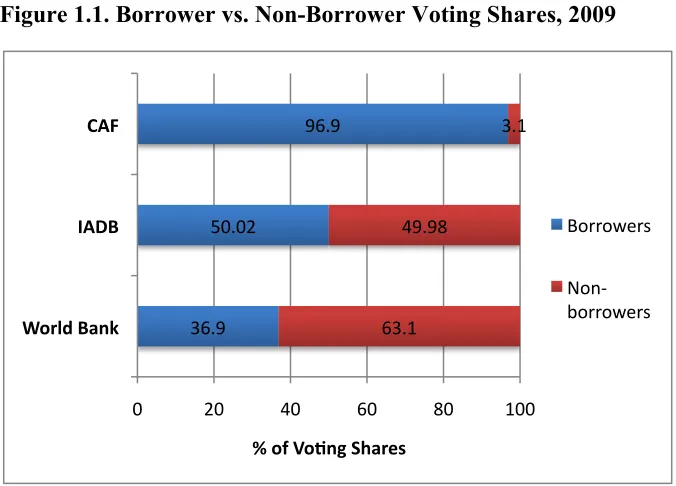
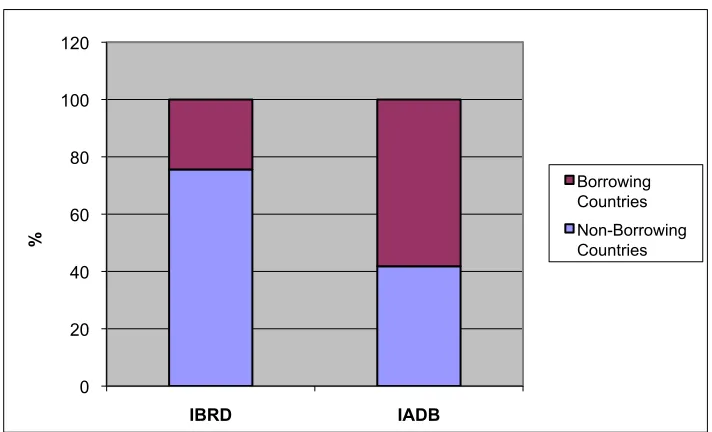
continuum of balance of power between non-borrowing and borrowing shareholders. The World Bank is controlled by non-borrowers (63% of votes in 2009), the CAF by borrowers (96.9% of policy-deciding voting shares) and the IADB roughly evenly split between the two (50.02% borrower and 49.98% non-borrower, though with the U.S. holding veto power over changes to the capital structure) (Figure 1.1). Thus they offer an excellent test case for the hypotheses by providing variation among shareholding arrangements.
• LAC is a major market for multilateral lending (US$13.6 billion in IBRD lending
22
• LAC as a region has moved from a position of extreme dependence on MDB
[image:22.612.90.428.217.460.2]lending (the 1980s and parts of the 1990s) to one of relative strength (2001-2008). This change over time could provide a useful contrast with which to highlight both the changing demands of borrowing countries as they become less dependent on MDBs as well as the changing strategies of MDBs themselves to hold onto financially important client countries.
Figure 1.1. Borrower vs. Non-Borrower Voting Shares, 2009
Source: World Bank, IADB and CAF annual reports, 2009.
1.3.2 Organization of the Thesis
Having selected the LAC region and the World Bank, IADB and CAF, this study undertakes several inter-linked research projects in each chapter to gain traction on the three hypotheses outlined above. Chapter 2 takes a more historical approach to understanding how the MDB model evolved for each of the three MDBs, converging on a relatively similar organizational structure in response to external pressures. The subsequent chapters then attempt to understand how, within this broader “family resemblance”, the three MDBs differ from one another. Chapter 3 addresses this using statistical analysis of lending trends, while Chapters 4 and 5 use more qualitative
36.9 50.02
96.9
63.1 49.98
3.1
0 20 40 60 80 100
World Bank IADB CAF
% of Vo3ng Shares
Borrowers
23
techniques to understand the operational characteristics of each MDB that result from its shareholding structure, which are driving these lending trends. Chapter 6 also attempts to understand the causes of the same lending trends, but with a focus on the perspective of borrowing countries.
1.3.3 Summary of Chapters
Chapter 2. Financial Pressures and Organizational Convergence in Multilateral Development Banks
The first research chapter of the thesis takes a historical approach to understanding how the three MDBs were initially created, analyzing the influence of financial pressures and shareholder interest. In this chapter, financial pressures are not those caused by changing borrower demand—the main issue of interest for the rest of the thesis—but rather by the need for each MDB to secure access to sufficient capital resources needed to make loans. As will be illustrated, the need to raise capital forced all of the MDBs to fundamentally change their operational style and even shareholding structure in ways that the founders had not intended, providing evidence in support of Hypothesis 3. Understanding the financial foundations of the MDBs provides a window into a little-analyzed but fundamentally important aspect of MDBs, and also sets the stage before moving forward to more recent years in later chapters, when issues of borrower demand and differential operational characteristics of each MDB becomes increasingly important. The evidence used in this chapter is gathered from both primary and secondary sources, including annual reports, interviews and speeches, policy documents, media stories and scholarly articles and books.
Chapter 3. Lending Trends by Multilateral Development Banks in Latin America, 1991-2010
24
are derived on how lending trends might be expected to behave during different economic conditions, based on characteristics of each MDB and borrower preferences, and then tested with multivariate regression methods. A number of control variables are also included in the regressions. The results lend support for the idea that borrowers do differentiate between MDBs in certain economic circumstances, and that they appear to do so in ways that are largely consistent with the hypotheses. However, the analysis does not purport to establish direct causal links—rather, it simply shows that the outcomes are generally consistent with what the hypotheses would predict. Further, statistical methods are unable to fully disentangle supply-side from demand-side effects in MDB lending trends. The subsequent chapters will take up these two issues in more detail, using mainly qualitative research techniques.
Chapter 4. The Politics of Loan Pricing at Multilateral Development Banks
Most academic research on MDBs pays scant attention to the fact that the main reason countries borrow money from MDBs is simply that they offer inexpensive loans. Hence, when examining factors that might shape borrower demand among different MDBs, price should obviously be high on the list. This chapter explores how and why prices for loans from the World Bank, IADB and CAF differ. One might assume that factors affecting price are relatively mundane and technical, but they are in fact highly political and directly related to the composition of shareholders in each of the three MDBs, as suggested by Hypothesis 1. These political economy factors result in loan prices different from what one might expect. To analyze these issues, the chapter relies on pricing data, MDB documents related to loan cost and income allocation, annual reports, credit rating agency reports and extensive interviews with MDB financial staff, MDB shareholders and credit rating agency analysts.
Chapter 5. Non-Financial Characteristics of MDB Lending
25
array of procedures and requirements that do not exist when borrowing from a private financial institution or issuing a sovereign bond on domestic or international capital markets. These include lengthy processing times and bureaucratic hurdles, environmental and social safeguards that in some cases are above and beyond national law, and tightly controlled procedures for how the proceeds of loans can be spent by the borrower. As internal studies by the MDBs themselves reveal, these non-financial bureaucratic hassle factors are impacting loan demand, especially in recent years as many countries find themselves in stronger economic positions. What’s more, these factors vary widely in each of the three MDBs, and evidence suggests this variance is directly linked to shareholder interests and relative power, again supporting Hypothesis 1. Research for this chapter is based on extensive interviews with MDB shareholder representatives and MDB staff, MDB policy statements and studies and some analysis and reports from MDB watchdog non-governmental organizations.
Chapter 6. Case Studies of Borrower Demand: Colombia and Ecuador
26
characteristics for reasons specific to a country’s political and economic juncture, and also points to other MDB characteristics that might need to be taken more into account in future research. Further, evidence from these cases suggests that MDBs are actively engaging in strategic actions and behavior to maintain lending relationships in the face of softening demand, which further supports Hypothesis 3 and also could provide a fruitful path for further research into MDBs as they face a changing world economic context.
1.4 Shareholder Composition and Voting Rules
Before moving on to the content chapters of the thesis, it is first important to provide a brief overview of the shareholding structure and basic voting rules for each of the MDBs to be analyzed. The below section is not intended as a comprehensive analysis of voting rules in each MDB—some of which are extraordinarily arcane—but rather a basic outline to set the stage for later analysis.
1.4.1 World Bank
27
Voting power in the IBRD is allocated roughly in line with each country’s financial contribution to capital.5 The relative balance of power between borrowing and
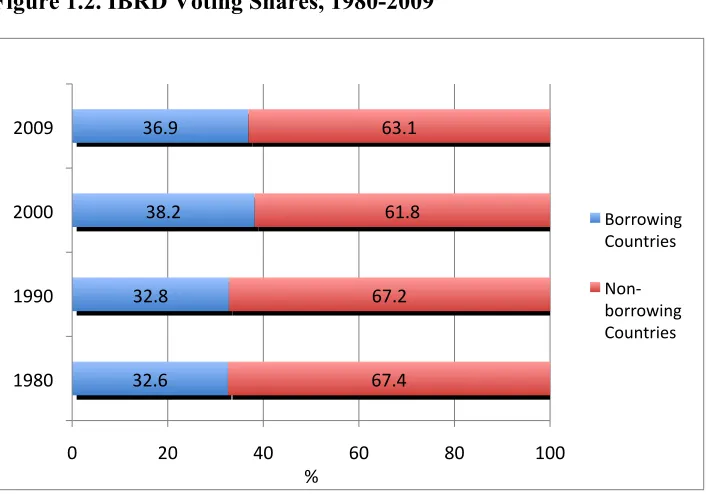
non-borrowing countries on the IBRD board has not changed substantially in the past 30 years (Figure 1.2). Borrowing countries have seen a marginal increase in voting power over recent decades, but still only have a bit more than 1/3 of the total votes. Thus non-borrowing countries can easily control all decisions decided by a simple majority, which includes essentially all changes to operational and financial policy and the approval of all individual loan or non-loan projects. Several issues require more than a simple majority for approval, according to the IBRD’s Articles of Agreement (1989), including among others:
• Any amendments to the Articles of Agreement require 85% of voting shares (Art.
VIII (a)).
• Increasing the number of EDs requires 80% of voting shares (Art. V, Section
4(b))
• An increase in capital requires 75% of voting shares (Art. II, Section 2(b))
These specific situations reveal which areas are of most concern to the major shareholders, most notably the U.S. For example, the provision on reforming the Articles of Agreement was originally 80% of voting power, but during the 1989 General Capital Increase the U.S.’s share would fall below 20%, and as a condition of the U.S. agreeing to the capital increase, the Articles were modified to ensure the U.S. retains an effective veto (Kapur et al. 1997). Likewise, while the U.S. cannot by itself block changes to the number of EDs or the IBRD’s capital, it must only find one or two allies among major shareholders to do so. Further, the U.S. has up to now had the “unwritten” right of appointing the president of the World Bank (while European nations get to name the head of the IMF). While the president does not vote in board meetings, he (or she) does have very significant power to shape the World Bank’s agenda, policies and operations, and to control what is or is not presented to the board.
5 The correspondence is not entirely exact, however. For example in 2009, the U.S. contributed 17.4% of
28
[image:28.612.94.447.327.574.2]The number of chairs for the Board of Executive Directors is another way in which developed countries magnify their influence. On the 24-member board, only eight countries currently have their own chair on the board: the five largest shareholders (US, UK, France, Germany and Japan), as well as Russia, Saudi Arabia, and China. All other chairs represent groups of countries, which must elect their ED and every two years. In practice, the ED generally comes from the wealthiest country in the group, or is alternated between the two wealthiest countries. These frequently turn out to be non-borrowing countries, which end up supposedly representing the interests of a large group of borrowing countries. By mixing the two types of countries together in a single chair, borrowers have an even more complicated task to exercise what little formal power they have.
Figure 1.2. IBRD Voting Shares, 1980-2009
Source: World Bank Annual Report 2009, 2000, 1990 and 1980.
IBRD EDs also serve as the EDs for the other main components of the World Bank Group—IDA, IFC and MIGA—although their voting power is not the same in each organization. The focus of this thesis is mainly on the interaction between MDBs and client country governments in development operations, hence IFC (the World Bank Group’s private sector lending division) and MIGA (an agency that offers guarantees to
32.6 32.8 38.2 36.9
67.4 67.2 61.8 63.1
0 20 40 60 80 100
1980 1990 2000 2009
%
Borrowing Countries
29
private investors) are not discussed here. Nor is the IDA a main focus of analysis. IDA countries by definition have a very high level of financial needs, meaning their demand for MDB loans is generally unchanged (hence it is not relevant for Hypothesis 2). As well, IDA is not designed to be financially self-sustaining as the IBRD, but is funded with regular contributions from non-borrowers and the IBRD itself (hence it is not relevant for Hypothesis 3). Nonetheless, it is worth noting that countries with no eligibility to borrow from either IBRD or IDA have a total of 59.6% of voting power in IDA, compared to 40.4 percent for all borrowers.
In summary, it is evident that the IBRD and IDA are thoroughly controlled by non-borrowing countries. Even on issues requiring only a simple majority, borrowers would have to organize an entirely unified front, and then convince at least one or two major donors to side with them to achieve 50% of the votes. And even this complicated task is made more difficult by the fact that in the Board of Executive Directors, where most decisions only requiring a majority are taken, borrowing countries are invariable “represented” by EDs elected by a group of both borrowing and non-borrowing countries. And on major issues decided by the Board of Governors, special majority rules make it harder still for borrowing countries to outvote non-borrowers. Hence, the World Bank is clearly controlled by non-borrowing countries.
1.4.2 IADB
30
the World Bank. And like the World Bank, voting power allotted as a function of financial contribution to the IADB’s capital base.6
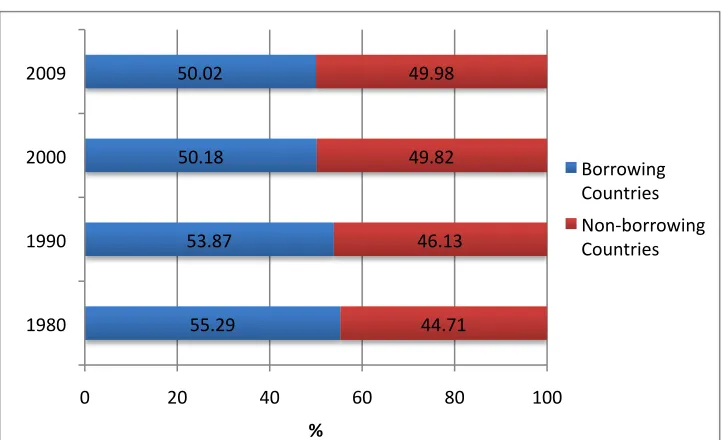
The distribution of voting power among shareholders is quite different at the IADB, however. While the U.S. has always been the largest shareholder, borrowing countries have always had a combined voting power of more than 50% in the IADB (Figure 1.3). This share was considerably higher when the IADB was first created in the 1960s, but began to be diluted in the 1970s when new non-borrowing members were admitted for financial reasons, as discussed in Chapter 2. To ensure that new members did not threaten the power of regional member countries, the Articles of Agreement (Article VIII, Section 4 (b)) were modified as part of the negotiations of the 8th general capital increase (1995) to state that the voting share of regional borrowing members would not fall below 50.005% and the U.S. share would not fall below 30%.
For most policy and project decisions, a simple majority on the Board of Executive Directors is required—giving borrowing countries controlling power, if they act together. Non-borrowing countries could likely pressure at least one borrower to side with them in an important vote, because of the wafer-thin majority. However this absolute majority has evidently proved significant in the past, as one example reveals. In the mid-1980s, the U.S. Reagan administration perceived the IADB to not be sufficiently compliant to U.S. interests, and held up the 7th capital increase for three years, insisting that it be given veto power in the Board of Executive Directors. Borrowing members, backed by IADB President Ortiz Mena, refused, and as a result the IADB’s lending dropped precipitously. Finally an agreement was reached in 1989, wherein the voting rules stayed intact, but individual EDs were given authority to delay certain projects (see Tussie, 1995). The fact that both sides were willing to bring the IADB to the brink of financial collapse, especially during the height of the Latin American debt crisis, testifies to the importance of the borrowers’ majority on the board.
6 As with the World Bank, the correspondence is not exact. For example, the U.S. had 30.006% voting
31
Despite the relatively high weight of borrowers on the IADB in most policy and project decisions, non-borrowing shareholders—most especially the US—have several other ways to exercise their power. The Articles of Agreement (1996) call for special majorities on many more issues and at a greater level of detail than in the World Bank, and in each case the U.S. is given veto power by requiring a 75% majority of votes. The U.S. has full veto power over the same three issues listed above for the IBRD, as well as, among others, the following decisions that for the IBRD require only a simple or at most 2/3 majority:
• Admission of new non-regional members (Art. II, Section 1 (b))
• Changes in commissions charged on non-concessional IADB loans (Art. III,
Section 12)
• Decisions on investments (Art. VII, Section 1 (iii))
• Decisions on allocating annual net income (Art. VII, Section 4 (a))
• Approval of every FSO (concessional) lending operation (Art. IV, Section 9 (b)) • Establishing a quorum in the Board of Governors (Art. VIII, Section 2 (e))
The U.S. is also widely considered to have informal veto power on the choice of IADB presidents, which it reportedly used to force through the election of the current president over the objections of many regional members (see Bank Information Center, 2010). Further, the number 2 official has “by tradition” been chosen by the US, and has always been an American citizen (sometimes one who speaks no Spanish and has no background in the region).
32
Figure 1.3. IADB Voting Shares, 1980-2009
Source: IADB Annual Reports 2009, 2000, 1990, 1980.
1.4.3 CAF
The basic organizational structure of the CAF appears on the face of it to be quite similar to the other two MDBs described above. It is also governed in the final instance by an Assembly of Shareholders (equivalent to the Board of Governors of the World Bank and IADB), which in turn delegates a large share of oversight responsibilities to the Board of Directors. Country shareholders are represented on these two bodies through the ownership of capital shares. But these broad similarities hide a number of fundamental differences, both in organization and shareholder structure.
The most important and obvious differences are, first, that the CAF is now and has always been governed almost entirely by the countries that it lends to, and second, that it is considerably more egalitarian in its governance. It was originally created in 1970 by the six7 nations of the Andean region, which were the same countries that the CAF lent to, and it functioned thus for 20 years. A unique two-tier shareholding structure was created that both allowed for different countries to contribute capital in accord with their economic weight, and at the same time ensured that this unequal economic weight did not
7 Chile was a founding member, but withdrew in 1977 under the Pinochet regime. It has since returned as a
minority shareholder. 55.29 53.87 50.18 50.02
44.71 46.13 49.82 49.98
0 20 40 60 80 100
1980 1990 2000 2009
%
33
translate into unequal representation in the CAF’s governance. In the framework of Koenig-Archibugi’s (2002) typology of global governance arrangements, this results in an MDB with very similar “publicness” and “delegation” attributes to the World Bank and IADB, but dramatically different “inclusiveness”—the CAF is and has always been much more egalitarian in its decision-making structure than the other two MDBs.
Each of the five member countries purchased an “A” share, at a cost of US$1.2 million.8 The bulk of the CAF’s capital was made up of “B” shares, which were distributed equally among Colombia, Peru and Venezuela. However, Ecuador and Bolivia purchased only about 1/3 as many “B” shares, in recognition of their much smaller economies. The Constituent Agreement has always stipulated that each A share has the right to designate its own representative on the Board of Directors (one each), while B shares vote to elect representatives in proportion to their financial contribution. Voting rules have always mandated that A shares have considerably more weight than B shares in all voting in both the Shareholder Assembly and the Board of Directors of the CAF, thus giving Bolivia and Ecuador more voice and vote than their financial contribution—in sharp contrast to the arrangements of the IADB and World Bank. The exact voting rules have varied over the years, the details of which need not concern us here. In all cases, A shareholders have had a proportionately larger voting power than B shares. Importantly, this has included unanimous approval of A shareholders to modify the Constituent Agreement.
CAF shareholding began to widen in the early 1990s, in the interests of diversifying both the CAF’s source of funds and clients (as discussed in Chapters 2 and 4). Mexico was the first non-regional country to associate with the CAF in 1991, and by 2010 a total of 13 non-regional countries had entered into association with the CAF.9 Until 2009, all new members were incorporated as “C” shareholders, which were permitted a capital share and voting power much lower than the A/B shareholders. These shareholders voted in Assemblies according to their financial contribution, and were not permitted to purchase
8 Each A share originally cost US$1 million, but Chile’s share was divided equally among the five
remaining shareholders when that country withdrew.
9 Argentina, Brazil, Chile, Costa Rica, Dominican Republic, Jamaica, Mexico, Panama, Paraguay, Portugal,
34
either A or B shares—thus keeping their influence to a minimum. For all major decisions, the CAF General Regulations stipulate that the votes of at least four A shareholders continues to be required (CAF, 2008, Chapter III, Articles 15, 16 and 17). On the Board of Directors, C shareholders could jointly elect two out of 13 directors (Chapter IV, Articles 23 and 24), while five are appointed by A shareholders and five elected by B shareholders. The 13th director is elected by a group of private banks that are also B shareholders since 1989.
In 2005, shareholders approved a reform to permit any country within Latin America and the Caribbean to become an A shareholder (Chapter X, Article 59). In 2010, Brazil, Panama, and Uruguay had done so—for the first time expanding the CAF’s full membership beyond the Andean region. These countries have full A shares and thus voting power equal to the original members. Argentina followed in 2011. The CAF has also begun expanding C shareholders beyond the Latin American region, for the obvious purpose of shoring up its capital. Spain purchased C shares in 2002, and now accounts for over half of the CAF’s guaranteed capital (though a much smaller portion of paid-in capital). Portugal purchased a small number of C shares in late 2009, and again contributed a much larger share of guarantee capital. Italy has reportedly signed a letter of intent to purchase C shares in the future. As of 2011, only Spain was represented on the Board with 3.1% voting power, sharing representation with Trinidad and Tobago. Notably, non-Latin American countries—the only non-borrowers associated with the CAF—are not eligible to purchase A/B shares. In a 2009 magazine interview, CAF President Enrique García stated that developed countries would never be allowed to have more than 15% of shareholding power (O’Shaughnessy, 2009). This policy is not in the Constituent Agreement or CAF regulations, but is evidently an unwritten rule followed by the organization’s shareholders when considering new members.
35
Ecuador, the two nations with the smallest share of the CAF’s capital. Non-borrowing members are permitted only on a very limited basis, clearly (from the CAF’s point of view) mainly for the usefulness of their guaranteed capital, which could be considered stronger than that of borrowing members with lower bond ratings.
36
2
FINANCIAL PRESSURES AND
O
RGANIZATIONAL
C
ONVERGENCE IN
MULTILATERAL DEVELOPMENT BANKS
As will be seen in subsequent chapters, shareholding arrangements embed a series of characteristics that make each multilateral development bank (MDB) more or less attractive from the point of view of borrowing countries, when those borrowing countries are in a position to choose. Before moving on to that analysis, however, it is instructive to examine how MDBs arrived at their operational model, and how shareholder interest and financial pressures played a role in that process. The chapter seeks to understand how the combined influences of shareholder interest and the realities of securing the resources needed to operate pushed each of the three MDBs to move toward similar organizational structure and policies, despite the intentions of the founders. Thus, the chapter will gather evidence related to Hypothesis 1 (the role of shareholder interest) and Hypothesis 3 (the role of financial imperatives).
Broadly speaking, the evidence indicates that shareholder interests did indeed play an important role in establishing the initial goals of each MDB and in strongly shaping the strategies used to secure the necessary funding to undertake their mission. However, it also points to the fact that financial imperatives in many cases undermined the original intentions of founders, necessitating each MDB to move in unexpected directions as a result of pressures exerted by the need to obtain resources with which to operate. In a sense, this chapter tells a story of convergence toward a single financial model for MDBs, one that has been replicated at least 20 times around the world and which continues to be attractive today.10 Once that model was established, and especially during times when demand-side considerations are more relevant to borrowing countries, greater divergences within this model become more apparent, a phenomenon to be analyzed in later chapters.
10 For one example, the recently created European Financial Stability Facility raises money by issuing
37
The research finds that the tensions between the original development goals of the founders and the realities of running a sustainable financial institution in each case led to far-reaching changes in MDB operations. This, in turn, was strongly conditioned by the relative power of the countries backing each MDB—their own interests as well as the perception of other countries and private markets toward them. What is more, the changes in each MDB all moved in a similar direction, converging on a model of MDB activity much more similar to one another than their founders had planned. Essentially, the model relied much more on accessing funds from private bond buyers than originally intended, and with that came a number of exigencies to keep the capital markets buying their bonds at rates low enough to be able to on-lend to developing countries at attractive rates, with enough of a margin to cover administrative costs and make the entire model function. Thus, if one presupposes: i) the limited willingness of governments to provide budgetary resources to MDBs and ii) a built-in desire for organizational survival, then there seems to be almost an “ideal type” of MDB, toward which all will tend to evolve.
This chapter does not provide a general history of the MDBs. Rather, the focus is on: (i) how the interests and relative power of the countries behind them led to their respective strategies of mobilizing resources; and (ii) how that in turn directly impacted their operations. The periods to be examined are the World Bank 1947-1963, the IADB 1960-1975 and the CAF 1970-1993. While the time frames vary somewhat, in each case this encompasses the early phase of organizational life cycle: conception, birth and adolescence. Each case concludes with a turning point that deeply shaped the MDBs we see today—their “mature” form.
38
CAF, secondary sources are minimal and the proceedings of board meetings are not publicly available.11 Hence that section is derived mainly from speeches of CAF
presidents, annual reports, documents from the Andean Community and some journalistic accounts.
2.1 The World Bank: From New Deal to Wall Street and Part Way Back Again12
The idea of a multilateral development bank began at least as early as 1890, when a number of Latin American countries pushed for the creation of a specialized bank to facilitate capital flows to the region (U.S. Department of State, 1940; see also Helleiner, 2006 and 2009 for a thorough analysis of this episode and its implications for the evolution of “development” in the post-World War II era). The U.S. expressed support for the concept—driven in part, as Helleiner (2006) notes, due to concerns of growing influence by the Nazis and the trend toward more radical statist economic policies in the region—but despite repeated requests by the Latin Americans no action was taken until 1939, when a conference was held in Washington to hammer out a concrete plan. The proposed bank called for member governments to contribute half of their capital share in cash and half as a guarantee, with voting rights apportioned according to the level of contributions. The exact origins of this form of organization, with shareholder contributions and proportional voting power, are not entirely clear (and would be an interesting topic to investigate), but it obviously arises out of corporate governance practices. The new bank was to make short- and long-term loans, function as a clearinghouse for international payments, assist in currency stabilization, accept deposits, and much else besides (Ibid.). This grandiose design led to considerable opposition among the financial community and in Congress, which was sufficient to ensure no further action (see Helleiner, 2006, p. 955).
11 The author has contacted the public affairs office of the CAF, which supplied scans of all annual reports
not available on the Internet (dating back to the CAF’s inception) as well as several collections of speeches and official histories that are not otherwise available. However they specified (and this was later confirmed in interviews with higher-level staff) that board proceedings are not made public under any circumstances.
12 The research on the World Bank in this chapter relies heavily on Mason and Asher, 1973, and Kapur et
39
In 1942, a U.S. Treasury team under the leadership Harry Dexter White, who had worked intensively on the earlier inter-American proposal, took up the ideas again with a view to planning the post-war economic order. Cognizant of the opposition that arose from one all-purpose institution, White proposed instead to create a fund for monetary issues (which became the IMF) and a separate “International Reconstruction Bank” to facilitate credit flows for reconstruction after the war.13 White’s proposed mechanism was emphatic about facilitating private lending, while direct lending was to be secondary (Mason and Asher, 1973). Similar to the inter-American proposal, all member countries would pay in a determined amount of cash and gold (20%), and would guarantee the remaining capital subscription to be called on if necessary to meet the bank’s obligations. Total capital was set at US$10 billion. The bank would be governed by government shareholders with voting power directly proportional to their contributions—just as a private corporation. Perhaps not coincidentally, this scheme afforded the U.S. a dominant voice in controlling policy.
There is no record of any opposition to this arrangement at Bretton Woods, where most of the debate focused on the design of the IMF. In fact, the US’s original plan called for no member to have more than 25% of voting power, but because several countries wanted to limit the size of their subscription, the U.S. raised its subscription to make up the shortfall and ended up with 37% of voting shares (Bittermann, 1971). The main discussions about the bank at Bretton Woods were of emphasis. European participants wanted the bank to specifically focus on reconstruction, and they favored the use of loan guarantees. Less developed countries—led by Latin America—instead wanted the bank to highlight its development role, and to make greater use of direct loans, since many would have had to pay higher rates even with guarantees (Kapur et al., 1997 and Helleiner, 2006). The U.S. facilitated compromises to include a balance of both positions in the final agreement.
13 See Helleiner, 2006 and 2009 for a thorough analysis of how the creators of the World Bank envisioned
40
Because the UK was facing serious balance of payments problems, the UK delegation— led by John Maynard Keynes—insisted that the member currency portion of paid-in capital would only be used for lending with the explicit consent of the country (Bittermann, 1971). This meant that when the bank eventually opened for business, its resources were extremely limited,14 and would be forced to raise capital on private markets much faster than it might have otherwise. Thus, right away the tension between the ideas of founding governments and their willingness to actually contribute usable resources pushed the new bank in unexpected directions.
2.1.1 Wall Street Moves In
The Truman administration—still under the influence of Roosevelt’s New Deal ethos— viewed the newly created International Bank for Reconstruction and Development (IBRD)15 primarily as a tool of government, not Wall Street. This was manifested in locating it in Washington DC, over the objections of several European countries, who favored New York. As Treasury Secretary Fred Vinson wrote at the time, referring to the World Bank and IMF, “It must be remembered that these are not ordinary institutions with ordinary stockholders. They are cooperative enterprises of governments and their chief business is with governments…They should not become just two more financial institutions” (1946, p. 626). The U.S. intended to keep a tight reign over the Bank’s administrators by making them subservient to a board of executive directors representing member countries, which would sit in permanent session and vote on all decisions. Again, Vinson explained the logic: “If final authority is vested in the administrative officials, the Executive Directors become little more than an advisory body. In my opinion, this would be contrary to the manner in which it was intended to operate the Fund and the Bank” (Ibid., p. 627).
Being subjected to the changing whims of politicians, however, did not suit the early leaders of the World Bank, who were recruited from Wall Street and saw their independence from politics as essential to gain market confidence. John J. McCloy, a
14 Essentially it was limited to the U.S. portion of paid-in capital, and the 2% each member was required to
pay in gold (the rest being in non-convertible local currency).
41
lawyer with strong connections to the New York financial community, was persuaded to accept the job in late 1946.16 Before doing so, McCloy set as his conditions that the board
make a clear statement ensuring that management would be allowed a generally free hand in running operati