Caring
and
Safe Schools
in
Ontario
Supporting StudentS
with Special education needS
through progreSSive diScipline,
Kindergarten to grade 12
Contents
1. Introduction 3
The Purpose of This Resource Document 3
Ministry Initiatives 5
Ontario School Board Initiatives 7
Initiatives in Other Jurisdictions 7
Framework for Promoting Positive Student Behaviour 7
Preview of the Rest of This Document 9
2. Promoting Positive Behaviour Through a Caring and
Safe School Culture 10
Guiding Principles 10
A Caring and Safe School Culture – What Does It Look Like? 11 The Influence of School Culture on Student Learning and Behaviour 12
Assessing School Culture 13
Building a Caring and Safe School Culture 16
Steps in Implementation 16
Roles and Responsibilities in Implementation 18
3. Understanding Student Behaviour 20
What Do You Need to Know? 20
Specific Conditions Affecting Behaviour 22
Communication Disorders 23
Executive Function Deficits 25
Mental Health Problems 27
Additional Factors Affecting Behaviour 29
Assessing Capacity in the School, Home, and Community 32
Areas of Knowledge: A Summary 32
4. Investigating Strategies, Tools, and Resources 34
Strategies to Promote Positive Behaviour 34
Direct Teaching of Social Skills 34
Character Development Programs 35
Une publication équivalente est disponible en français sous le titre suivant : Bienveillance et sécurité dans les écoles de l’Ontario : La discipline progressive à l’appui des élèves ayant des besoins particuliers, de la maternelle à la 12e année.
Strategies to Address Inappropriate Behaviour 35
A Problem-Solving Approach 35
Restorative Practices 36
Assessment and Planning Tools 37
Early Development Instrument 37
Functional Behaviour Assessment 38
Risk Assessment 38
Behaviour Support Plan 39
Safety Plan 39
Instructional Strategies 40
Cooperative Learning 40
Differentiated Instruction 40
The Tiered Approach 40
Universal Design for Learning 40
Strategies and Tools for Specific Purposes: An Overview 41
Internal and External Resources 43
Print and Internet Resources 44
Bullying and Bullying Prevention 44
Communication and Communication Disorders 44
Executive Function Deficits 45
Mental Health Problems/Mental Illness 46
Websites 46
5. Addressing Behavioural Issues Through a Progressive
Discipline Approach 47
Assessing Student Behaviour 48
Considering Mitigating Circumstances and Other Factors 50
Taking Action 54
Appendix: Sample Planning Template 56
Glossary 57
Introduction
1
The Purpose of This Resource Document
he Ontario Ministry of Education recognizes that all students require a caring and safe environment and individualized support in order to learn, develop their potential, and stay in school. Over the years, the ministry has taken a number of initiatives to assist schools in meeting these requirements. The present document is intended to serve as a practical resource for superintendents, principals, and vice-principals, to help them address issues of student behaviour both through instruction and interventions tailored to individual student needs and through ongoing efforts to build and maintain a caring and safe school culture.
The document sets out a framework that system and school leaders may use to strengthen schools’ ability to provide a caring and safe environment, in which responses to behaviour issues are shaped by informed consideration of students’ needs and circumstances. While the ideas and strategies outlined here are appro-priate for use with all students, the focus of this document is on the particular circumstances of students with special education needs.
More specifically, this resource document is intended to: ✦
✦ assist system and school leaders to promote and support a caring and safe school culture;
✦
✦ provide information about appropriate strategies and resources to help system and school leaders address behavioural challenges for students, in particular students with special education needs.
Ca
rin
g
an
d
Sa
fe
S
ch
oo
ls
There is a direct link between success in school and the school environment in which
student learning takes place. Students are more motivated to do well and achieve their
full potential in schools that have a positive school culture and one in which they feel
safe and supported.
(Safe Schools Action Team, 2008, p. 1)
The investigations of the Safe Schools Action Team have confirmed that a safe and supportive environment for learning and working is one of the most important factors that influence the quality of student learning and achievement (Safe Schools Action Team, 2008).
Students who experience a positive school culture feel supported and accepted by peers and school staff and tend to develop a strong sense of school membership. Feelings of belonging enhance students’ self-esteem and can contribute both directly and indirectly to improvements in academic and behavioural functioning and overall mental health. Students who feel accepted are more likely to develop strong literacy skills and make a positive contribution to the school culture and are less likely to commit infractions. Conversely, a low sense of school engagement in students appears to be correlated to a higher incidence of emotional and beha-vioural disorders (Canadian Public Health Association, 2003). This suggests that an approach to dealing with inappropriate student behaviour which enables students to feel supported and accepted at school may contribute to improved student learning and behaviour and help students stay in school.
Promoting positive behaviour through a caring and safe learning environment and an individualized approach to behaviour issues begins with system and school leaders, who set the tone for the system and schools. They bear the primary respon-sibility for working with teachers and other partners to create an environment in which individual students and adults are treated fairly, equitably, and with dignity and respect. It is hoped that the ideas in this document will be helpful to them – and also to all staff, including special education resource teachers, to parents, and to other stakeholders.
Leading schools – as in any great organization – requires principals with the courage
and capacity to build new cultures based on trusting relationships and
a culture of disciplined inquiry and action.
Intr
odu
ctio
n
Ministry Initiatives
n The Ministry of Education has undertaken a number of initiatives to help schools build a culture of caring and address issues of safety and inappropriate behaviour in schools. In December 2004, the ministry established the Safe Schools Action Team and invested in a comprehensive, province-wide, bullying-prevention strategy. After widespread public consultation, the Safe Schools Action Team released Shaping Safer Schools: A Bullying Prevention Action Plan in November 2005 and Safe Schools Policy and Practice: An Agenda for Action in June 2006. These two reports identified priorities for action and made recommendations to the ministry and school boards with respect to bullying prevention, progressive discipline, com-munity and parental involvement, application of the Safe Schools Act, programs for suspended/expelled students, education and training, communication, and a Provincial Safe Schools Framework.
In addition, in December 2008, the Safe Schools Action Team released a further report – Shaping a Culture of Respect in Our Schools: Promoting Safe and Healthy Relationships – calling for action to address serious issues such as gender-based violence, homophobia, sexual harassment, and inappropriate sexual behaviour between students in schools.
The ministry itself consulted extensively on the safe schools provisions of the Education Act in order to develop legislative amendments and related policies and regulations that would address the questions of school safety and of how to respond constructively to challenging behaviour by students. The amendments that came into force on February 1, 2008, mandated a “progressive discipline” approach for addressing inappropriate behaviour, to enable schools to provide appropriate disci-pline while also ensuring that students have adequate opportunities to continue their education. These amendments also mandated the provision of professional supports, programming supports, and training for teachers and principals. Addi-tional amendments, which came into force on February 1, 2010, ensure that all serious incidents that occur at school are reported to the principal, that parents of victims are made aware of such incidents, and that staff who work directly with students respond to incidents when they occur. (See Appendix 1 of Policy/Program Memorandum No. 145, “Progressive Discipline and Promoting Positive Student Behaviour” [October 19, 2009].)
The term “progressive discipline”, as defined in PPM No. 145, refers to “a whole-school approach that utilizes a continuum of prevention programs, interventions, supports, and consequences to address inappropriate student beha viour and to build upon strategies that promote and foster positive behaviours.” Specifically, this means that “When inappropriate behaviour occurs, disciplinary measures should be applied within a framework that shifts the focus from one that is solely punitive to one that is both corrective and supportive. Schools should utilize a range of
Ca
rin
g
an
d
Sa
fe
S
ch
oo
ls
and include learning opportunities for reinforcing positive behaviour while helping students to make good choices” (Ontario Ministry of Education, 2009g, p. 3). This approach to discipline also requires principals and school boards to take into account a variety of mitigating and other factors when considering the suspension or expulsion of a student. The mitigating factors outlined in the amendments are as follows:
✦
✦ The student does not have the ability to control his or her behaviour. ✦
✦ The student does not have the ability to understand the foreseeable consequences of his or her behaviour.
✦
✦ The student’s continuing presence in the school does not create an unacceptable risk to the safety of any person.1
Other factors to be taken into account were also specified in the amendments, including:
✦
✦ the student’s history; ✦
✦ whether a progressive discipline approach has been used with the student; ✦
✦ whether the activity for which the student may be or is being suspended or expelled was related to any harassment of the student because of his or her race, ethnic origin, religion, disability, gender, or sexual orientation or any other harassment;
✦
✦ how the suspension or expulsion would affect the student’s ongoing education; ✦
✦ the age of the student; ✦
✦ in the case of a student for whom an Individual Education Plan (IEP) has been developed:
i. whether the behaviour was a manifestation of a disability identified in the student’s individual education plan;
ii. whether appropriate individual accommodation has been provided; iii. whether the suspension or expulsion is likely to result in an aggravation
or worsening of the student’s behaviour or conduct.
When addressing behavioural issues in schools, the focus should be on the interaction between students and their environment – on influences in the environment that may cause appropriate or inappropriate behaviour. More importantly, the focus should be on the creation of a caring and safe school culture that supports the teaching and ongoing reinforcement of skills that will enable students to choose and consistently demonstrate appropriate behaviour. The set-up for teaching and reinforcing these skills should be positive, nurturing, and inclusionary as opposed to negative, punitive, and exclusionary.
Intr
odu
ctio
n
Ontario School Board Initiatives
n Ontario school boards have developed and implemented policies and
procedures in accordance with the safe schools provisions of the Education Act, regulations under the act, and Ministry of Education requirements as set out in policy/program memoranda. These policies and procedures are publicly available on school boards’ websites. School boards also provide training related to safe schools policies for administrators, teachers, and other staff members.
Initiatives in Other Jurisdictions
n A review of other jurisdictions indicates that a number of other countries and, in Canada, the provinces of Alberta, British Columbia, Manitoba, and Newfoundland and Labrador, also have policies to build and maintain a caring and safe environment in schools. These policies call for the allocation of resources and the involvement of school staff and community members to develop and implement programs that promote school safety and a positive school climate. In some jurisdictions, multiple public services for children and youth play a role, including schools, mental health services, and the justice system. As well, most jurisdictions have provisions to address major issues such as bullying, harassment, violence, and the need for child protection.
Framework for Promoting Positive Student Behaviour
n The sample framework shown in Figure 1 depicts the components of a learning environment that is designed to promote student engagement and respond construct-ively to behavioural challenges.C a r i n g & S a f e S C h o o l
C u l t u r e
Implementation of a progressive
discipline approach
Understanding of student behaviour
Knowledge of strategies,
tools, and resources Figure 1. Framework For
Promoting Positive student Behaviour
Ca
rin
g
an
d
Sa
fe
S
ch
oo
ls
At the centre of the framework is a “caring and safe school culture”. This document uses the term “school culture” in a way that encompasses the definition of “school climate” provided in the 2006 report of the Safe Schools Action Team – Safe Schools Policy and Practice: An Agenda for Action – that is, “the sum total of all of the per-sonal relationships within a school”. The report goes on to say that “when these relationships are founded in mutual acceptance and inclusion, and modelled by all, a culture of respect becomes the norm” (p. 6). A positive climate or, in the ter-minology of the present document, a “caring and safe school culture”, exists when all members of the school community demonstrate respect for others, kindness, fairness, and a sense of social responsibility in their behaviour and interactions – in other words, when all members feel safe, comfortable, and accepted.
To establish, maintain, and enhance a caring and safe system and school culture, school leaders need detailed, specific information about how all aspects of school life are perceived by students, school staff, parents, and community members. They use a variety of assessment instruments and strategies to identify strengths and areas where improvements are needed.
The other components of the framework – “understanding of student behaviour”, “knowledge of strategies and resources”, and “implementation of a progressive discipline approach” – represent means for addressing behavioural issues to ensure the best possible educational outcome for all students.
1. Understanding of student behaviour: To meet student needs, support student success, and respond appropriately to the full range of student behaviour, system and school leaders need to acquire information about a variety of factors that influence students’ achievement and behaviour. They need knowledge of the types of intellectual and emotional challenges students may face. They need to know what signs to look for in student behaviour and how to interpret what they observe. They also need knowl-edge of circumstances in the student’s school, home, and community environments that may have a bearing on the student’s behaviour. 2. Knowledge of strategies, tools, and resources: System and school leaders
need to identify appropriate strategies, tools, and resources they can use to address specific challenges and meet identified needs.
3. Implementation of a progressive discipline approach: System and school leaders need to identify a range of appropriate actions to be taken, as well as who will plan and carry out the actions, and what the time frame will be. They also need to plan for ongoing monitoring, reflection, and adjustment, in order to identify further needed improvements and integrate them into their implementation processes.
Intr
odu
ctio
n
As recommended by Freire (1985, 1987) reflection and adjustment are embedded in the framework so that lessons learned are incorporated into the implementation process on a continuing basis.
Preview of the Rest of This Document
n In the material that follows, each chapter deals with one component of the framework described in Figure 1, beginning with the topic of school culture. In Chapter 2, “Promoting Positive Behaviour Through a Caring and Safe School Culture”, the discussion focuses on the characteristics of a caring and safe culture, and on procedures and indicators that can be used by system and school leaders to assess the culture in their schools and plan for needed improvements.
Chapter 3, “Understanding Student Behaviour”, discusses a variety of factors that influence student behaviour and that may contribute to inappropriate and/or challenging behaviour.
Chapter 4, “Investigating Strategies, Tools, and Resources”, identifies a wide variety of approaches and sources of information that school leaders can draw on in planning how to meet identified needs.
Chapter 5, “Addressing Behavioural Issues Through a Progressive Discipline Approach”, focuses on how to organize and manage a response to the identified behavioural issues and needs and offers some sample assessment and planning tools that system and school leaders can adapt to their own circumstances. The appendix provides a blank sample planning template that school boards may find useful. In addition, a glossary is included in the document to provide explanations of a variety of terms used in the document that may not be familiar to all readers.
Promoting Positive Behaviour
Through a Caring and
Safe School Culture
The goal of a caring and safe school strategy is to encourage school practices that model and reinforce socially responsible and respectful behaviours so that learning and teaching can take place in a safe and caring environment. (Mather, 2001)
Participating in and contributing to a safe, respectful and positive learning environment is both the right and responsibility of children and youth, their parents/caregivers, school personnel and all community members. Schools, acting in partnership with their communities, can create and maintain these environments that foster a sense of belonging, enhance the joy of learning, honour diversity and promote respectful, responsible and caring relationships. (Positive Learning Environments in Schools, 2000, p. 2)
Guiding Principles
he focus on ensuring a caring and safe school culture is based on the belief that all students deserve a learning environment in which they are safe – and feel safe – and in which they feel welcomed, respected, and inspired to meet high expectations for learning (Safe Schools Action Team, 2008, p. 8). This belief informs the guiding principles that are the basis for government and ministry initiatives on caring and safe schools . The principles are as follows:
2
Pro
mo
tin
g P
osit
ive
Be
hav
iou
r
✦
✦ Safety is a precondition for learning. ✦
✦ Every student is entitled to learn to the best of his or her ability. ✦
✦ Every student is entitled to a safe and caring learning environment. ✦
✦ Every student is entitled to learn in an environment free from harassment and violence.
✦
✦ A quality education is about more than academic achievement – it is about the development of the whole person.
✦
✦ The commitment to safe schools is a shared responsibility of government, school board trustees and administrators, principals, teachers, support staff, students, parents, police, and other community partners.
(Safe Schools Action Team, 2006, p. 5)
A Caring and Safe School Culture – What Does It Look Like?
n Building a caring and safe school culture begins with knowing what a caring and safe school culture looks like. A caring and safe school is a place where all partners – students, staff, parents, and community members – treat others fairly, with respect and kindness, and act in a socially responsible way towards all members of the school community, including students with special education needs. It is an inclusive community where diversity is affirmed within a framework of common values, and where all members participate in decision making and cooperate to promote the well-being of all. Such a community is characterized by:✦
✦ caring and cooperative relationships; ✦
✦ a framework of common values that includes: ✦
✧ respect for democratic values, rights, and responsibilities; ✦
✧ respect for cultural diversity; ✦
✧ respect for law and order; ✦
✧ respect for individual differences; ✦
✦ clear and consistent behavioural expectations; ✦
✦ appropriate and positive role modelling by staff and students.
equity: A condition or state of fair, inclusive, and respectful treatment of all people. Equity does not mean treating people the same without regard for individual differences. (Ontario Ministry of Education, 2009d, p. 4)
inclusive education: Education that is based on the principles of acceptance and inclusion of all students. Students see themselves reflected in their curriculum, their physical surroundings, and the broader environment, in which diversity is honoured and all individuals are respected.
Ca
rin
g
an
d
Sa
fe
S
ch
oo
ls
School and system leaders recognize that a caring, safe, respectful, and positive learning environment is the foundation of successful and high-performing schools and that a commitment to equity in student outcomes is a key component in creating and maintaining a culture of caring in the school. As the Draft K–12 School Effectiveness Framework (Ontario Ministry of Education, 2009c) emphasizes, “The Ontario education system has a mandate to reach every student and to bring about success for all regardless of personal circumstances. In a truly equitable system, factors such as race, gender, and socio-economic status do not limit students from achieving ambitious outcomes or truncate their life chances. In fact, barriers are removed as schools assume responsibility for creating the conditions to ensure success. The basic premise of equity is fairness and the belief in the moral impera-tive of schools to educate all students successfully. An equitable system, therefore, empowers all students to achieve” (p. 3).
A positive school culture is one in which individuals are trusted, respected, and involved, where there is collaboration, high expectations, mutual trust, caring, and support for all individuals. They work cooperatively; intolerance does not exist, nor are students harassed or threatened. Students feel that adults care for them as a group and as individuals. High expectations exist so that students are successful both academically and socially (Erb, as cited in Bucher & Manning, 2003; Stader, 2000; and Dodd, 2000). Furthermore, as Sautner (2001) suggests, caring for students must be given the same kind of consideration that we give to our efforts to ensure their safety.
The Influence of School Culture on Student Learning
and Behaviour
n The rationale for a caring and safe school culture is confirmed in research. As DeWit, McKee, Fjeld, and Karioja (2003) have found, a positive school culture is linked to students’ sense of belonging and acceptance, which is further linked to improved academic and behavioural outcomes. In addition, the authors found that social and physical aspects of a school can positively affect student outcomes. Other studies, including a variety of ministry surveys, also emphasize the contribution of a positive learning environment to student success. For example, The Early School Leavers: Understanding the Lived Reality of Student Disengagement From Secondary School – Final Report (Community Health Systems Resource Group, The Hospital for Sick Children, 2005) confirms that a positive school culture is a key protective factor for encouraging youth to stay in school, as do
Pro
mo
tin
g P
osit
ive
Be
hav
iou
r
the Draft K–12 School EffectivenessFramework (Ontario Ministry of Education, 2009c), the findings in current and longitudinal research, and the recent Review of theRoots of Youth Violence (McMurtry & Curling, 2008).
There is evidence that recent ministry and school initiatives to support a caring and safe school culture have had a positive effect on student learning. According to findings in the Evaluation of the Ontario Ministry of Education’s Student Success/ Learning to18 Strategy (Canadian Council on Learning, 2008), “there has been an increased focus on a caring school culture at the secondary level through the Student Success/Learning to 18 Strategy”. For example, the report states that in one school, the school motto, “‘Take care of yourself, take care of each other, take care of this place’, influenced the behaviour of staff in all of their interactions with students, whether in the classroom or in the hallways” (p. 26).
The report confirms that in many schools teachers have also shown greater awareness of the out-of-school challenges – such as poverty, hunger, and insecure or unsafe living environments – that many students face (ibid., pp. 26–27). The report also notes, however, that “there is still a significant variation in the extent to which schools have been successful in establishing a school-wide culture of caring and community” (ibid., p. 26) and that work still remains to be done in many schools to provide an optimal learning environment for all students. The discussion that follows focuses on this last point by suggesting ways in which school leaders can determine the particular needs of their school in order to build on existing strengths and address areas where improvement is needed.
Assessing School Culture
n Before schools take action to build and/or strengthen a caring and safe school culture, they need to get an accurate picture of their existing school culture. Assessment strategies such as cultural scans, surveys, or audits can help schools and systems understand and describe current school cultures while identifying areas for improvement and desired results. Assessment tools may offer a series of questions to help assess school culture with regard to a variety of characteristics. Because responses to surveys and other types of assessment will differ depending on who completes them, it is important to ensure that representatives from all sectors of the school and school community participate in assessment activities. There is much information to be gained by seeking out multiple perspectives. For example, to get an accurate picture of the school culture, it is essential to gather data from students, since research about bullying suggests that adults in a school do not witness the majority of this student behaviour.
Ca
rin
g
an
d
Sa
fe
S
ch
oo
ls
Assessments may reveal areas of concern – “gaps” – that school leaders were previously unaware of, and this information will provide a useful starting point for rethinking practices in these areas. For example, if student responses indicate that students are reluctant to report incidents of bullying and harassment, school leaders will know that they need to identify specific barriers to student reporting and develop procedures and protocols to address them.
Examples of assessment instruments include the following: ✦
✦ school climate surveys: Sample surveys for students, teachers, and parents have been developed by the ministry and are available online. The surveys are designed to assess the school’s effectiveness in promoting equity and ensuring the safety of teachers and students.
✦
✦ cultural audits: Interviews and group discussions can be used to help schools determine to what extent the goals identified in the school’s mission statement and safety and equity policies are achieved in practice.
✦
✦ action research: An inquiry process in the field, involving a group of educators or all members of the school community, can be used to assess the effectiveness of specific strategies for ensuring a caring and safe school culture.
School culture may be assessed using one or a combination of the strategies outlined above. Whatever strategy or strategies they use, schools will need to identify specific attributes – or indicators – of a caring and safe school culture in order to determine which are present in their school, and to what degree. It is important to invite responses from a variety of school stakeholders – including parents, students, staff, and community members – in order to reach agreement on the values and beliefs that are essential to a caring and safe school and to gain an accurate picture of what is working well and where improvements are needed. The checklist provided in Figure 2 identifies some indicators that system and school leaders may find useful for assessing school culture. (The indicators can be assessed on a sliding scale – for example, as true or applicable “rarely, sometimes, or always”.) The list is not intended to be exhaustive.
Pro
mo
tin
g P
osit
ive
Be
hav
iou
r
In addition to the indicators in the checklist, surveys need to include indicators such as the following, which are of particular relevance to students with special education needs:
✦
❏ Programs and other supports are in place to enable staff to teach and reward the skills and attitudes that promote a caring and safe school.
✦
❏ The physical environment of the school and classrooms is designed to ensure students’ safety and promote student engagement and emotional well-being. ✦
❏ Mechanisms are in place for identifying the needs of individual students and matching them to available and/or potential strategies and resources for meeting those needs.
Figure 2. a CheCklist For assessing sChool Culture
All members of the school community feel safe, comfortable, and accepted. The learning environment is healthy, safe, and orderly.
The school atmosphere is positive, friendly, and welcoming. Morale among students and staff is high.
Teachers, students, and parents feel that the environment is favourable to learning. Diversity is acknowledged, accepted, and respected.
The school mission or vision promotes student achievement. There are high expectations for all students.
Students have opportunities to enhance their self-esteem and develop respect for themselves and others.
Expectations for student behaviour are clear and effectively communicated, and students are supported in their efforts to meet those expectations. School leaders actively promote initiatives to strengthen instructional skills
and techniques.
The quality of classroom instruction is consistently high.
Teachers receive recognition and support for their contribution to the students and the school programs.
The value of teamwork is recognized, and responsibilities are shared. Relationships and interactions between students and between students and
teachers are positive and characterized by mutual respect.
Community involvement in school activities is welcomed and proactively sought. Parents are welcomed into the school through meaningful involvement as
partners in the learning process.
School leaders encourage risk taking, individual initiative, and leadership growth. Mistakes are seen as an opportunity for learning.
Consequences for challenging student behaviour are appropriate and are applied fairly.
Ca
rin
g
an
d
Sa
fe
S
ch
oo
ls
✦
❏ Students with special education needs are included, welcomed, and valued in the school.
✦
❏ Staff and parents are knowledgeable about the types of challenges faced by students with special education needs.
✦
❏ School leaders and staff understand the concerns of parents of students with special education needs and work collaboratively with them.
Finally, system and school leaders need to assess both system and school cultures to determine whether the necessary conditions for creating positive change are present. Attributes of a culture that is likely to be favourable to initiatives for positive change include the following:
System and school leaders demonstrate: ✦
✦ commitment to protection of key values; ✦
✦ willingness to involve stakeholders in decision making; ✦
✦ willingness to provide tangible support for constructive initiatives; ✦
✦ appreciation and recognition of effort and achievement; ✦
✦ appreciation of tradition. All partners demonstrate:
✦
✦ a spirit of collegiality; ✦
✦ trust and confidence in leaders and colleagues; ✦
✦ high expectations for self and others; ✦
✦ willingness to experiment; ✦
✦ willingness to reach out to their knowledge base; ✦
✦ commitment to honest, open communication; ✦
✦ a capacity for caring, celebration, and humour.
(Adapted from Saphier & King, 1985, p. 33)
Building a Caring and Safe School Culture
n Once schools have a thorough understanding of their existing culture, they can undertake the process of addressing areas that need improvement.
StepS in implementation
The steps in implementation to build and maintain a caring and safe school culture2 include:
✦
✦ identifying needs; ✦
✦ setting goals;
2. School boards may find it helpful to integrate their initiatives to address school culture and student behaviour with their implementation of the draft policies K–12 School Effectiveness Framework (Ontario Ministry of Education, 2009c) and K–12 Board Improvement Plans Should Improve Teaching, Leading, and Learning (Ontario Ministry of Education, 2009b).
Pro
mo
tin
g P
osit
ive
Be
hav
iou
r
✦
✦ outlining actions to be taken to achieve the goals; ✦
✦ identifying who will do what; ✦
✦ establishing timelines; ✦
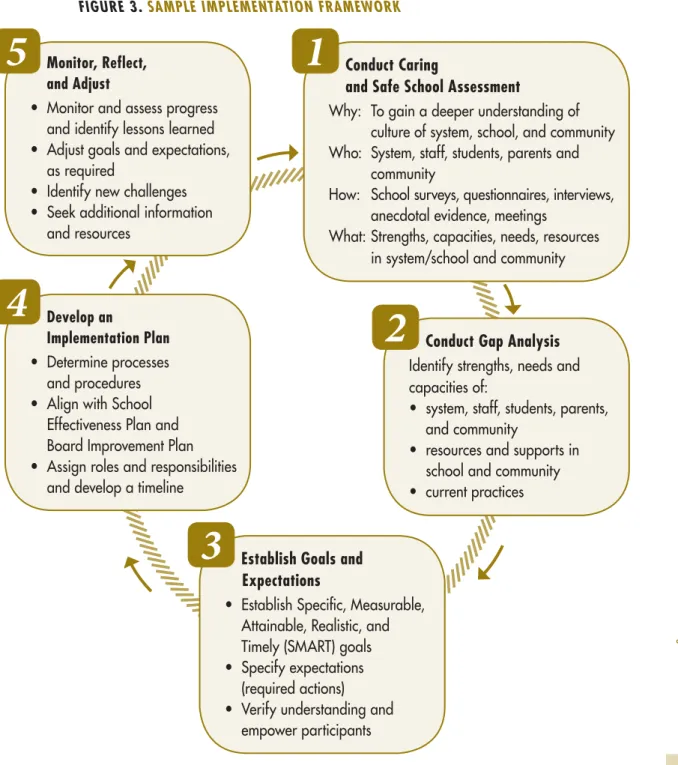
✦ monitoring and assessing progress in order to identify further needed actions. Figure 3 illustrates a framework that school leaders could use to guide their implementation process.
Figure 3. samPle imPlementation Framework
Monitor, Reflect, and Adjust
• Monitor and assess progress and identify lessons learned • Adjust goals and expectations,
as required
• Identify new challenges • Seek additional information
and resources
5
Develop an
Implementation Plan
• Determine processes and procedures • Align with School
Effectiveness Plan and Board Improvement Plan • Assign roles and responsibilities
and develop a timeline
4
establish Goals and
expectations
• Establish Specific, Measurable, Attainable, Realistic, and Timely (SMART) goals • Specify expectations
(required actions)
• Verify understanding and empower participants
3
Conduct Gap Analysis
Identify strengths, needs and capacities of:
• system, staff, students, parents, and community
• resources and supports in school and community • current practices
2
Conduct Caring
and safe school Assessment
Why: To gain a deeper understanding of culture of system, school, and community Who: System, staff, students, parents and
community
How: School surveys, questionnaires, interviews, anecdotal evidence, meetings
What: Strengths, capacities, needs, resources in system/school and community
1
Ca
rin
g
an
d
Sa
fe
S
ch
oo
ls
RoleS and ReSponSibilitieS in implementation
A caring and safe school culture is built through a collaborative process that involves all stakeholder groups – system and school leaders, school staff, students, parents, and community members. The roles and responsibilities of these partners include but are not limited to the following.
System and School Leaders: ✦
✦ lead the planning and implementation process; ✦
✦ foster a culture that is favourable to change; ✦
✦ maintain communication with all stakeholders about goals, plans, and progress; ✦
✦ lead by example, by modelling attitudes and behaviours consistent with the principles and practices of caring and safe schools;
✦
✦ empower all partners – but especially students – to become involved in setting goals, planning, and participating in implementation initiatives.
School Staff: ✦
✦ participate in the planning and implementation process, taking on roles and responsibilities as team leaders and/or members as required;
✦
✦ maintain communication about progress with system and school leaders, students, parents, and community members;
✦
✦ model attitudes and behaviours that contribute to a caring and safe school culture by valuing and demonstrating respect for all students, including students with special education needs;
✦
✦ take responsibility for the well-being of all students, including students with special education needs;
✦
✦ empower students by ensuring opportunities for them to participate in making decisions, setting goals, planning, and carrying out plans. Students:
✦
✦ contribute to information gathering by responding to surveys and participating in action research;
✦
✦ participate in planning and goal setting by sharing ideas during classroom and school-wide consultations;
✦
✦ demonstrate appreciation of and respect for diversity; ✦
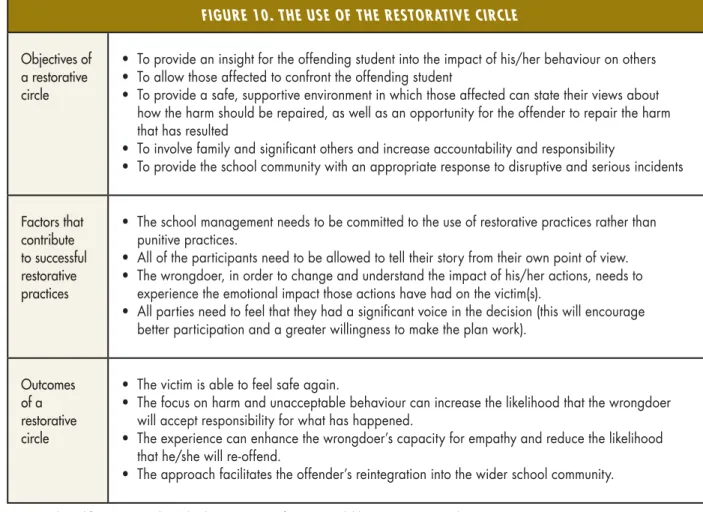
✦ demonstrate commitment to the well-being of the school community by cooperating and participating in character development programs, problem-solving processes, and restorative circles;
✦
✦ demonstrate willingness to take responsibility for their own actions and learn from their mistakes;
✦
Pro
mo
tin
g P
osit
ive
Be
hav
iou
r
Parents and Community Members: ✦
✦ respond to surveys and share information specific to their child’s strengths and needs;
✦
✦ participate in planning and implementation by sharing ideas during community-wide consultations;
✦
✦ help identify and mobilize resources in the community to support student learning;
✦
✦ maintain ongoing communication with school personnel and school-community associations;
✦
✦ demonstrate appreciation of and respect for the diversity of the school community;
✦
✦ model attitudes and behaviours that contribute to a caring and safe culture in both the school and the broader community.
A
3
Understanding Student Behaviour
What Do You Need to Know?
3key responsibility of schools is to recognize the particular needs of individual students, including the complex and additional challenges faced by some students with special education needs, and to find ways of meeting those needs. An important measure of a caring and safe school is its ability to identify the range of needs of its students and determine how they influence student behaviour.
Sometimes students express their needs through challenging behaviour. The 2008 amendments to the Education Act require principals and school boards to use a progressive discipline approach in dealing with such behaviour and to take into account a variety of mitigating and other factors when determining consequences. If system and school leaders, as well as teachers, parents, and other stakeholders, are to respond appropriately and effectively to behavioural issues, they need to understand why inappropriate behaviour occurs and the messages students are communicating through their actions.
Some behaviour effectively meets the needs of the student, reflects the student’s interaction with the environment, and is understood and considered appropriate by others. Other behaviour may be ineffective but may occur because it is a student’s best available strategy for interacting with the environment and having his or her needs met.
3. Much of this section is drawn from Effective Educational Practices for Students With Autism Spectrum Disorders
Un
der
sta
ndin
g S
tud
ent
Be
hav
iou
r
Those seeking to understand student behaviour in the learning environment will find it helpful to keep in mind the following facts:
✦
✦ Behaviour occurs in a context. ✦
✦ Behaviour is learned. ✦
✦ Behaviour serves a function for the individual. ✦
✦ Behaviour can be changed over time.
(Surrey Place Centre, 2008, p. 7)
To manage behaviour effectively, educators need to consider not just the behaviour itself – what the student is doing – but also the underlying cause(s) of the behaviour. If educators focus only on what the student is doing, and try to eliminate the behaviour, they may find that another inappropriate behaviour arises in its place, because the underlying need has not been met. It is important to remember that inappropriate behaviour is usually a response to something in the student’s environment and is an attempt to communicate a need, rather than being deliberately aggressive or purposefully negative.
Behaviour can be understood differently from various perspectives and within a variety of contexts.
a. Definitions of behaviour are variable and may be influenced by subjective factors.
What is identified as inappropriate or challenging behaviour may vary depending on who initiates the behaviour, when and where it occurs, and the perspective from which it is viewed. Adults often interpret behaviour from the perspective of their own life experiences and current circumstances. These perspectives affect the observer’s expectations for the student. Factors that may influence how a person perceives behaviour include the following:
✦
✦ personal childhood experiences ✦
✦ cultural background ✦
✦ school policies ✦
✦ the person’s relationship with the student
b. Behaviour is student and situation dependent.
It is essential to match our expectations for a student’s behaviour to the unique circumstances of the student. For example, our expectations for a student who is unaware of the inappropriateness of a specific behaviour would be different from our expectations for a student who is aware, and we would adapt our response accordingly. Similarly, factors such as the age of the student and the behaviour of the student in other situations or settings will influence decisions about what is considered acceptable behaviour.
Ca
rin
g
an
d
Sa
fe
S
ch
oo
ls
Specific Conditions Affecting Behaviour
n Students who are identified as having special education needs may manifest an array of behaviours in response to demands, stimuli, and relationships in the school environment. These behaviours can indicate a need in the communication, sensory, academic, physical, medical, social, or emotional areas, or in a combina-tion of these areas (Barkley, 1990; Gerber, 1993; Lyon, 1994; Rourke, 1995; Nelson, Benner, & Rogers-Adkinson, 2003; Pinborough-Zimmerman, Satterfield, Miller, et al., 2007).
Figure 4. needs and tyPes oF Conditions aFFeCting student Behaviour
Conditions aFFeCting Behaviour
Communication
needs exPressed through Behaviour
Medical Social
Physical Emotional
Communication Disorders
Executive Function Deficits
Mental Health Problems
Sensory Academic
needs expressed through Behaviour Conditions affecting
Behaviour
Researchers, educators, and professionals have identified three broad categories of challenges that students may experience, singly or in combination – communication disorders, executive function deficits, and mental health problems. Information on these three areas is provided below, in both discussion and chart form. (Figures 5 through 8, on the following pages, outline specific “look-fors” and strategies educators can use when working with students whose behaviour is affected by these three types of challenges.)
Un
der
sta
ndin
g S
tud
ent
Be
hav
iou
r
Communication Disorders
n A communication disorder is any disorder and/or delay within the scope of practice for a speech-language pathologist and/or audiologist, including but not limited to the following: speech-language disorders, hearing impairment, vertigo, tinnitus, swallowing, reading and writing disorders, and cognitive disorders (Canadian Association of Speech-Language Pathologists and Audiologists, 2005b).
Common Communication Disorders in Students • Articulation disorders
• Voice problems • Stuttering
• Language difficulties
(Canadian Association of Speech-Language Pathologists and Audiologists, 2005b, p. 1)
Communication disorders in school-age children are often misdiagnosed as learning disabilities or behavioural problems, and can be very difficult to treat in later years. Research confirms a direct relationship between language disorders and emotional and behaviour disorders. Students with behavioural problems are ten times more likely than other students to have language disorders (Canadian Association of Speech-Language Pathologists and Audiologists, 2005b). Research also confirms that reading and math deficits co-occur in students with emotional and behavioural disorders and language deficits (Getty & Summy, 2006). Communication affects school success in the areas of listening, speaking, reading, writing, thinking, and learning (Canadian Association of Speech-Language Pathologists and Audiologists, n.d.) and plays a significant role in social relationships.
Why do social relationships at school suffer when a student has a communication disorder?
• The student does not understand information that is communicated or cannot express what he or she wants.
• Difficulty in understanding information about causes and consequences may interfere with the student’s ability to follow everyday routines. • Friendship, which is based on ability to share, is hindered by weak
language skills.
• The student can become so frustrated by a lack of understanding or inability to communicate effectively that he/she misbehaves.
• The student often fails to realize that the message has been
misunderstood, or the student may be so lost that asking for assistance is impossible.
Figure 5. CommuniCation disorders: indiCators and strategies
Please note: The information in Figures 5, 6, and 7 is not exhaustive. It provides general knowledge to support understanding in these areas.
• Keep language simple.
• Be explicit and straightforward, and use non-verbal communication where possible. • Provide visual support if necessary, and
encourage students to draw.
• Encourage students to use words not actions. • Minimize demands for students to use
expressive language to explain behaviour. • Provide students with additional time to
collect thoughts and ideas before they express themselves.
• Take the time to listen to the students, build trust, and understand their needs.
• Initiate discussions with parents to learn more about students’ circumstances and needs.
What are some strategies you can use in your teaching practice?
• Not following classroom instructions • Physically acting out with aggression,
rather than using words
• Shutting down and becoming quiet and withdrawn
• Making inappropriate comments or using inappropriate words because of difficulty with finding words and expressing their thoughts
• Difficulty with social relationships with other students at school
What are some “look-fors” in students?
Common Communication Disorders in Children
• Articulation disorders
• Voice problems
• stuttering
• Language difficulties What are communication disorders?
Communication
Disorders
Un
der
sta
ndin
g S
tud
ent
Be
hav
iou
r
Executive Function Deficits
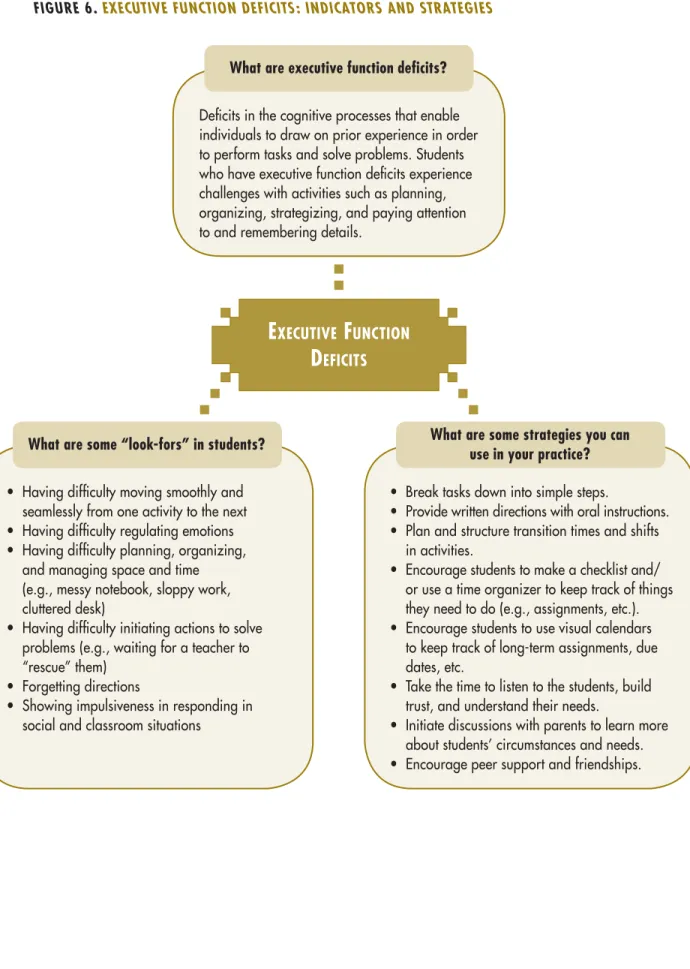
n The term “executive function” is used to describe a set of cognitive processes that help students connect past experiences with present actions. Students use executive function when they perform such activities as planning, organizing, strategizing, and paying attention to and remembering details. Executive function also enables students to manage their emotions and monitor their thoughts in order to work more efficiently and effectively (Guare & Dawson, 2004).
According to Brown (2006, p. 39), there are six clusters of cognitive functions that are affected by executive functions:
1. Activation: organizing, prioritizing, and activating to work 2. Focus: focusing, sustaining, and shifting attention to tasks 3. Effort: regulating alertness, sustaining alertness, and achieving
appropriate speed in execution
4. Emotion: managing frustration and regulating emotions 5. Memory: utilizing working memory and accessing recall 6. Action: monitoring and self-regulating behaviour.
Students with executive function deficits have difficulty with planning, organizing, and managing time and space. They also show weakness with working memory, which is an important tool in guiding one’s actions. Problems with executive function may become evident when a student is:
✦
✦ planning a project; ✦
✦ comprehending how much time a project will take to complete; ✦
✦ telling a story (orally or in writing); ✦
✦ attempting to communicate details in an organized, sequential manner; ✦
✦ applying mental strategies involved in memorizing and retrieving information from memory;
✦
✦ initiating activities or tasks; ✦
✦ generating ideas independently; ✦
Ca
rin
g
an
d
Sa
fe
S
ch
oo
ls
Deficits in the cognitive processes that enable individuals to draw on prior experience in order to perform tasks and solve problems. Students who have executive function deficits experience challenges with activities such as planning, organizing, strategizing, and paying attention to and remembering details.
What are executive function deficits?
• Break tasks down into simple steps.
• Provide written directions with oral instructions. • Plan and structure transition times and shifts
in activities.
• Encourage students to make a checklist and/ or use a time organizer to keep track of things they need to do (e.g., assignments, etc.). • Encourage students to use visual calendars
to keep track of long-term assignments, due dates, etc.
• Take the time to listen to the students, build trust, and understand their needs.
• Initiate discussions with parents to learn more about students’ circumstances and needs. • Encourage peer support and friendships.
What are some strategies you can use in your practice?
• Having difficulty moving smoothly and seamlessly from one activity to the next • Having difficulty regulating emotions • Having difficulty planning, organizing,
and managing space and time (e.g., messy notebook, sloppy work, cluttered desk)
• Having difficulty initiating actions to solve problems (e.g., waiting for a teacher to “rescue” them)
• Forgetting directions
• Showing impulsiveness in responding in social and classroom situations
What are some “look-fors” in students?
E
xEcutivEF
unctionD
EFicitsUn
der
sta
ndin
g S
tud
ent
Be
hav
iou
r
Mental Health Problems
n According to Children’s Mental Health Ontario (2002), one in five children and youths in Ontario will struggle with his or her mental health. More than 500,000 young people in Ontario suffer from a diagnosable mental health problem, such as anxiety, that may manifest itself in behaviour such as bullying or an eating disorder. According to Statistics Canada (Health Canada, 2002), teenagers and young adults aged fifteen to twenty-four experience the highest incidence of mental disorders of any age group in Canada. Research has shown that:
✦
✦ as many as one in five teenagers have experienced a major mental disorder (McGee, Feehan, Williams, et al., 1990, as cited on Canadian Mental Health Association [CMHA] website);
✦
✦ mental health problems, including serious mental illness, are more likely to emerge between the ages of sixteen and twenty-four than at any other stage of life (Canadian Psychiatric Association, 1993, as cited on CMHA website); ✦
✦ depression, stress, suicide, and eating disorders are issues of concern for teens; and fear, embarrassment, peer pressure, and stigma are barriers to getting help (Canadian Psychiatric Association, 1993, as cited on CMHA website).
It is important to distinguish between mental illness and more common mental health problems.4 The term “mental illness” refers to a diagnosable condition that usually requires medical treatment. It encompasses a range of psychiatric and emotional problems of varying degrees of intensity and duration that may recur from time to time. Major mental illnesses include mood, psychotic, and anxiety disorders. The most common mental illnesses among children and youth (to age seventeen) are anxiety disorder, attention deficit/hyperactivity, conduct disorder, depression, and substance abuse (Ontario Ministry of Health and Long-Term Care, 2009, p. 13).
Some challenges students with mental illness may face include the following: ✦
✦ Screening out environmental stimuli – an inability to block out sounds, sights, or odours that interfere with focusing on tasks
✦
✦ Sustaining concentration – restlessness, shortened attention span, distractibility, difficulty remembering oral directions
✦
✦ Maintaining stamina – limited energy, leading to difficulty in putting in a full day in school and/or difficulty in combating drowsiness caused by medications ✦
✦ Handling time pressures and multiple tasks – difficulty managing assignments, meeting deadlines, and prioritizing tasks
✦
✦ Interacting with others – difficulty getting along, fitting in, chatting with fellow students, and reading social cues
4. This discussion is adapted from Canadian Mental Health Association (n.d.), “Mental Problems and Mental Illness”, http://www.cmha.ca/highschool/t_intro3.htm.)
• Take steps to be informed about mental illness. • Be supportive and understanding.
• Take the time to listen to the students, build trust, and understand their needs.
• Initiate discussions with parents to learn more about students’ circumstances and needs. • Work with students and parents to determine
appropriate accommodations.
• Encourage peer support and friendships. • Encourage practices that support wellness
and a balanced life.
What are some strategies you can use in your practice?
• Problems concentrating, making decisions, or remembering things
• Missed deadlines, delays in completing assignments, poor quality work, poor exam grades
• Low morale
• Disorganization in completing school work • Frequent complaints or evidence of fatigue or
unexplained pains
• Decreased interest or involvement in class topics or academic endeavours in general • Frequent absences or consistent late arrivals
What are some “look-fors” in students?
Mental Health
Problems
• Marked changes in personality • Confused thinking
• Inability to cope with problems and daily activities
• Strange ideas or delusions
• Excessive fears, worries, and anxiety • Prolonged feelings of irritability or sadness • Significant changes in eating or sleeping
patterns
• Suicidal thoughts or remarks • Extreme highs and lows in mood • Abuse of alcohol or drugs • Excessive anger or hostility • Paranoid behaviour • Social withdrawal • Irrational fears
What are some common signs of mental illness?
Mental health problems
Mental and emotional dysfunctions that affect a person’s ability to enjoy life and deal with everyday challenges such as making choices and decisions, adapting to and coping in difficult situations, or talking about one’s needs and desires. Mental health problems range from serious mental illnesses (see below) to more common, everyday struggles and problems, often arising in response to stress, that most people experience from time to time. Mental illness
The term describes a variety of psychiatric and emotional problems that vary in intensity and duration, and may recur from time to time, including mood, psychotic, and anxiety disorders. It refers to a diagnosable condition that usually requires medical treatment.
What are mental health problems? What is mental illness?
Figure 7. mental health ProBlems: indiCators and strategies
Un
der
sta
ndin
g S
tud
ent
Be
hav
iou
r
✦
✦ Responding to negative feedback – low self-esteem, leading to difficulty in understanding and interpreting criticism and/or poor grades, and difficulty knowing what to do to improve or how to initiate changes
✦
✦ Responding to change – difficulty coping with unexpected changes in coursework, such as changes in assignments, due dates, or instructors
(Adapted from Mancuso, 1990, as cited by Canadian Mental Health Association, n.d., section headed “Recognizing When There’s a Problem”) Although mental illness can occur at any age, it often strikes children and youth from late adolescence to early adulthood. Serious mental illness can significantly interfere with learning, thinking, communicating, and sleeping. Medication, counselling, and psychosocial rehabilitation are treatment options that can help students recover from mental illness.
A variety of more common mental health problems, including temporary adjustment difficulties, moderate performance anxiety, and occasional mood swings, affect most people from time to time. Students experiencing these types of problems may not require medical treatment, but they may benefit from extra support and understanding on the part of teachers and parents. However, if these problems become prolonged or serious enough to affect the student’s learning, they could be a sign of serious mental illness and should be brought to the attention of parents and/or health professionals.
Additional Factors Affecting Behaviour
n Student behaviour is affected not only by specific challenges like those just dis-cussed but also by a broad range of influences that flow from the circumstances of the student’s life. For example, a student’s behaviour will be shaped by the presence or absence of the following:
✦
✦ support from parents, other family, and other adults, at home, at school, and in the community;
✦
✦ opportunities to be creative and to participate and interact in a variety of social situations;
✦
✦ reasonable boundaries and realistic but high expectations for behaviour and achievement;
✦
✦ opportunities to develop feelings of engagement in and commitment to learning; ✦
✦ opportunities to develop positive values and attitudes such as empathy, a sense of fairness, a sense of responsibility, and a positive sense of self;
✦
✦ opportunities to develop social skills that facilitate social adjustment and healthy relationships.
The Search Institute has developed an inventory of forty such factors, entitled “40 Developmental Assets” (www.search-institute.org/assets), which can help schools identify the gaps in a student’s “support system” and can provide a
Figure 8. how deFiCits in the three areas aFFeCt student learning and Behaviour
Communication Disorders executive Function Deficits Mental Health Problems
Early difficulties with oral language set the stage for future academic challenges in the areas of reading comprehension, written language, listening, and relationships with peers and adults. For example:
• When students do not fully understand what is said to them, others can become frustrated with them, interaction and communication breaks down, and the stage is set for behaviour problems. • When students cannot quickly and easily
present their ideas, point of view, or interpretation, communication breaks down and the stage is set for frustration and behaviour problems.
• When comprehension and expressive problems interfere with learning, frustration increases, self-esteem suffers, and behaviour problems can also occur. Students with language impairment often have difficulty with:
• developing the social language skills (e.g., turn-taking, conversational roles) needed to initiate and maintain social relationships;
• understanding non-verbal communication and reading social cues;
• using oral or written language for problem solving and self-advocacy in social situations;
• using oral communication in stressful situations rather than physical responses and acting-out behaviours.
Communication difficulties may contribute to frustration and low self-esteem and affect school success in the areas of listening, speaking, reading, writing, thinking, and learning.
(Canadian Association of Speech-Language Pathologists and Audiologists, n.d.)
Students with executive function deficits have difficulty regulating their behaviour in two ways: • using certain thinking skills
(e.g., related to planning and time management) and working memory to picture a goal, plot a path to that goal, determine what resources are needed along the way, and keep the goal in mind over time even when other events intervene to occupy their attention and take space in their memory; • using other executive skills
(e.g., related to response
inhibition, self-regulation of affect, and flexibility) to guide or modify their behaviour as they move along a path, think before they act, regulate their emotions in order to reach an objective, and, when necessary, revise their plans in the face of obstacles.
(Guare & Dawson, 2004)
Symptoms of mental health problems may vary considerably from individual to individual. Common features of mental health problems, and particularly of mental illness, include: • difficulty with information
processing;
• over-sensitivity to noise and other sensory stimuli;
• over-sensitivity or confusion in interpersonal relations. In addition to symptoms of their illness, students may also be dealing with side-effects of medication they are taking to treat their illness. Side-effects can include:
• irritability;
• physical effects such as shaking and dry mouth;
• confusion and disorganized thinking;
• sleepiness;
• inability to concentrate. These features can interact to produce significant learning problems.
(Canadian Mental Health Association, n.d.)
Un der sta ndin g S tud ent Be hav iou r
Figure 8 (Cont.) why does sChool Present a PartiCular Challenge to students who have deFiCits in these areas?
Communication Disorders executive Function Deficits Mental Health Problems
A communication disorder is any disorder and/or delay within the scope of practice for a speech-language pathologist and/ or audiologist, and includes problems such as speech-language disorders, hearing impairment, and reading and writing disorders. These difficulties lead to challenges at many levels in the classroom and in school, where students:
• are expected to learn through listening during much of the time spent in elementary school and most of the time spent in secondary school;
• need the foundation of oral language skills in order to learn to read and write; • are required to follow instructions and
directions delivered orally or in writing; • are exposed to increasingly complex
language from Kindergarten through Grade 12, and are expected to learn voca-bulary related to various subject areas; • are generally expected to demonstrate their
learning through speaking and writing; • need well-developed receptive and
expressive language skills to participate effectively in various learning activities (e.g., discussion, story retelling, problem solving, understanding word problems in mathematics);
• need strong oral language, reading, and writing skills in order to generate, articulate, and focus ideas and to gather, interpret, and organize ideas and information for particular purposes in all subject areas;
• rely on communication skills in their social interactions and in developing relationships with peers and adults. These skills include the ability to interpret facial expressions and body language and to understand and respect personal space. Being understood, achieving academic suc- cess, and developing a sense of belonging all depend heavily on effective communica-tion skills – and all contribute to healthy emotional development and self-esteem.
Students’ ability to regulate their own behaviour is an important component of academic success. Students with executive function deficits may have difficulty carrying out academic tasks that require them to:
• stay on task; • solve novel problems;
• integrate new knowledge with prior knowledge; and
• set goals and monitor progress (Ontario Ministry of Education, 2005). They also often have difficulty making smooth transitions between activities, classes, school settings, and home or community settings. The developmental phase associated with puberty will often intensify the challenges faced by adolescents with executive function deficits. Adolescents face higher expectations from parents and teachers, coupled with a decrease in teacher monitoring and support. They are required to absorb increasing quantities of more complex information in shorter amounts of time. Transitions, first to high school, and then from high school to work or college/university also place increased demands on executive skills. Without appropriate understanding and support, students’ academic performance may dete-riorate and their susceptibility to behavioural conflicts may increase.
(Guare & Dawson, 2004)
Students with mental illness and other mental health problems may have difficulty:
• screening out environmental stimuli;
• sustaining concentration; • maintaining stamina; • handling time pressure and
multiple tasks; • interacting with others;
• responding to negative feedback; • adapting to change.
Mental illness can affect many aspects of a student’s life, including family and peer relationships and school performance. It can often strike at a critical point in a student’s development.
Because mental health problems and symptoms of mental illness are not always apparent, educators need to be alert to significant changes in a student’s work habits, behaviour, perfor-mance, and attendance. A pattern that continues for a long period, or recurs repeatedly, may indicate an underlying serious mental health problem or mental illness.
(Canadian Mental Health Association, n.d.)