DOING OCCUPATION TOGETHER: TRANSFORMATIONS OF A SENIOR CENTER WELCOMING SPANISH-SPEAKING OLDER ADULT IMMIGRANTS
Ryan Lavalley
A dissertation submitted to the faculty at the University of North Carolina at Chapel Hill in partial fulfillment of the requirements for the degree of Doctor of Philosophy in the Division
of Occupational Science and Occupational Therapy in the Allied Health Sciences Department of the School of Medicine.
Chapel Hill 2019
ABSTRACT
Ryan Lavalley: Doing Occupation Together: Transformations of a Senior Center Welcoming Spanish-Speaking Older Adult Immigrants
(Under the direction of Antoine Bailliard)
Immigration and community responses that accompany it significantly impact
immigrant and community member well-being, occupational opportunities, and occupational justice. Understanding the communal relationships that emerge and change as immigrants enter into new spaces supports more equitable and just occupational experiences for this population. However, current theoretical perspectives within the occupational science
discipline require development to effectively conceptualize and investigate these community level phenomena. This dissertation seeks to examine and characterize the community
occupations of a senior center welcoming Spanish speaking older adult immigrants to expand knowledge that supports occupational opportunities and justice for this population. Using an ethnographic approach including participant observations, individual interviews, community mapping activities, document review, and reflective journaling, a rich and layered
examination of the senior center community was possible. The findings of the study reveal the complex and historical relationships that yield community formation. These relationships sometimes welcomed Spanish speakers and in other instances furthered their isolation among the community, engendering both inclusion and exclusion in community norms.
ACKNOWLEDGEMENTS
I would like to express my sincere gratitude to Dr. Antoine Bailliard for his immense mentorship and guidance during this project; also, to all my committee members for their support and suggestions as I explored ideas. Further, this project would not have been possible without the support of my mentor, classmate, colleague, and most of all friend, Dr. Jenny Womack, who somehow walked with me through the entire journey.
Thank you to Dr. Cherie Rosemond and Dr. Mary Fraser for continually inspiring and believing in me, and thank you to my fellow students, especially my cohort, for our
TABLE OF CONTENTS
LIST OF TABLES ... x
LIST OF FIGURES ... xi
CHAPTER 1: INTRODUCTION ... 1
CHAPTER 2: SETTING THE SITUATION: A REVIEW OF CURRENT KNOWLEDGE ... 7
Structural Racism in the United States ... 7
Immigrants and Immigration ... 9
A Theoretical Foundation for Understanding the Occupations of Communities ... 14
CHAPTER 3: FROM PERSON TO PEOPLE: A THEORETICAL FRAMEWORK FOR LIVING COMMUNITIES ... 19
A Foundation: The Transactional Perspective of Occupation... 19
Learning from Other Disciplines ... 22
Defining Occupation ... 25
Defining Community ... 26
CHAPTER 4: A DANCE OF SORTS: GATHERING A COMMUNITY THROUGH ETHNOGRAPHY ... 29
Discovering Occupation and Communities... 29
Ethnography and Transaction ... 32
Collaboration in Ethnography ... 34
Positionality of the Ethnographer ... 35
Vigilance in Ethnography... 40
Site Recruitment ... 41
Data Collection Methods... 53
Data Analysis... 61
Limitations ... 65
CHAPTER 5: OCCUPATION OF A COMMUNITY: WELCOMING SPANISH SPEAKERS ... 68
History and Culture: The Tails of a Kite ... 68
Race, Culture, and Language ... 68
Federal Laws and County Policies ... 77
Historical Habits with Non-English Speakers ... 82
Space and Programming Processes... 87
Opening Space with Spanish Speakers ... 92
Striving for a Welcoming Space and Attitude ... 92
“If they need me, I’ll be there for them” ... 94
Beginning Outreach to Spanish Speaking Older Adults ... 96
The “Spanish Social Club” ... 98
Communal Habits ...108
CHAPTER 6: OCCUPATION OF A COMMUNITY: “WE ALWAYS FEEL LIKE A SEPARATE THING.” ... 118
The Importance of Felt Presence ...118
What Spanish Speakers Want to Do ...125
Leadership in the Social Group ...132
Staff Assume Center Processes are Accessible to Spanish Speakers ...138
The Gap of Double Hesitancy in Communication ...145
Information Access ...154
Compartmentalization: “We always feel like a separate thing.” ...163
Perforating the Compartment ...166
Collaborative Social Inquiry ...173
CHAPTER 8: CONSIDERING COMMUNITIES: THEORETICAL REFLECTIONS FOR PRACTICAL APPLICATIONS...183
Applying the Transactional Perspective of Community Occupation. ...184
A Transactional Perspective of Community Occupation ...187
The Resilience and Emerging Occupation of Communities ...190
Occupational Science Research and its Potential for Social Transformation ...204
CHAPTER 9: CONCLUSION ...211
APPENDIX A – SPANISH SPEAKING INDIVIDUAL INTERVIEW GUIDE ...214
APPENDIX B – STAFF INDIVIDUAL INTERVIEW GUIDE...215
LIST OF TABLES
LIST OF FIGURES
Figure 1 - Initial Codes from Spanish Speakers ... 63
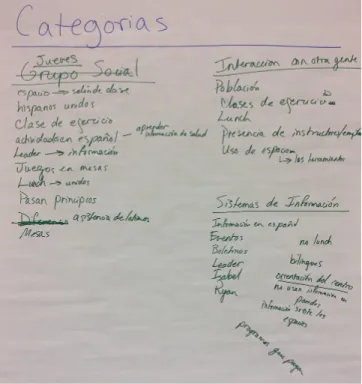
Figure 2 - Categories from Spanish Speakers ... 63
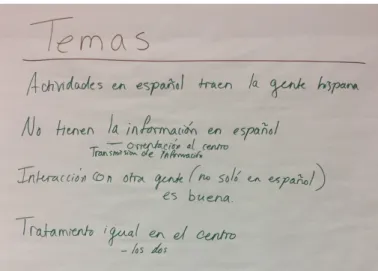
Figure 3 - Themes from Spanish Speakers ... 64
Figure 4 – Physical Sorting of Codes and Data ... 64
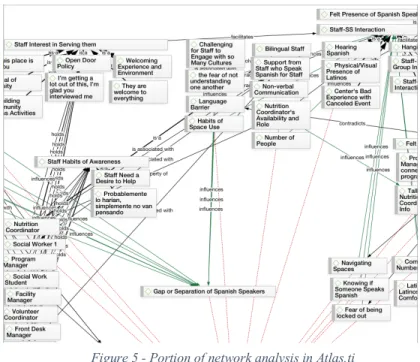
Figure 5 - Portion of network analysis in Atlas.ti ... 65
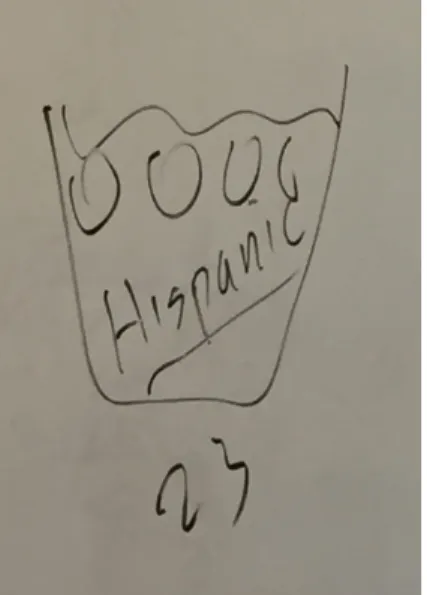
Figure 6 - The "Hispanic Basket" ... 70
Figure 7 - Spanish Speakers Community Map ... 89
Figure 8 - Exercise Class Observation Map ...130
Figure 9 - Opportunities in Spanish at the Center 2015-2019 ...137
Figure 10 - Staff Community Map ...144
Figure 11 - Information in Program Guide about Programs in Spanish 2015-‘19 ....158
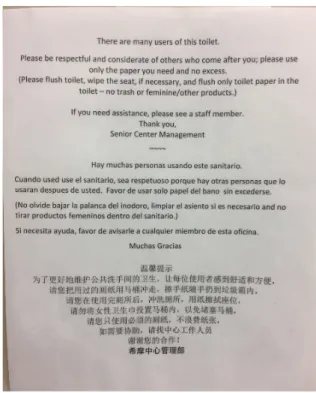
Figure 12 - Translated Bathroom Notice ...159
Figure 13 - PEO Model (Cooper et al., 1998) ...185
CHAPTER 1: INTRODUCTION
“People who shut their eyes to reality simply invite their own destruction, and anyone who insists on remaining in a state of innocence long after that innocence is dead turns
himself into a monster.” – James Baldwin (1955)
Refugees and immigrants face human rights violations, violence, and xenophobia in countless nations across the world. In the United States, anti-immigrant rhetoric and
government sanctioned violence continue to threaten the well-being of both travelers and long-time immigrants seeking safety, opportunity, and family. Structural racism and economic injustice maintain hegemony across the nation, affecting immigrants of all generations. According the U.S. Census Bureau, the Latinx community is the largest racial minority within the U.S., bringing and cultivating culture from nearly 20 distinct countries to the U.S. In 2017, this population made up 18.1% of the U.S. population and is expected to grow by approximately 1% every five years, reaching a projected 28% in 2060.
Approximately 7% of the Latinx population in the U.S. in 2017 was over the age of 65, and are especially at risk for health concerns (Lum & Vanderaa, 2010). Seeking inclusion and participation for this population in a time of unprecedented globalization and migration requires discernment and collaboration across local and international communities.
Occupational scientists are interested in supporting and protecting the rights of all individuals to participation and occupation, especially those who are marginalized or vulnerable. To comprehend the complex networks through which these vulnerable
the historic individual conceptualization of occupation has challenged us to recognize and consider societal inequities that shape occupational possibilities (Dickie, Cutchin, & Humphry, 2006; Laliberte-Rudman, 2013). Attending to the well-being of marginalized populations requires understanding the situation through which people are inextricably embedded. Occupational scientists are interested in turning our attention toward
understanding the influence of social determinants and factors forming health and well-being among communities. Recognition of the power of an occupation-based approach for
encouraging social transformation in communities is growing on a global scale (Laliberte-Rudman et al., 2018). Movements to facilitate health, well-being, and participation through development of communities rather than individual intervention are emerging. Because of this, occupational scientists are developing theory based on pragmatist perspectives that can conceptualize social transformation occurring across communities (Aldrich, 2018; Cutchin, Dickie, & Humphry, 2017; Laliberte-Rudman et al., 2018; Lavalley, 2017).
Occupational scientists must explore the emergence of occupation across
communities to be well-positioned to contribute to socially transformative processes that support participation, inclusion, occupational opportunities, and human dignity in these changing global contexts. Therefore, the impetus for this study was to contribute and expand on this emerging topic area. I sought to examine occupational relationships that emerged as a community welcomed a vulnerable population. Utilizing this developing theory, I strived to account for the inextricably entangled processes experienced by communities doing together. A more developed understanding of this process will more effectively inform future
This project is significant because communities across the United States are
transforming quickly and becoming more diverse. To effectively support equity and justice in the precarious situations that emerge for immigrants, especially older immigrants, it is
necessary to honor the enfolded nature of social, political, economic, and physical relationships that contribute to the functioning of their new communities (Angell, 2014). Recognizing the socio-cultural milieu through which occupation occurs is necessary to fully comprehend its contribution to human experience. While occupational scientists have explored individual experiences of immigration and policy, there is a scarcity of literature depicting how communities shift with new culturally and linguistically diverse members. In order to mitigate barriers to participation and inclusion, foster human dignity, and prevent further inequity, understanding the intricacies of this community transformation is essential.
Therefore, my overall goal for this project was to conduct a qualitative excavation of the community-level occupation of a local senior center and examine how this “communal occupation” (Lavalley, 2017) might be influencing the participation of older Spanish-speaking adults. To achieve this goal, I pursued three aims during a 6-month ethnographic process with a community senior center, its staff, and Spanish-speaking participants.
The first aim was to identify and describe the transformation of personal experiences and perspectives of Spanish-speaking elder immigrants and staff through communal
Laliberte-Rudman, 2010, 2013). Therefore, within this study, I employed individual interviews with staff and Spanish-speaking older adults to offer space to share individual experiences of the senior center community. These methods were useful and necessary in honoring the potential heterogeneity of experiences within the cohort. Yet they remained insufficient in examining the community as a whole.
The second aim was to identify and describe the transformation of cohort experiences and perspectives of Spanish-speaking elder immigrants and staff through communal
occupation at a local senior center. Occupation emerges from and is influenced by social groups and sub-communities (Christiansen & Townsend, 2010). It is essential to recognize that these groups may have differing experiences of the same community (Angell, 2014) and ensure that the voices of potentially vulnerable or oppressed participants are heard (Fine, Weis, Weseen, & Wong, 2003; Lassiter, 2005). To offer a space for sub-community discussions, I conducted communal mapping activities separately with Spanish-speaking older adults and staff members of the senior center. Further, I conducted participant observations that positioned me sometimes alongside staff members and other times alongside Spanish-speaking participants at the center. These methods allowed me to understand the communities process of change from the perspectives of different cohorts.
functioning as a whole provides a comprehensive description that can reveal how a situation impacts individual and cohort experiences (Lavalley, 2017). To characterize the occupation of a community, it is useful to study observable changes over time (Dewey, 1927; Lavalley, 2017). Therefore, I incorporated strategies during interviews, community mapping activities, and document reviews to uncover community changes over several years, such as asking about the past and future. To explore and confirm the relationship between communal change and the Spanish speakers’ experiences, I employed collaborative analytic strategies with Spanish speaking participants.
Together, the aims of this ethnographic process were to describe a community’s occupations over time. It sought to enfold individual, cohort, and holistic perspectives to recognize the power of individuals and the situations through which they live. This
framework was integral in painting a vivid picture of community formation and experience. Often, privilege and assumption ignore the voices of those who may be different or do not fit so neatly into a community. Therefore, I foregrounded the lived experiences of Spanish speaking older adults as both vulnerable new-comers and powerful influencers in the community. This complicated, yet more vividly revealed, their roles in community change. Comprehensively appreciating community bonds that guide participation and service access for these older adults offers insight into barriers and facilitators to participation and
occupation. These insights are valuable and necessary in supporting the community as it moves forward and changes. This study offers a rich examination of this process and promises to inform future endeavors supporting the integration, participation, and inclusion of Spanish-speaking older adult immigrants. An occupation-based examination of a
CHAPTER 2: SETTING THE SITUATION: A REVIEW OF CURRENT KNOWLEDGE
“Start where you are, with what you have. Make something of it and never be satisfied.” – George Washington Carver (2017)
Immigration continues to be a significant political and humanitarian concern across the globe. Migration can be a harrowing and debilitating experience for migrants and their families (Moran-Taylor, 2008; Moran-Taylor & Richardson, 1993). Organizations, in both countries of origin and destination, politicize and strategize with the lived experience of migrants to buttress development initiatives, political changes, or ideological shifts (Nichols et al., 2017). Researchers have used various causes, such as structural and political violence, poverty, employment, and familial support to explain the movement of Spanish speaking migrants to the United States (Acuña González, 2016). As the number of Latinx immigrants grows in the United States, researchers are building momentum in studying the acculturation process and its effects on immigrant health and well-being (Abraído-Lanza, Echeverría, & Flórez, 2016). To appropriately examine the experience of immigrants entering the country, though, a deep reflection on the history of race relations in the United States is needed.
Structural Racism in the United States
The United States has a particularly extensive and atrocious history of structural racism. Everyday life, policies, spaces, economic systems, and social norms have been steeped in racism since the nation’s conception. Derivative of European religious and
identities (i.e. white and non-white people) to maintain the economic system and capital provided by slavery and bond workers (Allen & Perry, 2012b). The wealthy class used race to implement social control over the residents of the colonies as they constructed the
hegemonic social reality of the future United States of America (Allen & Perry, 2012a). The “white” identity emerged to specifically privilege European-American residents in and exclude non-European-Americans from upward social mobility (Allen & Perry, 2012b). This maintained the “necessary” system of slavery (Allen & Perry, 2012b) even after the Civil War and supposed emancipation of slaves (Blackmon, 2009). As the country developed, governmental policies and legal precedents fashioned social structures, especially around citizenship and its associated rights, based on “whiteness” and non-whiteness (Haney-López, 2006). Nearly every aspect of everyday life was immersed in structures of racial identity and racism.
These structures have persisted across our country’s history, imbued in every
Histories of race are deeply ingrained in the everyday thinking and doing of people living in the United states and consistently shape the societal climate around racial justice. They construct the foundation for continued racial inequities across the country and foster distinct racial tension within United States culture. Specifically, during the time of this study, anti-immigration sentiment, xenophobia, and white supremacy were being prominently discussed at the national level due to the current president’s election in 2016, various controversies regarding confederate monuments (Svrluga, 2018), and continued resurgence of white nationalist movements (Tenold, 2018). Further, a historic shutdown of the
government in relation to funding for a wall between the United States and Mexico occurred from December 2018 to January 2019 (Federal Information & News Dispatch, Inc., 2019). Spanish speaking immigrants enter into this specific and challenging political context in the United States the moment they cross the border.
Immigrants and Immigration
situation and manage the societal structures limiting their occupation (Lawson, 2000), it is critically important to inform support and intervention targeting disparities in health and occupational opportunities for this population. The situation experienced by immigrants is especially dire for elder immigrants as they are a vulnerable cohort among an already marginalized population.
Elder Immigrants. Many researchers have examined the social situation of elder immigrants (Bolzman, Poncioni-Derigo, Vial, & Fibbi, 2004; Burholt, 2004; Warnes, Friedrich, Kellaher, & Torres, 2004), often concentrating on retirees migrating to other countries (Ackers & Dwyer, 2004; Casado-Díaz, Kaiser, & Warnes, 2004; Huber & O’Reilly, 2004; Innes, 2009). However, what we understand about these populations is primarily derived from a European context, a unique situation both culturally and politically. Immigration has profound and complex effects on older adults from various socio-economic viewpoints (Geest, Mul, & Vermeulen, 2004), and therefore, the different socio-economic situations of host countries must be taken into account. Currently there is a significant gap in the literature related to elder Spanish-speaking immigrant experiences based in the United States.
Demographers have noted an increase in diversity within the older adult population within the United States as early as 2008 (Leach, 2008). While some immigrant populations experience better life expectancy and health outcomes than their native-born counterparts in the United States, many Hispanic, and specifically Mexican, immigrants have poorer
Rodriguez, & Gruskin, 2009) and therefore, now may be aging into senior services. After immigration, older Hispanic immigrants face significant health disparities within the United States including “poorer self-reported health, higher level of depression, and more ADL [Activities of Daily Living] and IADL [Instrumental Activities of Daily Living] difficulties,” even when compared to native born participants with similar racial and ethnic identities (Lum & Vanderaa, 2010, p. 750). Among black, Hispanic, and white immigrants, elder Hispanic immigrants had “the worse physical and mental health and functional status” (Lum & Vanderaa, 2010, p. 746). Further, elder immigrants must contend with a healthcare system that does not easily accommodate cultural differences (Brotman, 2003). The situation of elder Latinx immigrants is distressing and research is needed to address these concerns to support the health of this population.
navigates continuous change across the community. A developed picture of the community’s processes and navigation through them is needed and will more fully support participation and inclusion of this population.
Immigration in Occupational Science. Occupational scientists have often studied the emergence of occupation for immigrant populations. It is clear that the process of immigration influences and is influenced by specific occupations such as sewing (Boerema, Russell, & Aguilar, 2010), cooking and meals (Aronsen Torp, Berggren, & Erlandsson, 2013), and music (Adrian, 2013). Immigration experiences create shifts in everyday living, in sensory experiences, family routines, or caregiving (Bailliard, 2013b; Hon, Sun, Suto, & Forwell, 2011; Lencucha, Davis, & Polatajko, 2013). We understand occupation as emerging among acculturation, identity formation, health, and healing experiences for immigrants (Arola, Dellenborg, & Häggblom-Kronlöf, 2017; Farias & Asaba, 2013; Gupta & Sullivan, 2013; Kim, Hocking, McKenzie-Green, & Nayar, 2016; Nayar, Hocking, & Giddings, 2012; Santos Tavares Silva, Thorén-Jönsson, Sunnerhagen, & Dahlin-Ivanoff, 2017). However, the situated relationships among changing communities remain obscured. Occupational scientists often neglect or assume the situations through which immigrants live their everyday lives are static and unbending. The complex emergence of occupational experiences at the community level is therefore unattended to in work toward positive community growth.
subpopulations such as elders, researchers must study the situation in which those
immigrants are living. It is necessary to understand the ongoing formation of communities in response to immigration to develop informed strategies that support positive community growth. Understanding the situated nature of communal immigrant experiences as influencing and being influenced by a changing host community will serve this goal.
Elder Immigration. Occupational scientists know little, from an occupational perspective, about elder Spanish-speaking immigration in the United States; however, researchers have explored elder immigration in general (Johansson et al., 2013; Krishnagiri, Fuller, Ruda, & Diwan, 2013; Mondaca & Josephsson, 2013; Wright-St Clair & Nayar, 2017; Wright-St Clair et al., 2017). Past experiences of human rights violations were significant to the occupational lives of Chilean immigrants to Sweden (Mondaca & Josephsson, 2013). The concept of aging in place and the common notion that older adults want and should avoid discontinuity in their living arrangements were theoretically challenged (Johansson et al., 2013). Older Asian immigrants engage with their communities through occupational choices and enfranchisement (Wright-St Clair & Nayar, 2017; Wright-St Clair et al., 2017). Finally, there was a relationship between the individual health outcomes and everyday activities of South Asian immigrants to the San Francisco Bay area (Krishnagiri et al., 2013). While occupational scientists have examined the decision-making, engagement, and participation of elder immigrants through an individual and agentic lens, they have neglected to adequately study the communal situation and the changing social relationships through which these experiences are developed. Further understandings of how host communities change and how those changes affect immigrant experiences are needed to support positive community
To appropriately and effectively support older Spanish speaking immigrants in the United States, it is necessary to investigate the communities in which their experience is formed, recognizing their roles as influential members of those communities. Understanding the community-level processes that transform community-level occupations as a group integrates into a community can inform endeavors to improve health outcomes and community participation. Such understandings can inform community development programs or interventions that target communal processes through which immigration
occurs. Occupational scientists are at the nascent stages of theoretical development regarding the conceptualization and study of occupation at the community level (Aldrich, 2018;
Cutchin et al., 2017; Fox & Dickie, 2010; Kantartzis & Molineux, 2014; Laliberte-Rudman et al., 2018; Lavalley, 2017; Ramugondo & Kronenberg, 2015). This study contributes to theoretical development in understanding the occupations of communities.
A Theoretical Foundation for Understanding the Occupations of Communities
Occupational Justice and the Politicizing of Occupation. In the past 10 years, occupational scientists, equipped with new theoretical perspectives such as occupational justice (Stadnyk et al., 2010), the transactional perspective of occupation (Bailliard, 2013a; Cutchin et al., 2017; Thibeault, 2013), the capabilities approach (Bailliard, 2016), and critical theory (Laliberte-Rudman, 2013) have begun to consider how the discipline might
influencing populations far beyond those traditionally studied by the discipline (e.g. people with bio-medical conditions or disabilities) (Wilcock, 1998). Injustices such as homelessness, poverty, and racism cannot be understood fully without examining how occupation plays a role in the formation of communities and societies that reinforce those injustices (Angell, 2014). Injustices manifest in terms of limitations in occupation, in participation, and these injustices influence health and well-being. This reality necessitates attention by occupational scientists to issues of justice and political structures to develop knowledge and intervention that support just societies and communities.
Justice and Structures. The emergence and development of the occupational justice framework (Stadnyk et al., 2010) and the use of critical theory (Huot & Laliberte-Rudman, 2010; Huot et al., 2013; Laliberte-Rudman, 2010), signal an awareness of the importance of power structures and societal influences within study of occupation. These perspectives have been the most prominent approaches for occupational scientists to study macro level societal phenomena. However, as seen in a recent study of asylum seekers (Crawford, Turpin, Nayar, Steel, & Durand, 2016), occupational scientists continue to reinforce a problematic
dichotomy between individual and society when employing these approaches. Adopting this dichotomy encourages a tendency to situate change mechanisms either directly with the individual or the structure. Occupational science scholarship then tends to either overestimate the cause of injustice from the individual perspective or alternatively underestimate individual resiliency in the face of precarious structures. The
Researchers are increasingly interested in attending to these processes and how participating in occupation can perpetuate structural and communal relationships (e.g. discrimination, cycles of poverty, greater inclusivity, improved educational systems, etc.) (Angell, 2014; Bailliard, 2016; Laliberte-Rudman et al., 2018; Lavalley, 2017). They have begun to explore numerous ways individuals come together in social relationships through occupation by exploring the communal emergence of occupation (Christiansen & Townsend, 2010; Fogelberg & Frauwirth, 2010; Fox & Dickie, 2010), occupational justice (Stadnyk et al., 2010), social movements (Frank & Muriithi, 2015), and immigration (Bailliard, 2013a). Exploration of social transformation through occupation has become a significant interest for many occupational scientists and occupational therapists globally and has led to conferences specifically dedicated to the topic (Laliberte-Rudman et al., 2018)
Critiquing the Individual Focus. Although socially situated, many researchers have maintained analysis of social interaction or social occupation from an individual’s
perspective (Aldrich & Laliberte-Rudman, 2016; Dickie et al., 2006; Doble & Magill-Evans, 1992; Eakman, 2007). Laliberte-Rudman (2013) argued that occupational science should politicize assumptions of individualism to “promote critical reflexivity regarding the ways in which this broader socio-political process has constrained the conditions of possibility for conceptualizing, studying and addressing occupation” (p. 304). In parallel, Whiteford and Hocking (2012) recognized that “most occupational science research continues to overlook the social processes and mechanisms through which occupational injustices are created and become entrenched as taken for granted practices” (p. 6). Constructs such as co-occupation, distributed occupation, or the social continuum of occupation contribute to situating
community as a whole (Lavalley, 2017). While these approaches have contributed
immensely to our understanding of how individual experience and action are influenced and situated within a social milieu, they often neglect transformation of the community through which occupation occurs – vital information for supporting positive community formation. Occupation of Communities and Collectives. Clearer theoretical foundations for studying community occupations are just beginning to be explored within the discipline (e.g. Aldrich, 2018; Aldrich & Laliberte-Rudman, 2016; Kantartzis & Molineux, 2014; Lavalley, 2017; Ramugondo & Kronenberg, 2015). Collective occupation (Ramugondo &
Kronenberg, 2015) offered a valuable interrogation of occupational science theory related to this question. The authors challenged the historical dichotomy of individual and community within the occupational science literature and described a more co-constitutive relationship based in the concept of Ubuntu. Kantartzis and Molineux(2014)further explored collective occupation by describing family ideology and practice as occupation emerging across a community. Kantartzis (2016) challenged the discipline to attend to the “meso level of family and collective occupation, beyond the traditional focus on the individual” (p. 26). She
recognized, however, that “academic occupation-based literature on the topic may be limited” (Kantartzis, 2016, p. 20), as I have also done (Lavalley, 2017). Both I (Lavalley, 2017) and Aldrich (2018) have since offered Dewey’s conceptualization of associated living as a foundation for understanding and characterizing associations among communities.
CHAPTER 3: FROM PERSON TO PEOPLE:
A THEORETICAL FRAMEWORK FOR LIVING COMMUNITIES
“To question your own process is a necessity. If you don’t question yourself, it’s impossible to improve.” – Alejandro G. Iñárritu (2014)
The purpose of this chapter is to describe the theoretical framework which informs both my understanding of my experience as a researcher in the field as well as the lens through which I collected and analyzed data. I will describe the significant theoretical concepts that were incorporated into my understanding of community relationships and social engagement through the lens of occupation. Beginning with a foundation of the transactional perspective of occupation, I proceed to identify theoretical gaps existing within occupational science discourse in relation to communities and population level occupation. Using insights from sociology, anthropology, and Deweyan philosophy, I describe the ground map I used for analysis and my conceptualization of community experiences of occupation.
A Foundation: The Transactional Perspective of Occupation
The transactional perspective presented a theoretical framework based on the philosophy of John Dewey that encouraged a shift toward a pragmatist and relational
transactional perspective asserted an understanding of occupation as co-constitutive and relationally emergent through complex situations involving cultures, people, history, the physical world, and many other influences. Based in the anti-dualistic philosophy of Dewey (1896, 1925/1998), the transactional perspective of occupation encouraged occupational scientists to reject an ontology that views individuals as autonomous and separate from their situation and experience.
The transactional perspective of occupation understood occupation as socially
emergent and continuously co-constitutive among its situation. Occupation develops through embodied habits and experiences of cultures and communities (Aldrich & Cutchin, 2013). The history and cultural milieu of a situation are incorporated into the actions of the people living through that situation. Analyses used by occupational scientists are shifting toward situational understandings of human experience (Aldrich & Laliberte-Rudman, 2016). We understand habits and ways of doing as intimately connected to sociopolitical and historical situatedness of occupation. The experience of doing is integrally connected to and
inseparable from the social, cultural, political, and personal happenings around it. The transactional perspective of occupation shifted the focus of occupation-oriented inquiry to transcend individual experience and acknowledge the inextricable relationships constantly transacting around everyday doing.
However, Dickie et al. (2006) stopped short of providing a conceptual ground map for how occupational scientists might be able to study emergence of occupation at the
perspective was initially proposed, it challenged the dichotomy of individual and society, but did not articulate theoretical implications for studying communities. Fox and Dickie (2010) offered the beginning seeds of community-level study of occupation in their exploration of a small theatre group. The authors examined the relationships and functioning of the group that influence how members participate in theatre, but they did not theorize occupation at the community level. To engage in community-level work, occupational scientists need
occupation-based theoretical frameworks that incorporate multi-faceted conceptualizations of a situation that involves a living and dynamic community. Occupational scientists do not have a sturdy theoretical strategy for articulation of community level phenomenon (e.g. economic mobility, structural racism, political revolution). A relational perspective would understand and account for both societal and individual contributions to the continual
construction of communal relationships. However, there was no occupation-based theoretical lens that offered this vision. Occupational science theory is inadequate for conceptualizing the living and changing relationships across communities.
Recently, Cutchin et al. (2017) highlighted Dewey’s understanding of social reconstruction and inquiry to encourage occupational scientists to understand occupation through a community lens, furthering the scope of the transactional perspective of occupation. Aldrich (2018) also deepened this understanding by more deeply analyzing Dewey’s concept of associated living as a political and social construct, encouraging occupational scientists to analyze community level associations and their influence on community growth. I have articulated how Dewey’s theory of associated living and
developing the transactional perspective of occupation specifically for communities, I offered a conceptual ground map for studying phenomena that occur at the community level
(Lavalley, 2017).This supports the viability of the transactional perspective as a founding theoretical framework through which the question and objectives of this research were examined.
Learning from Other Disciplines
To develop these ideas further, I have sought perspectives from other disciplines such as sociology and anthropology. Social theory perspectives regarding communities and social phenomena informed my approach, including the formation of social relationships and structures among groups. Insights from the following theoretical perspectives broadened the historical tendency toward the individual within occupational science (Dickie et al., 2006) to encompass the emergence of action at the community level in a way that incorporates individual, societal, communal, and political perspectives.
Mapping the Levels of a Community. The socio-ecological model developed within public health (McLeroy, Bibeau, Steckler, & Glanz, 1988) recognized that many layers and relationships influence the unfolding of human behavior among communities. This model depicted a cross section of societal layers, including individuals, groups, organizations, communities, and public policies, through which human behavior and public health are negotiated. The socio-ecological model reveals how occupational science theory has
of community occupation. This model encouraged the use of varying methods (e.g.
participant observation, document review, individual and group interviews) within my study to capture data across different levels of the community. However, the socio-ecological model of public health has mechanistic and compartmentalized understandings of the layers of a community.
Co-creation of Communities. Holland, Lachicotte, Skinner, and Cain (1998) offered a concept of figured worlds in anthropology that can be used to resolve the problematic mechanistic aspects of the socio-ecological model. The theoretical separation of levels within a community often leads to practical neglect of the relationships that exist across those levels.
Figured worlds offer an understanding of dynamic social processes that transcend “levels” of a community and exemplify the social norms that are communally created and obeyed among social groups (Holland et al., 1998). This concept was based on the philosophies of
Vygotsky, Bakhtin, and Bourdieu (Holland et al., 1998) which all have philosophical
parallels to the transactional perspective of occupation. In approaching this study, the concept of figured worlds helped to stitch together the levels of the community by recognizing
relationships of practice and doing across those levels. I was able to acknowledge the culturally and socially held beliefs that shape and figure social groupings and therefore reflect on the dynamic relationships among the personal, organizational, political, and community levels of the senior center during analysis.
Space and Place for Communal Occupation. Similarly, Schatzki (2003), a
Practice exists as a relational action among participants, neither based in individuals nor distinct social structures. Additionally, a site is not required to be a physical location, but instead can be any location where practice occurs. According to Schatzki (2010), the doings of humans are enmeshed among social, material, historical, and relational complexes through which practice emerges. A site of practice becomes a focal point for analysis of this
enmeshed life and action. This theoretical perspective is different from the transactional perspective in that it purports a conceptualization of action, practice, as a dynamic phenomenon that exists at the communal level. Practice emerges from a site. The transactional perspective, when first introduced, offered a solid foundation for a parallel perspective within occupational science literature but did not go so far as to conceptualize occupation emerging from a community. My preliminary suggestion of developing the transactional perspective further through Deweyan philosophy (Lavalley, 2017) could be informed by Schatzki’s (2003) understanding of social living. Therefore, Schatzki’s (2003, 2010) conceptualization of the practice of a site informed my understanding of community occupations during this study.
Community Change and Social Transformation. While the previous theoretical perspectives suggested a way forward in understanding how communities exist, the
sociologist Bayat (2013) more explicitly attended to how communities change as a whole. He explored the social processes through which social movements were born in the Middle East. Through observation, participation, and documentation of a variety of aspects of everyday life, he recognized the natural communal formation and change processes within
electricity and water) (Bayat, 2013). He highlighted the passive networks that form among humans as they simply go about everyday business together (Bayat, 1997, 2013).
Bayat (2013) understood everyday life as politics and challenged sociologists to understand social movements as communal phenomena emerging from a long history of mundane everyday experiences. This perspective is congruent with occupational science and its emphasis on everyday activity. His conceptual understandings guided analysis in this study toward understanding individual acts as existing among and coalescing into a
communal process of change. While Schatzki (2003, 2010) emphasizes the communal aspect of practice in sites, Bayat (2013)forefronts mundane and everyday activities as a primary milieu through which community relationships are formed during social transformation. Bayat’s (2013) theoretical perspective offers a clear instance of research that explored community level transformation without separating or neglecting the individual experiences within a community. His perspective encouraged more purposeful attention to the mundane happenings of the senior center as potential conduits for the social construction of the community as a whole.
Defining Occupation
reinforcing or dynamic and changing. Occupation is occurring across our bodies and our societies because movement and change are consistently emerging from the aforementioned relationships. Occupation is the meaning-filled movement of those relationships. This meaning is contingent on the situation from which it emerges and can simultaneously manifest in positive, negative, and other multifaceted ways. Therefore, I understand community occupation as the communal construction of relationships occurring across multiple non-distinct and continuously co-constitutive dimensions of a community, including the individual, interpersonal, organizational, community, physical, public policy, and others yet to be identified (Lavalley, 2017).
Defining Community
Using a ground map of Deweyan philosophy (Aldrich, 2018; Cutchin et al., 2017; Lavalley, 2017) and informed by the critical and sociological perspectives mentioned above, I am able to examine occupation at the community level. A community, in this theoretical framework, is a group of people doing together. The boundaries of communities are porous and members often move through various communities as they participate in everyday life. Communities are consistently situated among other communities and relationships and therefore, can only be studied separately through abstraction. Community relationships span across the globe. This unit of analysis only exists as an abstract for analysis. Therefore, boundaries of the community in this study were constructed through identifying influential relationships and natural edges during the research process that facilitated the generation of knowledge that met the study’s aims.
of the community. Individuals were engaging with and influencing societal structures while societal structures were also impacting individual experiences (Lavalley, 2017). An
embedded understanding of community relationships encouraged me to not lose sight of one level of the community while delving into another. Shifting focus across dimensions of the community revealed relationships that were continuously affecting and being influenced across the community. This provided a more comprehensive and critical view of the changing occupations of the senior center.
Recognizing varied relationships among community members, sub-groups of the community, and other organizations was important during this exploration. For example, informed by critical perspectives (Fine et al., 2003; Laliberte-Rudman, 2013; Lassiter, 2005; Marlowe, 2010), I sought to position Spanish-speaking elders as neither autonomous
individuals nor subjects of structural rigidity. Instead, I understood the experience of a
population facing social prejudice, injustice, and discrimination (Bailliard, 2013a) as part of a larger community that is forming and being formed by their presence. This rejected
individualism as a philosophy while allowing agency to persist, focusing the investigative gaze on the situation and community as a whole rather than its parts.
growth-inhibiting natures of various associations” (Aldrich, 2018, p. 342). Continuous consideration of the emergent, historical, and political relationships that contributed to beneficial or
CHAPTER 4:A DANCE OF SORTS:
GATHERING A COMMUNITY THROUGH ETHNOGRAPHY
“If you have come here to help me, you are wasting your time. But if you have come because your liberation is bound up with mine, then let us work together.”
- Aboriginal Activists groups, Queensland, 1970s (Watson, 1985)
The purpose of this chapter is to describe the methods employed in the study. I offer reflection on experiences that led me to conduct the study and influenced the approach I chose. These include my time as an occupational therapy student and practitioner as well as multiple experiences abroad in Central and South America in which I encountered diverse cultures and explored structural injustices. I discuss my justification for choosing an ethnographic approach and identify my study procedures, including the following data collection methods: 1) participant observations, 2) semi-structured individual interviews, 3) community mapping activities, 4) reflective journaling, and 5) document review. Finally, I describe the process adopted for data analysis.
Discovering Occupation and Communities
I began my undergraduate and master’s experience at Xavier University set on becoming an occupational therapist and working in a biomedical healthcare system.
relationships among people shift as well as stigma and fear dissolve. As we spent time reading, painting, telling stories, eating, and building fires together, it became clear that community and social relationships were transforming through doing occupation together. I became interested in using this perspective to construct interventions that might mitigate social injustices or sociopolitical issues within communities.
As I explored the intricate and often political world of homelessness and affordable housing, it became clear that I required further skills and knowledge in order to more
effectively analyze and respond to these social issues. In pursuit of this deeper understanding of social injustice, I participated in an academic service-learning semester in Nicaragua where, through the lens of several academic courses and experiences of volunteerism, we analyzed and discussed the structural and historical situation of Nicaragua. I learned to seek out information that might contextualize the personal interactions I experienced, both in Nicaragua and in homeless camps in Cincinnati, through economic, political, racial, and social lenses. A sociocultural, political, and economic approach became a major theoretical foundation on which I based the trajectory of my occupational therapy career and practice. In exploring this path, the depth of complexity through which “occupation” occurs revealed obstacles such as policy, stigma, fear, and historical oppression that could stifle attempts to utilize occupation for positive social transformation. My intention of implementing
community level occupation-based intervention became increasingly complicated by the socialness of situations.
analyzing community-based programs through conducting research and program evaluation. Evaluating those programs taught me the many ways in which community programs can fail or succeed, often related to historic trends and politics both domestically and internationally. Supporting positive social transformation from an occupation-based perspective was more difficult than I had expected.
Enthralled by the role of occupation in communities, I have spent the five years of my doctoral program working in geriatric community-based practice, developing programming, delivering interventions, and through my doctoral studies, exploring the role of occupation in community formation and change. This work meant I was privy to the multifaceted bending and flexing required of community workers in realizing effective social, community, and familial interventions related to falls prevention, dementia, caregiving, and home
accessibility. Further, this work provided several opportunities to travel abroad to Costa Rica, Chile, and Colombia to confer with occupational therapists and scientists about occupation and community practice in aging. Many of these occupational therapists functioned within healthcare systems that were less bound to the bio-medical model and intervention
approaches (Algado, Córdoba, & Oliver, 2016). Their conceptualization of occupation emerged from a vastly different context, justifying the utilization of the occupational
perspective as a dynamic tool in and outside hospitals as well as across communities (Algado et al., 2016). I left those countries hopeful that implementation informed by similar
approaches might be possible in the United States.
discourse around race and racism has been historically prominent in the American South and therefore my doctoral education was immersed in rhetoric and conceptualization of this injustice. These experiences and environment forced me to confront the historic racism in which United States culture was constructed, including my own positionality as a white person. I attended workshops that specifically focused on deconstructing racism in the United States in general and more specifically in relation to members of the Latinx community.
All of these experiences increased my awareness of the many relationships, structures, histories, norms, and experiences that are enfolded through community occupation. I became aware of the necessity familiarize myself with structures of
immigration, race, and language in the United States, especially in relation to Central and South American contexts. I began this journey seeking ways in which occupation could be used to develop interventions that could change communities for the better. At almost every step along the way, I discovered the necessity for deeper understanding of community-level functioning and social relationships prior to intervention.
Ethnography and Transaction
their natural context. Ethnography is well-suited to gather the multifaceted structures, patterns, customs, beliefs, and social formations emerging from a community (Daly, 2007).
Ethnography encouraged descriptions of culture and community that incorporate and understand structural factors such as race and class (Fine et al., 2003). Community members were diverse and had varied experiences. Throughout the study, it was both important and unavoidable to attend to these factors as the heterogeneity of the many communities within the center became apparent. An ethnographic approach highlighted the intersection of
contextual factors that generated heterogeneity in individual experiences (Fine et al., 2003). I recognized the intersubjective stories and circumstances of various community members emerged as influential in community formation (Myerhoff, 1980). Incorporating the assorted perspectives of community members uncovered the intricacies of how they functioned together in community formation that facilitated or mitigated compartmentalization, integration, creation of hegemony, or other unidentified community level occupations (Lavalley, 2017).
as the researcher in the emergence of community occupation promoted a fuller representation of the community and how it was functioning as a whole (M. Jackson, 1989).
Thus, I chose ethnography because it provided varied and rich methods for exploring interconnected levels of relationships that contributed to the unfolding of communal action and experience. Because it is based in a social constructivist/interpretivist epistemology, ethnography allowed for the co-construction of reality among the consultants and I (Daly, 2007). As the research process revealed the intersubjective perspectives that co-existed among the consultants and I (Daly, 2007; Myerhoff, 1980), the need for collaboration and reflexivity became more apparent.
Collaboration in Ethnography
Researchers and program developers have encouraged further and more intense participation from consultants and community members in program development (Arnstein, 1969) and specifically occupational science research (Aldrich & Marterella, 2014), although not without obstacles (King, 2010; Lawless, 1992). This, along with an uptake of pragmatist philosophical perspectives, pushed me to consider an empirical approach that firmly
impossible to eliminate my biases, and they are an unavoidable part of the final product, I attempted to listen to their perspectives and encouraged collaboration in both data collection and analysis.
To the best of my ability, I responded to consultants’ critiques and proposed changes, both explicit and implicit, of the proposed research process. I believe this allowed
community members to obtain ownership over the process and direct its use toward their benefit (Arnstein, 1969; Lassiter, 2005). This goal is supported by an interest within occupational science and therapy to more effectively depict communal construction of community (Cutchin et al., 2017; Kantartzis & Molineux, 2014, 2017; Lavalley, 2017; Ramugondo & Kronenberg, 2015) through both the transactional perspective of occupation (Cutchin et al., 2017) and critical theory philosophers such as Bourdieu (Cutchin, Aldrich, Bailliard, & Coppola, 2008). In many ways, I understood the research process to be a dance between myself and consultants where the roles of lead and follow often shifted and swayed, guiding us both forward in hopes of avoiding stepping on each other’s toes. A collaborative community-oriented perspective in research requires embracing the innate authority of consultants to depict their social reality through the inquiry process. To do this, reflexivity in my own positionality was important.
Positionality of the Ethnographer
place of both ethnographer and perspectives of privileged classes of people within
communities (Daly, 2007; Lassiter, 2005; Mullen, 2000). Class and race of both consultants and researcher are necessary to consider during the research process (Fine et al., 2003; A. Jones & Jenkins, 2008), as the researcher and consultants may have vastly different experiences of their socio-political positions and identities. Failing to account for the
intersubjective experience of diverse members of the community, including the ethnographer, permits the ethnographer’s privilege and assumptions to simmer, unacknowledged, in the study findings.
The Researcher. My own human experience and history assuredly influenced the unfolding of this research, and provided depth to analysis (Behar, 1996). The color of my skin likely influenced what participants shared with me during data collection, from both Spanish-speaking seniors and staff members. My birth place and citizenship status distanced me from the realities that immigrants face in new countries. Becoming aware of my
positionality required reflection and awareness of power dynamics that seemed to exist between members of the community and myself due to both professional and social structures. Therefore, by using strategies during interviews (e.g. acknowledging my
professional role, explicitly recognizing my positionality as a white person, dressing casually when interviewing older adults and professionally when interviewing staff), I made efforts to structure activities in such a way as to understand and mitigate these influences.
Additionally, I engaged in reflective journaling on my position and perspective as a white, young, male, gay, professional conducting the study.
approximately five years. I had collaborated with staff members previously as well as provided some programming in both English and Spanish at the center. These experiences undoubtedly blinded my investigative lens to aspects of the community that a newcomer might notice. Additionally, my familiarity and previous presence at the center likely influenced how older adult consultants understood my role in the research and how staff members engaged with me. It also informed my understanding of the community and how it functioned.
My positioning within this research was complex in that I existed on a bridge between two significantly different experiences of the community. As a white United States citizen, I was in many ways different from the older adult Spanish-speaking consultants. Conversely, staff participants likely felt comradery from our shared cultural background. Both groups likely offered or withheld perspectives based on their cultural experiences of me.
As a white person, I benefit from structural racism and my interactions with
consultants were infused with these historical privileges. Almost all consultants were hesitant to directly bring up the subjects of race or racism. They would sometimes allude to race using words such as “groups”, “types”, or “people like them” but often skirted around
naming race as a factor, especially if they were trying to describe how specific races engaged at the center. Discussing this topic would likely have looked significantly different if I was not a white person.
them to use. Nearly every older adult consultant expressed that it was their responsibility to learn English rather than the center’s responsibility to provide information in Spanish. This belief system is derivative of the long history of structural racism and white privilege on which the culture of the United States was built. Further, because I was bilingual and they knew I would be communicating with staff about this study, I felt they were particularly interested in amicably communicating their experience. If they had been speaking to a Latinx person, I wonder if they would have voiced more frustration or anger regarding these
obstacles.
On some occasions, it seemed my youth supported more direct communication with the older adults. As a young person, the older adult consultants often had parental overtones in how they discussed topics with me. They were more willing to explain their experience as if I had no previous understandings. I was often taught about their experience rather than being seen as a fellow older adult in solidarity. However, older adult consultants still saw me as a powerful opportunity to voice their needs and experiences.
Alternatively, I felt I was sometimes seen by staff members as ambitious or naïve in my attempts to explore the needs of Spanish speakers. For example, when asking about language accessibility of brochures and programming, occasionally staff members assumed I was suggesting all the material be translated, even though it was clear that this was not justifiable at that time. Staff members assumed my questions were meant to advocate for Spanish speakers rather than learn about the functioning of the community as a whole. While admittedly my intention overall was to understand the community to support Spanish
However, my familiarity with the professional life of the center’s staff provided unique insights into the social relationships in which they worked. I was familiar with and understood general staff culture such as expectations of programming or considerations of non-English speakers and processes such as how to reserve a room or when and how to publish programming in the programming guide. Further, I had witnessed previous
conversations regarding Spanish speakers at the center, their programming, and how it was managed. Being familiar with me seemed to facilitate staff willingness to share perspectives about the center that they may not have shared with a stranger such as difficulties in
organizing programming with Spanish speakers or apparent racial segregation within the center. My knowledge of the center’s workings also meant staff did not always focus on the more concrete aspects of processes they used during daily routines. They were able to
consider these processes more from a relational and communal perspective (i.e. not having to explain the process of reserving a room to me, but instead reflecting on how difficult that process might be for a Spanish speaker).
Finally, my identity as a gay person, while seemingly unrelated to the study,
significantly informed my understanding and attentiveness to the experience of the Spanish speaking older adult consultants. To move, live, and act through a world not built or
accustomed to my experience, history, understandings, and habits is something quite familiar to me. My experience living in a world of heteronormativity, a society constructed on the assumption of heterosexuality, has habituated my gaze to the minute and numerous ways in which processes, norms, habits, and information are often tailored to a specific normative sociocultural experience. I understand wading through the social milieu of society being required to consistently ask, “But what if I love a man?”. Thus, throughout the research process, this experience facilitated attentiveness to the parallel burden of Spanish-speaking older adults accessing a center that functions largely based on the assumption of speaking English. “But what if I speak Spanish?”
Vigilance in Ethnography
An ethnographic approach aided me in being vigilant in contextualizing findings as well as fostering the emergence of divergent and heterogenous stories. As I collected and reflected on the data, I continuously sought to situate these perspectives within the larger political and historical contexts through which they were emerging. Vigilance was also necessary because I worked alongside a community that traditionally has been excluded from or isolated in research. Vigilance was imperative in checking my own sociocultural
assumptions and foregrounding perspectives of my consultants rather than furthering
unintentional forms of cultural imperialism. Informed by a political and critical occupational science, I attempted to be sensitive to culture, history, and societal power structures
Within occupational science, other researchers have used ethnography and variations of it to explore aspects of immigrant life such as sensory experiences (Bailliard, 2013b), policies and structures that influence immigrants (Bailliard, 2013a; Huot et al., 2013), and healing experiences of immigrants (Mondaca & Josephsson, 2013). Foregrounding the elder Latinx immigrant perspectives among study consultants was important in steering me away from furthering harmful stereotypes, oppression, or other forms of historical exclusion or prejudice (Fine et al., 2003; Marlowe, 2010). By allowing theses perspectives to lead, over other historically privileged voices including my own, I hoped to avoid the pitfall of distilling complex human stories into single tales of tragedy, trauma, or stereotype (Corbin, Bloom, Wilson, Rich, & Rich, 2010; Marlowe, 2010). By foregrounding the perspectives of the Spanish speaking community within this process, I highlighted and integrated their experience, rather than neglecting or isolating it (Fine et al., 2003; Myerhoff, 1980).
Site Recruitment
All study procedures were approved by the University of North Carolina at Chapel Hill Institutional Review Board (IRB). After approval from the IRB, I began recruitment for an appropriate site. All following names of locations, participants, and consultants are pseudonyms. Through the professional relationships that had developed during my time as a community-based geriatric occupational therapist, I approached a senior center in North Carolina to inquire about their interest in participating in this study. I had previous
The Senior Center. This center is one of two senior centers in the county and home to variety of services, programming, and events for elder adults. In the three to four years prior to the study, an increased number of Spanish-speaking participants began meeting at the center on a regular basis. This added to an already diverse population of older adults made up of white, black, and Chinese participants. Staff approximated that the center served one third white, one third black, and one third Chinese older adults. This senior center has also been previously recognized for excellence in multicultural programming for the Mandarin-speaking Chinese population. Spanish speakers gathered in a social club led by a volunteer with professional experience as a gerontologist. She also had led groups similar to this one in other centers in the area.
financial assistance, home safety inspections, and support groups are only available to patrons older than 60 years of age.
A Typical Day at the Senior Center. On a typical day of the week, the first staff members to arrive at the center are the front desk manager and the facility manager. They open the center at 8:00am and prepare the rooms and spaces for their daily use. Almost as soon at the building is open, older adults walk through the two sets of automatic glass doors toward their activities for the day. Often participants are waiting outside the doors for them to open. As participants arrive at the center, some using wheelchairs, canes, walkers, or
rollators, they say hello to the front desk manager and her volunteer. Regularly, large shuttle buses drop off 5-10 people at a time. Often, these include large groups of Chinese
immigrants traveling together to the center.
As more participants arrive, the air becomes filled with the sounds of ping-pong balls popping against paddles and billiards balls crashing into each other. Conversations echo from the two-story wall of glass that offers a view of sculptures, trees, and the road outside. Ma Jong tiles are heard pouring onto card tables, chairs shifting to accommodate all the players. Participants take exercise classes in both the small and large exercise rooms. Classes, craft gatherings, social groups, and staff meetings often are held in the classrooms. The comfortable couches and chairs fill as participants claim their spaces until lunch time.
Sometimes participants shuffle through the lobby to their physical therapy, personal training, or foot care appointments in the wellness center. The front desk becomes busy with
questions, registrations, and greetings. Frequently, someone, usually the same older
The Spanish speakers’ social club meets every Thursday from 8:30am to 11:45am and is led by a volunteer gerontologist. She leads an exercise class in the morning until 10:00am in the small gym in the center. Then she offers a class usually on a health-related issues in a classroom until she has to leave for the day. She often leaves around 11:15am ending the formal programming of the social group, but sometimes stays until 11:45am.
The center is a thriving and energizing setting to experience in the mornings. However, around 11:00am all of this energy and activity slowly becomes funneled into a single line when participants line up downstairs to claim their tickets for lunch. Storytelling, joking, and chit chat compound the sounds of table tennis athletes darting to catch flyaway balls. The line slowly dissolved as participants receive their tickets and return to their activities to wait for lunch.
Around noon, a line forms downstairs again in anticipation of entering the large gymnasium, now turned dining room. Fifteen to twenty round tables seating eight patrons each are set up with chairs all around, waiting for older adults to claim them. As the line swerves into the dining room and participants find their seats, kitchen workers and volunteers run water pitchers, tea pitchers, milk, and silverware to each filling table. Decorations, fake flowers, or some other seasonal ornament often adorn the center of each table. Food is brought through the large swinging kitchen doors into the dining hall and served from a buffet to kitchen staff as they carry individual plates to each seated participant. Once everyone is served, and after a brief moment of silence led by the kitchen staff, the participants eat their meal.
Spanish speaking participants are more noticeable on Thursdays when more of them attend the center and they are sitting at reserved tables. On other weekdays, they blend in among other tables. Conversations, jokes, and gossip abound as participants eat the catered meal from a local restaurant that is required to be nutritionally balanced, including for diabetics.
During lunch, the rest of the center is noticeably quieter; however, there are moments of activity. Staff often walk through the center. Social workers, occupational therapists, operations managers, administrators, and other staff are coming and going from the offices, leaving the center, or simply connecting with participants and community members non-stop throughout the day: the reality of community-based aging services. Participants arriving during lunch trickle in past the front desk. Some classes and meetings are held during lunch. These are usually attended by participants, staff, or community members who do not eat lunch at the center.
As participants end their meal and stand to leave, they carry plates, utensils, and trash, if they can, to the dirty dish containers at the wall. Some use their rollators as carts to assist in the transport. Kitchen staff scurry around the room collecting utensils, plates, and napkins. As tables clear, staff flip them up, close the table legs, and roll them to storage along with carts of stacked chairs. By 12:45pm, the dining hall is a gym again, and many participants have returned to activities in the center.