P
ROJECT
T
IGER
B
REATH
A program and evaluation plan for an innovative approach to reducing neonatal mortality in low-resource areas.
by
David Goodman
A Masters Paper submitted to the faculty of the University of North Carolina at Chapel Hill
in partial fulfillment of the requirements for the degree of Master of Public Health in
the Public Health Leadership Program
Chapel Hill 2011
_____________________________ Advisor: Diane Calleson
_____________________________ Date
_____________________________ Second Reader: Rohit Ramaswamy
T
ABLE OFC
ONTENTSIntroduction ... 1
Systematic Review ... 6
Introduction ... 6
Methods ... 7
Summary of Low-Cost Interventions ... 9
Analysis ... 17
Conclusion ... 20
Program Plan ... 22
Overview ... 22
Program Context ... 23
Goals and Objectives ... 26
Program Theory ... 27
Implementation Plan ... 32
Evaluation Plan ... 38
Rationale for Evaluation ... 38
Evaluation Study Design ... 41
Evaluation Methods ... 44
Evaluation Planning Tables ... 46
Dissemination Plan ... 50
Discussion ... 52
Acknowledgements ... 55
References ... 56
Appendix ... 59
Table 1. Review of Studies in Systematic Review ... 59
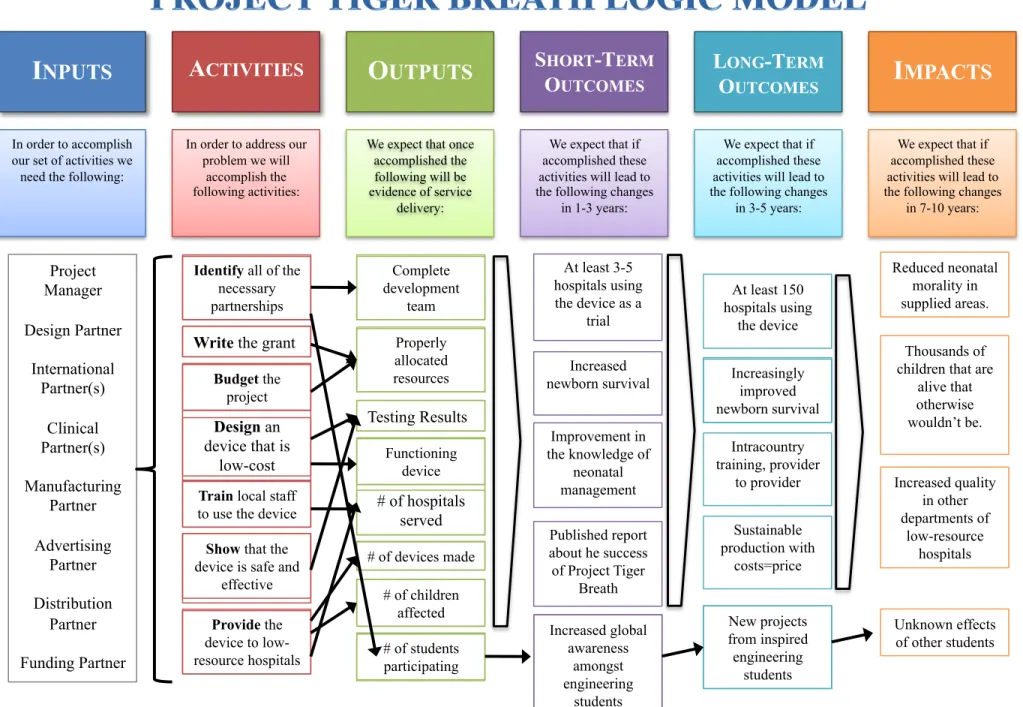
Figure 1A. Logic Model for Project Tiger Breath ... 60
! "!
INTRODUCTION
The advent of mechanical ventilation in the 1960’s and 70’s revolutionized the
approach to newborn illness and improved infant mortality significantly.1 Neonatal
intensive care has developed into an entire medical specialty using tools such as
surfactant replacement and extracorporeal membrane oxygenation to bring sick infants
through the perilous first few days of life.
For much of the world through, access to these advances is still many years away.
If we consider India, where the project was conceived, mechanical ventilation arrived in
there in the early 1990’s2, but its advantages have not been shared throughout the country.
Describing the situation from a critical care center in New Delhi, Nangia et al comment
that mechanical ventilation “is an expensive and complex technique and a large
investment in terms of money, time, skill, and labor…” 2 Rough estimates postulate that
80% of India’s population lives in areas lacking adequate intensive care services. 3
India’s population in 2009 was estimated to be 1.15 billion people4 leaving roughly 920
million people without access to intensive care.
Using India’s crude birth rate of 32 per 1000 people (as of 2010)5 that would
mean that 29.4 million children are born every year without access to state-of-the-art
ventilation. If you consider respiratory distress syndrome (RDS) alone, 2-3% of all
neonates will require mechanical ventilation.6, 7 Combining RDS with sepsis and
meconium aspiration syndrome, that number could easily be 5-10%. If 5% of all infants
born to resource-poor areas of India that lack access to mechanical ventilators require
! #!
From personal experience, in rural areas where ventilation is not available the
solution is use manual intermittent positive pressure ventilation (IPPV). In lay terms,
parents are required to “hand bag” newborns using an ambu bag for days on end as their
only means of respiration. Ambu bags8 are
self-inflating air reservoirs that are typically used for
temporary ventilation during cardio-pulmonary
resuscitation (CPR) or neonatal resuscitation.
When they are the only means available for
ventilation, parents are typically taught to squeeze
the bag with some sort of rhythm. One could
imagine that fatigue, hunger, conversations, anxiety, and boredom make this
responsibility quite daunting.
Project Tiger Breath is a program designed to create and deliver a low-cost form
of mechanized ventilation to hospitals in the developing world. I say mechanized
ventilation rather than mechanical ventilation because I do not want to suppose that the
device should create the illusion that it offers all of the same features common to
mechanical ventilation like air filtering, fraction of inspired oxygen (FIO2) control,
precise pressure and volume settings, and many more.
By discussing the need for new technology, one crosses over from the world of
non-governmental organizations (NGOs) and public health into a world of design,
manufacturing, and distribution. Often these two worlds find it difficult to communicate,
but there is hope that collaboration can reverse this.9, 10
! $!
The creation and distribution of medical devices is driven by supply and demand.
However, many common medical devices have not been able to penetrate global markets
because “without money, need does not translate into demand.”10 Without a sizeable
demand in a well-defined market, companies are reluctant to invest in new medical
devices. Because of this Project Tiger Breath is a university-based program that will rely
on public-private partnerships in order to translate the ingenuity and resources of
university students and faculty into health outcomes for low resource areas.
Project Tiger Breath is program that is intended to organize and oversee the
design, manufacturing, distribution, and use of the Tiger Breath Ventilation Assist Device
(VAD). The program will coordinate the efforts of several “partners” including
university-based design teams, clinical advisors, international practitioners, and funders,
as well as manufacturing, distribution, and advertising companies. The program will be
lead by a project manager that acts as the intermediary between all of the program
partners.
Project Tiger Breath began through a partnership with the Mechanical
Engineering Department at Clemson University during the fall of 2010. The project
manager presented the mission and vision to the students at the beginning of the semester
and charged them with creating a device that was low-cost, small, lightweight, safe, and
durable that could take the place of a parent’s need to provide manual support. What they
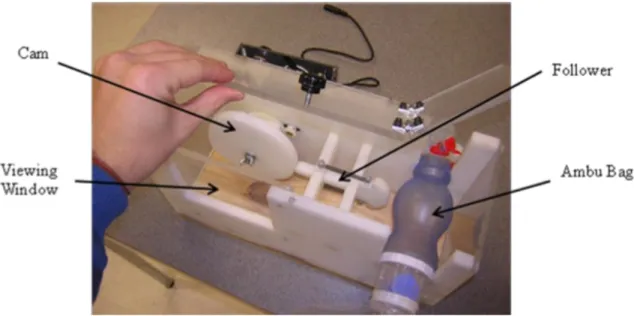
created was an electrical motor driven cam-follower system that uses interchangeable
! %! Figure 2. Tiger Breath VAD Clemson Prototype
The following is a discussion of the program plan and evaluation for Project Tiger
Breath. It is will be presented in three parts. The first part is a systematic review of the
literature that discusses similar programs that have developed devices for low-resource
settings. The next part is a detailed description of the program plan that includes the
program theory, goals and objectives, logic model, and implementation plan. The third
part outlines a plan for evaluation that will be used to monitor the success of Project
Tiger Breath over time. Finally, the conclusion of the paper will discuss Project Tiger
Breath within the context of global device design and manufacturing and the implications
for future directions.
A consistent theme through out this discussion of Project Tiger Breath will be to
highlight the importance of collaboration and partnership as key to developing successful,
innovative programs in the twenty-first century. Too often, the worlds of engineering and
public health fail to interact in an optimal way that combines the talents of both groups
! &!
the fact that design and program planning are not all that are necessary to deliver a new
medical device. The collaborative mindset seen in the early stages of design and testing
will carry over in the later stages of the program as Project Tiger Breath networks with
partners in advertising, distribution, graphic design, management and many others.
This discussion is important because it provides the framework for insuring that a
new device will be accepted in the market. It will build off of the examples found in the
systematic review and use the tools of program planning and evaluation to in a sense
“rethink” how university-based global partnerships that cross the boundaries of culture
and commerce can cooperate to build a new medical devices to supply the places of
! '!
SYSTEMATIC REVIEW
INTRODUCTION
The following systematic review focuses on gaining a knowledge base to guide
the development, implementation, and evaluation of the Tiger Breath Ventilation Assist
Device. Project Tiger Breath will need to meet several guiding tenants if the project is to
be deemed successful. It is essential that the following elements be addressed from the
outset of the program plan.
1. The intervention must not harm infants, and should produce better outcomes than
current interventions for neonates in low-resource settings.
2. The intervention must be low-cost so that it is readily obtainable in the target area
either through hospital funding, NGO purchase orders, or private payers.
3. The intervention must be culturally and professionally relevant so that it honors
the efforts of health care providers by respecting their desire for professional
equipment.
4. The intervention must be sustainable so that the Tiger BreathVAD does not
become irrelevant a short time after purchase.
! (!
METHODS
RESEARCH QUESTIONS. The systematic review of the literature sought to answer three
distinct questions that would lay the foundation for implementing Project Tiger Breath.
• What is the burden of neonatal illness requiring mechanical ventilation in
low-resources areas of the world, particularly Asia?
• Have similar devices been invented that are intended to increase access to
mechanical ventilation?
• How have other devices and their programs that address other health problems
been designed, implemented and evaluated for use in low-resource settings?
SEARCH STRATEGY. PubMED served as the online database used to identify relevant
studies that address the three research questions above. To ensure thoroughness, I used
MeSH terms in the search strategy wherever possible in order to capture the appropriate
categories within PubMED. Applicable MeSH terms included respiration, artificial;
developing countries; infant, newborn; intensive care, neonatal; and equipment design.
The following search strategies where used to identify potentially relevant articles:
• "developing countries"[MeSH] AND "equipment design"[MeSH] AND "infant,
newborn"[MeSH]
o 8 articles
• "low-cost" AND "developing countries"[MeSH] AND "infant, newborn"[MeSH]
o 46 articles
• "respiration, artificial”[MeSH] AND "developing countries"[MeSH] AND
"infant, newborn"[MeSH]
! )!
• "low-cost" AND (ventilation OR ventilator) AND "developing countries"[MeSH]
o 6 articles
• "low-cost" AND (ventilation OR ventilator) AND "developing countries"[MeSH]
AND "infant, newborn"[MeSH]
o 2 articles
• "low-cost" AND "equipment design"[MeSH] AND "developing
countries"[MeSH] AND "infant, newborn"[MeSH]
o 1 article
• "low-cost" AND "equipment design"[MeSH] AND "developing
countries"[MeSH]
o 18 articles
I reviewed the title of each of these 105 articles, recognizing many of them to be repeated
in the similar searches. If the title of the article seemed appropriately relevant to one of
the three research questions, I reviewed the abstract as well. Inclusion criteria for a study
were as follows:
• The article must represent information that is relevant to one of the three research
questions.
• The data must come from developing countries.
• It must be written in English.
• The article should be available within the University of North Carolina at Chapel
Hill’s online library. (Two articles were purchased using intralibrary loan, but
! *!
I conducted a hand search of the reference list for relevant articles as well as the “similar
articles” feature in the PubMED database. In all, I thoroughly reviewed 35 articles Much
of the information from the articles related to burden of suffering related to neonatal
ventilation was reported in the INTRODUCTION section of this paper. I found no similar
device that could provide supplemental ventilation to a newborn in the published
literature. Four studies describing low-cost devices were found that also had intervention
plans discussed. A summary of each of these studies can be found below.
SUMMARY OF LOW-COST DEVICE INTERVENTIONS
BEYOND THE WHEELCHAIR-THE SKEETER
The Biomedical program at the University of Alaska11 recognized that in many
developing countries individuals that are disabled are restrained from living otherwise
productive lives because they lack access to wheelchairs that are capable of functioning
in settings where there are poor roads.11 The solution they designed was a wheelchair
carriage that was motorized, but was made of bicycle parts and a low-cost custom frame
that could be feasibly maintained in a low-resource area. They focused on Cambodia, a
country that has experienced years of conflict and civil war leaving many of its citizens
disabled from devastating injuries.
Disability is a problem that is experienced far too often in the developing world.
The WHO “estimates that up to 10% of the world’s population has a disability, and 80%
of those people life in developing countries.”11 Lack of transportation for these people is
an almost independent predictor of poverty. Without transportation, individuals are
restricted to a lifetime of begging “because it is generally difficult to impossible to gain
! "+!
Their study focused primarily on the design of the device, giving a fair amount of
attention to making it sustainable in the developing world. Their guiding principles
included the following:
• Inexpensive (less than $250)
• Manufacturable in target countries
• Repairable
• Applicable to a variety of impairments
• Useful
• Safe
To accomplish this, they changed their
focus from using motorcycle parts to using
components that were also used with bicycles,
which are ubiquitous in developing countries.
They also implemented cost-saving measures like using local manufactures and local
techniques to build the device, along with purchasing parts from nearby countries like
China or India. One of the biggest cost-saving opportunities was to use local labor for
production. They ensured the safety of the device by limiting the maximum speed, adding
a secure rear gate, and widening the wheelbase to avoid rollovers.
For the distribution of the device, the authors proposed three avenues of funding:
private donations from interest groups in wealth nations, NGOs that are currently
purchasing less useful devices, and micro-loans that are given to the individual and are
repaid after the person has obtained stable income.
volume of production the cost per engine will become lower.
Using local labour and resources to manufacture
the Skeeter ensures it can be repaired locally as
well. This is a significant point since many previous efforts to provide technology, such as wheelchairs, to people with disabilities in develop-ing countries have been flawed because the donated devices were impossible to repair by the recipients or local craftsmen [11].
The Skeeter is designed to allow wheelchair users
to travel independently. The Skeeter can be used by full time wheelchair users and others who need a stable vehicle, including amputees and those with balance problems or weakness due to polio, leprosy, or various other debilitating conditions. In many cases the latter group of people cannot negotiate the use of a two-wheeled motorbike and may require a stable means of transportation that can be operated entirely with hand controls.
The Skeeter can be readily adapted for a disabled
individual who does not use a wheelchair but needs the stability of a three wheeled vehicle and a seat to support them while they travel. The seat (not depicted in Figure 2) will fold down from one side of the frame to readily deploy.
One of the most important safety features of the
Skeeter is that its maximum speed is quite slow,
approximately 20 km/h. This is not a significant problem since much of the rural traffic is side-of-the-road carts pushed or pulled by humans or animals. To ensure lateral stability the wheelbase in the rear is fairly wide (about 52 inches) and the rider’s centre of gravity is positioned directly between them.
A four-wheeled design might provide greater lateral stability, but would require additional parts
not available from bicycles, including a tie rod, tie rod ends, and a ball and socket steering arm, plus an additional tire and wheel. The steering linkage parts are expensive and would readily render the Skeeter
too costly for use in poor countries where every dollar counts.
An important safety feature is the wheelchair lock down system (Figure 2). The front of the wheelchair frame which connects to the footrests is cradled by adjustable receptacles from each side, and the rear entry gate closes tightly against the upper rear quadrant of the rear wheelchair tires. This config-uration prevents movement of the wheelchair in all possible directions and is very secure. Other lock-down configurations can be implemented when the local wheelchairs vary from the conventional style, as they often do in developing countries (Figure 3).
Purchase and distribution of skeeters
While the price of a Skeeter may appear trivial to those in the western world, it is likely to be too expensive to be purchased outright by the poverty-ridden disabled people who need them most. There-fore it appears likely that alternative mechanisms will be needed to provide Skeeters to the target popula-tion. There are at least three mechanisms to achieve this goal.
The first is the simplest and most direct. Funds can be raised in wealthy countries specifically for the purchase of these devices and eachSkeeterpurchased can be donated to a worthy individual within the mobility-impaired population.
Second, there are many Non-Governmental Or-ganizations (NGOs) in developing countries that
Figure 2. Details of theSkeeter. Figure 1. The original sidecar adaptation operated by a
Cambodian amputee.
256 J. Owens & C. Simonds
Disabil Rehabil Assist Technol Downloaded from informahealthcare.com by University of North Carolina on 02/19/11
For personal use only.
! ""!
This device would not require any sort of implementation trial because it is not
technically a “medical device.” The authors had collaborators in Cambodia that were
ready to proceed with manufacturing and distribution. The authors do not provide any
information regarding an evaluation plan.
RECYCLED INCUBATORS AS ALTERNATIVES FOR MODERN SYSTEMS
This study took place in Nigeria, in conjunction with the bioengineering
department at Imperial College in London, England. They sought to address the need for
neonatal incubators in Nigerian hospitals by recycling older incubators that were no
longer used in the Nigerian hospitals. They identified the need for incubators by
interviewing clinicians and administrators in the local hospitals, rather than coming up
with their own idea.
The researchers
identified that “it is difficult if
not impossible for neonatal
centres in developing countries
to purchase modern systems.”12
The developed a technique to
use parts from obsolete
incubators and make digitally
controlled systems that would be similar to modern systems. Using nineteen
dysfunctional and obsolete incubators from Nigerian hospitals, they were able to
reconstruct them with the new design onto sixteen units divided across four NICUs in
Nigeria. Before the manufacturing ever started they searched the global market (via the
(defined as ease of availability of system’s spare parts and maintenance engineers in Nigeria), (c) ease of hood accessibility, (d)
heating transient response, (e) sensitivity and response to erratic power supply, (f) humidification, (g) system aesthetic
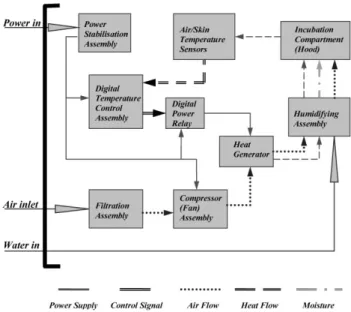
FIG. 1. Recycling assembly block diagram.
FIG. 2. Mean scores of performance indices for modern (&) and recycled incubators (%): (a) set-point accuracy, (b) maintainability (defined as ease of availability of system’s spare parts and maintenance engineers in Nigeria), (c) ease of hood accessibility, (d) heating transient response, (e) sensitivity and response to erratic power supply, (f) humidification, (g) system aesthetic appreciation, (h) operation inherent noise, (i) response to high ambient temperature and (j) cost of system procurement.
Recycled incubators 209
! "#!
Internet) for the lowest price of components that could not be salvaged, organized an
engineering team, and established their design criteria.
The recycled devices were tested for 6 months and subject to “rigorous
performance characterization.” 12 Their performance was compared to a cohort of modern
incubators that the researchers also supplied to the hospitals using a 10-point scale that
measured ten performance characteristics.
• Set-point accuracy
• Maintainability
• Ease of hood accessibility
• Heating transient response
• Sensitivity and response to erratic power supply
• Humidification
• System aesthetic appreciation
• Inherent noise during operation
• Response to high ambient temperature
• Cost of system procurement
The overall performance scores for the recycled and the modern incubators were
the same (65.9% vs. 65.8%). The areas where the recycled incubators were the most
different were aesthetic appreciation and cost of procurement. These two obviously go
hand-in-hand, but the very good cost scores could easily outweigh (but not negate) the
poor aesthetics. Overall, the recycled incubators were much more affordable,
maintainable, and responsive making them a more cost-effective solution for the Nigerian
! "$!
The authors concluded that the use of outdated incubators in developing countries
presented a significant risk to newborn children; however their study showed that with a
few modifications those old incubators could be recycled and be as effective and safe as
other more expensive incubators that are not practical even for tertiary care centers to
purchase. The authors do not report any attempt to evaluate their program or their plan
choosing to focus only on the device.
COLOR-CODED SCALE FOR LOW-BIRTH WEIGHT INFANTS
This medical device originated from the Bloomberg School of Public Health at
Johns Hopkins University.13 The intention was to make a device that could easily and
accurately delineate newborns that were !2500 g, 2000-2499 g, and "2000 g in
developing countries where access to scales may be limited. The information gained from
the delineation helps to classify newborns into the
appropriate risk category so that they can receive
proper treatment.
This particular study reports the design
and implementation of the BirthWeigh III that
was developed in conjunction with the Program
for Appropriate Technology in Health (PATH).
The first and second models had failed to be
sensitive and specific enough to be implemented.
In this region of Nepal, 95% of the children are born at home. The BirthWeigh
device is designed to be used in homes by birth attendants and was analyzed within a
larger study that was taking place in Nepal. Infants were weighed at home by the project
Training for project workers (n = 11) included a manual with written and pictorial instructions on use of the scale, and practice sessions using hand made, life size dolls of varying weights. All workers were observed directly and given constructive feedback and advice during the first week of household visits by one of the authors (LCM).
Subjects for this study were recruited consecutively among infants enrolled in the parent trial. The required sample size (n = 1070) was based on the number of infants necessary to estimate sensitivity of the device to within 5%, assuming 30% prevalence of infants ,2500 g (based on data from the previous year), type I error equal to 5%, and minimum sensitivity of 70%. The final sample was slightly increased as security problems in the study area prevented timely estimates of the ongoing enrolment figures.
Workers obtained informed consent from the mother, then placed the infant in a sturdy cloth sling with two reinforced holes through which the hook at the end of the spring scale was attached. The worker raised the infant secured in the sling and observed the level of the indicator button at the top of the scale (fig 1B). If the button remained below the top level of the plastic cylinder, the worker classified the infant as having a weight of>2500 g. If the first step on the indicator button could be seen or felt with the worker’s thumb, the infant was classified into the 2000–2499 g category. If the entire indicator button was exposed or detected by feel, the weight class was recorded as,2000 g. The steps on the indicator button were colour and shape coded, and the recording area on the data collection form was coded with matching colours and shapes. Thus, neither literacy nor vision was required for use of the scale.
Statistical analysis
Infants with data for both the BirthWeigh III and digital scales were included in the analysis. Gold standard birth weight categories were created from the continuous weight measurements recorded using the digital scale. Sensitivity, specificity, and predictive values for the test device were estimated. All analyses were conducted using Stata version 8.0 (StataCorp., College Station, TX).
Ethical approval
This study was approved by the Nepal Health Research Council, the Committee on Human Research of the Johns Hopkins Bloomberg School of Public Health, and the PATH Human Subjects Protection Committee.
RESULTS
Between 5 March and 30 June 2004, 1820 paired measure-ments using the BirthWeigh III and Seca Scales were recorded (fig 2), on average 10 minutes apart. Ninety per cent of infants were measured within 72 hours and 97% within the first week of life. According to the gold standard scale, there were 1309, 421, and 90 infants in the three weight categories,>2500, 2000–2499, and,2000 g, respec-tively, for a total LBW prevalence estimate of 28.1% (95% CI 26.0% to 30.1%). No infants>2500 g were classified into the lowest weight category using the BirthWeigh III device, and a single infant of,2000 g was misclassified into the highest BirthWeigh III weight category. All other misclassifications were between adjacent categories. The sensitivity, specificity, and positive and negative predictive values of the BirthWeigh III device for identification of LBW infants and infants ,2000 g are shown in table 1.
Only seven infants weighing>2000 g were misclassified by the BirthWeigh III scale as,2000 g, and among these seven misclassified infants, six were within 60 g of the cut-off. Among the 11 infants,2000 g not detected as such by the BirthWeigh III device, nine were within 80 g of the cut-off. For classification of LBW, 2 of the 11 scales (#9 and#11) accounted for 21 of the 32 false negatives, and a third scale (#6) accounted for half (16/31) of the false positives.
DISCUSSION
The lightweight, portable, hand held, coil spring BirthWeigh III scale accurately classified newborns into one of three weight categories. For identification of LBW infants, the scale performed significantly better (94% sensitivity and positive predictive value) than predicted under most classification rules based on anthropometric measures. When rules have been adjusted to increase sensitivity to levels seen in this study, specificity has suffered considerably, reducing the positive predictive value of anthropometric surrogates to unsatisfactory levels.7 8 12 22 23 In settings where infants categorised as LBW or,2000 g are referred to the next level health care centre, or are given weight dependent interven-tions, maintaining high specificity while still detecting a maximal proportion of at-risk infants is imperative.
The BirthWeigh III scale offers the facility to classify infants into multiple weight categories without significant loss of validity, thus extending its potential use to weight dependent interventions such as antibiotic4 and topical emollient therapy24 25
or vitamin A dosing.26
The detection rate (87.8%) for infants,2000 g was higher than the overall detection rate for all LBW infants with the previous version of the scale.20Furthermore, this device will be more affordable than previous low cost scales, due to the emphasis during its design on simplicity and construction from inexpensive materials.
While the hand held scale operators also recorded the birth weight using the gold standard digital scale, any potential
Figure 1 BirthWeigh III scale. (A) Drawing displaying the colour coded button providing tactile and visual indication of birth weight category. (B) Project worker weighing an infant with the scale. Informed consent was obtained for publication of this figure.
Low cost spring scale to identify LBW infants 411
www.archdischild.com
group.bmj.com
on February 7, 2011 - Published by
adc.bmj.com
Downloaded from
! "%!
workers and then with a digital scale. The device itself is lightweight, composed of only
four main parts, and made of inexpensive materials. It’s estimated costs is only $5.00
USD. Other costs included training 11 project workers and providing a written and
pictorial manual.
The trial was nested in a larger parent trial containing 1070 newborns. As a result,
none of the !2500 g babies (28%) were classified wrongly into the lowest category, and
only 1 "2000 g infant was inappropriately labeled as !2500 g. In all, only “seven infants
weighing !2000 g were misclassified…as <2000 g, and…six were within 60 g of the
cutoff.”13 Eleven infants that were <2000 g failed to be detected that should have been
detected. The specificity of the BirthWeigh III (the ability to identify a truly <2000 g
infant) was 99.6 with positive and negative predictive values of 91.9 and 99.4,
respectively. 13 The researchers concluded that this study proved that the BirthWeigh III
was a suitable device that could safely identify children that are low-birth weight at a low
cost that could be obtainable in a developing country.
PHOTOTHERAPY USING LEDS
The Duke-Engineering World Health (EWH)14 program sends 50 or more
engineers around the world every year. One device reported in April 2010 was a new
solution to an old problem—neonatal jaundice. Phototherapy has been the mainstay for
treatment for neonatal jaundice/hyperbilirubinemia for many years in the developed
world, but this technology costs between $3000 and $5000 USD and has remained out of
reach for most of the developing world. Many of these machines are available to be
! "&!
put them out of reach for most hospitals. The solution was to invent an LED-based device
that was powered by a car or motorcycle battery.
The design process began with a series of interviews conducted with medical
doctors working in villages, asking them what relevant technology would be most helpful
to them. After selecting phototherapy as the focus project for 2005, they identified that
the lack of replacement bulbs and power supply were the most common causes of device
failure. The project incorporates students that take a class at Duke that provide initial
designs that are later provided to the public for improvement. For this project, a public
design firm, Tackle Design, took on the project and refined it.
The team consulted US physicians and incorporated the thoughts of many
different professionals into the final design of the device. After taking into consideration
all the design input, the team conducted bench tests to evaluate the device’s performance
in critical aspects of the design like battery life, light source characteristics, and longevity.
Next, the team proceeded to field trials,
implementing 114 units divided amongst
four countries in hospitals ranging from
very small to very large. Two engineers
went with every device to help install the
device, train the staff, and conduct
follow-up interviews. The final cost of the device
was $65.62 USD, which is dramatically less than the multi-thousand dollar units that are
commercially available. From the first trial, the field teams noted one important concern.
First, the staff in the hospitals complained that parts of the device looked “homemade” 14
Bench Testing
The devices were bench tested to determine that they met the specifications. Figure 3 summarizes the most critical data from bench testing, showing the intensity of light for each square inch of the illuminated crib, following the methods suggested by Vreman [8]. All of the designs tested in each of the field tri-als passed all bench testing and met all design specifications.
Field Engineering Trials
Despite data from the bench that showed the device operated in the manner anticipated, we wanted to undertake extensive field testing. As discussed earlier, a device that is adequate for a well-developed hospital may be inadequate for a developing world setting.
A total of 114 units were constructed using volunteers coor-dinated by a nonprofit corporation formed for the purpose of manufacturing and distributing the BluLine: PhotoGenesis Medical (www.photogenesismedical.com). These were di-vided into three groups and shipped to hospitals in four countries. The hospitals were chosen to range from small (approximately 20 beds) to very large (more than 500 beds) and from specialty (maternity) to general and referral hospitals.
Every device was accompanied by two engineers. The engi-neers attempted to install the device, train the staff to use the device, and then interviewed the trained staff about the device. For the first two groups, simulated clinical use was undertaken for one month. Where simulated, clinical use includes at least occa-sionally turning on the device and letting it run for several days.
Results
First Engineering-Field Trials
From the first build, 56 units were completed by 65–75 volunteers (approximately 200 volunteers were turned away for this build session). The cost for each unit for the first build was US$65.62. This can be compared with a commercially sold unit whose retail price can be several thousand dollars (Table 2). Each unit required
approximately five volunteer man-hours to complete. Despite practice builds by the engineering team, eight procedures devel-oped for the build required modification during the build.
Thirty-nine of the 56 units were shipped to hospitals in Tan-zania, Nicaragua, and Honduras. Of those shipped, 30 worked upon arrival and 38 worked after minor engineering correc-tions (Table 4).
No developing world installation complained about the lack of a stand. Most hospitals hung the device from the ceiling, as the cribs were typically not moved, and in any case completely filled the available space to overflowing, including several infants in each crib. A few hospitals preferred a drip stand to be used for the device, and others constructed a stand for the device, the available manual labor being relatively inexpensive. Table 3. The most important design criteria and
require-ments for phototherapy identified from interviews conducted in developing world hospitals.
Power requirements
Rechargeable >8 h on battery alone after full
charge
Charge while light is running and line power is on Battery lifespan Two years with daily outages Battery availability in
country
Comparable to a 12-V car battery or 6-V motorcycle battery
Light source
Intensity 8–30lW/cm2/nm
Wavelength 425–475 nm
Life time Bulb>5 years normal use
Spot size 8 in2
User interface On/off button only
The needs for a rechargeable battery and a very long-lasting bulb would not have appeared on a similar speci-fication list for a U.S. hospital.
(a)
(b)
Fig. 1. (a) and (b) The design of the phototherapy device’s
illuminating head consists of three plastic layers (acrylic in black, elastomer in gray) compressing and connecting 55 LEDs in parallel. The bolts, symbolized by the dashed lines, hold the pieces together and also allow for easy field repairs with minimal tools.
2 A Fuse D1 D2
D4 D3 R1
Branch 1
Branch 2
6 V dc
+ Branch 3
BlueRay Unit
Fig. 2. Schematic showing the final power supply. The origi-nal power supply used a 12-V source and commercially available power handling but turned out to be excessively sensitive to power-line fluctuation. The diodes allow for auto-matic switching between the wall transformer (shown as a current source) and the battery, when the power line fluctu-ates or fails. The diodes also serve to drop the voltage to the level required by the BlueRay unit.
IEEE ENGINEERING IN MEDICINE AND BIOLOGY MAGAZINE MARCH/APRIL 2010 39
! "'!
which made them reluctant to use the device even when the alternative was no therapy at
all. One person asked about FDA or CE approval, and no one asked about clinical
efficacy data.
A second round of testing incorporated a new custom power supply, improved
aesthetics, and a reduced cost to $45 USD. Thirty-five units were tested in the same
hospitals in Tanzania, Nicaragua, and Honduras. All the units worked well for the first
month of use and there were no complaints from the staff about the device.
The third and final round was conducted entirely in Kenya. This time, previous
shipping problems were corrected and all of the 28 units worked upon arrival. All the
staff members eagerly accepted the device and were glad to use it because they had no
other option for treating infantile jaundice.
This device is an excellent example for the potential of a university-designed
project to be implemented internationally. The authors comment on the obstacles that
exist for bring a device to market. For many products, the cost of design and
implementation can be $10-20 million USD 14, a price that exceeds the market for many
design ideas. Major companies are reluctant to create products that could not make a
profit in the developing world. That leaves the non-traditional, university-based program
to serve as crucibles of innovation that can partner with the power of the private sector to
! "(!
ANALYSIS
Each of these programs provides valuable insight into the planning and evaluation
of a program to deploy a low-cost medical device in a low-resource setting. Table 1 in the
Appendix shows the important elements that are utilized in the studies. One theme that
was consistent throughout all four projects is that development does not exist in a vacuum,
nor is it accomplished by the isolated efforts of passionate individuals. The above
examples demonstrate that the most effective way to implement a new device in a
low-resource setting is to collaborate with multispecialty teams.
PROGRAM ORGANIZATION
The cited studies had several similarities in design-team structure that helped to
ensure success at every level of the program plan and evaluation. All of them were
university-based, which allowed the teams to utilize student and volunteer labor that
would significantly reduce the design and prototyping costs. Universities have more
opportunity to work outside of the bounds of the commercial marketplace and to pursue
projects that find their value in benefiting humanity rather than generating a profit.
Having said this, three of the groups consulted with and found support from private
non-university organizations in later stages of product development. They make no comment
about obtaining outside funding sources such as the National Institutes of Health (NIH)
or the Bill and Melinda Gates Foundation (Gates Foundation). Only Owens and
Simmons11 mention the use of microfinance as a proposed funding source in their
discussion. It fit their project particularly well, but it is an option that deserves further
! ")!
It is also essential to see the patience displayed in these organizations as they
remain faithful to their intentions in the face of design failure. Three of them reported
device failures that required redesign and new implementation plans. This perspective
would need to be built into the group purpose early on in the process so that hindrances
do not oppose the mission, but instead help to refine it and make it more successful in the
long run.
DESIGN OBJECTIVES
The design teams for these projects presented important design principles that will
be beneficial for Project Tiger Breath. Owens and Simmons11 made local manufacturing
a priority for cutting-costs. Other groups suggested purchasing components from India
and China as a means of cutting costs, but direct manufacturing is an important concept
that not only will reduce costs, but would also provide local jobs in a resource-poor area.
Specific cautions would need to be taken by the group to ensure that manufactures were
able to provide quality products without resorting to oppressive labor practices such as
child labor and/or non-sustainable wages, but that is beyond the scope of this discussion.
Malkin and Anand14 addressed the importance of device aesthetics and how they
effect the end-user receptivity. Hospital staff members in the implementation centers for
the phototherapy program were reluctant to use a fully functional device because in their
opinion it looked “homemade.” Being American, the design team had more of a
“function-centered” approach and admittedly assumed that the hospital staff would be
eager to embrace their device because they had no other option. 14 They failed to take into
! "*!
workers were offended, and in some manner insulted, by the assumption that they didn’t
deserve professional appearing products.
PROGRAM ELEMENTS
Two programs 13, 14were able to collect pre-design data from their target regions
about what health concerns they wanted to see addressed by new technology design.
Another used their personal experience in the target area and generated their own solution
to the common problem of disability transportation.11 For future projects, based on this
review I would recommend that significant effort be given to collect pre-design data that
identifies specific needs and supports the selection of the proposed project. Otherwise,
you may run the risk of creating a product that is neither needed nor implementable.
The researchers were able to incorporate laboratory trials into their
implementation plan as the first step to ensure safety and functionality. This step requires
an addition phase to be planned as part of the program plan, but it would likely pay
dividends by making the real implementation phase more successful. Consistent with the
theme of running trials, the teams also planned multi-phased implementation plans. This
is important to assume from the outset because it allows a program to accept as “steps”
what otherwise would be perceived as failures.
Another important implementation element that this review identified was the use
of multi-site implementation as opposed to collecting data from only one site. This
approach adds diversity and provides access to greater numbers of patients that can be a
part of the evaluation. This facet of the plan could be completed regionally (e.g. multiple
hospitals in northern India) or globally (e.g. India, Ghana, Honduras) with different
! #+!
EVALUATION
None of the studies focused a lot of attention on the evaluation steps of their
design programs. This is likely because they were written for a predominantly
engineering-based audience. Two programs did collect both qualitative and quantitative
data that could be used to define success for the program implementation and guide the
next round of design and implementation.12, 14 Interestingly, none of the programs
reported pursuing federal approval for their medical devices. Likely only two programs
would have had possible concerns for their devices. Malkin and Anand state, “We believe
that very few, if any, medical-device manufacturers in the developed world would build a
device for distribution in the developing world without FDA approval or a CE mark.
Indeed, under section 802 of the FDA rules, manufactures of a medical device
exclusively for export from the United States must still be able to obtain approval,
although actually obtaining such approval is not required.”14 In their view, ignoring these
regulatory bodies is an efficient way to reduce costs.
CONCLUSION
Team-based device design and implementation is a vibrant way for (deleted
Western) engineers to be involved in contributing to global health care disparities and
fostering international collaboration. These four programs represent the extent of the
published literature on low-cost device design for low-resource areas. It is likely that
many more devices have been created and have never been published. The programs that
! #"!
Breath including being university-based, focusing on longevity, ensuring local relevance,
and investigating the project results.
Based on the systematic review, it is evident that good program planning and
evaluation are ingredients for a successful medical device program. The following
sections will outline the program plan for Project Tiger Breath and discuss how each
! ##!
PROGRAM PLAN
OVERVIEW
Project Tiger Breath is intended to develop a method for providing sustained,
mechanized ventilation for newborn children in low-resource areas around the world. It is
slightly different from most public health interventions because it begins with the
development of a physical device that will then be used as part of a program to test and
evaluate the device and effectively provide the device to areas where it is of greatest need.
The success of Project Tiger Breath depends on the coordinated efforts of engineers,
physicians, nurses, patient families, and researchers. The ultimate aim of Project Tiger
Breath is to reduce infant mortality in low-resource areas by providing a therapeutic
bridge for newborns that are experiencing respiratory distress.
The project was conceptualized while I was working in Duncan Hospital in Bihar,
India. Because of this, it is likely that the initial focus of the project and the first round of
clinical trials will be in India. Once the device is created and shown to be effective it will
not be limited to only the Indian subcontinent.
Duncan Hospital is a 200-bed hospital located in Raxaul, India on the border of
Nepal. It is the only secondary referral center run by the voluntary sector for 3 districts in
North Bihar (6 million people) and Southern Nepal (5 million people). The service
priorities of the hospital are Obstetrics and Gynecology, Medicine, Surgery, Pediatrics,
Ophthalmology, Dentistry, and Radiology. They average ~5000 deliveries a year and are
staffed by 1 obstetrician and 2-3 junior medical officers. Newborns requiring intensive
! #$!
pediatrician, and internist, each of which trained a state-of-the-art medical institutions in
the south of India.
Project Tiger Breath will be university-based, capitalizing on the potential of
universities as centers for humanistic entrepreneurship with the freedom to innovate for
the betterment of society. Their role will be to develop the ventilation device, the Tiger
Breath Ventilation Assist Device (VAD). The program plan involves three phases:
Development, Implementation, and Evaluation. Each of these phases will be discussed
further in the following program plan.
PROGRAM CONTEXT
POLITICAL ENVIRONMENT
India is striving to make large leaps in public health in the current political
environment. As globalization continues to advance, India is looking to solidify its
position as a reputable country well on its way to successful development. The National
Rural Health Mission, the government agency in charge of improving health for India,
has been working aggressively since 2005 to address maternal and child health in
particular along with communicable diseases, hospital quality, overall infrastructure, and
the list goes on.15 Working to effectively provide improved care to children at low cost
using resources that already exist in the health care system is likely to not face much
political opposition.
LOCAL, STATE, AND NATIONAL PRIORITIES
I believe that the hardest level to penetrate would be the local priorities. On a state
level, Bihar is similar to the old Wild West. The rule of law and policy is often only a
! #%!
culture, striving to be above reproach and ethical, not being a part of the lawlessness in
their state. State politics and barriers could be overcome, but there may be some
opposition such as tariffs or fees.
PROVIDERS AND RECIPIENTS
Locally, the staff at Duncan Hospital is composed of well-trained doctors working
in a low-resource hospital. I would fear that there might be opposition to using a
ventilator that did not look professionally made even if no ventilator is the other option.
The device would have to be studied such that it can be proven beneficial and
cost-effective as well as manufactured using a professional casing and branding that add to the
authenticity of the device. It may be that simply introducing a new device that requires
training, adaptation, and maintenance will be overwhelming to the ICU staff. As a
primary testing center, Duncan Hospital would receive the devices free of charge, and
Project Tiger Breath would be willing to provide the finances needed to conduct the
project in Bihar.
POSSIBLE FINANCIAL RESOURCES
US-based funding from the NIH and the Bill and Melinda Gates Foundation are
possible sources for funding the development and prototype phases of implementation as
well as the first year of testing and evaluation. Future expansion of the device is intended
to be accomplished using sales and donations. The device is priced such that
low-resource hospitals or donors that are interested in serving a specific area could easily
purchase it.
! #&!
The device is designed to be easy to implement into current respiratory protocols.
It accommodates ambu bags that are ubiquitous in most hospitals and has few moving
parts. The device has well-labeled, easy to use knobs that control the breaths per minute.
There are 9 labeled cams that can be used for 9 different combinations of volumes of are
delivered at different speeds. The device comes with complete instruction manuals for its
few moving parts.
STAKEHOLDERS
Because Project Tiger Breath is being completed through collaboration there will
be some need to balance the stakeholders in the project. The first design iteration for the
Tiger Breath VAD has already been completed at Clemson University. At any given
point the project remains my intellectual property as the primary program planner.
Clemson University is not interested at this point in continuing the project. As an effort to
thank them for their involvement, the device was named after Clemson’s mascot, and
their involvement will be plainly noted on all materials. In the future, other universities
such as UNC-Chapel Hill, Duke, or Wake Forest may collaborate as well. Prior to
beginning any future relationships, proprietorship will be discussed.
Hospitals where the device is used will have a large stake in the success of Project
Tiger Breath because it is their patients that will be directly affected. The management
team for Project Tiger Breath will have to negotiate the impact the program
implementation makes on local hospitals, state health departments, and governmental
! #'!
GOALS AND OBJECTIVES
GOAL
To provide low cost effective mechanical ventilation to neonates in under-resourced areas around the world.
OBJECTIVES SHORT TERM
1. By the end of 2011 the project manager will have identified all components of the
design team including university affiliates, medical advisors, international partners, collaborative companies, and private investors.
2. By June 2012 the project manager and associated team members will have applied
for and received sufficient funding for furtherance of the project.
3. By the end of 2012 the design team will have a fully functional prototype that has
passed laboratory testing and is ready to be implemented in target hospital(s).
4. By the end of 2013 the initial trials will show that the TBVAD is safe and
effective as a ventilation device.
5. By the end of 2013, the evaluation team will show that PTB has been
implemented in a culturally relevant and beneficial way for the hospitals in which it operates.
6. By the end of 2013, PTB will continue to function in an organized, cost-effective
way that is making progress towards the appropriate goals.
LONG TERM
7. By the end of 2014 the development team will have distributed the Tiger Breath
VAD to at least 50 hospitals
8. By the end of 2015 the development team will have distributed Tiger Breath VAD
to at least 150 total hospitals
9. By the end of 2015 completed trials that show a 20% reduction in
respiratory-related neonatal morality
10.By the end of 2016 the development team will reconsider whether the prototype
! #(!
PROGRAM THEORY
PROGRAM THEORY
The goal of a program theory is to explain how a specified program will address
an identified health problem. 16 The “diffusion of innovation”17 theoretical model is
designed to allow public health practitioners to use their resources must efficiently for
“the reach, adoption, implementation, and maintenance of programs. ”17 At the base of
this theory is the belief that innovation spreads through a society, rather than being
planted as a typical program might. It takes into account the reality that for an innovation
to be successful it must be accepted within a social system in a timely manner; first by
innovators and early adopters and ultimately reaching the late adopters and laggards in
the group.
The main attributes of the theory are as follows: relative advantage, compatibility,
complexity, trialability, and observability. 17 I will discuss each of these below.
DIFFUSION OF INNOVATION THEORETICAL MODEL
Implementing the Tiger Breath VAD will involve developing the device,
conducting laboratory testing, designing proof-of-concept studies, implementing the
device in hospital protocols, and evaluating the performance. For much of the developing
world, there is a disconnect between the technology that is available in modern hospitals
and the reality that exists in local wards. It is hoped that this device, being low-cost,
simple in design, and similar to current methods will help to bridge the gap as hospitals
work on modernizing their intensive care systems.
The plan to implement Tiger Breath will be rooted in the “diffusion of
! #)!
order to be spread to become a part of what a society perceives as normal. It
accomplishes this based on the following concepts:
INNOVATION
The Tiger Breath VAD is a simple device that is meant to make a small and
incremental change that improves the outcomes for children and families that require
mechanical ventilation in areas where no ventilators exist. This product will be perceived
as unique by some institutions simply because it will be an obvious intervention where
there had not previously been one. It will create a new barrier of mechanization that will
need to be understood by staffs and families at a pivotal point in a new child’s life.
COMMUNICATION CHANNELS
Information about Project Tiger Breath will be transmitted through a variety of
channels. Initially, testing and primary implementation will take place through
connections that are established with the design team. Following testing and
proof-of-concept evaluation phases, the performance of the Tiger Breath VAD would need to
provide specific communications that will demonstrate the value of the product. These
communications will need to reach doctors working in the far reaches of low-resource
areas, so creativity will be required.
SOCIAL SYSTEM
The innovation would need to be adopted by physicians and nurses in rural
hospitals. Several barriers are likely to impede full adoption. A similar device, discussed
in the Systematic Review14 was slowly received by staff at the testing hospital because
they feared it looked “homemade.” Despite having proven efficacy and being
! #*!
humans. Many providers that work in rural hospitals around the world trained in
university medical centers and would be reluctant to accept a device that deviated from
the quality they would expect from a medical device. This will be an objective for the
design partners and a final design plan will not be accepted without addressing it.
TIME
Adopting the Tiger Breath VAD could happen quickly. The device is budgeted to
be produced in an initial order of 1,000 so availability would not be an issue.
Incorporating the device into hospital protocols would be smooth, especially since the
protocol would have previously included “teach the parents to control bag compression.”
Ultimately, the time required to diffuse an innovation will be dictated by the
effectiveness of the design. The Diffusion of Innovation theory provides a framework for
estimating this by defining the key attributes that will determine the rate of diffusion.
RELATIVE ADVANTAGE
A new design is only an innovation if it improves the process it is intended for.
Tiger Breath is designed to be implemented only in places where mechanical ventilation
is not available. If it is proven to operate safely without introducing any hazard to
children, it will be likely to be better than having no intervention at all. The studies
accomplished in the evaluation will confirm this improvement for hospitals that adopt it.
COMPATIBILITY
The Tiger Breath VAD is designed to work easily in a low-resource environment.
It is capable of functioning at a range of voltages (up to 220 V found internationally). The
Tiger Breath VAD will utilize a battery back-up power system that has a battery that is
! $+!
provide power seamless in the event of rolling power outages. The material is easy to
sterilize and has interchangeable parts that can be used while others are being cleaned.
The Tiger Breath VAD was designed with compatibility in mind. It can be adjusted to
accommodate any style of ambu bag and keeps the moving parts microbiologically
isolated from the airway.
COMPLEXITY
Incorporating a set of only nine different cams, the Tiger Breath VAD can easily
be adjusted and used for a variety of neonate sizes and breath rates. With the turn of a
dial and switching of a plastic piece the device can easily work on any given neonate.
TRIALABILITY
The innovation will not be easy to try without adopting, simply because of
shipping costs. The device can be tried for a short period of time without much of an
investment and could be returned if facilities are not satisfied with the device. The
advertising of Tiger Breath would include online demonstrations and a full description so
that hospitals could be fully informed of their investment prior to purchasing.
OBSERVABILITY
The impact of Project Tiger Breath will be simultaneously subtle and apparent.
Children that use the machine will likely recover at better rates than they do using only
manual ventilation, and that would be encouraging and obvious. In addition to the clinical
outcomes seen in the newborns, the Tiger Breath VAD is likely to alleviate much of the
psychological and physical stress that parents experience when they bear the
! $"!
and valuable and will therefore be studied in the pre- and post-implementation phases so
! $#!
IMPLEMENTATION PLAN
Project Tiger Breath is a multidisciplinary effort to provide a mechanical device
that supplies ventilation for newborns in low-resource areas. In order to do this, it is
necessary to ensure that a few essential elements are covered. The program’s goal is to
ultimately reduce neonatal mortality due to respiratory distress by 20% in the serviced
regions within 3 years of the beginning of clinical trials. Along the way, other
intermediate goals and requirements will be addressed by the program’s activities. The
important program activities include device design, clinical trial organization, and
product diffusion. Each of these activities will be judged based on core requirements of
effectiveness, relevance, and sustainability.
DEVICE DESIGN
Universities will serve as the incubators for Project Tiger Breath. As seen in the
systematic review, the resources and missions of universities enable them to provide
multidisciplinary design teams often at little to no cost. By partnering with universities,
Project Tiger Breath will accomplish two different purposes. At first glance it seems like
the only purpose for partnering with training institutions is to have access to cheap labor,
but that focus is too limited in scope. Partnering with students invites them to reconsider
their plans for the future and teaches them that their skills are applicable and needed for
helping to improve the conditions of people all over the world. This adds to the
sustainability not only of Project Tiger Breath, but also of new projects that have yet to
be created. Providing globally focused design projects whether as class credit or
volunteer activities helps students to develop a more thorough and diverse view of their
! $$!
universities leading them to be interested in a partnership.
University teams will be composed primarily of engineering students from either
biomedical, electrical, or mechanical engineering as well as other students from disciples
like business, advertising, graphic design, packaging science, etc. They will be led by the
project manager and appropriate faculty members. Their responsibility will be to design
and optimize the device using the tools and resources at their disposal.
The first design iteration for Project Tiger Breath has already taken place at
Clemson University where in the fall of 2010 approximately 25 senior engineering
students collaborated as 5 teams to design the first prototype. The students completed this
project as part of one of their required design courses. The process required the project
manager to prepare a lecture providing the vision for the project, the background
information, basic physiology, and design parameters. After that initial meeting, the
project manager corresponded with the teams on a weekly basis as they had questions and
developed their design. For Clemson, this project did not require additional resources
because the students were required to complete some type of design project already. This
process will be repeated in future iterations of the product design.
The first objective, scheduled for the end of 2011, is to identify all of the
components of the design team, including the university affiliates. The possibilities for
partnership include three programs: Clemson University, either with the mechanical
engineering department or an Engineers Without Borders chapter; UNC Chapel Hill, in
collaboration with the Gillings School of Global Public Health’s Innovation Lab; or
Wake Forest University where the project manager will be continuing his training. Once
! $%!
final, fully functional prototype by the end of 2012.
CLINICAL TRIALS
Beginning in 2012, Project Tiger Breath will move into the clinical trial phase.
According to Objective 1, the project manager will identify international hospitals that
are ready and willing to conduct clinical trials of the device in 2011. The first trials will
take place at only one hospital and will be effectiveness trials not superiority trials, with
the aim of supporting that the device can be safely implemented. They will be conducted
by medical students that have been recruited from either UNC Chapel Hill or Wake
Forest Bowman Gray and by local physicians that are personally invested in the project.
One or two engineering students will accompany the device to its destination to help with
the first few weeks of training the local staff to use the device. The outcomes of these
trials will be short-term neonatal outcomes including pulse oximetry readings, blood pH,
and discharge from the hospital. Based off of the information collected in the trails,
appropriate changes will be made to the device.
The first clinical trial will also test the program’s relevance in the low-resource
hospital setting. Although extensive predesign data collection will have been done to
guide the team, the first clinical trial will confirm their findings. This phase will teach the
program planning team about the obstacles that will be prevalent as hospitals begin to
incorporate the Tiger Breath VAD into their hospital protocols. It may be that despite the
best intentions of the engineers and planning teams there is a risk that the project will not
be relevant. Incorporating international partners early in the process as a part of objective
1 in 2011, prior to the trials in 2012 is the best way to minimize this risk and insure
! $&!
PRODUCT DIFFUSION
Once the efficacy trial is complete, the design team will incorporate any changes
that were deemed necessary following the trial.. At this point, Project Tiger Breath will
move into its third phase—product diffusion. Distributing the project will require more
input from volunteer and like-minded organizations. The first long-term objective is to
have the Tiger Breath VAD distributed to 50 hospitals by 2014. In order for this to
happen hospitals, donors, travelling volunteers, and hospital suppliers need to know that
it is available.
By the end of 2013, we anticipate having published the findings from the efficacy
trial in a global health journal. This will provide a form of advertising to potential
physicians that may be interested in purchasing a few products. These physicians may
also be willing to help be a part of a long-term trial that can be used to evaluate the
success of Project Tiger Breath. Unfortunately, the vast majority of the physicians that
could use the Tiger Breath VAD would not have access to journal articles, nor have the
time to read them every month.
Project Tiger Breath will have to be more creative and use other avenues for
distribution. The most likely source will be to tie into other existing channels for
distributing medical devices that other companies use in India, for instance. There is no
reason to recreate an infrastructure that already exists. The Tiger Breath VAD should be
sold to medical device companies as a product they can then represent and disperse as
they would any other device.
American volunteers would likely also serve as an avenue for distribution. The
low-! $'!
resource hospital by a visiting volunteer and left as a donation to the hospital. Potential
volunteers would find out about Project Tiger Breath through electronic resources such as
a website, Twitter feed, and online advertisements. The largest barriers to distribution are
ultimately the sustainability of the product and its short-term effectiveness. The
ventilation device is budgeted to cost less than $100 USD, but even that seemingly small
of an investment, without significant results the program will never be successful.
RESOURCES
During the first phase of product design, the program will require minimal
resources thanks to the partnership with universities. If funding is secured in time, it
would be ideal to be able to provide ~$1000 to help support the design teams to make
multiple prototypes and conduct safety testing. The second phase, which involves travel
for at least 4 people, will be the first major expense. Travel expenses will depend on the
funding source, but ideally there will be $10,000 set aside to at least assist the 4 students
with the 1-2 months abroad. Once it is time to begin advertising and distributing the Tiger
Breath VAD the costs will increase substantially. Depending on the source used, 1 year
of advertising would cost ~$2000/month, or ~$24,000. This is yet another reason why
Project Tiger Breath should focus on using existing medical device sales companies to
disperse the Tiger Breath VAD.
FUNDING
Project Tiger Breath is designed to be sustainable once it has reached a critical
distribution, but until that point outside funding will be necessary to sustain the program.
Because infant mortality is such an important metric for improving health around the