Evolutionary Triangulation to Re
fi
ne Genetic
Association Studies of Spontaneous Preterm Birth
Tracy A. Manuck, MD, MSCI
1Minjun Huang, MS
2Louis Muglia, MD
3Scott M. Williams, PhD
41Department of Obstetrics & Gynecology, University of North
Carolina at Chapel Hill, Chapel Hill, North Carolina
2Department of Molecular and Systems Biology, Dartmouth College,
Hanover, New Hampshire
3Department of Pediatrics, Cincinnati Children’s Hospital,
Cincinnati, Ohio
4Department of Epidemiology and Biostatistics, Case Western
Reserve University, Cleveland, Ohio
Am J Perinatol 2017;34:1041–1047.
Address for correspondence Tracy A. Manuck, MD, MSCI, Division of Maternal-Fetal Medicine, Department of Obstetrics & Gynecology, University of North Carolina at Chapel Hill, 3010 Old Clinic Building, CB#7516, Chapel Hill, NC 27599-7516
(e-mail: [email protected]).
Preterm birth (PTB) remains a major public health problem worldwide,1and is the leading cause of neonatal morbidity and mortality of nonanomalous infants in the United States.2,3 Approximately two-thirds of PTB are spontaneous, and though there appears to be a genetic component to spontaneous PTB susceptibility, genetic association studies have traditionally yielded inconsistent results and have been difficult to repli-cate. Spontaneous PTB is known to vary by population, and significant differences are seen in PTB rates across the world.
Though sociodemographic factors can account for some of the differences in spontaneous PTB rates, it cannot account for all differences. Variations in rates of prematurity by population are also seen within countries, including the United States, where disparities are pronounced. Non-Hispanic black women have a rate of spontaneous PTB that is 49% higher than non-Hispanic white women.3,4 Hispanic women also have an elevated rate of spontaneous PTB compared with non-Hispanic white women.
Keywords
►
preterm birth
►
evolutionary
triangulation
►
genetic
►
susceptibility
►
racial disparity
Abstract
Objective
The objective of this study was to apply evolutionary triangulation, a novel
technique exploiting evolutionary differentiation among three populations with variable
disease prevalence, to spontaneous preterm birth (PTB) genetic association studies.
Study Design
Single nucleotide polymorphism (SNP) allele frequency data were
obtained from HapMap for CEU, GIH/MEX, and YRI/ASW populations. Evolutionary
triangulation SNPs, then genes, were selected according to the overlaps of genetic
population differences (CEU
¼
outlier). Evolutionary triangulation genes were then
compared with three PTB gene lists: (1) top maternal and fetal genes from a large
genome-wide association study of PTB, (2) 640 genes from the database for PTB, and
(3) 118 genes from a recent systematic review. Empirical
p
-values were calculated to
determine whether evolutionary triangulation enriched for putative PTB associating
genes compared with randomly selected sample genes.
Results
Evolutionary triangulation identi
fi
ed 5/17 maternal genes and 8/16 fetal genes
from PTB gene list 1. From list 2, 79/640 were identi
fi
ed by CEU_GIH_YRI evolutionary
triangulation, and 57/640 were identi
fi
ed by CEU_ASW_MEX evolutionary triangulation.
Finally, 20/118 genes were identi
fi
ed by evolutionary triangulation from gene list 3. For all
analyses,
p
<
0.001 except CEU_ASW_MEX analysis of list 3 where
p
¼
0.002.
Conclusion
Genes identi
fi
ed in prior PTB association studies con
fi
rmed by
evolu-tionary triangulation should be prioritized for further genetic prematurity research.
accepted April 20, 2017 published online May 22, 2017
Copyright © 2017 by Thieme Medical Publishers, Inc., 333 Seventh Avenue, New York, NY 10001, USA.
Tel: +1(212) 584-4662.
Genetic variation (e.g., allele frequencies at specific single nucleotide polymorphisms [SNPs]) is known to be popula-tion specific. All populations have unique genetic variation inherent to each group. For example, in general, non-Hispa-nic black populations are known to have more variation and many more low-frequency variation compared with other populations. Across the genome, though some regions are highly conserved with minimal variations between indivi-dual and between populations, at other sites, minor allele frequencies have the potential to vary between individuals and between populations.
Evolutionary triangulation is a novel geneticfiltering and prioritization method that capitalizes on the differences in allele frequencies between populations to refine results from genetic association studies.5The technique identifies alleles that differ among populations with different disease pre-valence, such as spontaneous PTB. It has previously success-fully identified genes implicated in lactose intolerance, Smith–Lemli–Opitz, and albinism.5
We hypothesized that genes identified by evolutionary triangulation could refine results from previous spontaneous PTB gene association studies.
Materials and Methods
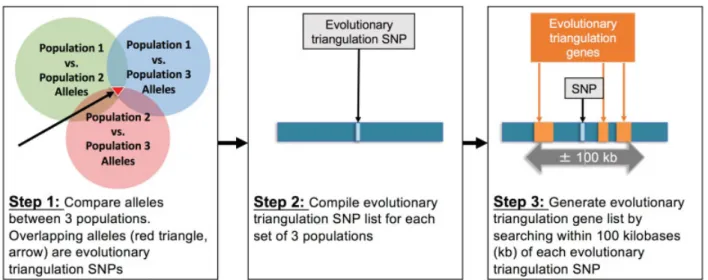
First, we generated our evolutionary triangulation gene lists. We obtained baseline SNP allele frequency data for populations selected to represent non-Hispanic black, non-Hispanic white, and Hispanic women using data from the International Haplo-type Map Project HapMap6,7(►Table 1). Each population was chosen based on population differences in rates of PTB. HapMap is an international consortium with publically available SNP frequencies, genotypes, and haplotypes by population, and can be applied to estimate genetic ancestry.7–9 Next, to assess population differences, we calculated Wright’sfixation index (FST),10,11a metric assessing population genetic differences by pairwise allele comparisons between groups, according to the Cockerham and Weir’s formula.12 Wefirst compared alleles between thefirst two populations, and then compared the allelic differences between populations 1 and 3. Finally, we compared differences between populations 2 and 3. A list of evolutionary triangulation SNPs was then generated according to the overlaps of low FST between the populations with similarly high rates of spontaneous PTB (YRI, GIH, MEX, and ASW) and high FSTwith CEU as the outlier population with lower rates of spontaneous PTB. We used several thresholds of
high and low FST, that is, several degrees of differentiation. Each evolutionary triangulation SNP was then used to identify nearby genes as evolutionary triangulation genes, as recent literature suggests that variants in the regulatory regions or near transcription start sites of genes may impact function and possibly disease. For that reason, genes located within 100 kb of each evolutionary triangulation SNP were compiled to com-prise thefinal evolutionary triangulation gene list. This meth-odology is summarized in►Fig. 1. We generated two separate evolutionary triangulation SNP lists, each containing a repre-sentative non-Hispanic white, Hispanic, and non-Hispanic black populations: (1) CEU_GIH_YRI and (2) CEU_MEX_ASW.
Next, we compared the evolutionary triangulation gene lists generated earlier to three separate gene lists. Sponta-neous PTB gene list 1 comprised the top 20 maternal and fetal SNPs from a multicenter genome-wide association study of 1,025 spontaneous PTB cases delivering less than 34 weeks’ gestation and 1,015 matched term controls with sponta-neous labor; these top 20 SNPs were located in 32 different genes.13Spontaneous PTB gene list 2 consisted of 640 genes on the online database for PTB “dbPTB” Web site (www. ptbdb.cs.brown.edu).14,15 This Web site, hosted by Brown University, provides a web-based aggregation site of pub-lished genes previously associated with spontaneous PTB in one or more studies.14,15Our third spontaneous PTB gene list comprised the 118 candidate genes identified from a recent systematic review of 92 genetic studies of spontaneous PTB published from 2007 to 2015.16
Finally, we applied principles of evolutionary triangula-tion to each gene list. Genes found in both our evolutriangula-tionary triangulation gene list and the spontaneous PTB gene lists were considered top candidate genes, and were examined for evidence of expression in the myometrium or placenta. We also analyzed genes identified by evolutionary triangulation using the STRING database (http://string-db.org)17to assess functional relationships, interactions between genes, and to classify genes into ontology groups as applicable.
Permutation testing was performed to determine whether evolutionary triangulation significantly enriched in the lists of genes associated with spontaneous PTB. Specifically, this was performed by calculating empirical p-values, comparing the ability of evolutionary triangulation to detect putative spontaneous PTB-associated genes from a list of randomly sample genes. We first generated a null (random) list of genes by sampling from the list of genes in the entire genome 10,000 times. For each resample, we
Table 1 Selected populations used to generate evolutionary triangulation gene lists
Population Source from HapMap Representative population
CEU Utah residents with European ancestry Non-Hispanic white
GIH Gujarati Indians (Houston, TX) Hispanic
MEX Mexican ancestry (Los Angeles, CA) Hispanic
YRI Yoruba (Ibadan, Nigeria) Non-Hispanic black
randomly selected the number of genes corresponding to each of the three gene lists (32, 640, and 118, respectively). We then counted the number of genes from each resampling that appeared in each of the three lists. From these counts, we generated three null distribution lists of spontaneous PTB genes. Empirical p-values were calculated by dividing the number of counts that exceed evolutionary triangulation detected PTB genes in CEU_GIH_YRI and CEU_MEX_ASW separately and CEU_GIH_YRI and CEU_MEX_ASW combined.
Results
We examined both maternal and fetal SNPs distributed in 32 different genes from the large genome-wide association study of early spontaneous PTB (PTB gene list 1). Multiple top genes in the genome-wide association study were confirmed by evolutionary triangulationfiltering methods, using both evo-lutionary triangulation population gene lists. In total, 13 of the 32 genes were identified using evolutionary triangulation. The enrichment for spontaneous PTB genes from list 1 was significant (empiric p<0.0001 for CEU_GIH_YRI; p<0.0001 for CEU_MEX_ASW; p<0.0001 for combined CEU_GIH_YRI and CEU_MEX_ASW). These results included three maternal genes expressed in the myometrium [myopal-ladin [MYPN], ethanolamine kinase 1 [ETNK1], contactin 5 [CNTN5]) as well as six fetal genes expressed in the placenta (ribonuclease T2 [RNASET2], SMAD family member 9 [SMAD9], ras responsive element-binding protein 1 [RREB1], sortilin-related receptor 1 [SORL1], potassium voltage-gated channel subfamily H member 7 [KCNH7], and nucleolar protein 10 [NOL10]), ►Table 2. These nine significant genes were not overrepresented in any gene ontology (GO) groups and no functional enrichment was appreciated.
We then evaluated PTB gene list 2, the 640 genes listed in the online dbPTB. In total, evolutionary triangulation identi-fied 123 unique genes from the online dbPTB; 19% overall. This number represented significant enrichment as compared with random sampling of the genome (empiric p<0.0001 for
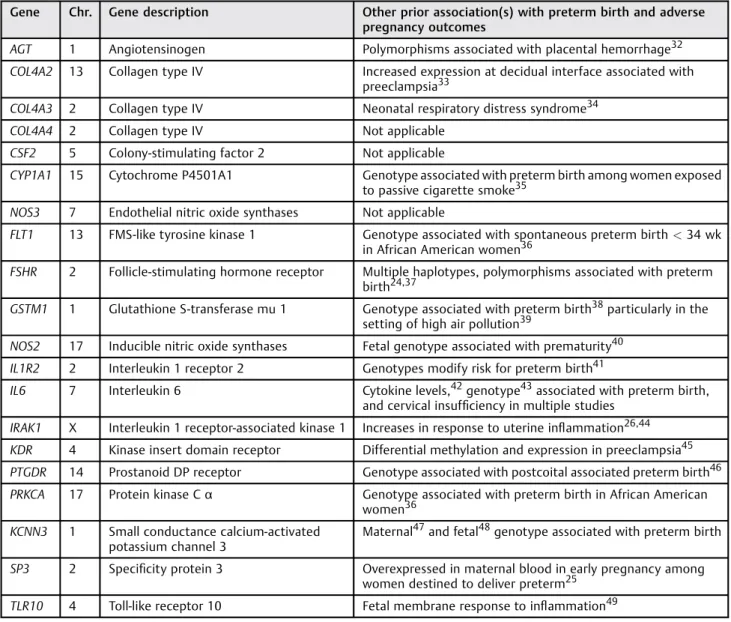
CEU_GIH_YRI; p<0.0001 for CEU_MEX_ASW; p<0.0001 for combined CEU_GIH_YRI and CEU_MEX_ASW). Overall, the CEU_GIH_YRI evolutionary triangulation gene list identi-fied a higher proportion of genes from the online dbPTB (77/ 640, 12.0%) compared with the CEU_ASW_MEX list (55/640, 8.6%). These 123 genes were analyzed by STRING for evidence of biologic pathway enrichment. Notably, 44 genes were implicated in response to stress pathways (GO:0006950), 25 genes in immune response (GO:006955), 20 in innate immu-nity (GO:0045087), and 17 in positive regulation of the immune system process pathways (GO:0002684). Eleven genes from the online dbPTB were identified by both the CEU_GIH_YRI and the CEU_ASW_MEX list; their names and previous associations with PTB and other pregnancy compli-cations are shown in ►Table 3. From these top 11 genes identified in both evolutionary triangulation lists, functional enrichments were found within receptor signaling protein (GO:0005057; kinase insert domain receptor [KDR], anaplastic lymphoma receptor tyrosine kinase [ALK], interleukin 1 receptor-associated kinase 1 [IRAK1]) and nuclear factor-κB– inducing kinase activity (GO:0004704;ALK,IRAK1) pathways. Finally, we found 20/118 candidate genes from sponta-neous PTB gene list 3 by evolutionary triangulation (►Table 4). These associations for spontaneous PTB list 3 were also significant (empiricp<0.001 for CEU_GIH_YRI; p¼0.002 for CEU_MEX_ASW; p<0.001 for combined CEU_GIH_YRI and CEU_MEX_ASW). Of these, 10 (interleukin 1 receptor type 2 [IL1R2], nitric oxide synthase 2 [NOS2], FMS-related tyrosine kinase 1 [FLT1], interleukin-6 [IL6], KDR, colony-stimulating factor 2 [CSF2], Sp3 transcription factor [SP3], IRAK1, toll-like receptor 10 [TLR10], protein kinase cα(PRKCA]) are genes previously implicated in innate immunity (GO:0002376) or the immune response (GO:0006955). In addition, eight genes (angiotensinogen [AGT], FLT1, nitric oxide synthase 3 [NOS3], PRKCA, IL6, KDR, collagen type IV α 3 chain [COL4A3], and collagen type IVα2 chain [COL4A2]) are involved in the regulation of angiogenesis (GO:00045765).
Table 3 Genes from PTB list 2 (dbPTB) identified by both CEU_GIH_YRI and CEU_ASW_MEX evolutionary triangulation lists
Gene Chr. Gene description Prior association(s) with PTB and other adverse
pregnancy outcomes
ALK 2 Anaplastic lymphoma receptor tyrosine kinase Peripheral blood gene expression in early pregnancy associated with PTB25
CNTLN 9 Centlein, centrosomal protein Peripheral blood gene expression in early pregnancy associated with PTB25
IRAK1 X Interleukin 1 receptor-associated kinase 1 Increased in response to intrauterine inflammation26 KCNK2 1 Potassium channel, subfamily K, member 2 Maintenance of uterine quiescence27
KDR 4 Kinase insert domain receptor Some genotypes associated with higher PTB risk among overweight or obese Caucasian women28; reduced expression in gestational hypertension, small for gestational age, and PTB29
KLHL2 4 Kelch-like 2 Not applicable
NAA10 X N(α)-acetyltransferase 10, NatA catalytic subunit Not applicable
STMN3 20 Stathmin-like 3 Decidualization in murine uterus in early pregnancy30; peripheral blood gene expression in early pregnancy associated with PTB25
TMEFF2 2 Transmembrane protein with EGF-like and two follistatin-like domains 2
Expression in uterine leiomyomas31
WDR90 16 WD repeat domain 90 Peripheral blood gene expression in early pregnancy associated with PTB25
XPNPEP1 10 X-prolyl aminopeptidase (aminopeptidase P) 1, soluble
Peripheral blood gene expression in early pregnancy associated with PTB25
Abbreviations: Chr, chromosome; dbPTB, database for PTB; EGF, epidermal growth factor; PTB, preterm birth.
Table 2 Genes from PTB gene list 1 confirmed by evolutionary triangulation
Gene Chr. Gene description Originally published
findings
Evolutionary triangulation list
Location p-Value CEU, GIH, YRI CEU, ASW, MEX
SHROOM3 4 Shroom family member 3 Maternal 5.6e6 Yes No LOC100128865 4 Methyltransferase like 5 Maternal 2.7e5 Yes Yes
MYPN 10 Myopalladin Maternal 3.3e5 Yes No
ETNK1 12 Ethanolamine kinase 1 Maternal 3.7e5 Yes No
CNTN5 11 Contactin 5 Maternal 4.1e5 Yes No
LOC100128365 6 Interferon-stimulated exonuclease Fetal 2.7e12 Yes No
RNASET2 6 Ribonuclease T2 Fetal 1.4e10 No Yes
L3MBTL3 6 Lethal(3) malignant brain tumor-like protein 3
Fetal 8.3e7 Yes No
SMAD9 13 SMAD family member 9 Fetal 1.1e6 No Yes
RREB1 6 Ras responsive element-binding protein 1
Fetal 2.3e6 Yes No
SORL1 11 Sortilin-related receptor 1 Fetal 2.8e6 Yes No KCNH7 2 Potassium voltage gated channel
subfamily H member 7
Fetal 6.2e6 No Yes
NOL10 2 Nucleolar protein 10 Fetal 6.4e6 Yes No
Comment
We found that applying evolutionary triangulation analysis to spontaneous PTB provided independent support for multiple genes previously associated with disease in sepa-rate genome-wide association and candidate gene studies. Therefore, evolutionary triangulation presents an alternative filtering metric for genetic analyses based on evolutionary history. Multiple identified genes have biologic plausibility for spontaneous PTB and have been previously associated with spontaneous PTB in at least one study, as shown in►Tables 3and4. These genes fall into a variety of broad functional categories and classifications theorized to con-tribute to a predisposition to spontaneous PTB.
Though multiple genes and pathways were identified, it is notable that both spontaneous PTB gene lists 2 and 3 contained multiple genes within key immune response regulatory path-ways. Specifically, the immune response gene ontology frame-work (GO:0006955) was represented by significant results in
both lists 2 and 3. Exposure to (and maternal and fetal response to) inflammation and infection have long been implicated in the pathogenesis of spontaneous PTB.18IL6 and other cytokine gene genotypes,19,20antimicrobial immunity,21and the composition of the vaginal microbiome22 are known to vary by race and ethnicity23; these factors are hypothesized to contribute to some of the racial disparity in spontaneous PTB. These data provide additional support, at the evolutionary level, for the theory that inflammatory pathways contribute to spontaneous PTB.
Other researchers have used evolutionary approaches to examine the genetic contribution to spontaneous PTB. In 2011, Plunkett et al used a phylogenetic approach to identify candi-date genes along the human and human–chimpanzee ancestor lineages.24Eight out of the top 10 SNP differences were found within the follicle-stimulating hormone receptor (FSHR) gene.24Notably, theFSHRgene was on list 3 and was confirmed by our evolutionary triangulation methodology. The FSHR gene was not in the dbPTB and therefore not evaluated as a part of list 2.
Table 4 Genes from preterm birth list 3 identified by either CEU_GIH_YRI or CEU_ASW_MEX evolutionary triangulation lists
Gene Chr. Gene description Other prior association(s) with preterm birth and adverse
pregnancy outcomes
AGT 1 Angiotensinogen Polymorphisms associated with placental hemorrhage32 COL4A2 13 Collagen type IV Increased expression at decidual interface associated with
preeclampsia33
COL4A3 2 Collagen type IV Neonatal respiratory distress syndrome34 COL4A4 2 Collagen type IV Not applicable
CSF2 5 Colony-stimulating factor 2 Not applicable
CYP1A1 15 Cytochrome P4501A1 Genotype associated with preterm birth among women exposed to passive cigarette smoke35
NOS3 7 Endothelial nitric oxide synthases Not applicable
FLT1 13 FMS-like tyrosine kinase 1 Genotype associated with spontaneous preterm birth<34 wk in African American women36
FSHR 2 Follicle-stimulating hormone receptor Multiple haplotypes, polymorphisms associated with preterm birth24,37
GSTM1 1 Glutathione S-transferase mu 1 Genotype associated with preterm birth38particularly in the setting of high air pollution39
NOS2 17 Inducible nitric oxide synthases Fetal genotype associated with prematurity40 IL1R2 2 Interleukin 1 receptor 2 Genotypes modify risk for preterm birth41
IL6 7 Interleukin 6 Cytokine levels,42genotype43associated with preterm birth, and cervical insufficiency in multiple studies
IRAK1 X Interleukin 1 receptor-associated kinase 1 Increases in response to uterine inflammation26,44 KDR 4 Kinase insert domain receptor Differential methylation and expression in preeclampsia45 PTGDR 14 Prostanoid DP receptor Genotype associated with postcoital associated preterm birth46 PRKCA 17 Protein kinase Cα Genotype associated with preterm birth in African American
women36 KCNN3 1 Small conductance calcium-activated
potassium channel 3
Maternal47and fetal48genotype associated with preterm birth
SP3 2 Specificity protein 3 Overexpressed in maternal blood in early pregnancy among women destined to deliver preterm25
TLR10 4 Toll-like receptor 10 Fetal membrane response to inflammation49
Our study should be interpreted with several limitations in mind. Evolutionary triangulation and this analysis is limited by the unknown degree of similarity between the selected populations and the Hispanic white, Hispanic, and non-Hispanic black populations used to generate the spontaneous PTB gene lists we examined. HapMap populations, by design, are generally less diverse in comparison to a random sampling of pregnant women at risk for PTB in the United States. Because of the uncertainty regarding which HapMap populations might best represent the admixed Hispanic and non-Hispanic black populations within the United States, we generated two separate evolutionary triangulation gene lists (CEU_GIH_YRI and CEU_ASW_MEX). It is possible that other combinations of HapMap populations may more appropriately estimate the populations studied. The small number of genes analyzed from list 1 likely limited our ability tofind statistically significant functional enrichment within this list. However, our focus on gene lists derived from large, multicenter studies or aggre-gated genetic data minimizes the likelihood that isolated differences local ancestry would limit our results or general-izability. In addition, the literature curation is current for the dbPTB Web site only through July 2013. Recent findings published over the past 4 years could therefore not be included in a systematic manner as they are unavailable online.14,15For that reason, we incorporated the spontaneous PTB gene list by Sheikh et al,16to provide more a contemporaneous gene list. This study also had several strengths. Application of a novel geneticfiltering technique provides additional “ ver-ification”of genes or single nucleotide polymorphisms that were marginally significant in previous prematurity studies, and provide a much-needed focus for future investigations given the complex nature of this phenotype. Further, these results present additional proof of concept and suggest that thefiltering methodology of evolutionary triangulation may be applied to other disorders of pregnancy that dispropor-tionately affect different populations of women (e.g., pre-eclampsia or gestational diabetes).
In conclusion, the application of evolutionary triangulation analysis—a novelfiltering metric based on evolutionary his-tory—to spontaneous PTB provided independent support for multiple genes previously associated with disease in genome-wide association and candidate gene studies. Identification of genes from prior spontaneous PTB genetic association studies through evolutionary triangulationfiltering highlights a prior-itized list of genes for future investigations of prematurity.
Condensation
Evolutionary triangulation, a novel bioinformatics approach, provides independent support for multiple genes previously associated with PTB and presents an alternate filtering metric for genetic analyses using evolutionary history.
Note
This study was presented in part at the Society for Maternal Fetal Medicine’s 37th Annual Meeting 2017 (Las Vegas, NV), as an oral concurrent presentation (1/26/17),final abstract ID #11.
Conflict of Interest None.
Acknowledgments
This work was supported by the March of Dimes Pre-maturity Research Center Grant (L.M. and S.M.W.) and by NIH 1K23HD067224 (T.A.M.).
References
1 Smid MC, Stringer EM, Stringer JS. A worldwide epidemic: the problem and challenges of preterm birth in low- and middle-income countries. Am J Perinatol 2016;33(03):276–289 2 Russell RB, Green NS, Steiner CA, et al. Cost of hospitalization for
preterm and low birth weight infants in the United States. Pediatrics 2007;120(01):e1–e9
3 Hamilton BE, Martin JA, Osterman MJ, Curtin SC, Matthews TJ. Births:final data for 2014. Natl Vital Stat Rep 2015;64(12):1–64 4 DeFranco EA, Hall ES, Muglia LJ. Racial disparity in previable birth.
Am J Obstet Gynecol 2016;214(03):394.e1–394.e7
5 Huang M, Graham BE, Zhang G, et al. Evolutionary triangulation: informing genetic association studies with evolutionary evi-dence. BioData Min 2016;9:12. Doi: 10.1186/s13040-016-0091-7 6 Zhang W, Ng HW, Shu M, et al. Comparing genetic variants detected in the 1000 genomes project with SNPs determined by the International HapMap Consortium. J Genet 2015;94(04): 731–740
7 International HapMap Consortium. The International HapMap Project. Nature 2003;426(6968):789–796
8 Wang C, Zhan X, Bragg-Gresham J, et al; FUSION Study. Ancestry estimation and control of population stratification for sequence-based association studies. Nat Genet 2014;46(04):409–415 9 Altshuler DM, Gibbs RA, Peltonen L, et al; International HapMap 3
Consortium. Integrating common and rare genetic variation in diverse human populations. Nature 2010;467(7311):52–58 10 Bhatia G, Patterson N, Sankararaman S, Price AL. Estimating and
interpreting FST: the impact of rare variants. Genome Res 2013; 23(09):1514–1521
11 Elhaik E. Empirical distributions of F(ST) from large-scale human polymorphism data. PLoS One 2012;7(11):e49837. Doi: 10.1371/ journal.pone.0049837
12 Cockerham CC, Weir BS. Covariances of relatives stemming from a population undergoing mixed self and random mating. Bio-metrics 1984;40(01):157–164
13 Zhang H, Baldwin DA, Bukowski RK, et al;Eunice Kennedy Shriver National Institute of Child Health and Human Development (NICHD) Genomic and Proteomic Network for Preterm Birth Research (GPN-PBR). A genome-wide association study of early spontaneous preterm delivery. Genet Epidemiol 2015;39(03): 217–226
14 Uzun A, Laliberte A, Parker J, et al. dbPTB: a database for preterm birth. Database (Oxford) 2012;2012:bar069. Doi: 10.1093/data-base/bar069
15 Uzun A, Sharma S, Padbury J. A bioinformatics approach to preterm birth. Am J Reprod Immunol 2012;67(04):273–277 16 Sheikh IA, Ahmad E, Jamal MS, et al. Spontaneous preterm birth and
single nucleotide gene polymorphisms: a recent update. BMC Genomics 2016;17(Suppl 9):759. Doi: 10.1186/s12864-016-3089-0 17 Szklarczyk D, Franceschini A, Wyder S, et al. STRING v10: protein-protein interaction networks, integrated over the tree of life. Nucleic Acids Res 2015;43(Database issue):D447–D452 18 Menon R, Fortunato SJ. Infection and the role of inflammation in
19 Wu W, Clark EA, Stoddard GJ, et al. Effect of interleukin-6 poly-morphism on risk of preterm birth within population strata: a meta-analysis. BMC Genet 2013;14:30. Doi: 10.1186/1471-2156-14-30 20 Nguyen DP, Genc M, Vardhana S, Babula O, Onderdonk A, Witkin
SS. Ethnic differences of polymorphisms in cytokine and innate immune system genes in pregnant women. Obstet Gynecol 2004; 104(02):293–300
21 Jaffe S, Normand N, Jayaram A, et al. Unique variation in genetic selection among black North American women and its potential influence on pregnancy outcome. Med Hypotheses 2013;81(05): 919–922
22 Fettweis JM, Brooks JP, Serrano MG, et al; Vaginal Microbiome Consortium. Differences in vaginal microbiome in African Amer-ican women versus women of European ancestry. Microbiology 2014;160(Pt 10):2272–2282
23 Menon R, Dunlop AL, Kramer MR, Fortunato SJ, Hogue CJ. An overview of racial disparities in preterm birth rates: caused by infection or inflammatory response? Acta Obstet Gynecol Scand 2011;90(12):1325–1331
24 Plunkett J, Doniger S, Orabona G, et al. An evolutionary genomic approach to identify genes involved in human birth timing. PLoS Genet 2011;7(04):e1001365. Doi: 10.1371/journal.pgen.1001365 25 Enquobahrie DA, Williams MA, Qiu C, et al. Early pregnancy
peripheral blood gene expression and risk of preterm delivery: a nested case control study. BMC Pregnancy Childbirth 2009;9:56. Doi: 10.1186/1471-2393-9-56
26 Lyttle B, Chai J, Gonzalez JM, Xu H, Sammel M, Elovitz MA. The negative regulators of the host immune response: an unexplored pathway in preterm birth. Am J Obstet Gynecol 2009;201(03): 284.e1–284.e7
27 Buxton IL, Singer CA, Tichenor JN. Expression of stretch-activated two-pore potassium channels in human myometrium in preg-nancy and labor. PLoS One 2010;5(08):e12372. Doi: 10.1371/ journal.pone.0012372
28 Andraweera PH, Dekker GA, Thompson SD, North RA, McCowan LM, Roberts CT; SCOPE Consortium. The interaction between the maternal BMI and angiogenic gene polymorphisms associates with the risk of spontaneous preterm birth. Mol Hum Reprod 2012;18(09):459–465
29 Andraweera PH, Dekker GA, Laurence JA, Roberts CT. Placental expression of VEGF family mRNA in adverse pregnancy outcomes. Placenta 2012;33(06):467–472
30 Yoshie M, Tamura K, Hara T, Kogo H. Expression of stathmin family genes in the murine uterus during early pregnancy. Mol Reprod Dev 2006;73(02):164–172
31 Wu X, Blanck A, Norstedt G, Sahlin L, Flores-Morales A. Identifi ca-tion of genes with higher expression in human uterine leiomyo-mas than in the corresponding myometrium. Mol Hum Reprod 2002;8(03):246–254
32 Gargano JW, Holzman CB, Senagore PK, et al. Polymorphisms in thrombophilia and renin-angiotensin system pathways, preterm delivery, and evidence of placental hemorrhage. Am J Obstet Gynecol 2009;201(03):317.e1–317.e9
33 Yong HE, Murthi P, Borg A, et al. Increased decidual mRNA expression levels of candidate maternal pre-eclampsia suscept-ibility genes are associated with clinical severity. Placenta 2014; 35(02):117–124
34 Haas DM, Lai D, Sharma S, et al. Steroid pathway genes and neonatal respiratory distress after betamethasone use in antici-pated preterm birth. Reprod Sci 2016;23(05):680–686
35 Luo YJ, Wen XZ, Ding P, et al. Interaction between maternal passive smoking during pregnancy andCYP1A1and GSTs poly-morphisms on spontaneous preterm delivery. PLoS One 2012;7 (11):e49155. Doi: 10.1371/journal.pone.0049155
36 Frey HA, Stout MJ, Pearson LN, et al. Genetic variation associated with preterm birth in African-American women. Am J Obstet Gynecol 2016;215(02):235.e1–235.e8
37 Chun S, Plunkett J, Teramo K, Muglia LJ, Fay JC. Fine-mapping an association ofFSHRwith preterm birth in a Finnish population. PLoS One 2013;8(10):e78032. Doi: 10.1371/journal.pone.0078032 38 Suh YJ, Kim YJ, Park H, Park EA, Ha EH. Oxidative stress-related
gene interactions with preterm delivery in Korean women. Am J Obstet Gynecol 2008;198(05):541.e1–541.e7
39 Suh YJ, Ha EH, Park H, Kim YJ, Kim H, Hong YC.GSTM1 poly-morphism along with PM10 exposure contributes to the risk of preterm delivery. Mutat Res 2008;656(1-2):62–67
40 Gibson CS, MacLennan AH, Dekker GA, et al. Genetic polymorph-isms and spontaneous preterm birth. Obstet Gynecol 2007;109 (2 Pt 1):384–391
41 Langmia IM, Apalasamy YD, Omar SZ, Mohamed Z. Interleukin 1 receptor type 2 gene polymorphism is associated with reduced risk of preterm birth. J Matern Fetal Neonatal Med 2016;29(20): 3347–3350
42 Chaemsaithong P, Romero R, Docheva N, et al. Comparison of rapid MMP-8 and interleukin-6 point-of-care tests to identify intra-amniotic inflammation/infection and impending preterm delivery in patients with preterm labor and intact membranes. J Matern Fetal Neonatal Med 2017. Doi: 10.1080/14767058.2017.1281904 43 Sundtoft I, Uldbjerg N, Steffensen R, Sommer S, Christiansen OB.
Polymorphisms in genes coding for cytokines, mannose-bind-ing lectin, collagen metabolism and thrombophilia in women with cervical insufficiency. Gynecol Obstet Invest 2016;81(01): 15–22
44 Zhong X, Jiang YZ, Liu P, et al. Toll-like 4 receptor /NFκB infl am-matory/miR-146a pathway contributes to the ART-correlated preterm birth outcome. Oncotarget 2016;7(45):72475–72485 45 Sundrani DP, Reddy US, Joshi AA, et al. Differential placental
methylation and expression ofVEGF,FLT-1and KDR genes in human term and preterm preeclampsia. Clin Epigenetics 2013;5 (01):6. Doi: 10.1186/1868-7083-5-6
46 Grisaru-Granovsky S, Altarescu G, Finci S, et al. Prostanoid DP receptor (PTGDR) variants in mothers with post-coital associated preterm births: preliminary observations. J Perinatol 2010;30 (01):33–37
47 Day LJ, Schaa KL, Ryckman KK, et al. Single-nucleotide poly-morphisms in the KCNN3 gene associate with preterm birth. Reprod Sci 2011;18(03):286–295
48 Mann PC, Cooper ME, Ryckman KK, et al. Polymorphisms in the fetal progesterone receptor and a calcium-activated potassium channel isoform are associated with preterm birth in an Argen-tinian population. J Perinatol 2013;33(05):336–340