HOW STUDENTS’ MULTIPLE INTELLIGENCES DIFFER IN TERMS OF GRADE LEVEL AND GENDER
A THESIS SUBMITTED TO
THE GRADUATE SCHOOL OF SOCIAL SCIENCES OF
MIDDLE EAST TECHNICAL UNIVERSITY BY
DERYA GÖĞEBAKAN
IN PARTIAL FULLFILMENT OF THE REQUIREMENTS FOR THE DEGREE OF
MASTER OF SCIENCE IN
THE DEPARTMENT OF EDUCATIONAL SCIENCES
Approval of the Graduate School of Social Sciences
Prof. Dr. Sencer Ayata Director
I certify that this thesis satisfies all the requirements as a thesis for the degree of Master
of Science.
Prof. Dr. Hasan Şimşek Head of Department
This is to certify that we have read this theses and that in our opinion it is fully adequate, in scope and quality, as a thesis for the degree of Master of Science.
Prof. Dr. Meral Aksu Supervisor
Examining Committee Members
Prof. Dr. Meral Aksu Assoc.Prof. Dr. Alev Yemenici
ABSTRACT
HOW STUDENTS’ MULTIPLE INTELLIGENCES DIFFER IN TERM OF GRADE LEVEL AND GENDER
Göğebakan, Derya
MSc Department of Educatıonal Sciences Supervisior: Prof.Dr. Meral Aksu
September 2003, 112 pages
The purpose of the study was to investigate the students’ multiple intelligences according to their preferences and how students’ multiple intelligences differ in terms of grade level (first, third fifth and eighth) and gender.
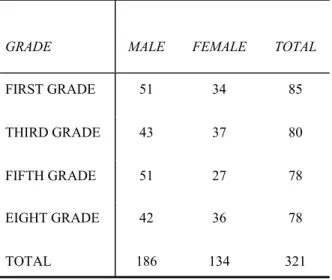
This research was conducted at Middle East Technical University Development Foundation School in the spring of the 2001-2002 academic-year with three classes from each level namely first grade, third grade, fifth grade and eight grade. In this study, Pictorial Teele Inventory for Multiple Intelligences was applied on 321 students and the results were analyzed. In order to examine the effect of the gender and grade level on students’ Multiple Intelligences mean, standard deviation and MANOVA were used.
Results showed that students multiple intelligences showed variety according to their grade levels. For example, the students at the first grade level demonstrated
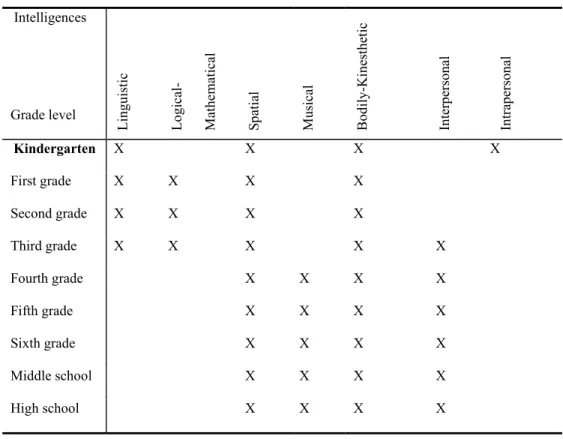
strong preference for linguistic intelligence and logical-mathematical intelligence in the first grade and the two intelligences were followed by spatial intelligence, and bodily kinesthetic intelligence. While the third grade students’ most dominant intelligences preferences were interpersonal, spatial, logical-mathematical, and linguistic intelligence the fifth and eight grade students’ preferences were interpersonal intelligence bodily-kinesthetic intelligence, musical intelligence, and spatial intelligence.
When results are eximined in terms of gender, it can be said that the male students’ logical-mathematical and bodily kinesthetic intelligence mean scores were higher than female students’ whereas the female students’ musical intelligence mean score was higher than male students’.
ÖZ
SINIF DÜZEYİ VE CİNSİYET FAKTÖRLERİ AÇISINDAN ÖĞRENCİLERİN ÇOKLU ZEKA ALANLARI
GÖĞEBAKAN, Derya Eğitim Bilimleri Bölümü Tez Yöneticisi: Prof.Dr. Meral AKSU
Eylül 2003, 112 Sayfa
Bu çalışmada, öğrencilerin çoklu zeka alanları ve çoklu zeka alanlarının birinci, üçüncü, beşinci ve sekizinci sınıf seviyelerine ve cinsiyete göre nasıl faklılaştığı araştırılmıştır.
Bu araştırma Orta Doğu Teknik Üniversitesi, Geliştirme Vakfı Okulunda 2001-2002 eğitim öğretim yılında birinci, üçüncü, beşinci ve sekizinci sınıflardan seçilen 321 öğrenci ile yapılmıştır. Araştırmada Teele Çoklu Zeka Envanteri kullanılmış ve sonuçlar analiz edilmiştir. Sınıf düzeyleri ve cinsiyetin çoklu zeka alanlarına etkisi araştırmak amacıyla ortalama, standart sapma hesaplamaları ve MANOVA kullanılmıştır.
Araştırma sonuçları, öğrencilerin çoklu zekalarının sınıf düzeylerine göre farklılaştığını göstermiştir. Örneğin, birinci sınıf öğrencilerinin çoklu zeka
tercihlerinin sözel, matematik-mantıksal, görsel ve bedensel üçüncü sınıf öğrencilerinin tercihlerinin kişiler arası, görsel, matematik-mantıksal ve sözel, beşinci ve sekizinci sınıf öğrencilerinin tercihlerinin kişiler arası, bedensel, müzikal ve görsel alanlarda yoğunlaştığı görülmüştür.
Sonuçlar cinsiyet açısından incelendiğinde, erkek öğrencilerin Teele Çoklu Zeka Envanterinden aldıkları matematik-mantıksal ve bedensel zeka puanlarının ortalamasının kızların ortalamalarından anlamlı bir şekilde daha yüksek olduğu diğer taraftan kızların müzikal zeka puan ortalamalarının erkeklerin müzikal zeka puanlarından anlamlı bir şekilde daha yüksek olduğu gözlenmiştir.
ACKNOWLEDGEMENTS
I would like to express my gratitude to my supervisor Prof. Dr. Meral AKSU for her guidance encouragement and feed back throughout this research study. I also would like to thank for her patience, understanding and support.
I wish to give special thanks to A. Sevcan Erkan for her help in the statistics of the study and to N. Namık Yıldız, Ebru Ozman, Abdullah Küçükçongar, Seçil Dayıoğlu, Berna Arslan who supported me during the study.
Last but not least, I offer my sincere thanks to my parents, Veli and Ülker, to my sister Deniz and my brother Kemal Çağlar who supported me throughout this study. I also would like to express my deepest gratitude for their understanding, tolerance and encouragement.
I hereby declare that all information in this document has been obtained and presented in accordance with academic rules and ethical conduct. I also declare that, as required by these rules and conduct, I have fully cited and referenced all material and results that are not original to this work.
TABLE OF CONTENTS
ABSTRACT………. iii
ÖZ ……… .... v
DEDICATION……….vii
ACKNOWLEDGEMENTS………viii
TABLE OF CONTENTS…….……….ix
LIST OF TABLES………....x
LIST OF FIGURES………..ix
CHAPTER 1. INTRODUCTION………...1
1.1 Background of the study………...1
1.1.1 Psychometric Approach………...6
1.1.2 Developmental Progressions ………..6
1.1.3 Psychobiological Approach ……….11
1.1.4 Multiple Forms of Intelligence……….12
1.2 Human Brain and Multiple Intelligence...14
1.3 Gardner’s Multiple Intelligence Theory………17
1.3.1 Linguistic Intelligence ...……….21
1.3.2 Logical-Mathematical Intelligence ……….22
1.3.3 Spatial Intelligence...……….23
1.3.4 Musical Intelsligence..………...24
1.3.6 Intrapersonal Intelligence.………...………….…26
1.3.7 Interpersonal Intelligence…..………....26
1.3.8 Naturalist Intelligence …..………….………….…27
1.4 Developing Multiple Intelligences...………..28
1.5 Activators and Deactivators of Intelligences....…..………..29
1.6 How Teachers Interpret MI Theory...………..31
1.7 Assessing Students Multiple Intelligences...32
1.8 Turkish Primary Education...………32
1.9 Significance of the Study ...………35
2. REVIEW OF RELATED LITERATURE…...……….38
2.1. Studies On Measuring Intelligences ………38
2.2.Implication of The Multiple Intelligences Theory……...47
2.3. Studies on Multiple Intelligences Theory in Turkey ………57
3. METHOD……….64
3.1. Overall Research Design ………64
3.2. Problem Statements ………...65
3.3. Hypothesis………...…...65
3.4. Subjects...………..66
3.5 Description of Variables ………68
3.6. Data Collection Instruments……….69
3.6.1. Teele Inventory for Multiple Intelligences …………...69
3.6.1.2 Piloting of the TIMI...73
3.6.2. Background Information Questionnaire…………77
3.7. Procedure….………...77
3.8. Data Analysis Procedures ………...………...78
3.9. Limitations of the Study………...78
4. RESULTS………...80
4.1 Interpretations From Teele Inventory of Multiple Intelligences...80
5. CONCLUSION AND IMPLICATIONS………..96
5.1. Conclusion and Interpretations of the Findings……...……96
5.2. Suggestions for Administrators and Teachers………...105
5.3. Implications for Research………..…106
LİST OF TABLES
TABLE
Table 1.1. Comparing the Traditional and Contemporary Intelligences……...……...5
Table1.2 Turkish Primary Education Weekly Course Schedule... 16
Table1.3 Turkish Primary Education Weekly Course Schedule...35
Table2.1: TIMI Results by Grade Level…..………...43
Table 3.1: Distribution of the Subjects by Grade Level and Gender………….…....67
Table 3.2: Distribution of the Subjects by The Students’ Mothers’ Level of Education………. ..68
Table 3.3: Distribution of the Subjects by The Students’ Fathers’ Level of Education………...69
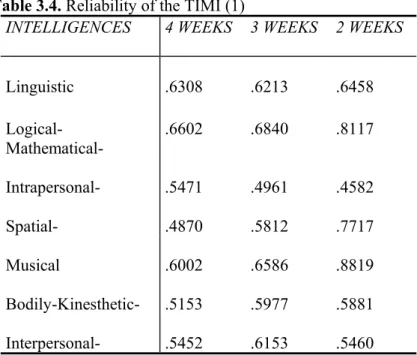
Table 3.4. Reliability of the TIMI (1)……….73
Table 3.5. Reliability of the TIMI (2)………...…..76
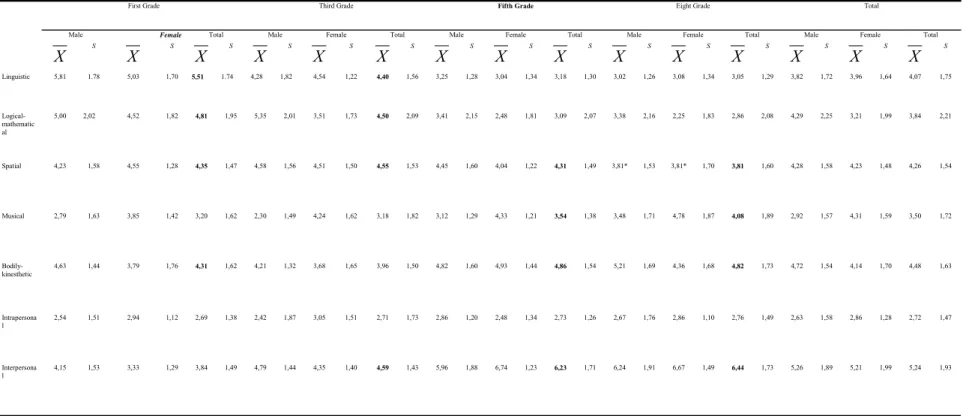
Table 4.1. The Seven Intelligences by Gender and Grade Level………....82
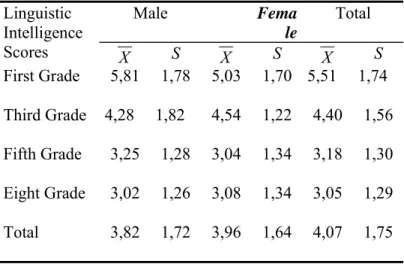
Table 4.2: Linguistic Intelligence Scores by Grade Level………...83
Table 4.3. : The Results of the MANOVA Among the Students’ Mean Score of Linguistic Intelligence According to the Grade Levels and Gender...84
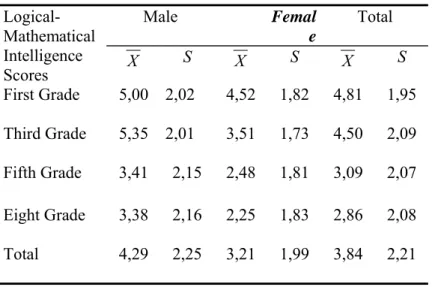
Table 4.4: Logical-Mathematical Intelligence Scores by Grade Level ………...85
Table 4.5: The Results of the MANOVA Among the Students’ Mean Score of Logical-Mathematical Intelligence According to the Grade Levels and Gender ...86
Table 4.6: Spatial Intelligence Scores By Grade Level………...….87 Table 4.7: The Results of the MANOVA Among the Students’ Mean Score of
Spatial Intelligence According to the Grade Levels and Gender... 88 Table 4.8: Musical Intelligences Scores By Grade Levels...89 Table 4.9. The Results of the MANOVA Among the Students’ Mean Score of
Musical Intelligence According to the Grade Levels and Gender ...89 Table 4.10. Bodily-Kinesthetic Intelligence Scores By Grade Levels………..90 Table 4.11. The Results of the MANOVA Among the Students’ Mean Score of
Bodily-Kinesthetic Intelligence According to the Grade Levels and Gender.91
Table 4.12. Intrapersonal Intelligences Scores By Grade Levels………..92 Table 4.13. The Results of the MANOVA Among the Students’ Mean Score of
Intrapersonal Intelligence According to the Grade Levels and Gender…..…93
Table 4.14. Interpersonal Intelligence Scores By Gade Levels……….93 Table 4.15: The Results of the MANOVA Among the Students’ Mean Score of
Interpersonal Intelligence According to the Grade Levels and Gender……. 94 Table 4.16. Summary of Results for Problem Two Differences Observed According
to Grade Level and Gender For Each Intelligence...95 Table 5.1. Dominant Intelligences by Grade Level ……….………..97
LIST OF FIGURES
FIGURE
Figure 3.1: Example Picture from Teele Inventory of Multiple Intelligences...70 Figure 3.2: Teele Inventory Of Multiple Intelligence Answer Sheet...70
CHAPTER I
INTRODUCTION
1.1 Background to the Study
Instructional approach has changed considerably from 1900 to 2000 and also some educational concepts such as learning and intelligence. For instance, learning used to be defined as forming connections between stimulus and response and also a continuous change in observable behavior. Today, however learning is accepted as a more complex process.
Teele (2000) defined learning as both a socially settled event and a biological happening. The ways people learn could differ some are better at certain subjects than the others. Learning depends on what is already known and on the neural structures that affect learning. Psychological, biological, social and environmental factors may all contribute to guiding the learning process.
As a concept intelligence has also changed. Intelligence is an abstract concept, which has been studied on for many years. The first usage of the term goes back to Aristotle. Cicero was the first person who used the Latin word “intelligence”, which was in the scientific literature and Aristotle’s term “dia-noesis” with an almost one-to-one translation. In contrast to the dynamic process, this term was used as a two-folded classification, including intellectual and cognitive characteristics of mental features in Aristotle’s scholastic philosophy. Afterwards, the studies related to this subject gained speed (19th century), many new ideas
aroused, different classifications were made and their effects have entered into our lives intensively (Bumin, 2002).
Until today, researchers have put forward some ideas about intelligence by observing the mental structures and the behaviors of the individuals. According to this, intelligence has sometimes been considered to be the point got from a test, adaptation to the environment, and problem-solving skills. In these theories, some abilities such as language, mathematics and mechanics, and the ability of solving a new problem have been usually taken as a criterion (Bumin, 2002).
The following paragraphs include some descriptions of intelligence mentioned in the literature.
Binet and Simon (1916) (as cited Plucker, 2002) said that in intelligence there was a basic faculty and lack of it was very important for daily life. It was called judgment or good practical sense the faculty of adapting oneself to the situation. A person may be a moron or an imbecile if he is lacking in judgment; but with good judgment he can never be either. Indeed the rest of the intellectual faculties seem of little importance in comparison with judgment.
Wechsler (Plucker, 1998) defined intelligence as "the global capacity to act purposefully, to think rationally, and to deal effectively with his environment" this definition in other words meant that intelligence was not a single ability but a multifaceted aggregate.
As Spearman (Plucker, 1998a) claimed intelligence could be understood as intelligence (g factor) and specific factors (s factors). g factor included a wide range of mental abilities such as reasoning and problem solving while s factor only consisted of narrow, single mental ability tests, for example mathematical computations.
According to Francis Galton (as cited Sternberg, 1990) intelligence was a question of neurological efficiency. Thus, he claimed that it could be tested by measuring reaction time and sensory acuity.
Crystallized intelligence and fluid intelligence were two branches of mental abilities according to Cattell R,B.(1983) (as cited Plucker, 2001) "Fluid intelligence is involved in tests that have very little cultural content, whereas crystallized intelligence loads abilities that have obviously been acquired, such as verbal and numerical ability, mechanical aptitude, social skills, and so on. The age curve of these two abilities is quite different. They both increase up to the age of about 15 or 16, and slightly thereafter, to the early 20s perhaps. But thereafter fluid intelligence steadily declines whereas crystallized intelligence stays high".
To Starddat (1943) (as cited Başbay, 2000), if the individual had the capacity of doing difficult, complex, economic mental activities which were proper for the aim and had social values if, under these conditions, he could focus his energy on the activities by resisting the excitement, this meant that he/she was intelligent.
Vygotsky (1978) (as cited Plucker, 1998b) thought that social origin determined all intellectual abilities. Parents teach language and thought and teachers and mentors continued that development process.
In 1921, the writers of Journal of Educational Psychology asked the experts what intelligence was but they received non-coinciding answers. Two of these answers were: 1. Intelligence was the capacity to continue abstract thinking 2. Intelligence was the capacity to gain knowledge.(Oklan, 2000)
Thorndike E.L. (as cited Plucker, 2002a) claimed that there was an important difference among three big groups of intellectual functioning. Only “abstract intelligence” could be measured by standard intelligence tests. “Mechanical
intelligence –the ability to visualize relationships among objects and understand how the physical world worked” and “social intelligence –the ability to function successfully in interpersonal situations” were also important.
According to L.L. Thurstone’s theory (as cited Plucker, 1998c) intelligence consisted of a lot of primary mental abilities rather than a general and several specific factors. He proposed that a person could be intelligent in many ways. In his multiple-factors theory, these seven mental abilities were:
1. Verbal Comprehension 2. Word Fluency
3. Number Facility 4. Spatial Visualization 5. Associative Memory 6. Perceptual Speed 7. Reasoning
To J.P. Guilford (1967) “intelligence is learning ability and that it is a universal ability, regardless of the thing being learned, has definitely been exploded by a number of experiments” (p. 65).
Sternberg,R.J. (1985), in his Triarchic Intelligence Theory, described intelligence including the practical knowledge. According to Sternberg intelligence involved:
a) mental skills, componential aspect; ability to acquire new knowledge; to solve problems effectively,
b) insight/creative adaptability, experiential aspect; ability to adapt creatively in new situations; to use insight,
c) environmental responsiveness, contextual aspect; ability to select contexts in which to excel, to shape the environment to fit one’s strengths
To Howard Gardner (1983) intelligence up to then was defined too narrow. He claimed that intelligence was more than 1. solving problems 2. fashioning products in a context rich and naturalistic setting.
After these definitions of intelligence, the traditional and contemporary intelligences can be compared like in the following (Saban, 2001):
Table 1.1 Comparing the Traditional and Contemporary Intelligences The Traditional Intelligence
Understanding The Contemporary Intelligence Understanding • Intelligence is constant.
• Intelligence can be measured in quantity.
• There is ‘one’ intelligence in general.
• Intelligence is measured by isolating it from real life. • Intelligence is used to classify
students and predict their possible success.
• Intelligence can be developed. • Intelligence is not estimated with
numerical values displayed in any performance or problem-solving process.
• Intelligence can be exhibited in many ways.
• Intelligence is measured in real-life situations.
• Intelligence is used to understand the potential strengths of
individuals and the areas that they will be successful.
According to Teele (2000) there were several different approaches to intelligence. Achieving a better concept of what it meant to provide effective learning environments for students needs a clear understanding of these approaches. Teele proposed four different approaches: the psychometric approach, developmental progressions, psychobiological approach and multiple forms of intelligence.
1.1.1 Psychometric Approach
The psychometric approach had a single, unitary, quantitative concept of intelligence. Some examples of psychometric measurement instruments were: Binet’s test Stanford-Binet scale, Wechsler scales. Binet’s test measured motor development, cognitive abilities, memory tests, and divergent-productive thinking abilities and introduced a single score for measurement. Recognizing the multiple aspects of intelligence began with Wechsler. His test, composed of two categories, verbal and performance, contributed to the intellectual evaluation of individuals from preschool age to adults (Teele, 2000).
The psychometric approach concentrated mainly on two methods to learn; linguistic and logical-mathematical. It was quantifiable, measurable and comparable in standardized way. The current movement in the education tends to a psychometric approach in education because this approach can be used to compare one student to another or one school or district to another. However, there is a danger; it becomes the only means to measure student achievement, since it shows only one or two methods students learn (Teele, 2000).
1.1.2 Developmental Progressions
Developmental progression is another approach to intelligence. In that approach four psychologists, Bruner, Piaget, Vygotsky and Feuerstein’s, theories and opinions are discussed.
According to a major theme in Bruner’s theory, learners built new ideas or concepts based on their current/past knowledge by means of learning, which was an active process. The learner selected and transformed information, constructed hypotheses, and made decisions, relying on a cognitive structure to do so. Cognitive
structure let the individual “go beyond the information given” by providing meaning and organization to experiences.
When it comes to instruction, students should be encouraged to find out principles by themselves and it is the instructor who should try and do this. The instructor and student should engage in an active dialog such as Socratic learning. The duty of the instructor is to transform information to be learned in appropriate format, considering the learner’s current state of understanding. Curriculum should be organized in a spiral manner so that the student continually builds upon what they have already learned (Teele, 2000).
According to Bruner (1996) an instruction theory should provide answers to four major aspects; 1. predisposition towards learning 2. the methods in which a body of knowledge can be constructed so that the learner can grasp it 3. the most effective sequences which as material can be presented 4. the nature and posing of rewards and punishments. Simplifying, generating new propositions and increasing the manipulation of information should result from a suitable method for constructing knowledge.
Another name in that approach is Piaget. For more than sixty years, understanding of child development has been considerably affected by Jean Piaget’s (TIP Database 2003a) naturalistic research. Because he was interested in the question of how knowledge developed in human beings, Piaget named his general theory as “genetic epistemology”. Biology and philosophy in which he had a background and concepts of these two disciplines affected his theories and research of child development.
The center of his theory was the concept of cognitive structure. In Piaget’s opinion, there were four primary cognitive structures, developmental stages;
sensorimotor, preoperations, concrete operations and formal operations. Between 0 and 2 years, in other words in the sensorimotor stage intelligence took the form of motor actions. The nature of intelligence was intuitive in preoperation period (3-7 years) During the concrete operational stage (8-11 years) the cognitive structure was reasonable but depended on concrete references. Thinking included abstractions in the last stage of formal operations (12-15 years).
According to his theory, during the processes of adaptation cognitive structures differed. These adaptation processes were assimilation and accommodation. Assimilation involved the explanation of events as regards to existing cognitive structure; on the other hand, accommodation refered to altering the cognitive structure to understand the environment. Cognitive development was made up of a continuous effort to adapt to the environment in terms of assimilation and accommodation. In this respect, Piaget’s theory looked like other constructivist perspectives of learning in nature.
Although the stages of cognitive development that were defined by Piaget were related to characteristic age periods, they differ from one person to another. In addition to this, every stage had many detailed forms of structure. To illustrate, the concrete operational period had more than forty different structures including classification and relations, spatial relationships, time, movement, chance, number, conservation and measurement.
The application of Piaget’s theory led to specific recommendations for a given stage. For sensorimotor stage children, teachers should try to provide a rich and motivating environment with abundant toys. However, in the concrete operational stage learning activities might present some problems such as
classification ordering, location, and conservation using concrete objects (TIP Database 2003a).
Another name is Vygotsky in that approach. The main subject of Vygotsky’s (1978) theory was that social interaction had an important role in the development of cognition. Vygotsky claimed “every function in the child’s cultural development appears twice; first, on the social level, and later, on the individual level; first between people (interpsychological) and then inside the child (intrapsychological). This applies equally to voluntary attention, to logical memory, and to the formation of concepts. All the higher functions originate as actual relationships between individuals” (p. 57)
Vygotsky’s theory had another aspect and it was the idea that the potential for cognitive development was restricted with a certain time span that he named as “zone of proximal development”. What was more, full development during this period depended on full social interaction. A child could develop a range of skills with adult guidance or pair work and this with adult the ones that he could achieve by himself.
In Vygotsky’s (1978) theory, consciousness was explained as the last product of socialization. For instance, while learning a new language, in the beginning we use words or sentences by aiming communication but when we master the language, they become clear in our thoughts or minds and let us have “inner speech”.
Vygotsky (1978) gave an example of pointing a finger. First, this behavior started a meaningless movement, but as people gave reactions to it, it became a meaningful one. In particular this gesture illustrates an interpersonal relation between people.
According to Vygotsky (1978) a function of activity that was mediated by material and psychological tools and contact with other people was called intelligence. As he said emotional contact was the child’s main activity during infancy. When a child was 2 years old it was important to manipulate the objects. Role-play and symbolic activity appeared between 3 and 7years. During the following four years, until the age of 11 development of formal study at school was emphasized. Adolescence was a period in which the mixture of interpersonal relation and exploration of careers started.
To Feuerstein (1981) (as cited Teele, 2000), intelligence was due to experience and our cognitive ability could be changed. The theory of structural cognitive modifiability of him suggested that, in order to enable someone to learn better, learning could be transformed. Past successes made a base for new learning experiences and there was a gradual development between the two. The experience at school provided alternative educational methods, which maximize one’s potential so that it could change and improve the ways individuals learn. This was an important side of multiple intelligences theory. Different teaching methods were needed to encourage students to learn from their dominant ways of processing and build on previous successful experiences.
1.1.3 Psychobiological Approach
Psychobiological Approach, which mainly focuses on brain and ecology in order to explain development of intelligence, is the third approach. Brain has been studied from a biological point of view by several researches and the objective of all those studies is to find out new ideas about the definition of intelligence and ways to measure it (Ceci, 1990; Reed and Jensen, 1993; Sylwester, 1995) (as cited Teele,
2000). According to Cecil’s bio ecological theory of intelligence there was not only one cognitive potential, but also their multiple potentials. He claimed that knowledge and aptitude were whole and with body of intelligence one could find environmental, biological, metacognitive and motivational variables.
Ceci (Selçuk et. al., 2002) supported the bio-ecologic approach and opposed the concept of one intelligence, which was defined as the general intelligence or the “g” factor. He viewed intelligence as having a biological basis, multi-cognitive, potential, and complete in terms of context and knowledge.
Instead of a single factor theory a multifaceted view of intelligence was supported by a psychobiological perspective of intelligence. It added the awareness of gender differences in some cognitive activities. In multiple, specific parts of brain cognitive functions appeared and they were affected by mixture of genetics, personal life experiences and situations (Selçuk et. al, 2002).
Emotions played a considerable part in learning according to Le Doux (1996) (as cited Teele, 2000) and Goleman (1995) (as cited Teele, 2000) they tried to understand how the emotional and cognitive centers of the brain continuously interacted and interplayed. The emotional centers of the brain could impede the important role that emotions play in learning. This vital organ remained flexible and evolved during a person’s life. Life experiences, situations and circumstances changed it.
1.1.4 Multiple Forms of Intelligence
Teele (2000) stated, “substantial research supports the fact that individuals process in multiple, interactive and complex ways. This leads directly to the fourth approach, multiple forms of intelligence.” (pp. 12-13)
Supporters of this approach are Sternberg at Yale University and Gardner at Harward University. Sternberg’s triarchic (TIP database 2003-b) theory of intelligence was made up of three sub theories: (i) the componential sub-theory: this sub theory summarized the structures and mechanisms which lied beneath intelligent behaviour classified as metacognitive, performance or knowledge acquisition components. (ii) the experiental sub-theory : Intelligent behaviour could be explained thorough an experience that started from novel went to highly familiar duties according to this sub theory. (iii) the contextual sub-theory: As this sub theory specifies, intelligent behaviour was explained by the socio cultural context where it took place and included environmental adaptation selection of better environments and forming the present environment.
Sternberg (TIP database 2003b) suggested that these three sub-theories interact and this forms a complete explanation of intelligence. The potential set of mental processes which explain behaviour was specified by componential sub-theory, on the other hand, according to contextual sub-theory intelligence was related to the external world in terms of the definition of intelligent behaviour and the situation in which this behaviour took place. The relationship between the behaviour in a given situation and the amount of the individuals’ experience in that situation was taken into account in the experiental sub-theory.
The most improved side of triarchic theory was the compenential sub-theory and Sternberg (1977) (as cited Teele 2000) presented an information processing perspective for abilities with this sub-theory. Metacognition or “executive” processes control the strategies used in intelligent behaviour and according to Sternberg’s study they were the most basic components.
Each person had a number of different forms of intelligence in different levels according to the theory of multiple intelligences. Gardner (1983) suggested seven basic forms: linguistic, musical, logical-mathematical spatial, body-kinesthetic, intrapersonal (eg. insight metacognition), interpersonal (eg. Social skills), and later he added naturalistic intelligence.
In Gardner’s (TIP database 2003c) opinion, the theory suggested that intelligences of every person should be taken care of in learning/teaching. For example a person with strong spatial or musical intelligences should be encouraged to improve those particular capacities. Gardner claimed that the different intelligences represent both different content areas and learning modalities. Another suggestion of the theory, all forms of intelligence (not just linguistic and logical- mathematical) should be measured by assessment of abilities.
Cultural context of abilities was also emphasized by Gardner. Each culture had particular intelligences. For example Gardner (TIP database 2003c) refer to the Puluwat people of the Caroline island who had high spatial abilities as they used these abilities to navigate their canoes. He also discussed Japanese people’s balances of personal intelligences. Lastly he stated the principles of the Multiple Intelligence Theory:
1.Individuals should be motivated to use their preferred intelligences in learning. 2. Instructional activities should request different forms of intelligence.
3. Assessment of learning should measure multiple forms of intelligence
Sternberg’s (1985-1988) (as cited Teele, 2000) Triarchic Theory and Gardner’s (1983-1993) (as cited Teele 2000) Multiple Intelligences Theory were far ahead of the traditional definition of intelligence. These two theories concentrated on personal differences among students (Teele, 2000).
In the following paragraphs Gardners’ Multiple Intelligences Theory and intelligence areas will be discussed. Before explaining Multiple Intelligences Theory, it is worth while mention about human brain.
1.2 Human Brain and Multiple Intelligences
Number of researcher have examine the relationship between learning and brain structure. Over the years, various models of our brain’s architecture have been proposed, but they’ve tended to become more reductionist. Thus, the earlieridea of a holistic brain gave way to an intense cultural interest in the two cerebral hemispheres, which gave way to Paul MacLean’s (1978) (as cited Sylwester, 1995) model of a triune brain, a three-layer, hierarchical brain that evolved to process survival, emotional, and rational functions. Howard Gardner, (1983) investigated the neuropsychological roots of the multiple intelligence theory. And Gardner (1983) (as cited Sylwester; 1995) has suggested that our conscious brain functions through seven forms of intelligence processed in different areas.
The brain works through a constantly changing interaction of the brainstem, the limbic system, and the cerebral cortex (Teele, 2000).
The lower extension of the brain where it connects to the spinal cord is the brainstem. Neurological functions located in the brainstem include those necessary for survival (breathing, digestion, heart rate, blood pressure) and for arousal (being awake and alert) (Sylwester; 1995).
The limbic system is folded around the brainstem and is the connection to the cerebral cortex. The limbic system acts as a gatekeeper for the different parts of the brain and controls the relationship between emotions and learning.
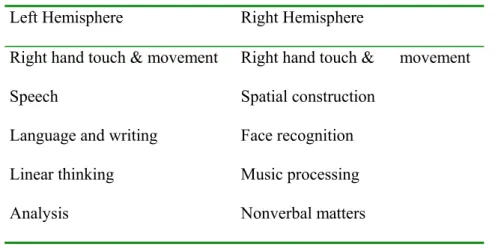
All the learning achieved in formal education occurs in the cerebral cortex. Language, symbols, and abstract thinking reside in this part of the brain. The cortex is composed of two cerebral hemispheres, which are largely mirror images. Each side has different functions that enable individuals to utilize all of the different multiple intelligences. The hemispheres are linked together by the corpus callosum, which is a thick bundle of nerves (Teele, 2000).
The left hemisphere processes information sequentially and is described as analytical because it specializes in recognizing parts which make a whole. Although it is most efficient at processing verbal information language should not be considered as being 'in' the left hemisphere. This hemisphere is able to recognize that one stimulus comes before another and verbal perception and generation depends on the awareness of the sequence in which sounds occur (Teele, 2000).
The left hemisphere separates out parts that make a whole the right hemisphere specialists in combining the parts to produce a whole. Unlike the left, the right hemisphere organizes simultaneously. It specializes in a method that perceives and constructs patterns. It is most efficient at visual and spatial processing and it is thought that non verbal stimuli are processed primarily in the Right Hemisphere (Teele, 2000).
Table 1.2.The Two Hemispheres of the Brain Left Hemisphere Right Hemisphere Right hand touch & movement
Speech
Language and writing Linear thinking Analysis
Right hand touch & movement Spatial construction
Face recognition Music processing Nonverbal matters
Both hemispheres work in collaboration. Some gifted individuals, such as Leonardo da Vinci and Albert Einstein, may have been able to connect several areas of their brains together, which allowed them to see new vision and to solve problems no one had accomplished before (Teele, 2000).
The cerebral cortex is divided into two hemispheres and each hemisphere is divided into four lobes: temporal, parietal, occipital and frontal.
Temporal lobe is located above and behind the ears. It is area that processes hearing and speech. Understanding language, auditory processing and perception, and non-speech auditory perception such as music all take place in this lobe.
The parietal lobe is located at the top of the head. It responds to sensations of touch and motor control. It combines sensory information and memory. It recognizes objects and their uses. Spatial functions such as a geometry, map reading, and mathematical reasoning operate in this lobe (Teele, 2000).
Occipital Lobe - Region in the back of the brain processes visual information. Not only is the occipital lobe mainly responsible for visual reception, it also contains association areas that help in the visual recognition of shapes and colors. Damage to this lobe can cause visual deficits (Sylwester, 1995 ).
Frontal Lobe - Front part of the brain; involved in planning, organizing, problem solving, selective attention, personality and a variety of "higher cognitive functions" includes behaviour and emotions (Sylwester, 1995 ).
The frontal lobe is responsible for about one-half the volume of the brain. It is located close to the forehead. It sends messages to muscles and glands and is responsible for voluntary movement. It is the area of goal-directed behaviour, long-term planning, problem solving, critical thinking, and decision-making. The frontal lobe regulates emotional states and judgment. Humans are the only known from of life that have prefrontal lobes. Synthesis and evaluation can take place in this part of the brain (Teele, 2000).
According to Sylwester (1995), the brain consists of tens of billions of cortical neurons that regulate cognitive thinking activities and even more glial cells that support and feed the neurons come in many sizes and shapes. A bundle of neurons is called a nerve.
Neurons like trees and have branches that are called dendrites. Dendrites are tubular extensions that receive and carry messages to from other neurons and will grow when stimulated.
When dendrites branch abstract thinking increases. As the dendrites spread, they allow individuals to think more clearly and in more complex ways. Thinking is a dynamic process. If the brain is not used, the dendrites do not branches can grow on the brain when it is stimulated.
1.3 Gardner’s Multiple Intelligence Theory:
Frames of Mind: The Theory of Multiple Intelligences, which was published by Howard Gardner in 1983, suggested that all individuals had seven independent
intelligences, These "intelligences" were: linguistic and logical-mathematical, musical, spatial, bodily kinesthetic, interpersonal, intrapersonal intelligence. He recently have added one new intelligence, naturalist intelligence. This idea was against the traditional approach, which used to take intelligence as a single capacity.
Gardner identified these intelligences by making a study on the development of cognitive skills of normal children, breakdown of cognitive abilities in stroke patients and other brain damaged ones and made a review of literature on psychological testing.(Krechevsky & Kornhaber, 2003)
Then Gardner (1999) looked for the best word about his discoveries. At the beginning he thought to use the venerable scholarly term human faculties; psychologists’ terms like skills or capacities; or lay terms like gifts, talents, or abilities. “However, I realized that each of these words harbored pitfalls. I finally elected to take the bold step of appropriating a from psychology and stretching it in new ways- that word was intelligence. I began by defining an intelligence as the ability to solve problem problems or to create products that are valued within one or more cultural setting.” (p. 33) This is the definition that he used in the 1983 book that grew out of the Van Leer project: Frames of Mind: The Theory of Multiple Intelligences. However, now in Intelligence Reframed (Gardner, 1999) intelligence is defined “ as a biopsychological potential to process information that can be activated in a cultural setting to solve problems or create products that are of value in a culture. This modest change in wording is important because it suggests that intelligences are not things that can be seen or counted. Instead, they are potentials - presumably, neural ones – that will or not will be activated, depending upon the values of a particular culture, the opportunities available in that culture, and the
personal decisions made by individuals and /or their families, schoolteachers, and others” (pp. 34-35)
Gardner used 8 different criteria to understand if capacity could be thought as intelligence. Gardner (1999) made group them in terms of their disciplinary roots. From the biological sciences came two criteria:
1. Potential isolation by brain damage: “I was particularly interested in evidence that one candidate intelligence could be dissociated from others. Either patients exist who have this intelligence spared despite other damaged faculties, or there are patients in whom this faculty has been impaired while others have been speared. Either pattern increases the likelihood that an intelligence has been discovered. Thus, both the separation of language from other faculties and its essential similarity in oral, aural, written, and sign forms point to a separate linguistic intelligence”.
2. An evolutionary history and an evolutionary plausibility: When the contemporary mind and brain are studied most of the evidence came from either inferences about Homo sapience and its predecessors or information about contemporary species. “These studies give new plausibility to evolutionary accounts of such faculties as the intelligence that scrutinizes the world of plants and animals, or the intelligence that scrutinizes the world of plants and animals, or the intelligence that computes the movies of other members of the species” (p. 36).
Two other criteria emanate from logical analysis:
3 .An identifiable core operation or set of operations: There is an identifiable set of procedures and practices which are unique to each true intelligence. For instance linguistic intelligence includes core operation of phonemic discriminations
command of syntax, sensivity to the pragmatic uses of language, and acquisition of word meanings
4 .Susceptibility to encoding from a symbol system: Humans have developed many kinds of symbol systems over time for varied disciplines such as spoken and written language, mathematical systems, charts drawing logical equations and so on.
Two of the criteria came from developmental psychology:
5 .A distinctive developmental history with a definite set of “end state” performances: A clear pattern of developmental history is being documented of the human mind. Its mean, intelligences have their own developmental histories. Thus, people who want to be mathematicians must develop their logical-mathematical abilities in certain ways.
6. The existence of idiot, savants, prodigies and other exceptional people: “Nature provides one other bounty to the student of multiple intelligeces: people who, without any documented signs of brain injury, have unusual profiles of intelligence. One example is the savant, who exhibits an area of stunning strength along with other ordinary abilities or even marked deficits. Researcher have recently proposed that autistic people-like individuals who suffer significant damage to the right hemisphere- may have an impairment in the brain area that governs the ability to understand other people’s intentions” (p. 39).
The final two criteria are drawn from traditional psychological research:
7. Support of experimental and psychological tasks: Psychologists can identify sets of tasks for different domains of human behavior. A true intelligence can be identified by specific tasks which can be carried out, observed and measured.
8.Support from psychometric findings: The use of psychometric instruments to measure intelligence (such as I.Q. tests) have traditionally been used to measure only specific types of ability. However, these tests can be designed and used to identify and quantify true unique intelligences. The Multiple Intelligence theory does not reject psychometric testing for specific scientific study.
1.3.1 Linguistic Intelligence
Linguistic intelligence involves sensitivity to spoken and written language, the ability to learn languages, and the capacity to use language to accomplish certain goals. This intelligence includes the ability to effectively use language to express oneself rhetorically or poetically; and language as a means to remember information. Writers, poets, lawyers and speakers are among those that Howard Gardner sees as having high linguistic intelligence (Gardner, 1999).
Students who have linguistic intelligence show brilliant auditory abilities, they are usually fond of reading, writing, playing word games. They also are good at remembering names, dates and places and they prefer doing word processing on a computer. They may have a bright, developed vocabulary and can speak fluently, accurately and phonetically (Teele, 2000).
Lesson plans for linguistic intelligence may include several activities, as follows.
• reading and writing about famous artists and art history.
• writing a short fictional story about an artist or group of artists in the past, present or future.
• interviewing students in pairs regarding their involvement and thoughts about a specific event, concert, production, exhibition, including who, what, when, why, where, and how was it produced. • writing a script or narrative for a program, speech, or host for a major
arts event.
1.3.2 Logical-Mathematical Intelligence
Logical-mathematical intelligence consists of the capacity to analyze problems logically, carry out mathematical operations, and investigate issues scientifically. In Howard Gardner's words, in entails the ability to detect patterns, reason deductively and think logically. This intelligence is most often associated with scientific and mathematical thinking (Gardner, 1999).
The ones who are able to explore patterns and relationships and make connections are the students with logical mathematical ability. They are keen on mathematical problems, experiments, problem solutions and they enjoy reasoning logically, clearly and scientifically. They need a systematic and logical information to learn best. This group of students enjoy working with data bases and spread sheds on computer (Teele, 2000).
Lesson plans for Logical-Mathematical intelligence may include several activities, as follows.
• constructing graphic organizers to compare, contrast, and observe relationships and patterns among and between the arts, artists, cultures, or artistic products.
• graphing, collecting, or analyzing data on audiences, attendance at arts events, or attitude surveys.
• establishing time lines for artistic inventions, composers, artistic movements, or dance history.
• creating a financial plan for a major production, exhibition, or concert, including all costs for transportation, theatre rental,
• costumes, sets, rental fees, etc.
1.3.3 Spatial Intelligence
Spatial intelligence involves the potential to recognize and use the patterns of wide space and more confined areas (Gardner, 1999).
Art activities, reading maps, charts and diagrams, thinking in images and pictures are the favorites of the students who have spatial intelligence (Teele, 2000). According to Armstrong (1994) these students have highly developed senses for color, line, shape, form, space. They also have the ability to visualize ideas.
Lesson plans for spatial intelligence may include several activities, as follows.
• designing sets, paintings, or placement maps for exhibitions, performances, or concerts.
• visualizing a two-dimensional photograph or illustration and creating a three-dimensional sculpture, set, or dance.
• creating narrative murals on timelines for music, art, drama, or dance history.
• choreographing a marching band, a performance art piece, a dance, or a class skit or dramatization.
1.3.4 Musical Intelligence
Musical intelligence involves skill in the performance, composition, and appreciation of musical patterns. It encompasses the capacity to recognize and compose musical pitches, tones, and rhythms. According to Howard Gardner musical intelligence runs in an almost structural parallel to linguistic intelligence (Gardner, 1999).
The ones with musical intelligence like music. Sound in their surroundings effects them and they listen to music while studying or reading. These students are able to understand pitch, rhythm and timbre. They also can create music and enjoy singing songs. The structure of music and tonal sounds are familiar to them. The musical part of their brains can be motivated by clapping hands, snapping fingers, chanting words or moving rhythmically. The ones in this category can even save (keep) and apply information by musical process (Teele, 2000).
Lesson plans Musical for intelligence may include several activities, as follows.
• creating and researching music for inclusion in a play, dance, or exhibition.
• composing music on the computer or with instruments to match a mood, painting, dance, or piece of literature.
• using counting cadence with drills and looking for analogous repetitive patterns in visual art, decorative schemes in architecture, or literary repetition.
1.3.5 Bodily-Kinesthetic Intelligence
Bodily-kinesthetic intelligence entails the potential of using one's whole body or parts of the body to solve problems. It is the ability to use mental abilities to coordinate bodily movements. Howard Gardner sees mental and physical activity as related (Gardner, 1999).
This intelligence (kinesthetic) enables the subjects to make use of their bodies in a unique and talented way. They can move and act, they are also able to achieve success in a class where physical activities and hands are provided (Teele, 2000).
Lesson plans for bodily-kinesthetic intelligence may include several activities, as follows.
• creating mini-productions of scenes from plays, films, dance or an interpretation of a painting that has come to life.
• interpreting sounds or visual images with movements to produce a group event.
1.3.6 Intrapersonal Intelligence
Intrapersonal intelligence entails the capacity to understand oneself, to appreciate one's feelings, fears and motivations. In Howard Gardner's view it involves having an effective working model of ourselves, and to be able to use such information to regulate our lives (Gardner,1999).
These students enjoy being alone; they can feel and appreciate their own powers, weaknesses and inner feelings. They like keeping a journal, they study in quiet atmospheres and they are usually self-reflective. Strong ideas on controversial topics often come from that kind of students (Teele, 2000).
Lesson plans for intrapersonal intelligence may include several activities, as follows.
• using reflective journals during and after a unit.
• doing independent research projects with opinion papers about the research findings.
• writing critiques of a production, field trip, or concert performed by others, or writing a self-evaluation about a personal performance. • writing letters to favorite artists, composers, or performers about a
special performance that affected them personally.
1.3.7 Interpersonal Intelligence
Interpersonal intelligence is concerned with the capacity to understand the intentions, motivations and desires of other people. It allows people to work
effectively with others. Educators, salespeople, religious and political leaders and counsellors all need a well-developed interpersonal intelligence (Gardner, 1999).
The ones who have interpersonal intelligence prefer to be with people. They are friendly and can get on well with others so they can easily take part in social activities. Cooperative and collaborative surroundings are best for their learning. The ones who can express empathy for others’ feelings, react to their moods and grasp other perspectives usually appear in this group. They like studying in groups and exchanging information with others. (Teele, 2000)
Lesson plans for interpersonal intelligence may include several activities, as follows.
• using cooperative learning for a class critique of portfolios.
• creating peer coaching during a rehearsal or production of an artwork. • creating team contests or quiz shows for review of information, facts,
or concepts of an arts unit.
• developing class mini-productions of historical events, folk festivals, or a congregation of famous artists from different time periods meeting for the first time.
1.3.8 Naturalist Intelligence
An eight intelligence named, the naturalist intelligence was introduced by Gardner (1996 as cited Teele, 2000). A student with this kind of intelligence, he claims, has the skills to notice, group, classify flora and fauna and is able to listen
and hear the environmental sounds. He adds that this group of students lives in a harmony with nature.
The naturalist can feel the differences between plants and animals. They also can find out the relationship between nature and civilization people with jobs such as farming, hunting, gardening and also biologists have this kind of intelligence (Teele, 2000).
Lesson plans for naturalist intelligence may include several activities, as follows.
• using the outdoors as a classroom for inspiration for creating a play, concert, dance or visual art work.
• learning about and understanding animals and incorporating them into an art work or production.
• listening to animal sounds and movements such as whales and wolves, and creating works of art.
• observing and using plants to create and/or interpret texture and form in an art work.
1.4 Developing Multiple Intelligences
A great number of psychologists including Howard Gardner argued that the formation of human mind was modular and distinct and independent mental processes mean the ability in works requiring mental skills. Gardner claimed that capacities of intelligences were improved and encouraged by environmental richness (Eleanor & Sharon, 1998).
Gardner studied not only the development of MI Theory but he was also concentrated on the experimental psychology and application fields of intelligence. In his opinion intelligence was problem solving and producing. He made detailed studies on the individual effects of both genetic and environmental mental conditions and the intelligence profile (Teele, 1995).
Biological endowment, personal life history, cultural and historical background are three main factors that development of intelligence depends on. A person’s intelligence is affected by the interaction of them (Armstrong, 1994).
Biological Endowment: Hereditary or genetic factors and insults or injuries to the brain before, during or after birth are all included in biological endowment.
Personal Life History: It includes experiences with parents, teachers, friends and others. These experiences may keep intelligence awake or prevents it from developing.
Cultural and Historical Background: Time and place in which one was born and brought up, also the nature and position of cultural/historical developments make up one’s cultural and historical background (Armstrong, 1994).
1.5 Activators and Deactivators of Intelligences
In Armstrong’s (1994) opinion there were two key processes in the development of intelligences: Crystallizing experiences and Paralyzing experiences.
Crystallizing experiences which was “turning points” in the development of a person’s talents and skills was originated by David Feldman (1980; cited in Armstrong 1994) at Tufts University and then it was improved by Howard Gardner and his friends. They can appear any time in human life but they usually occur in early childhood. For example Einstein said that the magnetic compass which his
father showed him when he was four years old motivated him to find out the secrets of universe. Basically this was an experience that motivated his sleeping genius and made him one of the most important figures of the 20th century. That kind of
experiences activate intelligence and starts its development.
In addition, Armstrong (1994) identified paralyzing experiences as “shut down” intelligences. For example a teacher humiliated a student in front of his/her classmates when he/she showed his/her latest artistic creation during art period, and this might mark the student spatial development Paralyzing experiences usually consist of all negative feelings such as shame, guilt, fear, anger which prevent one’s intelligences from growing and improving.
Besides there are some environmental influences that activate or stop the development of intelligences. They are: access to resources or mentors; historical-cultural factors, geographic factors, familial factors, situational factors.
Access to Resources or Mentors: One’s musical ability might not develop if one’s family was not rich enough to buy a violin, piano or other instrument.
Historical-Cultural Factors: If one were a student who was good at maths at a time maths and science curriculum were highly funded, one’s mathematical intelligence would likely have developed.
Geographic Factors: One who was brought up in a farm had more chance to develop bodily kinesthetic intelligence than the one who grew up in an apartment.
Familial Factors: If one wanted to be an artist but one’s parents wanted one to be a lawyer, their influence might well have promoted the development of one’ linguistic intelligence at the expense of one’s spatial intelligence.
Situational Factors: If one had to help take care of large family while one was growing up, and one now have a large family himself/herself, one may have had little time to develop in areas of promise- unless one was interpersonal in nature.
MI Theory provides a personal development model, which can enable teachers to understand the effects of their learning style on the way they teach in the class. It also offers group activities that can activate paralyzed intelligences. (Armstrong, 1994)
1.6 How Teachers Interpret The Multiple Intelligences Theory
Many educators have tried to define intelligence. Some of them tried to measure human intelligence on the basis of human’s mental functions or performances or some other learning skills by several I.Q. tests that they developed. (Saban, 2001)
Gardner’s theory began to be applied by teachers since “Frames of Mind: The Theory of MI” was published in 1983. Educators have proved the theory of Gardner which suggests that each person has a unique cognitive profile. The theory was practiced by individual teachers and schools and sometimes they tried conflicting ways. Different teachers had different interpretations of Gardner’s theory (Some claimed that the student’s talents should be created early ages, others gave equal time to the arts every day and many of them used the theory differently). None of these are better or more correct than the other. They applied it in a way that they used best (Checkley, 1997).
1.7 Assessing Students Multiple Intelligences
Armstrong (1994) claimed that observation was the best way to understand a student’s intelligences. In addition to observation and checklist Armstrong suggested some ways in order to understand student’s intelligences: These were;
1.Collecting Documents: Collecting photos sketches, audiocassettes, color photocopies help teacher in MI assessment.
2. Looking At The School Records: Using specific test from time to time can give information about students’ multiple intelligences.
3. Talking with other Teachers: Information about student’s interest can be collectedfrom the other teachers. (Music, art, math, lecture)
4.Talking with Parents: Parent – teacher conferences may provide a wide understanding of the child’s learning style.
5. Asking Students: Students can be consulted about their abilities in each area.
6. Setting-up Special Activities: Setting up activity centers for each intelligence provides opportunities for seeing how students function in each area or which area students naturally gravitate toward when they are free to choose.
1.8 Turkish Primary Education
In 1998, Compulsory primary education years were increased from five to eight. The “primary school” and “lower secondary school” terms were replaced with “primary education school”.
The purpose of the primary education is to ensure that every Turkish child acquires the basic knowledge, skills, behaviors, and habits to became a good citizen, is prepared for life and for the next education level parallel to his/her interests and
skills. Therefore, Primary education stresses on preparing student for life and next education according to his/her interests and skills.
Basic Law of National Education no 1739, also emphasizes the same aspect: The general purpose of the Turkish National Education is to raise all Turkish citizens in line with their own interests and abilities, to prepare them for life by helping them to acquire the required knowledge, skills, behavior and cooperative working habits and to ensure they have a profession which will make them happy and contribute to the happiness of society.
While Turkish National Educational Laws give importance to individual differences, the practices at schools generally ignore individual differences. Traditionally the educational system has focused generally only on two intelligences, linguistic and logical-mathematic. Course objectives, books, teaching methodologies, examinations such as University Entrance Exam, Anatolian Lice Entrance Exam etc. have aimed to determine the level of linguistic and logical-mathematical intelligences.
At that point, Turkish Primary Education Weekly Course Schedule may help to understand current situation of the Turkish Primary Education more clearly. As indicated in the table 1.2 , first and third grade students, who are at concrete operational stage (8-11 years) according to Piaget, take seven courses, Turkish, Mathematics, Life Sciences, Art, Music, Physical Education, Individual and Group Activities. First and third grade curricula mainly focus on developing some basic skills such as reading, writing and math. In other words, first and third grade curricula’s main purpose is to develop students’ linguistic and mathematical intelligences.
According to Piaget, (TIP Database 1994-2003a) fifth and eight grade students (12-15 years) were expected to be at formal operations stage and their thinking involve abstractions. In the fifth and eight grade curricula, it is seen that course numbers increase from seven to eleven and at eighth grade, course numbers become thirteen. Therefore at these levels, courses and their contents gain variety. When students come to these levels, it is accepted that they gained basic linguistic and mathematical skills. At these levels, the students are expected to realize more complex objectives by using these basic skills
Besides Turkish and Mathematic courses, fifth and eight grade students, whose blending of interpersonal relations and exploration of careers begins (Vygotsky, 1978), take Science, Social Studies, Citizenship and Human Rights Education, Turkish Republic Revolution courses. These courses’ objective is helping students to understand society and social relationships. These may help students to develop their interpersonal intelligence.
Table1.3 Turkish Primary Education Weekly Course Schedule
Grades and Course Hours
COURSES First
Grade
Third Grade
Fifth Grade
Eight Grade
Turkish 12 12 6 5
Mathematics 4 4 4 4 Life Sciences 5 5 - -
Science - - 3 3
Social Studies - - 3 3 Citizenship and Human Rights Education - - - 1 Turkish Republic Revolution History and
Kemalism
- - - 1
Foreign Language - - 2 4 Religion Culture and Ethic - - 2 2
Art 2 2 1 1
Music 2 2 1 1
Physical Education 2 2 2 1 Work Education - - 3 3 Traffic Education - - - 1
Individual and Group Activities 3 3 - -
Elective Courses - - 3 2
1.9 Significance of the Study
As the education system has stressed the importance of developing mathematical and linguistic intelligences, it often bases student success only on the
measured skills in those two intelligences. Supporters of Gardner’s Theory of Multiple Intelligences believe that this emphasis is unfair. Besides, this traditional approach makes contents of the education too narrow.
Açıkgöz (2002) emphasized that this situation created inequality by limiting the development of the opportunity of the students who were strong in the other intelligence fields. Besides, focusing on one or two intelligence fields impeded the development of the other intelligence fields and bring about their declivity.
The educators noticed from the outcomes of MI Theory and the other studies carried out the field of education that: “all students can learn and succeed, but not in the same way and not on the same day” (Telee, 2000). Besides, it is known that the students have different potentials, interests and skills, unlike each other. Therefore all of them learn in many different ways, so educators must provide learners’ different learning opportunities. This situation requires that the students should be known well and their MI ought to be known by the teachers and the students themselves properly.
Determining the students’ MI is important in terms of students and curriculum. Açıkgöz (2002) claimed that the definitions about the students’ MI fields would be useful in determining the easier learning way. Besides, she emphasized that by the information related to the MI fields of the students, one might use to plan how he/she could understand himself/herself better, increased his/her awareness, use his strong sides and develop his/her weak points.
Outcomes of the determining students’ MI studies may be also useful aspects of curriculum and instruction. Results of kinds of these studies may provide source to develop curricula and to form instructional designs in which individual
differences, interests, and skills are regarded, students’ multiple intelligences are allowed to develop and contemporary instructional methods are used.
There are too many studies on both theoretical bases of MI Theory and its application. In Turkey these studies usually include the practices of the theory in primary school education. The studies compare the effectiveness of traditional education activities and the ones that depend on the Multiple Intelligences Theory. There have been no studies related to determine the students’ Multiple Intelligences in primary education.
As mentioned in the previous paragraph, outcomes of determining students’ MI studies may be useful for students, curriculum and instruction. Starting from this point, the goal of the study has been determined: The purpose of this study is to investigate the different multiple intelligences of students according to their preferences and how students’ multiple intelligences differ in terms of grade level (first, third, fifth and eight grade) and gender.
This approach would enrich students self esteem; also their individual gifts and abilities could be improved. Then they could transfer their knowledge from dominant to poor intelligences. Teele (2000) found that students became more enthusiastic to try harder when they become successful in learning.