COACHING PRESERVICE EARLY CHILDHOOD TEACHERS IN EVIDENCE-BASED PRACTICES FOR PROMOTING YOUNG CHILDREN’S SOCIAL-EMOTIONAL COMPETENCE
Toni Miguel
A dissertation submitted to the faculty at the University of North Carolina at Chapel Hill in partial fulfillment of the requirements for the degree of Doctor of Philosophy in Teacher Education and
Curriculum.
Chapel Hill 2020
© 2020 Toni Miguel
iii ABSTRACT
Toni Miguel: Coaching Preservice Early Childhood Teachers in Evidence-Based Practices for Promoting Young Children’s Social-Emotional Competence
(Under the direction of Harriet Able)
Many early childhood teachers enter the field feeling underprepared to implement evidence-based practices that influence advantageous child outcomes. Research on early career, early childhood teachers demonstrates teachers often struggle in supporting children’s social-emotional competence, including promoting children’s engagement in classroom activities and routines. This is particularly concerning given the deleterious outcomes for young children who have poor early school experiences. Coaching is shown to positively impact teachers’ practice but little research has been documented for preservice teacher education programs. This study used a multi-method approach to examine the impact of coaching on teachers before they enter the field in their use of evidence-based practices and self-efficacy for promoting positive child engagement in classroom activities and routines.
Visual analysis of observation data demonstrated a clear functional relationship between the implementation of PBC and participants’ use of evidence-based practices to promote child engagement. Baseline to PBC phase showed between 19-34% increases in practices. Overall, the preservice teachers in the study felt positively about the coaching intervention and their abilities to implement, sustain, and overcome challenges. Qualitative data (interviews and participant journals) were systematically coded to develop themes and subthemes. The results indicated participants positively attributed the coaching intervention to their increases in self-efficacy among other findings. This study demonstrates the value of using coaching with preservice teachers to support use of evidence-based practices and to positively impact self-efficacy. In addition, this study contributed to the field’s understanding of how to prepare novice teachers to develop nurturing classrooms where challenging behaviors are consistently prevented and
teachers and children are able to build strong relationships as the basis for continued learning and development.
v
ACKNOWLEDGEMENTS
To my participants, their cooperating teachers, the children in their classes, and the partner colleges and universities, thank you for taking time and making space for this research. Your dedication to advancing our understanding of teaching and caring for young children is unmistakable.
This dissertation and my entire doctoral career could not have been possible without the unwavering support and guidance of my advisor, Dr. Harriet Able. Thank you for always keeping me true to my ultimate goal, even as my graduate studies and personal life have pulled me in many different directions. You truly understand the value of family over and above anything else, and I will always be grateful to you for helping me see it too.
Thank you to my wonderful committee: Dr. Kara Hume, Dr. Megan Vinh, Dr. Betsy Crais, Dr. Sharon Palsha, and Dr. Fain Barker. You have each provided me extensive professional guidance and hands-on support throughout the development, implementation, analysis, and writing of this study. I can hear each of your unique, varied, and experienced perspectives in my work and I know it is made stronger because I stand on your shoulders.
So much appreciation to my amazing team of research assistants: Amanda Swearingen (my MVP!), Misty Radford, Grace Yang, and Liz Wilkinson. This dissertation quite literally could not have been completed without your generous and skillful work.
I have the most extraordinary network of colleagues at UNC (and beyond) to whom I owe an incredible debt of gratitude: Chih ing Lim, Jocelyn Glazier, Kate Gallagher, Camille Catlett, Tracey West, Kathy Whaley, Christina Kasprzak, Jennifer Diliberto, and all of the staff at ECTA!
I am grateful to my fellow doctoral warriors, Beth Coleman, Sarah Bausell, Elizabeth Reynolds, Sarah Pedonti, and many more. You have stayed up late, woken up early, gotten coffee at the last minute, drank too much with, listened to me vent, cried next to me, and have supported me day in and day out in helping birth, raise, and graduate my “dissertation baby”. You are my people!
To my friends and family at home, I know this took forever. Thank you for loving me in spite of it all. Thank you Mom for always listening. Thank you Dad for always questioning.
Finally, to André, who deserves the biggest award for keeping the wine fridge stocked, making emergency midnight runs to the store for chocolate, and for generally being my best friend, best partner, best parent, and best person I know. I love you.
vii
TABLE OF CONTENTS
LIST OF TABLES ... xi
LIST OF FIGURES ... xii
CHAPTER 1: INTRODUCTION ... 1
Statement of the Problem ... 4
Purpose of the Study... 5
Findings ... 6
Conclusion ... 7
CHAPTER 2: REVIEW OF THE LITERATURE ... 8
Evidence-Based Teaching for Young Children’s Social-Emotional Competence ... 12
Role of the early childhood classroom. ... 13
Role of teacher practices. ... 14
Research to Evidence-Based Practice Gap ... 18
Validity of Coaching as a Teacher Education Method... 22
Origins of coaching. ... 22
Coaching impact on teacher practice. ... 23
Practice-based coaching... 25
Preservice teacher implementation of evidence-based practices. ... 29
Preservice teacher implementation of evidence-based practices – early childhood. ... 31
Teacher Education Theories and Coaching ... 31
Teacher self-efficacy theory. ... 33
Coaching and teacher education theories. ... 33
Conceptual Framework ... 34
Research Questions ... 36
CHAPTER 3: METHODOLOGY ... 37
Participants and Setting ... 37
Preservice teachers. ... 37
Setting. ... 40
Materials. ... 42
Research Design ... 42
Multi-method design. ... 42
Quantitative design. ... 43
Qualitative design. ... 45
Instrumentation ... 46
Primary quantitative dependent variable. ... 46
Inter-observer agreement. ... 50
Exploratory quantitative dependent variable. ... 51
Qualitative instrumentation. ... 53
Procedures ... 55
Pre-baseline. ... 57
Baseline phase. ... 57
Professional development session. ... 58
Coaching phase. ... 58
ix
Study Personnel ... 60
Analysis ... 61
Quantitative data analysis. ... 61
Treatment fidelity. ... 62
Social validity. ... 62
Qualitative data analysis. ... 63
Triangulation of quantitative and qualitative data... 65
CHAPTER 4: RESULTS ... 66
Relationship between Coaching and Preservice Teachers’ Use of EBP ... 66
Visual analysis of data. ... 67
Percentage of non-overlapping data (PND). ... 72
Treatment fidelity. ... 73
Inter-observer agreement. ... 73
Social validity. ... 74
TSES analysis. ... 76
Preservice teachers’ use of evidence-based practices: Summary. ... 77
Participants Self Efficacy: Qualitative Results ... 78
Participants’ self-efficacy: Thematic analysis. ... 78
Participants’ Use of EBPs and Self-Efficacy: Triangulated Data ... 89
Coaching’s impact on participants’ perceptions of EBPs implementation: Narrative analysis. ... 92
Summary of Results by Research Question ... 100
Research question 1. ... 100
Research question 2. ... 100
Research question 3. ... 100
Coaching’s Impact on Student Teacher Use of Evidence-Based Practices ... 103
Coaching’s Impact on Student Teacher Self-Efficacy ... 107
Practice Implications ... 114
Research Limitations ... 118
Future Directions ... 121
Conclusion ... 123
APPENDIX A: COACHING MATERIALS ... 124
APPENDIX B: STUDY TIMELINE ... 128
APPENDIX C: PRIMARY DEPENDENT VARIABLE EXAMPLES AND NON-EXAMPLES ... 129
APPENDIX D: ADAPTED-TPOT CODING FORM ... 132
APPENDIX E: RECRUITMENT FOR RA FLYER ... 134
APPENDIX F: TEACHER SENSE OF SELF-EFFICACY SCALE ... 135
APPENDIX G: PROFESSIONAL DEVELOPMENT AGENDA ... 136
APPENDIX H: SOCIAL VALIDITY POST-INTERVENTION – PARTICIPANTS ... 137
APPENDIX I: SOCIAL VALIDITY POST-INTERVENTION – COOPERATING TEACHERS ... 138
APPENDIX J: PROFESSIONAL DEVELOPMENT FIDELITY CHECKLIST ... 139
APPENDIX K: COACHING TREATMENT FIDELITY CHECKLIST... 140
APPENDIX L: THEME AND SUBTHEME TABLE ... 141
xi
LIST OF TABLES
Table 3.1. Descriptive Information for Preservice Teacher Participants ... 40
Table 3.2. Descriptive Information for Practicum Settings by Participant ... 41
Table 3.3. Research Questions, Data, and Analysis ... 43
Table 3.4. Interview Questions Pre- and Post-Study ... 53
Table 3.5. Participant Journal Prompts ... 55
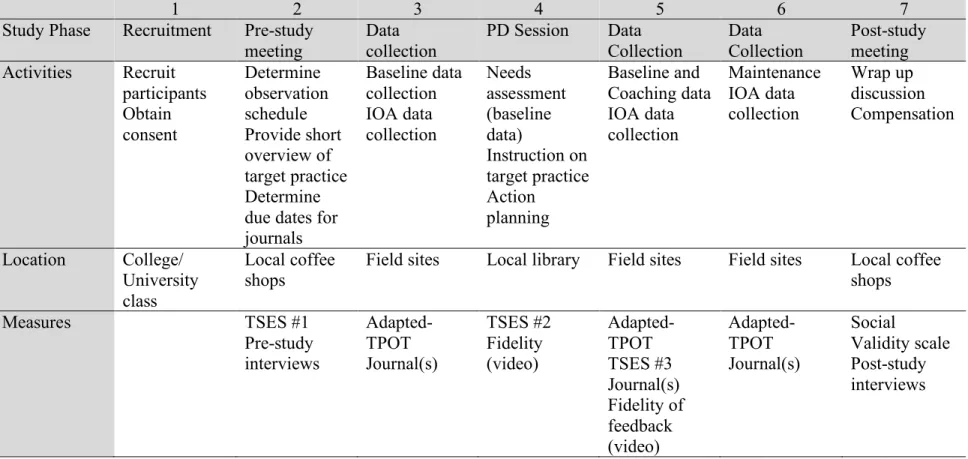
Table 3.6. Study Overview ... 56
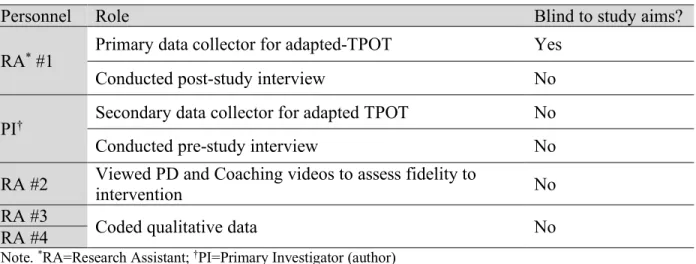
Table 3.7. Research Assistant Roles and Blindness to Study Aims ... 60
Table 4.1. Mean and Range Percentages of Total Use of Evidence-Based Practices to Support Social-Emotional Competence ... 70
Table 4.2. Percentage of Non-overlapping Data (PND) ... 73
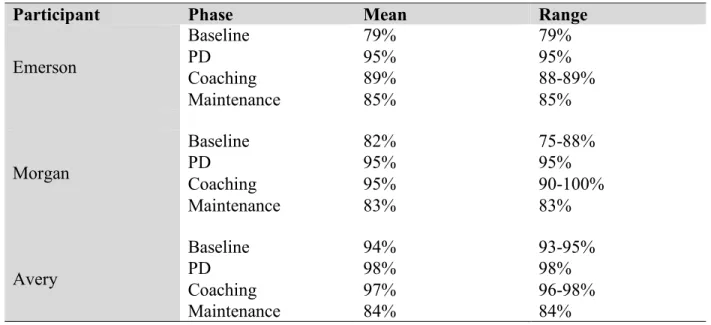
Table 4.3. Inter-observer Agreement Scores by Participant and Study Phase ... 74
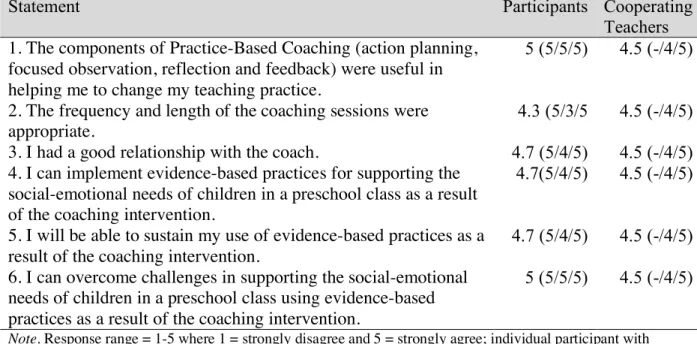
Table 4.4. Mean Social Validity Scores from Respondents ... 75
Table 4.5 Results from TSES (Teachers Sense of Self-Efficacy Scale) ... 77
Table 4.6. Research Question 1 Data Triangulation ... 90
Table 4.7. Research Question 2 Data Triangulation ... 91
LIST OF FIGURES
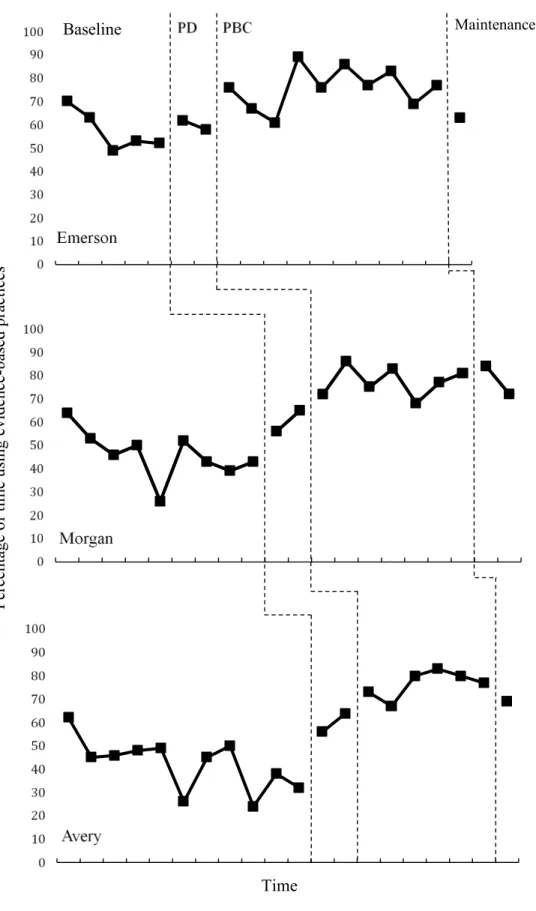
Figure 2.1. Pyramid Model ... 16 Figure 2.2. Conceptual Framework ... 35 Figure 4.1. Results of PBC Intervention on Participant Use of Evidence-Based
1
CHAPTER 1: INTRODUCTION
Early childhood programs across the United States have proliferated due to compelling research demonstrating the long-term benefits of quality programs on children’s school readiness and academic success (Barnett et al., 2017; Schweinhart et al., 2005). As a result, there is an increasing need for highly qualified teachers to staff these programs, especially teachers who are trained in using evidence-based teaching practices (Hyson, Horm, & Winton, 2012; National Research Council & Institute of Medicine, 2015).
inescapable cycle of adverse behavior and outcomes (Rashid, 2009). Supporting the development of positive social-emotional competence in the early years is critical for better outcomes not only in early childhood but also throughout the life course.
An additional consequence of persistent challenging behaviors is the loss of instructional time for engaging in evidence-based strategies known to make preschool an effective
intervention for increasing school readiness (Denham, 2003; Howes & Smith, 1995). Teachers expend an inordinate amount of energy managing persistent challenging behaviors, which can threaten the early childhood programs’ efficacy. Further compounding the problem is that some teachers enter the field feeling unprepared to support the social-emotional development of children, especially those who demonstrate more intensive social-emotional needs (e.g., challenging behavior) (Reineke, Stormont, Herman, Puri, & Goel, 2011).
Thus, there is a clear need for effective teacher education practices to prepare early childhood teachers to facilitate the social-emotional competence of young children in classroom settings for preventing the development of persistent challenging behaviors through the
application of evidence-based practices. The use of evidence-based practices by early childhood teachers is widely considered an essential driver to positive child and family outcomes,
3
Specifically, the report states, “The need to improve the quality, continuity, and consistency of professional practice for children from birth through age 8 is urgent” (p. 5). As a result, more research in the field of early childhood teacher education has focused on discovering the “active ingredients” impacting the uptake of evidence-based practices by professionals in the field. Neuman & Cunningham (2009) conducted one of the first rigorous, empirical studies of the impact of professional development on early childhood teachers’ quality language and literacy practices. Using a multiple group design, the researchers were able to isolate different types of professional development methods (i.e., coursework, coaching) to determine the relative effects on teacher practice. The results provided strong evidence for a practice-based model of
professional development to improve the quality of teachers’ use of language and literacy practices based on classroom observations.
competence in engaging young children as a means toward ensuring success in the first years of teaching by supporting novice teachers to consistently prevent the incidence of challenging behavior.
Statement of the Problem
The impact of early childhood teacher education programs on the uptake and efficacy of teacher practices in the field has been sparsely studied and existing studies show programs to have little to no effectiveness on teacher practice in the field (Horm, Hyson & Winton 2013; Maynard, La Paro, & Johnson, 2014). In fact, this is true across the teacher education landscape (Onafowora, 2005). Recent calls for a shift to focus on teacher practice rather than teacher knowledge and dispositions have aimed to increase the relevance of teacher education programs on teacher practice (NCATE, 2010). However, there has been little uptake in the field of teacher education in developing programmatic innovations based on evidence to demonstrate the
effectiveness of certain teacher education methods. To successfully impact teachers’ practice, specifically their use of evidence-based practices, researchers have used coaching as a way to increase fidelity to the intervention and ensure success of the program. In fact, coaching is a widely researched professional development tool for positively impacting teachers’ practice (Joyce & Showers, 2002; Sheridan, Edwards, Marvin, & Knoche, 2009). Coaching has been empirically linked to changes in teacher behavior and sustained use of practices (Gupta & Daniels, 2012; Lieber et al., 2009). However, the early childhood teacher education field, in particular preservice teacher education, typically does not use coaching professional
5
Practice-Based Coaching (PBC; NCQTL, 2017) has promising applications for use with preservice teachers. PBC is defined as, “A cyclical process for supporting preschool
practitioners’ use of effective teaching practices that leads to positive outcomes for children,” (Snyder et al., 2015, p. 134). The practices referred to here are the specific teacher actions or behaviors designed to manipulate the physical, temporal, or social environment to support advantageous child outcomes. This differs from other coaching models (i.e., Jablon, Dombro, & Johnsen, 2016; Rush & Shelden, 2011) because it has an explicit focus on practices and fidelity to interventions. By applying PBC with preservice teachers, this study demonstrated the efficacy of coaching in a new setting with a high impact on teacher outcomes and potentially future student outcomes.
Purpose of the Study
The purpose of this study was to apply PBC with a group of preservice early childhood teachers and measure changes made to their use of evidence-based practices for supporting young children’s social-emotional competence through positive engagement in classroom activities and routines. The study aimed to address the need for developing robust, evidence-based teacher education strategies in the early childhood field. By using a single case design, the study results established a functional relationship between coaching and preservice teacher practice, adding significant importance to the early childhood teacher education research base (Hyson et al., 2012). Additionally, this study used a multi-method design to answer questions related to the impact of coaching on teacher practice and also teacher self-efficacy in
implementing evidence-based practices. The specific research questions guiding this study were: 1. Is there a functional relationship between coaching and preservice teachers’ use of
evidence-based practices?
2. Does coaching impact preservice teachers’ self-efficacy regarding their implementation of evidence-based practices?
3. How does the coaching intervention influence preservice teachers’ perception of their implementation of evidence-based practices and their actual experiences in early childhood classrooms?
Findings
Major findings in this study indicate the PBC intervention resulted in increased use of preservice teachers’ use of evidence-based practices to promote children’s engagement in classroom activities and routines for all participants when comparing baseline and intervention phase data. In addition, preservice teacher participants were able to maintain increased use of evidence-based practices as compared to baseline levels. Further, social validity data showed high usefulness, appropriateness, and importance of the intervention. These findings suggest PBC can be adapted for use with preservice teachers to make meaningful change to teacher practice prior to entering the field. Establishing the use of PBC in early childhood teacher education can positively impact the growing early childhood workforce.
7
of coaching (e.g., email, bug-in-the-ear) it is essential to weigh the costs and benefits of abandoning face-to-face coaching interactions to impact teacher development.
Conclusion
CHAPTER 2: REVIEW OF THE LITERATURE
In the social-emotional domain of child development, there has been an explosion of research demonstrating both the importance of well-developed social-emotional skills and learning for school readiness (La Paro & Pianta, 2000); and also, the relatively high impact of teaching practices supporting the development of young children (Downer et al., 2013). It has been theorized and empirically shown that young children who are exposed to caregivers and teachers who are sensitive and responsive have greater social-emotional competence in their present and future functioning across settings. Children demonstrating higher social-emotional competence often have more advantageous school and life outcomes (Burchinal, Peisner-Feinberg, Pianta, & Howes, 2002; Hamre & Pianta, 2001).
9
challenging behavior are particularly salient for young boys of color who are at greater risk for negative life outcomes including disproportionate special education referrals, academic deficits, poor health, and incarceration (Barbarin, Murry, Tolan, & Graham, 2016).
The background context of young children is an important consideration for
understanding the development of social and emotional competence. Early life experiences, such as infant-parental interactions and relationship patterns, impact neurological development and the developing child’s ability to activate self-regulation processes in the brain (Shonkoff et al., 2012). Children in chronically stressful contexts (e.g., abuse, neglect, violence, incarceration) or exposed to adverse childhood experiences, have increased levels of cortisol and adrenaline hormones leading to a state of hyperarousal which can activate behaviors that are seen as challenging (van der Kolk, 2005). As a result, early childhood professionals describe children who survive trauma and high stress contexts as unable to control impulses or exhibiting aggressive behavior problems (Statman-Weil, 2015).
In addition, the cultural match, or often mismatch, between teachers and young children in early childhood settings can influence the understanding of an individual child’s social-emotional functioning. The adult’s culture, beliefs, and, particularly, biases, affect the
assignment of “challenging” to child behavior according to the social and cultural rules of the environment or system (DEC, 2017). Innovative research led by Gilliam (2016) showed implicit biases of early childhood teachers affected teachers’ expectations of challenging behaviors and their rating of the severity of behaviors based on child race. White teachers rated misbehaviors of Black children as more typical while Black teachers rated Black children’s misbehaviors as more serious. However, when given background information about stressful home lives of the
behavior as problematic whereas racially mismatched teachers were more likely to identify the behavior as problematic (Gilliam, Maupin, Reyes, Accavitti, & Shic, 2016). Early childhood teachers must carefully consider the contextual and cultural factors at play when evaluating and characterizing the social-emotional functioning of young children in classroom settings.
As stated earlier, the suspension and expulsion rate in early childhood settings has been shown to be three to five times higher than K-12 settings (Office of Civil Rights, 2016). The research on suspension and expulsion clearly shows a distinct bias among the groups of children who disproportionately receive the harsher discipline punishments. Recent data has shown the alarming rates at which children of color in early childhood programs are suspended and expelled (Adamu & Hogan, 2015; Gilliam & Shahar, 2006; Office of Civil Rights, 2016). As a result, children of color are being deprived of valuable educational experiences early in life and are subsequently being set on a track to promote the “preschool to prison pipeline” where the risk factors for academic failure, absenteeism, and possible incarceration are increased (Adamu & Hogan, 2015).
As a result of these alarming findings from the past decade, further research and
11
culturally-sustaining and equitable teaching practices to increase teachers’ awareness of bias and motivation to change these biases. Working in partnership with children and families, teachers using culturally sustaining practices represent children’s home lives in meaningful, deep, and purposeful ways (DEC, 2017).
Teacher practice and research has become increasingly responsiveness to ACEs. Trauma-informed intervention practices for early childhood educators aim to increase awareness around childhood trauma and its effects, increase sensitivity to effects of early trauma in the classroom, and implement practices that promote caring and responsive interactions (Statman-Weil, 2015). For example, the Head Start Trauma Smart (HSTS) program was developed as a way to pursue trauma-specific supports for young children and their families in a multi-faceted approach. Using multiple evidence-informed models, HSTS combined training, classroom mental health
consultation, intensive intervention, and peer mentoring for parents and teachers to create an integrated program to support young children. Evaluation of HSTS found promising evidence for how trauma-informed intervention can impact child behavior in the classroom and at home (Holmes, Levy, Smith, Pinne, & Neese, 2015).
Further, a new area of interest and concern in the early childhood field is the mental health of early childhood teachers. Recent research has shown that of the 1.3 million early childhood teachers working in childcare in the U.S. (95% of which are women) 36.1% reported scores at or above the criteria for clinical depression which is more than four times the average rate for Americans (Linnan et al., 2017). Recent research has shown correlation between
likely to elicit depressive symptoms in teachers) (Jeon, Buettner, & Snyder, 2014). Calls are being made for additional research and focus of the field on teacher mental health specifically in early childhood settings (Roberts, Gallagher, Daro, Iruka, & Sarver, 2019).
Given the critical need for addressing young children’s challenging behaviors in early childhood classrooms, it is important to study ways to adequately equip teachers to support those needs. Children who are able to positively engage with their environment through positive social-emotional skills are less likely to engage in challenging behavior. Early childhood teachers can consistently prevent challenging behavior by using evidence-based practices to support child engagement in classroom activities and routines. This study focused on teacher practices supporting the positive social-emotional competence of young children through positive engagement in early childhood classrooms and a coaching intervention to impact teachers’ ability to implement these evidence-based practices with fidelity. This chapter reviews the evidence related to certain teacher practices and classroom environment, in early childhood settings, to support positive social-emotional functioning of young children. Then, it turns to a discussion of the current empirical support for coaching, mostly with practicing teachers, and how coaching impacts teachers’ practice. Last, the chapter ends with highlighting robust adult learning, teacher change, and professional learning theories guiding the implementation of a coaching intervention within preservice teacher education.
Evidence-Based Teaching for Young Children’s Social-Emotional Competence
13
Role of the early childhood classroom. The early childhood classroom has a
complementary role to the family and home environment in the child’s development of social and emotional skills. Research has attempted to measure the myriad ways early childhood classrooms can impact social and emotional development. One of the basic measures used is the number of hours a child spends in child care and education settings outside the home (usually defined as “center-based care”). In particular, researchers focus on the impacts of high-quality center-based care settings characterized by supporting, nurturing environments and positive, responsive relationships. Berry et al. (2016) found children who come from chaotic households (i.e., less supportive environments and/or less positive adult-child relationships) benefitted from more hours of weekly childcare. According to teacher report, children with highly chaotic homes but more hours of weekly childcare had higher social outcomes compared to children with less hours of childcare. For children from homes of lower disorganization, hours of weekly childcare had no discernable effect on social outcomes. This suggests, particularly for children with higher risk factors, child care and education settings can serve as a resilience factor for achieving better social outcomes.
instructional classroom quality and children’s social skills in pre-kindergarten underscoring the importance of emotional climate in early childhood settings.
The relationship between a child and a teacher in an early childhood setting is a unique predictor of both academic and behavior outcomes both in early school as well as through adolescence. Hamre & Pianta (2001) followed a kindergarten cohort of 179 children through eighth grade measuring the quality of the teacher-child relationship in kindergarten and then gathering data on the children’s academic and behavioral outcomes throughout elementary school. The researchers identified the quality of the early relationship as a strong predictor of later behavioral outcomes. Specifically, the researchers combined scores on the Conflict and Dependency subscales of the Student-Teacher Relationship Scale (STRS; Pianta, 1992) to form a Relational Negativity score. Kindergartners with more relational negativity with their teachers tended to have fewer positive work-habit scores in lower elementary (work-habit being a behavioral outcome proxy). Most telling, though, was the relationship between relational negativity in kindergarten and later disciplinary problems. Results demonstrated for children with the most behavior problems in kindergarten increased behavior issues in first grade and continued relational negativity. This pattern of results lends further evidence to the severity of early childhood externalizing behavior problems and the deleterious outcomes demonstrated later in school.
15
social-emotional competence and decreasing the incidence of challenging behavior by young children. Here, the evidence base for these particular teaching practices is clarified.
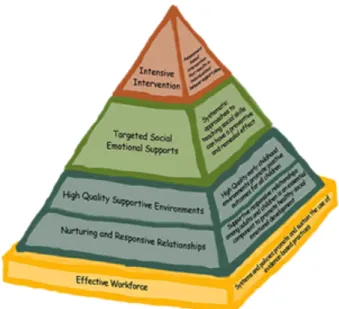
The most well-known program for early childhood teachers in supporting the social-emotional health of young children is the Pyramid Model for Supporting Social and Emotional Competence in Infants and Young Children (hereafter referred to as Pyramid Model). The model’s conceptual framework evolved from the work of two research and training centers: The Center for the Social and Emotional Foundations for Early Learning (CSEFEL) and The
Figure 2.1. Pyramid Model
There are two, high-quality, rigorous, empirical studies conducted on the Pyramid Model demonstrating positive effects to both teacher practice and child outcomes in the domain of social emotional competence. First, Fox and colleagues (2011) demonstrated positive effects of implementing the Pyramid Model with fidelity to both teacher practices and child outcomes. Using a multiple baseline, single-case design, the researchers were able to demonstrate the effectiveness of Pyramid Model professional development resources on impacting teachers’ use of over 150 evidence-based practices across all tiers of the Pyramid Model.
More recently, an experimental evaluation of the Pyramid Model was conducted with 40 early childhood teachers in inclusive early childhood settings. Hemmeter, Snyder, Fox, & Algina (2016) studied social skills and problem behavior scores between children whose teachers
17
report also showed a decrease in problem behavior by children whose teachers were in the intervention condition. There are limitations to the validity of the findings due to the nature of teacher report measurement; however, this study provides promising results in the efficacy of the Pyramid Model for promoting social and emotional competence in preschool children in
inclusive settings.
Pyramid Model teaching practices are based on decades of research demonstrating positive child outcomes associated with teacher behavior in classroom settings. This includes research examining the quality of teacher-child interactions (Burchinal, Vandergrift, Pianta, & Mashburn, 2010; Howes & Smith, 1995; Peisner-Feinberg et al., 2000), teachers’ use of praise and positive reinforcement (Fullerton, Conroy, & Correa, 2009; Stormont, Smith, & Lewis, 2007), teachers’ use of engaging talk during free play (Kontos, 1999), and teachers’
relationships with children (Mill & Romano-White, 1999; Pianta, 1999; Pianta, La Paro, Payne, Cox, & Bradley, 2002). The promising nature of the Pyramid Model in supporting
social-emotional development of young children forms the basis for the focused practices of this study. In particular, this study will target the universal practices aimed at increasing child engagement which is a part of a child’s global social-emotional competence. A child’s social competence is made up of many skills including problem solving, emotional literacy,
friendship/peer relationships, adult relationships, and engagement. Engagement is defined as the child’s active attending or participation in an activity or routine (Fox, Hemmeter, & Snyder, 2014). When classroom environments are carefully planned for children to engage positively and when teachers promote active engagement through verbal cues, nonverbal cues, positive
This can carry over into future competence and leads to more school readiness (Pianta, 1999, Pianta et al., 2002).
A recent study focused on a didactic intervention aimed at increasing child engagement and decreasing problem behavior found children of teachers in the intervention condition had increased levels of engagement and decreases in reports of problem behavior over the course of the intervention (Conroy et al., 2014). Essentially, child engagement prevents children’s
challenging behaviors and promotes learning. Teachers’ promotion of child engagement is operationally defined as teachers’ facilitation of developmentally appropriate activities, communicating with children on eye-level, providing multiple opportunities for choice, and commenting positively on children who are engaged in activities (Fox et al., 2014).
Research to Evidence-Based Practice Gap
Despite the existence of research and theory driven interventions for supporting the social and emotional competence of young children in preschool classrooms, there is a significant gap between what is known to be effective and what occurs in practice. As noted previously,
challenging behavior in preschool classes continues to be a persistent problem causing deleterious effects to the child demonstrating challenging behavior as well as threatening the effectiveness of the inclusive preschool classroom for all children as well as the mental health and workplace stress of teachers (Denham, 2003; Howes & Smith, 1995). What follows is a description of some of the reasons behind the research to practice gap in early childhood teacher practice.
First, the lack of knowledge about evidence-based practices to support social and
19
gaps in services and training, and their perceived role in supporting children’s mental health. Consistent with prior data, more than 9 out of 10 teachers reported having a child with mental health concerns in their classroom with behavior problems (e.g., disruptive, defiant, aggressive, conduct problems) being the number one student mental health concern. Concerning, though, was only 55% of teachers had heard of the term “evidence-based practices” and only 28% of teachers felt they had the level of knowledge required to meet mental health needs of the children.
In a second study, Stormont, Reinke, and Herman (2011) presented teachers with a list of evidence-based programs and/or practices for youth mental health and measured teachers’ knowledge of these programs as well as their knowledge of their school’s services and resources for children with mental, emotional, and behavioral needs. They reported the vast majority of teachers were not able to identify evidence-based programs and more than half of the teachers were unsure of the type of data collected by their school or the types of services and resources provided to children. In addition, a majority of teachers reported functional behavioral
assessments (an evidence-based practice) were either not practiced or they were unsure of their use/purpose (even though this is a federally mandated intervention; see IDEA, 2004). Thus, teacher knowledge of evidence-based practices constitutes a significant barrier for meeting the social and emotional needs of young children.
preschool, and private preschools using vastly different curricula (e.g., Montessori, Waldorf, HighScope, Reggio Emilia). Within each of these programs are professionals who have differing levels of education and preparation. Often for public preschool programs, teachers are similarly prepared to teach in K-12 settings, with at least a bachelor’s degree and state certification.
Alternatively, teachers in private centers may have as little as a 2-year Associate’s degree or high school diploma (Early & Winton, 2001). The system of education for early care and education professionals is also similarly fractured with many programs housed in 2- or 4-year college or university settings with online or in person formats (Maxwell et al., 2006). There is little consistency across the field in the types of classes and curricula or professional development early childhood professionals receive resulting in inconsistencies of teacher knowledge, especially regarding evidence-based practices (Winton, 2016).
In addition, there are concerns regarding the dissemination of evidence-based practices to professionals in the field. First, the administration, who make the ultimate decisions about what kinds of professional development to offer to staff, are often pulled in many directions to provide training regarding quality indicators, health and safety, and assessment or curriculum training (Strain & Joseph, 2004). As a result, professional development opportunities focused on
21
Last, capacity building of schools and educators needs to be a priority when discussing the uptake of evidence-based practices by early childhood professionals. Implementation scientists study the factors influencing the full and effective use of innovations in practice (NIRN, 2015). One component of active implementation is a set of implementation drivers. In this model, the implementation drivers of an evidence-based practice are: competency,
organization, and leadership (Fixen, Blase, Naoom, & Duda, 2015). Competency drivers include the training and coaching needed to use the innovation. Organization drivers are facilitated by administrators (i.e., principals, superintendents) who can change organizational practices and support systems intervention to encourage the uptake of the innovation. Last, active
implementation requires leadership to resolve adaptive issues and technical problems. If any of these components are weak then the intended outcomes will not be achieved, sustained, or be socially significant. Researchers who develop evidence-based practices need to move from diffusion and dissemination efforts which focus on the practices themselves rather than the how-to involved in using the practices in typical settings, how-to active implementation structures how-to ensure the success of their interventions.
Despite this persistent gap in research to practice, there is reason for optimism in looking to the future for both early childhood teacher education and the future classrooms of preservice teachers. Teacher education research that focuses on early childhood educators’ use of evidence-based practices is emerging. Many researchers are examining the effects of coaching
Validity of Coaching as a Teacher Education Method
Given the paucity of research on coaching as a teacher education method in preservice teacher education for early childhood educators, the current research on coaching models of professional development for inservice teachers will be examined. Particular attention will be paid to coaching models impacting teacher’s use of evidence-based practices to support the social-emotional development of young children.
In 2010 the U.S. Department of Education commissioned a large-scale review of research in the early childhood professional development literature with the aim of identifying specific features leading to better outcomes for children and families (Zaslow et al., 2010). The authors identified six effective features of professional development for early childhood educators: (a) specific and articulated objectives; (b) practice as an explicit focus of the professional
development; (c) collective participation of teachers; (d) the intensity and duration of the
professional development is matched to content; (e) the educators are prepared to use assessment effectively; and (f) the presented content is aligned with standards for practice. These findings were based on experimental or quasi-experimental studies demonstrating changes to teacher practice and/or child outcomes. Many of the studies reviewed included coaching or
mentoring/consultation professional development strategies. Although the authors reported mixed results on the use of coaching and the changes to teacher practice, there was no
breakdown of the specific coaching strategies utilized and how these could lead to differential results.
23
which consultants traveled biweekly to settings to provide on-site support. This included conducting a needs assessment, developing and implementing an action plan, monitoring
progress against the technical assistance plan, and then completing a final report. A second study demonstrated this model’s effectiveness in increasing total average scores on global quality measures of the classroom environment (Palsha & Wesley, 1998). Studies using consultation and on-site training methods paved the way for future intervention research that included coaching to increase fidelity.
As the use of coaching as a professional development tool has increased, teacher education researchers sought to better understand the use of coaching and make
recommendations for its further use. Gupta & Daniels (2012) conducted a review of the early childhood coaching literature in the first decade of the 21st century. Their results demonstrated coaching is typically used to complement other inservice professional development (i.e., workshops or coursework) and the combination proved to make positive impacts on teacher practice and child outcomes. However, the authors showed most of the literature did not describe the coaching intervention in sufficient detail to answer questions about the strategies and
processes coaches used with teachers.
Coaching impact on teacher practice. More recently, Artman-Meeker, Fettig, Barton, Penney, and Zeng (2015) published an exhaustive review of 49 early childhood studies using quasi-experimental or experimental designs to test the impact of coaching (possibly along with other variables) on teacher practice. It included studies published between 1982 and 2012 and sampled over 3,000 teachers. The studies also represented diverse settings (e.g., public
1. Collaborative progress monitoring; 2. Intentional focus on relationships; 3. Live model;
4. Video model;
5. Video self-reflection; 6. Role-play;
7. Practice of new skills; 8. Ongoing use of action plan; 9. Performance feedback;
10. Intentional planning for practice between sessions; 11. Use of manual;
12. Help with instructional materials.
Overall, the authors noted the wide diversity of coaching models throughout the field and echoed Gupta & Daniels (2012) sentiment that many studies did not provide sufficient information for gleaning details regarding duration, frequency, intensity, or dosage of coaching interventions. However, the more recently published studies tended to include more information of this type denoting there may be a shift in the field towards better reporting on the actual coaching intervention procedures. The wide diversity of coaching strategies and dosage structures can make it difficult for researchers to design interventions utilizing coaching methods in ways ensuring the intervention will be both cost efficient while maintaining effectiveness.
25
development of young children. The Pyramid Model has been shown to produce positive effects on both teacher practices and child outcomes when teachers are provided training and coaching (Fox et al., 2011). A limitation, however, is the relative cost and time commitment to achieve high fidelity for implementation of the entire Pyramid Model, rather than a single practice (e.g., use of descriptive praise).
Hemmeter and colleagues (2015) used coaching in a multiple probe design to assess teachers’ use of Pyramid Model practices. This differed from previous studies (as in Fox et al., 2011) because instead of addressing practices globally, the teachers were introduced to practices individually and then experimentally evaluated on their uptake and the impact to child outcomes. The results demonstrated teachers were able to acquire and maintain practices even after
coaching ended. However, there were mixed results on the incidence of challenging behavior (the child outcome measured) due to some extenuating circumstances. The study shows promise for introducing discrete practices in a step-wise manner to impact teachers’ uptake of evidence-based practices and possible changes to child outcomes. A more recent study by Brock &
Beaman-Diglia (2018) looked at using coaching methods of modeling and performance feedback on preschool teacher practice and one focus child’s challenging behavior. The researchers found coaching to be highly effective in positively impacting teacher practice (i.e., increase in use of target teaching practices) and positively impacting child behavior (i.e., decreasing instances of challenging behavior). Although the current study does not measure child outcomes, Brock & Beaman-Diglia’s study shows promise for the efficacy of coaching on teaching practice to ultimately change child behavior.
science and Head Start’s professional development resources. PBC is defined as, “a cyclical process for supporting preschool practitioners’ use of effective teaching practices that leads to positive outcomes for children,” (Snyder et al., 2015, p. 134). The practices referred to here are the specific teacher actions or behaviors that manipulate the physical, temporal, or social environment to support advantageous child outcomes. PBC differs from other coaching models because it has an explicit focus on practices and fidelity to interventions. Two other coaching models in frequent use across the field of early childhood professional development are discussed here.
First, Jablon and colleagues (2016) published a recent text titled Coaching with Powerful Interactions through the National Association for the Education of Young Children for use by leaders in early childhood settings. There are five principles guiding this coaching approach. Two of these principles clearly align with the PBC framework: (a) articulation – sharing observations and describing why they are important and (b) a mutual learning partnership promoting shared responsibility and accountability. The articulation principle aligns with PBC’s focused observations while the mutual learning partnership aligns with PBC’s collaborative partnership components. The use of PBC by leaders in early childhood settings may extend Jablon, Dombro, & Johnsen’s model by turning an explicit focus on evidence-based teaching practices to ensure meaningful outcomes for the children and families influenced by the teacher receiving coaching interactions.
27
professional) is the foundational function of the coaching dyad. In Rush and Shelden’s model, the coaching activities are driven by understanding the current level of knowledge and
understanding of the adult and providing supports to build the adult’s capacity. This can be effective in inservice settings where teachers often have extensive experience and knowledge on which to draw. In contrast, a PBC model centers effective teaching practice and builds the adult learners’ ability to implement practices through a collaborative partnership. Although, it is important to highlight the collaborative nature of coaching in the Rush and Shelden model as well. The research and practice literature has not fully delineated the differences between the two models. The main difference lies in the origins of the two models with Rush & Shelden coaching being derived from parent coaching in early intervention and PBC being derived from coaching practitioners in classroom settings.
In the current study, the participants had a relatively low understanding of and experience with effectively engaging children in classroom activities and routines to support their social-emotional development and growth. The participants were able to grow their capacity by focusing on the mechanics of effective practices and having opportunities to review data and actively reflect on their use of the practice. PBC extends the work of Rush and Shelden (2011) by highlighting the importance of developing effective teaching practices.
were still present at posttest, however the differences faded by the maintenance period. PBC provides a promising direction in the coaching literature for impacting teachers’ uptake of evidence-based practices.
Further, recent research has shown positive effects for children in classrooms of teachers being coached in a PBC model for supporting children’s social emotional competence. In a randomized control trial conducted by Sutherland, Conroy, Algina, Ladwig, Jessee, & Gyure (2018), child problem behavior was significantly reduced as measured by both teacher report and observation. Teachers in the PBC condition reported focus children had significantly increased social competence and engagement in classroom activities. In addition, the authors noted slightly higher effect sizes for this study compared to other teacher practice interventions focusing on social outcomes in early childhood classrooms. It is unclear whether this is the result of the specific intervention (BEST in CLASS) or the method of professional development (PBC). There is promising evidence to demonstrate the effectiveness of PBC to strongly impact teacher practice and result in greater positive outcome gains for children.
Research focusing on coaching as professional development in social behavior
29
reported on targeting coaching needs to teachers who struggle more to implement the practices and another (Myers, Simonsen, & Sugai, 2011) used a response-to-intervention type approach to identifying teachers who may need more intense coaching. More research is needed on how to identify and target teachers who may benefit from coaching. For example, novice teachers (like preservice teachers in student teaching) may benefit more from coaching models of professional development due to their lack of experience and skill in implementing evidence-based practices.
The use of coaching in early childhood preservice teacher education literature is scare. One study examined a peer coaching model in a field-based seminar for preservice teachers during an infant/toddler practicum experience. The researchers found the use of peer coaching significantly influenced the preservice teachers’ uptake of developmentally appropriate
interaction practices to support child development and learning (Kennedy & Lees, 2016). A more recent study by McLeod, Kim, and Resua (2019) looked at coaching via video and email for preservice teachers’ use of evidence-based practices selected from a menu (developed by Barton, Fuller, & Schnitz, 2016). Using a multiple baseline single case design across teaching practices, it was reported that the video and email coaching feedback intervention was effective in
increasing the teachers’ use of practices. The researchers delivered training and coaching simultaneously so they were unable to determine the effects of each method separately. The current study delayed the onset of coaching after training by two observation data points to refine our understanding of the effects of coaching versus training alone. Further research on coaching practices and how they can best be applied in preservice teacher education is required to
demonstrate a stronger evidence base.
classrooms, it is important to understand whether teachers are being adequately equipped to support these needs. It has been shown novice teachers’ practice is often based on prior experiences as students themselves rather than what are considered best practices for their particular fields or specific subjects they are teaching (Lortie, 1977). The student teaching portion of any teacher education program provides an excellent venue for helping beginning teachers learn the practices needed to be effective educators. Teacher practice is impacted when the student teaching experience helps the teachers to move toward a practical understanding of the central tasks of teaching. University supervisors along with cooperating teachers work together to make the experience educative for student teachers (Feiman-Nemser & Buchmann, 1987). However, student teaching experiences do not always make the intended impact. Freeman, Simonsen, Briere, and MacSuga-Gage (2014) showed preservice teachers are not effectively prepared to implement evidence-based practices, particularly for classroom management. In particular, the researchers documented most states do not require teacher education programs to provide instruction in evidence-based classroom management practices. This is particularly troubling given the critical nature of these skills in beginning teachers’ success in the classroom.
31
perform at similar levels to teachers without specific early childhood education degrees (Cochran-Smith & Zeichner, 2005; Early et al., 2006; Early et al., 2007).
Preservice teacher implementation of evidence-based practices – early childhood. Further, there is a limited research base in the field of early childhood teacher education examining high-leverage teacher education methods impacting preservice teacher practice (Hyson et al., 2012; Snyder et al., 2011). Recently, Horm and colleagues (2013) attempted to illustrate this fact by synthesizing research in three domains of early childhood education research: addressing the needs of children with disabilities, working with infants and toddlers, and math education. The researchers found significant gaps in the literature within these three domains and made recommendations for the kind of research most needed to impact early childhood teacher education. Their third recommendations states, “Develop, field test, and rigorously evaluate innovative, evidence-based approaches to early childhood teacher
education,” (p. 106). Essentially, the authors call for research synthesizing information across programs to inform the field more broadly about practices contributing to the uptake of evidence-based practices by early childhood preservice educators.
It is clear that the research supporting the use of evidence-based practices for supporting the social-emotional competence of young children and the research demonstrating the efficacy of coaching on teacher practice is strong. The early childhood teacher education landscape would benefit greatly by combining these fields within their coursework and fieldwork to impact
teacher practice in a meaningful way. The final section will discuss the current teacher education theories and how coaching fits into these theories.
Teacher Education Theories and Coaching
There are several theories driving the field of teacher education broadly and the
education, Knowles, developed a theory of andragogy: the art and science of adult learning (Knowles, 1970). Knowles’ theory stressed self-directed learning and was based on thorough reviews of the literature and research on learning theory at the time. He reasoned mature adults differ from children in particular ways that impact their learning styles. So, while pedagogy, or the art and science of child teaching and learning, emphasizes the learner as dependent and passive to the expert teacher, adult learners are driven by motivation to learn specific knowledge or skills, the need to have learning be experientially referenced, and the need to have immediacy of the learning available for application (Knowles, 1970). In teacher education, Knowles’ theory of andragogy is often used in conceptualizing the student teaching or field experience portion of the program of study. For example, professional development schools are a model of teacher education based on andragogy where teaching candidates learn exemplary practices that are taught and modeled by master teachers and then engage in reflection and application of those practices (Green & Ballard, 2011).
Theory of teacher change. Teacher education for practicing teachers, also known as professional development, has been influenced by the theoretical work of Guskey (1982).
33
see positive student effects as a result of using the practice in consultation with the professional development expert.
Teacher self-efficacy theory. Both Guskey’s theory of teacher change and Knowles’ theory of andragogy are important frameworks when developing teacher education practices that both impact knowledge and practice of teacher candidates. An additional theoretical perspective important to the development of effective teacher education practices is Bandura’s theory of self-efficacy. Bandura said, “an efficacy expectation is the conviction that one can successfully execute the behavior required to produce the outcomes,” (Bandura, 1997, p. 193). Self-efficacy is the belief that one will be able to succeed in a given situation. For preservice and novice
teachers, research has shown increased self-efficacy regarding teaching practices results in better outcomes for children in their classes (Caprara, Barbaranelli, Steca, & Malone, 2006). Therefore, for teacher educators, it is important to not only consider the theoretical frameworks and models impacting a teacher’s practice to affect change in the classroom but also methods to increase a teacher’s self-efficacy.
Coaching and teacher education theories. These three theoretical frameworks intertwine to develop a method of working with preservice teachers, increasing their use of evidence-based practices while also increasing their self-efficacy for implementing those
beliefs. Last, a teacher’s self-efficacy can be more easily supported through a coaching model of teacher education as the coach and preservice teacher enter into a responsive relationship where the feedback from the coach is specific and applicable to the preservice teacher as opposed to traditional models of teacher education and supervision. Often, in traditional models, responsive relationships between supervisors and preservice teachers are interrupted by the evaluative nature of the relationship and the sheer breadth of knowledge and practice being addressed in a single student teaching semester.
Conceptual Framework
35
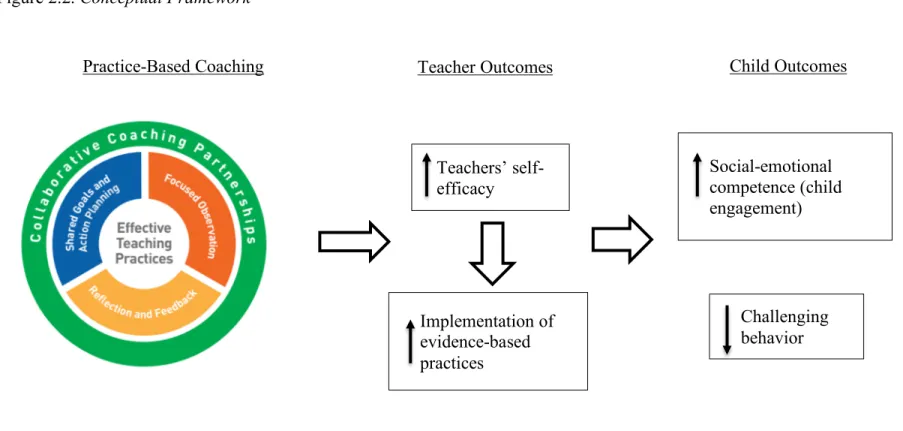
Figure 2.2. Conceptual Framework
Teachers’ self-efficacy
Implementation of evidence-based practices
Social-emotional competence (child engagement)
Teacher Outcomes Child Outcomes
Practice-Based Coaching
In this study, it was hypothesized preservice teachers who participate in PBC during
student teaching would increase their use of evidence-based teaching practices and self-efficacy.
Their increased self-efficacy would also contribute to increased use of evidence-based practices.
Increased use of evidence-based practices along with higher self-efficacy may positively impact
child outcomes, including more positive social-emotional competence and reduced instances of
challenging behavior. For the present study, the use of evidence-based practices for the
social-emotional competence of young children along with teachers’ self-efficacy are the focus of the
coaching intervention. Child outcome measures may be used in future research studies.
Research Questions
The purpose of this research study was to examine the influence of a PBC model of
professional development with preservice early childhood education teachers to increase their
skills and self-efficacy in the use of evidence-based practices for supporting the social-emotional
development of young children. The research questions were:
1. Is there a functional relationship between coaching and preservice teachers’ use of
evidence-based practices?
o Is coaching a socially valid teacher education method?
2. Does coaching impact preservice teachers’ self-efficacy regarding their implementation
of evidence-based practices?
3. How does the coaching intervention influence preservice teachers’ perception of their
implementation of evidence-based practices and their actual experiences in early
37
CHAPTER 3: METHODOLOGY
This study used a multi-method design to study coaching’s impact on preservice teachers’
self-efficacy and use of evidence-based practices. Multi-method designs collect qualitative and
quantitative data to answer different but related research questions to explore multiple
components of a research agenda. In this study, multiple quantitative and qualitative methods are
used to explore preservice teachers’ practice and self-efficacy in the context of a coaching
intervention. The results are triangulated to form a comprehensive understanding of both use of
practice and self-efficacy (Morse, 1994).
Participants and Setting
The main participants and setting of focus were the participant preservice teachers and
their practicum classrooms. The participants’ cooperating teachers were also included in social
validity analysis. It is important to note the important role of each university supervisor in
supporting the preservice teachers development of practice and self-efficacy. However no data
were collected with these individuals.
Preservice teachers. Convenience sampling was used to identify three preservice early
childhood teachers (preschool and kindergarten) studying either early childhood or elementary
education to participate in this study. For inclusion in this study, participants had to: (a) be
enrolled in student teaching in the Spring semester of 2019 for at least 10 weeks, (b) attend a
2-hour professional development session, (c) complete at least four reflective journals, and (d) be
Individuals who had previous experience as a lead teacher in a setting with young children were
excluded.
Recruitment. The researcher contacted faculty members at multiple private and public
colleges/universities in the Southeastern region of the United States to identify potential
undergraduate or graduate participants majoring in child development, early childhood
education, or related field. To recruit participants, the researcher attended seminar sessions at the
targeted institutions in the end of Fall 2018 and in January 2019 providing information about the
study (i.e., commitment, compensation). A sign-up sheet for interested individuals was
distributed to provide contact information. A second round of recruitment was completed
through sending a flyer to additional universities with information about the study and contact
information for the researcher. A third round of recruitment – opening inclusion criteria to
students enrolled in field experience courses – was planned but not needed.
Screening observation. Prior to enrollment in the study, all potential participants were
observed in their student teaching placement using the adapted-Teaching Pyramid Observation
Tool (adapted-TPOT; see below for description) to determine their current use of targeted
teaching practices. An exclusion criterion was scoring at or above 80% fidelity across all
indicators on the adapted-TPOT to control for ceiling effects. There were no potential
participants who were excluded for this reason. At the conclusion of recruitment and screening
efforts, four participants were enrolled in the study. The fourth participant was ultimately
removed from data analysis because of repeated absences.
Participant – Emerson. Emerson1 was a 22-year-old white female. She attended a
39
Her program of study did not lead to state licensure in early childhood education. She was in her
final semester of study and a majority of major coursework had been completed. Emerson
reported her program adequately prepared her to use evidence-based practices in the classroom
(5 on a scale of 1-5 with 1=definitely not and 5=definitely yes). She also reported her program
adequately prepared her to support the social-emotional competence of young children (5 on a
scale of 1-5 with 1=definitely not and 5=definitely yes). She had taken coursework in child
development, child guidance and/or social emotional behavior, teaching practices, and children
with disabilities.
Participant – Morgan. Morgan was a 23-year-old white female. She attended a large, public
university where she was completing a Master of Arts entry level teaching degree in elementary
education. Her program of study led to state licensure in elementary education (K-6). Morgan
reported her program somewhat prepared her to implement evidence-based practices in the
classroom (3 on a scale of 1-5 with 1=definitely not and 5=definitely yes). She also reported her
program moderately prepared her to support the social-emotional competence of young children
(4 on a scale of 1-5 with 1=definitely not and 5=definitely yes). Morgan reported taking course
work in child development, child guidance and/or social emotional behavior, and children with
disabilities. She reported not receiving specific course work in teaching practices.
Participant – Avery. Avery was a 33-year-old white female. She attended a mid-size
public, historically Black university where she was completing a bachelor’s degree in early
childhood education. Her program of study led to state licensure in Birth-Kindergarten inclusive
education. Avery reported her program moderately prepared her to implement evidence-based
practices in the classroom (4 on a scale of 1-5 with 1=definitely not and 5=definitely yes). She
young children (2 on a scale of 1-5 with 1=definitely not and 5=definitely yes). She had taken
coursework in child development, child guidance and/or social emotional behavior, teaching
practices, and children with disabilities. See Table 3.1 for descriptive information for each
participant.
Table 3.1. Descriptive Information for Preservice Teacher Participants Participant Age Race Gender Major Degree
Seeking
College/ University
Practicum setting Emerson 22 White Female Child
Development
BS Private, small
Public, inclusive Pre-K
Morgan 23 White Female Elementary Education
MAT Public, large
Public, inclusive, Kindergarten Avery 33 White Female Early
Childhood Education
BS Public, mid-size
Public,
inclusive, Pre-K
Setting. Observational data was collected in the participants’ assigned student teaching
classrooms. For inclusion in the study, each classroom had to serve children aged 3-5 years with
and without disabilities (i.e., inclusive settings). Emerson’s student teaching placement was in a
public, inclusive, pre-K classroom. Morgan’s student teaching placement was in a public,
inclusive, kindergarten classroom. Avery’s student teaching placement was in a public, inclusive,
pre-K classroom. All direct observations occurred during the same activity/routine (free play) for
each participant. Consent was obtained from the principals and teachers of the individual schools
and classrooms prior to the onset of the study. Demographic data on each participants student
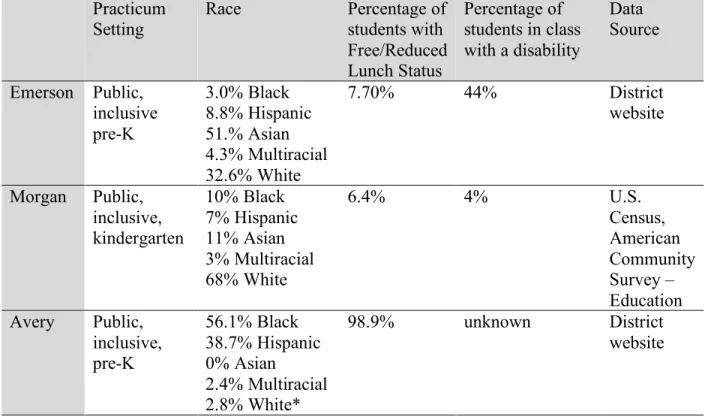
teaching placement school is presented in Table 3.2. This data is collected from multiple sources
including district websites and the National Center for Education Statistics at the Institute of
41
Table 3.2. Descriptive Information for Practicum Settings by Participant Practicum
Setting
Race Percentage of
students with Free/Reduced Lunch Status
Percentage of students in class with a disability
Data Source
Emerson Public, inclusive pre-K 3.0% Black 8.8% Hispanic 51.% Asian 4.3% Multiracial 32.6% White
7.70% 44% District
website
Morgan Public, inclusive, kindergarten 10% Black 7% Hispanic 11% Asian 3% Multiracial 68% White
6.4% 4% U.S.
Census, American Community Survey – Education Avery Public,
inclusive, pre-K 56.1% Black 38.7% Hispanic 0% Asian 2.4% Multiracial 2.8% White*
98.9% unknown District
website
Note. *These demographics are for the school and do not include the pre-k classroom.
Teacher education program. It is important to note all participants in the study were
actively engaged in supervisory and mentorship relationships with their university supervisors
and cooperating teachers for their teacher education programs and practicum sites. The
participants were receiving ongoing instruction, mentorship, and supervision through these
relationships in line with the objectives of their individual programs. The coaching relationship
of focus for the current study may have been influenced by these relationships and any prior
knowledge participants may have received on the topic of supporting child engagement. The
other individuals supporting the participants’ development of teaching skills were aware of the
participants’ inclusion in the study and were aware of the study aims through recruitment efforts.
However, both university supervisors and cooperating teachers were blind to study methods and
Materials. The researcher provided all study related materials to the participants for the
coaching sessions. These included needs assessments, action planning form, and professional
development resources (i.e., handouts) (See Appendix A: Coaching Materials). The study also
used a small video camera to record the professional development session and all coaching
sessions for treatment fidelity checks. Last, participants were financially compensated (up to
$150, depending on the number of coaching sessions).
Research Design
Multi-method design. Quantitative and qualitative data were collected concurrently. The
benefit of using a concurrent nested design included the reduced time needed to complete the
study since both the qualitative and quantitative data were collected during the same phase of
study and the results were verified by the dual data collection efforts (Teddlie & Tashakkori,
2003). In this study, it was necessary to use a multiple methods strategy to develop a more
complete understanding of the impact of the coaching intervention on both behavioral and
psychological outcomes. The design, measures, and analysis of data contributed to a clearer
understanding of how preservice teacher practice can be influenced by coaching. To answer the
research questions, multiple sources of data were collected using rigorous qualitative and
quantitative methods. See Table 3.3 for research questions, data type and data collected, and data