ARTIGO ORIGINAL
RESUMO
Introdução: A diabetes tipo 2 tem um peso significativo nas despesas com medicamentos. Determinámos a proporção de novos doentes que iniciaram tratamento com cada classe de antidiabéticos, se o tratamento foi iniciado pelos médicos de família, se estes alteram as prescrições de outros médicos e comparámos padrões de prescrição de médicos de família e outros especialistas.
Material e Métodos: Estudo transversal aninhado em coorte na Rede de Médicos Sentinela. Entre 2014 e 2015 casos incidentes de diabetes tipo 2 foram notificados, reportando o tratamento, quem fez a prescrição inicial e se tratamentos iniciados por outros médicos foram alterados.
Resultados: Foram notificados 415 casos incidentes. Os Médicos Sentinela fizeram a prescrição inicial em 89,4% dos casos (IC 95% 86,0% - 92,0%). O tratamento inicial mais escolhido foi a metformina, em 85,5% dos doentes (IC 95% 81,8% - 88,6%). Os médicos de família utilizaram menos inibidores da dipeptidil peptidase-4 (4,2% vs 30,3%, p < 0,001) e insulina (0,3% vs 12,1%, p < 0,001) que outros especialistas. As prescrições iniciadas por outros foram alteradas em 4,5% dos casos (IC 95% 0,4% - 16,0%).
Discussão: A colheita prospectiva dos dados é um ponto forte, mas foram notificados poucos casos de tratamento iniciado por outros especialistas. Dados sobre a gravidade da doença não estavam disponíveis e podem explicar parte das diferenças entre médicos de família e outros especialistas.
Conclusão: A metformina foi o tratamento inicial mais escolhido, em linha com as recomendações das normas de orientação clínica Portuguesas. Os médicos da Rede Sentinela diagnosticaram a maioria dos casos, raramente alteraram prescrições iniciadas por outros e tiveram um padrão de prescrição diferente de outros especialistas.
Palavras-chave: Cuidados de Saúde Primários; Diabetes Mellitus Tipe 2/tratamento; Hipoglicemiantes; Portugal; Vigilância de Evento Sentinela
Initial Therapeutic Choices for Type 2 Diabetes in the
Portuguese Sentinel Practice Network
Escolhas Terapêuticas Iniciais para a Diabetes Tipo 2 na
Rede de Médicos Sentinela
1. Family Medicine Unit. NOVA Medical School. Nova University. Lisbon. Portugal.
2. Department of Epidemiology. National Health Institute Doutor Ricardo Jorge. Lisbon. Portugal. 3. Department of Epidemiology. National Health Institute Doutor Ricardo Jorge. Lisbon. Portugal.
Autor correspondente: Daniel Pinto. [email protected]
Recebido: 17 de fevereiro de 2018 - Aceite: 14 de dezembro de 2018 | Copyright © Ordem dos Médicos 2019
Daniel PINTO1, Ana Paula RODRIGUES2, Baltazar NUNES3
Acta Med Port 2019 May;32(5):375-380 ▪ https://doi.org/10.20344/amp.10414
ABSTRACT
Introduction: Type 2 diabetes is a major driver of pharmaceutical spending. We aimed to determine the proportion of new patients who begin treatment with each antidiabetic medicine class, if therapy was initiated by their family physician, if family physicians alter prescriptions initiated by other physicians, and to compare prescribing patterns of family physicians and other specialists.
Material and Methods: Cohort-nested cross-sectional study within the Portuguese Sentinel Practice Network. Between 2014 and 2015, incident cases of type 2 diabetes were notified, thus reporting treatment, who made the initial prescription and if treatments initiated by other physicians were changed.
Results: A total of 415 incident cases were notified. The initial prescription was made by Sentinel Practice Network physicians in 89.4% of cases (95% CI 86.0% - 92.0%). Metformin was most often chosen as the first treatment, prescribed to 85.5% of patients (95% CI 81.8% – 88.6%). Family physicians used less dipeptidyl peptidase-4 inhibitors (4.2% vs 30.3%, p < 0.001) and insulin (0.3% vs 12.1%,
p < 0.001) compared to other specialists. Prescriptions initiated by others were changed in 4.5% of cases (95% CI 0.4% - 16.0%).
Discussion: Prospective data collection is a major study strength, but few cases of treatment initiated by non-family physicians were notified. Data for disease severity was unavailable and could partly explain differences between family physicians and other specialists.
Conclusion: Metformin was most often chosen as initial therapy, in line with Portuguese guideline recommendations. Sentinel Practice Network physicians diagnosed most cases, seldom changed prescriptions initiated by others, and had a different pattern of antidiabetic medicines use compared to other specialists.
Keywords: Diabetes Mellitus, Type 2/drug therapy; Hypoglycemic Agents; Portugal; Primary Health Care; Sentinel Surveillance
INTRODUCTION
Type 2 diabetes pharmacotherapy is one of the major drivers of pharmaceutical spending in Portugal and other
developed countries.1 Rises in expense are partly related
to increased diabetes prevalence, but mainly to the greater use of newer and more expensive medicines, such as the dipeptidyl peptidase-4 (DPP-4) inhibitors and insulin
glar-gine.1,2
Both international and Portuguese guidelines favour metformin as the first-line agent of choice for most patients
with type 2 diabetes after lifestyle changes have been
tried.3,4 Portuguese guidelines prefer a sulfonylurea if
met-formin is contra-indicated or not tolerated, and recommend insulin if there is markedly symptomatic hyperglycaemia
(with glycaemia above 300 mg/dL or an HbA1C over 10%).4
Starting with dual combination therapy is not recommended by Portuguese guidelines, but is considered optional for
patients with HbA1C over 9% by the American Diabetes
ARTIGO ORIGINAL Diabetes joint position statement. 3
Studies regarding diabetes medicines prescribing
pat-terns mainly focus on prevalent use,1,2,5,6 with only a few
identifying the agents used as first-line therapy.7 Finding
which agents are chosen as first-line therapy for new cases of type 2 diabetes may help determine if physicians are fol-lowing guideline recommendations; and if more expensive agents are being used to initiate treatment or introduced later on (e.g., when initial therapy fails to achieve goals or causes side effects).
Although family physicians account for most diabetes
prescriptions in Portugal,1 it is unknown if new medicines
are introduced by them or prescribing is induced by hospital or private practice based specialists. The influence of spe-cialist prescribing of new medicines on primary care physi-cians has been shown to occur often, but not in all cases. In some studies, specialists are earlier adopters, initiating treatments with a new drug, which family physicians then
continue8-11; while in other studies family physicians are
re-ported to use new drugs more often.12
The main objective of this study was to determine the proportion of new patients with type 2 diabetes who began treatment with each antidiabetic medicine class. Secondary objectives were to determine the proportion of new patients with type 2 diabetes whose initial therapy was prescribed by their family physician, the proportion of cases where family physicians altered prescriptions initiated by other doctors, and to compare family physicians prescribing patterns with private or hospital based specialists.
MATERIAL AND METHODS Study design and setting
The Portuguese Sentinel Practice Network is composed of volunteer family physicians working in the Portuguese
National Health Service (NHS).13 The Portuguese NHS is
a single payer publicly funded system, where each citizen
is registered with a family physician.14 Therefore, each
par-ticipant in the Sentinel Practice Network contributes with a cohort of their patients. This allows the network to have a reasonably stable cohort each year and to calculate the in-cidence of health problems in the Portuguese population. The network collects data for two different purposes: sur-veillance of communicable and non-communicable diseas-es for which specified events are systematically reported each week; and epidemiological research that comprises satellite studies, where data is collected to answer a spe-cific question. Only observational research studies are per-formed within the network.
In 2013, the network agreed to expand the information being collected about incidence of diabetes mellitus for surveillance purposes, to conduct a continuous notification cross-sectional study among new cases of type 2 diabetes notified in the cohort. Data was collected from January 2014 to December 2015.
Participants
In 2014 and 2015 there were 82 active family physicians
participating in the Portuguese Sentinel Practice Network, which comprised an observed population of 35 535 indi-viduals. We asked participants to notify all incident cases of diabetes of any age. Diagnosis of diabetes was made using the nationally adopted criteria (the same as those recom-mended by the World Health Organization in 2006, updated
in 2011 to include HbA1C).15 Only cases of type 2 diabetes
were included.
Measurements
Notifications were sent using either online or paper forms. Data were collected on patient age at diagnosis, gender, type of diabetes (type 1, type 2 – only these were included, gestational, other or unknown), pharmacological treatment (the online form had a list of marketed antidiabet-ic medantidiabet-icines using the international non-proprietary name; the paper form had a free text space; up to three medicines could be entered), other treatment measures (free text), who made the initial prescription (the family physician or another doctor, who was then specified in a separate free text field), and if the initial prescription had been changed by the family physician (only for prescriptions initiated by other physicians). Free text fields were later coded by the inves-tigators. When incomplete submissions were received, the Sentinel Practice Network coordination contacted the noti-fying physician to gather missing information.
Outcomes
Our main outcome was the proportion of patients who began treatment with each antidiabetic medicine class. Classes were defined using the Anatomical Therapeutic Chemical classification categories for A10B blood glucose lowering drugs excluding insulins and A10A insulins and
analogues.16
Secondary outcomes were the proportion of patients whose diagnosis and initial therapy was prescribed by their family physician; the proportion of cases where family phy-sicians altered prescriptions initiated by others; and the pro-portion of each class of antidiabetics prescribed by primary care physicians (family physicians participating in the Sen-tinel Practice Network or other family medicine specialists) or private and hospital based specialists.
Study size
ARTIGO ORIGINAL Statistical analysis
Proportions of each antidiabetic class prescribed as initial therapy were estimated with their respective 95% confidence interval (95% CI). Proportions of medicines pre-scribed by primary care and non-primary care physicians were compared using Fisher’s exact test. A level of signifi-cance (α) of 0.01 was used as the threshold for statistical significance to account for multiple comparisons.
Ethics approval
This study was approved by the Ethics Committee of National Health Institute Dr. Ricardo Jorge (Portugal).
RESULTS
During the years 2014 and 2015, 415 incident cases of type 2 diabetes were notified to the Portuguese Sentinel Practice Network by 72 participating family physicians. Ten physicians did not contribute with any diabetes notifications, but, as they notified other health conditions under obser-vation, their patient lists were included when calculating incidence. Having achieved the planed sample size, data collection ended by the end of the second year of the study. Type 2 diabetes incidence in the cohort was 5.8 / 1000 per-son-years. Median age at diagnosis was 62 (interquartile range 54 - 71) and 54.5% of patients were male. There were
no differences between patients diagnosed by primary care and non-primary care physicians regarding mean age (62.7
vs 60.2 years, p = 0.25) and gender (53.7 vs 63.6% male,
p = 0.28).
The diagnosis and initial prescription were made by phy-sicians participating in the Sentinel Practice Network in 371 cases (89.4%, 95% CI 86.0% - 92.0%), other family physi-cians in 11 cases (2.7%, 95% CI 1.4% - 4.7%), and other specialists in 33 cases (8.0%, 95% CI 5.7% - 11.0%). Lifestyle changes alone were introduced in 12.0% (95% CI 9.2% - 15.6%) of patients, and all were prescribed by Sentinel Practice network physicians. In total, lifestyle changes were prescribed in 65.8% (95% CI 61.1% - 70.2%) of cases.
In 81.4% (95% CI 77.4% - 84.9%) of cases patients were started on one single medicine, in 5.8% (95% CI 3.9% - 8.5%) two medicines were used and in 0.7% (95% CI 0.1% - 2.2%) three antidiabetic drugs were prescribed. Family physicians used two or more medicines less often
than other specialists (4.2% vs 33.3%, p < 0.001). Fixed
associations were used in 3.4% of cases, less often by pri-mary care physicians compared to other specialists (2.4%
vs 15.2%, p = 0.003).
Tables 1 and 2 show the proportion of each antidiabetic class prescribed as initial therapy by family physicians or
Table 1 – Proportion of patients prescribed each distinct combination for initial therapy (by class and type of practitioner). Antidiabetics with and without associated prescription for lifestyle changes are grouped together.
Initial therapy Family physicians(n = 382) Other specialists(n = 33) (n = 415)Total % (95%CI)
Lifestyle changes alone 13.1 (10.1 – 16.9) 0.0 (0.0 – 12.4) 12.0 (9.2 – 15.6)
Biguanides (metformin) 81.4 (77.2 – 85.0) 54.5 (38.0 – 70.2) 79.3 (75.1 – 82.9)
Biguanide and DPP-4-i 2.4 (1.2 – 4.5) 24.2 (12.6 – 41.2) 4.1 (2.5 – 6.5)
DPP-4-i 1.0 (0.3 – 2.8) 6.1 (0.6 – 20.6) 1.4 (0.6 – 3.2)
Biguanide and sulphonylurea 1.0 (0.3 – 2.8) 0.0 (0.0 – 12.4) 1.0 (0.3 – 2.5)
Insulin 0.0 (0.0 – 1.2) 9.1 (2.4 – 24.3) 0.7 (0.1 – 2.2)
Biguanide, sulphonylurea and DPP-4-i 0.5 (0.0 – 2.0) 0.0 (0.0 – 12.4) 0.5 (0.0 – 1.9)
Sulphonylureas 0.3 (0.0 – 1.6) 0.0 (0.0 – 12.4) 0.2 (0.0 – 1.5)
Biguanide and GLP1 agonist 0.0 (0.0 – 1.2) 3.0 (0.0 – 16.7) 0.2 (0.0 – 1.5)
Biguanide and insulin 0.0 (0.0 – 1.2) 3.0 (0.0 – 16.7) 0.2 (0.0 – 1.5)
Biguanide, DPP-4-i and insulin 0.3 (0.0 – 1.6) 0.0 (0.0 – 12.4) 0.2 (0.0 – 1.5) DPP-4-i: dipeptidyl peptidase-4 inhibitor; GLP1: glucagon-like peptide-1: 95% CI: 95% confidence interval
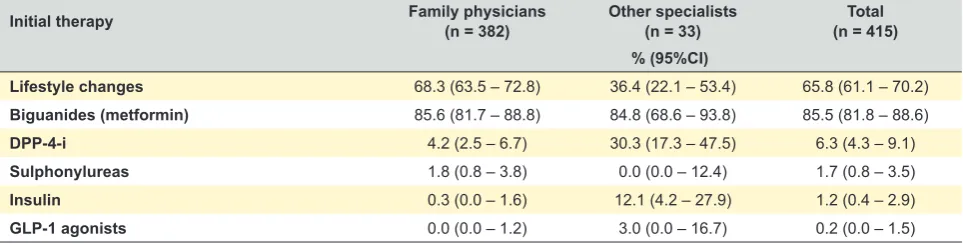
Table 2 – Proportion of patients prescribed each class as part of their initial therapy (alone or in combinations)
Initial therapy Family physicians(n = 382) Other specialists(n = 33) (n = 415)Total % (95%CI)
Lifestyle changes 68.3 (63.5 – 72.8) 36.4 (22.1 – 53.4) 65.8 (61.1 – 70.2)
Biguanides (metformin) 85.6 (81.7 – 88.8) 84.8 (68.6 – 93.8) 85.5 (81.8 – 88.6)
DPP-4-i 4.2 (2.5 – 6.7) 30.3 (17.3 – 47.5) 6.3 (4.3 – 9.1)
Sulphonylureas 1.8 (0.8 – 3.8) 0.0 (0.0 – 12.4) 1.7 (0.8 – 3.5)
Insulin 0.3 (0.0 – 1.6) 12.1 (4.2 – 27.9) 1.2 (0.4 – 2.9)
ARTIGO ORIGINAL other specialists grouped by distinct combinations and to-tal class use, respectively. Metformin was used as a
sin-gle agent or in combinations in 85.5% of patients (95% CI 81.8% – 88.6%), with no differences between primary
care and non-primary care physicians (85.6% vs 84.8%,
p = 0.801). Metformin alone was used more often by
fam-ily physicians than other specialists (81.4% vs 54.5%, p =
0.01). Sulphonylureas alone or in combination were used in 1.7% of cases (95% CI 0.8% - 3.5%), with no differences be-tween primary care physicians and other specialists (1.8%
vs 0.0%, p = 1.0). The proportion of patients who began
treatment with a DPP-4 inhibitor as a single agent or in com-bination was 6.3% (95% CI 4.3% - 9.1%), 4.2% for primary
care physicians and 30.3% for other specialists (p < 0.001).
Insulin alone or in combination was prescribed to 1.2% (95% CI 0.4% - 2.9%) of cases, by family physicians to 0.3% of
patients and by other specialists to 12.1% (p < 0.001).
When we excluded cases treated with lifestyle changes alone, the differences between family physicians and other specialists in use of metformin alone (93.7% for family
phy-sicians vs 54.5% for specialists, p < 0.001), DPP-4
inhibi-tors (4.8% vs 30.3%, p < 0.001) and insulin (0.3% vs 12.1%,
p < 0.001) as single agents or in combinations, and fixed
combination therapy (2.7% vs 15.2%, p = 0.005) remained
statistically significant. Total metformin use (as a single agent or in combinations) also achieved statistical
signifi-cance (98.5% vs 84.5%, p = 0.001). There were still no
dif-ferences in sulphonylurea use (2.1% vs 0%, p = 1.0).
Among the 44 cases where treatment was not initiated by physicians participating in the Sentinel Practice Net-work, the prescribed medicines were changed in two cases (4.5%, 95% CI 0.4% - 16.0%).
DISCUSSION
Main findings
In this study, most cases of type 2 diabetes were di-agnosed by family physicians. The majority of patients be-gan treatment with metformin as a single agent, as
recom-mended by Portuguese and international guidelines.3,4 This
occurred more often when treatment was initiated by family physicians than when initiated by other specialists. Lifestyle changes alone were the initial strategy used by family phy-sicians in about 13% of patients, but in none of the cases diagnosed by other specialists. When these two options are taken together, family physicians managed new cases of type 2 diabetes with lifestyle changes or metformin in 94.5% of cases, compared with 54.5% of cases diagnosed by specialists. Other specialists were more likely than family physicians to use DPP-4 inhibitors, insulin or fixed combina-tions as their initial choice. Despite these differences, family physicians usually didn’t change prescriptions initiated by others.
Sulphonylureas and glucagon-like peptide-1 receptor agonists were seldom used as first-line agents. We ob-served no use of alpha glucosidase inhibitors, thiazolidin-ediones or sodium/glucose cotransporter 2 inhibitors as initial therapy.
Strengths and limitations
The main strength of this study is the prospective data collection about therapeutic choices among new cases of diabetes. Almost 90% of cases were reported by the pre-scribers themselves on the same day or a few days after the diagnosis and a therapeutic decision had been made. For the remaining 10% of cases, Sentinel Practice Network physicians gathered information from the patient or avail-able patient records. In the Portuguese NHS, electronic prescription has been mandatory for reimbursement since
August 2011.17 Information about electronic prescriptions
made elsewhere is available to family physicians through
the national Health Data Platform.18 The availability of such
information would have limited patient recall bias.
There may have been some cases of type 2 diabetes diagnosed by other physicians that were not reported by participants in the Sentinel Practice Network. However, these should be rare, as the diagnosis of type 2 diabetes grants special benefits to patients in the Portuguese NHS and most would visit their family physician to be entitled to them. Also, incidence during the study period was similar to that previously reported in the cohort (since here we are
only considering type 2 diabetes),19 and to what is reported
in other countries (considering these are estimates for the
adult population only).20-22
It is possible that patients diagnosed by other special-ists who were prescribed lifestyle changes alone would not come immediately to their family physician, reporting their diagnosis only when medicines are prescribed. However, when we excluded patients treated with lifestyle changes alone the differences in prescribing pattern did not disap-pear. Sentinel Practice Network participants could also have underreported lifestyle changes prescribed by other physicians, as patients may have not valued non-pharma-cological treatment and there were no other sources of this information.
We did not collect data on disease severity or presence of contra-indications to specific medicines. Both could influ-ence the decision of initial treatment. However, the number of variables that can be collected in the Sentinel Practice Network is limited, as the paper notification form for all stud-ies in a given year has to fit in one sheet.
Socio-economic status may have been a confounder, as patients with more purchasing power may have been more likely not to use the NHS and also to afford more expensive medicines.
An important limitation is that family physicians partici-pating in the Sentinel Practice Networks might sometimes have different prescribing habits than other family physi-cians. Participating in a research network is voluntary and could be associated with other physician or patient charac-teristics that influence prescribing. This has not been thor-oughly studied in the Portuguese Sentinel Practice Network,
but other authors have found differences to be small.23,24
ARTIGO ORIGINAL
study’s primary outcome. Therefore, our findings should be considered mostly as hypothesis generating. Nonetheless, we decided to use a lower than usual threshold for statisti-cal significance (α = 0.01 instead of α = 0.05) to reduce false discovery rate. A formal adjustment method, such as the Bonferroni correction, was not defined in the study’s meth-ods since the number of comparisons to make would be dependent on the number of medicines classes used in our sample. Even so, most of the associations found were very unlikely to be due to chance, with a p value less than 0.001.
Interpretation of results
As expected, metformin was the most frequently pre-scribed first-line medicine, followed by DPP-4 inhibitors, mainly when used in a fixed association with metformin, with sulphonylureas coming in third place. This goes against rec-ommendations in Portuguese guidelines, which favour
sul-phonylureas for having a better cost-benefit relationship.4 It
may, however, reflect physician perception of better safety
with DPP-4 inhibitors,25 despite their sparse data on
reduc-tion of diabetes complicareduc-tions.26
Our findings suggest family physicians prescribe more in line with guidelines than other specialists, who use more intensive pharmaceutical regimens, including newer and more expensive medicines. This may be partially explained by other specialists seeing patients with more severe dis-ease, possibly with symptomatic hyperglycaemia – data which we were unable to collect. Since the study did not col-lect information on disease severity at diagnosis, we are un-able to test this hypothesis. Alternatively, specialists might be more willing to use newer medicines or feel more often
that their patients do not fit guideline recommendations.10,27
However, our results are consistent with a study conducted in the Lisbon region that showed only 17.2% of initial pre-scriptions for new oral anticoagulant agents originated in
primary care.11
Family physicians seem to be reluctant to change pre-scriptions initiated by other specialists. This might be ex-plained by the fact that most these patients would continue to be followed by those specialists. On the other hand, fam-ily physicians might feel compelled to keep the treatment initiated by other specialists, feel they do not have all the information needed to recommend a different treatment or
patients might be resistant to change.28
Implications for practice
When considering prevalent prescribing patterns of antidiabetic medicines, policy and decision makers should consider that most patients diagnosed with type 2 diabetes start with metformin, and probably only escalate to other treatments later in the natural history of the disease.
How-ever, more aggressive initial treatment, including more ex-pensive agents, is more frequent when the diagnosis has not been made by family physicians. Thus, interventions to alter prescription patterns need to target hospital and pri-vate-based specialists and not only primary care doctors. Future studies should address disease severity at diag-nosis, but also when and why patients change their initially prescribed treatment as the duration of diagnosis lengthens and which agents are chosen by physicians then.
CONCLUSION
Metformin was the agent most often chosen as initial therapy, followed by lifestyle changes alone, fixed combi-nations of metformin and DPP-4 inhibitors and DPP-4 in-hibitors. The diagnosis and initial prescription were made by Sentinel Practice Network physicians in almost 90% of cases. Family physicians changed prescriptions initiated by others in less than 5% of cases. DPP-4 inhibitors and insu-lin were more likely to be prescribed by other specialists.
ACKNOWLEDGMENTS
The authors thank all physicians participating in the Por-tuguese Sentinel Practice Network for their contribution with data collection and Inês Batista for her administrative sup-port in the management of the Network. We thank Professor Bruno Heleno for his critical review of the manuscript.
OBSERVATIONS
This paper was presented at the 20º Congresso Na-cional de Medicina Familiar - Associação Portuguesa de Medicina Geral e Familiar, 2016.
PROTECTION OF HUMANS AND ANIMALS
The authors declare that the procedures were followed according to the regulations established by the Clinical Re-search and Ethics Committee and to the Helsinki Declara-tion of the World Medical AssociaDeclara-tion.
DATA CONFIDENTIALITY
The authors declare having followed the protocols in use at their working center regarding patients’ data publica-tion.
CONFLICTS OF INTEREST
All authors report no conflict of interest.
FUNDING SOURCES
This research received no specific grant from any fund-ing agency in the public, commercial, or not-for-profit sec-tors.
REFERENCES
1. Furtado C, Oliveira R. Consumo de Antidiabéticos 2000-2013 - Uma análise ao consumo e diferenças entre práticas médicas ao nível nacional e internacional [Internet]. Infarmed – Autoridade Nacional de Medicamentos e Produtos de Saúde, I.P. 2014. [accessed 2017 Sep
5]. Available from: http://www.infarmed.pt/documents/15786/17838/ Relatorio_Diabetes+%281%29.pdf/3f2760f3-69a7-4185-93b4-5f7730c49914.
ARTIGO ORIGINAL
treatment of type 2 diabetes in the U.S., 1997-2012. Diabetes Care. 2014;37:985-92.
3. Inzucchi SE, Bergenstal RM, Buse JB, Diamant M, Ferrannini E, Nauck M, et al. Management of hyperglycemia in type 2 diabetes, 2015: a patient-centered approach: update to a position statement of the American Diabetes Association and the European Association for the Study of Diabetes. Diabetes Care. 2015;38:140–9.
4. Carvalho D, Rodrigues F, Vaz CS, Pereira CS, Rodrigues D, Reis L, et al. Norma 052/2011 - Abordagem Terapêutica Farmacológica na Diabetes Mellitus Tipo 2 no Adulto [Internet]. Direcção-Geral da Saúde. 2015. [accessed 2017 Sep 5]. Available from: https://www.dgs.pt/ directrizes-da-dgs/normas-e-circulares-normativas/norma-n-0522011-de-27122011-atualizada-a-30072013-jpg.aspx.
5. Hampp C, Borders-Hemphill V, Moeny DG, Wysowski DK. Use of antidiabetic drugs in the U.S., 2003-2012. Diabetes Care. 2014;37:1367– 74.
6. Filion KB, Joseph L, Boivin JF, Suissa S, Brophy JM. Trends in the prescription of anti-diabetic medications in the United Kingdom: a population-based analysis. Pharmacoepidemiol Drug Saf. 2009;18:973– 6.
7. Kohro T, Yamazaki T, Sato H, Harada K, Ohe K, Komuro I, et al. Trends in antidiabetic prescription patterns in Japan from 2005 to 2011. Int Heart J. 2013;54:93–7.
8. Florentinus SR, Heerdink ER, van Dijk L, Griens AM, Groenewegen PP, Leufkens HG. Is new drug prescribing in primary care specialist induced? BMC Health Serv Res. 2009;9:6.
9. Robertson J, Fryer JL, O’Connell DL, Sprogis A, Henry DA. The impact of specialists on prescribing by general practitioners. Med J Aust. 2001;175:407–11.
10. Garjón FJ, Azparren A, Vergara I, Azaola B, Loayssa JR. Adoption of new drugs by physicians: a survival analysis. BMC Health Serv Res. 2012;12:56.
11. Faria-Vaz A, Magalhães AF, Lourenço A, Paulino E, Rodrigues HL, Ribeiro N, et al. Boletim terapêutico n.º 5/2013 - Anticoagulantes orais: recomendações para a prevenção de tromboembolismo na fibrilhação auricular [Internet]. 2013. [accessed 2017 Sep 5]. Available from: http:// www.arslvt.min-saude.pt/uploads/document/file/453/5_Boletim_Terap_ utico_2013.pdf.
12. Jones MI, Greenfield SM, Bradley CP. Prescribing new drugs: qualitative study of influences on consultants and general practitioners. BMJ. 2001;323:378–81.
13. Rodrigues AP, Fonseca RC, Matias-Dias C. Rede Médicos-Sentinela como Instrumento de Vigilância em Saúde [Pública]. Acta Med Port. 2016;29:5–9.
14. Barros PP, Machado SR, Simões J de A. Portugal. Health system review. Health Syst Transit. 2011;13:1–156.
15. Boavida JM, Duarte A, Vicente LF, Ruas MA, Melo PC. Norma 002/2011 – Diagnóstico e Classificação da Diabetes Mellitus [Internet]. Direcção-Geral da Saúde. 2011. [accessed 2017 Sep 5]. Available from: https://
www.dgs.pt/directrizes-da-dgs/normas-e-circulares-normativas/norma-n-0022011-de-14012011-pdf.aspx.
16. WHO Collaborating Centre for Drug Statistics Methodology, ATC classification index with DDDs, 2015 [Internet]. Oslo. 2014. [accessed 2017 Sep 5]. Available from: http://www.whocc.no/atc_ddd_index/. 17. Administração Central do Sistema de Saúde, I.P. Circular Informativa
n.º 27/2011/CD/STIC: Entidades Utilizadoras de produto de software certificado para a prescrição electrónica de medicamentos, no âmbito do Sistema de Saúde [Internet]. 2011. [accessed 2017 Sep 5]. Available from: http://www.acss.min-saude.pt/circulares/Circular_ Informativa/2011/Circular_Informativa_27_2011.pdf.
18. PDS - Plataforma de Dados da Saúde [Internet]. SPMS. [accessed 2017 Sep 5]. Available from: http://spms.min-saude.pt/product/portal-do-utente/.
19. de Sousa-Uva M, Antunes L, Nunes B, Rodrigues AP, Simões JA, Ribeiro RT, et al. Trends in diabetes incidence from 1992 to 2015 and projections for 2024: a Portuguese General Practitioner’s Network study. Prim Care Diabetes. 2016;10:329–33.
20. Forouhi NG, Luan J, Hennings S, Wareham NJ. Incidence of Type 2 diabetes in England and its association with baseline impaired fasting glucose: the Ely study 1990-2000. Diabet Med. 2007;24:200–7. 21. National Center for Chronic Disease Prevention and Health Promotion
- Division of Diabetes Translation. National Diabetes Statistics Report, 2017 [Internet]. Centers for Disease Control and Prevention. Atlanta, 2017 July 19. [accessed 2017 Sep 5]. Available from: https://www.cdc. gov/diabetes/pdfs/data/statistics/national-diabetes-statistics-report.pdf. 22. Morrell S, Lin S, Tukana I, Linhart C, Taylor R, Vatucawaqa P, et al.
Diabetes incidence and projections from prevalence surveys in Fiji. Popul Health Metr. 2016 25;14:45.
23. Fleming DM, Miles J. The representativeness of sentinel practice networks. J Public Health. 2010;32:90–6.
24. Nutting PA, Baier M, Werner JJ, Cutter G, Reed FM, Orzano AJ. Practice patterns of family physicians in practice-based research networks: a report from ASPN. Ambulatory Sentinel Pratice Network. J Am Board Fam Pract. 1999;12:278–84.
25. McIntosh B, Cameron C, Singh SR, Yu C, Ahuja T, Welton NJ, et al. Second-line therapy in patients with type 2 diabetes inadequately controlled with metformin monotherapy: a systematic review and mixed-treatment comparison meta-analysis. Open Med. 2011;5:e35-48. 26. Green JB, Bethel MA, Armstrong PW, Buse JB, Engel SS, Garg J, et
al. Effect of sitagliptin on cardiovascular outcomes in type 2 diabetes. N Engl J Med. 2015;373:232–42.
27. Baiardini I, Braido F, Bonini M, Compalati E, Canonica GW. Why do doctors and patients not follow guidelines? Curr Opin Allergy Clin Immunol. 2009;9:228–33.