Plasmid DNA Production for Genetic Immunization in
Fed-Batch Fermentation with Feed Back Controls
Based on Dissolved Oxygen (DO) and pH
B. Yakhchali,
1A. Karami,
1,2,*E. Aflaki,
1and A. Ahmadi
21
National Research Center of Genetic Engineering and Biotechnology, Tehran, Islamic Republic of Iran 2
Research Center of Molecular Biology, Baqiyatallah University of Medical Sciences, Tehran, Islamic Republic of Iran
Abstract
A fermentation process for production of super coiled plasmid DNA in
E. coli
for use as a DNA vaccine was developed. In the process a feed-back control
nutrient feeding strategy based on pH and DO was used to regulate the cell growth
rate by controlling the interactivity of the nutrient feed rate, pH and DO. The
process increased the total yield of plasmid DNA by approximately 4 fold as
compared to batch fermentation. The final cell yields of the process reached 56
gl
−1dry cell weights (OD
550nm 112) within 23 h. A plasmid DNA of 5.6 g l
−1was
obtained by using an alkaline lyses method.
Keywords: Fed-batch fermentation; Feed-back control; Plasmid; DNA Vaccine
*
E-mail: karami@bmsu.ac.ir
Introduction
DNA vaccines are based on the use of bacterial plasmids to deliver and express immunogenes in vacci-nated hosts. Vaccine plasmids are amplified in bacteria, purified and injected into the host being vaccinated to elicit cellular and humoral immunity [1-5].
The development of DNA vaccines and therapeutics using DNA injection technology need a consistent supply of plasmid DNA [6]. For production of large quantities of plasmid DNA an efficient fermentation process needs to be established. Most of the knowledge about fermentation involving recombinant Escherichia coli has been obtained through studies which optimize the expression of recombinant proteins [7-11]. However the fermentation conditions for optimization of plasmid
DNA production in E. coli could be fundamentally different and experimental data are limited. In this case only DNA replication is required when plasmid DNA is the final product [12]. RNA transcription and protein translation associated with the gene in the plasmid are generally undesirable during plasmid production in bacterial host cells [13,14]. To selectively amplify the plasmid DNA replication, abundant nucleotide pools and extra energy sources must be made available in a culture environment and other cellular activities should be kept at the minimum. For example, cellular protein synthesis can be inhibited with chloramphenicol or through amino acid limitation [15,16]. Also a low cell growth rate can be maintained which not only eases the cellular competition for carbon and energy sources but also provides time for plasmid DNA replication to
synchronize with cell division [6,17]. Because the plasmid DNA is intracellular; productivity is proportional to the final cell-density and the specific productivity (i.e. the amount of plasmid DNA produced per unit cell mass per time). High Cell-Density Fermentation (HCDF) techniques for culturing E. coli
has been developed to improve productivity, and fed-batch processes have most often been used to obtain high cell density [19]. However, this technique has its draw backs and growth inhibitory by products, such as acetate is formed. Acetate formation can be reduced or prevented by altering the fermentation medium or optimization of feeding strategies during fed-batch fermentation. In this paper we describe a fermentation process for production of plasmid DNA coding Hepatitis B virus gene in E. coli that uses an automated/manually feed-back control nutrient feeding strategy based on pH and DO.
Materials and Methods
Cultures and Media
E. coli strain DH5α carrying plasmid pRC-CMVs which is about 5.6 kb long with a ColE1 origin was used. The plasmid contains the core gene of Hepatitis B virus under the control of a human cytomegalovirus (CMV) promoter, and also encodes an ampicillin resistance gene for selection [2]. The organism was cultured in the seed medium in a shake flask at 37°C for 12 h. The seed and fermentation medium which were optimized using Taguchi statistical method program (H2 media) consisted of (gL−1): Na2HPO4, 12.8; KH2PO4, 3;
NaCl, 0.5; NH4CL, 1; MgSO4.7H2O, 0.24; peptone, 25;
yeast extract, 7.5; glycerol, 30 and 1 ml trace elements (consisted of (g) FeSO4.7H2O, 10; CaCl2.2H2O, 2;
ZnSO4.7H2O, 2.2; MnSO4.7H2O, 1; CuSO4.5H2O, 1;
(NH4)MO7O24.4H2O, 0.1; Na2B4O7.10H2O, 0.02
dissolved in 1 l 5 M HCl). pH of the medium was adjusted to 7. MgSO4.7H2O was sterilized separately
and added into the fermentation medium following sterilization.
Batch Fermentation
Seed cultures for fermentation were prepared by inoculating an isolated colony in 100 ml of H2 medium containing (100 µg/ml) ampicillin. The flasks were incubated overnight at 37°C and 200 rpm. Lab-scale fermentation was carried out in a 3.3 l (2.5 l working volume) fermenter (BiofloШ New Brunswick Scientific). During the fermentation, pH was controlled at 7.0 with NH4OH and HCl and temperature at 37°C.
Agitation speed (500-900 rpm) was automatically feed-back controlled based on DO at a set point of 30% of air saturation. Trace element and salt solution were sterilized separately and added into the fermenter before inoculation with 5% (v/v) of the seed culture.
Fed-Batch Fermentation
Fed-batch fermentation was carried out in a 5 litre fermenter (Bioflo Ш New Brunswick Scientific). The fermentation process was initiated similar to batch fermentation. During the fermentation, pH was controlled at 7.0 by adding 20% NH4OH and HCl.
Agitation speed was automatically controlled based on DO at a set point of 30% of air saturation. A concentrated nutrient (500 g/l glycerol, 250 g/l yeast extract, 15 g/l MgSO4.7H2O and 1 ml/l trace element
solution), was fed into the fermenter after 10 h via an acid pump, which could be triggered by the increase of pH above respective set point (pH 7) and a nutrient pump that was controlled manually when the DO increased above 40%. Samples of 10 ml were removed from the fermenter hourly during fermentation. Cell growth was measured by determining optical density at 550 nm using a spectrophotometer (Beckman). To obtain the cell dry weight (CDW), a sample of 10 ml of fermentation broth was collected and the cells separated by filtration on a 0.45 µM filter. The filter containing the cell was dried in an oven 110°C until constant weight. The culture supernatant was used for analysis of glycerol concentration (Bohringer Mannhein kit). Diluted sample was also plated on LB agar with and without ampicillin to determine plasmid stability.
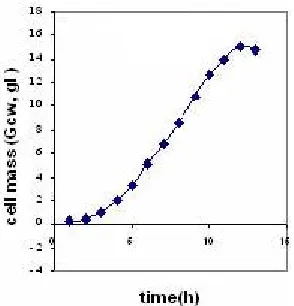
Figure 1. Growth curve of E. coli DH5α-pCMVs in batch
Plasmid DNA Analysis
For the preparation of analytical grade plasmid DNA,
E. coli cells from 1ml broth were pelleted by centrifugation at 5000 × g for 10 min. Cells were lysed using the alkaline lysis method and the plasmid DNA was purified according to protocol (Qiagen kit). After purification, isolated plasmid DNA was electrophoresed in 1% agarose gel. The absorbance of DNA sample was measured in 260 and 280 nm. The endotoxin content of purified DNA was assessed to be free of endotoxin contamination using a Limulus Amoebocyte Lysate (LAL)-based methods (PYROGEN Gel Clot endotoxin Assay Kit) according to the manufacturer's instructions.
Result and Discussion
Batch Fermentation
Production of plasmid DNA from a recombinant E. coli harboring pCMVs was evaluated in batch fermentation using glycerol as carbon source. Figure 1 shows cell growth curve of the recombinant E. coli
(pRC-CMVs) in the batch process. Cell growth entered
log phase 4 hrs after inoculation. A nearly constant specific growth rate (µ) of 0.5 h−1 was obtained under these operation conditions until t= 11h. The glycerol concentration gradually decreased and carbon source became limiting after 11 hrs and the growth rate began to fall. The cell growth at a maximum rate of 0.5 h−1 was apparently deleterious in the late stages of fermentation by DO and carbon source limitation. Under these conditions a cell dry weight of 15 g/l (OD = 30) was achieved with a yield of plasmid DNA of 1.3 g/l. This result indicates that cell growth was rapid, leading to a rapid stationary phase, resulting in both low cell density and yield of plasmid. In this condition growth was faster than the plasmid replication. It has been reported that a minimum acetic acid accumulation and a high plasmid copy number could be obtained when the growth rate is about 0.1 h−1 [2,12]. Therefore it has been decided to design an automated feed-back control system based on pH and DO that would meet the varied requirements associated with changing cellular activities.
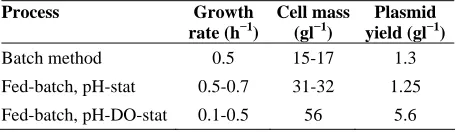
Table 1. Fermentation result in using batch, fed-batch, pH-stat, fed-batch pH-DO-stat
Process Growth rate (h−1)
Cell mass (gl−1)
Plasmid yield (gl−1)
Batch method 0.5 15-17 1.3
Fed-batch, pH-stat 0.5-0.7 31-32 1.25
Fed-batch, pH-DO-stat 0.1-0.5 56 5.6
Fed-Batch Fermentation
A fed-batch fermentation process with feed-back control based on pH was developed. Results showed that the cell growth entered log phase soon after inoculation (µ=µmax). Nutrient feeding was automated through feed-back control of changing the value of pH during the fermentation. In this feed-back control the pH parameter was chosen based on the fact that, when the carbon source becomes limiting in a culture, cellular activity slows down and pH rises as a result of consumption of metabolic fatty acids by cells as an alternative carbon source and the production of ammonium ions associated with protein catabolism. Acid pump which was coupled with pH controller was used for nutrient feeding. The suitable set point of pH for nutrient feed was determined as 7. The nutrient feed was automatically co-regulated with pH and the acid pump was activated each time pH rose above set point and deactivated when pH dropped below the set point. Cell growth rate initiated at µ=0.5 h−1 in the end of the batch mode and during the feeding was 0.5-0.7 h−1. Cell density reached 32 gL−1 CDW (OD550nm=64) within 23
h. More than 2-fold increase in cell density and yield of 1.25 gl−1 plasmid DNA was obtained compared to the batch mode, (Table 1). In pH-stat fermentation the yield of plasmid DNA was not higher than the batch mode due to instability of the plasmid which may be related to the high growth rate (0.5-0.7 h−1).
Chen et al. 1997 indicated that the yield of plasmid DNA is related to the growth rate of bacteria during the fermentation. The lower growth rate was resulted to the higher plasmid yield, in addition Reininkainen et al.
1989 found that plasmid yields obtained from bacterial culture were highest when growth went into stationary phase. During stationary phase cellular metabolic activities including RNA transcription and protein translation are usually minimum whereas, plasmid replication rate might increase. So we developed a feed-back control, fed-batch fermentation process based on pH and DO to improve production of supercoiled plasmid DNA, which should increase the cell density and productivity of the process. In this method cell density reached 56 gl−1 CDW (OD550nm=112) within 22
h (Fig. 2).
Figure 2. Growth curve of E. coli-DH5-α carrying DNA
Vaccine plasmid pCMVs in fed-batch cultivation by pH- and DO-stat control.
Figure 3. Agarose gel analysis of the plasmid DNA. Lanes 1-11 sample from different hours of fermentation. Plasmid DNA waspurified from 1 ml fermentation broth using an alkaline lysis method and 2µl of DNA was loaded on the 1% agarose gel.
Figure 4. Profiles of glycerol concentration during the pH and DO-based feed-back control fermentation of in E. coli
DH5α harboring DNA vaccine plasmid pCMVs.
efficiently because cellular metabolic activity is generally low at slower growth rate, leaving more nutrients and energy available for plasmid replication. The growth rate of 0.1 h−1 was favorite for maximize yields of pCMVs. DNA plasmid was extracted and analyzed by agarose gel electrophoresis. The concentration of DNA was 5.6 gl−1 (100 mg g−1 cell weight as measured by spectrophotometer with high ratio of the supercoiled DNA). The DNA was endotoxin free as analyzed by LAL test which could be used in DNA vaccine development programs (Fig. 3).
We have developed a feed-back control, fed-batch fermentation process based on pH and DO to improve production of pure and endotoxin free supercoiled plasmid DNA up to 5-fold (Table 1) when compared with the batch mode. The improved plasmid DNA yield in this process might be a result of the increased cell density, decreased growth rate (µ) from 0.5 h−1 to 0.1 h−1 and density glycerol as carbon source (Fig. 4). The productivity of this process is much higher than the previous works [19,20] which may be suitable for large scale production of DNA vaccine. Automatic feed-back control, fed-batch fermentation based on DO and pH should increase the cell density and productivity of the process further that will be carried out in the future work.
Acknowledgement
The authers thank Dr. F. Tabandeh, Dr. Fatemi for analytical support and H. Danesh, H. ghomi for helpful comments.
References
1. Davis H.L. Plasmid DNA expression systems for the purpose of immunization. Curr. Opin. Biotechnol., 8: 635-46 (1997).
2. Davis H.L. DNA vaccines for prophylactic or therapeutic immunization against hepatitis B virus. Mt. Sinai. J. Med., 66: 84-90 (1990).
3. Robinson H.L. and Pertmer T.M. DNA vaccines for viral infections: basic studies and applications. Adv. Virus Res., 55: 1-74 (2000).
4. Boyer J.D., Cohen A.D., Vogt S., Schumann K., Nath B., Ahn L., Lacy K., Bagarazzi M.L, Higgins T.J., and Baine Y. Vaccination of seronegative volunteers with a human immunodeficiency virus type 1 env/rev DNA vaccine induces antigen-specific proliferation and lymphocyte production of beta-chemokines. J. Infect. Dis., 181: 476-83 (2000).
DNA vaccine to healthy adult volunteers. Vaccin, 18: 1893-901 (2000).
6. Reinikainen P., Korpela K., Nissinen V., Olkku J., Söderlund H., and Markkanen P. Escherichia coli plasmid production in fermenter. Biotechn. Bioeng., 33: 386-393 (2004).
7. Jeong K.J. and Sang Y.L. Enhanced Production of Recombinant Proteins in Escherichia coli by Filamentation Suppression. Appl. Environ. Microbiol., 69: 1295-1298 (2003).
8. Hoffmann F., Posten C., and Rinas U. Kinetic model of in vivo folding and inclusion body formation in recombinant Escherichia coli. Biotechnol. Bioeng, 72: 315-322 (2001). 9. Hoffmann F. and Rinas U. On-line estimation of the
metabolic burden resulting from synthesis of plasmid-encoded and heat-shock proteins in high-cell density cultures of recombinant Escherichia coli. Ibid., 76: 333-340 (2001).
10. Hoffmann F. and Rinas U. Plasmid amplification in Escherichia coli after temperature upshift is impaired by induction of recombinant protein synthesis. Biotechnol. Lett,, 23: 1819-1825 (2001).
11. Hoffmann F., Schmidt M., and Rinas U. Simple technique for simultaneous on-line estimation of biomass and acetate from base consumption and conductivity measurements in high-cell density cultures of Escherichia coli. Biotechnol. Bioeng., 70: 358-361 (2001).
12. Ferrira G.N.M., Monterio G.A., Prazeres D.M.F., and Cabral J.M.S. Downstream processing of plasmid DNA for gene therapy and DNA vaccine applications. Trend. In Biotec., 18: 380-388(2000).
13. O'Kennedy R.D., Baldwin C., and Keshavarz-Moore E. Effects of growth medium selection on plasmid DNA production and initial processing steps. J. Biotechnol., 76: 175-83 (2000).
14. Ciccolini L.A., Shamlou P.A., and Titchener-Hooker N. A mass balance study to assess the extent of contaminant removal achieved in the operations for the primary recovery of plasmid DNA from Escherichia coli cells.
Biotechnol. Bioeng., 30: 796-805 (2002).
15. Clewell D.B. Nature of ColE1 plasmid replication in Escherichia coli in the presence of the chloramphenicol.
J. Bacterio., 110: 667-76 (1972).
16. Hofmann K.H., Neubauer P., Riethdorf S., and Hecker M. Amplification of pBR322 plasmid DNA in Escherichia coli relA strains during batch and fed-batch fermentation.
J. Basic Microbiol., 30: 37-41(1990).
17. Suzuki T., Yamane T., and Shimizu S. Phenomenological background and some preliminary trials of automated substrate supply in pH-stat modal fed-batch culture using a setpoint of high limit. J. Ferment. Bioeng., 69: 292-297 (1990).
18. Lenski R.E. and Bouma J.E. Effects of segregation and selection on instability of plasmid pACYC184 in Escherichia coli B. J. Bacteriol., 169: 5314-6 (1987). 19. Chen W, Graham C., and Ciccarelli R.B. Automated
fed-batch fermentation with feed-back controls based on dissolved oxygen (DO) and pH production of DNA vaccines. J. Ind. Microbiol. Biotechnol., 18: 43-8 (1997). 20. Hecker M.A. Escherichia coli relA strains as hosts for