R E S E A R C H
Open Access
Effects of the complete replacement of fish
oil with linseed oil on growth, fatty acid
composition, and protein expression in the
Chinese mitten crab (
Eriocheir sinensis
)
Banghong Wei
1,2,3†, Zhigang Yang
1,2,3*†, Yongxu Cheng
1,2,3, Jianyi Wang
1,2,3and Junyu Zhou
1,2,3Abstract
Background:The finite marine resources make it difficult for us to obtain enough fish oil (FO) used in aquatic feeds. Another sustainable ingredients should be found to substitute FO. The effects of replacing FO with vegetable oil have been studied in a variety of crustaceans, but most studies have focused on the phenotypic effects. Little is known about the mechanisms of the effects.
Methods:To understand the molecular responses during the replacement of FO inEriocheir sinensis, we investigated the effects of feeding FO or linseed oil (LO) on growth performance, digestive enzyme activity, fatty acid composition and protein expression inE. sinensis. Twenty-four juvenile crabs were fed diets containing FO or LO for 112 days. Weight, carapace length and width were recorded. Fatty acid composition of the diets and the hepatopancreas and protein expression in the hepatopancreas were analyzed.
Results:Growth performance and molting interval were unchanged by diet. Crabs fed FO and LO had same activity of lipase and amylase, but comparing with crabs fed LO, crabs fed FO had higher trypsin activity and lower pepsin activity. Hepatopancreas fatty acid composition changed to reflect the fatty acid composition of the diets. In total, 194 proteins were differentially expressed in the hepatopancreas between the diets. Expression of heat shock proteins was higher in crabs fed LO. Expression of fatty acid synthase, long-chain fatty acid transport protein 4, acyl-CoA delta-9 desaturase, and fatty acid-binding protein 1, was higher in crabs fed FO.
Conclusions:The substitution of FO with LO didn’t have any effects on the growth and molting of mitten crab, but could significantly decrease the ability of mitten crab to cope with stress. The high content of HUFAs in the hepatopancreas of mitten crab fed FO is due to the high abundance of the proteins relative to the transport of the HUFAs. These findings provide a reason of the high content of EPA and DHA in crabs fed with FO, and provide new information for the replacement of FO in diets of mitten crab.
Keywords:Eriocheir sinensis, Proteome, Dietary lipid, Growth performance, Digestive enzyme activity, Fatty acids composition
* Correspondence:[email protected] †Equal contributors
1Key Laboratory of Exploration and Utilization of Aquatic Genetic Resources,
Ministry of Education, Shanghai Ocean University, Shanghai 201306, China
2Centre for Research on Environmental Ecology and Fish Nutrition (CREEFN)
of the Ministry of Agriculture, Shanghai Ocean University, Shanghai 201306, China
Full list of author information is available at the end of the article
Background
The Chinese mitten crab,Eriocheir sinensis, is an econom-ically important crab species in China [1] with 812,103 tons of mitten crab produced by the Chinese aquaculture indus-try in 2016, the highest production weight for fresh water crustaceans (China Fisheries Yearbook 2017). Mitten crab contains a high content of highly unsaturated fatty acids (HUFAs) such as eicosapentaenoic acid (EPA, 20:5n-3) and docosahexaenoic acid (DHA, 22:6n-3) [2]. The commercial and nutritional importance of mitten crab has stimulated research into the nutrition of the crab.
Dietary lipids are the main source of energy and provide essential fatty acids, phospholipids, and fat-soluble vitamins for crustaceans [3–5]. At present, as essential fatty acids, the HUFAs in diets of mitten crab are provided by fish oil (FO). However, the sharp decline of wild fisheries has driven the search for alternative sources of fat to substitute FO in the crustacean diet [6,7]. But different effects were obtained in different studies [6,8–13]. However, it is now well established from a variety of studies that the fatty acid composition of the hepatopancreas and muscle in mitten crab is correlated with the fatty acid composition of the diet. FO is rich in HUFAs, while vegetable oils mostly con-tainα-linolenic acid (ALA, 18:3n-3) and linoleic acid (LA, 18:2n-6), which are the biological precursors of HUFAs, such as EPA and DHA [14]. As far as we know, most fresh-water fish have the ability to synthesize HUFAs using ALA and LA, whereas marine fish lack the biosynthesis capacity [15–17]. At present, limited knowledge is known about the HUFA biosynthesis capacity in mitten crab, the mecha-nisms explaining the effects of the replacement of FO on the fatty acid composition require further investigation.
High-throughput mass spectrometric proteomic tech-nologies can now analyze the whole proteome expressed in a particular cell or organ [18]. Compared to large-scale transcriptome analysis that analyzes changes in gene transcription, the proteome reveals changes in the amounts of individual protein representing functional changes in the cell or organ [19, 20]. Thus proteomic analysis become an useful tool which can be used to characterize and understand the mechanisms of the responses to dietary changes [21].
Parallel reaction monitoring (PRM) is a new developed method in targeted mass spectrometry equipped with a quadrupole-equipped orbitrap [22]. And it has been widely used in the quantification and detection of the target proteins [23,24].
In this study, to understand the mechanisms explain-ing the effects of the replacement of FO on the fatty acid composition, we analyzed the effects of two diets containing either fish oil or linseed oil on the growth performance, fatty acid composition, and protein expres-sion of the hepatopancreas in mitten crab. And the alter-ations in protein expression levels were verified using
quantitative real-time reverse-transcription (RT-PCR) and PRM.
Methods
Experimental diets
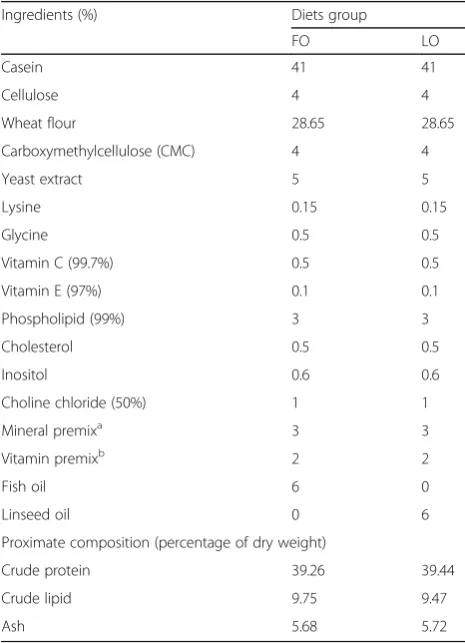
Two isonitrogenous and isolipidic purified experimental diets were formulated using FO (fish oil) or LO (linseed oil) as a source of lipids. The raw material was selected by 80 meshes after grinding. And then were blended and moistened with water. The mixture was further pelletized using a pelletizer. The diets were formed into 1.5 mm (diameter) pellets, and stored at −20 °C until used. The composition and formulation of the experimental diets are detailed in Table1.
Experimental animals and feeding trials
Juvenile Chinese mitten crabs were obtained from the Chongming research base of Shanghai Ocean University. After a week acclimation, 24 healthy male crabs were
Table 1Composition and calculated proximate composition of the diet
Ingredients (%) Diets group
FO LO
Casein 41 41
Cellulose 4 4
Wheat flour 28.65 28.65
Carboxymethylcellulose (CMC) 4 4
Yeast extract 5 5
Lysine 0.15 0.15
Glycine 0.5 0.5
Vitamin C (99.7%) 0.5 0.5
Vitamin E (97%) 0.1 0.1
Phospholipid (99%) 3 3
Cholesterol 0.5 0.5
Inositol 0.6 0.6
Choline chloride (50%) 1 1
Mineral premixa 3 3
Vitamin premixb 2 2
Fish oil 6 0
Linseed oil 0 6
Proximate composition (percentage of dry weight)
Crude protein 39.26 39.44
Crude lipid 9.75 9.47
Ash 5.68 5.72
a
Mineral premix: 1 kg diet contained Ca(H2PO4)2, 10 g; MgSO4·7H2O, 2.4 g; KCl,
4.5 g; NaCl, 2.1 g; FeSO4·H2O, 155 mg; CuSO4·5H2O, 40 mg; ZnSO4·H2O, 80 mg;
MnSO4·H2O, 30 mg; KI, 11.7 mg; CoCl2·6H2O, 4.8 mg; Na2SeO3, 2.4 mg b
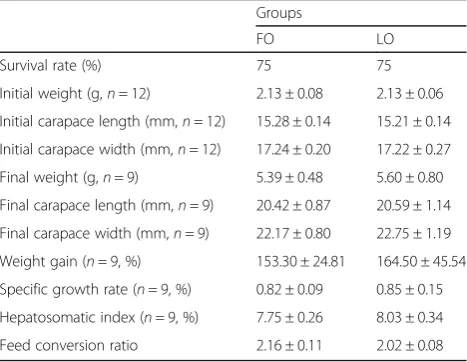
randomly assigned into 2 groups with 12 crabs in each group. The initial weight of crabs in FO and SO were 2.13 g, initial carapace length and initial carapace width were shown in Table 2. Each crab was cultivated in a single plastic box (36 cm × 18 cm × 18 cm). The two groups were randomly assigned to one of the two experimental diets and were fed once a day at 13:00 for 112 days; the experimental diets were offered as 5% of body weight, and were adjusted by the growth. Uneaten feed was removed using a siphon tube after 2 h and oven-dried for analysis of the feed coefficient. During the experiment, water was exchanged once daily with 1/ 3–1/2 of the tank volume, and was aerated throughout the feeding trial to maintain dissolved oxygen > 5 mg/L. The photoperiod was approximately 12 L:12D. Natural temperature of the water during the feeding trials was 24.5–30.0 °C. Water quality parameters were monitored 2–3 times a week to maintain at pH 8.0 ± 0.4 and total ammonia nitrogen < 0.01 mg/L.
Measurement of growth performance and sample collection
Each crab was weighed and the length and width of the carapace was measured at the beginning and end of the study. And the intermolt duration of each crab were recorded for the analysis of molting. Three crabs which have weight around average weight were selected, and the hepatopancreas was collected from three crabs after being fasted for 24 h. The collected samples were immediately frozen in liquid nitrogen and then stored at −80 °C for fatty acids composition and proteomic analysis.
The parameters were measured in the following methods:
Surviving rate (S, %) = final number of crabs/initial number of crabs × 100;
Weight gain (WG, %) = [(final body weight - initial body weight)/initial body weight] × 100;
Specific growth rate (SGR, %) = (Ln final body weight -Ln initial body weight) × 100/numbers of days;
Feed conversion ratio (FCR) = feed consumed after correction of dissolution/ (final body weight - initial body weight);
Hepatosomatic index (%) = weight of hepatopancreas/ final body weight × 100.
Measurement of digestive enzymes
Hepatopancreas of three crabs in each group were randomly selected for the analysis of digestive enzymes. Sample preparation were performed following the manu-facturer’s instructions for the measurement of trypsin (Code: A080–2), pepsin(Code: A080–1), amylase (Code: C016–1) and lipase (Code: A054–1) (Nanjing Jiancheng Bioengineering Institute,http://www.njjcbio.com/). A tryp-sin and peptryp-sin unit are defined as the 0.003 changes in ab-sorption value caused by enzyme activity in per mg protein per min under the assay conditions. A amylase unit is defined as enzyme activity per mg protein that catalyzed the hydrolyzation of 10 mg starch in 30 min. A lipase unit is defined as the consumption of 1 mol matrix that 1 g tissue protein reacted with the matrix at 37 °C for 1 min.
Fatty acid analysis
The fatty acids composition of experimental diets and hep-atopancreas from three crabs was determined following the methods used by Folch [25]. The methyl-esterification of fatty acids was performed according to Morrison [26]. The fatty acid compositions were analyzed using an Agilent 5977 GC-MS chromatograph. Injection and detector temperature were set at 200 °C and 250 °C, respectively. The oven temperature was programmed to increase from an initial temperature of 70 °C at a rate of 50 °C/min, and held at 140 °C for 1 min, then increase from 140 °C to 180 °C at 4 °C/min, and held at 180 °C for 1 min. At last, increase from 180 °C to 225 °C at 3 °C/min, held at 225 °C for 30 min until no peak appeared. The percent area under each peak of each chromatogram was quantified to determine the quantity of each fatty acids.
Protein extraction and protein quantification, quality analysis
Samples were prepared for proteome analysis according to the methods detailed in Wisniewski [27]. Hepatopancreas sample was ground in liquid nitrogen using a refrigerated mortar. After fully grinding, the ground powder was trans-ferred to 0.4 ml protein lysate [8.0 M Urea, Sigma; 10 mM, DL-Dithiothreitol (DTT), Genview; 100 mM Tris-HCl; 1 × protease inhibitor (Roch); pH, 8.0], and was further ground until large block tissue disappeared. Then the sample was sonicated 5 times for 2 s each using an ultrasonic smash Table 2Effects of feeding crabs FO or LO diets on growth
performance of juvenile mitten crab (means ± SD)
Groups
FO LO
Survival rate (%) 75 75
VCX800 (Sonics). After 20 min in ice, the ultrasonic broken sample was centrifuged at 10,000 g for 30 min at 4 °C and the supernatant was transferred into a new tube stored at−80 °C. The concentration of extracted proteins was quantified with biotechnology grade BSA protein as a quantification standard [28]. Protein quality were determined by sodium dodecyl sulfate polyacrylamide gel electrophoresis (SDS-PAGE).
Proteolysis and LC-MS/MS
Samples were digested using trypsin (Promega, USA) in a ratio of protein:trypsin at 100:1. The solution was incu-bated at 37 °C for more than 12 h. Sample digests were analyzed in triplicate. Samples were separated using Nano high performance liquid chromatography (HPLC) Ultimate 3000 (Thermo Fisher Scientific, USA). The mobile phases A and B were 0.1% formic acid in water, and 80% aceto-nitrile (ACN) with 0.1% formic acid in water, respectively. The column was equilibrated with 95% buffer A. The sample were injected from an autosampler onto a C18 trap column (Bangfei Bioscience; 3 m, 0.10 × 20 mm), and were eluted onto an analytical C18 column (Bangfei Bioscience; 1.9 m, 0.15 × 120 mm) at a flow rate of 600 nL/min. Proteins were identified by mass spectrometry analysis, performed using Q Exactive HF (Thermo Fisher Scientific, USA) coupled to the Nano HPLC. The instrument settings were as follows: the resolution was set to 120,000 for MS scans, and 15,000 for the MS/MS scans. The MS scan range was from 300 to 1400 m/z. The MS AGC target was set to 3 × 10⁶counts, whereas the MS/MS AGC target was set to 5 × 10⁴. The isolation window was set to 1.6 m/z.
Data analysis and protein quantification
The mass spectrometry data were analyzed by Proteome Discoverer, version 2.0 (Thermo Fisher Scientific) and in-house Mascot, version 2.2 (Matrix Science) against the database from the transcriptome of mitten crab obtained before the proteomic analysis with peptide false discovery rate (FDR) ≤0.01. The identification of proteins by Proteome Discoverer was performed using the following parameters: trypsin was the digesting enzyme, and 2 max missed cleavages were allowed. Fixed modification was carbamidomethylation of cysteines, and the oxidation of methionines and acetyl of protein N-term were allowed as a variable modification. Peptide mass tolerance and fragment mass tolerance were ±15 ppm and 20mmu, respectively. The quantification of the proteins was calculated according to the spectral area of the peptide and protein [29]. Proteins were regarded as differentially expressed between diet groups when the fold change (FC) of quantitative ratios was≥2 (upregulated), or≤0.5 (downregulated).
Bioinformatics analysis
As a non-model organism, the bioinformatics analysis of the proteome in the present study was performed according to the annotation of the transcriptome [30] . ID conversion of the proteins was performed using the annotation, and then Gene ontology (GO) and EuKaryotic Orthologous Groups (KOG) annotation were assigned to the proteins identified in the present study.
Validation of the differentially expressed proteins
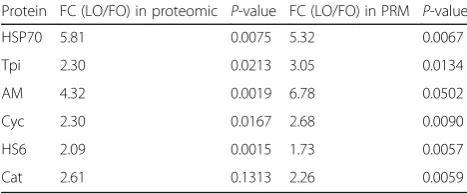
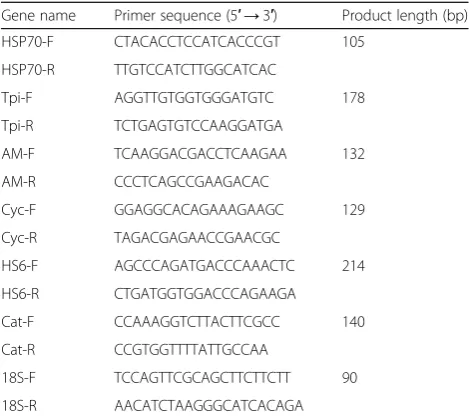
RT-PCR was used to verify whether six proteins that were significantly increased in LO-fed crabs were also increased in expression at the mRNA level. FC of the six proteins are in Table3. The primer sequences are listed in Table 4. Gene expression was normalized to 18S ribosomal RNA (18S). Total RNA of three crabs in each group was extracted from the hepatopancreas using TRIzol (Invitrogen) according the manufacturer’s instructions. Then, first-strand cDNA was synthesized using PrimeScript RT Master Mix (TaKaRa Bio, Japan). The RT-PCR was carried out in a 7500 Real-Time PCR System (Applied Biosystems, USA) using the template above following the manufacturer’s instructions for SYBR Premix Ex Taq (TaKaRa Bio, Japan). The RT-PCR was carried out in a total volume of 10 μL: 5 μL 2× SYBR Premix Ex Taq, 0.2μL 50 × ROX Reference Dye II, 1 μL diluted cDNA mix, 0.2 μL each primer (10 μM), and 3.4 μL sterile distilled water. Three replicates were carried out for each sample. The transcript levels were calculated using the comparative threshold cycle (2
−ΔΔCt
) formula. More information about the formulation of the comparative threshold cycle (2-ΔΔCt) formula was referred to Schmittgen [31].
And the selected proteins were further quantified by PRM-MS analysis at Beijing BangFei Bioscience Co., Ltd. (Beijing, China, http://www.bangfeibio.com/). The pro-teins were prepared following the proteomic analysis above. Then the peptide was introduced into the mass spectrometer. The raw data obtained were then analyzed using Proteome Discoverer 2.0 (Thermo Fisher Scien-tific). Skyline software was used for quantitative data processing.
Table 3Validation of differentially expressed proteins in proteomic analysis using PRM analysis
Protein FC (LO/FO) in proteomic P-value FC (LO/FO) in PRM P-value
HSP70 5.81 0.0075 5.32 0.0067
Tpi 2.30 0.0213 3.05 0.0134
AM 4.32 0.0019 6.78 0.0502
Cyc 2.30 0.0167 2.68 0.0090
HS6 2.09 0.0015 1.73 0.0057
Statistical analysis
All the results were presented as means ± SD and analyzed by Student’s t-test. Statistical analysis was per-formed using SPSS Statistics V22.0 (IBM Corporation, NY, USA). Data were considered to be statistically significant whenP< 0.05.
Results
Growth performance of juvenile mitten crab fed either FO or LO diets
The total survival rate was 75% in both the FO and LO diet groups (Table2). Initial weight, carapace length, and carapace width was the same for crabs in both groups (Table 2). There were no differences in the weight, carapace length, carapace width, weight gain, special weight gain, and hepatosomatic index at the end of the experiment (Table2).
Intermolt of juvenile mitten crab fed either FO or LO diets During the experiment, all the crabs had successfully molted for 3 times (Table 5). However, there was not a statistical significance between all the molting interval in the two groups.
Digestive enzyme activity of juvenile mitten crab fed either FO or LO diets
The activities of four digestive enzymes were measured to investigate the effects of different lipid diets on the digestion of the crabs. From the results in Table 6, the trypsin activity of crabs fed with LO was significantly lower than crabs fed with FO, but the pepsin activity in
LO was significantly higher than the crabs fed with FO. Comparing with protease above, the activities of lipase and amylase were at the same level in the crabs fed with FO and LO.
Fatty acid composition of the experiment diets and crab hepatopancreas
The fatty acid composition of the diets and the hepatopan-creas of the crabs are shown in Table7. A higher propor-tion of the fatty acids 14:0, 16:0, EPA, and DHA were present in the FO diet. The fatty acids 18:2n-6 and 18:3n-3 formed a higher proportion of the lipids in the LO diet. The 18:2n-6 and 18:3n-3 fatty acids were significantly higher in the hepatopancreas of crabs fed the LO diet compared to the FO diet. Meanwhile, EPA and DHA were significantly higher in crabs fed the FO diet than the LO diet, indicating that the fatty acid composition of the hepatopancreas was closely related to that of the diets.
Identification of the proteins obtained from proteomic analysis
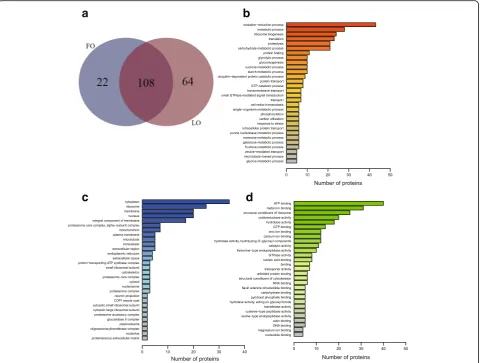
A total of 716 proteins were obtained from the proteomic analysis. GO annotation of the proteins indicated that the proteins were mainly enriched in oxidation-reduction process, metabolic process, and ribosome biogenesis for biological process (Fig. 1b). As for cellular component, cytoplasm, ribosome, membrane, and nucleus were enriched significantly (Fig. 1c). While in molecular function were the ATP binding, metal ion binding, and structural constituent of ribosome (Fig.1d).
Table 4The primers used for verification of the differentially expressed genes
Gene name Primer sequence (5′→3′) Product length (bp)
HSP70-F CTACACCTCCATCACCCGT 105
HSP70-R TTGTCCATCTTGGCATCAC
Tpi-F AGGTTGTGGTGGGATGTC 178
Tpi-R TCTGAGTGTCCAAGGATGA
AM-F TCAAGGACGACCTCAAGAA 132
AM-R CCCTCAGCCGAAGACAC
Cyc-F GGAGGCACAGAAAGAAGC 129
Cyc-R TAGACGAGAACCGAACGC
HS6-F AGCCCAGATGACCCAAACTC 214
HS6-R CTGATGGTGGACCCAGAAGA
Cat-F CCAAAGGTCTTACTTCGCC 140
Cat-R CCGTGGTTTTATTGCCAA
18S-F TCCAGTTCGCAGCTTCTTCTT 90
18S-R AACATCTAAGGGCATCACAGA
HSP70heat shock protein 70,Tpitriosephosphate isomerase,AMalpha
2-macroglobulin,Cyccyclophilin A,HS6: hemocyanin subunit 6,Catcathepsin C, 18S18S ribosomal RNA
Table 5Effects of different diets on molting of juvenile mitten crab (means ± SD)
Groups
FO LO
First molting interval (d) 32 ± 4.72 26.67 ± 6.26
Second molting interval (d) 36 ± 4.85 36.89 ± 5.01
Third molting interval (d) 36.22 ± 4.21 33.89 ± 3.98
Table 6Effects of different diets on digestive enzyme activity in hepatopancreas of juvenile mitten crab (means ± SD)
Groups
FO LO
Trypsin activity (U/mg) 752.03 ± 20.55b 520.7 ± 8.01a
Pepsin activity (U/mg) 0.24 ± 0.03a 0.44 ± 0.06b
Lipase activity (U/g) 2.33 ± 0.18 2.16 ± 0.15
Amylase activity (U/mg) 0.29 ± 0.04 0.32 ± 0.02
a, b
Identification of differential abundant hepatopancreas proteins
Analysis of protein quantification identified 194 proteins as differentially expressed in FO and LO (Additional file1: Table S1). Compared to crabs fed the FO diet, 43 pro-teins were significantly upregulated, and 65 propro-teins were downregulated in crabs fed with LO diet. A total of 64 proteins were only identified in crabs fed with LO while 22 proteins were only identified in crabs fed FO (Fig. 1a). Heat shock proteins were highly or only expressed in crabs fed the LO diet. In contrast, 4 proteins involved in lipid metabolism including fatty acid synthase (FAS), long-chain fatty acid transport protein 4 (FATP4), acyl-CoA delta-9 desaturase, and fatty acid-binding protein 1 (FABP1), were highly expressed in FO.
KOG classification of the differentially expressed proteins The 194 proteins were classified into 25 KOG functional classifications (Fig. 2). Among these classifications, the “posttranslational modification, protein turnover,
chaperones” represented the largest group, followed by “general function prediction only”, “signal transduction mechanisms”, “carbohydrate transport and metabolism”, and“translation, ribosomal structure and biogenesis”.
Analysis of gene expression by real-time PCR and PRM Six proteins significantly increased in crabs fed the LO diet were randomly selected to validate the proteomic data at the mRNA level. The gene expression of all 6 proteins were upregulated in crabs fed the LO diet, and was statis-tically significant in 4 proteins (Fig.3). From Table3, we could find that the FC of the differently expressed protein in PRM was in agreement with proteomic analysis.
Discussion
The sharply-increasing price of fish oil has prompted re-search into the use of vegetable oil in replacing fish oil in the diet of crustaceans. In Litopenaeus vannamei, the replacement of fish oil by 75% soybean oil did not affect the weight gain rate and SGR of the shrimp [32]. The complete replacement of fish oil might even increase weight gain, SGR, and survival inCherax quadricarinatus and juvenile Macrobrachium nipponense [33, 34]. How-ever, in juvenile L. vannamei, contrary results were obtained [35]. In the present study, the replacement of fish oil with linseed oil in the diet of mitten crab did not affect survival, weight gain, carapace length, carapace width, SGR, or hepatosomatic index. The same results have been reported by Chen [36]. From the results above, we could find that no effects were found as the replacement of the FO by vegetable oils in most freshwater species. Compar-ing with marine species, most freshwater species have lower HUFA demand [36]. Mitten crab spend most of its life in freshwater, and as an omnivorous species, thus making it easier to adapt the replacement of FO by vegetable oils in diets [37].
Comparing the two diets in the present study, the fish oil had a higher content of n-3 HUFAs, including EPA and DHA, while the linseed oil contained a high propor-tion of linolenic acid. It had been reported that n-3 HUFAs have an important role in the carapace develop-ment of crabs. In the larval and juvenile Scylla serrata, diet lacking in HUFAs led to reduced carapace width due to the lack of the ability to bioconvert C18 unsatur-ated fatty acids to HUFA [3, 38]. In contrast, in the present study, carapace length and carapace width were not reduced in crabs fed the LO diet lacking in HUFAs. A potential explanation for this is a difference in the ability ofS. serrataandE. sinensisto bioconvert C18 un-saturated fatty acids to HUFAs; mitten crab may have the ability to convert linoleic acid and linolenic acid to EPA and DHA [39]. This ability had been confirmed in other crustaceans such asPenaeus chinensisandPenaeus japonicus[40,41].
Table 7Fatty acid composition (% of total fatty acids) of the experiment diets and crab hepatopancreas
Fatty Acids
Experiment diets Hepatopancreas
FO LO FO LO
C14:0 4.91 1.63 3.76 ± 0.16
b
2.19 ± 0.04a
C15:0 0.91 0.33 0.99 ± 0.63
b
0.63 ± 0.02a
C16:0 16.93 11.88 17.11 ± 0.80
b
15.27 ± 0.45a
C18:0 5.16 5.68 3.80 ± 0.05
a
4.37 ± 0.13b
C20:0 0.65 0.21 0.28 ± 0.03 0.37 ± 0.17
SFA 28.95 20.39 25.94 ± 0.93b 22.84 ± 0.42a
C14:1n-5 0.18 0.12 0.82 ± 0.03 b
0.41 ± 0.02a
C16:1 4.74 0.47 9.62 ± 0.40
b
6.93 ± 0.03a
C18:1n-9 13.46 17.36 24.21 ± 0.73 a
25.95 ± 0.60b
C18:1n-7 2.63 1.30 3.67 ± 0.01 b
3.16 ± 0.13a
C20:1n-9 2.65 0.31 1.88 ± 0.10 b
0.74 ± 0.07a
C22:1n-9 3.62 0.22 1.26 ± 0.28 –
MUFA 27.29 19.80 41.46 ± 0.73b 37.19 ± 0.39a
C18:2n-6 11.97 17.96 10.19 ± 0.12 a
15.13 ± 0.24b
C18:3n-3 2.63 32.29 1.76 ± 0.04 a
15.95 ± 0.28b
C20:2n-6 0.19 0.12 0.67 ± 0.03 a
0.77 ± 0.03b
C20:4n-6 0.72 0.12 0.73 ± 0.05 0.60 ± 0.40
C20:5n-3 7.10 0.00 3.97 ± 0.16 b
0.75 ± 0.04a
C22:6n-3 10.50 0.13 6.02 ± 0.53 b
1.00 ± 0.06a
PUFA 34.30 52.48 23.35 ± 0.70a 34.19 ± 0.09b
HUFA 19.18 1.08 11.40 ± 0.71b 3.12 ± 0.50a
n-3PUFA 20.98 32.83 11.76 ± 0.66a 17.69 ± 0.20b
n-6PUFA 13.32 19.65 11.59 ± 0.08a 16.49 ± 0.20b
a, b
The utilization of the principal nutrients was largely determined by the activity of digestive enzymes [42,43]. And many studies had demonstrated that the activity of digestive enzymes in crustaceans were regulated by many factors, one of which was the dietary nutrients [42,44–46]. There were studies indicated that the activ-ity of digestive proteases could be changed by the dietary lipid and protein level [42, 43, 47]. The results indicated that the activity of proteases could be significantly chan-ged by the dietary lipid sources, high content dietary HUFAs could promote the activity of trypsin, but inhibit the activity of pepsin. Dietary fatty acids didn’t have any effects on the activities of lipase and amylase. Lipid was the main dietary sources for mitten crab to obtain energy for the growth and development. A lot of energy was required for the molt in the life history of mitten crab, thus a relatively stabilized activity of lipase was needed for the crustaceans to obtain enough energy at the same dietary lipid level [48].
The high content of EPA and DHA in the mitten crab was the main value of this species, great efforts have been made to find the HUFA biosynthesis ability of mitten crab. At present, we have obtained 4 kinds of enzyme which participated in the HUFA biosynthesis, including two kinds of desaturase and two elongases [49–52]. These enzymes were relative to the deation of C18 fatty acid, and the elongdeation of C16 satur-ation and monounsaturated fatty acid [53, 54]. Never had an enzyme was found in mitten crab relative to the biosynthesis of HUFA, such as EPA and DHA. In this study, EPA was not found in the diet of LO, but 0.75% EPA was found in the hepatopancreas of the crabs fed with LO. Thus we speculate that mitten crab maybe have the biosynthesis ability of EPA using other fatty acids.
From the proteome, we identified 3 heat shock proteins (HSPs) which were highly expressed only in crabs fed the LO diet. HSPs are key proteins in regulating the heat shock response to cope with both internal and external
b
c
d
a
environmental stress [55,56]. In crustaceans, studies indi-cate that the expression of HSPs are significantly upregu-lated after a bacterial challenge or when experiencing stress [57–59]. The increased expression of the HSPs HSP10 and HSP60 may indicate greater inflammation or bacterial infection in crabs fed the LO diet.
Four proteins involved in lipid metabolism were highly expressed in crabs fed the FO diet. FAS is a multi-enzyme protein that synthesizes saturated fatty acids, such as palmitic acid (16:0) and stearic acid (18:0), from acetyl-CoA [60]. It had been previously reported that both EPA and DHA suppress the expression of FAS at
the level of transcription [61, 62]. In contrast, in the present study the abundance of FAS was significantly higher in FO than LO. This may be due to the presence of other fatty acids in the FO besides EPA and DHA, including tetradecanoic acid (14:0), which was present in high amounts in the FO, and could be transformed to the substrate of FAS.
Acyl-CoA delta-9 desaturase introduces a double bond in 16:0 and 18:0 and is a rate-limiting enzyme in the bio-synthesis of monounsaturated fatty acids [63]. Acyl-CoA delta-9 desaturase was isolated from mitten crab in 2013 [50]. In agreement with our results, it has been reported
Fig. 2KOG functional classification of differentially expressed hepatopancreas proteins between crabs fed FO and LO diets
that the substitution of fish oil with soybean oil de-creases acyl-CoA delta-9 desaturase mRNA expression [63]. According to the fatty acid composition of FO and LO, we could find that C16:0, the substrate of acyl-CoA delta-9 desaturase, was significantly higher in FO than LO. Therefore, we speculated the higher abundance of acyl-CoA delta-9 desaturase in FO was due to the high content of 16:0 in FO.
Two proteins involved in transport of fatty acids signifi-cantly increased in crabs fed FO compared to the LO diet: FABP1 and FATP-4 [64,65]. It had been reported that dif-ferent FATP proteins predif-ferentially transport difdif-ferent fatty acids [66] and correlations have been reported between FATP-4 mRNA expression and n-3 long-chain polyunsatur-ated fatty acids in human placenta [67]. In mitten crab, Es-FABP has been shown to have a role in lipid transport during rapid ovarian growth [68]. In the present study, FATP-4 was only found in FO, and FABP1 abundance was higher in FO compared to the LO diet. This suggests that the presence of HUFAs in the diets of mitten crab could increase the protein abundance relative to the transport of the HUFAs, thus laying the foundation of the high content of HUFAs in the hepatopancreas of mitten crab.
Conclusions
From the results in the present study, we conclude that the replacement of FO with LO did not have significant effects on the growth performance and molting of juvenile mitten crab. Trypsin activity of crabs fed with LO was significantly lower than crabs fed with FO, but the pepsin activity in LO was significantly higher than the crabs fed with FO. The activity of lipase and amylase didn’t have significant change. The fatty acid composition of the hepatopancreas reflected the fatty acid composition of the diets. From the proteome, we could conclude that the replacement of FO with LO may decrease the ability of mitten crab to cope with stress. The effects of the replacement on the lipid metabolism were focused on the synthesis and transport of fatty acids. The presence of HUFAs in the diets of mitten crab could increase the protein abundance relative to the transport of the HUFAs, thus laying the foundation of the high content of HUFAs in the hepatopancreas of mitten crab.
Additional file
Additional file 1:Table S1.Differentially expressed proteins in the hepatopancreas of crabs fed with FO and LO. (XLSX 58 kb)
Abbreviations
18S:18S ribosomal RNA; AM: Alpha 2-macroglobulin; Cat: Cathepsin C; Cyc: Cyclophilin A; DHA: Docosahexaenoic acid; DTT: DL-Dithiothreitol; EPA: Eicosapentaenoic acid; FABP1: Fatty acid-binding protein 1; FAS: Fatty acid synthase; FATP4: Long-chain fatty acid transport protein 4; FCR: Feed conversion ratio; FDR: False discovery rate; FO: Fish oil; GO: Gene ontology; HPLC: High performance liquid chromatography; HS6: Hemocyanin subunit
6; HSP: Heat shock protein; HSP70: Heat shock protein 70; HUFA: Highly unsaturated fatty acid; KOG: EuKaryotic orthologous groups; LO: Linseed oil; S: Surviving rate; SDS-PAGE: Sodium dodecyl sulfate polyacrylamide gel electrophoresis; SGR: Specific growth rate; Tpi: Triosephosphate isomerase; WG: Weight gain
Acknowledgements
Not applicable.
Funding
This study was supported by the National Natural Science Foundation of China [grant numbers 31472287] and China Agriculture Research System-48 (CARS-46).
Availability of data and materials
All relevant data are within the paper and its Additional files.
Authors’contributions
BH and ZG conceived and designed the experiments; BH, JYW, and JYZ performed the experiments; BH, JYW, and ZG analyzed the data; ZG and YX were the funding acquisitions; YX was the project administration and provided resources to the study; BH and ZG drafted and revised the manuscript. All authors read and approved the final manuscript.
Ethics approval and consent to participate
All animal work was conducted in the strict accordance with the basis of the guidelines for the care and use of experimental animals established by the Administration of Affairs Concerning Experimental Animals of the State Council of the People’s Republic of China, and approved by the Committee on Experimental Animal Management of the Shanghai Ocean University.
Consent for publication
Not applicable.
Competing interests
The authors declare that they have no competing interests.
Publisher’s Note
Springer Nature remains neutral with regard to jurisdictional claims in published maps and institutional affiliations.
Author details
1Key Laboratory of Exploration and Utilization of Aquatic Genetic Resources,
Ministry of Education, Shanghai Ocean University, Shanghai 201306, China.
2
Centre for Research on Environmental Ecology and Fish Nutrition (CREEFN) of the Ministry of Agriculture, Shanghai Ocean University, Shanghai 201306, China.3National Demonstration Center for Experimental Fisheries Science
Education (Shanghai Ocean University), Shanghai 201306, China.
Received: 25 September 2017 Accepted: 28 February 2018
References
1. Wang CH, Li CH, Li SF. Mitochondrial DNA-inferred population structure and demographic history of the mitten crab (Eriocheir sensu stricto) found along the coast of mainland China. Mol Ecol. 2008;17(15):3515–27.https://doi.org/ 10.1111/j.1365-294X.2008.03850.x.
2. Tang CJ, Songqian CH, Fu N, Liu Y, Tao NP, Wang XC. Lipid content and fatty acid composition ofEriocheir sinensisat different stages of growth. Food Sci. 2013;34(22):174–8. https://doi.org/10.7506/spkx1002-6630-201322035.
3. Sheen SS, Wu SW. The effects of dietary lipid levels on the growth response of juvenile mud crabScylla serrata. Aquaculture. 1999;175(1–2):143–53. https://doi.org/10.1016/S0044-8486(99)00027-7.
4. Ouraji H, Abedian Kenari AM, Shabanpour B, Shabani A, Nezami SA, Sodagar M, et al. Growth response and muscle lipid quality of Indian white shrimp fed different oils at two dietary lipid levels. J Food Quality. 2010;33(4): 405–23.https://doi.org/10.1111/j.1745-4557.2010.00336.x.
6. Noordin NM, Zeng CS, Southgate PC, Romano N. Effects of dietary fish oil to soybean oil ratio on survival, development, and growth of early juveniles of the blue swimmer crabPortunus pelagicus. J Shellfish Res. 2015;34(3): 1065–72.https://doi.org/10.2983/035.034.0333.
7. Soller F, Rhodes MA, Davis DA. Replacement of fish oil with alternative lipid sources in plant-based practical feed formulations for marine shrimp (Litopenaeus vannamei) reared in outdoor ponds and tanks. Aquac Nutr. 2017;23(1):63–75.https://doi.org/10.1111/anu.12360.
8. Ju ZY, Castille F, Deng DF, Dominy WG, Lawrence AL, Forster IP. Effects of replacing fish oil with stearine as main lipid source in diet on growth and survival of Pacific white shrimp,Litopenaeus vannamei(Boone, 1931). Aquac Res. 2012;43(10):1528–35.https://doi.org/10.1111/j.1365-2109.2011.02957.x. 9. Holme MH, Southgate PC, Zeng CS. Survival, development and growth
response of mud crab,Scylla serrata, megalopae fed semi-purified diets containing various fish oil:corn oil ratios. Aquaculture. 2007;269(1–4):427–35. https://doi.org/10.1016/j.aquaculture.2007.05.024.
10. Ouraji H, Shabanpour B, Kenari AA, Shabani A, Nezami S, Sudagar M, et al. Total lipid, fatty acid composition and lipid oxidation of Indian white shrimp (Fenneropenaeus indicus) fed diets containing different lipid sources. J Sci Food Agr. 2009;89(6):993–7.https://doi.org/10.1002/jsfa.3545.
11. Sui LY, Sun HX, Wu XG, Wille M, Cheng YX, Sorgeloos P. Effect of dietary HUFA on tissue fatty acid composition and reproductive performance of Chinese mitten crabEriocheir sinensis(H. Milne-Edwards) broodstock. Aquacult Int. 2010;19(2):269–82.https://doi.org/10.1007/s10499-010-9379-7. 12. Wu XG, Chang GL, Cheng YX, Zeng CS, Southgate PC, Lu JF. Effects of
dietary phospholipid and highly unsaturated fatty acid on the gonadal development, tissue proximate composition, lipid class and fatty acid composition of precocious Chinese mitten crab,Eriocheir sinensis. Aquacult Nutr. 2010;16(1):25–36.https://doi.org/10.1111/j.1365-2095.2008.00637.x. 13. Chang GL, Wu XG, Cheng YX, Wang ZK, Liu Q, Yang XZ, et al. Effect of lipid
nutrition on hepatosomatic index and biochemical composition of juvenile
Eriocheir sinensis. Oceanol Limnol Sin. 2008;39(3):276–83.
14. Turkmen S, Zamorano MJ, Fernandez-Palacios H, Hernandez-Cruz CM, Montero D, Robaina L, et al. Parental nutritional programming and a reminder during juvenile stage affect growth, lipid metabolism and utilisation in later developmental stages of a marine teleost, the gilthead sea bream (Sparus aurata). Brit J Nutr. 2017;118(7):500–12.https://doi.org/10. 1017/S0007114517002434.
15. Leaver MJ, Villeneuve LA, Obach A, Jensen L, Bron JE, Tocher DR, et al. Functional genomics reveals increases in cholesterol biosynthetic genes and highly unsaturated fatty acid biosynthesis after dietary substitution of fish oil with vegetable oils in Atlantic salmon (Salmo salar). BMC Genomics. 2008;9(1):299.https://doi.org/10.1186/1471-2164-9-299.
16. Sargent J, Bell G, Mcevoy L, Tocher D, Esteves A. Recent developments in the essential fatty acid nutrition of fish. Aquaculture. 1999;177(1–4):191–9. https://doi.org/10.1016/S0044-8486(99)00083-6.
17. Tocher DR. Fatty acid requirements in ontogeny of marine and freshwater fish. Aquac Res. 2010;41(5):717–32.https://doi.org/10.1111/j.1365-2109.2008. 02150.x.
18. Fuchs D, Winkelmann I, Johnson IT, Mariman E, Wenzel U, Daniel H. Proteomics in nutrition research: principles, technologies and applications. Brit J Nutr. 2007;94(3):302–14.https://doi.org/10.1079/bjn20051458. 19. Wang JJ, Li DF, Dangott LJ, Wu GY. Proteomics and its role in nutrition
research. J Nutr. 2006;136(7):1759–62.
20. Kim H, Page GP, Barnes S. Proteomics and mass spectrometry in nutrition research. Nutrition. 2004;20(1):155–65. https://doi.org/10.1016/s0899-9007(03)00240-5.
21. Astle J, Ferguson JT, German JB, Harrigan GG, Kelleher NL, Kodadek T, et al. Characterization of proteomic and metabolomic responses to dietary factors and supplements. J Nutr. 2007;137(12):2787–93.
22. Du C, Liu HF, Lin YZ, Wang XF, Ma J, Li YJ, et al. Proteomic alteration of equine monocyte-derived macrophages infected with equine infectious anemia virus. Proteomics. 2015;15(11):1843–58.https://doi.org/10.1002/pmic. 201400279.
23. Peterson AC, Russell JD, Bailey DJ, Westphall MS, Coon JJ. Parallel reaction monitoring for high resolution and high mass accuracy quantitative, targeted proteomics. Mol Cell Proteomics. 2012;11(11):1475–88.https://doi. org/10.1074/mcp.O112.020131.
24. Tsuchiya H, Tanaka K, Saeki Y. The parallel reaction monitoring method contributes to a highly sensitive polyubiquitin chain quantification. Biochem Bioph Res Co. 2013;436(2):223–9.https://doi.org/10.1016/j.bbrc.2013.05.080.
25. Folch J, Lees M, Sloane Stanley GH. A simple method for the isolation and purification of total lipids from animal tissue. J Biol Chem. 1957;226(1): 497–509.
26. Morrison WR, Smith LM. Preparation of fatty acid methyl esters and dimethylacetals from lipids with boron fluoride-methanol. J Lipid Res. 1964; 5(4):600.
27. Wisniewski JR, Zougman A, Nagaraj N, Mann M. Universal sample preparation method for proteome analysis. Nat Methods. 2009;6(5):359–62. https://doi.org/10.1038/nmeth.1322.
28. Bradford MM. A rapid and sensitive method for the quantitation of microgram quantities of protein utilizing the principle of protein-dye binding. Anal Biochem. 1976;72(1–2):248–54.https://doi.org/10.1006/abio. 1976.9999.
29. Eidhammer I, Flikka K, Martens L, Mikalsen SO. SeriesComputational methods for mass spectrometry proteomics, computational methods for mass spectrometry proteomics. Chichester: Wiley; 2007.
30. Wei BH, Yang ZG, Wang JY, Chen AQ, Shi QY, Cheng YX. Effects of dietary lipids on the hepatopancreas transcriptome of Chinese mitten crab (Eriocheir sinensis). PLoS One. 2017;12(7):e0182087.https://doi.org/10.1371/ journal.pone.0182087.
31. Schmittgen TD, Livak KJ. Analyzing real-time PCR data by the comparative
CTmethod. Nat Protocol. 2008;3(6):1101–8.https://doi.org/10.1038/nprot.
2008.73.
32. Liu SH, Cao JM, Huang YH, Zhao HX, Lan HB, Yan J, et al. Effects of replacement of dietary fish oil by soybean oil on growth performance and hepatosomatic index inLitopenaeus vannamei. J South China Agric Univ. 2010;31(4):95–9.
33. Li JY, Guo ZL, Gan XH, Wang DL, Zhang MF, Zhao YL. Effect of different dietary lipid sources on growth and gonad maturation of pre-adult female
Cherax quadricarinatus(von martens). Aquac Nutr. 2011;17(4):e853–60. https://doi.org/10.1111/j.1365-2095.2011.00852.x.
34. Ding ZL, Chen LQ, Du ZY, Jiang HB, Sun SM, Li EC. A mixture of fish oil and soybean oil as a dietary lipid source prevents precocity and promotes growth in juvenileMacrobrachium nipponense(de Haan). Aquac Res. 2014; 45(9):1567–72.https://doi.org/10.1111/are.12088.
35. Zhou QC, Li CC, Liu CW, Chi SY, Yang QH. Effects of dietary lipid sources on growth and fatty acid composition of juvenile shrimp,Litopenaeus vannamei. Aquacult Nutr. 2007;13(3):222–9.https://doi.org/10.1111/j. 1365-2095.2007.00470.x.
36. Chen YL, Chen LQ, Qin JG, Ding ZL, Li M, Jiang HB, et al. Growth and immune response of Chinese mitten crab (Eriocheir sinensis) fed diets containing different lipid sources. Aquac Res. 2016;47(6):1984–95.https://doi. org/10.1111/are.12654.
37. Luo Z, Tan XY, Chen YD, Wang WM, Zhou G. Apparent digestibility coefficients of selected feed ingredients for Chinese mitten crabEriocheir sinensis. Aquaculture. 2008;285(1–4):141–5.https://doi.org/10.1016/j. aquaculture.2008.08.004.
38. Suprayudi MA, Takeuchi T, Hamasaki K. Essential fatty acids for larval mud crabScylla serrata: implications of lack of the ability to bioconvert C18 unsaturated fatty acids to highly unsaturated fatty acids. Aquaculture. 2004; 231(1–4):403–16.https://doi.org/10.1016/s0044-8486(03)00542-8. 39. Chen YL, Li EC, Yu N, Tian WJ, Jiang X, Sun LM, et al. Effect of replacing
dietary fish oil with soybean oil on growth, nonspecific immune response, and resistance to Aeromonas hydrophila challenge in Chinese mitten crab,
Eriocheir sinensis. J Fish Sci China. 2014;21(3):511–21.
40. Ren ZL, Li AJ. Study on conversion ability ofPenaeus chinensisfor fatty acid. Fisheriesence Technol Inf. 1995;22(5):225–7.
41. Kayama M, Hirata M, Kanazawa A, Tokiwa S, Saito M. Essential fatty acids in the diet of prawn-III lipid metabolism and fatty acid composition. Bull Jap Soc Sci Fish. 1980;46(4):483–8.
42. Lee PG, Smith LL, Lawrence AL. Digestive proteases ofPenaeus vannamei
Boone: relationship between enzyme activity, size and diet. Aquaculture. 1984;42(3–4):225–39.https://doi.org/10.1016/0044-8486(84)90103-0. 43. Li XW, Li ZJ, Liu JS, Murphy BR. Growth, precocity, enzyme activity and
chemical composition of juvenile Chinese mitten crab,Eriocheir sinensis, fed different dietary protein-to-energy ratio diets. Aquac Res. 2012;43(11): 1719–28.https://doi.org/10.1111/j.1365-2109.2011.02981.x. 44. Moullac GL, Klein B, Sellos D, Wormhoudt AV. Adaptation of trypsin,
45. Puello-Cruz AC, Sangha RS, Jones DA, Vay LL. Trypsin enzyme activity during larval development ofLitopenaeus vannamei(Boone) fed on live feeds. Aquac Res. 2002;33(5):333–8.https://doi.org/10.1046/j.1365-2109.2002.00676.x. 46. Serrano JAE, Traifaigar RF. Ontogeny and induction of digestive enzymes in
Scylla serratalarvae fed live or artificial feeds or their combination. AACL Bioflux. 2012;5(3):101–11.
47. Arslan M, Dabrowski K, Ferrer S, Dietrich M, Rodriguez G. Growth, body chemical composition and trypsin activity of south American catfish, Surubim (Pseudoplatystomasp.) juveniles fed different dietary protein and lipid levels. Aquac Res. 2013;44(5):760–71.https://doi.org/10.1111/j. 1365-2109.2011.03081.x.
48. Yang LL, Yang XZ, Zhao LL, Fan P, Liang P, Cheng YX. Effects of two different diets on the growth, digestive enzyme activity and haemocytes in juvenile Chinese mitten crab (Eriocheir sinensis). J Fudan Univ. 2011;50(5): 619–24.
49. Yang ZG, Guo ZH, Ji LY, Zeng QT, Wang Y, Yang XZ, et al. Cloning and tissue distribution of a fatty acyl△6-desaturase-like gene and effects of dietary lipid levels on its expression in the hepatopancreas of Chinese mitten crab (Eriocheir sinensis). Comp Biochem Physiol B. 2013;165(2):99–105. https://doi.org/10.1016/j.cbpb.2013.03.010.
50. Guo ZH, Yang ZG, Cheng YX, Ji LY, Que YQ, Liu ZW, et al. Molecular characterization, tissue expression of acyl-CoA△9-desaturase-like gene, and effects of dietary lipid levels on its expression in the hepatopancreas of the Chinese mitten crab (Eriocheir sinensis). Aquaculture. 2013;402–403:58–65. https://doi.org/10.1016/j.aquaculture.2013.03.033.
51. Yang ZG, Shi QY, Cheng YX, Que YQ, Yang Q, Xu L, et al. Full-length cDNA cloning and expression analysis of the fatty acid elongase gene from Chinese mitten crab (Eriocheir sinensis). J Fish China. 2016;23(1):53–63. https://doi.org/10.3724/SP.J.1118.2016.15159.
52. Shi QY, Yang ZG, Yao QQ, Cheng YX, Yang Q, Wei BH. Full-length cDNA cloning ofELOVL6and its tentative study in Chinese mitten crab (Eriocheir sinensis). J Fish China. 2016;40(6):344–55.https://doi.org/10.11964/jfc. 20151210193.
53. Yao QQ. Cloning and prokaryotic expression of fatty acid desaturase gene delta6-b and delta9-desaturase prokaryotic expression of the Chinese mitten crab (Eriocheir sinensis). Shanghai: Shanghai Ocean University; 2015. 54. Shi QY. The full-length cDNA cloning and expression analysis of ELOVLm
and ELOVL6 ofEriocheir sinensis. (master). Shanghai: Shanghai Ocean University; 2016.
55. Tissieres A, Mitchell HK, Tracy UM. Protein synthesis in salivary clands of
Drosophila melanogasterrelation to chromosome puffs. J Mol Biol. 1974; 84(3):389–98.https://doi.org/10.1016/0022-2836(74)90447-1.
56. Sørensen JG, Kristensen TN, Loeschcke V. The evolutionary and ecological role of heat shock proteins. Ecol Lett. 2003;6(11):1025–37.https://doi.org/10. 1046/j.1461-0248.2003.00528.x.
57. de la Vega E, Hall MR, Degnan BM, Wilson KJ. Short-term hyperthermic treatment ofPenaeus monodonincreases expression of heat shock protein 70 (HSP70) and reduces replication of gill associated virus (GAV). Aquaculture. 2006;253(1–4):82–90.https://doi.org/10.1016/j.aquaculture.2005.07.041. 58. Sung YY, Van Damme EJM, Sorgeloos P, Bossier P. Non-lethal heat shock
protects gnotobioticArtemia franciscanalarvae against virulent Vibrios. Fish Shellfish Immun. 2007;22(4):318–26.https://doi.org/10.1016/j.fsi.2006.05.008. 59. Cui ZX, Liu Y, Luan WS, Li QQ, Wu DH, Wang SY. Molecular cloning and
characterization of a heat shock protein 70 gene in swimming crab (Portunus trituberculatus). Fish Shellfish Immun. 2010;28(1):56–64.https://doi. org/10.1016/j.fsi.2009.09.018.
60. Castro LFC, Tocher DR, Monroig O. Long-chain polyunsaturated fatty acid biosynthesis in chordates: insights into the evolution of fads and Elovl gene repertoire. Prog Lipid Res. 2016;62(6):25–40.https://doi.org/10.1016/j.plipres. 2016.01.001.
61. Field FJ, Born E, Murthy S, Mathur SN. Polyunsaturated fatty acids decrease the expression of sterol regulatory element-binding protein-1 in CaCo-2 cells: effect on fatty acid synthesis and triacylglycerol transport. Biochem J. 2002;368(3):855–64.https://doi.org/10.1042/BJ20020731.
62. Semenkovich CF. Regulation of fatty acid synthase (FAS). Prog Lipid Res. 1997;36(1):43–53.https://doi.org/10.1016/S0163-7827(97)00003-9. 63. Jeffcoat R, Brawn PR, Safford R, James AT. Properties of rat liver microsomal
stearoyl-coenzyme a desaturase. Biochem J. 1977;161(2):431–7.
64. Zhou SL, Stump D, Sorrentino D, Potter BJ, Berk PD. Adipocyte differentiation of 3T3-L1 cells involves augmented expression of a 43-kDa plasma membrane fatty acid-binding protein. J Biol Chem. 1992;267(20):14456–61.
65. Schaffer JE, Lodish HF. Expression cloning and characterization of a novel adipocyte long chain fatty acid transport protein. Cell. 1994;79(3):427–36. https://doi.org/10.1016/0092-8674(94)90252-6.
66. Stahl A, Hirsch DJ, Gimeno RE, Punreddy S, Ge P, Watson N, et al. Identification of the major intestinal fatty acid transport protein. Mol Cell. 1999;4(3):299–308.https://doi.org/10.1016/S1097-2765(00)80332-9. 67. Larque E, Demmelmair H, Klingler M, De Jonge S, Bondy B, Koletzko B.
Expression pattern of fatty acid transport protein-1 (FATP-1), FATP-4 and heart-fatty acid binding protein (H-FABP) genes in human term placenta. Early Hum Dev. 2006;82(10):697–701.https://doi.org/10.1016/j.earlhumdev. 2006.02.001.
68. Gong YN, Li WW, Sun JL, Ren F, He L, Jiang H, et al. Molecular cloning and tissue expression of the fatty acid-binding protein (Es-FABP) gene in female Chinese mitten crab (Eriocheir sinensis). BMC Mol Biol. 2010;11(1):71.https:// doi.org/10.1186/1471-2199-11-71.
• We accept pre-submission inquiries
• Our selector tool helps you to find the most relevant journal
• We provide round the clock customer support
• Convenient online submission
• Thorough peer review
• Inclusion in PubMed and all major indexing services
• Maximum visibility for your research
Submit your manuscript at www.biomedcentral.com/submit