EUROPEAN RESPIRATORY UPDATE
An update on paediatric asthma
Gunilla Hedlin*,#, Jon Konradsen*,#and Andrew Bush",+
I
n this Update we will discuss aspects of the definitions, epidemiology, diagnostics, asthma-associated comorbid-ities, assessment and treatment of asthma including a specific focus on severe asthma in school children. The Update will mainly cover data published during the last 3 yrs.In 2009, an expert panel was tasked to propose a World Health Organization definition of asthma severity and control. The result of this Task Force was a uniform definition of asthma severity, control and exacerbation [1]. As we will discuss later in an overview of asthma outcomes [2], symptom evaluation is the key to the diagnosis and outcome measures in clinical studies.
Airway inflammation is one of the pathophysiological char-acteristics of asthma, which is mediated through infiltration of inflammatory cells, including mast cells, and eosinophilic and neutrophilic granulocytes in the airway wall. This cell infiltration subsequently leads to bronchial hyperresponsiveness (BHR) and, in the case of chronic inflammation, persistent changes of the airways,i.e.airway remodelling [3, 4].
Immunoglobulin (Ig)E-mediated allergy leading to allergic inflammation is common among children with persistent asthma. There are ongoing studies worldwide (the MeDALL initiative) aiming to identify allergic phenotypes [5] and understand the complexity of the IgE related phenotypes in children and adults [6].
The purpose of paediatric asthma treatment is for the child to control symptoms, to be able to lead a normal active life, to have normal lung function and to prevent asthma exacerba-tions [7, 8]. The care of asthmatic children does not only include the prescription of asthma medication. The families need to be convinced and educated to actually make the parents give the medication as prescribed and in a proper manner [9]. Furthermore, healthcare providers must teach the families how to avoid or handle triggering factors, including exercise; recognise signs that asthma is worsening; and seek medical advice when needed [10].
NOTES ON EPIDEMIOLOGY
Wide variations exist in the symptom prevalence of children with asthma. While severe symptoms among children in less affluent countries are more common, there are more children with any symptoms of asthma in wealthy countries [11]. In a systematic analysis of the global burden of disease in people aged 10–24 yrs [12], where the disease risk was assessed by calculating years lost because of disability, respiratory disorders were the sixth main cause of disability worldwide. Most of the years lost because of disability were caused by asthma, which was the fourth most common cause of disability-adjusted life years for children aged 10–14 yrs. Another approach to estimating the burden of asthma was reported from Ontario, Canada, in a study of the lifetime risk of physician-diagnosed asthma [13]. One in three individuals had physician-diagnosed asthma. Even more interesting is that one in five was diagnosed before 20 yrs of age. This demonstrates the life-long pattern of asthma compared with other chronic diseases such as diabetes and coronary heart disease [13]. In a 5-yr follow-up study of Irish children, the prevalence of asthma remained stable in 6–9-yr-old children at 21.7% in 2002 and 23.5% in 2007 [14]. This illustrates and confirms the findings of the International Study of Asthma and Allergies in Childhood (ISAAC) study of the varying prevalence of asthma in Europe.
DEFINITIONS AND DIAGNOSIS OF SEVERE ASTHMA
Problematic severe asthma
The majority of children with asthma have mild or moderate disease and can obtain adequate control of symptoms through avoidance of triggering factors and/or with the help of medications, such as inhaled short-actingb2-receptor agonists (SABA), inhaled corticosteroids (ICS) and, when needed, the addition of long-actingb2-receptor agonists (LABA) and leuko-triene receptor antagonists (LTRA) [15, 16]. Asthma control is defined as ‘‘to which extent the manifestations of asthma have been reduced or removed by treatment’’ [17], a concept that not only includes assessment of daytime and nocturnal symptoms and need for reliever medication, but also an estimation of future risk of severe exacerbations. However, ,5% of all asthmatic children have chronic symptoms and/or recurrent exacerbations despite maximum treatment with conventional medications [18]. These children are referred to as severe asthmatics, and due to the lack of specific biomarkers of this disease, severe asthma is currently being defined on the basis of the intensity of treatment required to improve asthma control, and the level of control achieved [7, 17, 19]. Thus, the definition of severe asthma combines evaluation of medication, chronic symptoms and exacerbations. These criteria are developed from the Global Initiative for Asthma (GINA) guidelines and other studies or reviews on severe childhood asthma [20–22]. Children with such severe and therapy resistant symptoms are heterogeneous with
*Dept of Women’s and Children’s Health, Karolinska Institutet and#Centre for Allergy Research, Karolinska Institutet, Stockholm, Sweden."
Dept of Paediatrics, Royal Brompton Hospital and+Dept
of Paediatric Respiratory Medicine, Imperial College, London, UK.
CORRESPONDENCE: G. Hedlin, Dept of Women’s and Children’s Health and Centre for Allergy Research, Karolinska Institutet, SE-17176 Stockholm, Sweden. E-mail: [email protected]
Received: May 04 2012; Accepted after revision: June 27 2012
respect to triggering factors, pulmonary function, inflammatory pattern and clinical symptoms [22–25]. These children have a reduced quality of life [26] and represent a continuous clinical challenge to the paediatrician [24, 27].
A Global Allergy and Asthma European Network (GA2LEN) Task Force, the Problematic Severe Asthma Initiative, has proposed the term problematic severe asthma to define all children who suffer from chronic symptoms and/or severe exacerbations despite prescription of high doses of ICS with additional LABA and/or LTRA [21, 22]. This concept has been incorporated in the recent WHO definition of severe asthma [1]. The concept is a reflection of how children with problematic severe asthma are presented to the paediatric allergist, i.e.
having troublesome symptoms despite maximum conventional medications, step 4 and 5 according to GINA.
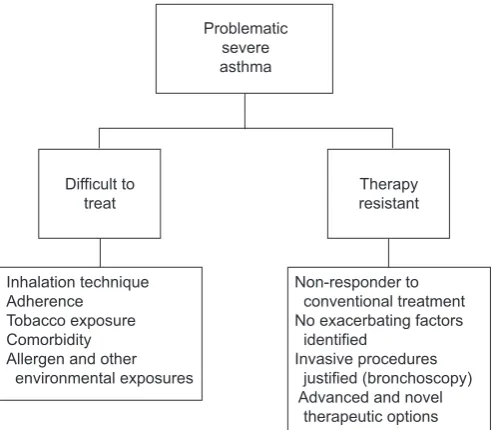
The advantage of the newly introduced term problematic severe asthma is that it encompasses two groups of children: 1) children who, after a thorough work-up, can be classified as difficult to treat because of identified exacerbating factors; and 2) children who, following a thorough work-up, do not have any identifiable aggravating factors but are still severely resistant to therapy (fig. 1).
Clinical presentation of problematic severe asthma in school-age children
We diagnose severe therapy-resistant asthma when differential diagnosis is excluded (table 1), and we cannot identify factors that make the child ‘‘difficult-to-treat’’. Severe therapy-resistant asthma may take a number of different forms that are not mutually exclusive.
Exacerbation phenotype
Exacerbation phenotype refers to children with problematic severe asthma who have received more than one burst of oral corticosteroids in the preceding 12 months, without experien-cing daytime or night-time symptoms between exacerbations.
Chronic symptoms phenotype
Chronic symptoms phenotype refers to children with proble-matic severe asthma that have experienced daytime and/or night-time symptoms more than twice per week in the preceding 3 months.
We diagnose difficult-to-treat-asthma when poor control is due to one or more of the following: associated diagnoses (comor-bidities), poor adherence to treatment regimens, or adverse psychological and environmental factors.
Difficult-to-treat asthmaversustherapy resistant asthma In a study of Swedish school children with problematic severe asthma, 39% of the children with problematic severe asthma were exposed to exacerbating factors that could be treated or at least partially eliminated. This finding provides support for the clinical utility of the definition of problematic severe asthma [23]. Moreover, these exacerbating factors were not disclosed in connection with routine care by experienced paediatric allergists, emphasising the usefulness of an extensive and standardised clinical protocol. Home visits [28] and assessment of steroid response with, for example, triamcinolone injection [20, 29] could have further improved the classification of children with problematic severe asthma.
The Swedish results and the results from other studies indicate that children with problematic severe asthma who have a low socioeconomic background and a high exhaled nitric oxide fraction (FeNO) have an increased probability of having asthma that is difficult to treat because of identifiable aggravating factors [23, 30]. This finding suggests a shortcoming of the profession to educate these families on how to avoid or handle triggering factors. Furthermore, although impaired asthma control and risk of exacerbations are related, the respective predictors are different [31].
ASTHMA COMORBIDITIES AND/OR ASSOCIATED DIAGNOSIS
Other conditions may co-exist with asthma, and continuing respiratory symptoms may be wrongly attributed to asthma alone. These children may be difficult to treat. The most common comorbidities are chronic rhinosinusitis, gastro-oesophageal reflux and obesity.
Rhinitis and rhinosinusitis
It has long been recognised that diseases of upper and lower airways may co-exist. The co-morbidity between childhood
Problematic severe asthma
Difficult to treat
Inhalation technique Adherence Tobacco exposure Comorbidity Allergen and other environmental exposures
Therapy resistant
Non-responder to conventional treatment No exacerbating factors identified
Invasive procedures justified (bronchoscopy) Advanced and novel therapeutic options
FIGURE 1. Clinical classification of children presenting with problematic severe asthma.
TABLE 1 Possible differential diagnosis in a child presenting with severe asthma
Tracheomalacia Congenital disorders
Primary ciliary dyskinesia Oesophageal fistula
Foreign body Bronchiolitis Immunodeficiency
asthma and rhinoconjunctivitis is well established. The relation-ship between the nose and the lung, however, is complex and it has been reviewed in several studies [32, 33]. 76% of patients with asthma have rhinitis and up to 15% of patients with allergic rhinitis have asthma [34]. CHAWESet al. [35] further report that
children with allergic and non-allergic rhinitis have a similar risk of asthma. It is still unclear whether sinusitis worsens asthma, or whether both are manifestations of the same underlying disease process. However, the observation that patients with problem-atic severe asthma report clinical symptoms of rhinoconjuncti-vitis more often than those with controlled asthma was found in a Swedish study [23]. The fact that untreated rhinitis contributes to reduced symptom control in asthmatic children has become increasingly evident [34]. In children, chronic rhinosinusitis is possibly also an underestimated disease [36].
Gastro-oesophageal reflux
The relationship between the oesophagus and the lung is also multifactorial [37]. Lung disease can cause gastro-oesophageal reflux, reflux can cause lung disease, or reflux may be of no clinical significance. Depending on the criteria used for diagnosis, 20–80% of children with chronic respiratory disease have gastro-oesophageal reflux [37]. To date, a precise mechan-istic link between gastro-oesophageal reflux and decline in asthma control has not been established [38]. The results of trials of anti-reflux therapy are often disappointing [39], especially in older children, but an empirical trial is reasonable in younger children if the history is suggestive.
Vocal cord dysfunction
Some breathing problems can be confused with asthma. In particular, vocal cord dysfunction may co-exist with asthma and may be a differential diagnosis, leading to inappropriate asthma treatment. LOWet al. [40] report a noninvasive method for quantification of laryngeal movement by using computed tomography (CT) of the larynx. A 320-slice CT was used to monitor laryngeal behaviour. A specific pattern of laryngeal dysfunction was demonstrated, which was observed in patients with difficult-to-treat asthma. The importance in the awareness of ‘‘considering the total airway’’, particularly in severe asthma, is further stressed by AYRESet al. [41].
Obesity
The relationship between obesity and asthma is complex. There are a number of confounding factors, including gastro-oesophageal reflux (as mentioned previously), and the effects of obstructive sleep apnoea could be confused with asthma. The debate on obesity and asthma is about to what degree obesity has metabolic effects that contributes to airway inflammation. The latter has been shown in the Childhood Asthma Management Program (CAMP) study [42]. In addition, an association was found in the Severe Asthma Research Program study, although it was age dependent. Children with early onset asthma became obese, whereas there was no significant relationship between increasing body mass index and asthma duration among obese children with late onset asthma [43]. Furthermore, CIBELLAet al.
[44] reported that being overweight was not a risk factor for asthma and allergic sensitisation, but was a risk factor for airway inflammation measured byFeNO. Based on a study of 32,321 children aged 5–17 yrs, QUINTOet al. [45] conclude that
child-hood obesity is associated with worse asthma control and
exacerbations. Obesity may cause steroid resistance, in part, by reducing steroid-induced mitogen activated protein kinase phosphatase-1 [46]. Finally, COTTRELLet al. [47] found an
associ-ation between an abnormal lipid and glucose metabolism and asthma regardless of prevalence of obesity.
Vitamin D deficiency and asthma
The impact of low serum levels of vitamin D in relation to lung disease and to asthma, in particular, is a subject of discussion. The study by GUPTAet al.[48] showed that increased airway
remodelling, as measured by smooth muscle in biopsies, correlated to levels of vitamin D in children with severe asthma. This relationship did not exist for children with moderate asthma and in healthy controls [48]. Other evidence of the association between vitamin D and asthma severity was reported from the CAMP study [49]. Risk of exacerbation was increased in children with low levels of vitamin D. In addition, CHINELLATOet al. [50] reported an association between exercise-induced asthma and vitamin D levels.
UPDATE ON MECHANISMS OF ASTHMA IN CHILDREN
Inflammation
The level of symptoms and markers of inflammation do not always correlate; some children might have persistent symp-toms without any inflammatory cells on histology, whereas other children might have no symptoms between exacerbations but still have increased markers of airway inflammation [51].
The aetiology of airway inflammation in asthmatic children varies depending on age. Whereas viral infections, including rhinovirus and respiratory syncytial virus, are linked to obstructive bronchitis in infancy and early childhood, and considered by some to be a combined risk factor with allergen sensitisation [52], sensitisation and exposure to allergens is the major cause of allergic airway inflammation in older children. Interestingly, recent evidence also points to a synergistic effect between viral infections and aeroallergen exposure, and subsequent sensitisation in genetically predisposed children [53, 54]. Furthermore, viral infections have been shown to be the most important cause of asthma exacerbations in all age groups [55, 56]. Rhinovirus and respiratory syncytial virus are shown to damage the respiratory epithelium, making it less resistant to inhaled allergens and subsequently leading to enhanced T-helper (Th)2 responses in predisposed children and the development of allergic inflammation [57].
Starting with the late phase allergic reaction, airway inflam-mation includes recruitment and migration of inflammatory cells, eosinophils, in particular, and neutrophils to the site of allergen exposure within 4–6 h. These cells are recruited and developed from a pluritpotent stem cell in the bone marrowvia
release several stored toxic mediators, including free acid radicals, eosinophilic cationic protein, eosinophilic peroxidase and eosinophilic protein X [61].
Neutrophils are attracted by GM-CSF and interferon (IFN)-c. Neutrophilic pathogenic excretions include elastase, which causes hypersecretion and hyperreactivity. Matrix metalloproteinase-9 breaks down collagen causing hypersecretion and the release of free oxygen radicals, which also induce BHR [62]. The relative contribution of each of these cell types to asthma severity is not clear. In a recent published study on children with therapy-resistant asthma, there was a huge variability in eosinophil counts in bronchoalveolar lavage (BAL) and biopsy [4]. This important study in children with therapy-resistant asthma did not demon-strate neutrophilic airway inflammation on BAL and biopsy [4].
Airway remodelling and asthma
Airway remodelling refers to structural changes in the bronchial wall causing reduced lung function [63] in asthmatic patients. These structural changes are diagnosed by histology and are characterised by epithelial damage, thickening of reticular basement membrane and, subepithelial fibrosis, as well as mucus gland and airway smooth muscle hypertrophy and hyperplasia. Remodelling is found in the majority of school age children with problematic severe asthma [4, 20] and the pro-gressive loss of lung function found in these patients is probably caused by remodelling [64].
Allergy and asthma
Every allergen has several epitopes, and similar epitopes might occur in allergens from different sources; this is the biological explanation behind cross-sensitisation [65, 66]. Some allergens are unique markers of a specific allergen source whereas allergens with similar structure and function are found in different species,e.g.lipocalins are a group of proteins arising from cat, dog, horse and mice, and cross-reactivity within these groups of proteins is common [67, 68].
Basophils
Basophils share important features with mast cells; however, basophil development is stimulated by IL-3, whereas mast cells are stimulated by IL-9. Basophils are a main source of IL-4 and IL-13, which are important for the production of IgE and the development of Th2 lymphocytes. Furthermore, basophils are found in the circulation, which has led them to be considered accessible surrogate makers of mast cells [69]. However, recent evidence indicates that basophils are not only markers of mast cell function, but could also function as initiators of allergic inflammation and contribute to the development of chronic allergic inflammation [70].
ASSESSMENT AND BIOMARKERS OF ASTHMA
A biomarker reveals information about the investigated disease, and can be used in one or more of the following settings to: assess the risk of morbidity; identify disease or disease pheno-types; and monitor disease activity as well as treatment effects [71]. The ideal biomarker is attained noninvasively, is reproducible, easily measured and provides information about essential pathophysiological processes with high performance character-istics including sensitivity, specificity, and negative and positive predictive values. Using biomarkers in childhood airway disease is particularly challenging. Imaging and spirometry,
although providing relevant information, also have significant limitations. Biological events that occur episodically (broncho-constriction) might not be captured and in early or mild disease these evaluations might be normal despite the patient having symptoms [71]. A US working group proposed the most rele-vant biomarkers for asthma outcome, namely multi-allergen screening to define atopy, blood counts to measure total eosinophils, FeNO, sputum eosinophils, urinary leukotrienes and total and allergen specific IgE. They also concluded that system-wide studies (proteomics and genomics) are emerging but are not yet ready for clinical use [72].
Pulmonary function and BHR
Reversible obstruction of the airways and BHR are character-istic features of asthma [73]. In relation to asthma severity, some studies found no difference in forced expiratory volume in 1 s (FEV1) on average [18, 20], but there were large individual variations [74] and the results from these studies implicate that the usefulness of FEV1as an indicator of severity in childhood asthma remains questionable. BHR to methacholine has been shown to correlate with asthma in specific studies on children with problematic severe asthma [18, 75]. BHR to methacholine is reduced by anti-inflammatory treatment and has been shown to correlate with markers of airway inflammation, including nitric oxide (NO) in exhaled air in severe asthmatics [76]. However, a negative test has a greater value to rule out asthma, at least in the treatment naı¨ve patient [73]. The clinical relevance of direct and indirect tests is still being debated [77, 78]. The direct challenge with methacholine is a sensitive test for BHR although less specific than the indirect tests such as mannitol and exercise. The latter could be considered more ‘‘real life’’ appropriate.
Biomarkers in BAL and sputum
Invasive methods such as biopsy and analysis of BAL are possible in specialised centres, but in most circumstances they are not considered feasible in children. Induced sputum, a semi-invasive method, has been found to be safe in children but does require specially trained staff [79]. Cross-sectional studies have shown different cell patterns in sputum from non-allergic and allergic asthmatic children [80]. Furthermore children with asthma and food allergies were demonstrated to have more eosinophils in sputum than children with asthma but without food allergies [81]. In adults, treatment guided by the presence or absence of sputum eosinophils has been shown to reduce asthma exacerbations. There is one study in severe asthmatic children in which this has not been proven effective [82]. In a recent meta-analysis the utility of sputum eosinophils was confirmed in adults but studies in children are needed [83].
Exhaled NO
NO is produced by NO synthase in airway epithelial cells. The NO that is produced easily diffuses into the airway lumen.FeNO
has been established as a noninvasive biomarker in asthma. The possibility to use it as a predictor of risk has been suggested [84].
In a cross-sectional study, ZEIGERand co-workers [85, 86] found
and asthma severity is unclear [76]. A meta-analysis [83] included three paediatric studies of the utility ofFeNOin guiding treatment in children with asthma [87–89] and it was concluded that asthma treatment guided byFeNOdid not improve asthma outcomes. One of the studies in which treatment was adjusted according toFeNO showed that the children in the NO-guided group increased their daily dose of ICS [89]. In the aforemen-tioned study comparing asthmatic children with and without food allergies,FeNOwas significantly higher in the children with food allergies [81] indicating increased bronchial inflammation caused by the food allergy. One could speculate that airborne food allergen exposure might be an underestimated problem in children contributing to insufficient anti-inflammatory therapy. Likewise, children who spend a lot of time indoors and are exposed to allergen like dust mite and/or dander have been shown to have increased levels of FeNO, especially if not sensitised to the allergens; thus, sedentary behaviour might increase airway inflammation as measured by FeNO. The correlation between FeNO and the evaluation of symptoms according to the Asthma Control Test can be weak or absent [26, 90]. Finally,FeNOfluctuation measurements in combination with methods that quantify cross-correlations with symptoms can be used as indicators of risk of exacerbations as opposed to the use of single measurements ofFeNO[91].
Biomarkers in exhaled breath condensate
Analysis of exhaled breath condensate (EBC) is another noninvasive method that has been proposed to reflect airway inflammation. Different approaches and methods of analysis have been used during the last 3 yrs. In a review by AUJILAet al.
[92], EBC is mentioned as a possibility but the conclusion is that this method requires further study before it can be applied in any clinical setting. A recent study by CABALLEROBALANZAet al.
[93] found increased concentrations of leukotriene B4 and 8-isoprostane in children aged 6–14 yrs with asthma compared to healthy controls. Furthermore, children with persistent asthma had higher concentrations than children with episodic asthma. Leukotriene B4, prostaglandin E2 and 8-isoprostane in breath condensate from the nose and the mouth were analysed in an attempt to study the relationship between persistent allergic rhinitis and asthma; possible correlations were reported [94]. In two other paediatric studies, eoxin and eotaxin were measured in EBC along with 8-isoprostane, all three were significantly increased in children with problematic severe asthma [95, 96]. Finally, a new and advanced approach to utilising EBC was reported by BLOEMENet al. [97]. By using a proteomics approach, the authors conclude that EBC contains proteins of interest for asthma diagnosis and follow-up, which is also supported in studies by DOMPELINGand JO¨ BSIS[98] and SINHAet al. [99]. Biomarkers in urine
Urine is the most accessible noninvasive biofluid sample that can be obtained, but its utility is still questionable in diagnosing and monitoring asthma and airway inflammation. There are, however, new approaches that seem promising. For example, metabolomic profiling of asthma by magnetic resonance spectrometry of urine. SAUDEet al. [100] applied this technique to discriminate between acute and stable asthma in children in relation to healthy controls with some promising results. In a similar group of children with asthma, liquid chromatography coupled with mass spectrometry was used for analysis of urine
samples with similar results [101]. The measurement of urinary leukotriene excretion has been investigated in order to find a marker for response to leukotriene antagonists and some promise of the utility has been found in the ratio of urinary leukotriene E4/FeNO [102]. In children with exercise-induced asthma, the change of urinary leukotriene E4was significantly higher after an exercise test than in healthy children and tended to be higher than in mild asthmatics, thus, leukotriene E4might have some association in controlling exercise-induced asthma [103]. At present, analysis of leukotriene E4seems to be the most useful measurement relevant to asthma. Eosinophil activity markers such as EPX have not been shown to be useful in monitoring asthma; however, bromotyrosine, a marker of eosinophil-catalysed protein oxidation in urine, has been shown to be associated to asthma control and risk of asthma exacer-bation in children [104].
Chitinases
A group of proteins recently discovered to be potential biomarkers of asthma are the chitinases. Chitin is a tough structural polysaccharide, the second most abundant biopoly-mer in nature after cellulose and is used by a variety of organisms including insects, crustaceans, parasites, fungi and bacteria to protect against harsh environmental conditions [105]. Although chitin is not present in the human body, we express enzymes capable of its degradation. Two members of this family, the enzymatically active chitotriosidase and the enzym-atically inactive chitinase-like protein YKL-40, are increased in the serum of asthmatic patients [106, 107] and levels of YKL-40 have also been shown to correlate with markers of asthma severity [107]. It has been suggested that the chitinases may be involved in the development of fibrosis and remodelling of the airway [108]. YKL-40 has also recently been shown to increase the proliferation and migration of human bronchial smooth muscle cells [109]. Another noteworthy finding regarding the chitinases is the close correlation between YKL-40 and blood neutrophils. Previous studies have indicated that alveolar macrophages are a major source of YKL-40 in the airways [110], although it is not known whether YKL-40 can be stored in the specific granules of neutrophils and released upon activa-tion of these cells. A recent study of sputum YKL-40 levels in adults with asthma also demonstrated a strong correlation with sputum neutrophil count [111].
Imaging
Diagnosing allergy
Sensitisation is usually determined by using allergen extracts to identify the disease eliciting allergen source byin vivoskin-prick testing. An update and practical guide to skin-prick testing using aeroallergens was recently published [117]. In vitrotesting,i.e.
measurement of specific IgE in serum, is the alternative way of diagnosing allergic sensitisation. However, some disadvantages are associated with these extract-based methods. These methods only give information about the possible sensitising allergen source, but no information about sensitisation towards specific allergens is provided. Thus, it is not possible to differentiate between the primary source of sensitisation and cross-reactivity between allergens from different allergen sources [65]. More-over, it is not possible to determine whether the patient is sensitised to an allergen causing severe reactions or allergens causing mild reactions. In children with severe asthma the allergy diagnostic characterisation can be complex and often requires bothin vivoandin vitrotesting [118].
IgE component resolved diagnostics
Today, the only commercially available component-based micro-array platform for allergy is the immunosolid-phase allergen chip (ISAC; Thermo Fisher Scientific, Uppsala, Sweden). Although the ISAC chip lacks some minor allergens, the most common species-specific and cross-reactive allergens are repre-sented. Some allergens are specific markers of an allergen source [119], and by identifying these allergens it is possible to determine which are sensitising allergen sources and which are cross-reactive allergen sources [120]. Furthermore, it is possible to predict whether the patient is at risk for a severe or mild reaction, based upon which allergen the patient is sensitised to. Children allergic to peanuts and sensitised to the allergens Ara h 1, Ara h 2 and Ara h 3 are at risk for significantly more severe symptoms upon peanut exposure compared to children sensi-tised to Ara h 8 [121], which is a homologue to the major Birch allergen, Bet v 1. Assessment of allergic sensitisation by the established extract-based methods has diagnostic limitations with respect to concordance [11], cross-reactivity and prediction of severe allergic reactions. There can be an added value of performing this analysis in children with persistent asthma, as shown by NORDLUNDet al. [122] who report that children with severe asthma have higher levels of the animal-derived com-ponents lipocalin, secretoglobin and kallikrein compared to well-controlled children with asthma.
Basophil allergen threshold sensitivity
Assessment of allergen specific IgE antibodies does not necessarily predict the effector cell response and the subse-quent clinical symptoms upon allergenic stimulation. For this purpose allergen provocation tests are needed but as they are potentially harmful, especially in severe asthmatic children, few studies have been performed and published on in vivo
allergen challenge tests. Basophil allergen threshold sensitivity (CD-sens) is an attractive in vitro alternative to the clinical allergen provocation tests [123] and correlates well within vivo
allergen provocation [124]. CD-sens is based on the detection of CD63 on basophils followingin vitroallergen titration. CD-sens is calculated from the allergen concentration causing 50% of maximum basophil activation and reflects the sensitivity of basophils to the particular allergen. This has been shown as a difference between cat allergic children with severe or mild
asthma in spite of comparable levels of cat-specific IgE [125]. It may be speculated that the higher allergen sensitivity in children with problematic severe asthma could be due to skewing of a basophil phenotype, since basophils are a heterogeneous cell population with varying degranulation properties depending on the genetic background and surrounding cytokine environment at the stage of basophil precursor development [126].
RECENT ADVANCES IN THE TREATMENT OF ASTHMA IN CHILDREN
Detailed recent reviews of the treatment of pre-school wheeze and severe asthma [27, 127] have recently been published. In this section we update these publications and also discuss studies relevant to more mild asthma. A stepwise therapeutic approach is usually applied to adjust the medications to the symptoms and several guidelines have been published to support the physician in these treatment decisions [15, 128–130].
Treatment of pre-school wheeze
The European Respiratory Society Task Force [131] proposed that pre-school children with episodic viral wheeze should be treated with intermittent therapy. A more recent paper [132] randomised 278 children with a positive asthma predictive index aged 12–15 months to either 1 mg nebulised budesonide for 7 days with any clinically diagnosed viral upper respiratory tract infection (n5139) or 0.5 mg nebulised twice daily regular budesonide (n5139). Unfortunately there was no placebo limb. There was no significant difference in any outcomes, specifically including frequency of exacerbations, time to first exacerbation, frequency of treatment for respiratory illness and time to first treatment for respiratory illness. From these data, it is clear that, in the setting of episodic viral wheeze, continuous budesonide does not prevent exacerbations, does not make them any less severe and does not result in any less treatment for acute symptoms, but does lead to an increase in the steroid dose taken. Unfortunately, in the absence of a placebo group, we do not know whether either treatment was at all helpful. We can certainly use this study to refute the need for pre-school children to be treated with ICS for episodic viral wheeze.
Treatment of school-age asthma Intermittent therapy
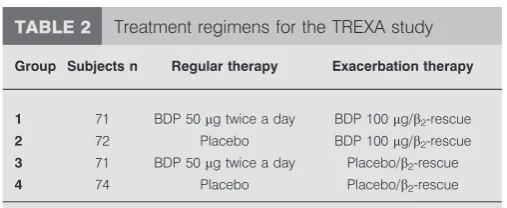
The clinical reality is that adherence is poor even in very severe asthma [28], and it is likely that children with mild asthma are deliberately treated intermittently at home. The TREXA (TReating Children to Prevent Exacerbations of Asthma) study assigned 288 children aged 5–18 yrs to one of four regimes in a 44-week study [133]. The children had well-controlled, mild, persistent asthma such that treatment could be discontinued. The regimes are shown in the table 2, and the primary out-come was time to first prednisolone burst. The frequency of exacerbations was lower in all three beclomethasone diproprio-nate groups compared with the placebo group (group 4). Linear growth was 1.1¡0.3 cm less in the two continuous
with fewer side-effects, than continuous ICS in children with mild asthma [134–136].
Add-on therapy
The BADGER study [129] enrolled 182 children who were symptomatic despite being prescribed fluticasone 100mg twice daily. The investigators used a triple cross-over, unblinded design to assess whether additional therapy with high dose ICS, LABA or LTRA was better. The salient features of the results were: 1) that additional LABA therapy performed best for the group, although many children performed better with the other alternatives; 2) no biomarker predicted best response to LABA, the children who were more likely to respond had better baseline asthma control; and 3) the peak of the ICS dose response curve for most of the children was observed during administration of low dose fluticasone. So we need better biomarkers, and LABA is probably the first-line add-on therapy, but LTRA and high dose ICS can be tested in non-responders.
Beyond guidelines therapy: currently available treatment
There is increasing evidence that background eosinophilic inflammation and viral infections interact to produce acute asthma attacks [137, 138]. Two recent studies have shown that strategies likely to have reduced airway eosinophilia also reduce acute asthma attacks [139, 140]. The anti-IgE monoclonal antibody omalizumab is a well-established therapy for asthma in childhood. A randomised, double-blind, placebo-controlled study of more than 400 inner city children and young adults aged 6–20 yrs demonstrated that omalizumab did not just merely improve the number of symptom free days, but also significantly reduced the number of children having an exacerbation from 48.8% to 30.3% [139]. In apost hocanalysis, the seasonal peak of exacerbations was abolished. Response was better in the children with higherFeNOand blood eosinophils [141, 142]. A study in younger children aged 6–,12 yrs showed that omalizumab therapy led to a 31% reduction in exacerbation rates [140]. Taken together, these studies suggest that back-ground airway eosinophilic inflammation may contribute signi-ficantly to exacerbations.
Beyond guidelines therapy: future treatment
A large adult study showed that the addition of tiotropium to the regime of patients who were symptomatic despite ICS therapy was superior to doubling the dose of ICS and equivalent to adding a LABA [143]. There is no paediatric study of tiotropium, but there is an urgent need to explore its role.
Possible new treatment alternatives
Several new treatment alternatives are in the pipeline, including pitrakinra (IL4-/IL-13 antagonist) [144], lebrikizumab (IL-13 antagonist) [145] and reslizumab (antibody against IL-5) [146], all of which predominantly target allergic asthma. As these are, or are likely to be, expensive treatment alternatives, detailed characterisation of patients in order to identify those most likely to benefit from these interventions will be increasingly im-portant. A novel marker of potential clinical relevance is periostin, a protein suggested as a marker of excessive Th2-type inflammation in asthma [147]. The expression of periostin in airway epithelial cells is regulated by IL-13 [148]. The effect of lebrikizumab treatment has been shown to be greater in severe asthmatics with high periostin levels compared to those with low periostin levels, as demonstrated by an improvement in FEV1and a reduction inFeNO[145], thus providing an entirely new example of biomarker-guided treatment in severe asthma.
New treatment alternatives for asthma, particularly in chil-dren, should probably not just focus on suppressing the inflammatory response. The idea of primary prevention of asthma is becoming an option [54] and in this regard combining vaccines for allergy and rhinovirus infections are a novel and interesting approach [149]. Another novel approach is intralym-phatic immunotherapy which may turn out to be a ‘‘fast-track’’, effective alternative to subcutaneous immunotherapy [150]. Finally, vitamin D supplementation could be a straightforward treatment alternative to strengthen the immune response in children with therapy resistant asthma [48], although more trials are needed.
ADHERENCE TO TREATMENT
Reliable assessment of adherence to prescribed treatment is a challenge in clinical practice, as well as in research on patients with asthma. KRISHNAN et al. [151] compared subjective and objective measurements of children’s adherence to ICS therapy in a sub-study to the CAMP study [151]. They compared reported intake of ICS, as reported in diary cards, to the number of doses left in the study inhalers. The difference was striking. Adherence of,80% of the prescribed doses was seen in 75% of the children by objective measures while this lack of adherence was only reported in 6% of the children by self-report in the diary cards. The parents’ perception of the child’s asthma is crucial for adherence to recommended therapy. This has been shown in several studies from the Netherlands. KLOKet al. [152]
reported on the importance of follow-up and discussion with parents on their perceptions of the child’s asthma. KOSTERet al. [30] reported how parents concern about side-effects affected their adherence to prescribed therapy and also that under treatment was associated with lower maternal education. CAUDRI et al. [153] reported from the 8-yr follow-up of the PIAMA cohort that under treatment was common but also over treatment was found in children who continued regular use of ICS while symptom free for.1 yr.
CONCLUSION
We have described a number of very exciting advances in paediatric asthma. However, the overall message for clinicians is timeless: it is essential to get the basics right. More mistakes are made through neglecting this principle than by failing to deploy the latest sophisticated treatments. Finally, it should be emphasised that childhood asthma also could be treated at the
TABLE 2 Treatment regimens for the TREXA study
Group Subjects n Regular therapy Exacerbation therapy
1 71 BDP 50mg twice a day BDP 100mg/b2-rescue
2 72 Placebo BDP 100mg/b2-rescue
3 71 BDP 50mg twice a day Placebo/b2-rescue
4 74 Placebo Placebo/b2-rescue
TREXA: TReating Children to Prevent Exacerbations of Asthma; BDP:
beclomethasone diproprionate.
community level, as shown in a study by MACKAYet al.[154]. A reduction of hospital admissions because of childhood asthma was seen after smoking was prohibited in public places in Scotland, UK. Another example of the impact of air pollution on asthma morbidity was provided by RENZETTIet al.[155], who
report reduced markers of airway inflammation and improved pulmonary function in asthmatic children who were relocated from a highly polluted urban area to a less polluted rural area. These studies should remind all healthcare providers to take every opportunity to advocate measures to improve indoor and outdoor air quality.
STATEMENT OF INTEREST
None declared.
REFERENCES
1 Bousquet J, Mantzouranis E, Cruz AA,et al.Uniform definition of asthma severity, control, and exacerbations: document presented for the World Health Organization Consultation on Severe Asthma.J Allergy Clin Immunol2010; 126: 926–938.
2 Krishnan JA, Lemanske RF Jr, Canino GJ, et al. Asthma outcomes: symptoms. J Allergy Clin Immunol2012; 129: Suppl. 3, S124–S135.
3 He XY, Simpson JL, Wang F. Inflammatory phenotypes in stable and acute childhood asthma.Paediatr Respir Rev2011; 12: 165–169.
4 Bossley CJ, Fleming L, Gupta A,et al.Pediatric severe asthma is characterized by eosinophilia and remodeling without T(H)2 cytokines.J Allergy Clin Immunol2012; 129: 974–982.
5 Bousquet J, Anto J, Auffray C, et al. MeDALL (Mechanisms of the Development of ALLergy): an integrated approach from phenotypes to systems medicine.Allergy2011; 66: 596–604.
6 Anto JM, Pinart M, Akdis M,et al.Understanding the complexity of IgE-related phenotypes from childhood to young adulthood: a Mechanisms of the Development of Allergy (MeDALL) Seminar.
J Allergy Clin Immunol2012; 129: 943–954.
7 Global Initiative for Asthma. Global strategy for asthma manage-ment and prevention. 2008. Updated December 2009. www. ginasthma.org/uploads/users/files/GINA_Report2011_May4.pdf.
8 Koolen BB, Pijnenburg MWH, Brackel HJL, et al. Comparing Global Initiative for Asthma (GINA) criteria with the Childhood Asthma Control Test (C-ACT) and Asthma Control Test (ACT).
Eur Respir J2011; 38: 561–566.
9 Klok T, Kaptein AA, Duiverman EJ, et al. High inhaled corticosteroids adherence in childhood asthma: the role of medication beliefs. Eur Respir J 2012; [Epub ahead of print DOI: 10.1183/09031936.00191511].
10 Boyd M, Lasserson TJ, McKean MC, et al. Interventions for educating children who are at risk of asthma-related emergency department attendance. Cochrane Database Syst Rev 2009; 2: CD001290.
11 Lai CK, Beasley R, Crane J, et al. Global variation in the prevalence and severity of asthma symptoms: phase three of the International Study of Asthma and Allergies in Childhood (ISAAC).Thorax2009; 64: 476–483.
12 Gore FM, Bloem PJ, Patton GC,et al.Global burden of disease in young people aged 10–24 years: a systematic analysis. Lancet
2011; 377: 2093–2102.
13 To T, Wang C, Guan J,et al.What is the lifetime risk of physician-diagnosed asthma in Ontario, Canada?Am J Respir Crit Care Med
2010; 181: 337–343.
14 Duggan EM, Sturley J, Fitzgerald AP,et al. The 2002–2007 trends of prevalence of asthma, allergic rhinitis and eczema in Irish schoolchildren. Pediatr Allergy Immunol 2012; [Epub ahead of print DOI: 10.1111/j.1399-3038.2012.01291.x].
15 Thomas A, Lemanske RF Jr, Jackson DJ. Approaches to stepping up and stepping down care in asthmatic patients.J Allergy Clin Immunol2011; 128: 915–924.
16 Bonfield TL, Ross KR. Asthma heterogeneity and therapeutic options from the clinic to the bench. Curr Opin Allergy Clin Immunol2012; 12: 60–67.
17 Taylor DR, Bateman ED, Boulet LP,et al.A new perspective on concepts of asthma severity and control.Eur Respir J2008; 32: 545–554.
18 Lang A, Carlsen KH, Haaland G, et al. Severe asthma in childhood: assessed in 10 year olds in a birth cohort study.
Allergy2008; 63: 1054–1060.
19 Bush A, Zar HJ. WHO universal definition of severe asthma.
Curr Opin Allergy Clin Immunol2011; 11: 115–121.
20 Bossley CJ, Saglani S, Kavanagh C, et al. Corticosteroid responsiveness and clinical characteristics in childhood difficult asthma.Eur Respir J2009; 34: 1052–1059.
21 Bush A, Hedlin G, Carlsen KH,et al.Severe childhood asthma: a common international approach?Lancet2008; 372: 1019–1021.
22 Hedlin G, Bush A, Lødrup Carlsen K,et al.Problematic severe asthma in children, not one problem but many: a GA2LEN
initiative.Eur Respir J2010; 36: 196–201.
23 Konradsen JR, Nordlund B, Lidegran M,et al.Problematic severe asthma: a proposed approach to identifying children who are severely resistant to therapy.Pediatr Allergy Immunol2011; 22: 9–18.
24 Bush A, Saglani S. Management of severe asthma in children.
Lancet2010; 376: 814–825.
25 Fitzpatrick AM, Teague WG, Meyers DA,et al.Heterogeneity of severe asthma in childhood: confirmation by cluster analysis of children in the National Institutes of Health/National Heart, Lung, and Blood Institute Severe Asthma Research Program.
J Allergy Clin Immunol2011; 127: 382–389.
26 Nordlund B, Konradsen J, Pedroletti C,et al.The clinical benefit of evaluating health-related quality-of-life in children with problematic severe asthma.Acta Paediatr2011; 100: 1454–1460.
27 Bush A, Pedersen S, Hedlin G,et al.Pharmacological treatment of severe, therapy-resistant asthma in children: what can we learn from where?Eur Respir J2011; 38: 947–958.
28 Bracken M, Fleming L, Hall P,et al.The importance of nurse-led home visits in the assessment of children with problematic asthma.Arch Dis Child2009; 94: 780–784.
29 Lødrup Carlsen KC, Hedlin G, Bush A, et al. Assessment of problematic severe asthma in children.Eur Respir J2011; 37: 432–440.
30 Koster ES, Wijga AH, Koppelman GH,et al.Uncontrolled asthma at age 8: the importance of parental perception towards medication.Pediatr Allergy Immunol2011; 22: 462–468.
31 Wu AC, Tantisira K, Li L, et al. Predictors of symptoms are different from predictors of severe exacerbations from asthma in children.Chest2011; 140: 100–107.
32 Bousquet J, Schunemann HJ, Zuberbier T, et al. Development and implementation of guidelines in allergic rhinitis: an ARIA-GA2LEN paper.Allergy2010; 65: 1212–1221.
33 Boulay ME, Boulet LP. The relationships between atopy, rhinitis and asthma: pathophysiological considerations.Curr Opin Allergy Clin Immunol2003; 3: 51–55.
34 de Groot EP, Nijkamp A, Duiverman EJ,et al.Allergic rhinitis is associated with poor asthma control in children with asthma.
Thorax2012; 67: 582–587.
35 Chawes BL, Bonnelykke K, Kreiner-Moller E,et al.Children with allergic and nonallergic rhinitis have a similar risk of asthma.
J Allergy Clin Immunol2010; 126: 567–573.
36 Hastan D, Fokkens WJ, Bachert C,et al.Chronic rhinosinusitis in Europe – an underestimated disease. A GA(2)LEN study.Allergy
2011; 66: 1216–1223.
37 Thakkar K, Boatright RO, Gilger MA,et al. Gastroesophageal reflux and asthma in children: a systematic review.Pediatrics
38 Stordal K, Johannesdottir GB, Bentsen BS,et al.Acid suppression does not change respiratory symptoms in children with asthma and gastro-oesophageal reflux disease.Arch Dis Child2005; 90: 956–960.
39 Holbrook JT, Wise RA, Gold BD,et al.Lansoprazole for children with poorly controlled asthma: a randomized controlled trial.
JAMA2012; 307: 373–381.
40 Low K, Lau KK, Holmes P,et al.Abnormal vocal cord function in difficult-to-treat asthma.Am J Respir Crit Care Med2011; 184: 50–56.
41 Ayres JG, Mansur AH. Vocal cord dysfunction and severe asthma: considering the total airway.Am J Respir Crit Care Med
2011; 184: 2–3.
42 Forno E, Lescher R, Strunk R, et al. Decreased response to inhaled steroids in overweight and obese asthmatic children.
J Allergy Clin Immunol2011; 127: 741–749.
43 Holguin F, Bleecker ER, Busse WW,et al.Obesity and asthma: an association modified by age of asthma onset. J Allergy Clin Immunol2011; 127: 1486–1493.
44 Cibella F, Cuttitta G, La Grutta S,et al.A cross-sectional study assessing the relationship between BMI, asthma, atopy, and eNO among schoolchildren.Ann Allergy Asthma Immunol 2011; 107: 330–336.
45 Quinto KB, Zuraw BL, Poon KY,et al.The association of obesity and asthma severity and control in children. J Allergy Clin Immunol2011; 128: 964–969.
46 Sutherland ER, Goleva E, Strand M, et al. Body mass and glucocorticoid response in asthma. Am J Respir Crit Care Med
2008; 178: 682–687.
47 Cottrell L, Neal WA, Ice C, et al.Metabolic abnormalities in children with asthma.Am J Respir Crit Care Med2011; 183: 441–448.
48 Gupta A, Sjoukes A, Richards D,et al.Relationship between serum vitamin D, disease severity, and airway remodeling in children with asthma.Am J Respir Crit Care Med2011; 184: 1342–1349.
49 Brehm JM, Schuemann B, Fuhlbrigge AL,et al.Serum vitamin D levels and severe asthma exacerbations in the Childhood Asthma Management Program study. J Allergy Clin Immunol
2010; 126: 52–58.
50 Chinellato I, Piazza M, Sandri M,et al.Serum vitamin D levels and exercise-induced bronchoconstriction in children with asthma.Eur Respir J2011; 37: 1366–1370.
51 Chung KF, Bel EH, Wenzel S, eds. Difficult-to-Treat Severe asthma.Eur Respir Monogr2011; 51: 1–308.
52 Holt PG, Strickland DH, Sly PD. Virus infection and allergy in the development of asthma: what is the connection?Curr Opin Allergy Clin Immunol2012; 12: 151–157.
53 Jackson DJ, Evans MD, Gangnon RE,et al.Evidence for a causal relationship between allergic sensitization and rhinovirus wheezing in early life. Am J Respir Crit Care Med 2012; 185: 281–285.
54 Martinez FD. New insights into the natural history of asthma: primary prevention on the horizon.J Allergy Clin Immunol2011; 128: 939–945.
55 Busse WW, Lemanske RF Jr, Gern JE. Role of viral respiratory infections in asthma and asthma exacerbations.Lancet2010; 376: 826–834.
56 Jackson DJ, Sykes A, Mallia P, et al. Asthma exacerbations: origin, effect, and prevention.J Allergy Clin Immunol2011; 128: 1165–1174.
57 Strickland DH, Holt PG. T regulatory cells in childhood asthma.
Trends Immunol2011; 32: 420–427.
58 Kim HY, DeKruyff RH, Umetsu DT. The many paths to asthma: phenotype shaped by innate and adaptive immunity. Nat Immunol2010; 11: 577–584.
59 Locksley RM. Asthma and allergic inflammation.Cell2010; 140: 777–783.
60 Ramakrishna L, de Vries VC, Curotto de Lafaille MA. Cross-roads in the lung: immune cells and tissue interactions as
determinants of allergic asthma.Immunol Res2012; [Epub ahead of print DOI: 10.1007/s12026-012-8296-4].
61 Gaston B. The biochemistry of asthma.Biochim Biophys Acta2011; 1810: 1017–1024.
62 Monteseirin J. Neutrophils and asthma.J Investig Allergol Clin Immunol2009; 19: 340–354.
63 Durrani SR, Viswanathan RK, Busse WW. What effect does asthma treatment have on airway remodeling? Current perspec-tives.J Allergy Clin Immunol2011; 128: 439–448.
64 Fitzpatrick AM, Teague WG. Progressive airflow limitation is a feature of children with severe asthma.J Allergy Clin Immunol
2011; 127: 282–284.
65 Borres MP, Ebisawa M, Eigenmann PA. Use of allergen components begins a new era in pediatric allergology.Pediatr Allergy Immunol2011; 22: 454–461.
66 Larche M. T cell epitope-based allergy vaccines. Curr Top Microbiol Immunol2011; 352: 107–119.
67 Madhurantakam C, Nilsson OB, Uchtenhagen H, et al. Crystal structure of the dog lipocalin allergen Can f 2: implications for cross-reactivity to the cat allergen Fel d 4.J Mol Biol2010; 401: 68–83.
68 Saarelainen SA, Kinnunen TT, Buhot C,et al.Immunotherapeutic potential of the immunodominant T-cell epitope of lipocalin allergen Bos d 2 and its analogues.Immunology2008; 123: 358–366.
69 Voehringer D. Basophils in allergic immune responses. Curr Opin Immunol2011; 23: 789–793.
70 Karasuyama H, Obata K, Wada T,et al.Newly appreciated roles for basophils in allergy and protective immunity.Allergy2011; 66: 1133–1141.
71 Taylor DR. Using biomarkers in the assessment of airways disease.J Allergy Clin Immunol2011; 128: 927–934.
72 Szefler SJ, Wenzel S, Brown R, et al. Asthma outcomes: biomarkers.J Allergy Clin Immunol2012; 129: Suppl. 3, S9–S23.
73 Busse WW. Asthma diagnosis and treatment: filling in the information gaps.J Allergy Clin Immunol2011; 128: 740–750.
74 van Dalen C, Harding E, Parkin J, et al. Suitability of forced expiratory volume in 1 second/forced vital capacityvs percen-tage of predicted forced expiratory volume in 1 second for the classification of asthma severity in adolescents. Arch Pediatr Adolesc Med2008; 162: 1169–1174.
75 Fitzpatrick AM, Gaston BM, Erzurum SC,et al.Features of severe asthma in school-age children: atopy and increased exhaled nitric oxide.J Allergy Clin Immunol2006; 118: 1218–1225.
76 Dweik RA, Sorkness RL, Wenzel S,et al.Use of exhaled nitric oxide measurement to identify a reactive, at-risk phenotype among patients with asthma.Am J Respir Crit Care Med2010; 181: 1033–1041.
77 Cockcroft DW. Direct challenge tests: airway hyperresponsive-ness in asthma: its measurement and clinical significance.Chest
2010; 138: Suppl. 2, 18S–24S.
78 Anderson SD. Indirect challenge tests: airway hyperresponsive-ness in asthma: its measurement and clinical significance.Chest
2010; 138: Suppl. 2, 25S–30S.
79 Lex C, Payne DN, Zacharasiewicz A,et al.Sputum induction in children with difficult asthma: safety, feasibility, and inflamma-tory cell pattern.Pediatric Pulmonol2005; 39: 318–324.
80 Drews AC, Pizzichini MM, Pizzichini E, et al. Neutrophilic airway inflammation is a main feature of induced sputum in nonatopic asthmatic children.Allergy2009; 64: 1597–1601.
81 Kulkarni N, Ragazzo V, Costella S, et al. Eosinophilic airway inflammation is increased in children with asthma and food allergies.Pediatr Allergy Immunol2012; 23: 28–33.
82 Fleming L, Wilson N, Regamey N, et al. Use of sputum eosinophil counts to guide management in children with severe asthma.Thorax2012; 67: 193–198.
(exhaled nitric oxide or sputum eosinophils). Thorax 2012; 67: 199–208.
84 van de Kant KD, Jansen MA, Klaassen EM, et al. Elevated inflammatory markers at preschool age precede persistent wheezing at school age.Pediatr Allergy Immunol2012; 23: 259–264.
85 Zeiger RS, Schatz M, Zhang F,et al.Association of exhaled nitric oxide to asthma burden in asthmatics on inhaled corticosteroids.
J Asthma2011; 48: 8–17.
86 Zeiger RS, Schatz M, Zhang F,et al.Elevated exhaled nitric oxide is a clinical indicator of future uncontrolled asthma in asthmatic patients on inhaled corticosteroids.J Allergy Clin Immunol2011; 128: 412–414.
87 Pijnenburg MW, Bakker EM, Hop WC,et al.Titrating steroids on exhaled nitric oxide in children with asthma: a randomized controlled trial.Am J Respir Crit Care Med2005; 172: 831–836.
88 de Jongste JC, Carraro S, Hop WC,et al.Daily telemonitoring of exhaled nitric oxide and symptoms in the treatment of childhood asthma.Am J Respir Crit Care Med2009; 179: 93–97.
89 Szefler SJ, Mitchell H, Sorkness CA,et al.Management of asthma based on exhaled nitric oxide in addition to guideline-based treatment for inner-city adolescents and young adults: a randomised controlled trial.Lancet2008; 372: 1065–1072.
90 Waibel V, Ulmer H, Horak E. Assessing asthma control: symptom scores, GINA levels of asthma control, lung function, and exhaled nitric oxide.Pediatric Pulmonol2012; 47: 113–118.
91 Stern G, de Jongste J, van der Valk R,et al.Fluctuation phenotyping based on daily fraction of exhaled nitric oxide values in asthmatic children.J Allergy Clin Immunol2011; 128: 293–300.
92 Aujla SJ, Ross KR, Chmiel JF,et al.Airway molecular phenotypes in pediatric asthma. Curr Opin Allergy Clin Immunol2011; 11: 122–126.
93 Caballero Balanza S, Martorell Aragones A, Cerda Mir JC,et al.
Leukotriene B4 and 8-isoprostane in exhaled breath condensate of children with episodic and persistent asthma. J Investig Allergol Clin Immunol2010; 20: 237–243.
94 Profita M, Montuschi P, Bonanno A,et al.Novel perspectives in the detection of oral and nasal oxidative stress and inflammation in pediatric united airway diseases.Int J Immunopathol Pharmacol
2010; 23: 1211–1219.
95 Sachs-Olsen C, Sanak M, Lang AM, et al. Eoxins: a new inflammatory pathway in childhood asthma. J Allergy Clin Immunol2010; 126: 859–867.
96 Carraro S, Cogo PE, Isak I,et al.EIA and GC/MS analysis of 8-isoprostane in EBC of children with problematic asthma. Eur Respir J2010; 35: 1364–1369.
97 Bloemen K, Van Den Heuvel R, Govarts E,et al.A new approach to study exhaled proteins as potential biomarkers for asthma.
Clin Exp Allergy2011; 41: 346–356.
98 Dompeling E, Jo¨bsis Q. Proteomics of exhaled breath condensate: a realistic approach in children with asthma?Clin Exp Allergy
2011; 41: 299–301.
99 Sinha A, Krishnan V, Sethi T,et al.Metabolomic signatures in nuclear magnetic resonance spectra of exhaled breath conden-sate identify asthma.Eur Respir J2012; 39: 500–502.
100 Saude EJ, Skappak CD, Regush S,et al.Metabolomic profiling of asthma: diagnostic utility of urine nuclear magnetic resonance spectroscopy.J Allergy Clin Immunol2011; 127: 757–764.
101 Mattarucchi E, Baraldi E, Guillou C. Metabolomics applied to urine samples in childhood asthma: differentiation between asthma phenotypes and identification of relevant metabolites.
Biomed Chromatogr2012; 26: 89–94.
102 Rabinovitch N, Graber NJ, Chinchilli VM, et al. Urinary leukotriene E4/exhaled nitric oxide ratio and montelukast response in childhood asthma.J Allergy Clin Immunol2010; 126: 545–551.
103 Brockmann PE, Castro-Rodriguez JA, Holmgren NL,et al.Urinary leukotriene excretion profile in children with exercise-induced
asthma compared with controls: a preliminary study. Allergol Immunopathol (Madr)2011; 40: 181–186.
104 Wedes SH, Wu W, Comhair SA, et al.Urinary bromotyrosine measures asthma control and predicts asthma exacerbations in children.J Pediatr2011; 159: 248–255.
105 Bussink AP, Speijer D, Aerts JM,et al.Evolution of mammalian chitinase(-like) members of family 18 glycosyl hydrolases.
Genetics2007; 177: 959–970.
106 Bargagli E, Olivieri C, Margollicci M,et al.Serum chitotriosidase levels in patients with allergic and non-allergic asthma.
Respiration2010; 79: 437–438.
107 Chupp GL, Lee CG, Jarjour N,et al.A chitinase-like protein in the lung and circulation of patients with severe asthma.N Engl J Med2007; 357: 2016–2027.
108 Lee CG, Da Silva CA, Dela Cruz CS, et al.Role of chitin and chitinase/chitinase-like proteins in inflammation, tissue remo-deling, and injury.Annu Rev Physiol2011; 73: 479–501.
109 Bara I, Ozier A, Girodet PO,et al.Role of YKL-40 in bronchial smooth muscle remodeling in asthma.Am J Respir Crit Care Med
2012; 185: 715–722.
110 Letuve S, Kozhich A, Arouche N,et al.YKL-40 is elevated in patients with chronic obstructive pulmonary disease and activates alveolar macrophages.J Immunol2008; 181: 5167–5173.
111 Otsuka K, Matsumoto H, Niimi A,et al.Sputum YKL-40 levels and pathophysiology of asthma and chronic obstructive pul-monary disease.Respiration2012; 83: 507–519.
112 Douros K, Alexopoulou E, Nicopoulou A,et al.Bronchoscopic and high-resolution CT scan findings in children with chronic wet cough.Chest2011; 140: 317–323.
113 Gupta S, Siddiqui S, Haldar P,et al.Qualitative analysis of high-resolution CT scans in severe asthma.Chest2009; 136: 1521–1528.
114 Gupta S, Siddiqui S, Haldar P, et al.Quantitative analysis of high-resolution computed tomography scans in severe asthma subphenotypes.Thorax2010; 65: 775–781.
115 Tashkin DP, de Lange EE. Imaging of the distal airways.J Allergy Clin Immunol2009; 124: Suppl. 6, S78–S83.
116 Aysola R, de Lange EE, Castro M, et al.Demonstration of the heterogeneous distribution of asthma in the lungs using CT and hyperpolarized helium-3 MRI.J Magn Reson Imaging2010; 32: 1379–1387.
117 Bousquet J, Heinzerling L, Bachert C,et al.Practical guide to skin prick tests in allergy to aeroallergens.Allergy2012; 67: 18–24.
118 Frith J, Fleming L, Bossley C,et al.The complexities of defining atopy in severe childhood asthma. Clin Exp Allergy 2011; 41: 948–953.
119 Gronlund H, Adedoyin J, Reininger R,et al.Higher immunoglo-bulin E antibody levels to recombinant Fel d 1 in cat-allergic children with asthma compared with rhinoconjunctivitis. Clin Exp Allergy2008; 38: 1275–1281.
120 Sastre J. Molecular diagnosis in allergy.Clin Exp Allergy2010; 40: 1442–1460.
121 Asarnoj A, Moverare R, Ostblom E,et al.IgE to peanut allergen components: relation to peanut symptoms and pollen sensitiza-tion in 8-year-olds.Allergy2010; 65: 1189–1195.
122 Nordlund B, Konradsen JR, Kull I,et al.IgE antibodies to animal-derived lipocalin, kallikrein and secretoglobin are markers of bronchial inflammation in severe childhood asthma: airway diseases.Allergy2012; 67: 661–669.
123 Johansson SG, Nopp A, van Hage M, et al. Passive IgE-sensitization by blood transfusion.Allergy2005; 60: 1192–1199.
124 Dahlen B, Nopp A, Johansson SG, et al. Basophil allergen threshold sensitivity, CD-sens, is a measure of allergen sensitiv-ity in asthma.Clin Exp Allergy2011; 41: 1091–1097.
126 Siracusa MC, Saenz SA, Hill DA, et al. TSLP promotes interleukin-3-independent basophil haematopoiesis and type 2 inflammation.Nature2011; 477: 229–233.
127 Bush A, Frey U, Teague WG. Special problems of severe asthma in childhood.Eur Respir Monogr2011; 51: 59–81.
128 Boulet LP, Fitzgerald JM, Levy ML, et al. A guide to the translation of Global Initiative for Asthma (GINA) strategy into improved care.Eur Respir J2012; 39: 1220–1229.
129 Lemanske RF Jr, Mauger DT, Sorkness CA,et al.Step-up therapy for children with uncontrolled asthma receiving inhaled corti-costeroids.N Engl J Med2010; 362: 975–985.
130 Levy ML, Thomas M, Small I,et al.Summary of the 2008 BTS/ SIGN British Guideline on the management of asthma.Prim Care Respir J2009; 18: Suppl. 1, S1–16.
131 Brand PLP, Baraldi E, Bisgaard H,et al.Definition, assessment and treatment of wheezing disorders in preschool children: an evidence-based approach.Eur Respir J2008; 32: 1096–1110.
132 Zeiger RS, Mauger D, Bacharier LB,et al.Daily or intermittent budesonide in preschool children with recurrent wheezing.
N Engl J Med2011; 365: 1990–2001.
133 Martinez FD, Chinchilli VM, Morgan WJ, et al. Use of beclomethasone dipropionate as rescue treatment for children with mild persistent asthma (TREXA): a randomised, double-blind, placebo-controlled trial.Lancet2011; 377: 650–657.
134 Turpeinen M, Nikander K, Pelkonen AS, et al.Dailyversus as-needed inhaled corticosteroid for mild persistent asthma (The Helsinki early intervention childhood asthma study).Arch Dis Child2008; 93: 654–659.
135 Turpeinen M, Pelkonen AS, Nikander K, et al. Bone mineral density in children treated with daily or periodical inhaled budesonide: the Helsinki Early Intervention Childhood Asthma study.Pediatr Res2010; 68: 169–173.
136 Turpeinen M, Raitio H, Pelkonen AS, et al. Skin thickness in children treated with daily or periodical inhaled budesonide for mild persistent asthma. The Helsinki early intervention child-hood asthma study.Pediatr Res2010; 67: 221–225.
137 Murray CS, Poletti G, Kebadze T,et al.Study of modifiable risk factors for asthma exacerbations: virus infection and allergen exposure increase the risk of asthma hospital admissions in children.Thorax2006; 61: 376–382.
138 Subrata LS, Bizzintino J, Mamessier E,et al.Interactions between innate antiviral and atopic immunoinflammatory pathways precipitate and sustain asthma exacerbations in children.
J Immunol2009; 183: 2793–2800.
139 Busse WW, Morgan WJ, Gergen PJ,et al. Randomized trial of omalizumab (anti-IgE) for asthma in inner-city children.N Engl J Med2011; 364: 1005–1015.
140 Lanier B, Bridges T, Kulus M,et al.Omalizumab for the treat-ment of exacerbations in children with inadequately controlled
allergic (IgE-mediated) asthma.J Allergy Clin Immunol2009; 124: 1210–1216.
141 Pavord ID, Bush A. Anti-IgE for asthma in inner-city children.
N Engl J Med2011; 364: 2556–2557.
142 Busse WW, Gergen PJ, Calatroni A. Anti IgE for asthma in inner-city children: authors response.N Engl J Med2011; 364: 2557–2558.
143 Peters SP, Kunselman SJ, Icitovic N,et al.Tiotropium bromide step-up therapy for adults with uncontrolled asthma. N Engl J Med2010; 363: 1715–1726.
144 Wenzel S, Wilbraham D, Fuller R,et al.Effect of an interleukin-4 variant on late phase asthmatic response to allergen challenge in asthmatic patients: results of two phase 2a studies.Lancet2007; 370: 1422–1431.
145 Corren J, Lemanske RF, Hanania NA,et al.Lebrikizumab treatment in adults with asthma.N Engl J Med2011; 365: 1088–1098.
146 Castro M, Mathur S, Hargreave F,et al.Reslizumab for poorly controlled, eosinophilic asthma: a randomized, placebo-con-trolled study.Am J Respir Crit Care Med2011; 184: 1125–1132.
147 Woodruff PG, Modrek B, Choy DF,et al.T-helper type 2-driven inflammation defines major subphenotypes of asthma. Am J Respir Crit Care Med2009; 180: 388–395.
148 Woodruff PG, Boushey HA, Dolganov GM,et al.Genome-wide profiling identifies epithelial cell genes associated with asthma and with treatment response to corticosteroids.Proc Natl Acad Sci USA2007; 104: 15858–15863.
149 Edlmayr J, Niespodziana K, Linhart B, et al. A combination vaccine for allergy and rhinovirus infections based on rhinovirus-derived surface protein VP1 and a nonallergenic peptide of the major timothy grass pollen allergen Phl p 1.
J Immunol2009; 182: 6298–6306.
150 Senti G, Crameri R, Kuster D,et al.Intralymphatic immunother-apy for cat allergy induces tolerance after only 3 injections.
J Allergy Clin Immunol2012; 129: 1290–1296.
151 Krishnan JA, Bender BG, Wamboldt FS, et al. Adherence to inhaled corticosteroids: an ancillary study of the Childhood Asthma Management Program clinical trial. J Allergy Clin Immunol2012; 129: 112–118.
152 Klok T, Brand PL, Bomhof-Roordink H, et al. Parental illness perceptions and medication perceptions in childhood asthma, a focus group study.Acta Paediatr2011; 100: 248–252.
153 Caudri D, Wijga AH, Smit HA, et al.Asthma symptoms and medication in the PIAMA birth cohort: evidence for under and overtreatment.Pediatr Allergy Immunol2011; 22: 652–659.
154 Mackay D, Haw S, Ayres JG, et al.Smoke-free legislation and hospitalizations for childhood asthma.N Engl J Med2010; 363: 1139–1145.