1
Mrs. Hannah Rajsekhar
2
P. Sumalatha
CORRESPONDING AUTHOR
1Mrs. Hannah Rajsekhar M.P.T.
Professor & Principal,
Apollo College of Physiotherapy, Apollo Hospital,
Jubilee Hills, Hyderabad – 500033
Int J Physiother. Vol 2(5), 745-750, October (2015) ISSN: 2348 - 8336
ABSTRACT
Background: It’s a well-known fact that exercise is good for the mind and body making it beneficial for expectant and new mothers. The challenge of pregnancy, labor and looking after a new born is not an easy task. So the fitter you are the better you will cope with this life changing event.
Method: Aerobic and strengthening exercises help in adjusting to the increasing weight and posture changes to cope effectively with the labor and the postnatal period. Although exercises in pregnancy are extremely beneficial, they can cause more harm than good if not done correctly. Medical screening for exercise should be done by the Doctor as well as the Physiotherapist to ensure that the patient underwent a basic screening, assessment or continued monitoring for the right exercise protocol for avoidance of any complications and to ensure the benefits of staying healthy and fit.
Results: Evidence shows that exercise training programs designed and delivered by the
Physiotherapists can relieve the prenatal post natal problems.
Conclusion: Number of studies has shown the positive effects of aerobic and strengthening exercises on pregnant women. The physical changes to a pregnant woman’s body are multiple. There are center of mass changes, pressure on the organs and increased weight gain. In fact, over two thirds of pregnant women experience back pain, one fifth experience pelvic pain and over 40% experience urinary incontinence in their first pregnancy.
Keywords:Pregnancy, benefits of Exercises, Aerobic and strengthening exercises, kegel exercises.
DOI: 10.15621/ijphy/2015/v2i5/78229
2Assistant Professor in Physiotherapy,
Apollo College of Physiotherapy, Hyderabad.
Received 25th March 2015, revised 04th September 2015, accepted 14th September 2015
INTRODUCTION
Woman of all ages are enjoying the benefits of regular physical activity and more so would like to continue exercising even during pregnancy. Exercises are globally considered to have a positive effect on health and wellness. It is associated with decreased incidence of physical and mental
diseases and improvement in functional
capabilities.1 With urbanization and family, work
and domestic pressures, there has been awareness about the positive effects of physical activity on one’s health. But still a large percentage of population remains sedentary. It was found out that women tend to take less time out for exercising than men and more so with respect to pregnant women. Lately, pregnancy is recognized as a special time for behavior modification and is no longer considered as a condition for confinement.
1. Why should a pregnant women exercise?
All pregnant women without contra indications should be encouraged to exercise. Many pregnant women are on regular aerobic and strength conditioning activities as part of their daily life style. It is recognized that habits adopted during pregnancy could affect women’s health.
Women with complicated pregnancy are
discouraged from exercising for fear of aggravating the complications.
2. Benefits of exercises.
Some of the problems faced by pregnant women are that, they tend to put on weight, develop back pain, nausea, fatigue, varicose veins, constipation, leg cramps, wrist and ankle swelling, difficulty in getting a good night’s sleep, depression, anxiety,
and low self-confidence and body image.2
Exercises done during the period of pregnancy help in coping with the problems mentioned and increasing body awareness and positive self-image to have a better ability to cope with labor and childbirth for a quicker post natal recovery. Even after child birth, there can be some problems like stress and urinary incontinence due to the weak pelvic floor muscles, weight gains, flabby abdomen, back pain, fatigue, depression and anxiety.3
So continuation of exercises after child birth is beneficial in strengthening the pelvic floor to
reduce the risk of stress incontinence.
Strengthening exercises for the weak abdominal and back muscles help to support the spine and improve proper body posture and regain a proper figure through weight loss and improved muscle tone.4 Exercises improve strength, endurance,
stamina, and self-confidence in coping with responsibilities.
3. When to start the exercise program?
Some pregnant women may experience excessive nausea, vomiting and fatigue in the first trimester (first three months), hence it is advisable to start an exercise program in the second trimester and before the physical limitations of the third
trimester begin2. Although low to moderate
exercises may resume from the first trimester itself like walking, and short duration of exercises.3
4. How much to exercise?
Exercising women could take a “talk test” which implies that the women is exercising at a comfortable intensity when she is able to maintain a conversation during the exercise and should reduce the exercise intensity if this is not possible. Consideration should be given to the type and intensity of exercise as well as duration and frequency of exercise to balance between the benefits and harmful effects.
Sedentary women should begin with 15 minutes of exercises three times a week, increasing gradually
to 30 minute sessions four times a week.5.Women
should choose activities that will minimize the risk of loss of balance and fetal trauma. The aerobic activities encouraged are slow and deep breathing exercises, brisk walking, strength conditioning exercises, stationary cycling, yoga and swimming rather than running or jogging. It is necessary to include a warm-up and cool-down period in the exercise regime. In strength conditioning exercises it is useful to do 1 to 3 sets of 10 to 15 repetitions with a two minute rest between the sets.6
5. Precautions
Inculcating a healthy life style in pregnancy include good nutrition, hydration and abstinence from smoking, alcohol and illicit drugs.
It is essential to keep oneself well hydrated throughout the exercise to increase heat dissipation. Drink plenty of water before, during and after exercising to keep oneself hydrated. It is best to maintain 30 minutes to one hour gap for exercises after meals to avoid hypoglycemia5.
Exercise within your limits so that you don’t become breathless or unable to talk. Avoid exercising in hot environment if you feel unwell. Several restrictions at the onset of second trimester are
1. Exercising or lying in supine position (lying flat on the back).
3. Overhead lifting exercises can exacerbate lumbar stresses
Women should stop exercising and seek medical attention if they experience:6
Excessive – Difficulty in walking shortness of breath
Chest pain – Severe back pain
Faintness – Pelvic, abdominal or calf
pain or swelling
Dizziness – Decreased fetal moment
Headache – Painful uterine
contractions
Muscle weakness – Leakage of amniotic fluid
and vaginal bleeding
6. Contra indications
Exercises are contraindicated in women who have:
Serious heart, lung, kidney or thyroid diseases
Poorly controlled diabetes
History of multiple miscarriages
Premature labor during the current pregnancy
Very high or low blood pressure
Acute infectious disease
Ruptured membranes
Pregnancy induced hypertension
Placenta previa after 26 weeks.
Certain conditions require medical advice before starting an exercise program like:
Asthma
Diabetes under control
History of miscarriage
High blood pressure
Early placenta previa, anemia
Extremely over weight or underweight
Chronic smoking
Certain sport activities are a risk in pregnancy and are contra indicated such as:
Scuba diving
Horseback riding
Downhill skiing
Ice hockey
Gymnastics
Cycling
Olympic exercises
Vigorous racquet sports
Running
Jumping and contact sports
Appropriate acclimatization is required for exercising at higher altitudes for those women who live at lower altitudes. Women should discuss their exercise regime and sports activities with their
Gynaec-Obstetric care provider and physical therapists.
Picture: 1.1 Pelvic Bridging
7. Exercises and breast feeding.
Breast feeding is the best method for providing
optimal nutrition, immunological – based
protection and emotional nurturing for the growth and developments of infants. Moderate exercises are encouraged during lactation as it does not affect the quantity or composition of breast milk or impact infant growth11. Studies have shown that
lactic acid has been increased in the breast milk of women exercising at the maximum intensity .It is questionable whether this short term increase of lactic acid makes the breast milk less palatable to the nursing infant. Postponing feeding time until one hour after exerciing or feeding before exercising is preferred. Expressed milk prior to exercises can be used after exercising. Nursing mothers need to wear a proper support bra to be comfortable during the exercises.
8. Nutritional requirements.
Well balanced diet with high fiber and iron content is recommended. Ensure intake of frequent small meals to prevent nausea and weakness and adequate hydration. After the 13th week of
pregnancy, about additional 300 kcal per day are needed. This energy requirement is increased further when daily energy expenditure is increased through exercises.
9. Medical screening before exercises
It is advisable for all pregnant women to be
referred for exercises by their doctor,
physiotherapist or yoga therapist. A good physiotherapist can:
Screen patients to ensure that they can safely participate in an exercise program.
Assess patients posture, strength, balance, and other musculoskeletal issues that impact pregnancy.
Instruct, supervise, counsel patients in their exercise protocol or even in group therapy
10.Recreational activities
abdominal trauma are definitely contraindicated as seen in recreational contact sports.
11.Competitive athletes
These women tend to maintain a strenuous training schedule throughout pregnancy and to resume high intensity post partum training sooner. Such athletes would require closer obstetric supervision and tests than the routine prenatal care. As pregnancy progresses, changes in weight gain, presence of laxity of joints and ligaments and change in center of gravity reduces the athletes performance levels.
12.Special considerations
Pregnant women with diabetes, obesity (body mass index BMI > 33) or chronic hypertension require individualized exercise prescription. American Diabetes Association has endorsed exercise as a helpful adjunctive therapy for gestational diabetes when normal blood sugar levels are not achieved by diet alone.
Many women report feeling fat and unattractive, but studies have shown that women who exercise during pregnancy had a better body image than women who do not exercise.
Pregnancy is associated with alterations in mood due to hormonal shifts, body changes and impaired physical function which reduces women’s feelings of psychological wellbeing4. Studies have shown
that exercising helps to reduce anxiety. Even a single bout of exercise has positive effects on one’s behavior.
Lower back pain is common in pregnant women. Studies have shown that exercise tends to decrease the lumbar stress, decreasing the low back pain. Women who are physically active during pregnancy have decreased risk of premature labor, reduce incidence of cesarean delivery and shorter hospitalization.
13.Post natal exercises
Most of the changes in the women’s body persist for another 4 to 6 weeks after delivery. These exercises need to be resumed gradually after pregnancy and should be individualized. Following delivery the pelvic floor muscles are weak and many women develop stress urinary incontinence where there is involuntary leakage of urine on any effort, exertion, sneezing, coughing, laughing etc. Kegel’s exercises help to strengthen the pelvic floor
muscles1. Along with these slow and deep
breathing exercises, aerobic and strengthening exercises are also beneficial7.
Picture: 1.2 Relaxation position
Picture: 1.3 Leg raising
Picture: 1.4 Flexibility exercises
Picture: 1.5 Tailor reach position
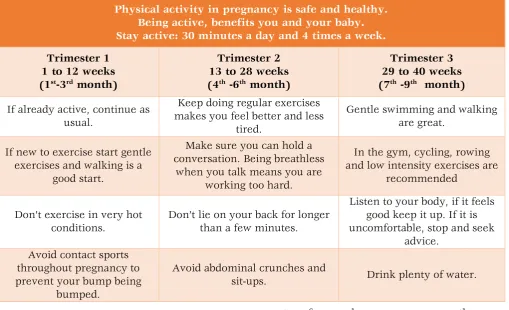
Table 1: Do’s and Don’ts during Pregnancy
Physical activity in pregnancy is safe and healthy. Being active, benefits you and your baby. Stay active: 30 minutes a day and 4 times a week.
Trimester 1 1 to 12 weeks (1st-3rd month)
Trimester 2 13 to 28 weeks (4th -6th month)
Trimester 3 29 to 40 weeks (7th -9th month)
If already active, continue as usual.
Keep doing regular exercises makes you feel better and less
tired.
Gentle swimming and walking are great.
If new to exercise start gentle exercises and walking is a
good start.
Make sure you can hold a conversation. Being breathless
when you talk means you are working too hard.
In the gym, cycling, rowing and low intensity exercises are
recommended
Don’t exercise in very hot conditions.
Don’t lie on your back for longer than a few minutes.
Listen to your body, if it feels good keep it up. If it is uncomfortable, stop and seek
advice. Avoid contact sports
throughout pregnancy to prevent your bump being
bumped.
Avoid abdominal crunches and
sit-ups. Drink plenty of water.
DISCUSSION
The magnitude of the differences in physiologic response to exercise between pregnancy and nonpregnancy depend on the exercise mode and intensity, the amount of maternal weight gain, and the age of gestation. During submaximal exercise, energy expenditure, minute ventilation, cardiac output, and heart rates are greater during pregnancy in comparison with responses during the nonpregnant state. Pivarnik et al estimated that VO2 (L/min) for a given walking speed would increase by approximately 10% over the course of a pregnancy. Most studies have shown cardiac output, heart rate, and stroke volume to be increased at submaximal exercise intensities
during pregnancy in comparison with
nonpregnant responses. Wolfe et al reported a 17% increase in oxygen pulse (VO2/HR) from early in the second trimester to late in the third trimester in a group that followed an exercise training program compared with a control group. However, caution is suggested in interpreting markers, such as resting heart rate, that are commonly used to assess the efficacy of exercise training.
CONCLUSION
Number of studies has shown the positive effects of aerobic and strengthening exercises on pregnant women. The physical changes to a pregnant woman’s body are multiple. There are
center of mass changes, pressure on the organs and increased weight gain. In fact, over two thirds of pregnant women experience back pain, one fifth experience pelvic pain and over 40% experience urinary incontinence in their first pregnancy. Evidence shows that exercise training programs designed and delivered by the Physiotherapists can relieve the post natal problems.
REFERENCES
1. R Artal1, M O'Toole. Guidelines of the
American College of Obstetricians and Gynecologists for exercise during pregnancy and the postpartum period. Br J Sports Med. 2003;37(1):6-12.
2. ACOG Committee. Opinion no. 267: exercise
during pregnancy and the postpartum period.
Obstet Gynecol.2002;99(1):171–3.
3. Pate RR, Pratt M, Blair SN, et al. A recommendation from the Centers for Disease Control and Prevention and the American
College of Sports
Medicine.JAMA1.995;273(5):402–7.
4. Blair SN. Physical activity, fitness, and coronary heart disease. In: C Bouchard, RJ Shephard, T Stephens, eds. Physical activity, fitness, and health: international proceedings and consensus statement. Champaign, IL: Human Kinetics, 1994:591–608.
5. Roger L. Hammer, PhDJan Perkins,
During the Childbearing Year. J Perinat Educ. 2000 ;9(1), 1-13.
6. Katie M. Smith and Christina G. Campbell Physical Activity during Pregnancy: Impact of
Applying Different Physical Activity
Guidelines. Journal of Pregnancy Volume.
Volume 2013, Article ID 165617, 9 pages. 7. Veille J-C, Hohimer RA, Burry K, et al. The
effect of exercise on uterine activity in the last
eight weeks of pregnancy. Am J Obstet
Gynecol.1985;151:727–30.
8. Blair SN, Kohl HW, Gordon NF. How much physical activity is good for health?Annu Rev Publ Health.1992;13:99–126.
9. Clapp JF III. Exercise in pregnancy: a brief
clinical review. Fetal Medical
Review.1990;161:1464–9
10.Hale RW, Milne L. The elite athlete and
exercise in pregnancy. Semin
Perinatol1996;2:89-101.
11.Grisso JA,Main DM, Chiu G, et al. Effects of physical activity and life-style factors on
uterine contraction frequency. Am J
Perinatol.1992; 9(5-6):489-92.
12.Artal R, Platt LD, SperlingM, et al. Exercise in pregnancy. I. Maternal cardiovascular and
metabolic response in normal pregnancy. Am
J Obstet Gynecol.1981; 140(2):123-7.
Citation