Journal of Applied Linguistics and Language Research Volume 5, Issue 1, 2018, pp. 56-70
Available online at www.jallr.com ISSN: 2376-760X
* Correspondence: Elzahraa Hassane, Email: zahraa.hassane gmail.com © 2018 Journal of Applied Linguistics and Language Research
The Potential Role of Needs Analysis in The Process of EAP
Course Design for Arab Undergraduate Students
Elzahraa Hassane *
America-Mideast Educational and Training Services, Kuwait
Abstract
The aim of this paper is to conduct needs analysis to determine the learners’ needs in order to facilitate designing EAP course for undergraduate Arab students who are enrolled to join a bachelor program of business marketing program at the Australian College of Kuwait. The aim of this needs analysis is to help in developing the suitable curriculum and the intended materials for the course. The analysis attempts to investigate the subjective needs and the requirements of the students. Therefore, it is intended to introduce the context and the learners. It tackles the definition of “Needs Analysis”, its importance and its approaches. It also provides an identification of the language demands of the learners in order to identify the learners’ needs in an EAP course. Moreover, this paper includes a description of the participants as well as the rationale for a needs analysis among the undergraduate students. It also shows the method used in conducting the needs analysis and provides the rationale beyond using it. Finally, it provides the limitations and suggests how we prevent them.
Keywords: English for Academic Purposes, English for specific Purposes, Needs analysis
INTRODUCTION
The aim of this paper is to conduct needs analysis to determine the learners’ needs in order to facilitate designing EAP course for undergraduate Arab students who are enrolled to join a bachelor program of business marketing program at the Australian College of Kuwait. However, needs analysis procedure should be conducted before starting the program as an initial step in the program design in order to get an effective result of this course (Basturkmen, 2010). The aim of this needs analysis is to help in developing the suitable curriculum and the intended materials for the course.
The analysis attempts to investigate the subjective needs and the requirements of the students. Therefore, the aim of this paper is to introduce the context and the learners. It tackles the definition of “Needs Analysis”, its importance and its approaches. It also provides an identification of the language demands of the learners in order to identify the learners’ needs in an EAP course. Moreover, this paper includes a description of the participants as well as the rationale for a needs analysis among the undergraduate students. It also shows the method used in conducting the needs analysis and provides the rationale beyond using it. Finally, it provides the limitations and suggests how we prevent them.
CONTEXT
The Australian College of Kuwait (ACK) is one of the prominent private institutions of higher education which adopts English language as a language of instruction as well as independent specialty. ACK strongly contributes to the employment sector as it presents a lot of different majors such as business, sciences, media, etc. In Kuwait, Business marketing is one of the most popular majors in the tertiary education especially at ACK as it aims at preparing the learners to have exciting careers in different marketing fields. It also enables them to have a broad range of jobs after graduation such as marketing manager, public relations, and sale roles. Business Marketing graduates get different jobs in a wide variety of organizations such as private sector companies, major retailers and entertainment firms. In this program, students must complete 16 units, 8 core units and 8 courses specializations.
The leaners’ outcomes for the Business Marketing degree are understanding the marketing issues, analyzing marketing problems through using quantitative and qualitative skills, communicating effectively both written and oral in business context, and understanding the global and the local business environments. What is interesting about this major is that the graduates are equipped with quite diverse language skills especially in business context. They also get very fluent in spoken English and they become professional report writers.
through using the different language skills and utilizing them in these contexts. Therefore, applying a program in the form of English for academic purposes course will enable them to be equipped with such study skills and knowledge as it is expected that the students, particularly those who have graduated from high school without practical experience are likely to lack in those aspects.
We may conclude that this program includes a great context of English related to business and marketing. However, in order to facilitate the content of this program, the students must go through an EAP course in order to prepare them to get familiar with that context.
LEARNERS
The sample is a group of students from different Arab countries such as Kuwait, Egypt, Lebanon, etc., as Kuwait hosts a lot of expatriates. Their mother tongue is Arabic language. The students’ ages range between 17 to 20 years old.
The learners are undergraduate students who have completed secondary school and seek to join a bachelor program. The learners are graduated from both government (public) and private schools that have different learning situations. Those graduated from private schools tend to have better proficiency in general English than those coming from public schools, as the latter studied English as one subject among the other subjects taught in Arabic, whereas the private school graduates had intensive English learning as their subjects were all taught in English. However, both groups must pass the university’s placement test on the four language skills before starting the program. The placement test did provide neither aural interviews nor reports; therefore, it is difficult to identify the students’ real proficiency of the language although they have good knowledge of grammar and vocabulary. There is another variation among the learners as some of them have experience in the vocational field after graduating from high school and the others do not have experiences.
We may conclude that it is expected that there would be a proficiency gap among the learners as they come from different language backgrounds with different knowledge on the business field. Therefore, the placement test might help in identifying their general English proficiency but it will not help in identifying their business and marketing communication skills.
NEEDS ANALYSIS
Needs analysis is an important step in designing an ESP course, as it can determine the intended reasons beyond learning the language, (Hutchinson & Waters, 1987).
Weddel and Duzer (1997) define needs analysis as a tool for examining the literacy skills and the kinds of English required by the learners and identifying the contexts in which the learners will use the target language. They also argue that needs analysis can identify the learners’ needs and wants in the contexts of the target language as well as the expected result. Therefore, needs analysis explores not only the identification of the linguistic items but also how they will be used in the context and what the learners should do to use them. Brown (1995) defines needs analysis as “the activities involved in gathering information that will serve as the basis for developing a curriculum that will meet the learning needs of a particular group of students”. Shing, S. & Sim, T. (2011) also indicate that the design of EAP courses should be based on the different language needs of the learners. They also state that conducting needs analysis based on the knowledge of the learners’ language needs, would facilitate the process of designing curriculum “from the construction of course objectives to the selection of course contents and learning activities”. Therefore, conducting needs analysis is crucial in identifying the learners’ needs given that the overall quality of the course is the aim. Mackay and Mountford 1978 (cited in Muhammad Nadzri, 2004) mention four purposes for the roles of needs analysis in curriculum design. Firstly, lecturers will be familiar with the requirements of the course and the sponsoring institution. Secondly, needs analysis can find out how learners will use English in their target field. Thirdly, needs analysis can show the instructors the leaners’ current level of English language performance. Fourthly, it can be an opportunity for collecting spoken and written authentic texts which will be used in the target language.
Muhammed Nadzri (2004) also shows the importance of needs analysis for instructors as it can enable them to translate the language needs into pedagogical and linguistic terms and consequently they can develop better curriculum for the courses and can be a good guidance for the course. Therefore, needs analysis can be “what learners will be required to do with the foreign language in the target situation, and how learners might best master the target language during the period of training” (West, 1994 cited in Cowling, 2007:427). Keita (2004) indicates also the importance of the role of needs analysis in language curriculum development as she suggests that needs analysis should be the first step of curriculum development.
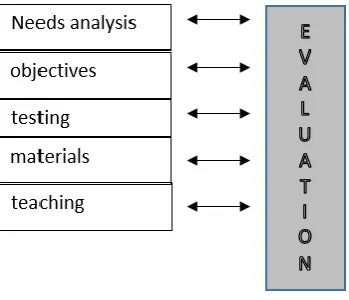
Figure 1. The systematic curriculum development model (Brown, 1995)
Kumazawa (2006) shows the importance of the first step and its role in determining the other five steps. Grognet (1996) also shows that needs analysis is the most important step in curriculum design as all the other steps are based on it.
As shown previously, most of the researchers indicate the role of needs analysis in the syllabus design and curriculum development and its importance for both the teachers and the learners. Consequently, needs analysis can be regarded as a very important part for designing the suitable curriculum, identifying the genres and the students level as well as defining the objectives and the appropriate materials for the course.
There are a lot of researchers (Hutchinson & Waters, 1987, Dudley-Evans & St John, 1998, Nation & Macalister, 2010) who classify the types and the approaches of needs analysis into present situation analysis (learning needs) and target situation analysis. Present situation analysis (the learning needs)
Target situation analysis
This analysis attempts to investigate the situations where the target language would be used through investigating the reasons for learning the foreign language. Hutchinson & Waters (1987) define the target needs as an umbrella term which includes three items; necessities: “what the learner has to know in order to function effectively in the target situation”, lacks: the difference between necessity and what the learner already knows, and wants: what the learner actually needs.
According to Hyland, K. (2006), target situation analysis includes “the learners’ future roles and the linguistic skills and knowledge they need to perform competently in their disciplines”. Therefore, it concerns the communication needs as well as product-oriented and objective data such as “identifying the contexts of language use, observing the language events in these contexts, and collecting and analyzing target genres” (Hyland, K. 2006).
Hutchinson & waters (1987) show the difference between target needs and learning needs, as the latter refers to “what the learner needs to do in order to learn”; whereas the former refers to “what the learner needs to do in the target situation”
Thus, teaching EAP to undergraduate students requires reflecting their present situation and their learning needs as well as their target situation. The analysis of target situation “can tell us what people do with language” (Hutchinson & Waters, 1987), which is not enough as we also need to know to know “how people learn to do what they do with language” (Hutchinson & Waters, 1987). This EAP program should enable the learners to have the sufficient knowledge and the language study skills and to use them for the target purposes during the program.
Therefore, according to Hyland, K. (2006)’s framework for needs analysis, and based on a lot of researches (Hutchinson & Waters, 1987, Dudley-Evans & St John, 1998, Nation & Macalister, 2010) on the importance of the approaches of needs analysis, I investigate the present and target situations of the learners through a questionnaire in order to find out their learning needs based on Hyland’s (2006) indication that needs “is an umbrella term that embraces many aspects, incorporating learners’ goals and backgrounds, their language proficiencies, their reasons for taking the course, their teaching and learning preferences, and the situations they will need to communicate in”. Consequently, all aspects of establishing an ESP course environmental situation should be assessed (Hutchinson, & Waters, 1987; Dudely-Evans & John, 1 998; Basturkmen, 2010). These aspects include a) the activities and the tasks the learners will use, (b) the factors that might affect the learning, c) the learners’ current skills, d) the gaps between the present language proficiency and the target language needs, e) the needs of the learners, f) the learning environment of the course and the intuitional expectation. All these aspects are necessary to design the syllabus and to set up the learning objectives.
experience, the learners’ language skills and ability, the teaching establishment, the curriculum, the materials, the teaching methods, and the learners’ attitudes and their learning styles, with the aim of assessing their target needs as regards business marketing English course.
RATIONALE FOR NEEDS ANALYSIS
One of the reasons of conducting EAP course before starting the program is that most of the students are graduated from high schools both public and private schools and some of them possess low skills of English language especially the public schools as they were not exposed to intensive English courses as they used to study English language only one session daily among the other Arabic subjects. There is also a variation in their work experience after high school.
The aim of this EAP course is to make all the students aware of the business and marketing language, the use of language skills and how to write reports and make presentations, and to help the learners meet specific prior skills during their study at the Business and marketing program.
This EAP course should include the goals, the syllabus design and planning evaluations and tests. In order to achieve this, it is necessary to carry out a needs analysis that will help the ESP course developers to identify the necessary assignments and tasks in which the learners will use the language skills and knowledge (Hutchinson & Waters, 1987). Hyland, K. (2006) indicates the role of needs analysis in designing EAP course through showing that any EAP course requires teachers to “analyse learner needs and decide what to teach based on these needs”. He also asserts that any EAP course requires identifying the learners’ needs as it goes “beyond grammar and vocabulary to prepare students for their future academic experience while, at the same time, recognizing the importance of affective, personal and social expectations of learning”. The other reason beyond conducting needs analysis is that the results of the entry exam which covers the four skills of the language are not enough to show the learners’ actual performance, as it only tests the general English but it does not test their academic style in all the language skills. Needs analysis will enable the teachers to have a fair awareness of the language that the learners will study and will enable them also to tackle the assignments or the tasks required for the program (Basturkmen, 2010). Furthermore, it will give the teachers sufficient knowledge about the learners’ learning environment and their learning styles and preferences which will enable the EAP teachers to design the course.
CONDUCTING THE NEEDS ANALYSIS
Hutchinson, & Waters, 1987 list a number of different techniques to conduct needs analysis, such as questionnaire, interviews and attitudes. Schroder 1989 (cited in Robinson, 1991) suggests four essential techniques for collecting data of needs analysis as follows: the interview, the questionnaire, the observation and press ads.
Based on the above suggestions, this study is based on a quantitative data collection, as it needs to collect the required information from both the learners and the teachers through using questionnaires. Therefore, according to the needs analysis requirements, the questionnaire would be more suitable for collecting the data and it would be administered to both teachers and learners.
The participants are one hundred undergraduate students who enrolled to join bachelor degree in Business marketing program. There are 10 teachers who are MA and PhD holders, with at least 5 years’ experience in the target field.
The questionnaire is distributed in 4 groups of 20 students before the initial term of study at the Australian College of Kuwait. The questionnaire is anonymous and the learners are not instructed by the teachers in order to avoid any negative effect on the results but it has translation in Arabic to facilitate the understanding of the questions. The questionnaires contain a variety of questions such as multiple choice questions, open ended and closed questions. The questionnaires have clear questions and no abbreviations used. They are being piloted before submitting it to the students in order to ensure its understandability.
The students’ questionnaire includes the students’ personal information, previous learning information, their current use of English language, English proficiency level, teaching methods preferences, their learning styles and their needs for the course as well as their target needs (Appendix A). The teachers’ questionnaire includes their experience in the target field and their preferred methods in teaching all the skills of the language.
We may conclude that this needs analysis aims at identifying the needs of the learners in the course as well as the objectives and the syllabus before designing EAP course. It also includes all the aspects of EAP course such as lacks, wants and learning preference both for learners and teachers.
RATIONAL FOR USING QUESTIONNAIRES
about the language skills that the learners will need in the future and it can also determine their current language skills (Robinson 1991). It also seeks information about the teachers’ performance in teaching the target field and reflects their previous experience. This link between identifying the students’ needs and learning preferences and the teachers’ preferred methods of teaching will determine and facilitate the suitable needs for designing EAP course.
CONCLUSION
Needs analysis plays an important role in the design and implementation of EAP course, as it determines the learners’ current and target needs of the language which consequently facilitates forming a strong foundation for the course. With this preliminary knowledge included in the needs analysis, designing the EAP curriculum, the course contents and the learning activities would be easier. It also plays an important role for both teachers and learners, as it helps teachers to identify the learners’ needs based on their language skills as well as their deficiencies. After determining the objectives of the EAP course and analyzing the learners’ needs, the course’s curriculum and materials would be an easy task for the designers to select what suits the learners. Therefore, needs analysis can be the foundation of developing the curriculum content, teaching materials and the methods which lead to the success of the learners and increasing their motivation as well as paving the way for the teachers to go on a clear path in teaching.
LIMITATIONS OF THE STUDY
The small proportion of the group studied as it is only 100 students and 10 teachers, from the whole population of the foundation year students and teachers of English in the university. Therefore, the number of subjects is not enough which may lead to a limited data collection.
Although the learners passed placement test and although the learners’ questionnaire is designed to investigate their current use of English and their needs, it could be better if the questionnaire is supported by the results of a post-test and survey that aims to show their real language level especially in business English.
REFERENCES
Altman, H. B. (1980), Foreign Language Teaching: Focus on the learner. In Altman, H. B. & James, C.V. (eds.). Foreign Language Teaching: Meeting Individual Needs. New York: Pergamon Press.
Basturkmen, H. (2010). Developing Courses in English for Specific Purposes. University of Auckland, New Zealand. Palgrave Macmillan. New York.
Cowling, J. D. (2007). Needs analysis: Planning a syllabus for a series of intensive workplace courses at a leading Japanese company. English for Specific Purposes, 26, 426-442.
Dudely-Evans, T. & John, M.J.S. (1998). Developments in English for Specific Purposes. A Multi-disciplinary Approach. Cambridge Language Teaching Library. Cambridge University Press. Victoria, Australia.
Grognet, A. G. (1996). Planning, implementing, and evaluating workplace ESL programs. Retrieved 27 June2009, from http://www.cal.org/caela/esl_resources/digests /PLANNINGQA.html
Hutchinson, T. & Waters, A. (1987).English for specific purposes: A learning centered approach. Cambridge: Cambridge University Press.
Hyland, K. & Hamp-Lyons, L. (2002). EAP: Issues and directions. Journal of English for academic purposes.
Hyland, K. (2006). English for academic purposes: an advanced resource book. London: Routledge.
Jiajing, Gao, (2007). "Designing an ESP Course for Chinese University Students of Business." Asian ESP Journal, 3 (1)
Jordan, R. R. (1997). English for academic purposes: A guide and resource book for teachers. Cambridge: Cambridge University Press.
Kumazawa, T. (2006). Construct validation of a general English language needs analysis instrument. JALT Testing & Evaluation SIG Newsletter, 10(2), 2- 11.
Muhammad Nadzri Abdul Aziz. (2004). Needs analysis of Malaysian Higher National Diploma Students. Unpublished master’s dissertation, University of Malaya, Kuala Lumpur. needs analysis. Proceedings of the 3rd Annual JALT Pan-SIG Conference, 22-23 May 2004. Tokyo: Tokyo Keizai University.
Nation, P. & Macalister, J. (2010). Language Curriculum Design. London: Routledge. Robinson, P. (1991). ESP Today. A Practitioner’s Guide. Language Teaching Methodology Series Prentice Hall International.UK.
Shing,S & Sim, T. (2011). English for Specific Purposes World. EAP Needs Analysis in Higher Education: Significance and Future Direction. ISSN 1682-3257 .Issue 33, Volume 11, 2011
Soriano, F. I. (1995) & University of Michigan. School of Social Work. Conducting needs assessments: A multidisciplinary approach. Thousand Oaks: Sage Publications Weddel, K. S., & Duzer, C. V. (1997). Needs assessment for adult ESL learners. Retrieved
27 June 2009, from http://www.cal.org/caela/esl-_resorces/digest/Needas.html Xiao, L. (2007). "What Can We Learn from a Learning Needs Analysis of Chinese English
APPENDIX A
Needs Analysis Student Questionnaire
This questionnaire is a part of a needs analysis in order to design and develop Business Marketing English course. The accuracy of information you provide would facilitate identifying your needs. This questionnaire will take about 20 minutes to complete. Please answer in English. However, if you prefer to respond in Arabic, please do so. Thank you for your participation.
Personal details
First names: Surname:
Date of birth: Sex:
Nationality: Native language:
Have you ever taken IELTS exam? Yes No (If yes, write your score:………..)
Email address: Contact number:
Previous Education Information
Recent certificate: Name of school:
School: □ Public □ Private List the subjects you studied in the school:
English background questions
How many hours did you use English in the classroom per day? Do you use English in your daily life?
Do you use writing English in your daily life? Do you use English with native speakers? Do you use English with non-native speakers?
List the English-speaking countries you have visited? How long have you stayed there?
Practical side
Have you worked after high school? Which kind of field have you worked in? How many years have you been working? Did you use English at work?
How many hours have you been using English daily?
General and specialist English Proficiency Level
Tick your suitable level in all the following language skills and activities:
Speaking
□ weak □ good □ very good □ Excellent
Listening □ weak □ good □ very good □ Excellent
Pronunciation/Accent □ weak □ good □ very good □ Excellent
Reading □ weak □ good □ very good □ Excellent
Business Vocabulary □ weak □ good □ very good □ Excellent
Marketing Vocabulary □ weak □ good □ very good □ Excellent
Writing □ weak □ good □ very good □ Excellent
Writing Emails □ weak □ good □ very good □ Excellent
Writing reports □ weak □ good □ very good □ Excellent
Journal writing □ weak □ good □ very good □ Excellent
Presentation □ weak □ good □ very good □ Excellent
Research □ weak □ good □ very good □ Excellent
Letters □ weak □ good □ very good □ Excellent
Emails □ weak □ good □ very good □ Excellent
Reports □ weak □ good □ very good □ Excellent
Meetings □ weak □ good □ very good □ Excellent
Internet □ weak □ good □ very good □ Excellent
Contracts □ weak □ good □ very good □ Excellent
Writing a resume □ weak □ good □ very good □ Excellent
Writing a cover letter □ weak □ good □ very good □ Excellent
Others
(specify)………….
□ weak □ good □ very good □ Excellent
Learning needs
Tick the preferred business knowledge you prefer to learn in the course for each skill
Reading □ Emails
□ Contracts □ Reports
□ Business newspapers □ Marketing reports □ Sales information □ Textbooks
□ Others:
Writing □ Business reports
□ Business emails □ Business contracts
□ Business meeting records □ Business letters
□ Others:
Listening and speaking □ Business phone calls
□ Business presentations □ Business negotiation □ Marketing conversations
□ Face to face business communication □ Business meetings
□ Others:
Translating □ Marketing reports
□ Business contracts □ Business reports. □ Others:
The preferred Materials □ Textbooks
□ Multi-media □ Technology □ Teachers’ lectures □ Students’ presentation □ Teachers’ handouts □ Others:
Teaching methods you prefer for this course
□ Teachers’ lectures □ Teachers’ talks □ Students’ comments
□ Reading and writing centered □ Speaking and listening centered □ Presentations
□Others: Preferred learning styles in the
class
□ Listening □ Speaking
□ Teacher-student interaction □ student-student interaction □Teachers’ lectures
□ student’s presentations □Others:
How many hours a week do you prefer in this course?
3 hours - 4 hours- 6 hours - 8 hours
Target needs
What is your main purpose of studying the Business Marketing program?
What are your expectations after finishing this degree?
Are you interested in taking this course?
Why do you want to join this course?
How do you plan to use English in the future?
APPENDIX B
Needs Analysis Teacher Questionnaire
Personal information
Name: Age: Nationality: Email:
Years of experience:
Certificates/ degrees
How many years have you been teaching business English?
How many in-service training programmes/events have you attended?
What is your average teaching load a week?
How often do you use business English in your work?
□ seldom □ sometimes □ often □ always
How long have you been teaching in marketing field?
Do you have specific certificates in Business Marketing field?
Do you have work experience in the business and marketing fields? If yes , how many years?
Tick the business knowledge you use in your work in the following skills:
Reading □ Emails
□ Contracts □ Reports
□Business newspapers □ Marketing reports □ Sales information □ Textbooks
□ Others: ……….
Writing □ Business reports
□ Business emails □ Business contracts
□ Business meeting records □ Business letters.
□ Others:……….
Listening and speaking □ Business phone calls
□ business presentations □ business negotiation □ marketing conversations
□ face to face business communication □ Business meetings
□ Others:………
Translating □ Marketing reports
□ Business letters and emails □ Business contracts
□ Others: ………..
Your preferred teaching methods and styles □ Teachers’ lectures
□ Teachers’ talks □ Students’ comments
□ Reading and writing centered □ Speaking and listening centered □ presentations
□ Teacher-student interaction □ student-student interaction □ student’s presentations
□ Others: ………
Your preferred teaching resources: □ Cd/Dvd player
□ Internet □ Books
□ Interactive boards □ Dictionaries □ Newspapers □ Videos □ Lectures □ Materials How many hours a week in EAP course do you
prefer?
3 hours - 4 hours- 6 hours - 8 hours
How do you help the students to become aware of the different ways they might respond to their learning?
Do you use particular texts to help the students consider the wider role of their discipline ?