Vol. 5, No. 1, 2017, 43-58 ISSN: 2321 – 9238 (online) Published on 6 June 2017
www.researchmathsci.org
DOI: http://dx.doi.org/10.22457/pindac.v5n1a6
43
Progress in
Searching Minimum Spanning Tree in a Type-2 Fuzzy
Graph
Anita Pal and Saibal Majumder Departments of Mathematics National Institute of Technology Durgapur
Durgapur-712209, West Bengal, India
E-mail: [email protected]; [email protected]
Received 15 April 2017; accepted 2 June 2017
Abstract. Minimum spanning tree of a connected graph has a numerous real world applications. In this paper, we deal with an undirected connected graph whose edge weights are imprecise. We find its corresponding minimum spanning tree by using Borůvka’s algorithm. The imprecise edge weights of the graph are expressed as type-2 fuzzy values. A numerical example is given where we compare the minimum spanning trees and their effective weights of two graphs, one with crisp edge weights and other with imprecise edge weights.
Keywords: Type-2 fuzzy set ˑ Satisfaction function ˑ Possibility ˑ Necessity ˑ Credibility, ˑ Critical Valueˑ Defuzzification ˑ Minimum Spanning Tree ˑBorůvka’s algorithm.
Mathematics Subject Classifications (2010): 05C72, 05C85 1. Introduction
Minimum spanning tree is a fundamental problem in the area of graph theory which has many applications in different engineering domain. Usually, crisp values are generally used to represent the edge weights of a connected graph. But, in many cases of real world problems we find it difficult to define their exact edge weights. In those cases we can use type-1 fuzzy values instead of crisp value to express the imprecision of the weights. However, if these inexact or uncertain edge weights do vary under certain condition such as time then it becomes unsuitable to express such situation using type-1 fuzzy sets. In those cases we go for type-2 fuzzy sets as they are capable enough to handle such situations.
Anita Pal and Saibal Majumder
44 The paper is organized as follows:
Section 2 depicts the preliminary concepts of Type-2 fuzzy sets, Regular Fuzzy Variable (RFV), Fuzzy Possibility Space, and addition of type-2 fuzzy sets using extension principle. Section 3 discusses the Type-2 fuzzy variable, their ranking using satisfaction function and the measures of a Fuzzy variable, CV- based reduction method of type-2 fuzzy set and finally its defuzzification using centroid method. Section 4 describes the proposed fuzzy approach of Borůvka’s algorithm with a numerical example to compare its result with its crisp counterpart. Section 5 discuss the results of the previous section. And finally Section 6 concludes the paper.
2. Preliminary concepts
We recall some basic concepts of Type-2 fuzzy sets in this section, the concept of which, was introduced by Lotfi Zadeh (1975) as an extension of ordinary fuzzy set(also known as “type-1 fuzzy set”).
2.1. Definition type-2 fuzzy set
A fuzzy set of type-2 [1, 2, 3, 4,5], denoted by is characterized by a type-2 membership
grade ,where . Every type-2 fuzzy
set has two types of membership grade namely primary membership grade and secondary membership grade. The secondary membership grade is the grade of its primary membership grade. According to the above definition of type-2 fuzzy set, k is the primary membership grade and is the secondary membership grade of .
In continuous domain, can be defined as ∫x∈X∫k∈Jx .
If are both discrete then we defined as
From now onwards we consider only discrete type-2 fuzzy set since our work is confined to only on discrete domain of type-2 fuzzy set.
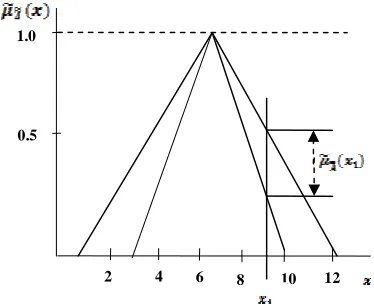
Figure 1: Membership grade of a type-2 fuzzy set 12
2 4 6 8 10
45 2.2. Definition convex type-2 fuzzy set [4] Let
and . A fuzzy grade in is convex if
for any integers i, l and q the following condition is satisfied:
Definition Ample Field: An ample field A[8]on U is a class of subsets on U that is closed under arbitrary union, intersection and complementation in U, where U is the universe of discourse.
2.3. Definition atom [8]: Let Abe an ample field on U, then an atom containing is defined by A . is an atom in A if and only if A, and is indivisible in A.
2.4. Definition possibility space [9]: If Pos: A be a set of functions on A then Pos is said to be the possibility measure if
i. and
ii. For any subclass of of A, where T is the arbitrary index set
The triplet (U, A, Pos) is the possibility space.
Now we know that a fuzzy variable is well defined as the function from Possibility space to a set of real numbers ℜℜℜℜand the possibility measure of the fuzzy event
ℜ ℜℜ
ℜ is expressed as .
2.5. Definition regular fuzzy variable (RFV) [9, 10]: A regular fuzzy variable under a possibility space(U, A, Pos) is defined as the measurable map from U to the space ,
such that A.
A discrete RFV is expressed as
. 2.6. Definition fuzzy possibility space [9]: Let A be a set of function defined on A such that A is a collection of mutually independent RFVs. is said to be the fuzzy possibility measure [6] if it satisfies the conditions: (i.) (ii.) For any subclass A (finite, countable or uncountable) ,T is the arbitrary index set.
. The triplet (U, A, ) is called fuzzy possibility space.
Anita Pal and Saibal Majumder
46
Extension principle: Let X be a Cartesian product of the universe of discourse and be the fuzzy sets in the universal set. Cartesian product of the fuzzy sets forms a fuzzy universal set whose membership grade is defined as
. Let be a mapping function from universal set to that of another universal set ,i.e.
Then the fuzzy set in can be obtained by the function and the fuzzy set as follows:
where .
Union and intersection of type-2 fuzzy set uses and operators respectively, the detailed definition of which are given in [4].
Addition of discrete type-2 fuzzy Costs: Let us consider two type-2 fuzzy costs associated with the adjacent edges of a graph which are expressed as
and such that and
where are the universe of discourse and .Then the
membership grade of is defined as
where .
Example: Let us consider two type-2 fuzzy values below: and
Now, = + + +
2.8. Definition centroid of a type-1 fuzzy set: Centroid is also known as centre of gravity or centre of area which is used to obtain the centre of area defined by
for continuous case and for discrete case.
3. Type-2 Fuzzy variable
If (U, A, ) is a fuzzy possibility space then a type-2 fuzzy variable is defined as a map from U to ℜℜℜℜ such that for any , A.
3.1.Ranking of type-2 fuzzy values
47
appearance. To understand this concept let us consider two discrete ordinary fuzzy values and . If we consider the actual value of a fuzzy variable
then actual value, av( can have a number of actual values which are implied by the possibility distribution of . If we consider our example then, is either or with possibility and respectively. The detail discussion of actual value of a fuzzy variable is given in next sub section. Even though we never know whether the is or but we can surely conclude that the possibility of , is
greater than the possibility of . Similar assumption can be made for
fuzzy variable .If we consider then will be greater than but
if then will be smaller than so we cannot conclude whether
or , but we can definitely find the possibility of ( ) or ( using the membership grade based on the above assumption. If we consider the relative possibility of a situation , represents the satisfaction degree, i.e. to say if a proposition ( ) exists then its satisfaction degree will be the degree to which the proposition is true. In this paper we consider the satisfaction degree only for those propositions where comparison operators are used. The value of satisfaction degree always lies between . We estimate the measure of this satisfaction degree for a given proposition which is termed as the satisfaction function, the formal definition of which is stated in section 3.3.
3.2. Actual value of a fuzzy variable
The actual value, of a fuzzy variable is the exact value v which is implied by its
possibility distribution of and it is expressed as .
Let, the fuzzy value of the height of a 6.2 feet tall person is expressed as ‘about 6’ feet because of observation imprecision. In this case, we can say 6.2 feet is the actual value so far the height of the person is concerned and ‘about 6’ feet is considered to be fuzzy value whose possibility distribution implies the possible location of its actual value i.e. . We cannot isolate the actual value from a fuzzy value since the fuzzy value informs about the possible location of an actual value.
Possibility of actual value of type-2 fuzzy set
The possibility distribution of an actual value of a type-2 fuzzy set [7]is expressed
as where and are the respective primary
and secondary membership grade of in .
3.3. Satisfaction function
Anita Pal and Saibal Majumder
48
degree can be expressed as the ratio of the combination of the actual values that satisfies the mathematical comparison relation to the exhaustive combination of the actual values. And this measure is said to be the satisfaction function.
Satisfaction function of type-1 fuzzy set [7]: The satisfaction function for a satisfaction degree is expressed as and is mathematically defined as
where and are the set of all actual values of and respectively. is the arithmetic comparison relation. And is the set of all pair of actual values of
and that satisfies the relation . is known as the satisfaction set.
Satisfaction function of type-2 fuzzy set [7]: For two discrete type-2 fuzzy set
and such that and
where is the universe of discourse and . Now, the
satisfaction degree for and is defined as
We now define the satisfaction function for and as
where, is the satisfaction set consisting of all possible pairs of which satisfies ; is the satisfaction set consisting of all possible pairs of which satisfies ; is the satisfaction set consisting of all
possible pairs of which satisfies and
49 3.4. Measures of a fuzzy event [10, 11]
For a fuzzy variable having a membership grade and for any set the
three measures of namely Possibility, Necessity and Credibility measures[7] are expressed in below:
I. Possibility measure: For a fuzzy event the possibility measure of which is defined as
II. Necessity measure: For a fuzzy event the necessity measure of which is defined as
3.5. Credibility measure: For a fuzzy event the credibility measure of which is defined as
Critical values of RFVs: In this section three different types of Critical Values as proposed by Qin et al. [10] are considered.
I. I.I.
I. For a RFV , the optimistic CV of , is expressed as
.
II. II.II.
II. The pessimistic CV of , is expressed as , .
III. The CV of , , is expressed as .
Example: Let be a discrete RFV, where then,
Now,
Anita Pal and Saibal Majumder
50 2.5. CV-based reduction method
As proposed by Qin et al. [10] CV-based reduction method for a type -2 fuzzy variable, is defined as follows:
For a fuzzy possibility space (U, A, ), the secondary membership grade for a
type -2 fuzzy variable, can be reduced to a representing value for RFV . These
representing values are the CV’s of .
3.6. Defuzzification of type-2 fuzzy set
Once we apply CV-based reduction method on a type-2 fuzzy variable the resultant fuzzy variable is reduced to type-1 fuzzy variable which in turn is crispified by Appling the centroid method.
4. Fuzzy minimal spanning tree
The most fundamental concept in classical graph theory is to find the minimal spanning tree of an undirected graph since this concept has many application in engineering fields. A spanning tree of a graph is an acyclic sub-graph of that includes every vertex of
and is connected; every spanning tree has exactly edges where is the number of vertices of the graph. A minimum spanning tree (MST) is a spanning tree of minimum weight which is defined to be the sum of the weights of all its edges. Our problem is to find the MST of G. The deterministic case of this concept considers the exact weights or cost associated with the edges of the graph, but in practical case this may be a serious restriction as cost of the edges may well be imprecise or even the vertex set and/or the edge set of a graphical structure may also be imprecise. The simplest way to handle these imprecision is to express the graph as a fuzzy graph.
There are several ways of classifying a fuzzy graph which are: • Type I— Fuzzy vertex and fuzzy edge sets. • Type II — Crisp vertex set and fuzzy edge set. • Type III— Fuzzy vertex set and crisp edge set. • Type IV — Crisp graph with fuzzy weights
In our case, we consider fuzzy graph of Type IV only, the cost of which are expressed as the type-2 fuzzy value and we use Borůvka’s algorithm to find the minimum spanning tree of a crisp graph and its fuzzy version and finally compare the length of the spanning tree for both the fuzzy graph and its crisp version.
Type-2 Fuzzy weighted graph
51
opinion of different experts, it may happen that two experts opinion about the weight of an edge differ. A type-2 fuzzy set outperforms type-1 fuzzy sets as far as modeling of these scenarios is concerned. In this paper, we have used two operators namely comparison and addition, that are both necessary to compare the costs associated with the edges of the graph and to calculate the effective of the minimum spanning tree. We will then crispify the resultant weight of the MST of the fuzzy graph and compare the same withits crisp counterpart. For simplicity, in our proposed problem only the discrete normal or sub-normal convex type-2 fuzzy values can be used.
4.1. Borůvka’s algorithm [13]
One of the greedy strategies for finding the minimum spanning tree of a graph is the Borůvka’s algorithm which runs in time; is the number of edges and is the number of vertices of the graph. The basic idea in Borůvka’s algorithm is to contract simultaneously the minimum weight edges incident on each of the vertices in a graph. This algorithm is suitable for parallel computations since the algorithm builds the MST uniformly throughout the graph. We have used the following notations in the rest of the paper:
• A graph , where is the set of the vertices and is the set of the edges.
• is the vertex of
• is the edge connecting the vertices
• is the minimum spanning tree of the graph . • is the minimum spanning tree of where
• is the deterministic cost associated with the edge o connecting vertices
• is the type-2 fuzzy cost associated with the edge of • is the deterministic cost of
• is the type-2 fuzzy cost of
An implementation of Borůvka’s algorithm is as follows: a.The edges to be contracted are marked first.
b.Determine the connected components formed by the marked edges. c.Each of the connected components is replaced by a single vertex.
d.Eliminate the self loops and the parallel edges created by these contractions. e.If is the resultant graph formed from the original after a Borůvka’s
algorithm. The MST of will be the union of the edges marked for contraction during the same step with the edges of MST of .
Anita Pal and Saibal Majumder
52
4.2. Proposed Fuzzy approach of Borůvka’s algorithm
Input: For any graph , where
Output: M, resultant MST Step 1:
Step 2:
Step 3: Calculate the satisfaction function between a possible pair of edges incident on vertex i.e. , where is the arithmetic comparison relation i.e. .
The cost is selected as minimum between the two, and
if has the largest value among the three satisfaction functions:
Repeat Step-3 among every pair of edges incident on vertex and finally select the edge say having the minimum cost.
Step 4: Step 5:
Step 6:
Step 7: Recursively compute the MST of Step 8: return
5. Numerical example
In this section we find the MSTs of a crisp and a fuzzy graph and compare the deterministic cost, of with that of defuzzified type-2 fuzzy cost of MST, of the fuzzy graph and finally calculate the percentage difference between them.
Let us now consider the crisp graph and we apply the crisp version of the Borůvka’s algorithm to get its corresponding MST. We describe the same in detail as follows: We consider a graph shown in Fig.2:
Figure 2: A graph G
After iteration the highlighted edges are added in which is depicted in Fig. 3
V1 V2
V4
V3
12
8 5
53
Figure 3: Edges are selected after iteration of Borůvka’s algorithm After iteration we get the required MST which is shown in Fig. 4:
Figure 4: Edges are selected after iteration of Borůvka’s algorithm We observe that we get the MST after iteration which is described as
and
Now we consider the fuzzy approach of Borůvka’s algorithm. In this case, we list out the cost associated with the edges of the graph depicted in Fig. 5.
Figure 5: A graph whose edge costs are type-2 fuzzy values
V1 V2
V4
V3
12
8 11
V1 V2
V4
V3
12
8
5 5
8 11
V1 V2
V3 V4
12 11
5 5 V1
V3
8 V4
Anita Pal and Saibal Majumder
54
Now while applying the fuzzy approach of Borůvka’s algorithm we calculate the satisfaction functions for every pair of the edges incident on each of the vertices of We give a sample calculation of the satisfaction function by considering the vertex .
We calculate the satisfaction function of the remaining pair of the edges of and tabulated them below:
Table 1: Satisfaction function for different pair of fuzzy costs
Ve rte x
Considering Satisfaction Set Satisfaction Function
55
Figure 6: Selected edges after iteration of Borůvka’s algorithm (fuzzy approach) After iteration of Borůvka’s algorithm (fuzzy approach) edges, and having costs and respectively are added to as shown in Fig-6.
Figure 7: Edges are selected after iteration of Borůvka’s algorithm (fuzzy approach)
After iteration of Borůvka’s algorithm (fuzzy approach) edges, and having costs , and respectively are added to and it becomes a MST for the fuzzy graph under consideration as depicted in Fig. 7.
We observe that by executing the fuzzy approach of Borůvka’s algorithm recursively minimal spanning tree exactly matches with that of its crisp version
i.e. and
V1 V2
V4
V3
12
8 5
V1 V2
V3
V4
12 11
5 V1
V3 V4
Anita Pal and Saibal Majumder
56
Now we defuzzify using cv-based reduction method [10] for which we calculate the possibility, necessity and credibility measures of
Similarly we get,
Now when we have got and for we have three different type-1 fuzzy sets derived from which are as follows:
57 and
If we consider the value of we can conclude that the cost of the MST of the
fuzzy graph is more than its crisp version by
6. Results and discussions
In the above example we have find the MSTs of a crisp and a fuzzy graph respectively. We observe that in both the cases the corresponding MSTs constitute the same arcs i.e. . Henceforth, we compare the deterministic cost, with that of defuzzified type-2 imprecise cost of MST, of the fuzzy graph and observe that crispified is more than by . In the above example, while constructing we have used the concept satisfaction function to compare the associated type-2 fuzzy costs of the edges. After the completion of MST we calculate by finding its possibility, necessity and credibility measures and finally used the cv-based reduction method to crispify .
This work of implementing Borůvka’s algorithm on a type-2 fuzzy weighted graph is unique in the literature hence numerical comparison of this work with other works could not be done.
6. Conclusion
In this paper, a modified Borůvka’s algorithm on a type-2 fuzzy weighted graph has been explained. The proposed method is based on the possibility theory for type-2 fuzzy weighted graph. We have consider a simple graphical sequence to explain our proposed method, since at present the most serious concern dealing with possibility based approach of type-2 fuzzy sets is the computational complexity as we have to calculate the satisfaction function of every possible pair of edges incident on a particular vertex of a fuzzy graph. For graphs with larger size and orders computer programs can be written for the proposed method. But as we increase the size and order of the graph the computational complexity also increases rapidly which eventually makes this problem of NP class.
REFERENCES
1. J.M.Mendel and R.I.Bob John, Type-2 fuzzy sets made simple, IEEE Transactions on Fuzzy Systems, 10(2) (2002) 117-127.
Anita Pal and Saibal Majumder
58
3. N.N.Karnik and J.M.Mendel, Operations on type-2 fuzzy sets, Fuzzy Sets and Systems, 122 (2001) 327–348.
4. M.Mizumoto and K.Tanaka, Some properties of fuzzy sets of type 2, Information and Control, 31 (1976) 312-340.
5. M.Mizumoto and K.Tanaka, Fuzzy sets of type 2 under algebraic product and algebraic sum, Fuzzy Sets and Systems, 5 (1981) 277-290.
6. K.M.Lee, C.Ho and K.H.Lee, Ranking fuzzy values with satisfaction function, Fuzzy Sets and Systems, 64 (1994) 295-309.
7. S. Lee, K.H.Lee and D.Lee, Comparison of type-2 fuzzy values with satisfaction function, International Journal of Uncertainty, Fuzziness and Knowledge-Based Systems, 12(5) (2004) 601-611.
8. P.Z.Wang, Fuzzy contactability and fuzzy variables, Fuzzy Sets and Systems, 8 (1982) 81-92.
9. Z.Q.Liu and Y.K.Liu, Fuzzy possibility space and type-2 fuzzy variable, Proceedings of the 2007 IEEE Symposium on Foundations of Computational Intelligence (FOCI 2007) (2007) 616-621.
10. R.Qin, Y.K.Liu and Z.Q.Liu, Methods of critical value reduction for type-2 fuzzy variables and their applications, Journal of Computational and Applied Mathematics, 235 (2011)1454–1481.
11. X.Li and D.A.Ralescu, Credibility measure of fuzzy set and applications, Proceedings of IPMU, (2008) 960-965.
12. F.Herrera and J.L.Verdegay, Fuzzy sets and operations research: Perspectives, Fuzzy Sets and Systems, 90 (1997) 207-218.
13. J.Ne et il, E.Milkov, H.Ne et ilov and O.Borůvka, On minimum spanning tree problem translation of both the 1926 papers, comments, history, Discrete Mathematics, 233, (2001) 3–36.
14. M.S.Sunitha, Studies on Fuzzy Graphs PhD. Thesis, Department of Mathematics, Cochin University of Science and Technology, (2001).
15. T.Dinesh and T.V.Ramakrishnan, On generalised fuzzy graph structures, Applied Mathematical Sciences, 5(4) (2011) 173 – 180.
16. F.Bazlamacc and K.S.Hindi, Minimum-weight spanning tree algorithms: A survey and empirical study, Computers & Operations Research, 28 (2001) 767-785.
17. L.A.Zadah, Fuzzy sets, Information and Control, 8 (1965) 338-353.
18. H.J.Zimmermann, Fuzzy set theory, Advanced Review, John Wiley & Sons, Inc. (2010).
19. SMA. Nayeem and M.Pal, Shortest path problem on a network with imprecise edge weight, Fuzzy Optimization and Decision Making, 4 (4) (2005) 293-312.
20. S.Samanta and M.Pal, Fuzzy planar graphs, IEEE Transactions on Fuzzy Systems, 23 (6) (2015) 1936-1942.