Sarojamma et al. World Journal of Pharmaceutical and Life Sciences
EFFECTIVENESS OF STRUCTURED TEACHING PROGRAMME ON KNOWLEDGE
REGARDING BILIBLANKET AMONG STAFF NURSES WORKING IN SELECTED
PEDIATRIC WARDS VANI VILAS HOSPITAL AT BENGALURU
*Sarojamma, Dr. Sukanya and Jyoti Krishna Naik
Lecturer, Government College of Nursing, Fort, Bangalore – 560 002.
Article Received on 12/07/2019 Article Revised on 02/08/2019 Article Accepted on 22/08/2019
INTRODUCTION
Babies are like little suns that, in a magical way, bring warmth, happiness and light into our lives. – By Kartini Diapari-Oengider.
The birth of an infant is one of the most awe-inspiring and emotional events that can occur in one’s lifetime. After 9 months of anticipation and preparation, the neonate arrives amid a flurry of excitement. The new human being affects the lives of the parents and also the other family members.[1]
Jaundice is the most common condition that requires medical attention in newborn’s. The yellow coloration of the skin and sclera in new-borns with jaundice is the result of accumulation of unconjugated bilirubin. In most infants, unconjugated hyperbilirubinemia reflects a normal transitional phenomenon. However, in some infants, serum bilirubin levels may raise excessively, which can be cause for concern because unconjugated
bilirubin is neurotoxic and can cause death in new-borns and lifelong neurologic sequel in infants who survive. For these reasons, the presence of neonatal jaundice frequently results in diagnostic evaluation. Neonatal jaundice may have first been described in a Chinese textbook 1000 years ago. Medical theses, essays, and textbooks from the 18th and 19th centuries contain discussions about the causes and treatment of neonatal jaundice. Several of these texts also describe a lethal course in infants who probably had Rh isoimmunisation. In 1875, Orth first described yellow staining of the brain, in a pattern later referred to by Schmorl as kernicterus.[2]
A biliblanket is a portable phototherapy device for the treatment of jaundice. Biliblanket is a trademark of General Electric's Datex-Ohmedasubsidiary, but its name has become the generic, colloquial term for a range of similar products and the term used in the medical professions. The name is a combination of bilirubin and blanket. Other names used are home phototherapy
World Journal of Pharmaceutical and Life Sciences
WJPLS
www.wjpls.org
SJIF Impact Factor: 5.088*Corresponding Author: Sarojamma
Lecturer, Government College of Nursing, Fort, Bangalore – 560 002.
ABSTRACT
The birth of an infant is one of the most awe-inspiring and emotional events that can occur in one’s lifetime. Jaundice is the most common condition that requires medical attention in new-born’s. The yellow coloration of the skin and sclera in newborns with jaundice is the result of accumulation of unconjugated bilirubin. A biliblanket is a portable phototherapy device for the treatment of neonatal jaundice. This study attempts to determine the effectiveness of structured teaching programme on knowledge regarding biliblanket among staff nurses working in selected paediatric wards vani vilas hospital at Bengaluru. Method: A pre experimental one group pre-test post-test research design was used for the study. The knowledge level of the subjects was determined by using a structured knowledge questionnaire and followed with a structured teaching programme was administered on the same day. The post test was conducted on seventh day to determine the knowledge level of the subjects by using the same questionnaire which was conducted in selected paediatric wards vani vilas hospital at Bengaluru.50 staff nurses were selected by using a purposive sampling technique. Results: The mean % of pre-test over all knowledge score was 50.9%(SD=2.74) and post–test over all knowledge mean % was 78.68%(SD=2.42) and the enhancement of 27.7%(SD=2.75) with paired ‘t’ test value of 22.811. This shows that knowledge of respondents regarding biliblanket has increased after the administration of structured teaching programme. Interpretation and
Conclusion: The mean % of pre-test over all knowledge score was 50.9% and post –test over all knowledge mean
% was 78.68% and the enhancement of 27.7%. The findings of the study support the effectiveness of structured Teaching Programme in increasing the knowledge regarding biliblanket among staff nurses.
system, bilirubin blanket, or phototherapy blanket. Biliblanket offer the possibility of treating some degrees of jaundice at home as long as the baby is otherwise healthy. This makes them quite popular with parents, doctors, and insurance companies, who would otherwise have to pay for more expensive inpatient treatment. Some also consider it a better option because the newborn does not have to be separated from the parents and does not need to lie alone in a box with his or her eyes covered. The baby is tied to the machine, unless they can wheel it around, and there is a stiff pad between the mother and baby. While this is an inconvenience, most see it as a lesser of two evils.
NEED FOR THE STUDY
Physiologic jaundice occurs in 30% to 50% of term neonates and it is estimated that approximately 10% will require treatment. Phototherapy is the most widely used treatment and it has proved safe and effective for over 3 decades. Fibrotic systems have been found to be as effective as conventional phototherapy for physiologic jaundice in well, term infants in the hospital and in the home. Furthermore, Fibre optic systems minimize or eliminate all of the potential complications of conventional phototherapy. The Wallaby Phototherapy System was introduced into clinical use in 1989. This system delivers therapeutic light at a wavelength of 425 to 475 nm, with average irradiance of 8 to 10 uW/cm9nm, the same light intensity as conventional phototherapy. The Ohmeda Biliblanket Phototherapy system introduced in 1990, delivers light at a wave length of 400 to 550 nm. However, the intensity of therapeutic light delivered by the Ohmeda system can be controlled, permitting irradiance levels of 15, 25 and 35 uW/cm2/nm. The Ohmeda Biliblanket has a broader emission spectrum than the Wallaby. However, both include the 425- to 475- nm wavelength range required for optimal bilirubin absorption.
To compare with other phototherapy, it has advantages. It helps the mother and baby bonding, mother can nurse, swaddle and hold the baby, skin temperature will not raise, no need for eyes pad, a greater flexibility of use may be used in an incubator, radiant warmer, bassinet or at home diaper can be worn, baby can be clothed, it can be used for 24 hours a day.[13]
When investigator baby was admitted to the hospital with physiological jaundice, baby was taken to nicu for phototherapy. During stay in nicu, only during feeding baby was given to investigator. When investigator inspect baby, it had severe skin rashes and dehydration too and there was a separation anxiety for investigator.
That time investigator felt if baby was with the investigator baby was cared more and well fed. So investigator felt biliblanket is a very important kind of phototherapy which stimulates mother and child bonding during initial days. Hence the researcher is interested to conduct a study on the effectiveness of structured
teaching program on knowledge regarding biliblanket among staff nurse.
OBJECTIVES OF THE STUDY
1. To assess the existing knowledge regarding biliblanket among staff nurses working in selected pediatric wards vani vilas hospital at Bengaluru. 2. To evaluate the effectiveness of structured teaching
programme on knowledge regarding biliblanket among staff nurses working in selected pediatric wards vani vilas hospital at Bengaluru.
3. To find out the association between pre-test knowledge score with selected demographic variables.
HYPOTHESIS
The following hypotheses will be tested at 0.05 level of significance.
H1. There will be a significant difference between pre-test and post-pre-test knowledge scores of staff nurses regarding biliblanket.
H2: There will be significant association between pre-test knowledge scores and selected demographic variables among staff nurses working in selected pediatric wards Vani vilas hospital at Bengaluru.
RESEARCH VARIABLES
Independent variable: Structured teaching programme
on biliblanket.
Dependent variable: Post-test knowledge of staff nurses
regarding biliblanket.
Demographic variables: Age, gender, marital status,
professional education, total experience, over all experience, monthly income.
METHODOLOGY
Target Population
The target population for the present study was staff nurses working in selected paediatric wards at vani vilas hospital Bengaluru.
Setting of the study
The study subject was selected from the paediatric wards, vani vilas hospital Bengaluru.
Sample
The sample of this study was staff nurses working in paediatric wards vani vilas hospital Bengaluru.
Sample size
Sampling Techniques
Purposive sampling is non probability sampling was used. Which entails the use of the conveniently available people as subjects in a study the staff nurses who were present at the time of data collection and willing to participate in the study were selected.
Inclusion Criteria
1. Staff nurses who have minimum qualification of general nursing and midwifery, Basic Bachelor of Science. Nursing, post basic Bachelor of Science Nursing and registered to Karnataka Nursing Council.
2. Staff nurses who are available and willing to participate in the study.
3. Staff nurses who are working in paediatric wards.
Exclusion Criteria
1. Staff nurses who are working other than paediatric wards.
2. Auxiliary Nurse and Midwifery, nursing sides.
Procedure of Data Collection
Prior to data collection permission was obtained from concerned authority. Investigator utilized the purposive
sampling technique to select the study subject. Participants were informed about the purpose of the study and ascertained the willingness of the participants. The respondents were assured and anonymity and confidentiality of the information provided by them, structured questionnaire was administered during their leisure time. A comfortable place was selected and the participants were made comfortable and relaxed.
Date was collected with the help of structured questionnaire from March 16th to April 16th 2018. Approximately 50 staff nurses were selected by non-probability purposive sampling technique. The questionnaire was administered to the staff nurses and each sample took 45 minutes for the completion of questionnaire.
Table 01: Area wise Classification of respondents on Pre-test overall Knowledge regarding biliblanket. n=50.
Knowledge Level Category Respondents
Frequency Percentage (%)
Inadequate <50% Score 19 38
Moderately Adequate 50-75% Score 31 62
Adequate >75% Score 00 00
Total 50 100
Table 01 reveals the respondents pre-test over all knowledge. Majority 62% of respondents had moderately
adequate knowledge, 38% of respondents had inadequate knowledge and none of them had adequate knowledge.
Table 02: Aspect wise pre-test mean knowledge percentage of respondents on biliblanket. n=50
Sl. No Area Wise No. of
items Mean S.D Mean%
1 General information 14 7.56 1.75 54%
2 Phototherapy 09 5.36 1.27 59%
3 Biliblanket 09 3.38 1.62 37%
Overall knowledge 32 16.36 2.74 50.9%
Table 02 reveals that the aspect wise pre-test mean knowledge percentage of respondents regarding biliblanket. The highest mean 59% was seen in the
aspect of knowledge on phototherapy, 54% mean was seen in the aspect of general information and 37% mean was seen in the aspect of biliblanket.
Table 03: Aspect wise post-test knowledge percentage of respondents on biliblanket. n=50
Sl. No Area Wise No. of items Mean S.D Mean%
1 General information 14 11.18 1.51 79%
2 Phototherapy 09 7.06 0.96 78%
3 Biliblanket 09 6.86 1.11 76%
Table 03 reveals that the aspect wise post-test mean knowledge percentage of respondents regarding biliblanket. The highest mean 79% seen in the aspect of
general information, 78% seen in the aspect of phototherapy and 76% seen in the aspect of biliblanket.
Table 04: Area wise Classification of respondents on Post-test overall knowledge. n=50
Knowledge Level Category Respondents
Frequency Percentage (%)
Inadequate <50% Score 01 02
Moderately Adequate 50-75% Score 14 28
Adequate >75% Score 35 70
Total 50 100
Table 04 reveals the respondents post-test over all knowledge. Majority 70% had adequate knowledge, 2%
of respondents had inadequate knowledge and 28% of respondents had moderately adequate knowledge.
Table 05: Overall knowledge score percentage of respondents. n=50
Knowledge Mean SD Mean % t value P
Pre 16.30 2.74 50.9%
22.811* 0.05
Post 25.18 2.42 78.68%
Enhancement 8.88 2.75 27.7%
*is significant at 0.05 level ‘t’ value=1.96(Df=49)
Table 05 reveals the aspect wise pre-test and post-test knowledge of respondents. The mean % of pre-test knowledge percentage was 50.9% and post-test mean
percentage was 78.68% and the enhancement of 27.7% with paired ‘t’ test value of 22.811 it is significant at the level of 0.05.
Table 06: Aspect wise mean pre-test and post-test knowledge percentage of respondents on biliblanket. n=50
Aspects of knowledge
Pretest Post test
t value P value
Inference
Mean SD Mean % Mean SD Mean %
General Information 7.56 1.75 54% 11.18 1.51 79.85% 13.076* P<0.05
Phototherapy 5.36 1.27 59.55% 7.06 0.96 78.44% 8.231* P<0.05
Biliblanket 3.38 1.62 37.55% 6.86 1.11 76.22% 14.232* P<0.05
Over all knowledge 16.30 2.74 50.9% 25.18 2.42 78.68% 22.811*
*is significant; at 0.05 level ‘t’ value=1.96(Df=49)
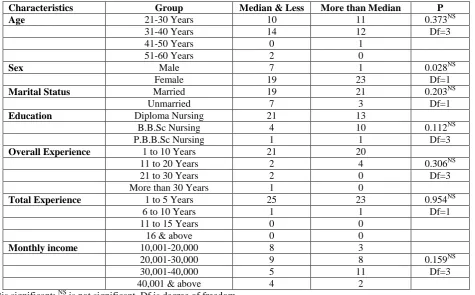
Table 07: The association between pre-test knowledge score with selected demographic variables.
Characteristics Group Median & Less More than Median P
Age 21-30 Years 10 11 0.373NS
31-40 Years 14 12 Df=3
41-50 Years 0 1
51-60 Years 2 0
Sex Male 7 1 0.028NS
Female 19 23 Df=1
Marital Status Married 19 21 0.203NS
Unmarried 7 3 Df=1
Education Diploma Nursing 21 13
B.B.Sc Nursing 4 10 0.112NS
P.B.B.Sc Nursing 1 1 Df=3
Overall Experience 1 to 10 Years 21 20
11 to 20 Years 2 4 0.306NS
21 to 30 Years 2 0 Df=3
More than 30 Years 1 0
Total Experience 1 to 5 Years 25 23 0.954NS
6 to 10 Years 1 1 Df=1
11 to 15 Years 0 0
16 & above 0 0
Monthly income 10,001-20,000 8 3
20,001-30,000 9 8 0.159NS
30,001-40,000 5 11 Df=3
40,001 & above 4 2
*is significant; NS is not significant, Df is degree of freedom.
The above table shows that the demographic variables like age in years, marital status, sex, professional education, total experience, overall experience, monthly income were found to be non-significant associated with the pre-test knowledge scores. Hence, the hypothesis stated there will be a significant association between pre-test knowledge scores and selected demographic variables are rejected at 0.05 levels.
Nursing implications of the study Nursing Education
Nursing curriculum needs to have specific health education methods. Nursing education must be based on local resources and needs. The educational package must be comprehensive. They may make use of the structured teaching programme, which is prepared for to use as a teaching materials available. This structured teaching programme helps the students to apply this knowledge during their clinical posting. There is a need to plan the structured teaching programme according to the level of understanding of the beneficiaries, their practices and the needed improvement in them for knowledge regarding biliblanket among staff nurses. The studies of this nature will help the health educators in planning the awareness in clinical teaching as well as in the hospitals.
Nursing Practice
The nurses who are working in paediatric wards and neonatal intensive care unit setup, they need to update knowledge for betterment of care and improve the outcome of the patient. Now a day’s new technologies are coming in health care setup so nurses are difficult to
familiar with these equipment because of lack in updating the knowledge. The small research has updates the knowledge regarding child with biliblanket among staff nurse.
Nurse Administrator
Should also plan for continuing nursing education programme on biliblanket which will help the nurse to take care of individuals with new born jaundice. Periodical update of nurse’s knowledge through the in-service education programme and the study findings could be incorporated so that the nurse’s knowledge is improved.
Administrators should participate, encourage research work on care of new born with biliblanket and equip settings with recent books, procedure manual and studies.
Encouraging the staff nurses to read the journals and organizing the journal clubs by this way staff nurses will update the knowledge.
Nursing Research
Nurses can conduct more studies related to this topic comparison of conventional photo therapy and biliblanket phototherapy.
Research studies can be conducted to identify the effectiveness of various measures to solve the difficulty and to be familiar with this equipment for nurses.
Research studies need to implement the activities that will balance among knowledge, attitude and practice of staff nurses about biliblanket phototherapy.
Limitations
The study was limited to a small sample, which impose limits in generalization.
Only staff nurses who have completed G.N.M, B.B.Sc Nursing, P.B.B.Sc Nursing were included in the study. The head nurse and field supervisor are not included in the study.
A teaching programme to the maintenance of knowledge of nurse in the area of education and service should be designed and implemented.
Study was confined to specific geographical area which imposes limits on generalization.
No control group was used in the research study which imposes threats to internal validity.
Recommendations
Based on the study findings, the following recommendations were made for further study.
A similar study can be undertaken on large samples so that results can be generalized.
A comparative study can be taken up to assess the knowledge and practice of staff nurses regarding biliblanket.
A teaching programme to the maintenance of knowledge of nurse in the area of education and service should be designed and implemented.
A similar study can be conducted by using other teaching strategies.
A study can be replicated among the GNM students, B.Sc Nursing students, P.B.B.Sc Nursing students and also can be replicate for care givers also.
Comparative study may be conducted to assess the knowledge, attitude, Practice of nursing students and staff nurses.
Experimental study with control group could be conducted to establish the effect of structured teaching programme on biliblanket among staff nurses.
REFERENCES
1. Marlow.d.r. r, Redding, B.A. Textbook of Paediatric nursing. Reed Elsevier India private limited. 6th edition 2013. 261.
2. Eric, Topol. M.D. Journal of Paediatric child health.
Medscape. 6. 2015 Dec.
http://emedicine.medscape.com/article/974786-overview.
3. W.R. Thor, Hansen. Paediatric; cardiac diseases and
critical care
medicine.2016://www.google.co.in/webhp?sourceid
=chromeinstant&ion=1&espv=2&ie=UTF- 8#q= jaundice+of+newborn.
4. Tharu.reeja. med India network for health.12.2014 Nov.http://www.webmd.com/parenting/baby/tc/jaun dice-in-newborns-hyperbilirubinemia- topic-overview#1
5. Tharu.reeja. med India network for health. 12. 2014 Nov.
Avai:www.medindia.net/patients/patientinfo/neonata ljaundice_incidence.htm
6. Naarang.A. the Indian journal of Paediatric. 2001.
available from;
http://link.springer.com/article/10.1007%2FBF0272 1831?LI=true.
7. Tidy’s. PATIENT-trusted medical information and suppor. 2016 may 10.
8. http://patient.info/in/health/neonatal-jaundice-leaflet. 9. https://en.wikipedia.org/wiki/Biliblanket.2012April. 10. http://journals.sagepub.com/doi/pdf/10.1177/000992
289403300313
11. Paneth, Nigel, Jetton, Pinto. 1997 may. AAP. 95(5). Available;
http://peadiatrics.aappublications.org/content/131/6e 1982.full
12. Tan.K.L. AAP. 1997 May; 99(5). Available from; http://peadiatrics.aappublications.org/content/99/5/e 13.full.
13. http://peadiatrics.aappublications.org/content/99/5/e 13.full.