AND SCHOOL ADMINISTRATORS REGARDING TRENDS IN SECONDARY CURRICULAR OFFERINGS AND IMPLICATIONS
ON STUDENT BODY PARTICIPATION
by Leigh Falconer
A thesis
submitted in partial fulfillment of the requirements for the degree of
Master of Music, Music Education Boise State University
A COMPARISON OF THE PERCEPTIONS OF MUSIC EDUCATORS AND SCHOOL ADMINISTRATORS REGARDING TRENDS IN SEDONDARY CURRICULAR OFFERINGS AND IMPLICATIONS
ON STUDENT BODY PARTICIPATION
by Leigh Falconer
A thesis
submitted in partial fulfillment of the requirements for the degree of
Master of Music, Music Education Boise State University
BOISE STATE UNIVERSITY GRADUATE COLLEGE
DEFENSE COMMITTEE AND FINAL READING APPROVALS
of the thesis submitted by
Leigh Falconer
Thesis Title: A Comparison of the Perceptions of Music Educators and School
Administrators Regarding Trends in Secondary Curricula Offerings and Implications on Student Body Participation
Date of Final Oral Examination: 28 June 2013
The following individuals read and discussed the thesis submitted by student Leigh Falconer, and they evaluated her presentation and response to questions during the final oral examination. They found that the student passed the final oral examination. James A. Goodman, Ed.D. Chair, Supervisory Committee James Jirak, D.A. Member, Supervisory Committee Laura Rushing-Raynes, D.M.A. Member, Supervisory Committee
iv DEDICATION
v
ACKNOWLEDGEMENTS
The opportunity to return to school and complete my master’s degree has been a gift and an honor for me. Faculty, friends, and family inspired me, believed in me, and encouraged me through the two years in which I did my best to fill every moment with learning, sharing ideas, and making music.
Without my assistantship, which was awarded by the Music department, it would not have been possible. My sincere thanks go to Dr. Jeanne Belfy for her support and second chance at academic life. To my committee members, Dr. James Jirak and Dr. Laura Rushing-Raynes, I thank you for allowing me to play the dual role of student and colleague, for being willing to share in rich conversations and impassioned learning. Professor Dawn Farmer shared her love of research and current issues in music education, which has been an inspiration for me in my own research.
To Dr. James Goodman, my thesis advisor, my mentor and sounding board: I thank you for your patience, good will, positive attitude, and your passion for music, learning, research, and for doing things the right way. You never let me off the hook, knew when to put the fear of God in me, and held me to high standards. I hope this thesis reflects the hours and hours we have put into it.
vi
spent hours discussing education with me and inspired me to follow my heart into education.
My family has been my foundation throughout. My grandmother, Lois Sands, bought me my first piano and through her love of music, instilled the same in me. My mother, Joyce Harrison, taught me to believe that I could do anything to which I set my mind. My sons, Ian and Colin, and my husband, Guy, have fed me, picked me up and put me back together, and been my anchors on this journey.
vii ABSTRACT
viii
TABLE OF CONTENTS
DEDICATION ... iv
ACKNOWLEDGEMENTS ... v
ABSTRACT ... vii
LIST OF TABLES ... x
LIST OF FIGURES ... xii
LIST OF ABBREVIATIONS ... xiii
CHAPTER ONE: INTRODUCTION ... 1
Statement of the Problem ... 2
Need for the Study ... 3
Purpose of the Study ... 4
Research Questions ... 5
Limitations of the Study... 5
Assumptions of the Study ... 5
Definition of Terms... 6
CHAPTER TWO: REVIEW OF RELATED LITERATURE ... 8
Introduction ... 8
Student Participation ... 8
Summary ... 13
ix
Summary ... 17
Educators’ Practices ... 18
Summary ... 21
CHAPTER THREE: METHODOLOGY ... 23
Selection of Subjects ... 23
Procedures ... 24
Treatment of Data and Data Analysis ... 25
CHAPTER FOUR: ANALYSIS OF DATA... 27
Demographics ... 27
Research Question 1: What is the Breadth/Depth of Music Courses That Are Currently Being Offered in Secondary Schools? ... 31
Research Question 2: What Factors Currently Affect Student Participation and Enrollment? ... 34
Research Question 3: How Are Music Educators and Administrators Addressing Student Participation and Enrollment? ... 36
Research Question 4: What Are the Perceived Issues Facing the Future of Music Education in Secondary Schools? ... 39
Discussion ... 41
CHAPTER FIVE: SUMMARY, CONCLUSIONS AND RECOMMENDATIONS FOR FURTHER RESEARCH ... 53
Summary ... 53
Conclusions ... 54
Recommendations for Further Research ... 55
REFERENCES ... 58
x
LIST OF TABLES
Table 1 Approximate School Population by State as Defined by Educators ... 28
Table 2 Approximate School Population by State as Defined by Administrators . 28 Table 3 Average Percentage of School Student Body Participating in Music Courses by School Size ... 29
Table 4 Mean Student Body Participation in Music by State ... 30
Table 5 Perceived Mean Majority Ethnicity of School Population ... 31
Table 6 Alignment of Ethnicity with Music Programs' Enrollment ... 31
Table 7 Mean Participation in Instrumental Ensembles Currently Being Offered 32 Table 8 Mean Participation in Vocal Ensembles Currently Being Offered ... 33
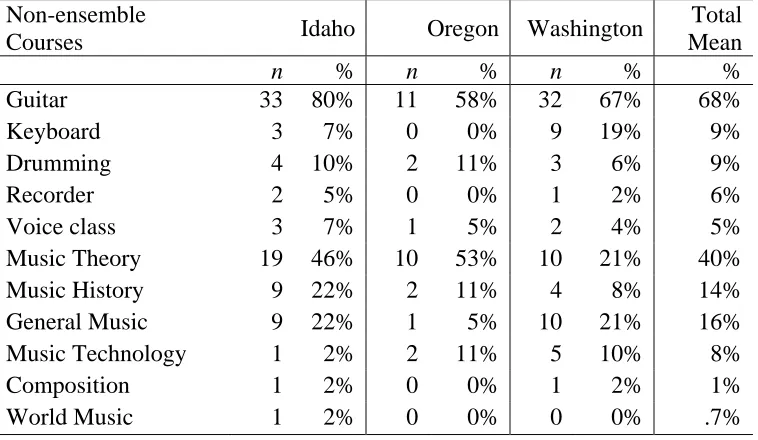
Table 9 Number and Mean of Secondary Schools Which Offer Non-ensemble Music Courses ... 34
Table 10 Perceived Enrollment Changes in Music Courses During the Past 5-10 Years ... 34
Table 11 Most Significant Factors Currently Affecting Student Participation and Enrollment... 36
Table 12 Percentage of Schools That Have Modified Their Curriculum During the Last 5-10 Years, by Population ... 37
Table 13 Number and Percentage of Schools Offering Music Courses Before and After School ... 38
Table14 Teachers' Response Regarding Administrative Encouragement to Draw More Students into Music Ensembles... 38
xi
Table 16 Issues Facing the Future of Music Education in Secondary Schools
xii
LIST OF FIGURES
Figure 1. Factors Which Have Effected Changes in Enrollment to Respondents’ School Music Program ... 35 Figure 2. Perceived Issues Facing the Future of Music Education in Secondary
xiii
LIST OF ABBREVIATIONS
AP Advanced Placement courses
AYP Adequate Yearly Progress
IB International Baccalaureate program
SA/ST Survey-Administrator and Survey-Teacher: used to identify survey respondents
CHAPTER ONE: INTRODUCTION
Graduation expectations for students in US high schools may vary somewhat, but across the nation there are many similarities. States have divided graduation
requirements into two strands. Core courses include two to four years of coursework in the areas of English/language arts, mathematics, history/social sciences, and science. These courses are assessed by mandated testing for understanding and competency in these areas before they can graduate. Electives in the curriculum have more variability and choice, but students are required to complete a specified number which serve to broaden their educational experience. Options in this area can include health or physical education, computer skills or technology, foreign language, fine arts, and courses that prepare students in career/technical education. For those students who plan on attending university after graduation, additional expectations are made by their state’s colleges and universities for further preparation in the core subjects of language arts and math and non-core areas such as foreign language.
against the standards, standards-based education has continued to determine the trajectory that US education maintains. In addition, economic setbacks over the past five to six years have significantly affected funding for schools in the areas of staffing and
programming. Since the core curriculum is the basis for determining a school’s progress towards Annual Yearly Progress (AYP) under NCLB, the number of teachers and courses available for anything other than what is considered core curriculum have been limited.
Statement of the Problem
Students at high schools in the US have come under increasing pressure to meet standards that have been designed and implemented on a national and state level to prepare them for college, the 21st century work force, or both. For those students who are interested in enrichment outside of their core subjects, finding space in their schedule to enroll in electives can be a challenge. Opportunities to participate in the fine arts (music, art, drama, or dance), sports, journalism/yearbook, or additional courses in technology and foreign language can at times compete with their core or required courses. The number and diversity of courses offered can also depend on the size of the school or the region in which the school is located, whether it is an urban, suburban, or rural campus. This is seen especially in smaller schools where the music teacher may be shared with the elementary and middle schools. The teacher’s time at the high school is often a single class period during the day.
justify the time and resources required for the predominantly ensemble-based music courses (most often band, choir and orchestra) being offered.
Need for the Study
Despite the implementation of the National Standards in 1994 and the continued shift of cultural diversity within our nation’s communities and schools, the focus of secondary music education has changed very little since the beginning of singing schools in the late 19th century and instrumental ensembles in the mid-20th century (Freer, 2011; Leonard, 1991). “Instead of transforming music education to meet society’s changing needs since the mid-20th century, we have largely added new components to our existing offerings and advocated for maintenance of the status quo” (Jones, 2008, p. 1). Even with reduced funding and increased graduation requirements, performance-based curriculum, which typically focuses on band, choir, and orchestra, continues to be the driving force of secondary music education (Leonard, 1991; Williams, 2007; Freer, 2011).
This does not mean that performance-based secondary school music programs have become obsolete and only serve a select segment of a school population. There are programs nationally and internationally that have expanded music course offerings in order to reflect and support the diversity and interests of their student populations. For example, some schools have established drumming ensembles in acknowledgement of the highly diverse student population and as an effort to build understanding of cultures outside of the students’ own experiences. Many schools have introduced technology-based composition and recording classes in which students, who previously had little interest in music classes, can write and record their own music, making the experience for them academically and socially relevant (Hess, 2010; Burnard, et al., 2008; Mantie, 2008; Rohan, 2011).
It is important to determine the best steps towards a relevant future for music education in secondary schools. The need exists for a deeper understanding of the current challenges and concerns facing high school music programs at this time.
Purpose of the Study
Research Questions The research addressed the following questions:
1. What were the breadth and depth of music courses currently offered in secondary schools?
2. What factors have affected student participation and enrollment?
3. How were music educators and administrators addressing student participation and enrollment?
4. What were the perceived issues facing the future of music education in secondary schools?
Limitations of the Study
The following were recognized as limitations of this investigation:
1. Participants of the survey were limited to secondary music programs in the Pacific Northwest states of Idaho, Oregon, and Washington.
2. This study focused on the music programs of public schools, as their curricula tend to be prescribed by district and state standards.
3. Music courses offered by secondary schools were surveyed and analyzed for diversity of offerings.
Assumptions of the Study
The following were recognized as assumptions of this investigation: 1. The majority of secondary school music programs surveyed were
2. The majority of secondary schools offered a limited number of non-ensemble courses.
Definition of Terms
AP courses: (Advanced Placement) Higher level college prep courses for high school students.
At-risk students: Students who are at risk of failing academically and/or dropping out of school. This can include minorities, economically disadvantaged, or disabled students, measured most frequently by free and reduced lunches which is an indicator of socio-economic status (SES).
Core essentials/subjects: Language, mathematics, sciences, social sciences (based on graduation requirements or national assessment).
Cultural relevance: Curricular design that accounts for the cultural diversity of a school’s/class’ ethnic background.
IB: (International Baccalaureate program) An academically challenging educational program increasingly being adopted by secondary schools in the US.
Non-performance (or non-ensemble) music courses: Music offerings that could include: music history, theory, keyboard/piano, guitar, recorder, composition, technology, recording, world music, rock ensemble, drumming, handbells, marimba/mariachi/Latin music, jazz.
Secondary music programs/curriculum: Music courses offered at public schools for grades 6-12.
Socio-economic status (SES): A measurement of education, income, and occupation as it relates to social standing and equities/inequities in educational opportunities.
CHAPTER TWO: REVIEW OF RELATED LITERATURE
Introduction
This chapter reports relevant research-based literature which pertains to the prevalence of performance-based ensembles and a general focus on musical knowledge with what could be identified as historically practiced parameters of musical knowledge and preferences. The related literature will be divided into the following categories: 1) student participation; 2) curriculum relevancy; and 3) educators’ practices.
Student Participation
theme of the author’s conclusions centered on choice as it referred to both what music courses schools offer and whether students choose to take those courses. Prior
experiences, at home or previous education opportunities, were one of the largest determinants of later school participation. While larger schools tended to offer more courses, there were fewer participants, in some measure due to lack of college
recognition of arts courses. Conversely, while smaller schools offered fewer electives, greater portions of student bodies were found to participate in music courses. From a demographic perspective, participation in performance ensembles was found to increase with social status, while enrollment in music history and appreciation was more prevalent with decreasing socio-economic status. From these factors, the author concluded that different “tracks” have evolved for students at different socio-economic levels. Those students from higher SES levels were more apt to have prior experience and diverse educational opportunities which tracked them into performance ensembles, receiving advantages and recognition not available to those students of a lower SES level, who tend to enroll in non-performance classes.
the need for study of current styles, and the conclusion that school music is out of touch with the needs of a large portion of the school community.
In a qualitative case study by Hess (2010), interviews with 9 students focused on their motivations (musical, psychological, and social) for joining and remaining in a drumming ensemble. The Sankofa Drum ensemble was founded in 2003 at an elementary school outside of Toronto, a school with a highly diverse, lower socioeconomic
population. The students aurally learned all facets of traditional Ghanaian music:
Using music as a means to measure inclusion in education, Lubet (2009) discussed the cost of focusing music education on Western, exclusionist practices on both the disabled (using a broad definition that includes not only physical disability but also inner-city youths, minorities/immigrants and economically deprived) and the able: the narrowness of the curriculum and the opportunity for enriching programs with more culturally relevant (vernacular) music. The original research was based on four multicultural case studies of disabled populations (one-handed Western pianism, jazz musicians with physical disabilities, a blind women’s orchestra in Egypt, and the divergence of cultural music making under Islamic and Jewish law). The author cited Darwin’s observance of the universality in music making- a universal phenomenon- and that its prevalence makes it a unique means to comparatively measure social interaction. He concluded that the inclusion of all students, their abilities and their music, can only enrich the learning of all.
the main issues. The findings aligned with previous research: participation in music ensembles provided opportunities for growth intellectually, psychologically,
emotionally, socially, and musically. Significantly, this study identified the importance the students placed on the social aspects of their participation.
A research project titled “Experience and Music Teaching” conducted in Sweden by Stålhammer (2003) focused on the musical experiences of young people in Sweden and England. Research questions included how students saw themselves relating to music, and how they related music to the world around them. It was focused on young people (vs. educators) and their attitudes. Their responses were juxtaposed against the curricula of schools in Sweden and England revised in the 1990s, mandating the use of music found in society and away from “school-like” music. Despite an attempt to make music education more relevant for students, it was still seen by students as music from two distinct perspectives - their own music and school music. Interviews with specific questions and opportunities for
related to trends like skateboarding). The author concluded that young people related their conception of music to socio-cultural and emotional experiences, and that in order for school music to become more meaningful to young people, there needed to be more of a sense of collaboration between teacher and students, where knowledge and experience of both sides was valued.
The purpose of a study by Hylton (1982) was to determine what students in a high school choral ensemble perceived as the meanings of the experience and the
interrelationships of those meanings. The author constructed a Choral Meaning Survey administered to 673 students in 1979. From the data, six factors emerged as dimensions of meaning: achievement, spiritualistic, musical-artistic, communicative, psychological, and integrative. These factors were interrelated and offered multiple outcomes for
participating students, particularly between achievement and integrative factors: students felt the greatest sense of achievement when they were contributing to a group effort. Summary
socio-economic status, course offerings, and prior musical experience (Stewart, 1991; Lubet, 2009; Campbell, et al., 2007).
Curriculum Relevancy
Carlisle (2008) studied the societal and educational need for positive social and emotional climates for students, especially in music, the primary concern being the formative and experiential components found in programs that offer alternatives to performance-focused curricula. The research focus was on secondary programs that offer alternatives to large ensemble performance, and the social-emotional climate that
provides a positive environment in a music classroom. The research was multi-method and qualitative in nature, and was based on interviews with principals, teachers, and students at eight different schools that offered alternatives to performance ensembles. Findings included evidence that ensemble classes don’t meet the interests or socio-emotional needs of many students and even create socio-socio-emotional tensions. Positive and sustainable social-emotional climates were found in student-centered, -empowered programs, such as cooperation with peers, teaching each other to learn, and valuation of their learning environment.
Minnesota Music Educators Association), from which the author received a 16% response rate (n = 32). Findings were that the strongest influences on curricular choices were within the school setting – developmental appropriateness, personal preference, budget, and available materials. Professional organizations (through publications, conferences, and workshops) were found to have the most impact on influencing curriculum. Comments from the respondents included a concern for better literature (especially for the changing voice), budget as it relates to scheduling and materials, a sense that they were being used as “babysitters” for prep time, and frustration that, with the demise of general music in schools, choir teachers were responsible for both
interested and disinterested students.
With a focus on social justice and a change in music education priorities, Mantie (2008) argued that current performance ensemble-based school programs exclude large portions of school populations in economic, skills-based ways, and in a lack of social and personal relevance for students, particularly for
disadvantaged youths. His thesis was that traditional forms of music education are failing to meet the needs of an increasingly diverse school population. The study was based on a case study by the author with the One World Youth Arts Project (OWYAP), a studio music program in inner city Toronto, with a focus on the curriculum and instruction and their impact on the students. He sought to determine the distinguishing features of the OWYAP as a model of music
education, in what ways the program has impacted the lives of the students, and the possibilities for replication and sustainability. The author met formally and
conducted in-depth interviews with three recent graduates of the program. The author’s conclusion was that, through creativity and composition, (disadvantaged) students developed a sense of self-worth and empowerment which meant for them social equality (effecting social justice), and that an alternative to performance ensembles can serve the dual roles of music education and self-education, as well as an understanding of the world through music.
Examining teaching and learning in culturally diverse communities, and how that diversity affects the teaching in those communities, Rohan’s dissertation (2011) was based on a collective case study in New Zealand, Australia, and United States. Participants included students and teachers, and schools were selected based on their reputations for successful, culturally diverse programs. Questions
considered included ways music education, as experienced by the participants, was informed by or responsive to cultural diversity; identifiable barriers to culturally responsive and inclusive music education; and students’ and teachers’ beliefs about content and pedagogy within a successful music program. Case studies in Seattle and Cleveland were particularly relevant. Findings were that, while teachers supported culturally diverse curriculum, students still had a limited
The purposes of a dissertation by Wheelhouse (2009) were three-fold: 1) to look at the participation of minorities in school music programs; 2) describe how the Minority Student Achievement Network (MSAN) attracted and retained students; and 3) make recommendations for other districts for attracting minority students to school music programs. The author used a mixed method design which included an online survey questionnaire and follow-up interviews. The study was viewed through the lens of institutional racism (the author’s words) defined as the practice of advancing the White race while limiting, stereotyping, or otherwise denying rights of minority people in institutions such as public schools (p. 8). MSAN is comprised of approximately 25
public school districts in 12 different states, bimodal in makeup (racial disparities in academic achievement outcomes), dedicated to supporting research that related to academic performance of black and Latino students, and seeking to improve academic achievement for all students. The organization was selected because of its commitment for advocacy, the hiring of minority faculty, strong personal relationships between schools, students, and their families, and equity for minority students. Of the districts interviewed, three were determined to be particularly successful in that they honored the students’ culture, provided resources for students when the families weren’t able, and equitable access for music participation for all students.
Summary
Western-based, classical music continues to form the basis for curriculum, which, in turn, continues to de-motivate most students from participation (Mantie, 2008; Carlisle, 2008). Influences on educators in determining their curriculum include professional
organizations, personal preference, available materials, and developmental
appropriateness. This indicates that curriculum determination is organizational and educator-focused. However, there is also a growing awareness by educators and researchers that a commitment towards inclusion of all students has wide-ranging benefits such as honoring students’ culture, access for all students, and a sense of
empowerment not necessarily available to them in other courses (Hamann, 2007; Mantie, 2008; Rohan, 2011; Wheelhouse, 2009).
Educator’s Practices
curriculum and objectives were reshaped to focus on inclusive social/cultural health and well-being.
Ng and Hartwig (2011) surveyed classroom and instrumental music teachers in Australia. They examined the perceptions of factors related to declining enrollment in school music, especially after compulsory music courses until the ninth school year. The paper used a socio-cognitive approach which examined significant social factors
(parental, teacher and peer support) and significant cognitive factors (value of subject matter, competence beliefs, personal interest, prior knowledge). Questions asked
included: 1) to what extent teachers perceived declining participation; 2) reasons teachers used to explain this; and 3) the facilitating and constraining social factors teachers
considered important to understanding the issue. In the area of social factors, the authors found that teachers focused on parental support, peer influence, and low curriculum status as influences on student participation. Important cognitive factors included students’ personal interest and perceived value of music.
sampling of 1000 administrators obtained from a national association of secondary school principals, from which they achieved a 54% response rate (n = 541). Ninety-eight percent of the schools offered some music courses taught by a specialist. Additionally, decisions regarding the hiring of music teachers were made at the district or state level at most schools. Band, choir and jazz/rock ensembles were most commonly offered, and a second tier of courses included orchestra, theory, general music, guitar, and string ensembles. Findings also revealed that staffing and curricular offerings were evident on a much smaller scale in rural or low SES schools. Standardized testing and NCLB were the factors that had the most negative impact, and music teachers, while effecting programs both positively and negatively, were considered to have the greatest positive impact on a program. Music programs were seen by principals as beneficial to acquiring musical and broader educational goals. Musically, the goals met most often were performing and listening, and less often were creating and composing. Cooperation/teamwork and self-esteem were determined to be broader educational goals most often achieved by participation in music.
A study by Countryman (2008) investigated the experience of secondary music in Ontario, Canada from the perspective of educators. Educators were teachers (n = 7) from thriving schools, defined as having robust enrollment, significant extra-curricular
focused on personal reflections of their school musical experiences and recommendations for music educators. During the focus groups and interviews with teachers, dialogue revolved around the research questions related to musical knowing, students’ prior knowledge and experience, whether to consider students’ prior knowledge in the selection of repertoire, and the realities of incorporating creative (versus recreative) processes in teaching. Implications drawn from the interviews with students included the opportunity for self-making through students’ interactions with others, the importance of being a part of a community of traditions, and leadership roles. Recommendations for improving current music education practice, based on the dialogues with former students and music educators, included teacher as releaser and collaborator (move from the hierarchy implicit in teaching from the podium); music instruction from a problem-solving perspective; provide opportunities for creativity – composing, improvising, and arranging in a collaborative setting. The author noted the lack of opportunities for professional development and called for a music educator community of practice:
collegial explorations in the creative areas, peer observation, and establishing forums for discussion of those explorations and their implications for change in the classroom. Summary
There is acknowledgement and concern among educators for music curriculum that is more diverse and cognizant of the ethnic make-up of the community, and that it is not just a national issue, but an international phenomenon (Burnard, et al., 2008). In addition, there is a need for educators to move from hierarchical positions as directors to roles which allow for student decision-making through explorations of classroom
barriers by researchers and educators to the modification or redesign of secondary school music curriculum. These include low curriculum status and the many steps it takes to implement the design and delivery of a quality music program (Ng & Hartwig, 2011); scheduling and materials budgets, the sense educators are being used as “babysitters” during prep time, and the number of disinterested students circumvented into general or beginning ensembles (Hamann, 2007); assessment requirements, the limiting nature of school choral and instrumental ensembles, performance schedules, festivals and
competitions, the conservative nature of teacher education experience for some teachers, national standards, block scheduling, AP/IB courses, and lack of resources and
CHAPTER THREE: METHODOLOGY
Prior studies, reports, and dissertations have demonstrated that there is a divide between what is currently being taught in secondary music programs across the country (focused on performance-based ensembles), the degree of interest of secondary students to be involved in those school music programs, and what music educators are willing and able to teach. Teachers and administrators face challenges in finding ways to keep music an integral part of the school curriculum, while addressing the pressures of state testing and increasing graduation requirements.
In an effort to gain a deeper understanding of what is generally being offered and the limitations and challenges experienced by music educators in regards to expanding their curriculum or maintaining the status quo, research was conducted on a regional level to determine current practices and populations involved in secondary school music
programs.
Selection of Subjects
The surveys were conducted with high school music teachers and
administrators/principals of the Pacific Northwest region of the United States, focusing on the states of Oregon, Washington, and Idaho (some junior high or middle school teachers participated in settings where a music educator teaches at multiple levels within the district). Contact information was obtained from the websites of the National
interscholastic organizations. Schools were categorized by their interscholastic classification, based on school size. Stratified random samplings of approximately 20 schools per classification (in Washington only) were selected. All districts/schools in Oregon and Idaho were contacted for this study. This was necessary due to
dissimilarities in number and sizes of schools in the three northwestern states selected for this research. Surveys were emailed to these schools’ educators and administrators for anonymous response collection.
Procedures
The survey was designed, using Qualtrics survey software, to gather the following information:
location of the schools size of the student population majority ethnicity
number of students involved in the school’s music programs courses currently being offered in Northwest high schools types of courses offered before and after school
whether there had been significant changes in enrollment or course offerings during the past five to 10 years
perceived factors related to changes in enrollment and the future of music education
administrators; the sections differed only in regards to wording – crafting the set-up for a prompt to meet the type of responder (teacher or administrator).
The researcher completed Collaborative Institutional Training Initiative (CITI) training as required by the Institutional Review Board (IRB) of Boise State University. Approval (#EX 022-SB13-001) was granted to conduct this study using human subjects from the Office of Research Compliance following the submission of the requisite information.
A pilot study of the questionnaire was conducted to ensure questions on the survey were valid and reliable. Educators were invited, through Facebook, to preview the survey and share their thoughts regarding how the questionnaire might be improved. Eighteen surveys were completed and the participants’ recommendations were incorporated into the survey, where applicable.
The survey was distributed by email to a total of 922 educators and administrators on April 5, 2013. Follow-up reminders were sent on April 19 and April 26, 2013. The closing date for completion of the survey was May 22, 2013.
Treatment of Data and Data Analysis
This research was a descriptive study using an online survey for data collection. Data included qualitative and quantitative measures. The data were analyzed based on the type of information gathered. The survey collected data regarding type
(teacher/administrator), state, school size, number of students involved in music courses, and types and times courses were offered. These data were analyzed using t-tests,
Qualitative data were collected in a short response format. The primary researcher analyzed data for common categories and sub-categories within the larger categories. The researcher provided the categories (both large and sub) to three experts in music education for analysis.
CHAPTER FOUR: ANALYSIS OF DATA
The purpose of this research was to understand the perceptions of music educators and school administrators regarding current practices in curricular offerings as they pertain to music education, experienced and anticipated changes to the music curriculum, music education participation rates, barriers to music participation, and school and music course ethnic composition. From a regional perspective, music teachers and
administrators were surveyed to determine if perceptions regarding any of the above items varied significantly between the groups. This chapter will review the data gathered through the survey to address the research questions of this study: (1) What were the breadth and depth of music courses currently offered in secondary schools? (2) What factors have affected student participation and enrollment? (3) How were music
educators and administrators addressing student participation and enrollment? (4) What were the perceived issues facing the future of music education in secondary schools?
Demographics
Of the 992 surveys sent, 214 surveys were completed, a 22% response rate. Of the returned surveys, 167 were completed by music educators and 57 by school
Table 1
Approximate School Population by State as Reported by Educators School Size Idaho Oregon Washington
n % n % n %
0-100 3 6% 1 3% 7 9%
101-250 8 16% 5 16% 6 8%
251-500 11 22% 7 22% 9 12%
501-1000 9 18% 5 16% 14 19%
1001-2000 20 39% 14 44% 38 51%
2001 and greater 0 0% 0 0% 0 0%
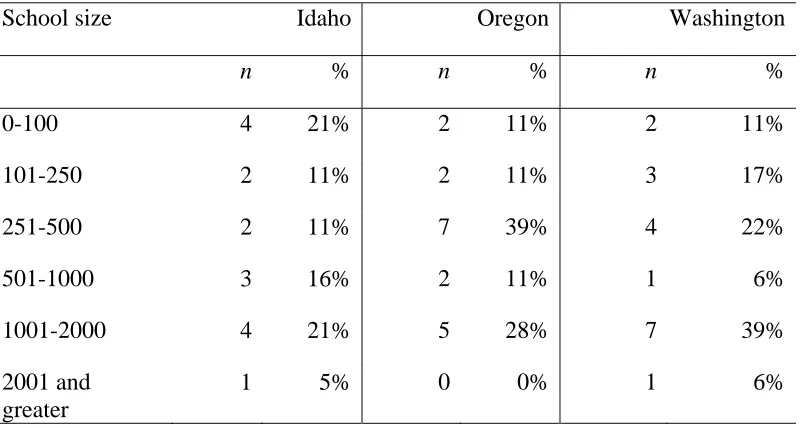
Of the states included in the study, 74 of the responses originated in Washington, 51 in Idaho, and 32 in Oregon. The respondents selected their school population on a Likert-type scale, shown in Table 1 (educators) and Table 2 (administrators).
Table 2
Approximate School Population by State as Reported by Administrators
School size Idaho Oregon Washington
n % n % n %
0-100 4 21% 2 11% 2 11%
101-250 2 11% 2 11% 3 17%
251-500 2 11% 7 39% 4 22%
501-1000 3 16% 2 11% 1 6%
1001-2000 4 21% 5 28% 7 39%
2001 and greater
1 5% 0 0% 1 6%
students enrolled in music (Table 3). Statistics were computed to determine if differences between states existed. There were no significant differences.
Table 3
Mean Percentage of School Student Body Participating in Music Courses by State and School Size
Location Size of
School Mean SD n
Idaho 0-100 33.75 19.242 4
101-250 30.00 22.140 12
251-500 20.76 10.929 17
501-1000 22.73 9.307 11
1001-2000 16.82 7.896 22
Total 22.24 13.883 66
Oregon 0-100 31.00 15.796 5
101-250 27.43 13.661 7
251-500 24.50 15.831 12
501-1000 23.88 10.934 8 1001-2000 18.22 18.371 18
2001+ 10.00 - 1
Total 22.94 15.823 51
Washington 0-100 24.00 14.303 8
101-250 34.88 22.158 8
251-500 21.38 9.794 13
501-1000 25.57 11.554 14
1001-2000 17.17 5.844 46
2001+ 16.00 - 1
Total 21.26 11.559 90
Total 0-100 28.35 15.500 17
101-250 30.78 19.776 27
251-500 22.02 12.021 42
501-1000 24.21 10.443 33
1001-2000 17.30 10.061 86
2001+ 13.00 4.243 2
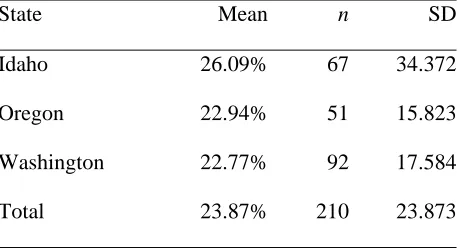
In addition, the mean participation in music courses by state was determined (Table 4). There were no significant differences between states.
Table 4
Mean Student Body Participation in Music by State
State Mean n SD
Idaho 26.09% 67 34.372
Oregon 22.94% 51 15.823
Washington 22.77% 92 17.584
Total 23.87% 210 23.873
From the school population and number of students enrolled in music courses data, the percentage of students participating in music courses was determined. The range was 0% to 87% and the mean number of students participating in secondary school programs throughout the Pacific Northwest region was 24%. An ANOVA revealed a significant difference in participation rates among various school sizes – F(5, 190) = 5.689, MSE = 938.07, p < .0001. A post hoc Tukey’s HSD test showed larger schools – those over 2001 students – had significantly lower participation rates and schools between 101 and 250 students had significantly higher music participation rates.
Table 5
Perceived Mean Majority Ethnicity of School Population Ethnicity Idaho Oregon Washington
White 95% 94% 93%
Hispanic 3% 6% 3%
Native American 2% 0% 4%
Asian, Black, other
0% 0% 0%
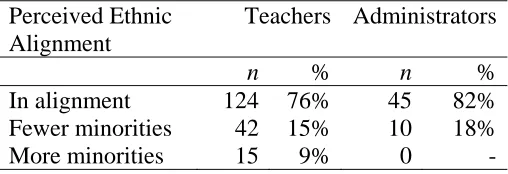
They were also asked whether the overall enrollment in their music courses reflected the ethnicity of their school population (Table 6). Unlike other research (Lubet, 2009; Carlisle, 2008; Mantie, 2008; Roah, 2011), Northwest US music educators and administrators report that the majority of students in ensembles and other music courses have ethnicities corresponding to the student body.
Table 6
Alignment of Ethnicity with Music Programs’ Enrollment (number of schools and percentages)
Perceived Ethnic Alignment
Teachers Administrators
n % n %
In alignment 124 76% 45 82%
Fewer minorities 42 15% 10 18%
More minorities 15 9% 0
-Research Question 1: What is the Breadth/Depth of Music Courses that are Currently Being Offered in Secondary Schools?
continue to be performing ensembles, principally bands (including jazz and marching) and orchestra, as seen in Table 7.
Table 7
Mean Participation in Instrumental Ensembles Currently Being Offered by Northwest Secondary Schools
Ensemble Idaho Oregon Washington Total
Mean
n % n % n % %
Band 50 98% 31 97% 70 95% 97%
Jazz Band 35 69% 20 63% 58 78% 70%
Marching Band 26 51% 6 19% 39 53% 41%
Orchestra 26 51% 6 19% 31 42% 37%
Percussion
Ensemble 11 22% 11 34% 27 36% 31%
Wind/String
Ensemble 14 28% 10 31% 49 67% 42%
Garage Band 4 10% 3 9% 2 3% 7%
Other 12 24% 5 16% 11 15% 17%
Percussion ensembles and chamber music ensembles (string and wind) are being offered at more than a quarter of the schools represented in the survey. Other
instrumental ensembles mentioned by educators/administrators included pep band, brass ensemble, mariachi, bluegrass, steel drums, guitar ensemble, winter guard, ukulele, jazz combo, and bagpipes and drums.
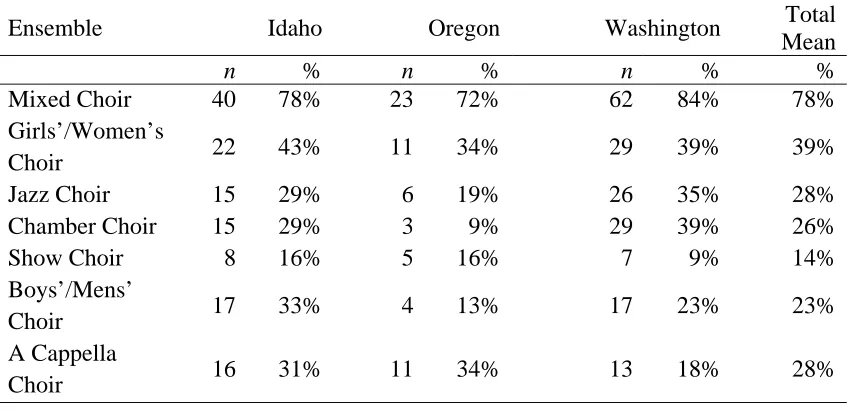
Table 8
Mean Participation in Vocal Ensembles Currently Being Offered by Pacific Northwest Secondary Schools
Ensemble Idaho Oregon Washington Total
Mean
n % n % n % %
Mixed Choir 40 78% 23 72% 62 84% 78%
Girls’/Women’s
Choir 22 43% 11 34% 29 39% 39%
Jazz Choir 15 29% 6 19% 26 35% 28%
Chamber Choir 15 29% 3 9% 29 39% 26%
Show Choir 8 16% 5 16% 7 9% 14%
Boys’/Mens’
Choir 17 33% 4 13% 17 23% 23%
A Cappella
Choir 16 31% 11 34% 13 18% 28%
Table 9
Number and Mean of Secondary Schools Which Offer Non-ensemble Music Courses Non-ensemble
Courses Idaho Oregon Washington
Total Mean
n % n % n % %
Guitar 33 80% 11 58% 32 67% 68%
Keyboard 3 7% 0 0% 9 19% 9%
Drumming 4 10% 2 11% 3 6% 9%
Recorder 2 5% 0 0% 1 2% 6%
Voice class 3 7% 1 5% 2 4% 5%
Music Theory 19 46% 10 53% 10 21% 40%
Music History 9 22% 2 11% 4 8% 14%
General Music 9 22% 1 5% 10 21% 16%
Music Technology 1 2% 2 11% 5 10% 8%
Composition 1 2% 0 0% 1 2% 1%
World Music 1 2% 0 0% 0 0% .7%
Research Question 2: What Factors Currently Affect Student Participation and Enrollment?
When music educators and administrators were asked whether they’d seen enrollment change in their music courses over the last 5-10 years, a significant
discrepancy can be seen between the two sets of responses (Table 10). While educators’ responses were divided into three similar groupings, nearly half of the administrators responding noted that they had seen a decrease in enrollment of 10% or more over the past five to 10 years.
Table 10
Perceived Enrollment Changes in Music Courses during the Past 5-10 Years
Response Teacher Administrator
No significant changes 35% 27% Increase of 10% or more 36% 24% Decrease of 10% or
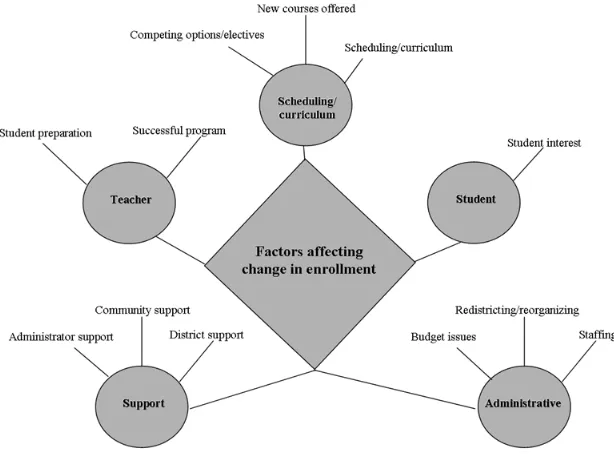
Participants were asked to provide free responses regarding factors that have effected changes in their school music enrollment. Their detailed answers provided material from which to construct an understanding of current strengths and limitations of school music programs. From the responses, broad categories were assigned which were sub-divided into one to three subcategories. The broad categories included: 1)
administrative issues, 2) aspects relating to the teacher, 3) aspects relating to the student, 4) support from administrators, the community, and the district, and 5) scheduling and curriculum (Figure 1).
Figure 1
Factors Which Have Affected Changes in Enrollment to Respondents’ School Music Program
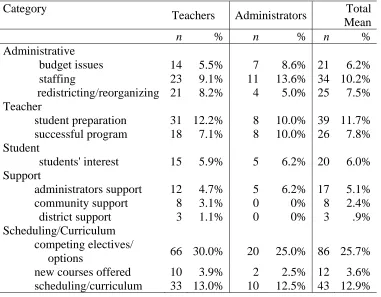
budgeting and staffing issues (relating to administrative concerns) while music educators were more likely to describe redistricting (also an administrative concern).
Table 11
Most Significant Factors Currently Effecting Student Participation and Enrollment Category
Teachers Administrators Total Mean
n % n % n %
Administrative
budget issues 14 5.5% 7 8.6% 21 6.2%
staffing 23 9.1% 11 13.6% 34 10.2%
redistricting/reorganizing 21 8.2% 4 5.0% 25 7.5%
Teacher student preparation 31 12.2% 8 10.0% 39 11.7%
successful program 18 7.1% 8 10.0% 26 7.8%
Student students' interest 15 5.9% 5 6.2% 20 6.0%
Support administrators support 12 4.7% 5 6.2% 17 5.1%
community support 8 3.1% 0 0% 8 2.4%
district support 3 1.1% 0 0% 3 .9%
Scheduling/Curriculum competing electives/
options 66 30.0% 20 25.0% 86 25.7%
new courses offered 10 3.9% 2 2.5% 12 3.6% scheduling/curriculum 33 13.0% 10 12.5% 43 12.9%
Research Question 3: How Are Music Educators and Administrators Addressing Student Participation and Enrollment?
while smaller schools (populations between 0 and 500) showed far fewer modifications in their offerings. In their descriptions of those changes, the addition of both vocal and instrumental ensembles, in a variety of forms (contemporary choir, show choir, vocal jazz, chamber choir; percussion ensemble, chamber orchestra, marching band, mariachi, rock band, and small chamber wind and string ensembles), outnumbered the deletion of ensembles. The addition of performance courses outnumbered the deletion of non-performance courses, guitar class and music theory the courses most often added. Table 12
Percentage of Schools That Have Modified Their Curriculum During the Last 5-10 Years, by School Population
Type of Change
0-100 101-250 251-500 501-1000 1001-2000
2001 and greater
Total Mean
n % n % n % n % n % n % %
No Changes 6 60% 9 45% 15 56% 5 20% 19 28% 0 0% 35%
Added/deleted
ensembles 4 40% 8 40% 10 37% 18 72% 40 59% 0 0% 41%
Added/deleted non-ensemble classes
1 10% 5 25% 4 15% 5 20% 18 26% 0 0% 16%
Table 13
Number and Percentage of Schools Offering Music Courses Before and After School Courses offered Before school After school
n % n %
Jazz Band 78 86% 8 6%
Chamber Orchestra 6 7% 6 4%
Chamber Choir 12 13% 4 3%
Jazz Choir 21 23% 4 3%
Marching Band 3 3% 22 15%
Other 21 23% 22 15%
None 70 43% 97 68%
Most music educators (66%) indicated they had been encouraged to recruit music students, while 10% had been discouraged, and 24% indicated that the issue had never been discussed (Table 14).
Table 14
Teachers’ Response Regarding Administrative Encouragement to Draw More Students into Music Program’s Ensembles
Recruiting
Type Idaho Oregon Washington
Total Mean
n % n % n % %
Encouraged 30 60% 23 74% 45 63% 66%
Discouraged 7 14% 1 3% 11 15% 10%
Not discussed 13 26% 7 23% 16 22% 24%
Administrators, however, overwhelmingly (96%) responded that they had encouraged teachers to find ways to recruit more students. Only 4% responded that the topic had not been discussed and none of the administrators said that they had
Table 15
Administrators’ Response Regarding Encouragement to Teachers to Draw More Students into Music Program’s Ensembles
Recruiting
Type Idaho Oregon Washington
Total Mean
n % n % n % %
Encouraged 18 95% 18 100% 17 94% 96%
Discouraged 0 0% 0 0% 0 0% 0%
Not discussed 1 5% 0 0% 1 6% 4%
Research Question 4: What Are the Perceived Issues Facing the Future of Music Education in Secondary Schools?
Teachers and administrators were asked what changes they anticipate seeing in the next five to 10 years in music education. They were asked to provide free responses and their answers offered thoughtful insights into their hopes and the realities of the future of both music education and education in general.
Figure 2
Perceived Issues Facing the Future of Music Education in Secondary Schools
Once the responses were categorized, they were tallied and averaged by the subcategories, as can be seen in Table 16. Differences in responses fall into two
Table 16
Issues Facing the Future of Music Education in Secondary Schools Identified by Educators and Administrators
Issue Type Teachers Administrators Total Mean
n % n % n %
Economic/socio-economic
funding 30 16% 9 17% 39 16%
redistricting/reorganizing 7 4% 3 6% 10 5%
Teacher
student preparation 9 5% 1 2% 10 4%
successful program 17 9% 5 9% 22 9%
Administrative
accountability/assessment 7 4% 1 7% 8 6%
staffing 9 5% 4 7% 13 6%
Curriculum competing electives/
options 41 22% 6 11% 47 17%
new courses offered 30 16% 9 17% 39 17%
enrollment figures 8 4% 4 7% 12 6%
family support 2 1% 0 0% 2 .5%
student
interest/commitment 11 6% 3 6% 14 6%
Status quo/no change 13 7% 9 17% 22 12%
Discussion
courses are currently being offered by high schools in the Pacific Northwest, and the prevailing concerns of educators and administrators in the region. While much of the data aligned with prevailing research, there were notable differences with regard to the regions surveyed.
Survey results indicated that the greatest percentage of student participation in music courses appeared in the smaller schools (population 101-250). Schools with populations of 0-100 had the second highest percentage of participation. Larger schools’ participation average (populations 1001-greater) was the lowest overall, averaging 15%. This is consistent with previous research (Stewart, 1991). Survey results also reveal clear patterns related to the size of enrollment. Smaller schools offer fewer electives, allowing for greater student participation in established electives like music. Larger school
populations offer a broader array of electives and larger music programs that attract students with prior experience and high interest, but constitute a smaller percentage of the overall student population in comparison to the smaller schools. This also supports previous research (Stewart, 1991).
Majority school ethnicity in all three states was overwhelmingly white, which reflects the region of the country under investigation. While more variation was
1991; Shuler, 1995; Williams, 2007), suggesting a greater regional commitment (and funding) to music education than is generally found nationally. This indicates that, along with the similarities within the ethnic make-up of the states, the selection of the three states for the study presented a cohesive basis from which to gather data.
A significant finding regarding music curriculum was that performing ensembles continue to be the mainstay of secondary music programs. Band was offered in the majority of schools participating in the survey, an important factor especially considering the impact funding and budget issues have made, as cited in the responses. Between 95% and 98% of the respondents indicated their school offered band, followed by jazz band (63% - 78%), marching band (19% - 53%), and orchestra (19% - 51%). A greater percentage of schools overall have offered string ensembles rather than orchestra, which may reflect the financial investment required by a full orchestra program. A number of schools reported variations of ensembles, such as drumming and steel drumming, and those that could culturally reflect their school communities (bluegrass, mariachi).
Choral programs were offered in just over three-quarters of schools participating in the survey. Choral offerings were considerably lower than instrumental offerings overall. In view of the cost associated with instrumental programs when compared to vocal ensembles, it is interesting to consider that vocal ensembles tend to be less
noteworthy were the regional differences regarding jazz and chamber choir offerings: both had greater participation rates in Idaho and Washington than in Oregon.
A curricular change in non-ensemble courses was noted, from music history-based curriculum to individual performance or AP/IB courses. Where music appreciation and music history were most commonly offered at the end of the 20th century (Leonhard, 1991; Stewart, 1991), guitar and music theory were found most often in the curricula, guitar at over half of the responding schools and music theory (which often accompany school AP or IB offerings) at nearly half the schools. It is interesting to note the regional differences in percentages in non-performance classes offered. Guitar is part of the curriculum at over three-quarters of Idaho schools as opposed to over half of the schools in Washington and Oregon. Music theory courses are part of the curriculum at nearly half of the respondents’ schools in Idaho and Oregon, and less than one-quarter of schools in Washington.
International Baccalaureate (IB) and Advanced Placement (AP) programs have had both positive and negative impacts on music programs. While many music educators expressed concern with the additional time these courses take out of students’ schedules, another perspective seems to be the option seen as a benefit by one educator (ST109): “Our school is now an IB school which allows students to participate in a Fine Arts (course) every year until the tenth grade as a requirement. This has shown an increase in our numbers.”
significant portion of the student body, offering experiences that provide valuable life skills in addition to a sense of community, ensembles have proven their worth in the school curriculum.
Despite this, survey results showed that most educators and administrators are addressing changes in student participation. When survey participants were asked whether they’d seen significant enrollment changes over the last five to 10 years, educators’ perspectives were fairly evenly divided between having seen no change, an increase of 10% or more, or a decrease of 10% or more, while nearly half of the administrators responded that they’d seen a decrease in enrollment. The majority of educators responded that they’d been encouraged by their administrators to find ways to draw more students into their classes, nearly one-quarter of the respondents noted that the topic had never arisen. Meanwhile, nearly all of the responding administrators noted that they have encouraged their music teachers to find ways to include more students into their ensembles.
The greatest number of responses, from both educators and administrators, focused on scheduling and curriculum issues, especially regarding music courses that have to compete for time with core classes and other electives, and the ever-increasing impact of graduation requirements on student learning. As one respondent (ST72) wrote, “I have found that our school is constantly adding to the graduation requirements above and beyond that of the state requirements. This, coupled with the addition of AP classes and college level entry classes, have driven my music class enrollments down.” Block and trimester scheduling, which have affected the number of classes offered each day, also have had a significant effect on participation and enrollment. Another participant noted, “We went from a 4x4 block schedule, with 8 offerings to a 7 period a day
schedule, thus limiting the options for students to take our music classes. The enrollment in our music classes has decreased slightly due to this change. We have been on the 7 period a day schedule for the past two years (ST95).”
In addition, the reduction in funding for both staffing and programs has changed the landscape of music education, especially when programs at elementary and middle schools have been reduced or eliminated. Considerable concern and frustration were expressed with regard to these programs, and the exposure and preparation students receive prior to high school: “Changes in enrollment in music programs are negatively affected when there is not support from the elementary and middle school music programs (ST33).” Secondary music programs rely on the prior knowledge and
experience their students receive in elementary and middle school. When those programs are compromised or cut, the foundation that high school teachers depend on is severely undermined.
Other causes for concern for both educators and administrators were issues associated with staffing, especially reductions in teaching time and staff, and high
turnover rates. One educator wrote, “We are short 2-3 desperately needed music teachers in our district but will not be given funding to hire those individuals. We have no
orchestra teacher, and no beginning band teachers. As a result, beginning band has not even been offered in the past until 7th grade, which is too late. The orchestra program is taught [to] 6-8 by whoever they can get to teach for hourly minimum wage, never a certified teacher…most of our music teachers are spread very thin (ST39).” The lack of adequate staffing throughout a district’s music program clearly impacts the viability of that program.
this respondent (SA30) wrote, “A change in the teacher or a change in the program. We can't keep supporting single digit numbers in high school ensemble classes. The real issue is the kids aren't connecting with the teacher, we're giving the teacher another year to make those connections and retain students for HS classes.” Another administrator’s support is expressed when he says, “We have one full time choir and one full time band teacher and they are always looking for ways to expand and grow our programs (SA45).” Educators’ and administrators’ responses confirm the remarkable outcomes achieved by effective and committed teachers.
Both increasing and declining enrollment and participation in music courses have had an effect on secondary music curricula. The majority of respondents had modified their curriculum during the last five to 10 years. The addition of an ensemble of some kind (both instrumental and vocal) outnumbered the deletion of ensembles and non-performance courses. It was noted that school size impacted the extent of the changes and modifications schools have made (Table 12): approximately half of the smaller schools (population 0-500) had not made significant changes to their curriculum, while nearly three-quarters of the larger schools (population 501-2000) have modified their
performance ensemble offerings. Non-performing courses were modified/changed by nearly one-quarter of the schools across the population continuum, indicating that performing ensembles are shown to be at the forefront of educators’ minds when modifying their course offerings.
courses in their curriculum to address the increasing role technology is playing in
education. Music theory courses most often seem to be an academic component added to accommodate those students involved in AP and IB programs. Zero period and after-school courses continue to offer additional meeting time for instruction. Results show that jazz band and a variety of vocal ensembles continue to incorporate the zero period for class time to accommodate students’ busy schedules. While after school offerings were minimal, marching band did appear in several respondents’ answers. And many high school educators are working closely with and/or on behalf of their elementary and middle school feeder programs by recruiting and advocating within their districts for stronger music programs.
Administrators’ and educators’ responses regarding the future of music education echoed their concerns for its current state and garnered the greatest number of responses, especially regarding music courses that have to compete for time with core classes and other electives, and the impact of ever-increasing graduation requirements on student learning. One administrator’s (SA19) response tells one side of the story, “As graduation requirements have increased, it has become more difficult to maintain upperclassmen in our music classes. I anticipate this will continue to be the case.” A response from another administrator (SA24) indicates that collective efforts on the part of both teachers and administrators have been mutually beneficial: “I worry about how state high stakes testing will impact all elective courses. I am lucky to have music teachers who are on board with doing their part in our all school literacy campaign. I am hoping that we will be able to find creative ways to maintain enrollment while helping students pass
respondent at a small school: “We find that at times over 80% of our students are
involved in either co-curricular or extra-curricular activities. Many who are interested in music are already so overcommitted that it is difficult for them to dedicate enough of their electives to music to be able to keep our band and choir large enough to produce a balanced sound (SA31).”
Educator concerns over funding were clearly addressed by survey respondents. One educator (ST72) raises the alarm by saying, “Possibly the deletion of all music classes in all levels...currently we have no elementary music program and our district is looking at a new levy to maintain current levels. If this levy is not passed, the school district must make drastic cuts, music at the 6-12 levels may be on the chopping block.” Another teacher (ST39) noted “the need for stronger booster programs because of a decrease in funding,” while another envisions a different future for school music:
I see getting away from high dollar instruments and providing musical
experiences that students feel are relevant to them. Technology is the way of the future and I anticipate that technology will be included in the music classroom to a point that students will create music using technology. In the small school setting high dollar items will not be possible, unless you are able to get large grants to help with costs (ST184).
The perspective of administrators resonates with those of educators. One
respondent (SA18) put it succinctly by saying, “We struggle each and every year to make sure that music is not cut from the school. This will continue to be an issue as long as schools are not funded properly.” The consensus is that if funding continues as it is or is further reduced, additional cuts in music curricula are inevitable.
position to full-time. I actually expect our band numbers to increase only slightly, with orchestra growing along with a continued growth in the choir program. Our goal is to be able to add an additional ensemble, and advanced women's choir, at the high school within the next five years (ST19).” A willingness to work in conjunction with their feeder schools as described by this educator, “I'm working on expanding staffing at my feeder middle school, in hopes that numbers can increase and in the near future I can add a third band and a percussion ensemble class as well (ST75),” directly correlates to the knowledge, experience, and ultimate success that educators foresee, noted by this respondent:
Once the students’ fundamental skills are built back up I expect enrollment in the music program to continue to grow, and to spend less of my time directing a band and more time having students working on musical projects in the composition, and performance realms. I also anticipate a greater emphasis on using recording technology both in my band and in my guitar/music appreciation class. Due to the size of my school (40 to 50 total high school students), I also anticipate my school band being developed more around a jazz band instrumentation rather than a concert band instrumentation. This will allow us to play higher quality and more culturally relevant literature (ST188).
Technology and courses that focus on lifelong music skills are anticipated by some of the respondents as considerations for the future, who cite the costs of existing programs and student interest as factors that will determine the direction music education will take: “I think we will see more non-traditional performing ensembles and more ensembles that reflect the ethnic music traditions of the populations a school serves. I fear large ensembles, both choral and instrumental, will decline in popularity among students unless educators continually find ways to make them appealing and relevant to today's students (ST144).”
CHAPTER 5: SUMMARY, CONCLUSIONS, AND RECOMMENDATIONS FOR FURTHER RESEARCH
The purpose of this research was to understand the perceptions of music educators and school administrators regarding current practices in curricular offerings as they pertain to music education. These included experienced and anticipated changes to the music curriculum, music education participation rates, barriers to music participation, and school and music course ethnic composition. From a regional perspective, music teachers and administrators were surveyed to determine if perceptions regarding any of the above items varied significantly between the groups. This chapter will provide a summary of the results and conclusions as well as suggestions for future research.
Summary
In the Pacific Northwest, approximately 22% of secondary students are involved in music courses of some kind. The majority of courses offered are performing
ensembles, primarily band, choir, and orchestra. A majority of the schools (68%) offer guitar class as a non-ensemble option, and music theory is frequently (40%) part of the curriculum.
have significantly affected, and will continue to affect, secondary student participation in music courses, factors which also align with research literature (Countryman, 2008; Rohan, 2011; Jones, 2008; Abril & Gault, 2008).
Conclusions
The intent of this paper was to determine the current state of music education, focusing on the demographics and curricular offerings of the Pacific Northwest region. Factors related to participation and enrollment, particularly perceived competition with increasing graduation requirements and core subjects, impact and frustrate educators’ abilities to draw and keep students in their programs. Principals are challenged by
reductions in state funding, which in turn effects their ability to maintain music programs and hire qualified, motivated teachers. Educators’ efforts to maintain viable music
programs, accommodate students’ complex scheduling issues for both required and elective courses, and administrators’ responsibilities to meet state and national
requirements for graduation seem to confound the opportunities inherent in the study of the fine and performing arts--self-growth, self-knowledge, social skills, creativity, and self-discipline--which benefit students throughout their academic career.
Although performing ensembles continue to be the focus of secondary school music curricula, it appears that many educators and administrators have explored non-performance courses as alternatives to ensembles. Some report an increased openness to exploring additional curricular offerings – diverse offerings that could interest students less interested in ensembles, but who show a great interest in music nonetheless.