V. Hima Bindu
Email- [email protected]
Address for correspondence
AN OVERVIEW ON BILAYERED TABLET TECHNOLOGY
INTRODUCTION1, 2
In the last decade, interest in developing a combination of two or more Active Pharmaceutical Ingredients (API) in a single dosage form (bi-layer tablet) has increased in the pharmaceutical industry, promoting patient convenience and compliance. Bi-layer tablets can be a primary option to avoid chemical incompatibilities between APIS by physical separation, and to enable the development of different drug release profiles (immediate release with extended release).
NEED OF BILAYER TABLETS 3, 4, 5
1. For the administration of fixed dose combinations of different APIs, prolong the drug product life cycle, buccal/mucoadhesive delivery systems; fabricate novel drug delivery systems
such as chewing device and floating tablets for gastro-retentive drug delivery.
2. Controlling the delivery rate of either single or two different active pharmaceutical ingredient(s) 3. To modify the total surface area available for API
layer either by sandwiching with one or two in active layers in order to achieve swellable/erodible barriers for modified release. 4. To separate incompatible Active pharmaceutical
ingredient (APIs) from each other, to control the release of API from one layer by utilizing the functional property of the other layer (such as, osmotic property).
ADVANTAGES OF THE BILAYER TABLET DOSAGE FORM
1. Bi-layer execution with optional single-layer conversion kit.
2. Cost is lower compared to all other oral dosage form.
Research Article
Bi-layer tablet is a new era for successful development of controlled release formulation along with various features to provide successful drug delivery. Bi-layer tablets can be primary option to avoid chemical incompatibilities between APIs by physical separation and to enable the development of different drug release profiles. Bi-layer tablet is suitable for sequential release of two drugs in combination and also for sustained release of tablet in which one layer is for immediate release as loading dose and second layer is maintenance dose. So use of bi-layer tablets is a very different aspect for anti-hypertensive, diabetic, anti-inflammatory and analgesic drugs where combination therapy is often used. Several pharmaceutical companies are currently developing bi-layer tablets, for a variety of reasons: patent extension, therapeutic, marketing to name a few. General tablet manufacturing principles remain the same, there is much more to consider because making multi-layer tablets involves multiple often incompatible products, additional equipment and many formulation and operation challenges. The present article provides an introduction to bi-layer tablet technology, challenges in bi-layer tablet manufacturing, various tablet presses used, quality and GMP requirements for their production various techniques used for bi-layer tabletting and recent developments in the field of bi-layer technology.
Keywords:Bi-layer tablet, API (active pharmaceutical ingredient), incompatibilities.
ABSTRACT
C. Gopinath, V. Hima Bindu*, M. Nischala
Department of Pharmaceutical Technology, Annamacharya College of Pharmacy, Rajampet, 516126, (A.P) INDIA.
Journal of Global Trends in
Pharmaceutical Sciences
Available online at www.JGTPS.com
ISSN: 2230-7346
3. Greatest chemical and microbial stability over all oral dosage form.
4. Objectionable odour and bitter taste can be masked by coating technique.
5. Flexible Concept.
6. They are unit dosage form and offer the greatest capabilities of all oral dosage form for the greatest dose precision and the least content variability.
7. Easy to swallowing with least tendency for hang-up.
8. Suitable for large scale production.
DISADVANTAGES OF BILAYER TABLET DOSAGE FORM
1. Some drugs resist compression into dense compacts, owing to amorphous nature, low density character.
2. Bitter tasting drugs, drugs with an objectionable odour or drugs that are sensitive to oxygen may require encapsulation or coating.
3. Difficult to swallow in case of children and unconscious patients.
4. Drugs with poor wetting, slow dissolution properties, optimum absorption high in GIT may be difficult to formulate or manufacture as a tablet that will still provide adequate or full drug bioavailability.
IDEAL CHARACTERSTICS OF BILAYER TABLETS 1. A bi-layer tablet should have elegant product
identity while free of defects like chips, cracks, discoloration and contamination.
2. It should have sufficient strength to with stand mechanical shock during its production packaging, shipping and dispensing.
3. It should have the chemical and physical stability to maintain its physical attributes over time. The bi-layer tablet must be able to release the medicinal agents in a predictable and
4. It must have a chemical stability shelf-life, so as not to follow alteration of the medicinal agents.
CHALLENGES IN BILAYER MANUFACTURING 6
Conceptually, bilayer tablets can be seen as two single-layer tablets compressed into one. In Practice, there are some manufacturing challenges.
Delamination:Tablet falls apart when the two halves of the tablet do not bond completely. The two granulations should adhere when compressed.
Cross-contamination: When the granulation of the first layer intermingles with the granulation of the second layer or vice versa, cross-contamination occurs. It may conquer the very purpose of the bilayer tablet. Proper dust collection goes a long way toward preventing cross contamination.
Production yields:To prevent cross contamination, dust collection is required which leads to losses. Thus, bilayer tablets have lower yields than single-layer tablets.
Cost:Bilayer tableting is more expensive than single-layer tableting for several reasons. First, the tablet press costs more. Second, the press generally runs more slowly in bilayer mode. Third, development of two compatible granulations is must, which means more time spent on formulation development, analysis and validation. These factors, if not well controlled/optimized, in one way or another will impact the bilayer compression per se and the quality attributes of the bilayer tablets (sufficient mechanical strength to maintain its integrity and individual layer weight control). Therefore, it is critical to obtain an insight into the root causes to enable design of a robust product and process.
Types of bilayer tablet press: 1. Single sided tablet press. 2. Double sided tablet press.
1. Single sided press: 7
The simplest design is a single sided press with both chambers of the doublet feeder separated from each other. Each chamber is gravity or forced fed with different power, producing the two individual layers of tablets. When die passes under the feeder, it is first loaded with the first layer powder followed by the second layer powder. Then the entire tablet is compressed in one or two steps.
Limitations of the single sided press: 8, 9, 10
1. No weight monitoring / control of the individual layers.
2. No distinct visual separation between the two layers.
3. Very short first layer dwell time due to the small compression roller, possibly resulting in poor de-aeration, capping and hardness problems. 4. This may be corrected by reducing the
turret-rotation speed (to extend the dwell time) but with the consequence of lower tablet output. 2. Double sided tablet press: 7
In most double sided tablet presses with automated production control use compression force to monitor and control tablet weight. The effective peak compression force exerted on each individual tablet or layer is measured by the control system at main compression of the layer. This measured peak compression force is the signal used by the control system to reject out of tolerance and correct the die fill depth when required.
3. Bilayer tablet press with displacement monitoring:
The displacement tablet weight control principle is fundamentally different from the principle based upon compression force. When measuring displacement, the control system sensitivity does not depend on the tablet weight but depends on the applied precompression force.
Advantages:
1. Weight monitoring / control for accurate and independent weight control of the individual layers.
2. Low compression force exerted on the first layer to avoid capping and separation of the two individual layers.
3. Independence from the machine stiffness. 4. Increased dwell time at precompression of both
first and second layer to provide sufficient hardness at maximum turret speed.
5. Maximum prevention of cross-contamination between the two layers.
6. Clear visual separation between the two layers and maximized yield.
PREPARATION OF BILAYER TABLETS 11, 12, 13, 14 Bilayer tablets are prepared with one layer of drug for immediate release with the second layer designed to release drug later, either as a second dose or in an extended release form8. The bilayer tablets with two incompatible drugs can also be prepared by compressing separate layers of each drug so as to minimize area of contact between two layers. An additional intermediate layer of inert material may also be included.
To produce adequate tablet formulation, certain requirements such as sufficient mechanical strength and desired drug release profile must be met. At times, this may be difficult task for formulator to achieve these conditions especially in bilayer tablet formulation where double compression technique is involved, because of poor flow and compatibility characteristic of the drug which will result in capping and/or lamination. The compaction of a material involves both the compressibility and consolidation.
Consolidation: it is the property of the material in which there is increased mechanical strength due to interparticulate interaction (bonding). The compression force on layer 1 was found to be major factor influencing tablet delamination.
Fig 1:Preparation of bilayer tablet Compaction
QUALITY AND GMP-REQUIREMENTS11
To produce a quality bi-layer tablet, in a validated and GMP-way, it is important that the Selected press is capable of 5:
1. Preventing capping and separation of the two individual layers that constitute the bi-layer tablet
2. Providing sufficient tablet hardness
3. Preventing cross-contamination between the two layers
4. Producing a clear visual separation between the two layers
5. High yield Accurate and individual weight control of the two layers.
These requirements seem obvious but are not so easily accomplished.
VARIOUS TECHNIQUES FOR BILAYER
TABLET 15, 16
A) OROS® push pulls Technology
This system consist of mainly two or three
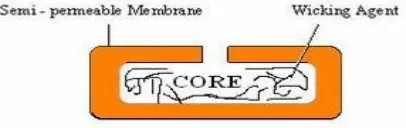
of the drug and other layer are consist of push layer. The drug layer mainly consists of drug along with two or more different agents. So this drug layer comprises of drug which is in poorly soluble form. There is further addition of suspending agent and osmotic ag en t. A semi permeable memb ran e surrounds the tablet core (Figure 2).
Fig. 2:Bilayer and trilayer OROS push pull technology
B) L-OROSTM Technology
This system used for the solubility issue Alza developed the L-OROS system where a lipid soft gel product containing drug in a dissolved state is initially manufactured and then coated with a barrier membrane, than osmotic push layer and then a semi permeable membrane, drilled with an exit orifice(Figure 3).
Fig.3:L–OROSTMTechnology
C) EN SO TROL Technology
Fig: 4:EN SO TROL Technology
D) DUREDAS™ Technology
This system is also known as Elan drug technologies’ Dual release drug delivery system. DUREDAS™Technology is a bilayer tablet which can provide immediate or sustained release of two drugs or different release rates of the same drug in one dosage form. The tableting process can provide a n i m m e d i a t e r e le as e granulate a n d a modified-release hydrophilic matrix complex as separate layers within the one tablet. The modified-release properties of the dosage form are provided by a combination of hydrophilic polymers.
E) DUROS Technology
The system consists f r o m an o u t e r c y l i n d r i c a l titanium al lo y reservoi r. This res ervoir has high impact strength and protects the drug molecules from enzymes. The DUROS technology is the miniature drug dispensing system that opposes like a miniature syringe and release minute quantity of concentrated form in continues and consistent from over months or year(Figure 5).
Fig. 5:DUROS Technology
VARIOUS APPROACHES USED IN THE BILAYER TABLET16, 17
a) Floating Drug Delivery System
From the formulation and technological point of view, the floating drug delivery systems are considerably easy and logical approach in the
development of Gastro retentive dosage f o r m s (GRDFs).
Approaches to design Floating Drug Delivery System
The following approaches have been used for the design o f floating dosag e f o rm s o f s i n g l e- and multiple-unit systems.
Intra gastric bilayered floating tablets
These are also compressed tablet as shown in figure and contain two layers i.e. Immediate and sustained release
Multiple unit type floating pills
These systems consist of sustained release pills as ‘seeds’ surrounded by double layers. The inner layer consists of effervescent agents while the outer layer is of swellable membrane layer. When the system is immersed in dissolution medium at body temperature, it sinks at once and then forms swollen pills like balloons, which float as they have lower density. (Figure 6)
Fig. 6:Multiple units of oral FDDS
b) Polymeric Bio adhesive System
These are designed to imbibe fluid following administration such that the outer layer becomes a viscous, tacky material that adheres to the gastric mucosa/mucus layer. This should encourage gastric retention until the adhesive forces are weakened. These are prepared as one layer with immediate dosing and other layer with bio adhesive property. Disadvantages:The success is seen in animal models with such system has not been translated to human subjects due to differences in mucous amounts, consistency between animals and humans.
solution for extended delivery of drug over a period of more than a few hours.
c) Swelling System
These are designed to be sufficiently small on administration so as not to make ingestion of the dosage form difficult (e.g., less than approximately 23 mm long and less than 11 mm wide for an oval or capsule –shaped tablet whereas 10- 12mm in diameter for round tablets). On ingestion they rapidly swell or disintegrate or unfold to a size that precludes passage through the pylorus until after drug release has progressed to a required degree. Gradual erosion of the system or its breakdown into smaller particles
enables it to leave stomach. The simple bilayer tablet may contain an immediate release layer with the other layer as extended release or conventional release.
RECENT DEVELOPMENTS IN THE FIELD OF BILAYER TABLETS
The introduction of bilayer tablets into the pharmaceutical industry has enabled the development of pre-determined release profiles of active ingredients and incorporation of incompatible active ingredients into the single unit dosage form. Large number of work has been done in this field. Some of the recent findings are explained in the preceding table-1.
Table-1: Various Advancements in the Field of Bilayer Tablets
DRUG(S) DOSAGE FORM RATIONALE REF.NO.
Diclofenac, Cyclobenza-prine Bilayer tablets Synergistic effect in pain 18
Granisetron HC1 Bilayer buccal tablets To overcome bioavailability problem, reducingside effects 19
Metformin HC1. Glimipiride Bilayer tablets Synergistic effect in diabetes 20
Indomethacin Bilayer floating tablets Biphasic drug release 21
Metformin HC1 Atorvastatin
Calcium Bilayer tablets
To develop polytherapy for the treatment of
NIDDS & hyperlipidemia 22
Cefixime Trihydrate Dicloxacilline
Sodium Bilayer tablets Synergistic effect in bacterial infections 23
Piracetam, Vinpocetin Bilayer tablets Synergistic effect in Alzheimer disease 24 Metformin HCl, Pioglitazone Bilayer tablets Synergistic effect in diabetes mellitus 25 Atenolol Bilayer buccal tablets To overcome bioavailability problem, reducingside effects and frequency of administration 26 Cefuroxime Axetil Potassium
Clavulanate Bilayer tablets
Synergistic effect against microbial infections
and to minimize dose dependent side effects 27 Amlodipine Besilate Metoprolol
Succinate Bilayer tablets Synergistic effect in hypertension 28,41
Diclofenac Sodium, Paracetamol Bilayer tablets Synergistic effect in pain 29
Ibuprofen, Methocarba-mol Bilayer tablets Synergistic effect of drugs in back pain 30 Atorvastatin, Calcium Bilayer buccal tablets To overcome bioavailability problem, reducing side effects and frequency of administration 31
Paracetamol diclofenac Bilayer tablets Synergistic effect of drugs in pain 32
Losartan Bilayer tablets Biphasic release profile 33
Metformin HCl, Pioglitazone Bilayer tablets Synergistic effect in diabetes mellitus 34
Guaifenesin Bilayer tablets Biphasic release profile 35
Tramadol, Acetaminophen Bilayer tablets Synergistic effect of drugs in pain 36
Atenolol, Lovastatin Bilayer floating tablets Synergistic effect in hypertension and biphasic release profile 37 Montelukast, Levocetrizine Bilayer tablets To improve the stability of drugs in combination 38 Salbutamol, Theophylline Bilayer tablets Synergistic effect of drugs in asthma 39 Glipizide, Metformin HCl Bilayer tablets To avoid interaction b/w incompatible drugs 40 Telmisartan Hydrochlor- thiazide Bilayer tablets To minimize contact b/w hydrochlorothiazide & basic component of telmisartan 42 Amlodipine, Atenolol Bilayer tablets To improve the stability of drugs in combination 43 Ascorbic acid, Cyano-cobalamine Double layer supposito-ries To avoid interaction b/w incompatible vitamins 44
Propranolol HCl Bilayer tablets Bimodal drug release 47
Artesunate, Amlodipine Tablet-in-tablet To minimize contact b/w drugs 48
Telmisartan, Simvastatin Bilayer tablets To minimize contact b/n Simvastatin & telmisartan 49
Cefuroxime axetil Bilayer floating tablets Bimodal drug release 50
Metformin, Glipizide Bilayer tablets Synergistic effect of drugs in diabetes 51
Ranitidine Aspirin Single layer coated tablets To minimize the contact of two incompatible drugs 52
Aspirin Ranitidine Single layer tablets To minimize the contact of two incompatible drugs 53
Statin Aspirin Bilayer tablets To minimize interaction b/w two drugs and side effects due to aspirin 54
Furosemide Bilayer floating tablets To enhance bioavailability 55
CONCLUSION:
Bi-layer tablets offer an excellent opportunity for manufacturers to separate themselves from their competitors, improve their products’ efficacy, and protect against impersonator products. Bi-layer tablet quality and GMP requirements can vary widely. This explains why many different types of presses are being used to produce bi-layer tablets, ranging from simple single-sided presses to highly sophisticated machines. When a quality bi-layer tablet needs to be produced in conjunction with accurate weight control of both layers, compression force-controlled presses are clearly limited because of their insufficient sensitivity and hence lack of accuracy at low compression forces required to secure interlayer bonding. Such problems become even more apparent when the tableting speed is high or increased. Accurate individual layer weight monitoring/control at high speed and in combination with reduced layer separation risk can be achieved with the displacement weight control system based presses.
REFERENCES
1. Martindale, the Extra Pharmacopoeia, 31sted.The Pharmaceutical Press, London; 1996.p.936–937. 2. Shiyani B et al. Formulation and evaluation of
bi-layer tablet of Metoclopramide hydrochloride and Ibuprofen. AAPS Pharm Sci Tech 2008;9(3):818-27. Pranjal Kumar Singh et al, Sanjoo Kumar et al Bilayer and Floating Bioadhesive Tablets: Innovative approach to Gastroretention, Journal of Drug Delivery & Therapeutics; 2011, 1(1): 32-35
3. Kulkarni A et al, Development and evaluation of bilayer floating tablets of atenolol and lovastatin for biphasic release profile.
4. Panchel hiten ashok, Tiwari ajay kumar, A Novel approach of bilayer tablet technology-A review, IRJP, 3(5), 2012.
5. Nirmal J et al, Saisivam S et al, Peddanna C et al, Muralidharan S et al, Nagarajan M et al, Bilayer tablets of atorvastatin calcium and nicotinic acid:
formulation and evaluation. Chem.
Pharm.Bull.2008;56: 1455–1458,26-102-1PB. 6. Varaiya C. Bi-layer neutraceutical tablets: Rewards
and challenges. In: Keefer R, Calvin J, Kirsch D, Bubb G, Bowman L, Matthews S. Multi-layer tabletting Q & A. CSC Publishing.
7. Jan Vogeleer et al Bi-layer tablets - why special technology is required The Courtoy-R292F tablet press, designed for quality bi-layer tablets Niro Pharma Systems.
8. Abshagen U et al, Spo ¨rl-Radun S et al, First data on the effects and pharmacokinetics of
isosorbide-5-mononitrate in normal man, Eur. J.
Clin.Pharmacol.;1981; 19p.423–429.
9. Hutt V et al, Bonn R et al, Fritschi E et al, Jaeger H et al, Evaluation of the pharmacokinetics and absolute bioavailability of three isosorbide- 5- mononitrate preparation in healthy volunteers, Arzneim.-Forsch./Drug Res.;1995, p.142–145.
10. Patel Mehul,Ganesh et al, Nanjan Sockan et al, Challenges in the Formulation of Bilayered Tablets: A Review, International Journal of Pharma Research and Development,2010, ISSN 0974 – 9446.
12. Breech AJ et al, Lucisano L J et al, Franz RM et al
Investigation into substrate cracking of a film coated bilayered tablet. J. Pharm.Pharmacol. 1998; 40:282-283.
13. M.A. Kalam et al, M. Humayun et al, N. Parvez et al, S.Yadav et al, A.Garg et al, S.Amin et al ,Y. Sultana et al and A. Ali.,Continental et al J. Pharmaceutical Sciences;2007,1: 30 – 35
14. Li S.P. et al, Karth M.G. et al, Feld K.M. et al, Pendharkar C.M. et al, Willams R.O. et al, Evaluation of Bilayer tablet machines. A Case study. Drug Dev. Ind. Pharm. 1995; 21(5): 571 590.
15. Science a n d Technologies [ online]. [cited 2012 Available from URL: http://www.durect.com 16. Naisarg d. Pujara ronak k. Gokani, Jalpa s. paun.
Bilayer tablet –An emerging trend ijprd, 2011; vol 4(04): june-2012 (102 - 111).
17. Shirwalkar A A, Kumar SM, Jacob S. Recent developments in floating drug delivery systems for gastric retention of drugs, an overview. Indian drugs. 2006; 43(9): 697-704.
18. Jamunadhevi V, Sahoo P K and Kailasam P. Formulation and in vitro evaluation of bi-layer tablet of cyclobenzaprine hydrochloride ER and diclofenac potassium IR- A novel fixed dose combination. Int J Res Pharm Sci 2011; 2(2):170-8.
19. Swamy P V, Kinagi M B, Biradar S S, Gada S N and Shilpa H. Formulation design and evaluation of bilayer buccal tablets of granisetron hydrochloride. Ind J Pharm Edu Res 2011; 45(3):242-7.
20. Pattanayak D P and Dinda S C. Bilayer tablet formulation of Metformin HCl and Glimepiride:A novel approach to improve therapeutic efficacy. Int J Drug Discovery Herb Res 2011; 1(1):1-4.
21. Jain J, Marya B H, Mittal RP and Patel M. Formulation and evaluation of indomethacin bilayer sustained release tablets. Int J PharmTech Res 2011; 3(2):1132-8.
22. Mohindeen S, Jyothi B, Pavani S, Satyanarayana T, Kumar SP and Krishna NS. Formulation and evaluation of bilayered tablets of metformin hydrochloride and atorvastatin calcium. Int J Pharm Sci Rev Res 2011; 10(2):130-4.
23. Kumar G V, Babu K A and Ramasanay C. Formulation and evaluation of bilayered tablets of cefixime
trihydrate and dicloxacillin sodium. Int J PharmTech Res 2011; 3(2):613-8.
24. Jadhav R T, Patil P H and Patil P R. Formulation and evaluation of bilayered tablets of piracetam and vinpocetine. J Chem Pharm Res 2011; 3(3):423-31. 25. Rajendran N N, Natarajan R, Subhashini R and Patel
H. Formulation and evaluation of sustained release bilayer tablets of metformin HCl and pioglitazone HCl. Int J Curr Pharm Res 2011;3(3):118-22.
26. Shirsand S B, Swamy P V, and Keshavshetti G. Design and evaluation of atenolol bilayer buccal tablets. RGUHS J Pharm Sci 2011; 1(1):4-10.
27. Parmar C K and Pednekar P P. Development and evaluation of bilayer tablets of cefuroxime axetil and potassium clavulanate. Int J Pharm Res Dev 2011; 3(7):16-23.
28. Jayaprakash S, Halith S M, Pillai K K, Balasubramaniyam P, Firthouse P U M and Boopathi M. Formulation and evaluation of bilayer tablets of amlodipine besilate and metprolol succinate. Derr pharmacia Lettre 2011; 3(4):143-54.
29. Musle K, Payghan S A and Disuza J I. Fomulation, evaluation and development of bilayer tablet. Int J Pharm Res Dev 2011; 3(10):80-7.
30. Remya P N, Damodharan N and Kumar CVS. Formulation and evaluation of bilayered tablets of ibuprofen and methocarbamol. Int J PharmTech Res 2010; 2(2):1250-55.
31. John AS, Sathesh B P R, Divakar G, Jangid M K and Purohit K K. Development and evaluation of buccoadhesive drug delivery system for Atorvastatin calcium. J Curr Pharm Res 2010; 1:31-8.
32. Gohel M C, Parikh R K, Nagori S A and Jethwa B A. Fabrication and evaluation of bi-layer tablet containing conventional paracetamol and modified diclofenac sodium. Indian J Pharm Sci 2010; 72(2):191-6.
33. Hiremath D, Goudanavar P, Azharuddin M, Udupi R H and Sarfaraz M. Design and characterization of bilayer controlled release matrix tablets of losartan potassium. Int J Pharm Res 2010; 2(4):34-9.
35. Kumar V B, Prasad G, Ganesh B, Swathi C, Rashmi A and Reddy AG. Development and evaluation of guaifenesin bilayer tablet. Int J Pharm Sci Nanotech 2010; 3(3):1122-8.
36. Naeem M A, Mahmood A, Khan S A and Shahiq Z. Development and evaluation of controlledrelease bilayer tablets containing microencapsulated tramadol and acetaminophen.Trop J Pharm Res 2010; 9(4):347-54.
37. Kulkarni A and Bhatia M. Development and evaluation of regioselective bilayer floating tablets of atenolol and lovastatin for biphasic release profile. Iranian J Pharm Res 2009; 8:15-25.
38. Rathod R T and Misra D. FDC of montelukast with levocetirizine: Focus on bilayer technology. J Indian Med Assoc 2009; 107(8):562-4.
39. Nagaraju R and Kaza R. Formulation and evaluation of bilayer sustained release tablets of salbutamol and theophylline. Int J Pharm Sci Nanotech 2009; 2(3):638-46.
40. Kadam V V, Waghmare M U, Venkatpurwar V P and Pokharkar V B. Preparation and evaluation of glipizide-metformin HCl sustained release bilayer tablet [online]. 2009 [cited 15 Sept 2009]. Available
From: URL:
www.scientificipca.org/paper/2009/09/15/200909 151256230A.doc [accessed on 1 July 2011].
41. Atram S C, Udavant Y K, Salunke RJ, Neb G B, Shahi S R, Gulecha B S and Padalkar A N. Formulation and evaluation of bilayer tablet containing Metoprolol succinate and Amlodipine besylate as a model drug for anti hypertensive therapy. J Pharm Res 2009; 2(8):1335-47.
42. Friedl T and Schepky G, inventors; Boehringer Ingelheim USA Corporation, assignee. Bilayer pharmaceutical tablet comprising telmisartan and a diuretic and preparation thereof. US patent 0227802 A1. 2009 Sept 10.
43. Aryal S and Skalko-Basnet N. Stability of amlodipine besylate and atenolol in multicomponent tablets of mono-layer and bi-layer types. Acta Pharm 2008; 58:299-308.
44. Bakuridze A D, Maglakelidze G M, Kurdiani N G, Tsagarejshvili NT and Berashvili DT. Technology of vitamins containing double layer suppositories. Georgian Med News 2008; 158:49-51.
45. Gohel M C and Sarvaiya K G. A novel solid dosage form of rifampicin and isoniazid with improved functionality. AAPS PharmSci Tech 2007; 8(3): article 68. doi: 10.1208/pt0803068.
46. Ouali A and Azad A K, inventors; Pharmascience Inc, assignee. Stabilized pharmaceutical composition of nonsteroidal anti-inflammatory agent and a prostaglandin. WO 2000/056339. 2007 Jan 03. 47. Patra C N, Kumar A B, Pandit H K, Singh S P and Devi
MN. Design and evaluation of sustained release bilayer tablets of propranolol hydrochloride. Acta Pharma 2007; 57:479-89.
48. Godha P, Bansal Y K, Sengupta S and Singh N, inventors; IPCA Laboratories Limited, assignee. Anti-malarial combination and methods of formulation. WO 2007/043061 A1. 2007 Apr 19.
49. Kohlrausch A, inventor; Boehringer Ingelheim International GmbH, assignee. Bilayer tablet of telmisartan and simvastatin. US patent 0078615 A1. 2006 Apr 13.
50. Dhumal R S, Rajmane S T, Dhumal S T and Pawar A P. Design and evaluation of bilayer floating tablets of cefuroxime axetil for bimodal release. J Sci Ind Res 2006; 65:812-6.
51. De-fang O, Shu-fang N, Compound
metformin/glipizide bilayer extended release tablets: Development and in vitro release. 2005; 14(3):169-72.
52. Fernandez I M, inventor. Glaxo Wellcome S A, assignee. Pharmaceutical formulation. EP 1363604A2. 2003 Nov 26.
53. Wang X, Cui F, Yonezawa Y and Hisakazu S. Preparation and evaluation of combination tablet containing incompatible active ingredients. Chem Pharm Bull 2003; 51(7):772-8.
54. Ullah I and Jain N B, inventors; Bristol-Mayer Squibb Company, assignee. Pharmaceutical composition containing a combination of a statin and aspirin and method, US patent 6235311 B1. 2001 May 22. 55. Ozdemir N, Ordu S and Ozkan Y. Studies of floating
dosage forms of furosemide: In vitro and in vivo