This is an open access journal, and articles are distributed under the terms of the Creative Commons Attribution-Non Commercial-ShareAlike 4.0 License, which allows others to remix, tweak, and build upon the work non-commercially, as long as appropriate credit is given and the new creations are licensed under the identical terms.
© 2018 Journal of Advanced Pharmacy Education & Research | Published by SPER Publication 81
Effect of resisted exercise to both quadriceps and whole-body
vibration on muscle mass of lower limbs and optimal health for
overweight women
Mohamed M. Mady
1*, Nagwa Mohamed Hamid Badr
2, Hany Ezzat Obaya
2, Nabil M. I. Abdel-Aal
31Physical Therapist at Dar El Salam General Hospital, Cairo, Egypt, 2Department of Physical Therapy for Cardiovascular/Respiratory Disorders and Geriatrics, Faculty of
Physical Therapy, Cairo University, Egypt, 3 Physical Therapy for Basic Science, Faculty of Physical Therapy, Cairo University, Cairo, Egypt.
Correspondence: Mohamed M. Mady, Physical Therapist at Dar el Salam General Hospital, Cairo, Egypt, E-mail: mohamadmady @ yahoo.com.
ABSTRACT
Objectives: To determine the effect of resisted exercise to both quadriceps and whole-body vibration on muscle mass of lower limbs and optimal health for overweight women. Design: Forty overweight women with age from 50 to 60 years old and BMI from 25 kg/m2 to 29.9 kg/m2 free from any disease were included in the study. All women assigned in one study group, resisted exercise to both quadriceps and whole-body vibration. The initial evaluation of weight, BMI, muscle mass, fat mass, water content, lower limb muscle mass, 6 minutes walking distance and optimal health questionnaire, revaluation done after two months and final eventuation after 4 months of treatment was done. Results: Study showed that resisted exercise to both quadriceps and whole-body vibrations increase muscle mass of both lower limbs and optimal health for overweight women. Conclusion: Resisted exercise to both quadriceps and whole-body vibrations are effective in increase of lower limbs muscle mass and optimal health for overweight women.
Keywords: Resisted exercise, whole body vibration, optimal health
Introduction
The balance of physical, emotional, social, spiritual, andintellectual health is defined as optimal health, enhance awareness, change behavior and create environments that support good health practices used to facilitate life style changes [1]. Health is known as absence of illness, but the considerations of optimal health exceeds this definition to include optimal functioning in all phases of life [2]. A state of complete physical, mental and social wellbeing expands on the medical definition of health beyond the simple absence of disease to complete or optimal [3]. Mental, physical activity, vitality, enjoying life and
facing the challenge in your life are defined as health but you have the optimal health is if you live like that all the time [4]. Physical, emotional, social, spiritual and intellectual health are five sections of describing quality of life to facilitate lifestyle changes to enhance awareness and change of behavior to create environments that support good health practice [5]. Wellness is considered as “an active process through which people become aware of, and make choices toward, a more successful existence”. This definition is provided by National Wellness Institute based on 3 creeds; first, a conscious, self-directed and evolving process of achieving full potential; second, multidimensional and holistic, encompassing lifestyle, mental and spiritual well-being, and the environment; third, positive and affirming [6]. Life style interventions have been shown to contribute in optimal health and longevity including exercise; people who are physically active live longer than who sedentary lived, and have primary and secondary prevention of cardiovascular diseases, osteoporosis, hypertension, obesity, depression, diabetes mellitus, and cancers mainly of the breast, colon and endometrial [7]. Sleep and rest; people who have adequate regular sleep live longer than who have inadequate sleep [8]. Diet, Mediterranean type diet rich in fruits and vegetables, low-fat dairy products, reduced content of saturated Access this article online
Website:www.japer.in E-ISSN: 2249-3379
How to cite this article: Mohamed M. Mady, Nagwa Mohamed Hamid Badr, HanyEzzatObaya, Nabil M. I. Abdel-Aal. Effect of resisted exercise to both quadriceps and whole-body vibration on muscle mass of lower limbs and optimal health for overweight women. J Adv Pharm Edu Res 2018;8(3):81-87.
Source of Support: Nil, Conflict of Interest: None declared.
fats and total whole grain or cereal with high fiber, promotes optimal health and longevity, as it provides micronutrients, minerals and vitamins, all of which contribute to improve immunity. Such a diet also provides large amounts of natural antioxidants [9]. BMI is used to measure the degree of obesity as it is calculated by dividing the weight in kilograms by squared height in meters; individuals with BMI from 25 to 29.9 Kg/m2 are overweight and individuals 30 kg/m2 or more known as obese. But BMI may be not accurate in assessment of body fat in very short, very tall or muscular individuals, or individuals suffering from medical conditions like edema [10]. bioelectrical impedance is used to measure body composition of fat mass, muscle mass and body fluids, over weight and obesity may be used synonymously by altered body composition, however weight alone is not a definitive assessment of altered body composition as in athletes who have body weight out of range, but their body composition is optimal, and the elderly people may have weight in the health range but they have altered body composition with decreased muscle mass and increase in fat mass, therefore in addition to body weight clinical measure of weight compositions are needed [11]. Bioelectrical impedance Analysis (BIA) is a rapid noninvasive method to assess body composition through electrical signals which impeded by body fat, water and fat free mass [12]. Altered body composition is associated with many disease and conditions like CVD, hypertension, dyslipidemia, hormonal imbalance, type 2 diabetes, metabolic syndrome and high blood cholesterol [13]. Aging is associated with body composition changes such as decrease in muscle mass or sarcopenia, which is more common in females possibly because the rate of protein synthesis is less than the rate of protein breakdown and increase in catabolic factors such as oxidative stress, inflammation and other factors like menopause with decrease of hormonal level [14]. muscle mass tends to decrease after thirty, and more decline occurs in females over 50 years old. In post menopause many factors tend to decrease muscle mass such as physical activity, protein intake, oxidative stress, vitamin D. Moreover, sex hormones estrogen, estrone, factors such as dehydroepiandrosterone (DHEA), growth hormone (GH), insulin- like growth factor-1 (IGF-1) and insulin appear to be correlated positively with muscle mass [15]. High level of physical activity showed to decrease body weight, but it is not sufficient to prevent deterioration in muscle mass, although resisted training has shown to decrease intramuscular fat mass and maintain muscle mass [16]. Research has shown that endurance exercise was not efficient in preventing sarcopenia, but the resisted exercise may be the key strategy to maintain muscle mass in postmenopausal women [17]. the rate of muscle mass loss is greater in lower limbs than in upper limbs [18]. Resisted exercise is one of the most useful approaches to increase muscle strength, decrease risk of injury, increase bone density, improve fitness, and improve cardiac function. Training techniques use progressive increase of force output by weight or specific equipment to target specific muscle groups, and this strength training provides significant functional benefits and improvement in overall health and well-being [19].
Whole body vibrations in general is the transfer of vibrations with any frequency to the human body, and can be used as exercise training by deferent frequencies, amplitude and forces [20]. Vibration training is used as a treatment modality to
sarcopenia, metabolic syndrome, osteoporosis and fitness, rehabilitation physical therapy, professional sport, and wellness application [21]. Resisted training was shown to decrease age related changes in body composition such as decrease in muscle mass and increase of fat mass, but combined whole body vibration with resisted exercise had more beneficial effects [22]. Study done on sedentary postmenopausal women to determine the effect of resisted exercise training on body composition and the combination of whole body vibration and resisted exercise showed that women underwent to whole body vibration with resisted training had greater improvement in total and regional muscle mass and decrease in fat mass than women underwent resisted training only [23]. The six-minute walk test measure the distance that the individual is able to walk in 6 minutes to evaluate functional capacity and physical performance [24].
Materials and Methods
Subjects
Forty overweight females with age range from 50 years to 60 years old and BMI between 25 to 29.9Kg/m2 were selected from employees in Dar el Salam general hospital, with the following inclusion criteria: the Subjects with no chronic diseases (diabetes, hypertension and liver disease, etc.), and had good mentality to follow the study instructions, and with exclusion criteria of any other disease that may interfere with the physical therapy program or any other problems that may affect the exercise such as cardiac disease, cardiac pacemaker and musculoskeletal disorder. All subjects were assigned in one study group of forty Subjects. They received caloric diet according to Harris Benedict equation, whole body vibration, and Resisted exercise to both lower limbs. Initial evaluation, post treatment by two months' evaluation and final evaluation after 4 months of the study were done.
After explaining the aim and steps of the study to these employees a written informing consent was signed by each participant; the study was approved by the Ethics Review Committee of the Faculty of Physical Therapy, Cairo University.
Method for evaluation:
Height and weight measurements: It was done for every subject; Subjects stand against the Height scale with their back, close feet and raised head without shoes.
Also, weight of all subjects were measured by standing on weigh scale. The BMI was calculated for all subjects as follows:
BMI = WeightHeigt (inMkgm)2
Muscle mass of both lower limbs evaluated by body composition analysis equipment (In body 170). All subjects stand on the equipment without rings in fingers or metal in hands and taking off their shoes and stocks insuring good contact of heals and soles with the metal parts under both feet and good contact of both thumbs and fingers of both hands and fingers with raising arms away from body.
Six-minute walk test: 30-meters platform walking track, in which the start and end was signed by shiny triangle, was measured; the 30-meters distance was divided into 3-meters intervals by colored tapes. Chair was available for rest (if needed), the distance walked in 6 minutes was measured. Optimal Health Questionnaire: all questions of the five dimensions were asked to each subject alone and score of each part of the five dimensions calculated together, and total score was recorded for interpretation as follows.
The interpretation of overall score:
There is a maximum of 200 points available across the 5 Dimensions.
• Between 151 – 200: very satisfied with the overall pattern of your life, assuming that the balance is OK across the dimensions.
• Between 101 – 150: able to cope with pressure for much of the time and respond positively when do.
• Between 51 – 100: either all or some of the dimensions are not fulfilled. This means that stress is likely to be affecting you in many areas of your life.
• Between 0 - 50 feeling stressed and unfulfilled in many areas of your life and, possibly, not sure that you can find a way of coping with it.
Procedures for treatment:
Diet Control therapy:
Harris Benedict formula for women: The Harris Benedict equation is a calorie formula using the variables of height, weight, age, and gender to calculate basal metabolic rate (BMR). This is more accurate than calculating calorie needs based on total body weight alone. BMR (women) = 655 + (9.6 X weight in kilos) + (1.8 X height in cm) – (4.7 X age in years), then
At Sedentary – little or no exercise:
Calorie-Calculation = BMR X 1.2 At Lightly Active (light exercise/sports 1-3 days/week)
Calorie-Calculation = BMR X 1.375 for the study group[25].
With total calories distribution as follows: •Carbohydrates 50-60 % of total calories •Fat 25-30 % of total calories
•Protein 15-20 % of total Calories
Calorie-Calculation = 1415.58 X 1.375 =1946.42 Kcal/ day
Energy deficit from total Calories by 400 Kcal/ day = 1546 Kcal
Progressive Resistive exercise to both Knees Extensors. The exercise was done by using Sand weight fixed on the lower end of leg just above the ankle joint for 3 bouts, 8-10 repetitions, each bout three sessions per week. Subjects set on the edge of bed with straight back, 1.5 kg sand weight fixed to lower end of leg just above the ankle of both Lower limbs; subject was instructed to raise leg upwards till full extension of knees for 10 repetitions for each lower limb. Then increased weight to 2 kg for 8 repetitions for each limb, and increased weight to 2.5 kg for 8 repetitions for each lower limb.
Whole body vibration
Subjects instructed to wear comfortable clothes and shoes, eat the last meal 2 to 3 hours before use of whole body vibration, and stand straight with extended locked knees with each foot on both sides of the equipment platform.
They were instructed to keep arms beside the body and not support it on equipment handrails as it carry some body weight. The subjects were instructed to till if they feel drowsy or tired or press the stop bottom. Whole body vibration was applied for 10 minutes on 12 Hz /min. three sessions per week.
Data analysis
Descriptive-statistical analysis was performed for all pre- and post-treatment variables and all data were expressed as mean and standard deviation. Paired t-test used to compare between pre- and post-treatment values at the same group. The statistical package for social science (SPSS) version 18 was utilized for data analysis and Statistical tests considered significant if p<0.05.
Results
The purpose of this study was to investigate the effect of resisted exercise on both lower limbs and whole-body vibration on body composition and optimal health for overweight women. There were significant differences in weight, BMI, muscle mass of both lower limbs, 6 minutes walking distance and optimal health. Questionnaire tables from 1 to 17, and fingers from 1 to 6 show the significant differences of decrease of weight by mean of 4.75 Kg, decrease of BMI by mean of 0.78 Kg/m2, increase of right Lower limb muscle mass by mean of 0.44 kg, increase of left lower limb muscle mass by mean of 0.45 kg, increase of 6 minutes walking distance by mean of 30.37 meters, and increase of points of optimal health Questionnaire by mean of 50.25 points.
Table 1: Mean and SD of Body Weight pretreatment, post 2 months of treatment, and post 4 months of
treatment.
Body Weight Mean ±SD
pre-treatment 73.14 ±5.4 post 2 months of treatment 70.45 ±5.06 post 4 months of treatment 68.39 ±4.84
Table 2: Repeated measurement ANOVA of Body Weight pretreatment, post 2 months of treatment, and post 4 month
of treatment.
Source of variation SS DF MS F P S Within subjects Between subjects Error 453.94 3018.8 35.18 2 39 78 226.97 77.4
0.45 503.11 0.0001 S
*SS: Sum of square *MS: Mean square*S: significant *DF: Degree of freedom
Table 3: post-hoc test of the Body Weight pretreatment post 2 months of treatment, and post 4 months of
treatment.
Comparison Mean Difference t-value P-value S Pretreatment vs. post 2
months of treatment 2.69 17.92 P<0.001 S Pretreatment vs. post4
months of treatment 4.75 31.62 P<0.001 S Post 2 months of treatmen
vs. post 4 months of
treatment 2.05 13.69 P<0.001 S
*S: significant
Table 4: Repeated measurement ANOVA of BMI pretreatment, post 2 months of treatment, and post 4
months of treatment.
Source of variation SS DF MS F P S Within subjects Between subjects Error 66.07 394.57 5.47 2 39 78 33.03 10.11 0.07
470.8 0.0001 S
*SS: Sum of square *MS: Mean square *S: significant *DF: Degree of
freedom
Table 5: post-hoc test of the BMI pretreatment, post 2 months of treatment, and post 4 months of treatment.
Comparison Mean Difference t-value P-value pretreatment vs. Post 2 month
of treatment 1.03 17.38 P<0.001 pretreatment vs. post4 months
of treatment 1.81 30.59 P<0.001 post 2 months of treatment vs
post 4 months of treatment 0.78 13.2 P<0.001
*S: significant
Table 6: Mean and SD of Muscle mass at right lower limb pretreatment, post 2 months of treatment, and post 4 month
of treatment.
Muscle mass at right lower limb Mean ±SD
pre-treatment 6.61 ±0.74
post 2 months of treatment 6.89 ±0.73 post 4 months of treatment 7.06 ±0.68
*SD= standard deviation
Table 7: Repeated measurement ANOVA of Muscle mass at right lower limb pretreatment, post 2 months of
treatment, and post 4 months of treatment.
Source of variation SS DF MS F P S Within subjects Between subjects Error 4.1 60.11 0.7 2 39 78 2.05 1.54 0.009
226.56 0.0001 S
*SS: Sum of square *MS: Mean square *S: significant *DF: Degree of freedom
Table 8: post hoc test of the Muscle mass at right lower limb pretreatment, post 2 months of treatment, and post
months of treatment.
Comparison Mean Difference t-value P-value S Pretreatment vs. post 2 0.28 13.25 P<0.001 S
months of treatment Pretreatment vs. post4 month
of treatment 0.44 21.05 P<0.001 S Post 2 months of treatment v
post 4 months of treatment 0.16 7.79 P<0.001 S
*S: significant
Table 9: Mean and SD of Muscle mass at left lower limb pretreatment, post 2 months of treatment, and post 4
months of treatment.
Muscle mass at left lower limb Mean ±SD
pre-treatment 6.61 ±0.71
post 2 months of treatment 6.9 ±0.7 post 4 months of treatment 7.07 ±0.66
*SD= standard deviation
Table 10: Repeated measurement ANOVA of Muscle mas at left lower limb pretreatment, post 2 months of
treatment, and post 4 months of treatment.
Source of variation SS DF MS F P S Within subjects Between subjects Error 4.17 55.3 0.74 2 39 78 2.08 1.41 0.009
218.89 0.0001 S
*SS: Sum of square *MS: Mean square *S: significant *DF: Degree of freedom
Table 11: post hoc test of the Muscle mass at left lower limb pretreatment, post 2 months of treatment, and pos
4 months of treatment.
Comparison Mean Difference t-value P-value S Pretreatment vs. post 2 month
of treatment 0.28 13.04 P<0.001 S Pretreatment vs. post4 month
of treatment 0.45 20.69 P<0.001 S Post 2 months of treatment vs
post 4 months of treatment 0.16 7.64 P<0.001 S
*S: significant
Table 12: Mean and SD of 6 min walk test pretreatment post 2 months of treatment, and post 4 months of
treatment.
6 min walk test Mean ±SD
pre-treatment 411.5 ±14.05 post 2 months of treatment 428.25 ±13.35 post 4 months of treatment 441.87 ±10.87
*SD= standard deviation
Table 13: Repeated measurement ANOVA of 6 min walk test pretreatment, post 2 months of treatment, and pos
4 months of treatment.
Source of variation SS DF MS F P S Within subjects Between subjects Error 18518 16572 2701.4 2 39 78 9259 424.93 34.63
267.34 0.0001 S
*SS: Sum of square *MS: Mean square *S: significant *DF: Degree of freedom
Table 14: post hoc test of the 6 min walk test pretreatment, post 2 months of treatment, and post 4
months of treatment.
Comparison Mean Difference t-value P-value S Pretreatment vs. post 2 month
of treatment 16.75 12.72 P<0.001 S Pretreatment vs. post4 month
of treatment 30.37 23.08 P<0.001 S Post 2 months of treatment vs
post 4 months of treatment 13.62 10.35 P<0.001 S
pretreatment, post 2 months of treatment, and post 4 months of treatment.
Questionnaire Score Mean ±SD
Pretreatment 117.12 ±16.04
Post 2 months of treatment 140.12 ±10.83 Post 4 months of treatment 167.37 ±8.0
*SD= standard deviation
Table 16: Repeated measurement ANOVA of questionnaire Score pretreatment, post 2 months of
treatment, and post 4 months of treatment.
Source of variation SS DF MS F P S Within subjects
Between subjects Error
50622 13773 3345
2 39 78
25311 353.16 42.88
590.21 0.0001 S
*SS: Sum of square *MS: Mean square *S: significant *DF: Degree of freedom
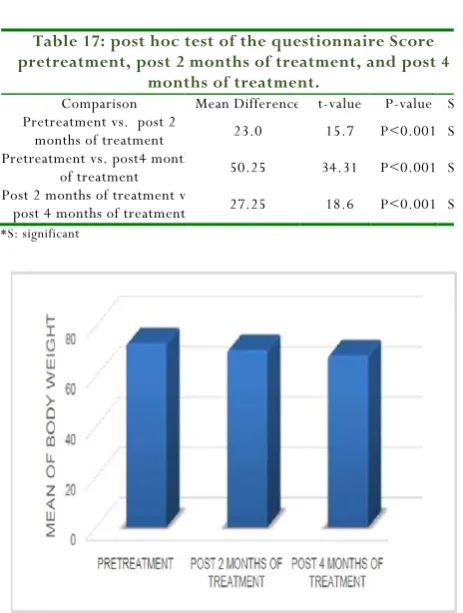
Table 17: post hoc test of the questionnaire Score pretreatment, post 2 months of treatment, and post 4
months of treatment.
Comparison Mean Difference t-value P-value S Pretreatment vs. post 2
months of treatment 23.0 15.7 P<0.001 S Pretreatment vs. post4 month
of treatment 50.25 34.31 P<0.001 S Post 2 months of treatment v
post 4 months of treatment 27.25 18.6 P<0.001 S
*S: significant
Figure 1: Mean and ±SD of Body Weight at pretreatment,
post 2 months of treatment, and post 4 months of treatment
Figure 2: Mean and ±SD of BMI at pretreatment, post 2
months of treatment, and post 4 months of treatment.
Figure 3: Mean and ±SD of Muscle mass at right lower
limb at pretreatment, post 2 months of treatment, and post 4 months of treatment.
Figure 4: Mean and ±SD of Muscle mass at left lower limb
at pretreatment, post 2 months of treatment, and post 4 months of treatment.
Figure 5: Mean and ±SD of 6 min walk test at
Figure 6: Mean and ±SD of Questionnaire Score at pretreatment, post 2 months of treatment, and post 4
months of treatment
Discussion
Diet and exercise are generally recommended for obese subjects. Several studies have evaluated the effects of exercise training on obesity. However, the beneficial effects of diet and different types of exercises on over-weighted subjects’ body composition, fitness, and optimal health have not been well differentiated. The present study was designed to clarify the beneficial effects of resisted exercises to both Quadriceps and whole-body vibration on lower limbs muscle mass, fitness and optimal health in overweight women.
The primary objective of this study was to study the therapeutic efficacy of resisted exercises to both Quadriceps and whole-body vibration on lower limbs muscle mass, six minutes walking test, and its effect on optimal health in overweight women. This study was conducted on forty healthy women who agreed to participate in the study. Their ages ranged from 50 to 60 years. They were selected from employees in dar el salam general hospital, according to their weight, height and body mass index (BMI) equation. Their BMI ranged from 25 to 29.9 kg/m2. This study showed a significant decrease in body weight, body mass index, and increase in right lower limb muscle mass, left lower limb muscle, distance of 6 minutes' walk test and scour of optimal health questionnaire after treatment compared to their mean levels before therapy.
Decrease in estrogen, GH, muscle protein synthesis, increase in catabolic factors such as inflammations, decreased physical activity, law protein intake and elevated oxidative stress are the most common causes of sarcopenia in post-menopausal women. Exercise, good nutrition, modification of life style and vitamin D consumption are important contributor to increase muscle mass, strength and quality of life. For example, resisted exercise and adequate protein intake can help to reduce the risk of sarcopenia and muscle mass loss [26]. People with lack of exercise and sedentary life are at risk of osteoporosis, muscle loss, overweight, chronic pain, digestive problems and depression. Whole body vibrations improve bone density, muscle tone, metabolic rate and lymphatic flow [27]. exercise programs had
great roll in prevention of altered body composition, decreased body fat, waist circumference and increase lean mass [28].
Conclusion
The application resisted exercise to both quadriceps and whole-body vibration are effective means reduce whole-body weight, improve muscle mass of both lower limbs and improve optimal health in overweight women.
Acknowledgements
The authors would like to appreciate all the participants for their cooperative attitude.
Conflict of interest
The authors declared that there was no conflict of interest in this study.
Funding
This research received no specific grants from any funding organization in the public, commercial, or non- profit sectors.
References
1. Asikainen TM, Kukkonen-Harjula K, Miilunpalo S. Exercise for health for early postmenopausal women: a systematic review of randomized controlled trials. Sports Med 2004; 34:753-78.
2. Asikainen TM, Kukkonen-Harjula K, Miilunpalo S. Exercise for health for early postmenopausal women: a systematic review of randomized controlled trials. Sports Med 2004; 34:753-78.
3. Bolnowski M, Nilsson BE. Assessment of human body composition using dual-energy x-ray absorptiometry and bioelectric impedance analysis. Med SciMonit 2001;7(5):1029-33.
4. Charles BC: Concepts of physical fitness: active lifestyles for wellness; McGraw-Hill, c2004.section 1 Pp 1-20, (2004).
5. Darren ERW, Crystals WN, Shannon SD.: Health Benefits of Physical Activity: The Evidence. CMAJ; 174(6):801-809, (2006).
6. Dionne IJ, Kinaman KA, Poehlman ET. Sarcopenia and muscle function during menopause and hormone-replacement therapy. J Nutr Health Aging 2000; 4:156-61.
and developed countries. Int J ObesRelatMetabDisord;26(1):48-57, (2002).
8. Dolny DG, Reyes GFC. Whole body vibration exercise: training and benefits. Curr Sports Med Rep 2008; 7:152– 7.
9. Du H, Newton P, Salamonson Y, Carrieri-Kohlman V, Davidson P. A review of the six-minute walk test: its implication as a self-administered assessment tool. European journal of cardiovascular nursing. 2009; 8(1):2-8.
10. Fanciulli G, Delitala A, Delitala, G. Growth hormone, menopause and ageing: no definite evidence for ‘rejuvenation’ with growth hormone. Hum Reprod Update 2009; 15:341-58.
11. Frontera W. R., Hughes V. A., Fielding R. A., Fiatarone M. A., Evans W. J., Roubenoff R. (2000). Aging of skeletal muscle: a 12-yr longitudinal study. J. Appl. Physiol. 88, 1321–1326
12. GALBIS-Reig D, Gonzalez Er and Oley Ma: Obesity Management Strategies. Us Pharmacist; FEB:85-94, (2002).
13. Gloeckl R, Jarosch I, Bengsch U, Claus M, Schneeberger T, Andrianopoulos V, Christle JW, Hitzl W, Kenn K: What's the secret behind the benefits of whole-body vibration training in patients with COPD? A randomized, controlled trial, Respir. Med. 126: 17-24, 2017; PMID 28427544.
14. Gusi N, Raimundo A, Leal A. Low-frequency vibratory exercise reduces the risk of bone fracture more than walking: a randomized controlled trial. BMC Musculoskeletal Discord 2006; 7:92
15. Harris, J.A. and Benedict, J.A.: Biometric studies of basal metabolism in man, Carnegie Institute of Washington, DC: Publication no. 279, (1919).
16. Harvard Medical School CME course series: Healthy sleep: An Overview of the Processes Governing the Biology of Normal Sleep and the Consequences of Insufficient sleep, (2010).
17. Iannuzzi-Sucich M, Prestwood KM, Kenny AM.
Prevalenceofsarcopenia and predictors of skeletal musclemass in healthy, older men and women. J Gerontol a BiolSci Med Sci;57: M772-7 (2002).
18. Kusuma YS, Babu BV, Naidu JM. Group- and sex-specific effects of age, body composition and pulse rate on blood pressure variability in some cross-cultural populations of Visakhapatnam District; South India. JCardiovasc Risk2001;8(6):337-47
19. National Wellness Institute. About Wellness. Available from: http://www. nationalwellness.org/? page=About Wellness Last accessed July 15, 2015.
20. O’Donnell MP.: Definition of health promotion 2.0: embracing passion, enhancing motivation, recognizing dynamic balance, and creating opportunities. Am J Health Promot 24: iv, (2009).
21. O’Donnell MP.: Definition of health promotion 2.0: embracing passion, enhancing motivation, recognizing dynamic balance, and creating opportunities. Am J Health Promot 24: iv, (2009).
22. Robert H. Lerman and Deann J. Liska: Body Composition and Optimal Health, Ansr–Applied Nutritional Science Reports, (2002).
23. Shaw, I..; Shaw, B.S. (2014). Resistance Training and the Prevention of Sports Injuries. In: Hopkins, G. (Ed.). Sports Injuries: Prevention, Management and Risk Factors. Nova Science Publishers, Hauppauge, NY. USA. ISBN 978-1-63463-305-5
24. Sorichter, S; Koller A; Haid C; Wicke K; Judmaier W; Werner P; Raas E. (July 1995). "Light concentric exercise and heavy eccentric muscle loading: effects on CK, MRI and markers of inflammation". Int J Sports Med. 16(15): 288-292. Doi: 10.1055/s-2007-973007. PMID 7558524. 25. Stiegler, P and Cunliffe, A. (2006). “The Role of Diet and
Exercise for the Maintenance of Fat Free Mass and Resting Metabolic Rate During Weight Loss”. Sports Medicine 36 (3) 239-262.
26. Todd, L.: It Takes Guts to Be Healthy: Assessing The Gut Microbiome to Maintain Optimal Health, Glob Adv Health Med. 2013 Nov; 2(Suppl): S94.
27. Trichopoulou A.: Traditional Mediterranean Diet and Longevity in The Elderly: A Review. Public Health Nutrition; 7(7): 943-947, (2004).