South West Well-being
Programme
Evaluation Report
March 2009
Acknowledgements
We would like to thank all participants who have taken part in this study. We are particularly appreciative towards the staff involved in managing and delivering the South West Well-being programme for their time and assistance. We also
acknowledge the major contribution made by people from across the South West of England who gave their time to tell us about their experiences of taking part in project activities. We are grateful to Chris Rawles, UWE, for her administrative support during the course of the research.
Interactivity
Please click the contents in order to jump to the relevant section of the report.
Contacts
For further information about this report and the evaluation contact:
Mat Jones,
Centre for Public Health Research, University of the West of England, Blackberry Hill,
Bristol BS16 1DD Tel: 0117 3288769
Email: [email protected] or [email protected]
For further information about the South West Well-being programme contact:
Jaine Keable,
South West Well-being Manager, Westbank,
Farm House Rise, Exminster, Exeter, EX6 8AT. Tel: 01392 824752.
Email: [email protected]
For a full copy of the first year evaluation report please visit:
Contents
1 Executive Summary 1
2 Overview 5
2.1 Introduction
2.2 Aim & objectives of the report 2.3 Audience for this report
3 The South West Well-being Programme 7
3.1 Big Lottery Well-being fund 3.2 South West Well-being portfolio
3.3 South West Healthy Living Alliance strategy
4 Study Methodology 11
4.1 Process evaluation overview 4.2 Outcome evaluation overview 4.3 Participants and schedule of work 4.4 Fieldwork with project staff 4.5 Fieldwork with service users 4.6 Ethical issues
4.7 Thematic analysis
Guide to project profiles 15
5 Project Profiles
Mental Health for All, For All HLC, Weston-super-Mare 19 Pathways to Health, West Cornwall HLC, Penwith 25 Step by Step, Cornwall & Isles of Scilly HPS, Redruth 31 Activate Your Life, Healthy Living Wessex, Dorset 37 Lawrence Weston Health Steps, Barrowmead HLC, Bristol 43 The Well Bean Project, Balsam Centre, Wincanton 49 Health Matters in Plymouth, Wolesley Trust, Plymouth 55 Health Maps, Upstream HLC, Crediton 61 Pathways to Health, Knowle West Health Park, Bristol 67 Wellspring Community Kitchen, Wellspring HLC, Bristol 73 Westbank New Steps, Westbank HLC, Exminster 79
6 South West Well-being Programme Themes 87
6.1 Introduction
6.2 Promoting Well-being 6.3 Organisational context 6.4 Project delivery 6.5 Project themes
7 Recommendations 101
7.1 Introduction
7.2 Recommendations for the SWWB portfolio 7.3 Project specific recommendations
7.4 Second stage evaluation recommendations
Appendix 1: Project Activity Tables 105
Appendix 2: Project Linkages 114
Appendix 3: Interview Schedules 116
SWWB Evaluation
List of Abbreviations
CCfV Cornwall Centre for Volunteers
CHDW Community Health Development Worker CHLC Cornwall Healthy Living Centre
CIOSHPS Cornwall and Isles of Scilly Health Promotion Service CN4C Cornwall Neighbourhoods for Change
CVS Community Volunteers Service DOH Department of Health
ECT Electroconvulsive therapy FAHLC For All Healthy Living Centre
GOSW Government Office of the South West GP General Practitioner/Practice
HL Health Links
HLC Healthy Living Centre HLW Healthy Living Wessex HPS Health Promotion Service JSNA Joint Strategic Needs Assessment ILCM Inter-link Capability Model KWHP Knowle West Health Park
KWPH Knowle West Pathways to Health LAA Local Area Agreement
LEAP Local Exercise Action Pilots LSP Local Strategic Partnership
NICE National Institute for Health and Clinical Excellence NHS National Health Service
PCDT Penwith Community Development Trust PCT Primary Care Trust
POPPS Partnerships for Older People Projects
PQASSO Practical Quality Assurance System for Small Organisations PSA Public Service Agreement
SEU Social Enterprise Unit SOA Super Output Area
SSDC South Somerset District Council SWHLA South West Healthy Living Alliance SWPHO South West Public Health Observatory SWWB South West Well-being
Overview
1.1 South West Well-being (SWWB) is a Big Lottery funded programme delivered by a consortium of community-based voluntary sector organisations from across the region1.
1.2 This report presents a formative evaluation of the SWWB programme in its first year of delivery. It explores the organisational context to project delivery, beneficiary perceptions of SWWB services, early achievements and challenges, and common underlying themes in delivery.
The South West Well-being Programme
2.1 South West Well-being: a healthier way to live runs from January 2008 to January 2011. It has been awarded £3.96 million of Big Lottery along with match funding or in-kind support at the level of local projects.
2.2 Westbank Healthy Living Centre, based in Exminster, is the organisation nominated to manage the initiative by the South West Healthy Living Alliance (SWHLA).
2.3 SWHLA (2006) strategy document, “Well-being in the South West: a healthier way to live”, defined a vision for the SWWB programme. It aims to improve the health and well-being of the region’s most deprived communities through a holistic service delivery. The programme emphasises local community involvement and the role of informal social networks. The focus is on positive physical, social and mental states, as opposed to a definition of well-being based upon the absence of pain, discomfort and incapacity.
Executive
Summary
1
SWWB Evaluation
1
2.4 In its initial phase of delivery, eleven community-based projects across the region were funded under the SWWB programme. A seed corn fund allocated grants to a further four initiatives in the first year.
2.5. Target beneficiaries primarily include people with low level mental ill health, those approaching older age, and families on lower incomes. Three core outcomes are improving mental well-being, increasing physical activity and encouraging a healthy diet.
Study methodology
3.1 This diverse and developmental programme represents challenges for evaluation. The focus of the first stage of the evaluation has been to document and explore the context in which programme outcomes may be achieved.
3.2 The formative evaluation is intended to inform the outcome component of the evaluation. This consists of a longitudinal study using a common set of outcome measures for general health, physical activity, diet related behaviour, mental well-being and social well-being.
3.3 The process evaluation commenced in April 2008. Fieldwork took place until February 2009 and included a series of questionnaires, and structured and semi-structured interviews with 28 project staff and 40 service users. Service users were purposively sampled to represent a range of target beneficiaries, a range of well-being related needs, and a range of self-reported positive outcomes.
South West Well-being Programme Themes
4.1 SWWB projects draw on a range of discourses of well-being.
Nevertheless all projects reflect contemporary theoretical models for the promotion of well-being. Health is a focus of holistic personal engagement; and all projects ensure their activities encompass diet, physical activity and/or mental well-being.
4.2 The portfolio embraces different levels of intervention including a structural orientation towards community, environmental and local economic development whilst also focusing on individual health-related behaviours.
4.3 Of the three programme strands, the promotion of mental health is often the underlying, if not central, objective for many activities.
4.4 All projects report they are addressing health inequalities to some degree. Emphasis varies across the programme with those projects operating in areas of relatively low health poverty aiming to address ‘fine grain’ health inequalities.
4.5 All projects employ an understanding of promoting social capital through diverse activities including social networking, community capacity building, and the promotion of neighbourhood trust and reciprocity. Many emphasise the benefits of group-based
social engagement.
communities within the region. These are delivered through a variety of different partnership arrangements.
4.7 Participating projects show a clear intention to pool knowledge and skills to enhance local delivery and to develop strategically. Given that this is a complex, developmental initiative, with varied local geographical remits, participating projects have understandably demonstrated a clear commitment to learn and grow together to meet evolving need.
4.8 Quarterly monitoring returns show consistent progress for all projects across the consortium in line with planned delivery.
4.9 Some host organisations have conducted a comprehensive review of the delivery and position of their organization in the context of local and national service drivers including Joint Strategic Needs Assessments, Primary Care Trust priorities, LSP Community Plans, Local Area
Agreements and so forth. However, only a minority of projects are able to quantify their planned impact against the scale of local need.
4.10 Many projects are led by recently created third sector organisations that are emerging as community anchors and key advocates for voluntary sector health services. Project leads perceive that SWWB funded work has a significant role in demonstrating the potential longer term role for healthy living organisations to deliver local services.
4.11 Some projects have faced and overcome early challenges that have mitigated quick progress. This is not a systemic problem but more a consequence of unique factors at a local project level.
4.12 The sample of beneficiaries interviewed report being extraordinarily happy with the quality and character of SWWB activities. Their personal accounts provide clear illustrations of how SWWB activities deliver a personalised, participant-led and holistic response to health needs. Many had a clear understanding about the range and provision of activities on each project but very few had a sense that they were part of a regional well-being programme.
4.13 SWWB activities address a wide range of participants. The majority of activities focus on services for SWHLA target beneficiaries: older people, families and people with poorer health. However positive outcomes for indirect participants are potentially considerable but for many projects this still remains difficult to quantify.
4.14 Many projects have re-engaged with individuals who have previously used their services. This reflects ongoing, high level needs and also a strong level of community engagement and service loyalty. Management of demand for services and the recruitment of entirely new service users represent a challenge for some staff.
4.15 Registration of beneficiaries has proved challenging for various reasons including: the need to build trust, the organisation’s administrative capacity and the informal format of activities. However all services are in the process of formalising their induction process.
4.16 Salaried staff are central to project delivery with most projects making extensive use of part time salaried staff and sessional workers to support flexible delivery and to optimise their skill base. The role of volunteers is mixed. For some projects volunteering is a central aspect of their ethos and delivery, for others it is less important.
4.17 The projects appear to offer a very high level of individually tailored support to beneficiaries. This support is based on a range of strategies
SWWB Evaluation
that include personal motivational support, group facilitation, incentives and membership schemes, the use of peer support, the provision of local transport and, of course, the free or subsidised use of services.
4.18 A recurrent theme universally expressed has been the friendly and informal nature of services. Successful activities often do not foreground needs associated with ill health, low income etc., but tend to emphasise the fun, creative and sociable elements of the service.
4.19 There are some important differences between ongoing project activities and those with a formal end point in terms of tracking and recording behaviour change outcomes.
4.20 Drawing on the thematic review of the project profiles this report highlights areas for knowledge exchange between the projects by showcasing aspects of innovation and best practice developed by projects that could be usefully shared.
Recommendations
5.1 This report also provides recommendations for the SWWB programme and its constituent project, and for the next stage of the evaluation.
5.2 Recommendations for the programme as a whole address the following areas:
• refining the theory base of activities and the strategic direction
of the SWWB programme,
• supporting SWWB staff training and knowledge exchange, • focusing on marketing and communications,
• refining and upgrading beneficiary monitoring, • recording the self-defined well-being outcomes for
beneficiaries,
• refocusing and restructuring delivery where
opportunities arise,
• sharing learning on working with individuals with
complex needs,
• public dissemination of SWWB programme.
5.3 Recommendations for the next stage of the evaluation include focused research on the role of social marketing; service cost
effectiveness; project approaches to social isolation, health transitions, complex care, hard to reach groups and the active participation of volunteers; and the relationship between SWWB services and local statutory provision.
Future Evaluation Reports
2.1
Introduction
South West Well-being (SWWB) is a Big Lottery funded programme delivered by a consortium of community-based voluntary sector organisations from across the region. The initiative runs from February 2008 to January 2011.
For the South West of England the programme represents a new approach to collaborative working between independent Healthy Living Alliance organisations that specialise in local community engagement to promote health and well-being.
This is the first of three evaluation reports on the South West Well-being programme. These reports are planned to build upon each other to produce a comprehensive account of the programme delivery and its outcomes.
2.2
Aim & Objectives of this Report
This report is a formative evaluation study of the SWWB programme in the first year of delivery. It seeks to analyse the early development of the first eleven funded projects and to identify emerging themes across the programme. This stage of the evaluation will help determine how and why the programme delivers the outcomes that are a focus for the final report.
The objectives of the report are to:
1. Document how SWWB organisations have put project plans into practice,
2. Summarise the organisational context to the project delivery,
Overview
SWWB Evaluation
5
3. Identify examples of participant perceptions of SWWB services,
4. Identify early achievements and challenges to the delivery of project services,
5. Identify common underlying themes in the delivery of projects,
6. Produce recommendations for projects and the SWWB programme in the next stages of delivery.
2.3
Audience for this report
3.1
Big Lottery Well-being Fund
The Big Lottery Well-being Fund is a £165 million initiative that supports programmes across England, working on the three themes of:
Healthy eating Physical activity Mental health
Between 2006 and 2008 the Fund issued grants to 17 portfolios, seven of which are thematic portfolios managed mostly by charities or coalitions of charities, and ten which are regional portfolios mostly managed by statutory organisations. South West Well-being is a regional portfolio managed by a voluntary sector organisation.
The regional ‘portfolio’ funding model reflects an approach developed by the Big Lottery Fund to issue larger scale grants to a single managing body, which in turn devolves funding to a number of local project providing organisations.
3.2
South West Well-being Portfolio
“South West Well-being: a healthier way to live” runs from January 2008 to January 2011. The Big Lottery Fund grant is £3.96 million for this period and local partners contribute varying amounts of match-funding or in-kind support for the programme.
Westbank Healthy Living Centre is the lead management organisation for the portfolio. In the first phase of delivery eleven projects across the
The South West
Well-being
Programme
3
SWWB Evaluation
region were funded under the scheme. Ten of the eleven projects are hosted by voluntary sector organisations and a ‘seedcorn’ fund has allocated grants to a further four initiatives in first year.
3.3
South West Healthy Living
Alliance’s strategy
The initial proposal for the programme developed from work conducted by the South West Healthy Living Alliance (SWHLA). This is a group of organisations that have, largely, emerged from the healthy living centre movement. Healthy living centres are local community-based organisations that focus on promoting well-being and promoting health, rather than providing medical solutions to illness. Some operate from multi-purpose community centres whereas others are virtual centres that deliver outreach services across a network of venues.
In 2006 SWHLA produced a strategy document, “Well-being in the South West: a healthier way to live”, that defined its vision for community-based service development in the South West:
“The Vision is to improve the health and well being of the most deprived communities within the South West over three years with projects that will provide a holistic service, aiming to reduce health poverty by targeting those with low level mental ill health, those approaching older age and families by improving mental well being, increasing physical activity and encouraging a
[image:12.595.52.563.138.396.2]healthy diet.
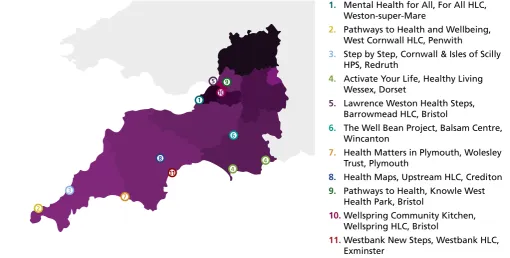
Figure 2.1:
South West region and
SWWB projects
1. Mental Health for All, For All HLC, Weston-super-Mare
2. Pathways to Health and Wellbeing, West Cornwall HLC, Penwith
3. Step by Step, Cornwall & Isles of Scilly HPS, Redruth
4. Activate Your Life, Healthy Living Wessex, Dorset
5. Lawrence Weston Health Steps, Barrowmead HLC, Bristol
6. The Well Bean Project, Balsam Centre, Wincanton
7. Health Matters in Plymouth, Wolesley Trust, Plymouth
8. Health Maps, Upstream HLC, Crediton 9. Pathways to Health, Knowle West
Health Park, Bristol
10. Wellspring Community Kitchen, Wellspring HLC, Bristol
11. Westbank New Steps, Westbank HLC, Exminster
1
4 4 6
5 9
10
2 3
7
8
The portfolio aims to achieve this through engaging with the target beneficiaries with fun, non threatening activities and then supporting them to make positive lifestyle changes, depending on their needs and wishes. Focusing on reducing stress and anxiety and increasing physical activity and healthy eating, all activities will include
confidence building and encouraging the development of friends and social networks all contributing to improve mental well being. […] In all, this approach might be described as:
Supporting the healthy living and well being of individuals and communities by providing locally accessible, people-focused and holistic approaches to tackling health inequalities particularly for those people most in need.
The strategy also sets out the objectives of the healthy living projects to be:
Engaging Individuals and Communities
To improve the opportunities for mobilising community and individual activity towards improving health and tackling inequalities;
People and Lifestyles
To support people in meeting their full potential, helping them better access mainstream and alternative health services and particularly to develop lifestyle approaches that prevent future illness;
Local Health Collaboration
To provide a local focus for bringing together health promotion in the broadest sense, across a wide range of interests which do not necessarily have a tradition of working together.”
SWWB Evaluation
4.1
Process evaluation overview
South West Well-being is a community-based health promotion programme that operates through a consortium of independent organisations. This type of programme represents challenges for evaluation that are well documented in social and health programme evaluation theory literature. See for example, Connell & Kubisch 1998; Nutbeam 1998; Judge 2004, Springett 2001, Pawson and Tilley 1997; Tones and Green 2004; Platt et al 2005. Some evaluation challenges include the extent to which the formal business plan can be interpreted as the intervention blueprint; the boundaries between the programme and other partnership initiatives; the emergent and changing character of the programme goals over time; the coherence and integration of a consortium of bottom-up initiatives; and the appropriateness of standard outcome measures for a complex and holistic programme.
According to Green and South (2006:84), an overarching question is one of how to successfully apply evaluation principles in a way that is consistent with the nature of the activities and the values that underpin programme delivery. The focus of the first stage of the evaluation has been to document, explore and consolidate an understanding of how the programme has been implemented. This form of process evaluation will help obtain a clearer understanding of the context in which programme outcomes may be achieved.
4.2
Outcome evaluation overview
The outcome component of the evaluation is not the focus of this report. However, it is worth noting that all projects are participating in
Study
Methodology
4
SWWB Evaluation
a longitudinal outcome study that uses a common set of outcome measures for general health, physical activity, diet related behaviour, mental well-being and social well-being. These measures have been selected to reflect the Well-being Fund themes and have been designed to reflect a generic set of data on indicators of change for individuals.
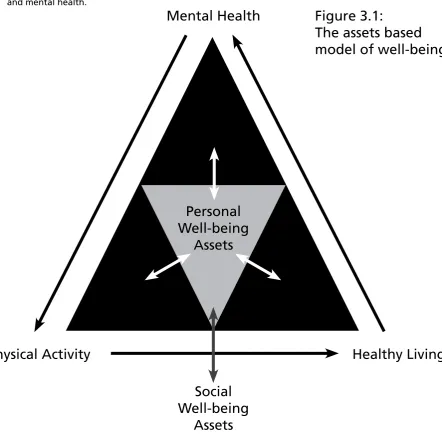
The Big Lottery Fund commissioned the New Economics Foundation to develop a common set of tools for measuring individual level well-being outcomes for grant holders. The theoretical basis for these tools is an assets based model illustrated in Figure 3.1.
The assets based model brings together the three main strands of the South West Well-being programme. Personal well-being assets underpin these strands and emphasise the central role of psychological resources such as confidence, self esteem and autonomy. Similarly in this model, social well-being assets - such as community engagement, belonging, trust and social support – act as mediators for the promotion of physical activity, healthy eating and mental health.
Mental Health
Healthy Living
Physical Activity
Personal
Well-being
Assets
Social
Well-being
[image:16.595.65.508.294.730.2]Assets
Figure 3.1:
4.3
Participants and schedule of work
For the work presented in this report, interviews were conducted with project staff and service users between April 2008 and January 2009. For each project, between three and six staff took part in interviews. Between two and twelve service users took part in interviews for each project.
4.4
Fieldwork with project staff
Project leads participated in an initial seminar and internet based questionnaire to identify areas of project similarity, best practice and innovation. This was followed by a minimum of three meetings in which document, semi-structured and unstructured interview-based data were collected about project profiles. Drafts of the project profiles were sent to the lead member of staff for checking and verification.
4.5
Fieldwork with service users
Project leads were asked to invite two groups of service users for focus group interviews with researchers. Individual interviews were conducted in cases where there were issues of confidentiality or practicality. These individuals were intended to reflect a range of service user perspectives on different activities. It was agreed that prospective interviewees could be individuals who the project staff felt might have a positive experience and whose perspective could illustrate the rationale for the activity. Clearly, there are both staff and self-selection processes at work here and it is important to be aware that this form of purposive sampling will only reflect a range of more positive experiences.
The interviews covered expectations and motives for participation, biography and health experiences, experiences of other services, perceptions of the character and quality of the project service and perceptions of outcomes. The interview schedule is included in Appendix 3.
4.6
Ethical issues
Participants were provided with written and verbal information on the study. In most cases it was possible to collect written consent. In cases where this was not possible researchers verbally asked for consent and made clear the right to not participate or to withdraw at any point. Project leads were asked to convey draft material to participants to invite comment and offer an opportunity to withdraw direct quotations. The study has been given ethical approval by the Faculty of Health and Life Sciences Research Ethics Committee of University of the West of England, Bristol.
SWWB Evaluation
4.7
Thematic Analysis
Guide to project profiles
Each project profile draws from a common template. The data have been checked to reflect a consensus between the UWE researchers, project leads and the SWWB programme manager.
Project aim
This statement is drawn from the Big Lottery funding application document. In many cases it has been revised to give a more accurate reflection of the project.
Project overview
This section seeks to explain the rationale behind the project, an outline of the project operation and, where available, the theoretical basis of the intervention.
Host organisation and Project Area
These sections explain how the project is located within the host organisation and the setting within which the project operates.
Project Structure Diagram
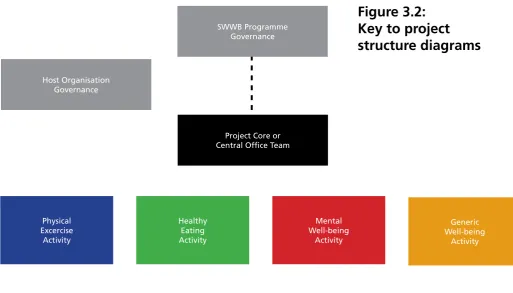
The structure diagram seeks to graphically summarise the organisation of the project’s activities, their relationship to the core staff team, the organisation’s governance and, where appropriate, the partnership delivery links.
Project Core or Central Office Team Host Organisation
Governance
Physical Excercise
Activity
Healthy Eating Activity
Generic Well-being
Activity Mental
Well-being Activity SWWB Programme
[image:19.595.37.551.403.696.2]Governance
Figure 3.2:
Key to project
structure diagrams
SWWB Evaluation
Participant Perspectives
Drawing upon qualitative interview data with selected participants, these sections seek to give an account of activities from the
perspective of service users. Where necessary, quotations have been put into context. Personal names have been changed unless individuals have given consent to use their real name.
The First Year of Project Delivery
Project Profiles
5
SWWB Evaluation
Mental Health
For All
South Ward. Weston-Super-Mare
Project aims
Mental Health For All promotes positive mental well-being through supporting people with low level mental ill health, concentrating on protective factors such as social networks, participation and self esteem. The project aims to:
1. ensure a rapid response and range of options for people experiencing mild anxiety or depression,
2. reduce the number of people on drug treatment for anxiety, depression and other forms of mental ill health,
3. mentor people who find it harder to access health promoting opportunities, improving inclusion,
4. improve the understanding of families and communities of mental health through campaigns, events, “Mental Health First Aid”and similar health communications.
Project overview
Needs assessments, health statistics and resident and worker experiences indicated that mental ill-health is a local issue in the geographical area in which the project is situated. Despite the population profile showing higher than average numbers of young people, mental ill health and addiction contribute to high levels of incapacity benefit (more than double the regional level) and attendance at primary medical services.
In local consultations, residents expressed anxieties about aspects of their community such as safety, alcohol and drugs issues, health, academic achievement at school level and the impact of these on their families. They requested more learning and activity opportunities. GP patients had also requested alternatives to drug treatment for anxiety and depression. This was in a context where the GP practice based in the HLC has 4,300 registered patients from the area, of whom 18% have a diagnosis of mental illness. At the planning stage, For All Healthy Living Centre (FAHLC) looked carefully at how to complement the project with services provided by other local agencies, including the development of a new Primary Mental Health Service, commissioned by the PCT. The intention has been to promote positive well-being through mental health provision with nutrition and physical activity alongside, offering opportunities for individual and group sessions. There has been consideration of how to apply principals of health promotion in the context of both group and individual activities. There are individual one-to-one sessions with the client and a mental health worker, exercise groups, stress management workshops and a befriending group. The
participants are predominantly those who ‘drop-in’ to FAHLC to see someone or those who see one of the health professionals in the Centre who then refers them. In addition, they may be referred from the Children’s Centre Family Support Worker.
The approaches used are based on proven strategies of engaging people and strengthening social networks in the context of their families and communities (DoH, 2001). These demonstrate that work in a community setting can have a significant impact on mental well-being. An increase in physical activity and improved nutrition also form part of the activities for their impact on mental health.
Host organisation
The Centre is a social enterprise and a provider of commissioned services. It has recently received a Department of Health Pathfinder Grant to investigate and prepare to tender to deliver the GP practice currently run by the PCT. It is committed to being a Community Anchor Organisation, thus meeting local priorities and developing the capacity of the community.
The current site for the FAHLC was formerly occupied by a portacabin that housed health and community services and a church. These were owned by the local Community Association. Local residents and agencies worked together to design, fund and oversee the development of the Centre and the formation of the For All Healthy Living Company. The various partners who were involved included the Primary Care Trust, Local Authority, Sure Start Local Programme, local church and the Community Association. The Partnership secured funding from the New Opportunities Fund. All partners who contributed capital occupy dedicated space within the Centre, specified in a sublease.
The Centre has a range of facilities, activities and services which promote the building as one that local residents can use for their own good. There are a variety of professionals who are based there including General Practitioners, Practice Nurses, Health Visitors, School Nurses, Podiatrist, Mental Health Workers and Counsellor. There is a community café (run by volunteers), a twice-weekly fruit and vegetable stall, a Community Swap Shop, a library, Children’s Centre, church and a community hall. Many of these feed into each other, with residents offering to help in the church activities, the church referring people for mental health support and so forth.
Director
Support Services Well-Being Work
Clincal Services
Finance/Services Service Development/
Project
Clinical Lead Facilities & Support Services
Excercise Group Counselling Multi-Group Baby Massage Samaritans Drop In Saturday Group
Project Services
SWWB Steering Group Board
Organisation
& Project Services
Mental Health For All
Project area
For All Healthy Living Centre is based on one of the four estates in South ward. A total of 10,000 people are resident in this ward. It is an area of higher multiple deprivation with three super output areas (SOAs) in the lowest 10% nationally including one SOA in the lowest 3%. The area has twice as many children and young people per 1000 as the authority area (North Somerset) as a whole and a significantly higher proportion of lone parent families. Health staff estimate up to 50% of their consultations have a psycho-social component, and that these are linked to issues such as poverty, poor housing, parenting difficulties, domestic violence and addiction.
Project delivery in the first year
Challenges
1. The recruitment of project staff was a priority in the early stage of the project. This inevitably delayed early delivery. However the delivery start up has been within the planned time frame.
2. Activities run by the project are little known outside the HLC due to a lack of marketing. Recruitment and service design work meant that marketing the service was not a priority in the start up period. The team
is aware that this needs focus since there is an impression they generally attract only those residents who live on the immediate estate and not from the other three estates that also form part of South ward. However, a postcode analysis of participant take up has not been yet been
undertaken to confirm these impressions.
3. Feedback from the users of the activities indicates that it is difficult to attract residents from the other three estates in South ward to the activities.
4. The local PCT has recently purchased local mental health services which could, if they do not sub-contract to the project, duplicate Well-being funded services.
Achievements
1. Whilst it has taken several months to set the project up, the different methods of working (provision of activities) appear to be working well. Feedback from all group members was that the staff and volunteers running the activities were sensitive to their needs and very good at their job.
2. The project lead has developed a good working relationship with the GPs based in the HLC. These are essential partners for planned outcomes and are a source of referrals for the project.
3. The project lead has developed a reciprocal relationship with the church within the HLC. Referrals are being made to the project and volunteers help with the church activities.
5. The project has been able to take a flexible and consultative approach to service development. Following taster sessions in June and July, 2008, an “Exercise to music” session has been offered once a week. It is well attended by regular users. In response to demand, a Saturday group has been set up with good attendance from regular users.
References
DoH [Department of Health] (2001) Making It Happen. London: Department of Health
Mental Health For All
Nicola was one of the first members when the exercise group started. She has two children, her husband works and she found it difficult to find things to do with the children that they could afford. She often felt depressed and had no time
to herself.
“I found out about it from one of the workers in the Centre but I think it is a well kept secret at the moment for mums (laughter), we know that there is a limit for the number of children in the crèche. I like the commitment of having to book the crèche, it makes it much easier to come, it makes you come…I need the motivation to make me come. This group is fun, easygoing, affordable because trying to get two children into crèche and an exercise class
together. It makes us laugh, gets me to feel happy because I get out, meet others, do some exercise. I feel more relaxed. It is a routine, I spend the whole afternoon here because after this I go to the veg’ shop, use the library here, go to the park and the afternoon is mapped out. There is a definite thing to look forward to in my week, it fills up 3 hours. Otherwise I would just be stuck at home. I am trying to get my husband to do some exercise but we still have to find something that we can do together but when you get to the evening the cost of childcare…”
The Saturday Group takes place on alternate weeks. It was set up for those who find Saturdays difficult: many facilities are closed so there is little to do.
Philip has been a member since the outset. He has been an inpatient several times for mental health problems, including trying to commit suicide five times. In the recent past his marriage has broken down and with that he lost his house. He has no family apart from one daughter who he doesn’t see, but would like to. In addition, his grandmother, the person who brought him up and the only person he says that he loves, died. He really appreciates the help that he has received from the project staff:
That support I have never had, not had for a long time, it amazes me. The Saturday Group for me has been a godsend. Recently I have been through hell and back, I have just not dealt with the situation. Before it was better than what it is now, everything has just fell apart… The Saturday Group gets me out, it gives me something to do on a Saturday. I don’t really have no sort of life, weekends are difficult because over here nothing is open. I have some voluntary work twice a week. I have no-one I can knock on the door, I am on my own. It would be nice if it was once every week. The other weekends, I don’t do a lot, very little, it is a very shallow life. It is like a little gap that is not filled in.
I hope the group will give me a more positive lifestyle. To prove back to myself that there is something out there, that there are people out there, there is a life, I don’t feel sorry for myself, I get annoyed with myself. It is nice to have somewhere to come, I feel one of the lucky ones. The group don’t know what has happened, they take me as I am. I am getting my confidence slowly.
“It is the highlight of the week”
Thursday Exercise Group, For All Healthy Living Centre
“This has been a godsend”
Pathways To Health
And Well-Being
Penwith and Kerrier Districts. Cornwall
Project aims
Pathways to Health and Well-being aims to empower and support individuals with low level mental ill health, families and people aged 50 years or over to access a range of approved health and well-being community and voluntary sector local services.
The project intends to reach and inform participants through a locally dedicated website and more specifically through a network of volunteers. Volunteers are supported to act as ‘health heroes’, ‘champions’ or ‘buddies’ for new service users. Volunteers themselves often have health and social needs. Through active involvement the project aims to improve volunteers’ confidence, self-esteem and capacity to adopt healthier lifestyles.
Project overview
Cornwall Healthy living Centre (CHLC) has identified that there are people living in local towns and remote communities that have difficulty in accessing health and well-being activities. Working in partnership with GP services and health professionals the project seeks to support individuals to make positive lifestyle changes through the adoption of health and well-being pathways. This project provides and develops those connections and sees itself as a central information and support service.
A GP recommendation scheme (GP PLUS) which refers patients to the districts’ lifestyle/exercise/well-being activities is already in place. Some GPs can now do these referrals on-line. Additionally, the project’s website (designed to be accessible from GP surgeries) will enable individuals to discover a range of activities or opportunities available for healthy living. The website’s database has details of over 200 different organizations/ activities and provides ideal access to healthy opportunities. Individuals can also self refer on line or by visiting one of their volunteer bureaus where opportunities for volunteering are available. Potential volunteers and beneficiaries are also contacted and recruited at occasional one-off events organized with partners in the community.
The need for this project was identified through work undertaken by the CHLC with local grass-root projects and individuals over the past eight years. From its work with local health related organisations, the CHLC has seen the need to support other initiatives and activities which encourage more people to become active in their own communities. There are pockets of deprivation in both the Penwith and Kerrier districts of Cornwall. When the Neighbourhood Renewal and other regeneration funding ended the CHLC and their partners sort new opportunities to continue their work to specifically address health inequalities. Through their partnerships with local GPs and health professionals they discovered a need for enhancing referral services. This recognition dovetailed well with the Emotional Health and Well-being Strategy identified in the Health and Well-being Strategy for Cornwall and the Isles of Scilly which was launched in 2006. The strategy identified an urgent need to promote active engagement in volunteering and community activity as a key method for improving access to countywide information, advice and guidance. It also helps to achieve health and well-being priorities identified in the community strategies of Penwith and Kerrier District Councils and Cornwall County Council.
Target number of individual beneficiaries: Direct 885
Host organisation
Penwith Community Development Trust (PCDT) is the lead organisation for the CHLC. PCDT was formally established as a charitable and not-for-profit organisation in 1999. The Trust is registered as a company limited by guarantee and is a member of the National Development Trust Association. The aim of the CHLC is to provide a vehicle for health professionals, voluntary and community sector organisations and individuals to work together to improve health and well-being and reduce health inequality across West Cornwall through active support to a variety of health and community based projects. Their HLC represented a merger of the Penwith Healthy Living Network and the Kerrier HLC in 2004. The Trust works mainly in partnership with three key partners: Kerrier District Council, the Cornwall Centre for Volunteers and Penwith Volunteer Bureau. The Cornwall Centre for Volunteers’ is positioned within the Cornwall Infrastructure Partnership to provide volunteering infrastructure support for the community and voluntary sector. They help other organisations to recruit, support and develop the volunteers they need to deliver their services. The Strategic Management Board which oversees the project is made up of representatives from the partners on the project, the PCT, Pentreath Ltd and a GP from a local surgery, the Cornwall and Isles of Scilly Health Promotion Service, Cornwall Works and Penwith and Kerrier District Councils. They scrutinize progress of the project. Monthly reports from project staff on individual schemes are forwarded to all Strategic Management Group members.
PCDT leads on the work of Cornwall Inter-Link, which provides effective infrastructure at a local level to enable VCS organisations (especially smaller ‘grassroots’ groups) to get together on a regular basis in locality areas to network, share information, resources and good practice. Also, PCDT provides “Implementing PQASSO” (Practical Quality Assurance System for Small Organisations) workshops to VCS organisations in Cornwall, and provides follow-up / support sessions in order to support them to implement PQASSO within their organisations. PCDT is also developing the ‘Inter-link Capability Model (ILCM) which will enable organisations to benchmark themselves against specific criteria in order to prove their capability to deliver high quality services.
Pathways To Health And Well-Being
Project area
The health of people in Penwith and Kerrier districts is close to the English average. There are particularly high levels of socio-economic deprivation around Penzance, Gulval and Heamoor in Penwith district and Camborne North and Redruth South in Kerrier. In Penwith men who live in these most deprived areas have over five years shorter life expectancy than those living in the least deprived areas in the district. In both districts the number of people receiving incapacity benefits for mental illness is significantly worse than the national average. Other health issues include in Penwith those entering hospital because of alcohol related issues which is significantly worse than the national average; and in Kerrier the number of young people under 15 declaring that they are not in good health is significantly worse than the national average.
Project delivery in the first year
Between February and September 2008 there were a total of 322 volunteers recruited to the project eight of whom are now working with the CHLC. A volunteer works with one of the project’s partners (Kerrier District Council) providing admin’ support and updating the website. Four volunteers work with PCDT/CHLC delivering complementary therapy taster sessions and promotional activities. Another volunteer works with Cornwall Centre for Volunteers providing admin’ support for volunteers and two with Penwith Volunteer Bureau. There is also a project team of six part-time staff working in three different locations across West Cornwall to deliver the project’s activities.
Project Manager, Project Support Officer, Well-Being & Volunteer
Recruitment Officers, Admin Support, Strategic Management Group
Of The Cornwall Healthy Living Centre Penwith Community
Development Trust
GP Recommendation Scheme Database Development
One Off Events Development
Activities Volunteers
Complementary Therapy & Counselling
Services Healthy Eating
Work-shops Healthy Workplace
Workshops SWWB Steering
Group
Organisation &
In terms of taster sessions and community events the project often works with a range of partners to expand opportunities for developing healthy pathways for local people e.g. the We Can Get Active Week was delivered with Cornwall Partnership Trust’s Mental Health Teams, Pentreath Fit for Life, the Cornwall and Isles of Scilly Health Promotion Service, Cornwall Centre for Volunteers and the Hub Club at Carn Brea Leisure Centre. The project has also worked with Cornwall Works which delivers the welfare to workforce activity in Cornwall. In March 2008 they delivered the Grand Day Out event targeted at two deprived wards (Treneere and Penzance Central) to offer unemployed people and those claiming health related benefits the opportunity to find out about volunteering
Challenges
1. The breadth and reach of the website is still unclear as it is currently restricted to three computers in two GP surgeries. There are 16 surgeries across the two districts that could benefit.
2. More exploration around potential interactivity of the website would ensure enhanced reach to non-urbanised users.
3. Volunteers work extraordinarily hard and are very committed to the work that they undertake. This is work that is reported to be enjoyable. All volunteers report that they would welcome more opportunities to be brought together to share experiences, skills and mutual support.
4. The differences between health heroes, champions or buddies on the project are not clear to the volunteers.
5. There is little awareness of the Pathways to Health and Well-being project and ethos amongst the volunteers. Instead volunteers tend to perceive themselves as participating on a particular activity or simply as a volunteer of the CHLC.
Achievements
1. The project has initiated and developed taster day sessions for their target communities where a broad range of therapies including reflexology, Indian head massage, reiki, Bowen therapy, aromatherapy, emotional freedom technique, counselling and massages have been offered.
2. The project enjoys the commitment and passion of complementary therapists who understand the importance of promoting pathways to health in deprived communities even if they do not explicitly grasp the project’s ethos.
3. Establishing a website with an activity/organization database bodes well for the future. A great opportunity exists for the project to be a potential beacon for other voluntary and community sector organizations serving remote, rural communities.
4. A broad range of activities have already been initiated and developed. However in the coming year the project anticipates it will expand its counselling service and complementary therapies and support new additional sessions in Tai Chi, Healthy Eating, Keep Fit classes. More well-being activities are planned in years two and three.
Pathways To Health And Well-Being
There is a strong group of practitioners on the project who have spent considerable time working and supporting each other. As complementary therapists they share a commitment to improving individual’ well-being and improving life styles; however, they also have a broader commitment to ensuring that they help to develop the skills and capacity of the communities they serve and have a clear understanding of the importance of using therapy to address health inequalities. In their work in the target areas identified by the project they believe bigger changes are happening: “People are changing. I have been talking to all the different people
I have been giving treatments too and their first reaction is what do you want? What are you trying to sell? Why are you hassling me? But once you have broken through that harsh exterior I realise that everyone is exactly the same. They have all got a lot to give but until you listen to what they have to say you don’t know where they are coming from and in giving people reike it softens them. It is about breaking through the barriers of who they are and where they live. It is about stopping them go bang and getting them to realise there is a whole different way of living. It is about trying to break through the cultural practices that support aggression. It is like working with these lads the ones with the
gold rings and the bling and realising that beyond their attitude and the ASBOs they are really lovely people… really, really soft and in need of a change.”
The therapist has been an active therapist since 1994. She has worked on and run several projects involving people who suffer from addiction.
“Seeing people able to change their lives through what I call a connection is very, very important and leads to change elsewhere. And we are not just connecting on a physical level but also on an emotional level and a spiritual level and a mental level and seeing that this happens and transforms them. I mean there are a couple of families I am going to talk about here. One of them... ex-heroin addicts with a children….. are on methadone now and are suffering from something like ME and depression. I had ten sessions of treatment with them. The whole
family have now drawn together that much closer and he is feeling a whole lot better now. And you build up a real connection with them and there is a real rapport and it helps them connect to well-being.”
“Another lady was in bereavement because her husband had died about seven months before. She was in a very dark space. She had put up with a lot of aggro in the family because her sons were all grieving as well. There was a lot of unrest and she was angry and she had lost herself and she felt that her sons were trying to take from her. She had reflexology and a few other therapies as well. She has now remarried and lives in her own power. She is on a roll. She is doing courses, she is doing
college and she is not letting her sons dominate her and the whole household has come up. She is volunteering and she doesn’t phone me all the time anymore. So for me what I do is self empowerment and that is great because it gets people to go on their own journey. So for me it is all about helping people find their own path.”
People Are Changing
Reiki Practitioner and Community Artist
Seeing people able to change their lives through
what I call a connection
Step By Step
Redruth. Cornwall
Project aims
Step by Step aims to promote the engagement of local people in health and well-being activities through a combination of community group development and one-to-one support. It aims to empower individuals at risk of poor health through promoting personal confidence to take their health and well-being as a personal responsibility therefore engendering a desire to change.
The project intends to work with forty community groups utilising a strategic network of statutory and voluntary and community sector providers. The Step by Step project targets areas with higher social deprivation in the four district authorities of Carrick, Restormel, Caradon & North Cornwall.
Project overview
The Step by Step project’s ethos developed through previous local work primarily with the Eatsome and LEAPActive projects. LEAPActive worked throughout the county utilising activators to encourage people to become physically active. It was aimed at two target groups - young people aged 11 - 16 years and older people aged 50+ - and provided activities to promote well-being and ensure participants had clear exit routes into sustained healthy activity. The Eatsome Project delivered a range of healthy eating activities with children and young people. It also promoted healthy and active life amongst older people.
These initiatives suggested that more work was required to encourage sustained activity beyond the completion dates of the projects. The Step by Step approach drew upon this learning to develop an integrated project package. This has three levels of delivery:
1. One-to-one motivational services for people deprived, disadvantaged or socially excluded; on low income; with low mental ill health; have low levels of confidence or self esteem or are overweight. These services are based upon a Health Trainer model that was felt to have been successfully piloted locally.
2. Volunteers are supported to act as champions or heroes who then cascade informal health promotion through their social networks.
3. Local community groups are supported through a small grants scheme to meet running costs and improve their marketing, accessibility and so forth.
These three forms of engagement are linked in a community development cycle. For example, some individuals may become health champions, who then help develop community groups, which in turn provide a resource for new target participants. The project is delivered by a Health Trainer and the Community Health Development Worker (CHDW) who coordinate their individual level and community level behaviour change work.
Host organization
The Healthy Living Initiative developed from 2002 as a department within Cornwall and Isles of Scilly Health Promotion Service (CIOSHPS). Working alongside a Health Action Zone it specifically aimed to support innovative approaches to engage with local communities with high levels of deprivation to empower local people to take an active part in the regeneration of their area through community health development. Internal changes within the CIOSHPS saw the approach retained but repositioned within the Health Inequalities Community Health Development section of the service. CIOSHPS has already delivered successful projects through various funding streams including New Opportunities Funding, Health Action Zone, Neighbourhood Renewal Funding. The Healthy Living Initiative had over a thousand network members. Step by Step is clearly linked to local public health priorities. CIOSHPS is committed to delivering on LAA targets to reduce health inequalities. The steering partnership for the LAA is the Healthy Neighbourhood Partnership which grew out of the county’s LSP that includes the County Council, District Councils, the public, voluntary and business sector partners. The County Council holds grants received for delivery of the LAA. It is also responsible for their payment to outcome leads, for ensuring that spending on each outcome meets the eligible criteria for each grant and for the monitoring of the performance of each outcome. There are 22 outcomes in the LAA tackling barriers to enjoying the best quality of life. The three year agreement established in 2006 aimed to provide additional momentum to transform local public services by promoting the building of joint working over the three years to provide clusters of service provision tailored to meet the needs of natural geographic communities. One role of Step by Step is to specifically work with local groups to develop an understanding of local health needs.
Project Manager, Health Trainer, Community Health Development Worker, Small Grants Officer,
Admin Support
Volunteer Co-ordinator for four Centres for Volunteers Health Inequalities
Community Health Development Team Cornwall & Isles of Scilly
Health Promotion Service Cornwall Centre For Volunteers
Health Trainer One-to-one Counselling
Outreach Community Development
Work
Health Champions Small Grant
Programme SWWB Steering
Group
One-off Events Development
Activities
Organisation &
Project Services
Step By Step
Project area
Cornwall is characterised by small towns and remote communities. 46% of the county’s population live in dispersed settlements of less than 3,000. It has a demographic skew towards the elderly with 26.1% of the resident population are over 60 compared to an average in England of 20.8%. Anecdotally there is evidence that younger people consider moving from the area to enhance their training and to access improved employment opportunities. Each of the four districts faces specific issues that pose health challenges. Carrick has a higher rate of households in temporary accommodation than the English average. This is seen as a key issue affecting well-being in Carrick (SWPHO, 2008).
Whilst overall statistical indicators show low social deprivation and health poverty for the target districts, there are pockets of deprivation in Carrick, Caradon, North Cornwall and Restormel. Each district scores better than England as a whole on all estimated adult lifestyle indicators: smoking, binge drinking, healthy eating and obesity; as well as physical activity for adults and children. However the county as a whole performs badly on smoking during pregnancy indicators which are significantly worse than the rest of the country. The district of Carrick has significantly less physically active primary school aged children and in Restormel the healthy eating habits and lifestyle in adults is a cause for concern (SWPHO, 2008)
Project delivery in the first year
Challenges
1. The delayed recruitment and training of the Health Trainer (August 2008) and the CDHW has, in turn, delayed Step by Step’s engagement with individual direct beneficiaries. In the first year there have been no direct activities such as walking groups or exercise classes that have been developed directly under the project.
2. The project has recruited volunteers but has not felt in a position to provide health promotion training to underpin Health Champion competencies. These volunteers can act as ‘health heroes’: lay advocates for health and personal exemplars of positive behaviour change. However the role of health heroes is not clear at present. The project team may find it is a case of trying to find them appropriate things to do. A more narrowly defined role for these volunteers constrained their ability to support the project.
3. There has been uncertainty about some elements of local strategic direction. The dissolution of district authorities and the movement to unitary status will happen on the 1st April 2009. At this stage it is not clear to the project what strategic direction the County and its new partners will adopt regarding the LAA and whether continuity in addressing health inequalities will be assured.
Achievements
1. The project has been targeting groups of low income families through networking with Childrens’ Centres and schools. The Small Grants Scheme has been used to reach out to community groups. The CHDW as been building links in what is essentially the largest geographical remit of all the projects in the South West Well-being portfolio. It has made or re-established partnership contacts with: Cornwall Neighbourhoods 4 Change, Cornwall Waste Action, Interlink, the District Councils, Cornwall Funder’s Advisors Network, Registered Social Housing Associations, Sheltered Housing Associations
2. The CHDW has been assisting in the formation of a youth forum in Liskeard and the formation of a new group called JIGSAW who are helping vulnerable people back into work in SE Cornwall. With the London Olympics on the horizon they have been involved with the promotion and development of an intergenerational countywide dance project.
3. Through their partner, the Cornwall Centre for Volunteers, the team have developed bases in the five towns. These are used as essential network hubs where contacts can be made and a host provided for their health champions from which support and training can be afforded. So far 20 health heroes have been recruited to the project. In contrast to national Health Trainer concept of ‘health champions’, the project team perceive ‘health heroes in a more narrowly defined role.
4. The Small Grants Scheme made 34 awards to a variety of groups in the four districts including the Cornwall Women’s Refuge Trust for healthy activities for members of the Women’s Refuge, Greenbank Care to provide day trips for the elderly to reduce isolation and the Colourful Women’s Health Group to fund an opportunity to offer different physical activities for BME women. Grant sizes varied from £50 to £300.
Step By Step
Jessica is a fifty year old lady living with a husband and two grown up children at home. Her youngest child is 16 years old. He is autistic and currently attends a Special school. Her elder son is aged 20 and currently attends college full time. He is always asking for money. Jessica has been diagnosed as being morbidly obese. In her 20s and 30s she weighed between 18 and 19 stone but while she raised her family her weight increased to 26 stone. She has now been waiting two years to have gastric band fitted. This involves a surgical procedure to fit a band around the upper part of the stomach. The procedure is usually only recommended as a last resort for people with a BMI over 40, or those with a BMI of between 30-40 who also have a condition that poses a serious health risk, such as diabetes, high blood pressure (hypertension), or heart disease. Jessica suffers from diabetes and arthritis and at the time of calling she had a broken toe and was on steroids and anti-biotics for a severe chest infection. While waiting for surgery she has also been taking Xenical (Orlistat) which when combined with a healthy diet, can help with weight loss. Trying to address her obesity on her own has
been difficult. She has experienced both weight loss and weight gain while waiting for surgery. Accessing scales has proved difficult. The scales at her local GP surgery are too small for a large lady so she travels thirteen miles each month to a local hospital to be weighed. Time spent waiting has been mentally draining: she feels she has been bounced between her dietician and consultant like a trapeze artist in a circus waiting for them to concur on an appropriate time for surgery. While waiting she has questioned the appropriateness of surgery given that she is not as young as she used to be.
“I wondered while I was swinging from side to side whether I should jump into the net or simply fall and see whether the net would catch me?”
Last November she visited a health event and picked up a leaflet on health walks and was subsequently referred to a Health Trainer. The Trainer has visited her at home for several weeks and maintained her focus. She is a lovely, lovely, lady, all bubbly and chatty I would give her ten out of ten. The health trainer provides advice on physical exercise,
diets and healthy eating. She has been keeping a dietary diary and undertaking exercise in an attempt to reduce weight. Her husband has been supporting her and he has taken to addressing his own weight problem by joining the programme. He is currently 17 stone. They both want to enjoy walks together in the countryside as her husband currently leads a men’s walking group from their local church where they visit the coast and the moors. Working with the health trainer she feels that she can realise this personal ambition as part of her preparation of
developing her fitness in anticipation of surgery. Something the health trainer is making happen for her.
She has really kept me going while I try to lose weight.
I wouldn’t have done it without her
Activate Your Life With
A Lighter Weigh To Live
Weymouth, Portland and Bournemouth. Dorset
Project aims
Activate Your Life aims to reduce inequalities in health for individuals and communities in most need through the provision of services. The project adopts an holistic approach to improve physical health for individuals within communities by encouraging positive lifestyle changes. It also seeks to improve mental well-being of individuals and communities by enabling them to reach their full potential. In the wider context, the project enables Healthy Living Wessex to act as a voluntary sector advocate for health promotion in Healthy Living Wessex (HLW) in Weymouth & Portland and Health Links (HL) in Bournemouth.
Project overview
This project fits in well with the health priorities in each partner’s local delivery plans and Strategic Partnership Strategy. It is also supported by the County Sports Partnership Business plan and supports the PCT priorities and health agendas for both areas.
The project brings together two recognised centres of excellence in Dorset (Weymouth and Portland, and Bournemouth) which are operating in the most deprived communities in these areas. Both centres are recognised, co-ordinated, brokers for the individual. They are able to refer and negotiate access to other health and social services where appropriate and are delivering support in motivation, lifestyle change and weight management. They have a record of attracting hard to reach groups through making activities accessible and fun and encouraging further development through the creation of social networks and the promotion of sustainable change. These help those individuals who access the activities to take responsibility for improving their own physical and mental health. Both run community interventions based on a holistic approach to supporting people, both already manage a portfolio of preventative healthcare services and have partnerships established with other more specialist service providers that beneficiaries of this project are able to take advantage of.
The ethos behind this project is that there will be a reduction in health inequalities when individuals and communities are enabled to take advantage of local opportunities and make positive lifestyle changes.
Host organisation
Weymouth and Portland Healthy Living Project was an initiative established by a partnership of local agencies in 2002. In 2004, the project was one of five Big Lottery funded Healthy Living Centre schemes to be awarded Pathfinder status for its innovative work in this area. In September 2006, the project adopted the new title Healthy Living Wessex (HLW) and was formally incorporated as a company limited by guarantee. The company is set up as a not for profit social enterprise.
The project is managed from the HLW offices located within Weymouth & Portland Hou