New method of predicting surge pressure apply to
horizontal well based on casson flow
*
Yuxue Sun, Qiming Li#, Jingyuan Zhao
Petroleum Engineering Department; Northeast Petroleum University; Daqing, China; #Corresponding Author: [email protected]
Received 14 September 2010; revised 20 October 2010; accepted 23 October 2010.
ABSTRACT
In order to predict the surge pressure caused in the horizontal well drilling process, a new sim-ple and applicable method has been established. It is based on the general theory of hydrostatic drilling fluid mechanics, and specifically de-scribed the flowing physical model towards surge pressure in horizontal well annulus, tak-ing the effect of strtak-ing eccentricity on the flow-ing law of drillflow-ing fluid into consideration. Ac-cording to the constitutive equation of cas-son-mode under one-dimensional steady flow and the equations of annular flow rate under different drill string working conditions, this paper introduced the flow rate computation models of axial laminar flow in eccentric anlus apply to horizontal well, of which the nu-merical model was calculated by the program called Mathematica, ultimately, a new model for surge pressure prediction towards each interval in horizontal well was put forward. Application examples indicated that it can solve questions easily and precisely, which presents important meaning of guidance to the safety control while horizontal well drilling.
Keywords:Surge Pressure; Horizontal Well; Eccentric Annulus; Casson-Mode
1. INTRODUCTION
While pipe or casing string pulling and running in the well, the drilling fluid adhesive to the string moves with it and the motion of the string has to get over the viscous force of fluid at the same time, which causes an addi-tional pressure on the borehole face, named Surge Pres-sure, an important effect factor related to the formation stability [1-3]. Traditional computation model of surge
pressure is mostly applicable to vertical well [4,5]. The model of horizontal well has also been studied recently, however, it involves mathematic theory of comparative complexity which leads to the inconvenient computation and low efficiency of application, as a result, the pre-dicting model apply to horizontal well still has more space to develop [6-9].
This paper presents a method of predicting surge pressure applicable to horizontal well based on casson flow, because casson-mode is more precise to describe the rheological behaviour of drilling fluid with high shearing rate inside the pipe or around the bit nozzle [10,11]. This new method conjugates the flow rate com-putation models of axial laminar flow in eccentric anlus and uses Mathematica software conducting the nu-merical calculation to simplify the computational pro-cedure, which can also help predict the surge pressure caused in vertical well and directional well.
2. PHYSICAL FLOWING MODEL IN
HORIZONTAL WELL BORE
This model neglects the compressibility of the fluid and well bore, it does consider the complexities of the non-Newtonian flow of drilling fluid and choose cas-son-mode as the rheological behavior of the fluid. It is assumed that the drilling fluid is under isothermal lami-nar flow in eccentric annulus with fixed-length in the axis, and at the same time it considers the motion pa-rameters of every spatial point in flow field to be time-invariant, which can simplify the calculation with negligible impact on the predicting result. This is be-cause the previous predicting results under the hypothe-sis of traditional models are a little more conservative, that means the predicting magnitude is bigger than nor-mal, but this prerequisite of steady flow can make an effect of correction [12-15].
In the intervals of deviated hole and horizontal hole, action of gravity makes the string diverge from the borehole central axis, and the annulus between the string and borehole tends to be eccentric, which will influence
the flowing pattern of the drilling fluid, that means the assumption of concentric annulus generally accepted in drilling annular hydraulics computation will not be ap-plicable any more [16-19].
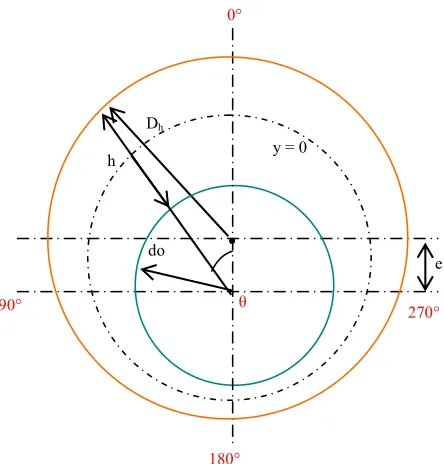
Figure 1 and Figure 2 present respectively the
physi-cal flowing model in eccentric annulus and the simpli-fied model of flowing section in eccentric annulus. The
borehole radius is h, the outside radius of running
string is o, the inside radius of running string is i, the hole deviation angle is α, the average annular flow-ing velocity of drillflow-ing fluid is
D
d d
v, the velocity of
run-ning string is vp, the eccentric arm between the axis of the string and that of the borehole is e, and the clearance, at any circumferential angle θ, between the outside sur-face of the string and the inside borehole wall is h,
2 2 2
h Dh e sin doecos
We choose a micro hexahedron unit at any circumfer-ential angle θ in the annulus along the direction paral-leled with the flowing. In Figure 3, τ is the shear stress
between fluid layers, L is the length of fluid along the flowing direction, and Δp is the pressure drop within that length L. In a steady-flow model, because the external forces on the micro unit should balance we can get this [20]:
p 0
z y
(1)
When the shape of flowing section along the flowing direction is considered invariable and the fluid is incom-pressible, we get this:
di
v
α
Dh
do
p
v
y
e z
Figure 1. Physical flowing model in eccentric annulus.
do
y = 0 Dh
e
270°
180°
90° θ
0°
[image:2.595.312.534.76.308.2]h
Figure 2. Simplified model of flowing section in eccentric annulus.
o
p
L u
y
Outside wall of inner string Micro-hexahedron unit Inside wall of outer string
z
τ
[image:2.595.308.539.350.451.2]h 2
Figure 3. Force analysis of annulus fluid.
p p
z L
(2)
So the surge pressure in the borehole annulus at the hole deviation angle α is:
cos
s
p P
L
(3)
3. COMPUTATIONAL MODEL
ESTABLISHING
3.1. Flow Rate Computation in Eccentric Annulus
According to the coordinate system showed in Figure
3, casson flow’s rheological equation is:
2 1/ 2
1/ 2 1/ 2
c
du dy
[image:2.595.62.273.479.700.2]Combine Eq.4 with Eq.1:
du p y c 2 p y
dy L L
c
(5)
Integrate the above equation, then the point velocity
of fluid at any circumferential angle θ under different
values of y is:
2 21/ 2 3/ 2
1/ 2 3/ 2
u ,
2 2 2
4
3 2
c
c
p h h
y y L p h y L y (6)
So the axial laminar flow rate model of casson flow in eccentric annulus is:
2 2
0 0
2 / 2
0 0
Q dQ
2 o h ,
v ds
d h u y dyd
(7)3.2. Flow Rate Analysis under Practical Working Conditions
Four types of working conditions are usually applied on site and they are plugging string with pump opened, plugging string with pump closed, opening string with pump opened and opening string with pump closed. There is much in common between the conditions of plugging string with pump opened and opening string with pump opened under which fluids are expelled from mud pump inside the string and then influence the aver-age flowing velocity in the well, therefore, these two conditions can be merged into one [21-23].
We consider that workstring is rigid and drilling fluid is steady-flow, and take into account the annulus flowing velocity changes aroused by the adhesion effect of drill-ing fluid. Accorddrill-ing to the relationship between the dis-placement of drilling fluid expelled by the running string in unit time and the flowrate in annulus, we can establish the equilibrium equation to get the average flowing ve-locity in annulus under three different working condi-tions respectively:
1) Plugging string with pump closed:
2 2 2 1.5 o c p h o d v D d
K v (8)
2) Opening string with pump closed:
2 2
2 2 2
1.5 o i
c p
h o i
d d
v K
D d d
v (9)
3) Plugging or opening string with pump opened:
2
2 2 2 2
1.5 o p
c p
h o h o
Q d
v K v
D d D d
(10)
In the equations above: Qpis the output volume of
mud pump, Kc is adhesion coefficient, dimensionless.
Refer to the experienced data and theoretical relationship plate of adhesion coefficient and annular ratio(ratio of string diameter) based on power law flow and casson flow, Kc is generally ranged from 0.4 to 0.5, and when
the annulus ratio d0 Dh is more deviated from 1, the
magnitude of c is more close to 0.4. According to the average annular velocity
K
v under
different working conditions and the annular section area
s, s
2 2
h o
D d
Qt
, we can work out the annular
flowrate , Qtvs , corresponding to different
working conditions:
2
c
Qt 4.71 c h 1 o
2
p
K D K d v
(11)
2 2
2 2
2 2
2 2 2
Q 4.71 o i h o
t c
h o i
d d D d
h o p
K D d v
D d d
(12)
2 2 cQt4.71K Dc h 1 K do]vpQp (13)
3.3. Computation Model of Surge Pressure
After programming on Mathematica software to com-
pute Eq.7 and containing different value theory and
el-liptic integral, we finally got the mathematical model to compute the flowrate of axial laminar flow of casson
flow in eccentric annulus (Eq.14), here we only give the
equation under the working condition of plugging string with pump closed as an example, and the other two con-ditions should be computed in the same way.
2
p 2 8 2
Q
3 3
2 8 B 8
5 3
o o
c c
e
A B e d d
L
p
B C C
L 3 3 (14) There into:
4 3 4
2 2 2.64 2.64 2.21 A
2 Dh e do do D eh Dh e do
3 2 3 2.64 2.64 3.03
B do D dh o e Dh e do
2 2
h o
CD d e2
2 2 2 2 2
2 2 h h h h D e e E e D D e E D
2
22 2 2 2
2 2
h h h
h h
e e
D D e K e D K
D D
K(m) is complete elliptic integral of the first kind and E(m) is complete elliptic integral of the second kind, of which values can be solved by programming on Mathe-matica software.
Combine the worked out annulus flowrate corre-sponding to specific working condition (Eqs.11-13) with Eq.14, so the pressure gradient p
L
can be cal-
culated, then put it into Eq.3, and the surge pressure
gradient at the hole deviation angle α in the well bore
annulus is got.
Until now, based on the above analysis and
calcula-tion, we can calculate the surge pressure gradient i of
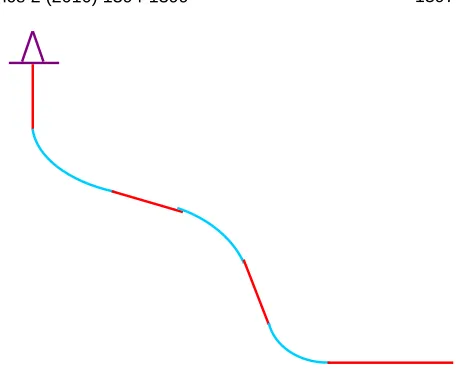
each interval in horizontal well, even including the most complicated well structure as showed in Figure 4.
P
The calculation equations of surge pressure for dif-ferent well intervals and the total surge pressure expres-sion at any well depth in horizontal well are presented as follow.
Vertical interval, hole deviation angle α is 0˚,
0
i s
Deviated interval (angle gaining interval and angle
dropping interval), hole deviation angle α changes
P P
from α1 to α2, 2
1
i s
P
P d Hold angle interval, hole deviation angle α is
in-variant, PiPs
Horizontal interval, hole deviation angle α is 90˚,
90
i s
Thereinto, “i” indicates the sequence number of the
interval location in horizontal well, i is the
corre-sponding annulus surge pressure when the sequence number is i, i is the corresponding well depth of that specific interval, so the magnitude of surge pressure at
P P
L P
L
any well depth (i = n) is: .
1
n i i i
P P
4. SURGE PRESSURE PREDICTION
WITH ACTUAL EXAMPLE
There is a certain horizontal well filled with drilling fluid which presents Casson-mode: τc = 1.51 (Pa), η∞ =
15.5 (mPa.s). The Φ 244.48 (mm) casing pipe of which
inside diameter is 222.5 (mm) starts to build angle at a vertical depth of 600 (m) and the initial hole deviation
angle α1 = 8˚. The Φ127 (mm) drilling pipe of which
inside diameter is 82 (mm) runs at the speed of 1 (m/s) and starts to hold angle at a vertical depth of 2204.82 (m), where the hole deviation angle α2 = 84˚ and the well
[image:4.595.309.537.64.249.2]depth is 2306.13 (m). Supposed the working condition is plugging string with pump closed, try to calculate the annular surge pressure at the pipe shoe (in the drilling pipe annulus) and determine the corresponding addition mud density.
Figure 4. Horizontal wellbore structure.
Some known calculation parameters are mentioned above, they are: τc = 1.51 (Pa), η∞ = 15.5 (mPa.s), 2 h =
222.5 (mm), 2do = 127 (mm), 2di = 82 (mm),
D
p
v L
= 1 (m/s), α1 = 8˚, α2 = 84˚ and some length parameters: 1 =
600 (m), 2= 2204.82 (m) – 600 (m) = 1604.82 (m).
Then we can conduct the calculation as follow.
L
Firstly, the degree of eccentricity is generally taken as 0.5, so the eccentricity arm e = 0.5 * 0.5 * (Φ 244.48 – Φ
127) = 0.0239 (m). Then we substituted h{0.11125
(m)}, o{0.0635 (m)}, e{0.0239 (m)} into the
corre-sponding expression followed Eq.14 to get the value of A,
B and C in Eq.14: A = 0.000110297, B = –0.000937975,
C = 0.007979025.
D d
Secondly, using Mathematica program to compute the
elliptic integral
2
2
h
e E
D ,
2
2 2
h
e E
e D
and
2
2
h
e K
D
.
After substituting and computing we got: E(0.0295) = 1.55914, E(–0.0304) = 1.58267, K(0.0295) = 1.58258,
K(–0.0304) = 1.55905, so = 0.34691, = 0.00019.
Thirdly, annular ratio {127 (mm)/222.5 (mm) = 0.57} is comparatively small, so we considered the adhesion coefficient Kc = 0.4 and we substituted the numerical values of Kc(0.4), Dh (0.11125), do (0.0635), vp(1)
in Eq.9, then we got the annular flow rate under the
condition of plugging string with pump closed: Qt=
4.71 * (0.4 * 0.111252 + 0.6 * 0.06352) * 1 = 0.034 (m3/s).
After calculating the annular flow rate and
pa-rameters such as A, B, C,
Qt
and , we substituted them
into Eq.14, so we can got the pressure gradient p
L
=
0.1917859 (kPa/m). According to what is presented in
Eq.3, the annular surge pressure Ps at hole deviation
angle α is: Ps = 0.1917859 * cosα.
At vertical interval within the depth of = 600 (m),
its surge pressure: 1
L
2 *
(m) = 115.072 (kPa).
At angle gaining interval within the depth of =
1604.82 (m), its surge pressure: 2
L
P2 = 2 = 0.1917859 (kPa/m) *
1
2* 2 s
P L P d L
(sin84° – sin8°)* 1604.82 (m) = 263.254 (kPa).
The total annular surge pressure value at the pipe shoe is:
P = P1 + P2 = 115.072 (kPa) + 263.254 (kPa) = 378.326 (kPa).
The corresponding addition mud density is:
ρ = P/gH = 378.326 (kPa)/{9.8 (N/kg)*2204.82(m)} =
0.0175 (g/cm3).
5. CONCLUSIONS
Based on the rheological mode of Casson flow, the flow rate computation models of axial laminar flow in eccentric annulus apply to horizontal well were success-fully established. Finally, we developed a new model of predicting surge pressure imposed on different intervals in horizontal well, of which the numerical model could be calculated by the program called Mathematica con-veniently. And the magnitude of the predicting surge pressure provided a criterion in determining the addition mud density.
After calculating the actual example using this new model and comparing with traditional predicting method, it is obvious that this new model can be computed easily by the field engineers. Across the steps of derivation of this new model, we concluded that it can calculate flexi-bly, it provides a method of predicting surge pressures in vertical well and directional well after being simplified. And this new model can also direct the secure produc-tion on locaproduc-tion through predicting surge pressures under different working conditions of drill string.
6. ACKNOWLEDGEMENTS
We would like to thank the drilling engineers Shurui Zhang and Guobin Li from Daqing Oil Field for their supports to the field test and operations
REFERENCES
[1] Burkhardt, J.A. (1961) Wellbore pressure surges pro-duced by pipe movement. Journal of Petroleum Tech-nology, 13, 595-605.
[2] Rasmussen, O.S. and Sangesland, S. (2007) Evaluation of MPD methods for compensation of surge-and-swab pressures in floating drilling operations (IADC/SPE- 108346). IADC/SPE Managed Pressure Drilling & Un-derbalanced Operations, Galveston, Texas, USA, 2007,
1-11.
[3] Wang, W. and Gong, J. (2006) Controlling surge due to accidental shutoff fast closing valve at terminal station of
an oil pipeline (SPE-100914). International Oil & Gas Conference and Exhibition, Beijing, China, 2006, 1-7. [4] Tao, Q., Xia, H., Peng, M. and Li, B. (2006) Research on
surge pressure of casing running in high-temperature high-pressure oil well. Fault-Block Oil & Gas Field, 13, 58-60.
[5] Fan, H. and Liu, X. (1990) Analysis on surge pressure caused by mud viscosity in vertical well. Journal of the University of Petroleum, 14, 8-14.
[6] Fan, H., Chu, Y. and Liu, X. (1995) Predition for well-bore dynamic surge pressure while tripping a drillpipe.
Journal of the University of Petroleum, 19, 37-41. [7] Bizanti, M.S., Mitchell, R.F. and Leturno, R.E. (1991)
Are improved surge models needed (SPE-22057). Un-published.
[8] Wang, H. and Liu, X. (1994) Study on steady surge pressure of casson fluid in concentric annulus of direc-tional wells. Drilling Fluid and Completion Fluid. 11,
35-44.
[9] Zhong, B., Shi, T., Fu, J. and Miao, S. (1999) Model for computing surge and swab pressures in slim end hori-zontal holes. Journal of Southwest Petroleum Institute,
21, 52-55.
[10] Wang, Z. and Tang, S. (1982) Casson rheological model in drilling fluid mechanics. International Petroleum Ex-hibition and Technical Symposium, Beijing, China, 1982,
397-435.
[11] Sun, W., Chen, J. and Li, Z. (1986) Comparison of rheological models in high shear rate range and experi-mental relationship between penetration rate and high shear viscosities. International Meeting on Petroleum Engineering, Beijing, China, 1986, 267-277.
[12] Manohar, L. (1983) Surge and swab modelling for dy-namic pressures and safe trip velocities. IDAC/SPE Drilling Conference, New Orleans, Louisiana, 1983,
427-433.
[13] Wang, H., Su, Y. and Liu, X. (1998) Numerical analysis of steady surge pressure of power law fluid in eccentric annuli. Acta Petrolei Sinica, 19, 104-109.
[14] Wang, L., Yang, H., Xu, Q., Lan, X. and Shen, Q. (2008) An analytic model for stable-state flow in horizontal wellbore drilled by stable foam. Natural Gas Industry, 28, 90-92.
[15] Meliande, P., Elson, A.N., João, P.D. and André L.L.M. (2008) Surge pressure analysis for Bijupira and Salema water injection system (OTC 19365). Offshore Technol-ogy Conference, Houston, Texas, USA, 2008, 1-8.
[16] Wang, H. and Liu, X. (1996)Solution of surge pressure of power-law fluid in the deviated sections of directional well. Journal of the University of Petroleum, 20, 29-33. [17] Zhong, B., Zhou, K. and Xie, Q. (1995) Theoretical
study of steady-state surge and swab pressure in eccen-tricc annulus. Journal of Southwest-China Petroleum In-stitute, 17, 38-45.
[18] Wang, H., Liu, X. and Dong J (1996) Approximate solu-tion of stable fluctuasolu-tion pressure of newtonian fluid in eccentric annular. Oil Drilling & Production Technology,
18.
[19] Wagner, R.R., Halal, A.S. and Goodman, M.A. (1993) Surge field tests highlight dynamic fluid response (SPE/IADC-25771). SPE/IADC Drilling Conference,
[20] Chukwu, Godwin A (1995) A practical approach for pre-dicting casing running speed from couette flow of non-newtonian power-law fluids(29638). SPE Western Regional Meeting, Bakersfield, California, 1995, 263- 268.
[21] Yang, X. (2003) Study on preventing and plugging lost circulation technique in Daqing Yingtai area. Master’s Paper of Northeast Petroleum University, unpublished. [22] Samuel, G.R., Sunthankar, A., Colpin, G.M., Bern, P. and
Flynn, T. (2003) Field validation of transient swab-surge response with real-time downhole pressure data (SPE-85109). SPE Drilling & Completion, 18, 280-283. [23] Scott, T., LoGiudice, M., Gaspard, G. and Vidal, D. (2010)