doi:10.4236/msa.2011.24027 Published Online April 2011 (http://www.scirp.org/journal/msa)
Characterization and Application of Adsorption
Material with Hematite and Polystyrene
Dewen He
1, Yutang Xiao
2, Dingmin Liang
1, Huannian Zhou
1, Lu Du
1, Lei Liu
11School of Metallurgical Science & Engineering, Central South University, Changsha, China; 2School of Environmental Science and
Engineering, Nankai University, Tianjing, China E-mail: [email protected]
Received January 30th, 2011; revised February 10th, 2011; accepted February 25th, 2011.
ABSTRACT
In this study, a three-dimensional ordered macroporous hematite was prepared using the polystyrene colloid crystal
templates and characterized by X-ray diffraction, scanning electron microscope, transmission electron microscope, and
nitrogen adsorption isotherm. The as-prepared hematite shows a porous structure consisting of the macropores about
200
nm in diameter and the walls about
20
nm in thickness. The adsorption of Pb
2+and Cd
2+ions in aqueous solution
by this hematite was also evaluated. At room temperature, each gram hematite adsorbs
12.5
mg of Pb
2+ions and
7.0
mg of Cd
2+ions. The results suggest that the obtained hematite should be a promising adsorbent to remove Pb
2+and
Cd
2+ions, and other heavy metal ions from aqueous solution.
Keywords
:
Macroporous
,
Heavy Metal Ions
,
Adsorption
,
Pollution
1. Introduction
With rapid development of economics all over the word,
water pollution becomes a vital problem for people to
survive in the earth because the heavy metal ions are
detrimental to human health. Lead (Pb
2+) and cadmium
(Cd
2+) ions are toxic heavy metal ions that can enter
hu-man body through inhalation and ingestion from a
vari-ety of sources such as contaminated air and water, soil
and food [1,2]. The deposits of Pb and Cd compounds
are difficult to be absorbed but people can absorb their
soluble salts. Hence, it is very important for us to remove
Pb
2+and Cd
2+ions from water for consideration of the
health of human being. There are many articles discuss
the elimination of Pb
2+[3-5] and Cd
2+[6-8] ions from
aqueous solution. However, few of papers discuss the
effect of three-dimensional ordered macroporous (3DOM)
materials in water treatment.
Three dimensionally ordered macroporous (3DOM)
materials, which consisting of a large number of
macro-pores more than 100 nm in diameter and the walls less
than 100 nm in thickness, have been used as carriers
[9-13], adsorbents [14-17] and electrode materials [18-
23]. As adsorbents, 3DOM materials with a large specific
surface area and porosity are favorable to adsorption of
the heavy metal ions. Because of being available in large
quantity with relatively low cost,
α
-Fe
2O
3(hematite) has
been widely used as an adsorbent to remove heavy metal
ions from water [7,24-28]. However, few people have
investigated the capability of the 3DOM
α
-Fe
2O
3to
re-move Pb
2+and Cd
2+ions from aqueous solution.
Here we report the preparation of a 3DOM
α
-Fe
2O
3material using polystyrene (PS) colloidal crystal template.
Its porous structure was characterized by nitrogen
ad-sorption isotherm plot, scanning electron microscopy (S-
EM) and transmission electron microscopy (TEM)
mi-crographs. Its adsorption capability of Pb
2+and Cd
2+ions
in aqueous solution was investigated as well.
2. Experimental
Polystyrene colloidal crystal spheres were synthesized
according to the method reported in the literature [29].
At
first, 2.8 g polyvinylpyrrolidone (PVP K30, M
w= 30000,
BASF) was dispersed in 200 ml deionized water forming
micelles under mechanical stirring. Subsequently, 0.1 g
K
2S
2O
4and 21 g styrene were added to the polymeric
solution. The mixed solution was deoxygenated by
bub-bling argon at room temperature for 1 h with gentle
stir-ring, and then polymerized at 70
˚
C for 24 h in an argon
atmosphere. Finally, the synthesized mono-dispersed PS
spheres were arrayed into the close packed colloidal
crystals by centrifuge (2000 r·min
−1) for 24 h, and kept in
To prepare the 3DOM hematite, Fe
2O
3needs to be
formed inside the template. First, the PS colloidal crystal
template prepared above was soaked in the solution of
1.5 mol·L
−1FeCl
3
in glycol/methanol (3:2, by volume)
fro 8h. Then the solution was removed by filtration and
the template saturated with FeCl
3was dried at 50
˚
C
un-der vacuum for 10h to form the precursor. After that, the
dried precursor was heated from room temperature to
500
˚
C at a rate of 0.5
˚
C·min
−1, and calcined at 500
˚
C for
10h in air. Finally, the porous hematite was obtained with
elimination of the PS template.
Morphology of the prepared Fe
2O
3particles was
ob-served by Transmission electron microscope (TEM,
JEOL JEM 2100) and scanning electron microscope
(SEM, JSM-6360L). The crystalline structure was
char-acterized by X-ray diffraction pattern recorded on a
Ri-gaku D/max 2550 X-ray diffractometer. Differential
thermal analysis (DTA) and thermogravimetric analysis
(TGA) curves of the sample were recorded
simultane-ously on SDTQ 600 instrument ranged from ambient
temperature to 750
˚
C at a heating rate of 10
˚
C·min
−1un-der air. The specific area of the obtained Fe
2O
3was
measured using a Micromeritics Tristar ASAP 3000 BET
apparatus.
Heavy metal ion adsorption of the prepared hematite
was tested according to the literature [30]. 0.05 g of the
adsorbent were added to a 50 ml aqueous solution of
Pb(NO
3)
2and Cd(NO
3)
2at 16.4 and 10.6 mg·L
−1,
respec-tively. The mixture was stirred for various times and then
centrifuged at 6000 rpm for 15 min. The concentrations
of Pb
2+and Cd
2+ions of the obtained clear solution were
measured using UV–vis spectroscopy after the solution
was adjusted to pH 2. Diphenylthiocarbazone and 1-(2-
pyridinylazo)-2-naohthalenol were used as the
chro-mogenic reagents for Pb
2+and Cd
2+ions, respectively.
[image:2.595.308.538.86.241.2]3. Results and Discussion
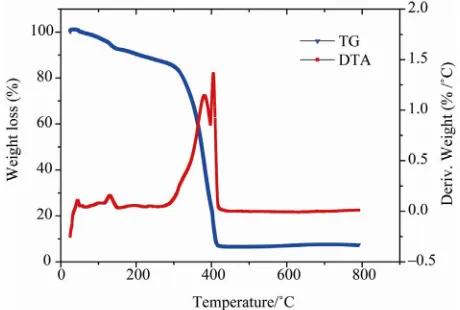
Figure 1 shows the TG and DTA profiles of the
precur-sor. The weak endothermic peak below 100
˚
C can be
assigned to the evaporation of the remaining methanol
and water. The weight loss from 100
˚
C to 250
˚
C is
at-tributed to the evaporation of the remaining glycol in the
samples. The strong endothermic peaks in the
tempera-ture range of 250
˚
C - 450
˚
C result from the thermal
de-composition of PS template and the formation of Fe
2O
3nanoparticles. No obvious endothermic/exothermic peaks
display above 450
˚
C suggesting that the PS template
should have decomposed completely and the pure Fe
2O
3 [image:2.595.311.536.531.692.2]has formed.
Figure
2 shows the X-ray diffraction pattern of the
Fe
2O
3. The diffraction peaks of the as-prepared Fe
2O
3agree very well with those reported in the literature[31],
where Fe
2O
3was indexed as the rhombohedral
α
-Fe
2O
3Figure 1. Differential thermal analysis (DTA) and thermo-gravimetric analysis (TGA) plots of the precursors at a
heating rate of 10˚C·min−1 under air atmosphere from room
temperature to 700˚C.
[hematite: JCPDS 87-1166]. No other diffraction peaks
of impurities such as Fe
3O
4and
γ
-Fe
2O
3were observed.
The high intensities of the diffraction peaks indicate that
the prepared
α
-Fe
2O
3has a perfect crystallization after
heated at 500
˚
C for 10 h under air atmosphere.
Figure 3 shows the TEM micrographs of the
α
-Fe
2O
3particles. It can be seen that the
α
-Fe
2O
3particles have
the porous structure with uniform pore size and display
3DOM morphology. The porous structure, as shown in
Figure 3, consists of the macropores about 200 nm in
diameter and the walls about 20 nm in thickness.
The nitrogen adsorption isotherm of the 3DOM
α
-Fe
2O
3is shown in Figure 4. It presents a type IV
iso-therm with hysteresis loop similar to that reported [32].
The specific surface area calculated by the Brunauer-
Emmett-Teller (BET) method and the pore volume
de-termined by the Barrett-Joyner-Halenda (BJH) approach
are 24.14 m
2·g
−1and 0.053 cm
3·g
−1, respectively.
Figure 2. XRD pattern of the three-dimensional ordered
Figure 3. TEM (b) micrographs of the three-dimensional
ordered macroporous α-Fe2O3 material.
0.0 0.1 0.2 0.3 0.4 0.5 0.6 0.7 0.8 0.9 1.0 0
5 10 15 20 25 30 35 40
A
b
sor
bed
Vo
lu
m
e
(
c
m
3 g -1 )
Relative Pressure (p/p0)
Figure 4. Nitrogen adsorption isotherm of the three-dimen-
sional ordered macroporous α-Fe2O3 material.
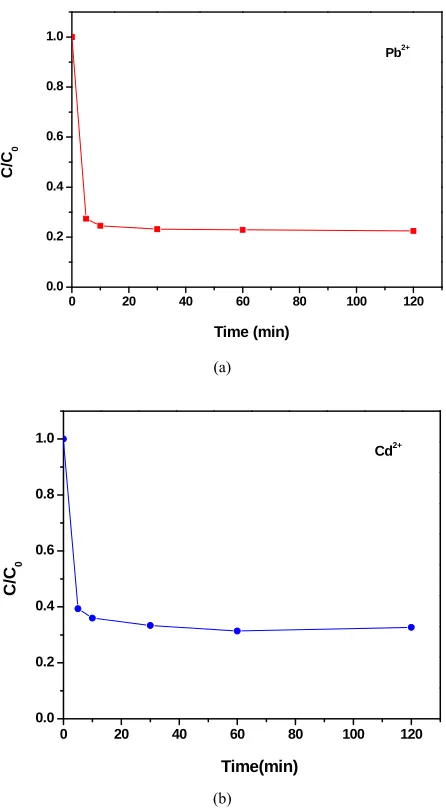
Figure 5 shows the adsorption rates of Pb
2+(a), Cd
2+(b) ions on the 3DOM
α
-Fe
2O
3material in aqueous
solu-tions after various treatment times at room temperature.
We can see that the concentrations of the metal ions
de-crease quickly after the addition of the 3DOM
α
-Fe
2O
3adsorbent. The adsorption capacities of 3DOM
α
-Fe
2O
3for Pb
2+and Cd
2+ions are 12.5 and 7.0 mg per gram of
adsorbent, respectively. These values are higher than
those of the hematite hollow spindles and microspheres
[7], and similar to those of the ordered macroporous
tita-nium phosphonate materials [33], but lower than those of
the hybrid macroporous materials with thiol functional
groups [15] and the activated carbons with lager specific
surface area [34]. The data suggest that the 3DOM
α
-Fe
2O
3material needs further improvement before it can
be widely applied as adsorbent to remove the heavy
metal ions from aqueous solution despite of its low cost.
0 20 40 60 80 100 120
0.0 0.2 0.4 0.6 0.8 1.0
Time (min)
C/C
0
Pb2+
(a)
0 20 40 60 80 100 120
0.0 0.2 0.4 0.6 0.8 1.0
C/C
0
Time(min)
Cd2+
[image:3.595.63.285.84.264.2](b)
Figure 5. Adsorption rates of Pb2+ (a), Cd2+ (b) ions on the
three-dimensional ordered macroporous α-Fe2O3 material
after various treatment times at room temperature.
4. Conclusions
The 3DOM
α
-Fe
2O
3material was prepared using the PS
colloid crystal template successfully and showed the
po-rous structure, which is constructed with the 200-nm
sized macropores and the 20-nm thick walls. Due to this
special structure, its adsorption capacities of Pb
2+and
Cd
2+ions in aqueous solution were 12.5 and 7.0 mg per
gram adsorbent at room temperature, respectively.
Com-pared with other adsorbents, the obtained 3DOM
α
-Fe
2O
3material is inexpensive but it needs some further
modifi-cations for its wide application to remove heavy metal
ions from aqueous solution.
REFERENCES
[image:3.595.61.286.305.479.2]Cd, Pb) to Vascular Plants,” Water Air and Soil Pollution, Vol. 47, No. 3-4, 1989, pp. 287-319.
doi:10.1007/BF00279329
[2] M. A. Oliver, “Soil and Human Health: A Review,”
European Journal of Soil Science, Vol. 48, No. 4, 1997, pp. 573-592. doi:10.1046/j.1365-2389.1997.00124.x
[3] K. Koseoglu, M. Polat and H. Polat, “Encapsulating Fly Ash and Acidic Process Waste Water in Brick Structure,”
Journal of Hazardous Materials, Vol. 176, No. 1-3, 2010, pp. 957-964. doi:10.1016/j.jhazmat.2009.11.133
[4] H. Bessbousse, T. Rhlalou, J. F. Verchère and L. Lebrun, “Sorption and Filtration of Hg(II) Ions from Aqueous Solutions with a Membrane Containing Poly (Ethyle-neimine) as a Complexing Polymer,” Journal of Mem-brane Science, Vol. 325, No. 2, 2008, pp. 997-1006.
doi:10.1016/j.memsci.2008.09.035
[5] H. F. Cheng and Y. Hu, “Lead (Pb) Isotopic Fingerprint-ing and Its Applications in Lead Pollution Studies in China: A Review,” Environmental Pollution, Vol. 158, No. 5, 2010, pp. 1134-1146.
doi:10.1016/j.envpol.2009.12.028
[6] H. Bessbousse, T. Rhlalou, J.-F. Verchère and L. Lebrun, “Removal of Heavy Metal Ions from Aqueous Solutions by Filtration with a Novel Complexing Membrane Con-taining Poly(Ethyleneimine) in a Poly(Vinyl Alcohol) Matrix,” Journal of Membrane Science, Vol. 307, No. 2, 2008, pp. 249-259. doi:10.1016/j.memsci.2007.09.027
[7] S. Y. Zeng, K. B. Tang, T. W. Li, Z. H. Liang, D. Wang, Y. K. Wang and W. W. Zhou, “Hematite Hollow Spin-dles and Microspheres: Selective Synthesis, Growth Mechanisms, and Application in Lithium Ion Battery and Water Treatment,” The Journal of Physical Chemistry C, Vol. 111, 2007, pp. 10217-10225. doi:10.1021/jp0719661
[8] X. Zhao, W. H. Höll and G. C. Yun, “Elimination of Cadmium Trace Contaminations from Drinking Water,”
Water Research, Vol. 36, No. 4, 2002, pp. 851-860.
doi:10.1016/S0043-1354(01)00289-5
[9] S. Schumann, S. A. F. Bon, R. A. Hatton and T. S. Jones, “Vertical Co-Deposition of Sub-100 nm Polystyrene Sphere Templates with Water-Soluble Small Molecule or Polymeric Semiconductors,” Chemical Communications, Vol. 42, 2009, pp. 6478-6480. doi:10.1039/b914136g
[10] H. Munakata, K. Sasajima and K. Kanamura, “3DOM Silica Composite Membrane including Binary PAMPS– SPEES Polymer Electrolyte for DMF,” Fuel Cells, Vol. 9, No. 3, 2009, pp. 226-230. doi:10.1002/fuce.200800084
[11] X. Li, F. Tao, Y. Jiang and Z. Xu, “3-D Ordered Macro-porous Cuprous Oxide: Fabrication, Optical, and Photo-electrochemical Properties,” Journal of Colloid and In-terface Science, Vol. 308, No. 2, 2007, pp. 460-465.
doi:10.1016/j.jcis.2006.12.044
[12] X. S. Qu, H. W. Song, X. Bai, G. H. Pan, B. Dong, H. F. Zhao, F. Wang and R. F. Qin, “Preparation and Upcon-version Luminescence of Three-Dimensionally Ordered Macroporous ZrO2: Er3+, Yb3+,” Inorganic Chemistry,
Vol. 47, No. 2, 2008, pp. 9654-9659.
doi:10.1016/j.jcis.2006.12.044
[13] F. Li, W. C. Yoo, M. B. Beernink and A. Stein, “Site- Specific Functionalization of Anisotropic Nanoparticles: From Colloidal Atoms to Colloidal Molecules,” Journal of the American Chemical Society, Vol. 131, 2009, pp. 18548-18555. doi:10.1021/ja908364k
[14] J. S. Yu, S. Kang, S. B. Yoon and G. Chai, “Fabrication of Ordered Uniform Porous Carbon Networks and Their Application to Catalyst Supporter,” Journal of the American Chemical Society, Vol. 124, No. 32, 2002, pp. 9382-9383. doi:10.1021/ja0203972
[15] R. C. Schroden, M. Al-Daous, S. Sokolov, B. J. Melde, J. C. Lytle, A. Stein, M. C. Carbajo, J. T. Fernández and E. E. Rodríguez, “Hybrid Macroporous Materials for Heavy Metal Ion Adsorption,” Journal of Materials Chemistry, Vol. 12, No. 17, 2002, pp. 3261-3267.
doi:10.1039/b204065b
[16] Z. Y. Wang, N. S. Ergang, M. A. Al-Daous and Andreas Stein, “Synthesis and Characterization of Three-Dimen-sionally Ordered Macroporous Carbon/Titania Nanoparti-cle Composites,” Chemistry of Materials, Vol. 17, No. 26, 2005, pp. 6805-6813. doi:10.1021/cm051865k
[17] A. Stein, Z. Y. Wang and M. A. Fierke, “Functionaliza-tion of Porous Carbon Materials with Designed Pore Ar-chitecture,” Advanced Materials, Vol. 21, No. 3, 2009, pp. 265-293. doi:10.1002/adma.200801492
[18] N. S. Ergang, J. C. Lytle, H. W. Yan and A. Stein, “The Effect of a Macropore Structure on Cycling Rates of Li-CoO2,” Journal of The Electrochemical Society, Vol. 152,
No. 10, 2005, pp. A1989-A1995. doi:10.1149/1.2013212
[19] H. W. Yan, S. Sokolov, J. C. Lytle, A. Stein, F. Zhang and W. H. Smyrl, “Colloidal-Crystal-Templated Synthe-sis of Ordered Macroporous Electrode Materials for Lith-ium Secondary Batteries,” Journal of The Electrochemi-cal Society, Vol. 150, 2003, pp. A1102-A1107.
doi:10.1149/1.1590324
[20] J. C. Lytle, H. W. Yan, N. S. Ergang, W. H. Smyrl and A. Stein, “Structural and Electrochemical Properties of Three- Dimensionally Ordered Macroporous Tin(IV) Oxide Films,” Journal of Materials Chemistry, Vol. 14, 2004, pp. 1616-1622. doi:10.1039/b401890g
[21] L. J. Fu, T. Zhang, Q. Cao, H. P. Zhang and Y. P. Wu, “Preparation and Characterization of Three-Dimensionally Ordered Mesoporous Titania Microparticles as Anode Material for Lithium Ion Battery,” Electrochemistry Com- munications, Vol. 9, No. 8, 2007, pp. 2140-2144.
doi:10.1016/j.elecom.2007.06.009
[22] W. J. Cui, H. J. Liu, C. X. Wang and Y. Y. Xia, “Highly Ordered Three-Dimensional Macroporous FePO4 as
Cath-ode Materials for Lithium—Ion Batteries,” Electrochem-istry Communications, Vol. 10, No. 10, 2008, pp. 1587- 1589. doi:10.1016/j.elecom.2008.08.037
[23] M. Kotobuki, Y. Isshiki, H. Munakata and K. Kanamura, “All-Solid-State Lithium Battery with a Three-Dimen-sionally Ordered Li1.5Al0.5Ti1.5(PO4)3 Electrode,”
Elec-trochimica Acta, Vol. 55, No. 22, 2010, pp. 6892-6896.
doi:10.1016/j.electacta.2010.05.074
and E. E. Roden, “Modeling the Sorption Kinetics of Di-valent Metal Ions to Hematite,” Water Research, Vol. 38, No. 10, 2004, pp. 2499-2508.
doi:10.1016/j.watres.2004.03.003
[25] Y. Mamindy-Pajany, C. Hurel, N. Marmier and M. Roméo, “Arsenic Adsorption onto Hematite and Goethite,”
Comptes Rendus Chimie, Vol. 12, No. 8, 2009, pp. 876- 881. doi:10.1016/j.crci.2008.10.012
[26] M. Mohapatra, K. Rout, B. K. Mohapatra and S. Anand, “Sorption Behavior of Pb(II) and Cd(II) on Iron Ore Slime and Characterization of Metal Ion Loaded Sor-bent,” Journal of Hazardous Materials, Vol. 166, No. 2-3, 2009, pp. 1506-1513. doi:10.1016/j.jhazmat.2008.12.081
[27] W.-S. Choi, H.-M. Yang, H.-Y. Koo, H.-J. Lee, Y.-B. Lee, T.-S. Bae and I.-C. Jeon, “Smart Microcapsules Encapsu-lating Reconfigurable Carbon Nanotube Cores,” Ad-vanced Functional Materials, Vol. 20, No. 5, 2010, pp. 820-825. doi:10.1002/adfm.200901739
[28] Y. H. Chen and F. A. Li, “Kinetic Study on Removal of Copper(II) Using Goethite and Hematite Nano-Photocata-lysts,” Journal of Colloid and Interface Science, Vol. 347, No. 2, 2010, pp. 277-281. doi:10.1016/j.jcis.2010.03.050
[29] Z. H. Li, T. P. Zhao, X. Y. Zhan, D. S. Gao, Q. Z. Xiao and G. T. Lei, “High Capacity Three-Dimensional Or-dered Macroporous CoFe2O4 as Anode Material for
Lith-ium Ion Batteries,” Electrochimica Acta, Vol. 55, No. 15, 2010, pp. 4594-4598. doi:10.1016/j.electacta.2010.03.015
[30] T.-Y. Ma, X.-J. Zhang and Z.-Y. Yuan, “Hierarchically
Meso-/Macroporous Titanium Tetraphosphonate Materi-als: Synthesis, Photocatalytic Activity and Heavy Metal Ion Adsorption,” Microporous and Mesoporous Materi-als, Vol. 123, No. 1-3, 2009, pp. 234-242.
doi:10.1016/j.micromeso.2009.04.009
[31] L. Meng, W. M. Chen, C. P. Chen, H. P. Zhou, Q. Peng and Y. D. Li, “Uniform α-Fe2O3 Nanocrystal
Monili-forme-Shape Straight-Chains,” Crystal Growth & Design, Vol. 10, No. 2, 2010, pp. 479-482.
doi:10.1021/cg901116c
[32] P. Lu, Q. Huang, B. D. Liu, Y. Bando, Y.-L. Hsieh and A. K. Mukherjee, “Macroporous Silicon Oxycarbide Fibers with Luffa-Like Superhydrophobic Shells,” Journal of the American Chemical Society, Vol. 131, No. 30, 2009, pp. 10346-10347. doi:10.1021/ja902757a
[33] T. Y. Ma, X. J. Zhang, G. S. Shao, J. L. Cao and Z. Y. Yuan, “Ordered Macroporous Titanium Phosphonate Materials: Synthesis, Photocatalytic Activity, and Heavy Metal Ion Adsorption,” The Journal of Physical Chemis-try C, Vol. 112, 2008, pp. 3090-3096.
doi:10.1021/jp710636x
[34] A. A. El-Hendawy, “The Role of Surface Chemistry and Solution pH on the Removal of Pb2+ and Cd2+ Ions via