Influence of Ageing on Changes
in Polyphenolic Compounds in Red Wines
Irina BALGA1, Annamária LESKÓ 2, Márta LADÁNYI 3 and Miklós KÁLLAY 2
1Department of Chemistry, Wine Chemistry and Winery, Food Science Institute, Eszterházy
Károly College, Eger, Hungary; 2Department of Oenology, Institute of Viticulture and Oenology
and 3Department of Biometrics and Agricultural Informatics, Faculty of Food Science,
Corvinus University of Budapest, Budapest, Hungary
Abstract
Balga I., Leskó A., Ladányi M., Kállay M. (2014): Influence of ageing on changes in polyphenolic compounds in red wines. Czech J. Food Sci., 32: 563–569.
The phenolic compounds of wines were measured in two local cultivars – Blaufränkisch and Turán, and three worldwide known varieties: Cabernet Franc, Cabernet Sauvignon, and Merlot. An experiment was carried out in a cool climate wine region in Eger in the vintage of 2009. We have investigated the profile of phenolic contents in new wines and in aged wines. We have compared these wines in two ageing stages. The content of total polyphenols, anthocyanin, leucoantho-cyanin, catechin, the colour intensity and hue were evaluated by a spectrophotometer. Stilbenes (SB) were identified and quantified by HPLC. The content of SB in new wines ranged from 0.44 mg/l to 2.25 mg/l. In aged wines the SB ranged from 0.05 mg/l to 3.12 mg/l. These compounds were influenced significantly by ageing. The positive health effects and the quality attributes of polyphenols would be important to obtain more information about the quality of wines from the nutritional point of view and from the wine processing aspect.
Keywords: HPLC;local red wines; polyphenols; resveratrol; wine ageing
Phenolic compounds play a major role in viticulture and oenology. This component of grapes attracts much attention as an important character to wine style and quality. Furthermore they have a wide range of beneficial health effects including anti-inflammatory, antiviral, anti-carcinogenic, and anti-atherogenic activities (Yao et al. 2004). These molecules come from various parts of grape bunches and are extracted during winemaking. Polyphenolic contents in wines depend on several factors. The total polyphenolics range in red wines from 1800 to 4059 mg/l and in white wines from 165 to 331 mg/l (Frankel et al. 1995). The presence of phenolic compounds in wine is influenced by the following agents: variety of grape-vine, viticulture practices (Price et al. 1995), different winemaking techniques, vintage effect (Brossaud et al. 1999), the region where the grapes are grown (Goldberg et al. 1998) and the terroir. Each terroir is affected by climatic, geological, and soil factors, and also by human activity. Each grape produced in
(Singleton 1995). Non-flavonoid groups involve the stilbenes. Average concentration of resveratrol in red wines is approximately 2-6 mg/l, in white wines the concentration is lower, approximately 0.2–0.8 mg/l (Šmidrkal et al. 2001). In the wine district of Eger the average content of resveratrol in red wines in vintages 2007, 2008, 2009 was approximately 0.5–4.5 mg/l. Resveratrol has a double physiological role: it shows a wide range of beneficial health effects, and in ad-dition it is synthesised by some plants in response to adverse conditions such as pathogenic attack and environmental stress. Its level is particularly high in grape skins, seeds and in red wines (Yang et al. 2009). Resveratrol exists in cis and trans forms. The trans -resveratrol often appears in the form of glucoside. The resveratrol is bound to the carbohydrate molecule with β-glucoside bonding and these compositions are called piceids (Kállay 2010).
The objectives of this study were to determine the profile of total polyphenolics, anthocyanins, leucoan-thocyanins, catechins, colour intensity, colour hue and resveratrol in new red wines in a cool climate wine region. After ageing we measured these wines once more in order to reveal how the phenolic com-pounds developed in the ageing wine, because these parameters influence the wine quality.
MATERIAL AND METHODS
Two local and three worldwide known cultivars were investigated: Blaufränkisch (BF), the base wine of Egri Bikavér, Turán (T), which was bred in the wine district of Eger, Cabernet Franc (CF), Cabernet Sauvignon (CS), and Merlot (M), which are the bases of blending of Bordeaux wines. An experiment was carried out in Eger wine district, Hungary, in the vintage of 2009. The grapes came from one grow-ing site which is a cool climate wine region. In the vintage of 2009 the highest average temperature in
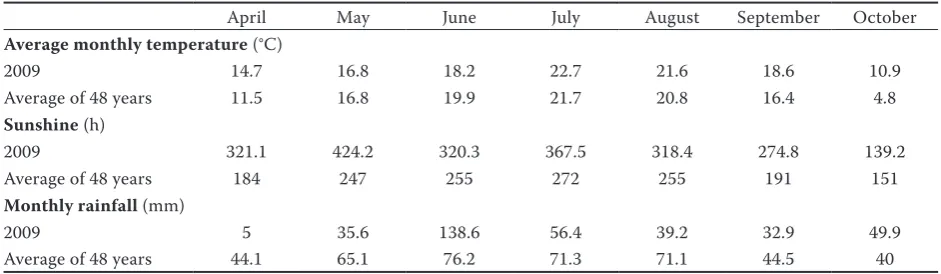
the vegetative cycle was in July. The temperature was 22.7°C, it was more than the average of the previous 48 years. In this vintage the wettest month was June with 138.6 mm rain. The sunniest month was July. The meteorological databases are shown in Table 1. This growing site is a non-stressed, flat vineyard, the bedrock is rhyolite tuff.
Conditions of harvest. All kinds of grapes were harvested in full ripeness. This vintage was char-acterized by high sugar content in all grapes. The sugar content of BL was 300 g/l, in T 210 g/l, in M 260 g/l, in CF 283 g/l, and in CS 304 g/l.
Vinification technology. Microvinification was used for grape processing. After destemming yeast (doses of 30 g/hl), fertiliser (doses of 20 g/hl) and sulphurous acid solution (doses of 1 ml/l) were added to the mash. In all wines the skin maceration time was 25 days. After the pressing, a part of the new wines (NW) was bottled for analysis. The other part of wines (AW) was aged in 25 l glass balloons for one year, then their analysis was performed again. The chemical analysis was carried out in the Buda-fok Laboratory of the Department of Oenology of Corvinus University of Budapest.
[image:2.595.62.533.621.758.2]Spectrophotometric determinations. Absorbance measurements were recorded on a MOM Spektro-mom 195 spectrophotometer. The amount of total polyphenolic content (TP) in wine samples was de-termined by Folin-Ciocalteu’s reagent (Slinkard & Singleton1977) and was expressed in mg/l of gallic acid equivalent. Anthocyanins (A) were estimated according to Ribéreau-Gayon and Stonestreet (1966), and were expressed in mg/l. The content of leucoanthocyanins (LA) was measured after heating the wine with 40 : 60 hydrochloric acid and buthanol, containing 300 mg/l ferro-sulphate (Flanzy et al. 1969). Catechin (C) was determined using the Re-belein (1965) method, after diluting the wine with alcohol and reacting with sulphuric acid vanillin.
Table 1. Average monthly temperatures, sunshine hours, and rainfall in the district of Kőlyuktető, Eger
April May June July August September October
Average monthly temperature (°C)
2009 14.7 16.8 18.2 22.7 21.6 18.6 10.9
Average of 48 years 11.5 16.8 19.9 21.7 20.8 16.4 4.8
Sunshine (h)
2009 321.1 424.2 320.3 367.5 318.4 274.8 139.2
Average of 48 years 184 247 255 272 255 191 151
Monthly rainfall (mm)
2009 5 35.6 138.6 56.4 39.2 32.9 49.9
The colour parameters, absorbances at 420 nm and 520 nm were measured. The colour intensity (CI) (A420+520) and the hue (CH) (A420/520) were estimated (Sudraud 1958).
HPLC analysis. Concentrations of stilbenes were determined by the HPLC method with isocratic elu-tion. All wines were analysed in terms of four stil-benes: trans-resveratrol, cis-resveratrol, trans-piceid and cis-piceid. This method was elaborated at the Department of Oenology of Corvinus University of Budapest (Kállay et al. 1997). Wine samples were filtered using Sartorius 0.45 µm filter. The treated sample was directly used for HPLC analysis, which was performed by a HP Series 1050 instrument. This device has a variable wavelength detector, and the system is connected to a Data Station (HP 3396A) for data collection and analysis. The analytical col-umn was a Lichrosper®100, CN (Merck, Darmstadt, Germany). Standards were purchased from Sigma-Aldrich (St. Louis, USA). Measured parameters were as follows: wavelength 306 nm, flow rate 2 ml/min, temperature 30°C, solvent water : acetonitril : metanol 90 : 5 : 5 (VWR International, Darmstadt, Germany). The injection volume of the sample was 20 µl and the total cycle time per sample was 30 minutes. The content of resveratrol was expressed in mg/l of wines. Statistical evaluation. Since the variables total polyphenol (TP), anthocyanin (A), leucoanthocya-nin (LA), cathecin (C), colour intensity (CI), and colour hue (CH) are correlated (a variable with at least three other variables has R > 0.37; n = 30; P < 0.05), a two-way MANOVA model was run. Another two-way MANOVA model was used for trans- and cis-resveratrol as they are also correlated (R = 0.42; n = 30; P < 0.05). The factors in the models are “va-riety” with five levels (BF, T, CF, CS, and M) and “treatment” with two levels (A as ageing and N as new). The significant MANOVA test was followed
by univariate tests of between-subjects effects for all variables. Normality was proved by skewness and kurtosis as their absolute values were all below 1 (Tabachnick & Fidell 2013). The variances were relatively very low having a maximal coefficient of variation as low as 0.002. Nevertheless, as the ho-mogeneity of variances was slightly violated, Games-Howell’s post hoc test was used for the significant factor effect. Statistical analysis was executed by IBM SPSS 20 statistical software.
RESULTS AND DISCUSSION
Vintage influence on phenolic compounds. The overall MANOVA tests were significant for both variable groups TP-A-LA-C-CH-CI and TR-CR, for both factors varieties and treatment and also for the varieties × treatment interactions (Wilk’s lambda < 0.001; P < 0.001 for all cases). In both cases of variable groups TP-A-LA-C-CH-CI and TR-CR, the follow-up univariate tests of between-subjects effects were all highly significant for both factors and also for the interactions for each variety BF, T, CF, CS, and M [Fvariety (4; 20) > 1500; Ftreatm (1; 20) > 2500; Fvariety×treatm (4; 20) > 450; P < 0.001 in each case].
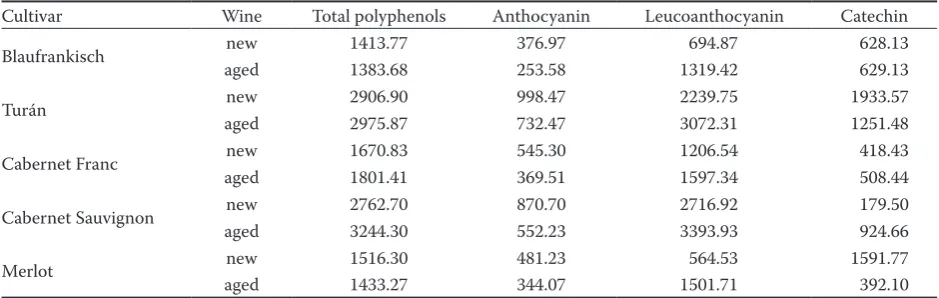
[image:3.595.63.533.608.757.2]The concentration of total polyphenols was meas-ured by Folin-Ciocalteau’s reagent according to Slink-ard and Singleton (1977). In the five new wines the total phenol content ranged from 1413.77 mg/l to 2906.9 mg/l (Table 2). The highest TP content was found in the Turán grape variety, whereas the lowest amount was measured in the Blaufränkisch grape sample. Among the worldwide known varie-ties the highest concentration was detected in CS (2762.7 mg/l). In several vintages French research-ers studied the polyphenol content in the CS grape variety. Our values are in satisfactory agreement with values reported in the literature (Chira et al.
Table 2. The values of phenolic compounds (mg/l) in new and aged wines in the vintage of 2009
Cultivar Wine Total polyphenols Anthocyanin Leucoanthocyanin Catechin
Blaufrankisch new 1413.77 376.97 694.87 628.13
aged 1383.68 253.58 1319.42 629.13
Turán new 2906.90 998.47 2239.75 1933.57
aged 2975.87 732.47 3072.31 1251.48
Cabernet Franc new 1670.83 545.30 1206.54 418.43
aged 1801.41 369.51 1597.34 508.44
Cabernet Sauvignon new 2762.70 870.70 2716.92 179.50
aged 3244.30 552.23 3393.93 924.66
Merlot new 1516.30 481.23 564.53 1591.77
2011). The higher content of TP was demonstrated in French CS.
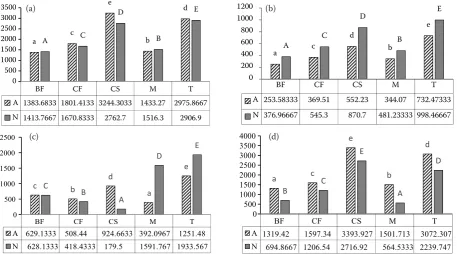
Anthocyanins are the pigmented compounds, they are a family of phenolic compounds directly related to the red wine colour (Glories 1984), a major qual-ity attribute of the wine. The anthocyanin content ranged from 376.97 mg/l to 998.47 mg/l (Table 2), which was comparable with the value of previous vintages (Kállay 2010). The highest A content was found in the Turán grape variety. The T is a colouring grape variety, it has a high anthocyanin content which was confirmed in previous experiments (Bényei et al. 2010). The lowest A concentration was found in BF. Amongst the worldwide known grape varieties the highest A amount was found in CS which was attributable to the climatic conditions and the late harvest. The statistical analysis has shown significant differences in T wines (Figure 1b).
Catechin content was measured by the Reblein (1965) method. The catechin concentration influences the taste and aroma of red wines. This compound is a precursor of proanthocyanidins. In the new wines the catechin content ranged from 179.5 mg/l to 1933.57 mg/l. The highest C amount was found in the T grape variety, whereas the lowest concentration of C was measured in CS (Table 2).
The leucoanthocyanin content was defined by the method of Flanzy et al. (1969). In the new wines the highest concentration of LA was measured in
CS (2716.92 mg/l), the lowest amount was found in M (564.53 mg/l) (Table 2). The leucoanthocyanin concentration affects the stability and organoleptic attributes of wine. This compound is also a precur-sor of proanthocyanidins.
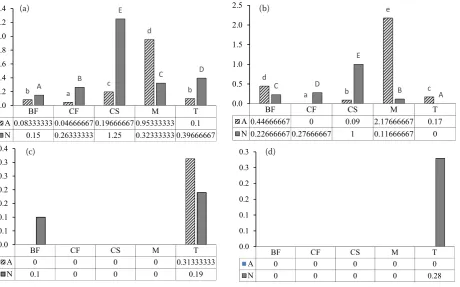
Colour intensity and hue. One of the quality re-quirements of red wines is the elegant red colour. The colour of red wines is affected by several factors: production area, grape variety, maturity, technology of viticulture and oenology, and pH value. The colour intensity and hue were investigated at 420 nm and 520 nm, respectively, at 420 nanometres the brown polyphenol compounds, and at 520 nanometres the red anthocyanins. The sum of the two values resulted in the colour intensity of red wines (CI), and the quotient was the colour hue (CH). In the vintage of 2009 the values of colour intensity were between 7.2 and 17.97 (Figure 2a). The lower anthocyanin content was most likely due to lower colour intensity values associated with M and BF wines. Across all varieties A is highly correlated with colour intensity in the T wine. In the grape of T the value of colour intensity was high, because it is a colouring grape variety. The CS was outstanding in terms of CI, because the value was 15.25. In the new wines the colour and hue were appropriate, no oxidation was found out.
Stilbenoids are non-flavonoid compounds. Res-veratrol exists in two isomer forms: cis and trans. Trans-resveratrol often occurs in the form of glu-Figure 1. Mean values (mg/l) and analysis of variance of (a) total polyphenols, (b) anthocyanin, (c) flavan-3-ols, and (d) leucoanthocyanin in vintage of 2009
BF CF CS M T
A 253.58333 369.51 552.23 344.07 732.47333 N 376.96667 545.3 870.7 481.23333 998.46667
a c
d
b
e
A C
D
B
E
0 200 400 600 800 1000 1200
BF CF CS M T A 1319.42 1597.34 3393.927 1501.713 3072.307 N 694.8667 1206.54 2716.92 564.5333 2239.747
a c
e
b
d
B C
E
A
D
0 500 1000 1500 2000 2500 3000 3500 4000
BF CF CS M T
A 1383.6833 1801.4133 3244.3033 1433.27 2975.8667 N 1413.7667 1670.8333 2762.7 1516.3 2906.9
a c
e
b
d
A C
D
B
E
0 500 1000 1500 2000 2500 3000 3500
BF CF CS M T A 629.1333 508.44 924.6633 392.0967 1251.48 N 628.1333 418.4333 179.5 1591.767 1933.567
c b d
a
e
C B
A
D E
0 500 1000 1500 2000 2500
(a) (b)
[image:4.595.74.532.83.337.2]coside. The resveratrol is bound to the molecule of carbohydrate with β-glucoside bonding. They are called piceids (Kállay 2010). In Bordeaux varieties trans- and cis-resveratrol were not detected. In new wines the content of trans-piceids was between 0.26 mg/l and 1.25 mg/l (Figure 3a). Cis-forms were investigated in our wines, too. The content of cis-piceids was between 0.12 and 1 mg/l (Figure 3b). In local varieties the trans -piceid content was between 0.15 and 0.4 mg/l. In BF the values of trans-resveratrol were not measured, but in T wine the amount of TR was 0.28 mg/l (Figure 3d). In new local varieties the cis-resveratrol values were between 0.1 and 0.19 mg/l (Figure 3c). Stilbene content from the vintage of 2009 did not show high values.
This content is affected by different conditions such as weather (Melzoch et al. 2000), soil quality, conditions of grapes, the sort of cultivar (Frankel et al. 1995), geographical location of the vineyard, the technology of wine production (Goldberg et al. 1998) and storage of wine bottles (Faitová et al. 2004).
[image:5.595.75.526.84.222.2]Ageing influence on phenolic compounds. The effect of ageing was significant in every case except for catechin content of BF and colour hue of CF (P > 0.05). The results of Games-Howell’s post hoc tests are represented in figures. Mean values of the examined contents for varieties BF, T, CF, CS and M were meas-ured in new (N) and aged wine (A). Different letters are for significantly different varieties according to
[image:5.595.74.535.445.732.2]Figure 3. Mean values (mg/l) and analysis of variance of (a) trans-piceid, (b) cis-piceid, (c) cis-resveratrol, and (d) trans-res- veratrol in vintage of 2009
Figure 2. Mean values and analysis of variance of (a) colour intensity and (b) colour hue in vintage of 2009
BF CF CS M T
A 5.85666667 7.15333333 12.6933333 6.27333333 12.5466667 N 7.2 9.44666667 15.25 8.28 17.9666667
a c
d
b
d
A C
D
B
E
0 4 8 12 16 20
BF CF CS M T
A 0.72333333 0.87666667 0.78666667 0.76333333 0.72333333 N 0.68666667 0.87333333 0.525 0.65333333 0.57333333
a
d
c b a
D
E
A C B
0.0 0.2 0.4 0.6 0.8 1.0
BF CF CS M T
A 0.08333333 0.04666667 0.19666667 0.95333333 0.1 N 0.15 0.26333333 1.25 0.32333333 0.39666667
b a c
d
b
A B
E
C D
0.0 0.2 0.4 0.6 0.8 1.0 1.2 1.4
BF CF CS M T
A 0.44666667 0 0.09 2.17666667 0.17
N 0.22666667 0.27666667 1 0.11666667 0
d
a b
e
c
C D
E
B A
0.0 0.5 1.0 1.5 2.0 2.5
BF CF CS M T
A 0 0 0 0 0.31333333
N 0.1 0 0 0 0.19
0.0 0.1 0.1 0.2 0.2 0.3 0.3 0.4
BF CF CS M T
A 0 0 0 0 0
N 0 0 0 0 0.28
0.0 0.1 0.1 0.2 0.2 0.3 0.3
(a) (b)
Games-Howell’s post hoc test (P < 0.05; lower case is for treatment “ageing”, upper case is for “new”). NS denotes the insignificant treatment effect (P > 0.05). The second objective of the present research was to investigate the impact of ageing on the phenolic profile of T, BF and CF, CS, M wines. During ageing chemical reactions modify chemical composition in wines, consequently changing the wine quality. The period of ageing is an important stage for many wines in the production process. Ageing modifies the various sensory attributes, making some of them more and others less intense (Singleton 1995). Most wines are consumed after a period of ageing. Those wines can be aged in wooden barrels, glass balloons or in both successively.
In the local aged wines the total polyphenolic content was between 1383.68 mg/l to 2975.87 mg/l (Table 2). In BF the TP content was decreased, in T wines this content was increased, but it was affected by polymerisation. In the worldwide varieties the concentration of TP ranged from 1433.27 mg/l to 3244.30 mg/l (Table 2). In CF and CS wines these concentrations were significantly higher than in new wines. In M wine the content of TP was lower but it was not reduced to a large extent. The highest concentration of TP was found in the aged CS wine.
Anthocyanins have the tendency to fade away during ageing (De Coninck et al. 2006), so the wines take a rather brownish red colour, which is expressed in a spectrophotometer by hue augmentation. In the aged wines known worldwide (CF, CS, M) the values of A ranged from 344.07 mg/l and 552.23 mg/l (Table 2). During ageing the level of A decreased in each wine due to polymerisation, as well as to the increased oxidation and precipitation of anthocyanins that takes place in this process. The highest A content was found in CS, and the lowest content was found in M wine. In the local aged wines the contents of A were between 253.58 and 732.47 mg/l (Table 2), the content of A decreased in both of them.
Leucoanthocyanin and catechin are the precursors of proanthocyanidins or condensed tannins and belong to a group of phenolic compounds that are also thought to make an important contribution to colour stabilisation by combining with anthocyanins (Mazza 1995). This combination is involved in the evolution of red wine colour due to the ageing (Ba-kowska et al. 2003). In addition, the content of LA and C influences bitterness and astringency flavour and participates in colloidal stability (Saucier 1997). The content of LA in aged wines known worldwide was between 1501.71 and 3393.93 mg/l (Table 2). In
CS and M wines these values were higher than in new wines. The content was significantly higher in CF and CS (Figure 1d). In the local aged wines the LA ranged from 1319.42 mg/l to 3072.31 mg/l (Table 2). These values were significantly higher than those found in new wines (Figure 1d). The highest C concentration was found in T aged wine (1251.48 mg/l). In local varieties these values were lower than in new wines. In Bordeaux wines the content of C was between 392.1 mg/l and 924.66 mg/l (Figure 1c). The highest concentration of C was found in CS.
During ageing the values of colour intensity were re-duced in each wine. The colour hue increased but in CF wine it was not significantly higher than in new wines (Figure 2b). Each wine was aged in a glass balloon, which resulted an orange or brownish red colour. In each aged wine from the vintage of 2009, the colour intensity was respective, and the wines were not browning.
Higher concentrations of trans-resveratrol are usu-ally present in wines where the contact of the grape juice and skin during the winemaking process occurs particularly during fermentation, whereas lower con-centrations are usually found in white or rose wines (Rodriguez-Delgado et al. 2002). Wine ageing results in higher resveratrol concentration. In aged wines known worldwide trans- and cis-resveratrol values were not measured. In these wines only cis- and trans-piceid levels were measured, whose amount ranged from 0.05 mg/l to 2.18 mg/l (Figures 3a and 3b). In local aged wines trans-resveratrol was not found, but in T aged wine cis-resveratrol was detected (0.31 mg/l) (Figure 3c). Cis and trans form of piceids was measured in each wine. Contrary to statements in the literature the quantity of stilbenes was not high in the vintage of 2009, probably due to the climatic conditions.
CONCLUSION
In our research five wines were investigated with respect of phenolic compounds from the vintage of 2009. These wines were compared in two age-ing stages as new wines and aged wines. HPLC and spectrophotometric methods were used. Results confirmed that the polyphenolic compounds con-tinuously changed due to the ageing.
References
Bényei F., Lőrincz A. (2005): Borszőlőfajták, csemegesző-lőfajták és alanyok. Mezőgazda Kiadó, Budapest: 5–314. Brossau F., Cheynier V., Asselin C., Moutounet M.
(1999): Flavonoid compositional differences of grapes among site test plantings of Cabernet Franc. American Journal of Enology and Viticulture, 50: 277–283. Chira K., Pacella N., Jourdes M., Teissedre P.L. (2011):
Chemical and sensory evaluation of Bordeaux wines (Cabernet-Sauvignon and Merlot) and correlation with wine age. Food Chemistry, 126: 1971–1977.
De Coninck G., Jordaó A.M., Ricardo da Silva J.M., Laureano O. (2006): Evolution pf phenolic composition and sensory properties in red wine aged in contact with portuguese and french oak wood chips. Journal Interna-tional des Sciences de la Vigne et du Vin, 40(1): 25–34. Faitová K., Hejtmánková A., Lachman J., Dudjak J.
(2004): Changes of resveratrol content in White Rulander during one year storage at different conditions. In: Nutri-tion and Foodstuff for 3rd Millenium “Public Catering”,
FAFR SUA, Nitra, Oct. 13–14, 2004: 125–128.
Flanzy M., Aubert S., Marinos M. (1969): New technique for determination of leucoanthocyaninc tannis. applica-tions. Annales de Technologie Agricole, 18: 327–328. Frankel N.E., Waterhouse L.A., Pierre L.T. (1995):
Prin-cipal phenolic phytochmicals in selected California wines and their antioxidant activity in inhibiting oxidant of human low-density lipoproteins. Food Chemistry, 43: 890–894. Glories Y. (1984): La couleur des vins rouges II. Mesure,
origine et interprétation. Connaissance de la Vigne et du Vin, 18: 253–271.
Goldberg D., Karumanchiri A., Tsang E., Soleas G.T. (1998): Catechin and epicatechin concentrations of red wines: regional and cultivar-related differences. Ameri-can Journal of Enology and Viticulture, 49: 23–33. Kállay M. (2010): Borászati Kémia. Mezőgazda Kiadó,
Budapest: 5–206.
Kállay M., Török Z. (1997): Determination of resveratrol isomers in Hungarian wines. Kertészeti Tudomány, 29: 78–82.
Kennedy J. A., Saucier C., Glories Y. (2006): Grape and wine phenolics: history and perspective. American Jour-nal of Enology and Viticulture, 57: 239–248.
Lampíř L., Pavloušek P. (2013): Influence of locality on content of phenolic compunds in white wines. Czech Journal of Food Sciences, 31: 619–626.
Mazza G. (1995): Anthocyanins in grapes and grapes products. Critical Reviews in Food Science and Nutrition, 35: 341–371.
Melzoch K., Filip V., Buckiová D., Hanzlíková I., Šmidrkal J. (2000): Resveratrol-occurrence in wine originating from Czech vineyard regions and effect on human health. Czech Journal of Food Sciences, 18: 35–40. Peleg H., Gacon K., Schlich P., Noble A.C. (1999): Bit-terness and astrigency of flavan-3-ol monomers, dimers and trimers. Journal of the Science of Food and Agricul-ture, 79: 1123–1128.
Price S.F., Breen P.J., Valladao M., Watson B.T. (1995): Cluster sun exposure and quercetin in Pinot Noir grapes and wines. American Journal of Enology and Viticulture, 46: 187–193.
Rebelein H. (1965): Beitrag zur Bestimmung des Cate-chingehaltes in Wein. Deutsche Lebensmittel Rundschau, 61: 182–183.
Ribéreau-Gayon P., Stonestreet E. (1966): Le dosage des tannins du vin rouge et la détermination de leur structure. Chimie Analytique, 48: 188–196.
Rodriguez-Delgado M.A., Gonzalez G., Pérez-Tru-jillo J.P., Garcia-Montelongo F.J. (2002): Trans-resveratrol in wines from the Canary Islands (Spain). Analysis by high performance liquid chromatography. Food Chemistry, 76: 371–375.
Saucier C. (1997): Les tannins du vin: étude de leur sta-bilité colloidale. Université Victor Segaleb Bordeaux, 2. Singleton V.L. (1995): Maturation of wines and spirits:
Comparisons, facts and hypotheses. American Journal of Enology and Viticulture, 46, 98–115.
Slinkard K., Singleton V.L. (1977): Total phenol analy-sis: automation and comparison with manual methods. American Journal of Enology and Viticulture, 28: 49–55. Šmidrkal J., Filip V., Melzoch K., Hanzlíková I., Buc-
kiová D., Křísa B. (2001): Resveratrol. Chemické Listy, 95: 602–609.
Sudraud P. (1958): Interpétation des courbes d’absorption de vins rouges. Annals of Technology Agriculture, 7: 203–208. Tabachnick B.G., Fidell L.S. (2013): Using Multivariate
Statistcs. 6th Ed. Allyn and Bacon, Boston.
Yang J., Martinson T.E., Liu R.H. (2009): Phytochemical profiles and antioxidant activities of wine grapes. Food Chemistry, 116: 332–339.
Yao L.H., Jiang Y.M., Shi J., Tomás-Barberán F.A., Dat-ta N., Singanusong R. (2004): Flavonoids in food and their health benefits. Plant Foods for Human Nutrition, 59, 113–122.
Received for publication March 12, 2014 Acepted after corrections June 3, 2014
Corresponding author: