A Thesis Submitted for the Degree of PhD at the University of Warwick
http://go.warwick.ac.uk/wrap/69166
This thesis is made available online and is protected by original copyright. Please scroll down to view the document itself.
New Materials from Waste and Renewable
Oils
By
Andrew Bryan Sellars
A thesis submitted for the degree of
Doctor of Philosophy
Supervised by
Dr Andrew Clark
Department of Chemistry,
University of Warwick, UK
i
Contents
List of Figures x
List of Equations xvii
List of Schemes xviii
List of Tables xx
Acknowledgements xxiii
Declaration xxiv
Abstract xxv
Abbreviations xxvii
1.0 Introduction 1
1.1Carbohydrates 1
1.2 Waste Plastic Recycling 4
1.3 Wood and Agricultural Waste 6
1.4 Vegetable Oils 7
1.4.1 Reaction of the allylic carbon 9
1.4.2 Reactions at the carbonyl 9
1.4.3 Utilising the Alkene in Triglycerides 12
1.4.4 Polymers from epoxidised and dihydroxylated vegetable oil 22
1.5 Click Chemistry 28
1.5.1 Azide-alkyne cycloadditions 29
ii
2.0 Wealth out of waste: Synthesis of Polyurethanes from Waste Cocoa
Butter 33
2.1 Introduction 33
2.2 Aims and objectives 38
2.3 Ring-opened cocoa butter synthesis 39
2.3.1 Optimising the ring-opening of epoxidised cocoa butter 39
2.3.2 Thermal analysis of cocoa butter based monomers 2.10 47
2.4 Cocoa butter based polyurethanes. 48
2.4.1 Polyurethane synthesis of PU 2.10(4%), PU 2.10(25%) and PU
2.10(100%), 48
2.4.2 Thermal analysis of cocoa butter based polyurethanes 51
2.4.3 Mechanical testing of PU2.10(4%) and PU2.10(25%) 53
2.5 Dyed cocoa butter based polyurethanes 54
2.5.1 Addition of dye to cocoa butter based polyurethanes 54
2.5.2 Thermal analysis of 2.16PU2.10(4%) and 2.16PU2.10(25%) 56
2.5.3 Discolouration of PU2.10 and leaching of dye form 2.16PU2.10
over time 58
2.5.4 Mechanical testing of 2.16PU2.10(4%) and 2.16PU2.10(25%) 60
2.6 Summary and conclusion 60
2.7 Future Work 62
3.0 Synthesis of Alkyne-Azide Click Polymers Derived from Renewable Oils 64
iii
3.2 Aims and objectives 70
3.3 Synthesis of C2- linked Amide Click Polymers 72
3.3.1 Synthesis of C2- linked azido dioleamide (3.22) 72
3.3.2 Synthesis of C2 linked monomer C2-AzDLA 3.25 76
3.3.3 Thermal analysis of C2-ADOA 3.22 and C2-AzDLA 3.25 78
3.3.4 Synthesis of 1,4-bis(propynyloxy) butane linker 3.26. 79
3.3.5 Polymerisation of C2-AzDOA 3.22 and C2-AzDLA 3.25 with
dialkyne 3.26 via copper catalysed click reaction. 80
3.3.6 Thermal analysis of PCu(C2-AzDOA) 3.31 and PCu(C2-AzDLA)
3.32. 83
3.3.7 Synthesis of C2-monomers from rapeseed and soybean oils. 85
3.3.8 Thermal analysis of C2-AzDRSA 3.39 and C2-AzDSBA 3.40. 88
3.3.9 Copper catalysed polymerisation of AzDRSA 3.39 and
C2-AzDSBA 3.40. 91
3.3.10 Thermal analysis of PCu(C2-AzDRSA) 3.41 and PCu
(C2-AzDSBA) 3.42. 92
3.3.11 Polymerisation of C2-monomers via a thermal approach. 94
3.3.12 Thermal analysis of C2 polymers prepared via the thermal
method. 95
3.3.13 Mechanical testing of C2-linked polymers prepared thermally. 98
3.4 Increasing the chain length of the monomers. 100
iv
3.4.2 Thermal analysis of C4- and C6- derived monomers 3.63-3.70 102
3.4.3 Polymerisation of C4- and C6- monomers via copper catalysis. 106
3.4.4 Thermal analysis of C4- and C6- derived polymers 3.71-3.78, 107
3.4.5 Polymerisation of C4 and C6 monomers via a thermally. 109
3.4.6 Thermal analysis of C4- and C6- derived polymers 3.79-3.86. 110
3.4.7 Mechanical testing of C4- and C6-linked polymers prepared
thermally. 112
3.5 Summary and Conclusion 114
3.6 Future Work 115
4.0 Alkyne-Azide Click Homopolymers Derived from Renewable Oils 117
4.1 Introduction 117
4.2 Aims and objectives 118
4.3 Propargyl Derived Fatty Ester Based Homopolymers P4.7 121
4.3.1 Synthesis of OE 4.7, LE 4.7, RSE 4.7 and SBE 4.7. 121
4.3.2 Thermal analysis of OE 4.7, LE 4.7, RSE 4.7 and SBE 4.7
monomers. 124
4.3.3 Homopolymerisation of OE 4.7, LE 4.7, RSE 4.7 and SBE 4.7
monomers 126
4.3.4 Thermal analysis of POE 4.13, PLE 4.13, PRSE 4.13 and PSBE
4.13. 127
4.3.5 Mechanical testing of POE 4.13, PLE 4.13, PRSE 4.13 and PSBE
v
4.4 Fatty Acid Extended Propargyl Ester Based Homopolymers 130
4.4.1 Synthesis of extended ester monomers 4.8. 130
4.4.2 Thermal analysis of extended monomers 4.8. 133
4.4.3 Polymerisation of extended monomers 4.8 134
4.4.4 Thermal analysis of extended polymers 4.16 134
4.4.5 Mechanical testing of extended polymers 4.16. 136
4.5 Fatty Acid Extended Propargyl Amide Based Homopolymers 137
4.5.1 Synthesis of extended amide monomers 4.9 137
4.5.2 Thermal analysis of extended amide monomers 4.9, and polymers
4.19. 140
4.5.3 Mechanical testing of extended amide polymers 4.19 143
4.6 Effect of branching and cross-linking in homopolymers. Synthesis of monomers 4.10 and 4.11 derived from ethanolamine and
diethanolamine. 145
4.6.1 Synthesis of monomer series 4.10 and 4.11. 146
4.6.2 Thermal analysis of monomers and polymers derived from 4.10
and 4.11 150
4.6.3 Mechanical testing of polymers 4.24 and 4.25 152
4.7 Summary and Conclusion 154
4.8 Future Work 156
5.0 Synthesis of Renewable Alkyne-Nitrile Oxide Click Polymers 157
vi
5.2 Aims and Objectives 160
5.3 Synthesis of dialkyne monomers 5.11-5.14 163
5.4 Synthesis of polyalkynated soybean oil monomer PASBO 3.1 165
5.5 Synthesis of nitrile-oxide precursors 5.1 and 5.10. 166
5.6 Thermal analysis of alkyne monomers DAOA 5.11, DALA 5.12, DARSA 5.13, DASBA 5.14, PASBO 3.1, and nitrile oxide precursors
5.1 and 5.10. 167
5.7 Base promoted polymerisation of fatty amide monomers 5.11-5.14 and triglyceride monomer 3.1 with dihydroxymoyl dichlorides 5.1 and 5.10 169
5.8. Thermal analysis of PBMETA(5.18-5.22) PBPARA(5.23-5.27),
PTMETA(5.28-5.32) and PTPARA(5.33-5.37). 173
5.9 Summary and Conclusion 177
5.10 Future work 178
6.0 Experimental 179
6.1 General procedures and Information 179
6.2 General procedures in chapter 2 180
6.2.1 Synthesis of epoxidised cocoa butter using Venturello’s catalyst
(2.11) 180
6.2.2 Synthesis of epoxidised cocoa butter using Amberlite® method
(2.11) 181
6.2.3 Synthesis of ring opening of Cocoa butter (2.10(0%)) 182
vii
6.2.5 Ring-opening and hydrolysis of epoxidised cocoa butter (2.
10(100%)) 184
6.2.6 General procedure for the synthesis of polyurethanes 185
6.2.7 General procedure for the synthesis of dyed polyurethanes 186
6.3 General Procedures in Chapter 3 186
6.3.1 General Procedure for the synthesis of difatty amides 186
6.3.2 General Procedure for the epoxidation of difatty amides 197
6.3.3 General Procedure for the azidation of difatty amides 207
6.3.4 Synthesis of 1,4-bis(prop-2-ynyloxy) butane linker (3.26) 219
6.3.5 General Procedure for the copper catalysed 1,3-Huisgen
cycloaddition of difatty amides 220
6.3.6 General Procedure for Thermal 1,3 Huisgen cycloaddition of
difatty amides 225
6.3.7 GPC Data for diamide polymers 229
6.4 General Procedures in Chapter 4 229
6.4.1 General procedure for the synthesis of fatty acids from
triglycerides 229
6.4.2 General Procedure for the synthesis of epoxidised fatty acids 231
6.4.3 General Procedure for the synthesis of Azido fatty acids 234
6.4.4 General Procedure for the synthesis of azido propargyl fatty esters 238
6.4.5 Synthesis of prop-2-ynyl 6-bromohexanoate (4.15) 242
viii
6.4.7 General Procedure for the synthesis of prop-2-ynyl
6-aminohexanoate fatty amides 248
6.4.8 General Procedure for the synthesis of ethanolamine fatty amides 253
6.4.9 General Procedure for the synthesis of epoxidised ethanolamine
fatty amides 256
6.4.10 General Procedure for the synthesis of Azido ethanolamine fatty
amides 260
6.4.11 General Procedure for the synthesis of propargyl azido
ethanolamine fatty amides 264
6.4.12 General Procedure for the synthesis of diethanolamine fatty
amides 269
6.4.13 General Procedure for the synthesis of epoxidised
diethanolamine fatty amides 273
6.4.14 General Procedure for the synthesis of azido diethanolamine fatty
amides 277
6.4.15 General Procedure for the synthesis of propargyl azido
diethanolamine fatty amides 282
6.4.16 General Procedure for the Polymerisation of the Monomers 288
6.5 General Procedures in Chapter 5 291
6.5.1 General Procedure for the synthesis of propargyl unsaturated
diethanolamine fatty amides 291
6.5.2 Synthesis of epoxidised soybean oil (2.1) 295
ix
6.5.4 General procedure for the synthesis of benzaldehyde dioxime 297
6.5.5 General procedure for the synthesis of benzaldehyde dioximoyl
chloride: 299
6.5.6 General procedure for base mediated polymerisation 300
6.5.7 General procedure for thermal mediated polymerisation 305
References 310
Appendix 1 318
Appendix 2 320
Appendix 3 321
x
List of Figures
Figure 1.1: Reaction of acidic ECS with 2-methylfuran and acetone. 2 Figure 1.2: Knoevenagel reaction using ECS base. 2 Figure 1.3: reaction between cellulose and maleic anhydride. 3 Figure 1.4: Reaction of PET glycolysis products with epichlorohydrin. 4 Figure 1.5: Dehydrohalogenation of modified PET glycolysis product. 5 Figure 1.6: Polyol synthesis from caprolactone using BHETA. 6 Figure 1.7: Triglyceride showing areas of functionality suitable for chemical
modification. 7
Figure 1.8: Common fatty acids present in vegetable oils. 8 Figure 1.9: Allylic oxidation of oleic acid 1.22. 9
Figure 1.10: Glycerolysis of triglycerides. 9
Figure 1.11: Synthesis of biodiesel. 10
Figure 1.12: Aminolysis of triglyceride with diethanolamine. 11 Figure 1.13: Aminolysis of triglyceride using zinc-lanthanum mixed oxide
catalyst. 11
Figure 1.14: Selective hydrogenation of linoleic acid. 12
Figure 1.15: Autoxidation in drying oils. 14
Figure 1.16: Self metathesis of methyl oleate using second generation Grubbs
catalyst. 15
Figure 1.17: Synthesis of aminoesters from castor oil fatty acids. 16 Figure 1.18: Schematic representation of an ADMET polymerisation of
α,ω-dienes. 16
Figure 1.19: Epoxidised rapeseed oil. 17
xi Figure 1.21: Nucleophilic ring-opening of epoxides. 19 Figure 1.22: Direct dihydroxylation using potassium permanganate. 20 Figure 1.23: Dihydroxylation of oleic acid using resin-supported sulfuric acid. 20 Figure 1.24: Thiol-ene reaction of methyl oleate with 2-mercaptoethanol. 21 Figure 1.25: Reduction of 1.59a with LiAlH4 to give diol 1.60a. 21 Figure 1.26: Schematic representation of the polymerisations and monomers. 22 Figure 1.27: Ring-opening polymerisation and reduction of epoxidised methyl
oleate. 23
Figure 1.28: Copolymerisation of vegetable oil with THF. 24 Figure 1.29: Alkyd resin structure made from monoglyceride and maleic
anhydride. 25
Figure 1.30: Synthesis of polyurethanes from MDI and PEG polyol, showing
urethane link. 26
Figure 1.31: Monomer produced by Miao et al. for bio-based polyurethanes. 27 Figure 1.32: Poly(ether ester) polyol monomers derived from canola oil. 27
Figure 1.33: Phosphorylated castor oil. 28
Figure 1.34: Example of azide-alkyne click polymerisation. 30 Figure 1.35: Dimerisation of nitrile oxides to 1,4,2,5-dioxadiazines. 30 Figure 1.36: Synthesis of isoxazole conjugates of sugars. 31 Figure 1.37: Post polymerisation chain end modification using nitrile oxide
cycloaddition. 32
xii Figure 2.5: GPC trace of cocoa butter starting material. 38 Figure 2.6: Structure of cocoa butter triglyceride. 38
Figure 2.7: Hydroxylated cocoa butter 2.5. 39
Figure 2.8: GPC trace and mass spectrum of 25 % hydrolysed crude 2.10. 40 Figure 2.9: GPC trace of epoxidised cocoa butter diol. 43
Figure 2.10: GPC trace of 2.10(0%). 45
Figure 2.11: TGA of 2.10(4%), 2.10(25%) and 2.10(100%). 47 Figure 2.12: Silicone mould used for casting dog-bones. 49 Figure 2.13: TGA comparison of 2.10 monomers and PU2.10 polyurethanes. 53 Figure 2.14: Stress strain curves of PU2.10(4%) and PU2.10(25%). 54 Figure 2.15: Structure of Brilliant blue FCF 2.16. 56 Figure 2.16: DSC of 2.16PU2.10(4%) and 2.16PU2.10(25%) polymers. 56 Figure 2.17: TGA comparison of dyed 2.16 PU2.10 and non-dyed PU2.10
polymers. 57
Figure 2.18: Brilliant blue 2.16 absorbance-concentration calibration curve. 59 Figure 2.19: Alternative food safe dyes containing hydroxyl groups. 63 Figure 3.1: Functionalised soybean oil and diazide and dialkyne compounds. 64 Figure 3.2: Polymers derived from alkynated soybean oil 3.1. 65 Figure 3.3: Polymers derived from azidanated soybean oil 3.2. 65
Figure 3.4: Common fatty acids in plant oils. 68
Figure 3.5: Azidated vegetable oil derived diamides with varying linkers. 71 Figure 3.6: 400MHz 1H NMR comparing C2-DOA 3.20, C2-EDOA 3.21 and
C2-AzDOA 3.22. 75
Figure 3.7: Simplified structures of DLA 3.23, EDLA 3.24 and
xiii Figure 3.8: Mass spectra of (a) C2-AzDOA 3.22 and (b) C2-AzDLA 3.25 77 Figure 3.9: TGA of C2-ADOA 3.22 and C2-ADLA 3.25 monomers. 78 Figure 3.10: Combined TGA DSC of dialkyne linker 3.26. 80 Figure 3.11: 400MHz 1H NMR spectrum comparing C2-ADOA 3.22 and
PCu(C2-AzDOA) 3.31. 83
Figure 3.12: IR spectra of C2-AzDOA 3.22 and PCu(C2-AzDOA) 3.31. 84 Figure 3.13: TGA of PCu( C2-ADOA) polymer 3.12 and PCu(C2-ADLA)
polymer 3.13. 85
Figure 3.14: Mass spectrum of C2-AzDRSA 3.39 87
Figure 3.15: Mass spectrum of C2-AzDSBA 3.40. 88
Figure 3.16: TGA of C2-AzDRSA (3.39) and C2-AzDSBA (3.40) monomers. 89 Figure 3.17: DSC of C2-AzDOA 3.22, C2-AzDLA 3.25, C2-AzDRSA 3.39, and
C2-AzDSBA 3.40. 90
Figure 3.18: DSC of PCu(C2-AzDOA) 3.31, PCu(C2-AzDLA) 3.32, PCu
(C2-AzDRSA) 3.41, and PCu(C2-AzDSBA) 3.42. 93 Figure 3.19: TGA of PCu(C2-AzDOA) 3.31, PCu(C2-AzDLA) 3.32, PCu
(C2-AzDRSA) 3.41, and PCu(C2-AzDSBA) 3.42. 94 Figure 3.20: 400 MHz 1H NMR spectrum of C2-AzDOA monomer 3.22, and
polymers PCu(C2-AzDOA) 3.31 and PT(C2-AzDOA) 3.43 showing
regioselectivity. 95
Figure 3.21: DSC of PT(C2-AzDOA) 3.43, PT(C2-AzDLA) 3.44, PT
(C2-AzDRSA)3.45, PT(C2-AzDSBA) 3.46. 96
Figure 3.22: TGA of PT(C2-AzDOA) 3.43, PT(C2-AzDLA) 3.44, PT
xiv Figure 3.23: Comparison of TGA of PCu(C2-AzDLA) 3.32 and PT(C2-AzDLA)
3.44. 97
Figure 3.24: Stress strain curves for C2 thermally derived polymers. 98 Figure 3.25: Azidated vegetable oil derived diamides with varying linkers. 100 Figure 3.26: 400 MHz 1H NMR comparing C2-AzDOA 3.22, C4-AzDOA 3.63
and C6-AzDOA 3.67. 101
Figure 3.27: Mass spectra of (a) AzDOA 3.63, (b) AzDLA 3.64, (c)
C4-AzDRSA 3.65, (d) C4-AzDSBA 3.66 102
Figure 3.28: Mass spectra of (a) C6-AzDOA 3.67 and (b) C6-AzDLA 3.68. 103 Figure 3.29: Mass spectra of (a) C6-AzDRSA 3.69 and (b) C6-AzSBA 3.70. 104 Figure 3.30: DSC and TGA of C4- and C6- monomers. 105 Figure 3.31: 400 MHz 1H NMR comparing PCu(C2-AzDOA) 3.31, PCu
(C2-AzDOA) 3.71 and PCu(C2-AzDOA) 3.75. 106
Figure 3.32: DSC and TGA of C4- and C6- polymers by copper catalysis. 108 Figure 3.33: 400MHz 1H NMR of PT(C2-AzDOA), PT(C4-AzDOA) and PT
(C6-AzDOA). 109
Figure 3.34: DSC and TGA of C4- and C6- thermal polymers. 111 Figure 3.35: Comparison TGA’s for C2, C4 and C6-P(AzDLA) derived
thermally and by copper catalysis. 112
Figure 3.36: Mechanical properties of PT(C2-AzDLA), PT(C2-AzDLA) and
PT(C2-AzDLA). 113
Figure 4.1: AB2 monomers 4.1 and 4.2 prepared by Scheel et al.133 117 Figure 4.2: Li et al. monomers 4.3 and 4.4 for polytriazole synthesis.205 118 Figure 4.3: Factors effecting thermal and mechanical properties of polymers in
xv Figure 4.4: Factors probed in design of monomers for homopolymerisation. 119 Figure 4.5: Monomers to be used in this study. Only oleic acid derived
monomers shown. 120
Figure 4.6: 400 MHz 1H NMR spectrum showing epoxidised oleic acid, 4.12 and
OE 4.7. 123
Figure 4.7: Mass spectrum of OE 4.7 monomer. 123
Figure 4.8: Mass spectra of LE 4.7, RSE 4.7 and SBE 4.7 monomers. 124 Figure 4.9: TGA of OE4.7, LE4.7, RSE4.7 and SBE4.7 monomers. 125 Figure 4.10: TGA of POE 4.13, PLE 4.13, PRSE 4.13 and PSBE 4.13. 128 Figure 4.11: Intact and fractured polymer PLE 4.13. 129 Figure 4.12: Stress strain curves of polymers 4.13. 129 Figure 4.13: 400 MHz 1H NMR spectrum of OE 4.7 and extended ExOE 4.8. 131 Figure 4.14: Mass spectra of ExOE 4.8, ExLE 4.8 and ExRSE 4.8 monomers. 132 Figure 4.15: Mass spectrum of ExSBE 4.8 monomer. 133 Figure 4.16: TGA of POE 4.7 and ExOE 4.8 monomers. 134 Figure 4.17: TGA comparison between PSBE 4.13 and PExSBE 4.16. 135 Figure 4.18: PSBE 4.13 and PExSBE 4.16 stress-strain comparison. 136 Figure 4.19: Mass spectra of ExOA 4.9, ExLA 4.9, ExRSA 4.9 and ExSBA 4.9
monomers. 139
Figure 4.20: 400 MHz 1H NMR spectrum control OE 4.7, extended ester
monomer ExOE 4.8 and extended amide monomer ExOA 4.9. 140 Figure 4.21: TGA comparison of monomers SBE 4.7, ExSBE 4.8 and ExSBA
4.9. 141
Figure 4.22: DSC comparison of polymers 4.19. 142
xvi Figure 4.24: Stress-strain curve comparisons (a) PExLA 2.19, PExRSA 2.19 and
PExSBA 2.19, (b) PSBE 4.13, PExSBE 4.16 and PExSBA 4.19. 144
Figure 4.25: Monomer series 4.10 and 4.11 146
Figure 4.26: Mass spectra for (a) EtOA 4.10, (b) EtLA 4.10 and (c) EtRSA 4.10
monomers. 148
Figure 4.27: Mass spectrum of EtSBA 4.10 monomer. 149 Figure 4.28: Mass spectrum of DEtOA 4.11 monomer. 149 Figure 4.29: Mass spectra of (a) DEtLA 4.11, (b) DEtRSA 4.11 and (c) DEtSBA
4.11 monomers. 150
Figure 4.30: Thermal data for diethanolamine 4.25 derived polymers. 152 Figure 4.31: Tensile comparison of (a) PExLA 4.19, PExSBA 4.19, PEtLA 4.24
and PEtSBA 4.24. (b) PEtLA 4.24, PEtSBA 4.24, PDEtLA 4.25,
and PDEtSBA 4.25. 153
Figure 5.1: Structures of monomer 5.11 and nitrile oxide precursors 5.1 and
5.10. 161
Figure 5.2: Monomers from linoleic acid 5.12 and polyalkynated soybean oil
3.1. 162
Figure 5.3: DSC of DAOA 5.11, DALA 5.12, DARSA 5.13, DASBA 5.14 and
PASBO 3.1. 168
Figure 5.4: TGA of DAOA 5.11, DALA 5.12, DARSA 5.13, DASBA 5.14 and
PASBO 3.1. 168
Figure 5.5: TGA of 5.1 and 5.10. 169
Figure 5.6: 300MHz 1H NMR spectrum of 5.11, PBMETA(DAOA) 5.18 and
xvii Figure 5.7: TGA of PBMETA(DARSA) 5.20 and PBPARA(DARSA) 5.25 showing
three-step degradation for para derived material. 175 Figure 5.8: a) TGA of PTMETA(DARSA) 5.30 and PTPARA(DARSA) 5.35, b) TGA
of PBMETA(DARSA) 5.20 and PTMETA(DARSA) 5.30. 176
List of Equations
Equation 2.1: Hydroxyl value calculation 45
Equation 3.1: Azide content calculation 79
xviii
List of Schemes
Scheme 2.1: Epoxidation and ring-opening of cocoa butter. 41 Scheme 2.2: Epoxidation of cocoa butter using Amberlite® IR 120. 44 Scheme 2.3: Ring-opening and hydrolysis of epoxidised cocoa butter ECB 2.11. 46 Scheme 2.4: Polyurethane synthesis PU2.10 using solvent. 49 Scheme 2.5: Solvent-free polyurethane PU2.10 synthesis. 50 Scheme 2.6: Possible products from reaction of 2.10(25%) and 2.10(100%) with
MDI 2.12. 51
Scheme 3.1: Alkylated and azidated soybean copper catalysed click reaction. 67
Scheme 3.2: Synthesis of C2-DOA 3.20. 72
Scheme 3.3: Epoxidation of C2-DOA 3.20 to give C2-EDOA 3.21. 73 Scheme 3.4: Ring opening of C2-EDOA 3.21 with sodium azide. 74 Scheme 3.5: Two possible synthetic routes to linker 3.26. 80 Scheme 3.6: Simple azide reaction showing both possible isomers.203 81 Scheme 3.7: Copper catalysed polymerisation reaction. 82
Scheme 3.8: Aminolysis of triglycerides. 86
Scheme 4.1: Synthesis of propargyl ester monomers. 122 Scheme 4.2: Polymerisation of OE 4.7 to POE 4.13. 126 Scheme 4.3: Synthesis of prop-2-ynyl 6-bromohexanoate 4.24 subunit. 130
Scheme 4.4: Synthesis of ExOE 4.8. 131
Scheme 4.5: Synthesis of prop-2-ynyl 6-aminohexanoate 4.18. 137
Scheme 4.6: Synthesis of ExOA 4.9. 138
Scheme 4.7: Synthesis of EtOA 4.10. 146
Scheme 4.8: Synthesis of DEtOA 4.11. 147
xix
Scheme 5.2: Synthesis of polyisoxazoline 5.5. 158
Scheme 5.3: Synthesis of polyisoxazole 5.7. 159
Scheme 5.4: Reduction of polyoxazoles 5.8 to give poly(-aminoalcohols) 5.9
with LiAlH4. 160
Scheme 5.5: Synthesis of DAOA 5.11 from oleic acid. 164 Scheme 5.6: Ring-opening of epoxidised soybean oil with propargyl alcohol. 165 Scheme 5.7: Isophthalaldehyde 5.15a and terephthalaldehyde 5.15b. 166
Scheme 5.8: Base promoted polymerisations. 170
xx
List of Tables
Table 1.1: Typical fatty acid compositions of a range of triglycerides. 8 Table 2.1: Properties of soybean oil derived polyols 2.2-2.5. 33 Table 2.2: Physical properties comparison of soybean oil polyols polyurethanes. 34 Table 2.3: Physical properties of 6 renewable polyurethanes derived from
different polyols. 35
Table 2.4: Fatty acid composition of cocoa butter compared to palm oil. 38 Table 2.5: Ring opening optimisation of tungsten catalysed epoxidised cocoa
butter. 42
Table 2.6: Ring opening optimisation of 2.11 prepared using the Amberlite®
method. 44
Table 2.7: Hydroxyl, and acid values and free fatty acid % of cocoa butter
samples CB 2.10. 46
Table 2.8: Thermal analysis of 2.10(4%), 2.10(25%) and 2.10(100%). 47 Table 2.9: Thermal analysis of 2.10 monomers and PU2.10 polyurethanes. 52 Table 2.10: Mechanical testing of PU2.10(4%) and PU2.10(25%). 53 Table 2.11: Thermal comparison of dyed 2.16PU2.10 and non-dyed PU2.10
polymers. 57
Table 2.12: Colour of cocoa butter based polyurethanes. 58 Table 2.13: Dye 2.16 leached from polyurethanes 2.16PU2.10(4%) and
2.16PU2.10(4%). 59
Table 2.14: Mechanical testing comparison of dyed 2.16PU2.10 and non-dyed
PU2.10 polyurethanes. 60
xxi Table 3.3: Compound nomenclature and abbreviations. 75
Table 3.4: Thermal data comparison. 78
Table 3.5: Comparison of thermal properties between monomers and polymers. 83 Table 3.6: Fatty Acid composition of rapeseed oil and soybean oil. 86 Table 3.7: Thermal data of all four C2 monomers. 89
Table 3.8: Azide functionality of C2 monomers. 91
Table 3.9: Thermal data of the C2 copper. 92
Table 3.10: Thermal data of all C2 polymers. 97
Table 3.11: Mechanical testing results of C2 thermally derived polymers. 99 Table 3.12: Thermal data and azide functionality level for all twelve monomers. 104 Table 3.13: Thermal data for all polymers prepared by copper catalysis. 107 Table 3.14: Thermal data for all polymers prepared thermally. 110 Table 3.15: Mechanical testing results of C2 and C4 thermal polymers. 113 Table 4.1: Fatty Acid composition of fatty acids, rapeseed oil and soybean oil. 124 Table 4.2: Thermal data of PAzOE, PAzLE, PAzRSE and PAzSBE (4.15 – 4.18)
monomers. 125
Table 4.3: Thermal comparison between monomers 4.7 and polymers 4.13. 127 Table 4.4: Mechanical testing of PAzOE, PAzLE, PAzRSE and PAzSBE (4.19 –
4.22) polymers. 128
Table 4.5: Thermal comparison of monomers 4.7 and 4.8. 133 Table 4.6: Thermal comparison of control series 4.13 and extended series 4.16. 134 Table 4.7: Mechanical data comparison between the control 4.13 and extended
series 4.16. 136
xxii Table 4.9: Thermal comparison of control 4.13, extended esters 4.16 and
extended amides 4.19. 142
Table 4.10: Mechanical data comparison between the 4.13, extended ester 4.16
and amide 4.19. 143
Table 4.11: Comparison of thermal data of ethanolamine 4.10 and
diethanolamine amides 4.11. 151
Table 4.12: Thermal data for ethanolamine 4.24 and diethanolamine 4.25
derived polymers. 152
Table 4.13: Mechanical data comparison between 4.25 and 4.26 derived
polymers. 153
Table 5.1: Thermal analysis of monomers 5.11-5.14 and 3.1. 167
Table 5.2: Thermal analysis of 5.1 and 5.10. 169
Table 5.3: GPC analysis of soluble polymers. 173
Table 5.4: Thermal analysis of polymers prepared by base and thermal
xxiii
Acknowledgements
First and foremost, I would like to thank my academic supervisor Dr Andrew Clark for his supervision, guidance and advice throughout my study at Warwick. I would also like to thank Dr Stuart Coles for his help and advice on laboratory work and analytical methods. My thanks also extend to the members of the Clark Group, especially Andy Ross and Collette Guy, for all their help and support as well as for all the good times and social events which have made my study life very pleasant. I would like to thank the NMR staff; Dr Ivan Prokes, Mr Edward Tunnah and Mr Robert Perry for the NMR service they run and Dr Lijiang Song, Mr Philip Aston and Dr Rebecca Willis for help with mass spec. I would also like to thank Mr David Hammond for his help with running TGA and DSC and the Bon Group and Science City for the use of equipment.
My thanks go to both Warwick Staff Postgraduate Cricket Club and Warwick Chemistry Cricket Club for providing, on the cricket field, entertaining moments of relief from academic pressure, especially Jamie Godfrey, Craig Bell and Rob Channon with the banter and pre-match net sessions.
I would like to thank my Mum and Dad for their encouragement and support throughout my life, allowing me to do the things I have done, and my brother Philip (and fellow chemist) for his help and in depth discussions on research chemistry. Finally, and most importantly, I would like to thank my lovely wife Laura for all her love and emotional support during our lives together, especially her understanding and help throughout my PhD. Now finally we can have a rest!
xxiv
Declaration
The work presented in this thesis is the original work of the author. Reference to previous related results and ideas has been fully acknowledged. All work was performed in the Department of Chemistry at the University of Warwick between October 2010 and June 2014 and has not been submitted for a degree at any other institution.
xxv
Abstract
The work presented in this thesis represents the chemical modification of waste and renewable vegetable oils to yield monomers for polyurethane, azide-alkyne click and nitrile-oxide click polymerisations. Chapter 1 provides a brief introduction to use of waste materials for new products, following on to a more detailed overview of triglyceride chemistry, finishing with an introduction to ‘Click’ chemistry.
Chapter 2 discusses the optimisation studies of acid catalysed ring-opening of epoxidised cocoa butter followed by polyurethane synthesis. Percentage of ring-opening was found to be influenced by the amount of phase-transfer catalyst, concentration of reaction and equivalents of acid. Mechanical properties (Young’s
Modulus (YM), Tensile strength (TS) and Elongation at break (EoB)) were determined and thermal analysis (TGA, DSC) measured on cocoa butter based polyurethanes both with and without food-safe dyes as an alternative more environmentally friendly renewable oil source for polyurethane synthesis.
xxvi Chapter 4 expands on azide-alkyne click polymerisation by synthesis of a range of monomers containing both azide and alkyne units therefore capable of homopolymerisation. Increasing chain length, azide functionality and hydrogen bonding possibilities were again tested using the same four starting materials as Chapter 3 as well as increasing cross-linking possibilities and results were found to compare with those established in Chapter 3.
Chapter 5 concentrates on using nitrile oxide-alkyne click polymerisations as an alternative and safe method of producing renewable polymers derived from vegetable oils. Two approaches were used for polymerisations, base mediated and thermal mediated polymerisations with polymers produced subjected to thermal analysis (TGA, DSC).
xxvii
Abbreviations
br Broad
CDCl3 Deuterated Chloroform CHCl3 Chloroform
DCM Dichloromethane
DSC Differential Scanning Calorimetry
d Doublet
dd Doublet of doublets
ddd Doublet of doublet of doublets
DMF Dimethylformamide
dt Doublet of triplets
EoB Elongation of break
ES Electrospray Ionisation Et2O Diethyl ether
EtOAc Ethyl acetate
EtOH Ethanol
FM Flexural Modulus
GPC Gel Permeation Chromatography
h Hours
hex Hexane
H2O2 Hydrogen Peroxide
Hz Hertz
IR Infra-Red
K2CO3 Potassium Carbonate
m Multiplet
xxviii MDI 4,4’-methylene bis(phenyl isocyanate)
Mn Number average Molecular weight
MPa Mega Pascal
Mw Weight average Molecular weight
N2 Nitrogen
NaH Sodium Hydride
NaN3 Sodium Azide
NaOH Sodium Hydroxide
NaOMe Sodium Methoxide
NH4Cl Ammonium Chloride NMM N-methylmorpholine
NMR Nuclear Magnetic Resonance
OH Hydroxyl Group
OHV Hydroxyl Value
p Pentet
PD Polydispersity Index
PET Polyethylene Terephthalate pet ether Petroleum ether 40-60 °C
ppm Parts per million
PU Polyurethane
q Quartet
s Singlet
SeO2 Selenium Dioxide
t Triplet
t-BuOOH tert-Butyl hydroperoxide
xxix Tg Glass Transition Temperature
TGA Thermo gravimetric analysis THF Tetrahydrofuran
TLC Thin layer chromatography
TS Tensile strength
1
1.0Introduction
As the demand for crude oil increases, and oil reserves deplete, the need for renewable materials grows ever more important. Renewable materials primarily come from biomass. Biomass is biological material from living or recently living organisms, mainly plants, and is comprised of wood, plants, landfill gases, household waste and alcohol fuels. Bioplastics are a form of plastic derived from biomass sources, predominantly from vegetable oils and fats, wood (lignin and cellulose) and starch (corn, potato and rice) and have received a lot of attention in recent years as alternatives to petrochemical based polymers. Alternatively waste polymer recycling has attracted attention as a way of reducing the use of petrochemicals to produce polymers. There are two routes of recycling plastics: mechanical recycling,1 where plastics are ground down and reprocessed for either same or similar use, and chemical recycling2 where the plastics are turned back into the original components which can be reused to make new materials.
There is a long history of using waste renewable products from one industry to make useful materials for another.3-8 A brief review is given of examples from different areas but this introduction will primarily focus on the use of oils and fatty acids as feedstocks for polymer synthesis.
1.1 Carbohydrates
2 compared well with traditional catalysts (eg pyridine) and showed that corn starch could be used as a porous heterogeneous catalyst.
[image:33.595.135.501.137.264.2]Figure 1.1
Figure 1.1: Reaction of acidic ECS with 2-methylfuran and acetone.4
In 2004 Milkowski et al. used expanded corn starch (ECS) in a graft-polymerisation reaction of a range of synthetic monomers.5 The ECS was modified in three ways, one using a glycidyl methacrylate, another using epichlorohydrin and the third using chlorosulfonic acid. The three types were tested with styrene, α-methyl styrene and
methyl acrylate. The copolymers produced in this method showed improved thermal properties when compared to the traditional grafts and showed that not all polymers have to be made by 100 % synthetic monomers.
Figure 1.2: Knoevenagel reaction using ECS base.3
3 used as an adhesive when it has been heated to 250 °C as it contains a special transition point at that temperature and just below this the starch decomposes, without CO or CO2 production, to form polymers with good adhesion and cohesion properties.
In 2010 Ismanto et al. prepared capacitor electrodes from cassava peel waste.7 Cassava is a root vegetable from tropical and subtropical regions. The dried waste peel from these roots can be activated for use as electrodes. Activation with potassium hydroxide and surface modification using nitric acid, sulfuric acid and hydrogen peroxide followed by physical activation using heat lead to the formation of activated carbon products. Electrodes were then produced from the products and were found to form high performance and low cost activated carbon electrode materials for electric double layer capacitors.
Also in 2010 Ibrahim et al. used banana plant waste as reinforcements in polymer composites.8 The banana plant waste was treated with alkaline pulping or steam explosion to produce banana fibres and microfibrils. Some of the fibres/microfibrils were further modified with maleic anhydride (Fig. 1.3) to form maleated lignocellulosic fibres which were used to reinforce a polyethylene matrix.
4 It was found that the addition of 20% maleated fibres resulted in better adhesion to the polymer and therefore better tensile strength. The higher the crystalinity and lignin content of the steam exploded fibres also improved the tensile strength of the composites.
1.2 Waste Plastic Recycling
In 2009 Czub developed a method of degrading poly(ethylene terephthalate) (PET) waste to form new epoxy resins.9 The waste PET was degraded by glycolysis to produce a range of products: glycols, monomer, dimer, trimer, tetramer and other oligomers. These waste materials were used in a reaction with epichlorohydrin to synthesise epoxy resins (Fig. 1.4 and 1.5).
Figure 1.4: Reaction of PET glycolysis products with epichlorohydrin.9
5
Figure 1.5: Dehydrohalogenation of modified PET glycolysis product.9
Later in 2009 Ashori investigated some thermoplastic biofibre hybrid composites from waste newspaper fibre (NF) and poplar wood flour (WF).10 The composites consisted of a weight ratio of 30:70 lignocellulosic materials (newspaper fibre and poplar wood flour) to polymer. The polymer was made up of polypropylene (polymer matrix) and maleic anhydride grafted polypropylene (coupling agent). A series of composites were prepared with the NF:WF ratios of: 100:0, 75:25, 50:50, 25:75, 0:100. The coupling agent was added with respect to the total weight of the composite and deducted from the polypropylene content. Composites prepared with the coupling agent included showed better physical properties than those without. The composites produced showed that lignocellulosic materials could successfully be used as reinforcing elements in thermoplastic polypropylene matrix with better physical properties when compared to pure polypropylene matrix.
6
Figure 1.6: Polyol synthesis from caprolactone using BHETA.
The polyols were polymerised with hexamethylene diisocyanate (HDI) without a chain extender. Analysis showed that the longer the polyols and the higher the soft segment (caprolactone) the more crystalline the polyurethanes and the higher the melting point. Biodegradability tests also showed high rated biodegradation for all polyurethanes synthesised.
1.3 Wood and Agricultural Waste
7
1.4 Vegetable Oils
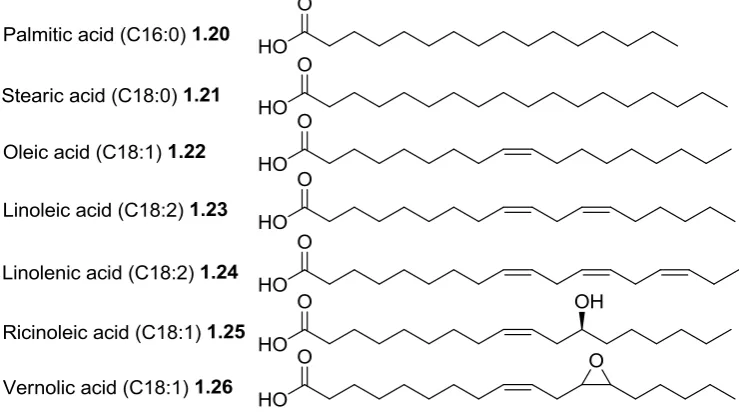
Vegetable oils are part of a family known as lipids. Lipids are comprised of many compounds such as fats, sterols, complex glycolipids and triglycerides. Triglycerides 1.19 (Fig. 1.7) are comprised of a glycerol component and three fatty acid chains with varying fatty acid compositions depending on the organism they are found in. In crops the fatty acid composition can change depending upon the variety, season and growing conditions.15 The fatty acid composition (Table 1.1) can be determined by fatty acid methyl ester analysis (FAME) and fatty acids chains are identified with a number (C18:1 for oleic acid) where the first number corresponds to the number of carbons and the second number identifies the amount of unsaturation within the chain. These fatty acids can contain various reactive sites, such as alkenes, allylic and α carbons, carbonyl components, alcohols (if ricinoleic acid 1.25 is present) and epoxides (if vernolic acid 1.26 is present) (Fig. 1.8) making triglycerides versatile compounds from which to synthesise renewable materials. In 2011 Palm, soybean, canola and sunflower oil accounted for 72% of total global consumption of fats and oils.16
8
Figure 1.8: Common fatty acids present in vegetable oils.
Triglyceride Fatty acid composition (%)
C16:0 C18:0 C18:1 C18:2 C18:3
Cocoa butter 26 34 35 - -
Corn 13 3 31 52 1
Cottonseed 23 2 17 56 -
Linseed 6 3 17 14 60
Olive 10 2 78 7 2
Palm 44 4 39 11 -
Rapeseed 4 2 62 22 10
Safflower 7 3 14 75 -
Soybean 11 4 23 53 -
[image:39.595.133.503.77.284.2]Sunflower 6 5 65 26 -
Table 1.1: Typical fatty acid compositions of a range of triglycerides.17
9
1.4.1 Reaction of the allylic carbon
The allylic carbon in the fatty acid chain is a potential site for oxidation, plays a key role in the autoxidation of fatty acids (see section 1.4.1.2) and can undergo allylic hydroxylation18 and halogenation.19 Hydroxylation of oleic acid 1.22 was achieved using SeO2 and t-BuOOH in 24 hours at room temperature. The reaction gave a mixture of mono- (1.27 and 1.28) and di- hydroxylated (1.29) oleic acid as a mixture of diastereomers (Fig. 1.9).20
Figure 1.9: Allylic oxidation of oleic acid 1.22.20
1.4.2 Reactions at the carbonyl
1.4.2.1 Transesterification
Reactions at the carbonyl position of the fatty acid are one of the most common approaches in oleochemistry. Glycerolysis involves reaction of triglycerides with varying ratios of glycerol to produce mono- and di-glycerides (Fig. 1.10).21
10 Pyrolysis of triglycerides has been investigated for over 100 years especially in areas with limited or no petroleum reserves therefore is not relatively new22 however, biorenewable fuels, such as biodiesel, from renewable oils have attracted a large amount of attention in recent years as a substitute to petroleum distillates and petroleum based petrochemicals, especially with the depletion of natural oil reserves.23-25 Vegetable oil and animal fat are most commonly used in biodiesel synthesis. In triglyceride form the oils have low volatility and are far more viscous than conventional diesel, therefore have to be modified. Transesterification of renewable oils to fatty acid methyl or ethyl esters26-27 (Fig. 1.11) increases the volatility of the oils and decreases the viscosity when compared to the vegetable oil, thus making it more closely resemble conventional diesel. The use of branched alcohols, such is isopropanol and 2-butanol, has also been employed to lower crystallisation temperatures.28 Significant research has been reported into optimising the transesterification process by tailoring the catalyst and temperature.29 Alkali catalysts are most common in this process due to faster reaction times and higher yield however, acidic and enzymatic30-31 catalysed reactions can also be used as well as using microwave irradiation32 in batch and flow processes to improve reaction times.
11
1.4.2.2 Aminolysis
Aminolysis is a reaction between esters and amines to produce amides and can be achieved using metallic catalysts, such as sodium methoxide, biocatalysts or microwave irradiation.33-37 In 1966, Gast et al. reacted linseed oil with diethanolamine using sodium methoxide catalyst at 110-115 °C (Fig. 1.12).38
Figure 1.12: Aminolysis of triglyceride with diethanolamine.
The diethanolamides synthesised were used to produce viscous oil polyesters for use in protective coatings. Thirty years later, de Zoete et al. reported the aminolysis of olive oil using ammonia saturated t-butanol and Candida antarctica lipase to give unsubstituted fatty amides.39 More recently Awasthi et al. reported the synthesis of fatty amides using urea and di-ammonium hydrogen ortho-phosphate as catalyst in a microwave oven at 200 °C.40 In 2013, de Almeida et al. reported the aminolysis of passion fruit oil with ethanolamine using various heterogeneous catalysts (Fig. 1.13).41 Best conditions were found to be 3 equivalents of amine and zinc-lanthanum mixed oxide catalyst at 100 °C and achieved full aminolysis in 3 hours.
12
1.4.3 Utilising the Alkene in Triglycerides
1.4.3.1 Hydrogenation
Full removal of the unsaturation present in triglycerides and fatty acids can be achieved via hydrogenation. The first reported use on edible oils was in 1902 and is used substantially in the food and chemical industries.42-44 This process is known as hardening within oil chemistry due to removal of unsaturation within fatty acids increasing their melting points and subsequently altering the physical state of the oil from liquid to semi-solid or solid.45 Much research has been carried out in this
area46-47 and is achieved using molecular hydrogen and a catalyst, typically nickel,48
palladium49-50 or platinum.51 A standard procedure for the hydrogenation of soybean oil to margarine involves exposing the oil to 55 °C under 300 bar of hydrogen gas in the presence of a nickel based catalyst.52
Selective reduction of only one alkene in polyunsaturated fatty acids, such as linoleic acid 1.26 (C18:2), has been reported using palladium on activated carbon (Fig. 1.14).53 Results showed longer reaction times, when the temperature was maintained at 120 °C and pressure at 0.4 MPa, produced higher amounts of trans-fatty acids which have been shown to increase the risk of coronary heart disease.54
13
1.4.3.2 Direct Cross-linking
In 2001, Li et al. discovered triglycerides with high iodine values, a test to determine the amount of unsaturation within a molecule, can be directly polymerised using boron trifluoride diethyl etherate (BF3.OEt2) as initiator,55-58 however, due to the higher viscosity of the oil and low miscibility between the oil and initiator, only soft weak polymers or viscous liquids with limited uses were obtained.55 Addition of more reactive styrene and divinylbenzene co-monomers improved both miscibility and reactivity of the triglyceride reactions and produced polymers with glass transition temperatures of 0 – 105 °C therefore ranging from soft rubbers to hard, tough or brittle plastics.56-58 Following on from this research in 2007 Liu et al. achieved cationic polymerisation using BF3.OEt2 in supercritical CO2 and obtained polymers via a green method with molecular weights (Mw) ranging from 1300 to 22800 gmol-1 which could have potential uses as lubricants and hydraulic fluids due to the liquid physical state.59
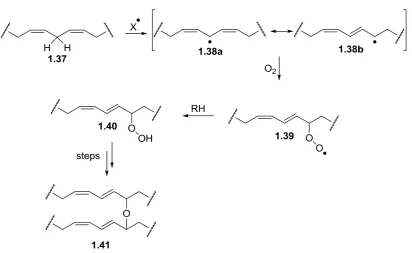
Triglycerides with high iodine values (> 170) are referred to as drying oils due to their increased ability to polymerise via radical polymerisation caused by autoxidation and subsequent peroxide formation.60-61 The radical process generally starts with the abstraction of a hydrogen atom from the activated methylene between the two cis alkenes in the polyunsaturated fatty acid 1.37 (Fig. 1.15) to give a
14 oligomers can be produced if 1.38a or 1.38b lead to termination and peroxy oligomers can be produced if 1.39 terminates with 1.38a or 1.38b.
Figure 1.15: Autoxidation in drying oils.62
This makes them important compounds for use as binders and film formers in paint and coating formulations. Addition of cobalt, as a drying agent, increases the drying rate without affecting the mechanism, however leads to a solid layer formation on thick films while remaining liquid underneath therefore being one of the major drawbacks of drier use.62 Cross-linking is achieved when the radicals formed from the autoxidation recombine in various ways to form alkyl, ether or peroxy cross-link bridges.63-64 Recent work in this area has established the use of manganese compares well to cobalt as a drying agent65-66 and could therefore be used as non-carcinogenic alternatives.67
1.4.3.3 Metathesis
15 of metathesis for oleochemicals was the self-metathesis of methyl oleate using a WCl6/Me4Sn catalyst system69 which was followed by using linoleate and linolenate based esters69-70 however conversions tended to be low with 50 % plus starting material recovered. Since this report, other catalytic systems have been investigated for the self metathesis of fatty acids with alumina supported rhenium oxide (Re2O7/Al2O3),71 Re2O7/SiO2.Al2O3/SnBu472 and subsequently with Grubbs catalysts,73-74 with all giving higher conversions of dicarboxylic acids 1.43 and alkene 1.44 than with the original tungsten based catalyst (Fig. 1.16).
Figure 1.16: Self metathesis of methyl oleate using second generation Grubbs catalyst.73
Recently Dixneuf et al. synthesised a range of aminoacid, aminoester and aminoalcohol precursors from oleic acid and fatty acids from castor oil (Fig. 1.17).75 Fatty acids and diacids 1.43 were cross metathesised with acrylonitrile 1.46 and fumaronitrile to prepare various nitrile-acids and nitrile-esters which could be further reduced using the residual metathesis catalyst giving the aminoacids, aminoesters
16
Figure 1.17: Synthesis of aminoesters from castor oil fatty acids.
In 1990 Wagener et al. demonstrated the polymerisation of α,ω-dienes and coined the term acyclic diene metathesis (ADMET) polymersisation.77 ADMET is a step growth polymerisation driven by the release of ethane as condensate and typically yields linear polymers with unsaturated backbones (Fig. 1.18).78
Figure 1.18: Schematic representation of an ADMET polymerisation of α,ω-dienes.78-79
17
1.4.3.4 Epoxidation
One of the most important reactions with regards to oil chemistry is the epoxidation of the unsaturation within the fatty acid chains of triglycerides (Fig. 1.19). This modification gives rise to a range of possibilities to add further functionalisation to the triglycerides for many different purposes.
Figure 1.19: Epoxidised rapeseed oil.
There are many methods of epoxidation, one of the most common is the use of peroxide containing compounds (peracids) such as mCPBA, known as the Prilezhaev reaction,82-83 however this process would not be viable commercially due to the benzoic acid by product produced and the cost implications of using mCPBA. Interestingly in 1996 Klaas et al. discovered a one-pot peracid formation/epoxidation using unsaturated fatty acids.84 Oleic acid 1.22 was oxidised to peroxy oleic acid
18
Figure 1.20: Peracid formation and subsequent epoxidation of oleic acid 1.22.
Following on from this, in 2001, Hilker et al. successfully epoxidised linseed oil using peroxy stearic acid (saturated fatty acid) using the same process as Klaas et al. and discovered the rate of reaction varied with the temperature of the reaction and the H2O2 percentage. It was found that increasing the temperature increased the rate of reaction however also lead to decomposition of the peracid and deactivation of the enzyme.85 Industrial epoxidation is achieved using the Cargill process where peracetic acid is formed in situ (from acetic acid and H2O2) or formed externally and added to the reaction.86-87
19 two methods, the first using peracetic acid, prepared externally and added to the reaction, and secondly using peroxotungstate catalyst and H2O2 and found both gave the desired epoxidised oil at 55 – 60 °C in 8 and 9 hours respectively.92 Crivello prepared the peracetic acid using Amberlite® IR 120 ion exchange resin, acetic acid and H2O2, in 2002 Petrovic et al. used a similar system to epoxidise soybean oil producing the peracetic acid in situ in toluene at 40 – 80 °C and found increased temperatures decreased reaction times without compromising conversion.93
1.4.3.5 Ring-opening of epoxides
Epoxides are relatively strained species and as a result are more reactive. Epoxides tend to undergo nucleophilic ring-opening usually to form alcohol derivatives (1.55a-h) (Fig. 1.21). These alcohol derivatives give rise to compounds that can be used as monomers in polyurethane synthesis (see section 2.1) or further modified via nucleophilic substitution of the β-hydroxy halo triglycerides (1.55e-f).94-95
Figure 1.21: Nucleophilic ring-opening of epoxides.
1.4.3.6 Dihydroxylation
20 permanganate can also be used for direct dihydroxylation with sodium hydroxide and phase transfer catalyst however, reactions with methyl oleate were poor due to potential saponification caused by the presence of NaOH in the reaction (Fig. 1.22).100
Figure 1.22: Direct dihydroxylation using potassium permanganate.100
Dihydroxylation has also been reported via epoxide intermediates. Oakley et al. demonstrated the one-pot epoxidation and subsequent ring-opening of fatty acids using H2WO4 as a catalyst with t-butanol, H2O2 and O2. This method could also be used to produce dicarboxylic acids via oxidative cleavage if further equivalents of O2 or H2O2 were used.101 In 2003 Usui et al. reported the use of 30 % H2O2 with resin-supported sulfuric acid to dihydroxylate oleic acid as well as other olefins (Fig. 1.23).102
Figure 1.23: Dihydroxylation of oleic acid using resin-supported sulfuric acid.102
21
1.4.3.7 Thiol-ene reaction
The thiol-ene reaction is often referred to as an example of ‘click chemistry’ which was first reported by Sharpless et al.104-105 A more detailed description of click chemistry is given in section 1.5. The thiol-ene reaction has been successfully employed in the synthesis of polyols from fatty acids and triglycerides.106 Methyl oleate was reacted with 2-mercaptoethanol using dimethoxy-2-phenylacetophenone (DMPA) as a photo initiator under UV conditions to give hydroxylated methyl oleate
1.59 as a mixture of regioisomers (Fig. 1.24).
Figure 1.24: Thiol-ene reaction of methyl oleate with 2-mercaptoethanol.
Reduction of 1.59 with LiAlH4 leads to diol 1.60 which has been used in the synthesis of polyurethanes (Fig. 1.25).106
Figure 1.25: Reduction of 1.59a with LiAlH4 to give diol 1.60a.
22 polymerised with 4,4′-methylenebis(phenyl isocyanate) (MDI) to give polyurethanes with glass transition temperatures of 25 °C.107
1.4.4 Polymers from epoxidised and dihydroxylated vegetable oil
Polyethers, polyesters and polyurethanes are primarily made by chemical manipulations of various petrochemicals. Replacing the aliphatic chain with one derived from a vegetable oil (e.g. the fatty acid chains in the triglycerides) may show similar properties to those derived from existing monomers. Epoxidised and dihydroxylated vegetable oils can be used to produce polyethers, polyesters and polyurethanes (Fig. 1.26), a brief review has been given below.
Figure 1.26: Schematic representation of the polymerisations and monomers.
1.4.4.1 Polyethers
Ring-opening of epoxides using Lewis acids leads to polyethers which can also be further polymerised with isocyanates to give polyurethanes.108-112 In 2006 Lligadas et al. ring-opened epoxidised methyl oleate 1.61 using hexafluoroantimonic acid (HSbF6) to give methyl oleate based polyethers 1.62 which were further reduced using LiAlH4 to give polyethers with increased hydroxyl values 1.63 (Fig. 1.27).108 These polyols were subsequently reacted with MDI to form polyurethanes ranging from hard rubbers to rigid plastics.
Epoxides
Diols
Polyethers
Polyesters
Polyurethanes Lewis acid
Dia cid
23
Figure 1.27: Ring-opening polymerisation and reduction of epoxidised methyl oleate.108
Following on from this, the same group reported ionic-coordinative ring-opening polymerisation of epoxidised methyl oleate to produce polyethers ranging from 6000 – 8000 molecular weight.109
These polyethers were subsequently reduced using LiAlH4 to give polyether polyols which were converted to biobased polyether polyurethanes exhibiting increasing tensile strength with increasing cross-linking.110
Liu et al. reported the ring-opening polymerisation of epoxidised soybean oil using boron trifluoride diethyl etherate as catalyst in DCM in 3 hours at 0 °C.111 Polyethers produced ranged from 1600 – 3800 molecular weights with glass transition temperatures ranging from -48 – -16 °C depending on the amounts of catalyst. The resulting cross-linked polymers could be converted into hydrogels by chemical modification and could potentially be used in personal care and health care areas.
24 epoxide count. Polyurethanes were produced from vegetable oil polyethers and THF-vegetable oil copolyethers with the copolyethers showing superior mechanical properties with little effect on thermal stability.
Figure 1.28: Copolymerisation of vegetable oil with THF.112
1.4.4.2 Polyesters
25
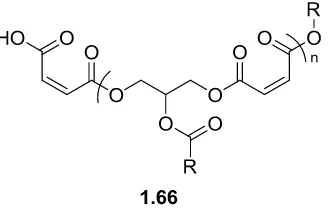
Figure 1.29: Alkyd resin structure made from monoglyceride and maleic anhydride.
Aydin et al. determined the effects of various anhydrides (maleic anhydride, phthalic anhydride, glutaric anhydride and succinic anhydride) on alkyd film viscosities and properties.115 Two different methods of alkyd resin synthesis were tested; the conventional method, alcoholysis of triglyceride and subsequent reaction with anhydride, and a modified method where partial glycerides, mono- and di-glycerides, were synthesised and washed with water to remove excess glycerol before reaction with anhydrides. Removal of the excess glycerol lead to alkyds with better film properties and lower viscosities.
1.4.4.3 Polyurethanes
26 flexible structures. Lowering molecular weight and increasing hydroxyl groups increase the rigidity and cross-linking densities of the PUs.
Figure 1.30: Synthesis of polyurethanes from MDI and PEG polyol, showing urethane link.
A vast amount of research using vegetable oils for polyurethane synthesis has been reported. Epoxides ring-opened with various reagents to form short polyols or longer chained polyols and polyamines have been employed. Petrovic et al. have carried out studies on the use of polyols derived from soybean oil for the use in polyurethanes83,95,116-118 and more details are given in the introduction to chapter 2 (section 2.1).
27 increase hydroxyl numbers. Polyurethanes produced had tensile strengths ranging from 2.74 MPa to 27.76 MPa depending on the amounts of isopropanolamine used to prepare the monomers, with the higher amounts giving the higher strengths.
Figure 1.31: Monomer produced by Miao et al. for bio-based polyurethanes.120
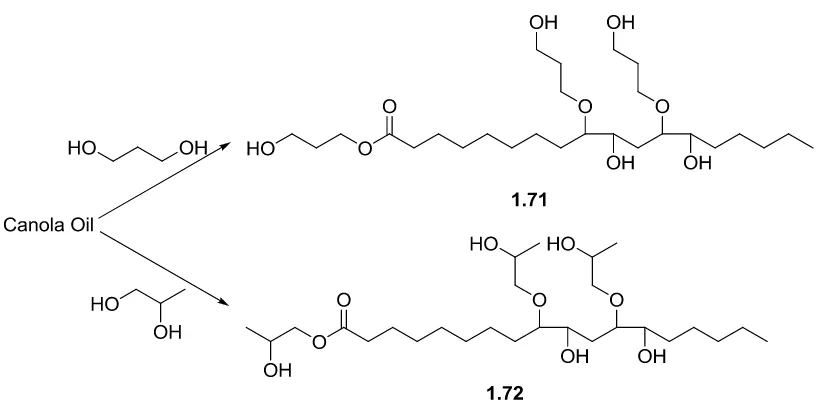
Kong et al. produced polyurethanes from monomers derived from canola oil using 1,2- and 1,3-propanediol (Fig. 1.32) to produce poly(ether ester) polyols 1.71 (1,3-propanediol) and 1.72 (1,2-propanediol).121 Polyurethanes synthesised from 1.71
were shown to have better initial thermal properties and shorter gelation times however, those prepared from 1.72 have better middle stage thermal properties and higher glass transition temperatures.
28 Soybean oil and sunflower oil polyurethanes were investigated for tissue engineering and showed promising cell adherence and proliferation.122-123 Cell adhesion of fatty acid derived polyurethanes has been improved by blending or surface modification of polyurethanes with gelatin,124 chondroitin sulfate125 and collagen.126 The problem encountered by these materials was the non-degradable urethane links. Very recently a series of biodegradable and biocompatible phosphoester cross-linked vegetable oil polymers were reported.127 Phosphorylated castor oil 1.73 (Fig. 1.33) was reacted with epoxidised linseed oil to produce the phosphoester cross-linked vegetable oil elastomers showing full degradation and complete absorption after 3 months with very slight inflammatory response.
Figure 1.33: Phosphorylated castor oil.
1.5 Click Chemistry
As previously mentioned (section 1.4.3.7) Sharpless first coined the term ‘click chemistry’ in 1998, however it was not fully described until 2001.104
In order to be classed as ‘click,’ reactions have to be:
Modular
Wide in scope High yielding
29 Stereospecific (not necessarily enantioselective)
Simple reaction conditions
Use of benign or no solvent Simple purification
There are 4 main areas that have been studied as click reactions: cycloaddition reactions, nucleophilic ring-opening reactions, non-aldol carbonyl chemistry and addition to C=C bonds.128
1.5.1 Azide-alkyne cycloadditions
The best example of click chemistry is the Huisgen 1,3-dipolar cycloaddition of alkynes and azides producing triazoles.129 This process has been used in the production of small molecules and potential drug discovery128 however medicinal chemists have not given this area much interest potentially due to the use of azides.130-131 Most azide alkyne cycloadditions are catalysted by copper (II) salts and base producing the active copper (I) catalyst in situ. This leads to 1,4-disubstituted triazoles due to the terminal copper acetylide formed during the reaction, however reactions can be carried out catalyst free which leads to formation of a small percentage (~ 20 %) the minor product, 1,5-disubstituted triazoles.132
30
Figure 1.34: Example of azide-alkyne click polymerisation.137
The use of azide-alkyne click chemistry using vegetable oils is a relatively new and uninvestigated area. In 2010 Shah et al. attempted azide-alkyne click polymerisation using soybean oil138 and expanded to other oils in 2012.139 The work by Shah et al. is discussed in more detail in the introduction to Chapter 3.
1.5.2 Nitrile oxide-alkyne cycloadditions
Nitrile oxide-alkyne cycloadditions are seen as an alternative to azide-alkyne cycloadditions for two reasons, firstly toxicity of copper salts140 and secondly the instability and risk to health aspects of azides.141 Nitrile oxide dipoles are potentially unstable, forming dimers (Fig. 1.35)142 or reacting with nucleophiles however, this can be minimised by in situ generation of the dipole.143
[image:61.595.227.408.681.733.2]31 Nitrile oxide dipoles can be formed from either hydroxymoyl chlorides with base or from nitro precursors in the presence of isocyanates144 and lead regioselectivly to 3,5-disubstituted isoxazoles 1.80 when reacted with monosubstituted alkynes 1.79.145 The regioisomeric 3,4-disubstituted isoxazoles can be produced in the presence of ruthenium based catalysts,146 while copper based catalysts give the 3,5-disubstituted isoxazoles.147
Nitrile oxide cycloadditions with terminal alkynes has been used to synthesise steroids and sugar conjugates (Fig. 1.36)148-150 however, the field is dominated by the antiviral and anticancer potential of isoxazole nucleosides.145,151-152
Figure 1.36: Synthesis of isoxazole conjugates of sugars.149
32
Figure 1.37: Post polymerisation chain end modification using nitrile oxide cycloaddition.155
33
2.0Wealth out of waste: Synthesis of Polyurethanes from Waste Cocoa Butter
2.1 Introduction
[image:64.595.169.463.287.564.2]In 2000 Petrovic et al. synthesised polyurethanes from halogenated and non-halogenated soybean oil.94 Epoxidised soybean oil 2.1 was ring-opened with methanol, hydrochloric acid, hydrobromic acid or hydrogen (Fig. 2.1) giving monomers with a range of hydroxyl values (Table 2.1).
Figure 2.1: Halogenated and non-halogenated ring-opened soybean oil 2.2-2.5.
Polyol Conversion (%) Hydroxyl value Functionality
Soy-OCH32.2 93 199 3.7
Soy-Cla2.3 94 192 3.8
Soy-Bra2.4 100 182 4.1
Soy-H 2.5 89 212 3.5
a All values were calculated on the basis of the analyzed Cl and Br contents and under the assumption that each halogen was
accompanied by a hydroxy group.
[image:64.595.159.482.608.687.2]34 Polyols 2.2-2.5 were subsequently polymerised using two isocyanates, PAPI 2901 (a crude MDI, MDI = 4,4’-methylenebis(phenylisocyanate)) and Isonate 2143L (a
[image:65.595.195.444.220.418.2]liquid MDI prepolymer containing carbodiimide bonds) (Fig. 2.2).95 Polymers exhibited high Tg values (above RT) and gave relatively high tensile strength materials with low elongation at break (Table 2.2).
Figure 2.2: Structures of PAPI 2901 and Isonate 2143L.
Polyol Tg
a
(°C) TS (MPa) Elongation (%) YM(MPa) PAPI Isonate PAPI Isonate PAPI Isonate PAPI Isonate
Soy-Met 2.2 72 70 45 46 8.4 9 986 979 Soy-Cl 2.3 77 73 48 46 7.5 8.9 1204 1190 Soy-Br 2.4 75 68 44 40 7.7 7.3 1102 955 Soy-H2 2.5 31 34 19 16 29.0 15.4 383 362
aTg determined by DSC. TS = tensile strength, YM = Young’s Modulus
Table 2.2: Physical properties comparison of soybean oil polyols polyurethanes.
[image:65.595.123.515.506.605.2]35 the reactive sites (Fig. 2.3) in the polyurethanes had little effect on the properties, the cross-linking densities were more important. As expected, higher cross-linking densities gave superior mechanical properties with higher Tg’s (Table 2.3). Mobility of the chains in the networks was inversely proportional to the cross-linking density.
Polyol Tg a
(°C) TS (MPa) Elongation (%) FM (MPa)
Canola 32 22.9 131 353
Midoleic Sunflower 24 14.8 168 10
Soybean 31 20.2 108 312
Linseed 77 56.3 8 2015
Sunflower 32 21.7 107 443
Corn 30 17.7 122 309
[image:66.595.204.466.373.541.2]aTg determined by DSC. TS = tensile strength, FM = Flexural Modulus
Table 2.3: Physical properties of 6 renewable polyurethanes derived from different polyols.
Figure 2.3: Reactive sites on different fatty acid chains of triglycerides.
36 polymers from natural oils could be mimicked synthetically in the lab.157 Functionalisation of the oils was achieved via hydroxylation of the double bonds using peroxotungstate catalyst (Fig. 2.4).89
Figure 2.4: Schematic representation of hydroxylation reaction using tungsten.
Subsequent polymerisation with MDI also showed the polymers were sensitive to subtle changes in fatty acid composition. It also concluded that synthetic mimics of natural triglyceride based polyurethanes could be prepared and that these have similar properties to the natural oil polymers. This is useful when only small quantities of novel natural oils are available as it allows it to be mimicked in the lab on a larger scale.
38
[image:69.595.195.439.304.409.2]Figure 2.5: GPC trace of cocoa butter starting material.
Figure 2.6: Structure of cocoa butter triglyceride.
Fatty acid Cocoa butter (%a) Palm oil (%a)
Palmitic acid (C16:0) 26 42
Stearic acid (C18:0) 38 4
Oleic acid (C18:1) 32 43
Linoleic acid (C18:2) 3 10
Arachidic acid (C20:0) 1 1
a
Fatty acid composition determined by FAME analysis
Table 2.4: Fatty acid composition of cocoa butter compared to palm oil.
2.2 Aims and objectives
Investigate the epoxidation / hydroxylation reaction of cocoa butter and
39 Prepare MDI derived polyurethanes from cocoa butter polyols and compare
their physical properties to those synthesised from other triglycerides. Incorporate food-safe dyes into the polyurethanes and assess their stability.
2.3 Ring-opened cocoa butter synthesis
2.3.1 Optimising the ring-opening of epoxidised cocoa butter
[image:70.595.196.438.448.557.2]In order to synthesise polyurethanes derived from cocoa butter, hydroxylation of the unsaturation in the triglyceride was required. This was first attempted using the procedure employed by Coles et al. where a one-pot epoxidation followed by ring-opening was achieved using a peroxotungstate catalyst, hydrogen peroxide and ortho-phosphoric acid (1 equiv. per double bond) in water with a phase transfer catalyst at 100 °C, (Fig. 2.7).
Figure 2.7: Hydroxylated cocoa butter 2.5.