by
Marc Geoffery Hummersone
A thesis presented to the University of London in partial fulfilment
of the requirements for the degree of Doctor of philosophy
July 2001
The Christopher Ingold Laboratories
Department of Chemistry
All rights reserved
INFO RM A TIO N TO ALL U SER S
The quality of this reproduction is dependent upon the quality of the copy submitted.
In the unlikely event that the author did not send a complete manuscript
and there are missing pages, these will be noted. Also, if material had to be removed,
a note will indicate the deletion.
uest.
ProQuest 10010086
Published by ProQuest LLC(2016). Copyright of the Dissertation is held by the Author.
All rights reserved.
This work is protected against unauthorized copying under Title 17, United States Code. Microform Edition © ProQuest LLC.
ProQuest LLC
789 East Eisenhower Parkway
P.O. Box 1346
I would like to express my sincere thanks to Professor Karl J. Hale for his invaluable help
and excellent guidance throughout this study, his eagerness to explain problems and willingness to
make time for you in his busy schedule and his enthusiastic approach to the most daunting
problems will not be forgotten.
To all my friends in the chemistry department, past and present, especially Gurpreet, Mark,
Pascal, Andrew, Ruk, Allan, Teka, and Soraya - Special thanks for all the good times over the last
three years.
I am grateful to all the technical staff for all their help and advice, especially Jorge Gonzalez
Outereirino, Jill Maxwell, Dr Abil Aliev, David Knapp, Steve Corker and for their excellent services.
My thanks also to Mike Cocksedge and staff at the London School of Pharmacy for HRMS.
Finally I am indebted to my parents. Particularly my mother in her absence for their love,
encouragement, support, understanding and help throughout my life, and it is to them that I
A completely stereocontrolled asymmetric synthesis of an advanced B-ring synthon for the
bryostatin family of antitumour agents is described in this thesis. Noteworthy features of our
synthesis include the Smith-Tietze bis-alkylation reaction between 12 and 1 3 en route to
Cz-symmetrical ketone 10, and the totally stereoselective conversion of 10 into triol 18 via a Grignard
addition tactic. Triol 1 8 was converted to epoxide 3 in nine steps and an acid-catalysed
intramolecular Williamson éthérification reaction completed the synthesis of 2.
y HO
,OAc
M e J OH H ÔH
Bryostatin 1 (1)
T B D P S O '^ Intramolecular tB D P S O '^
II Williamson II ^ 0 ^
Ethérification 9 Steps
r^oH
—
PMBO OH
2 B-RIng Synthon
S y S
PMBO 13 OPMB
PMBO
Tandem Alkylation-Protection via the Smith-Tietze Reaction
PMBO OPMB
18
5 Steps
TBSO O OTBS
PMBO OPMB
Acknowledgem ent ... I
Abstract ... II
Contents ... ... Ill
1.0
INTRODUCTION
1.1 Isolation and Structure Elucidation of the Bryostatins 1-18 ... 1
1.2 Biosynthesis of Bryostatin 1 ... 2
2.0
Bryostatin Biology
2.1 The Antitumour Profile of the Bryostatins ... 32 .2 Mechanism of Antitumour Action ... 3
2 .3 Can Bryostatin 1 Accelerate the Growth of S om e Tumours and Function as a Tum our Prom otor?... 8
3.0
Bryostatin Total Synthesis
3.1 M asam une’s Enantioselective Total Synthesis of Bryostatin 7 ... 93 .2 The Evans Enatioselective Total Synthesis of Bryostatin 2 ... 16
3 .3 The N ishyam a/Yam am ura Total Synthesis of Bryostatin 3 ... 2 4
4.0
Synthetic Studies on the Bryostatins
4.1 Thom as’ Synthetic Studies on Bryostatin 1 ... 314 .2 Vanden/valle’s Synthetic Studies on Bryostatin 11 ... 36
4 .3 R.W . Hoffm ann’s Route to the C (1 )-C (9 ) S egm ent ... 32
4 .4 The Kalesse Route to the C (1 )-C (9 ) S egm ent ... 4 3 4 .5 The Kiyooka Route to the C (1 )-C (9 ) S e g m e n t... 4 4 4 .6 Roy’s Synthetic Studies on Bryostatin 1 ... 4 4 4 .7 The H .M .R Hoffmann Route to the C (1 )-C (1 6 ) AB segm ent ... 47
4 .8 H ale’s Synthetic W ork on the Bryostatins ... 52
4 .9 Janda’s Polym er-Supported Synthesis of the C (2 1 )-C (2 7 ) Sector ... 56
4 .1 0 Y adav’s Synthesis of the Bryostatin "Northern H em isphere” ... 57
4.11 W ender’s Analogue W ork ... 59
5.0
RESULTS AND DISCUSSION
5.1 Background: T h e Bryostatin Synthetic C hallenge ... 646.0
EXPERIMENTAL ...
88
R eferences
1.0 Introduction
1.1 Isolation and Structure Elucidation of the Bryostatins 1-18
,OAc
B ry o s ta tin 1
MeOjC-'O H
B r y o a ta tin 2
.CAc
>H H ÔH
'O H
B ry o s ta tin 3
HÇV
’rr
'O H
B ry o s ta tin 4
'rr
COsMe
B ry o s ta tin S
B ry o s ta tin 9
'O H
B ry o s ta tin 6
M eOj
'O H
CO jM o
B ry o s ta tin 10
B ry o s ta tin 7
,OAc MeOj
'OH
O COîM e
B ry o s ta tin 8
"OH
'O COjM e
B ry o s ta tin 12
CO2M0
B ry o s ta tin 13
'O H
C O jM o
B ry o s ta tin 14
i* °"
'O H
HO,
B ry o s ta tin 15
CO jM e
B ry o s ta tin 16
'O H
MeOîC
B ry o s ta tin 17
MeOaC'
B ry o s ta tin 18
Schem e 1 The Bryostatin family of antitumour macrolides
The bryostatins are a structurally novel fam ily of m acrolides first encountered by Pettit and
To date eighteen bryostatins have been isolated, and all show significant antitumour activity In vivo
(Scheme 1). The molecular structures of the bryostatins have been deduced either by X-ray
crystallography or through detailed spectroscopic analysis, with several interesting structural
patterns having emerged. All bryostatins possess a 20-membered macrolactone in which there are
three remotely functionalised pyran rings interconnected by an (£)-disubstituted alkene and a
methylene bridge. All family members also contain a pair of geminal dimethyls at C(8) and C(18).
Each bryostatin has a four-carbon side chain emanating from the A and C-rings, and virtually all
possess an exocyclic methyl enoate unit in their B and C rings. In the majority of cases the only
difference lies in the substituents at C(7) and C(20). Saying this, there are some bryostatins that do
not conform to this basic structural blueprint. For çxample, bryostatin 3 has a butenolide appended
to the C-ring rather than an exocyclic methyl enoate, and bryostatins 16 and 17 both have a glycal
replacing the C(19)- and C(20)-hydroxyls. Additional differences can be found in bryostatins 17 and
f
18 which have opposite methyl enoate geometries in their C-rings.
1.2 Biosynthesis of Bryostatin 1
Through elegant radiolabelling and incubation studies, Kerr and coworkers^ have demonstrated
that acetate, S-adenosylmethionine (SAM) and glycerol are all key building blocks involved in
bryostatin 1 production. Propionate, n-butyrate, isobutyrate and succinate are not needed for
bryostatin 1 biosynthesis. It has been suggested by Kerr that the geminal dimethyl groups of the
bryostatins might originate from a series of SAM méthylations on incorporated acetate units, as was
found for the biosynthesis of lankacidin and aplasmomycin. As for the exocyclic olefin units, these
probably derive from the addition of acetate to a polyketide chain followed by dehydration. Current
work in Kerr’s group is attempting to identify the sites at which the polyketide building blocks are
2.0 Bryostatin Biology^^
2.1 The Antitumour Profile of the Bryostatins
Bryostatin 1 shows remarkable in vitro and in vivo anticancer effects against a range of
mouse tumours that include P388 lymphocytic leukaemia,” ovarian sarcoma,^ B16 melanoma,® and
M5076 reticulum cell sarcom a/ Combinations of bryostatin 1 and auristatin PE, and bryostatin 1
and "dolastatin 10 have successfully cured five out of five, and two out of five, SCID mice with
human chronic lympocytic leukaemia xenografts.® Bryostatin 1 has also recently completed several
phase 1® and 2 ’® anticancer trials in man, where its most significant side effect’ ’ was mylagia. The
trials clearly demonstrated that bryostatin 1 has considerable potential for the treatment of ovarian
and relapsed low-grade Hodgkins lymphoma, it bping effective when given alone or in combination
with other anticancer drugs. To date, only one patient has had their cancer completely cured by
bryostatin 1,’°*’ but many partial remissions have been observed.® The complete remission was
seen in a 41-year old woman who had stage 4 follicular small-cell cleaved non-Hodkin’s lymphoma
that had recurred at multiple sites, 5 years after she had gone into remission through combination
therapy with alkylating drugs. Eight fortnightly cycles of bryostatin 1 were required to elicit this cure,
each cycle corresponding to a 72 h intravenous fusion at a dose of 120 pg/Kg.’°"
2.2 Mechanism of Antitum our Action
The antitumour effects of bryostatin 1 have been linked to its selective modulation of the
functioning of individual protein kinase C (PKC) isozymes.’^ PKCs are serine and threonine kinases
that catalyse the O-phosphorylation of proteins involved in cell signal transduction.’ ® They are
thought to play a critical role in the control of cell division, their over- or under-expression in some
tissues having been correlated with the transition into malignancy. For example, Mushinski and
coworkers observed that when nPKC-e is overexpressed in NIH3T3 cells, it makes them highly
neoplastic and tumourigenic towards nude mice.’'* Elevated n-PKC-e levels in rat’® fibroblasts also
considerably more susceptible to undergoing transformation with the H a-ras oncogene. The
cotransfection of human small cell lung carcinoma cells with the c-m yc and Ha-ras oncogenes
serves to increase PKC-pil levels, and significantly, this is correlated with the conversion of these
cells into the more malignant large cell phenotype.^® cPKC-a levels are also raised significantly in
human A549 lung cancer cells as compared with other nearby normal lung tissue.’^ Taken together
these findings lend weight to the idea that deregulated PKC activity could be contributing
significantly to the onset of a range of tumours.
Since the growth inhibition of A549 human lung cancer cells by bryostatin 1 correlates very
closely with the down-regulation of cPKC-a,’^ this has led to the view that the down-regulation of
certain PKC isozymes might be generally responsible for it and can actually prevent some
“tumour-suppressing” PKCs from being down-regulated, most notably isoforms of the PKC-5 variety in a
range of cell types. PKC-5s are now known to be intimately involved in cancer cell growth, their
degree of expression frequently determining whether a cell will undergo growth arrest or
proliferation. For example, PKC-5 over-expression in mouse kératinocytes results in apoptosis,’ ®
which is the hallmark of efficient tumour suppression. PKC-5 will also override the effects of an
over-expressed c-src-proto-oncogene in 3Y1 fibroblasts, it preventing such cells from undergoing
transformation.’® Deliberate over-expression of PKC-5 in NIH 3T3 cells halts their proliferation,^®
while its enforced under-expression in other tissues dramatically increases their rate of growth.’ ®'^’
The fact that bryostatin 1 can protect PKC-5 from undergoing down-regulation in mouse
kératinocytes^^ supports the notion that bryostatin 1 might be inhibiting the growth of some tumours
via a PKC-5 protecting or stabilising mechanism.^® Thus it appears as though bryostatin 1 acts
upon the PKC isozymes of various tumours in a number of ways, and this significantly complicates
the situation with regard to explaining its antitumour effects.
Because bryostatin 1 can selectively target different PKCs in a tissue-dependent manner,
this has led to substantial interest in the structure determination of these complexes. Bryostatin 1
conserved regions known as the cysteine-rich domains 1 and 2 (PKC ORDs 1 and 2). Considerable
effort has gone into mapping the three-dimensional structures of several CRDs, with the result that
an NMR solution structure has recently been determined for a murine PKCa CRD2 complex,^** and
a 2.2A resolution X-ray crystal structure has been solved for a murine PKCd CRD2 complexed to
phorbol 13-acetate.^® The latter work unambiguously showed that tumour-promoting phorbol esters
sit in a groove that exists between two opened p-strands at the tip of the CRD. It also revealed that
complexation does not induce a significant conformational change in the PKC activator-binding
domain. In essence, the phorbol ester caps the polar inside of the groove and creates a long
continuous hydrophobic surface that extends over roughly one-third of the complexed protein. It
was suggested that the greatly increased hydrophpbicity of the phosphorylated PKCd-phorbol ester
complex promotes its insertion into the plasma membrane from where it can elicit its tumourigenic
signalling.^® It is likely that when bryostatin 1 binds to the CRDs of various PKCs, a similar increase
in PKC hydrophobicity occurs. However, with bryostatin 1, the complexation possibly elicits more a
substantial conformational change in some of the PKC proteins than does the phorbol 13-acetate. It
is quite reasonable to suppose that the protective action of bryostatin 1 upon PKCSs from some
tissues might be the result of its complexation inducing a “stabilising” conformational change in the
enzyme that prevents it from inserting into the plasma membrane and/or being degraded. For other
PKCs, bryostatin 1 might equally well be eliciting conformational changes that conspire to favour
protein insertion into the plasma membrane and subsequent down-regulation.
"competent” "active"
_Y_
statin /
' ---' trans V --- '
ubiquitsn-INACTIVE _ I INACTIVE proteasome
/ \ "PKC kinase" / \ Bryostatin / \ Bryostatin / \ system
< ^ 80 > ^ ; K < --- \ ^
I plasma \ plasma A membrane k membrane , ADP 1 M
_ _ auto
phosphoroiation phosphorolation
S chem e 2 The hypthetical pathway of PKC synthesis and downregulation .
With regard to the latter proposal, remarkable insights have recently been garnered into the
way in which bryostatin 1 down-modulates PKC-a in renal epithelial cells, and PKC-a and PKC-e in
human fibroblasts. Through an elegant series of ^^P labelling studies, Bingham-Smith and
coworkers^® have shown that for these two cell lines, the down-modulation of PKC-a and -e occurs
through the ubiquitin-proteasome pathway. They demonstrated that soon after a phosphorylated
PKCa- or -e-bryostatin 1 complex is formed, autophosphorylation occurs, with the result that the
drug-protein complex is translocated from the cytosol to the plasma membrane where it then
becomes embedded. Once there, the complex is apparently rendered susceptible to
dephosphorylation by various membrane-bound alkaline phosphatases. Dephosphorylation yields a
catalytically inactive form of the PKC protein that predisposes it to ubiquitinylation by Ub-activating
(E1), -conjugating (E2), and ligating (-E3) enzymes found within the cytosol. As the ubiquitin -2 6
proteasome organelle resides both in the cytoplasm and in the nucleus, it is likely that the
cytoplasmic variant degrades the membrane-bound ubiquinylated PKC-a and -e proteins, and that
this is the entity responsible for the down-regulation of these two PKCs (Scheme 2).
This ability of bryostatin 1 to bind selectively to different PKC isoforms and render them
susceptible or non-susceptible to undergoing degradation within cells is really quite remarkable, and
probably holds the key to explaining many of the observed antitumour effects, and its future clinical
use. It is easy to imagine that, for some cancers, selective downregulation of a particular
upregulated PKC-isozymic pathway by bryostatin 1 might be all that is needed for correcting the
aberrant mitogenic state, while for others, it could be the upregulation of a particular PKC pathway
that is the critical event required for switching off the cellular proliferative machinery.
While most biological research on bryostatin 1 has focused on the study of its interactions
with various PKC isozymes, it should be noted that bryostatin 1 can function as a powerful
immunostimulant, and this has led some to suggest that a possible mode of antitumour action in
some patients could be through it eliciting an enhanced immune response.^^ Bryostatin 1 readily
tumour-necrosis factor-cc (TN F-a) in certain patients undergoing therapy.®^ T N F -a is powerful
tumouricide produced by the body upon immunostimulation. Bryostatin 1 also induces the rapid
release of TNF-a from MONO-MAC-6 cells.^° Significantly, in a murine macrophage ANA-1 cell line,
bryostatin 1 significantly increased TN F-a mRNA expression and production, and it synergised with
IFN-y in the production of NO2' and in the expression of the inducible nitric oxide synthase (iNOS)
gene. NOS catalyses the in vivo production of NO from L-arginine; in turn, NO confers powerful
tumouricidal effects on murine macrophages. It also induces the apoptosis of tumour cells.^^ Such
observations clearly lend support to the idea that bryostatin 1 could be exerting its antineoplastic
effects through an immunostiumulatory mechanism.
While bryostatins 1, 3, 8, and 9 are all capable of activating neutrophil chemiluminescence
and the cytotoxic killing of K562 cells, identical actions have not so far been detected for bryostatin
13; a member of the 20-deoxy class of bryostatins, which are even more potent as antitumour
drugs. Bryostatin 13 is also unable to stimulate colony formation from bone marrow progenitor cells,
notwithstanding the fact that bryostatins 1, 3, 8 and 9 can all perform this task very effectively.^^
Such data suggests that while an immunostimulatory antitumour mechanism might be significant for
the C(20)-O-acyl bryostatins in some patients, a similar mode of action is probably not operative for
molecules of the 20-deoxy class.
The divergent actions of the bryostatins on PKCs from different sources, coupled with the
ability of some family members to function as immunostimulants, make it most unlikely that a single,
all-encompassing, mechanism of antitumour action will ever be proposed for this class. Current
biological data suggests that the antitumour properties of bryostatin 1 almost certainly vary from
patient to patient, the observed response being contingent both on the cancer type and on the
overall PKC content of the recipient's cells. Clearly a great deal more biological evaluation will have
to be done before a more complete mechanistic picture is gained of the various ways in which this
2.3 Can Bryostatin 1 Accelerate the Growth of Som e Tum ours and Function as a Tumour
Promoter?
Recently it been demonstrated that PKCP isozyme levels can markedly affect whether some
cells rest or proliferate. This is significant for bryostatin 1 can selectively target PKCpIls in human
erythroleukaemia (K562) and promyelocytic (HL60) cells. Bryostatin 1 complexation leads to these
PKCs selectively translocating to the nuclear membrane, where they phosphorylate lamin B at its
Ser-395 and Ser-405 residues.^^ Lamin phosphorylation is associated with disassembly and
increased solubility of the nuclear lamina network during mitosis, it resulting in breakdown of the
nuclear envelope. Importantly, these actions of bryostatin 1 correlate closely with an increased rate
of proliferation for both cancer cell lines. Data of this sort apparently suggest that bryostatin 1 could
actually worsen some tumours, and strongly point to the need for perfoming detailed in vitro
anticancer tests of bryostatin 1 prior to commencing therapy. Preliminary in vitro screening might at
least establish whether the drug will have a realistic chance of arresting or worsening tumour growth
3.0 Bryostatin Total Synthesis^
The remarkable molecular structures of the bryostatins, coupled with their excellent
antitumour properties and scarcity in nature, have educed considerable synthetic interest in this
class over the past two decades. So far, only three bryostatin family members have succumbed to
total chemical synthesis. Bryostatin 7 was the first family member to be synthesised by Masamune
in 1990.^^ Eight further years elapsed before Evans and coworkers crowned this monumental
achievement with an equally impressive total synthesis of bryostatin 2.^® Two years later in 2000,
Nishiyama and Yamamura reported their asymmetric pathway to the structurally most complex
member of this family, bryostatin 3.®^ In the coming sections, each of these syntheses will be
discussed in detail.
3.1 Masamune’s Enantioselective Total Synthesis of Bryostatin 7 (1990)
a. Masamune’s Retrosynthetic Strategy For Bryostatin 7.
The strategic planning used by Masamune and coworkers for their total synthesis of
bryostatin 7 is summarised in Scheme 3.^®
MeOzC
HO I ,
'-C O ,M e
B ryostatin 7
HO I
r c o ,H
MeO 1/
OTBDPS
" J O M e H '
Regloselectlve
M a c ro la c to n ls a tlo n ^ a nd G lycoside H ydrolysis
C O jM e
TESO""^Tr """ °
A c e ta te A ld o l a t C (3)
OTBDPS
TBDPSO.
7 ,OTBDPS
A s ym m e tric A ld o l Reaction
,b-j—
o p m b o
OTBDPS
MeQ I v ' TBDPS
OSiPhjBu-f
PhOjS
OPMB
T E S O '" >
In tra m o le c u lar O x y m e rc u ra tlo n
Ju lia O leflna tloi
/
H MeO
- O O^
" C H O ,O T B D P S
TESO""
H a lo g e n -M e ta l Exchange
Key elements of their proposed route were a regioselective macrolactonisation of secoacid
1 to construct the 20-membered macrolide ring, the use of a reagent-controlled acetate aldol
reaction to set the C(3)-hydroxy stereocentre and concurrently install C(1) and C{2) carbons of the
polyketide backbone, and a Julia olefination^® reaction between 3 and 4 to fashion the sterically
encumbered C(16)-C(17) frans-alkene, and connect the three pyran segments together. A
chemoselective oxymercuration^® of the less hindered olefin in diene 5 was envisioned for B-ring
assembly, while a borolane mediated asymmetric aldol reaction appeared strategic for uniting the
A- and B-ring sectors. The C-ring sulfone 4 appeared accessible from the protected ketone 8 which,
itself, looked derivable from the addition of a vinylmetal species to the a-alkoxy aldehyde 10, when
followed by appropriate functional group interconversions. The presence of a DMBO group'*” at the
a-position of aldehyde 10 could be expected to favour the emergence of the chelation controlled
addition product with the correct alcohol configuration at 0(20).
b. Synthesis of the C(3)-C(16) Segment.
For methyl ketone 6 (Schemes 3 and 4), efficient installation of the masked 1,3,5-triol motif
spanning carbons-3 to 7 was the main concern. Some years earlier, Masamune and Sharpless had
proposed a general solution to this problem as part of their synthetic work on the antifungal agent
amphotericin B.'** Their approach was based upon the creation of an appropriate chiral
2,3,4,5-bis-epoxy alcohol via the AE'*^ and regioselective ring-opening at C(2) and C(4) with REDAL. The
substrate that would be needed for the A-ring sector was compound 14; it was prepared in nine
steps from 2,2-dimethyl-propane-1,3-diol 11 as detailed in Scheme 4. Did 11 was converted to
aldehyde 12 by selective O-benzylation and oxidation. Wadsworth-Horner-Emmons (WHE)
reaction, DIBAL reduction and Sharpless AE subsequently delivered the 2,3-epoxy alcohol 13 in
92% ee, while Swern oxidation secured the epoxy aldehyde. The latter underwent Wittig formylation
and borohydride reduction to the allylic alcohol needed for the second AE, which enhanced the d.e.
of the product 14 to 99%. As expected, 14 underwent regiospecific alkoxide-directed ring opening
O H OH
11
(i) N aH , DMF, BnCI, R T. 1 4 h (5 2 % ) (ii) C i O , Py. C H jC lj
(50%)
(iii) (E 1 0 )j(P = 0 )C H jC 0 jE l. NaH (rv) DIB AL-H____________________
(V) (-)-OET, Ti(CyPr),, 'B uO O H C H jC lj (85% ) BnO
13 (92% ee)
(Vi) (CX)CI)2, Me^SO, -78 °C , E IjN , then 0 "C
(vii) P h jP ^ C H C H O , C ,H «
(viii) N a B H * M eO H (61% , 3 steps) (ix) (+)-DET, T i(0 'P r)„ 'B u O O H
C H jC lj (80 % )
14 (>99% ds)
(x) RedAI-H
(XV) MoLI (xvi) (C O C I)j,
M e jS O , -78 "C, E la N ,th e n O °C
(xin) Na, Squid N H ,
OTBDPS (xiv) (CO CI);.
(xvii) \ ,cm
a "
(H f l) i-PrjNEI
E ljO
h: V
^OTBDPS
7
OTBDPS
(86%) "
(11 S :1 1 R = 8:1)
(xi) TB DP SC I, Im idazole
(xii) P P TS, (M e O )2C M e j BnO OH OH (>99% ds)
TBDPSO.
Meÿ Meÿ
TBDPSO, ,OAc TBDPSO, .OH
(xx) A c ,0 , py. DMAP (93 % , 2 steps)
OTBDPS OTBDPS
(7 7 % )
(xix) H g(O Ac),, T HF, M eOH, then KOI
MeO^
TBDPSO, ,OAc TBDPSO, .OAo
(xxii) (C O C I);, M e jS O ,
Me^SO, -78 °C,
EtjN, then 0 °C CHO
OH
MeÇ'
(xviii) (M e O )jC H , M eO H , PPTS
(84 % )
Me( TBDPSO, .OH OH OTBDPS TBDPSO, ,OAc CH O MeÇ'
Scheme 4 Masamune's synthesis of the C(3)-C(16) AB fragment 24.
acetalation yielded 16. O -Débenzylation via Birch reduction followed by Swern oxidation,
methyllithium addition, and a second Swern oxidation completed the sequence to methyl ketone 6.
Treatment of 6 with the (R,A)-borolane triflate 18 and Hunig’s base produced a chiral boron
enolate 19 which readily added to the dienyl aldehyde 7 to afford p-hydroxy ketone 20 with 8:1
selectivity. Fischer glycosidation of 20 with MeOH, PPTS and trimethylorthoformate next unmasked
the 0 (5 ) and C(7)-hydroxyls and instigated formation of the a-methyl glycoside 5. The B-ring was
elaborated via chemoselective intramolecular alkoxymercuration, acétylation, and oxidative
demercuration under free radical conditions. The end-result was a 1:1 mixture of diastereoisomeric
23 was oxidised to the 1:1 mixture of aldehyde epimers 24 and these equilibrated under mildly
basic énolisation conditions to a 9:1 mixture enriched in the more stable equatorial product 3.
'OTHP (i) n-BuLI. HCHO, THF (89%)
'OTHP(ii) RedAI-H, THF,
(iii) TBDPSCI, FPrjNEt,
r O T H P imidazole, | O T H P (yj p p r s , EtOH c w n
#ien I; (90%)
25 HO 26
c
27CHzCI; (95%) _ (Vi) (py)2Cr03, CH^CIz
(iv) HjCsCHCH zM gBr, [ 9 2%, 2 steps Cul, EtgO (77%) ^O TB D P S
28
OTBDPS
7
S c h e m e 5 Masamune's synthesis of the C(11)-C (16) B-ring fragment 7.
Important steps in the route (Scheme 5) to aldehyde 7 included the Corey trisubstituted
olefin synthesis'*^ that was used to access iodo allylic alcohol 27, the protection of its OH with
TBDPSCI, and the copper-catalysed cross-coupling reaction with allylmagnesium bromide. The
THR group was hydrolysed from 28 with PPTS in ethanol, and a Collins oxidation used to secure 7.
c. Synthesis of the C(17)-C(27) Segments.
HOzC^ Y ^ O H (i) NaNOz, H O z C ^ ^
NHz
29
H2S O4, H jO
(ii) M eO H, AcCI
(iii) (M eQ gC M ea , p-TsO H ^ M e O g C . ^ ^ ^
O H (64%, 3 steps) o
30 31
(iv) DIBAL-H
(V) PhaP^CHz
32
ix NaH, PMBCI
PMBO O
(x) FBuLi C IC O gM e
OPMB
O-vi) SiajBH, H jO j
O , (viii) Allenyl-ZnBr O H C ' ' X O
OH (^3%) Ô
-(vii) PCC H O .
MeOoC
35
n B u a S n
(xi) n-B U jSnC u.U B rM ejS,
(64%, 3 steps)
37
O P M B O 'I C O2M0 '
38
34
(xii) DIBAL-H
(xiii) TBDPSCI, imidazole
(52% , 4 steps) Ô
33
BuaSn^
OPMBO-^
(xvi) TESOTf, 2,6-Lutidine (xvii) DDQ (1 eq) (xviii) MegSO, Ac%0, Et^N
(70%, 3 steps)
DMBÔ ^ O P M B O '
OTBDPS 40
(XV) n-BuU, then
t^CHO10
PhS ODMB
(70% )
(79% , 3 steps)
OPMB
OTBDPS
PhS O O P M B O
OTBDPS
(xix) M0O5 H M P A H2O (XX) DDQ, S iO j
(xxi) TM SO TI, TM S O M e or B Fj 0Et2, M eOH
(40%, 3 steps)
PhOgS. O M e H
TESO""
A two-pronged strategy was devised for the C(17)-C(27) sector 4, which relied upon the
preparation of fragments 9 and 10 (see Schemes 6 and 7). Vinyl iodide 9 was synthesised from
L-threonine as detailed in Scheme 6. The route opened with the sequence of amine diazotisation,
O-esterification, and O-isopropylidenation to acquire methyl ester 31.^ The latter was then reduced to
the corresponding aldehyde with DIBAL and this, in turn, subjected to a Wittig olefination with
methylenetriphenylphosphorane. Hydroboration and oxidation of alkene 3 2 furnished alcohol 33
which was further oxidised to aldehyde 34. A chelation-controlled addition of allenylzinc bromide
was now effected on 34 to introduce the acetylene needed for later elaboration of the exocyclic
olefin. The C(23)-hydroxy stereocentre was set with 8:1 selectivity, notwithstanding the fact that
p-alkoxy aldehydes are generally not regarded as good substrates for chelation-controlled
nucleophilic additions of organometallics. After protection of the predominant alcohol as a PMB
ether, the alkyne terminus of 36 was homologated with f-BuLi and methyl chloroformate to obtain
the alkynyl ester 3 7 . Stannylcupration of 37 via the Piers methodology"*® proved highly
stereospecific, it depositing the requisite vinylstannane group within 38 in high yield. DIBAL
reduction of the ester and protection of the resulting alcohol transformed 38 into 39, which engaged
in a stereospecific substitution reaction with iodine to give 9. The lithiation of 9 yielded a vinyllithium
intermediate that added readily to aldehyde 10, to afford a mixture of alcohols enriched in the
chelation-controlled product 40. Protecting group manipulation and oxidation completed ketone 41.
The sulfone unit was best elaborated by sulfide oxidation with MoOPH, conditions which left the
trisubstituted double bond unperturbed. A DDQ-induced removal of the PMB group now followed
O H (V i) PhNCO, E tjN
(vii) BF3 OEtj, OC O N H Ph io%aq. H2SO4.
B nO BnO (81%, 2 steps)
42
(92% ee)
43
B nO OH
% H 0
PhS OD M B
10
(xi) Raney Ni, H j (xii) MsCI, E I 3 N , PhSNa (xiii) HCI, MeOH; (xiv) N a lO ,, pH7
(76%, 4 steps)
O - V ^ (viii) K2C O3, MeOH ^ ^ y (ix) (M eQ ^C M e a, PPTS
BnO ODMB
45
(x) NaH, m, p-dimethoxytierizyt chloride
(79%, 3 steps)
,P and the mixture
of hemiketals
then subjected
to F is c h e r
glycosidation
with MegSiOMe
and MegSiOTf"*®
to secure 4. Compound 1 0, the aldehyde coupling partner for vinyl iodide 9, was prepared
according to Scheme 7. Significant steps in the route were the Sharpless AE and intramolecular
urethane/epoxide ring opening used to generate the requisite stereochemistry at 0(19).
d. The Masamune Bryostatin 7 Endgame.
TBD PSO .
(xxiv) P h U , T H F , -7 8 ° C then add
M e O \ /
PhOzS
T E SO ' 17 O M e
O T B D P S
TBD PSO .
O TB D P S
then ad d B z C I, D M A P ,-7 8 “C to 2 5 ° C (xx v ) N a -H g , M e O H /E tO A c ,
N a H P O ,, - 2 0 ° C (6 0 % , 2 steps)
M e O \ f M e O X /
^ O T B D P S (xx v i) T B A F , T H F 3 -O H
(xx vii) T B S C I, D M F , im ida zole (xxviii) A c jO , p y , D M A P
(xx ix) T B A F , T H F (1 0 0 % , 4 ste ps )
TE S O "
O T B D P S
(x x x ) M n O ;, T H F , then M e O H , N a C N an d A c O H (6 1 % ) (x x x i) ( C O C i ) j , M e jS O ,
C H j C l j , then E tjN , - 7 8 “C to 0 “C (xxxii)
MeO^
MeO^ ,O Ac
,OAc
COjH
O M e H O T E S
(XXXV) H g ( 0 : C C F ] ) ;
N a H P O * , T H F .O TES (xx xv i) H F p y , T H F , -2 0 ° C
(6 4 % , 3 steps) AcO""
AcO""
COgMe
1 4 9
o 4 8 MeOoC
SCEta
F P rjN E I, E t jO , -1 0 0 ° C to - 7 8 ° C
(8 3 % , 2 s te ps ) (3R-3S = 3:1) (xx xiii) C S A , M e O H (4 0 % ) (xx xiv ) T E S O T f, C H j C l j ,
2 ,6 -lu tid ln e ,0 '’ C
(xxxvii) D O C , P P T S , py, C iC H a C H a C I, reflux (51 % ) (xxxviii) K a C O a , M e O H , then
5 % a q u e o us H C I vroriiup (5 4 % )
C O gM e
(7 5 % ds)
H O '
HO' H O ' HO'
,0 H ,O Ac
.O H MeOaC- MeOaC- ,O A c
(x x x x l) H F -M e C N (x x x x ) ACaO, p yr
(XXXix) T B S C I, D M F ,
( 4 0 % from 5 0 )
""OTBS ""OTBS AcO""
b'O H ""OH
HO"" HO" AcO""
COaMe O H H Ô H
5 0 51 Bryostatin ? |
Scheme 8 Masamune's synthetic route to bryostatin 7.
Not only did the Julia olefination^ between 3 and 4 serve to connect the AB- and C-ring
fragments together (Scheme 8), it also fashioned the C(16)-C(17) (£)-disubstituted olefin geometry
C(20)-and C(7)-hydroxyls. Consequently, compound 2 was globally O-desilylated, C(20)-and the three primary
OH units reblocked with TBS groups prior to this reaction being attempted with acetic
anhydride/pyridine. A second global O-desilylation with TBAF was now needed to permit selective
oxidation of the allylic hydroxyls with IVInOg in THF. By adhering closely to Corey’s recommended
conditions for oxidising enals to methyl enoates,'^^ the intermediary enals were converted to the
corresponding allylic cyanohydrins with HCN, and these oxidised and methanolysed in situ to obtain
the expected bis(methyl enoate). Swern oxidation of the primary OH that remained led to the
acquisition of aldehyde 47. The aldol reaction between 48 and 47 next introduced the C(1)/C(2)
segment with 3:1 selectivity in favour of the desired alcohol. Transketalisation of this product with
M eO H /C SA unmasked the C(25)/C(26)-diol unit, which was temporarily Otriethylsilylated along
with the C (3)-0H . This transitory protection step proved necessary to permit hydrolysis of the
C(1)-thioester, which liberated 1 after O-desilylation. The partially protected secoacid 1 was now coaxed
into undergoing a highly regioselective macrolactonisation reaction with DCC and PPTS in
pyridine/1,2-dichloroethane.'‘° The reaction conditions also caused glycoside hydrolysis at C(9) but
not at C(19). Presumably the electron-withdrawing 0-acetate group at C(20) conferred added acid
stability on this glycoside by lowering its basicity. The observation of selectivity in this cleavage was
most unfortunate because hydrolysis of the C(9)- and C(19)-methyl glycosides had been the next
step planned after macrolactonisation in the original synthesis. After much experimentation, it
transpired that conditions could not be identified for accomplishing the C (19)-0M e hydrolysis that
also did not cause damage to the remainder of the molecule. Masamune therefore detached the
C (20)- and the C(7)- O-acetates with catalytic KOMe, to render the offending glycoside more acid
labile; that the macrolactone ring of compound 50 survived these transestérification conditions is
most noteworthy. While this tactic did actually allow the C (19)-0M e group to be hydrolysed under
mild acid conditions, it still left the issue of selective silylation of 0(2 6 ) to allow repositioning of the
O-acetate groups at C(7) and 0 (2 0 ) by selective 0-acetylation of 51. Fortunately, both of these
rather risky steps worked successfully, and served as the prelude to O-desilylation of 52 with aq.HF
3.2 The Evans Enantioselective Total Synthesis of Bryostatin 2 (1999)36
a. Model Work by Evans (1990)
Early work by Evans on the bryostatins investigated the utility of pyran-tethered
phosphonoacetates^®'^ and the intramolecular Wadsworth-Horner-Emmons'*^ process for positioning
the exocyclic enoate stereoselectively.
MeOjC HOW
"OH
O C O jM e
Bryostatin 1
MeO' MeO
.OMEM .OMEM
LiCI, EtaN, MeCN (1 mM)
(60%)
53 54
S ch em e 9 The tethered phosphonoacetate strategy for exocyclic olefin construction in the bryostatins.
For the B-ring enoate, a six-carbon tether was considered optimal, as MM2 calculations
suggested it would lead to a free-energy difference of greater than 10 kcal/mol between the
geometric isomer products, with the desired 14-membered macrocyle being the lower in energy.
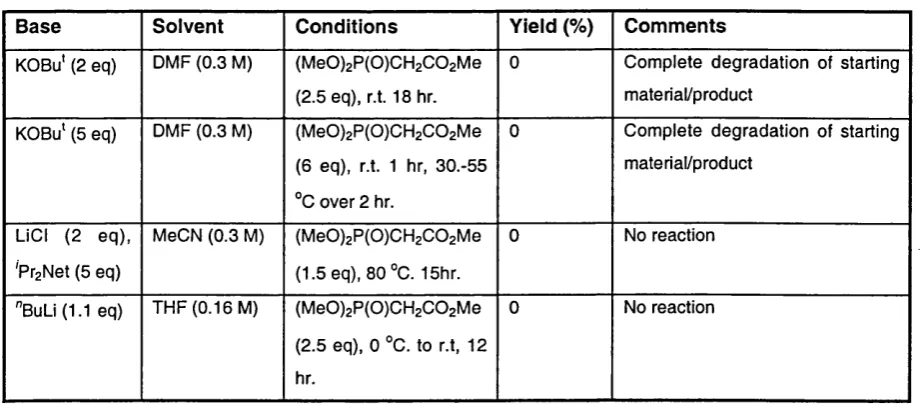
Accordingly, when Evans and Carreira investigated the high-dilution macrocyclisation of tethered
phosphonoacetate 54 (Scheme 9) with 33 equiv of lithium chloride and 30 equiv of triethylamine in
acetonitrile, they were gratified to find that a very clean cyclisation took place after 36 h, with the
desired enoate 53 having formed as the sole product in 60% yield.®®'^ While related model studies
indicated that such tethers could be cleaved successfully with KgCOg/MeOH without accompanying
olefin isomérisation, such a cleavage was not reported on 53 to obtain the corresponding methyl
enoate. Although the tethered intramolecular Wadsworth-Horner-Emmons technology was not
eventually used in Evans' bryostatin 2 synthesis, it does remain a strategy worth considering for the
b. Evans’ Retrosynthetic Analysis of Bryostatin 2 (1999).
MeO,C OPMB
H0\ / MeO\jî
MeOgC
y OH ô
'"OPMB
O C02Me
Bryostatin 2
COgMe
M e g
.OPMB
J
OMe H ÔTES,CBS Reduction
TESO
Olefinatlon via Fuji's C hiral Phosphonoacetate
M e ÿ
,OPMB
MeO ,OPMB MeOgC
COgMe
.0
OMe H ÔTES, 59
" J OMe H ÔTES,
Me "OPMB
M e O W H O W
OPMB OPMB
MeOW OPMB
COzH
0 I \ ^ H OTES H OTBS
Me OPMB Me 'OPMB
M e ^'"O P M B
CONHPh
M a crolacto nisatlo n Glycal Epoxldatlon/G lycosldatloiProtecting Group Adjustm ent
Julia Olefination
TBSOy-Y^OTBS
65 l o
CHO
.SOgPh
Me«-J H
Me OTBS
Me OPMB
66 PhSO; .OPMB TBSO, OTT CONHPh OTBS .OTBS
Me OPMB
64
Sulfone A nion Displacement
S c h e m e 10 Evans' retrosynthetic analysis of bryostatin 2.
Having grappled with the bryostatin problem for quite some time, and having learnt much
strategically advantageous to postpone exocyclic olefination until late in his projected total synthesis
of bryostatin As a consequence, macrocyclic diketone 58 was selected as an advanced sub
target, and a Fuji asymmetric Wadsworth-Horner-Emmons reaction®® with 59 was selected for
stereoselective installation of the B-ring enoate (Scheme 10). Evans believed that the C(21)-enoate
could be readily elaborated from a C(20)-ketone intermediate by an aldol addition/dehydration
tactic. The C(20)-OH stereochemistry would be set by stereoselective reduction of the resulting
keto-enoate. Diketone 5 8 appeared accessible from the seco-acid 61 and it, in turn, looked
derivable from glycal 62. It was reasoned that the more electron-rich C(19)-C(20) end ether double
bond in 62 would undergo regioselective epoxidation with a limited quantity of oxidant, and
assuming that this situation prevailed, a subsequent glycosidation with methanol could be expected
to anchor a methyl glycoside at C(19) and post the requisite hydroxyl at C(20) in the forward route
to 58. The forward pathway would also have to address the issue of converting the C(1)-anilide to a
carboxylic acid. For connecting the A, B and C fragments, a Beau-Sinay alkylative C-glycosidation®’
was envisioned between 63 and 64, with the BC-fragment 64 being prepared by a Julia olefination
between 65 and 66.
c. Synthesis of the C(1)-C(9) Glycosylsulfone 63.
The starting material for the synthesis of 63 was methallyl chloride 67; it was converted to
aldehyde 72 in four straightforward steps, one of which was the acid-induced cyclopropylcarbinol
rearrangement of 71 (Scheme 11).®^ Aldehyde 72 partnered oxazolidinone 73 in an Evans
asymmetric aldol reaction;®® the result was aldol adduct 74. A zinc-mediated dehalogenation was
next effected, and the acetate aldol product 75 reduced to diol 76 with lithium borohydride. These
combined tactics sculpted the C(9)-C(5) sector of the A-ring sulfone and simultaneously controlled
the C(7)-hydroxyl stereochemistry with 9:1 selectivity in the desired direction. The route continued
with selective blocking of the C (7)-0H as a PMB ether,'^® a transformation accomplished by the two
step procedure of O-benzylidenation and regioselective acetal reduction®'* with DIBAL. Aldehyde 77
(derived from the primary alcohol by Swern oxidation) combined with 78 in a Lewis acid mediated
A
67(0 Phenol, (76%)
(vii) Zn, 2:1 THF/AcOH
P h . , P h
A
(ii) KOBu-f, Me^SO.100°C, 20 min(iii)N;CH;CO;El.
Cu bronze
OPh
68
OPh 69
(vi)
EtOzC. HO Ph
-OPh
70 71 OPh
Ph. ,P h
73
Bn (1-9eq).
74 diastereoselection
9:1
BUjOTf, r-PfiNEt, C H jC lj, then add aldehyde -7 8 to O “C, 20hrs.
(V) NaHSO^,
MejCO,
H jO .A 5,5. h, (80%)
P h ,C ^ ^ H
72
(viii) ÜBH4, MeOH,
T H F ,0 °C (67%, 3 steps)
, O H
OH
(Ix) PMPCH(OMe)2, 10mol%PPTS,
CHgCI;________
(X) DiBAL-H, CHzCiz. 0 “C (94% two steps) (xi) (COCi)2, DMSO, NEta,
C H2CI2, -78 °C, (96%)
Ph OPMB
77 OHO
TMSO OTMS
(xii) TiC y O P r-ij, PhCHj -78 °C, (83%)
cSastareoselection
94:6
Ph
(xiv) PPTS, P hH ,80°C , (XV) TBSOTf, 2,6-lutidine,
Ph
,OPMB .OPMB
(xiii) Me4NHB(OAc)3,
.OPMB Ph'
Ph'
H O , AcOH/MeCN,
-35 =C, (92%) H O ,
,OMe
.OMe HO
OTBS
(xvi) MSjAl, HCI HjNPh, CHjClz, 0 °C (75%)
(Xix) PhSTMS, Znl, n-BUjNI, CHjCij
(97:3 a:P)
.OPMB .OPMB
AcO.
(xvii) Oa, 10:1 CHjClj/M eCH -78 ”C, then M ejS, (72%)
.OPMB
HO. (XX) m-CPBA, NaHCOa,
EtOAc, (76% 3 steps)
(xviii) ACzO, py, 48 h NHPh ■ NHPh
NHPh
TBSO TBSO
TBSO O
82 83 63
Schem e 11 Evans' synthesis of the A-ring glycosyi phenylsulfone 63.
profoundly affected the diastereoselectivity of this reaction; toluene leading to 94:6 selectivity in
favour of 79, and dichloromethane eroding the level of selectivity to 6:1. An Evans hydroxyl-directed
reduction^® was now implemented on p-hydroxyketoester 79 to finalise the installation of all the
asymmetric centres needed in this sector. The desired anfz-product 80 emerged from this reaction in
good yield and with high stereoselectivity (ca. 10:1). The C(3)- and C(5)-hydroxyls were now
differentially protected via a PPTS-induced lactonisation and an O-silylation, and the lactone ring of
81 opened with the aluminate formed from aniline hydrochloride and trimethylaluminium. Ozonolytic
cleavage of the product 82 afforded a 1.5:1 mixture of P:a-hemiacetals (72%) along 20% of the
alkene, a pathway known to be facile with sterically- demanding alkenes.^^ The two hemiacetals
were converted to the 0-acetates 8 3 without hitch. A Hanessian-Guindon thioglycosidation
reaction^® and a buffered m-CPBA epoxidation concluded this pathway to the a-phenylsulfone 63.
d. Evans’ asymmetric route to C(10)-C(16)-B-Ring Fragment 65
In 1996, Evans, Murry and Kozlowski®® described a powerful new method for effecting the
catalytic asymmetric acetoacetate aldol reaction in high yield and excellent ee. The chemistry
appeared tailor-made for exploitation in the bryostatin arena, as it readily allowed 1,3-diol arrays to
be efficiently constructed if used alongside existing technology for the stereoselective reduction of
P-hydroxy ketones.®® Evans decided to enlist this powerful new reaction combine for his assembly of
the protected bryostatin B-ring synthon 65 (Scheme 12).
—Cu— 86
(if) M@^NHB(0Ac)2, q Q H O H
9 TM S O O T M S Ph' (5mol%) Ph 9 9 9^ A c O H / M e C N ,-35 ° C , fl i |
(85%) diastereoselection
.4 .5 ‘" ”, V
O T B S O H
(K) FjCCO jH, CHzCI;
(tv) TESCI, imidazole,CHjClj, 0 °C, (77% 2 steps)
TBSO&_ ^ 8 S a , Im id a z o le , D M A P , C H i C i j
^ H ;, 1 0 % P d /C , A c O H , E lO A c ] (v) P M B O C H ;L I, T H F , -78 ° C to -5 0 ° C J Y
(IX) (C 0 C l j ) 2, M e ^ S , C H j C i j , k ^ O (vi) B F j O E t j , E t^S iH , C H j C i j , - 2 0 ° C
T -78 °C : E t a N t h e n O 'C I (64% 2 ste ps ) I
1 & C H 0 (66% 3 ste p s ) Q B n diasterBOselection O B n
65 90 89
Scheme 12 Evans’ B-ring synthesis.
The key aldol reaction that served to spark this sequence involved 84 and 85 and utilised
the C2-symmetric copper (II) complex ([Cu(R,R)-Ph-pybox)] (Sbp6)2) 8 6 as the chiral catalyst.
Significantly, this process proved exceedingly efficient, it affording 87 in 99% ee and 85% yield on
10 g scale. After reduction with Me4NBH(OAc)3,®® the anf/-diol 8 8 emerged as the predominant
product of the 94:6 mixture that resulted. Lactonisation and protection subsequently furnished
lactone 89 in 77% yield for the two steps. The latter was reacted with
reduction.®^ Importantly, this reduction step proceeded with excellent stereocontrol it furnishing the
desired product 90 in good yield and with 94:6 diastereoselectivity. Standard protecting group
manipulation and oxidation finalised this brief synthesis of 65.
e. Synthesis of the C-ring sector and elaboration into the BC-segment 64
(V ) 96
(0 TsCI ( 0.2 eq), py, CHjClj, H O O H C ’C to R T
(ii) N a H , P U S H , D M F , 8 0 ° C
PhS OH (iv ) ( C O C I ); . M e ; S O , PhSO; °°C toRT C H j C l j . - y S ' C ; L ^ C H O (v l) ( C O C y j , M S jS ,
E tgN ithen 0 ° C C H g C I; , - 7 8 ° C ;
PhSOz
(7 6 % , 4 s te p s ) ElaN .th en 0 “C
11 94 95
PhSO.
Me 93
OPMB
100
OPMB PhSO;
(-)-D IP C I, N E ta. C H ; C I; , •7 8 ° C th e n a d d 9 9
a n d g o to -7 0 ° C (8 7 % )
CHO
(vlii) N a lO « , N a H C O j, PhSOj 2 :2 :1 f -B u O H /H jC y T H F
(7 8 % , 4 ste p s )
(vii) 2 m o l% K ;O s O « (O H 2) 2,
2 m o l% q u in u c M n e ,
K]Fe(CN)„K2C03,
1 :1 f - B u 0 H / H , 0
OH
(X) 2 0 m ol % S m ij,
P-N0jC,H4CH0
T H F , 0 ° C (7 6 % )
PhSO;
nOPNBzfPWB
.0
(xl) T B S O T t, 2 ,6 -L u tid ln e P h S O z
CHjClj, -1 5-C
(xli) L iO H , T H F /M e O H /H jO (2:2:1) (88%)
PhOzS
OPMB
(xili) C S A (5 m o l% )
CgHg, A 102 OTBS Me"^'"OPMB TBSO, TBSO, OTBS OTf
(xv ii) T B A F , T H F , - 1 5 ° C (xviii) T fz O , 2,6-lulldine,
.OTBS C H jC lz , - 1 0 °C
(71 % , 2 ste p s ) .OTBS
103 64
( x i v ) n - B u L i , T H F , - 7 8 ° C then ad d OTBS TBSO,
O 65
CHO -7 8 ° C t o - 5 0 ° C (XV) A C jO , D M A P , C H jC lz (xv i) M g , 2 0 m o l% H g C ij,
(6 4 % , 2 ste p s )
(E.Z = 95:5)
Scheme 13 Evans' synthesis of the bryostatin 2 BC-ring synthon 64.
The route to the C-ring glycal 64 commenced with a four-step preparation of 95 from
2,2-dimethyl-1,3-propanediol (Scheme 13). Aldehyde 95 combined with pentenylmagnesium bromide to
create 97. Dihydroxylation and oxidative cleavage were then used to convert 97 into aldehyde 99
which was submitted to a DIP-CI mediated Brown-Paterson asymmetric aldol reaction®^ with 93,
through Sharpless kinetic resolution/^ as detailed in Scheme 14. Tischenko reduction^ of 101 with
Smlg not only installed the C(25)-hydroxyl, but also introduced the p-nitrobenzoate group at 0(23) in
1 0 1 . Protection and saponification
p. (ii) N a H , P M B B r, (i) 15 moi% L - (+ ) -D iP T , cat. BU4NI
% % % ' n e x t re a c tio n s
O H C H jC ij.-2 0 °C O H -78 °C. then, MegS, O P M B
w a rm to R T . . , . . M , ■ ■ .
9 1 9 2 (25-30%.3 steps) (96-99%ee) implemented. Mild acid treatment
S chem e 14 Asymmetric synthesis of methyl ketone 93. fin ally affo rd ed the desired
phenylsulfonyl glycal 66. The Julia olefination^® between 66 and 65 proceeded with high geometric
control (E ;Z = 95:5), it initially affording 1 03, and then 64 after selective Odesilylation of the
primary TBS group and O-triflation with triflic anhydride and 2,6-lutidine.
f. Completion of the bryostatin 2 synthetic venture
The fulcrum of Evans' strategy for bryostatin 2 was his use of the Beau-Sinay
glycosylsulfone C-alkylation tactic®’ for joining the A- and BC-segments together (Scheme 15). The
reaction between 63 and 6 4 initially afforded a mixture of glycosyl sulfones 104, which readily
underwent hydrolysis at C(9) upon exposure to silica gel. The excellent yield observed in this
alkylation is noteworthy given the high degree of steric hindrance that exists around the
glycosylsulfone anionic centre, and the p-oxygen functionality that is present in the triflate
component 64. The synthesis proceeded with conversion of the C(1)-acyl anilide into a benzyl
ester. For this, it proved necessary to ring-open hemiketal 62 by Osilylation with Et^SiCI and then
install a Boc group on the anilide nitrogen. The Boo unit greatly facilitated the subsequent
nucleophilic addition/elimination step with lithium benzyloxide. Selective epoxidation of the
C(19)-C(20)-glycal in 106 was then attempted. Fortunately, this process proceeded with complete
regiocontrol, which beautifully set the stage for acid-catalysed epoxide ring-opening with methanol
to obtain methyl glycoside 107. Dess-Martin oxidation®'’ of 107 yielded 108 which underwent
simultaneous O-desilylation and Fischer glycosidation with HF/MeOH in THF buffered with pyridine
to give 1 0 9 . The latter was selectively O-triethylsilylated at 0 H (3 ) and 0 H (1 3 ). Transfer
hydrogenation®®with 1,4-cyclohexadiene on a palladium-carbon catalyst subsequently detached the
I -NHPh
T B S O O
H O \ /
TBSO, .OPMB
PhSO;
( n i) n-BuU (2 eq). THF, -78 °C
then HMPA, then add TBSO, .OPMB
TBSO,
O Tf CONHPh
CONHPh OTBS .OTBS OTBS. .OTBS Me''^'*'OPMB .OTBS Me^'OPMB
6 2 (80-75% )
104
(xjdO TESCI. imidazole. MeCN (85%) (nSO BocjO . DMAP. MeCN
TBSO,
Y COjBn OMe OTBS
Mo'^ 'OPMB
TBSO,
(xxvTi) Oesa-Martin Peiiodnane CH;C1;, Py (79%, 3 steps)
OPMB
(XXV) m-CPBA, MeOH, -20 °C (xxvi) C tC H jC O jH , MeOH, 0 °C
CO,Bn
OMe O T B S ^ OTBS
M e ^ "OPMB OPMB
(xxlv) BnOU, 1:1 THF/D MF, r ' ^ C O j B n -30 °C, (two steps 75%)
OTBS
HO” ^ Me"^ "OPMB 107
St b s
Me"^ ’ OPMB
M e O W
TESO, .OPMB
HO, .OPMB
(xxix) T E S a , DMAP. C H jQ j, 10 °C
(85%) (xxvlii) HF pyr,
T H F /M e O H fy •COjH
(4:4:1)
(80%)
O k ^ O T E S (x n ) 1.4-cydohexadlene.
10% Pd/C (50 moi%).
OMe OH .OH
M e ^ 'OPMB
Me”^^OPMB
109
(xxxvii) H ^ ^ P h
B H j-M e jS . C H jQ j 0 °C to RT. 4 5 h then add (MeOCH2CO)jO .
Py. DMAP (ce. 10:1 selectivity)
(70%)
O P M B
COjMe
(E /Z = t2:1)
(n x v ) KHMDS. THF. -78 °C then add O H C C O jM e (xxxvl) E tjN S O jN C O jM e . C ,H ,
(54%. 2 steps)
M e O \ / OPMB
M e ' 'OPMB
(xxxi) 2.4.8-T rkhlotobenzoyl chloride, iP rjN Et, C «H,then DMAP
(81%)
(xxxi) 20 mcl% PFTS (M e O jC H /M e O H
(1:2), C H jC lj, -30 “C (xxxa) Dees-Martln Periodktane
C H jO j, Py (88%, 2 steps)
p
COjMo
NaHMDS, T H F, -78 °C warm to -15 ®C (Selectivity « 5 .5 .1 )
M e O \./
Me' 'OPMB
M e O W .OPMB
ÔTES,
Me'”'^"’'OPMB
58
'OPMB
0 COjMe
MeOjC
O (xxxvlil) PPTS, THF/H jO
(x n ix ) N a jC O j, MeOH (x n x i) ^ ^
D ie. DMAP. C H jC Ij
. j ^ («2 %)
HO'" Me 'OPMB (xx nil) DDO. C H jO jftljO (10:1) ^ pH7 phosphate bolter
CO: Me (57%)
112
Schem e 15 Unification of the A- and BC-ring systems and the final stages of Evans' bryostatin 2 synthesis. (x x n ) p-TsOH. M e C N /H /) (4:1) ___________ (80%. 3 steps)_______
COjH
.OH
2e’0H
O a
'O COjMe
Me Bryoetattn 2
hydrogenation step is particulalrly noteworthy. A Yamaguchi macrolactonisation®® was now
effected to secure 60 which was selectively O-desilylated at 0 (1 3 ) and oxidised. Olefination of
ketone 58 with the Fuji chiral phosphonoacetate 59®° produced a 5.5:1 mixture of enoates enriched
in the desired alkene component 57. Significantly, no addition occurred at the C(20)-ketone due to
implemented on 57 to obtain 56, and a CBS reduction performed on the G(20)-ketone. It generally
proved beneficial to trap the product alcohol as the O-methoxyacetate ester 111 to facilitate
compound isolation.
With compound 111 in hand, the 0 (3 )-T E S group and the C(9)-methyl glycoside were
selectively hydrolysed with PPTS in THF/HgO. As found by Masamune in his bryostatin 7
synthesis,^® the presence of the C(20)-O-acyl substituent dissuaded the C(19)-methyl glycoside
from undergoing mild acid hydrolysis. To overcome this problem, the Masamune O-deacylatlon
tactic was mustered, whereafter the desired hydrolysis was achieved with p-TsOH in aq.
acetonitrile, a set of conditions that proved fully compatible with the remainder of the molecule. The
synthesis of bryostatin 2 was completed by selective estérification of OH(20) with octadienoic acid
(in the presence of the C (3)-0H ), and DDQ deproteption of two PMB groups.'*®
3.3 The Nishiyama/Yamamura Total Synthesis of Bryostatin 3 (2000)^^
a The Nishiyama/Yamamura Retrosynthetic Plan for bryostatin 3
HQV ,OAc ,OTBS
MeOjC MeO*
,o Me
'"‘ OTES
Me Me
113 Bryostatin 3
M eÇ MeÇ'
MeO'
OTBS OTBS
OTBS
TBSO O
PhOjSv
TESO' O T E S T "
+ OHO 6
S c h e m e 16 The N ishiyam a/Y am am ura re tro synth etic a naiysis of bryostatin 3.
Bryostatin 3 is structurally the most complex member of this family by virtue of its additional
C(22)-stereocentre which is buried within the pyran-butenolide framework. The flanking functionality
that is present on either side of the C-ring alkene potentially makes its stereocontrolled construction
an even more challenging task than that for other family members. Nishiyama and Yamamura
hoped to forge this domain from the addition of a vinyllithium intermediate (derived from 118) onto
a-alkoxy aldehyde 119 under conditions of chelation control (Scheme 16). Such a sequence was