STRUCTURAL MODEL OF KNOWLEDGE ELEMENTS, MEDIATING CONSTRUCTS AND PERFORMANCE FOR FACILITIES MANAGEMENT
ORGANISATION
AHMAD FIRDAUZ BIN ABDUL MUTALIB
A thesis submitted in fulfilment of the requirements for the award of the degree of Doctor of Philosophy (Facilities Management)
Faculty of Geoinformation and Real Estate Universiti Teknologi Malaysia
ACKNOWLEDGEMENT
First and foremost, I would like to express my deepest thanks to ﷲ , The most gracious and most merciful God for the blessing, wisdom, health, strength and patience that He gave upon me throughout this adventurous, exciting and challenging PhD journey.
This journey will not be a dream come true without these two intellectual people who have been patiently, supportively and continuously encouraging me to keep on working hard to complete this thesis. From the bottom of my heart, I would like to express my profound appreciation to my main supervisor, Prof. Madya Dr. Maimunah Sapri, for her insights, words of encouragement and the belief she always had in me; and also my co-supervisor, Prof. Madya Dr. Hj. Ibrahim Sipan. Their generosity and patience to review, comment, and give thoughtful suggestions to improve this thesis. I am forever grateful and thankful to have met and been given the opportunity to work with both of them. My sincere gratitude goes to Jabatan Perkhidmatan Awam and Jabatan Kerja Raya Malaysia for giving me this opportunity and providing me with the financial support.
ABSTRACT
ABSTRAK
TABLE OF CONTENTS
CHAPTER TITLE PAGE
DECLARATION ii
ACKNOWLEDGEMENT iii
ABSTRACT iv
ABSTRAK v
TABLE OF CONTENTS vi
LIST OF TABLES xiii
LIST OF FIGURES xv
LIST OF APPENDICES xvii
1 INTRODUCTION 1
1.1 Background 1
1.2 Problem Statement 5
1.3 Research Questions 7
1.4 Research Aim and Research Objectives 9
1.5 Significance of the Research 10
1.6 Definitions of Terms 14
1.7 Structure of the Thesis 18
2 KNOWLEDGE AND THE FM ORGANISATIONAL
PERFORMANCE 20
2.1 Introduction 20
2.2 The Theoretical Background 21
2.2.1 Resource-based View (RBV) 21
2.2.2 Knowledge-based View (KBV) 23 2.3 The importance and growth of knowledge 24 2.4 Overviews of Organisational Performance 29
2.5 The Knowledge Elements 31
2.5.1 Learning Culture 32
2.5.2 Intellectual Capital (IC) 34
2.5.3 Knowledge Management (KM) 36
2.6 The Mediating Constructs 38
2.6.1 Customer Performance 39
2.6.2 Efficiency 43
2.6.3 Innovation 46
2.6.4 Dynamic Capabilities 49
2.7 Overview of Knowledge in Facility Management (FM) 53 2.8 The Importance of FM Organisational Performance 55 2.9 Gaps in the Literature: Link between Knowledge
Elements, Mediating Constructs and FM
Organisational Performance 58
2.10 Chapter Summary 75
3 RELATIONSHIPS IN THE PROPOSED MODEL 77
3.1 Introduction 77
3.2 Development of the Proposed Model of FM
Organisational Performance 78
3.3 Relationships of the Constructs in the Proposed Model 84 3.3.1 The relationship between learning culture and
intellectual capital 84
3.3.2 The relationship between intellectual capital
3.3.3 The relationship between knowledge
management and customer performance 87 3.3.4 The relationship between knowledge
management and efficiency 88
3.3.5 The relationship between knowledge
management and innovation 90
3.3.6 The relationship between knowledge
management and dynamic capabilities 91 3.3.7 The relationship between intellectual capital
and dynamic capabilities 92
3.3.8 The relationship between dynamic capabilities
and innovation 93
3.3.9 The relationship between customer performance and FM organisational performance 94 3.3.10 The relationship between efficiency
and FM organisational performance 95 3.3.11 The relationship between innovation
and FM organisational performance 96 3.3.12 The relationship between dynamic capabilities
and FM organisational performance 96
3.4 Chapter Summary 97
4 RESEARCH METHODOLOGY 99
4.1 Introduction 99
4.2 Justification on the Selection of Paradigm 100
4.3 Research Design 108
4.4 Operationalisation of the Constructs 111
4.5 Items Generation 117
4.6 The Survey Method 119
4.6.1 Survey questionnaire development 121 4.6.2 Questionnaire of this research 122 4.7 Pre-Test of the Modified Survey Questionnaire 125
4.7.1 Pre-test sampling frame 127
4.8 Final Survey 130 4.8.1 Sampling frame for the final survey 130 4.8.2 Sample size for the final survey 131 4.9 Data Collection for the Final Survey 132 4.10 Data Analysis Background for this Research 134 4.10.1 Preliminary data analysis for this research 136 4.10.2 An overview of structural equation modelling
(SEM) for this research 137
4.10.3 The selection of method in SEM used for the
current research 142
4.10.4 SEM assumptions 144
4.10.5 Maximum likelihood (ML) estimation 146 4.10.6 Assessment of overall model fit 146
4.10.7 Reliability 149
4.10.8 Validity 150
4.11 Chapter Summary 152
5 ANALYSES AND RESULTS 153
5.1 Introduction 153
5.2 Preliminary Data Analysis 154
5.2.1 Data editing and coding 154
5.2.2 Data screening 155
5.3 Response Rate 161
5.4 Profile of Respondents 163
5.5 Analysis and Results of the Measurement Model
(CFA): Stage 1 166
5.5.1 Assessment of Unidimensionality 167 5.5.1.1 Unidimensionality of the pooled
measurement model 169
5.5.2 Reliability and validity of the constructs 175 5.5.3 Review of the Measurement Model (Stage 1) 180 5.6 Analysis and Results of the Structural Model: Stage 2 181
5.6.1 Structural Model 1 – (Testing Original
5.6.2 Structural Model 2 – (R6 Removed) 186 5.6.3 Structural Model 3 – (R12 Removed) 188 5.6.4 Review of the Structural Model (Stage 2) 191 5.7 Results of Testing the Relationships of this Research 191
5.7.1 The relationship between learning culture
and intellectual capital 192
5.7.2 The relationship between intellectual capital
and knowledge management 193
5.7.3 The relationship between knowledge
management and customer performance 193 5.7.4 The relationship between knowledge
management and efficiency 193
5.7.5 The relationship between knowledge
management and innovation 194
5.7.6 The relationship between intellectual capital
and dynamic capabilities 194
5.7.7 The relationship between dynamic capabilities
and innovation 194
5.7.8 The relationship between customer performance
and FM organisational performance 195 5.7.9 The relationship between efficiency and
FM organisational performance 195 5.7.10 The relationship between innovation and
FM organisational performance 195 5.8 Testing the Mediation Effects in the Model using
Conventional Approach and Bootstrapping 196 5.8.1 Customer performance as the mediator 200 5.8.2 Efficiency as the mediator 202 5.8.3 Innovation as the mediator 204 5.8.4 The bootstrapping results 206
6 DISCUSSION AND IMPLICATIONS 210
6.1 Introduction 210
6.2 An Overview of this Doctoral Research 211
6.3 Discussion of the Findings 213
6.3.1 The relationships testing among the knowledge elements and mediating
constructs 213
6.3.1.1 Learning culture and intellectual
capital 213
6.3.1.2 Intellectual capital and knowledge
management 215
6.3.1.3 Knowledge management and
customer performance 217
6.3.1.4 Knowledge management and
efficiency 219
6.3.1.5 Knowledge management and
innovation 221
6.3.1.6 Knowledge management and
dynamic capabilities 222
6.3.1.7 Intellectual capital and dynamic
capabilities 223
6.3.1.8 Dynamic capabilities and innovation 224 6.3.2 The relationships testing between mediating
constructs and FM organisational performance 225 6.3.2.1 Customer performance and FM
organisational performance 225 6.3.2.2 Efficiency and FM organisational
performance 227
6.3.2.3 Innovation and FM organisational
performance 228
6.3.2.4 Dynamic capabilities and FM
6.3.3 Mediating Constructs (Customer Performance, Efficiency, Innovation and Dynamic Capabilities)
as the Mediator 230
6.3.3.1 Customer performance as the mediator 230 6.3.3.2 Efficiency as the mediator 231 6.3.3.3 Innovation as the mediator 232 6.3.3.4 Dynamic capabilities as the mediator 233 6.3.4 The validation of FM organisational
performance model 234
6.4 Significant Implications of the Research 236
6.4.1 Theoretical implications 237
6.4.2 Managerial implications 240
6.5 Chapter Summary 242
7 CONCLUSION 243
7.1 Introduction 243
7.2 Limitations of the Research 243
7.3 Directions for Future Research 246
7.4 Final Summary 248
REFERENCES 250
LIST OF TABLES
TABLE NO. TITLE PAGE
2.1 Description of Potential Mismatch Links 57
4.1 Three Fundamental Questions 101
4.2 Assumptions of the Paradigm Elements 102
4.3 Nature of Constructs 104
4.4 List of Modified Items 112
4.5 List of Scale Items to Measure Each Construct
in this Thesis 118
4.6 Procedures Used in the Pre-test 129
4.7 Covariance-Based Versus Variance-Based SEM.a 143
4.8 Summary of Goodness-of-Fit Indices 148
5.1 Measures of the Constructs and Descriptive Statistics 157 5.2 Summary on the Rate of Return of Questionnaires 161 5.3 Response Rate Reported in the Knowledge
Management Research 162
5.4 Profile of Respondents 165
5.5 Deleted Items Under The Human Capital Component 170 5.6 Deleted Items Under The Organisational Capital
Component 171
5.7 Deleted Items Under The Knowledge Application
Component 172
5.11 The Correlations Between The Respective Constructs 179
5.12 Underlying Relationships 182
5.13 The Results of the Original SEM Analysis and
Relationships Testing 184
5.14 Results of SEM Analysis and Relationships
Testing (R6 Removed) 186
5.15 The Results of SEM Analysis and Relationships
Testing (R12 Removed) 189
5.16 The Standardised Regression Weights and its
Significance for Each Path (based on the Final Model) 200 5.17 The Standardised Regression Weights and its
Significance for Each Path (based on the Final Model) 202 5.18 The Standardised Regression Weights and its
Significance for Each Path (based on the Final Model) 204 5.19 Bootstrapping Results: The Standardised Indirect
Effects (based on AMOS actual analysis results) 206 5.20 The P-value (indirect effects) between knowledge
management and FM organisational performance 206 5.21 The Standardised Direct Effects between knowledge
management and FM organisational performance 207 5.22 The P-value (direct effects) between knowledge
management and FM organisational performance 207 5.23 The Summary: The Significance of Direct and
LIST OF FIGURES
FIGURE NO. TITLE PAGE
1.1 Implementation of a job scope is based on
human, place and process. Source: Nutt (2000, p. 129) 4 1.2 The diagram explaining the background of the research 5 2.1 The Nature of Dynamic Capabilities. Source:
Adopted from Easterby-Smith and Prieto (2008, p. 243) 50 2.2 Alignment between business component and
facility management component. Source: Adopted
from Then and Tan (2006, p. 345) 56
2.3 The Model of Innovation Management.
Source: Adopted from Mudrak et al. (2005, pg. 105) 72 2.4 The conceptual framework: The relationships
between knowledge elements, mediating
constructs and FM organisational performance 75 3.1 The detailed proposed model with relationship
links between knowledge elements, mediating
constructs, and FM organisational performance 82 4.1 The deductive approach typically used in
quantitative research. Adopted from
Creswell (2009, p. 57) 108
4.2 The seven (7) steps in research design 109
4.4 The framework for applying structural equation modelling. Adopted from
Urbach and Ahlemann (2010, p. 15) 138
4.5 Two stages of SEM that have been used in this research 139 5.1 The initial CFA results for pooled measurement model 169 5.2 The CFA results after deleting seven (7) items 174 5.3 The original structural model and its relevant
relationships 185
5.4 The structural model and its relevant relationships
(R6 removed) 187
5.5 The final structural model and its relevant
relationships (R12 removed) 190
5.6 Illustration of the final structural model
(R6 and R12 removed) 192
5.7 Illustration of a mediation design, X has a direct relationship with Y and also has an indirectly
relationship through M 196
5.8 The Procedure for testing the mediation
(customer performance) 201
5.9 The Procedure for Testing Mediation (Efficiency) 203 5.10 The Procedure for testing of the mediation (innovation) 205 6.1 The final structural model (Model of FM
LIST OF APPENDICES
APPENDIX TITLE PAGE
A Items in the FM Organisational Performance
Measurement Model 282
B Putrajaya Committee on GLC High Performance 286
CHAPTER 1
INTRODUCTION
1.1 Background
In the context of organisation, one of the important theoretical perspective is resource-based view (RBV). Resource-based view is defined as an approach in protecting an organisation’s competitive advantage that consists of two sets of complementary, namely resources and capabilities (Amit & Schoemaker, 1993). In addition, the resource-based view suggested that the organisation must have the capabilities which are valuable, rare and inimitable (Barney, 1991). Specifically, resource-based view focuses its attention on the value of intangible resources as an important aspect in competitive advantage. As such, Grant (1996) has specifically stated that the accumulation and development of knowledge, which are a form of interaction among knowledge resources, are the very essence of capabilities that an organisation can possess. Thus, the intangible resources has led to an extension of resource-based view, which is the knowledge-based view (KBV) of the organisation (Barney, 1991; Decarolis & Deeds, 1999). Spender and Grant (1996) and Grant (1997) highlighted that a knowledge-based view concentrates on the primary interest of the knowledge as an intangible resource for ensuring an organisation’s long-term survival and success. Therefore, knowledge is the most strategically important resource that determines the organisation’s capabilities (Decarolis & Deeds, 1999; Grant, 1996).
Therefore, knowledge-based view acknowledged the importance of intellectual capital and knowledge management to incorporate the relationship between people and knowledge. Intellectual capital in the organisation has been defined as managing the learning and accumulating the knowledge within organisations, while knowledge management is about knowledge processes and how knowledge is effectively managed to produce profit in an organisation. In other words, in achieving the competitive advantage, the processes and practices in knowledge management are used to manage intellectual capital in an organisation (Easterby-Smith & Prieto, 2008; Egbu, 2004; Hsu & Sabherwal, 2012). In addition, Gold et al. (2001) contended the importance of learning culture in an organisation that motivates the knowledge development (intellectual capital and knowledge management). Therefore, this research incorporates the learning culture that would have a potential relationship with intellectual capital. As such, this research allocates the three constructs of learning culture, intellectual capital and knowledge management in one group, namely knowledge elements. However, this view of knowledge elements has not yet been rigorously examined in relations to facilities management (FM).
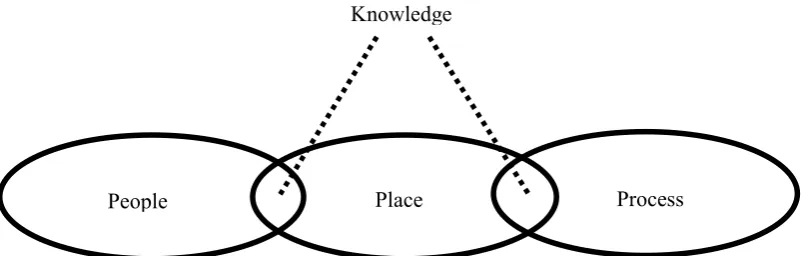
Figure 1.1: Implementation of a job scope is based on human, place and process. Source: Nutt (2000, p. 129)
Despite the growing research on knowledge contribution to organisational performance, Andreeva and Kianto (2012) maintained that there is a possibility to imply on construct that mediate the relationship between knowledge and organisational performance. Besides that, empirical evidence was found in the knowledge management literature that emphasised on the importance of linking the knowledge resources (intellectual capital) and knowledge processes (knowledge management) with mediating constructs that connect the benefits of knowledge with organisational performance (Easterby-Smith & Prieto, 2008; Gold et al., 2001; Heeseok Lee & Choi, 2003). Iii (2012) argued that there is a “missing link” in identifying the suitable construct that enables knowledge management to translate into superior organisational performance. Therefore, it is important to investigate the relationship between knowledge, mediating constructs and organisational performance in the context of FM. Figure 1.2 shows the background of the research.
Process Place
People
Figure 1.2: The
1.2 Problem Statement
The development of FM knowledge base still in a continuous process because most of the area in FM field has not been fully explored.
view of data rich, followed by saturation of information, but led to lack of knowledge. Although recognition was given from businesses, industries and governments for the contribution of FM, the FM field still in the process of establishing its own management skills and t
on other fields (Grimshaw, 1999)
develop specialized knowledge, provide best practices, and to reduce the gap between theory and achievements in the field of FM
2000; Nutt, 2000).
The diagram explaining the background of the research
Problem Statement
The development of FM knowledge base still in a continuous process because most of the area in FM field has not been fully explored. The sequence started with a h, followed by saturation of information, but led to lack of Although recognition was given from businesses, industries and governments for the contribution of FM, the FM field still in the process of establishing its own management skills and technical knowledge without dependent (Grimshaw, 1999). From there on, it became a priority for the FM to develop specialized knowledge, provide best practices, and to reduce the gap between theory and achievements in the field of FM (Gao & Cao, 2011; Mclennan,
the background of the research
Moreover, the profession in the field of facilities management has suffered an identity crisis due to the occurrence of the overlapping in the scope of works between FM and other fields. This situation has led to confusion over the FM field that resulting the research activities for the development of the theory is far behind the practice demand (Gao & Cao, 2011; Grimshaw, 2003; Nutt, 1999; Price, 2001). In other words, the field of facilities management is not yet supported by an adequate knowledge base to underpin best practices, advance the field, and bridge the gap between its promise and performance (Nutt, 1999).
An article written by Alexander and Nielsen (2012) published in the EuroFM bulletin (issue 23, December 2012) has highlighted the usability of academic FM research for practitioners. The article further discusses the conference paper, “FM research for practice”, that was presented in the Nordic FM Conference 2011. At the conference, most of the feedback from practitioners was that the current research is often too distant from practical challenges (Alexander & Nielsen, 2012). Therefore, it is important to collaborate between researchers, practitioners and educators to improve the quality of knowledge available for the decision making in FM organisation (Alexander & Nielsen, 2012). This shows the importance in managing the body of knowledge, especially on FM to ensure the effectiveness in reducing the gaps between knowledge and practice. In a similar vein, the report produced by IFMA (2011) noted that the three broad categories of trends (external, internal, and organisation driven) are critical to the success of FM professionals in the future. One of the important steps is the elevating of the FM profession by demonstrating the strategic value of the organisation’s core business. As FM continues to evolve strategically, the importance of knowledge management in FM will be accentuated.
The findings highlighted by Syed Mustapa and Adnan (2008), Kamaruzzaman and Zawawi (2010), and Myeda and Pitt (2014), whereby the lack of managing and applying FM knowledge base in Malaysia have resulted in a lack of understanding and good practices in FM implementation. Therefore, providing a strategic approach to managing such knowledge will create a competitive advantage and potentially influence the organisational performance (Erickson & Rothberg, 2013; Gravier, Randall, & Strutton, 2008; Pathirage et al., 2008). As such, this research studied the relationships between knowledge elements, mediating constructs, and FM organisational performance.
1.3 Research Questions
Secondly, this research contributes to the growing of knowledge in the FM organisational performance by reviewing and recognise the relationship between the knowledge elements (learning culture, intellectual capital, and knowledge management), mediating constructs and FM organisational performance. It also raised some interesting framework to produce a useful model for future implementation on how FM organisation can get the best performance from the management of knowledge. In a similar vein, the proposed model, perhaps, would assist the FM organisation to utilise their resources more effectively in trying to control or improve their performance. Furthermore, an intensive review of literature was unable to find any studies on the relationships between knowledge elements, mediating constructs and FM organisational performance that was tested simultaneously.
Based on the discussion above, this research sets out to address four research questions:
(i) What are the relationships between the knowledge elements and mediating constructs?
(ii) What are the relationships between mediating constructs and FM organisational performance?
(iii) Which of the mediating constructs affect the relationship between either intellectual capital or knowledge management with FM organisational performance?
1.4 Research Aim and Research Objectives
A study of relationships between knowledge and organisational performance have been done by Hsu and Sabherwal (2012), but the study targeted for non-specific organisations and the model did not develop in a group of constructs. This research concentrates on FM organisations. Thus, this research aim is to improve the existing model developed by Hsu and Sabherwal (2012) by developing a new dimension of the relationships between a group of constructs (knowledge elements, mediating constructs, and FM organisational performance) in the model of FM organisational performance.
Based on the above research questions and research aim, this research is designed to achieve the following specific objectives:
(1) To determine the relationship between knowledge elements and mediating constructs.
(2) To determine the relationship between mediating constructs and FM organisational performance.
(3) To determine the mediating effect on FM organisational performance.
1.5 Significance of the Research
This research contributes to the growing body of knowledge specifically on the relationships between the knowledge elements, mediating constructs and FM organisational performance.
An organisational performance is very important for every organisation to sustain their competitive advantage and profitability (Barney, 1991). As discussed in the Section 1.2, it is important to recognise the knowledge elements and mediating constructs that have a relationship with the organisational performance. The investigation on the relationship between knowledge and organisational performance would help managers to take appropriate steps in initiating a strategic action in their organisation (Abu-jarad et al., 2010; Venkatraman & Ramanujam, 1986).
The research done by Hsu and Sabherwal (2012) have developed a research model that examined the relationship between intellectual capital, knowledge management and organisational performance. However, their study is more on the type of general management which focuses on sample of organisations in Taiwan. In addition, different samples used in the research can impact the learning culture, in which the characteristics of a distinct culture is highly potential in preventing the sharing of knowledge (Hsu, 2006). Thus, the prior research has not examined how learning culture, intellectual capital and knowledge management have an effect when these three aspects are simultaneously examined on FM organisational performance. Furthermore, FM environment is involved in managing people, place, process, and technology (IFMA, 2009), where knowledge plays an important role to incorporate these and make sure all aspects in facilities management are functioning effectively.
In addition, the research done by Hsu and Sabherwal (2012) investigated the causal relationship from the research model that will affect the financial profit for organisations in Taiwan. FM is not intended solely to obtain a business profit. FM is much emphasised on management aspects such as to increase adaptability to changing business needs, to improve service quality, improve the productivity effectiveness among the employees, and exploit the potential of new technologies (Alexander, 2003).
The reason is that no related research has been done in the context of FM organisation in Malaysia and there is no evidence to prove whether one construct, either from knowledge elements or mediating constructs, can affect the other. Additionally, the FM organisation in Malaysia is still in the development process to strengthen the FM field, which is related to the growth of knowledge and organisational practices according to the FM industry needs in Malaysia (Firdauz, Sapri, & Mohammad, 2015). According to research done by Babones (2008), there is an indication of a significant correlational relationship between income inequality and population health, but weak in causal relationship. Therefore, the presence of a correlational relationship between two variables does not necessarily imply the existence of a causal relationship between them (Iriondo et al., 2003). Hence, this research is expected to bring about a new dimension of findings from the perspective of FM organisational performance.
The model will expand the knowledge for FM practitioners to understand how the FM organisational performance can be enhanced. Despite FM still depend on technical orientation and reactive, exploring FM knowledge will provide a beneficial contribution to the FM organisational performance (Pathirage et al., 2008). Therefore, investigating the relationships between constructs in the proposed model could possibly derive a conceptual mechanism on how the knowledge elements and mediating constructs would have relationships with the FM organisational performance.
Secondly, with the validation of the proposed model, further explanation has been provided on the significant relationship between the knowledge elements, mediating constructs and FM organisational performance. The aim is to provide further understanding of the pattern of interrelationships among the constructs in knowledge elements, mediating constructs and FM organisational performance. In addition, this research employed structural equation modelling (SEM) to examine all proposed relationships. By using SEM, this research is able to reveal the relationships between the constructs. Constructs can be defined as conceptual abstractions of phenomena that cannot be directly observed (Suddaby, 2010). Theoretical definitions are used to provide conceptual clarity by using synonyms to express the construct we are interested in. For example, knowledge and efficiency are the organisational constructs that can be measured using questionnaires. Moreover, SEM takes into account the measurement error variances. Thus, the accuracy of analysing the relationships can be obtained (Byrne, 2010; Preacher & Hayes, 2004).
1.6 Definitions of Terms
This section explained briefly the definition of terminologies used in this research. The purpose is to avoid any potential misleading interpretation of the concepts employed in this research.
Facilities management
Facilities management (FM) encompasses various disciplines to ensure workplace environment functionality by implementing integration between people, place, process, and technology (IFMA, 2009).
Organisational performance
Organisational performance can be explained as the reflection of achievements of each organisational function and the organisational objectives (Shieh, 2011).
Correlational relationship
The relationship between two elements which indicates a significant relationship.
Causal relationship
Construct
Constructs can be defined as conceptual abstractions of phenomena that cannot be directly observed (Suddaby, 2010).
Conceptual framework
Conceptual framework is about how to perform a research by connecting certain aspects of research such as theories, key factors, concepts and relationship of the variables (Mexwell, 2012; Miles & Huberman, 1994).
Proposed model
The proposed model is defined as a set of relatively abstract and general concepts that describe the phenomena of interest in a research (Fawcett & DeSanto-Madeya, 2013). A proposed model is also about assumptions based on concepts given in any framework in order to explain the phenomena and allow the investigation by getting correspondence from the real world (Gregory, 1993).
Customer Relationship Management (CRM)
Resource-based view (RBV)
The resource-based view (RBV) suggests that an organisation capabilities, which are precious, uncommon and unique, will determine its long term competitive advantage (Barney, 1991).
Knowledge-based view (KBV)
The knowledge-based view (KBV) of an organisation was developed as an extension of the resource-based theory of the organisation (Barney, 1991), with the primary interest of the knowledge as an intangible resource for ensuring an organisation’s long-term survival and success (Decarolis & Deeds, 1999; Grant, 1997; Spender & Grant, 1996).
Learning culture
A learning culture in an organisation viewed as an important factor that encourages the knowledge process (i.e., acquisition, conversion and application) in developing organisational effectiveness (Gold et al., 2001).
Knowledge management (KM)
Intellectual Capital (IC)
Intellectual capital is defined as the accumulated knowledge resources owned by the organisation, which has been obtained from within or outside of the organisation (Subramaniam & Youndt, 2005).
Customer performance
Customer performance is an organisation's ability to effectively satisfy customers and develop a loyal customer base, which ultimately links to a higher level of organisational performance (Peltier et al., 2013; Santos-Vijande et al., 2012).
Efficiency
Efficiency is a way to exploit existing resources such as knowledge, financial, procedures, and system to be more sufficient, in which these may have a relationship with the organisational performance (Kang & Snell, 2009).
Innovation
Innovation is a way for organisations to enhance organisation performance and to obtain superior profit margins through improved products or services for a greater customer responsiveness (Bae & Lawler, 2000; Brown & Eisenhardt, 1997).
Dynamic Capabilities
1.7 Structure of the Thesis
This section elaborates briefly on the structure of the thesis. The proposed thesis would consist of six chapters, as follows :
Chapter One: This chapter presents the background and overall content of the whole thesis. It introduces the subject matter, the rationale of the research, the objectives and the significance of the research.
Chapter Two: A review of the theoretical background, and the growth of knowledge and organisational performance within the context of FM. This chapter also discussed the empirical identification of the knowledge elements and mediating constructs that have relationships with the FM organisational performance.
Chapter Three: This chapter empirically justifies the significance of all constructs in the proposed model and elaborated the proposed relationships between the knowledge elements, mediating constructs and FM organisational performance in the FM organisational performance model.
Chapter Four: This chapter discusses the research paradigm, research methodology, the scope of study, method of data collection and the analysis techniques employed.
Chapter Six: This chapter presents the results and implications obtained from the results of the analysis in Chapter 5.
Chapter Seven: This chapter presents the limitations, recommendations for future research and conclusions of this research.
1.8 Chapter Summary
Moreover, the findings revealed the significant mediating effects of the three constructs (customer performance, efficiency and innovation) on the relationship between knowledge management and the FM organisational performance. Thus, the third objective to determine the constructs that play the role of mediator was achieved. These mediators could function as the capabilities in creating competitive advantage which has been emphasised in the resource-based view.
This research has produced the statistical findings that supported the proposed model in Chapter 3 and achieved the fourth objective of this research. Thus, this research has provided a further understanding of managing knowledge for the purpose of achieving the organisational performance, which would help both academics and practitioners in the FM field to leverage the use of the knowledge elements and mediating constructs into the organisational strategic approach.
REFERENCES
Abdullah, D. F., & Sofian, S. (2012). The Relationship between Intellectual Capital and Corporate Performance. Procedia - Social and Behavioral Sciences, 40(6), 537–541.
Abu-jarad, I. Y., Yusof, N. A., & Nikbin, D. (2010). A Review Paper on Organizational Culture and Organizational Performance. International Journal
of Business and Social Science, 1(3), 26–47.
Adewunmi, Y., Omirin, M., & Koleoso, H. (2012). Developing a sustainable approach to corporate FM in Nigeria. Facilities, 30(9/10), 350–373.
Adler, P. S., Goldoftas, B., & Levine, D. I. (1999). Flexibility Versus Efficiency ? A Case Study of Model Changeovers in the Toyota Production System.
Organization Science, 10(1), 43–68.
Akter, S., Ambra, J. D., & Ray, P. (2011). Trustworthiness in mHealth Information Services : An Assessment of a Hierarchical Model with Mediating and Moderating Effects Using Partial Least Squares ( PLS ). Journal of The
American Society For Information Science and Technology, 62(1), 100–116.
Alavi, M., & Leidner, D. E. (2001). Knowledge Management and Knowledge Management Systems : Conceptual Foundations and Research Issues. MIS
Quarterly, 25(1), 107–136.
Alexander, K. (2003). A strategy for facilities management. Facilities, 21(11/12), 269–274.
Alexander, K., & Nielsen, S. B. (2012). How to increase the usability of academic FM research for practitioners? A EuroFM Publication-INSIGHT, (23), 1–14. Al-Hawari, M., & Ward, T. (2006). The effect of automated service quality on
Alpkan, L., Bulut, C., Gunday, G., Ulusoy, G., & Kilic, K. (2010). Organizational support for intrapreneurship and its interaction with human capital to enhance innovative performance. Management Decision, 48(5), 732–755.
Alvarenga, D. De, & Choo, C. W. (2010). Beyond the ba : managing enabling contexts in knowledge organizations. Journal Of Knowledge Management, 14(4), 592–610.
Amaratunga, D., & Baldry, D. (2002). Moving from performance measurement to performance management. Facilities, 20(5/6), 217–223.
Amaratunga, R., Haigh, R., & Baldry, D. (2004). Customer related facilities management processes: understanding the needs of the customer. In Proceedings of the CIB W70 Facilities Management & Maintenance: Hong
Kong 2004 Symposium (pp. 13–20). Hong Kong Polytechnic University,
Kowloon, Hong Kong.
Amit, R., & Schoemaker, P. J. H. (1993). Strategic Assets And Organizational Rent.
Strategic Management Journal, 14, 33–46.
Anderson, J. C., & Gerbing, D. W. (1988). Structural Equation Modeling in Practice: A Review and Recommended Two-Step Approach. Psychological Bulletin, 103(3), 411–423.
Anderson, R. E., & Swaminathan, S. (2011). Customer Satisfaction and Loyalty in E-Markets: A PLS Path Modeling Approach. The Journal of Marketing Theory
and Practice, 19(2), 221–234.
Andrawina, L., Govindaraju, R., Samadhi, T. A., & Sudirman, I. (2008). Absorptive capacity moderates the relationship between knowledge sharing capability and innovation capability. 2008 IEEE International Conference on Industrial
Engineering and Engineering Management, IEEM 2008, (2007), 944–948.
Andreeva, T., & Kianto, A. (2011). Knowledge processes, knowledge-intensity and innovation: a moderated mediation analysis. Journal of Knowledge
Management, 15(6), 1016–1034.
Andreeva, T., & Kianto, A. (2012). Does knowledge management really matter? Linking knowledge management practices, competitiveness and economic performance. Journal of Knowledge Management, 16(4), 617–636.
Argote, L., & Ingram, P. (2000). Knowledge Transfer: A Basis for Competitive Advantage in Firms. Organizational Behavior and Human Decision Processes, 82(1), 150–169.
Argote, L., McEvily, B., & Reagans, R. (2003). Managing Knowledge in Organizations: An Integrative Framework and Review of Emerging Themes.
Management Science, 49(4), 571–582.
Armistead, C. (1999). Knowledge management and process performance. Journal of
Knowledge Management, 3(2), 143–154.
Atkin, B., & Brooks, A. (2009). Total Facilities Management. Facilities (Third Edit., Vol. 12). United Kingdom: Blackwell Publishing Ltd.
Awang, Z. (2012). Structural Equation Modeling Using AMOS Graphic. Selangor, Malaysia: UiTM Press.
Awang, Z. (2014). A Handbook on SEM: For Acedemicians and Practitioners. Bandar Baru Bangi, Selangor: MPWS Rich Resources.
Awang, Z., & Ariffin, J. T. (2012). Research Proposal: A Comprehensive Guide in
Writing a Research Proposal. Selangor, Malaysia: UiTM Press.
Babin, B. J., Hair, J. F., & Boles, J. S. (2008). Publishing research in marketing journals using structural equation modeling. Journal of Marketing Theory &
Practice, 16(4), 279–285.
Babones, S. J. (2008). Income inequality and population health: correlation and causality. Social Science & Medicine (1982), 66(7), 1614–26.
Bae, J., & Lawler, J. J. (2000). Organizational and HRM Strategies in Korea: Impact on Firm Performance in an Emerging Economy. The Academy of Management
Journal, 43(3), 502–517.
Bagozzi, R. P. (1981). Evaluating Structural Equation Models With Unobservable Variables and Measurement Error: A Comment. Journal of Marketing
Research, 18(3), 375–381.
Bagozzi, R. R., & Yi, Y. (1988). On the Evaluation of Structural Equation Models.
Academy of Marketing Science, 16(1), 74–94.
Baharum, M. R., & Pitt, M. (2009). Determining a conceptual framework for green FM intellectual capital. Journal of Facilities Management, 7(4), 267–282. Bai, J., & Ng, S. (2005). Tests for Skewness, Kurtosis, and Normality for Time
Barney, J. (1991). Firm Resources and Sustained Competitive Advantage. Journal of
Management, 17(1), 99–120.
Barney, J. B., Ketchen, D. J., & Wright, M. (2011). The Future of Resource-Based Theory: Revitalization or Decline? Journal of Management, 37(5), 1299–1315. Baron, R. M., & Kenny, D. a. (1986). The moderator-mediator variable distinction in
social psychological research: conceptual, strategic, and statistical considerations. Journal of Personality and Social Psychology, 51(6), 1173–82. Barret, P., & Baldry, D. (2003). Facilities Management: Towards Best Practice
(Second Edi.). United Kingdom: Blackwell Science Ltd.
Barrett, F. J. (1995). Creating appreciative learning cultures. Organizational
Dynamics, 24(2), 36–49.
Baruch, Y. (1999). Response Rate in Academic Studies-A Comparative Analysis.
Human Relations, 52(4), 421–438.
Benner, M. J., & Tushman, M. L. (2003). Exploitation, exploration, and process management: The productivity dilemma revisited. Academy of Management
Review, 28(2), 238–256.
Bentler, P. (1990). Comparative Fit Indexes in Structural Models. Psychological
Bulletin, 107(2), 238–246.
Bentler, P. M., & Chou, C.-P. (1987). Practical Issues in Structural Modeling.
Sociological Methods & Research, 16(1), 76–117.
Bhatt, G. D. (2000). Organizing knowledge in the knowledge development cycle.
Journal of Knowledge Management, 4(1), 15–26.
Bhatt, G. D. (2001). Knowledge management in organizations : examining the interaction between technologies , techniques , and people. Journal of
Knowledge Management, 5(1), 68 – 75.
Bhattacherjee, A. (2012). Social Science Research: Principles, Methods, and
Practices (Book 3.). USF Tampa Bay Open Access Textbooks Collection.
Bierly, P., & Chakrabarti, A. (1996). Generic knowledge strategies in the U.S. pharmaceutical industry. Strategic Management Journal, 17(Winter Special Issue), 123–135.
Bollen, K. a, & Stine, R. (1990). Direct and indirect effects: Classical and bootstrap estimates of variability. Sociological Methodology, 20, 115–140.
Bollen, K. A. (1989). Structural Equations with Latent Variables. New York, NY: Wiley.
Bontis, N. (1998). Intellectual capital : an exploratory study that develops measures and models. Management Decision, 2(36), 63–76.
Bontis, N., Crossan, M. M., & Hulland, J. (2002). Managing an organizational learning system by aligning stocks and flows*. Journal of Management Studies, 39(4), 437–468.
Boomsma, A., & Hoogland, J. J. (2001). The Robustness of LISREL Modeling Revisited. In S. du T. R. Cudeck & D. Sörbom (Eds.), Structural equation
models: Present and future. A Festschrift in honor of Karl Jöreskog (pp. 139–
168). Chicago: Scientific Software International.
Boulding, W., Staelin, R., Ehret, M., & Johnston, W. J. (2005). A Customer Relationship Management Roadmap: What Is Known, Potential Pitfalls, and Where to Go. Journal of Marketing, 69(4), 155–166.
Bove, L. L., & Johnson, L. W. (2006). Customer loyalty to one service worker: Should it be discouraged? International Journal of Research in Marketing, 23, 79–91.
Brown, S. L., & Eisenhardt, K. M. (1997). The Art of Continuous Change : Linking Complexity Theory and Time-paced Evolution in Relentlessly Shifting Organizations. Administrative Science Quarterly, 42(1), 1–34.
Brown, T. (2006). Confirmatory factor analysis for applied research. The Guilford
Press. USA.
Burt, R. S. (2000). The network structure of social capital. Research in
Organizational Behavior, 22, 345–423.
Byosiere, P., & Luethge, D. J. (2008). Knowledge domains and knowledge conversion: an empirical investigation. Journal of Knowledge Management, 12(2), 67–78.
Byrne, B. M. (2010). Structural Equation Modeling with AMOS (Second Edi.). New York: Taylor and Francis Group, LLC.
Camisón, C., & Monfort-Mir, V. M. (2012). Measuring innovation in tourism from the Schumpeterian and the dynamic-capabilities perspectives. Tourism
Cardoso, L., Meireles, A., & Peralta, C. F. (2012). Knowledge management and its critical factors in social economy organizations. Journal of Knowledge
Management, 16(2), 267–284.
Carmeli, A., & Tishler, A. (2004). The relationships between intangible organizational elements and organizational performance. Strategic Management
Journal, 25(13), 1257–1278.
Cepeda, G., & Vera, D. (2007). Dynamic capabilities and operational capabilities: A knowledge management perspective. Journal of Business Research, 60(5), 426– 437.
Chang, S.-C., & Lee, M.-S. (2008). The linkage between knowledge accumulation capability and organizational innovation. Journal of Knowledge Management, 12(1), 3–20.
Chen, C., Shih, H., & Yang, S. (2009). The Role of Intellectual Capital in Knowledge Transfer. IEEE TRANSACTIONS ON ENGINEERING
MANAGEMENT, 56(3), 402–411.
Chen, J., Zhu, Z., & Xie, H. Y. (2004). Measuring intellectual capital: a new model and empirical study. Journal of Intellectual Capital, 5(1), 195–212.
Chen, Y.-Y. (2012). Does knowledge management “fit” matter to business performance? Journal of Knowledge Management, 16(5), 671–687.
Cheng, L., Yang, C., & Teng, H. (2012). An Integrated Model for Customer Relationship Management : An Analysis and Empirical Study. Human Factors
and Ergonomics in Manufacturing & Service Industries, 00(0), 1–20.
Cheung, G. W., & Lau, R. S. (2008). Testing Mediation and Suppression Effects of Latent Variables: Bootstrapping With Structural Equation Models.
Organizational Research Methods, 11(2), 296–325.
Chia, H.-B., Landau, J., & Ong, J. S.-W. (2000). Predictors of Voice: The Moderating Effect of the General Economic Climate. Research and Practice in
Human Resource Management, 8(2), 3–28.
Chi-Ching, Y. (1995). The Effects of Career Salience and Life-Cycle Variables on Perceptions of Work-Family Interfaces. Human Relations, 48(3), 265–284. Chin, W. W. (1998). Commentary: Issues and Opinion on Structural Equation
Chin, W. W. (2010). How to Write Up and Report PLS Analyses. In V. Esposito Vinzi, W. W. Chin, J. Henseler, & H. Wang (Eds.), Handbook of Partial Least
Squares (pp. 655–690). Berlin, Heidelberg: Springer Berlin Heidelberg.
Chin, W. W., & Newsted, P. R. (1999). Structural Equation Modeling Analysis With Small Samples Using Partial Least Squares. In Statistical Strategies For Small
Sample Research (pp. 307–341). Thousand Oaks, CA: Sage Publications.
Cho, S. H., Song, J. H., Yun, S. C., & Lee, C. K. (2013). How the Organizational Learning Process Mediates the Impact of Strategic Human Resource Management Practices on Performance in Korean Organizations. Performance
Improvement Quarterly, 25(4), 23–42.
Chotipanich, S. (2004). Positioning facility management. Facilities, 22(13/14), 364– 372.
Chotipanich, S., & Nutt, B. (2008). Positioning and repositioning FM. Facilities, 26(9/10), 374–388.
Churchill, G. A. (1979). A Paradigm for Developing Better Measures of Marketing Constructs. Journal of Marketing Research, 16(1), 64–73.
Coenen, C., Alexander, K., & Kok, H. (2013). Facility management value dimensions from a demand perspective. Journal of Facilities Management, 11(4), 339–353.
Conner, K. R., & Pralahad, C. K. (1996). Resource-based Theory Knowledge Versus of the Firm : Opportunism. Organization Science, 7(5), 477–501.
Cooper, D. R., & Schindler, P. S. (2003). Business Research Methods (8th ed.). New York: McGraw Hill International Edition.
Creswell, J. W. (2003). Research design: Qualitative, quantitative, and mixed
methods approaches (Second Edi.). Thousand Oaks, CA: SAGE Publications,
Inc.
Creswell, J. W. (2009). Research Design: Qualitative, Quantitative, and Mixed
Methods Approaches (Third Edit.). Thousand Oaks, CA: SAGE Publication,
Inc.
Creswell, J. W., & Plano Clark, V. L. (2011). Designing And Conducting: Mixed
Methods Research (2nd Ed.). Thousand Oaks, CA: SAGE Publications, Inc.
Cuganesan, S. (2005). Intellectual capital-in-action and value creation: A case study of knowledge transformations in an innovation project. Journal of Intellectual
Curado, C., Henriques, L., & Bontis, N. (2011). Intellectual capital disclosure payback. Management Decision, 49(7), 1080–1098.
Daft, R. L., & Weick, K. E. (1984). Toward a Model of Organizations as Interpretation Systems. Academy of Management Review, 9(2), 284–295.
Damanpour, F., Walker, R. M., & Avellaneda, C. N. (2009). Combinative Effects of Innovation Types and Organizational Performance: A Longitudinal Study of Service Organizations. Journal of Management Studies, 46(4), 650–675.
Darroch, J., & McNaughton, R. (2002). Examining the link between knowledge management practices and types of innovation. Journal of Intellectual Capital, 3(3), 210–222.
Day, G. S., & Wensley, R. (1988). Assessing Advantage - a Framework for Diagnosing Competitive Superiority. Journal of Marketing, 52(2), 1–20.
De Long, D. W., & Fahey, L. (2000). Diagnosing Cultural Barriers to Knowledge Management. The Academy of Management Executive, 14(4), 113–127.
Decarolis, D. M., & Deeds, D. L. (1999). The Impact Of Stocks And Flows Of Organizational Knowledge On Firm Performance: An Empirical Investigation Of The Biotechnology Industry. Strategic Management Journal, 20(10), 953– 968.
Delaney, J. T., & Huselid, M. A. (1996). The Impact of Human Resource Management Practices on Perceptions of Organizational Performance. Academy
of Management Journal, 39(4), 949–969.
Demartini, P. (2013). Implementing an intellectual capital framework in practice.
Journal of Intellectual Capital, 14(1), 69–83.
Dijkstra, T. (1983). Some Comments on Maximum Likelihood and Partial Least Squares Methods. Journal of Econometrics, 22, 67–90.
Dillman, D. (1991). The Design And Administration Of Mail Surveys. Annual
Review of Sociology, 17, 225–249.
Donate, M. J., & Canales, J. I. (2012). A new approach to the concept of knowledge strategy. Journal of Knowledge Management, 16(1), 22–44.
Drucker, P. F. (1999). Beyond the information revolution. The Atlantic Monthly, 284(4), 47–57.
du Plessis, M. (2007). The role of knowledge management in innovation. Journal of
Knowledge Management, 11(4), 20–29.
Dyer, J. H., & Hatch, N. W. (2006). Relation-specific capabilities and barriers to knowledge transfers: creating advantage through network relationships.
Strategic Management Journal, 27(8), 701–719.
E.Schumacker, R., & G.Lomax, R. (2004). A Beginner’s to Structural Equation
Modeling (Second Edi.). Lawrence Erlbaum Associates.
Easterby-Smith, M., & Prieto, I. M. (2008). Dynamic Capabilities and Knowledge Management: an Integrative Role for Learning? *. British Journal of
Management, 19(3), 235–249.
Edvinsson, L. (1997). Developing Intellectual Capital at Skandia. Long Range
Planning, 30(3), 366–373.
Egbu, C. O. (2004). Managing knowledge and intellectual capital for improved organizational innovations in the construction industry: an examination of critical success factors. Engineering, Construction and Architectural
Management, 11(5), 301–315.
Eisenhardt, K. M., & Martin, J. a. (2000). Dynamic capabilities: what are they?
Strategic Management Journal, 21(10-11), 1105–1121.
Eisenhardt, K. M., & Santos, F. M. (2002). Knowledge-Based View : A New Theory of Strategy ? In A. Pettigrew, H. Thomas, & R. Whittington (Eds.), Handbook
of Strategy & Management (First Edit., pp. 139–166). SAGE Publication Ltd.
Ellinger, A. D., Ellinger, A. E., Yang, B., & Howton, S. W. (2002). The relationship between the learning organization concept and firms’ financial performance: An empirical assessment. Human Resource Development Quarterly, 13(1), 5–22. Elmualim, A. a., Czwakiel, A., Valle, C. R., Ludlow, G., & Shah, S. (2009). The
practice of sustainable facilities management: Design sentiments and the knowledge chasm. Architectural Engineering and Design Management, 5(1-2), 91–102.
Erickson, G. S. ., & Rothberg, H. N. . (2013). Alternative metrics for assessing knowledge assets. Journal of Information and Knowledge Management, 12(4), 1–7.
Erwee, R., Skadiang, B., & Roxas, B. (2012). Knowledge management culture, strategy and process in Malaysian firms. Knowledge Management Research &
Practice, 10(1), 89–98.
Evanschitzky, H., Iyer, G. R., Plassmann, H., Niessing, J., & Meffert, H. (2006). The relative strength of affective commitment in securing loyalty in service relationships. Journal of Business Research, 59(12), 1207–1213.
Fawcett, J., & DeSanto-Madeya, S. (2013). The Structure Contemporary Nursing Knowledge. In Contemporary Nursing Knowledge: Analysis and Evaluation of
Nursing Models and Theories (Third Edit., pp. 3–25). Philadelphia: F.A. Davis
Company.
Feldman, M. S. (2000). Organizational Routines as a Source of Continuous Change.
Organization Science, 11(6), 611–629.
Ferraresi, A. A., Quandt, C. O., Santos, S. A. dos, & Frega, J. R. (2012). Knowledge management and strategic orientation: leveraging innovativeness and performance. Journal of Knowledge Management, 16(5), 688–701.
Fiol, C. M., & Lyles, M. A. (1985). Organizational Learning. Academy of
Management Review, 10(4), 803–813.
Firdauz, A. M., Sapri, M., & Mohammad, I. S. (2015). Facility management knowledge development in Malaysia: Added value in hospitality managerial competency. Facilities, 33(1/2), 99–118.
Floyd, F. J., & Widaman, K. F. (1995). Factor analysis in the development and refinement of clinical assessment instruments. Psychological Assessment, 7(3), 286–299.
Fong, P. S. W., & Choi, S. K. Y. (2009). The processes of knowledge management in professional services firms in the construction industry: a critical assessment of both theory and practice. Journal of Knowledge Management, 13(2), 110–126. Fornell, C., & Larcker, D. F. (1981). Evaluation Structural Equation Models with
Unobservable Variables and Measurement Error. Journal of Marketing
Research, 18(1), 39 – 50.
Gao, X., & Cao, J. (2011). The Research of Facility Management Based on Organization Strategy Perspective. Springer, 4, 161–167.
Garthwaite, P. H. (1994). An lnterpretation of Partial Least Squares. Journal of the
American Statistical Association, 89(425), 122–127.
Garvin, D. A. (1993). Building a learning organization. Harvard Business Review, 71(4), 78–91.
Gefen, D., Straub, D. W., & Boudreau, M.-C. (2000). Structural Equation Modeling And Regression: Guidelines For Research Practice. Communications of the
Association for Information Systems, 4(7), 1–79.
Gloet, M., & Terziovski, M. (2004). Exploring the relationship between knowledge management practices and innovation performance. Journal of Manufacturing
Technology Management, 15(5), 402–409.
Gold, A. H., Malhotra, A., & Segars, A. H. (2001). Knowledge management : An organizational capabilities perspective. Journal of Management Information
Systems, 18(1), 185–214.
Gómez, E. (2006). The Ethnicity and Public Recreation Participation (EPRP) Model©: An Assessment of Unidimensionality and Overall Fit. Leisure
Sciences, 28, 245–265.
Goyal, S., & Pitt, M. (2007). Determining the role of innovation management in facilities management. Facilities, 25(1/2), 48–60.
Goyal, S., Pitt, M., & Sapri, M. (2005). INNOVATION AS A FACILITIES MANAGEMENT TOOL. In 21st Annual ARCOM Conference (Vol. 2, pp. 1225–1236).
Grant, R. M. (1996). Prospering in Dynamically Environments : Organizational Capability as Knowledge Integration. Organization Science, 7(4), 375–387. Grant, R. M. (1997). The Knowledge-based View of the Firm : Implications for
Management Practice. Long Range Planning, 30(3), 450–454.
Gravier, M. J., Randall, W. S., & Strutton, D. (2008). Investigating the role of knowledge in alliance performance. Journal of Knowledge Management, 12(4), 117–130.
Greenley, J. R., Greenberg, J. S., & Brown, R. (1997). Measuring quality of life: a new and practical survey instrument. Social Work, 42(3), 244–54.
Gregory, F. (1993). Cause, Effect, Efficiency and Soft Systems Models. Journal of
the Operational Research Society, 44(4), 333–344.
Greiner, M. E., Böhmann, T., & Krcmar, H. (2007). A strategy for knowledge management. Journal of Knowledge Management, 11(6), 3–15.
Grimshaw, B. (1999). Facilities management: the wider implications of managing change. Facilities, 17(1/2), 24–30.
Grimshaw, R. W. (2003). FM: the professional interface. Facilities, 21(3/4), 50–57. Guba, E. G., & Lincoln, Y. S. (1994). Competing Paradigms in Qualitative Research.
In Handbook of Qualitative Research (pp. 105–117). Thousand Oaks, CA:
SAGE.
Guba, E. G., & Lincoln, Y. S. (2005). Paradigmatic Controversies, Contradictions, And Emerging Confluences. In N. K. Denzin & Y. S. Lincoln (Eds.), The SAGE
Handbook of Qualitative Research (Third Edit., pp. 191–215). Thousand Oaks,
CA: SAGE Publication, Inc.
Gupta, B., Iyer, L. S., & Aronson, J. E. (2000). Knowledge management: practices and challenges. Industrial Management & Data Systems, 100(1), 17–21.
Haas, M. R., & Hansen, M. T. (2005). When using knowledge can hurt performance: the value of organizational capabilities in a management consulting company.
Strategic Management Journal, 26(1), 1–24.
Haenlein, M., & Kaplan, A. M. (2004). A Beginner’s Guide to Partial Least Squares Analysis. Understanding Statistics, 3(4), 283–297.
Hair, J. F., Black, W. C., Babin, B. J., & Anderson, R. E. (2010). Multivariate Data
Analysis (Seventh Ed.). Pearson Prentice Hall.
Hair, J. F., Bush, R. P., & Ortinau, D. J. (2003). Marketing Research Within a
Changing Information Environment (Second Edi.). New York, NY:
McGraw-Hill/Irwin.
Hair, J. F., Ringle, C. M., & Sarstedt, M. (2011). PLS-SEM: Indeed a Silver Bullet.
The Journal of Marketing Theory and Practice, 19(2), 139–152.
Hall, M. (2006). Knowledge management and the limits of knowledge codification.
Journal of Knowledge Management, 10(3), 117–126.
Harlow, H. (2008). The effect of tacit knowledge on firm performance. Journal of
Harrison, R. T., & Leitch, C. M. (2005). Entrepreneurial Learning: Researching the Interface Between Learning and the Entrepreneurial Context. Entrepreneurship
Theory and Practice, 29, 351–371.
Hatch, N. W., & Dyer, J. H. (2004). Human capital and learning as a source of sustainable competitive advantage. Strategic Management Journal, 25(12), 1155–1178.
Hayes, A. F. (2009). Beyond Baron and Kenny: Statistical Mediation Analysis in the New Millennium. Communication Monographs, 76(4), 408–420.
Heikkila, J. (2002). From supply to demand chain managment efficiency and customer satisfaction. Journal of Opreations Management, 20, 747–767.
Heinonen, K. (2014). Multiple perspectives on customer relationships. International
Journal of Bank Marketing, 32, 450–456. doi:10.1108/IJBM-06-2014-0086
Henseler, J. (2009). On the convergence of the partial least squares path modeling algorithm. Computational Statistics, 25(1), 107–120.
Henseler, J., Ringle, C. M., & Sinkovics, R. R. (2009). The Use Of Partial Least Squares Path Modeling In International Marketing. Advances in International
Marketing, 20, 277–319.
Hinkin, T. R. (1998). A Brief Tutorial on the Development of Measures for Use in Survey Questionnaires. Organizational Research Methods, 1(1), 104–121. Hoelter, J. W. (1983). The analysis of covariance structures: goodness-of-fit indices.
Sociological Methods and Research, 11, 325–344.
Hoffman, J. J., Hoelscher, M. L., & Sherif, K. (2005). Social capital, knowledge management, and sustained superior performance. Journal of Knowledge
Management, 9(3), 93–100.
Homburg, C., Droll, M., & Totzek, D. (2008). Customer Prioritization: Does It Pay Off, and How Should It Be Implemented? Journal of Marketing, 72(September), 110–130.
Homburg, C., Grozdanovic, M., & Klarmann, M. (2007). Responsiveness to Customers and Competitors : The Role of Affective and Cognitive Organizational Systems. Journal of Marketing, 71(July), 18–38.
Hooper, D., Coughlan, J., & Mullen, M. (2008). Structural equation modeling: guidelines for determining model fit. Electronic Journal of Business Research
Methods, 6(1), 53–60.
Hoots, M. (2005). Customer relationship management for facility managers. Journal
of Facilities Management, 3, 346–361.
Hopwood, C. J., & Donnellan, M. B. (2010). How should the internal structure of personality inventories be evaluated? Personality and Social Psychology Review : An Official Journal of the Society for Personality and Social
Psychology, Inc, 14(3), 332–346.
Hsieh, Y. C., Chiu, H. C., & Chiang, M. Y. (2005). Maintaining a committed online customer: A study across search-experience-credence products. Journal of
Retailing, 81(1), 75–82.
Hsu, I., & Sabherwal, R. (2011). From Intellectual Capital to Firm Performance : The Mediating Role of Knowledge. IEEE Transactions on Engineering
Management, 58(4), 626–642.
Hsu, I.-C. (2006). Enhancing employee tendencies to share knowledge—Case studies of nine companies in Taiwan. International Journal of Information
Management, 26(4), 326–338.
Hsu, I.-C. (2008). Knowledge sharing practices as a facilitating factor for improving organizational performance through human capital: A preliminary test. Expert
Systems with Applications, 35(3), 1316–1326.
Hsu, I.-C., & Sabherwal, R. (2012). Relationship between Intellectual Capital and Knowledge Management: An Empirical Investigation. Decision Sciences, 43(3), 489–524.
Hsu, L.-C., & Wang, C.-H. (2012). Clarifying the Effect of Intellectual Capital on Performance: The Mediating Role of Dynamic Capability. British Journal of
Management, 23(2), 179–205.
Huang, C. F., & Hsueh, S. L. (2007). A study on the relationship between intellectual capital and business performance in the engineering consulting industry : A path analysis. Journal of Civil Engineering and Management, XIII(4), 265–271. Huang, T.-T. (Andrew), Chen, L., & Stewart, R. a. (2010). The moderating effect of
Hulland, J. (1999). Use Of Partial Least Squares (PLS) In Strategic Management Research: A Review Of Four Recent Studies. Strategic Management Journal, 20, 195–204.
Hunt, S. D., Richard D. Sparkman, J., & Wilcox, J. B. (1982). The Pretest in Survey Research: Issues and Preliminary Findings. Journal of Marketing Research, 19, 269–273.
Hurley, R. F., & Hult, G. T. M. (1998). Innovation, Market Orientation, and Organizational Learning: An Integration and Empirical Examination. Journal of
Marketing, 62, 42–54.
Hwang, H., Malhotra, N. K., Kim, Y., Tomiuk, M. a, & Hong, S. (2010). A Comparative Study on Parameter Recovery of Three Approaches to Structural Equation Modeling. Journal of Marketing Research, 47(4), 699–712.
Iacobucci, D., Saldanha, N., & Deng, X. (2007). A Meditation on Mediation: Evidence That Structural Equations Models Perform Better Than Regressions.
Journal of Consumer Psychology, 17(2), 139–153.
IFMA. (2009). What is FM - Definition of Facility Management What is Facility Mana