Comparative Analysis on the Extraction of Essential
Oil from Lemongrass and Basil Leaves
Abbas Mustapha
Department of Petroleum and Natural Gas Processing, Petroleum Training Institute, Effurun, Nigeria
Abstract
This present work is focused on the extraction of essential oil from lemongrass and basil leave. Lemongrass and basil leaves were obtained from Ugbomoro community, Uwie Local Government Delta State, Nigeria. The samples were air dried at room temperature for about three weeks to reduce the moisture content. The dried leave sample were pressurized (blended) and then used for the extraction processes. 500g of the samples yielded 2.5% and 1.89% respectively by soxhiet extraction method. The extracted oil were characterized for acid value (Lemongrass oil: 4.09 MgKOHJg, Basil leaves oil : 3.95 MgJCOHIg), boiling point (Lemongrass oil 299°C, Basil leaves oil: 215°C), saponicatioin value (Lemongrass oil: 143 MgKOHJg , Basil oil: 19SMgKOHIg), peroxide value (Lemon grass oil: 6.0 MeqO2/kg oil, Basil oil : 8.0 MeqO2/kg oil), colour (Lemongrass: dark yellow, Basil oil: greenish yellow), specific gravity (Lemongrass oil : 0.896 , Basil oil : 0.957), refractive index (Lemongrass oil : n20/D 2.487, Basil oil: n2OD 1.516) respectively. The extracted oil from both samples was in soluble in water and they have good characteristics for the production of biofuel.
Keywords: Lemongrass, Basil leaves, Oil, Acidic value, perioxide value, saponification value, refractive index
1. Introduction
The use of plants extract for healing is a traditional practice by mankind over the years. Nowadays, people are largely interested in natural base products. There is also an interest in the production of functional, high value natural products without chemical modification and residues of solvents or additives. This trend in consumer preference increases the demand tremendously with variety products range from essential oils [1-2]. Essential oils contain compounds with an extremely broad range of biochemical effects. There are estimated three hundred essential oils in general use today. Continual bombardment of viral, bacterial, parasitic and fungal contamination occurs in our body [3]. Essential oils are of great benefit as it protects our bodies and homes from these pathogens. Immune system needs support and these essential oils can give the required endorsement [4-5].
Essential oils are generally of botanical extracts of various plant materials, and do not only originated from flowers, but from herbs, trees and various other plant materials. It is also known as the volatile, odoriferous oil of vegetable origin or simply as the “oil of’ the plant from which they were extracted [6]. From estimate gotten from global number of plants; plants are of the order of 300,000 and about 10% of these contains essential oils and could be used as a source for their production [7]. Their extracts are formed by combination of diverse and complex volatile mixtures of chemical compounds mainly of terpene associated to aldehydes, alcohols, and ketones which were accumulated in various structure of the plant [8]. However, industrially, the essential oils are usually extracted from fresh or partially dried leaves using different method of extraction and the most common one is hydro distillation. The use of medicinal plants extracts is part of a competitive market, which includes pharmaceuticals, food, cosmetics, and perfumery markets, mainly to use their active substance.
2. Materials and Methods
2.1 Materials
The materials used in this research include; Lemon grass (Cymbopogonflexuosus specie), Basil leaf (Ocimzim Basillicum), N-Hexane (solvent), Acetic acid chloroform solution, Sodium thiosulphate, Potassium iodide, Diethyl ether, Ethanolic potassium hydroxide, Reflux phenolphthalein indicator, Acetone, Ethanol, HC1, KOH, Starch indicator, Cotton, Water, and Rubber band.
2.2 Equipment
The equipment used in this research includes; Soxhiet extractor, heating Mantle, water bath, electrical balance, triple beam balance, rotary evaporator, Abb’s refractometer, flat bottom flask, thimble holder, distillation flask, reflux condenser, capillary, conical flask, separating funnel, thermometer, stopper, test tube, glass stirring rod, beaker, measuring cylinder, blender, bottle, and scissor.
2.3 Experimental Procedure
Fresh Lemon grass sample and basil leaves sample were collected from Ugbomoro Community, Uvwie Local Government, Delta State. The plant samples were then taken to the chemistry laboratory of the Industrial Safety and Environmental Technology Department, Petroleum Training Institute, Effurun.
2.4 Plant Preparation
Fresh leaves from the two plant samples were collected and air-dried at room temperature for about three weeks. The dried leave sample were pressurized (blended) and then used for the extraction processes.
2.5 Sample Extraction
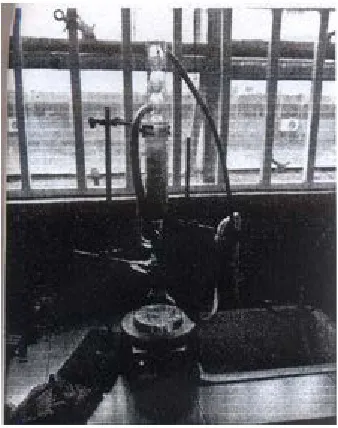
500g of the dried sample was placed in a thimble-holder; the thimble was loaded into the main chamber of the Soxhiet extractor. 1.5 litres (1 500m1) of n-Hexane solvent were placed in a distillation flask which was then placed on the heating element. The Soxhlet extractor was placed on top the flask and a reflux condenser was placed on top the extractor. hi the sample was then allowed to extract by refluxing for several hours until the solvent in the thimble turns clear. The yield of oil was determined by weighing the extract on an electronic weighing balance. The difference between the final weight of the flask with extract and the initial weight of the empty flask gave the weight of essential oil. Figure 1 shows the pictorial view of extraction process.
Fig.1 Extraction of Samples using Soxhiet Equipment
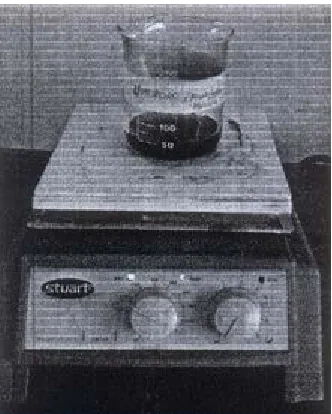
Figure 2 shows the extract from basil leaves.
Fig. 2 Extract from basil leaves
2.6 Comparative Analysis of Essential Oil Yields
Analysis of essential oil was done by comparing the yield of essential oil from lemon grass and basil leaves to know which gives the optimum yield.Mass of final product (Essential Oil) (g) Yield of essential oil (%) = X 100%
Mass of the initial material used (lemon grass) (g)
2.8 Determination of the Solubility of Sample in
Water
partially soluble in water and whether it has changed the pH of the water. It was observed that the pH paper did not change colour. Thus, the lemon grass essential oil is a water insoluble compound. The above experiment was carried out on basil leaf oil, and same result was obtained.
2.9 Determination of the Boiling Point
5m1 of the essential oil was placed in a small test tube. A capillary, sealed at one end is placed open-end down into the essential oil. The test tube is firmly attached to a thermometer with a rubber band such that the thermometer bulb should be even with the test tube’s bottom, and this entire assembly immersed in an oil bath (half-filled 100mI beaker). As the temperature is slowly increased, a rapid evolution of bubbles from the end of the tube begins. Heating was continued for about 5-10 seconds to be sure that all of the air has been expelled from the capillary, and the vapors’ of the essential oil become equal to the atmospheric pressure. As the temperature decreases, the bubbles slowed down and the essential oil starts rising into the capillary. At the point when the bubble stops, the thermometer was read and recorded. The above process was repeated two (2) more times, arid the temperature reading in each case was recorded. The above experiment was carried out on lemongrass and basil leaves essential oil at atmospheric pressure.
2.10 Determination of Specific Gravity
Density bottle was used for determining the density of the oil. A clean and dry bottle of 25 ml capacity was weighed (W0) and then filled with the oil with stopper inserted and it is reweighed to give (W1). The oil was substituted with water after washing and drying the bottle and weighed to give (W2). The specific gravity was then determined using Equation (1).
(1)
The above experiment was carried out for lemon grass and basil leaves essential oil respectively.
2.11 Determination of Refractive Index
The Abb’s refractometer was used for the determination of refractive index. It gives values up to the 4th decimal place. The refractive index is denoted by n D25” where n is the refractive index at 25°C taken with sodium light (D -line). First, the refractometer was standardized with distilled water which has refractive index of nD29.5=1.3315. Then it was cleaned with acetone and dried with cotton. After this, a drop of lemon grass essential oil was placed between the prisms of refractometer. The telescope was rotated to bring the border line of total refraction to the
junction of cross-wire in the telescope. The refractive index was recorded at room temperature. The above experiment was repeated for basil leaves essential oil.
(2)
Where;
r = Angle of refraction i = Angle of incidence
nr = Refractive index of the side the light is going to ni = Refractive index of the side the light is coming from
2.12 Determination of Peroxide Value
30 ml of acetic acid chloroform solution was measured into a flask containing 5g of ‘the oil sample. A 0.5 ml saturated solution of potassium iodide was then added, followed closely by the addition of 30 ml of distilled water. The flask content was then titrated against 0.1 M sodium thiosulphate (Na2S2O3 until the yellow colour almost disappeared. 0.5 ml starch indicator was added and the titration continued until the end-point (where the blue-black colour just disappeared). A blank titration was also performed. The peroxide value is given by Equation (3):
(3)
where,
S = Sample titration B = Blank titration
Where S and B represent sample and blank titrations respectively
2.13 Determination of Saponification Value
2.0g of lemon grass essential oil were weighed into a conical flask separately. 25m1 of 0.IN ethanolic potassium hydroxide was added to the conical flask, and the content constantly stirred for one (1) hour followed by reflux phenolphthalem indicator which was then added to the conical flask and titrated with 0.5M HC1 till the solution changes to colorless. The same procedure was repeated for the blank. The above experiment was repeated using basil leaves essential oil.
(4)
where,
M = Molarity of standard KOH W = Weight of sample in grams
2.14 Determination of Acid Value of Lemon Grass
and Basil Leaves Essential Oil
25 ml of diethyl ether and 25m1 of ethanol was mixed in a 250 ml beaker. The resulting mixture was added to 2.0g lemon grass essential oil in a 250 ml conical flask, and few drops of phenolphthalein were added to the mixture. The mixture was then titrated with 0.1 M KOH to the end point with consistent shaking for which a dark pink colour was observed and the volume of 0.1M KOH (V0) was noted. The above experiment was repeated using 2.0g basil leaves essential oil.
(5)
where,
V = Volume of KOH in cm3
M = Molarity of standard KOH Solution Ma = Molecular Weight of Oleic Acid (282) W = Weight in grams of sample.
Figure 3 shows the separation of basil oil from n-hexane.
Fig. 3 Separation of Basil Oil from n-hexane
3. Results and Discussion
The results obtained are shown in Table 1. The acid value is a common parameter in the specification of fats and oil. It is defined as the weight of KOH in mg needed to neutralize the organic acid present in 1g of fat and it is a measure of the free fatty (FFA) present in the fats or oil. An increment in the amount of FFA in a sample of oil or fat indicates hydrolysis of triglycerides. From the result of the experiment carried out, the acid value for lemon grass oil and basil oil was 4.09 and 3.95 mgKOHJg respectively
making both oil a better feedstock for the production of bio-diesel. The higher the value of acid, the presence of more free fatty acid (FFA) which therefore reduces trans-esterification, thus resulting to saponification process. But oil do not require a pre-treatment process for the production of biodiesel since their FFA is <1%.
The boiling point of organic compound can give important information about their physical properties and structural characteristics. Boiling point helps identify and characterize a compound. The normal boiling point of a compound is an indicator of the volatility of that compound. The higher the boiling point, the less volatile is the compound. Conversely, the lower the boiling point, the more highly volatile is the compound. From the result obtained, the boiling points of lemongrass oil basil oil were 299°C and 215°C respectively. This simply implies that lemongrass oil is less volatile than basil oil. The graph shows the boiling point of lemongrass and basil oil respectively.
Saponification number represents the number of milligrams of KOH required to saponifying of fat under the condition specified. It is a measure of the average molecular weight (a chain length) of all the fatty acids present. The saponification number measures the bounded and unbounded acids present in oil or fat. The smaller the molar mass of the fat, the higher the saponification number. It is an important characteristics considered in soap production. The saponification value of lemongrass oil and basil oil were 143 and 198 mgKOFlJg respectively. This simply implies that basil oil is a better feedstock for soap production than lemongrass oil as depicted in Table 1.
substance, confirm its purity or measure its concentration. From the experimental result, the refractive index of
lemongrass oil and basil oil were 2.487 and 1.516 respectively.
Table 1: Physical/Chemical Properties of Lemongrass Oil and Basil Oil
Parameters Values (lemongrass oil) Values (basil oil) Units
Acid value 4.09 3.95 Mg KOHJg
Boiling point 299 215 °C
Saponification value 143 198 mgKOH/g
Specific gravity 0.896 0.957
Peroxide value 6.0 8.0 MeqO2Ikg oil
Yield 2.5 1.89 %
Refractive index n2O/D 2.487 n20/D 1.516
Solubility Insoluble in water Insoluble in water
Colour Dark yellow Greenish yellow
4. Conclusions
Even though, all parts of the plant may contain essential oils; their composition may also vary with the
parts of the plant employed as raw material. Other factors such as cultivation, soil and climatic conditions, harvesting time, etc. can also determine the composition and quality of the essential oil. The extracted essential oil from lemongrass and basil leaves were obtained and characterized and a comparative study was carried out on the extracted essential oil obtained from feedstock ranging from acid value (Lemongrass oil: 4.09 MgKOH/g, Basil oil:3.95 MgKOHJg), boiling point ( Lemongrass oil: 299°C, Basil oil: 215°C), saponicatioin value (Lemongrass oil: 143 MgKOH/g, Basil oil: l98MgKOH/g) , peroxide value (Lemon grass oil: 6.0 MeqO2/kg oil, Basil oil: 8.0 MeqO2/kg oil), colour (Lemongrass: Dark yellow, Basil oil: Greenish yellow), specific gravity (Lemongrass oil: 0.896 , Basil oil: 0.957) , refractive index (Lemongrass oil n20/D 2.487 , Basil oil n2OD 1.5 16), solubility (for both samples they are insoluble in water), yield (Lemongrass oil: 2.5%, Basil oil: 1.89%) respectively by soxhlet extraction. Due to their characteristics, they might be useful to the chemical industries for the production of biofuel as a result of their yield.
Recommendation
Cultivation of lemongrass and basil plants should be largely encouraged other than just been merely considered as weeds and only limitedly used by those in the rural only for medical purposes. Cultivation of lemongrass and basil plant should be encouraged as a result of it diverse
application. Research could be carried out to improve the yield since they have good characteristics for the production of biofuel.
References
[1] P.D. Roberts, R.N. Raid, P.F. Harmon, S.A. Jordan, and A.J. Palmateer. “First Report of Downy Mildew Caused by a Peronospora sp. on Basil in Florida and the United States”, Plant Disease, 2009, 93, 199
[2] T.S. Brian and A.K. Ikhlas. “Comparison of Extraction Methods for Marker Compounds in the Essential Oils of Lemon grass and Eucalyptus Leaves”, 2002, J. Agric Food Chemicals
[3] A. Copetta, G. Lingua, G. Berta. “Effects of three AM fungi on growth, distribution of glandular hairs, and essential oil production in Ocimum basilicwn L. var. Genovese”, 2006, Mycorrhiza 16(7), 485—494
[4] K.C.B. Husnu and B. Gerhard. Handbook of Essential Oils: Science, Technology, and Applications, Taylor and Francis, 2010
[5] L.M. Pessoa, S.M. Morais, C.M. Bevilaqua,and J.H. Lucian. “Anthelmintic activity of essential oil of Ocimum gratissimum Linn and eugenol against Haemonchus contortus” Veterinary Parasitology, 2002, 109 (1-2), 59-63 [6] P. Maurya, P. Sharma, L.Mohan, L. Batabyal, and C.N.
Srivastava. “Evaluation of the toxicity of different phytoextracts of Ocimum basilicuni against Anopheles stephensi and Culex quinquefasciatus”. Journal of Asia-Pacific Entomology”, 2009, 12(2): 113—115
[7] F. Bakkali, S. Averbeck, D. Averbeck, and M. Idaomar. “ Biological effects of essential oils”. Food and Chemical Toxicology, 2008, 46, 446-475