Abstract
Wu, Qian. Isolation of Genes Associated with Adventitious Root
Development in
Populus
(under the direction of Dr. Barry Goldfarb)
Twenty-three gene and enhancer trap transformed poplar lines had been identified for study based on GUS expression during adventitious root formation. Histological analysis was conducted on wild-type stem cutting bases to determine the important stages of root initiation and development. Cell divisions were first observed two days after cutting preparation, leading to meristem organization in Day 4. In Day 5, the new root primordia emerged from the stem and root hairs formed on the new root in Day 6. We used TAIL-PCR to isolate genomic sequences flanking the insert in fourteen trap lines. The
sequenced flanking regions were aligned with the genome sequence in the poplar genome database to find predicted open-reading frames (ORFs) in close proximity to the inserts. Two lines yielded putative ORFs—line 284 that contained one insert and line 304 that contained two inserts at separate loci. cDNAs of all three predicted ORFs were
recovered. Transcribed region (TR)-284 has one coding region which encods a predicted 231-amino acid polypeptide. Searches of the GenBank database showed similarity to putative, unknown proteins from Arabidopsis and rice. Northern analysis of wild-type poplars detected expression in roots and leaves, but not in stems. Quantitative Real-Time PCR analysis of stem bases undergoing root formation showed transcript accumulation four days after cutting preparation. Hand sectioning of histochemically stained line 284 cutting bases also showed GUS protein accumulation in day 4, primarily in the cortical regions surrounding the emerging root primordium and in the new root cap.
RACE, apparently the result of differential splicing in the third and fourth exons. The conserved region of the ORF was expressed in roots, leaves and stems and constantly from Day 0 through Day 6 in stem bases, with no apparent association with root formation. Hand sectioning of histochemically stained line 304 revealed GUS activity beginning in Day 2 in the stem cortex and in Day 4 in the organized root meristem and the cortex surrounding it. In the emerging root primordium and elongated root, GUS activity was mainly observed in the root cortex, with some staining in the root cap and the distal portion of the root meristem. In situ hybridization and transgenic experiments with these genes and further study of other lines are underway to further identify the role of gene expression during adventitious root formation and development.
Abbreviations:
AD primer, Arbitrary degenerate primer; ARF, auxin response factor; ASF1, activation sequence factor 1; AuxRESPIAA4/5, auxin-reponsive element from IAA4/5; BLAST, basic local alignment search tool; EST, expressed sequence tags; GCG, Genetics
computer group; GUS, β-Glucuronidase; IBA, indole-3-butyric acid; LMS-PCR, Ligation mediated suppression polymerase chain reaction; NAA, α-naphthaleneacetic acid; NCBI, the National Center for Biotechnology Information; ORF, open reading frame; RACE, Rapid amplification of cDNA ends; RIM, root induction medium; RNAi, RNA
Isolation of Genes Associated with Adventitious
Root Development
in Populus
By
Qian Wu
A thesis submitted to the Graduate Faculty of North Carolina State University
in partial fulfillment of the requirements for the Degree of
Master of Science
Department of Forestry
College of Natural Resources
Raleigh 2004
APPROVED BY:
Dr. Ross W. Whetten Dr. Steven L. Spiker
Biography
Qian Wu was born in Tianjin, China. She got her Bachelor of Science degree from the Biology Department of Beijing Union University, Beijing, China. Then she worked on plant tissue culture and transformation in the Institute of Genetics of Chinese Academy of
Sciences. She came to the United States in January, 2002 to pursue her Master of Science degree in the Department of Forestry at North Carolina State University. As a graduate student, she focused on research using molecular biology techniques to study genes during adventitious root formation in poplars under the direction of Dr. Barry Goldfarb.
ACKNOWLEDGEMENTS
First, I give my most sincere and heartfelt thanks to my family who have always encouraged me to try new things to improve myself and have supported me over the arduous course of this program.
I would like to thank my committee for their efforts on my behalf. In particular, many thanks to my advisor, Dr. Barry Goldfarb, for his guidance and encouragement throughout the whole process. I would like to thank Dr. Ross Whetten, for his instructive suggestions and great technical help when I was in the lab. I would like to thank Dr. Steven Spiker and his lab that always provided their help generously.
I give my special thanks to Ms. Carmen Lanz-Garcia. Her kind assistance began from the first day I worked in the lab. We had many discussions and I could not have gotten my research done without her help in every step of my program. She made my life, far away from my family, much easier.
Over the past two and one half years that I have spent associated with the team of the Rooted Cutting Program, all of the faculty, staff and fellow students have provided assistance and friendship that have made this chapter in my life memorable and rewarding.
Finally, I would like to thank Chindex International, Inc. who made it possible to pursue my Master’s degree in this university. They not only gave me a chance to get a degree, but an opportunity to know myself and improve myself, and that is what I have done here.
TABLE OF CONTENTS
LIST OF TABLES ...vi
LIST OF FIGURES ...vii
LIST OF APPENDICES..………..viii
INTRODUCTION ...1
OBJECTIVE………..3
Methods and Materials ...3
Tissue culture and root induction………..3
Histology study during adventitious root development……….4
GUS histochemical staining..………4
Isolation and sequencing of flanking sequences………4
Southern analyses………..5
Sequence analysis and comparisons………..5
Recovery of cDNAs by RACE and reverse transcription PCR……….5
Northern blot analyses………...6
Quantitative Real-Time PCR………...6
Results.………...9
Histology of adventitious root formation in hybrid aspen clone INR717-IB4 (Populus tremula x P. alba) ……….9
GUS histochemical staining and flanking sequence isolation narrowed down the number of lines………..9
Estimation of transgenic insert copy number..………..9
Isolation, sequencing and predicted ORFs from flanking regions of lines 284 and 304 ……….10
Recovery of cDNAs by 3’RACE and reverse transcription PCR...……….11
Expression of candidate genes……….12
Reporter gene expression patterns in lines 284 and 304………...13
Discussion……….………...14
Conclusion ………..19
LIST OF TABLES
LIST OF FIGURES
Figure 1. Histology of adventitious root development in INRA 717-IB4 (Populus tremula x P. alba)...27 Figure 2. Southern analysis of insert-locus number in transgenic poplar…...28 Figure 3. GUS insertion site in enhancer trap transformed lines 284 and 304...29 Figure 4. Predicted translation of ORF-284 and sequence alignment of the predicted coding
region of the genomic sequence and the recovered cDNA sequence of TR-284 ...30 Figure 5. Predicted translation of ORF-304-A and sequence alignment of the genomic
sequence and the recovered cDNA sequence of TR-304-A...32 Figure 6. Sequence alignment of the primary structure of ORF-304-A and six representative
Arabidopsis thaliana predicted DNA-binding p proteins………...35 Figure 7. Sequence alignment of the cDNA sequences of three different splicing products of
TR-304-B and the genomic sequence...………....37 Figure 8. Expression analyses of mRNA of three predicted TRs by northern hybridization..40 Figure 9. Relative abundance of TR-284 and TR-304-A transcripts during adventitious root
LIST OF APPENDICES
Appendix I: Poplar gene and enhancer trap constructs………43 Appendix II: TAIL-PCR procedure for amplification of flanking sequences..………45 Appendix III: Melting temperature analysis of amplicons in Real-Time PCR………46 Appendix IV: Expression of different splice products of TR-304-B and its related gene
Introduction
Forest trees are valued for their environmental, economic, and ecological roles. Rooted stem cuttings can be used to deploy elite genotypes in intensive forest plantations to increase productivity. However, in many tree species, the ability to regenerate adventitious roots declines with increasing age (Hackett, 1988). Thus, by the time we can identify superior clones, we can no longer propagate them from cuttings. The ability of cuttings to form adventitious roots is the most commonly studied maturational characteristic, except for reproductive competence (Greenwood and Hutchison, 1993). Adventitious rooting ability varies among species, clones, and developmental stages (Wareing, 1959) and is a key process for industrial plantation forestry. Trees are well studied at the quantitative and population genetic levels (Riemenschneider et al., 1996 and Bradshaw, 1996); however, the
understanding of their development and physiology, especially at the molecular genetic level, is limited.
In adventitious root initiation, many genetic steps leading to root meristem initiation and organization are not yet known. To discover and characterize genes during root development, two methods are commonly used. One approach relies on mutations that result in a
recognizable phenotype. The second is based on expression patterns during certain developmental process where genes are identified via various differential screening approaches. The first strategy has been widely used to identify root formation genes in annual plants (Malamy and Ryan, 2001; Lund et al., 1997). However, the long generation times and inbreeding depression of forest trees make it impractical to employ mutation analysis. In addition, the approach is limited in its ability to identify genes that are functionally redundant and those that lead to lethality when mutated. Using the second strategy, some root development genes have been identified (Himanen et al., 2004; Busov et al., 2004; Lindroth et al., 2001; Hutchison et al., 1999; Butler and Gallagher, 1999).
Gene and enhancer traps are insertion-based gene discovery and identification methods that provide an alterative approach for gene identification (Sundaresan, et al., 1995). In gene trap transformed plants, a reporter gene is not expressed unless the trap inserts into the
transcriptional unit of a gene and in the correct orientation. If it does, it will produce transcriptional and translational fusions with the interrupted gene. Enhancer traps have a minimal promoter preceding the reporter gene. The minimal promoter is not sufficient to drive reporter gene expression unless the trap is inserted within an expressed gene or near an enhancer of transcription. Both trap types allow gene identification based on reporter gene expression pattern. Therefore, genes in which mutations do not result in an easily
recognizable phenotype and genes with essential functions during development can be identified. The tagged gene responsible for reporter gene expression can be determined by cloning and sequencing the genomic DNA flanking the insertion site. This strategy has been used in several species, including Arabidopsis (Smith and Fedoroff, 1995; Springer et al., 1995 and Baxter-Burrell et al., 2003) and Populus (Groover et al., 2004).
Another limitation of our understanding of root development in trees is that much of the existing information comes from model annuals. Populus has become the model tree species for molecular studies of development and physiological processes. Poplars have a small nuclear genome and many genotypes are easily propagated in tissue culture and can be genetically transformed readily. In addition, the U.S. Department of Energy has undertaken the sequencing of an entire poplar genome (Populus trichocarpa). To date, approximately a 6.8X coverage of the genome has been completed and trace files are available to search with a BLAST program. Approximately 550 million base pairs in 19 chromosomes have been sequenced by the whole genome shotgun method. In addition, several large EST sequencing projects are underway (Mellerowica et al., 2001; http://Poppel.fysbot.umu.se). These
resources are invaluable tools for understanding gene function in trees.
established at the USDA- Institute of Forest Genetics and Oregon State University (Groover
et al., 2004). A total of 611 transformed lines were screened for the reporter gene expression patterns. Twenty-three lines, including twenty enhancer trap and three gene trap lines, exhibited GUS expression during adventitious root development in a preliminary screen and they were selected as the plant material for this study.
Here we report a study to isolate genes expressed during adventitious root development. From two enhancer trap tagged lines, three open reading frames (ORFs, coding regions) were tagged by the GUS reporter gene. The insertion sites were determined by cloning and
sequencing the flanking genomic DNA sequences and aligning them with the poplar genome sequence database. cDNAs of nearby ORFs were recovered and their expression during adventitious root development was studied.
Objective:
To identify and characterize a gene or genes that are expressed during adventitious root development from gene and enhancer trap transformed lines in Populus.
Methods and Materials
Tissue culture and root inductionInduction Medium (RIM). RIM is SCM with 0.5 µM IBA. Plant materials used in the experiments were grown under 16-h-light / 8-h-dark photoperiod (23ºC/20ºC). The average photosynthetically active radiation (PAR) measured in the culture room was 32 umol m-2 s-1.
Histology study during adventitious root development
Stem bases (approximately 3 mm) were cut from independent micro shoots immediately after subculture to RIM and on each successive day until roots formed. Collected samples were fixed in FAA (50% ethanol, 5% acetic acid, 3.7% formaldehyde). Ten micrometer transverse and longitudinal sections were prepared using a LEICA RM 2135 (Benscheim, Germany) microtome and were stained with fast green and safranin red at the Histopathology
Laboratory,College of Veterinary Medicine, North Carolina State University. Images were taken using a Nikon Eclipse E200 microscope (Nikon Instruments, Japan)and a Sony 3CCD Color Video Camera DXC-390, Sony Electronics Inc., Japan).
GUS Histochemical staining
Four cuttings of each trap line were removed from RIM and subjected to GUS histochemical staining. The staining began at the time of subculture to RIM (Day 0) and continued daily through 7 days. The GUS staining was done as described by Stomp (1991). Free hand transverse sections of stained stem bases undergoing root formation were made from lines 284 and 304.
Isolation and sequencing of flanking sequences
The genomic regions flanking the insertions were amplified by TAIL-PCR (Thermal
Asymmetric InterLaced Polymerase Chain Reaction) following the protocol described by Liu
Southern analyses
To detect the number of inserts in gene and enhancer trap lines, the entire GUS gene was random prime-labeled with 32P using the Prime-A-Gene Kit (Promega, Madison, WI).
Southern blotting was carried out according to previously published procedures (Constabel et al., 2000 and Goldfarb et al., 2003). Briefly, 15 µg of genomic DNA was digested with
EcoRI, HindIII, XbaI or DraI (Promega), electrophoresed through a 1% (w/v) agarose gel, and blotted onto uncharged nylon membranes (MagnaGraph, Micron Separations,
Westborough, MA) using standard protocols (Ausubel et al., 1998). Hybridization and washing were carried out as described by Goldfarb et al. (2003). Copy number
reconstructions were included.
Sequence analysis and comparisons
The flanking sequences from TAIL-PCR or RACE reactions were sequenced by automated sequencing at the DNA Sequencing Facility of Iowa State University. Sequence data were analyzed using the GCG sequence-analysis system (Genetics Computer Group, Madison, WI). Flanking TAIL-PCR generated sequences were used to search the poplar genome database (4X coverage for some sequences before 6.8X coverage was available) and contigs were aligned using the CAP3 program to extend. Genomic sequences were searched for predicted ORFs using FGENESH-dicots
(http://www.softberry.com/berry.phtml?topic=fgenesh&group=programs&subgroup=gfind ).
Subsequently, putative ORF sequences were used to search GenBank with BLAST (Basic Local Alignment Search Tool, http://ncbi.nlm.nih.gov/blast) programs to search for putative homologs of the ORFs. Sequences upstream of the predicted transcribed regions (TR, the region from the predicted transcriptional start site to Pol A signal) were also searched in the PLACE database (http://www.dna.affrc.go.jp/htdocs/PLACE/signalscan.html, a plant cis -acting regulatory DNA element database).
Recovery of cDNAs by RACE and reverse transcription PCR
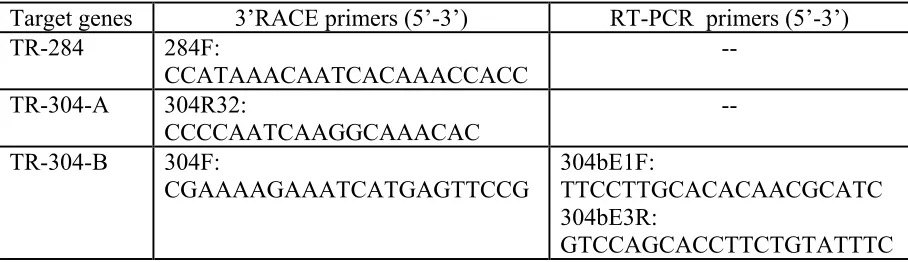
Amplification of cDNA Ends, Invitrogen, CA). Reverse transcription PCR (RT-PCR) was used to obtain the 5’ end coding regions. Total RNA was isolated from mature roots as described in Goldfarb et al. (2003). RNA samples were treated with the RQ1 RNase-free DNase I according to the manufacturer (Promega). Primers used are listed in Table 1.
Northern blot analyses
To test whether the predicted ORFs are expressed in different plant organs, tissue-cultured, rooted wild-type plants were used. Roots were excised and placed in 2µM NAA or 10% (v/v) EtOH (no auxin treatment control) for 24 hours. After removal of the stem bases, the
remaining shoots (approximately 5 cm cuttings containing stems and leaves) were suspended with their bases immersed in one of the same two solutions for 24 hours. Leaves were
separated from stems after auxin or control treatment. Total RNA (8-10 µg) from each sample was extracted and separated on 1% agarose gels containing 2.2 M formaldehyde and transferred to uncharged nylon membranes (MagnaGraph) by standard capillary methods (Ausubel et al., 1998). Transferred RNA was cross-linked to membranes by UV irradiation (Fisher Scientific). Probes were labeled as for the Southern analyses. Base pairs 63-613 of the predicted 284 coding region, 151 bp of the 5’ UTR of predicted TR-304-A, and 290 bp of predicted ORF-304-B exon 3 were used as hybridization probes for the candidate genes. Hybridizations and analyses were carried out as described by Goldfarb et al. (2003).
Quantitative Real-Time PCR
RNA samples were collected from stem bases (approximately 3 mm from the base of each cutting) from Day 0 through Day 6, as in the histology analysis. Total RNA samples were treated with RQ1 RNase-free DNase I according to the manufacturer (Promega). Treated RNA samples were desalted prior to cDNA synthesis using Microcon-100 spin columns (Millipore Corporation, Bedford, MA). Reverse transcriptase reactions were performed in 20µl reactions containing 0.6 µg of total RNA, 20 mM Tris-HCl (PH 8.4), 50 mM KCl, 2.5mM MgCl2, 10 mM DTT, 500 µM each dATP, dCTP, dGTP and dTTP, 5 µM random
RNA and random hexamer primers were combined, heated at 70°C for 10 min, and chilled on ice. Appropriate volumes of other components were added, and incubated at 25°C for 10 min, followed by a 2 min incubation at 42°C. After 200 units of reverse transcriptase was added to each reaction, reactions were incubated at 42°C for 50 min.
Real-Time PCR primers (Table 2) of target genes were designed for ORF-284 and ORF-304-A according to the recovered cDNORF-304-A sequences using the Primer Express software (Perkin-Elmer Biosystems, Norwalk, CT, USA). 18S ribosomal primers were designed according to the poplar genome sequence. Each primer pair amplified a single product, as shown by melting temperature analysis of the amplicons (Appendix III). The reactions in which the reverse transcriptase had been omitted during cDNA synthesis were used as negative controls.
Real-Time RT-PCR experiments using SYBR Green PCR Master Mix and the ABI Prism 7900 Sequence Detection System (PE-Applied Biosystems, Foster City, CA) werecarried out according to the manufacturer's protocol. The PCR amplification wasinitiated by incubation at 95°C for 10 min followed by 40 cycles:15 s at 95°C and 1 min at 60°C. cDNA prepared from 5 ng of totalRNA from each time point was used as the template. 18S ribosomal RNA was used as the endogenous control. There were three independent biological replicates for the samples of Day 0 through Day 6. Each Real-Time PCR sample had three technical replicates. The results were analyzed using SDS 2.1 software (PE-AppliedBiosystems).
Expression data were normalized to ribosomal RNA 18S and expressed relative to the level in Day 0 samples. The threshold was kept constant (0.06) for data analysis throughout the study.
∆CT = CTDayx - CT18sDayx
∆∆CT = ∆CTDayx - ∆CTDay0
Ratio = 2-∆∆CT
Where CT is the PCR cycle number at which the set threshold value of SYBR Green
normalized CT values in Day x and Day 0, and the Ratio is the ratio of gene transcript level
Results
Histology of adventitious root formation in hybrid aspen clone INRA 717-IB4 (Populus tremula x P. alba)
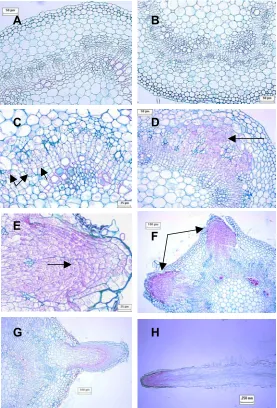
In order to gain basic histological information on adventitious root development in Populus, both longitudinal and cross sections of stem bases each day after root induction were made and stained with fast green and safranin red. Cell divisions, which were identified by the observation of new cell plate formation and prominent nuclei, were first observed around the vascular tissue two days after cutting preparation (Figure 1). In Day 3, more dividing cells occurred in localized regions of the vascular tissue and extended outward into the cortex. Meristem organization in root primordia occurred in Day 4. The adventitious root began to elongate and emerged out of the epidermis in Day 5. Root hair formation on the new roots was observed at Day 6.
GUS histochemical staining and flanking sequences isolation narrowed down the number of lines
Among twenty three transformed lines, one enhancer trap line (64) didn’t show any staining in the in-depth screen. Other lines showed GUS accumulation in several tissues including roots. After numerous combinations of Ds and AD primers were tested, 17 flanking
sequences of variable sizes were isolated from 14 lines, either from one or both sides of the insert by TAIL-PCR (Table 3). This left nine lines and the line without GUS expression from the original 23 lines that were not used further in this study.
Estimation of transgenic insert copy number
Southern analyses with copy number reconstructions were used to estimate the number of
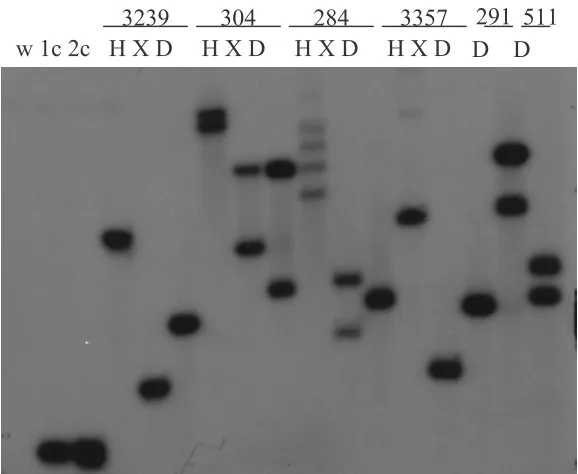
GUS inserts in the transgenic lines. Line 284 appears to have one GUS insert, as the DraI digest shows a single band with similar intensity to the single copy reconstruction (Figure 2), and an EcoRI digest in a separate blot also shows a single band (data not shown). The
have two GUS inserts. Two gene trap lines (3239 and 3357) have a single insert and two other enhancer trap lines (291 and 511) have two inserts each.
Isolation, sequencing and predicted ORFs from flanking regions of lines 284 and 304 The chromosomal regions flanking the trap inserts were amplified from line 284 and 304 by TAIL-PCR. From line 284, an upstream (Ds3), 453 bp flanking region was isolated and sequenced. Although polymorphisms existed between the P. tremula x P. alba clone that was used in this study and the P. trichocarpa clone used for genome sequencing, the cloned flanking sequence had substantial similarity to the genome sequence (6e-44). According to the aligned contigs of the genomic sequence, there is a predicted transcribed region
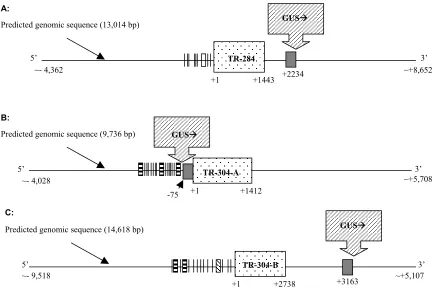
approximately 2.2 kb upstream of the GUS insert (Figure 3A). The predicted TR of 284 has only one coding region, which is predicted to encode a 231 amino acid protein. No other ORFs were predicted approximately 6.5 kb upstream or 6.4 kb downstream of the insert in the assembled genome sequence. Searches with the predicted protein sequence in GenBank produced similarities with putative, hypothetical proteins from Arabidopsis (from e-57 to e-29) and rice (e-40). Searches with the BLASTN program in the NCBI EST database revealed ESTs with similar nucleotides sequences in Arabidopsis, Citrus, Medicago truncatula and
Lotus corniculatus (Table 4). Further, there is a conserved region in the coding region (266-353 bp) that was found in ORF-284 and ESTs from other kingdoms. Interestingly, there were no similar ESTs found from other poplar species.
Two flanking regions were cloned from line 304 using TAIL-PCR. Alignments with the poplar genome sequence yielded similar sequences from contigs that were in separate
the putative proteins have not been established (http://www.ncbi.nlm.nih.gov/Structure/cdd ). No other ORF was predicted in the genomic sequence approximately 4.0 kb upstream or 5.7 kb downstream of the insert. Similar ESTs were found in Medicago truncatula, Populus tremuloides, Beta vulgaris, Lotus corniculatus and Phytophthora sojae (Table 5), although no single domain was consistently similar to the plant and fungal ESTs.
The second flanking region was 79 bp and located 425 bp downstream of a predicted transcribed region (TR-304-B, Figure 3C). The predicted TR is approximately 2.7kb and it contains four exons. It is predicted to encode a 350 amino acid protein. The third exon of the predicted ORF-304-B contains a 75 amino acid conserved domain (DUF597) that is found in a family of zinc-binding proteins and in several uncharacterized plant proteins; however, the biological functions of these putative proteins are not known (TIGR Arabidopsis thaliana db,
http://tigrblast.tigr.org/er-blast/ and GenBank). No other coding region was predicted
approximately 12.6 kb upstream and 1.5 kb downstream of the insert. No additional contigs were available in the poplar genome database to extend the assembled sequence beyond 1.5 kb downstream of the insert. The predicted ORF-304-B showed similarities to ESTs from three other poplar species and many other eukaryotes, as well (data not shown). Among the poplar ESTs that had sequence similarity from different tissues, about 48% contained the region with similarity to the first predicted exon; 85% and 79% of the ESTs contained regions with similarities to the second and third predicted exons, respectively, and 52% of the ESTs contained the region with similarity to the last predicted exon.
The positions of all three predicted ORFs relative to the GUS inserts were confirmed by the size of amplified fragments from PCR amplifications of genomic DNA from the respective transgenic line with one ORF specific primer and a primer annealing to the enhancer trap vector.
Recovery of cDNAs by 3’RACE and reverse transcription PCR
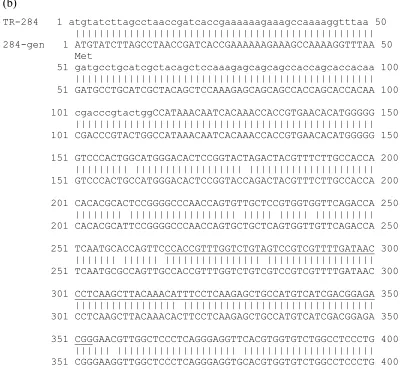
PCR with a primer based on the predicted coding sequence was used to recover the 5’ translated region. The gene corresponding to the cDNA has one exon, encoding a putative protein of 231 amino acids, as in the prediction (Figure 4). Compared to the assembled genome sequence, there appears to be a 35 bp intron in the 3’ untranslated region (Figure 4).
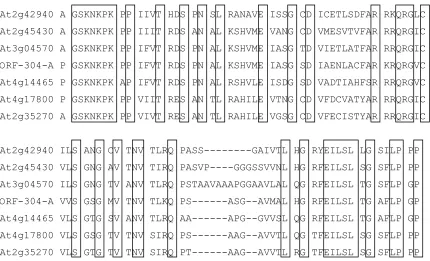
The cDNA sequence of TR-304-A was recovered by 3’RACE (Figure 5). There are at least 498 bp in the 5’ untranslated region and only one 855 bp coding region in the TR-304-A. Compared to the assembled genome sequence, there appears to be a 54 bp intron in the 3’ untranslated region (Figure 5). Aligned with putative, related DNA-binding proteins in
Arabidopsis, there are several conserved amino acids (Figure 6). However, the biological functions of these putative DNA-binding proteins are unclear and it is not clear if those conserved amino acids are critical for the function.
3’ RACE reactions with TR-304-B yielded three different cDNA products. These appeared to be the result of different splicing patterns of the last predicted exon and intron (Figure 7). In addition, 5’ RACE recovered two cDNAs. One cDNA is similar to the prediction from the genomic sequence (88% identity). The other cDNA is less similar (56% identity) to the poplar genome sequence near the insert, but does show similarity (82% identity) to another genomic locus. Thus, it is likely that we recovered another family member from the 5’ RACE that was not tagged by GUS insertion.
Expression of candidate genes
TR-304-A was detected in roots by northern hybridization, but not in stems or leaves (Figure 8). TR-304-A mRNA abundance in roots was slightly increased by auxin treatment.
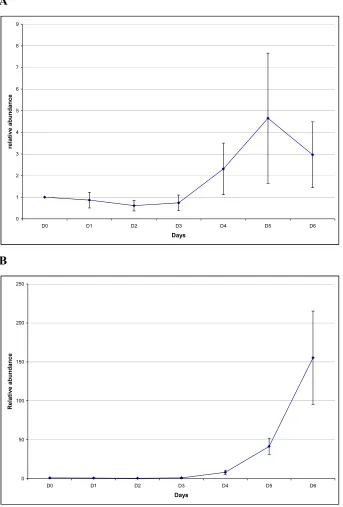
Abundance of ORF-304-A increased beginning in Day 4 during adventitious root
development and mRNA abundance continued to increase through Day 6 according to the Quantitative Real-Time PCR data (Figure 9).
ORF-304-B expression was studied by northern hybridization with the region that was conserved among the three different splicing products and the other gene family member used as the probe. Hybridization signals from two different sized transcripts were obtained from roots, leaves and stems (Figure 8). All three differential splicing products in stems, leaves, roots and Day 4 during adventitious root development were detected by qualitative reverse transcription PCR (Appendix IV). The related, non-tagged gene family member only had one splicing product and it was expressed in roots, leaves, stems and Day 4 during adventitious root development by qualitative reverse transcription PCR (Appendix IV).
Reporter gene expression patterns in lines 284 and 304
Hand sectioning of GUS histochemically stained stem bases undergoing adventitious root formation was conducted on enhancer trap transformed lines 284 and 304. Line 284 showed GUS protein accumulation beginning in Day 4, primarily in the cortical regions surrounding the emerging root primordium and in the new root cap (Figure 10).
Discussion
Hybrid aspen clone INRA 717-IB4 (Populus tremula x P. alba) is a genotype that is easily propagated in tissue culture, is readily transformed, and has been used in several studies (Busov et al., 2003, Groover et al., 2004). To our knowledge, there has been no previous histological study during adventitious root development in this genotype. Our study provides useful baseline information on the developmental process at both spatial and temporal levels and provides a framework with which to study gene function during this process. In this clone, it takes six days to complete adventitious root formation and development from micropropagated shoots. The process can be divided into five stages: cell divisions began in the vascular tissue in Day 2, localized divisions were observed in Day 3, meristem
organization began to occur in Day 4, root primordium emergence occurred in Day 5, and root elongation and root hair formation was observed in Day 6. The relatively short period of time in which adventitious root formation and development occurs is useful for studying gene expression during root development.
Screening trap lines for GUS reporter gene expression patterns is a useful approach for tentatively identifying lines with informative ORFs and limiting the number of lines for molecular analysis. However, reporter gene expression pattern can be affected by several factors, including the number of insertion events and the location of the insertion. In this study, all lines that exhibited staining in the preliminary screen had GUS staining patterns that were similar when re-screened except two. One of these lines had no GUS expression and the other had an altered expression pattern.
time-consuming process when working with many lines. In this study, flanking regions ere
obtained from 14 of the 23 lines tested. However, the regions cloned in several lines were too short to unambiguously place them on the genome sequence. In future studies, another approach — Ligation Mediated Suppression PCR (LMS-PCR, Cottage et al. 2001) may be a good alternative. An additional advantage of LMS-PCR is that it provides some information on the number of insertion events. Recently, it has been used successfully to retrieve flanking sequences from several lines in our laboratory.
Two types of constructs, gene and enhancer traps, were used in the lines we screened. In general, more lines are retrieved from transformation with enhancer traps, but a higher proportion of gene trap lines are informative (reviewed by Springer, 2000). However, in this study, one gene trap line (3239) yielded very complex insertion and expression information and we had difficulty obtaining good flanking sequence from two other lines (3357 and 153). Published papers identifying genes from enhancer traps mostly have been from lines in which the insertion happened to be close to an ORF (for example, Holding and Springer, 2002). This occurred in our study, as well. All three ORFs were predicted from two enhancer trap lines and the longest distance between the reporter gene insertion and the predicted TR was approximately 2.7 kb (TR-304-B). However, the availability of the assembled Populus
genome sequence should increase the proportion of enhancer trap lines that are informative, once a small region of the flanking sequence is obtained.
We isolated TR-284 from enhancer trap line 284. According to the Populus genome
sequence and the FGENESH gene prediction program, this is the only predicted ORF within a 13 kb genomic region. Thus, it is likely that TR-284 is the gene tagged by the reporter gene insert. Although there are no clear known functions of proteins similar to ORF-284,
northern-blot study and Quantitative Real-Time PCR suggest that it is a protein expressed in mature roots and leaves and it may play a role in response auxin in both tissues. The
upstream of the predicted transcriptional start site. ARF predicted proteins regulate
downstream gene expression in response to auxin (Abel and Theologis, 1996). In addition, there are eight predicted root motifs scattered within 1.3 kb upstream of the predicted transcription start site. Root motifs (ATATT) were found to be present in the promoters of root-specific genes (Elmayan and Tepfer, 1995) and ORF-284 expression was detected in roots and during the later stages of adventitious root development. However, the function of ORF-284 is still unclear. EST database searches revealed an 87 bp region in the coding region that is conserved among several plants and fungi, suggesting essential functions in development. Free hand sections of stem bases during adventitious root development did not show reporter gene expression in root primordia, but in the tissues surrounding the emerging primordia. The resolution of these hand sections may not be sufficient to accurately reflect reporter gene expression patterns. In the future, in situ hybridization experiments with wild-type plants and transgenic lines in which ORF-284 is up- and down- regulated should increase our understanding of the function of this gene in adventitious root development.
Because gene and enhancer traps are transformation based methods, the results can be affected by specific transformation events. The average number of insertion events in this pool of gene and enhancer trap transformed plants was 1.6 (Groover et al. 2004).
upstream of the TR. The quantitative Real-Time PCR results with ORF-304-A suggested that it is a low abundance transcript, with no detectable change of expression in the early stages of adventitious root formation. Its expression level did increase in the later stages of
adventitious root development. More evidence is needed to have a clear conclusion on the role of ORF-304-A in adventitious root development. Again, in situ hybridization
experiments and transgenic lines in which ORF-304-A is up- and down- regulated should increase our understanding of the function of this gene in root development.
The expression of ORF-304-B was complex. There were three splicing products and, possibly, another gene family member. Thus, when a probe from a conserved region was used to carry out northern hybridization, it is not surprising that more than one band was detected and that ORF-304-B appeared to have constitutive expression. Additional evidence of the complexity of expression of ORF-304-B and similar sequences comes from EST database searches. The first and fourth predicted exon had fewer hits than the second and the third exons. From our experimental results, the fourth exon was involved in differential splicing and the first exon is the most variable when comparing the two putative gene family members. Future studies on expression of the three different splice products and the two family members may provide additional information on the roles of these gene products in plant development.
Gene and enhancer traps are insertion-based gene discovery and identification methods. Therefore, one of the advantages of this approach is the potential to identify genes in which mutations do not result in an easily recognizable phenotype. In this study, we identified three ORFs whose apparent homologs from Arabidopsis have not been functionally characterized. This suggests that there is no obvious phenotype in plants containing mutants in these genes. Mutations that do not result in a recoverable phenotype can occur in genes that have
functionally redundant family members or genes with essential functions. We used the three sequences to search the partially assembled poplar genome sequences and each showed high similarity to two different scaffold sequences (Stephen DiFazio, Oak Ridge National
sequence pairs represent allelic variants or two different family members, it is possible they are gene family members, with redundant or overlapping functions.
There are several lines of investigation based on this research that could be informative in future studies. A study of the spatial expression patterns of the three ORFs by in situ hybridization would provide more precise information on the cell types in which the genes are expressed. Combined with the temporal expression data from Real-Time PCR, it would give us a good understanding of their expression patterns during adventitious root
development.
The gene expression data for the three ORFs in this study provide correlative evidence that they are expressed during root formation. However, it is not at all clear that any are
functionally important for adventitious root formation. Transgenic approaches could test this hypothesis. RNA interference (RNAi) is an efficient way to knock out gene function in plants (Brummell et al., 2003). The promoter region preceding the predicted gene or a
constitutive promoter could be used to drive RNAi expression. Alternatively, over expression of these genes using a highly expressed constitutive promoter would test whether the gene products are a limiting step in adventitious root development.
There are several predicted auxin related and root specific cis-elements preceding each of the ORFs. These may be interesting from a stand point of hormonal and tissue gene regulation, in addition to the function of the gene products. The predicted promoter regions containing various combinations of the elements could be fused with a reporter gene to create transgenic plants and study their function.
genome locations and ORFs with the early versions of the genome sequence. The remaining sequences could be used to search the final, assembled poplar genome sequence that will be released soon. In addition, in those lines, in which flanking sequences have not yet been isolated, LMS-PCR could be an alternative to obtain flanking regions. These two approached could yield additional, informative ORFs.
Conclusion
Populus (INRA 717-IB4) is a good model used to study genes and gene regulations during root formation and development in trees. Adventitious root development in this species completes, in contrast to many other tree species, in a relatively short period, and can be characterized as five stages. Gene and enhancer traps, combined with the efficient
References:
1. Abel S and Theologis A. 1996. Early genes and auxin action. Plant Physiology, 111: 9-17 2. Ausubel FM, Brent R, Kingston RE, Moore DD, Seidman JG, Smith JA and Struhl K,
1998. Current protocols in molecular biology. John Wiley & Sons, New York 3. Ballas N, Wong L-M and Theologist A. 1993. Identification of the auxin-responsive
element, AuxRE, in the primary indoleacetic acid-inducible gene, PS-IAA4/5, of Pea (Pisum sativum). J. Mol. Biol. 233: 580-596
4. Baxter-Burrell A, Chang R, Springer P, Bailey-Serres J, 2003. Gene and enhancer trap transposable elements reveal oxygen deprivation-regulated genes and their complex patterns of expression in Arabidopsis. Annals of Botany 91(2): 129-141
5. Bradshaw HD Jr. 1996. Molecular genetics of Populus. In: Stettler RF, Bradshaw HD Jr., Heilman PE, Hinckley TM, eds. Biology of Populus. NRC Research Press, Ottawa, Canada. 183-197
6. Brummell DA, Balint-Kurti PJ, Harpster MH, Palys JM, Oeller PW and Gutterson N. 2003. Inverted repeat of a heterologous 3’-untranslated region for efficiency, high-throughput gene silencing. The Plant Journal 33: 793-800
7. Busov VB, Meilan R, Pearce DW, Ma C, Rood SB and Strauss, SH. 2003. Activation tagging of a dominant gibberellin catabolism gene (GA 2-oxidase) from poplar that regulates tree stature. Plant Physiology, 132 (3): 1283-1291
8. Busov VB, Johannes E, Whetten RW, Sederoff RR, Spiker SL, Lanz-Garcia C and Goldfarb B. 2004. An auxin-inducible gene from loblolly pine (Pinus taeda L.) is differentially expressed in mature and juvenile-phase shoots and encodes a putative transmembrane protein. Planta 218: 916-927
10. Constabel CP, Yip L, Patton JJ, and Christopher ME. 2000. Polyphenol oxidase from hybrid poplar. Cloning and expression in response to wounding and herbivory. Plant Physiology 124: 285-295
11. Cottage A, Yang A, Maunders H, de Lacy RC and Ramsay NA. 2001. Identification of DNA sequences flanking T-DNA insertions by PCR-Walking. Plant Molecular Biology Reporter 19: 321-327
12. Elmayan T and Tepfer M. 1995. Evaluation in tobacco of the organ specificity and strength of the rolD promoter, domain A of the 35S promoter and the 35S2 promoter.
Transgenic Research, 4: 388-396
13. Goldfarb B, Lanz-Garcia C, Lian Z, and Whetten R. 2003. Aux/IAA gene family is conserved in the gymnosperm, loblolly pine (Pinus taeda). Tree Physiology 23: 1181-1192
14. Greenwood MS, Hutchison KW, 1993. Maturation as a developmental process. In:
Clonal Forestry I: Genetics and Biotechnology. Ahuja MR and Libby WJ, eds. Springer-Verlag, Berlin, Heidelberg. pp14
15. Groover A, Fontana JR, Dupper G, Ma C, Martienssen R, Strauss S and Meilan R, 2004. Gene and enhancer trap tagging of vascular-expressed genes in poplar trees. Plant Physiology, 134: 1742-1751
16. Hackett WP, 1988. Donor plant maturation and adventitious root formation. In:
Adventitious root formation in cuttings. Davis TD, Hassig BE, Sankhla N, eds. Dioscorides Press. Portland. Oregon. pp11-28
17. Himanen K, Vuylsteke M, Vanneste S, Vercruysse S, Boucheron E, Alard P, Chriqui D, Van Montagu M, Inze D, and Beeckman T. 2004. Transcript profiling of early lateral root initiation. Proc. Natl. Acad. Sci. 101(14): 5146-5151
18. Holding DR and Springer PS. 2002. The vascular prepattern enhancer trap marks early vascular development in Arabidopsis. Genesis 33: 155-159
20. Lam E, Benfey PN, Gilmartin PM, Fang R-X and Chua N-H. 1989. Site-specific mutations alter in vitro factor binding and change promoter expression pattern in transgenic plants. Proc. Natl. Acad. Sci. 86: 7890-7894
21. Lindroth AM, Saarikoski P, Flygh G, Clapham D, Gronroos R, Thelander M, Ronne H, and von Arnold S. 2001. Two S-adenosylmethionine synthetase-encoding genes
differentially expressed during adventitious root development in Pinus contorta. Plant Mol. Biol. 46: 335-346.
22. Liu YG, Mitsulawa N, Oosumi T, Whittier R F. 1995. Efficient isolation and mapping of Arabidopsis thaliana T-DNA insert junctions by thermal asymmetric interlaced PCR.
Plant J. 8: 457-46
23. Lund ST, Smith AG, and Hackett WP. 1997. Differential gene expression in response to auxin treatment in the wild type and rac, an adventitious rooting-incompetent mutant of tobacco. Plant Physiology 114 (4): 1197-1206
24. Malamy JE and Ryan KS. 2001. Environmental regulation of lateral root initiation in Arabidopsis. Plant Physiology, 127 (3): 899-909
25. Mellerowicz EJ, Baucher M, Sundberg B and Boerjan W. 2001. Unraveling cell wall formation in the woody dicot stem. Plant Mol. Biol. 47: 239-274
26. Riemenschneider DE, Stelzer HE and Foster GS. 1996. Quantitative genetics of poplars and poplar hybrids. In: Stettler RF, Bradshaw HD Jr., Heilman PE, Hinckley TM, eds.
Biology of Populus. NRC Research Press, Ottawa, Canada. pp159-178
27. Smith DL and Fedoroff NV. 1995. LRP1, a gene expressed in lateral and adventitious root primordia of Arabidopsis. The Plant Cell 7: 735-745
28. Springer PS, McCombie WR, Sundaresan V and Martienssen RA. 1995. Gene trap tagging of PROLIFERA, an essential MCM2-3-5-Like gene in Arabidopsis. Science 268: 877-880
29. Stomp A-M. 1991. Histochemical localization of β-Glucuronidase. In: Gallagher SReds.
30. Sundaresan V, Springer P, Volpe T, Haward S, Jones JDG, Dean C, Ma H and
Martienssen R. 1995. Patterns of gene action in plant development revealed by enhancer trap and gene trap transposable elements. Genes & Development 9(14): 1797-1810 31. Thompson JD, Higgins DG and Gibson TJ. 1994. CLUSTAL W: improving the
sensitivity of progressive multiple sequence alignment through sequence weighting, position-specific gap penalties and weight matrix choice. Nucleic Acids Res. 22: 4673-4680.
32. Springer PS. 2000. Gene traps: tools for plant development and genomics. The Plant Cell
12: 1007-1020
33. Ulmasov T, Liu Zh-B, Hagen G and Guilfoyle TJ. 1995. Composite structure of auxin response elements. The Plant Cell, 7: 1611-1623
Table 1. Primers used to amplify and clone TR-284 and TR-304 cDNAs.
Target genes 3’RACE primers (5’-3’) RT-PCR primers (5’-3’) TR-284 284F:
CCATAAACAATCACAAACCACC
--
TR-304-A 304R32:
CCCCAATCAAGGCAAACAC
--
TR-304-B 304F:
CGAAAAGAAATCATGAGTTCCG
304bE1F:
TTCCTTGCACACAACGCATC 304bE3R:
GTCCAGCACCTTCTGTATTTC
Table 2. Primers used in quantitative Real-Time PCR to analyze the expression of ORF-304-A and ORF-284 in stem bases undergoing adventitious root formation.
Target gene Forward primer (5’-3’) Reverse primer (5’-3’)
Table 3. Flanking sequences obtained by TAIL-PCR from gene and enhancer trap transformed poplar lines.
Lines TAIL-PCR primers1
Relative position
to GUS insert Size (bp)
AD5-Ds3-4 upstream 452 3-239
AD1-Ds5-4 downstream 1061 3-357 AD2-Ds3-4 upstream 167
AD2-Ds3-4 upstream 439 Gene trap
3-153
AD5-seqL (Ds5) downstream 72
AD2-Ds5-4 downstream 151 4-304
AD2-Ds3-4 upstream 79 4-291 AD2-Ds3-4 upstream 318 4-030 AD2-Ds3-4 upstream 63 4-511 AD2-Ds3-4 upstream 127 4-191 AD2-seqL (Ds3) upstream 392 4-522 AD2-seqL (Ds3) upstream 196 4-284 AD2-seqL (Ds3) upstream 453 4-064 AD1-Ds3-4 upstream 44 4-114 AD1-Ds3-4 upstream 27 4-116 AD1-Ds3-4 upstream 127 Enhancer trap
4-457 AD2-Ds3-4 upstream 628
1 Sequences for AD primers are given in the Methods and Materials and for Ds primers are
Table 4. GenBank ESTs from other plant species with sequences similar to ORF-284.
Species Accession
number
Region of similarity in ORF-284
Tissue source and
developmental stage E-value
Citrus reticulata CF829662 409-561; 269-350 Albedo from 12 year
old trees 2e-18 CB256933 266-353 Whole adult plant,
mixed stresses 6e
-13
AV821350 266-353 Rosette plants 6e-13
Arabidopsis thaliana
AV553917; AV550774
266-353;
266-353 Roots 6e
-13
BQ138276 266-353 Pathogen-induced
young trifoliate, leaf 6e
-13
Medicago truncatula
BG580719 266-353 N2-fixing root
nodules 6e
-13
Medicago
truncatula/Glomus versiforme
AW584784 266-353 Roots colonized with
Glomus versiforme 6e
-13
BI418101 265-353 Nodule 4e-11
Lotus corniculatus
var. japonicus AV423410 265-353 Young plants 4e-11
Table 5. GenBank ESTs from plant and fungal species with sequences similar to ORF-304-A.
Species Accession number Region of similarity in TR-304-A Tissue source E-value Medicago
truncatula CA919831 604-689 Mixed tissues 3e-09
Populus
tremuloides CA926096
220-293; 465-509;
379-401 Roots 7e-07
Beta vulgaris BQ594238 220-266; 79-98 Developing root 4e-05
Phytophthora
sojae CF807678 166-290 Mycelium 2e-04
Lotus corniculatus
var. japonicus CB827381 602-671 Nodule 2e-04
Figure 1. Histology of adventitious root development in INRA 717-IB4 (Populus tremula x P. alba). Ten micrometer transverse sections (A-G) and longitudinal section (H) were stained with fast green and safranin red. No new cell divisions were observed in Day 0 (A) or Day 1 (B). Cell divisions were first observed in Day 2 (C) in the vascular cambium and surrounding tissue. Localized division occurred in Day 3 (D) and meristem organization in Day 4 (E). Root primordia began to emerge in Day 5 (F) and root elongation and root hair formation occurred in Day 6 (G and H).
A B
C D
E
G H
Figure 2. Southern analysis of insert-locus number in transgenic poplar. The GUS gene was used as a probe. 304, 284, 291 and 511 are enhancer-trap transformed lines; 3239 and 3357 are gene trap transformed lines; w is wild-type 717-IB4; and 1c and 2c, are one- and two-copy reconstructions, respectively. H, HindIII; X, XbaI; D, DraI. All three enzymes have no restriction sites within the probe.
Figure 3. GUS insertion site in enhancer trap transformed lines 284 and 304. GUSÆ with strip shade represents the enhancer trap insertion and the direction of GUS transcription. Black boxes mark the flanking regions cloned by TAIL-PCR. Predicted genomic sequence is the sequence aligned from the 6.8X poplar genome database. Dot-shaded boxes are predicted TRs of 284 (A) or 304 (B and C). “׀” preceding the TRs represent predicted root motifs; unfilled boxes represent predicted ARF binding sites preceding TR-284; strip filled boxes represent ASF1 binding sites and wave lines filled boxes represent AuxRESPIAA4/5 cis -element (KGTCCCAT, auxin-responsive -element, Ballas et al., 1993) from the PLACE database. Diagram is not show to scale.
~+5,107
GUSÆ
+2234
5’ 3’
Predicted genomic sequence (13,014 bp)
+1 +1443
TR-284
~+5,708
5’ 3’
GUSÆ
+1 +1412
TR-304-A
Predicted genomic sequence (9,736 bp)
GUSÆ
+3163
5’ 3’
+1 +2738 Predicted genomic sequence (14,618 bp)
TR-304-B
A:
B:
C:
~+8,652 ~- 4,362
~- 4,028
-75
Figure 4. Predicted translation of TR-284 (a) and sequence alignment (b) of the recovered cDNA sequence of TR-284 (TR-284, top sequence) and predicted coding region of genomic sequence (284-gen, bottom sequence). The underlined genomic sequence marks the
conserved region between ORF-284 and ESTs from other kingdoms. Met marks the first translation codon and “*” marks the translation stop codon in the nucleotide sequence. Alignment was obtained using GCG sequence-analysis system.
(a) MYLSLTDHRKKKAKRFKMPASLQLQRAAATSTTTTRTGHKQSQTTVNTWGVPLAWDTPVLDYVSCHHTRTPGPN QCCSVVVQTINAPVPTVWSVVRRFDNPQAYKHFLKSCHVIDGDGNVGSLREVHVVSGLPAASSTERLEILDDEQ HVLSFSVVGGVHRLNNYRSVTTLHASPNGNGTVVVESYVVDVPTGNTEEETCSFVNTIVRCNLQSLAQIAGKKA RNNQISITS- (b)
TR-284 1 atgtatcttagcctaaccgatcaccgaaaaaagaaagccaaaaggtttaa 50 |||||||||||||||||||||||||||||||||||||||||||||||||| 284-gen 1 ATGTATCTTAGCCTAACCGATCACCGAAAAAAGAAAGCCAAAAGGTTTAA 50 Met
51 gatgcctgcatcgctacagctccaaagagcagcagccaccagcaccacaa 100 |||||||||||||||||||||||||||||||||||||||||||||||||| 51 GATGCCTGCATCGCTACAGCTCCAAAGAGCAGCAGCCACCAGCACCACAA 100
101 cgacccgtactggCCATAAACAATCACAAACCACCGTGAACACATGGGGG 150 |||||||||||||||||||||||||||||||||||||||||||||||||| 101 CGACCCGTACTGGCCATAAACAATCACAAACCACCGTGAACACATGGGGG 150
151 GTCCCACTGGCATGGGACACTCCGGTACTAGACTACGTTTCTTGCCACCA 200 ||||||||| |||||||||||||||||| ||||||||||||||||||||| 151 GTCCCACTGCCATGGGACACTCCGGTACCAGACTACGTTTCTTGCCACCA 200
201 CACACGCACTCCGGGGCCCAACCAGTGTTGCTCCGTGGTGGTTCAGACCA 250 |||||||| |||||||||||||||||| ||||| ||||| |||||||||| 201 CACACGCATTCCGGGGCCCAACCAGTGCTGCTCAGTGGTTGTTCAGACCA 250
251 TCAATGCACCAGTTCCCACCGTTTGGTCTGTAGTCCGTCGTTTTGATAAC 300 ||||||| |||||| |||||||||||||||| |||||||||||||||||| 251 TCAATGCGCCAGTTGCCACCGTTTGGTCTGTCGTCCGTCGTTTTGATAAC 300
301 CCTCAAGCTTACAAACATTTCCTCAAGAGCTGCCATGTCATCGACGGAGA 350 ||||||||||||||||| |||||||||||||||||||||||||||||||| 301 CCTCAAGCTTACAAACACTTCCTCAAGAGCTGCCATGTCATCGACGGAGA 350
351 CGGGAACGTTGGCTCCCTCAGGGAGGTTCACGTGGTGTCTGGCCTCCCTG 400 |||||| |||||||||||||||||||| |||||||||||||||||||||| 351 CGGGAAGGTTGGCTCCCTCAGGGAGGTGCACGTGGTGTCTGGCCTCCCTG 400
401 CAGCATCAAGCACGGAGAGGCTTGAAATTCTAGACGATGAACAACATGTT 450 ||||||||||||||||||||||||||||||| ||||||||||||||| || 401 CAGCATCAAGCACGGAGAGGCTTGAAATTCTTGACGATGAACAACATATT 450
451 TTGAGCTTTAGTGTGGTCGGTGGCGTTCACAGGCTAAATAACTACAGGTC 500 |||||||||||||||||||||||||||||||||||||||||||||||||| 451 TTGAGCTTTAGTGTGGTCGGTGGCGTTCACAGGCTAAATAACTACAGGTC 500
501 TGTGACCACGCTTCACGCATCGCCCAATGGGAATGGGACAGTTGTCGTCG 550 |||||||||||||||||| ||||||||||||||||||||||||||||||| 501 TGTGACCACGCTTCACGCTTCGCCCAATGGGAATGGGACAGTTGTCGTCG 550
551 AATCATACGTTGTGGATGTACCCACAGGTAATACCGAAGAGGAAACATGT 600 ||||||||||||||||||||||||| ||||||||| ||||||| |||||| 551 AATCATACGTTGTGGATGTACCCACTGGTAATACCAAAGAGGACACATGT 600
601 AGTTTTGTCAACACAATTGTACGATGCAATTTACAATCCTTAGCTCAGAT 650 |||||| | |||||||||| || |||||||||||||||||||||||||| 601 AGTTTTTTGGACACAATTGTGCGGTGCAATTTACAATCCTTAGCTCAGAT 650
651 TGCTGGGAAGAAGGCACGGAATAACCAGATATCAATAACATCATGAGTAT 700 |||||||||||||||||||||||||||||||||||||||||||||||||| 651 TGCTGGGAAGAAGGCACGGAATAACCAGATATCAATAACATCATGAGTAT 700 *
701 TTGTATTGATTGAGTCTTCTTTTTTTCCCGATTTGGATAGATTGATGATC 750 |||| ||||||||| || ||| |||||||||||| ||||||||||| 701 TTGTTTTGATTGAG..TTTTTTCCCCCCCGATTTGGATGGATTGATGATC 748
751 A...TCATTGATCGATGG 765 | |||| ||||| ||| 749 ATCATGGAATCTTGATCGACGCACTTATCAGAAATTTCATAGATCGGTGG 798
766 GTGATGGTATCTTTTGATTCTGTACATGTCAACTTTGTTTCCCTTCGAGA 815 |||||||||| ||||||||||||||||||||||||||||||||||||||| 799 GTGATGGTATATTTTGATTCTGTACATGTCAACTTTGTTTCCCTTCGAGA 848
816 .TAATTACTGCTACTCCATGAGCACATAATCACAGTGAATCCAGAAAAAG 864 ||||| |||||||||||||||| |||||||||||||||||||| |||| 849 TTAATTTCTGCTACTCCATGAGCGCATAATCACAGTGAATCCAG..AAAG 896
865 TCGTATAGTCTTTGAAATGCCCCTTAATTTTTGTTATCTCGTTATTTGTG 914 |||||| |||| |||||||||| ||||||||||||||||||||||||||| 897 TCGTATGGTCTATGAAATGCCCTTTAATTTTTGTTATCTCGTTATTTGTG 946
Figure 5. Predicted translation of TR-304-A (a) and (b) sequence alignment of genomic sequence (304gDNA-A, top sequence) and the recovered cDNA sequence of TR-304-A (304cDNA-A, bottom sequence). The underlined amino acid sequence represents the region predicted as a conserved domain (DUF296) in GenBank. Met marks the first translation codon and “*” marks the translation stop codon in the nucleotide sequence. Alignment was obtained using GCG sequence-analysis system.
(a) MANRWWTGQVGLPGMDTSTSSSSPMKKPDLGISMSNNNREATESGGGKEDEQEDERENSDEPREGAIDIASRRP RGRPPGSKNKPKPPIFVTRDSPNALKSHVMEIASGSDIAENLACFARKRQRGVCVVSGSGMVTNVTLKQPSASG AVMALHGRFEILSLTGAFLPGPAPPGATGLTIYLAGGQGQVVGGSVVGSLVASGPVMVIAATFSNATYERLPLE DEEEGSGGAQGQLGGGNGSGEGNGGGMGDPATSMPVYQLPNMVPNGQLNHEGYGWAHGRPPY- (b)
304gDNA-A 1 AGCTCCCCCAAGAACTTGACGCACCCCAAATCAAGGCAAACACACACTAG 50 |||||||||||||||||||||||||||||||||||||||||||||||||| 304cDNA-A 1 AGCTCCCCCAAGAACTTGACGCACCCCAAATCAAGGCAAACACACACTAG 50
51 CATCCATAAAAACCATGAATCCAAGATAAAGAAACAGTTCTTGTTCTTGA 100 |||||||||||||||||||||||||||||||||||||||||||||||||| 51 CATCCATAAAAACCATGAATCCAAGATAAAGAAACAGTTCTTGTTCTTGA 100
101 TCTTTCTTCTTGTTCATATCCTAAATCAAGTCTGTGGAGCTCTTTCTTTT 150 ||||||||||||||||||||||||| || |||||| ||| |||||||||| 101 TCTTTCTTCTTGTTCATATCCTAAACCATGTCTGTAGAGTTCTTTCTTTT 150
151 TATACTCCTAGCTAGGGCTTGGAGTTTTGATCAGTCATTAGTTTCTTCCT 200 |||| ||||||||||||||||||||||||||||||| ||||| ||||||| 151 TATAATCCTAGCTAGGGCTTGGAGTTTTGATCAGTCTTTAGTGTCTTCCT 200
201 TATTTAATACTTACTATAGCTAGCTACTTTACTTTAGTTC....TTTCTT 246 | ||||||||||||||| ||||||||||||||||| |||| |||||| 201 TGTTTAATACTTACTATGGCTAGCTACTTTACTTTGGTTCTTAATTTCTT 250
247 TTGTAAATCGTTATCTCTTTAATTACTTGTATTAACATAGATCGTCAATA 296 |||||||||||||||||||||||||||||||||||||||||||||||||| 251 TTGTAAATCGTTATCTCTTTAATTACTTGTATTAACATAGATCGTCAATA 300
297 TTTGTTGCTTCCTTCTTTGATCTATATATATTCGTTACTTATACAGTATC 346 ||||||||||||||||||||||||||||||||| |||||||||||||||| 301 TTTGTTGCTTCCTTCTTTGATCTATATATATTCATTACTTATACAGTATC 350
347 TAGATGTCTCCTATTTAGTACTATATATCCGTATAAGACAATATATAT.. 394 |||| | |||||||||||||||||||||||||||||||||||||||||
395 ATCAATCTTTAGCTCATAAGTTCCAAAGGAAGGAGGACTTTCTTGTCTTG 444 |||||||||||| ||||||| |||||| |||| ||||| ||||||||||| 401 ATCAATCTTTAGTTCATAAGCTCCAAAAGAAGAAGGACCTTCTTGTCTTG 450
445 TGAGTCATATAGGTTTTTGACGCATCTTGTTTGTGATCCTTTGACAACCA 494 ||||| ||||||||||||||| ||||||||||||| |||||||||||||| 451 TGAGTAATATAGGTTTTTGAC.CATCTTGTTTGTGTTCCTTTGACAACCA 499
495 TGGCAAACCGGTGGTGGACAGGGCAAGTGGGATTGCCGGGGATGGACACA 544 |||||||||||||||||||||||||||||||||||||||||||||||||| 500 TGGCAAACCGGTGGTGGACAGGGCAAGTGGGATTGCCGGGGATGGACACA 549 Met
545 TCAACCAGTTCATCATCTCCAATGAAAAAGCCAGATCTAGGTATATCCAT 594 |||||||||||||||||||||||||||||||||||||||||||||||||| 550 TCAACCAGTTCATCATCTCCAATGAAAAAGCCAGATCTAGGTATATCCAT 599
595 GTCCAACAACAATAGAGAAGCCACCGAGAGTGGTGCTGGCAAAGAAGATG 644 ||||||||||||||||||||| ||||||||||||| |||||||||||||| 600 GTCCAACAACAATAGAGAAGCAACCGAGAGTGGTGGTGGCAAAGAAGATG 649
645 AGCAAGAAGACGAAAGAGAAAATAGCGACGAGCCTAGAGAAGGCGCTATA 694 |||| ||||||||||||||||||||||||||||||||||||||||||||| 650 AGCAGGAAGACGAAaGAGAAAAtAGCGACGAGCCTaGAGAAGgCGCTATA 699
695 GATATCGCCTCTCGCCGCCCTAGAGGCCGTCCACCAGGGTCCAAGAACAA 744 |||||||||||||||||||||||||||||||||||||||||||||||||| 700 GATaTCGCCtCTCGCCGCCCTaGAGGCCGTCCACCAGGGTCCAAGAACAA 749
745 GCCTAAGCCACCAATTTTCGTTACTCGAGACAGCCCTAATGCACTCAAGA 794 |||||||||||||||||||||||||||||| ||||||||||||||||||| 750 GCCTAAGCCACCAATTTTCGTTACTCGAGAtAGCCCTAATGCACTCAAGA 799
795 GTCATGTGATGGAGATAGCTAGTGGATCTGATATAGCTGAAAATTTAGCT 844 |||||||||||||||||||||||||||||||||||||||||||||||||| 800 GTCATGTGATGGAGATAGCTAGTGGATCTGATATAGCTGAAAATTTAGCT 849
845 TGTTTTGCAAGGAAGAGACAAAGAGGAGTTTGTGTGCTTAGTGGAAGTGG 894 ||||||||||||||| |||||||||||||||||||| ||||||||||||| 850 TGTTTTGCAAGGAAGcGACAAAGAGgAGTTTGTGTGgtTAGTGGAAGTgG 899
895 TATGGTAACCAATGTAACCCTCAAGCAACCTTCTGCCTCAGGTGCTGTTA 944 |||||||||||||||||||||||||||||||||||||||||||||||||| 900 TATGgTAACCAATGTAACCCTCAAGCaACCTTCTGCCTCAGGTGCTGTtA 949
945 TGGCTCTCCATGGTAGGTTTGAGATTTTGTCACTCACTGGAGCGTTCTTG 994 |||||||||||||||||||||||||||||||||||||||||||||||||| 950 TGGCTcTCCATGGTAGGTTTGAGATTTTGTCACTCACTGGAGCGTTCTTG 999
995 CCTGGACCAGCCCCACCTGGAGCGACAGGACTAACTATATATTTAGCCGG 1044 |||||||||||||||||||||||||||||||||||||||||||||||||| 1000 CCTGGACCAGCCCCACCTGGAGCGACAGGACTAACTATATATTTAGCCGG 1049
1045 AGGGCAAGGACAAGTGGTAGGAGGCAGTGTGGTAGGATCACTAGTTGCAT 1094 |||||||||||||||||||||||||||||||||||||||||||||||||| 1050 AGGGCAAGGACAAGTGGTAGGAGGCAGTGTGGTAGGATCACTAGTTGCAT 1099
1095 CAGGACCGGTAATGGTTATTGCTGCAACATTTTCAAATGCTACTTATGAG 1144 |||||||||||||||||||||||||||||||||||||||||||||||||| 1100 CAGGACCGGTAATGGTTATTGCTGCAACATTTTCAAATGCTACTTATGAG 1149
1145 AGATTGCCACTAGAAGATGAAGAGGAAGGCAGTGGTGGCGCACAAGGGCA 1194 |||||||||||||||||||||||||||||||||||||||||||||||||| 1150 AGATTGCCACTAGAAGATGAAGAGGAAGGCAGTGGTGGCGCACAAGGGCA 1199
1195 GCTCGGTGGCGGCAACGGTAGCGGTGAGGGTAATGGTGGGGGCATGGGGG 1244 |||||||||||||||||||||||||||||||||||||||||||||||||| 1200 GCTCGGTGGCGGCAACGGTAGCGGTGAGGGTAATGGTGGGGGCATGGGGG 1249
1245 ATCCAGCAACATCAATGCCAGTTTATCAATTGCCAAATATGGTGCCTAAT 1294 |||||||||||||||||||||||||||||||||||||||||||||||||
1250 ATCCAGCAACATCAATGCCAGTTTATCAATTGCCAAATATGGTGCCTAAC 1299
1295 GGACAATTGAACCATGAAGGATATGGGTGGGCTCACGGCAGACCACCCTA 1344 |||||||||||||||||||||||||||||||||||||||||||||||||| 1300 GGACAATTGAACCATGAAGGATATGGGTGGGCTCACGGCAGACCaCCCTA 1349
1345 TTAGCTAGGAATTGCTACAATTGAGATAAAAAGGAATGAGAGAGGATTCG 1394 |||||||||||||||||||||||||||||||||||
1350 TTAGCTAGGAATTGCTACAATTGAGATAAAAAGGA... 1384 *
1395 TACAAGAAAGGGATTGATTTAGAGCTGATAAGGGTATACATGTTCAGAGA 1444 ||||||||||| 1385 ...ATGTTCAGAGA 1395
1445 TAATAGGGCAAGATAGGGATGAATAAATAAAGATATCAATGG...TCTTC 1491 |||||||||||||||||||||||||||||||||||| ||||| ||| | 1396 TAATAGGGCAAGATAGGGATGAATAAATAAAGATATTAATGGTGATCTAC 1445
Figure 6. Sequence alignment of the primary structure of ORF-304-A and six representative
Arabidopsis thaliana predicted DNA-binding proteins. Identical amino acids within
sequences are indicated by boxes. Alignment was obtained using ClustalW (Thompson et al.
1994).
At2g42940 ---MAGGTALTPTSVGSKSVPMRNHEATERG--- At2g45430 ---MDQVSRSLPPPFLSRDLHLHPHHQFQHQQQQQQQNHGHDIDQHRI At3g04570 ---MANPWWTGQVNLSGLETTPPGSSQLKKPDLHISMNMAMDSGH- ORF-304-A ---MANRWWTGQVGLPGMDTSTSSSSPMKKPDLGISMS--- At4g14465 ---MANPWWTNQSGLAGMVDHSVSSGHHQNHHHQSLLT--- At4g17800 MAGLDLGTAFRYVNHQLHRPDLHLHHNSSSDDVTPGAGMGHFTV--- At2g35270 MAGLDLGTTSRYVHNVDGGGGGQFTTDNHHEDDG-GAGGNHH---
At2g42940 ---NTNNNLRALPKAVQPVSSIEG---EMAKRPRGRP At2g45430 GGLKRDRDADIDPNEHSSAGKDQSTPGSGGESGGGGGGDNHITRRPRGRP At3g04570 ---NNHHHHQEVDNNNNDDDRDNLSGDDHEPREGAVEAPTRRPRGRP ORF-304-A ---NNNREATESGGGKEDEQEDERENSD-EPREGAIDIASRRPRGRP At4g14465 ---KGDLGIAMNQSQDNDQDE---ED-DPREGAVEVVNRRPRGRP At4g17800 ---DDEDNNNNHQGLDLASGGGSGSSGGGGGHGGGGDVVGRRPRGRP At2g35270 ---HHHHNHNHHQGLDLIASNDNSGLGGGGG-GGSGDLVMRRPRGRP
At2g42940 A GSKNKPK PP IIVT HDS PN SL RANAVE ISSG CD ICETLSDFAR RKQRGLC At2g45430 A GSKNKPK PP IIIT RDS AN AL KSHVME VANG CD VMESVTVFAR RRQRGIC At3g04570 A GSKNKPK PP IFVT RDS PN AL KSHVME IASG TD VIETLATFAR RRQRGIC ORF-304-A P GSKNKPK PP IFVT RDS PN AL KSHVME IASG SD IAENLACFAR KRQRGVC At4g14465 P GSKNKPK AP IFVT RDS PN AL RSHVLE ISDG SD VADTIAHFSR RRQRGVC At4g17800 P GSKNKPK PP VIIT RES AN TL RAHILE VTNG CD VFDCVATYAR RRQRGIC At2g35270 A GSKNKPK PP VIVT RES AN TL RAHILE VGSG CD VFECISTYAR RRQRGIC
At2g42940 AP LGITGLT IYLAG PQGQVVGG GVVG GL IA SG PV VLMAA SF MN AVFDR LP At2g45430 AP PAASGLT IYLAG GQGQVVGG SVVG PL MA SG PV VIMAA SF GN AAYER LP At3g04570 AP PGSTGLT IYLAG GQGQVVGG SVVG PL MA AG PV MLIAA TF SN ATYER LP ORF-304-A AP PGATGLT IYLAG GQGQVVGG SVVG SL VA SG PV MVIAA TF SN ATYER -- At4g14465 SP PGSTGLT VYLAG VQGQVVGG SVVG PL LA IG SV MVIAA TF SN ATYER LP At4g17800 AP PGATSLT IFLAG GQGQVVGG SVVG EL TA AG PV IVIAA SF TN VAYER LP At2g35270 AP PGATSLT IFLAG AQGQVVGG NVVG EL MA AG PV MVMAA SF TN VAYER LP
At2g42940 MDDDE---AASMQN---QQYYQNGRSRPLD-- At2g45430 LEEDDQEEQTAGAVANNIDGNATMGGGTQTQTQTQQQQQQQLMQDPTS-- At3g04570 LEEEEAAERGGGGGSGGV---VPGQLGGGGSPLSSGAGGGDG ORF-304-A --- At4g14465 MEEEEDGGGSRQIHGGGD---SPPRIGSNLPDLSGMAGPG-- At4g17800 LEEDEQQQQLGGGSNGG---GNLFPEVAAGGGGG-- At2g35270 LDEHEEHLQSGGGG-GG---GNMYSEAT-GGGGG--
Figure 7. Sequence alignment of the cDNA sequences of three different splicing products of 304-B (304-B-s2, TR-304-B-s5 and TR-304-B-s7) and the poplar genome sequence (TR-304-B-gn). Identical basic residues are indicated by black shading; variable residues compared to other corresponding sequences are in grey shading. Alignment was obtained using ClustalW (Thompson et al. 1994) with manual adjustment.
TR-304-B-s5 1 ~~~~~~~~~~TTCCTTGCACACAACGCATCTTGATGGCTTATTTTAATAGAGGTTTGGGT TR-304-B-s7 1 ~~~~~~~~~~TTCCTTGCACACAACGCATCTTGATGGCTTATTTTAATAGAGGTTTGGGT TR-304-B-s2 1 ~~~~~~~~~~TTCCTTGCACACAACGCATCTTGATGGCTTATTTTAATAGAGGTTTGGGT TR-304-B-gn 1 ATGAGGTGGGTTCCTTGCACACAACGCATCTTGATGGCTTATTTTAATAGAGGTTTGGGT
TR-304-B-s5 51 TCGGAGTTAGGCTTGGTGGTTTGTAGACTTTCCTTGTGTGAAGAATGAAGATAAGAACGA TR-304-B-s7 51 TCGGAGTTAGGCTTGGTGGTTTGTAGACTTTCCTTGTGTGAAGAATGAAGATAAGAACGA TR-304-B-s2 51 TCGGAGTTAGGCTTGGTGGTTTGTAGACTTTCCTTGTGTGAAGAATGAAGATAAGAACGA TR-304-B-gn 61 TCGGAGTTAGGCTTGGTGGTTTGTAGACTTTCTTTGTGTGAAGATAAGAACGA...
TR-304-B-s5 111 CTCCCCCCCACCCCCCTCTCAAGAGCCCCAATTCAATACC...CCTCTCCCAGCCGC TR-304-B-s7 111 CTCCCCCCCACCCCCCTCTCAAGAGCCCCAATTCAATACC...CCTCTCCCAGCCGC TR-304-B-s2 111 CTCCCCCCCACCCCCCTCTCAAGAGCCCCAATTCAATACC...CCTCTCCCAGCCGC TR-304-B-gn 114 CTCCCCCCCACCCCCCTGC...CCCCAATTTAACCCCCCT...CCTCTCTCAGCCGC
TR-304-B-s5 165 CTCTGCTTCTCTCAAACTAAAAGCCT... TR-304-B-s7 165 CTCTGCTTCTCTCAAACTAAAAGCCT... TR-304-B-s2 165 CTCTGCTTCTCTCAAACTAAAAGCCT... TR-304-B-gn 165 CTCTGCTTCTCTTAAACTAAAAGCCTTTCTCCCTTCTTTTCTTAGCACACAACACAACAT
TR-304-B-s5 191 .CTCACCCTCTGCCCCCCTACTTTGGACAAACCAGGACGAATTCGCTCATTTTCTTCAAT TR-304-B-s7 191 .CTCACCCTCTGCCCCCCTACTTTGGACAAACCAGGACGAATTCGCTCATTTTCTTCAAT TR-304-B-s2 191 .CTCACCCTCTGCCCCCCTACTTTGGACAAACCAGGACGAATTCGCTCATTTTCTTCAAT TR-304-B-gn 225 CCTAACCCTCTGCCCCCCTACTTTGGACAAACCAGGACGAATTCGCTCATTTTCTTCAAT
TR-304-B-s5 250 TTCTCTAAAACTAAGAGTGCTCTGTTTCTTT..ACACTCATTCAAGCTGGCGATCGAAAA TR-304-B-s7 250 TTCTCTAAAACTAAGAGTGCTCTGTTTCTTT..ACACTCATTCAAGCTGGCGATCGAAAA TR-304-B-s2 250 TTCTCTAAAACTAAGAGTGCTCTGTTTCTTT..ACACTCATTCAAGCTGGCGATCGAAAA TR-304-B-gn 285 TTCTCTAAAACTAAGAGTGCTCTGTTTCTCTATACACTCATTCAAGCTGGCGATCGAAAA
TR-304-B-s5 308 TCAAGAAATCACTATGAAGCCCAAGAACAGGAGAATAATG... TR-304-B-s7 308 TCAAGAAATCACTATGAAGCCCAAGAACAGGAGAATAATG... TR-304-B-s2 308 TCAAGAAATCACTATGAAGCCCAAGAACAGGAGAATAATG... TR-304-B-gn 345 TCAAGAAACCACTATGAAGCCCAAGAACAGGAGAATAATGGTAATGCTTTTGCTTTCTTA
TR-304-B-s5 348 ... TR-304-B-s7 348 ... TR-304-B-s2 348 ... TR-304-B-gn 405 TGAGCTCTTCATTTTCCTTCTCTTTTGTTTTTGGATTTGAAACACTGGCTTGTTGTTTTC
TR-304-B-s5 348 ... TR-304-B-s7 348 ... TR-304-B-s2 348 ... TR-304-B-gn 465 ATTTGCTTTTTAAAATGTCACTTTGTGGAAAATGCTTATCATTTTACTTGGTGGGGTTTT
TR-304-B-s5 348 ... TR-304-B-s7 348 ... TR-304-B-s2 348 ... TR-304-B-gn 525 TTCTTTTGATTTCTATGTACTTTCTTGTGTTTGTGTTCTAGTTACAATGGTAGCCGTTCT
TR-304-B-s5 348 ... TR-304-B-s7 348 ... TR-304-B-s2 348 ... TR-304-B-gn 585 TCTTTGTTGTTTGATAGAAAGATTCTTGATTTTCTTCGTTTGTTTTTCATTGCTTTTCAA
TR-304-B-s5 348 ...GGAGCTGGAGGACCTGATGATGAAGACA TR-304-B-s7 348 ...GGAGCTGGAGGACCTGATGATGAAGACA TR-304-B-s2 348 ...GGAGCTGGAGGACCTGATGATGAAGACA TR-304-B-gn 645 TACTAACAATCTGTTTGTGTTGAATTGTATAGGGAGCTGGAGGACCTGATGATGAGGACA TR-304-B-s5 376 ACAGGTGGCCGCCATGGCTTAAACCTTTGTTGAGAGAGAGGTTCTTTGTTCAATGCAAGC TR-304-B-s7 376 ACAGGTGGCCGCCATGGCTTAAACCTTTGTTGAGAGAGAGGTTCTTTGTTCAATGCAAGC TR-304-B-s2 376 ACAGGTGGCCGCCATGGCTTAAACCTTTGTTGAGAGAGAGGTTCTTTGTTCAATGCAAGC TR-304-B-gn 705 ACAGGTGGCCGCCATGGCTTAAACCTTTGTTGAGAGAGAGGTTCTTTGTTCAATGCAAGC
TR-304-B-s5 436 TGCACGCAGATTCACACAAGAGTGAGTGCAATATGTATTGTATGGATTGTATGAATGGTG TR-304-B-s7 436 TGCACGCAGATTCACACAAGAGTGAGTGCAATATGTATTGTATGGATTGTATGAATGGTG TR-304-B-s2 436 TGCACGCAGATTCACACAAGAGTGAGTGCAATATGTATTGTATGGATTGTATGAATGGTG TR-304-B-gn 765 AGCACGCTGATTCACACAAGAGTGAGTGCAATATGTATTGTATGGATTGTATGAATGGTG
TR-304-B-s5 496 CCCTTTGCTCTCTCTGTCTTGCCTACCACAAGGACCACCGTGTTATTCAG... TR-304-B-s7 496 CCCTTTGCTCTCTCTGTCTTGCCTACCACAAGGACCACCGTGTTATTCAG... TR-304-B-s2 496 CCCTTTGCTCTCTCTGTCTTGCCTACCACAAGGACCACCGTGTTATTCAG... TR-304-B-gn 825 CGCTTTGCTCTCTCTGTCTTGCCTACCACAAGGACCACCATGCTATTCAGGTAAATTCAA
TR-304-B-s5 546 ... TR-304-B-s7 546 ... TR-304-B-s2 546 ... TR-304-B-gn 885 TTGCTTACCAAATGTTGTATTTGCGTTTTTGCTCATTCTTGTCAAAGTTTTGATTTTTTT
TR-304-B-s5 546 ... TR-304-B-s7 546 ... TR-304-B-s2 546 ... TR-304-B-gn 945 CTTTTTTCTTTTTTCGCTTTCCTTTTCTGGGACTGAGAGAATCCCTCTGTTTTCTTTTAC