
SHEMALAH A/P RAMASUNDRAM
SHEMALAH A/P RAMASUNDRAM
A thesis submitted in fulfilment of the requirements for the award of the degree of
Master of Science (Chemistry)
Faculty of Science Universiti Teknologi Malaysia
ACKNOWLEDGEMENT
First and foremost, it’s my great pleasure to express my sincere appreciation to my research supervisor, Assoc. Prof. Dr. Mustaffa Nawawi, who assisted and guided me through this entire study. I would like to express my deepest gratitude for his excellent scientific guidance, infinite patience and cooperation throughout this work.
I am also very grateful to all academic staffs and the laboratory assistant of the Department of Chemistry, Universiti Teknologi Malaysia especially En. Mat Yasin for the technical assistance. I am grateful to the postgraduate students and all my dear friends for their help and kindness. I am indebted to PTP- Universiti Teknologi Malaysia for their financial support which made this academic study possible.
ABSTRACT
The quantitative analysis of protein is essential in biochemistry and clinical medicine. The most sensitive quantitation of protein at this present is generally based on fluorescence enhancement on organic dyes determination. However, this organic fluorophores often suffer from photobleaching and low signal intensity. In order to overcome such problems, the study was carried out to investigate the possibility of employing the luminescent particle functionalized CdS and ZnS for quantitative analysis of protein. CdS have been prepared and capped with mercaptoacetic acid (functionalized CdS) whereas ZnS was capped with cysteine (functionalized ZnS), which renders the particles water soluble and biocompatible. Fluorescence studies showed at excitation wavelength Ȝexc= 233 nm, the maximum emission wavelength
ABSTRAK
Analisis kuantitatif bagi protein adalah salah satu bidang yang sangat penting dalam biokimia dan perubatan. Pada masa kini kaedah analisis kuantitatif bagi protein lazimnya berdasarkan kaedah penentuaan pengikatan secara pendarflor dengan bahan pewarna organik. Walau bagaimanapun kaedah ini didapati mempunyai kelemahan dari segi penyahlunturan warna bahan organik pewarna and kadar keamatan pendarflor yang rendah. Bagi mengatasi masalah ini, kajian mengenai penggunaan partikel berpendarflor seperti CdS dan ZnS telah dijalankan bagi menentukan kandungan protein. Dalam kajian ini, CdS telah diubahsuai dengan menggunakan asid mercaptoasetik manakala ZnS telah diubahsuai dengan asid amino sisteina bagi membolehkan partikel CdS dan ZnS bersifat larut dalam air dan mudah bertindakbalas dengan komponen biologi. Kajian pendarfluor menunjukkan pada puncak penyerapan Ȝex= 233 nm, puncak pemancaran telah diperolehi pada
Ȝem=350 nm bagi CdS dan Ȝem=357 nm bagi ZnS. Kajian selanjutnya seperti
TABLE OF CONTENTS
CHAPTER TITLE PAGE
TITLE PAGE i
DECLARATION ii
DEDICATION iii
ACKNOWLEDGEMENT iv
ABSTRACT v
ABSTRAK vi
TABLE OF CONTENTS vii
LIST OF TABLES xiii LIST OF FIGURES xiv
LIST OF SYMBOLS xix
1 INTRODUCTION 1
1.1 Prelude 1
1.2 General Introduction to Proteins 2
1.2.1 Classification of Proteins 3
1.2.1.1 Simple Proteins 3
1.2.1.2 Conjugated Proteins 3
1.2.1.3 Derived Proteins 4
1.2.2 Proteins Structure 4
1.3 Bovine Serum Albumin 5
1.4 Functions of Proteins 6
1.4.1 Enzymatic Catalysis 6
1.4.2 Transport and Storage 6
1.4.3 Immune Protection 6
Impulses 7 1.4.5 Control of Growth and Differentiation 7 1.4.6 Contribution to Acid Base Balance 7
1.4.7 Providing Energy 8
1.5 The Basic Protein Quantitation Protocols 8
1.5.1 Colorimetric Method 8
1.5.1.1 Biuret Method 9
1.5.1.2 Lowry Method 9
1.5.1.3 Bradford Method 10
1.5.2 Bicinhoninic Acid (BCA) Method 10
1.5.3 Kjeldahl Method 11
1.5.4 UV Absorbance Method 12
1.6 Recent Advances in Protein Analysis 12 1.7 Fluorescence Method in Proteins Analysis 15 1.7.1 Luminescent Organic Compounds
Labeling Proteins 16
1.7.2 Luminescent Semiconductor Labeling
Biomolecules 19
1.7.2.1 Cadmium Sulfide Labeling
Biomolecules 20 1.7.2.2 Zinc Sulfide Labeling
Biomolecules 22 1.8 Advantages and Disadvantages of Fluorescence
in Protein Analysis 23
1.8.1 Disadvantages 24
1.9 Research Background 25
1.10 Research Objective and Scope of Study 26
2 EXPERIMENTAL 27
2.1 Apparatus 27
2.2 Reagents 28
2.3 Preparation of Standard Solutions 29 2.3.1 Preparation of 0.1 mol L-1 Cadmium
2.3.2 Preparation of 0.1 mol L-1 Sodium Sulphide
(Na2S.9H2O) 29
2.3.3 Preparation of 1.0 mol L-1 Zinc Sulphate
(ZnSO4) 29
2.3.4 Preparation of 1.0 mol L-1 Tris buffer
(tris-hydroxymethyl aminomethane) 29 2.3.5 Preparation of Hydrochloric Acid (HCl)
0.01 mol L-1 30
2.3.6 Preparation of Mercaptoacetic acid
1.0 mol L-1 30
2.4 Preparation of Stock Solutions 30
2.4.1 Preparation of Bovine Serum Albumin
(BSA), Albumin, Lysozyme, Amylase
Stock Solution (100 ppm) 30
2.5 Procedure for Preparing CdS Capped
Mercaptoacetic Acids 30
2.6 Procedure for Preparing ZnS capped Cysteine 31
2.7 Fluorimetric Analysis 31
2.8 UV-Vis Spectroscopy Analysis 32
2.9 General Procedures 32
2.9.1 Effect of pH 32
2.9.2 Effect of Buffer 33
2.9.3 Effect of Concentration 33
2.9.4 Effect of Temperature 33
2.9.5 Effect of Reaction Time 34
2.9.6 Calibration Curves for the Quantitative
Analysis of BSA 34
2.9.7 Accuracy of the Method 34
2.9.8 Limit of the Detection and Quantification 35 2.9.9 Salt–Dependent Studies on Functionalized
CdS Binding with BSA 35
2.9.10 Effect of Foreign Substances 35
3 FUNCTIONALIZED CADMIUM SULFIDE BINDING
WITH BSA 37
3.1 Preamble 37
3.2 Fundamental Studies of CdS Capped Mercaptoacetic
Acid (Functionalized CdS) Particles 38
3.2.1 Formation of CdS Capped with
Mercaptoacetic Acid (Functionalized CdS)
Particles 38
3.2.2 Fluorescence Properties of CdS Capped with
Mercaptoacetic Acid (Functionalized CdS) 39 3.3 Fluorescence Properties of Functionalized CdS
Binding with BSA 40
3.3.1 Standard Calibration of Absorbance Properties on (Functionalized CdS)
Binding with BSA 40
3.3.2 Fluorescence Properties of the CdS Capped Mercaptoacetic Acid (Functionalized CdS)
Binding with BSA 42
3.4 Optimization Procedures on the Fluorescence Properties of the Functionalized CdS Binding
with BSA 44
3.4.1 Effect of pH Value 44
3.4.2 Effect of Buffer Nature 45
3.4.3 Effect of Concentration 46
3.4.4 Effect of Temperature 47
3.4.5 Effect of Reaction Time and Stability 48 3.5 Standard Calibration Curves for the Quantitative
Analysis of Functionalized CdS Binding with BSA 49 3.6 Method Validation for the Quantitative Analysis of
Functionalized CdS Binding BSA 51
3.7 Salt-Dependent Studies on Functionalized
CdS Binding with BSA 54
3.8 Effect of the Foreign Substances on
Functionalized CdS Binding with BSA 55
3.8.1 Amino Acids 56
3.8.2 Carbohydrates 57
3.8.3 Metal ions 58
3.8.4 Other compounds 59
3.8.5 Surfactant 61
3.9 Standard Calibration of Proteins Binding with
Functionalized CdS 64
3.10 Comparison of the Developed Functionalized CdS
Methods 68
3.11 Conclusions 69
4 FUNCTIONALIZED ZINC SULFIDE BINDING BSA 70
4.1 Preamble 70
4.2 Fundamental Studies of ZnS Capped L-Cysteine
(Functionalized ZnS) 71
4.2.1 Spectral Characteristics of Fluorescence on
Functionalized ZnS 71
4.3 Standard Calibration of Absorbance Properties
on Functionalized ZnS Binding with BSA 72 4.4 Fluorescence Properties of ZnS Capped L -Cysteine
(Functionalized ZnS) binding with BSA 74 4.5 Optimizations Procedures on the Fluorescence
Properties of the Functionalized ZnS Binding with
BSA 76
4.5.1 Effect of pH Value and Buffer Nature 76
4.5.2 Effect of Concentration 78
4.5.3 Effect of Temperature and Reaction Time 79 4.6 Standard Calibration Curves for the Quantitative
of BSA 83 4.7.1 Linearity, Accuracy, Limit of the Detection
of the Method 83
4.8 Salt Dependence Studies on Functionalized ZnS
Binding with BSA 84
4.9 Effect of the Foreign Substances on Functionalized
ZnS Binding with BSA 86
4.9.1 Effect of Non-protein Substances 86
4.9.2 The Effect of Surfactant 90
4.9.2.1 Sodium Dodecyl Sulfate (SDS) 90
4.9.2.2 Triton X-100 91
4.10 Standard Calibration of Proteins Binding with
Functionalized ZnS 92
4.11 Conclusions 97
5 CONCLUSIONS AND SUGGESTIONS 98
5.1 Conclusions 98
5.2 Suggestions 101
LIST OF TABLES
TABLE NO. TITLE PAGE
1.1 Amino acid composition of BSA 5
3.1 The effect of different type of buffer in the presence and absences of BSA. pH 6, [BSA] = 25 ppm,
[Functionalized CdS colloids] = 3x 10⁻⁴ mol L-1 46
3.2 Intra-day accuracy of functionalized CdS binding with BSA under optimum conditions. pH 6, [Functionalized CdS colloids] = 3x10⁻⁴ mol L-1 52
3.3 Inter-day precision of functionalized CdS binding with BSA under optimum conditions. pH 6, [Functionalized CdS colloids] = 3x10⁻⁴ mol L-1 52
3.4 Effect of foreign substances on the fluorescence intensity of functionalized CdS binding with BSA 25 ppm 60
3.5 Analytical parameter of various proteins binding with functionalized CdS under optimum conditions.
pH 6, [Functionalized CdS colloids] = 3x10⁻⁴ mol L-1. 65
3.6 Comparison of methods for the determination of protein
(BSA) 69
4.1 The effect of different type of buffer in the presence and absences of BSA. pH 6, [BSA] = 15 ppm,
[Functionalized ZnS colloids] = 4x 10⁻⁴ mol L-1 78
4.2 Effect of foreign substances on the fluorescence
intensity of functionalized ZnS binding with BSA 15 ppm 87
4.3 Analytical parameter of various proteins binding
with functionalized ZnS under optimum conditions. pH 7,
LIST OF FIGURES
FIGURE NO. TITLE PAGE
1.1 General structure of Į-amino acids 2
2.1 Luminescence spectrometer Perkin-Elmer Model LS-50B 28 3.1 Yellow CdS solution capped with mercaptoacetic
acid 38
3.2 Fluorescence (a) excitation spectrum and (b) emission spectrum for CdS capped with mercaptoacetic acid. Ȝexc =
233 nm, [Functionalized CdS colloids] = 3 x10⁻⁴ mol L-1 40
3.3 UV Absorbance spectra of functionalized CdS binding with BSA with increasing concentration 0 ppm to 35 ppm.
[Functionalized CdS colloids] = 3x10⁻⁴ mol L-1 41
3.4 Standard calibration for functionalized CdS in the presence of various concentration of BSA. . [Functionalized CdS
colloids] = 3x10⁻⁴ mol L-1 42
3.5 The emission spectra of functionalized CdS in the absence and presence of BSA under the room temperature.
[BSA] = 25 ppm, [Functionalized CdS colloids] =
3x10⁻⁴ mol L-1 43
3.6 Effect of pH for functionalized CdS in the absence and presence of BSA at room temperature. [BSA]=25 ppm,
[Functionalized CdS colloids] = 3x10⁻⁴ mol L-1 44
3.7 Effect of functionalized CdS concentration on the fluorescence intensity in the presence of BSA. pH 6, [BSA] = 25 ppm, [Functionalized CdS colloids] =
3x10⁻⁴ mol L-1 47
3.8 Effect of temperature for functionalized CdS in absence and presence of BSA. pH 6 [BSA] = 25 ppm,
3.9 Effect of reaction time for functionalized CdS in the presence of BSA. pH 6, [BSA] = 25 ppm,
[Functionalized CdS colloids] = 3x10⁻⁴ mol L-1 49
3.10 Emission spectra of functionalized CdS with increasing concentration of BSA from 0 ppm to 50 ppm. pH 6,
[Functionalized CdS colloids] = 3x10⁻⁴ mol L-1 50
3.11 Calibration curves for functionalized CdS binding with various concentration of BSA under optimum conditions.
pH 6, [Functionalized CdS colloids] = 3x10⁻⁴ mol L-1 51
3.12 Effect of the increasing concentration of BSA on the functionalized CdS. pH 6, [Functionalized CdS colloids]
= 3x10⁻⁴ mol L-1 53
3.13 Effect of the concentration of NaCl solution on the
fluorescence intensity in the absence (curve 1) and presence (curve 2) of BSA and functionalized CdS.BSA=25 ppm,
[Functionalized CdS colloids] = 3x10⁻⁴ mol L-1 55
3.14 Effect of increasing concentration of L-alanine, L-glycine and L-cysteine on functionalized CdS binding with BSA. pH 6, [BSA] = 25 ppm, [Functionalized CdS colloids]
= 3x10⁻⁴ mol L-1 56
3.15 Effect of increasing concentration of starch, sucrose and glucose on functionalized CdS binding with BSA. pH 6, [BSA] = 25 ppm, [Functionalized CdS colloids] =
3x10⁻⁴ mol L-1 57
3.16 Effect of increasing concentration of Ca2+, Cu2+ NH4+, Ni2+
on functionalized CdS binding with BSA. pH 6, [BSA] =
25 ppm, [Functionalized CdS colloids] = 3x10⁻⁴ mol L-1 58
3.17 Effect of increasing concentration of Fe2+, Fe3+ Zn2+, Mg2+
on functionalized CdS binding with BSA. pH 6, [BSA] =
25 ppm, [Functionalized CdS colloids] = 3x10⁻⁴ mol L-1 59
3.18 Effect of increasing concentration of EDTA and urea on functionalized CdS binding with BSA. pH 6, [BSA] = 25
ppm, [Functionalized CdS colloids] = 3x10⁻⁴ mol L-1 60
3.19 Fluorescence emission spectra of CdS binding BSA with increasing concentration of SDS 10 ppm-100 ppm. pH 6, [BSA] = 25 ppm, [Functionalized CdS colloids] =
3x10⁻⁴ mol L-1 62
binding with BSA. pH 6, [BSA] = 25 ppm,
[Functionalized CdS colloids] = 3x10⁻⁴ mol L-1 63
3.21 Fluorescence emission spectra of functionalized CdS binding with BSA with increasing concentration of Triton X-100 from 10 ppm to 50 ppm. pH 6, [BSA]
= 25 ppm, [Functionalized CdS colloids] = 3x10⁻⁴ mol L-1 63
3.22 Emission spectra of functionalized CdS with increasing concentration of lysozyme from 0 ppm to 12.5 ppm. pH 6, [BSA] = 25 ppm, [Functionalized CdS colloids] = 3x10⁻⁴
mol L-1 65
3.23 Emission spectra of functionalized CdS with increasing concentration of amylase from 0 ppm to 10 ppm. pH 6, [BSA] = 25 ppm, [Functionalized CdS colloids] = 3x10⁻⁴
mol L-1 66
3.24 Emission spectra of functionalized CdS with increasing concentration of egg albumin from 0 ppm to 30 ppm. pH 6, [BSA] = 25 ppm, [Functionalized CdS colloids] =
3x10⁻⁴ mol L-1 66
3.25 Calibration graph for functionalized CdS binding with protein lysozyme under the optimum conditions. pH 6,
[Functionalized CdS colloids] = 3x10⁻⁴ mol L-1 67
3.26 Calibration graph for functionalized CdS binding with protein amylase under the optimum conditions. pH 6,
[Functionalized CdS colloids] = 3x10⁻⁴ mol L-1 67
3.27 Calibration graph for functionalized CdS binding with protein egg albumin under optimum conditions. pH 6,
[Functionalized CdS colloids] = 3x10⁻⁴ mol L-1 68
4.1 Fluorescence excitation spectrum (a) and emission spectrum (b) for ZnS capped cysteine. Ȝexc = 233 nm.
[Functionalized ZnS colloids] = 4x10⁻⁴ mol L-1 72
4.2 UV absorbance spectra of functionalized ZnS and BSA concentration 0 ppm to 35 ppm. [Functionalized ZnS
colloids] = 4x10⁻⁴ mol L-1. 73
4.3 Standard calibration for functionalized ZnS in presence of various concentration of BSA. [Functionalized ZnS colloids]
= 4x10⁻⁴ mol L-1. 73
4.5 Schematic of ZnS capped L-cysteine 75 4.6 Schematic of functionalized ZnS conjugated to protein 75
4.7 Effect of pH for functionalized ZnS in absence and presence of BSA at room temperature.[BSA] = 15 ppm,
[Functionalized ZnS colloids] = 4x10⁻⁴ mol L-1 77
4.8 Effect of functionalized ZnS concentration on the
fluorescence intensity in the presence of BSA. pH 7, [BSA] = 15 ppm, [Functionalized ZnS colloids] = 4x10⁻⁴ mol L-1 79
4.9 Effect of temperature for functionalized ZnS in absence and presence of BSA . pH 7, [BSA] = 15 ppm,
[Functionalized ZnS colloids] = 4x10⁻⁴ mol L-1 80
4.10 Effect of reaction time for functionalized ZnS in the presence of BSA. pH 7, [BSA] = 15 ppm,
[Functionalized ZnS colloids] = 4x10⁻⁴ mol L-1 81
4.11 Emission spectra of functionalized ZnS with increasing concentration of BSA from 2.5 ppm to 20 ppm. pH 7, [BSA] = 15 ppm, [Functionalized ZnS colloids] = 4x10⁻⁴ mol L-1 82
4.12 Calibration curves for functionalized ZnS binding with various concentration of BSA under optimum conditions. pH 7, [BSA] = 15 ppm, [Functionalized ZnS colloids] =
4x10⁻⁴ mol L-1 83
4.13 Effect of the increasing concentration of BSA on the functionalized ZnS. pH 7, [BSA] = 15 ppm,
[Functionalized ZnS colloids] = 4x10⁻⁴ mol L-1 84
4.14 Effect of the concentration of NaCl solution on the
fluorescence intensity in the absence (curve 1) and presence (curve 2) of BSA and functionalized colloidal ZnS. pH 7, [BSA] = 15 ppm, [Functionalized ZnS colloids] =
4x10⁻⁴ mol L-1 85
4.15 Effect of increasing concentration of L-alanine,L-glycine andL-cysteine on ZnS binding with BSA. pH 7, [BSA] =
15 ppm, [Functionalized ZnS colloids] = 4x10⁻⁴ mol L-1 88
4.16 Effect of increasing concentration of starch, sucrose and glucose on functionalized ZnS binding with BSA. pH 7, [BSA] = 15 ppm, [Functionalized ZnS colloids] =
4x10⁻⁴ mol L-1 88
4.17 Effect of increasing concentration of Mg2+, Cu2+ NH 4+ and
[BSA] =15 ppm, [Functionalized ZnS colloids] =
4x10⁻⁴ mol L-1 89
4.18 Effect of increasing concentration of Fe2+, Fe3+ Cd2+ and Ca2+ on functionalized ZnS binding with BSA. pH 7, [BSA] = 15 ppm, [Functionalized ZnS colloids] = 4x10⁻⁴ mol L-1 89
4.19 Effect of increasing concentration of EDTA and urea on functionalized ZnS binding with BSA. pH 7, [BSA] =
15 ppm, [Functionalized ZnS colloids] = 4x10⁻⁴ mol L-1 90
4.20 Fluorescence emission spectra of ZnS binding with BSA with increasing concentration of SDS 10 ppm-100 ppm. pH 7, [BSA] = 15 ppm, [Functionalized ZnS colloids] =
4x10⁻⁴ mol L-1 91
4.21 Fluorescence emission spectra of functionalized ZnS binding with BSA with increasing concentration of Triton X-100 from 10 ppm to 30 ppm. pH 7, [BSA]
= 15 ppm, [Functionalized ZnS colloids] = 4x10⁻⁴ mol L-1 92
4.22 Emission spectra of functionalized ZnS with increasing concentration of amylase from 0 ppm to 7.5 ppm. pH 7, [Functionalized ZnS colloids] = 4x10⁻⁴ mol L-1 94
4.23 Emission spectra of functionalized ZnS with increasing concentration of lysozyme from 0 ppm to 10 ppm. pH 7,
[Functionalized ZnS colloids] = 4x10⁻⁴ mol L-1 94
4.24 Emission spectra of functionalized ZnS with increasing concentration of egg albumin from 0 ppm to 20 ppm.
pH 7, [Functionalized ZnS colloids] = 4x10⁻⁴ mol L-1 95
4.25 Calibration graph for functionalized ZnS binding with protein amylase under optimum conditions. pH 7,
[Functionalized ZnS colloids] = 4x10⁻⁴ mol L-1 95
4.26 Calibration graph for functionalized ZnS binding with protein lysozyme under optimum conditions. pH 7,
[Functionalized ZnS colloids] = 4x10⁻⁴ mol L-1 96
4.27 Calibration graph for functionalized ZnS binding with protein egg albumin under optimum conditions. pH 7,
LIST OF SYMBOLS
BRB - Britton-Robinson buffer BSA - Bovine Serum Albumin CdS - Cadmium Sulfide HSA - Human Serum Albumin EDTA - ethylenediaminetetraacetic
INT - Intensity
LOD - Limit of detection
nm - nanometer
ppm - parts per million
RSD - Relative standard deviation SDS - sodium dodecyl sulfate UV-Vis - Ultraviolet visible ZnS - Zinc Sulfide
ı - Standard deviation
Ȝexc - Excitation wavelength
INTRODUCTION
1.1 Prelude
Proteins have long been recognized as biologically fundamental and medically important substance. International and industrial competition provided a healthy impetus to basic research and produced an explosive growth in fundamental understanding about protein molecules, which constituted the ‘stuff of life’ [1].
1.2 General Introduction to Proteins
The name of protein (Greek, proteios) was first used in 1838 by Mulder following a suggestion by Berzelius [3]. Mulder was among the first proposed a systematic study of the elemental composition of proteins. Most proteins were found to contain 50 to 55% carbon, 6 to 7% hydrogen, 20 to 23% oxygen and 12 to 19% nitrogen. Protein determinations were based on nitrogen (assuming an average content of 16%) came to be use for analysis of tissues and food samples. Sulfur (0.2 -0.3%) was found to occur in proteins and phosphorus in some cases (as high as 3%). Trace elements identified in certain proteins (e.g. 0.34% iron in hemoglobin) permitted calculation of minimum molecular weights. These results give the first indication that proteins have large molecular weight compared to other organic substances known at that time [3].
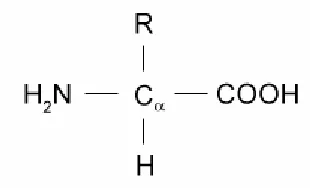
During the late 1800s, amino acids were known as the basic building units of proteins. There are 20 amino acids occurred as components of most proteins. In 1902, Fischer proposed that proteins are long chains of amino acids joined together by amide bonds between the Į-carboxyl group of the one amino acid and the Į-amino group of another [3]. The water was eliminated between the Į-carboxyl group of one amino acid and the amino group of another to produce an amide linkage [3, 4]. Proteins also can be identified as natural polymer of L-Į-amino. Figure 1.1 shows the general structure of the Į-amino acids.
1.2.1 Classification of Proteins
Proteins are classified in two additional ways as shape and composition. Based on their shape, proteins can be classified into two major groups that are fibrous protein and globular protein [1]. Fibrous proteins are insoluble and characteristically play a structural role in animals. Typical member of fibrous group are fibroin of silk, keratin of hair, nails and feather and elastin of elastic connective tissue. The proteins, which resemble the white of an egg closely, such as proteins of milk and blood plasma, are classified as globular proteins. This globular protein have approximately spherical dimension, which is in contrast with fibrous proteins. Globular proteins are characteristically soluble in aqueous solution [1].
On basis of composition, proteins are classified as simple proteins, conjugated proteins and derived proteins [2].
1.2.1.1 Simple Proteins
Simple proteins yield only amino acids on hydrolysis. Albumin, globulin, glutelins and protamines are classified as simple protein. Simple proteins usually are proteins of relatively low molecular weight.
1.2.1.2 Conjugated Proteins
1.2.1.3 Derived Proteins
Derived protein is protein that has been changed by physical agents such as heat and high hydrogen-ion concentration and by action of enzymes or chemical reagents. This protein can be divided into two groups by the amount of hydrolysis that can take place. These groups are classified as primary and secondary derivatives.
1.2.2 Proteins Structure
Proteins are extraordinarily complex molecules. There are four levels of the structural organization of proteins that have been distinguished, which are primary structure, secondary structure, tertiary structure and quaternary structure [6, 3]. The primary structure of proteins was related to the peptide bonds between the amino acids component and to the amino acid sequence in the molecule. Proteins have been defined as the linear sequence of amino acid residues making up the polypeptide chains of the molecule [3].
A polypeptide chain may involve in hydrogen bonding between amide nitrogen and carbonyl oxygen. These bonds may be formed between different areas of the same polypeptide chain or between adjacent chains. Based on this bond, secondary structure of proteins was established. The structure may be in two types helical structure and sheet structure. The helical structures are stabilized by intramolecular hydrogen bonds and the sheet structures by intermolecular hydrogen bonds [6, 7].
1.3 Bovine Serum Albumin
Serum albumin is one of the most widely studied proteins and is the most abundant protein in plasma with a typical concentration of 5 g/100 mL. Albumin generally regarded to mean serum albumin or plasma albumin. Albumins are the most abundant protein in the circulatory system and contribute 80 % to colloid osmotic blood pressure [9]. Albumins have been used as a model protein for diverse biophysical, biochemical and physicochemical studies.
Bovine serum albumin (BSA) is essentially a kind of plasma protein extracted from bovine (buffalo blood). BSA built by a single chain of 528 amino acid globular non-glycoprotein cross-linked with 17 cysteine residues (8 disulfide bonds and 1 free thiols) [10]. Table 1 shows amino acid composition of BSA [12, 13]. Albumins characterized by a low content of tryptophan and methionine and a high content of cysteine and the charged amino acids, aspartic and glutamic acids, lysine and arginine. The glycine and isoleucine content of BSA are lower than in the average protein [11]. (Table 1)
It has now been determined that serum albumin is chiefly responsible for the maintenance of blood pH [14]. Moreover, BSA has a wide range of physiological functions involving the binding, transport and delivery of fatty acids, porphyrins, tryptophan, tyrosine and steroids [10].
Table 1.1: Amino acid composition of BSA [12, 13]
Ala 48 Cys 35 Asp 41 Glu 58
Phe 30 Gly 17 His 16 Ile 15
Lys 60 Leu 65 Met 5 Asn 14
Pro 28 Gln 21 Arg 26 Ser 32
1.4 Functions of Proteins
Proteins play crucial roles in virtually all-biological process. Their significance and the remarkable scopes of their activity are exemplified in the following functions [1, 2, 8].
1.4.1 Enzymatic Catalysis
Most of the chemical reactions in biological systems are catalyzed by specific macromolecules called enzymes. Enzymes exhibited enormous catalytic power and usually reaction rates increased by at least a million fold. The striking fact is that nearly all known enzymes are proteins.
1.4.2 Transport and Storage
Specific proteins transport most of the small molecules and ions. For example, hemoglobin transports oxygen in erythrocytes, whereas myoglobin a related protein, transports oxygen in muscle. Iron is carried in the plasma of blood and transferred into the liver and stored as a complex with ferritin.
1.4.3 Immune Protection
1.4.4 Generation and Transmission of Nerve Impulses
Receptor proteins mediated the response of nerve cells to specific stimuli. For example, rhodopsin is the light-sensitive protein in retinal rod cells. Receptor proteins triggered by specific small molecules, such as acetylcholine is responsible for transmitting nerve impulses at synapses (junctions between nerve cells).
1.4.5 Control of Growth and Differentiation
Control sequential expression of genetic information is essential for the orderly growth and differentiation of cells. In bacteria, repressor proteins are important control elements that silence specific segments of the DNA of the cell. In higher organism, growth factor proteins control growth and differentiation. Besides that, the activities of different cells in multicellular organisms are coordinated by hormone. Many of the hormones, such as insulin and thyroid stimulating hormone are proteins. Indeed, proteins served in all cells as sensors that control the flow of energy and matter.
1.4.6 Contribution to Acid Base Balance
1.4.7 Providing Energy
Proteins supplies about 2% to 5% of the energy the body uses. Most cells use primarily carbohydrates and fats for energy. Proteins and carbohydrates contain the same amount of usable energy about 4 kcal/g. However, proteins are a very inefficient source of energy, due to the need for the metabolism and processing by liver and kidneys, prior to the utilization of this energy source.
1.5 The Basic Proteins Quantification Protocols
Numerous methods for determining the amount of proteins present in a sample have been devised over the years. The selection of analytical technique must depend on the definition of protein. Moreover, the criteria for choice of a protein assays are usually based on convenience, availability of protein for assays, presence or absence of interfering agents and accuracy. Several indirect ways to measure protein concentrations spectrophotometrically have been developed [15]. This method depended on:
i. Amount of protein ii. Concentration of protein
iii. Presence of compound which may interfere with assay iv. Specificity of assay
v. Ease and reliability, accuracy and precision of performing the assay
1.5.1 Colorimetric Method
solution in mass/volume units. The three most commonly used of these methods are: the Biuret assay, the Lowry assay and Bradford assay [16].
1.5.1.1 Biuret Method
The Biuret reaction is the most specific of the protein methods. The assay was developed following the observation that Biuret NH2CONHCONH2 reacts with
an alkaline solution of copper sulphate to give a purple coloured complex [17, 18]. The intensity of the charge-transfer absorption band resulting from the copper-protein complex is linearly proportional to the mass of copper-proteins present in solution. This method is a relatively insensitive method (detection limit ~ 0.5 to 80 mg/mL), but provides a fast and simple means of obtaining estimates of proteins concentration over a rather large range of concentration.
1.5.1.2 Lowry Method
1.5.1.3 Bradford Method
An assay originally described by Bradford [20] in 1976 has become the preferred method for quantifying proteins in many laboratories. This technique is simpler, faster and more sensitive than the Lowry method. This assay relies on the binding of the dye Coomassie Brilliant Blue G250 to proteins [20]. Under the pH conditions of the assay, the dye is present in its cationic form and does not absorb strongly at 595 nm. When the dye binds to a protein, there is a stabilization of the doubly protonated anionic form of the dye, which absorb in the 595 nm region [21]. The dye appeared to bind most readily to arginyl residues of proteins (but does not bind to the free amino acids) [21]. This specificity can lead to variation in the response of the assay to different proteins.
The technique of this assay is simple, faster (carried out in a single step) and more sensitive than the Lowry method. The method is capable of detecting as little as 0.5-50 µg/mL of proteins and the range of sensitivity is 20-200 µg/mL. One of the major advantages of this assay is insensitive to interferences from reagents that are commonly found in proteins solutions. Disadvantages of this method are the proteins used for this assays are irreversibly denatured [22].
1.5.2 Bicinhoninic Acid (BCA) Method
The advantages of this assay are fewer interfering substances compared to Lowry assay and it is not affected by range of detergents and denaturing agents. A further advantage of this method is that it can be carried out as one-step process compared to the two steps needed in the Lowry method. However, the disadvantages of this method are some interferes with different proteins; colour is unstable with time and colour variations with different proteins. Besides, the presence of sulfhydryl agents [24] and lipids gives excessively high absorbance [25, 26], which interfere with the assay.
1.5.3 Kjeldahl Method
Johann Kjeldahl developed this Kjeldahl original method in 1883 [3]. The method has approval from the AOAC (Association of Official Analytical Chemists), formerly the Association of Official Agricultural Chemist [27]. The Kjeldahl methods were based on titration of ammonium ion produced by digestion of the protein with concentrated sulfuric acid [3]. This method is the legal basis for determining proteins (like N, (NH4)2SO4, NH4+), which measure the total nitrogen,
and converting this value to a protein equivalent. For proteins of unknown amino acid composition, quantitation was based on approximate 16% of nitrogen content in protein. The typical range for nitrogen content is about 12 to 18%, although a few types of proteins fall well outside this range (e.g. protamine has 30% nitrogen) [3].
1.5.4 UV Absorbance Method
The ultraviolet absorption method uses the UV spectrophotometer to measure the quantity of protein present. Spectroscopic investigations were initially pursued to take advantages of the absorption of peptide bonds in the far-UV portion of the spectrum (190-235 nm) [29] and aromatic amino acids in the near-UV (250-350 nm) [30]. The presence of proteins in a sample can be determined by measuring the amount of light absorbed at 280 nm (Abs280). However, most proteins absorb in the
UV region of 250-350 nm with maximum absorption at 280 nm. In this method, the absorption at UV range 280 nm wavelengths occur when the proteins have aromatic side chains such as tryptophan (Typ), tyrosine (Try) and phenylalanine (Phe). The range of sensitivity of this range is between 0.2 -2 mg/mL proteins [31]. Besides that, the peptide bonds of proteins absorb the far UV with maximum absorption at 205-235 nm. This absorption method is more sensitive compare to absorbance at 280 nm since there are many peptide bonds in proteins and the bonds are essentially constant for all proteins. At this UV range, a concentration of 0.01-0.05 mg/mL proteins can be determined.
The advantages of this method are this method is time saving because of the simple procedure and the sample is recoverable. It is also useful for estimation of proteins before using a more accurate method. Besides that, this method does not destroy the sample. However, this method also has some disadvantages including the interference from other chromophores such as detergent, nucleic acids and lipid droplets.
1.6 Recent Advances in Protein Analysis
Recent research in proteins determination had focus on spectrophotometric method. Zhong et al. [32] described the spectrophotometric determination of protein based on the binding interaction of protein, molybdenum(VI) and dibromohydroxyphenylfluorone (DBHPF). In this study, the DBHPF–Mo(VI) complex was applied as a new spectroscopic probe for proteins and a novel method for the determination of proteins were developed in the presence of Triton X-100. The assay was characterized with high sensitivity, long stability, good selectivity and simplicity. Besides, the binding of 2-hydroxy-3-nitro-9-fluorenone (HNF) (a new reagent with absorption antitumour activity) to human serum albumin (HSA) was investigated by Hong et al. [33]. This study was carried out by fluorescence spectroscopy combined with UV-Vis, circular dichroism (CD) and Fourier transform infrared (FT-IR) spectrophotometric techniques under simulative physiological conditions. Accordingly, the experimental results observed in this work indicated that the binding of HNF to HSA led to the conformational change of HSA.
Besides, nuclear magnetic resonance (NMR) spectroscopy is a powerful technique for the study of the structure, dynamics and folding of proteins in solution. Cui et al. [34] demonstrated that nuclear magnetic resonance (NMR) spectroscopy could be used as an alternative approach to study the competitive binding of two ligands ibuprofen (IBP) and salicylic acid (SAL) to protein (HSA) at the low-affinity binding sites. In this study, they utilized an excess of ligands, IBP and SAL, over the albumin in order to saturate the high-affinity binding sites and to ensure that the competitive binding of IBP and SAL to HSA. Here, the competitive binding was analyzed quantitatively using NMR based 1H spin-lattice relaxation (R1)
measurements, NMR methods that can be use to study molten globule states of proteins have been described by Redfield [35]. This study has been illustrated using
Moreover, capillary electrophoresis is a powerful separation tool for proteins. Lee et al. [36] demonstrated a method for the analysis of picomolar concentration proteins using electrophoretically mediated microanalysis (EMMA) to label proteins on-column with a fluorogenic reagent. This labeling method was followed by capillary zone electrophoresis separation and post column detection based on laser-induced fluorescence. Accordingly, this method provides separation efficiency of 300 000 theoretical plates and compared to UV absorbance detection; the EMMA method provides 7 000 000-fold improvement in detection limit.
Fourier transform infrared (FT-IR) is a powerful technique for the study of hydrogen bonding and very useful for the structural characterization of proteins. The most important advantage of FT-IR spectroscopy for biological studies is that spectra of almost any biological system can be obtained in a wide variety of environments. There have been many studies carried out to investigate the interaction of proteins by FT-IR technique. Neault et al. [37] reported the FT-IR spectroscopic characterization on the interaction of cis-diamminedichloroplatinum (II) (cisplatin), an anticancer drug with human serum albumin. In this study, spectroscopic evidence regarding the drug-binding mode, drug binding constant and the protein secondary structure was provided.
1.7 Fluorescence Method in Proteins Analysis
Sir G.G. Stokes described the phenomena of the fluorescence (absorption and emission) process in 1852. Sir G.G.Stokes suggested the name fluorescence is from the mineral fluorspar (lat fluo, to flow and spar, a rock), which produces a blue white fluorescence [39, 40]. Fluorescence occurs when a molecule absorbs photons from the UV-visible light spectrum (200-900 nm) and causing transition to a high-energy electronic state and then emits photons as it returns to its initial state, in less than 10-9 sec [39]. In fluorescence studies, one is generally concerned with two types of spectrum, the excitation spectrum and emission spectrum. The excitation spectrum is determined by measuring the emission intensity at a fixed wavelength while varying the excitation wavelength. The emission spectrum is determined by measuring the variation in emission intensity wavelength for the fixed excitation wavelength. The difference between the excitation and emission wavelengths is called as Stoke’s shift.
Fluorescence has proven to be a versatile tool for a myriad of applications. It was a powerful technique for investigation of molecular interactions in analytical chemistry, biochemistry, cell biology, physiology, nephrology, cardiology, photochemistry and environmental science. In the last twenty years, fluorescence spectroscopy has evolved into a powerful tool for the studies of chemical, semiconductor, photochemical and biochemical species [40].
reduced nicotinamide-adenine dinucleotide, flavin-adenine dinucleotide or pyridoxal phosphate. Proteins in complex with other fluorescent molecules can be term as an extrinsic fluorescence [42].
Various studies of determining protein have previously been reported in the literature [43, 44, 45]. Cui et al. [43] demonstrated the interactions between 1-benzoyl-4-p-chlorphenyl thiosemicarbazide (BCPT) and bovine serum albumin (BSA) or human serum albumin (HSA) by fluorescence spectroscopy. Accordingly, the analysis of fluorescence spectrum and fluorescence intensity showed that BCPT has a strong ability to quench the intrinsic fluorescence of both bovine serum albumin and human serum albumin through a static quenching procedure.
Wiberg et al. [44] have developed a method for the simultaneous determination of albumin and immunoglobulin G (IgG1) with fluorescence spectroscopy. In this study, few parameters such as excitation and emission slit, detection voltage and scan rate were investigated. Accordingly, the proposed method is fast and required a minimum of sample pre-treatment and further development of the method might make the possibility to determine albumin and IgG directly in human serum. Besides, the study of the interactions of BSA and HSA with anionic, cationic and zwitterionic surfactant monitored by fluorescence spectroscopy was demonstrated by Gelamo et al. [45]. The result showed that the fluorescence of the interaction of BSA and the surfactant was quenched and the interaction of surfactants with HSA enhanced the fluorescence, which was an opposite effect compared to BSA.
1.7.1 Luminescent Organic Compounds Labeling Proteins
immuno-chemistry, virology, bacteriology, parasitology, rickettsiology and mycology.
Fluorescent of small molecules such as organic dyes are used in both single and multiplex detection approaches. The changes in the fluorescence properties of dyes adsorbed or covalently attached to macromolecules may change the signal in the microenvironment of the dyes due to configurational changes in the larger molecule [40]. Reviews on the application of fluorescent compound covalently bounded with protein have been reported by several studies. Jiang et al. [46] reported the studies of the binding reaction and the effect of the energy transfer between terazosin and bovine serum albumin (BSA) by spectrofluorimetry. In this study, it was reported that the compound formed between terazosin and BSA quenched the fluorescence of BSA and the synchronous fluorescence technique was successfully applied to determine terazosin in blood serum and urine samples under physiological conditions.
Besides, a new method based on fluorescence quenching, employing a red region fluorescent dye, tetra-substituted sulphonated aluminium phthalocyanine (AlS4Pc) for the determination of albumin and globulin without separation was
presented by Li et al. [47]. It was reported that, this experimental method was easy and time saving method and a red-region fluorescent dye with large Stoke’s shift was employed to minimize the background signal of samples. Moreover, the fluorescent dye was easily synthesized and chemically stable which makes this method suitable for practical application.
Chun et al. [50] demonstrated Erythrosin B (EB) binding to proteins, which caused a decrease in the fluorescence maximum of EB. In this study, fast and simple fluorescence quenching method for the determination of proteins was developed. Accordingly, the method has advantages in aspect of high sensitivity, short reaction time, good reproducibility, stable fluorescence and very little interference developed simple, rapid and sensitive fluorescence method for determining microamount albumin. The same group demonstrated a simple, rapid and sensitive fluorescence method for determining microamount albumin [51]. According to the report, the fluorescence of 2, 5-di (orthoamino phenyl)-1, 3, 4-oxadiazole is enhanced greatly by the addition of albumin and little interferences on the assay were determined.
Besides, a new form of highly luminescent and photostable particles was generated by doping the fluorescent dye tris-(2ƍ2-bipyridyl) dichlororuthenium(II) hexahydrate (Rubpy) inside silica material was successfully employed in various fluorescence labeling by Wei et al. [52]. This study demonstrated the potential to apply these newly developed fluorescent particles in various bio-detection systems. Perez-Ruizet al. [53] demonstrated similar fluorescence quenching method based on binding of the dye. The study involved the quantitative analysis of protein based on the lower fluorescence of Rose Bengal dye binding to the proteins. This approach was satisfactorily applied to the determination of total proteins in different serum samples.
Shobini et al. [54] have published a comprehensive review of the interactions of 7-aminocoumarins with human serum albumin (HSA) by using fluorescence spectroscopic technique and modeling studies. In this study, a large change in fluorescence spectral parameters such as intensity, emission maxima and anisotropy for aminocoumarins was observed.
light-emitting probes problematic due to spectral overlap [55]. Moreover, the organic fluorophores often suffer from photobleaching, low signal intensities and random on/off light emission (blinking) [56]. Photobleaching were caused by sudden decomposition of the emitter, which the main factor limiting the maximum number of photons obtained from a fluorophores. Besides that, low signal intensities reduces the accuracy of the trace protein can be determined. Intermittent light emission causes problems in real-time studies of biomolecular dynamics such as protein folding, signal transduction and enzymatic catalysis [56].
Due to this, findings strongly suggested that colloidal semiconductor have the potential to overcome problems encountered by organic fluorophores in certain fluorescent labeling application by combining the advantages of high photobleaching threshold, good chemical stability and readily tunable spectral properties. Besides that, their resistance to photobleaching and high quantum yield in aqueous solution make them attractive for labeling functionalized biomolecules for fluorescent applications [55, 56, 57].
1.7.2 Luminescent Semiconductor Labeling Biomolecules.
Semiconductor particles are often composed of atoms from groups II-VI or III-V elements in the periodic table. Extensive research in the past 20 years has focused on the photophysics of nanostructures and their applications in microelectronics and optoelectronics [58, 59]. However, recent developments indicate that the first practical applications of semiconductor are occurring in biology and medicine [30, 31]. Semiconductor particles are considerable current interest, not only because of their unique size-dependent properties but also because of their dimensional similarities with biological macromolecules such as nucleic acids and proteins [60].
This review focuses on the biological applications of semi-conductor colloidal particles. Mattoussi et al. [60] described a novel and direct method for conjugating protein molecules to luminescent CdSe-ZnS core-shell for use as bioactive fluorescent probes in sensing, imaging, immunoassay and other diagnostics applications. In this study, the design and preparation of a semiconductor and protein conjugate based on E. coli Maltose binding protein was introduced and followed by functional characterization using luminescence method. Accordingly, the preparation of protein modified semiconductor dispersions with high quantum yield, little or no particle aggregation and retention of biological activity was achieved based on fluorescence method.
Gerion et al. [61] described the synthesis of water-soluble semiconductor particles, discussed and characterized their properties. The study involved the hydrophobic CdSe and ZnS were embedded in a siloxane shell and functionalized with thiols and amine groups. Accordingly, the introduction of functionalized groups into the siloxane surface would permit the conjugation of the semiconductor to biological entities.
Parak et al. [62] demonstrated a water-soluble and highly fluorescent silanized semiconductor nanocrystals were covalently attached to biological macromolecules with a variety of mild coupling chemistries. In this study, siloxane shells derivatized with thiols, amino and carboxyl functional groups was coupled to single or double stranded DNA. The author made a conclusion that, by using the strategies developed in this study, most biomolecules can be covalently coupled to semiconductor nanocrystals. Further, these nanocrystal-DNA conjugates promise to be a versatile tool for fluorescence imaging and probing of biological systems.
1.7.2.1 Cadmium Sulfide Labeling Biomolecules
[63]. Cadmium sulfide occurs in nature as the mineral greenoktite. The physical properties are yellow to orange crystal. CdS occurs as two polymorphs, hexagonal alpha form and cubic beta form. It exhibits stable wurtzite structure at lower temperature and zinc blended type structure at the higher temperature [64]. CdS compound was widely used in pigments for paints, baking enamels is ceramics plastics. Other applications of this compound are in photovoltaic solar and cells (for converting solar energy to electrical energy), photoconductors (in xerography), thin film transistor and diodes, rectifiers, scintillation counters pyrotechnics and smoke detectors [64].
The synthesis of CdS has been tried by various methods such as the direct reaction of metals with sulfur powder under high temperature, the thermal decomposition of molecular precursors containing M-S bonds and chemical precipitation method involving the precipitation of metal ion with Na2S as the source
of S2- ions [64]. The type of caping agents is a great importance in synthesis CdS since it affects the chemical as well as the physical properties of the semiconductor in term of stability and solubility [65, 66]. Most commonly used stabilizers are pyridine, alkyl amines and various thiols [66, 67, 68].
Wanget al. [71] demonstrated a study of a novel composite particle prepared by an in situ polymerization method and applied as a protein fluorescence probe. In this study, the CdS has been prepared by polymerization with acrylic acid (AA) and the surface of the composite CdS particles was covered with abundant carboxylic groups (–COOH) to link proteins. Li and Du [72] have studied the synthesis CMCH (carboxymethly chitosan)-capped CdS particles. According to the report, this polysaccharide (carboxymethly chitosan)-capped CdS would have more affinity with other biomolecules such as protein and DNA molecules, thus making it a promising fluorescent bio-label.
1.7.2.2 Zinc Sulfide Labeling Biomolecules
Zinc sulfide (ZnS) is one of the II-VI semiconductor compounds, which have wide ranging applications in solar cells, infrared window materials, photodiode and cathode-ray tube [73], electro luminescent devices [74] and multiplayer dielectric filters [75]. ZnS occurs in two crystalline forms, one in the hexagonal system and other in cubic system. The minerals in hexagonal system are called as wurtzite whereas the cubic system known as sphalerite or zinc blended. Zinc sulfide is insoluble in water and the physical properties of ZnS are white to gray-white or pale yellow powder [64].
described a simple, inexpensive and reproducible procedure for large-scale synthesis of highly stable of ZnS capped cysteine particles.
Several research groups have reported few reviews on the ZnS semiconductor linked biomolecules. Chan et al. [79] presented a highly luminescent semiconductor (zinc sulfide-capped cadmium selenide) have been covalently coupled to protein for ultra-sensitive biological detection. According to the report, this class of luminescent labels is 20 times as bright, 100 times as stable against photobleaching and one-third as wide in spectral line width compared with organic dyes such as rhodamine. Besides, these semiconductor conjugated with biomolecules are water-soluble and biocompatible.
Wang et al. [80] presented a more detailed study on application of ZnS water-soluble particles modified with sodium thioglycolate. In this study, the modified ZnS were used as fluorescence probes for the quantitation determination of proteins and was proved a simple, rapid and specific method. It has been concluded that these semiconductor particle probes are brighter, more stable against photobleaching and do not suffer from blinking compared with single organic fluorophores.
Li et al. [81] presented water-soluble cysteine capped ZnS particles as fluorescence probe for the determination of DNA. In this study, a synchronous fluorescence method has been developed for the rapid quantitative determination of DNA with ZnS capped cysteine.
1.8 Advantages and Disadvantages of Fluorescence in Proteins Analysis.
Fluorescence is a particularly important analytical technique because of its extreme sensitivity and good specificity.
colors within a single sample can be quantified by sequential measurement of emitted intensity using a set of excitation and emission wavelength pairs specific for each color.
2. Second advantage of fluorescence is low signal to noise ratio because the emitted light enters the emission monochromator, which is positioned at 90o
angels from the excitation light path to eliminate background signal and minimize noise due to stray light.
3. The third advantage is that fluorescent methods have a greater range of linearity. Due to this, the sensitivity of fluorescence is approximately 1000 times greater than absorption spectrometric methods.
1.8.1 Disadvantages
1. Fluorescence is particularly sensitive to contaminating substances. Thus, for example, the cuvette may be contaminated by fluorescence material.
2. The fluorescence reading is not stable due to variety of reasons below.
i. Fogging of the cuvette when the contents are much colder than the ambient temperature.
ii. Bubbles forming in the solution.
1.9 Research Background
The development of novel assays for proteins is a basic requisite in both clinical and laboratory tests. The analysis of protein can be used as a reference for measurements of other components in biological fluids and clinical diagnosis. The most frequently used approaches for the determination of protein is the ultraviolet and visible absorption spectroscopy, Lowry method [19], dye binding method like Bradford [20], Bromocresol green procedures [82] and Bromophenol blue [83]. However, they all have some limitation in terms of sensitivity, selectivity, stability and simplicity. Disadvantages of the Lowry method include low sensitivity, poor selectivity and complexity [19]. The Bradford method is also inconvenient in operation and application due to the requirement for calibration and to the nonlinearity between the absorbance of the Coomassie Brilliant Blue 250 (CBB G-250) dye-protein complex and the concentration of protein [20]. The bromocresol green method is insensitive and susceptible to interference by turbidity [82] and the Bromophenol blue method can be used only for protein concentrations greater than 10 mg L-1 [83]. Therefore, a number of assays have been continuously reported in recent years such as those based on spectrophotometric [32, 33], nuclear magnetic resonance (NMR) [34, 35], capillary electrophoresis [36], Fourier transform infrared (FT-IR) [37] and resonance Rayleigh light-scattering (RRLS) [38].
Findings strongly suggested that, the most sensitive quantitation of protein at this present is generally based on their fluorescence enhancement effect on organic dyes. Fluorescent small molecules (organic dyes) are used in multiplex detection approaches that had achieved a considerable level of sophistication with character of rapidity, good selectivity and high sensitivity. However, the organic fluorophores often suffer from photo bleaching, low signal intensities, random on/off light emission (blinking) and narrow excitation [55, 56].
make them attractive for labeling functionalized biomolecules for fluorescent probe [55]. In this study, the new direction for the synthesis of CdS capped with mercapto acetic acid and ZnS capped with cysteine was employed for the binding with protein. This functionalized CdS and ZnS will be covalently link to protein (BSA) for further studies.
1.10 Research Objective and Scope of Study
Fluorescence method is one of the most sensitive methods frequently used in the determination of protein. The interest in the use of fluorescence technique of determination involves the development of methods that are faster, more efficient, accurate, simple and more sensitive for the determination of protein. Recent advances in fluorescence studies have produced a new class of fluorescent labels by binding semiconductor with biological compounds.
The objective of this study is to:
i. Synthesize the CdS capped with mercaptoacetic acid and ZnS capped with cysteine.
ii. Develop the method for Bovine serum albumin binding with functionalized CdS and functionalized ZnS.
iii. Apply the developed method in the quantitative analysis of protein
1. Robson, B. and Garnier, J. Introduction to Proteins and Proteins Engineering. U.S.A.: Elsevier Science Publisher. 1-5; 1986.
2. Wardlaw, G. M. and Insel, P. M. Perspectives in Nutrition. 3rd. ed. Mosby-Year Book Inc. 161-164; 1995.
3. Haschemeyer, R. H., Haschemeyer, A. V. E. Protein: A Guide to Study by Physical and Chemical Methods. New York: A Wiley-Interscience Publication. 50-51; 1973.
4. Hein, M., Best, L. R., Pattison, S., Arena, S. Introduction to Organic and Biochemistry. Pacific Grove, California: Brooks/Cole. 287, 298-312; 1993. 5. Lee, F. A. Basic Food Chemistry. 2nd. ed. U.S.A.: The Avi Publishing
Company, Inc. 144; 1993.
6. Deman, J. M. Principles of Food Chemistry. U.S.A.: The Avi Publishing Company. Inc. 86-93; 1980.
7. Pauling, L., Corey, R. B. and Branson, H. R. The Structure of Protein Hydrogen Bonded Helical Configurations of the Polypeptide Chain. Proc. Natl. Acad. Sci. U.S., 1951. 37: 205-211.
8. Stryer, L. Biochemistry. 4 th. ed. New York: W. H. Freeman and Company. 36, 19-22; 1995.
9. Carter, D. C. and Ho, J. X. Structure of Serum Albumin. Adv. Protein Chem., 1994. 45: 153-203.
10. Liu, J. Q., Tian, J. N., He, W. Y., Jian, P. X., Zhi, D. H. and Xing, G. C., Spectrofluorimetric Study of the Binding of Daphnetin to Bovine Serum Albumin. J. Phar. Bio. Anal., 2004. 35: 671-677.
11. Peters, T., Jr. Serum Albumin. Adv. Protein Chem., 1985. 37: 161-245. 12. Patterson, J. E. and Geller, D. M. Bovine Microsomal Albumin: Amino
13. Reed, R. G., Feldhoff, R. C., Clute, O. L. and Peters, T., Jr. Fragments of Bovine Serum Albumin Produced by Limited Proteolysis: Conformation and Ligand Binding. Biochemistry., 1975. 14: 4578-458. 14. Figge, J., Rossing, T. H. and Fencl, V. The Role of Serum-Proteins in Acid-
Base Equiblibrium. J. Lab. Clin. Med., 1991.,117: 453-467.
15. Stoscheck, C. M. Quantitation of Protein, in Methods in Enzymology. New York: Academic Press Inc. 50-68; 1990. 16. Walker, J. M. Basic Protein and Peptide Protocols. New York: Humana
Press Inc. 1-15; 1994.
17. Creighton, T. E. Protein Structures and Molecular Principles. 2nd. ed. New York: W.H. Freeman and Company. 14-17, 20-23; 1993.
18. Gornall, A. J., Bardawill, C. J. and David, M. M. Determination of Serum Proteins by Means of the Biuret Reaction. J. Biol. Chem., 1949. 177:
766.
19. Lowry, O. H., Rosebrough, N. J., Farr, A. L. and Randall, R. J. Protein Measurement with the Folin Phenol Reagent. J. Biol. Chem., 1951. 193: 265
275.
20. Bradford, M. M. A Rapid and Sensitive Method for the Quantitation of Microgram Quantities of Protein Utilizing the Principle of Protein-Dye Binding. Anal. Biochem., 1976. 72: 248-254. 21. Compton, S. J. and Jones, C. G. Mechanism of Dye Response and
Interference in the Bradford Protein Assay. Anal. Biochem., 1985. 151:
369-374.
22. Copeland, R. A. Method for Protein Analysis. London: Chapman & Hall, 45;
1994.
23. Smith, P. K., Krohon, R. I., Hermanson, G. T., Mallia, A. K., Gartner, F. H., Provenzano, M. D., Fujimoto, E. K., Goeke, N. M., Olson, B. J. and Klenk, D. C. Measurement of Protein Using Bicinchoninic Acid. Anal. Biochem., 1985. 150: 76-85.
24. Hill, H. D. and Straka, J. G. Protein Determination Using Bicinchoninic Acid in the Prescence of Sulfhydryl Reagent. Anal. Biochem., 1988. 170: 203-208.
26. Morton, R. E. and Evans, T. A. Modification of the BCA Protein Assay to Eliminate Lipid Interference in Determining Lipoprotein Content. Anal. Biochem., 1992. 204: 332-334.
27. AOAC. Official Methods of Analysis. 15th. ed. Arlington, Virginia: Association of Official Analytical Chemists, Inc.; 1990.
28. Hall, G. M. Methods of Testing Protein Functionality. London: Chapman &
Hall. 34-44; 1996.
29. Nollet, L. M. L. Handbook of Food Analysis. New York: Marcel Dekker. Inc.
277-291; 1996.
30. Havel, H. A. Spectroscopic Methods for Determining Protein Structure in Solution. New York: VCH Publisher, Inc. 62-66; 1996.
31. Bollag, D. M., Rozycki, M. D. and Edelstein, S. J. Protein Method. 2nd. ed. New York: WileyLiss Inc Publication. 21, 58-78; 1996.
32. Zhong, X. G., Yong, M. H., Xin, C. and Han, X. S. Application of the Dibromohydroxyphenylfluorone–Molybdenum(VI) Complex to the Sensitive Spectrophotometric Determination of Protein. Anal. Chim. Acta., 2000. 403: 225-233.
33. Hong, G., Lian, D. L., Jia, Q. L., Qin, K., Xing, G. C. and Zhi, D. H. The Study on the Interaction Between Human Serum Albumin and a New Reagent with Antitumour Activity by Spectrophotometric Methods. J. Photochem. Photobiol. A: Chem. 2004. 167: 213-221.
34 Cui, Y. F., Bai, G. Y., Li, C. G., Ye, C. H. and Liu, M. L. Analysis of Competitive Binding of Ligands to Human Serum Albumin using NMR Relaxation Measurements. J. Pharma. Biomed. Anal., 2004. 34: 247-254. 35. Redfield, C. Using Nuclear Magnetic Resonance Spectroscopy to Study
Molten Globule States of Proteins. Methods., 2004. 34: 121-132.
36. Lee, I. H., Pinto, D., Arriaga, E. A., Zhang, Z. R. and Dovichi, N. J.Picomolar Analysis of Proteins Using Electrophoretically Mediated Microanalysis and Capillary Electrophoresis with Laser-Induced Fluorescence Detection. Anal.
Chem. 1998.70(21): 4546-4548.
38. Gang, Y., Li, K. A. and Tong, S.Y. Determination of Protein by its Enhancement Effect on the Rayleigh Light Scattering of Carboxyarsenazo. Talanta, 1999. 50: 585-594. 39. Lott, P. F. Instrumentation for Fluorescence and Phosphorescence. J. Chem.
Edu., 1974. 51: 315.
40. Guilbault, G. G. Practical Fluorescence, Theory, Methods and Techniques. New York: Marcel Dekker Inc. 467-525; 1973.
41. White, C. E. and Argauer, R. J. Fluorescence Analysis. New York: Marcel
Dekker Inc. 176-178; 1970.
42. Lakowicz, J. R., Principles of Fluorescence Spectroscopy. New York:
Plenum Press. 342,347; 1990.
43. Cui, F. L., Jing, F., Li, J. P. and Hu, Z. D. Interactions Between 1-Benzoyl-4-p-Chlorophenyl Thiosemicarbazide and Serum Albumin: Investigation by Fluorescence Spectroscopy, Bioorg. Medic. Chem., 2004. 12: 151-157. 44. Wiberg, K., Molin, A. S. and Jacobsson, S. P. Simultaneous Determination of
Albumin and Immunoglubulin G with Fluorescence Spectroscopy and Multivariate Calibration. Talanta., 2004. 62: 567-574.
45. Gelamo, E. L., Silva, C. H. T. P., Imasato, H. and Tabak, M. Interaction of Bovine (BSA) and Human Serum Albumin (HSA) with Ionic Surfactants: Spectroscopy and Modeling. Biochim. Biophys. Acta., 2002. 1594: 84-99. 46. Jiang, C. Q., Gao, M. X. and He, Z. X. Study of the Interaction Terazosin and
Serum Albumin Synchronous Fluorescence Determination of Terazosin. Anal. Chim. Acta., 2002. 452: 185-189. 47. Li, D. H., Yang, H. H., Zhu, Q. Z. and Xu, J. G. Fluorimetric Determination
of Albumin and Globulin in Human Serum Using Tetra-Substituted Sulphonated Aluminium Phthalocyanine. Anal. Chim. Acta., 1999. 401:
189.
48. Jiang, C. Q. and Li, L.Y. Spectrofluorimetric Determination of Human Serum Albumin Using a Doxycycline –Europium Probe. Anal. Chim. Acta., 2004.
506: 171-175.
49. Ercelen, S., Klymchenko, A. S. and Demchenko, A. P. Novel Two-Color Fluorescence Probe with Extreme Specificity to Bovine Serum Albumin
50. Chun, Q. M., Li, K. A. and Shen, Y. T. Determination of Proteins by Fluorescence Quenching of Erythrosin B. Anal. Chim. Acta., 1996. 333:
88.
51. Chun, Q. M., Li, K. A., Hua, W. T. and Shen, Y. T. Fluorescence Enhance-ment of Oxadiazole by Albumin and the Microdetermination of Albumin by Fluorospectrophotometry.Microchem . J., 1998. 59: 417-426. 52. Wei, L., Litherland, S. A., Badrane, H., Tan, W. H., Dong, H. W., Baker, H.
V., Gulig, P. A., Lim, D. A. and Jin, S. G. Ultrasensitive Detection of Biomo-lecules with Fluorescent Dye-Doped Nanoparticles. Anal. Biochem., 2004.
334: 135-144.
53. Perez-Ruiz, T., Martinez-Lozano, C., Tomas, V. and Fenoll, J. Determination of Proteins in Serum by Fluorescence Quenching of Rose Bengal Using the Stopped-Flow Mixing Technique. Analyst., 2000. 125: 507-510.
54. Shobini, J., Mishra, A. K., Sandhya, K. and Chandra, N. Interaction of Coumarin Derivatives with Human Serum Albumin: Investigation by Fluorescence Spectroscopic Technique and Modeling Studies. Spectrochim. Acta A., 2001. 57: 1133–1147.
55. Bruchez, M. J, Moronne, M., Gin, P., Weiss, S. and Alivisatos, A. P. Semiconductor Nanocrystals as Fluorescent Biological Labels. Science.,
1998. 281: 2013-2016.
56. Wang, L. Y., Bian, G. R., Xia, T. T. and Chen, H. Q. Direct Fluorimetric Determination of Ȗ-Globulin in Human Serum with Organic Nanoparticles Biosensor. Spectrochim. Acta A., 2005. 61: 129-133. 57. Dannhauser, T., O’Neil, M., Johansson, K., Whitten, D. and McLendon, G.
Photophysics of Quantized Colloidal Semiconductor Dramatic Luminescence Enhancement by Binding of Simple Amines. J. Phys. Chem., 1986. 90: 6074-6076.
58. Brus, L. Chemical Approaches to Semiconductor Nanocrystals. J. Phys.
Chem. Solid., 1998. 59: 459-465. 59. Curie D. and Prener, J. S. Physic and Chemistry of II-IV Compounds
Amsterdam: North Holland Publishing Company. 444; 1967.
Bioconjugates Using an Engineered Recombinant Protein. J. Am. Chem.
Soc., 2000. 122: 12142-12150.
61. Gerion, D., Pinaud, F., Williams, S. C., Parak, W. J., Zanchet, D., Weiss, S. and Alivisatos, A. P. Synthesis and Properties of Biocompatible Water-Soluble Silica-Coated CdSe/ZnS Semiconductor Quantum Dots. J. Phys.
Chem. B., 2001. 105: 8861-8871.
62. Parak, W. J., Gerion, D., Zanchet, D., Woerz, A. S., Pellegrino, T., Micheel, C., Williams, S. C., Seitz, M., Bruehl, R. E., Bryant, Z., Bustamante, C., Bertozzi, C. R. and Alivisatos, A. P. Conjugation of DNA to Silanized Colloidal Semiconductor Nanocrystalline Quantum Dots. Chem. Mater.,
2002. 14: 2113-2119.
63. Wuister, S. F. and Meijerink, A. Synthesis and Luminescence of (3-Mercaptopropyl )-Trimethoxysilane Capped CdS Quantum Dots. J. Lumin.,
2003. 102: 338-343.
64. Patnaik, A. P. Hand Book of Organic Chemicals. California: McGraw-Hill. 156; 2002.
65. Barglik-Chory, Ch., Munster A. F., Strohm, H., Remenyi, Ch. and MĦller, G. Influence of Synthesis Parameters on the Growth of CdS Nanoparticles in Colloidal Solution and Determination of Growth Kinetics Using Loeve Decomposition. Chem. Phys. Lett., 2003. 374: 319.
66. Ramsden, J. J. and Gratzel, M. Photoluminescence of Small Cadmium Sulphide Particles. J. Chem. Soc., Faraday Trans., 1984. 80: 919-933.
67. Herron, N., Wang, Y. and Eckert, H. Synthesis and Characterization of Sur- face - Capped Size-Quantized CdS Cluster. Chemical Control Cluster Size. J. Am. Chem. Soc., 1990. 112: 1322-1326.
68. Mahtab, R., Rogers, J. P., Singleton, C. P. and Murphy, C.J. Preferential Adsorption of a "Kinked" DNA to a Neutral Curved Surface: Comparisons to and Implications for Nonspecific DNA-Protein Interactions. J. Am. Chem. Soc., 1996. 118 (30): 7028 -7032. 69. Mahtab, R., Harden, H. H. and Murphy, C. J. Temperature and
Salt-Dependent Binding of Long DNA to Protein-Sized Quantum Dots: Thermodynamics of "Inorganic Protein"-DNA Interactions. J. Am. Chem.
70. Lakowicz, J. R., Gryczynski, I., Gryczynski, Z., Nowaczyk, K. and Murphy, C. J. Time Resolved Spectral Observation of Cadmium Sulfide Nanoparticles and the Effect of DNA Oligomer Binding. Anal. Biochem., 2000. 280: 128-136.
71. Wang, L., Chen, H. Q., Wang, L. Y., Wang, G. F., Li, L., Xu, F. G. Determination of Proteins at Nanogram Levels by Synchronous Fluorescence Scan Technique with a Novel Composite Nanoparticle as a Fluorescence Probe.Spectrochim. Acta. A.,2004. 60: 2469–2473.
72. Li, Z. and Du, Y. M. Biomimic Synthesis of CdS Nanoparticles with Enhanced Luminescence, Mater. Lett., 2003., 57: 2480-2584.
73. Alivisatos, A. P. Semiconductor Clusters, Nanocrystals and Quantum Dots.
Science., 1996. 271: 933-937.
74. Colvin V. L., Schlamp M. C. and Alivisatos A. P. Light-Emitting Diodes Made from Cadmium Selenide Nanocrystals and a Semiconducting Polymer. Nature., 1994. 370: 354-357. 75. Bredal, M. and Merikhi, J. ZnS Precipitation: Morphology Control. J. Mater.
Sci., 1998. 33: 471.
76. Qiao, Z. P., Xie, Y. and Qian, Y. T. Gamma-Irradiation Preparation and Characterization of Nanocrystalline ZnS. Mater. Chem. Phys., 2000. 62: 88–
90.
77. Wang, L. P. and Hong G. Y. A New Preparation of Zinc Sulfide Nanoparticles by Solid-State Method at Low Temperature.Mater. Res. Bull., 2000. 35: 695-701. 78. Kho, R., Claudia, L., Mart´ýnez, T. and Mehra, R. K. A Simple Colloidal
Synthesis for Gram-Quantity Production of Water-Soluble ZnS Nanocrystal Powders. J. Colloid Interface Sci., 227: 561–566. 79. Chan, W. C. W. and Nie, S. Quantum Dot Bioconjugates for Ultrasensitive Nonisotopic Detection. Science., 1998. 281: 2016-2018.
80. Wang L. Y., Kan X. W., Zhang, M. C., Zhu C. Q., Wang, L., Fluorescence for the Determination of Protein with Functionalized Nano-ZnS. Analyst.,
![Table 1.1: Amino acid composition of BSA [12, 13]](https://thumb-us.123doks.com/thumbv2/123dok_us/1319763.1164772/24.595.141.498.597.704/table-amino-acid-composition-bsa.webp)
