University of South Carolina
Scholar Commons
Theses and Dissertations
1-1-2013
Congeries In the Backcountry
James Andrew StewartUniversity of South Carolina - Columbia
Follow this and additional works at:https://scholarcommons.sc.edu/etd
Part of theAnthropology Commons
This Open Access Thesis is brought to you by Scholar Commons. It has been accepted for inclusion in Theses and Dissertations by an authorized administrator of Scholar Commons. For more information, please [email protected].
Recommended Citation
Congeries in the Backcountry
by
James Andrew Stewart
Bachelor of Arts
University of South Carolina, 2007
Submitted in Partial Fulfillment of the Requirements
For the Degree of Master of Arts in
Anthropology
College of Arts and Sciences
University of South Carolina
2013
Accepted by:
Charles Cobb, Director of Thesis
Kenneth Kelly, Reader
Erica Gibson, Reader
ii
iii
Acknowledgements
This project would not be complete without the contributions of a number of
people. I extend very sincere thanks to Dr. Chester DePratter for suggesting this project
and to the SCANA Corporation for allowing access to their property. Mr. Van Hoffman,
Mike Dawson, and Sean Taylor were very helpful in securing permission to proceed. My
mother, Annie Hinson, played a significant role in editing the early drafts of the
manuscript.
I also offer my thanks to my committee and to the students and volunteers who
helped to realize this project. These include: Dr. Jodi Barnes, Christina Brooks, Kerri
Caplinger, Catherine Carter, Carol Gaillard, Cogburn Gaillard, Meg Gaillard, Terry
Gaillard, Tariq Ghaffar, Dr. Jeffrey Glover, Kelly Goldberg, Van Hoffman, Gail Ingram,
Mark Ingram, Heathley Johnson, Chris Judge, Lawrence Lane, Jim Legg, Brian Long, Tracy
Martin, Ashley McIntyre, Patrick McManus, Anne Monk, Alexandra Moore, Sarah
Newell, Owen Osbourne, Chris Parker, Wes Patterson, Sharon Pekrul, Megan Pettus,
Don Rosick, Johann Sawyer, Dr. Steve Smith, Jason Smith, Carl Steen, Ashley Stepp,
David Stewart, Scott Stewart, Theresa Stewart, Halley Stoutzenberger, Ken Styer, John
Van de Man, Kim Wescott, Jonathan Whitlatch, Joe Wilkinson, Andrew Wittich, Chris
iv
Abstract
The early 18th century Public Monopoly employed a unique form of labor
organization to facilitate an administered deerskin trade. This study examines
ethnohistoric and archaeological data as a means to evaluate subaltern laborers’
participation in a commercializing colonial economy. It utilizes a practice based
political-economic framework to situate their activities within the deerskin commodity
chain. Activities identified through ethnohistoric research are evaluated through
material and spatial analysis of the Fort Congaree, 38LX30/319, site. This trading factory
and garrison played a central part in the articulation of the government deerskin trade.
Material correlates of hide production, procurement, and transportation activities
contextualize Fort Congaree activities and indicate the outpost was principally oriented
v
Table of Contents
Acknowledgements ... ...ii
Abstract ... iii
List of Tables ... vii
List of Figures ... viii
List of Abbreviations ... xi
Chapter 1 Introduction ... 1
Chapter 2 Colonialism and Indian Trade Labor ... 9
Introduction ... 9
Labor Patterns ... 16
The Materiality of Frontier Labor ... 19
Chapter 3 The Southeastern Deerskin Trade ... 23
Development of the Commercial Deerskin Trade ... 24
The Deerskin Commodity Chain ... 30
“This Day We Drew Up Ower Men and Marched to Tugaloe” ... 41
The Role of Forts in the Public Monopoly ... 44
The Independent Company and Royal Administration ... 50
Chapter 4 Archaeological Investigations at 38LX30/319 ... 54
vi
Recent 38LX30/319 excavations ... 57
Chapter 5 Material Culture Analysis ... 65
Hunting and Hide Preparation ... 66
Procurement ... 69
Transportation ... 71
Non-Commodity Chain Evidence for Subaltern Labor ... 72
Chapter 6 Discussion and Conclusion ... 76
vii
List of Tables
Table 3.1 Public Monopoly Deerskin Rates in 1716 ... 32
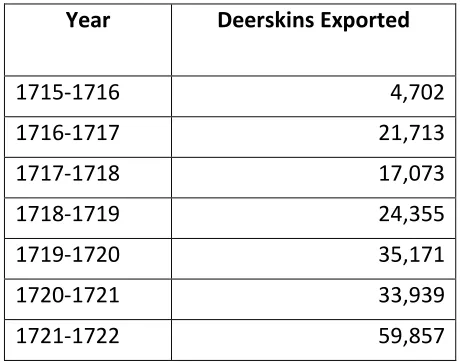
Table 3.2 Deerskin Exports during the Public Monopoly ... 47
viii
List of Figures
Figure 1.1 The General Locations of Public Monopoly Trading Factories ... 11
Figure 4.1 De Brahm’s 1757 map depicting Congaree Old Fort ... 51
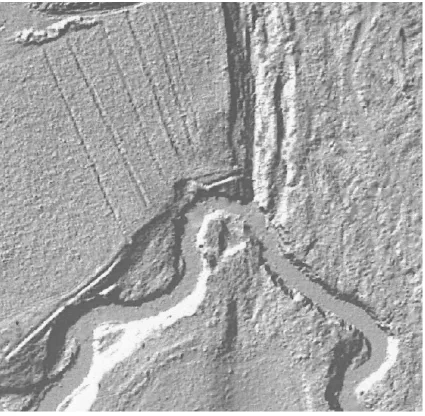
Figure 4.2 LIDAR Hillshade Image of 38LX30/319... 54
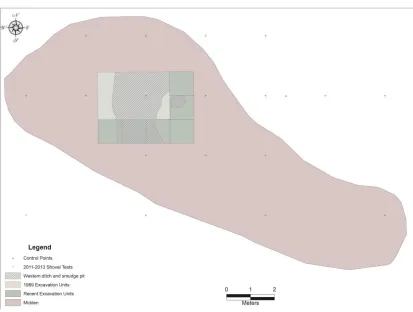
Figure 4.3 Overview of 38LX30/319 excavation units ... 57
Figure 4.4 The western ditch and midden complex ... 58
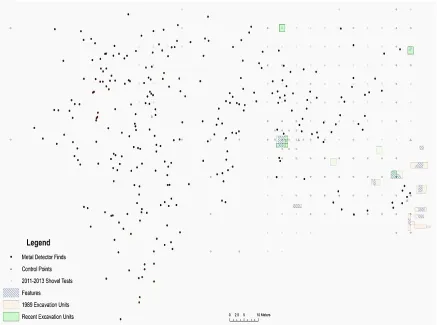
Figure 4.5 Map of metal detection finds ... 61
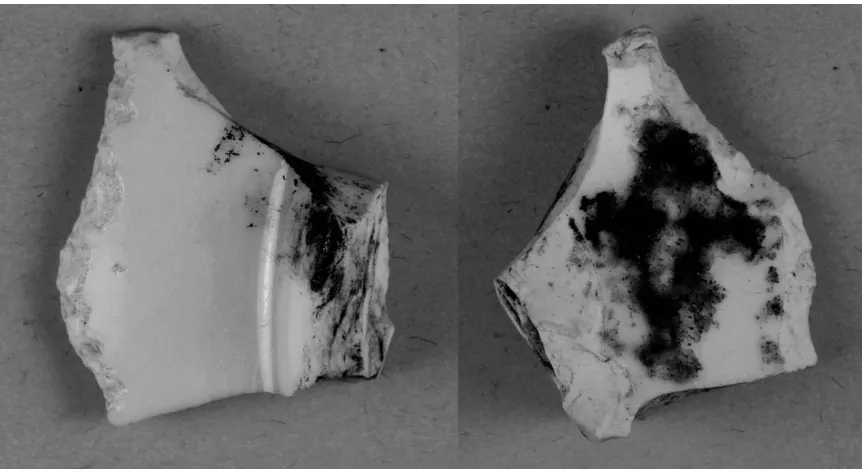
Figure 5.1 A porcelain scraper recovered from the 38LX30/319 eastern ditch in 1989 .. 66
Figure 5.2 The south profile of Feature 50 ... 69
ix
List of Abbreviations
ASSC ... Archaeological Society of South Carolina
The Board ... Board of Commissioners of the Indian Trade
JCHA ... Journal of the Commons House of Assembly
JCIT ... Journal of the Commissioners of the Indian Trade
SCIAA ... South Carolina Institute of Archaeology and Anthropology
1
Chapter 1. Introduction
"The Frontier transformations of the early colonial Southeast unfolded simultaneously on a number of levels, from the deeply personal to the utterly mysterious” (Oatis 2004:8).
The Commons House of South Carolina erected Fort Congaree following the
cessation of Yemasee War hostilities in 1718. The war’s erasure of Indian trade debt
combined with agricultural losses and hyperinflation to strain the colony’s economy and
relations with Native American communities were raw following decades of exploitative
Indian trade practices (Yonge 1726). In 1716, the Commons House formed a monopoly
over the Indian trade. This Public Monopoly was incorporated to supply revenue to the
colonial administration and renew trade relations with indigenous communities. This
enterprise acquired deerskins through bartering exchanges at publically managed
indigenous stores and frontier ports of trade called factories. One of these factories,
Fort Congaree, was constructed in 1718 at the request of Cherokee allies. This frontier
outpost was populated by a multi-ethnic community organized within a unique labor
regime to support trade and military activities in the interior southeast. During the
Public Monopoly period, 1716 through 1719, the fort functioned as a distribution and
trading center for South Carolina’s administered deerskin trade and provisioned
2
This study explores the organization of Public Monopoly Indian trade labor through
an evaluation of ethnohistoric and archaeological data. The ethnohistoric analysis
incorporates official records of the provincial assembly (The Commons House) and the
Board of Commissioners of the Indian Trade (the Board) with first-hand accounts of
early 18th century indigenous deerskin trade practices. These practices, performed by
marginalized or subaltern indigenous, African, and indentured European people, form a
commodity chain organized into production, exchange, and transportation categories.
Since 1974, three archaeological projects have collected artifacts and data from
38LX30/319, the site of Fort Congaree. Motor-grading, backhoe trenching, and hand
excavations identified several artifact clusters and subsurface features within or near
Fort Congaree’s defensive enclosure. This analysis evaluates data from the 1989 and
2011-2012 field seasons to presence Public Monopoly deerskin trade practices
attributable to marginalized peoples laboring within the trading factory.
The late 17th and early 18th century Indian trade was a synthesis of
proto-capitalist commercially-scaled colonial enterprise and pre-Colonial indigenous practices.
It played a significant part in the economic development of the Carolina colony and its
diplomatic implications were a central concern for colonial and imperial geopolitical
aspirations. The Indian trade was the third most significant economic activity in
proprietary South Carolina, following behind naval stores and the sale of food stuffs to
Caribbean sugar plantations. Until the Yemasee War, the chief commodities of the
3
backers annually invested of £10,000 sterling and an average yearly export of 54,000
skins between 1699 and 1714 (Clowse 1971; Haan 1981).
The Indian trade collapsed on April 15th 1715 when the Yemasee town of
Pocataligo set upon and killed a resident trader and Thomas Nairne, the colony’s Indian
Agent. Their action triggered a general Native American uprising which targeted Indian
traders and settlers living in outlying communities. War parties operating on the
southwestern and northern fringes of the colony won several engagements in 1715 and
early 1716. They succeeded in ambushing militia parties and routed several fortified
plantations. Fearing for their lives, many colonists abandoned their plantations and
retreated to Charles Town’s defensive perimeter (Ramsey 2008). Their forced
evacuation and concurrent eradication of Indian traders erased Indian trade debts
valued at more than £10,000 (Yonge 1726).
The Yemasee War was a pivotal point in the history of the Indian trade (Crane
1959; McDowell 1992). At its close, the focus of trading swung away from western
Coastal Plain tribes to newly allied Cherokees living in the Appalachian Mountains and
Piedmont (Haan 1981; McDowell 1992). The war also resulted in the political overthrow
of Proprietary control in 1719, and precipitated an economic collapse within the colony
(Ramsay 2003; Yonge 1726). An emergent planter class eclipsed the power of
merchants in the provincial Commons House when European merchants and backers,
fearful of the colony’s destruction, called in their debts (Clowse 1971; Yonge 1726).
4
power of an influential group of planters called the Goose Creek men. When it was
eventually established in 1716, merchants and planters supported the incorporation of
the Public Monopoly. It was organized with the intent to repair diplomatic ties between
the colony and neighboring indigenous communities, repay colonial debts incurred
while organizing the colony’s defense, and limit Native American travel through the
colony (Cooper 1837; Haan 1981).
Alliances with the Cherokee and Creek were essential to colony’s frontier
defense against competing European colonies and their indigenous confederates. South
Carolina’s January 1716 Tugaloo treaty with the Cherokee exchanged military support
for preferential trading status and improvements to Indian trade logistics (Reid 1976).
These improvements included the construction of a trading factory at the Congarees
and the use of packhorses instead of indigenous porters (McDowell 1992).
The Commons House incorporated the Public Monopoly to re-establish
colonial-indigenous relations and foster their dependence on South Carolina trade for textiles,
firearms, metal tools, and other trade goods. This government-operated corporation
was an experiment with an administered trade where goods were exchanged at fixed
and sometimes subsidized rates (Bauer and Agbe-Davies 2010; Ponasik 1977).
Merchants continued to play a role in the Indian trade as suppliers of trade goods and
provisions. This arrangement limited merchants’ exposure to the economic and physical
risks of the post-Yemasee War landscape. It was also profitable as merchant-suppliers
5
trade goods (JCHA 1734:164). The provincial government absorbed the costs of
operating an expansive, and formerly private, trading network and was legally obligated
to sell skins at public auction frequented by the same merchants profiting as suppliers.
This study will use a social labor framework to situate interconnected relations
of power and performance within the 1716 – 1722 Public Monopoly deerskin trade.
Performance of labor roles during this period were complexly interwoven with
concurrent processes of social identity construction and indigenous ethnogenesis. A
variety of peoples residing in an innovative colonial frontier setting performed deerskin
commodity production, acquisition, and transportation activities. Physical distance and
historical circumstance enabled novel modes of labor organization and individualized
performances of labor activities. The next chapter will elaborate upon this analytical
framework and discuss the significance of layered contextualization to the study of
colonial labor organization.
Chapter 2 outlines an activities-based approach to investigating colonial labor
roles. Labor activities at frontier colonial occupations like Fort Congaree overlapped in
space and the use of material culture (Silliman 2010). In addition, an individual’s labor
activities were not confined within specific locations. Public Monopoly servants and
employees participated in an array of activities in hunting grounds, Native American
communities, along trails and streams, and in the port of Charles Towne. This confusion
of objects and spaces nullifies attempts to delineate specific activity areas. Rather than
6
examines the range of activities and labor roles present in the Public Monopoly Indian
trade. Since these roles were oriented towards deerskin commodity production and
exchange; they are organized through a commodity chain model defined through an
examination of archival and ethnohistorical resources.
The organization of the Public Monopoly deerskin commodity chain is presented
in the third chapter. This Historical Context chapter also describes the construction and
operation of Fort Congaree and colonial developments affecting the Indian trade. These
descriptions were collected from the Journals of the Commons House of Assembly
(JCHA), the Commissioners of the Indian Trade (JCIT), other primary sources, and
ethnohistorical research.
These references indicate a variety of power relations affected the trade’s
operation. Whether involving individuals, communities or colonial administrations,
these relations were contextualized in events. Given the personal scale of trade
interactions, idiosyncratic events greatly affected the Indian Trade. The deaths of a
group of Creek ambassadors in January of 1716, for example, had far reaching effects
for trade and political alliances. These deaths incited a retaliatory war between the
Creek and Cherokee which necessitated an alliance between the Cherokee and the
colony. That alliance gave rise to the Public Monopoly and the establishment of Fort
Congaree in 1718.
The construction and operation of this small frontier outpost coincided with the
7
Few documented details of activities at the fort are available for research and
necessitate the use of archaeological methods for investigation of labor activities within
the outpost’s environs. Chapter 4 outlines efforts, beginning in 1974, to relocate and
evaluate the Fort Congaree site. It also includes a discussion of several features,
identified during 1989 and 2011-2013 fieldwork, associated with deerskin trade
activities.
Chapter 5 identifies material and spatial correlates of deerskin commodity chain
activities found within the Fort Congaree assemblage. Specific activity areas are not
identifiable within the 38LX30/319 site; however, a comparison of artifacts from within
and without the defensive enclosure indicates a separation of Native American and
Public Monopoly spaces. Non-commodity chain evidence for marginalized labor is also
present in the assemblage.
A synthesis of ethnohistoric and archaeological data is offered in the final
chapter. Their integration expands contemporary understandings of proto-capitalist
colonial projects in the American southeast while simultaneously unearthing evidence of
undocumented marginalized peoples laboring in a government-operated trading post.
Before the Yemasee War, the Indian trade extended from the Atlantic Coastal
Plain to the Yazoo and Tennessee River valleys. This exchange system, supplying slaves
and skins to Charles Towne, influenced Native American and colonial settler
communities. The trade drew Native Americans into a colonial consumer economy
8
traders and merchants and financed commercial agriculture investment (Clowse 1971).
The Indian trade relied upon a number of labor roles to produce, acquire, and transport
deerskin commodities. Enslaved, indentured, salaried, and wage laborers were present
in the era of private trade and during the Public Monopoly period.
Labor is complexly interwoven with features of identity construction, personal
experience and relationships of power. The examination of Fort Congaree labor roles
and labor regimes facilitating Indian trade activities must account for historical
developments in local, regional, and global processes. To this end, a multiscalar
historical and archaeological analysis will place locally-enacted labor organization within
9
Chapter 2. Colonialism and Indian Trade Labor
Introduction
This study focuses on Public Monopoly labor organization as a means to evaluate
processes of culture change occurring in the post Yemasee War Southeast. These labor
performances were manifold and created within distinct social contexts. Their study can
“inform us about the diversity of the processes clustered under the rubric of colonialism
- the myriad ways that people try to make subjects of others in distinct historical
circumstances” (Dietler 2010:52). An activities-based labor approach is well suited to
this effort because it emphasizes economic and material connections of interaction
occurring across a frontier of colonialism. Colonialism denotes:
10
The Fort Congaree occupation was part of an Indian trade network that
exploited Native American demand for European products to secure deerskins and
Native American slaves (Gallay 2002). This trade is linked with several historic tribes’
ethnogenesis, inter-indigenous conflicts, and the emergence of Native American
consumerism (Boulware 2010; Braund 2008; Gallay 2002; Merrell 1991; Silliman and
Witt 2010).
The Indian trade’s concurrent intensification of deerskin procurement,
introduction of European technologies and market mentalities also wrought dramatic
changes on the social patterning of indigenous communities (Ramsey 2003). Drawing
from the theoretical frameworks of political-economic anthropology, the current
examination envisions contemporary deerskin trade labor within a synthetic,
multilayered, relational model of performance and identity construction. This chapter
defines a practice-based synthetic labor model useful for interpreting colonial modes of
economic organization. This economic focus is significant to understanding the
inception of an administered trade Public Monopoly during an era of historically low
economic regulation and free enterprise.
The Indian trade had expanded the periphery of the southeastern colonial
economy as far west as the Mississippi River valley by the early 18th century. Part of a
broader pan-Atlantic economy developing novel social configurations accommodating
the development of a market-based economy which “…entailed a progressive loosening
11
concomitant individuation, articulation and commercialization of these factors of
production” (Coclanis 1991:13).
Charles Towne, established in 1670 and the principal port of the Southeastern
colonial economy, relied upon participant indigenous communities for the production of
deerskins and captive labor. When, in 1715, the Yemasee War nearly ruined the
colonial economy, the South Carolina Commons House moved quickly to ameliorate
Indian trade complaints. Their action was motivated by economic and political
exigencies. The colonial economy required Indian trade capital to rebuild plantations
and the Commons House needed a source of revenue to defray debts accrued in the
uprising (Hewatt 1776; Yonge 1726). Native American client communities produced a
vital commodity and buffered the colony from attack by imperial rivals in Florida and
Louisiana (Oatis 2004). The Commons House created the Public Monopoly apparatus in
1716 as a means to “… keep a good correspondence with our Indians and prevent all
abuse among them for the future…” (JCHA 1716:149).
Formed through an “Act for the Better Regulation of the Indian Trade”, the
Public Monopoly was controlled by a Board of Commissioners authorized to: regulate
deerskin exchange rates; acquire goods; purchase skins and slaves; designate official
12
Figure 1.1 The General Locations of Public Monopoly Trading Factories. The shaded area denotes the nominal boundaries of the colonial settlement
This board operated three factories at Fort Moore, Winyah Bay, and Fort
Congaree. Their trading factors were personally responsible for the behavior of
subordinates and the observance of codified trade regulations.
When the Commons House circumscribed the Indian trade within a
government-held monopoly, an administered trade system of exchange was created. Administered
trade is a form of economic exchange controlled through socially embedded institutions
(Bauer and Agbe-Davies 2010). “The basic factors of administered trade were strict
price control, ports of trade, and the use of intermediaries” (Ponasik 1977:195). The
13
trade to interior stores and frontier factories and relied upon trading factors to
represent the interests of the colony during exchange. The Public Monopoly Indian
trade contrasts with market trade. This describes an economy operating under
complimentary principles of personal wealth accumulation and free market behavior
(Bauer and Agbe-Davies 2010). From 1719 until 1722, these forms of trade operated
interdependently and Charles Towne merchants continued to supply trade goods to and
acquire deerskins from throughout the government’s administration of the Indian trade,
from 1716 until 1719 (McDowell 1992).
"In order to purchase goods for trade, the commission received bids from the
Charleston merchants for contracts to supply specific items. Payment would be made in
deer skins, in cash, or for especially large orders, notes for future payment in deer
skins. Surplus deer skins or furs would be sold at public auction” (Stumpf 1971:103).
These organizational factors were significant to development of labor roles because
they embedded Native American and Public Monopoly servants within multilayered
webs of interaction. Early 18th century Indian trade labor roles were structured through
interactions with the market, shifts in legislative policy, dynamic colonial political
landscapes, and personal relationships (Haan 1981; Ramsay 2003).
Fort Congaree position within the government-controlled Indian trade was also
linked with these factors. As a Public Monopoly outpost, this facility was part of a
network of stores and trading factories established as “one body politick and
14
of the publick” (Cooper 1837:677). The Board of the Commissioners of the Indian Trade
staffed these outposts with slaves, indentured servants, and part time militia. They
were organized through local and institutional labor regimes to acquire and transport
goods and commodities from Charles Towne to interior Native American communities.
Public Monopoly employees and servants, along with indigenous clients and
sojourning militia patrols formed a multi-ethnic frontier community oriented towards
Indian trade labor activities. Marx defined labor as a social process of interaction
between man and nature that purposefully manifests a mentally conceived object or
activity (Marx 1906). This definition is improved through a model synthesizing relational
distributions of power and concomitant identity construction (Silliman 2006). “Labor is a
multiply experienced relation and a multiply relational experience” (Silliman 2006:161).
Individual and collective identity constructions are formed through tensioned relations
and experiences. Tensioning, in contrast to influence, conveys an interrelationship of
counterpoised factors within a matrix of indeterminate asymmetrical strengths. Within
this matrix, the distribution of power between engaged social identities is fluid. Factors
like gender, class, and economic status are socially conceived/perceived dimensions of
this process and their performance occurs within specific contexts. They resonate in the
manifestation of labor roles and work. Work represents the activities of individuals,
singly or in groups, expending energy to produce energy. “Labor and the labor process
are … social phenomenon, carried by human beings bonded to one another in society”
(Wolf 2010:74). Labor roles embody descriptions of work. The negotiation of labor
15
Since Public Monopoly Indian trade servants and employees worked within a
geographically extensive network, these negotiations form a layered network of
relations that were locally enacted and multi-sited (Silliman 2010).
The relationships constraining the embodiment and performance of labor are
distance-dependent. As transportation costs rise with distance or difficulty, structural
power deteriorates and asymmetrical relations are upended (Stein 1998). Following
Stein’s distance-parity principle, Public Monopoly employees had enjoyed greater
access to agency and creativity at Fort Congaree on the Carolina frontier than under the
watchful eyes of authority in Charles Town.
Porters and Public Monopoly employees were mobile. Their activities carried
them along rivers and pathways interacting with Native American communities and
colonial settlements. This mobility enhanced their ability to “alter structures of
colonialism to … accommodate new notions of identity and social order” (Silliman
2004:3). Cherokee porters manipulated the Public Monopoly mode of compensation for
transporting deerskins through creative repackaging of bundles. At the start of their
travel these bundles consisted of approximately sixty deerskins. Before arrival in
Charles Towne, the porters divided their freight amongst additional porters. The arrival
of an expanded party of porters irritated the Board, who were obligated to pay each
porter presenting themselves at the government warehouse the rate negotiated for the
16
instructed to send a roster of porters along with each shipment of deerskins (McDowell
1992).
Another example of frontier-enhanced agency occurred in the first expedition to
Fort Congaree when every member of the expeditionary party save the appointed
factor, Lieutenant James How, abandoned their mission and carried away the stock of
provisions and trade goods (McDowell 1992). The weakening of structural power
through distance-parity does not imply Fort Congaree public servants were unfettered
by broader social constraints. The militia structure in particular exerted some measure
of institutional authority over outpost activity through personal incentives and control
of provisions.
Labor Patterns
Before identifying labor patterns within Fort Congaree, it is first necessary to
identify the variety of labor statuses found there. A 1718 revision to the Indian trade
regulations stated:
17
said garrisons, which sub-factors shall likewise be obliged to go & come in the publick perriagos with the effects of the public trade [Cooper 1837:401]
Government ‘owned’ and impressed indentured servants and slaves were
categorized as public servants in a 1721 excerpt of the JCHA. However, aside from
general statements identifying them as servants, discussions of labor statuses within the
Public Monopoly were infrequent. These statuses were not completely racially
determined and were ill-defined in the interior Southeast. Armed African slaves
accompanied Colonel Moore’s expedition to the Cherokees in the winter of 1715 and at
least two companies of African slaves remained with the Cherokees in case of attack by
the Creek. These men had minimal supervision and yet none used the opportunity to
flee their bondage (Chicken 1894). In the following spring, the governor purchased the
indentures of 32 Scottish Jacobite rebels expelled from Great Britain. These men were
“to be employed as soldiers in defending this Province against our enemies for an
indenture of four years” (Cooper 1837:683). Upon arrival, they joined an indeterminate
number of servants already engaged in the Public Monopoly’s service. These servants
were given significant responsibilities and often entrusted with transportation of
valuable cargos. One indentured servant even served as the garrison doctor for Fort
Moore (JCHA 1716).
The official trade representatives for the Public Monopoly were known as
factors. Each operated a trading factory with an aide holding the title of subfactor.
18
Factors were obliged to provide financial securities and proclaim an oath of obedience
to the Board and the Commons House (McDowell 1992). Labor outside normal militia
responsibilities was compensated through goods and measures of alcohol. Labor used
in the construction of a storehouse at Fort Moore, for example, was paid for in rum
(McDowell 1992). Compensation for labor invested in deerskin production was tied to
the commodity’s economic worth. Public Monopoly trading posts exchanged deerskins
according to a uniform rate regardless of the amount of energy and time invested in
procurement and preparation (McDowell 1992). Subaltern servants received no wages
for their toil. If they were impressed from their bond holders’ for government service,
compensatory wages were paid to that person.
The social and geographic setting of the outpost weakened structural constraints
even though the local context was embedded in a layered network of interactions.
Weakened structural constraints are significant to the development of the local labor
regime as distance from Charles Towne strengthened the community’s reliance on
personal interactions (Stein 1998). This labor regime was socially contextualized and
constructed through a synthetic interweaving of relations with embodied and
performed identities (Silliman 2010). Fort Congaree labor activities were coordinated
through a mixed organizational strategy marked by the interweaving of indentured,
enslaved, and less exploitive wage labor (JCHA 1716; McDowell 1992). “To address
colonial labor relations, we do not need only to find deposits segregated spatially by
19
colonial deposits of interaction and daily life, particularly when documents offer some
insight…” (Silliman 2010:38-19).
The Materiality of Frontier Labor
The Indian trade was tangible in the colonial landscape and economy. It was
apparent in contemporary attire, procurement and preparation of deerskins and
captive-taking. It was attached to stores and factories exchanging skins for trade goods.
The Indian trade was present in the port of Charles Towne where deerskins and captives
were auctioned and shipped abroad. Deerskins were graded and sold by fellmongers in
the London markets of Bermondsey and Leadenhall. Enslaved Native Americans
transported to the Caribbean sugar islands connected the trade with commercial
agriculture. South Carolina plantations were built on wealth and labor acquired in the
Indian trade (Clowse 1971; McDowell 1992; Thornbury 1893).
Silliman observes that colonial laborers, in general, “used material culture to
negotiate new identities and traditions in colonial worlds” (Silliman 2010:36). The
physical manifestations of labor at Fort Congaree, whether material or spatial, were
formed through social relations. Material culture, in production, modification, or
consumption, follows a similar pattern of synthesized interactions. Objects are imbued
with a multitude of meanings dependent upon their context and who interacts with
them. A porcelain bowl fragment found in the outpost’s eastern ditch carries several
implications for interpreting labor patterns. The parent vessel was likely conspicuously
20
scraper through bifacial reduction of the lip. Native American clients and public
servants applied time and labor to preparation and transportation of the deerskin
trade’s eponymous commodity. In addition to economic value in exchange, hides
conveyed social value. As an in-demand commodity, their exchange granted indigenous
clients access to prestige goods and other articles of trade.
“The relationshipspeople engage in to obtain goods, or those actions that fall
under the rubric of trade or exchange, may also be arenas in which social power is
exercised and even created” (Kelly 2010:99; emphasis added). The use and construction
of space is a product of social interaction. The placement and construction of trade
facilities within the frontier manifest negotiated relations of power. When Cherokee
representatives, for example, convinced Tugaloo treaty negotiators to place a trading
factory at the Congarees in 1716, a compliant provincial assembly allocated resources
previously intended for a fortification closer to French Santee (JCHA 1775; McDowell
1992).
The Congarees designation refers to the western bank of the Congaree River
extending from the confluence of the Broad and Saluda Rivers downstream to the
mouth of Congaree Creek. This area is currently part of the West Columbia and Cayce
municipalities. Placement of an outpost here, more than one-hundred miles from
Charles Towne, enhanced Cherokee political status. It physically demonstrated their
ability to influence Carolina military and commercial organization. Both parties were
21
John Hearn’s plantation, closer to Santee, and eighty Cherokee warriors were sent to aid
in construction of the Congarees trading factory (JCHA 1775).
Space shapes local social life as well (Soja 1989). The environs of Public
Monopoly trading posts were likely utilized for a multitude of Indian trade activities and
requisite chores of daily life. The control of space was certainly salient in the operation
of these factories. Though discounted in comparison to the conventionally designed
Johnson’s Fort, frontier outposts were encircled with defensive enclosures “sufficient to
withstand Indians, who know nothing of besieging or will fight against walls” (Johnson in
Rivers 1874:91). In 1716, The Board of Commissioners restricted Native American
admittance to frontier warehouses storing trade goods and deerskins. Captain
Charlesworth Glover, commander of Fort Moore, was ordered “not to suffer one of
them (even the Charikees themselves) to come into our main store” (McDowell
1992:104, parentheses in original).
The performance of colonial labor incorporates socially conceived notions of
labor roles, space, and materiality. The material and spatial manifestations of labor
performance at Fort Congaree are difficult to access without the historical record since
“artifacts and spaces in colonial worlds are fraught with ambiguity, alternate functions,
and multiple users” (Silliman 2010:32). This chapter discussed social structures and
relations contributive to the development of colonial (indigenous and non indigenous)
labor roles during a period of administered exchange. The following chapter offers a
22
Monopoly Indian trade. Contemporary trade documents, personal accounts and
ethnohistoric research are marshaled to identify various commodity chain activities
23
Chapter 3. The Southeastern Deerskin Trade
The Carolina administration responsible for the construction of Fort Congaree
was eager to rebuild economic and political ties with indigenous communities following
the Yemasee War. These communities provided valuable commodities and potential for
capital generation. Skins and captives brought to Charles Town were exchanged for
currency and exported; or exploited in the development of a commercial agriculture
economy (Clowse 1971). The acquisition of Native American captives and deerskins
formed a critical part of a delicate colonial economy weakened by strife, political
turmoil, and hyperinflation.
So that by the late Indian War, our subduing the Pirates, a defensive War against the Spaniards, the demolition of our principal Fortifications by Storms, and the expences to repair the same, the vast presents we are obliged to make the Indians to keep up a party amongst them from depending intirely upon the French, and the weak and unsteady Government of the Proprietors, who rather oppose than contribute to the strengthening of us, whereby we have lost all credit, nobody venturing to trust any publick Funds contrived for our support, we are reduced to the last extremity in debt, without prospect of extricating ourselves.... [Mr. Joseph Boone 16 June 1720 in Johnson and Rivers 1874:50]
This chapter contextualizes Fort Congaree’s occupation within a dynamic period
of southeastern colonialism. This trading post was part of a network defined by the
24
Cherokee. Beginning with a synopsis of the deerskin commodity chain, the first section
describes the organization of pre-Yemasee War Indian trade. The commodity chain
concept was applied here to provide a framework for the pathways of interaction
simultaneously occurring within the various stages of the commercial scale deerskin
trade. These stages are identified as production, preparation, procurement, and
transportation. The latter two stages were significantly affected by the implementation
of the government monopoly. The Public Monopoly section summarizes the origination
and operation of the administered trade apparatus which arose following a pivotal 1716
event at the Lower Cherokee town of Tugaloo. The final section discusses the return of
private traders to the frontier and the role of forts in the Public Monopoly.
Development of the Commercial Indian Trade
Deerskins, a high proportion produced by the Southern Appalachian peripheral fringe, were the most stable economic product of the colonies before the Revolutionary War, and the Indian trade was the chief instrument of southern economic expansion during the early colonial period (Dunaway 1996:16).
A number of indigenous communities attacked South Carolina settlements in
1715. These groups surrounded the colony and after the intensive period of hostilities
abated, the colonial government sought to limit the threat of future insurrection
through financial and forcible means. Large indigenous communities were returned to
the colonial economy through promises of trade concessions. Smaller groups were
targeted by slaving parties for enslavement and transportation to Caribbean sugar
plantations. “But before the end of ye said Year [1715] we recovered the Cherokees
25
lessened their numbers and utterly extirpating some little Tribes, as the Congarees,
Santees, Seawees, Pedees, Waxaws, and some Cors-aboys” (Johnson in Rivers 1874:91),
This left the Creek as the most populous and serious indigenous threat in the west.
Creek war parties attacked several trains of porters before agreeing to a truce in
November of 1717. Once again, this armistice arose from trade concessions. In the
northeast, Cheraw continued to threaten outlying settlements and trading factories
through 1718 (McDowell 1992).
The Indian trade formed a central part of the economy. Between 1699 and
1715, Charles Towne merchants exported an average of 54,000 deerskins per year
(Crane 1959). The Indian trade functioned through interrelated sets of consignment
relationships which evaporated with the outbreak of the Yemasee War. Merchants
credited consignments to Indian traders who, in turn, extended credit to indigenous
hunters and warriors. At the outbreak of the 1715 hostilities, the collective Yemasee
community carried approximately £10,000 worth of debt to private traders and
merchants (Yonge 1726). Deerskins exports were seriously curtailed by the war, only
4,702 skins were exported in 1716, and British creditors began to call in their debts
(Crane 1959).
26
the province, large emissions of paper currency were also requisite. Hence the rate of exchange arose to an extravagant height [Hewatt 1779:229]
The creation of paper currency and abandonment of outlying plantations during
the Yemasee War "… concurr'd to raise the Price of the Rice, Pitch and Tar, and other
Productions to such a height, that the Bill that was made for Twenty Shillings, would not
purchase what was worth intrinsically more than Half a Crown” (Yonge 1726:8). This
period of inflation shifted the economic distribution of power from mercantile to landed
wealth (Hewatt 1779).
The Commons House, engaged in a continuous struggle with the Lords
Proprietors for control of the colony, found little financial support from their absentee
landlords for defense against hostile Native Americans. The Proprietors also opposed a
plan to repopulate vacated Yemasee lands with Irish Protestant settlers preferring to
see those lands laid out in large seignory tracts for the benefit of individual proprietors.
This plan would have brought needed income for the colony and strengthened colonial
defense. In 1719, the provincial assembly began a political overthrow of the obdurate
Lords’ Proprietors (Yonge 1726).
Concurrently, the Commons House sought funds for the defense of the colony.
The Commons House increased duties on imports and African slaves while establishing
the Public Monopoly as both a source of revenue and a diplomatic overture to
indigenous communities (JCHA 1716:149; McDowell 1992). The Proprietors, however,
27
1718. But the Commons House moved to continue the act for an additional five years to
the displeasure of the Carolina and British merchants. With the support of leading
Carolina and British merchants, the proprietors attempted to annul the Public Monopoly
(Trott 1736). The Commons House countered with a revised set of trade regulations
preserving public trading factories as it reopened private trade (Cooper 1837). The
Commons House and Carolina colonists were disaffected with the proprietors’ inability
to defend the colony against Spanish and French threats, and in 1719 petitioned the
monarchy to take over the government of South Carolina (Hewatt 1779).
The early 18th century was a dynamic and ambiguous period in the growth of the
southeastern colonial economy and industry was more fluid than the Indian trade. The
historical developments described above played a significant role in the development of
the commercial-scale commodity exchange network. Hostile threats from the Cheraw
closed the Winyah trading factory on several occasions and inflation increased costs of
goods and compensation for Public Monopoly employees.
The colonial economy suffered from chronic labor shortages (Clowse 1971; Nash
1992). While plantation owners filled labor demands with African and Native American
slaves, the Board of Commissioners accommodated the shortage through a unique
deployment of militia, indentured servants, and enslaved laborers. From 1716 until
1722 these laborers toiled in public service. Their labor contributed significantly to the
maintenance of the trading post and garrison and the satisfaction of public owned debt
28
The organization of labor activities in the Indian trade and the Fort Congaree
occupation arose in a layered set of relationships and historical developments. While
the location of this outpost was fixed on the edge of Congaree Creek, the fort was by no
means remote or isolated. Fort Congaree was integrated within a far-reaching network
that linked villages of the Appalachian Summit and Piedmont with Charles Towne,
Europe and the Caribbean. Indentured servants and slaves living within the outpost
were employed in labor activities relating to the Indian trade. Public servants guided
packhorse trains between stores and trading factories. They paddled shipments of skins
and goods to Charles Towne. At the same time, they grew vegetables and stood ready
to defend the fort against attack. Though indentured and enslaved laborers were
integral to the operation of the Public Monopoly, their significance to the administered
Indian trade was not imparted on the historical record and few of their activities have
been identified through archeological methods. This rest of this chapter outlines an
activities-based approach designed to identify Indian trade labor roles within the
outpost, and the broader Public Monopoly organization.
Contemporary descriptions of Native American hunting practices are scarce, but
they do offer an informative glimpse into collaborative large scale deer hunts (Waselkov
1978). These descriptions and two key ethnohistoric analyses demonstrate a variety of
methods employed to acquire, prepare, and exchange deerskins (Braund 2008; Perdue
1998). This commodity chain model begins by examining pre-Yemasee War practices
and identifying adjustments resulting from the implementation of administered trade
29
The public servants and other occupants of Fort Congaree performing these
tasks were also subject to authority of the Board and colonial militia hierarchy. These
authorities set the parameters for the design of Fort Congaree and supplied the Public
Monopoly with provisions. The Board emphasized indigenous exclusion from the
defensive enclosure and a concern with the contents of the storehouse. Their missive to
the trading factor at Fort Moore demonstrates the presence of institutional level control
in the organization of daily practices.
…you are to receive and put into a Store House, for that purpose to be built within the Body of the Fort, (and a small trading Room or House in some of the Outworks of the same, for conveniency of Trading, intirely under the Command of the Fort) and in your Dealings with the Indians, you are not to suffer one of them (even the Charikees themselves) to come into our main Store; keeping the Doors thereof shut at such Times of Trading, otherwise, the greatest Precautions will be insufficient to secure you from their Treachery [McDowell 1992:101]
Though the Board governed Indian trade policies, they did not directly manage
individual work activities. Their factors/captains, bound by bond and oath, represented
the public in local affairs. Public servants had little agency in the selection of space and
objects they used and interacted with. While the commodity chain is useful for the
demarcation of idealized colonial labor roles, their identification within local
archaeological contexts is problematic (Silliman 2010).
Locally contextualized labor roles are interdependent with the social setting.
Without historical lines of evidence, the ability to define organizational themes in the
30
were assigned specific tasks in transportation and food raising activities within the
Public Monopoly, the archaeological identification of labor activities must accommodate
the likelihood that people’s use of material culture and space overlapped.
The following sections identify a number of commercial deerskin production
activities. Preliminary hunting and deerskin production activities are associated with
Native American labor identities but post-exchange activities blurred ethnicities and
gender roles. The Public Monopoly altered the spatial patterning of exchange and
created new labor roles at the frontier of the colonial economy.
The Deerskin Commodity Chain
The deerskin commodity chain is divided into three general stages of production.
The production stage refers to activities performed by Native Americans in the
acquisition of deerskins. Not limited to hunting, this stage also included performance of
rituals, observance of dietary prohibitions, and maintenance of wildlife habitat. The
next stage, preparation, includes those tasks readying skins for market; dehairing,
tanning, et cetera. The procurement stage includes negotiation, bartering, and
exchange activities. The final stage, transportation, includes the movement of deerskins
from store to Charles Towne and abroad. After auction, Public Monopoly acquired
deerskins were packed for overseas export. The majority of South Carolina skins were
shipped to London followed by Bristol (Clowse 1963).
Though slaves were a principal part of the pre-Yemasee war Indian trade,
31
years following the conflict (Gallay 2002; McDowell 1992). Captives were certainly
present at the trading factories. The Board instructed their factors on the application of
brands, and later tattoos, as a means to mark captives held as public property. The days
of intensive slave raids were punctuated by the Yemasee War. Cognizant of the slave
trade’s effect on expansion of trade, the commissioners enacted regulations prohibiting
enslavement of Native Americans living within four-hundred miles of Charles Towne or
any males older than fourteen. A concurrent intensification of commercial scale
deerskin procurement rapidly withered the economic significance of the Indian slave
trade (Clowse 1963; Gallay 2002)
Whitetail deer, Odocoileus virginianus, habitat was actively encouraged in the
pre-Colonial southeast. Native Americans used fire to maintain landscapes with
intermittent woodland that encouraged deer populations and facilitated traditional
hunting practices (Basset 1901; Merrell 1991; Pyne 1997). Maintenance of woods and
trails formed the first step in the production of deerskin. These activities, occurring
outside of the village, were typically performed by men in Cherokee society (Rodning
2001). Pre-Colonial indigenous hunting activities included a period of ritual preparation
and prohibitions against certain behaviors during the hunt. Alabama hunters, for
example, began their hunting expeditions with a steam bath purification ritual and the
preparation of special medicines. Boisterous behavior was banned while encamped and
“dishes soiled with bear grease must not be washed at the creek, but instead a bucket
32
thing must be done with dishes soiled with deer grease; deer bones could, however, be
thrown anywhere” (Swanton 1928:445).
Deer hunting practices varied between groups and individuals, but commercial
hunting activity generally occurred during fall and winter months. Early historic colonial
observers documented four principal methods of deer hunting. These included stalking,
decoyed stalking, drives to water, and fired drives (Waselkov 1978). Individuals or small
groups could participate in deerstalks while drives involved large numbers of people.
The following anecdote describes a Tuscarora fired-drive in February 1701.
When these savages go a hunting, they commonly go out in great numbers, and oftentimes a great many days' journey from home, beginning at the coming in o the winter; that is, when the leaves are fallen from the trees and are become dry. Tis then they burn the woods by setting fire to the leaves and withered bent and grass... Thus they go and fire the woods for many miles, and drive the deer and other game into small necks of land and isthmuses where they kill and destroy what they please [Lawson 1860:335-336]
The Creek continued to practice communal drives after they acquired firearms
and metal implements. When a communal drive succeeded in killing a deer, meat was
distributed according to need but the hide belonged to the person inflicting the first
wound (Braund 2008). Women commonly accompanied their male relatives on
seasonal deer hunts. While the men continued to hunt, women temporarily housed at
hunting camps, began to de-flesh and clean deerskin. A variety of tools were available
33
Their way of dressing their skins is, by soaking them in water, so they get the hair off with an instrument made of the bone of a deer's foot; yet some use a sort of iron drawing knife, which they purchase of the English, and after the hair is off they dissolve deer's brains, which before hand are made in a cake and baked in the embers, in a bowl of water, so soak the skins therein till the brains have sucked up the water; then they dry it gently and keep working it with an oyster shell, or some such think, to scrape withal till it is dry; whereby it becomes soft and pliable. Yet these so dressed will not endure wet, but become hard thereby; which to prevent, they either cure them in smoke or tan them with bark, as before observed; not but that young indian corn, beaten to a pulp, will effect the same as the brains” [Lawson 1860:338]
Lawson’s record of deerskin processing is illuminating but incomplete. It also
fails to convey the intensity of the labor invested by women in the production of
dressed deerskins. Skillful manipulation, care, and a variety of tools were required for
hide manufacture. Though pre-colonial techniques utilized lithic and bone scrapers to
remove hair and excess tissue, metal implements were in use by the early 18th century.
Skins, treated with animal brains, were carefully scraped to uniform thickness as they
were stretched between stakes or large wooden frames. Skins became stiff as they
dried and required further manipulation to become pliable. Smoking was the last stage
in the preparation of full dressed and half-dressed hides. “This is done by sewing it into
a bag and hanging it over the smoke of a small fire of rotten sticks” (Schoolcraft
1884:70). These small fires were usually contained in pits and kept smoldering through
careful arrangement of the hide around the mouth of the pit. Descriptions of these
smudge pits are found in Natchez, Creek, Choctaw, and Seminole ethnographic
literature (Binford 1967). The amount of time and type of fuel used determined a hide’s
34
“Most deerskins destined for the market were…half-dressed, which implied
that they had been cleaned and scraped to remove both flesh and hair and had
undergone preliminary smoking” (Braund 2008:68). Half-dressing was one of several
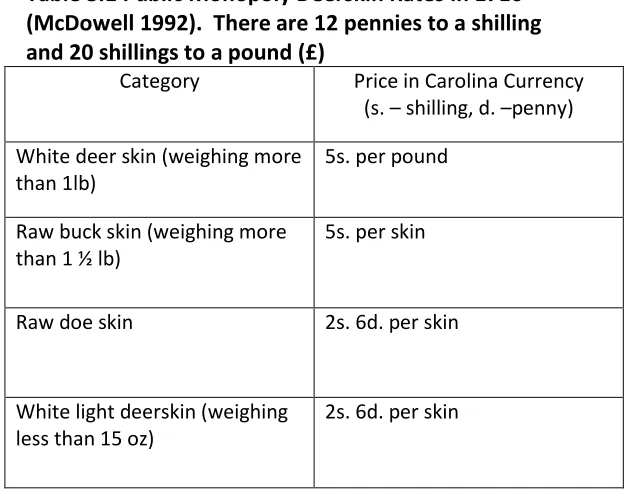
classes of skins accepted by the Public Monopoly. Table 3.1 lists these classes and their
assigned value in contemporary Carolina currency. The Board’s valuation was based on
condition of the skin (raw, half dressed, or dressed), the sex of the deer, and the weight
of the skin.
Table 3.1 Public Monopoly Deerskin Rates in 1716 (McDowell 1992). There are 12 pennies to a shilling and 20 shillings to a pound (£)
Category Price in Carolina Currency
(s. – shilling, d. –penny)
White deer skin (weighing more than 1lb)
5s. per pound
Raw buck skin (weighing more than 1 ½ lb)
5s. per skin
Raw doe skin 2s. 6d. per skin
White light deerskin (weighing less than 15 oz)
2s. 6d. per skin
The procurement phase of the commodity chain evolved through the early 18th
century. Deerskin values fluctuated between exchange encounters in the years
preceding the Yemasee War. Itinerant traders operating alone or in small groups
followed a seasonal route through client communities. They would ‘put out’ goods
35
deerskin compensation upon return in the spring (Dunaway 1986; Ramsey 2003 ;
Stumpf 1971). The variety of goods carried by each trader differed depending on which
items were in demand or most portable, for longer treks (Alvord and Bidgood 1912).
John Lederer, a trader and active traveler during the 1670s, suggests a number of trade
goods suitable for exchange for skins.
“Your best truck is a sort of course trading cloth, of which a yard and a half
makes a matchcoat or mantle fit for their wear; as also axes, hoes, knives, sizars, and all
sorts of edg'd tools. Guns, powder and shot, etc. are commodities they will greedily
barter for…” (Lederer 1902:29). Cotton cloth, duffels, beads, falchions, fusee guns and
ammunition were listed as suitable trade items in 1708 when Governor Nathaniel
Johnson estimated an initial investment of £2,500 to £3000 returned approximately
50,000 deerskins for export per annum (Johnson quoted in Rivers 1856). Native
Americans unable to buy goods were given credit, trust, with an expectation of
repayment on the trader’s return in the spring (Ramsey 2003). This expectation formed
the basis of economic interaction between traders and their clients.
Traders leveraged Native American unfamiliarity with alcohol and concepts of
debt relationships to assure continual supplies of skins. Native Americans frequently
complained of abuse by Indian traders. Debtors and their family members faced the
possibility of enslavement when debts were not discharged to a trader’s satisfaction
36
Sometimes you may with brandy or strong liquor dispose of them to an humour of giving your ten times the value of your commodity; and at other times they are so hide-bound, that they will not offer half the market-price, especially if they be aware that you have a designe to circumvent them with drink, or that they think you have a desire to their goods, which you must seem to slight and disparage [Alvord and Bidgood 1912:169]
These practices were heavily criticized by contemporaries in the provincial
assembly fearing irreparable damage to South Carolina’s relationship with surrounding
Native American populations. Little aside from expressing concern was done to police
the Indian trader activity prior to 1707. A nominal regulatory commission was
established to adjudicate indigenous complaints and a single Indian agent was
appointed to monitor the activities of traders operating beyond the frontier (Cooper
1837; Gallay 2002).
Once traders completed their rounds, or a suitable store of skins was assembled,
the cargo was hauled to Charles Towne by porters, packhorses, and periaugers.
Packhorses carried the goods and skins of Virginia traders operating in the Piedmont
and Appalachian Summit from the 1670s onwards (Alvord and Bidgood 1912). Carolina
traders had limited access to horses and, when necessary, would hire Native American
porters to carry their freight between overland destinations. The Indian trade was
lucrative for traders as well as merchants. Indian traders returning to Charles Towne
from a successful trek earned between £20 and £100. Plantation overseers typically
earned between £15 and £40 per year (Carroll 1836:260).
Most typically the Charleston merchant of the early 18th century
37
he owned shares of locally-based ships; he maintained regular contacts with "foreign" (most commonly British) merchants; he might singularly or in partnership own and operate a plantation either as a commercial investment or for social status; and finally he might lend money out at interest. [Stumpf 1971:73]
Charles Towne merchants played a principal role in the pre-Yemasee War Indian
trade. Working in loose partnerships, merchants imported trade goods while controlling
the carrying trade after 1700. Merchants acted as representatives of English
commercial concerns sold goods for a percentage of sale prices. “The merchant who
hired or financed the trader would see to the grading, pricing and packing of the skins as
well as to their shipping and consignment. Usually packed in wooden hogsheads which
carried approximately five thousand pounds of skins each, the heavier and better deer
skins were sent to England and often re-exported to Germany” (Stumpf 1971:43).
The colonial government required merchants to pay a duty on deerskins
exported from South Carolina. This tariff funded the official clergy and the government
administration. Between 1717 and 1737, London, Bristol, and Cowes were the principal
destinations for ships leaving Charles Towne (Clowse 1963). Many deerskins unpacked
on Thames wharves were sold by leather factors to tanners and curriers working in the
Bermondsey neighborhood of Southwark (Thornbury 1893). “Regardless of its origin as
a gift or an exchange a commodity, few Britons who ultimately used an item of leather
manufacture were probably aware that it was originally shot by a southeastern Indian
hunter, dried and dressed by a southeastern Indian woman, and transported by a
38
As the result of a lucrative trade, White-tail deer populations of the Coastal Plain
were depleted by 1715. Slaving raids also proved less fruitful for Indian trade
communities. The depletion of deer and captives increased tensions between Native
Americans and Carolina (Haan 1981; Oatis 2004). The Yemasee, a previously solid ally of
the colony, were losing their ability to acquire necessary goods just as the Indian trade
shifted primary focus to satisfaction of market demands (Ramsey 2003). Their
frustrations boiled over into a broad-scale Native American insurrection that reshaped
the Indian trade.
Indian traders suffered few regulations prior to 1707. Until that year, legislative
oversight of the trade was limited to collection of export duties for the colony’s defense
(Cooper 1838). A growing concern with the potential repercussions of exploitative trade
practices moved the Commons House to create an adjudicative Board of Commissioners
of the Indian Trade. This Board was organized to hear Native American complaints
against white settlers and traders (Cooper 1837). These complaints usually centered on
the behavior of traders, compulsion into debt bondage, damage from free-ranging
livestock, and settler encroachment on lands already claimed by indigenous
communities (McDowell 1992). The creation of the Board of Commissioners signaled the
end an informal Indian trade and a growing awareness of indigenous dissatisfaction with
its conduct. This sentiment was pervasive and culminated in a general uprising in 1715
which took the lives of approximately 400 colonists and an unknown number of Native
39
…in the year 1715, they killed all, or most of the traders that were with them in their towns; and going among the plantations, murdered all who could not fly from their cruelty, and burned their houses. The occasion of this conspiracy, which was so universal, that all the Indians were concerned in it, except a small clan or two that lived amongst the settlements, insomuch that they amounted to between eight and ten thousand men, was attributed to some ill-usage they had received from the traders, who are not (generally) men of the best morals; and that, no doubt of it, might give some cause to their discontents; to which may be added the great debts they owed the inhabitants, which it is said amounted to near £10,000 sterling with the goods amongst them; all which they seized and made their own, and never paid their debts, but cancelled them by murdering their creditors [Yonge 1726:7]
Though the provincial assembly was cognizant of the political significance of the
Indian trade prior to 1715, it was not until after the Native American insurrection that
they adopted an active role in its regulation. The public takeover of the Indian trade
affected all phases of the deerskin commodity chain, but most altered the organization
of procurement and transportation activities. In addition, the extension of credit was
prohibited and the sale of alcohol restricted to trading factories.
The Public Monopoly replaced unsupervised itinerant traders with a network of
stores and trading factories. Stores were located in the interior villages of the Cherokee,
Creek, and Catawba. Native Americans could purchase goods at either type of facility,
but they found better exchange rates at trading factories located at settlement’s
frontier. Three factories were opened in 1716. Each factory was unique in its local
setting and form. The Savannah factory was located within the garrisoned outpost of
Fort Moore. Captain Gaillard conducted a small operation from his plantation in French
40
a small log built single room structure (McDowell 1992). The placement of these
facilities was intended to entice Native American clients, but maintain a healthy distance
between them and the heart of the South Carolina settlement (Cooper 1837).
Beginning in 1716, Native Americans were expected to present their skins at the
time of exchange, regardless of whether the trade occurred in a village or factory
setting. In addition to acting in a trading capacity, Public Monopoly storekeepers and
factors also acted in diplomatic capacities. Frequently, the men selected for these
positions were adept at Native American languages and sent to negotiate on the
colony’s behalf. Factors and storekeepers were also literate. They were required to
maintain account books for inspection by the Commons House and report on events and
rumors encountered in the normal course of operation (Cooper 1837). Unfortunately
no records of storehouse transactions are known to be preserved. Terse descriptions of
goods bound for Cherokee stores indicate consumer power was significant in structuring
the types of items carried inland from Charles Town (McDowell 1992).
Goods and skins in transit were supervised by a small staff of public employees
and servants. Indentured servants and slaves employed in transportation activities
were either contracted by their bondholders or owned outright by the colony.
Contracted labor wages were paid to owners. Two African slaves loaned by Colonel
Barnwell spent six weeks transporting a shipment of goods via periauger to the
Northern Factory. Barnwell received £9 for their labor (McDowell 1992). Their
compensation did not reflect the value added to the commodity through their labor.
41
representing substantial financial value. On the 10th of October 1716, an indentured
public servant named Joseph Thompson arrived in the port from Savannah Town
carrying more than 2100 deerskins. This single shipment represented almost half, 45%,
of all deerskins acquired in 1716.
A limited availability of packhorses hampered transportation of goods and
commodities between the interior villages and the port town. At its inception in 1716,
the Public Monopoly was tasked with acquiring packhorses. Virginia traders,
competitive with South Carolina traders, made frequent use of packhorses in their
dealings with the Cherokee and Catawba.
“This day we drewe up ower men and marched to Tugaloe”
Beginning in April of 1715, indigenous war parties attacked outlying settlements
and raided within fifty miles of Charles Towne. Colonists were compelled to abandon
their fields and retreat to the safety of the port (Crane 1959). The militia was
outmanned and incapable of defending the province from enemies arrayed on all sides.
Facing dire straits, the colony needed an ally. It mounted an expedition of European
and African militia to the Lower Cherokee town of Tugaloo in the hope they could get
the populous group to participate in an assault against their principal enemies, the
Creek. Captain George Chicken, later a Commissioner of the Indian Trade, chronicled
their march and subsequent negotiations occurring in the winter of 1715-1716. Led by