SPEECH AND LANGUAGE THERAPY:
GENDER, SCIENCE AND
THE HEALTH DIVISION OF LABOUR
DIANE BEBBINGTON
Submitted for the degree of PhD
Abstract
This research arose from concerns over the marginal position of speech and language
therapists within the UK health care system, at a time when a case based on equal
pay legislation comparing their work with that of clinical psychologists nears
completion. While quantitative data confirm a difficulty for the NHS in recruiting
and retaining speech and language therapists, no qualitative research has explored
their work experiences within a sociological framework. The present study aims to
address this gap. The empirical findings are based on qualitative interviews with
forty speech and language therapists which employed feminist principles in research
methodology including open-endedness, disclosure of values and reciprocity.
Themes emerging included the 'invisibility' of the profession in accessing careers
advice and gender-stereotyping of subject choices and careers advice at school. In
contrast to the humanistic elements which led people into speech and language
therapy, the professional education emphasised the scientific aspects of human
communication, reflecting a medicalised view of health. Lesser attention was paid to
humanistic subjects such as counselling and to the therapeutic applications of formal
teaching. Therapists' clinical experiences focused on the relationship between work
in the public and private spheres, organisational concerns and the nature of clinical
practice. For instance, treatment for people with communication impairments was
regarded as a low priority owing to the tendency of formalised health care to
prioritise bodily health over mental and communicative well-being.
The research considers whether the 'scientisation' of the profession is an effective
route to counteract its marginalisation, since in pursuing this route it is required to
distance itself from the female-gendered elements of its practice. This dilemma is
examined against wider social concerns in which the work of women in the
'reproduction' of people is devalued on a global scale while the 'mainstream' activity
Contents
Acknowledgements List of Tables
Chapter 1 Introduction
1.1 Preamble
1.2 Speech and language therapy: its role and history 1.3 The personal and the political
1.4 Adopting a feminist perspective 1.5 Thesis contents
Chapter2 Women, work and health care
2.1 Introduction
2.2 Work: the public and the private 2.3 The sexual division of labour 2.4 Workplace culture
2.5 Explaining women's labour market disadvantage 2.6 Women and the provision of health care
2. 7 Boundaries of professional power 2.8 The case of speech and language therapy 2.9 Summary
Chapter 3 Science and the health division of labour
3.1 Introduction
3.2 Characteristics associated with science 3.3 Critiques of science
3.4 Science and the practice of health care 3.5 Critiques of science in health care
3.6 Science and gendered occupational struggles 3.7 Summary
Chapter 4 The role of science in speech and language therapy
4.1 Introduction
4.2 Science in speech and language therapy: professional education 4.3 Science in speech and language therapy: professional practice 4.4 Science in speech and language therapy: professional research 4.5 Professional challenges to the scientific approach in research 4.6 The gender division of labour in speech and language therapy 4.7 Conclusion
Chapter 5 Methodology and the research process
5.1 Introduction
5.2 Qualitative interviewing and feminist research 5.3 The interviews:
Content Sampling
Analysing the data
5.4 Responses and reflections
Responses to the fieldwork- the interviewees Reflecting on the research process - the researcher
5.5 Conclusion
Chapter 6 'Choosing' a career
6.1 Introduction
6.2 Experiences of caring in the family and the wider community 6.3 Gender and educational experiences
6.4 Subject choices in education 6.5 Gender ideology and career choice 6.6 Why speech and language therapy? 6.7 Conclusion
Chapter 7 Professional education
100 101 109 109 111 115 116 116 118 120 122 122 126 129 132 137 142
7.1 Introduction 144
7.2 A changing curriculum? 144
7.3 The 'scientisation' ofknowledge 149
7.4 Theory into practice 154
7.5 Gender, caring and science in speech and language therapy education 158
7.6 Conclusion 162
Chapter 8 Work: the boundary between the public and private
8.1 Introduction 164
8.2 Family care: its demands on therapists' time 164 8.3 Patterns of paid employment: part-time work and the non-linear career 168 8.4 Discourses of motherhood: attitudes to paid employment 172 8.5 Attitudes to careers: challenging stereotypes 174 8.6 Support for careers: variability in the home and at work 178
Chapter 9 The status of speech and language therapy as a health care occupation
9.1 Introduction 183
9.2 Outsiders' views of the profession as perceived by the study participants 183 9.3 Marginality and the struggle to improve conditions 186 9.4 Medical power and the marginality of speech and language therapy 190 9.5 Marginality and speech and language therapy: a gender issue? 195
9.6 Conclusion 199
Chapter 10 Science and speech and language therapy practice
10.1 Introduction
10.2 Rationality and the 'cure' ofhuman communication disorders 10.3 Reductionism in clinical practice
10.4 The therapist as detached expert
10.5 A scientific practice: a scientific image? 10.6 Conclusion
Chapter 11 Conclusion
200 201 207 211 215 217
11.1 Introduction 218
11.2 Bridging the gap in the literature 218
11.3 Speech and language therapy: a caring image, a scientific occupation 220 11.4 Concluding remarks to discussion of empirical and theoretical findings 225
Glossary 229
Acknowledgements
I am greatly indebted to my supervisor, Dr Eva Gamarnikow, who helped nurture this thesis from a germ of an idea into a finished piece of work. I am also grateful to the forty speech and language therapists whose words appear on the pages that follow.
Many friends and colleagues helped by discussing my ideas, reading parts of the thesis or just 'being there' when the going got tough: Dr Joyce Edwards, Ann Salvage, Annette Miles, Barry Hood, Eileen Burke, Merle Mindel, Karmel Kelly, Jean Taylor, Lindsay Barnet, Pam Rochford and Roshan McClenahan. My thanks also to Dave and Brenda Hopper for technological support on 'bad computer days'.
I thank Tony Green at the Department of Policy Studies, Institute of Education for his useful comments on several drafts of the thesis and Stephen Pickles and the staff of the Institute library for their efficiency and friendliness.
I am grateful to Dr Clara Greed for sharing her work on women in surveying and drawing my attention to other interesting writing on the subject of women and work.
List of Tables
Page
Table 2.1 Employees in employment 1996-1998 (thousands) 22 Table 2.2 Employees by gender and employment in the UK, March 1997 27
(thousands)
Table 2.3 NHS hospital and community health services: non-medical staff 37 by sex, England, as at 30 September 1996.
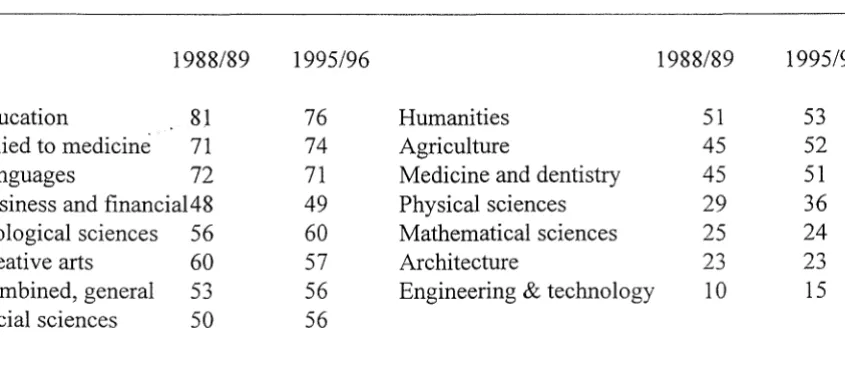
Table 3.1 Female students as a percentage of full-time undergraduates 57 Table 4.1 Qualifying courses in speech and language therapy 79 Table 4.2 Core and other subjects on the undergraduate curriculum 80 Table 4.3 Client groups as presented in 'Communicating Quality' 81 Table 4.4 Presenting disorders in 'Communicating Quality' 82
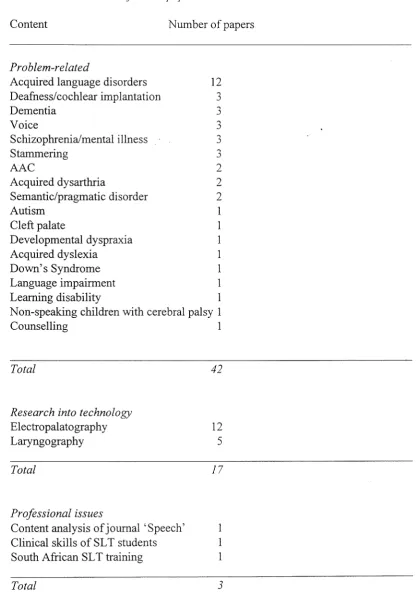
Table 4.5 Content ofEJDC papers 1995-1996 84
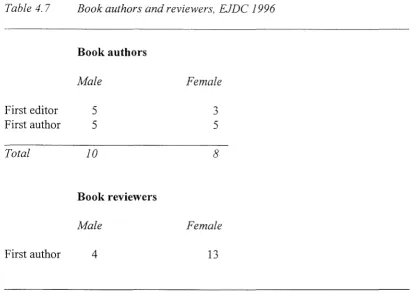
Table 4.6 EJDC articles, Volume 31, Number 4, 1996 86 Table 4.7 Book authors and reviewers, EJDC 1996 97
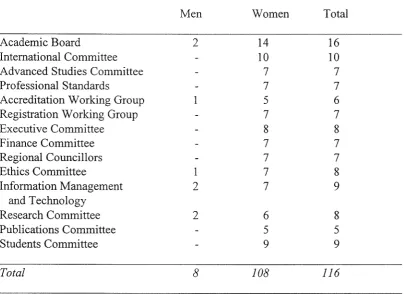
Table 4.8 RCSL T Committee membership 98
Table 5.1 Interview guide 110
Table 5.2 Initial study participants Ill
Chapter 1
Introduction
1.1 Preamble
This thesis explores an area which long concerned me as a practising speech and
language therapist, namely the undervaluing and marginalisation of speech and
language therapy within the health care system.
Despite the length of professional education and the complexity of problems with
which speech and language therapists deal, I was frequently puzzled as to why the
work was perceived from the outside as a job requiring relatively little training and
few (if any) qualifications. For instance, a colleague of mine was once asked, 'Do
you need any qualifications to be a speech and language therapist?'. I myself often
encountered patronising attitudes from other staff, particularly those higher up in the
'pecking order'. I well remember being confronted by a young medical house officer
with the question 'How are your little challenges coming on today?' This was in spite
of the fact that we worked on a stroke team where close multidisciplinary
co-operation was the norm.
My initial attempts to try and account in some way for the low status of speech and
language therapy drew on psychological explanations of career choice (Bebbington
1993). Finding these largely inadequate I looked to sociological frameworks as a
basis for 'unpacking' the issues in question. I argue in this thesis that the
undervaluing of speech and language therapy cannot be explored without considering
the gendered division of labour in healing work. I further assert that science has a
major role in the defence and contestation of gender divisions in the 'caring'
professions and I draw attention to the ways in which 'scientisation' is used as a
professionalisation strategy in speech and language therapy. In the thesis I employ
profession take on a scientific character. These include the idea of human
communication as a physical process involving sound waves, anatomical movement,
syntactic forms and so on. I further show how these divisions echo the gender divide
in other spheres of work.
The purpose of this introduction is to describe how I came to adopt my current
perspective. I begin with a short description of the work of speech and language
therapists. This is followed by a brief history of the profession. I then consider how
this study addresses a 'gap' in the sociology of work. In the next section I describe in
more depth how my interest grew in this area. I then discuss my rationale for
adopting a feminist perspective and finally I outline the contents of the thesis.
1.2 Speech and language therapy: its role and history
Speech and language therapists identify, assess and treat communication and
swallowing disorders in children and adults. They work closely with a variety of
other health and education staff including teachers, health visitors, physiotherapists,
occupational therapists, dietitians, doctors, nurses and psychologists. Most are
employed by the National Health Service, though increasing numbers are working in
private practice or education. They are based in community clinics, hospitals,
schools, language units and day centres, and some provide domiciliary services. The
profession is regulated by the Royal College of Speech and Language Therapists
(RCSLT). There are currently 6,000 practising therapists. Qualification is via a three
or four-year degree course or a two-year postgraduate MSc.
Speech and language therapy is widely regarded to have emerged as a recognised
occupation in the early part of the century'. In 1906 the first local authority provision
for people with stammers was established in Manchester. This was followed by the
opening of three hospital speech clinics in London. Provision increased after the First
World War when therapists were called upon by the medical profession to treat
shell-shocked and head-injured soldiers. There then followed the establishment of several
training schools and professional associations. Much ofthe early work ofthe 'speech
correctionists' or 'vocal therapists' was based on the emerging theoretical sciences of
the physics of sound, linguistics, phonetics, neurology and educational theory.
Currently the profession continues to identify with its scientific roots, though the
scope of its work has broadened to the extent that it is barely recognisable from its
ongms.
This study, based on interviews with practising therapists, sets out to examine the
position of the profession within the context of health care delivery as a whole. It also aims to look at the wider net of social forces which influence the position of
women in the labour market. This approach represents a departure from previous
research into the careers of speech and language therapists which has tended to focus
on the profession itself. Nevertheless, this literature provides important background
material such as providing his~orical detail and quantitative information on trends in
recruitment and retention.
Ninety-eight per cent of speech and language therapists are estimated to be women,
though men form a small but growing minority of speech and language therapy
students, a pattern noted in other female professions including physiotherapy and
nursing (Bebbington 1995). It will be seen in Chapter 4 that as in other occupations, men in speech and language therapy are more visible in the higher ranks of
management, research and teaching. Much has been written about women entering
the male-dominated professions - a process which has sometimes been referred to as
the 'feminisation' of work, including medicine (Elston 1980, Lorber 1984, Witz
1992, Brooke 1993, Notzer and Brown 1995), science (King 1994, Rose 1994),
surveying (Greed 1991, 1994), planning (Greed 1994) and law (Evetts 1984, Dyer
1997). The significance of gender for the female occupations is also a burgeoning
area of interest, including studies which have looked at secretarial work (Pringle
1989), midwifery (Versluysen 1981, Witz 1992, Allison and Pascali 1994), nursing
(Gamamikow 1978, Salvage 1985, Mackay 1989, Witz 1994, Walby and Greenwell
useful for comparisons and contrasts with speech and language therapy. I would
agree with Greed (1991) that it is important to consider the position of women in
other professions, even in areas which appear to have tenuous connections with
speech and language therapy, for as will be seen later, stereotypes about 'women's
work' abound in even the most 'male' of professions.
1.3 The personal and the political
I have been a speech and language therapist and member of the RCSL T since 1982
during which time I have worked as a clinician, manager and researcher. My interest
has been in the field of adult work, particularly in the care of elderly people with
communication problems associated with cerebrovascular disease, Parkinson's
disease and dementia. Latterly, however, I have been more involved in research than
clinical practice. This places me in the peculiar position of 'insider-outsider' which
other researchers have described2, for the vast majority of people in the profession are
hands-on practitioners. The ambiguity of my position is perhaps felt even more
acutely given that my research interests concern the careers of speech and language
therapists themselves rather than the therapy itself, the latter being the usual subject
of academic study.
My interest in this area arose from concerns as to why, giVen the fundamental
importance of communication to the human being, speech and language therapy does
not appear to receive the recognition it deserves. As Spender (1980) has pointed out:
Language helps form the limits of our reality. It is our means of ordering, classifying and manipulating the world. It is through language that we become members of a human community, that the world becomes comprehensible and meaningful, that we bring into existence the world in which we live (p.3).
In my eleven years as a full-time, practising therapist in the NHS, it seemed that
battles needed to be fought on all fronts. In my numerous discussions with other
therapists we would constantly bemoan our working conditions, including the heavy
caseloads and lack of staff to cover them, difficulty gaining adequate space in which
required to cover during the working week. This is not to say that all these conditions
existed for every therapist. Indeed, jobs in specialist units such as stroke wards or
language units often provided better than average facilities, especially when new
monies had been made available and funds apportioned for speech and language
therapy. It was also my feeling, and I believe that of other therapists, that our area
was generally seen as a low priority within the health care system, an extra item to be
tacked on almost as a 'luxury' in times of cut-backs and rationalisations in an ailing
health service. To some extent this seemed justifiable with constant talk, most
notably in the last decade, of the need for 'cost-containment' in public spending.
The poignancy of this situation came over to me in the late eighties when I was
working in the Welsh valleys in a former mining community. The provision at that
time of rehabilitation for people who had had strokes was limited, in that following
hospitalisation therapy services were sparse and in some areas non-existent. I recall
attending a talk on visual agnosia3 after stroke and my immense frustration at
thinking there were insufficient therapists to even diagnose such a problem, let alone
do something about it.
Concerns about the profession were further compounded by events which occurred in
the mid-eighties on the subject of pay. There was considerable dissatisfaction at the
time that speech and language therapists' salary levels were falling behind those of
other therapy professions. This followed a move by the union representing speech
and language therapists, ASTMS, to pull the profession out of the Whitley Council
negotiating body which determined pay for non-medical staff. There was much
activism in South Wales and Britain generally, which attempted to draw the
government's attention to the pay issue. This culminated in 1987 with the union
mounting a test case against the Department of Health using legislation contained in
the Equal Pay Act 1970 which sought to 'prove' that the work of speech and
2See for example, Ladner 1987, Greed 1991, Marshall 1994.
language therapists was of equal value to that of clinical psychologists and hospital
pharmacists.
In the late eighties and early nineties a number of reports and articles appeared
concerning recruitment and retention problems in the profession (Ware 1988, Rooney
1989, Manpower Advisory Group 1991 ). The Manpower Advisory Group carried out
a survey of all Health Regions in the UK. This indicated a decline in the numbers of
therapists in practice after the age of thirty, and assumed this could be explained by
the fact that therapists left to have children:
In a predominantly female profession, the fact that such a large proportion of speech therapists are so young makes the service vulnerable to severe maternity leave disruption. The drop in numbers of speech therapists after the age of 30 suggests that speech therapists who leave the profession to have children are not returning to work in the same field (p.l ).
The work of Ware (1988), a speech and language therapy manager, told a different
story. Her research arose out of concerns that within South-East Thames Regional
Health Authority there was a significant drop in the numbers of therapists after the
age of thirty. Her report Why do they leave?, based on research in the South-East
Thames Region, found that job satisfaction and pay were important factors in
therapists' career decisions and that difficulty with retention could not be explained
purely on account of family reasons. Studies have pointed to similar patterns of
recruitment and retention in the other female-dominated health occupations including
research into the Professions Allied to Medicine as a whole (Buchan and Pike 1989),
occupational therapy (Borikar and Good ban 1989), nursing (Williams et al 1991,
Francis et al (1992) and midwifery (Robinson 1986). There was thus a lingering
sense in my mind that the issues facing speech and language therapy were part of a
wider problem.
In an attempt to find possible answers to these concerns I embarked on an MSc,
choosing as my research topic the subject of speech and language therapy students'
career intentions (Bebbington 1993). I hypothesised that people left the profession
because they had made a career choice inappropriate to their interests. This approach
broader mechanisms which lead to the devaluation of certain forms of work. The
research found that older students and postgraduates taking the two-year accelerated
course were 'significantly more likely' (that is on quantitative measures) to want to
practise on completing the course. Younger students and undergraduates were less
sure they would pursue careers in speech and language therapy once qualified. This
finding was unsatisfactory in that it could still not account for the wastage of
therapists from the NHS. Furthermore. a model which assumed the problem was
down to the characteristics of individuals failed to take into account external factors
such as pay and conditions in the NHS.
1.4 Adopting a feminist perspective
On completing the research I felt I was no nearer to understanding the problem. I
then came across Ann Oakley's essay On the Importance of Being a Nurse (Oakley
1993) in which she argues that nursing cannot be understood without reference to
two forms of the division of labour - the division of labour in health care and the
division of labour between the sexes. Though more women are entering medicine, it
remains a male-dominated profession. Nursing, on the other hand; continues to be
female-dominated. Doctors' training and practice reinforce cultural ideals of
masculinity, encouraging behaviour which is rational, scientific and detached but
while medicine has accrued status and recognition through its ability to 'cure' illness,
the health care work provided by women, whether paid or unpaid, goes largely
unacknowledged. Oakley points out that the vast majority of health care work in the
world is performed by women. Since women's labour as health care workers is
generally low status and low-paid, their confidence is likely to be undermined, as
Oakley says in relation to nursing:
Oakley's work confirmed my hunch that the problems of speech and language
therapy were not confined to the occupation and could be linked to the undervaluing
of women's work in general.
My perspective thus changed and I sought to explore the contention that the
marginalisation of speech and language therapy could be explained by the fact that
most clinicians are women. Further reading drew my attention to the significance of
'science' in the professionalisation of occupations, in particular, medicine and also
the significance of 'science' in defending and challenging occupational boundaries.
As was pointed out in section 1.1, speech and language therapy continues to identify
with its scientific orgins, perhaps not surprising given the importance of science and
technology in contemporary times. I thus became interested in the interplay between
gender and science and the role of these constructs in influencing the status of speech
and language therapy.
I decided to conduct open-ended interviews in order to explore these issues. While
the intention was not to exclude male speech and language therapists in the sampling,
the research methodology was influenced by feminist concerns to address the
silences in women's experiences. As Reinharz (1992) points out,
Feminist researchers who have done interview studies have modified social science concepts and created important ways of seeing the world. By listening to women speak, understanding women's membership in particular social systems, and establishing the distribution of phenomena accessible only through sensitive interviewing, the feminist interview researchers have uncovered previously neglected or misunderstood worlds of experience (p.44).
This approach to research was a departure from my previous research training which
was principally concerned with statistical methods to determine the 'significance' or
otherwise of a relationship between one variable and another. This perspective
assumes the objectivity of the researcher whose person remains 'hidden' in the
research process. Feminism has called into question this view of intellectual enquiry,
arguing that the consciousness of the researcher is crucial to the whole research
enterprise, as Sherif (1987) notes in her critique of experimental psychology:
to study the subject. What is the individual being studied to do during the research? The researcher decides, of course, often in highly arbitrary ways dictated by custom in previous research, not by what the person does or is doing in daily life. What are to be included as the all-important independent variables? Which aspects of the individual's behavior are to be noticed and which ignored during the research experience? The researcher makes all these decisions, often forgetting at times that he or she is a human being who is part of the research situation too (p.47).
It has thus become common practice within feminist research for the researcher to declare her position. Indeed, Stanley and Wise (1983) suggest this is essential, given
the basic tenet of feminism that 'the personal is political'. They insist that:
... the crucial importance of the personal must also include an insistence on the importance, and also the presence, of the personal within research experiences as much as within any other
experiences. But, more than this, the personal is not only the political, it is also the crucial variable which is absolutely present in each and every attempt to 'do research' ... (p.l57).
On occasion it has been said that I need to view the situation of speech and language
therapists more 'objectively', but this has not been my aim and I identify closely with
Greed (1991) who as a surveyor studying surveyors has said that in doing her
research she does not pretend to have ' ... an objective neutral approach and indeed
would question the value of having one (p.14 )'. I would like to think that in common
with Greed my research achieves 'subjective accuracy'.
1.5 Thesis contents
This thesis is interested to understand the ways in which speech and language therapy
is marginalised. However, it is also concerned to explore both the mechanisms of this
subordination and the strategies the profession has employed to overcome its
marginality.
In Chapter 2 I consider the main themes relating to women's paid and unpaid work,
firstly in relation to their work as a whole and secondly with regard to their roles as
paid and unpaid carers. I examine these themes in order to see what light they may
shed on speech and language therapists' employment. Finally, I discuss existing
research on speech arid language therapists' careers and consider the gaps m
Chapter 3 aims to provide a background to looking at the role science plays in speech
and language therapy in its efforts to gain credibility, a theme I address in Chapter 4.
Chapter 3 begins by looking at science's main characteristics before examining
sociological critiques of science. I then consider ways in which claims to scientific
practice have been used to legitimise status for the health occupations. Furthermore, I
consider the gendered character of these struggles, including efforts by the
male-dominated medical profession to lay claim to 'science' whilst assigning
female-dominated nursing work to 'caring' (with the assumption that 'caring' is of lesser
value and requires little, if any, training).
Chapter 4 examines the role of science in speech and language therapy and evidence
for a gender division of labour in the profession. I argue in this chapter that the
profession, through its education, practice and research shapes itself unequivocally
along scientific lines. Indeed, I show that the occupation has been undergoing a
process of 'scientisation' in order to gain recognition. The occupational hierarchy in
the profession is such that few men are to be found in hands-on practitioner roles.
However, they are well-represented in the scientifically-regarded area of knowledge
production.
Chapters 5 to 10 report on the face-to-face interviews carried out for this thesis.
Chapter 5 addresses issues of methodology and describes the research process. I seek
to justify my choice of methodology, that is, feminist interviewing and then I
describe the fieldwork. Mindful of the need for a 'houseworking' of the research
process (Oakley 1992), the final section contains reflexive observations on the
fieldwork.
Chapters 6, 7, 8, 9 and 1 0 present the empirical findings of the study. These chapters
follow the life-history format of the interviews beginning in Chapter 6 with a
consideration of the decision-making process in research participants' choice of
interview data, how career choice is 'gendered' and ways m which speech and
language therapy is definitely seen as a career for a girl.
Chapter 7 looks at the participants' expenences of speech and language therapy
education. Through the data I show that the education focuses heavily on the
acquisition of 'scientific' knowledge while paying lesser attention to its practical
applications. I further show how gender stereotypes influence perceptions as to
whether men are able to deal with 'emotion work'and whether women are perceived
to be able to deal with the scientific aspects of the job.
Chapters 8, 9 and 10 look at speech and language therapists' work expenences.
Chapter 8 examines the interviewees' work across the public/private divide. The
findings indicate that speech and language therapists' careers cannot be understood
without reference to wider issues affecting women's labour market position. These
include the fact that on the whole women take primary responsibility for childcare
and domestic labour.
In Chapter 9 I consider the status of speech and language therapy as a health care
occupation. I show that the low status of the profession remains problematic and that
the more powerful, male-dominated professions, medicine in particular, continue to
bear an influence on its practice. Furthermore, I argue that gender is an important
factor in the marginalisation of speech and language therapy.
Chapter 10 explores the role of science in speech and language therapy practice,
focusing on three facets of science as applied to health care. These are that rationality
is able to cure human illness, that an understanding of the parts will lead to an
understanding of the whole (for example, the separation of phonetic and syntactic
elements of speech) and that the object under study (that is, the patient) is better
The concluding chapter draws together the mam elements of the argument and
considers the usefulness of juxtaposing science and gender in explaining the marginal
position of speech and language therapy.
Chapter 2
Women, work and health care
2.1 Introduction
The aim of this chapter is to examine how patterns of speech and language therapists'
employment may be illuminated by an understanding of women's position in the
labour market as a whole. I first consider empirical features of women's work
including their participation in paid employment, their unpaid work in the home and
community and women's increasing tendency to take up part-time employment. I
then examine patterns of sex segregation within the labour market before looking at
gender as an aspect of workplace culture. Theoretical explanations for women's
position in the labour market are then examined. Given that speech and language
therapy is an occupation involved in the provision of health care and in view of the
fact that most therapists are female, I look at the 'gendering' in the provision of care,
for example in terms of gender divisions of labour in the formal health care sector.
No attempt has so far been made to look at the gender division of labour in speech
and language therapy. This thesis is the first attempt to do so. The final section of this
chapter thus examines the case of speech and language therapy and considers
whether there is evidence that the key features highlighted in the previous section are
represented in this occupation.
2.2 Work: the public and private
There has been a major increase in the numbers of women participating in paid
employment since the Second World War, so that women in the UK now constitute
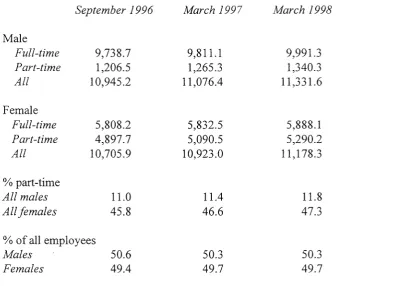
almost half of all employees. In March 1998 they were 49.7% of all workers (see
Table 2.1 Employees in employment 1996-1998 (thousands)
September 1996 March 1997 March 1998
Male
Full-time 9,738.7 9,811.1 9,991.3
Part-time 1,206.5 1,265.3 1,340.3
All 10,945.2 11,076.4 11,331.6
Female
Full-time 5,808.2 5,832.5 5,888.1
Part-time 4,897.7 5,090.5 5,290.2
All 10,705.9 10,923.0 11,178.3
%part-time
All males 11.0 11.4 11.8
All females 45.8 46.6 47.3
% of all employees
Males 50.6 50.3 50.3
Females 49.4 49.7 49.7
Sources : calculated from Labour Market Trends, May 1997 and July 1998.
Though women's economic activity has increased, waged work continues to be a site
of considerable gender inequality, though patterns of inequality have been changing
both for the better and for the worse. Feminists have drawn attention to the
overriding importance of gender in the way work is structured, as Game and Pringle
(1983) point out,
Gender is fundamental to the way work is organised; and work is central in the social construction of gender' (p.14).
The gendering of the labour market affects women throughout the life course and for
this reason the subject of 'women and work' has been an important focus of
academics and policy makers. As Rees (1992) has pointed out:
women and the labour market has received considerable attention in the last decade _________ (Rees 1992:2).
In addition to their paid work, women carry out the larger part of unpaid work in the
home and community including child care, housework, caring for other family
members4
and other tasks within the neighbourhood. Women's unwaged work is
considered by feminists to be 'work' even though it is not financially rewarded, as
Witz comments, ' ... .just because it may be done for family, friends or neighbours for
no payment this does not make it any the less 'work' (p.273). Thus there is an
interconnection between the nature of women's work in the 'private' sphere and that
performed in the 'public' sphere, whereby the jobs they carry out for pay are often an
extension of the work they perform in the home on an unpaid basis.
Another significant feature of women's paid employment since the Second World
War is that of an increase in the numbers working part-time. Figures from Labour
Market Trends (1997, 1998) indicate that the upward trend in the proportion of
part-time female workers has continued in the three-year period to March 1998, with
almost half of all women working in this capacity (Table 2.1 )- While the numbers of
men working part-time have increased, their proportion of all working males is low
Gust under twelve per cent) and their numbers in the workforce are increasing at a
slower rate than those of women. Naylor (1994) has noted that part-time working is
more evenly distributed amongst all age groups of women, whereas men working
part-time are more likely to be younger (particularly students) or older. Since the
Equal Pay Act, the gap in pay between full-time women and men has been closing.
However it diverged slightly in 1998, so that women's rates are now 80.1% ofmen's
compared to 80.2% a year ago (Deny 1998). As regards inequalities amongst
women, the pay gap between part-time and full-time women has been diverging
(Walby 1997).
4Delphy and Leonard (1992) argue that feminists have overemphasized the work women carry out for
Prior to 1995, part-timers were not entitled to employment protection rights which
were normally granted to full-time workers such as maternity leave, statutory
redundancy pay and the right to appeal against unfair dismissal (Employment Gazette
1995). However, this distinction was overturned in a ruling brought by the European
Court in 1995. Nevertheless, this legislation has only partially improved the situation
for part-time workers. Walby (1997) notes that the division between part-time and
full-time work is a growing form of sex segregation in employment:
It is extremely important in differentiating the conditions and pay of different groups of women, with the pay and conditions of full-time workers being significantly better. Its growth has implications for the structuring of employment as a whole (p.34).
The increase in part-time working has accompanied the globalisation of economic
structures and the increasing casualisation of workforces. Late capitalism is
characterised by expansion and investment such that monopoly corporations emerge
to dominate economies on a national and increasingly international scale (Bradley
1997). The drive for economic competitiveness places pressure on local labour
markets thereby increasing the need for greater casualisation and flexibilisation of
labour. Walby (1997) argues that since most workers in the flexible workforce are
female, 'flexibility is gendered' (p. 79). The growth of flexibility has been dependent
primarily on the availability of women to work part-time. This has led to a situation
in which most new employment opportunities in the UK are part-time and 'for
women'.
Thus women's employment has specific features which do not conform to the male
career pattern. It has been argued that the latter model of career involving continuous service and steady upward promotion is generally regarded as the 'normal' career.
Pascali (1994) has noted that women's withdrawal from the labour market, usually
when children are born, is often followed by:
... a chequered pattern of part-time work, reduction in status and earning, combining paid and unpaid work roles (p.18).
Acker (1983, 1987) suggests that women teachers who follow the male career path
have a 'career' while those who do not have a 'job'. Compared with the male career
careers are frequently characterised by extended periods at practitioner level. Often,
this is a coping strategy during periods of part-time employment (Crompton and
Sanderson 1990). One last point is that the specific character of women's
employment means that stereotypical views of motherhood as taking precedence lead
to organisational stereotypes of women as unambitious, unreliable and lacking in
occupational commitment (Lewis 1991 ).
2.3 The sexual division of labour
Men and women tend to be employed in different occupations and women are to be
found in a much smaller range of jobs than men. Job segregation by gender, or 'the
sexual division of labour' is now agreed to be the most important reason for gender
inequalities in the labour market, particularly with respect to pay. Walby (1988)
states that gender segregation is ' ... the most important cause of the wages gap
between men and women in Western economies' (p.1).
The Equal Pay Act of 1970 has provided a legal framework for establishing the
comparative values of male and female work, not only in instances where a job is
'like work' in comparison with that of a man, but also where an occupation is
deemed to be of equal value, as in the speech and language therapists' test case.
However, Rees (1992) points out that the existence of gender segregation has
dampened the effect of the Equal Pay legislation with limited improvement in the
wages gap between men and women, in part due to the difficulty of finding male
comparators. The significance of the sexual division of labour in maintaining
women's unequal position in the labour market is also underlined by evidence of
employers actually increasing gender divisions to avoid the threat of litigation.
Gender segregation by sex has been a remarkably persistent feature of the labour
market having shown only a slight decrease in the years 1901-1971 (Hakim 1979).
The sexual division of labour is characterised by horizontal and vertical segregation.
In the former, women are concentrated in different areas of work, whereas in the
In terms of horizontal segregation, a quarter of occupations are considered 'typically
female', while three-quarters of occupations are 'typically male'. An analysis by
Witz (1993) using data from the Census for Employment published by the Equal
Opportunities Commission in 1991 showed women to be underrepresented in seven
out of ten sectors of industry, including construction, energy and water and transport
and communication. The three areas in which they were over-represented were:
distribution, hotels and catering; banking, finance and insurance; and 'other services'
including health work. Figures of employees by gender and employment for the UK
in 1997 (Social Trends 1997) show that women continue to be employed in fewer
industrial sectors than men. They are mainly concentrated in health and social work
and the wholesale and retail sector (see Table 2.2). Men are more evenly spread
across all sectors except health and education. Women, on the other hand, are
severely underrepresented in agriculture, hunting and forestry, mining and quarrying,
energy and water supplies, manufacturing, construction and transport, storage and
Table 2.2 Employees by gender and employment in the UK, March 1997
(thousands)
Male
Full-time Part-time
Agriculture, hunting & forestry 155.7 40.5
Mining and quarrying 52.3 1.6
Energy and water supplies 149.8 2.8
Manufacturing 2,739,5 63.4
Electricity, gas and water 97.5 1.2
Construction 670.0 11.3
Wholesale and retail 1540.5 300.9 Hotels and restaurants 284.9 188.8 Transport, storage and
communication 918.7 56.5
Financial intermediation 443.2 14.0 Real estate, renting and
business activities 1,222.9 199.0 Public administration 628.9 39.6
Education 389.1 117.1
Health and social work 358.0 112.0 Other community, social
and personal activities 328.9 101.4
Source: Social Trends 27, Crown Copyright, 1997:76
Female
Full-time Part-time
25.8 21.5
7.4 1.7
32.1 5.8
902.2 208.4
24.7 4.0
91.3 43.4
821.1 1,117.4
248.2 507.6
268.9 83.9
425.7 129.3
806.1 563.3
453.2 183.7
586.5 699.5
928.0 1,052.5
239.2 234.0
With regard to vertical segregation, men are more likely to be found in managerial
and higher professional areas of work as well as skilled manual work, whereas
women predominate in lower professional and clerical non-manual work and
unskilled manual work (Witz 1993). This form of segregation persists, including in
male occupations to which women have now gained access. Women are less likely to
occupy managerial roles and are more likely to continue in a practitioner capacity.
Figures from the Hansard Commission (1990) showed that women account for 11%
management. More specifically, the proportion of 'top' female managers in the NHS5
in 1993 was 19% overall for the UK and Northern Ireland (IHSM Consultants 1994).
We might expect this to be higher, given that 79% of all non-medical NHS staff are
women (Department of Health 1997a).
Women also tend to work in areas regarded as less prestigious.6
An example is that of
women solicitors who now qualify in roughly equal numbers to men. While the
numbers of practising female solicitors has been rising steadily, they account for only
15% of partners and tend to work in the more routine areas such as family law and
wills compared with male solicitors who handle more prestigious work including
criminal cases and company work. (Evetts 1994). Women solicitors are paid
substantially less than their male colleagues and work mainly in smaller practices
including those which do legal aid work where profits are lower. (Dyer 1997).
Job segregation occurs not only between men and women but also amongst different
groups of women such that the labour market participation of lesbian and disabled
women as well as those from ethnic minorities including Black and Asian women
form distinctive patterns, for instance, while 20% of Asian women and 17% of white
women hold professional and managerial positions, only 2% of West Indian women
are likewise employed (Brown 1984, quoted in Witz 1993).
2.4 Workplace culture
Gendered divisions within the labour market are not the only source of
discrimination women face in the employment stakes. Case studies have drawn
attention to cultural aspects of the workplace which perpetuate the privileging of
male labour above that of women, in particular ways in which the notion of 'skill'
has been defined to serve men's interests. Research has also documented ways in
5Defined in the report by IHSM Consultants as all chief executives in purchasing authorities, provider
organisations, regional health authorities, family health service authorities, blood transfusion services and regional outposts.
6Walby has described this shift in patriarchal strategy as one which has changed from 'exclusionary to
which sexuality and male power within organisations have been used to control
female labour.
Numerous studies have shown that 'skill' is far from the objectively defined criterion
it is commonly regarded to be, indeed, its interpretation has been shown to be fraught
with gender bias. Witz states that the lower worth assigned to women's work
compared to that of men's reflects 'deeply-entrenched cultural and ideological
constructions' and that it is crucial to realise that the grading of jobs often depends,
.... as much, if not more, upon the gender of the person performing it than it does on the content of the job itself' (Witz 1993:288).
It has been noted that training and ability can be overshadowed by the sex of a job's
incumbent .
.... the classification of women's jobs as unskilled and men's jobs as skilled ·or semi-skilled frequently bears little relation to the actual amount of training or ability required (Phillips and Taylor, 1984:55).
In a case study of whitegoods mass production plants, for example, Game and
Pringle (1983) indicated that the division of labour was maintained on a series of
dualisms which largely equated with masculinity and femininity. These included
skilled/unskilled, heavy/light, dangerous/less dangerous and interesting/boring, the
first of each pair appropriate to men and the second to women. Game and Pringle
point out that 'nature' was frequently invoked in justifying women's propensity for
unskilled, light, less dangerous or boring work. At the same time men's work did not
require the same rationalisation, possibly because they had more power to decide
which work they wanted to do or because men have 'natural' rights in the labour
market. Closer inspection of the way in which these dualities operated in the work
context revealed that such differences were used as a means of drawing on ethnic and
sexual divisions to enhance profitability and control. Game and Pringle explain, for
example, how the dangerous/less dangerous dichotomy was used arbitrarily with
certain tasks regarded as more dangerous and dirty than others and a potential danger
to women's capacity for reproduction, yet in whitegoods factories women often
traditionally regarded as male because of the degree of dangerousness such as enamel
shop work would be carried out by migrant workers - both men and women - in other
factories.
Other research has focused on the part played by sexuality in maintaining male
control within the workplace. The existence of sexual harassment is now publicly
acknowledged, however there is less general awareness of the broader ramifications
of sexuality as applied to the workings of organisations. Burrell and Hearn (198.9)
point to the more or less subtle ways in which sexuality pervades the workplace, so
that .
... the sexuality of organisations is obscured by, subordinated to or sublimated to 'non-sexual' organizational purposes (p.l8).
While earlier research argued that management was concerned to desexualise the
working environment in order that sex would not interfere with workforce discipline
(Burrell 1984), later studies have highlighted the pervasiveness of male
heterosexuality in maintaining men's power in organisational settings (Pringle 1989,
Collinson and Collinson 1989, Parkin 1989). The work of Collinson and Collinson
underlines the significance of traditional forms of men's sexuality in organisations
which management tended ' ... either to be blind to, tolerate or even accept' (p.93).
Their study of sexuality within the all-male environment on the shop-floor of a
lorry-producing factory, a predominantly male 'white collar' trade union and a UK
insurance company with a mixed workforce, confirmed the persistence of traditional
discourses surrounding male-female sexuality as exemplified by the research of
Hollway (1984). For instance, men in positions of power invested in 'the male sexual
drive' and 'female have/hold' discourses, in which the former assumes the male sex
drive to be a natural urge attributable to biology, while the latter stresses the
importance to women of marriage, monogamous relationships and the family and
women as the objects of men's sexuality. Collinson and Collinson argue that this
evidence illustrates how men may draw on conventional forms of masculinity and
organisational power in order to 'secure themselves and their identity'. In addition
2.5 Explaining women's labour market disadvantage
Explanations for women's disadvantaged position in the labour market have centred
on two main theoretical concerns. The first considers whether gender inequality in
paid work is a consequence of women's position in the family: the 'domestic
responsibilities model' (Bruegel 1989), or whether their position in the family (being
forced into marriage and dependency on men's earnings) results from women's
poorer access to well-paid employment (Walby 1990). The second issue relates to the
theory that patriarchal and capitalist relations have been the driving force behind the
need for low-paid, gender-segregated labour.
Earlier studies on the sociology of work favoured the domestic responsibilities model
whereby women's workforce position was held in large part to be a consequence of
their attitudes to family and work. It was argued that female responsibilities in the home were the primary cause of women's 'problem' in relation to paid employment.
(Brown 1976, Feldberg and Glen 1979). These theories left power relations within
the family largely unchallenged and unquestioned. Furthermore, certain features of
women's labour market patterns do not lend support to this argument. Feminists have
pointed out that even when women do not take a 'career break' they are still found in
low-paying jobs (Witz 1993). Additionally, since the war, the gap between women's
and men's educational qualifications and labour market skills has been narrowing, a
trend which has not been reflected in rising wage rates for women (Rees 1992?.
In the seventies, 'dual labour-market theory' sought to explain differentials between
the pay and conditions of different sets of workers by suggesting that there were
'primary' and 'secondary' sectors within the labour market (Piore 1975). Workers in
the primary sector had access to promotion, job security and high wages. By contrast
secondary sector employees were those who received low wages, had poor career
prospects and lack of job security. Barron and Norris (1976) argued that dual
labour-7ln fact research from the USA shows that occupational differences in human capital account for less
market theory could explain gender segregation at work: employers showed a
preference for taking on women in secondary sector jobs because they would be
more likely to accept poor pay and conditions, limited opportunities for advancement
and poor worker solidarity. Men, on the other hand, were deemed more suitable for
primary sector employment because they would be more inclined to seek promotions
and higher salaries commonly associated with breadwinner status.
Dual labour-market theory has been criticised for its inadequacy in drawing attention
to the specific ways in which women are discriminated against in the labour market,
including ignoring the role union power has played in supporting men's demands in
the workplace at work at the expense of women's. The theory also fails to take
account of the relationship between women's work in the public sphere and that in
the private domain (Rees 1992).
Marxist accounts have been used to understand structural causes of gender
segregation in employment. Marx was concerned to explain class exploitation; he did
not seek to account for the existence of the sexual division of labour. However,
Marxist and socialist feminists have reworked Marxist theory in an attempt to do so.
The 'reserve army' hypothesis is based on the Marxist idea [1867] (1954) that groups
of workers (such as women) are brought in as an industrial reserve army during
periods of labour shortage and economic prosperity to reduce pressure on wages.
Feminists have suggested that women provide a flexible reserve army of labour
because of their position in the family, particularly married women who can return
back into the home once no longer needed (Beechey 1977). However the reserve
army theory has been challenged by the empirical work of Bruegel (1979) who found
that women were not necessarily the first to be made redundant in times of recession.
Indeed, it is well-documented that women's employment has been better protected
than men's in the nineties with the bulk of women's employment provided through
the expanding service sector. On the other hand, men's employment has been
dependent on the manufacturing industries which have seen a decline in recent years
'Dual systems theory' attempts to integrate the concepts of capitalism and patriarchy
in a further attempt to explain gender divisions in the labour market. Hartmann
(1981, reprinted in Harding 1987) argues that is not possible to understand women's
position in the labour market without considering its relationship to women's unpaid
labour in the household. In Hartmann's account, both capitalism and patriarchy
benefit from the institution of the heterosexual, nuclear family and from women's
unpaid labour provided within it. Hartmann's work departs from other theorists in
analysing not only the influence of capitalism in bringing about the gendered division
of labour but also that of male power in excluding women from well-paid work .
.... men as a group are able to maintain control of women's labour power and thus perpetuate their dominance. Their control of women's labor power is the lever that allows men to benefit from women's provision of personal and household services, including relief from child rearing and many unpleasant tasks both within and beyond households, and the arrangement of the nuclear family, based on monogamous and heterosexual marriage, is one institutional form that seems to enhance this control. Patriarchy's material base is men's control ofwomen's labor; both in the household and in the labor market, the division of labor by gender tends to benefit men (p.ll4).
Walby ( 1986) also states that both patriarchy and capitalism operate together in the
subordination of women in paid work, but in addition Walby argues that patriarchy
draws on specific strategies to bar women from certain areas or to segregate them
into lower graded jobs. Witz (1993) suggests that the particular contribution of the
dual-systems theorists lies in the challenge they have posed to the conventional view
of the family as determining women's labour market position
The concept of patriarchy has proved vital in furthering feminist analyses of women's employment. In particular, dual-systems analyses have radically overturned the conventional view that gender divisions in employment can simply be read off from those in the family and so present a strong challenge to the 'domestic responsibilities model' of women's employment. (p.297)
2.6 Women and the provision of health care
It was seen in section 2.2 that the bulk of non-waged household work is carried out by women, including the care of children and other family members. Similarly,
health care work in the public sphere is a major source of paid employment for
women (see Table 2.1). This section delineates the nature ofwomen's contribution to
this labour may be said to be 'gendered'. Finally, it will consider the strategies men
and women have used to uphold or contest the boundaries within the health division
of labour.
The significance of women's role in caring for people's health in the private sphere is
underlined by Doyal (1995) who states that
Around the world the most fundamental feature of women's lives is their responsibility for home, family and household labour. Caring for and caring about others is a central feature of these activities wherever in the world they are carried out (p.22).
Marshall ( 1991) has shown that childcare and parenting manuals depict the ideal
family as constituting a mother, father and children. While fathers are seen as
important, they are not regarded as critical to the giving of daily care. Their main role
is deemed to be that of financial provider. This concurs with Adrienne Rich's
observation that:
... .it is still assumed that the mother is 'with the child'. It is she, finally, who is held accountable for her children's health, the clothes they wear, their behavior at school, their intelligence and their general development (Rich 1979:53).
Recent empirical research has shown that when women return to study this has to fit
in with their wife and mother roles, that is they must put their families needs before
their own (Smith 1994). Similarly, research on women with careers in dual-earner
households indicated that fathers did not equally share childcare and domestic tasks
and support from social networks was inadequate. Many women returning to work
experienced hostile attitudes from relatives, friends and colleagues at work. In their
research, Brannen and Moss ( 1991) found that:
... women were forced by circumstances to rely largely on personal solutions to the demands and tensions of managing the dual earner lifestyle, which fell largely upon them (p.252).
Though there is some evidence for a lessening gap between the proportion of
domestic labour contributed by women and that contributed by men, evidence of a
more equitable division of labour in homes where women work full-time (Graham
1993), of significant numbers of older men caring for their spouses (Arber and Ginn
1990) and class and race differences in the extent of people's caring responsibilities
for others (Graham 1993), women still retain the pnmary responsibility for
household work (Pahl 1984, Delphy and Leonard 1992, Rees 1992, Thomas 1995).
This is true not only in the 'developed' countries; Shiva (1993) refers to women's
labour in the global context as 'social labour' which is defined by industrialisation as
'non-labour' on account of its association with women's 'natural' propensities.
Importantly, women's labour is seen as 'non-labour' because it is not available for
exchange on the market and it is performed unpaid within the institution of marriage
and the family. Empirical evidence supports this. Delphy and Leonard point out that
the time women spend on domestic work has not declined this century despite the
advent of the so-called 'labour-saving' devices and that women do twice as much
domestic work as men each day.
Feminists have drawn attention to the key importance of this labour to people's
health and well-being by making visible 'the distinctive labour of women' (Rose
1994:37). In a paper examining the relationship between unpaid domestic labour and
health, Thomas (1995) states that women's domestic labour is ' ... fundamental to
the production and reproduction of 'the body' ... ' (pp. 328-329). Thomas points out
that domestic labour was a vital factor in the fall in mortality rates in the late
nineteenth and early twentieth century, an issue overlooked in the more widely
accepted theory which links improvements in the population's health with better
material standards of living (McKeown 1979). 8
Historically, poor working conditions
associated with early industrialisation precipitated chronic ill-health amongst the
working population. The state legislated to curtail female and child labour and
shorten the working week. There was a concurrent shift of labour from the public to
the private sphere creating a division of labour between the male 'breadwinner' and
female 'housewife'. Thus women's domestic labour was harnessed to the benefit of
industrialisation. As Thomas has shown, this includes the maintenance of the health
of the family and housework.
8