International Journal of Research (IJR)
e-ISSN: 2348-6848, p- ISSN: 2348-795X Volume 2, Issue 3, March 2015Available at http://internationaljournalofresearch.org
Quality of Education and Performance of Students at G. C. E.
(O/L) Examination a Study in the District of Batticaloa
Mr.A.Andrew
Senior Lecturer, Department of Management, Faculty of Commerce and Management,
Eastern University, Sri Lanka
Mr.R.Kishokumar
Assistant Lecturer, Department of Management, Faculty of Commerce and Management,
Eastern University, Sri Lanka
Abstract
The state of Sri Lanka spends considerable amount of money to provide free education to all her citizens more than 50 years. Even though large amount of money is spent and effort been taken, the quality of education is not at the required level. This study focuses on the relationship between the quality of education and the level of performance of the students in the Batticaloa district. The purpose of this study is to identify the extent to which the role of the principals, skills of the teachers, and the discipline of the students affect the level of performance of the students in this district, and to find suitable solutions to improve the level of performance of the students. This study will help the schools in other districts to identify, understand, and improve the level of performance of the students. The conceptual model of the study explains how the role of the principals, skills of the teachers, and discipline of the students contribute to the level of performance of the students. The findings of the descriptive statistics of the study reveals that, the role of the principals, skills of the teachers, and discipline of the students in the high performance category are very much contributing for better performance of the students. Conversely, the low level of the role of the principals in the low performance category is the main reason for the low level
International Journal of Research (IJR)
e-ISSN: 2348-6848, p- ISSN: 2348-795X Volume 2, Issue 2, March 2015Available at http://internationaljournalofresearch.org
01.
INTRODUCTION
1.1
Introduction
In our country the state spends considerable amount of money to provide free education to all her citizens more than 50 years. During the early part of independence, the country produced many scholars, scientists, administrators and national figures of great ability and high distinction. The situation has changed in recent decades, and indicated a sharp decline in the standard and quality of education at all levels. The education system does not produce pupils with the knowledge, understanding, and the skills and attitudes appropriate for successful living. Total personality development such as creativity, initiative, discipline, team spirit, respect and tolerance for other people and other cultures is not achieved.
Theoretically, performance of any individual depends on the results oriented actions, such as contribution to the achievement of the organization’s stated goals (Etzioni, 1964) and of the operative goals (Perrow, 1961), acquisition of resources from the environment (Yuchtman and Seashore, 1967), providing returns from the organization to its environment (Keely, 1978 &1984), and enhancement of the internal process (Structure and operations) of the organization (Pfeffer, 1977).
Generally, the role-played by people, knowledge, personal qualities are the attributes of employees an organization believe a person should possess in order for them to do a particular job assigned. The qualities of employees, such as, skills, attitude, leadership, and creativity are difficult to observe and measure, but they are important characteristics of employees’ performance. What really an organization want from their employee, is the results these qualities produce. A school is one of the most important formal agencies of education. It plays a major role in moulding the ideas,
habits and attitudes of the children with a view to producing well balanced personalities; physically strong, mentally alert, emotionally stable, culturally sound, and socially efficient. School is also a social institution, set up by the society to serve its ends.
School Principals and teachers generally admitted, to render an incomparable service to bring the society and nation in prosperity. Undoubtedly, an effective, and efficient performance of school Principals’ and teachers’ therefore, ensures healthy existence and development of these institutions and the development of the society and nation at large. It is very vital that, the role of the principals, skills of the teachers, and the discipline of the students are a major factor in determining the level of performance of the students.
International Journal of Research (IJR)
e-ISSN: 2348-6848, p- ISSN: 2348-795X Volume 2, Issue 2, March 2015Available at http://internationaljournalofresearch.org
Therefore, studying the role of the principals’, qualities of the teachers’, and the discipline of the students’ would help to identify the different level of performance of the students and the reasons representing this level is of meaningful. The present study aims at determining the extend of influence of the above-mentioned factors on the level of performance of the students in the Batticaloa district and to find suitable solutions to improve the level of performance of the students.
1. 2. Problem Statement
The performance of the students at the G.C.E. (O/L) examination in most of the schools in the Batticaloa district indicates different level of performance. Some of the schools performing more that 50% while most of the schools performing less than 40%. This is mainly as a result of the role of the principals, skills of the teachers and the discipline of the students in this district. This urges an investigation to understand the extend of influence of the role of the principals, skills of the teachers and discipline of the students on the level of performance of the students’, and to suggest suitable solutions to improve their level of performance. The level of performance is considered as passing the G. C. E. O/L examination. The passing of examination is considered that a student should obtain minimum 03 credits passes in language and in any other two subjects along with 03 ordinary passes in any other subjects all together six passes in G.C.E.O/L examination.
1. 3. Objective of the study
The primary objective of this study is to identify the extend to which the role of principals, skills of teachers, and discipline of the students affect the level of performance of the students in this district, and to find suitable solutions to improve their level of performance.
In order to achieve the above objectives, the study will identify the role of the principals,
skills of the teachers, and discipline of the students required for higher level of performance of the students, and to provide the means to improve the level of performance of the students.
1. 4. Significance of the study
The newly introduced curriculum in the education system urges for a performance – based evaluation and reward system for the school principals and teachers in order to promote a productive education in Sri Lanka. It is true that all the qualities, attributes, as well as values and norms, which make up a successful individual or a manager or a leader, come to the surface during adolescence or later. But many of them develop during childhood, and are often the result of childhood influence. In Sri Lanka mainly in backward areas, the vast majority of children do not get the opportunity of attending a pre-school, and as such, the school is their first formal educational experience outside the home. Thus the school is a very crucial stage in the development of knowledge, skills, qualities, experience, etc. which contribute greatly to their better future. The higher quality of education is an important parameter to cope with the present and future requirements of organizations. Moreover, a child’s higher educational and/or job career depends on what he/she has achieved in the school. Therefore, it is felt that the role of the principals, and the qualities of the teachers greatly influences to acquire the required qualities, skills and knowledge of the children.
International Journal of Research (IJR)
e-ISSN: 2348-6848, p- ISSN: 2348-795X Volume 2, Issue 2, March 2015Available at http://internationaljournalofresearch.org
and the skills of school teachers influence the level of performance of the students
1. 5. Assumptions
1 Educational policies remain unchanged 2 The behavioral pattern is still the same
in the prevailing situation.
3 The administrative set up within the schools remains unchanged.
4 The infrastructure facilities of the schools remain the same.
1.6. Limitations
1. There are three educational zones in the Batticaloa district. They are Batticaloa educational zone, Paddiruppu educational zone, and Kalkudah educational zone, I have selected only Batticaloa educational zone as the gap is much wider than other two zones.
2. The Level of performance of the schools students are revealed in the year 05 scholarship examination, G.C.E.(O/L) examination, and G.C.E.(A/L) examination. I have taken only the level of performance of the school students at the G.C.E ordinary level examination.
02.
REVIEW OF LITERATURE
2. 1 Introduction
‘In Sri Lanka the State has provided free education to all her citizens over the last 50 years. As a result we have a literacy rate of about 90%.During the first decades, after we gained independence, universities, technical colleges, schools and other tertiary education institutions provided for the training of a wide variety of professional and semi-professional personnel. During this period we produced many scholars, scientists, administrators and national figures of great ability and high distinction. In recent decades the picture has changed. There has been a sharp decline in
the standard and quality of education at all levels. The reading habit and the use of libraries in the learning process have almost disappeared from our education culture (Angela, 2000).
Serious shortcomings have appeared at every level of the education system. Statistics reveal a dismal situation. Approximately 14% of children in the compulsory school going age (5 - 14) years do not attend school. Public demand, unemployment, poor performance at examinations, school drop-out and non-participation rates are all indicative of the need for improvement of education. The specific interventions necessary can also be determined with reference to these factors. Also, there are fundamental issues arising from the very nature of human development and the role that education must play in that development, which are far more compelling.
The school has to take on some of the functions, which the close-knit family is supposed to fill. These functions include instilling discipline, inculcating wholesome attitudes and values which become some of the emerging missions of the education system. Ensuring the safety and protection of the growing child against negative social and commercial interests, and guiding and counselling both the child and the parents are parts of this new mission.
2. 2 Quality of Education
Quality is the single most important issue in education, business, and government today. Quality of Education is generally low in developing countries, and has been found (for example, in studies undertaken in Thailand, Malaysia and the Philippines) to be lower still for poor and rural pupils. If the quality of education is to improve, however, the improvement must be led by today’s principals and teachers.
International Journal of Research (IJR)
e-ISSN: 2348-6848, p- ISSN: 2348-795X Volume 2, Issue 2, March 2015Available at http://internationaljournalofresearch.org
market. Tradition prevents many educational processes from being changed to meet student needs. Society is demanding that the quality of education improve, but society fails to support education’s efforts to improve. Many of out nation’s education professionals are fearful of change and do not know how to cope with the new requirements expected of them.
Education professionals must be aware of the fact that a commercial quality program will not work in education. The culture, environment, and work processes are different in each organization. Education professionals must be provided with a program that is specifically designed for education. Performance of the school students largely depends on the quality of education which in turn depends largely on the qualities of the teachers, role of the principals, and the discipline of the students. Schools measure the quality of their output by student achievement. The basic measures of student output are test scores (Jerome, 1995). If test scores area improving, obviously the quality of education must be improving (Jerome, 1995).Customer-driven quality is directed toward student achievement. It also demands awareness of the latest development of the factors that drive student satisfaction. It also demands awareness of the latest developments in education and a rapid response to student requirements. In addition, the school’s approach to recovering from poor student performance is crucial to improving both the quality of education and the relationship with students, parents, and community.
2. 3 The nature of performance
Performance is one of the major categories of behaviour. Researchers have termed performance differently, March & Simon termed as “decision to produce”. Again there are two district subcategories. “Normal or expected (role) performance, and “ Extra-role behaviour.” The normal or expected role performance refers to performance that meets the minimal expected standards that the organization has designated for an employ in a
particular job. The extra-role behaviour on the other hand, goes” above and beyond” what is normally expected (by the organization) in the psychological construct. It is behaviour that is spontaneous and innovative (Katz.1964).
Many researchers viewed performance differently. If we consider the performance of the school students according to March & Simon, that school students must decide to produce what they are expected to. Since, the ability, knowledge, skills, etc., are different among students, the performance of them are also at different level. This may be normal or expected performance or above and beyond what is normally expected.
Generally, all school students are expected to perform well in the examinations. Some students perform what is normally expected, and some other students perform beyond what is normally expected they try to target at a higher level, while still most of other students perform below what is normally expected of them. The performance, as a significant outcome, has a wide range of relationships with many components of functional aspects of an organization (Vroom - 1964; Iffaldano and Muchinsky-1985). The determinants of performance are conceptually forwarded by Vroom (1964) as a function of ability and motivation.
International Journal of Research (IJR)
e-ISSN: 2348-6848, p- ISSN: 2348-795X Volume 2, Issue 2, March 2015Available at http://internationaljournalofresearch.org
2. 4 Role of the Principal
The growing recognition of the importance of investments in education and the relevance of quality and quantity of its products to international competitiveness has become a driving force in seeking more effective educational outcomes. The principal who was the authority figure in a school and had total control of the school affairs is being forced to abdicate that position and adapt a more flexible, facilitating role. She/ he is required to undergo a radical transformation of her/his leadership style adapting to a more collegial style of leadership while maintaining a more opened school environment.
The school council or board, which became the governing body and replaced the principal at the apex of the organisational structure of school, is vested with power and authority to formulate school policies. The teachers and students who were required to obey his or her instructions and the parents who had no active voice in the past have become members of the schools governing body while the principal is reduced to the position of a member and the executive officer. She/he is required to make more responsibilities in the areas of financial, human and material resources and be accountable not only to the system but also to the local community.
2. 5 Skills of the Teachers
Many researchers have supported that the skills of the teacher plays an important role in determining the quality of education and the level of student’s performance because teachers are the key component in providing the student with accurate, and adequate knowledge. Every successful teacher is expected to know the general methods of teaching and instruction in creating suitable learning situations.
According to Inderpal (1996), the teacher is the key element or key input in improving the quality of education. Because it is the teacher who is responsible for translating the syllabus into curriculum and relating it to the needs of
the learner. Teachers must know what students must know.
Quality teaching also known as effective teaching is the chief instrument of quality education. It is essentially concerned with translating the objectives of education into action and practice. It is concerned with how best to bring about pupil learning by various activities. Quality teaching may be defined as the teacher’s ability to stimulate students intellectually and move them emotionally to instill in them love for learning and develop suitable skills and attitudes.
Quality teaching is based on the premise “All teachers should teach well and all students should learn well”(Agarwal, 2000). Skill is associated with performance with way of using knowledge and experience in action. Argyris and Schon (1974), for example, describe skills as “dimension of ability to behave effecting in situations of action. Levels of ability are implicit within the idea of a skill a skill can be more or less accomplished. There is also an element of control: a skilled performance does not arise by chance, by mere fluke, but through an act of will, by an application of previous knowledge and experience.
2. 6 Discipline of the students
International Journal of Research (IJR)
e-ISSN: 2348-6848, p- ISSN: 2348-795X Volume 2, Issue 2, March 2015Available at http://internationaljournalofresearch.org
Discipline comes by an indirect route, by developing activity in spontaneous work. Every individual is expected to learn how to control himself by his own efforts and through calm, silent activity, which is directed towards no external aim but is meant to keep alive that inner flame on which our life depends. Montessori writes, “In truth, the ‘good’ are those who move forward towards the goodness which has been built up by their own efforts. “ Such discipline can never be attained by way of commands, by sermons, by any of the disciplinary methods universally known.
Most schools face predictable kinds of student misbehaviour and discipline. Among the most common types of predictable misbehaviours are vandalism and destruction of school property, various forms of violence, disruptive behaviour in the classroom, use of illegal drugs or smoking, use of profane language, and disrespect for authority. Unorganized schools also experience such nuisance behaviours as chewing gum, wearing strange clothing, and engaging in pranks. The discipline of the students at a higher level will lead them to perform well at the examinations and produce better results. Hence, the discipline of the students will support to a great extent to ensure the achievement of the objective of education.
The level of the discipline of the students was measured through the dimensions, which are referral, attendance, academic failure, disruptive behaviour and typical behaviour.
Referral is the first dimension considered to measure the level of discipline of the students. This means that, the opinions or report made by others about the behaviour of a student. Generally, in classrooms students make complaints about the behaviour of another student.Attendance is the second factor taken into account to measure the level of discipline of the students. This includes frequent absenteeism, tardiness, and frequent request to leave class, etc.Academic failure is the third factor considered to measure the level of discipline of the students. This dimension refers that; the students behave in a way, which leads to fail their academic activities. This includes, sitting in the last row, apathetic behaviour, lower achievement, etc.Disruptive behaviour of a student is the hardest behaviour of a student. This includes defiance of rules, denial, fighting, blaming others, verbal abuse, etc. This behaviour of a student disrupts others to achieve their objectives and targets. The fifth factor is the typical behaviour of a student. This factor refers that; the students in the school behave in typical way and create an unhealthy condition in the classroom as well as in the school. This includes avoidance of contact with authority, inappropriate response,
International Journal of Research (IJR)
e-ISSN: 2348-6848, p- ISSN: 2348-795X Volume 2, Issue 2, March 2015Available at http://internationaljournalofresearch.org
Role of the principals
(Independent Variable)
Level of performance
(Dependent Variable)
Skills of the teachers
(Independent Variable)
Discipline of the students
(Independent Variable)
3.
CONCEPTUALIZATION AND METHODOLOGY
3.1
Conceptualization
(Developed for research purpose)
3.1.1 Role of the principals
The principals who are leaders of the schools influence directing and coordinating the activities of the school towards the accomplishment of the schools’ objectives. They play a vital role by producing good educated leaders in the society. Principals are very much responsible because younger generations are dependent on them. They are the suitable leaders to direct and guide them into the future.
3.1.2 Skills of the teacher
The kind of education that we provide for our youth is determined overwhelmingly by the kind of men and women we secure as teachers. Magnificent buildings and equipment are no substitute for the great teacher. Implicitly, the skills of the school teacher, therefore become more important
element playing significant role in producing the expected outcomes, such as quality education, qualified students, knowledgeable people, and productive leaders and managers, and ultimately good citizens.
3.1.3 Discipline of the students
International Journal of Research (IJR)
e-ISSN: 2348-6848, p- ISSN: 2348-795X Volume 2, Issue 2, March 2015Available at http://internationaljournalofresearch.org
3.1.4 Student level of performance Enhancement of students’ performance, achieving optimum results at examinations is the priority of the principals and teachers. At the same time, engaging the students in co curricular, and extra curricular activities, which lead to development of individual personality traits, skills, positive attitudes in order to build good future citizens who will form the society, are no less important goals that the principals and teachers should aim at.
3.2 Methodology
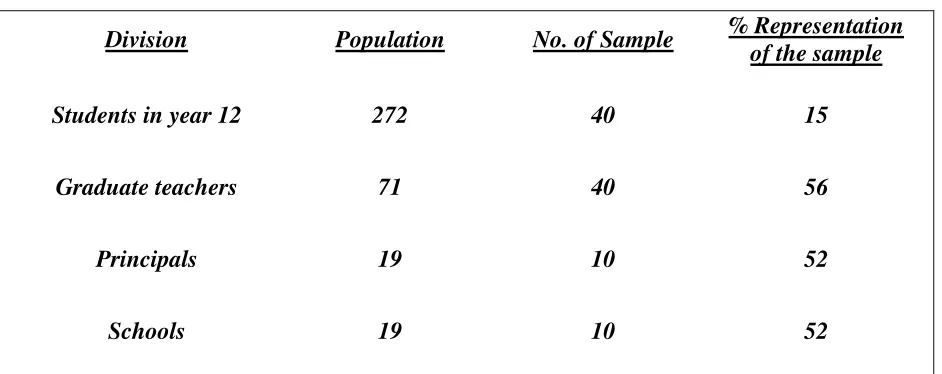
The necessary and relevant data is collected to identify study, and analyze the relationship between the role of the principals, skills of the teachers, and the discipline of the students, and performance of the students. In order to achieve this, the following methods will be used. This study use both primary and secondary data. For primary data 40 students, and teachers, at the rate of 4 students, and teachers per school, and 10 principals were selected by stratified random sampling without replacement at all the stages. Primary data on explanatory variables namely role of the principals, skills of the teachers, and the discipline of the students were collected from the sample of principals, teachers and students by using questionnaire.
The study by and large depends on the primary and secondary data. The primary data will be collected through pre-tested questionnaires together with follow up
interviews with the respondents (Students, Teachers, and Principals). The secondary data were collected from the school records, published books, literature related to this study, and reports to understand the past trend in the variables selected. Descriptive statistics used to evaluate the percentage, mean, standard deviation, to identify the relationship the independent and dependent variable.
3. 2. 1. Sample
International Journal of Research (IJR)
e-ISSN: 2348-6848, p- ISSN: 2348-795X Volume 2, Issue 2, March 2015Available at http://internationaljournalofresearch.org
Table 3.1 Number of sample
Division Population No. of Sample % Representation
of the sample
Students in year 12 272 40 15
Graduate teachers 71 40 56
Principals 19 10 52
Schools 19 10 52
3. 2. 2 Method of data Collection
The study will be carried out using structured questionnaire and interviews. The questionnaires 1, 2 and 3 were issued to students, teachers, and principals respectively. The questionnaire 1 consisted of one section to gather information on the skills of the teachers. The questionnaire 2 consisted of three sections. The first two sections gather information in relation to the construct variable involved in the study, namely discipline of the students, and role of the principal. The questionnaire 3 consisted of four sections. The first three sections gather information in relation to the construct variable involved in the study, namely, skills of the teachers, the role of the principal, and the discipline of the students. The third section of the questionnaires 2 and the fourth section of the questionnaire 3 gather personal information. The information on all variables in all questionnaires will be collected on the basis of Lickert scale (from 1 to 5).
3.2.3
Method of data evaluation
Descriptive analysis of the data will be carried out using percentage, mean, standard deviation, and correlation as the first step of
the data analysis. Each aspects of the role of the principal, skills of the teachers, and the discipline of the students will be measured in average basis on the number of items involved. The SPSS/PC+ and MINITAB computer package is used for the statistical analysis.
4. DATA PRESENTATION AND
ANALYSIS
4.1 Data Presentation
4.1.1 Personal Characteristics
Personal characteristics of the respondents (teachers, and principals) consist of sex, job position, job tenure, educational qualifications, and professional qualifications. Each item is analyzed as a distinguished aspect of the respondents. The univariate analysis is used based on mean, standard deviation, and percentage of such characteristics.
4.1.1.1 Sex
International Journal of Research (IJR)
e-ISSN: 2348-6848, p- ISSN: 2348-795X Volume 2, Issue 2, March 2015Available at http://internationaljournalofresearch.org
eight (08) and twelve (12) in the high-performance category, and seven (07) and thirteen (13) in the low-performance category of schools respectively. Males account for 40% and females for 60 % of the high-performance category and 35% and 65% in the low-performance category of school of the total. The survey data showed that females account for 20% in high-performance school and 30% in low-performance schools more than the males.
4.1.1.2 Job Position (Grade)
The teachers in the sample are grouped into four categories based on their job position (Table 4.3). About 95% of the sample of the high-performance schools represented grade 2 II position, and 90% of the sample of the low-performance schools represented grade
3 I position.
Table 4.1 Teachers and their grades
Job Position Higher performance category Lower performance category
Number of Teachers
Percentage (%)
Number of Teachers
Percentage (%)
Grade 3 I 1 5% 18 90%
Grade 2 II 19 95% 2 10%
Grade 2 I - - - -
Grade I - - - -
Total 20 100% 20 100%
(Source: Survey Data)
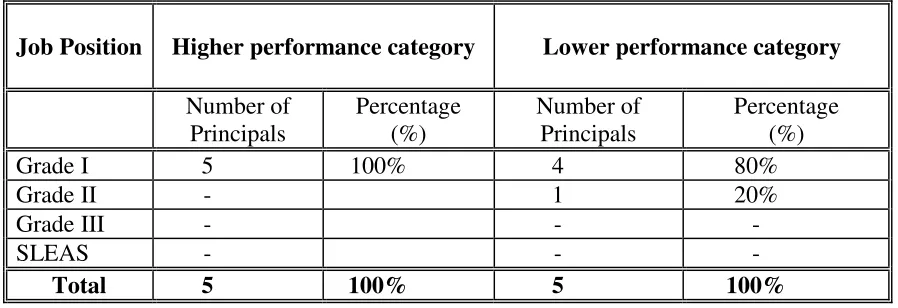
The principals in the sample are grouped into four categories based on their job position. About 100% of the sample in the high-performance category of schools, and 80% of the sample of the low-performance category of school represented grade I position.
Table 4. 2 Principals and their grades
(Source: Survey Data)
Job Position Higher performance category Lower performance category
Number of Principals
Percentage (%)
Number of Principals
Percentage (%)
Grade I 5 100% 4 80%
Grade II - 1 20%
Grade III - - -
SLEAS - - -
International Journal of Research (IJR)
e-ISSN: 2348-6848, p- ISSN: 2348-795X Volume 2, Issue 2, March 2015Available at http://internationaljournalofresearch.org
4.1.1.3 Job Tenure (Period of Service)
Job tenure of the teachers are categorized into three divisions. The teachers within the range of < 10 years represented 25 % of the sample in both category of schools, while the range between 10 < 20 years, and 20 years or more than 20 years represented 60 % and 15 % in the high-performance category and 75% and, 0% in the low-high-performance category respectively.
Table 4.3 Job tenure and relevant frequency of the Teachers
Class of Job Tenure
Higher performance category Lower performance category
Number of Teachers
Percentage (%)
Number of Teachers
Percentage (%)
<10 years 5 25% 5 25%
10<20 years 12 60% 15 75%
>20 years 3 15% 0 0%
Total 20 100% 20 100%
(Source: Survey Data)
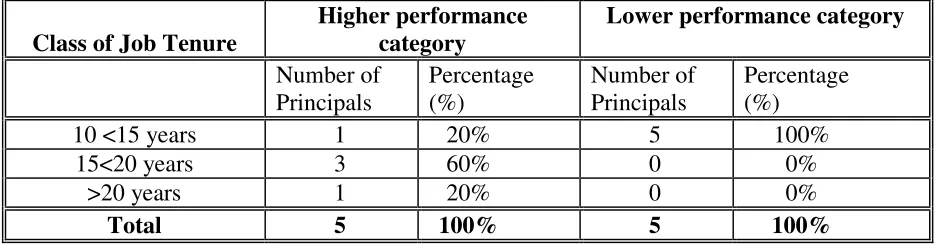
Job tenure of the principals are categorized into three divisions. The principals within the range of < 10 years represented 20 % of the sample in the high-performance category, and 100% of the samples in the low-performance category of schools, while the range between 10 < 20 years, and more than 20 years represented 60 % and 20% in the high-performance category.
Table 4. 4 Job tenure and relevant frequency of the Principals
Class of Job Tenure
Higher performance category
Lower performance category
Number of Principals
Percentage (%)
Number of Principals
Percentage (%)
10 <15 years 1 20% 5 100%
15<20 years 3 60% 0 0%
>20 years 1 20% 0 0%
Total 5 100% 5 100%
(Source: Survey Data)
4.1.1.4 Professional Qualification
International Journal of Research (IJR)
e-ISSN: 2348-6848, p- ISSN: 2348-795X Volume 2, Issue 2, March 2015Available at http://internationaljournalofresearch.org
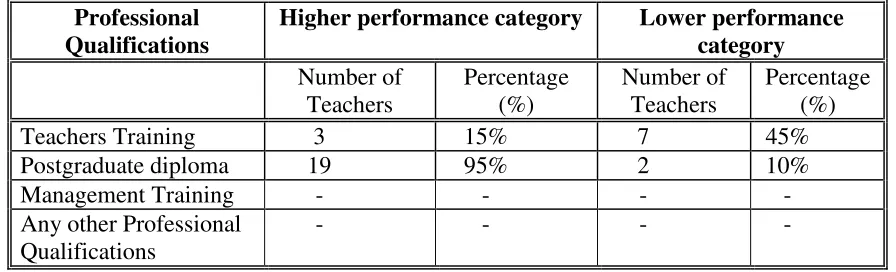
Table 4. 5Professional Qualification and relevant frequency of the teachers
Professional Qualifications
Higher performance category Lower performance
category Number of
Teachers
Percentage (%)
Number of Teachers
Percentage (%)
Teachers Training 3 15% 7 45%
Postgraduate diploma 19 95% 2 10%
Management Training - - - -
Any other Professional Qualifications
- - - -
(Source: Survey Data)
The professional qualifications of the Principals in the present position are categorized into four divisions (table 4.8). About 80% of the samples of principals of the high performance category possess postgraduate diploma qualifications and management training qualifications in addition to teachers training. About 100% of the samples of principals in the low-performance category possess management training while only about 40% of the sample possesses postgraduate diploma qualification (table 4.8)
Table 4.6 Professional Qualification and relevant frequency of the Principals
Professional Qualifications Higher performance
category
Lower performance category
Number of Principals
Percentage (%)
Number of Principals
Percentage (%)
Teachers Training 1 20% - -
Postgraduate diploma 4 80% 2 40%
Management Training 4 80% 5 100%
Any other Professional Qualifications
- - - -
(Source: Survey Data)
4.2
Single Measure Analysis (Univariate Analysis)
4.2.1 Overall Role of the Principals
International Journal of Research (IJR)
e-ISSN: 2348-6848, p- ISSN: 2348-795X Volume 2, Issue 2, March 2015Available at http://internationaljournalofresearch.org
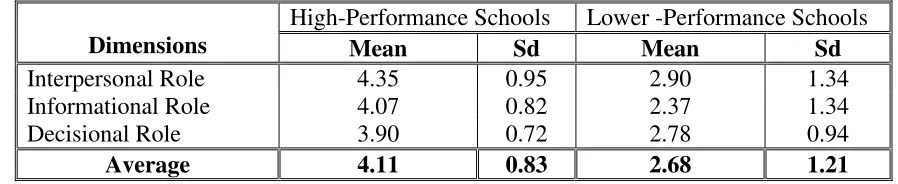
Table 4.7 Dimensions of the role of the Principals and related mean and sd.
Dimensions
High-Performance Schools Lower -Performance Schools
Mean Sd Mean Sd
Interpersonal Role 4.35 0.95 2.90 1.34
Informational Role 4.07 0.82 2.37 1.34
Decisional Role 3.90 0.72 2.78 0.94
Average 4.11 0.83 2.68 1.21
(Source : Survey Data)
Interpersonal role of the principals in the high-performance school obtained a mean value of 4.35. It exceeded the mean value of 3. Thereby, the interpersonal role became a favourable dimension of the role of the principals.
4.2.2 Overall Skill of the Teachers
Among the sample of respondents analyzed, about 77% and 71% of the sample of high-performance schools and low-high-performance schools represented higher level of skills of the teachers respectively. Mean value and sd of the respondents in both categories of schools supported for the higher level of the skills of the teachers.
Table 4.8 Dimensions of the skills of the teachers with related mean and sd.
(Survey Data)
Counselling skills of the teachers in both categories of schools represented higher level of skills.
4.2.3 Overall Discipline of the Students
Among the respondents, about 92% of the samples in the high-performance category and 90% of
the low-performance category represented in favour of higher level of discipline of the students.
Mean values and sd of both categories indicated higher level of discipline of the students. Aspects
High-Performance Schools Low-Performance Schools
Mean Sd Mean Sd
Planning skills 4.10 0.97 3.65 1.19
Communications skills 3.99 0.99 3.91 1.01
Counselling skills 4.13 0.81 4.04 0.91
Subject competency skills 3.51 0.47 3.63 0.49
Evaluation skills 3.87 1.06 3.70 0.98
International Journal of Research (IJR)
e-ISSN: 2348-6848, p- ISSN: 2348-795X Volume 2, Issue 2, March 2015Available at http://internationaljournalofresearch.org
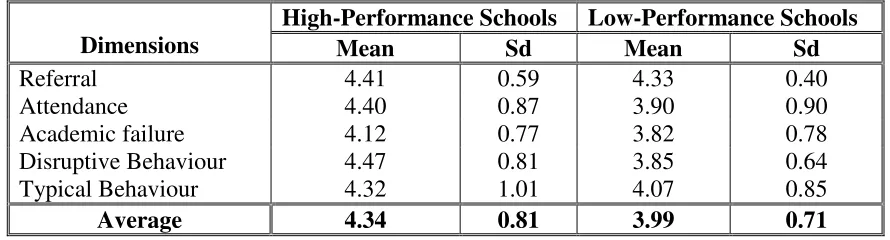
Table 4.9 Dimensions of the Discipline of the students with related mean and Sd.
Referral was the first factor considered to measure the discipline of the students. About 96% of the respondents in the high-performance category and 98% of the respondents in the low-performance category represented higher level of discipline of the students. The higher mean value of 4.41 in the high-performance category and 4.33 in the low-performance category also represented higher level of discipline of the students.
4.2.4 Overall Measure of the Variables
for the sample
4.2.4.1Role of the Principles
The aggregate value of the samples of the respondents of the high-performance category is 977 which is much greater than the aggregate mean value of 690, while the aggregate value of the samples of the low-performance category is 644 which is less than the aggregate mean value of 690. 4.2.4.2 Skills of the Teacher
The sample of the respondents of the high performance category revealed an aggregate value of 2117, which is greater than its aggregate mean value of 1620. The
aggregate mean value of the respondents of the low performance category revealed an aggregate value of 2077, which is greater than the aggregate mean value of 1620.
4.2.4.3 Discipline of the Students
The aggregate values of the high performance category and low performance category are 1391 and 1301 respectively, which is greater than the aggregate mean value of 960.
4. 3 Correlation Analysis
4.3.1 Correlation of independent
variables with dependant variable of the high-performance school
By observing the data a significant positive relationship exists between the independent variables and dependent variable, that is; role of the principals’, skills of the teachers’, and discipline of the students’ with performance of the students. The table 4.12 shows a correlation matrix, which describes such relationship between the variables.
Dimensions
High-Performance Schools Low-Performance Schools
Mean Sd Mean Sd
Referral 4.41 0.59 4.33 0.40
Attendance 4.40 0.87 3.90 0.90
Academic failure 4.12 0.77 3.82 0.78
Disruptive Behaviour 4.47 0.81 3.85 0.64
Typical Behaviour 4.32 1.01 4.07 0.85
International Journal of Research (IJR)
e-ISSN: 2348-6848, p- ISSN: 2348-795X Volume 2, Issue 2, March 2015Available at http://internationaljournalofresearch.org
Table4. 10 Correlation of independent variables with dependant variable of the high performance schools.
(Pr = Significance level, the model is significant at 5%).
(Source: survey data)
The table 4.12 shows that the overall job performance (P) of the students have a positive relationship with overall the role of the principals (RP) (r = 0.409, Pr <0.037); skills of the teachers (ST) (r = 0.137, Pr < 0.282) and with overall discipline of the students (DS) (r = 0.057, P < 0.405). In addition, the correlation analysis describes how the relationship between dependent variable and independent variables exists at 5% significance level. However, role of the principals and performance of the students shows higher correlation than other two variables, such as skills of the teachers, and discipline of the students. With the skills of the teachers and discipline of the students; the skills of the teachers shows higher correlation with performance of the students and less with discipline of the students as tested at 5% significant level.
4. 3. 2 Correlation between independent variables of the high performance schools
.
The correlation between teachers response on each variables were estimated and the results were shown in table 4 13.
Table 4.11 Correlation between each variable
Variables Performance of
the students
Role of the Principals
Skills of the Teachers
Discipline of the students Performance of the
students
1
Role of the Principals 0.409
(P< 0.037)
1
Skills of the Teachers 0.137
(P< 0.282)
0.365 (P< 0.057)
1
Discipline of the students
0.057 (P< 0.405)
0.647 (P< 0.001)
0.591 (P< 0.003)
1
(Source: survey data)
The correlation analysis was also performed between all variables (independent, and dependent). The correlation between performance of the students and role of the principals shows higher correlation of 0.409 and its significant at 95% confidence interval. The correlation between performance and skills of the teachers shows
acceptable level of correlation of 0.137 and significant at 95% confidence interval.
Correlation between performance and the discipline of the students also shows acceptable level of correlation and not significant at 95% confident interval. When we compare the correlation between the
Variables Role of the
principals (RP)
Skills of the teachers (ST)
Discipline of the students (DS) Performance of the
students (P)
0.409 (Pr< 0.037)
0.137 (Pr < 0.282)
International Journal of Research (IJR)
e-ISSN: 2348-6848, p- ISSN: 2348-795X Volume 2, Issue 2, March 2015Available at http://internationaljournalofresearch.org
roles of the principals with the skills of the teachers’ and the discipline of the students, here the role of the principals with the discipline of the students shows very high correlation (0.647; Pr < 0.001), while the role of the principal has considerable effect on the skills of the teachers.
The Correlation between skills of the teachers and discipline of the students shows higher Correlation and significant at 95% confidence interval (0.591; Pr < 0.003). When we look on to these results we can say that the role of the principals has more effect on the performance of the students, than the
skills of the teachers, and discipline of the students.
4.3.3 Correlation of independent
variables with dependant variable of the low-performance schools
By observing the data a significant positive relationship exists between the independent variables and dependent variable, that is role of the principals’, skills of the teachers’, and discipline pf the students’ with performance of the students. The table 4.14 shows a correlation matrix, which describes such relationship between the variables.
Table 4.12 Correlation of independent variables with dependant variable of the low
performance schools
.
(Pr = Significance level, the model is significant at 5%). (Source: survey data)
The table 4.14 shows that the overall job performance of the students (P) have a positive relationship with overall role of the principals (RP) (r=0.095, P<0.345), overall skills of the teachers (ST) (r = 0.054, P < 0.410) and with the overall discipline of the students (DS) (r = -0.132, P < 0.289). In addition, the correlation analysis describes how the relationship between dependent variable and independent variables exists at 5% significance level. However, performance of the students shows higher correlation and significant relationship with the discipline of the students as tested at 5% significant level, than the role of the principals, and the skills of the teachers.
Variables Role of the
principals (RP)
Skills of the
teachers (ST)
Discipline of the students (DS) Performance of the
students (P)
0.095 (Pr< 0.345)
0.054 (Pr < 0.410)
International Journal of Research (IJR)
e-ISSN: 2348-6848, p- ISSN: 2348-795X Volume 2, Issue 2, March 2015Available at http://internationaljournalofresearch.org
4. 3. 4 Correlation between independent variables
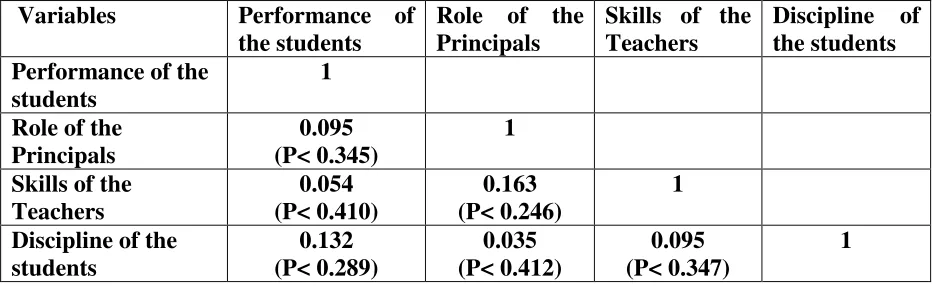
The correlation between each variable were estimated and the results were shown in table 4.15 Table 4.15 Correlation between each variable
Variables Performance of
the students
Role of the Principals
Skills of the Teachers
Discipline of the students Performance of the
students
1
Role of the Principals
0.095 (P< 0.345)
1
Skills of the Teachers
0.054 (P< 0.410)
0.163 (P< 0.246)
1
Discipline of the students
0.132 (P< 0.289)
0.035 (P< 0.412)
0.095 (P< 0.347)
1
(Source: survey data)
The correlation analysis was also performed between all variables (independent, and dependent). The correlation between performance of the students and discipline of the students shows a higher correlation of 0.132 and it is significant at 95% confidence interval, than the role of the principals, and skills of the teachers.
The correlation between performance of the students and skills of the teachers shows less correlation of 0.054.Correlation between performance of the students and the role of the principals shows high correlation of 0.095, than the correlation between the skills of the teachers and performance of the students. When we compare the correlation between the roles of the principals with the skills of the teachers’ and the discipline of the students, here the role of the principals with the skills of the teachers shows higher correlation, while the role of the principal has considerable effect on the discipline of the students.
The Correlation between skills of the teachers and discipline of the students shows acceptable level of correlation. When we look on to these results we can say that the discipline of the students has more effect on the performance of the students, than the
role of the principals, and skills of the teachers.
5. DISCUSSION OF FINDINGS
5.1
Role of the principals
The interpersonal role of the principals of the high-performance category of schools obtained a mean value of 4.35 and a standard deviation of 0.95.It explained that most of the Principals (96%) have shown more interest on this aspect by performing the active roles of figurehead, leader, and liaison. While the Sample of Principals in the low-performance category of schools obtained a mean value of 2.90. It explained that majority of the principals (37%) have shown less interest on this aspect, which may be one of the reasons for the low performance of the students.
International Journal of Research (IJR)
e-ISSN: 2348-6848, p- ISSN: 2348-795X Volume 2, Issue 2, March 2015Available at http://internationaljournalofresearch.org
those played by principals in the high-performance category.
The informational role of the principals in the high-performance category of the schools attained a mean value of 4.07 with a standard deviation of 0.82. It explained that about 77% of the respondents perform their duties with considerable attention to this aspect. While the sample of principals in the low-performance category of schools obtained a mean value of 2.37. It explained that only about 24% of the principals paid attention to the importance of this aspect. These results clearly indicated that the principals in the low-performance category might have been reluctant to transmit information, which they get from external sources. The number of meetings conducted per term in the low-performance category is less than that of the principals in the higher performing category.
The decisional role of the principals in the high-performance category obtained a mean value of 3.90. It explained that most of the principals (76%) of the respondents have shown more interest in performing decisional role. While only about 37% of the sample of respondents in the low-performance category supported higher interest on this aspect with a mean value of 2.78.
The results obtained by this aspect in both categories of schools has the effectiveness of the meeting and the participation of the members indicated 100% in the higher performing category, while, only 40% of the respondents of the low-performance category supported the higher level. The lack of participation and effectiveness of the meetings may be the reasons for the poor level of decisional role of the principals in the low-performance category than that of high-performance ones.
The mean values of the response of the respondents for each dimension of the role of the principals considered for this study. This indicates that the mean value of the sample of respondents of the high-performance category was higher (mean 4.11) than the expected average mean value of 3. While the mean value of the sample of respondents of the low-performance category was less (mean 2.68) than the average mean value of 3 (table 4.9).
The correlation results illustrate the correlation of the independent and dependent variables in the high-performance category. It illustrates that the correlation between performance of the students and the role of the principals has higher correlation and significance (0.409; Pr <0.037).
When we compare the correlation between the role of the principals with skills of the teachers and the discipline of the students, the correlation between the role of the principals and discipline of the students shows higher correlation (0.647; Pr < 0.001). This shows that the role of the principals is important to maintain and improve the discipline of the students. The same table shows that the role of the principals has fewer effects on the skills of the teachers. Obviously the skills of the teachers have been developed largely at the universities, teachers training colleges, college of education, and in-service training.
The relationship between the role of the principals and performance of the students become meaningful in this investigation. The correlation analysis revealed such relationship is significant. It implies that the role of the principals contribute to improve the level of performance of the students.
International Journal of Research (IJR)
e-ISSN: 2348-6848, p- ISSN: 2348-795X Volume 2, Issue 2, March 2015Available at http://internationaljournalofresearch.org
0.345). When we compare the correlation between the role of the principals with the skills of the teachers and the discipline of the students, the correlation between the role of the principals and skills of the teachers shows higher correlation (0.163;Pr < 0.246). This shows the role of the principal is important to maintain and improve the skills of the teachers. It is very clear the result reveals that the role of the principal has effect on the discipline of the students (0.035; Pr < 0.412). This shows that, the role of the principal has little effects on the discipline of the students.
The relationship between the discipline of the students and the performance of the students become meaningful in this investigation. The correlation analysis revealed such significant relationship as true. It implies that the discipline of the students contribute to improve the levels of performance of the students, than the role of the principals, and skills of the teachers.
5. 2 Skills of the teachers
Among the aspects considered to measure the skills of the teachers, counseling skills indicated much higher level with a mean value of 4.10 of the high-performance category and 4.04 in the low-performance category. The economic condition of the families in this district and the past unrest situation might have let the teachers to take more care on the students and to motivate them to study and maintain their regular attendance in the class. As a result the teachers might have had the higher level of counselling skills.
Higher levels of subject competencies of the teachers of both categories were as the results of the qualifications of the teachers. In addition to this the age of the most of teachers indicated less than 40 years. The experience of the teachers of both categories also indicated that all the samples
considered for this study have more than 10 years of service. Therefore the above-mentioned facts can be a reason for higher level of subject competency of the teachers.
The evaluation skills of the teachers of both categories obtained a mean value of 3.87 in the high-performance category and 3.70 in the low-performance category. Higher level of this aspect was supported by most of the respondents. About 69% of the high-performance category and 60% of the low-performance category indicated a higher level of evaluation skills.
The reasons for the higher level of evaluation skills were the outcome of the teachers who have undergone either teachers training and / or postgraduate diploma programs which contained teaching practicum as an important component. The mean values of the response of the respondents for each dimension of the skills of the teachers considered for this study. This indicated that the mean values of the sample of respondents of both categories of schools were higher than the expected average mean value of 3.
The correlation between the performance of the students and the skills of the teachers in the higher performance category shows less correlation (0.137;Pr < 0.282). The correlation between the skills of the teachers and role of the principals has higher correlation and significant (0.365; Pr< 0.57). This result explains that the role of the principals is important to maintain and improve the skills of the teachers.
International Journal of Research (IJR)
e-ISSN: 2348-6848, p- ISSN: 2348-795X Volume 2, Issue 2, March 2015Available at http://internationaljournalofresearch.org
correlation between the performance of the students and skills of the teachers in the low-performance category has less correlation (0.054; Pr < 0.410).
The correlation of the skills of the teachers and the role of the principal of the low performance category shows that, the skills of the teachers have less correlation with the role of the principal (0.163; Pr < 0.246).These results explain that the skills of the teachers can have considerable effect on the improvement of the performance of the students.
5. 3 Discipline of the students
The first dimension considered to measure the discipline of the students was referral. The mean values obtained for the samples of respondent of both categories of schools were and 4.33. The mean values of both categories indicated that they had a higher level of discipline. This fact was supported by most of the respondents (Principals and teachers). About 96% of the samples of the high-performance category and 98% of low-performance category supported the higher level of discipline of the students. It can be said that complaints about the students in both categories of schools are very few. Further, the teachers of both categories of schools had higher level of counseling skills in which teachers take more care in the students and motivate them to learn and behave accordingly to maintain discipline.
Attendance of the students indicated a higher level. The mean values obtained by the sample of respondents of both categories of schools have shown higher values. Again the higher level of counseling skills of the teachers could have influenced the students to maintain regular attendance.
Academic failure is the third factor considered to study the discipline of the students. The mean values obtained by
high-performance category were 4.12 and 3.82 respectively. This revealed higher level of discipline of the students. This was supported by most of the respondents. The reason for the higher level of discipline was the higher levels of subject competence of the teachers in both categories of schools.
Disruptive behaviour too obtained a high mean value of 4.47 in the high-performance category and 3.85 in the low-performance category. It can be suggested that the reasons for the higher level of discipline were the care taken by the teachers and the motivation given by them.
Typical behaviour of the students also indicated higher level of discipline. The mean value obtained by the respondents of the high-performance category was 4.32 and the mean value of the low-performance category was 4.07. It can be said that the higher level of discipline of the students was the economic condition of the families in this district and the past unrest situation may be the reason in addition to higher level of counseling skills of the teachers. Apart from this the students who are found in their uniform are more respected by others.
International Journal of Research (IJR)
e-ISSN: 2348-6848, p- ISSN: 2348-795X Volume 2, Issue 2, March 2015Available at http://internationaljournalofresearch.org
correlation with the skills of the teachers (0.365; Pr < 0.057). This implies that the skills of the teachers can influence to maintain and improve the discipline of the students.
The correlation between the discipline of the students and the performance of the students of the low-performance category has less correlation (0.132; Pr < 0.289). The information in the table 4.15 shows the correlation of the discipline of the students with the role of the principal and the skills of the teachers of the low performance category that, the discipline of the students has less correlation with the role of the principals, and the skills of the teachers respectively (0.035; Pr < 0.412, 0.095; Pr < 0.347). This implies that the role of the discipline of the students can be used to improve the performance of the students to a larger extent than the role of the principals, and the skills of the teachers.
6. CONCLUSION AND
RECOMMENDATION
6.1
Conclusion
Quality of education is the most important objectives of every school to place their position at the highest level. Quality is the single most important issue in education and in all other fields. We all understand that there are problems with current education system. Students are leaving or graduating from schools, colleges and Universities unfit to meet the requirements of society. This problem has a ripple effect throughout society and nation. Students who are not prepared to become responsible, productive citizens become a burden to society.
If the quality of education is to improve, however, the improvement must be led by quality management as a vehicle to cope with the forces of change. The Principal
who is the authority figure in a school and had total control of the school affairs. The teachers and students are required to obey his or her instructions.
Management is now considered as a shared responsibility, thus seek to improve the quality of education through shared responsibility of the principals, teachers, and students. This empirical study was intended to investigate the relationship between quality of education and performance of the students. As discussed in chapter 3, the conceptual framework is derived to test the relationship of the role of the principals, skills of the teachers and discipline of the students to performance of the students. All three relationships were assumed to have a positive and direct relationship.
The descriptive statistics shows that the higher mean values of the variable concerned except the mean results of the role of the principal in the low- performance category. In this study the information were obtained through the response of the students, teachers, and principals.
The mean values obtained from the descriptive statistics, for the high-performance category shows that the role of the principals and the performance of the students were in very high level at this study area, while the mean values obtain from the low performance category shows that the role of the principals and the performance of the students were in low level. In addition to this, the correlation analysis also shows that the relationship between the role of the principal and the performance of the students have higher correlation and significant.
International Journal of Research (IJR)
e-ISSN: 2348-6848, p- ISSN: 2348-795X Volume 2, Issue 2, March 2015Available at http://internationaljournalofresearch.org
between the role of the principals and the performance of the students become meaningful in this investigation. This was due to the effective and efficient performance of the principals towards the betterment of the school community. This can be supported by the successful performance of the student at the public examinations (G.C.E O/L).
The mean values obtained from the descriptive statistics shows that, the skills of the teachers in both categories of schools were in high level at this study area. In addition to this, the correlation analysis shows that the relationship between the skills of the teachers and the performance of the students have acceptable level of correlation. According to the mean values of this variable it can be said that the skills of the teachers have higher effect on the level of performance of the students, while, the correlation analysis shows that the skills of the teachers have considerable effect on the level of performance of the students.
The mean values obtained from the descriptive statistics shows that the discipline of the students was in very high level in both type of schools at this study area. In addition to this the correlation analysis shows that, the relationship between the discipline of the students and the performance of the students has acceptable lever of correlation. According to the mean values of these variables it can be said that, discipline of the students has higher effect on the level of performance of the student, while the correlation analysis shows that the discipline of the students has considerable effect on improving the level of performance of the students.
According to the findings a positive relationship exist between the role of the principals and the performance of the students, the skills of the teachers and the
performance of the students, and discipline of the students and performance of the students was acceptably proved at a higher level.
6.2
Recommendations
Based on the findings, the following recommendations are proposed.
1. Principals play a key role in all activities of the school therefore to increase the number of students successful at the examinations; principals must perform their role actively focusing higher quality of education.
2. Recognition of the importance of teaching tasks may increase the effective and efficient performance of the teachers, which could lead to better performance of the students.
3. To improve the skills of the teachers, timely appraisal and skills upgrading training is essential.
4. Additional workloads to the teacher should be reduced to give importance to the teaching activity.
5. Clear guidance should be given to students to increase their discipline.
6. School discipline is more complex today than in the past because learning is also more complex. Teachers must master sophisticated management techniques to ensure the satisfactory classroom discipline.
International Journal of Research (IJR)
e-ISSN: 2348-6848, p- ISSN: 2348-795X Volume 2, Issue 2, March 2015Available at http://internationaljournalofresearch.org
be created to encourage discipline and training.
8. Teaching is nothing if it is not relationship, therefore, teachers should understand how and why a practice is likely to influence their student’s motivational orientations to increase their results and their student’s academic motivation.
9. Teachers should increase their interest and concern for students to increase their performance through knowledge and discipline.
10. At present the structure of the school administration has been changed from solely principal to shared responsibility of principals, teachers, school development society, and so on. Therefore, to get the best from them, principals have to understand this new situation and improve his/her skills in interpersonal relations, communications, and collaborative working arrangements with all the stakeholders.
REFERENCES
[1.] Angela. W. Little, (2000), “Primary Education Reform in Sri Lanka”, Lazergraphic (Pvt) Ltd, Sri Lanka.
[2.] Aggarwal J.C., (2000), “Principles, Methods and Techniques of Teaching”, Vikas Publishing hours Pvt. Ltd, Delhi.
[3.] Aggarwal J.C., (2000),
“Development and planning of modern education”, (6th Edition), Vikas Publishing house Pvt. Ltd, New Delhi.
[4.] Aggarwal J.C, (2000), “Theory and Principles of education”, Vikas Publishing House Pvt Ltd.
[5.] Brain Fidler and Tessa Atton, (1991), “Poorly performing staff in schools and how to manage them,”
Roultledge, London.
[6.] Barry A. Farber, (1991), “Crices in education”, Jossey – Bass Publishes, Oxbort.
[7.] Bradley, A (1992), “New study Laments, Lack of change in Chicago class rooms education week”, 11. (27).
[8.] Cyril and Doreen Poster, (1991), “Teacher Appraisal,” Rout ledge, London.
[9.] Cheryl L. Spaulding, (1992),
“Motivation in the classroom”, Mc Graw – Hill, INC, New York.
[10.] Carolyn Orange, (2000), “ 25 Biggest Mistakes Teachers make and How to Avoid Tham” Crowin Press, INC, California.
[11.] Christensen, G (1992), “The changing role of the administrators in an accelerated schools”, American Education research association, San Francisco.
[12.] David Warner and Elaine Crosthwaite, (1995) “Human Resources Management in Higher and further Education, “ SHRF and Open University press, Buckingham.
[13.] David Thenuwarna gumage, (1996),
“School – Based Management”,
Karunaratne and sons, Ltd. Sri Lanka,
[14.] Ellen B. Goldring Sharon F. Ralles, (1993), “Principals of Dynamic Schools”, Corwin Press, Inc, California.
[15.] Edgar. L. Morphit, (1982),
“Educational Organisation and