School of Engineering and Information Technology
Stability Aspects of Wind Power Integration in Power
Systems and Microgrids
Amit Kunwar
This thesis is presented for the Degree of
Doctor of Philosophy
of
Murdoch University
Declaration
I declare that this thesis is my own account of my research and contains as its main content work, which has not previously been submitted for a degree at any tertiary education institution.
Amit Kunwar July 2019
Abstract
Wind farms can be located in remote and weak parts of power networks, due to the availability of wind energy. With integration of power from such wind farms, the power system’s stability might be affected especially at higher penetration levels. Instability issues resulting from such incorporations must be addressed to accommodate higher wind power penetration in the power networks. This thesis attempts to analyse the stability issues of power system with integration of variable speed wind turbine technology especially focusing on doubly fed induction generators. Additionally, a microgrid with different inertial and non-inertial sources is examined for enhancing design aspect of such microgrids from stability perspectives.
At different penetration levels of wind power, oscillatory modes are identified, and participation factors of the most associated state variables on such oscillatory modes are observed. Flexible ac transmission system based series and shunt devices are found effective in enhancing the small signal stability of such power networks for different wind power penetration levels. Besides, series devices are observed to contribute to an improvement in the transient behaviour of the power system. Similarly, high voltage dc link is also witnessed to positively influence low frequency oscillation damping. Furthermore, this thesis shows that higher voltage gain values of wind farms can contribute to an improvement in the small signal stability for increased wind power penetration. Another observation displays that a doubly fed induction based wind farm can contribute to improving the voltage stability of a distribution network in a steady state operating condition, as well as following disturbances. Based on the study on an isolated microgrid that has a combination of synchronous, converter-based distributed resources, and energy storage systems, it is observed that a suitable modification in such microgrid’s various components and parameters can positively influence its small signal stability.
Table of Contents
Declaration ... i
Abstract ... ii
Table of Contents ... iii
List of Figures ... vii
List of Tables ... x
List of Abbreviations ... xii
Chapter 1 Introduction ... 1
1.1 Background ... 1
1.2 Power system stability ... 4
1.3 Motivation ... 5
1.4 Research objectives ... 5
1.5 Outline of research contributions ... 6
1.6 Organization of the thesis ... 7
Chapter 2 Literature review ... 9
2.1 Wind energy conversion system ... 9
2.2 Stability impact of wind power penetration ... 10
2.3 Small signal stability ... 17
2.4 Transient stability ... 19
2.6 Control of power system oscillations ... 23
2.7 Stability of a microgrid ... 27
2.8 Summary ... 29
Chapter 3 Modelling and analysis of power system components ... 31
3.1 Generators ... 31
3.1.1 Synchronous generator ... 31
3.1.2 DFIG-based wind generator ... 33
3.2 HVDC model ... 35
3.3 FACTS devices ... 37
3.3.1 Static synchronous series compensator ... 38
3.3.2 Static voltage compensator ... 39
3.3.2.1 Location of SVC ... 40
3.3.2.2 Supplementary controller design ... 41
3.4 Analysis of small signal stability ... 43
3.5 Transient stability ... 45
3.6 Construction and operation of a microgrid components ... 45
3.6.1 Synchronous generators ... 45
3.6.2 Converter based sources ... 47
3.7 Holistic small-signal model a microgrid ... 52
3.8 Summary ... 61
Chapter 4 Voltage stability analysis of a distribution system ... 62
4.1 Test system ... 62
4.2 Steady state voltage stability analysis ... 64
4.2.1 Bus voltages analysis ... 64
4.3 Transient voltage stability analysis ... 67
4.3.1 A three phase fault ... 68
4.3.2 Sudden loss of motor load ... 72
4.3.3 Motor starting ... 73
4.4 Summary ... 74
Chapter 5 Stability improvement by a static var compensator ... 75
5.1 Test system ... 75
5.2 Identification of weak bus ... 77
5.3 Small signal stability without SVC ... 78
5.4. Small signal stability with SVC... 79
5.5. Small signal stability with a supplementary controller ... 80
5.5.1 Residue analysis method ... 80
5.5.2 Hankel singular values analysis ... 83
5.5.3 Right hand plane zero method ... 83
5.5.4 Supplementary controller design ... 84
5.6 Sensitivity analysis ... 85
5.7 Time domain analysis ... 86
5.8 Summary ... 88
Chapter 6 Stability improvement by a high voltage dc link ... 89
6.1 Test system ... 89
6.2 Small signal stability analysis without HVDC ... 91
6.3 Small signal analysis with HVDC ... 93
6.4 Comparative analysis and discussion ... 95
6.5 Summary ... 97
7.1 Test system ... 98
7.2 Small signal analysis without SSSC ... 100
7.3 Small signal analysis with SSSC ... 102
7.4 Sensitivity analysis ... 104
7.5 Analysis of transient stability ... 106
7.6 State variables ... 110
7.7 Summary ... 111
Chapter 8 Stability analysis of a microgrid ... 112
8.1 Test system ... 112
8.2 Microgrid’s stability analysis ... 114
8.2.1 Base case ... 114
8.2.2 Variation in the rating of sources ... 115
8.2.3 Variation in quantities of sources ... 117
8.2.4 Variation in synchronous generator’s internal parameters ... 118
8.2.5 Variation in loads ... 119
8.2.6 Variation in lines ... 120
8.3. Findings for designing more stable microgrids ... 122
8.4 Summary ... 124
Chapter 9 Conclusions and recommendations ... 125
9.1 Conclusions ... 125
9.2 Recommendations ... 128
References ... 130
List of Figures
Figure 1.1 Global wind power installed capacity... 2
Figure 2.1 A basic wind energy conversion system ... 10
Figure 3.1 Schematic diagram of a DFIG wind turbine ... 33
Figure 3.2 HVDC link ... 36
Figure 3.3 Current control circuits ... 36
Figure 3.4 SSSC compensated line ... 38
Figure 3.5 SSSC circuit ... 38
Figure 3.6 SVC block with supplementary control ... 40
Figure 3.7 Typical block diagram of a supplementary controller ... 42
Figure 3.8 Block diagram of a synchronous generator ... 46
Figure 3.9 Voltage source converter and filter structure with the considered closed loop control for each non-inertial distributed generator ... 48
Figure 3.10 Considered droop characteristic ... 49
Figure 3.11 Assumed hysteresis function ... 50
Figure 3.12 Discretised SoC for BESs ... 51
Figure 4.1 Modified distribution test system ... 63
Figure 4.2 Bus voltages of the distribution system ... 65
Figure 4.3 Active power-voltage curves of bus-6 ... 66
Figure 4.4 Active power-voltage curves for bus-8 ... 66
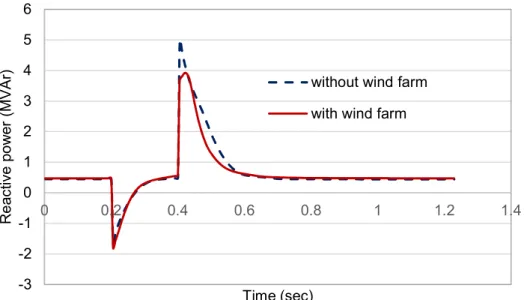
Figure 4.6 Active power from the external grid for 3-phase fault at bus-15 ... 68
Figure 4.7 Reactive power from the external grid for 3-phase fault at bus-15... 69
Figure 4.8 Reactive power drawn by a motor for 3-phase fault at bus-15 ... 69
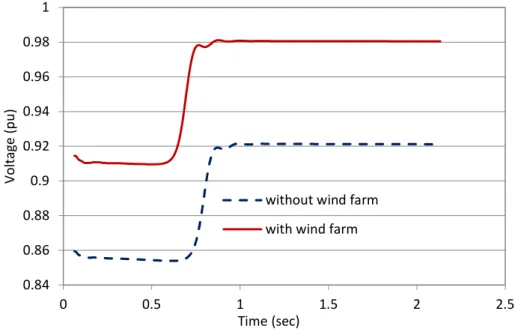
Figure 4.9 Voltage at bus-16 for 3-phase fault at bus-15 ... 70
Figure 4.10 Rotor voltage variation of a DFIG unit for a 3-phase fault at bus-15 .... 70
Figure 4.11 Reactive power drawn by a motor for a 3-phase fault at bus-5 ... 71
Figure 4.12 Voltage at bus-16 for 3-phase fault at bus-5 ... 71
Figure 4.13 Power fluctuation at a motor for tripping of another motor ... 72
Figure 4.14 Voltage dip at the motor terminal during motor starting ... 73
Figure 5.1 Modified IEEE 14-bus system ... 76
Figure 5.2 Modes of voltage instability ... 77
Figure 5.3 Bus participation factor of the weakest mode ... 77
Figure 5.4 Damping ratio of the critical eigenvalue ... 85
Figure 5.5 Variation in bus-2 voltage for 20 MW penetration ... 87
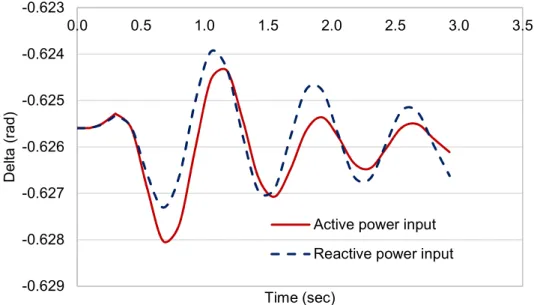
Figure 5.6 Swing curve of the generator-2 for the change in controller input ... 87
Figure 6.1 Modified IEEE 14-bus system ... 90
Figure 6.2 Movement of complex eigenvalues for the variation in wind penetration in the power system without HVDC link ... 92
Figure 6.3 Movement of complex eigenvalues for the variation in wind penetration in the power system with HVDC link ... 94
Figure 6.4 Change in the damping ratio of the critical eigenvalue for the variation in wind penetration in the power system with HVDC link ... 95
Figure 6.5 Movement of complex eigenvalues for the power system with and without HVDC link ... 97
Figure 7.2 Eigenvalues of the uncompensated power system ... 100
Figure 7.3 Eigenvalues of the compensated power system... 103
Figure 7.4 Swing curves of the generators at bus-2 and bus-3 ... 107
Figure 7.5 Response of the rotor speed of the generator-2 ... 108
Figure 7.6 Response of the voltages of bus-5 and bus-6 ... 108
Figure 7.7 Response of the terminal voltage of the DFIG ... 109
Figure 7.8 Response of the rotor speed of the DFIG ... 109
Figure 8.1 Considered radial and loop configurations of microgrid ... 113
Figure 8.2 Dominant eigenvalue trajectories of a) radial and b) loop microgrids .. 115
Figure 8.3 Participation factor presentation for the radial microgrid ... 116
Figure 8.4 Variation of FSI for change in (a) sources nominal capacity, (b) BES’s SoC, (c) sources number while the total generation capacity increases, (d) sources number while the total generation capacity is constant ... 117
Figure 8.5 Variation of FSI for change in (a) Synchronous generator’s excitation voltage, (b) Synchronous generator’s reactances, (c) Synchronous generator’s rotor mass inertia ... 118
Figure 8.6 Variation of FSI for change in (a) load number for the change in total demand, (b) load number for the constant total demand, (c) load power factor ... 120
Figure 8.7 Variation of FSI for change in (a) microgrid’s line lengths (b) distance between sources, (c) distance between a source and load... 121
List of Tables
Table 1.1 Installed wind capacity (in MW) by the state in Australia ... 3
Table 4.1 Parameters of the modified lines... 63
Table 4.2 Parameters of the wind farm at bus-17 ... 63
Table 4.3 Parameters of the motor load ... 64
Table 5.1 Parameters of the wind farm at bus-12 ... 76
Table 5.2 Parameters of the SVC device at bus-14... 76
Table 5.3 The weakest mode present in the power system ... 78
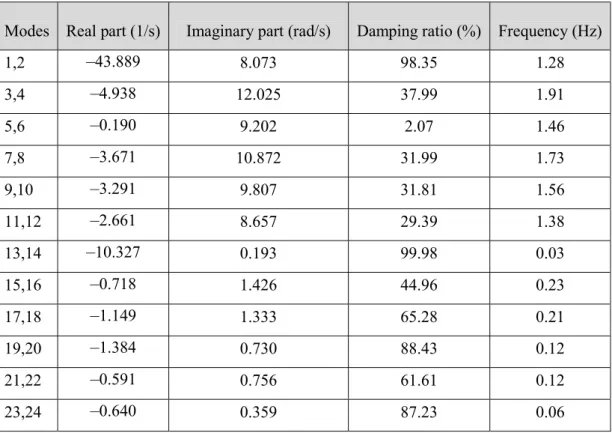
Table 5.4 Low frequency oscillatory modes at 20 MW wind penetration ... 79
Table 5.5 Low frequency oscillatory modes at 60 MW wind penetration ... 80
Table 5.6 Ranking of line currents based on RRRi values ... 81
Table 5.7 Ranking of active power based on RRRi values ... 82
Table 5.8 Ranking of reactive power based on RRRi values ... 82
Table 5.9 Hankel singular values ... 83
Table 5.10 Right hand plane zeros of the candidate signals ... 84
Table 5.11 Controller parameters... 84
Table 5.12 Real part sensitivity for 1% change in sensitivity parameter ... 86
Table 6.1 Parameters of the line from bus-5 to bus-15 ... 90
Table 6.2 Parameters of the wind farm at bus-5 ... 90
Table 6.4 Critical eigenvalue in the power system without HVDC link ... 93
Table 6.5 Critical eigenvalue in the power system with HVDC link ... 94
Table 6.6 Complex eigenvalues in the power system without HVDC link ... 96
Table 6.7 Complex eigenvalue in the power system with HVDC link ... 96
Table 7.1 Parameters of the new line ... 99
Table 7.2 Parameters of the wind farm ... 99
Table 7.3 Parameters of the SSSC device ... 99
Table 7.4 Oscillatory modes in the uncompensated power system ... 101
Table 7.5 Participation factors of the state variables for the uncompensated power system ... 101
Table 7.6 Oscillatory modes in the compensated power system ... 104
Table 7.7 Participation factor of the state variables for the compensated power system ... 104
Table 7.8 Eigenvalue sensitivity for the change in the degree of compensation 105 Table 7.9 Eigenvalue sensitivity for the change in the voltage gain ... 106
Table 7.10 Transient stability indices ... 107
Table 7.11 State variables participated in the oscillatory modes ... 110
Table 8.1 Assumed technical parameters ... 113
Table 8.2 Critical eigenvalues and their characteristics ... 114
List of Abbreviations
BES Battery Energy Storage
DFIG Doubly Fed Induction Generator
FACTS Flexible ac Transmission System
HVDC High Voltage Direct Current
IEEE Institute of Electrical and Electronics Engineers
SCIG Squirrel Cage Induction Generator
SSSC Static Synchronous Series Compensator
STATCOM Static Compensator
Chapter 1. Introduction
Chapter 1
Introduction
A major portion of world electricity is still generated from fossil fuels due to the low unit price of power generation. Such dependency has led to environmental degradation such as global warming and environmental pollution which has necessitated exploration and development of alternative clean energy resources for electricity generation. Renewable energy policies and governments initiatives such as carbon tax are being placed and endorsed to promote environmentally friendly energy resources including wind power. Such initiatives have assisted in the increase of the penetration of these renewable resources in the power sector requiring an urgent understanding of their impact on the power system stability, especially at their higher penetration levels.
1.1 Background
Environmental concerns, exhaustive nature of the fossil fuels and increasing energy needs have encouraged the search for alternative energy resources for electricity generation. Recent advancement in the renewable energy technologies, coupled with the reduction in their unit energy generation cost, has opened opportunities for the renewable energy resources for their integration in power networks. More importantly, in contrast to the conventional energy sources which are concentrated in limited geographical areas in the whole world, the renewable energy resources exist virtually everywhere [1]. Wind power is the most promising of the renewable resources from technical and economic perspective.
People have harnessed wind energy from the ancient ages for their usages such as pumping water, grinding grains, cutting wood at sawmills, etc. Since the 20th century, wind power has found a new application in electric power generation from small wind plants suitable for farms and residences to larger utility-scale wind farms connected to the electricity grids [2].
Fig. 1.1 shows the worldwide installed wind power capacity during 2001- 2017 [3]. In the last seventeen years, the total annual installed wind capacity has increased from 6.5 to 52.573 GW. However, in 2017 the annual installed wind capacity has shown a decline in comparison to a previous couple of years. Given the economic climate, the wind installation in 2017 is still a strong growth; even though it does not follow the overall upward trend of wind installation in the preceding years. This shows a strong commitment to wind installation, by power industries around the globe, as the source of electricity generation.
China led the overall wind market since 2009 and remained at the top in 2017 as well. With China’s dominance, the installation in Asia leads the global market; with Europe remaining at the second spot then comes North America. In 2017, the new installed wind capacity in Asia alone was 24.447 GW followed by 16.845 GW in Europe and 7.836 GW in North America. This brings the total installed wind capacity in Asia to 228,542 GW, in Europe to 178.096 GW, and in North America to 105.321 GW. With all these and from the remaining part of the world, the cumulative global wind capacity reaches 539.581 GW [3]. 0 10 20 30 40 50 60 70 W in d ca pa ci ty ( G W ) Year
Figure 1.1 Global wind power installed capacity
In America, about 7.017 GW of the wind capacity was installed in 2017 alone which brought the total installed capacity to 89.077 GW. In addition to that, there is about 28.668 GW capacity of wind farms in the construction stage [4]. Hence, there is a
Chapter 1. Introduction
promising future for global wind power installation, which is expected to reach about 800 GW by 2021 [5]. Coming to the Australian context, it has some of the world’s best wind resources, with such resources mainly located in the southern part of the country [6]. It is one of the 24 countries which have installed capacity of more than 1000 MW. Australia added 245 MW in 2017, bringing the total installed wind capacity to 4.557 GW [3]. South Australia has the highest wind installed capacity accounting for more than 25% of the state’s electricity requirement. With the renewable energy target of 20% of Australia’s power by 2020, there is a high prospect for the development of the wind sector in the country. Table 1.1 shows the installed wind capacity by state, in Australia till 2016 [7]. Sydney has outlined measures for procuring 100% of its electricity from renewable energy sources, including wind by 2030, in its renewable energy master plan. Similarly, a new climate action plan of the Tasmanian Government has a commitment to 100% renewable by 2020 [8].
Table 1.1 Installed wind capacity (in MW) by the state in Australia
South Australia 1595
Victoria 1250
Western Australia 491
Tasmania 310
New South Wales 668
Queensland 13
Total 4326
With such commitments from many countries including Australia, it’s a requirement to understand how the increased wind power integration affects the stability of the power networks, especially at the higher penetration levels. At the small penetration levels, wind power has a very minimal impact on the power system stability; however, as the penetration level increases, it may adversely impact the power networks, requiring a strong support system especially during the disturbances. Wind farms are generally located at a geographically distant location, far from the load centers and are connected to a weak part of the networks. Due to a high wind power penetration on such weak networks, the power system might present serious concerns regarding the power system stability. The study of this issue is the main focus of this thesis. Hence, this research attempts to investigate the network stability issues of high power
penetration from variable speed wind technology like doubly fed induction generator (DFIG).
1.2Power system stability
Power system stability is the property of a power system that enables it to maintain the state of operating equilibrium under normal condition and to regain an acceptable equilibrium state following network disturbances [9]. Such disturbances in power network may be small in the form of gradual load changes, the operation of the controllers, etc., and large in the form of the loss of a large generator or load, and a short circuit on a power line, etc. [10].
Power system stability may be classified as rotor angle stability and voltage stability [9-10]. Rotor angle stability refers to the synchronism in synchronous machines in the power system, whereas, the voltage stability refers to the ability of the power system to maintain acceptable voltages at all its buses. The rotor angle stability can be sub-categories as small signal stability and transient stability. The small signal stability is the power system’s ability to maintain synchronism following the occurrence of small disturbances. In contrary, the transient stability refers to its ability to maintain synchronism following severe transient disturbances [9]. The power system stability is the main concern for the secure and reliable operation of the power system. The growth in interconnections, addition of new renewable technologies and their operation in stressed conditions have raised concerns for the power system instability even higher than before [10].
High penetration from wind farms could influence the dynamic behaviour of the whole power system network. Therefore, the wind power integration might introduce some challenges to the power system reliability and stability concerns. More importantly, as the world is moving towards increasing renewable penetration including the wind energy, their effect in the power system stability is still not very well explored and perceived. In this context, this thesis attempts to address the rotor angle stability concerns, mostly focusing on the small signal stability, with the variable speed wind farm integration. This thesis has been extended to the distribution level to address the voltage stability impact of the DFIG-based wind farm integration to observe steady state and transient voltage responses. In the end, the small signal stability of a
Chapter 1. Introduction
microgrid network is studied with a variation in the parameters of its renewable energy resources as well as those of the other network components.
1.3Motivation
Technology has enabled wind energy to be utilized for the utility scaled electricity production. The environmental benefits and cost reduction in the wind technologies have placed wind power as a competitive resource to the conventional energy resources for the electricity production. Penetration of wind power in the electricity networks has increased significantly and will continue to grow for the above-mentioned reasons. In this scenario, the network stability issues need to be addressed to accommodate the higher penetration of wind power as well as the stable power system operations during the steady state condition and following network disturbances so as to guarantee the reliability and power quality to the end users. This thesis investigates the small signal stability and voltage stability issues of the electricity networks under increased power penetrations from wind power. Additionally, this thesis attempts to establish a better understanding of the interactions of the wind power penetration with the power system components such as the conventional synchronous generator, static var compensator (SVC), static synchronous series compensator (SSSC), high voltage direct current (HVDC) link, large motor loads and battery energy storages (BESs).
1.4Research objectives
The main research objective is to investigate the impact of higher penetration of wind power into the electricity networks from the stability point of view. The other major points can be summarized as
To study the impact of different penetration levels of wind power on the small signal stability of the power system.
To observe the effect of other network components on the high wind power penetration from the stability power of view.
To study the impact of the wind power penetration on the voltage stability of a weak distribution network.
To study the impact of a variation in the parameters and penetration level of renewable resources, including the converter-based energy resources to resemble wind farms, on the small signal stability of a microgrid.
1.5Outline of research contributions
The main intent of this thesis is to analyse the power system stability issues, with the integration of wind farm, for enabling high penetration of the renewable resource. The main contribution of this thesis can be listed as
Investigation of the impact of a remotely connected DFIG-based wind farm on the low frequency oscillations and the identification of the influence of the series compensation on those oscillations. The study shows an increase in series compensation has a positive influence on the power system stability for the wind farm connected power network.
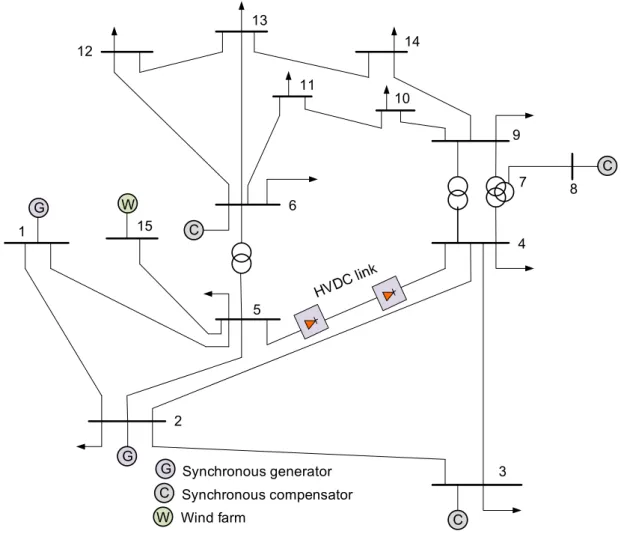
Investigation of the impact of the DFIG-based wind farm on the small signal stability of a power system with an HVDC link. The study shows how the HVDC link influences the stability as the wind power penetration varies.
Investigation of the impact of the DFIG-based wind farm on the voltage stability of a weak distribution network. The study identifies how a wind farm connected near a large industrial/commercial load influences the system voltages at the steady state condition and following system disturbances.
Design of a supplementary controller for an improvement of the small signal stability of a power system at the high penetration of wind power from a DFIG-based wind farm.
Small signal stability study of a microgrid with converter-based and conventional inertial renewable resources, and battery storage system. The study identifies the influence of the sources’ and the network parameters on the dynamic stability of the microgrid.
These contributions would support for the better understanding of the stability aspects of the increased wind power penetrations into the power system networks.
Chapter 1. Introduction
1.6Organization of the thesis
The thesis is organized as follows
Chapter 1, which is the current chapter, gives a background of this research work. This provides brief outlines of the wind installation till date and the commitments for an increase in the wind integrations. This chapter also presents the motivations for this research, the research objectives, and finally the contributions of this research work in the field of stability issues of wind power integration.
Chapter 2 gives a more detailed justification of why the research problem is addressed. This chapter through the literature survey provides evidence that others agree with this being a relevant issue and how they have tried to address this issue. The small signal stability, transient stability, and voltage stability analysis have been discussed briefly. This chapter also presents the stability impacts of wind integration and the control of power system oscillations. In addition to that, the stability of a microgrid is discussed and presented in this chapter.
Chapter 3 presents the modelling of the power system components used for the research work. The components are modelled for the stability analysis of the test power systems. The mathematical formulations of the power system components and devices are developed and discussed in this chapter, which is used in the later chapters for the detailed study and analysis work.
Chapter 4 presents the steady state and dynamic voltage stability analysis of a distribution system with a remote wind farm. Transient voltage responses are studied under different fault scenarios. This chapter also presents the simulation and analysis of the results obtained.
Chapter 5 discusses the design of a supplementary controller to damp critical oscillatory modes in the power networks. A methodology to select the best input signal for the controller is developed and presented. The time domain simulations are used to observe the effectiveness of the designed controller.
Chapter 6 portrays outcomes of the small signal stability analysis of the DFIG-based wind farm integrated into the power network. A comparative analysis of the influence of an HVDC link on the behaviour of the oscillatory modes is analysed and presented in this chapter.
Chapter 7 discusses the stability analysis of a power system with a remote DFIG-based wind farm connected through a long line. The simulation and small signal
stability analysis of the power system with and without a series compensation are presented here. A sensitivity analysis of the oscillatory modes to the system parameters is examined.
Chapter 8 covers the small signal stability study of a microgrid with converter-based and conventional inertia-based renewable resources, and battery storage systems. The study identifies the influence of the sources’ and network parameters on the dynamic stability of the microgrid through a sensitivity type analysis.
Chapter 9 concludes the research work by summarising the major contributions. This chapter also proposes future works in the direction of the research field.
Chapter 2. Literature review
Chapter 2
Literature review
In this chapter, the integration impacts of a variable speed wind technology on the stability of the power system, and the control of power oscillations are presented through a detail literature survey. The power system stabilities such as small signal stability, transient stability, and voltage stability issues are briefly discussed and classified. The impact of wind penetration on these stabilities are presented as being an issue to the power system, especially at the high wind penetration levels. Additionally, the stability aspects of a microgrid are discussed and presented.
2.1 Wind energy conversion system
A conventional power system is controllable for power output; however, a wind-based power system depends on the availability of variable wind from nature. However, with the technological improvement and economic competitiveness, the wind power is an important energy source today. These superiorities exist over other the renewable sources, making the wind power a clear choice for the utility scale power production. A wind energy conversion system converts the wind’s kinetic energy into the electric energy or other energy forms. Being environmentally friendly and the above-mentioned benefits over the other resources, the wind power has shown a considerable growth in the past decade [11]. The technological advancement has improved the reliability and the capacity of the wind turbines in addition to the reduction in the unit cost of power production [12].
A basic wind energy conversion system consists of a wind turbine, an electric generator, power lines and loads as shown in the Fig. 2.1. Based on the turbine spin, the wind turbines can be categorized into two types; horizontal wind turbines and vertical wind turbines. A horizontal wind turbine is the most common style of wind
turbines in which the turbine spins on the horizontal axis, whereas in the vertical wind turbine the main
Loads Wind turbine Generator Power line Bus bar
Figure 2.1 A basic wind energy conversion system
rotor shaft is placed vertically. The grid-connected wind farms are mainly of the horizontal wind turbine type [12]. These wind turbines can further be classified as fixed and variable speed types. In the fixed speed wind turbines, a rotor is coupled with the generator, and the stator winding is directly connected to the grid. The examples of the fixed speed wind turbines are found in the squirrel cage induction generator (SCIG) and wound rotor induction generator coupled wind farms. The fixed speed turbines have a simple construction and are comparatively cheaper; however, they are incapable of tracking fluctuating wind speed. On the contrary, the variable speed wind turbines can operate at variable speeds at fluctuating winds so as to maximize the energy capture for the wind source. In spite of that, they require a complex power electronics converter and are expensive as compared to the fixed speed wind turbines [13]. In the variable speed wind turbines, the DFIG-based generator, permanent magnet synchronous generator and wound rotor synchronous generator are used. Among them, the variable speed wind technology using the DFIG-based generator is the popular wind technology today. For this thesis, variable speed wind turbine technology based on the DFIG-based generator is considered for the stability analysis.
2.2 Stability impact of wind power penetration
Wind power is one of the leading renewable resources being utilized for electricity generation all over the world due to its technological and economic superiority over the rest of the renewable resources [14]. Apart from that, the wind integration has
Chapter 2. Literature review
already given beneficial impacts by cutting off carbon emissions from electricity production and reducing the operational costs of the power system. Additionally, the wind power integrated into power networks also adds the capacity value to the power system. In the technical sense, there is no limitation to wind integration; however, such integrations should not reduce the reliability, and must guarantee the stability of the power system [15]. Even though, a power system is designed to withstand a wide range of disturbances, small and large, the dynamic behaviour of such power system is determined by the behaviour and the interaction of the generators existing there, including the wind generators [16-17].
Till date, the majority of the wind farms are based on the constant speed technology due to the simplicity in its design, low cost, and robustness. Even so, in the recent years, the variable speed wind turbines have gained more attention due to their ability of to capture maximum wind power, the capability of operating smoothly, and the superiority in their control. More importantly, the speed of variable speed wind turbines can be controlled to extract more energy as compared to the fixed speed SCIG [18]. It is imperative to understand how these technologies impact on the power system stability, especially at the higher penetration levels so as to enable higher wind integrations. In the wind farm integrated power system, the frequency and damping of oscillatory modes depend on the technology of the wind turbine used, the fixed wind turbine or variable speed wind turbine. The variable speed wind turbines have a higher capability to improve the stability and power quality of the power system [19]. In addition to that, such variable speed wind turbines can provide reactive power support and voltage control when required in the power networks [20]. These types of wind turbines use power electronic converter to decouple voltages and frequencies of the generation with that of the grid [21]. In the construction terms, they are equipped with an induction generator or a synchronous generator connected through a power converter [22]. Such type of wind turbines, which use DFIGs are more popular among the other wind generators currently employed in the power industries.
Various power system issues, including the small signal stability, need to be considered to integrate more wind farms into power networks. The influence on the stability can defer highly at the different penetration levels. At the small scale of wind power integration, the impact of the wind generators on the power system stability is minimal. Despite that, as the penetration level increases, they could influence the dynamic performance of the power networks, especially at the higher penetration
levels. According to [23], the increasing level of wind power penetration on the conventional power system may significantly affect the small signal power system dynamics and operational characteristics. In reality, the current penetration level of wind power has already modified power system behaviour including the stability [24]. The increased wind power penetration can increase low frequency oscillations in the power networks. Depending on the location and the scale of power generation from the wind farms, the power flow in the network changes considerably influencing the damping characteristics of the power system. As the electromechanical interactions and the behaviour of the generators determine the power system stability, the wind power’s influence on the power networks is a vital issue of the modern power system. This stability issue is even more pronounced due to the interconnection of power systems, and their expansion over a large geographical area, therefore, maintaining the power system operation following small disturbances has become a challenging issue for the system operation [25]. As a result, the network reliability and the security can be challenging to maintain if the wind power integration and their higher penetrations are not assessed and appropriately managed [26-27].
When the wind power is integrated, the effective inertia of the power system is reduced, which in turn, might jeopardize the power system stability [28]. The impact on the low frequency oscillatory modes can be either detrimental or beneficial with the change in the system inertia [29]. Therefore, it’s imperative to understand the stability concerns of the wind penetrations. In real terms, the electromechanical modes of oscillations, their amplitudes and frequencies are dependent on the total system inertia and synchronizing power in the power system. At the higher system inertia, the power system becomes more robust and exhibit more stability under disturbances. However, the high level of wind power penetration might affect the stability as it does not contribute to any additional inertia to the power system, it is integrating into [27]. At the high wind penetration, as the effective inertia of the power system is reduced, the reliability following the disturbances is also get impacted [28]. Because of this issue, the increasing penetration of renewable resources-based generations including the wind power has added challenges to planners and engineers for maintaining the reliability and security of the power system. Hence, the issues of the wind integration must be clearly understood and addressed during the planning and designing stages to avoid any financial and technical implications [30].
Chapter 2. Literature review
It is evident that various power system stability issues, including the small signal stability, need to be considered to integrate wind power into power networks, and other problems that require attention are voltage fluctuations, frequency deviations and power quality [31]. It is, therefore, a vital requirement to understand stability apprehensions of the power networks with the integration of wind farms. This understanding would assist power engineers and designers to be ascertained of the issues, and the implementation of the necessary corrective measures would be easier. Coming to the small signal stability issue, according to [24, 32] as the wind turbines are not synchronously connected to the power system, they neither induce new oscillatory modes nor participate in the existing electromechanical oscillations. However, the wind penetration affects the power oscillation damping by three mechanisms [29].
Replacing synchronous generators that are involved in oscillations. Hence, affecting the electromechanical modes.
Wind turbine generator controllers interacting with the synchronous generators, thereby, partially influencing the damping torques.
Altering the dispatch of the conventional generation and power flow profile, thereby, influencing the power system damping.
Further to this point, the literature search demonstrates that several researchers have studied and contributed to the study of the stability impacts of wind penetrations in the power networks. In [20], the dynamic performance of the DFIG-based wind farms and their effect on electromechanical oscillations have been analysed. While [33] has studied the probabilistic small signal stability analysis considering the uncertainty of wind generation.However, there is no generalization on the view of the researchers about the impacts of the variable speed wind technologies on the small signal stability issues. Ref. [16, 34-36] have mentioned that the high penetration of the DFIG-based wind farm can improve the small signal stability of the power system. In reality, such improvement in the small signal stability is dependent on the location of the wind farms [37]. However, as mentioned in [38] the enhancement in the small signal stability due to the wind power integration is irrespective of the location of the wind farms. While some researchers argue that the DFIG-based wind farm decreases the damping of power oscillations, hence, increases the instability in the power networks [39]. This decrease in the stability is due to the fact that the increased wind power
penetration decreases the overall damping torque by replacing the torque provided by the existing synchronous generators.
There is no consensus on the stability impact of wind penetration. Some researchers present that it has both beneficial and detrimental impacts depending on the operating conditions of the farms in the network. The effect of the increased penetration of a DFIG-based wind farm on the electromechanical oscillations is a complex phenomenon. A DFIG-based wind farm at a weak power network, interconnected to the infinite bus, shows increased frequency and damping of the inter-area oscillations [20]. However, the impact of the DFIG-based wind farm, in its voltage control mode of operation, is dependent on the parameters used and can have a detrimental effect on the damping of the power oscillations. Ref. [39], based on their study about the interaction of a DFIG-based wind farm with the electromechanical modes of the synchronous generator, has shown that the wind farm can decrease damping of the electromechanical oscillations. However, they further concluded that an adjustment in the wind farm controller could improve the damping of such oscillations. Similarly, [40] points out that increased penetration of a DFIG-based wind farm has both beneficial and detrimental impacts on the power system stability. They also found that certain inter-area modes are detrimentally affected by the increased wind penetration. Some argue that wind integration has no beneficial impact on the power system stability, and mention that such integrations influence the power system stability in a negative way leading towards a more unstable region of operation. According to [41], the DFIG-based wind farm can change shapes of local and inter-area modes resulting in a dynamically unstable behaviour. Furthermore, [42] mentions that the increased wind penetration leads to congestion at the weak links, subsequently leading to reduced damping of power oscillations. These line of thought is further supported by the study of [23], which states that an increase in the penetration of wind power increases the probability of the power system becoming unstable. Hence, as per these research works, the penetration of the variable speed wind power threatens the small signal stability of the power system. On the contrary to the arguments mentioned above, the study conducted by [43] found that the inter-area modes are unaffected by the increase in wind penetration.
In addition to the small signal stability study, literature survey also shows the study regarding the transient behaviour of the wind farm connected power system. The power system security and the transient stability of the power system with the large
Chapter 2. Literature review
wind power penetration are issues to be concerned of [44]. With the high integration of wind power, the characteristics of the power network may be modified which results in a change in the power system’s response to the sudden transient disturbances. In addition to this, wind power intermittency also affects the transient stability response depending on the operating conditions of the wind farms [45]. Ref. [46] has proposed a topology to provide transient stability improvement of a small scale wind farm comprising of fixed and variable speed wind turbines. Wind farm location also can affect the transient stability, especially when the penetration level is high. A large scale wind farm located in a particularly weak area can highly modify power flows, reduce critical fault clearing times, and may require additional lines for power evacuation. Apart from the location, wind generator technologies might influence the transient stability aspects of the power system [47]. Thereby, it is important to study the influence of the integrated wind power technologies and their penetration levels on the transient response of the power system. Ref. [48] has studied the transient behaviour and transient stability evaluation methods of a grid-fed wind turbine with a SCIG-based generator. The variable speed wind turbines including the DFIG-SCIG-based one can provide some reactive support during transient disturbances as compared to the fixed speed wind turbines, thereby, enhancing the transient response of the power system. An appropriate operation and control of the pulse width modulation-based converters help such variable wind farms to ride through the faults. As a result, there exist no issues of the angular stability as seems to be associated with the synchronous generators [49]. The power network with the DFIG-based wind farms even could restore powers and voltages after a grid faults [50], thereby, enhancing the short term stability issues associated with the conventional generators. This arrangement keeps torque equilibrium, maintains the transient stability margin, and gives less speed deviation. As a result, there exists a better ability to control the network behaviour [51]. Besides, reactive devices such as SVC, static compensator (STATCOM), capacitor banks, etc. could provide supplementary reactive support during transient conditions. At the distribution level, the penetration of wind power also affects the transient stability, especially when the active power output reaches the limit. As a result, the power system may go to instability during fault conditions [52].
In the network impact study of the wind penetration, the voltage stability is one of the major issues requiring special attention. The voltage issues could be a short-term voltage fluctuation including flickers, and long-term voltage variations that are
experienced in the wider network [53]. The wind integration might cause problems in the voltage and frequency regulation, reactive power support, power quality, and protection systems [54]. Different wind technologies can have different impacts on the network voltage stability. The fixed speed wind turbine demands reactive power support whereas the variable speed wind turbine can provide such support without any additional reactive compensations [55]. Due to the reactive power regulation capability, the DFIG-based wind farms have better transient voltage stability characteristics and voltage recovery performance than the induction generator-based wind farms, even though, the voltage control capability of the DFIGs is not as comparable as the synchronous generators [56].
Due to the recent rapid growth in the small-sized DFIG-based wind farms, the reactive power control capability of such wind farms can be utilized as a continuous reactive power source to support the voltage control capability of the distribution network, as when needed [57]. Hence, an appropriate level of wind power penetration from the DFIG-based wind farm can improve the voltage profile of all buses as well as the maximum loading margins, thereby, enhancing the voltage stability of the radial distribution system [58]. Additionally, at the fault conditions, the DFIG-based wind farm provides voltage control capability with its ability to re-establish the desired voltage level [59]. However, such support may be dependent on the operating modes of the wind farm. At the voltage control mode, the DFIG-based wind farm shows better improvement and can mitigate the voltage rise effect as compared to the power factor control mode of its operation [60].
According to [61], a large-scale DFIG-based wind farm can be connected to both distribution and transmission level voltage buses without degrading the voltage stability. However, when the voltage control requirement exceeds the capability of the wind turbine, the voltage stability becomes an issue [56]. The adverse effect on the system voltage stability can be reduced by connecting the wind farm at the higher voltage levels and closer to the load centre, which in turn, minimizes the requirement of reactive compensation for the wind integration [62]. In reality, due to the favorable wind conditions, wind farms are mostly exploited in the remote areas, where the electricity network is relatively weaker. As a result, this situation brings challenges for the voltage control and reactive power compensation in the network. In such scenarios, the additional reactive power support devices can be integrated to enhance the voltage stability limit in order to support increased wind penetration. However, in the
Chapter 2. Literature review
interconnected power system, the additional voltage control device can influence the damping of the oscillatory modes positively or negatively [63]. Therefore, care must be taken at the design and planning phase for accurately optimizing the power system and its components.
2.3 Small signal stability
Small signal stability indicates the capability of a power system to remain in the synchronous operating state following small disturbances. Inability to remain in such condition occurs either due to the lack of sufficient synchronizing torque resulting in a steady rise in rotor angle or due to the lack of sufficient damping torque resulting in rotor oscillations of increasing amplitude. It is a well-known fact that the power system responds to the small disturbances is a complex phenomenon, and depends on many factors like initial operating condition, system strength, and generator excitation controls, etc. [9]. For the study purposes, such small disturbances are considered to be sufficiently small that the linearization of the power system equations is permissible for mathematical analysis and interpretation [10].
Small disturbances might cause low frequency oscillations in power system by gradual variations in the loads, generations and actions of control devices. Such oscillations are power system characteristics and are acceptable as long as they decay without causing the small signal instability in the power network [64]. Electric utilities mostly experience small signal stability problems related to insufficient damping of low frequency oscillations in their real power networks. Hence, the instability is generally due to oscillations of increasing amplitude. Such power system stability problems might either be local or global in nature, and are of the following types [65].
Intraplant modes: These modes are associated with the swinging of the machines of the same power generation site against each other. The frequency range of such oscillations is 2.0-3.0 Hz depending upon their unit ratings and the reactance connecting the units. Such oscillations are local to the site, as a result, the rest of the power system remains unaffected.
Local modes: Local oscillations mean the swinging of a single power plant against the rest of the power system and are also called local plant mode oscillations. These oscillations are localized to the generator and the line connected to the grid. The frequency range of such oscillations is observed between 1.0-2.0 Hz. The damping and
oscillatory frequencies depend upon the machine output and the impedance between the machine terminal and the infinite bus bar.
Interarea modes: These modes are associated with the swinging of a group of generators in one area against a group of generators in another area, generally connected through a weak transmission line. Such oscillations are called interarea mode oscillations and are observed over a large portion of the power network. These modes exhibit oscillations of a frequency range of 0.1-1.0 Hz. This is a complex phenomenon and is dictated by the network structure, tie-line strength, nature of loads, power transfer through tie lines, etc.
Control modes: These modes are caused by poorly tuned power system controllers such as exciters, HVDC converters, SVC, and governors etc.
Torsional modes: These modes are associated with the turbine generator shaft system. The interactions with excitation controls, speed governors etc. cause oscillations of this nature. The frequency of such oscillations is in the range of 10-46 Hz.
Local and inter-area modes of oscillations are known as the low frequency electromechanical oscillations. In secured operations, these oscillations are decayed within the adopted time period, returning power system in a stable and reliable operating condition. However, sustained oscillations of such nature could lead to system separations and possible outages to a considerable number of customers [25]. Power system outages due to the loss of small signal stability have occurred around the world. The incidents of such system outages due to inter-area oscillations include [25, 65].
Detroit Edison-Ontario Hydro-Hydro Quebec, 1960s, 1985.
Finland-Sweden-Norway-Denmark, 1960s.
Saskatchewan-Manitoba Hydro-Western Ontario, 1966.
Western Electric Coordinating Council, 1964, 1996.
Italy-Yugoslavia-Austria, 1971-1974.
South East Australia, 1975.
Scotland-England, 1978.
Western Australia, 1982, 1983.
Taiwan, 1985.
China, 2003.
Chapter 2. Literature review
Yunan and Guizhou provincial grid, 2006, 2007, 2008.
These incidents outline how important it is to understand and manage such oscillations for the secure and reliable operation of the power network.
2.4 Transient stability
Transient stability of a power system refers to the ability of the power system in maintaining synchronism after sudden severe transient disturbances. These responses involve a large excursion of rotor angles, power flows, bus voltages, and other system variables. A power system is stable if the resulting angular separation between the machines comes within an acceptable bound in a specified time. In a complex practical power system, the transient stability analysis is performed by time domain simulations, in which nonlinear differential equations are solved using step by step numerical integration techniques. In such a power network, usually, the response to a large disturbance is followed by the isolation of the faulty element by the protective relaying system. So, the bus voltages, line flows, and performance of protection schemes are of interest in the transient stability study. The transient stability of the generators in a power system depends upon the following factors [9].
Generator loading.
The power output of the generator during the transient fault.
Fault location and type.
Fault-clearing time.
Post-fault system reactance.
Generator reactance.
Generator inertia.
Generator internal voltage. Hence, field excitation.
Transient stability can be enhanced by many methods such as reducing fault clearing time, reducing system reactance, installing shunt compensation, etc. Faster a fault is cleared, lesser would be the kinetic energy gained by the generator during the fault duration. Thus, faster fault clearing can reduce resulting disturbances. Additionally, the series reactance of the power system network is the determinant of the transient stability limit. Reduction in the series reactance increases post-fault synchronizing power transfer, thereby, improving the transient stability. As shunt compensation can
support voltages at different buses, which as a result, can increase the flow of synchronizing power among the generators [9].
Integration of wind power should not compromise the transient stability of the power system. Transient stability issues of the wind power integration should be understood during the planning and integration studies which are performed through the time domain simulations.
2.5 Voltage stability
Voltage stability refers to the ability of a power system to retain acceptable voltages at all the buses at normal operating conditions and after disturbances. Voltage instability condition arises when a disturbance leads to an uncontrolled decline of the voltages in network buses due to the inability of the power system to meet demands for reactive power. Voltage stability analysis involves the examination of two aspects i.e., the proximity to the voltage instability and the mechanism of the voltage instability. Proximity gives closeness of the power system to the voltage instability, whereas mechanism covers how and why such instability occurs, what are the key factors contributing to the instability, where are the voltage weak areas in the network, and what are the effective measures to improve the voltage instability [9]. Mainly weak systems, long lines, and heavier loading zones are prone to the voltage instability due to reactive power mismatches.
Voltage stability can be studied by classifying into two categories: small disturbance and large disturbance voltage stability. Small disturbance voltage stability controls bus voltages following small disturbances. Such stability issues can be studied with the steady state approaches such as linearizing system dynamic equations at a given operating point. Large disturbance voltage stability refers to the system voltage control following large disturbances and can be studied using time-domain simulations. Conventionally, the steady state voltage stability analysis is determined using active power-voltage and reactive power-voltage curves at the selected load buses [9]. The active power-voltage curve is a plot of bus voltage as a function of active power for a specified power factor. However, the reactive power-voltage curve shows the relation between reactive power and receiving end voltage for different values of active power [66]. These methods might not always be appropriate to analyse the voltage stability in a large complex power system. Thereby, the voltage stability analysis of large power
Chapter 2. Literature review
networks can be computed using the modal analysis technique. With this method, a specified number of the smallest eigenvalues and their associated eigenvectors are calculated. The magnitude of the eigenvalues provides a relative measure of the proximity to the voltage instability. Participation factor gives the contribution of the mode to the reactive power-voltage sensitivity at the selected bus. For a small eigenvalue, the bus participation factor analysis determines the closeness of that bus to the voltage instability [67].
Power system needs to be securely designed and operated to prevent voltage collapse. In the voltage collapse condition, voltage reduces to an unacceptably low level in a significant part of the power system [9]. Low voltage profiles, heavy reactive power flows, inadequate reactive power support, and heavily loaded lines are the main symptoms of voltage collapse. The voltage collapse mitigating schemes need to use those symptoms to diagnose the approach of collapse, and necessary actions are to be initiated promptly in order to prevent the collapse [68]. The following measures can be taken in order to avoid the power system from such collapse [9].
1. System design measures
Application of reactive power compensators
Network and generator reactive output control
Proper coordination of protections and controls
Control of transformer tap changers
Under voltage load shedding 2. System operating measures
Stability margin
Spinning reserve
Operators’ action
Modern distribution networks are active due to the integration of renewable resources, battery storage systems and reactive power compensating devices. Additionally, such networks might be extended and stressed due to the remotely connected large commercial loads. In such distribution systems, the voltage stability is a significant concern from planning and operation perspectives. Remote wind farms connected to such a weak distribution network through a long line could adversely affect the voltage stability. To be specific of these type of scenarios, in countries like Australia large mining loads, agro farms, etc. are generally located far from the distribution load
center. When a wind farm is integrated at the end of such distribution feeder, with large motor loads and other residential customers, the steady state and transient voltage stability of the respective power network should not be compromised. Thereby, the impact of the wind farms on the voltage stability of a distribution system needs to be studied to identify their effects on the existing network and customers.
Notably, large induction motors, as a distribution load, can consume a significant amount of reactive power upon network disturbances, thereby, negatively influencing fault recovery by pushing the distribution system voltages to an unusually low level [69]. Several researchers have studied the voltage stability issues in the distribution system with the wind farms. Ref. [70] has presented a methodology for calculating annual voltage profile and slow voltage variations of a distribution system with wind power. The study indicates an improvement in the voltage profiles with the wind integration. According to [71], the voltage stability of a power system during small and large disturbances can be improved with wind power integration, especially when combined with reactive power compensation devices. Ref. [72-73] have presented methods for finding a steady-state voltage stability region for each distribution bus with wind power generators. Both the papers have determined the maximum permissible load in each bus of their distribution networks within the voltage limit allowed by the utilities.
Many researchers have presented that the voltage stability impact of wind power integration depends on the type of wind technology realized for power production. Ref. [50] has observed that the variable speed wind technologies such as the inverter coupled permanent magnet synchronous generator and DFIG can restore voltage and power following a grid fault with a quicker restoration in the wind farm. Ref. [74] has presented a reactive power margin based var planning for improving dynamic voltage stability of a distribution system with an induction generator-based wind farm. Authors have shown that their approach can reduce power losses and improve voltage regulation of the distribution system. Similarly, ref. [75] has studied voltage stability and grid-loss related issues of a distribution system with DFIG-based wind farm for heavily unbalanced loading conditions. The study shows that multiple small-DFIG systems could provide higher system voltage improvement but exhibits similar grid loss reduction in comparison to a single large-DFIG system. Likewise, coordinated control of small wind turbines in a large wind farm can maintain a constant voltage at
Chapter 2. Literature review
the connecting bus irrespective of the variation in the power production from the turbines [76].
However, some other researchers have presented strategies for mixing both technologies, the fixed and variable speed ones, for better voltage stability scenario in the distribution network. Ref. [46] have presented a control strategy for a small wind farm with fixed and variable speed wind turbines to minimize voltage fluctuation and to improve the transient stability of the network. With this strategy, the variable speed wind turbines using DFIG support fixed speed wind turbines using induction generator with the reactive power during disturbances, thereby, improving the stability.
2.6 Control of power system oscillations
Oscillations in the power system are the result of the lack of damping torques in generator rotors, which causes oscillations of other power system variables like bus voltages, frequency, and power flows, etc. These types of oscillations generally exhibit low damping performance [77] and are usually in the range of 0.1 to 2 Hz. The oscillatory instabilities due to the mode oscillations are undesirable; thereby, acceptable damping can be achieved using various controllers such as the power system stabilizers, SVC, STATCOM, etc. [78].In an interconnected power system, such poorly damped oscillations restrict power transfer and system security limits. As a result of which, this issue is considered as one of the main problems in the power system stability [79]. There are many approaches to improving the damping of such oscillations. Among them, the use of power system stabilizers is the most cost-effective method. However, they have limited capability in damping of inter-area oscillations. Likewise, flexible ac transmission system (FACTS) devices can provide damping to such electromechanical oscillations in addition to their function of balancing reactive power [80]. Because of which, different types of FACTS devices are deployed in power networks. Ref. [81] has proposed a control strategy to enhance damping control of the FACTS devices connected near a wind farm. According to [82], a controller can be designed to allow the wind farm to inject out of phase power to increase damping of interarea oscillations. Besides, HVDC links and energy storage systems with damping controllers have been developed to mitigate inter-area oscillations over the past decades. Such controllers must cover numerous power swing modes over a wide range of operation for secure power system operation [83].
Wind farms are generally located in remote locations for better wind conditions; therefore, for the evacuation of power from a large wind farm through a long line, the line might be series-compensated [84]. Series compensation can be achieved by using capacitor banks or series FACTS devices. The series FACTS devices can be utilized in damping oscillatory modes in the power system [85]. They are beneficial for improving power system dynamics with an effective damping of large and small signal disturbances. Additionally, they can support during transient conditions and improve transmission capability of the tie line for a long distance evacuation of a large scale wind power. A varying degree of series compensation can be utilized for controlling power flow in the line and for improving such stability issues. Ref. [86] have analysed the impact of a fixed series compensation on evacuating large scale wind power construction plan of Gansu Province in China. Based on the study, it is concluded that the fixed series compensation would significantly increase the power transmission capability. However, based on their study of the stability of the DFIG-based wind farm connected through a series compensated line, [30] advocates that the parameter of the rotor-side current control scheme, influence the power system stability.
The FACTS devices are used to enhance flexible power flow control in the power system. A static synchronous series compensator (SSSC), a series FACTS device, is a voltage-source converter-based series compensator, which can inject a voltage in quadrature with the line current providing the same compensation as provided by a conventional series capacitor. It can maintain a constant compensating voltage in the variable line current, or control the amplitude of the injected voltage independent of the amplitude of the line current. The use of the FACTS-based series compensation, such as SSSC, can increase power transfer through the line and provide an improvement in the transient stability limit [87]. An SSSC controller can effectively damp a range of oscillations originated from the small disturbances [88]. However, at a given series compensation level, the system stability margin is reduced with the increase in X/R ratio. In which, X and R respectively represent reactance and resistance of the compensated line. Therefore, the stability of a DFIG-based wind farm is of significant concern, when evacuating wind power through a high voltage and extra high voltage transmission line, as such lines have large X/R ratios [30].
Apart from the series FACTS devices, the shunt FACTS devices can also be implemented to improve the dynamic stability as well as for the voltage support to the power network. Such voltage support can be achieved during the steady state as well
Chapter 2. Literature review
as following transient conditions. According to [89-90], the FACTS-based shunt controllers such as SVC, STATCOM, etc. can provide continuously varying susceptance and fast response to control voltages and reactive powers. Appropriately located shunt controllers can effectively damp low frequency oscillatory modes for the stability improvement [80]. When a DFIG-based wind farm is integrated with such shunt devices, they provide reactive support to the wind farm and assist maintaining a better voltage profile irrespective of the variation in wind speed [91]. More importantly, such shunt devices dynamically support voltages at the key points in a power network, improving the transient stability and supporting increased oscillation damping. According to [92], a properly placed STATCOM controller with a supplementary damping control system can further enhance the damping of the power system oscillations. Similarly, SVCs are also used to maintain bus voltages and to enhance damping of such oscillations. Additionally, SVCs controlled by some auxiliary signals can also provide additional damping similar to STATCOM [93]. However, their effectiveness depends on their location in the network. Yet, ref. [94], based on their study on the damping performance of the induction generator connected power system, concludes that SVC has both detrimental and beneficial impacts depending on the operating circumstances of the device and the network.
According to [77], in order to further enhance the damping performance capability of a shunt power compensating device, a supplementary controller can be incorporated, which is referred to as power oscillation damping controller. Additionally, selection of the input signal plays a significant role in stabilizing ability of such shunt devices. In a multi-machine power system, selection of an effective installing location and feedback signal is the most important initial decisions on designing a FACTS-based stabilizer [95]. Literature has reported various methods to determine a suitable location and feedback signal selection for developing such damping controllers [9, 64]. From the voltage stability enhancement perspective, the modal analysis technique is proposed to find the best location for the shunt controllers [67], and residue method is proposed for the small signal stability enhancement [96]. In [97], the buses having higher participation to the weakest mode of voltage instability are recommended as the candidate buses for the shunt controllers, and among the buses which give a minimum shift to the real part of the critical mode are selected for the controller placement. Ref. [78, 98-99] have designed damping controllers to enhance damping of the critical modes in the distribution networ