OpenBU http://open.bu.edu
Theses & Dissertations Boston University Theses & Dissertations
2013
The influence of depressed mood
on alcohol-related self-control
processes: the moderational role of
drinking motives
https://hdl.handle.net/2144/12835 Boston University
GRADUATE SCHOOL OF ARTS AND SCIENCES
Dissertation
THE INFLUENCE OF DEPRESSED MOOD ON ALCOHOL-RELATED SELF-CONTROL PROCESSES: THE MODERATIONAL ROLE OF DRINKING
MOTIVES
by
TIMOTHY E. RALSTON B.S., Wake Forest University, 2002
M.A., Boston University, 2003
Submitted in partial fulfillment of the requirements for the degree of
Doctor of Philosophy 2013
First Reader Second Reader Third Reader Tibor P. Palfai, Ph.D. Professor of Psychology Michael J. Lyons, Ph.D. Professor of Psychology ar ione, Ph.D.
CONTROL PROCESSES: THE MOD ERA TIONAL ROLE OF DRINKING MOTIVES
(Order No. )
TIMOTHY E. RALSTON
Boston University Graduate School of Arts and Sciences, 2013 Major Professor: Tibor P. Palfai, Ph.D., Professor of Psychology
ABSTRACT
Among college students, severity of depressive symptoms is associated with more alcohol-related problems. Mood states may contribute to problematic alcohol use by influencing appetitive responses to alcohol through activation of alcohol-specific motivational schema. Once activated by relevant cues, these positive and negative
reinforcement schema may automatically influence alcohol-seeking behavior. The current study sought to examine whether the influence of depressed mood on alcohol-related action tendencies would be moderated by the strength of negative (coping) and positive (enhancement) reinforcement motives. One hundred and sixty-nine college drinkers participated in a between-groups experiment in which they were exposed to a neutral or depressed mood induction followed by a computerized measure of alcohol-specific action tendencies, the Approach Avoidance Task (AAT) (Wiers et al., 2009). It was
hypothesized that depressed mood would increase alcohol-related approach tendencies only for those students with stronger coping motives. The moderational influence of enhancement motives was also explored with the hypothesis that depressed mood would
and motivational schema. Hierarchical regression analyses were conducted for each hypothesis separately. For the analyses, gender and AAT order were entered as covariates followed by specific motive score and mood condition in the second step and the motive-mood condition interaction term in the third step. Mood did not influence AA T
performance, nor was there evidence of an interaction with coping motives. In contrast, there was a significant interaction between mood condition and enhancement motives, such that depressed mood was associated with lower alcohol-approach responses among those with higher enhancement motives. These results suggest that depressed mood may produce devaluation of alcohol for students who tend to drink to enhance positive
experiences. More broadly, these findings suggest that contextual cues such as mood may activate or inhibit appetitive responses to alcohol depending on individual differences in drinking motives.
Introduction
Specific Aims and Hypotheses Method
Results
Subject Selection and Recruitment Experimental Tasks
Measures Procedure
Data Analysis Plan
Desc1iptive Statistics Tests of Main Hypotheses Exploratory Analyses Discussion Tables Figures References Curriculum Vitae v 1 22 24 24 25 27
29
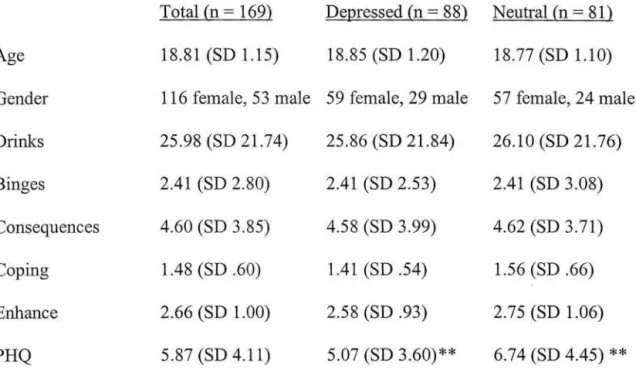
30 31 31 32 35 36 44 54 58 73Table 1: Demographic variables by mood condition
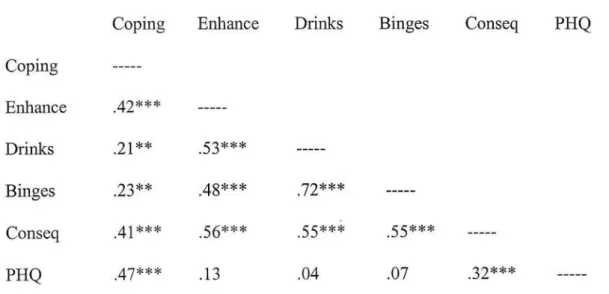
Table 2: Correlations between drinking motives, alcohol use variables, and depressive symptoms (controlling for gender)
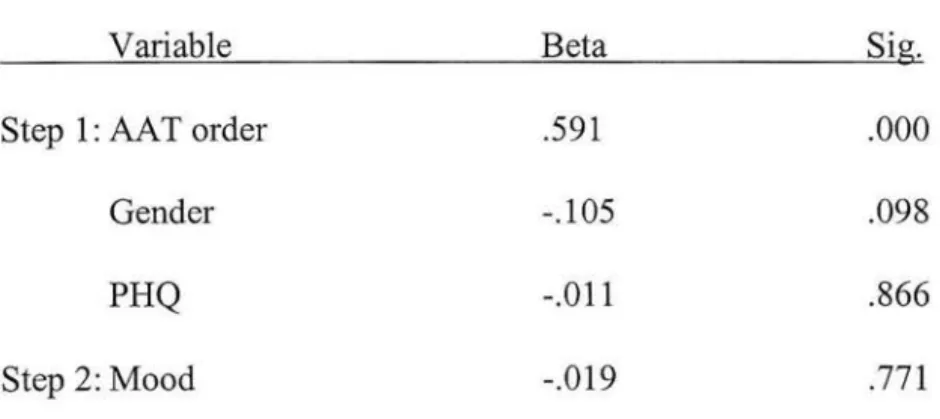
Table 3: Regression model for effect of depressed mood on AA T difference score
44 45
46
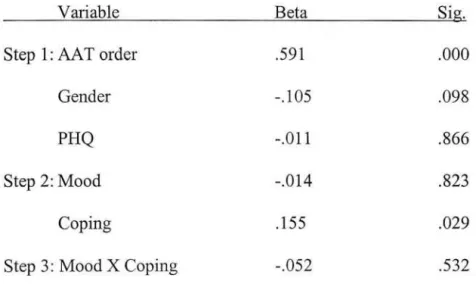
Table 4: Regression model for effects of depressed mood and coping motives 47 on AA T difference score
Table 5: Regression model for effects of depressed mood and enhancement motives on AA T difference score
Table 6: Regression model for effects of depressed mood and enhancement motives on AAT Approach component score
Table 7: Regression model for effects of depressed mood and enhancement motives on AA T A voidance component score
Table 8: Regression model for effects of depressed mood and past 30 days alcohol use on AA T difference score
Table 9: Regression model for effects of depressed mood and past 30 days binge drinking on AA T difference score
Table 10: Regression model for effects of depressed mood and past 3 month alcohol consequences on AA T difference score
Vl 48
49
50 51 52 53Figure 1: Simple slopes plot for interaction between enhancement motives and mood condition on AA T difference score
Figure 2: Simple slopes plot for interaction between enhancement motives and mood condition on AA T Approach component score
Figure 3: Simple slopes plot for interaction between enhancement motives and mood condition on AAT Avoidance component score
Figure 4: Simple slopes plot for interaction between alcohol-related consequences and mood condition on AA T difference score
Vll
54
55
56
AAT DMQ-R DSM-IV GABA IAT PHQ
Approach A voidance Task
Modified Drinking Motives Questionnaire
Diagnostic and Statistical Manual of Mental Disorders- Edition IV Gamma-Aminobutyric Acid
Implicit Association Test Patient Health Questionnaire
Introduction
Alcohol misuse is currently one of the leading causes ofhealth and psychosocial problems in the United States and has been estimated to be the third highest modifiable cause of death behind tobacco use and poor diet/physical inactivity (Mokdad, Marks, Stroup, & Gerberding, 2004). It has been estimated that 3.8% of net deaths worldwide are attributable to alcohol use (Rehm et al., 2009). Alcohol produces harmful long-term effects on the liver and cardiovascular system, exerts neurotoxic effects on the brain, and has been implicated in the etiology of a number of different cancers (National Institute on Alcohol Abuse and Alcoholism, 2000). In addition to the negative health consequences of alcohol use, there are profound economic and societal repercussions. Alcohol has been estimated to account for 12.7% of total health care costs in the U.S. (Rehm et al., 2009) and is involved in approximately 19% ofviolent crimes (Bureau ofJustice Statistics, 2010) and 32% of traffic fatalities (National Highway Traffic Safety Administration,
2010).
Despite these serious consequences, a large segment of the population chooses to drink alcohol in a manner that puts them at risk for harm. Risky drinking patterns begin to emerge in adolescence and young adulthood, with college being a period of
particularly high alcohol use. In a recent national survey, the rate of heavy episodic drinking (i.e., 5 or more drinks on one occasion for males and 4 or more for females) in the 18-25 age range was estimated to be 41.0%, compared to 36.4% and 18.8% in the 26-34 and 35-48 age ranges, respectively (Substance Abuse and Mental Health Services Administration, 2009). The same survey found that 14.5% ofrespondents in the 18-25
age range endorsed heavy alcohol use (i.e., 5 or more binge drinking episodes in the past 30 days), the highest rate of any age group.
In line with such surveys, alcohol use continues to be a major problem on college campuses despite years of research to reduce at-risk drinking among young adults (Wood et al., 2009). In addition to poorer school performance, students who drink heavily
engage in riskier activities, such as driving while intoxicated and taking sexual risks (Vik, Carrello, Tate, & Field, 2000). Increased rates of heavy episodic drinking have
consistently been associated with high numbers of short-term alcohol-related consequences (Read, Merrill, Kahler, & Strong, 2007; Wechsler, Lee, Kuo, & Lee, 2000). Estimates of alcohol dependence prevalence among undergraduates indicate that approximately 15% of students meet criteria in the past year (Grekin & Sher, 2006). Even among students with sub-threshold alcohol dependence symptoms, there is evidence to suggest that they are more likely to progress toward an alcohol use disorder over time (McBride & Adamson, 2010).
Depressive symptoms among college students
The above risks associated with hazardous drinking are compounded for students who struggle with depressive symptoms. Among mental health problems, depression has been recognized as a significant factor on college campuses. Approximately 14% of
students meet diagnostic criteria for a mood disorder (Eisenberg, Gollust, Golberstein, & Hefuer, 2007). Additionally, it has been estimated that 20% of students experience elevated depressive symptoms that are below the diagnostic threshold (Price, McLeod, Gleich, & Hand, 2006). Elevated depressive symptoms are linked with a number of
difficulties for students, including poorer academic performance than non-depressed peers (Hysenbegasi, Hass, & Rowland, 2005), impaired adjustment to college life (Chang & Strunk, 1999; McGuffie & Low, 1999), lower social self-efficacy, and increased loneliness (Wei, Russell, & Zakalik, 2005)
In addition to social and academic difficulties, students with elevated depressive symptoms display changes in cognitive functioning and hedonic experience. For instance, depressed individuals tend to have higher levels of hopelessness and are more attentive to perceived failure (Elliott, Sahakian, Herrod, Robbins, & Paykel, 1997); such
characteristics may disturb goal-related activities by affecting persistence in goal pursuit and the value associated with goals. Similarly, the presence of depressed mood also tends to decrease goal-directed behavior (Haeffel, Abramson, Brazy, & Shah, 2008), as it contributes to lower levels of goal-related self-efficacy.
Among those who drink, students who experience elevated depressive symptoms are at particularly high risk for harmful drinking and consequences. Surveys of college students have found equivocal results regarding the relationship between depressed mood and amount of alcohol consumed, but students with elevated depressive symptoms consistently display riskier drinking practices (e.g., "drinking to get drunk") and report more alcohol-related problems (Geisner, Larimer, & Neighbors, 2004; Weitzman, 2004). Moreover, elevated depressive symptoms in college students have been associated with more alcohol-related negative consequences across social, health, criminal, and safety domains (Camatta & Nagoshi, 1995; Hutchinson, Patock-Peckham, Cheong, & Nagoshi, 1998; Pullen, 1994; Stoduto et al., 2008).
Negative mood states have also been linked to alcohol use behavior. For instance, negative mood experienced during the day is associated with greater alcohol use in the evening (Doumas, 2011), as well as reduced time to drinking when stressful events are experienced (Todd et al., 2005; Todd et al., 2009) among college students. Moreover, situational depressed mood, in particular, appears to reduce self-efficacy regarding one's ability to control alcohol use in specific situations (Ralston & Palfai, 2010). However, depressed mood states do not seem to affect all individuals equally, as mixed results have been observed regarding the influence of depressed mood on college alcohol use in other studies (Flynn, 2000; Grant et al., 2009). These inconsistent fmdings may be explained, in part, by individual differences in motives for drinking. The role of drinking motives has been central to a number of models of alcohol use (e.g., Cooper, Frone, Russell, & Mudar, 1995), though there is relatively little known about how they may impact the association between depressed mood and processes related to hazardous drinking. Motivational models of alcohol use
One way to understand the influence of depressed mood on alcohol use patterns is in terms of motivational models of alcohol and substance use. Cox and Klinger (1988), for example, have proposed a motivational model of alcohol use that conceptualizes hazardous drinking behavior as a function of life goal pursuits. They suggest that individuals derive positive affect through their pursuit and attainment of their various goals. In the absence of goal pursuits that serve as sources of positive affect, alcohol use may become a more valued activity due to its ability to directly increase positive affect
between alcohol's incentive value and the value of a person's non-alcohol-related incentives. When individuals are able to derive high levels of positive affect from non-alcohol pursuits, non-alcohol use will have a lower incentive value for them because it is not needed to increase levels of affect. Conversely, when fewer non-alcohol incentives serve as sources of positive affect, the incentive value of alcohol will be elevated, which in tum will increase the likelihood of drinking.
Students who experience depressed mood are likely to display less positive goal-directed behavior (Haeffel et al., 2008) and greater negative cognitive biases toward goal strivings (Elliott et al., 1997), resulting in fewer non-drinking sources of positive affect. In addition, prior experience with alcohol in the context of depressed mood will serve to reinforce its rewarding properties. With more frequent experiences of negative affect, fewer sources of positive affect, and positive alcohol-related expectancies, alcohol is likely to increase in incentive value and become a more attractive goal in the student's goal network. Thus, depressed mood states serve as high risk situations and motivators for alcohol use in these students.
Consistent with this view, Baker, Morse, and Sherman (1986) suggest that affect may influence substance use through two motivational information processing systems:
1) motivation to increase positive affect, and 2) motivation to decrease negative affect. Broadly speaking, these networks can be described as positive reinforcement and negative reinforcement. Each system is characterized by contextual influences and affectively-tied responses that form distinct motivational schema. Baker and colleagues (1986) describe urges to use substances as affective states that drive action. These
affect-response combinations are reinforced through repeated pairings and can become internalized cues that activate substance-seeking behavior. Similar to the views of Cox and Klinger (1988), this model suggests that through personal experience with
substances, contextual influences will emerge that motivate use. While every person may possess both motivational schema, the relative strength of each motivational system becomes an important individual difference in the use of alcohol to regulate affective states.
Consistent with the motivational model of Baker and colleagues (1986),
depressed mood may activate the negative affect system. Alcohol use that is motivated by negative reinforcement seeks to reduce negative affect by helping to alleviate it or by stopping symptoms ofwithdrawal (Baker et al., 1986). This is due to the physiological effects of the substance and previous experiences that have created associations in memory; over time, these associations can come to be activated outside of awareness. Baker, Piper, McCarthy, Majeskie, and Fiore (2004) describe negative affect as an internal cue that biases an addicted individual toward substance use automatically.
Additionally, controlled cognitive processes can be compromised by high negative affect, which serves to lower the salience of non-drug incentives and increase the perceived incentive value of the substance (Baker et al., 2004). In sum, negative affect serves as a high risk context that automatically activates substance-related biases and interferes with conscious self-control processes.
Conversely, positive reinforcement drinking is motivated by a desire to increase pleasurable sensations through both the physiological effects of alcohol and the contexts
in which drinking occurs. The positive reinforcement motivational schema also contains internal states, external contexts, and expectations that have become associated with alcohol use over time (Baker et al., 1986). Rather than reducing the impact of negative affect or withdrawal, positive reinforcement motivation is driven by a desire to elevate positive affect. Just as negative affect and withdrawal can trigger substance use behavior within the negative reinforcement network, the experience of positive affect or contexts associated with pleasure can initiate automatic processing that results in an urge for a substance.
Recent research into the brain circuits that mediate alcohol-related reinforcement has noted substantial differences in positive and negative reinforcement pathways. For example, positive reinforcement appears to be facilitated by the reward centers of the brain and their associated neurotransmitter systems (Gilpin & Koob, 2008). These
regions include the ventral tegmental area and the nucleus accumbens, and it appears that the dopamine, opioid, glutamate, serotonin, and GABA neurotransmitter systems are involved. Negative reinforcement appears to be mediated by distinct regions of the brain that include the amygdala and brainstem (Gilpin & Koob, 2008). Separate
neurotransmitters also seem to be responsible for relieving negative affect (e.g., norepinephrine, corticotropin-releasing factor, and neuropeptide-Y). Although both systems may be important for the regulation of alcohol use, the relative importance of these systems for influencing alcohol use patterns may differ by level of drinking. For example, the negative reinforcement system becomes more pronounced in alcohol dependent individuals and those with frequent high levels of negative affect (Gilpin &
Koob, 2008).
Positive and negative mood states serve as integral components of the positive and negative reinforcement networks, respectively. Each type of mood serves as a cue to activate substance use motivation in its corresponding motivational schema. Research among smokers has supported the specificity of mood states and smoking motivation
(Sherman, Morse, & Baker, 1986; Zinser, Baker, Sherman, & Cannon, 1992). For
example, among individuals currently motivated by negative reinforcement (i.e.,
withdrawing smokers) nicotine craving has been associated with higher negative affect, while those currently motivated by positive reinforcement (i.e., continuing smokers) report craving that is associated with higher positive affect and low levels of negative affect (Sherman et al., 1986). Research employing 24-hour smoking diaries notes similar findings, where craving for negative reinforcement smokers is related to higher negative affect and negatively associated with positive affect; positive reinforcement smokers demonstrate an association between higher positive affect and craving, with no
relationship between craving and negative affect (Zinser et al., 1992). Affect induction through imagery scripts among withdrawing smokers (i.e., negative reinforcement-motivated) also suggests specificity of mood with currently relevant reinforcement systems. For example, Tiffany and Drobes (1990) found that negative mood induction produced significantly greater urge to smoke among those experiencing withdrawal symptoms compared to those in a positive mood induction condition. In fact, positive mood induction did not differ significantly from neutral imagery. Together, these results support the notion that affective states may increase substance use motivation when the
mood state is congruent with the currently activated motivational network but not when the mood is incongruent with the activated motivational network. Such activation may be a function of temporary internal or external cues (e.g., withdrawal) or may be a
dispositional or "chronic" source of activation (Bargh, Lombardi, & Higgins, 1988). Not only may mood cues be less likely to increase appetitive responses (e.g., urges) when they are incongruent with predominant motivational schema, but there is evidence to suggest that they may even diminish appetitive responses. Brendl, Markman, and Messner (2003) describe valuation and devaiuation effects for goal-related objects that are dependent on the relationship between one's motivational state and contextual factors. The valuation effect occurs when a motivational state (e.g., hunger) occurs in the context of objects that would help to satisfy the current need (e.g., availability of food); food thus becomes a more valued object when the active motivational state is hunger. Devaluation is observed when goal-related objects are not relevant to one's current motivational state. For instance, Brendl and colleagues (2003) describe two examples of the devaluation effect: 1) withdrawing smokers purchasing fewer cash raffle tickets relative to non-withdrawing smokers, and 2) currently hungry subjects rating non-food objects lower in attractiveness than satiated subjects. Consistent with other work on goal priming (e.g., Fishbach, Zhang, & Koo, 2009), these experiments suggest that when goal-related objects are not instrumental in fulfilling one's current motivational state, then those objects will be devalued. Such effects may also occur for drinkers when the current mood state is incongruent with an individual's predominant motivational information processing system. Mood states that include both high negative affect and low positive
affect such as depression (Clark et al., 1994) may also act directly to suppress positive reinforcement systems underlying appetitive responses to alcohol cues. Inhibiting cues that are associated with positive reinforcement drug use motivation (e.g., positive affect) may result in decreased urges and consumption (Zinser et al., 1992).
Efforts to capture individual differences in the use of alcohol to regulate affective states have resulted in the development of drinking motives scales (Cooper, 1994). Drawing from the work of Cox and Klinger (1988), drinking motives can be
characterized along two separate dimensions: valence (i.e., positive or negative
reinforcement) and source (i.e., internal or external) (Cooper, 1994). Individuals develop motives that are based on increasing positive affect or decreasing negative affect within
external or internal contexts. Positive reinforcement motives are differentiated into social
and enhancement motives which account for external (i.e., partying with friends) and
internal (i.e., enjoy the feeling) sources, respectively. Individuals who drink for social
reasons experience increases in positive affect due to the social experience of drinking, while enhancement drinkers experience elevations in positive affect from the hedonic feelings associated with alcohol use. These two types of positive reinforcement motives
form highly correlated yet distinct constructs (Cooper, Russell, Skinner, & Windle,
1992).
Alternatively, negative reinforcement motives refer to situations in which alcohol is used to reduce negative affect (Cooper, 1994). Coping and conformity motives account
for the internal and external sources of negative reinforcement drinking, respectively.
associated with not participating in social drinking activities. Coping motives are expressed through drinking in order to alleviate internal feelings of negative affect. Of these, coping motives have been studied more extensively. Coping-motivated drinkers display greater emotional avoidance and poorer coping strategies (Cooper, Russell, &
George, 1988), which may lead to the use of alcohol as a negative reinforcer. As expected, coping motives appear to be more prevalent in students with high negative affect (Geisner et al., 2004) or depression (Holahan, Moos, Holahan, Cronkite, &
Randall, 2004). Similarly, Grant, Stewart, and Mohr (2009) found that students with high coping-depression motives were more likely to drink while in a depressed mood.
Students who drink to cope with negative affect are also quicker to engage in drinking in response to stressful life events (Armeli, Todd, Conner, & Tenen, 2008). While these students have developed negative reinforcement motivational networks to cope with negative affect, such motives have been identified as consistent predictors of problem drinking (Carey & Correia, 1997; Cooper et al., 1995; Neighbors, Lee, Lewis, Fossos, &
Larimer, 2007).
The relationship between coping motives and problem drinking is well
established, but less is known about how negative mood states influence motivational networks to produce alcohol use behavior. Several studies have attempted to uncover the cognitive changes that occur in response to such states. Research has demonstrated that drinking to cope with anxiety moderates the relationship between anxious mood states and alcohol-related cognitions, specifically attentional bias to alcohol (Grant et al., 2007) and the strength of explicit alcohol relief expectancies (Grant & Stewart, 2007); however,
depressed mood induction has not been examined as often in relation to coping motives. When coping motives are not differentiated (i.e., anxiety and depression are not
considered separately), results are less consistent. Some studies have found that negative mood induction results in increased explicit relief expectancies for coping-motivated drinkers (Birch et al., 2004) or increased implicit appetitive responses to alcohol on the Implicit Association Test (Ostafin & Brooks, 2011), while others have seen no effect of coping motives and negative affect on implicit reaction time tasks (Birch et al., 2008). Ralston and Palfai (20 11) found that the association between depressive symptoms and implicit positive evaluation of alcohol cues was moderated by coping motives, such that the association was stronger in those with high coping motives. Based on these mixed findings, more precise investigation of the specificity of depression coping motives is warranted. More specifically, depression motives should be differentiated to examine interactions with depressed mood states rather than simply negative mood induction in order to better understand how alcohol use motivation is influenced in depressed individuals.
While negative reinforcement motives are associated with alcohol-related problems, college students are more likely to drink because of positive rather than negative reinforcement motives (Carrigan, Samoluk, & Stewart, 1998; Yurasek et al., 2011). Thus, students typically report consumption of alcohol for social or enhancement reasons rather than to cope with negative affect or conform to social pressures. In
community samples, drinking to enhance positive affect has been associated with heavier drinking practices (but not problems), while social motivation is associated with normal
drinking patterns (Cooper et al., 1992). The heavier drinking practices of enhancement drinkers may place them at greater risk for acute and long-term health problems, as well as greater likelihood of problematic drinking later in life.
Researchers have sought to better understand the mechanisms underlying heavy drinking among enhancement-motivated drinkers. In these investigations, positive mood manipulations have been employed in order to stimulate internal positive reinforcement motivational networks. Such studies have found that enhancement-motivated drinkers display increased attention toward alcohol cues and reward-alcohol implicit associations when cued with a positive mood induction (Birch et al., 2008; Grant et al., 2007).
Stronger reward alcohol expectancies have also been observed in response to positive mood states for enhancement drinkers (Birch et al., 2004). These findings suggest that positive mood states initiate various cognitive processes in enhancement drinkers that may make self-control more difficult while in such states. However, more study is necessary in order to further validate the specificity of mood states and drinking motives among college students.
In sum, the current literature suggests that positive and negative reinforcement alcohol motivation networks are key factors in the initiation of alcohol use behavior. These networks are activated in relevant contexts and when congruent mood states are present. Further, it appears that students who drink based on these internal motives display heavy drinking practices and experience more alcohol-related problems.
Cognitive changes seem to occur when these networks are activated, but only when the affective state matches the individual's predominant drinking motives. Further, when a
reinforcement processing system is active, it appears that irrelevant goals become devalued. Depressed mood should thus serve as a motivational cue among students who report stronger tendencies to drink in order to relieve depressive mood states (i.e., those with stronger "drinking to cope with depression" motives) but not for those who report weak drinking to cope motives or those who tend to drink for other reasons (e.g., those high on enhancement motives).
Depressed mood and appetitive responses to alcohol
If negative mood states directly influence alcohol use motivation, depressed mood should be capable of eliciting increased appetitive responding to alcohol. To examine this question, researchers have employed mood induction procedures in combination with exposure to alcohol cues (e.g., a bottle ofbeer). Most ofthis work has been completed with inpatient, treatment-seeking alcohol dependent subjects. When exposed to alcohol cues, the cue-elicited urge for alcohol appears to be correlated with negative affect (Rohsenow et al., 1992). Mood induction studies have found that exposure to a negative mood tends to increase subjective urge to drink in response to alcohol cues (Cooney, Litt, Morse, Bauer, & Gaupp, 1997; Rubonis et al., 1994), while in some studies a negative mood state alone is enough to elicit urge to drink (Litt, Cooney, Kadden, & Gaupp, 1990). Gender differences have also been identified in cue exposure research, with
negative mood induction resulting in greater urge for alcohol among females compared to males (Rubonis et al., 1994). Additionally, there is evidence to suggest that appetitive responses to alcohol cues while under negative mood induction predicts time to relapse in treated alcohol dependent individuals. Cooney and colleagues (1997) found that higher
levels of cue-induced urge to drink while in a negative mood predicted a faster relapse following discharge from treatment. These findings suggest that alcohol dependent
individuals are more reactive to alcohol and experience more intense urges while in a
negative mood state, which could be due to extensive experience with drinking to relieve
withdrawal symptoms and negative affect.
Similar results have been seen when non-clinical subjects undergo comparable procedures. Willner, Field, Pitts, and Reeve (1998) found that a depressed mood induction resulted in increased motivation for alcohol that was related to negative
reinforcement craving among university students. Motivation was measured using a
progressive ratio task, and greater motivation for alcohol was associated with more negative reinforcement craving; this relationship was strengthened when students were
exposed to a depressed mood induction. Priming research has also suggested that affect
cues may influence appetitive responses to alcohol, and that these changes are more
pronounced among heavier drinkers. Zack, Poulos, Fragopoulos, Woodford, and
MacLeod (2006), for example, have demonstrated that priming students with negative
affect words leads to increased alcohol consumption in a subsequent taste test compared to priming with neutral or positive affect words. Further, this priming effect was
moderated by severity of problem drinking, with greater negative affect priming effects related to higher AUDIT scores.
\
Other research has attempted to determine how negative affect might influence cognitive processes that are related to the appetitive response system. For instance, mood cues appear to influence the automatic processing of alcohol stimuli. A number of
experimental studies have used reaction time measures of alcohol activation as an index
of automatic appetitive response. Student drinkers who are exposed to negative mood
phrases are faster to respond to alcohol words (Zack, Poulos, Fragopoulos, & MacLeod,
2003), suggesting that the two constructs are semantically related for these individuals.
Similar results have been seen in problem drinking students with high levels of
psychiatric distress (Zack, Toneatto, & MacLeod, 1999). Zack and colleagues (1999)
showed that greater activation of alcohol words in response to mood cues was correlated
with greater severity of symptoms and a tendency to drink while in negative mood states. Although there have been a number of studies that have supported the influence of depressed mood on appetitive responses to alcohol cues among problem drinking
subjects, findings with young adult and college populations have been more mixed (Grant & Stewart, 2007; Wardell, Read, Curtin, & Merrill, 2012; Willner et al., 1998). In
particular, a number of studies that have attempted to clarify the cognitive-motivational processes that may underlie the mood-hazardous drinking link have found that individual differences in drinking motives and experiences may be particular important moderators. This has been observed particularly in more recent studies on implicit processes in
alcohol use (Grant, Stewart, & Birch, 2007).
Depressed mood and self-control
In sum, depressed mood appears to influence alcohol-related self-control by
activating negative reinforcement motivational networks. The activation of the negative
reinforcement schema is likely to be more robust among individuals who drink to cope with negative affect. While the processes underlying these motivational networks are
unclear, it appears that depressed mood automatically influences alcohol-related appetitive responses. Recent research using implicit (i.e., automatic) experimental
designs provides a potential avenue for further specifying the processes that may underlie the impact of depressed mood on appetitive responses to alcohol.
Alcohol and implicit cognition
Over the past 15 years, alcohol researchers have borrowed from social
psychological research methods to examine automatic cognitive processes. These implicit methods employ reaction time tasks to determine the strength of attitudes or dispositions that operate automatically and outside of conscious cognitive control. The Implicit Association Test (IAT) (Greenwald, McGhee, & Schwartz, 1998) is the most widely studied of these tasks, with an extensive body of literature relating to social psychological constructs, as well as alcohol-related cognitions. The task uses reaction time data to measure the relative strength of association between a construct of interest and two contrasting semantic categories (e.g. alcohol and good versus alcohol and bad). The contrast categories and stimuli of interest can be customized based on presentation (i.e., pictures or words) and content.
The IAT has been applied to alcohol research as a means of measuring attitudes toward alcohol without the biases of self-report instruments. This research has yielded results that consistently link implicit attitudes to measures of alcohol use. Different types of alcohol associations have been linked to prospective alcohol use, including
positive/negative and arousal/sedation associations (Wiers, Van Woerden, Smulders, & DeJong, 2002). Alcohol expectancies have also been measured using the IAT, with
stronger implicit positive expectancies predicting levels of cross-sectional alcohol use (Jajodia & Earleywine, 2003). While these results indicate an association between implicit alcohol-related attitudes and alcohol use behavior, the link between static associations in memory and the initiation of action remains unclear.
Recent work with the IA T has attempted to address this issue by examining action tendencies toward alcohol rather than attitudes. Action tendencies refer to a person's proclivity to approach or avoid a particular stimulus. In this sense, an automatic action tendency may suggest how a person will be influenced to act automatically in response to alcohol cues. When this concept is applied to the IAT, it appears that action orientation toward alcohol is associated with greater hazardous drinking. For example, implicit alcohol-approach associations predict heavy episodic drinking (Ostafin & Palfai, 2006), as well as difficulty controlling use and appetitive responses to alcohol cues (Palfai & Ostafm, 2003). Heavy drinkers are also faster to make approach responses to alcohol cues than light drinkers (Field, Kiernan, Eastwood, & Child, 2008). When experiencing
negative mood, implicit alcohol-approach associations on the IA T are stronger for individuals who report a greater tendency to drink in order to cope with negative affect (Ostafm & Brooks, 2011). Implicit alcohol-approach associations also predict drinking in the lab following self-control depletion, suggesting that action tendencies may exert influence over behavior when individuals are vulnerable to temptation (Ostafin, Marlatt, & Greenwald, 2008).
While this work on alcohol action tendencies with the IA T is suggestive, it is limited in two important ways. First, the IA T involves categorization responses rather
than a direct measure of action tendencies. Second, many versions of the IAT (e.g., Ostafin & Brooks, 2011) employ two behavioral categories (i.e., approach, avoidance) which assesses the relative strength of automatic alcohol-approach associations compared to alcohol-avoidance tendencies. This approach does not account for the fact that
individuals may experience high levels ofboth approach and avoidance associations (e.g., an alcohol dependent patient). Thus, there is a need for more direct measures of action tendencies that allow for the differentiation of approach and avoidance.
Due to these shortcomings, action tendency paradigms have been developed that attempt to examine approach and avoidance tendencies more directly, rather than
inferring them from implicit attitudes or self-report indices of cue reactivity. These methods employ symbolic gestures that approximate approach and avoidance behavior. For example, arm flexion (i.e., pulling a joystick) and arm extension (i.e., pushing a joystick) have been associated with approach and avoidance actions, respectively. These
movements appear to be tied to valence (Cacioppo, Priester, & Berntson, 1993; Neumann & Strack, 2000), with approach having positive value and avoidance negative value. This methodology has been used to measure motivational tendencies toward a variety of objects (Chen & Bargh, 1999; Fishbach & Shah, 2006; Hofmann, Freise, & Gschwender, 2009). Approach and avoidance tendencies result in faster automatic processing when the stimulus is congruent with the movement (i.e., approach-positive and avoid-negative; Chen & Bargh, 1999; Fishbach & Shah, 2006). Similar to the IAT, this task provides an indirect measure of appetitive responses to cues as subjects are completing a
association between the categorization task and the approach-avoidance motivation measure.
These measurement concepts were used to create the Approach Avoidance Task (AA T) (Rinck & Becker, 2007), which employs a joystick to measure the speed of arm flexion and extension movements. The task incorporates a zooming feature along with the arm movements to mimic the act of approaching or avoiding a stimulus. The task was originally developed as a means of measuring action tendencies toward a feared stimulus among patients with specific phobia. In this initial version, pictures of spiders were shown to spider phobic patients, and they responded by approaching (i.e., pulling) or avoiding (i.e., pushing) the stimuli using the joystick. The results indicated that spider phobic patients were faster to push away spider images than control subjects, and such responses correlated with questionnaire measures of fear (Rinck & Becker, 2007). Further study of the AAT with social anxiety (Heuer, Rinck, & Becker, 2007) and spider phobia (Klein, Becker, & Rinck, 2011) has found that avoidance reactions are faster for feared stimuli when compared to control subjects and approach reactions.
The AA T has also been adapted for use with drinkers using a similar design. Instead of feared stimuli, subjects are presented with alcohol or soda/water pictures that are pushed or pulled with the joystick. Initial study of this novel task found that approach biases were evident for alcohol and other appetitive stimuli among heavy drinkers with a polymorphism of the OPRM1 gene (Wiers, Rinck, Dictus, & van den Wildenberg, 2009). The AAT has also been adapted as a cognitive bias modification tool, where alcohol dependent subjects are taught to make avoidance motions in response to alcohol cues
(Wiers, Eberl, Rinck, Becker, & Lindenmeyer, 2011; Wiers, Rinck, Kordts, Houben, & Strack, 201 0). The results indicate that this procedure may be capable of changing action tendencies and improving treatment outcome, providing further evidence for a link between automatic action tendencies and behavior. Further emphasis on this more direct measure of automatic appetitive responding may contribute further to an understanding of the automatic processing of alcohol cues and how such mechanisms are influenced by depressed mood.
The present study
While depressed mood appears to be associated with elevated alcohol-related problems among students, less is known about why this relationship exists. There is evidence to suggest that depressive symptoms lower alcohol-related self-control by increasing appetitive responses and activating pre-existing motivational pathways to alcohol use. When drinking motives, mood state, and appetitive responding converge, a student is at high risk for alcohol use. The current study sought to explore these
relationships by examining the effects of depressed mood on automatic processes that may underlie changes in alcohol-related self-control, particularly among students who
drink to produce affective change.
The primary purpose of the study was to examine appetitive responses to alcohol in the context of depressed mood using an alcohol-specific AAT (Wiers et al., 2009) in which subjects categorize stimuli as object categories (e.g., Fishbach and Shah, 2006; Hofmann et al., 2009). This task was designed to assess automatic action tendencies toward alcohol, a process that has been implicated in alcohol use behavior. Because
depressed mood should be a more potent contextual cue for students who drink to alter negative affect, internalized drinking motives were explored as potential moderators of any effects. Coping-depression and enhancement drinking motives were both examined to clarify the specificity of internalized drinking motives. In contrast to previous work that has sought to identify and categorize individuals based on dominant drinking motives (e.g., Birch et al., 2008), the current study examined whether the levels of coping and
enhancement motives within a representative sample of college student drinkers served to
moderate responses to alcohol-related stimuli. Such an analysis is complementary to the established categorizational approach and asks how the strength of different drinking motives within individuals is associated with responses to alcohol cues. Based on previous work, it was expected that a depressed mood would increase appetitive
responses to alcohol among students with higher coping-depression motives. Given the theoretical perspective presented by Baker and colleagues (1986) and the tendency for students to be more likely to drink for enhancement reasons, we also examined the question of whether higher enhancement motives would be associated with decrease appetitive responses. While the AA T is not a direct, observable measure of self-control, the approach/avoidance task provides a close approximation of how automatic processes affect self-control. Together, these automatic processes represent potentially important mechanisms by which mood may alter alcohol-related self-control.
Specific aims and hypotheses
The primary aim of the current study was to examine the effect of an induced depressed mood on appetitive responses to alcohol as measured by the AAT. Based on
research indicating that negative affect can influence the automatic processing of alcohol cues, it was hypothesized that subjects who underwent the depressed mood induction would display increased appetitive responses to alcohol stimuli on the AAT compared to the neutral mood condition. Further, due to the evidence for a link between drinking motives and affective states, it was predicted that coping-depression motives would moderate the association between depressed mood and alcohol responses on the AAT, such that increased appetitive responses to alcohol in response to the depressed mood induction would be observed for students with higher depression coping motives but not for students with lower depression coping motives.
A related secondary aim of the study was to increase our understanding of the specificity of drinking motives and mood states by examining the effect of depressed mood on AA T approach responses among students with high enhancement motives. Because positive reinforcement drinking is not cued by negative affect states, it was expected that the mood induction would not influence appetitive responses among those with high relative to low enhancement motives. Moreover, based on the work by Brendl and colleagues (2003) on devaluation, it is possible that the depressed mood induction may serve to decrease appetitive responses to alcohol among students with high enhancement motives, as negative affect is incongruent with the dominant drinking motivational schema for these individuals. Such results would help to confirm the specificity of particular mood states with corresponding motivational networks.
Exploratory aims related to the AA T were to examine the potential moderating influence of alcohol use variables on the association between mood induction and
appetitive responses to alcohol. Because higher levels of alcohol use and problems have been linked to appetitive responding and depressed mood in previous work, it was expected that students with higher past month alcohol use and consequences would be more susceptible to the depressed mood condition than students lower in past month alcohol use and consequences. This would be reflected in faster AA T approach responses in the depressed mood condition for students with higher alcohol use and consequences, but not for students with lower use and consequences.
Method Subject selection and recruitment
Boston University students over the age of 18 were recruited from Introductory Psychology classes for this study. Students participated in exchange for course credit and
were recruited in agreement with the policies of the Boston University IRB. A total of
208 subjects participated in the study. However, because the processes under study were only relevant to students who drink, non-drinkers were excluded from all analyses. This
resulted in a final sample of 169 subjects. Drinkers were identified by the presence of at
least one drinking episode in the past 30 days or at least one alcohol-related consequence
in the past three months. These criteria have been used in previous work (Ralston and
Palfai, 2010) and allow for the inclusion of students who drink alcohol but may not have
consumed any in the past month. The mean age of the sample was 18.81 (SD 1.15) years,
and the majority of participants were female (68.6%). Nearly two-thirds of the sample
identified as Caucasian (62.1 %), with Asian students comprising the next largest racial
5.9% of the sample, respectively. In agreement with the relatively young age of the ~
---sample, 87.6% of participants were Freshmen or Sophomores. Experimental tasks
Mood manipulation. The depressed or neutral mood induction served as the
independent variable for the study. In the mood manipulation procedure, participants viewed one of two 7 -minute film clips. The depressed mood condition involved watching a portion of the film Terms of Endearment. The film depicts a young woman dying of cancer and contains several sad scenes that have been shown to selectively elicit feelings of sadness across a number of different study designs (e.g., Detweiler-Bedell & Salovey, 2003; Handley, Lassiter, Nickell, & Herchenroeder, 2004; Ralston & Palfai, 2010; Wang, LaBar, & McCarthy, 2006). Participants in the neutral mood condition viewed a segment from the Planet Earth television series. Since it is a nature documentary, a section was chosen that did not contain potentially upsetting scenes (e.g., animals being hunted and killed).
To assess the effectiveness of the mood manipulation, a brief questionnaire was completed immediately following the film clip in which participants rated their feelings using a 7-point scale for the following words: sad, happy, exhilarated, content, satisfied, and disappointed (Salovey, 1992). These items were scored in the direction of
depressed/sad affect and summed. This brief scale has been used in other mood induction studies to distinguish between happy, neutral, and sad moods (e.g., Park & Banaji, 2000; Salovey & Birnbaum, 1989). Here, Cronbach's alpha for the scale was .93.
the Approach Avoidance Task (Wiers et al., 2009), a computerized measure of automatic self-control action tendencies. In this reaction time paradigm, the computer is used to present picture stimuli one at a time on the screen. Subjects push or pull a joystick
depending on the type of stimulus they see on the screen. As the subjects pull or push, the picture on the screen grows or shrinks in size to further enhance feelings of approach and avoidance. Reaction times are recorded from the initial display of the stimulus until completion of the full push/pull movement. Previous work has employed the AA T as an implicit measure where subjects respond to layout of the image (e.g., Wiers et al., 2009). However, the joystick task has been used in a number of studies (e.g., Chen and Bargh, 1999; Fischbach and Shah, 2006) as an indirect measure of attitudes in which subjects respond to stimuli based on the category to which it belongs. As such, this version of the AAT is an indirect measure of action tendencies toward alcohol as it is based on relative response times to stimuli but is not "implicit" in the sense that participants are unaware of the fact that they are responding to the stimuli themselves (Roefs et al., 2011).
Each subject completed 16 practice trials with household objects prior to the mood induction in order to become accustomed to the motions required. In the critical portion of the task, subjects were shown 20 pictures of different beers and 20 pictures of different bottled waters, with each picture being pushed once and pulled once for a total of 80 trials. The trials were randomly distributed and subjects were instructed to push the joystick in response to one type of drink and pull the joystick in response to the other. Halfway through the task the instructions were reversed. In order to interpret the data from the task, reaction times for each of the four pairings (i.e., alcohol-push, alcohol-pull,
water-push, water-pull) were used to create a difference score that indicates the relative automatic approach tendency for alcohol. In order to account for potential order effects (e.g., pushing alcohol first versus pulling first), order was counterbalanced randomly across subjects.
Scrambled Sentence Test. The Scrambled Sentence Test was employed as a brief
filler task following mood induction. Subjects were given a set of 15 sentences that were rearranged in a nonsensical order. The task was to form a complete, grammatically correct sentence out of the words (Smll & Wyer, 1979). The task served as a means of disguising the purpose of the mood manipulation prior to completion of the computerized dependent variables.
Measures
Drinldng motives. Motives for drinking alcohol were measured using the Modified Drinking Motives Questionnaire (DMQ-R) (Grant, Stewart, O'Connor,
Blackwell, & Conrad, 2007). This instmment yields five factors that account for different drinking motives: social, enhancement, coping-anxiety, coping-depression, and
conformity. The DMQ-R is an attractive drinking motives assessment for examining the influence of mood because it differentiates between two different types of negative affect (i.e., anxiety and depression). The instmment contains 28 items that query the respondent about how often each item is a reason for drinking. Responses are given on a 5-point Likert scale ranging from 1 (almost never/never) to 5 (almost always/always). Subscale scores are obtained by calculating the mean for the items corresponding to each drinking motive. In the current study, Cronbach's alpha for the DMQ-R was .91 with values of .85
and .88 for the coping-depression and enhancement motives subscales, respectively. Alcohol use and consequences. Past month alcohol use was assessed using the Daily Drinking Questionnaire- Modified (Dimeff, Baer, Kivlahan, & Marlatt, 1999). This instrument obtains information related to frequency, quantity, and type of alcohol use over the past 30 days, as well as the number of binge drinking episodes(~ 5 drinks on one occasion for males and~ 4 drinks for females) during that time frame (Cronbach's alpha= .84). Alcohol-related consequences over the past three months were assessed with the Brief Young Adult Alcohol Consequences Questionnaire (Kahler, Strong, & Read, 2005). Participants were instructed to indicate (yes/no) if each of the 24 consequences had occurred to them in the past 3 months. The number of "yes" responses can then be totaled to obtain an index of alcohol-related problem severity (Cronbach's alpha= .83).
Depressive symptoms. Symptoms of depression were assessed using a modified version of the Patient Health Questionnaire- 9 (PHQ) (Kroenke, Spitzer, & Williams, 2001). The PHQ is a brief self-report form meant to quickly and easily assess depressive symptoms over the past two weeks. Nine different symptoms of depression derived from DSM-IV criteria (e.g., poor appetite, feeling down, trouble concentrating) were rated on the frequency of their occurrence over the past two weeks. Item scores range from 0 (not at all) to 3 (nearly every day), and a composite score of symptom severity can be
calculated by summing the total for all items. For this study, the questionnaire was modified to omit the question related to suicidal thoughts due to a lack of resources to adequately assess for suicidality if the item were to be endorsed. This 8-item version of the PHQ has been used in previous research and has been shown to be an effective tool in
evaluating depressive symptoms (Kroenke et al., 2009). The measure was included to determine if mood induction groups differed on baseline depressive symptoms (Cronbach's alpha= .80).
Demographics. Data were collected for participant age, gender, class, and race/ethnicity. Of these, gender was to be examined as a potential moderator due to the consistent differences in drinking behavior between male and female college students. Male students engage in heavy episodic drinking at significantly higher rates than female students (Grucza, Norberg, & Bierut, 2009). Moreover, the association between alcohol use and depressive symptoms has varied by gender in some previous work (Milani, Parrott, Turner, & Fox, 2004). Gender was dummy coded so that it could be entered as a predictor in all subsequent regression analyses.
Procedure
Subjects attended a 1-hour session during which all procedures were completed. Upon arrival at the laboratory, subjects were given informed consent and told about the structure of the session. Because the depressed mood induction depicts a woman dying of cancer, subjects were asked if they had experienced a recent loss before proceeding. No subjects endorsed an acute loss to prevent participation. Following informed consent, the subject was randomized to one of two mood induction conditions (depressed or neutral).
The session began with a practice computer task and baseline questionnaires. After these data were collected, the subjects underwent the mood induction procedure by watching one of two seven-minute film clips. Following the film clip and a brief
purpose of the study. Subjects then completed the AAT dependent measure. Upon completion of the study, subjects were debriefed and given research credit before departing.
Data analysis plan
The AA T was prepared for data analysis by first cleaning the reaction time data and then calculating a difference score (Wiers et al., 2009). Because only true approach and avoidance responses were of interest in this study, all trials with an incorrect initial response were removed (2.15% of data). Outliers were then removed, including trials that were too fast to be true responses (i.e.,< 300 ms) or too slow to indicate appropriate attention to the task (i.e., > 3000 ms ). This resulted in the removal of an additional 0.18% of the data for a total of2.33% oftrials discarded. Reaction time means were then
calculated for the alcohol-pull/water-push and alcohol-push/water-pull blocks,
respectively. To calculate the difference score, the alcohol-pull/water-push mean was subtracted from the alcohol-push/water-pull mean. By calculating the difference score in this manner, a larger value indicates a greater alcohol-approach action tendency.
Hypotheses were examined using hierarchical linear regression analyses. Prior to any analyses, the dichotomous variables of gender, AAT order, and mood condition were dummy coded, and each of the continuous predictor variables was mean centered. An interaction term was then calculated between each of the predictor variables and mood condition. Separate regression equations were prepared for each predictor variable. In all analyses AAT difference score served as the dependent variable. For any significant interaction effects, simple slopes analysis was performed in order to determine the nature
ofthe interaction (Aiken & West, 1991).
Results Descriptive statistics
As shown in Table 1, on average students in the sample had consumed 25.98 (SD
21.74) alcoholic beverages in the past month and had engaged in 2.41 (SD 2.80) binge drinking episodes. A mean of 4.60 (SD 3.85) alcohol-related consequences over the past three months was reported. Mean scores for coping-depression and enhancement motives were 1.48 (SD .60) and 2.66 (SD 1.00), respectively. There were no significant
differences between mood induction groups for these alcohol use variables, as well as the demographic variables of age, gender, or race/ethnicity. However, the neutral group displayed significantly higher baseline depressive symptoms as measured by the PHQ (t
=
2.695,p = .008). Because of this group difference and the mood-related nature of theexperimental manipulation, PHQ score was entered as a predictor in all subsequent analyses. Importantly, based on the manipulation check following mood induction, the two groups differed in levels of affect, with the depressed mood induction group (M 26.11, SD 5.19) displaying significantly more depressed/sad affect than the neutral group
(M 10.27, SD 4.38; t = 21.342,p < .001).
Partial correlations between alcohol use variables, depressive symptoms, and drinking motives (controlling for gender) can be seen in Table 2. Both coping-depression and enhancement motives were positively correlated with past month number of drinks, past month number of binge episodes, and past 3-month alcohol-related consequences. The two drinking motives were also highly correlated with each other (r = .42,p < .001).
Higher depressive symptoms were positively correlated with coping-depression motives and 3-month alcohol-related consequences only.
Tests of main hypotheses
In order to test the effect of the depressed mood induction on alcohol-approach tendencies, a hierarchical linear regression analysis was conducted with AA T difference score as the dependent variable. Gender and PHQ score were entered as covariates in Step 1. In addition, AA T order was entered in the same block to account for possible order effects. Mood condition was entered into Step 2. There was a significant AAT order effect (Beta= .591,p < .001), such that individuals who were instructed to push alcohol stimuli in the first block showed greater alcohol approach tendencies than those who pulled alcohol in the first block. There was no effect of mood condition on the AAT difference score (Beta= -.019,p = .771; Table 3).
Drinking to cope with depressed mood was examined as a potential moderator of the relationship between mood condition and alcohol approach tendencies using a similar regression model. Step 1 remained the same, but in Step 2 mood condition and mean centered coping-depression motives score were both entered into the model. Additionally, the interaction term for mood condition and coping-depression motives was included in Step 3. Mood condition was not a significant predictor (Beta= -.014,p = .823), but as shown in Table 4, coping-depression motives score was a significant predictor of AAT difference score (Beta = .155, p = .029). The interaction term was not significant (Beta= -.052, p = .532).
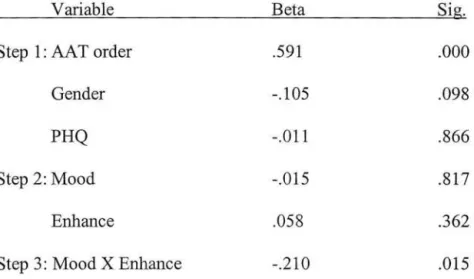
positive reinforcement, a parallel set of analyses were conducted with enhancement motives. AAT order, gender, and PHQ score were entered into Step 1 of the regression model, followed by mood condition and mean centered enhancement motives score in Step 2. The interaction term for mood condition and enhancement motives was entered into Step 3. Again, there was no significant main effect of mood condition (Beta= -.015,
p = .817), and enhancement motives was not a significant predictor (Beta= .058,p =
.362). However, there was a significant interaction effect between mood condition and enhancement motives (Beta= -.210,p = .015) for AAT difference score (Table 5)1.
To probe the nature of the interaction, simple slopes analyses were conducted. The simple slopes analysis for the neutral mood condition showed a significant effect of enhancement motives on AAT difference score (t = 2.35,p = .02). This suggests that in the absence of any mood manipulation, high enhancement motives were associated with greater alcohol-approach action tendencies compared to low enhancement motives. The simple slope for the depressed mood condition was not significant (t = -1.19, p = .24),
suggesting that in the context of depressed mood, higher enhancement motives did not significantly predict higher AAT difference score. In fact, the slope for the depressed condition was in the opposite direction from the neutral condition. A visual
1
Because only beer stimuli were used in the AAT, the influence of beverage preference
on results was explored. The frequency of beer use compared to other alcoholic
beverages (i.e., percentage of alcohol use that involves beer) was entered as a covariate in
Step 1 of this analysis. Beverage preference did not change the observed results, as the
interaction between enhancement motives and mood condition remained significant (Beta
=
-.209, p=
.015). Further, beverage preference was not correlated with AATrepresentation of the interaction effect can be seen in Figure 12.
To further explore the nature ofthe interaction between enhancement motives and depressed mood, the AAT difference score was deconstructed to explore appetitive and avoidance responses separately. This allows for better characterization of which
automatic processes are most strongly influenced by depressed mood. The difference score for appetitive responding was calculated by subtracting the mean of alcohol-pull responses from water-pull responses; avoidance responding was calculated by subtracting the mean of alcohol-push responses from water-push responses. These calculations examine responding to alcohol cues in relation to the control beverage of water.
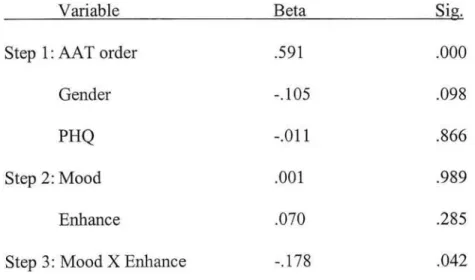
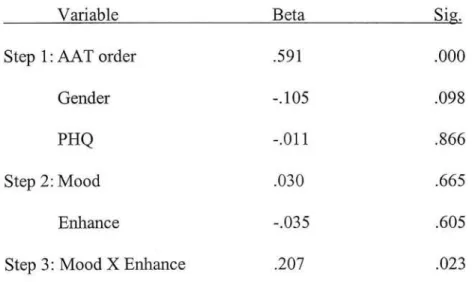
Separate regression analyses were run with the two difference scores as dependent variables. Again, Step 1 included PHQ score, AAT order, and gender. Step 2 contained mean centered enhancement motives score and mood condition, while the interaction term was entered in Step 3. Significant interactions were observed for both the approach
(Beta= -.178, p = .042; Table 6) and avoidance difference scores (Beta= .207, p = .023;
Table 7). Simple slopes analyses (Figures 2 and 3) indicated that appetitive responding in the neutral condition was significantly stronger among higher enhancement drinkers (t = 2 The alcohol-specific AAT used in this experiment required subjects to make binary responses based on the content of the stimulus in each trial. Other work using such categorizational methods (e.g., the IAT) has examined response time data using a "D-score," which is calculated differently than a traditional difference score. The D-score creates a standardized score that accounts for variability of response times for each subject (Greenwald, Nosek, & Banaji, 2003). D-scores were calculated for the AAT in this experiment to determine if results were dependent on the type of scoring algorithm used. A parallel set of analyses was run using D-score as the dependent variable, which resulted in consistent findings. The interaction between enhancement motives and mood condition remained significant (Beta
=
-.186, p=
.031 ). For the simple slopes analyses, the slope for the neutral mood condition remained significant (t = 2.370,p = .019), while2.180, p = .031), while in the depressed mood condition this effect was not observed (t = -.773,p = .441). For avoidance responding, the simple slopes analyses did not show
significant differences among those low and high in enhancement motives in either the neutral (t = -1.940, p = .054) or depressed mood (t = 1.337, p = .183) conditions.
However, the directions of effects were opposite of the approach difference score. These analyses suggest that the observed change in overall AAT difference score may have been accounted for more by differences in appetitive responding.
Exploratory analyses
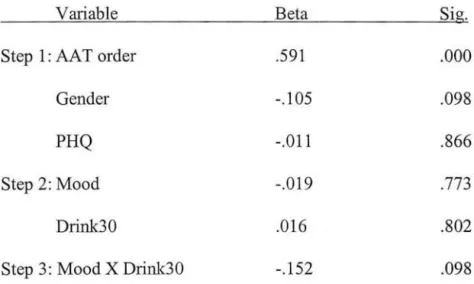
For the exploratory aims, each alcohol consumption variable was tested as a potential moderator of the association between mood condition and AAT difference score. The same regression model was used with each of the alcohol use variables entered as a mean centered predictor in Step 2 and the interaction term in Step 3. Number of drinks in the past 30 days was not a significant predictor of AAT difference score (Beta=
.016, p
=
.808), nor was the interaction te1m with mood condition (Beta= -.152, p=
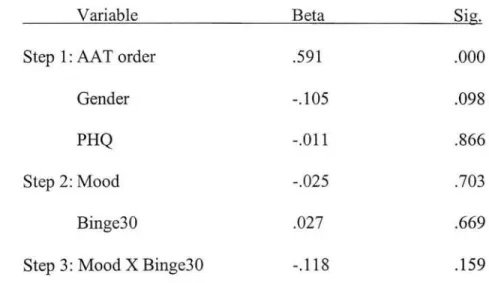
.098; Table 8). Number of binges in the past 30 days was also examined, yielding nosignificant main effect (Beta= .027,p = .669) or interaction effect with mood condition
(Beta= -.118, p = .159; Table 9). Alcohol-related consequences in the past three months
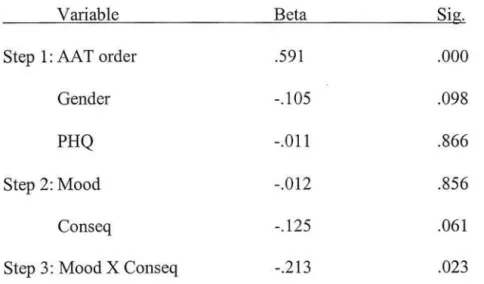
also did not have a significant main effect on AA T difference score (Beta = -.125, p = .061), but there was a significant interaction between mood condition and consequences
(Beta= -.213,p = .023; Table 10). SimP,le slopes analyses revealed a significant slope for the depression condition, indicating that students with more alcohol-related consequences
exposed to a depressed mood induction (t = -2.945, p = .004). For the neutral condition, there was no difference for AAT difference score between students with high and low consequences (Figure 4).
Discussion
The current study contributes to our understanding of how mood states may influence alcohol-related self-control. While the hypotheses related to negative
reinforcement drinking were not supported, the depressed mood induction appeared to interfere with appetitive responses to alcohol stimuli for those who had higher levels of enhancement motives. In a neutral mood context, higher enhancement motives were associated with increased appetitive responses to alcohol stimuli relative to lower enhancement motives, while in the depressed mood condition higher enhancement motives were not related to an increase in appetitive responding. Indeed, the direction of this effect suggests that appetitive responding was actually weaker for those who had stronger enhancement motives in the depr.essed mood condition.
Because drinking to enhance positive affect is motivated by mood states that are congruent with positive reinforcement schema (Zinser et al., 1992), depressed mood may not serve as a trigger for alcohol use motivation. Instead, this dampening of appetitive responses is consistent with the devaluation literature (Brendl et al., 2003), which posits that objects that are not instrumental in achieving activated goal states will be devalued. In the current experiment, individuals undergoing the depressed mood induction were motivated to alleviate feelings of sadness. Among individuals who have high