Putting Engineering into the
Enterprise System
Remko Helms
institute of information and computing sciences, utrecht university
technical report UU-CS-2003-054
PUTTING ENGINEERING INTO THE ENTERPRISE SYSTEM
Abstract
Engineering processes at engineering contractors are well supported by a variety of computer applications such as 2D and 3D CAD, finite element analysis tools and other CAE tools. There is however a lack of enterprise systems that enable engineering contractors to control their engineering processes. Enterprise Systems, i.e. Enterprise Resource Planning (ERP) systems, which are working well in manufacturing industries, are not very well equipped for use at engineering contractors. This paper presents the results of two case studies at two different engineering contractors in the process industry and building and construction industry respectively. It presents the generic control and support processes at an engineering contractor that should be supported by an enterprise system. For each process the main functionality is discussed followed by the integration that is required between the different processes, resulting in a blueprint of an Enterprise Systems for engineering contractors. The conclusion of the research is that engineering contractors should look for best-of-breed systems and to integrate them to create their own Enterprise System. Engineering contractors can use the presented blueprint or data model to select the best mix of best-of-breed systems.
Keywords: Engineering contractor, Management Information System, Enterprise System, One-of-a-Kind production, process integration.
1. INTRODUCTION
Enterprise systems are commercial software packages promising the seamless integration of all the information flowing through a company – financial and accounting information, human resource information, supply chain information, customer information (Davenport 1998). These systems are also referred to as Enterprise Resource Planning (ERP) or Enterprise Resource Management (ERM) systems. The roots of these systems lie in the 80’s, at that time they were known as Material Requirements
Planning (MRP) systems (Wortmann et al. 1997). MRP systems are used to plan production and to derive the material requirements from the master production schedule using the bill-of-materials. In the last 20 years more functionality has been added to MRP systems resulting in Enterprise Systems to manage the complete enterprise and not only production.
Today Enterprise Systems are implemented on a large scale in manufacturing organizations. Because of the success of Enterprise Systems also other types of companies have invested in Enterprise Systems. Amongst others engineering contractors also invested in Enterprise Systems hoping that it would integrate their business. However, the main process of an engineering contractor is the engineering process, i.e. the conversion of general product specifications into a detailed product definition (De Graaf, 1996). Using manufacturing as a metaphor, the production process of engineering contractor could be defined as the production of product definition documents and the logistics process could be defined as the distribution of documents internally and externally. Moreover, the purchasing or procurement process is less complex then in manufacturing organisations because only paper, toner, and computer hardware and software is needed to produce product definition documents. In other words the process at an engineering contractor is totally different from manufacturing organisations for which most Enterprise Systems are designed for originally. Therefore implementing an Enterprise Systems at an engineering contractor will mainly result in the integration of financial management processes. It will not integrate other business processes because they are not designed to support these processes.
This paper explores what is expected from an Enterprise System in order to be able to control the
(engineering) processes of an engineering contractor. The material presented in this paper is based on two case studies at two engineering contractors in two different industries: the process industry and the building and construction industry1. Engineering contractors can also be referred to as a One-of-a-Kind production organisation (Wortmann et al. 1997). Each product is one-of-a-kind with its own unique characteristics and is built according the specifications of an individual customer. Examples here are a refinery, a tunnel or a bridge.
1
The engineering contractor in the process industry is a so -called Engineering, Procurement, and Construction (EPC) contractor. Although these type of contractors are also involved in the construction of the physical artefact, i.e. procurement and construction (PC), the focus has been on the engineering processes (E).
2. PROCESSES IN ENGINEERING ORGANISATIONS
The main process at an engineering contractor that adds value is the engineering process itself. There are several authoring tools, such as 2D/3D CAD, finite element analysis and other Computer Aided
Engineering (CAE) tools, to support this process. But besides the engineering process several control and support processes are required to run the company in an efficient and effective manner. This section identifies the main control and support processes as well as the (IT) functionality that is required to support them.
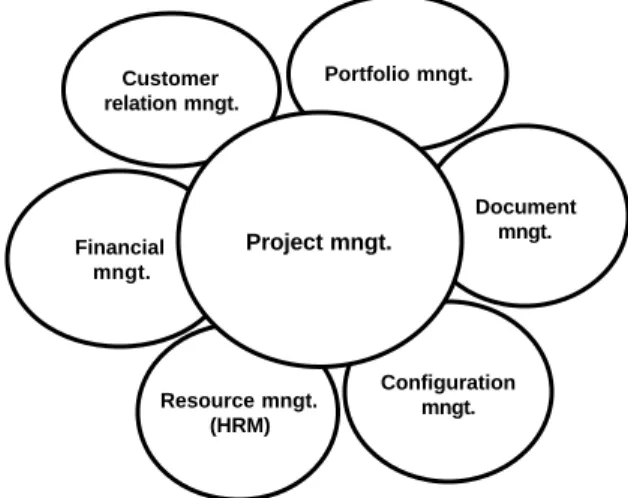
Figure 1 Main control and support processes engineering contractor
Research at the case study companies as well as publications on Professional Service Automation (PSA) or Service Process Optimisation (SPO) from Melik et al. (2001) and market research firms Gartner and Aberdeen resulted in a model of the main control and support processes of an engineering contractor that is shown in figure 1. In the following paragraphs the main control and support processes at an engineering contractor, as shown in figure 1, are discussed in more detail.
Project management
The central process at an engineering contractor that controls the engineering process is project
management. According the Project Management Institute (2000) a project involves doing something new that has not been done before and which is therefore unique. The presence of repetitive elements does not change the fundamental uniqueness of the project work (Project Management Institute 2000). For
example, many process plants have been built, but each plant is unique – different owner, different location, different contractor etc. At an engineering contractor every customer order has unique characteristics and is therefore handled as a project.
The main elements of project management according the Project Management Institute (2000) involve: integration management, scope management, time management, cost management, quality management, resource management, communications management, risk management, and procurement management. For a detailed description of each of these elements is referred to the Project Management Body of Knowledge (PMBOK) from the Project Management Institute.
Summarising the task of project management is to deliver the project, i.e. a product of service of a certain quality, on time, within budget and within scope. An up-to-date overview of the project in terms of time, cost and progress is therefore essential to control the engineering process. Any changes to the original plan or new risks should be detected early to prevent that they will jeopardise the project profits or results.
Financial mngt. Document mngt. Resource mngt. (HRM) Portfolio mngt. Configuration mngt. Customer relation mngt. Project mngt.
Customer relation management
CRM is a broad term for managing business interactions with customers (Kim et al. 2003). It involves more than sales alone:
- customer acquisition: acquiring new customers - customer retention: maintaining current customers
- customer development: developing a customer from low to highly profitable - customer differentiation: focus attention on highly profitable customers
Customer retention has become more important because it is approximately 5 times cheaper to keep an existing client than to win a new client. To keep customers satisfied it is important to know the history of the customer’s history, which products/services did they buy and were they satisfied about them. A company should stay in contact with the customer to learn about recent needs of the customer. Co-ordinating all customer contacts is essential in order to have ‘one face’ to the customer. Typical functions that are required are quotation management, contact management, relation management (planning and co-ordination) and contract management.
Financial Management
An engineering organisation needs financial management processes just like any other business. Typical functions that are required are: General Ledger, Payroll, Invoicing, Accounts Payable/Receivable, and Time and Expense Reporting. Invoicing and time and expense reporting are directly related to project management. It is only possible to send invoices if all project members report their costs and hours on their projects.
For control purposes the financial department provides all kinds of reports on enterprise level, focused on revenue, operating cost, market share, cash flow, margin etc. Often they are also responsible for providing cost reports on project level.
Human Resource Management
An engineering contractor needs a highly skilled workforce; several authors refer to this type of
employees as knowledge workers (Drucker, 1988). Human Resource Management processes are needed for Recruitment and Selection, Carreer Development (incl. Education/training) and Performance
Evaluation of the knowledge workers. On an organisational level resources are typically recruited for a department or discipline in the organisation; within this department they jointly develop their knowledge and expertise. On project level human resource management involves recruiting project members internally from the organisational resource pool. In case there is nobody in the (internal) resource pool with the required skills or experience this resource can be hired from outside, the work can be contracted or a new employee is recruited to do the job.
Department managers should monitor the utilisation rate of their resources in projects. They are responsible for finding a good balance between developing knowledge and expertise within their department or discipline and using this knowledge and expertise in projects. Realising that deploying resources in projects funds the development of knowledge and expertise.
Portfolio Management
Bourke (2003) wrote: “Project Management focuses on day-to-day coordination of task -level activities against a reasonably clear set of short-term commitments. Managing individual projects can lead to sub-optimisation on the enterprise level. If there are conflicts between projects, and resource conflicts are most common, they should be solved by taking into account the interests of the organisation and not of the individual project. Portfolio Management solves this problem, it is a rational assessment of resource allocation against top-level strategic goals and risk/return expectations.” Portfolio Management requires
integrated reporting over all projects in the portfolio in terms of risk and revenue, therefor it aggregates the individual project reports into a portfolio report.
Pipeline management is also part of portfolio management is, it involves planning of potential projects or prospects. The preliminary allocation of resources for prospects should also be assessed against top-level strategic goals and risk/return expectations. For example, in case a new project looks very promising in terms of revenue one can decide to delay another project that is generating less revenue. For this type of decisions portfolio management is indispensable.
Document management
Engineering contractors create product definition document, i.e. intermediate results and deliverables, either analogue or digital. Each document goes through a document lifecycle that consists of several stages (Hamer et al. 1996). Review steps are an import part of the document lifecycle, it ensures the quality of the document and hence of the artefact it defines. Once a document is created and reviewed it should be distributed or expedited to the right person in the right format and should of course arrive on the right moment. To ensure that documents arrive at the right moment both case study companies manage the progress of their main deliverables. In most cases it involves the drawings, which are used by construction to construct the artefact. In both case study companies progress is measured on basis of a document’s status, i.e. its position in the document lifecycle. Each stage in the document lifecycle corresponds with a specific progress percentage that is agreed on at the start of the project.
During a project engineering contractors communicate a lot with clients and suppliers by sending documents back and forth. Because of claims and liability issues it is important to register when which documents are send to whom and for what reason. Managing the logistics of the flow of hardcopy and digital documents can be a full-time job for several people on large projects (Helms 2002).
Summarising typical document management functionality involves check-in/out, status and version control, retrieval, and workflow management (Hamer et al. 1996, Hameri et al. 1998, Helms 2002, Peltonen et al. 1996).
Configuration Management
Configuration Management is defined as a process for establishing and maintaining consistency of a product’s performance, functional and physical attributes with its requirements, design and operational information throughout its life (US Department of Defence 1997). In addition DoD Regulation 5000.2-R defines Configuration Management as:
“The configuration management effort includes identifying, documenting, and verifying the functional and physical characteristics of an item; recording the configuration of an item; and controlling changes to an item and its documentation. It shall produce a complete audit trail of decisions and design modifications.”
Basically configuration management is a good accounting procedure that registers all steps of the engineering process in which the product is defined, how all parts of the product relate to each other during the product lifecycle including all changes, and which document versions define these parts. Proper accounting of the actual product configuration prevents engineers from working with outdated
information. Moreover, it supports in estimating the impact of a change because the configuration shows which parts are affected and which documents needs to be altered as a consequence.
It can also proof to be very useful in case of claims or liability issues. For exa mple, in case a bridge collapses the engineering contractor should proof that their calculations and drawings are right. They should be able to find the original documents that define the bridge including the appropriate signatures showing that they followed the right procedures. If they cannot submit the evidence they risk to be held responsible for the disaster, which can have severe financial consequences.
Summarising the main functions of Configuration Management are as follows: configuration
identification, configuration control, configuration status accounting, and configuration verification & audit (ISO 2003, US Department of Defence 1997).
3. INTEGRATION OF INFORMATION AT ENGINEERING CONTRACTORS
Engineering contractors benefit from seamless integration of business processes because it enables them to better control and manage their organisation. This section therefore focuses on the integration between the different business processes as shown in figure 1. Project management is positioned in the centre of figure 1 because it has relations with all other business processes. This section describes in more detail the relation between each business process and project management, the main focus is on the information exchange and coordination that is required to achieve seamless integration.
Customer relation management <-> Project management
This relation is centring on new projects and potential new projects, i.e. prospects, which are acquired by customer relationship management. As part of the customer relation management process information on new projects and prospects is captured. For projects it typically captures such information as project name, conditions, contract value, start date, customer contact, invoice address etc. For prospects it typically captures such information as expected contract value, chance to score, expected start date, customer contact etc.
Project management uses basic information on project and prospects, such as identification number, name and planned start and end date, which is captured by Customer Relationship Management. Project
management creates an activity plan for every project and prospect and assigns resources to it. Vice versa project management provides customer relation management with updates, e.g. changes to planned start and end dates or cost overruns. Timely communication to the customer on these changes to the original plan is important to find a solution and keep the customer satisfied.
Financial management <-> Project management
This relation is centring on the time and expenses that are associated with projects. Financial management captures time and expenses for accounting purposes and to invoice clients. While project management captures time and expenses to monitor the project budget by constantly compare the actual costs against the baseline costs. For reporting man-hours, i.e. time, engineering contractors use stand-alone time
reporting systems or systems that are part of either a financial management system (which is on his turn is often part of an enterprise system) or project management system. Purchasing of material, equipment and services is often managed using the purchase module of a financial management system or enterprise system. For a project it is important to know which costs are made and which costs can be expected based on commitments, i.e. purchase orders.
Although both financial management and project management processes register costs both use different structures for storing these costs, a cost accounting structure and a work breakdown structure (WBS) respectively2. These structures are different because they serve different purposes. The accounting structure matches cost centres, i.e. departments, on an organisation level while the work breakdown structure matches cost centres, i.e. activities, on project level. For more information on breakdown structures is referred to Lamers (2002).
Besides exchanging time and expense information, financial management and project management also exchange information on project progress. In lump sum (fixed price) projects the customer is invoiced based on the amount of progress. Project management therefore needs to inform financial management on progress in order to enable financial management to send invoices to the customer.
2
Human Resource Management <-> Project management
This relation is centring on the resources that are involved in projects. To make an estimate of the cost and duration of the project the project manager makes an activity planning, for example using a GANNT chart (Meredith et al. 1989, Morris 1994). Consecutively the project manager staffs his project by assigning resources to each activity. Project managers select resources on basis of their skills and experience. Selecting the right resources for a project is an important success factor, but can be a rather cumbersome job especially in large organisations. One needs to know where to find the person with the skills and experience required for the project. Once a resource is found the project manager is interested in the availability of the resource. If the resource is available he can claim the person for his project. Both human resource management and project management record information on resources, on organisation and project level respectively. Human resource management keeps a record of the career development, skills and experience, and education of employees. While project management keeps a record of the employees in terms of skills and experience, commitments (i.e. project assignments), and availability. There should be one central resource pool that contains information of all the employees of the company. This resource pool should be managed by human resource management and be available to project management for staffing projects.
Resource managers are interested in the actual and planned utilisation rate of their resources. First of all this requires that resources report time on project assignments as well as non-project activities, e.g. training and holiday. This will provide resource managers with a reliable utilisation of the past. Insight in the future utilisation rate (except for non-project activities) is available because staffing is not only done for projects but also for pros pects.
Portfolio management <-> Project management
This relation is centring on the portfolio of projects and prospects. To prevent sub-optimisation projects should be managed on an aggregated level, i.e. organisation level, as a portfolio of projects. Portfolio management focuses on risk/return expectations; it constantly assesses the projects in the portfolio and re-allocates resources if that results in lower risks and higher returns for the organisation. Project
management should therefore provide portfolio management with information on individual projects and prospects. Information that is involved includes project schedules, resource allocation, costs, estimated revenues and risks. The aggregation of project and prospect data provides an indication of risks and future utilisation rates and revenues as well as an overview of the ‘pipeline’ of all projects (either active or waiting to become active) and prospects. From the aggregated portfolio view it is possible to drill down to individual project if further inquiry is necessary. In case of delays or cost overruns in individual projects the portfolio view shows how other projects are affected. Using scenario analysis it is possible to test several alternatives to find the best alternative in terms of risk and revenues. The result of the scenario analysis is fed back into project management resulting in adaptation of individual project schedules and resource allocations.
Document management <-> Project management
This relation is centring on progress of documents and especially deliverables. Reinertsen (1997) uses manufacturing as a metaphor and speaks of a ‘design factory’. It refers to the fact that the product of the engineering process is a design, which are captured in documents and/or models. Both case study
companies manage progress of engineering projects on basis of the progress of deliverables, i.e.
documents and/or models. The progress of individual deliverables is rolled up to an aggregate level hence representing the progress of projects. One of the case study companies explicitly plans all deliverables in advance and provides an estimate of the time it will take to complete the deliverable. This estimate is used as a weight factor when calculating the project’s progress from the progress of individual deliverables. Both companies use document management systems or product data management systems to manage the progress of documents. It is based on the functionality to manage the lifecycle of documents. Each state in
the document lifecycle corresponds to a specific progress percentage. An example of a lifecycle is not started- in progress – internal checking – for approval – for construction; the corresponding progress percentages are 0% – 20% – 60% –80% – 100%. The integration between document management and project management then involves linking documents, i.e. their progress percentage, to the activities in the Work Breakdown Structure (WBS).
Configuration management <-> Project management
This relation is centring on change control in projects. The focus is on changes that affect the product configuration including the documents that define the product. To manage changes engineering
contractors use change control procedures that basically consist of three steps: change request, change order and change notification. In the first step, change request, a change is proposed and assessed by several people on its budgetary, schedule, and technical consequences. The second step, change order, starts after approval of the change request. It involves the actual processing of the change. Hours that are spent on processing the change are reported to a (new) activity that is created to monitor the change activities. After processing the change the change control process reaches it final step, change notification. People on the project are updated. i.e. notified, about the details of the change and when it becomes effective.
From a project management perspective, it is important to manage the budgetary and schedule
consequences of the change. In order to be able to monitor the consequences of each individual the Work Breakdown Structure is extended with additional activities. Each additional activity receives a unique identification number and its own budget in order to be able to monitor the financial cons equences of a change. Progress of each additional activity is monitored to monitor the schedule consequences.
Moreover, it is important to monitor the status of the complete change control process. There are several systems, product data management systems for example, which support change control processes with workflow functionality (Cimdata 1995). The status of such a workflow can be used to monitor progress of the change control process.
From a configuration management perspective it is important to ma intain all changes to the product configuration, i.e. using version control and base lining. Moreover, the complete change control process should be traceable. Hence important decisions during the change control process have to be recorded, i.e. who approved the change and what is the consequence/outcome. Traceability can also be established using workflow functionality.
An integral support of the change control process, using workflow functionality for example, therefore integrates the project management and configuration management aspects of a change.
4. DISCUSSION AND CONCLUSIONS
The previous section showed a high level outline engineering contractors’ preferences with respect to enterprise systems. Both case study companies pursued efforts to realise integration of their core processes by creating or ‘assembling’ their own enterprise system. One company already started during the early nineties and realised integrations between their ERP system, product data management (PDM) system and project management system. The other company recently reassessed their information infrastructure to realise further enterprise integration. Based on the assessment they started a selection process that revealed information on the current state-of-the-art. In the remainder of this section the results of this selection process are discussed.
Enterprise Resource Planning (ERP) (Multi) Project Management (PM) Professional Services Automation (PSA) Product Lifecycle Management (PLM) Customer Relationship Management + - +/- - Financial Management ++ - +/- - Resource Management ++ +/- + - Portfolio Management +/- + ++ - Project Management - ++ + +/- Document Management +/- +/- +/- ++ Configuration Management +/- - - ++
Legend: - = none; +/ - = some; + = basic; ++ = advanced
Table 1 Best-of-breed systems and their capabilities
Initially the company believed that ERP systems would be a perfect candidate to integrate their processes. This belief was mainly based on the success stories heard from other types of companies that applied ERP systems. However, the steering group and the project team realised that purchasing, production, and logistics is key for production-on-stock or assemble -to-order companies but not for One-of-a-kind production companies. To find a solution for their integration problems the case study company studied several scenarios by combining several best-of-breed systems. Table 1 provides an overview of the different types of best-of-breed systems that were taken into account and how well they support the different control and support processes of engineering contractors (figure 1)3.
3
Information table 1 is based on information that is provided by vendors during the selection process, information from different websites, and from the demonstration of the different systems by the vendors at the case study company.
Best-of-breed systems Processes
The following types of systems are not taken into account: Customer Relationship Management (CRM), Document Management (DM) and Workflow Management (WFM). Firstly, because their scope is too limited hence using these systems would result into too many systems and thus too many interfaces, which is undesirable from a maintenance point of view. Secondly, it was assumed that the functionality is to some extent also supported by the other systems. For example, PLM systems also offer document management and workflow management functionality, especially for engineering contractors, so you do not need to separate systems to support this type of functionality.
At the case study company they finally decided to upgrade to a new version of their current ERP system (i.e. financial management system), to upgrade to a new version of their project management system that supports multi project management, and to buy a new product lifecycle management system. The
interfaces and integrations are partly developed in -house but also in co-operation with the implementers of the different systems. The most desirable solution was to use a PSA system instead of the PM system, because the functional fit was better. However, due to a lucrative contract with the PM system supplier they decided to go for the PM system solution.
Summarising, the experience and practices at the case study companies show there is not an enterprise system that sufficiently covers all the processes of an engineering contractor. Therefore engineering contractors should look for best-of-breed solutions to integrate their processes.
References
Bourke, R., “Product & Portfolio Management – An overview ”, Engineering Data Management Newsletter, Vol. 13, November 2002.
CIMdata, Inc., “Product Data Management: the Definition”, http://www.cimdata.com, 1995.
Davenport, T.H., “Putting the enterprise into the enterprise system”, Harvard Business Review, July 1998.
Drucker, P.F., “The coming of the new organization”, Harvard Business Review, January-February, 1988.
Graaf, R. de, “Assessing Product Development: Visualizing Process and Technology Performance with RACE”, dissertation Eindhoven University of Technology, 1996.
Hamer P. van den, Lepoeter K., “Managing Design Data: The five Dimensions of CAD Frame works, Configuration Management and Product Data Management”, Proceedings of IEEE, Vol. 84, no. 1, 1996.
Hameri A.P. and Nihitilä, “Product Data Management - exploratory study on state-of-the-art in one-of-a-kind industry”, Computers in Industry, Vol. 35, No. 3, 1998, p. 195-206.
Helms, R.W., “Product Data Management as enabler for Concurrent Engineering”, Ph.D. thesis, Universiteitsdrukkerij Eindhoven University of Technology, 2002.
ISO, “Quality Management Systems - Guidelines for Configuration Management”, ISO 10007:2003, 2003.
Kim, J., Suh, E., Hwang, H., “A model for evaluating the effectiveness of CRM using the balanced scorecard”, Journal of Interactive Marketing, vol. 17, no. 2, spring 2003.
Lamers, M., “Do you manage project, or what?”, International Journal of Project Management, Vol. 20, 2002, p.325-329.
Melik, R., Melik L., Bitton, A.S., Berdebes, G., Israilian, A., “Professional Services Automation – Optimising Project & Services Oriented Organisations”, John Wiley & Sons, www.psabook.com, 2001.
Meredith, J.R., Mantel, S.J., “Project Management – A managerial approach”, John Wiley & Sons, 1989.
Morris, P.W.G., “The management of projects”, Thomas Telford, London, 1994.
Peltonen H., Pitkänen and Sulonen R., 'Process-based view on product data management', Computers in Industry, Vol. 31, No. 3, 1996, p. 195-204.
Project Management Institute, “A guide to the Project Management Body of Knowledge – 2000 edition”, Project Management Institute, Pennsylvania, USA, 2000.
Reinertsen D.G., “Managing the Design Factory: a product developers toolkit”, The Free Press, New York, 1997.
Turner, J.R., “Do you manage work, deliverables or resources?”, Editorial, International Journal of Project Management, Vol. 18, 2000, p.83-84.
US Department of Defense, “Military Handbook: Configuration Management Guideline”, MIL-HDBK-61, 1997.
Wortmann J.C., Muntslag D.R. en P.J.M. Timmermans, “Customer Driven Manufacturing”, Chapman and Hall, 1997.