Document Approvals:
The signature below indicates that the person signing has read, understood and accepted the document content
and the document intentions.
Document Ownership
This Manual remains at all times the sole property of PHSA Laboratories, BC Public Health Microbiology &
Reference Laboratory
.
Neither the whole document nor any part of it may be copied by, shared with, or
distributed by any party outside of PHSA Laboratories, BC Public Health Microbiology & Reference Laboratory
without first obtaining written permission.
Date
Signature
Manager, Laboratory
Operations
October 2,
2015
Amelia Trinidad
Date
Signature
Public Health Laboratory Director
October 2,
2015
Dr. Judy Isaac-Renton
……….
...Requisition Instructions………...
Page 4
Page 4
………
...Sample Collection……….………..
Sample Collection Kits………...
Sample Packing Instructions………...
Transportation of Samples………...
STAT/Emergency Samples and Urgent Samples………..………...
Generic/Miscellaneous Requests ...
Page 6
Page 6
Page 7
Page 9
Page 10
Page 11
Page 12
Biosafety, Biohazard Containment (BBBC) Program………...
Page 13
Public Health Advanced Bacteriology/Mycology Program……….
Sample Collection – Enteric Bacteriology ………...
Sample Collection – Chlamydia and Gonorrhea Testing.……….….
Sample Collection – Trichomonas and Bacterial Vaginosis.……….
Sample Collection – General Bacteriology……….
Sample Collection – Mycology…….………..…………
Enteric Bacteriology Diseases & Infections………..……...
Non-Enteric Diseases & Infections………...
Mycology Fungal Diseases & Infections……….…....
Mycology Reporting Procedures………..
Page 14
Page 14
Page 15
Page 18
Page 19
Page 20
Page 22
Page 25
Page 34
Page 42
Environmental Microbiology Program………..………
Sample Collection – Water for Bacteriological Examination……….………
Environmental Microbiology Diseases & Infections (Waterborne)……….………...
Food Poisoning & Gastroenteritis Outbreak Investigation……….…..
Sample Collection – Food Poisoning & Gastroenteritis Outbreak Investigation……….………....
Page 43
Page 44
Page 45
Page 47
Page 48
Food Quality Check Program……….………
Environmental Microbiology Diseases & Infections (Foodborne)………....
Laboratory Surveillance & Outbreak Coordination …..………..……….…..
Page 49
Page 50
Page 53
Molecular Microbiology & Genomics Program……….………..……….…..
General Information………..……
Molecular Network for Public Health ………..……
Page 54
Page 54
Page 55
Reporting Procedures….……….………...
Page 62
Parasitology Program………..
Sample Collection……….……….……….
Parasitology Diseases & Infections………...……...
Page 65
Page 66
Page 68
Virology Program……….………..
Sample Collection – Virology ………..…………...
Interpretation of Virology Serology Reports……….…………..………
Virology Diseases & Infections..……….…………..
Page 84
Page 86
Page 89
Page 93
Zoonotic Diseases & Emerging Pathogens (ZEP) Program………..
Sample Collection………...
Zoonotic Diseases and Emerging Pathogens Diseases & Syndromes (Bacterial)………..
Zoonotic Diseases and Emerging Pathogens Diseases & Syndromes (Fungal)……….…..
Zoonotic Diseases and Emerging Pathogens Diseases & Syndromes (Parasitic)………...
Zoonotic Diseases and Emerging Pathogens Diseases & Syndromes
(Rickettsial/Viral)………..………..
Page 106
Page 107
Page 108
Page 113
Page 115
Page 118
655 12
thAve W.
Vancouver B.C. V5Z 4R4
1-877-747-2522
http://lmlabs.phsa.ca/BCPHMRL
Medical On-Call during regular working hours (08:30 – 16:30 Monday - Friday) is provided by the Program Head listed
for each of the Sections below.
For after hours medical emergencies, contact the Microbiologist On-Call at 604-661-7033.
604-707-2419
604-312-3150 (cell)
Report physician or clinic changes of address or status (e.g. retirement, inactive, etc.) via telephone
(1-877-747-2522) or email ([email protected]).
Public Health Laboratory Director
Assistant to the Director
Associate Director
Director, Laboratory Operations
Manager, Laboratory Operations
Public Health Laboratory Surveillance &
Outbreak Manager
Healthy Water Program/EWQA
Administrative Assistant
Judith Isaac-Renton, MD
Rosalyn Wagner
Mel Krajden, MD
Gail Crawford
Amelia Trinidad
Yin Chang
Cora Yee
Yvonne Hardwicke
604-707-2619
604-707-2646
604-707-2421
604-707-2634
604-707-2650
604-707-2632
604-707-2639
604-707-2627
604-707-2603
604-707-2603
604-707-2603
604-707-2603
604-707-2603
604-707-2603
604-707-2603
604-707-2603
Biosafety Biosecurity Biohazard
Containment
Public Health Lead
Neil Chin
604-707-2614
604-707-2603
Advanced Bacteriology/Mycology
Program Head
Section Head
Main Laboratory
Mycology Laboratory
Linda Hoang, MD
Ana Paccagnella
604-707-2618
604-707-2610
604-707-2617
604-707-2621
604-707-2604
604-707-2604
604-707-2604
604-707-2604
Manager, Laboratory Operations
High Volume Serology (Viral Serology)
High Volume Serology (Bacterial Serology)
Section Head, Microbiology
Amelia Trinidad
Mel Krajden, MD/
Muhammad Morshed, PhD
Annie Mak
604-707-2650
604-707-2421
604-707-2622
604-707-2828
604-707-2603
604-707-2603
604-707-2602
604-707-2407
Environmental Microbiology
Program Head
Section Head
Water Laboratory
Water Results Line
Foodborne Disease
GI Outbreak Notification Fax
EWQA Provincial Coordinator
Judith Isaac-Renton, MD
Brian Auk
Julie Wong
Natalie Prystajecky, PhD
604-707-2619
604-707-2608
604-707-2620
604-707-2665
604-707-2611
604-707-2633
604-707-2603
604-707-2600
604-707-2600
604-707-2600
604-707-2607
604-707-2603
Molecular Microbiology & Genomics
Program Head
Associate Head
Section Head
Laboratory
Patrick Tang, MD, PhD
Linda Hoang, MD
Alan McNabb
604-707-2616
604-707-2618
604-707-2683
604-707-2680
604-707-2675
604-707-2604
604-707-2603
Mycobacteriology/TB
Program Head
Section Head
Laboratory
Patrick Tang, MD, PhD
Mabel Rodrigues, PhD
604-707-2616
604-707-2615
604-707-2630
604-707-2675
604-707-2672
604-707-2672
Parasitology
Program Head
Clinical Microbiologist
Section Head
Laboratory
Judith Isaac-Renton, MD
Muhammad Morshed, PhD
Quantine Wong
604-707-2619
604-707-2622
604-707-2612
604-707-2629
604-707-2603
604-707-2654
604-707-2654
604-707-2654
Laboratory Support Services
Program Head
Section Head
Judith Isaac-Renton, MD
Mabel Rodrigues, PhD
604-707-2619
604-707-2615
604-707-2603
604-707-2672
Virology Program
Program Head
Section Head
Laboratory
Virus Isolation Outbreak Fax
Mel Krajden, MD
Alan McNabb
604-707-2421
604-707-2683
604-707-2623
604-707-2603
604-707-2675
604-707-2605
604-707-2605
Zoonotic Diseases & Emerging Pathogens
Program Head
Section Head
Laboratory (Serology)
Laboratory (Molecular)
Muhammad Morshed, PhD
Quantine Wong
604-707-2622
604-707-2613
604-707-2628
604-707-2626
604-707-2602
604-707-2602
604-707-2602
604-707-2602
Supplies Fax
604-707-2606
Saturday/Statutory Holidays*
0800 - 1540 (Public Health Advanced Bacteriology/Mycology)
0830 -1630 (Environmental Microbiology Program)
1000 -1800 (Virology)
Sunday/Statutory Holidays*
0830 -1630 (Environmental Microbiology)
0830 -1630 (Virology)
Malaria On-Call
Available 24/7 (604) 871-3246
On-Call
Medical Microbiologist On-Call available 24/7 at
604-661-7033
including on call for:
High Volume Serology
Malaria Consultation
AFB Smear (On-Call available weekends/Statutory
Holidays)
Virology Program
or
http://lmlabs.phsa.ca/BCPHMRL/requisitions
Requests for testing must be submitted on a PHSA Laboratory requisition. Electronic requests through an
approved
Reference Laboratory interface are exempt. All requisitions must be filled out as described below.
It is the submitting client’s responsibility to ensure that requisitions are
filled out completely, accurately
and
legibly
.
PHSA Laboratories will only forward “copy to” physician and client reports when mailing information on the
requisition is complete.
Ensure that the following instructions are completed for each requisition:
Provide two personnel identifiers (PHN and date of birth) if available unless there are public health reasons for
not doing so.
Provide a complete patient name (surname and given name) unless there are public health reasons for not doing
so. BC Public Health Microbiology & Reference Laboratory, PHSA Laboratories will provide non-nominal testing in
the following circumstances:
HIV testing
Testing for donor programs
Sample from patients whose names are not available to the referring physician (e.g. altered level of
consciousness)
Sexual abuse cases involving a minor
Other cases deemed appropriate by public health workers (samples submitted by health units, public
health or youth clinics, etc.)
Provide patient’s current address including city and postal code.
Ensure the date of birth is in the correct format and the gender of the patient is provided.
Always provide the full name and address of the ordering physician requesting the test.
If this physician is a
locum, include the full name of the locum and the physician responsible for the locum. Reports will be sent
attention to these physicians at the address unless the box “I do not require a copy of the report” is checked.
Provide the full name and address of the clinic or hospital requesting the test if applicable and include the PHSA
Client Number.
Always indicate collection date and time using the correct format indicated. For many tests the sample may be
time-sensitive.
Ensure that all remaining sections of the requisition are completed indicating
sample type
,
test requested
and
any
relevant clinical/travel history
.
specific cases please call the appropriate Laboratory Section or Program Head (pgs 1-2). For after hours or
emergencies, contact the Medical Microbiologist On-Call at 604-661-7033.
Please note the following requirements:
All samples submitted to BC Public Health Microbiology & Reference Laboratory must adhere to provincial and federal
regulations and laws regarding packaging and transport including Transport of Dangerous Goods Regulations (TDGR) and
the International Air Transportation Association (IATA) Dangerous Goods Regulations (DGR) where applicable.
It is the responsibility of the
shipper
of the sample to determine whether or not packages for transport meet the above
requirements.
It is
illegal
to mail dangerous goods (which include infectious substances) via Canada Post.
For All Sample Types
Complete requisition legibly. Include all mandatory information.
Submit a separate requisition and sample for each test requested.
Label the sample container clearly with two identifiers (examples include patient name (surname and given
name) and date of birth, PHN, accession number, unique random number. Ensure these two identifiers match
the completed requisition.
Ensure sample containers are tightly closed to prevent leakage during transport.
Leaking samples may not be
processed.
Put the sample
inside
the sealable biohazard bag, and then seal the bag. If the sample is liquid, place enough
absorbent material in the bag to absorb the liquid should the container break or leak. Put the requisition in the
outer
pocket of the bag.
Do not allow the requisition to come in contact with the sample.
Refrigerate sample where appropriate prior to and during transport.
A dedicated sample is required for PCR testing
. Manipulation of samples prior to sending for testing may result
in false negative or positive results.
Leaking samples
Patient name on the sample does not match name on requisition
Samples accompanied by undecipherable, blank or no requisitions
Sample collected in wrong container
Failure to:
Use the correct BC Public Health Microbiology & Reference Laboratory requisitions
Provide mandatory information
Use the correct collection container
Ship safely
is a breach of PHSA Laboratories policies and procedures and is a serious patient safety issue.
Sample collection kits are issued upon request. Orders are placed using the Sample Container Order Form
(DCQM_Q07_4101F_1.00 VER_3.0).
Orders can be emailed to [email protected] using the ’Submit Form’ button on the online form or faxed to
604-707-2606.
Telephone orders are only accepted in emergencies.
Public Health Advanced Bacteriology/Mycology Bacterial pathogens excluding Mycobacterium spp. &
Bordetella pertussis
BAM
(DCBM_100_1001F)
BCPHMRL Amies Charcoal Transport Medium,
swab (plastic shaft), Biohazard bag Public Health Advanced Bacteriology/Mycology
Bordetella pertussis PCR and Culture
BCPHMRL Amies Charcoal Transport Medium,
Swab (wire shaft),
Pertussis Kit Instructions, Biohazard bag
Public Health Advanced Bacteriology/Mycology
Chlamydia trachomatis and Neisseria gonorrhoeae Nucleic
Acid Testing (NAT)
BCPHMRL Unisex Swab Specimen Collection Kit for Endocervical and Male Urethral Swab specimens:
Public Health Advanced Bacteriology/Mycology
Chlamydia trachomatis and Neisseria gonorrhoeae Nucleic
Acid Testing (NAT)
Transfer pipette, Urine Transport tube, Biohazard bag Public Health Advanced Bacteriology/Mycology
Culture of urethral & eye samples for bacterial pathogens
BCPHMRL Amies Charcoal Transport Medium,
Swab (wire shaft), Biohazard bag Public Health Advanced Bacteriology/Mycology
Eye samples for Chlamydia NAT
BCPHMRL Dry swab, Sample transport tube, Biohazard bag
Public Health Advanced Bacteriology/Mycology Enteric Bacteria
BCPHMRL Feces vial, Biohazard bag Public Health Advanced Bacteriology/Mycology
Gonorrhea, Trichomonas, Bacterial Vaginosis & Yeast
BCPHMRL 2 plain glass slides in plastic holder,
Biohazard bag Public Health Advanced Bacteriology/Mycology
Mycology
BCPHMRL 100 mL sterile plastic container,
Biohazard bag Public Health Advanced Bacteriology/Mycology
Organisms for identification No outfit
Central Processing & Receiving/Lane Level
Serology Screening (Hepatitis, HIV, Prenatal Panel, Rubella, Syphilis, Helicobacter pylori, other virus serology)
SER (CPSE_100_1001F)
BCPHMRL SST (gold top) blood tube, Biohazard bag Environmental Microbiology Food Poisoning Incident Summary (DCFP_100_1001F) FP - Requisition (DCFP_100_1001F2)
BCPHMRL Food Microbiology Jar
Environmental Microbiology
Food Quality FQ (DCFP_101_0001f) BCPHMRL Food Microbiology Jar
Environmental Microbiology
Gastrointestinal Outbreak Investigation
Fax Form
(DCFP_102_1001F)
GIOB
(DCFP_102_1001F2)
BCPHMRL 6 vials for feces, 2 dry sterile plastic vials for vomitus,
Biohazard bag Environmental Microbiology
Water Bacteriology
Water Bacteriology
(PHWB_100_1001F)
BCPHMRL Treated plastic bottle, Ziploc bag
Mycobacteriology/TB
Sputum, urine & other body fluids (all Mycobacteria) TB
(PHTB_100_1001F)
BCPHMRL 100 mL sterile plastic container,
Biohazard bag Mycobacteriology/TB
Stomach washings (all Mycobacteria)
BCPHMRL Treated 250 cc sterile glass jar, Biohazard bag
Parasitology
Blood & Tissue Parasites
PARA
(DCPA_100_1001F)
BCPHMRL EDTA (purple top) blood tube, Biohazard bag
Tissue & Body Fluid – sterile container
Parasitology
Pinworm Examination
BCPHMRL Sticky Paddle, Biohazard bag
Kit orders must be approved by the Parasitology Section
Parasitology
Special Tests (refer to Parasitology Program): Strongyloides Concentration/Isolation ELISA (Amoebiasis)
Schistosoma Hatch Test for Viability
BCPHMRL sterile plastic container for faeces or urine, Biohazard bag Virology
Stool for EIA/EM VI
(DCVI_100_1001F)
100 mL sterile plastic container, Biohazard bag
Virology Culture/PCR
BCPHMRL Virus swab and transport medium. Biohazard bag
Virology
Influenza Outbreak Investigation
Unless authorized, maximum order is 50 kits per season
DCVI_100_1001F2
BCPHMRL Virus swab and transport medium. Biohazard bag
Zoonotic Diseases & Emerging Pathogens Arboviruses (West Nile), Hanta virus, Rickettsia,
Ehrlichia/Anaplasma, Leptospira, Referred Zoonotic Testing.
ZEP
(DCZP_100_0001f)
BCPHMRL SST (gold top) blood tube, Biohazard bag
Zoonotic Diseases & Emerging Pathogens
ASOT, AntiDNase B, Brucella, Borrelia, Toxoplasma, Tularemia, Parasitic Serology, Bartonella, Cryptococcus, Referred
Bacterial, Fungal & Parasitic Testing
BCPHMRL SST (gold top) blood tube, Biohazard bag
Zoonotic Diseases & Emerging Pathogens
H. pylori Feces Antigen Sterile vial
Zoonotic Diseases & Emerging Pathogens
Non-Blood samples (CSF for syphilis, tissue, genital swabs) No outfit Zoonotic Diseases & Emerging Pathogens
Syphilis – Darkfield, DFA
BCPHMRL Capillary Tubes, Wax Sealer, FA slide
biohazard bag
To ensure the safety of our staff, leaking or improperly packaged samples, may not be processed.
Note: these instructions are based on IATA packing instructions 650.
1.
Use the container (primary container) provided in the collection kit or as indicated in this guide. See individual
sections for specific collection and labeling instructions. If capped, ensure it is fully closed to prevent leakage.
2.
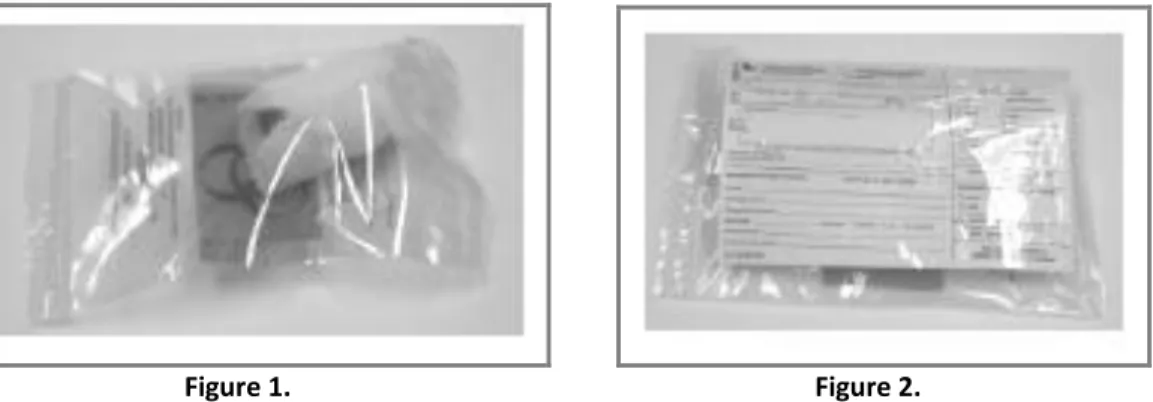
Place the securely sealed primary container into plastic ‘biohazard bag’ (secondary container). Wrap the primary
container or place enough absorbent material (this is not supplied with collection kits, e.g. paper towel, clean
gauze or tissue paper) in the bag to totally absorb sample should the primary container leak or break (
Figure 1
).
that the patient name and additional identifier is on each container to allow matching to its corresponding
requisition.
Figure 1.
Figure 2.
4.
Fill out the correct BC Public Health Microbiology & Reference Laboratory requisition and individual sections for
instructions and insert it into the
side
pouch of the biohazard bag.
Do not place it inside
with the sample (in
case of leaks). Fold the requisition so that the front is visible and place it in the pouch so that the requisition can
be read (
Figure 2
).
5.
Place the secondary container inside a third (outer) package for protection from physical damage and water
while in transit. This may be a plastic cooler, a fiberboard box or other container that is designed, constructed,
filled and closed so that under normal conditions of handling and transport, there will be no discharge, emission
or escape of the dangerous goods that could constitute a danger to public safety.
Multiple secondary containers may be included. When possible, please group samples by collection kit type. Health
Units use waterproof containers to transport samples to PHSA Laboratories, BC Public Health Microbiology & Reference
Laboratory via courier.
These are general rules that apply to most samples submitted to PHSA Laboratories, BC Public Health Microbiology &
Reference Laboratory via Health Units, courier or authorized persons.
By courier or authorized persons:
Samples may be delivered to BC Public Health Microbiology & Reference Laboratory or CPR-LL, (deliveries received
at the rear of building), 655 West 12
thAvenue, Vancouver.
All samples must be in acceptable sample collection containers and properly packaged as per Transport Canada,
Transport of Dangerous Goods Regulations.
All samples must be in acceptable sample collection containers and properly packaged as per Transport Canada,
Transport of Dangerous Goods Regulations.
To expedite STAT testing (generally results available in less than 4 hours; some tests take longer), the following
guidelines must be followed:
1.
Consult with the Program (Medical Microbiologist) or Section Head of the program or services (page 5) before
submitting the sample for emergency testing.
Some cases require consultation with the Program Head/Medical Microbiologist who lead their Program (as
noted under each area, pages 1-2) before samples will be tested.
For after-hours emergencies, the Program Medical Microbiologist On-Call may be reached at 604-661-7033.
Provide the following information (clinical history, sample type, test required) to the appropriate Section
Head or Program Head
before
submitting the sample.
2.
Other information required includes
Patient information (name, date of birth, PHN, etc.);
Method of transport (including the name of the courier/airline and waybill numbers);
Approximate time of departure/arrival;
Name of the contact person and their telephone number (for telephoned results). Fax number is also
required.
3.
Clearly label the package (interior and exterior) with “STAT” including attention to the appropriate Section or
Program Head.
Ensure that the name of the contact person at BC Public Health Microbiology & Reference
Laboratory is also on the requisition.
4.
Do not package STAT samples together with regular samples.
5.
If after hours, the Medical Microbiologist On-Call 604-661-7033 will agree on details of sample delivery and
receipt.
1.
Consult with the Program Head (Medical Microbiologist) of the program or services (pages 1-2) to obtain
approval
before collecting and submitting the sample(s) for testing
.
Provide the following information: clinical history, sample type/volume, test required.
2.
The Program Head will provide test consultation and provide the following information:
Details on sample to collect (including volume and handling procedures) as needed
Details on requisition form to complete
Where to ship to including BCPHMRL contact details for the package
Special transport requirements
(The Program Head will inform the appropriate Section Head(s) with this information.)
3.
Following agreement on the test conditions, the Requestor will provide the following information:
Provide transport details: name of the courier/airline and waybill numbers, approximate time of
departure/arrival.
Results reporting (for telephoned results): name of the contact person and their telephone number. Ensure
that the name of the contact person is also on the requisition.
4.
Complete the appropriate requisition form and clearly label the package (interior and exterior), with attention
to the appropriate BCPHMRL Program as provided by the Program Head.
5.
If samples are to be tested STAT, do not package samples together with regular samples.
6.
If after hours, the Medical Microbiologist On-Call 604-661-7033 will agree on details of sample delivery and
receipt.
safety, facilities management, biological containment services and biological security, services crucial to the functioning
of the BCPHMRL.
The Biosafety, Biosecurity, Biohazard Containment Program is a provincial and national leader in biosafety, biosecurity
and biohazard containment. The public health laboratory BBBC Program also works with other microbiology
laboratories province-wide, as well as with the Ministry of Health, Emergency Planning, Ministry of Healthy Living and
Sports, the National Microbiology Laboratory at the Canadian Public Health Laboratory Network and the PHAC Centre
for Biosecurity.
Our certified and trained public health laboratory staff operates 3 unique Containment Level 3 facilities, as well as
directs the receipt of processing and testing, of Containment Level 2 samples for the safety of our workers and the
residents of British Columbia. A team of BCPHMRL staff led by BBBC is available for emergency response for
Containment Level 4 spills (Emergency Response Assistance Plan, ERAP).
For any inquiries regarding biological and laboratory safety, contact the Biosafety Biosecurity Biohazard Containment
(BBBC) Program.
Neil Chin
Public Health Lead, BBBC
Telephone:
604-707-2614
Fax:
604-707-2603
Pager:
604-320-3866
Email:
[email protected]
References:
1.
Transportation of Dangerous Goods Regulations (TDGR)
2.
International Air Transport Association (IATA) Dangerous Goods Regulations, 47
thEdition
3.
National Standard of Canada CAN/CGSB-43. 125-M90. Packaging of Infectious Substances and
Diagnostic Sample
4.
Emergency Response Assistance Plan for Infectious Substances Affecting Humans, Risk Group 4, Office of
Biosafety, Laboratory Centre for Disease Control, Health Protection Branch, Health Canada.
bacterial pathogens including enteric, sexually transmitted, respiratory, and health care acquired bacterial pathogens,
and fungi, province-wide. This Program provides consultations to physicians and works closely with public health
officials in outbreak investigations and for ongoing network surveillance. Services in the Bacteriology and Mycology
Program include Enteric Bacteriology, Sexually Transmitted Infections, Reference Bacteriology, Reference Mycology,
Healthcare Associated Infections, outbreak surveillance and detection, and Containment Level 3 Pathogens. It is active in
the Canadian Laboratory Response (agents of concern)
Useful and reliable laboratory results depend largely on proper sample collection for the clinically appropriate test
request, timely transport, and clear communications with the laboratory. For testing information or discussion of
specific cases please call Dr. Linda Hoang at 707-2618 or, after hours, the Medical Microbiologist On-Call at
604-661-7033.
Unacceptable Samples
See table on the following pages for rejection criteria for each sample type.
Sample Type Container Type Requisition Instructions Feces sample BCPHMRL Feces Vial, Biohazard bag Bacteriology & Mycology
1. Complete requisition and label the vial. Symptoms and travel history are important.
2. Pass Feces into a dry, clean container, or as follows: a) Lift the toilet seat.
b) Place plastic wrap (e.g. Saran) over the toilet bowl, and push down slightly in the centre to form a depression.
c) Use the toilet seat to secure the plastic wrap.
d) Pass Feces on to the plastic wrap. Avoid contamination with urine or water from the toilet. Do not use toilet paper. It may contain barium salts which inhibit some bacteria.
e) Using the spoon in the cap, from the vial, select portions of the Feces containing blood, mucus or pus and transfer into the vial. Fill up to the line indicated. Two grams is sufficient. A teaspoons worth.
f) Replace and tighten cap.
3. Close the vial by screwing the cap tightly to prevent leaking during transport.
4. Keep specimens refrigerated at 40C. Transport specimens in a cooler with ice pack to the laboratory promptly and within 3 days of collection. Do not
Sample Type Container Type
Requisition Instructions
freeze specimens. One Feces sample for bacterial pathogen work up is sufficient in most cases.
5. Dry rectal swabs are NOT processed for enteric bacteria. 6. Specimens submitted in SAF are not culturable.
Urine – only for culture of Salmonella species in contact and follow up investigations BCPHMRL Feces Vial, Biohazard bag Bacteriology & Mycology
1. Complete requisition and label the vial. Symptoms and travel history are important.
2. Fill approximately 2/3 full with clean catch, midstream urine. 3. Close the vial by screwing the cap tightly to prevent leaking during
transport. For best results, urine samples should be transported to the laboratory within hours of collection. If this cannot be done, keep the sample at 4-8°C and deliver within 3 days of collection.
Referred-In Enteric Bacteria for identification Please refer to instructions Bacteriology & Mycology
1. Complete the requisition and label the vial.
2. The organisms/isolates should be submitted as pure, fresh slant cultures in a leak-proof tube, accompanied by a requisition.
3. For all organisms indicate the source of the isolate, gram stain reaction, suspected identity, preferred growth conditions and examinations requested.
4. Campylobacter, Arcobacter, and Helicobacter should be submitted in NCD
Amies Charcoal medium with charcoal if the sample will be more than one day in transit.
5. For Aeromonas, Plesiomonas and Vibrio species the preferred medium is
blood agar based.
Sample Type Container
Type Requisition Instructions Endocervical samples (for culture of Neisseria gonorrhoeae) BCPHMRL Amies Charcoal Transport Medium, Swab, (plastic shaft), Biohazard bag Bacteriology & Mycology
1. Complete the requisition and label the vial. 2. Use a speculum moistened with warm water.
3. Wipe the cervix clean to remove vaginal secretions. Collect discharge from the endocervix using a swab and a ringing motion to help force exudates from the endocervical glands.
4. Do not use transport medium if dried, expired or liquefied. 5. Collect sample with swab.
6. Insert the swab into the tube ensuring that the tip is submerged in the transport medium.
7. Send the sample to the laboratory immediately. If delayed, refrigerate until dispatched and ship to the laboratory in a cooler containing
Sample Type Container Type
Requisition Instructions icepacks.
8. Sample must be received in laboratory within 3 days of collection. Endocervical and
Urethral samples for CT/GC (Chlamydia trachomatis/Neisseria gonorrhoeae) Nucleic Acid Testing (NAT)
Urethral Swab specimens: One white Cleaning Swab, One collection swab (blue shaft), One specimen transport tube, Biohazard bag Bacteriology & Mycology
Complete the requisition and label the vial. For Endocervical Samples
1. Remove excess mucus from the cervical os and surrounding mucosa using the cleaning swab (white shaft) Discard this Swab.
2. Insert the sample collection swab (blue shaft) into the endocervical canal.
3. Gently rotate the swab clockwise for 10 to 30 seconds in the endocervical canal to ensure adequate sampling.
4. Withdraw the swab carefully; avoid any contact with the vaginal mucosa
5. Remove the cap from the swab sample transport tube and immediately place the sample collection swab into the transport tube. 6. Carefully break the swab shaft at the scoreline; use care to avoid
splashing of contents
7. Re-cap the swab sample transport tube tightly. For Urethral Samples
1. The patient should not have urinated for at least one hour prior to sample collection.
2. Insert the sample collection swab (blue shaft) 2 to 4 cm into the urethra.
3. Gently rotate the swab clockwise for 2 to 3 seconds in the urethra to ensure adequate sampling.
4. Withdraw the swab carefully
5. Remove the cap from the swab sample transport tube and immediately place the sample collection swab into the transport tube. 6. Carefully break the swab shaft at the scoreline; use care to avoid
splashing of contents.
7. Re-cap the swab sample transport tube tightly.
If there is more than one swab or any other swabs other than the blue swab provided, the sample will be rejected.
After collection, transport and store swab sample transport tube at room temperature (2°- 30°C). Test within 60 days of collection. If longer storage is needed, store at -20°C or -70°C for up to 90 days.
Male urethral samples
culture for Neisseria
gonorrhoeae BCPHMRL Amies Charcoal Transport Medium, Swab (wire shaft), Biohazard bag
Bacteriology & Mycology
1. Complete the requisition and label the vial.
2. Retract the prepuce from the glans penis and, if necessary, wipe the meatus with sterile gauze. Digitally strip “milk” the penile urethra to obtain sufficient exudates.
3. Use a swab to collect exudates. If no discharge is obtained, insert a thin wire shaft swab approximately 2 cm into the urethra and rotate gently.
4. Do not use transport medium if dried, expired or liquefied. 5. Collect sample with swab.
Sample Type Container Type
Requisition Instructions
6. Insert the swab into the tube ensuring that the tip is submerged in the transport medium.
7. Send the sample to the laboratory immediately. If delayed, refrigerate until dispatched and ship to the laboratory in a cooler containing icepacks.
8. Sample must be received in laboratory within 3 days of collection. Urine samples for
CT/GC (Chlamydia trachomatis/Neisseria gonorrhoeae) Nucleic Acid Testing (NAT)
BCPHMRL Urine Sample Collection Kit: Transfer pipette, Urine Transport tube, Biohazard bag Bacteriology & Mycology
1. Complete the requisition and label the vial.
2. The patient should not have urinated for at least one hour prior to sampling.
3. Direct patient to provide first-catch urine (approximately 20 to 30 mL of the initial urine stream into a urine collection cup. Collection of larger volumes of urine may reduce test sensitivity. Female patients should not cleanse the labial area prior to providing the sample. 4. Remove the cap and transfer 2 mL of urine into the urine sample
transport tube using the disposable pipette provided. The correct volume of urine has been added when the fluid level is between the black lines on the urine sample transport tube label. If sample is not within the two lines the sample will be rejected
5. Re-cap the urine sample transport tube tightly. This in now known as the processed urine sample.
5. After collection urine samples must be transferred from the collection cup to the transport tube within 24 hours.
6. Store and transport urine transport tube at room temperature (2°- 30°C). Test within 30 days of collection
Anal samples (culture for Neisseria
gonorrhoeae) BCPHMRL Amies Charcoal Transport Medium, Swab (plastic shaft), Biohazard bag Bacteriology & Mycology
1. Complete the requisition and label the vial.
2. Insert the swab approximately one inch into the anal canal. If the swab is stained with feces, use another swab to obtain the sample. 3. Move the swab from side to side in the anal canal to sample crypts:
allow several seconds for absorption of organisms to the swab. 4. Do not use transport medium if dried, expired or liquefied.
5. Insert the swab into the tube ensuring that the tip is submerged in the transport medium.
6. Send the sample to the laboratory immediately. If delayed, refrigerate until dispatched and ship to the laboratory in a cooler containing icepacks.
Sample Type Container Type Requisition Instructions Vaginal samples (for examination for other bacteria, yeast and Trichomonas BCPHMRL 2 plain glass slides in plastic holder, Biohazard bag Bacteriology & Mycology
1. Complete the requisition and label the vial. 2. Use a speculum.
3. Collect vaginal secretions with a swab
4. Use only glass slides with frosted ends provided in the collection kit. Label the sample with the patient’s name and sample source on the frosted end with a lead pencil.
5. Collect material on the swab as for culture, and by gently rolling the swab in one direction, place to non-overlapping rolls side by side in the middle of a clean slide.
6. Allow slides to air dry. Do not heat or place moist slides together. 7. Submit vaginal smears for examination for Trichomonas, yeast and
Bacterial Vaginosis.
8. If both Trichomonas and Bacterial Vaginosis are requested, submit two vaginal smears.
Note: Cervical smears are no longer examined for gonorrhea. Please submit a cervical swab for gonorrhea culture in Amies Charcoal Transport Medium or submit specimen as for Nucleic Acid Testing (NAT).
Eye samples for
Chlamydia trachomatis BCPHMRL Dry swab, Sample Transport Tube Biohazard bag Bacteriology & Mycology
1. Complete the requisition and label the vial.
2. Apply a topical proparacaine-based anesthetic to the eye or eyes (optional).
3. If pus or discharge is present, use a sterile Dacron swab (not provided) to clean the area. Do not scrape the conjunctiva while cleaning the eye(s). Discard the cleaning swab.
4. Thoroughly swab the inner surface of the lower, then the upper eyelid. If samples are taken from both eyes, use the swab on the less affected eye first to avoid further contamination of that eye.
5. Insert the swab into the tube
Sample Type Container Type
Requisition Instructions Nasopharyngeal/Pernasal
samples for Bordetella pertussis BCPHMRL Amies Charcoal Transport Medium, Swab (wire shaft), Pertussis Kit Instructions, Biohazard bag Bacteriology & Mycology
1. Complete the requisition and label the vial.
2. Collect pernasal/nasopharyngeal swab samples as per Pertussis Collection Kit Instructions
3. Refrigerate as soon as possible in a cooler containing ice packs and transport to BCPHMRL
Respiratory Secretions, Body Fluids, Tissue, other
BCPHMRL 100 mL sterile plastic container, biohazard bag Bacteriology & Mycology
1. Complete the requisition and label the vial.
2. Submit in sterile, leak-proof tubes or other sterile leak-proof containers.
3. Refrigerate as soon as possible in a cooler containing ice packs and transport to BCPHMRL.
Referred-In Organisms for Identification
Please refer to instructions
Bacteriology & Mycology
1. The pure organisms/isolates should be submitted as fresh slant cultures in a leak-proof container, accompanied by a requisition.
2. For all organisms indicate the source of the isolate, gram stain reaction, suspected identity, preferred growth conditions and examinations requested.
3. Campylobacter, Arcobacter, and Helicobacter should be
submitted in Amies Charcoal medium if the sample will be more than one day in transit.
4. For Aeromonas, Plesiomonas and Vibrio species the
preferred medium is blood agar based. Samples for culture for
anaerobic bacteria
Please refer to instructions
Bacteriology & Mycology
Submit in appropriate anaerobic collection kits.
Note: If sample will not reach the laboratory immediately, refrigerate at 4°C and ship sample to the laboratory in a cooler containing icepacks
Samples for culture for
Leptospira.
BC Public Health Microbiology & Reference Laboratory no longer performs culture for Leptospira.
For NAT testing See:
Sample Type Container Type
Requisition Instructions Fungal cultures for
identification Please refer to instructions Bacteriology & Mycology
1. Complete requisition and label the vial.
2. Submit a pure culture. Contaminated plates delay identification and reporting.
3. Cultures should be submitted on Sabouraud dextrose agar slants. 4. For Nocardia submit a pure culture on a blood agar slant or plate 5. Indicate the source of the sample, and the patient’s travel history. 6. Do not submit cultures for identification in transport media. Feces for fungal
examination
Not Processed. Feces samples not appropriate for examination for deep mycoses.
Blood for fungal examination Please refer to instructions Bacteriology & Mycology
1. Consult the Medical Microbiologist at 604-707-2618. 2. Complete requisition and label the vial.
3. At the patient’s bedside draw 5 mL of whole blood and transfer it aseptically to the vacutainer containing SPS anti-coagulant. If SPS is not available, either heparin or citrate is acceptable.
4. Submit to the laboratory the same day, or incubate at 37°C (room temperature if an incubator is not available).
Clotted blood is unacceptable for fungal examination. Bone marrow for
fungal examination Please refer to instructions Bacteriology & Mycology
1. Consult the Medical Microbiologist at 604-707-2618. 2. Complete requisition and label the vial.
3. Aspirate 3-5 mL of bone marrow, and place it in the sterile container. SPS or heparin can be used as anticoagulant.
4. Submit to the laboratory the same day (Incubate at 37°C if unable to deliver the sample).
Buffy coat sample for Histoplasmosis Please refer to instructions Bacteriology & Mycology
1. Consult the Medical Microbiologist at 604-707-2618. 2. Complete requisition and label the vial.
3. Collect two tubes of whole blood with anticoagulant – Not EDTA. 4. Submit to the laboratory the same day before 3:00 pm, or incubate at
37°C.
5. For further information consult the Mycology Laboratory [604- 707-2621].
6. Do not refrigerate the sample. Body fluids for
fungal examination Please refer to instructions Bacteriology & Mycology
1. Consult the Medical Microbiologist at 604-707-2618. 2. Complete requisition and label the vial.
3. Collect body fluid aseptically.
4. Add anticoagulant and close the jar tightly. Biopsies for fungal
examination Please refer to instructions Bacteriology & Mycology
1. Consult the Medical Microbiologist at 604-707-2618. 2. Complete requisition and label the vial.
3. Collect sample aseptically and add saline. 4. Close the jar or vial tightly.
Sample Type Container Type
Requisition Instructions Exudate, Pus and
Abscess Drainage for fungal examination Please refer to instructions Bacteriology & Mycology
1. Consult the Medical Microbiologist at 604-707-2618. 2. Complete requisition and label the vial.
3. Using sterile needle and syringe, aspirate material from the abscess. 4. Place the material in the sterile glass jar.
Cerebrospinal Fluid (CSF) for fungal examination Please refer to instructions Bacteriology & Mycology
1. Consult the Medical Microbiologist at 604-707-2618. 2. Complete requisition and label the vial.
3. Collect the sample aseptically.
4. Do not submit supernatant. CSF supernatant is acceptable for examination for cryptococcal antigen only.
5. A separate sample should be submitted for a cryptococcal antigen test along with separate requisition filled in for this test (carried out in Zoonotics Diseases and Emerging Pathogens Program).
6. Submit whole uncentrifuged CSF for culture and microscopic examination for Cryptococcus
7. All CSF samples are examined by Calcofluor white for fungi. Skin and Nail
Scrapings, Hair and Scalp Scrapings) for fungal examination
BC Public Health Microbiology & Reference Laboratory no longer performs routine testing for dermatophytes.
Please consult with community or hospital laboratories. Sputum, Bronchial
Washings, Tracheal and Sinus Aspirates for fungal examination BCPHMRL TB plastic vial Bacteriology & Mycology
1. Complete requisition and label the vial. 2. Collect the sample aseptically.
3. Close the sample container tightly.
4. To avoid contamination, always collect a separate sample for each test required.
5. Saliva is not an acceptable sample. Instruct patients to take a deep breath and cough directly in to the container. Ensure sample containers are closed properly.
6. Samples that leak in transit or are not properly identified will not be processed.
7. Nose swabs will not be processed. Submit sinus aspirates samples Urine for fungal
examination Urine samples are only processed for specific fungal pathogens. For routine culture including yeast requests please consult with community or hospital laboratories. BCPHMRL TB plastic vial Bacteriology & Mycology
1. Urine for Histoplasma Antigen: Test is carried out in Zoonotic and Emerging Pathogens Laboratory. Urine should be accompanied by patient history as well as a serum sample.
2. Complete requisition and label the vial.
3. Collect one clean catch early morning urine sample. 4. Close the container tightly to avoid leakage.
Swabs, (Ear, Throat, Urogenital, Eyes, etc.) for fungal
Please refer to
instructions
Bacteriology & Mycology
1. Complete requisition and label the vial. 2. Collect material from the infected area. 3. Place it in the swab container.
Sample Type Container Type
Requisition Instructions
examination 4. Do not use Amies Charcoal Transport Medium.
5. Nose swabs will not be processed. Submit sinus aspirates samples
Disease or Infection Causal Agent Sample
Required
Container Type Test Performed TAT
(days) Campylobacter gastroenteritis Campylobacter jejuni See also: Diarrhoea, bacterial Campylobacter spp. Feces Isolates BCPHMRL Feces Vial, Biohazard bag Culture Identification Speciation 3-10 2-10
Cholera Vibrio cholerae 01
Vibrio cholerae 0139 Feces BCPHMRL Feces Vial, Biohazard bag Culture Identification Speciation 2-5 Pure Culture Slant Serogrouping Diarrhoea, bacterial See also: C. difficile Cholera Food poisoning Hamburger disease Paratyphoid fever Typhoid fever Salmonellosis Shigellosis Yersinia infections See also: Environmental Microbiology (Foodborne Disease) Aeromonas Arcobacter Campylobacter E. coli Helicobacter Plesiomonas Salmonella Shigella Vibrio Yersinia Feces BCPHMRL Feces Vial, Biohazard bag Culture Identification 4-12 Pure Culture
Slant Serotyping and/or Biotyping, Molecular Typing as appropriate 1-6 Enteric fever See: Typhoid fever Escherichia coli: Enterohaemorrhagic Shiga toxin producing E. coli
Escherichia coli 0157 Feces BCPHMRL Feces Vial, Biohazard bag Molecular Culture Identification, Serotyping Molecular Typing 4-14 days
Required (days) Enteroadherent Enteroinvasive Enterotoxigenic See also: Diarrhoea, bacterial Escherichia coli spp Escherichia coli spp Escherichia coli spp Feces Feces Feces BCPHMRL Feces Vial, Biohazard bag BCPHMRL Feces Vial, Biohazard bag BCPHMRL Feces Vial, Biohazard bag Referral to National
Microbiology Laboratory for further testing if required
Hamburger disease See also:
E. coli O157
Hemolytic Uremic Syndrome See also: E. coli O157 Gastroenteritis See also: Diarrhoea, bacterial See also: Environmental Microbiology (Foodborne Disease)
Paratyphoid fevers Salmonella
Paratyphi A Salmonella Paratyphi B Salmonella Paratyphi C Feces BCPHMRL Feces Vial, Biohazard bag Culture Identification Serotyping 2-3 Pure Culture Slant Serotyping Molecular Typing 2-3 Referred In Cultures Escherichia coli
Salmonella Yersinia Other Enterobacteriaceae Vibrio Aeromonas Plesiomonas Pure Culture Slant Culture Identification Speciation Molecular Typing
Serotyping and/or Biotyping where applicable
Referral to National
Microbiology Laboratory for further testing if required
1-5
Required (days) Campylobacter Arcobacter Helicobacter Pure Culture Amies Charcoal medium Culture Identification Speciation Molecular Typing 1-5 Salmonellosis See also: Typhoid fever Paratyphoid fever
Salmonella Feces BCPHMRL Feces
Vial, Biohazard bag Culture Identification Serotyping Referral to National
Microbiology Laboratory for further testing if required
2-3 Pure culture Slant Serotyping Molecular typing Referral to National
Microbiology Laboratory for further testing if required
2-3
Shigellosis Shigella species Feces BCPHMRL Feces
Vial, Biohazard bag Slant Culture Identification Serotyping Referral to National
Microbiology Laboratory for further testing if required
2-3
Pure Culture
Serotyping
Referral to National
Microbiology Laboratory for further testing if required
2
Molecular Typing 2-3 Typhoid fever
Enteric fever Typhus abdominalis
Salmonella Typhi Feces BCPHMRL Feces
Vial, Biohazard bag Culture Identification Serotyping Referral to National
Microbiology Laboratory for further testing if required
2-3 Urine BCPHMRL TB plastic vial Culture Identification Serotyping 2-3 Pure Culture Slant Serotyping Molecular Typing 2-3 Verotoxin/Shiga Toxin See also: E.coli
Vibrio Infections Vibrio species Feces BCPHMRL Feces
Vial, Biohazard bag Culture Identification Speciation 2-5
Required (days) Pure Culture Slant Identification Serotyping Referral to National
Microbiology Laboratory for further testing if required Yersinia infections
See also:
Environmental Microbiology Zoonotic Diseases & Emerging Pathogens (serologic testing)
Yersinia species Feces BCPHMRL Feces
Vial, Biohazard bag Culture Identification 4-12 Pure culture Slant 3-5
Disease or Infection Causal Agent Sample Required Container Type Test Performed TAT
(days) Anthrax
Submit samples only after consulting with the Medical Microbiologist (604-707-2618).
Bacillus anthracis 2 Swabs from Skin
Lesion BCPHMRL Amies Charcoal medium, swab (plastic shaft) Culture 7 – 14
Feces Sterile Container 7 – 14
Positive Blood Culture ≤ 14
Pure Culture Slant Identification 7
Bacterial Vaginosis See:
Vaginitis Brucellosis
Consult with the Bacteriology Laboratory (604-707-2610) before submitting samples or isolates.
For serologic testing see also: Zoonotic Diseases &
Brucella abortus Brucella species Positive Blood Culture Positive Blood Culture vial Culture ≤ 28
Bone Marrow Sterile Container Culture ≤ 10 Exudative Material
Emerging Pathogens Fluids (CSF, Pleural, Peritoneal)
Pure Culture Slant Identification ≤ 4
Candidiasis Candida albicans
Candida species
Vaginal Smears BCPHMRL 2 plain glass slides in plastic holder Microscopic Examination ≤ 1 Cat-scratch Disease Culture not performed. Identification by 16S rRNA sequencing
Consult with the Bacteriology Laboratory (604-707-2610) before submitting samples or isolates.
For serologic testing see also: Zoonotic Diseases & Emerging Pathogens
Bartonella henselae Afipia felis
Positive commercial blood culture bottles (confirmed by acridine orange)
Blood culture bottle
Identification ≤ 5
Pure Culture Slant Identification
Cervicitis See: Chlamydia infection Gonococcal infection See also: Virology Chancroid (soft chancre) Haemophilus ducreyi
Swab and Smears from Base of Purulent Ulcer, Inguinal Abscess, BCPHMRL Amies Charcoal medium, swab (plastic shaft) Culture 5
Pure Culture Slant Identification ≤ 4
Chlamydial infection See also: Lymphogranuloma Venereum Chlamydia trachomatis
Swabs from Urethra, Cervix, Rectal, Throat Vagina if
hysterectomy
BCPHMRL Unisex Swab Specimen Collection Kit for Endocervical and Male Urethral Swab specimens Chlamydia NAT 1 – 2 Urine (20 mL) BCPHMRL Urine Sample Collection Kit Chlamydia NAT 1 – 2 Swabs from Conjunctiva BCPHMRL Dry swab Chlamydia NAT 1 – 2
Nasopharyngeal, or Tracheobronchial Aspirates (Neonatal) BCPHMRL Dry swab Direct FA Testing ≤ 1 Chlamydiophila Legionella, Mycoplasma (Community Acquired Pneumonia) Consult Medical Microbiologist
Submit samples only after consulting with the Medical Microbiologist (604-707-2618). Chlamydophila pneumoniae, Legionella pneumophila, Mycoplasma pneumoniae Consult Medical Microbiologist for appropriate sample Consult Medical Microbiologist for appropriate container Molecular 1-7 Clostridium difficile
(Antibiotic Associated Colitis,
C. difficile Associated Disease (CDAD)
Note: C. difficile testing must be approved by the Medical Microbiologist 604-707-2618. In an emergency, contact the Medical Microbiologist On-Call (604-661-7033). Investigation of clusters or outbreaks of Health Care Acquired Infections are carried out on approval of Public Health Advanced Bacteriology/Mycology Program Head (604-707-2618) Medical Microbiologist On-Call, (604-661-7033), after hours.
C. difficile Feces BCPHMRL Feces
vial Culture 4 – 7 C. difficile isolate in pure culture Anaerobic Transport Tube Fingerprinting 1 Use Pulsed Field Gel Electrophoresis Approval (PFGE) form 1-4 Toxin gene detection 2-3 Conjunctivitis, bacterial See: Chlamydia Infection Eye Infection Gonococcal Infection Diphtheria
Submit samples only after consulting with the Medical Microbiologist
(604-707-Corynebacterium diptheriae
Swabs from Throat, Nose, Ear, Skin Recovery of C. diphtheriae
is enhanced by culturing both nose and throat samples BCPHMRL Amies Charcoal medium, swab (plastic shaft) Culture 3 – 10
2618).
For serologic testing see also: Zoonotic Diseases & Emerging Pathogens
Pure Culture Slant Identification 3
Toxigenicity Testing Referral to National Microbiology Laboratory 3 – 5
Enterococcal Infections Vancomycin Resistant
Enterococci (VRE)
Pure Culture Slant Identification 4
PCR for Vancomycin Resistance Genes
2 – 5
Fingerprinting 1 Use Pulsed Field Gel Electrophoresis Approval (PFGE) form
Eye Infections, Bacterial See:
Chlamydia infection Gonococcal infection
Gonococcal Infection Neisseria gonorrhoeae Swabs of Endocervical, Rectal, Pharyngeal or other exudates BCPHMRL Amies Charcoal medium, swab (plastic shaft) Culture 3
Swabs of Urethra, and Eye
BCPHMRL Amies charcoal medium, Swab (wire shaft)
Microscopic Examination
≤ 1
Smears of urethral, vaginal and eye (Except Pharyngeal and Cervical) BCPHMRL 2 plain glass slides in plastic holder Nucleic Acid Testing (NAT) 3 Swabs of female Endocervical, Male Urethral BCPHMRL Unisex Swab Specimen Collection Kit for Endocervical and Male Urethral Swab specimens Nucleic Acid Testing (NAT) 3
Urines male and female BCPHMRL Urine Sample Collection Kit Nucleic Acid Testing (NAT 1-2
Pure Culture Slant Susceptibility Testing
2 - 7
For serologic testing see also: Zoonotic Diseases & Emerging Pathogens species Typing ≤ 4 Legionnaire’s Disease See also: Environmental Microbiology Zoonotic Diseases & Emerging Pathogens
Legionella species Sputum Sterile Container Culture ≤ 7
Molecular 1-7 Bronchial Washings Sterile Container Culture ≤ 7 Molecular 1-7 Tracheal Aspirates Direct Fluorescent
Antibody Exam of Sample Smear is no longer being offered
Lung Tissues Sterile Container Culture ≤ 7 Fluid (pleural,
pericardial, etc.) When collecting samples for Legionella, use sterile, non-bacteriostatic water rather than saline (saline may be inhibitory Molecular3 1-7 Direct Fluorescent Antibody Exam of Sample Smear is no longer being offered
Pure Culture Slant Identification ≤ 6
Leptospirosis
Culture not performed. For NAT testing See:
Zoonotic Diseases & Emerging Pathogens Listeriosis See also: Environmental Microbiology Listeria monocytogenes
Positive Blood Culture Blood Culture Culture ≤14
CSF Sterile Tube ≤ 7 Vaginal Swab or products of conception Approval from Medical Microbiologist required BCPHMRL Amies Charcoal medium, swab (plastic shaft) ≤ 7 Feces
(in outbreaks only) Submit samples only after consulting with the Medical
Microbiologist (604-707-2618).
Sterile Container ≤ 35
Lymphogranuloma Venereum See also: Chlamydia infections Virology Chlamydia trachomatis serovars L1, L2, L3
Swab from urethra, rectum, vagina, cervix, inguinal node
BCPHMRL Unisex Swab Specimen Collection Kit for Endocervical and Male Urethral Swab specimens
NAT test for
C. trachomatis Sequencing of NAT positives to detect LGV serovars 1 – 2 Ref Melioidosis
For serologic testing see also: Zoonotic Diseases & Emerging Pathogens Submit samples only after consulting with the Medical Microbiologist (604-707-2618). Burkholderia pseudomallei (previously known as Pseudomonas pseudomallei)
Sputum Sterile Container Culture ≤ 7
Swab from Abscesses, Skin Lesions BCPHMRL Amies Charcoal medium, swab (plastic shaft) ≤ 14
Pure Culture Slant Identification ≤ 7
Meningitis, bacterial See: Meningococcal Infections Meningococcal infections Including meningitis, meningococcemia Neisseria meningitidis
Pure culture Slant Identification 1
Grouping, 1 Fingerprinting by PFGE Susceptibility Testing 2 - 7 Mycoplasma infections Consult Medical Microbiologist
Submit samples only after consulting with the Medical Microbiologist (604-707-2618). See: Virology Serology Mycoplasma pneumonia 1-4 Non-Specific urethritis, bacterial See also: Chlamydial infection N. gonorrhoeae C. trachomatis
Urethral Swab BCPHMRL Amies charcoal medium, Swab (wire shaft)
Culture 2-4
BCPHMRL Unisex Swab Specimen Collection Kit for Endocervical and Male Urethral Swab specimens
NAT 1-2
multocida Pertussis See: Whooping Cough Bordetella pertussis Bordetella parapertussis Nasopharyngeal (Pernasal) Swabs BCPHMRL Amies Charcoal medium, Swab (wire shaft),
Pertussis Kit Instructions
Culture 4 – 7
PCR 1 – 3
Plague
Submit samples only after consulting with the Medical Microbiologist (604-707-2618).
For serologic testing see also: Zoonotic Diseases & Emerging Pathogens
Yersinia pestis Aspirate from Buboes Sterile Tube Culture ≤ 10
Sputum Sterile Container ≤ 10
Positive Blood Culture
Positive Blood Culture bottle
≤ 6
Pure Culture Slant Identification ≤ 4
Pharyngitis See: Gonococal infections Streptococcal infections Neisseria gonorrhoeae Streptococcus pyogenes (Group A)
Pharyngeal swab BCPHMRL Amies Charcoal medium, swab (plastic shaft
Culture 1-3 Identification Pneumonia, bacterial 1 See also: Legionnaire’s Disease Mycoplasma Chlamydophila Investigation of clusters or outbreaks are carried out on approval of Public Health Advanced Bacteriology/Mycology Program Head (604-707-2618) Medical Microbiologist On-Call, (604-661-7033), after hours. See also: Mycobacteriology Rat-bite Fever (Haverhill) Streptobacillus moniliformis
Exudate from Primary Lesion BCPHMRL Amies Charcoal medium, swab (plastic shaft) Culture ≤ 18
Citrated Blood Sterile Tube with Anticoagulant
Pure Culture Slant Identification ≤ 12
Referred-In Cultures Aerobic and Anaerobic Bacteria
Pure Culture Slant Identification, Further
Characterization where Applicable Staphylococcal infections
(Toxic Shock Syndrome) See also: Environmental Microbiology (Foodborne Disease) Staphylococcus aureus Staphylococcus species
Pure Culture Slant Enterotoxin Typing 3 – 6 mecA Gene
(Nucleic Acid Test – NAT)
2 – 5
Fingerprinting 1 Use Pulsed Field Gel Electrophoresis Approval (PFGE) form Investigation of clusters or outbreaks of Health Care Acquired Infections are carried out on approval of Public Health Advanced Bacteriology/Myco logy Program Head (604-707-2618) Medical Microbiologist On-Call, (604-661-7033), after hours. 2 – 5 Detection by PCR for Confirmation of MRSA Isolates 2–5 PVL Toxin detection by PCR Streptococcal Infections
For serologic testing see also: Zoonotic Diseases & Emerging Pathogens (Serology) Pharyngitis Streptococcus pyogenes Streptococcus species Streptococcus pneumoniae
Pure Culture Slant Identification 1 – 10
Emm Typing on invasive isolates only Ref Pneumococcal Serotyping on invasive isolates only Ref Tetanus (Lockjaw)
Submit samples only after
Clostridium tetani Pure Culture Anaerobic
Transport Kit
consulting with the Medical Microbiologist (604-707-2618).
For serologic testing see also: Zoonotic Diseases & Emerging Pathogens
Trichomoniasis Trichomonas
vaginalis
Vaginal Smear BCPHMRL 2 plain glass slides in plastic holder Microscopic Examination ≤ 1 Tularemia
Submit samples only after consulting with the Medical Microbiologist (604-707-2618).
For serologic testing see also: Zoonotic Diseases & Emerging Pathogens
Franciscella tularensis
Biopsy from Edge of Lesion
Sterile Container Culture ≤ 7 Lymph Node Aspirate
Sputum
2 Conjunctival Swabs BCPHMRL Amies charcoal medium, Swab (wire shaft) 2 Throat Swabs BCPHMRL Amies
Charcoal medium, swab (plastic shaft)
Pure Culture Slant Identification 1 - 7 Urethritis, bacterial See: Chlamydia infection Gonococcal infection Non-specific urethritis Vaginitis Vulvovaginitis Bacterial vaginosis Trichomonas Bacterial vaginosis Yeast
Vaginal Smear BCPHMRL 2 plain glass slides in plastic holder
≤ 1
Whipple’s Disease Submit samples only after consulting with the Medical Microbiologist (604-707-2618). Tropheryma whipplei For Gastroenteritis: duodenal, gastric or colonic biopsy. For Neurologic infection: CSF, brain tissue and in some rare cases blood (not considered a reliable specimen)
Tissues: preferred frozen in sterile screw top culture bottle/jar. Fluid:
Minimum of 2 mL in sealed screw top tube. Blood: Minimum of 2 mL of unspun whole blood in sealed EDTA collection PCR Ref.