Integration of Psychiatric Services into Primary Care Settings for Management of Depression:
A Systematic Review of the Literature
By Rene' Stokes
A Master's Paper submitted to the faculty of The University of North Carolina at Chapel Hill
In partial fulfillment of the requirements for The degree of Master of Public Health in
The Public Health Leadership Program
Bridging the Gap: Integrating Psychiatric Care into Primary Care Settings
for Depression Management
A Qualitative Systematic Review of the Literature
Background
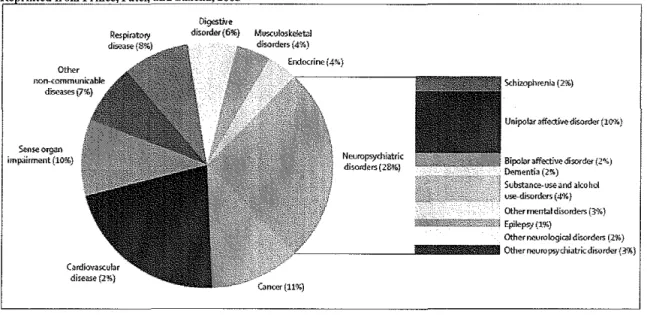
FIGURE 1: Contribution by different non~communicable diseases to disability-adjusted life~years worldwide in 2005 Re rioted from Prince, Patel, and Saxena, 20051
""~
imp3irm;mt (10%)
Dig.::stive
disorder(6%) MIJS.Cu1oske!et:JI
Neuropsydliatric di-,orders(28-%)
Xhimphrenia {2%)
Bipoklr affective disoroc..,-(2~) rkrnentia (2'.'1.)
Substance-use and ako hoi ure-disordcr5 (4%}
!l!llilll!! ___ Other~"J~errbldisorders(3%)
- Epilep9; (1%)
Other neurologic;! disorders (2%)
I'_ ______ JIIIIIIIIII!IIIIIIIIIIIIIIIIIIII Otherrreuropsychiatricdiso~r{3%)
Cardio>;a>eular disease {2%)
Despite the extent of the burden of illness, much of mental illness goes untreated and even more cases are undertreated2 both here in the United States and abroad. In
particular, depression is commonly under diagnosed and undermanaged. Since depression is one of the most common mental health disorders, improved management of depression can help to reduce the burden of mental illness in this country.
Mental Illness in the United States
In the United States, the burden of mental illness has far reaching implications. The Surgeon General's 1999 Report showed that 20% of the population of the United States are affected at some point in any given year by a diagnosable mental illness. 3 The same study showed that 15% of adults and 21% of children utilize the mental health system each year for mental health services. 3 A diagnosable mental health disorder is a deficit in one's mood, affect, thought process/content, personality, impulse control, or anxiety level. Common diagnoses include those listed in Table I.
This amounts to about 10% of all healthcare spending. This cost is shared by public funds
(Medicaid, Medicare, state and local government sources), private funds (private
insurers), and out of pocket consumer dollars (co pays). Indirect costs of mental health
are estimated on the basis of lost productivity due to morbidity, premature death, or
incarceration. This cost as of 1990 was estimated to be $79 billion dollars and has no
doubt risen since then. 3
Despite the impressive burden of illness and the great cost of mental illness, many
factors still prevent adequate management of mental illness in the United States. Among
these, health care provider efficacy in management of mental illness has room for
improvement. The National Comorbidity Survey was commissioned in the early 1990's
to determine the 12 month prevalence of diagnosable mental illnesses for a national
probability sample here in the United States. This study found that almost 50% of
respondents reported a lifetime prevalence of a mental health disorder and about 30%
reported being affected by a mental health disorder within the last 12 months.4 This study
found that of persons with a mental health disorder within the last 12 months, less than
20% had received treatment within the last year.4 This study was repeated a decade later
to find that there had been some improvement. The 2005 NCS Replication study found
that while 41% of persons with a diagnosable mental illness over the last year received
treatment within that same timeframe, only 32.7% of those treated received at most what
is classified by the study as "minimally adequate treatment".2 This study further supports
the fact that there is room for improvement in the management of patients with mental
Before takillg a closer look at the shortcomings of the mental health system in our country in order to find potential places for intervention, it is necessary to first describe and understand the structure of our nation's mental health. There are a variety of provider types and settings, both public and private, that together make up what is called the De Facto Mental Health Care System. This system is divided into four components3:
• Specialty Mental Health Sector- Consists of psychiatrists, psychologists, psychiatric nurses, and psychiatric social workers. Less than 6% of the US population utilizes services within this sector.
• General MedicaVPrimary Care Sector- Consists of internists, family care physicians, pediatricians, nurse practitioners, and nursing home staff. About 6% of the US population utilizes services within this sector. • Human Services Sector- Consists of school-based counselors, residential
rehab services, and faith based counselors. About 5% of the US population uses these types of services.
• Volunteer Support Network Sector- Consists of self-help groups and peer counselor settings. About 3% of the US population received care in this setting.
"talk therapy" that can be performed individually, in couples, or in a group. During a session, patients present their problems to the mental health provider (psychiatrist, psychologist or trained licensed counselor) and the provider helps the client to develop a more effective means of understanding and handling their problem. 3 Psychodynamic therapy also involves an oral exchange but the focus of psychodynamic therapy is to unravel a patient's past in order to see how it has affected that person's present. This is generally performed by psychiatrists, psychologists, or trained licensed counselors. Cognitive behavioral therapy addresses a person's thoughts and actions head on to find ways to de-condition various behaviors in a patient. Similar to the previously mentioned forms of therapy, this is performed by mental health sector professionals (psychiatrists, psychologists, and trained licensed counselors). Humanistic therapy hinges on the relationship and rapport between the client and provider and focuses on current problems to decipher direction for the future. Humanistic therapy can be performed by
professionals in the mental health sector, religious or spiritual advisors, social workers, or any other counselor not from a mental health setting.
that same time the number of people receiving antidepressants had increased (37.3% to 74.5%), while the percentage receiving psychotherapy had decreased (71.1% to 60.2%)5. A systematic review of the literature done in 2004 suggests that not only is psychotherapy in addition to pharmacotherapy associated with better depression outcomes, but
psychotherapy was also associated with better compliance with pharmacotherapl. This indicates that pharmacotherapy alone is not the complete answer for management of depression in primary care settings or otherwise.
Depression in the United States
In 1990, it was estimated that depression costs annually were $43.7 billion, including $12.4 billion in direct costs oftreatment.8 In a study that compared lost productivity in the workplace between patients with and without depression, it was shown that workers in the United States with depression cost employers an estimated $31 billion dollars more in lost productivity each year than their counterparts without
d epresswn. . 9
One in five of all persons overall will develop a depressive episode at some point during their lives. This makes depression the second most common mental disorder after anxiety disorders. The lifetime prevalence for Major Depressive episodes, according to
2 - 10
the data, ranges from I 0-25% for women and from 5-12% for men ''· . However, estimates are given because it is largely speculated that depression frequently goes unrecognized and undertreated 11. Patient factors and physician factors can lead to this undertreatment and underrecognition.
National trends in outpatient management of depression suggest that most people with depression don't receive any treatment for their symptoms5. Depressed patients are often unlikely to seek care for a variety of reasons. Ups and downs can be normal in a person's life, so it may be difficult for patients to realize that a particular down episode has crossed into the realm of clinical depression. Studies show that of persons with a 1 year disorder only 20% had sought treatment within the last year from a medical
stigmatization may also keep patients from seeking help for fear of a negative impact on their employment, health insurance, and potentially personal relationships 12 Also, differences in help seeking behaviors between groups might make counsel from spiritual advisors or other human services sector providers seem more acceptable than seeking care from a medical professional. Lastly, in a nation where nearly 50 million people are uninsured and many more underinsured, it is plausible that mental health issues may potentially have to take a back seat to other more immediate financial obligations.
Patients seek help for depression from a variety of places. There is quite a bit of overlap when it comes to the type of provider that treats patients with recognized
depression. Forty three percent of persons with depression receive care in general medical sector13 while 40% of people who receive care for depression are seen in the mental health sector13. Lastly, 20% are seen in human services sector13. Depression is underrecognized in all settings 13. Similar to other mental illnesses, more patients with depression are seen in the primary care setting than in the mental health services sector. However, studies show that primary care physicians fail to recognize 30-50% of depressed patients.14 Doctor visits with patients who have physical symptoms that are medically unexplainable is one of the most common class of symptoms in patients visiting their primary care doctor and depression is highly associated with these
Patients are more likely to receive the minimum adequate therapy in psychiatric settings than in primary care settings16. Of patients who are started on antidepressants in the primary care setting, 40% stop their therapy within a month likely attributed to low levels of follow-up in the primary care setting17. However, when treatment is adequate in primary care settings it has been shown that the likelihood of recovery is identical to that of patients treated in psychiatric settings. The tendency to seek help first at primary care settings may reflect reluctance on the part of patients to see a psychiatrist or mental health professional and thereby be stigmatized. Many patients establish a certain rapport with their doctor and don't feel comfortable sharing intimate details of their life with a new doctor. At any rate, patient preference for depression management in primary care settings coupled with the limited psychotherapy skill set and limited time among primary care physicians makes some form of integration of psychiatric services into primary care settings an attractive solution for the management of depression.
There is also stigma that remains with regard to psychiatrists and psychiatric
illness that may make seeking care with primary care docs more attractive for many
patients. In a 2003 examining stigma associated with depression, it was shown that 67%
of depressed primary care patients surveyed thought that depression related stigma would
have a negative impact on employment, 59% reported a probable negative impact on
health insurance, an 24% on friendships. In this study, stigma of depression was greater
than that for hypertension or diabetes but less than that of HIV 12.
Thus for many reasons, integration of psychiatric services into primary care
settings is a promising concept. Collaboration between the specialty mental health sector
and the primary care sector promises to capitalize on the preferred setting modality for
many patients and incorporates the specific training for mental illness management that is
concentrated in the specialty mental health sector. There are many different types of
potential models for this integration. Collaboration model types include but aren't limited
to:
• Co-location- A mental health specialists is located on-site at a primary
care doctor's office for a set number of hours each week and sees the
generalists complicated psychiatric patients on a consult basis for a
specified amount of time and this releases the patient back to the care of
the generalist once stabilized.
• Phone Consultation- Similar to co-location, partnerships between primary
care doctors and mental health specialists are set up to allow telephone
• CME Training for Primary Care Docs- This collaboration model involves
increasing the knowledge base and amount of training that primary care
doctors for mental illness management through workshops and lectures
conducted by mental health specialists.
• Evidence-Based Disease-Specific Protocols- This model of collaboration
involves development of evidence-based disease-specific protocols by
mental health specialists to be utilized by primary care doctors.
This paper will review current literature to assess whether integration of
psychiatric services into primary care settings or other collaboration between primary
care and mental health professionals leads to improved major depression treatment
outcomes in non-pregnant/non-post-partum US adults and if so, which models
demonstrate the most potential.
Methods
An electronic search of PubMed database was conducted. Original articles
meeting eligibility criteria, articles fouod via bibliographic search by hand, and articles
fouod at the advice of an expert in the field will also be included in this review.
Inclusion Criteria:
In order to be included in the systematic review, papers, studies, or commentaries must
meet the following criteria:
primary care setting or some other form of direct collaboration between mental health professionals and primary care professionals
-Examine this model of integration in non-pregnant/non-postpartum US adult patients
-Demonstrate some quantitative measure of patient based outcome measures in the management of Major Depression in comparison to the absence of
collaboration or integration -Written in English
-A Randomized Controlled Trial
Exclusion Criteria
Papers, studies, and commentaries will be excluded if they can be described as the following:
-Intervention doesn't assess specific quantitative outcome measures -Collaboration is present but not between primary care and psychiatric Professionals
-Written in a language other than English
-Study examines post-partum depression, as opposed to other forms of depression -Study not performed in the United States
Search Terms
The first search was done using PubMed which contains articles for over 4800 articles on a host of different medical topics from 1951 to the present. The following search terms were used in PubMed:
-("Primary Health Care"[Mesh] OR "Family Practice"[Mesh] OR "physical health"[AII Fields]) AND ("Mental Health Services"[Mesh] OR "Community Mental Health Services"[Mesh] OR "Behavioral Mediciue"[Mesh] OR "behavioral health"[AII Fields] OR "Psychiatry"[Mesh]) AND ("Delivery of Health Care, Integrated"[Mesh] OR "iutegrated"[Ail Fields] OR "integration"[AII Fields]) AND ("humans"[MeSH Terms] AND English[lang]) AND depression
This search term retrieved 44 titles
-"Depressive Disorder"[MeSH] OR "Depression" [MeSH] AND "Cooperative Behavior" [MeSH] AND "Psychiatry" [MeSH] AND "Primary Health Care" [MeSH]
This search term retrieved 5 results
-"Integration of Psychiatry into Primary Care for Depression" This search term retrieved 13 results
Article Selection
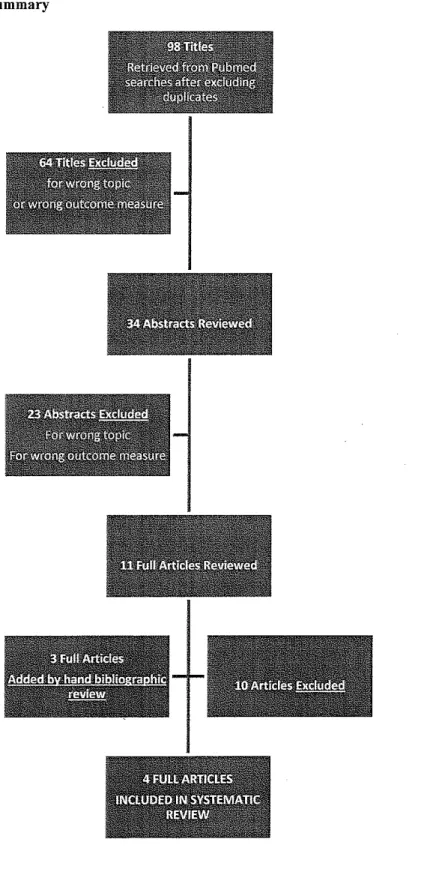
After performing the searches as listed above and eliminating duplicate titles 98 article titles were reviewed (See Appendix A for Title List). Based on title review 64 articles were excluded based on the title for incongruence with topic of interest or for lack of outcome measures of interest for this paper. Abstracts for the remaining 34 articles were reviewed. After review of these abstracts, 22 additional articles were excluded based on the aforementioned exclusion criteria. Eleven full articles were pulled and carefully reviewed for inclusion in this systematic review according to the aforementioned inclusion/exclusion criteria. During review of these articles, 3 additional articles were added as possibilities based on bibliographic survey. Of these 14 full articles, 4 met criteria for inclusion (See Figure 3).
Study Quality Quality #
Study Type Intervention Score Rating Participants Year
Collaborative Care team
CC vs CL RCT vs Consult Liaison care as 7 Good 354 2003
Care per usual
Co-location vs Referral to
PRISM-E RCT Free-Standing Mental 6 Fair 1531 2006
Health Facility Mental Health T
earn-IMPACT RCT based case mgmt vs 8 Good 1801 2002
U sua! PCP care Telephone Telephone Care &
Psychotherapy/ RCT Psychotherapy+ Rx vs 8 Good 600 2004
CareMgmt Phone Care+ Rx vs
Rx Alone
Results
The Collaborative Care Depression management trial was conducted in 4 separate General Internal Medicine Clinics (GIMCs) that are part of the Seattle Division of Department of Veteran's Affairs. Potential subjects were patients who had not yet been recognized or had not yet begun treatment for depression and were recruited from January 1998 to March of 1999. Potential subjects were identified using for different methods.
3. Patients screened during clinic check-in with screening questionnaire 4. Referral by primary care providers
Of the patients identified by the initial screening methods who were not already under care for depression, 354 patients agreed to participate in the study. Of these participants over half were identified based on provider referral (198).
Of the 4 participating GIMC's, 2 clinics were randomized to the Collaborative Care Management and the other 2 clinics were randomized to the Consult-Liaison Care or Usual Care arm of the study. Participants were randomized to a particular clinic and thus a particular arm of the study. The Collaborative care team consisted of a clinical psychologist, psychiatrist, social workers, and a psychology technician that met weekly to discuss treatment plans and then to conduct progress evaluations at 6 and 12 weeks. This team then communicated this information to the primary care provider via electronic progress notes. In order to keep everyone informed of the treatment plan and progress a "co-signature" method was invoked to require that all providers be aware of all
outcomes and overall health status were measured using the Hopkins Symptom Checklist (SCL-20), Veteran Short Form Health Status Questionnaire (SF-36) (which consists of both physical and mental components), and the Sheehan Disability Scale. These outcomes were evaluated at baseline and again at 3 and 9 months. SCL-20, SF-36, Sheehan scores taken at 3 and 9 months were analyzed using linear regression models. Analyses were performed by intention to treat method.
values, the number needed to treat for this particular intervention is 18.52 at 3 months and 33.333 at 9 months. In terms of disability, as measured by Sheehan Disability Scores, the Collaborative care group experienced significant improvement in disability at 3 months and continued improvement at 9 months that was not significant while participants in the Consult Liaison group experienced an increase in disability score. Lastly, participants were evaluated using the SF-36. In unadjusted analyses,
Collaborative care patients demonstrated clinically significant improvements more than that of the Consult-Liaison groups on the mental components of the SF-36 both at 3 months and 9 months, but these differences were attenuated after the making adjustments within each group for baseline MCS scores, demographic variables, history of prior depressive episodes, and potential provider clustering. It is believed that the # of previous depressive episodes is most likely responsible for the attenuation. Both groups
experienced improvement in the physical component of the SF-36, with no statistical difference between groups. Lastly, patients in both treatment groups were equally highly satisfied with their primary care provider's management of their depression.
Having entire clinics each devoted to one arm of the study or the other, makes it difficult to account for clinic by clinic differences that could potentially confound any differences found between the two groups. This compromises the internal validity of this study somewhat. Also, in terms of the initial comparability of the two groups, the
The Primary Care Research in Substance Abuse and Mental Health for the Elderly (PRISM-E) Study compares the clinical depression outcomes in patients who receive integrated care (mental health services co-located within a primary care office with no separate signage) versus patients who received enhanced specialty referral for
management (which included referral to a physically separate substance abuse or mental health clinic) 18. This was a multi-site trial conducted in 10 different urban, rural, and suburban primary care facilities (including 5 VA Medical Centers). A total of24,930 patients were screened for psychiatric symptoms using the General Health Questionnaire, which was scored from 0 to 12, with higher scores being indicative of greater levels of depression or anxiety. A total of 1531 patients were included in the study with a mean age of73.9 years. At 8 of the 10 sites, patients were randomly assigned to the different arms of the study using a permuted block design to ensure equal assignment to each arm at each clinic, stratified by diagnostic category and age group. In the last two clinics, in lieu of randomization, patients were systematically allocated to a study arm on the basis of social security number. Thus the study does not have a completely pure randomization. The Integrated Care arm of the study occurred in practices where mental health and substance abuse services were co-located in a primary care office setting with no distinction or signage to indicate that services were rendered by a mental health professional. Other criteria included:
-appointments for mental health services had to be available within 2 weeks of the primary care visit
For the enhanced specialty referral model:
-Patients had to be referred to available appointment with mental health professional within 2-4 weeks of the primary care provider appointment -Mental health services are rendered in a physically separate location to which transportation was ensured
-Mental health professionals ensured telephone follow-up after the patients first missed visit
For each group depressive symptoms were measured via the Center for Epidemiological Studies Depression Scale (CES-D) and mental functioning quantified by the Mental Component Score (MCS) of the Short Form 36 (SF-36) at 6 and 12 months after
initiation of therapy. Also, patients were evaluated for complete remission of symptoms at the 6 month follow-up appointment. Model fidelity was ensured as the various sites in the PRlSM-E trial were evaluated on a regular basis.
indicated by decreased CES-D scores, with a trend toward greater reduction among patients in the enhanced referral arm of the study. Within the strata of patients with major depression, the enhanced specialty referral group demonstrated statistically significant greater reduction in depression severity when compared with integrated care group (-I 0.2 +/- 12.! vs. -7.5 +!- !3.!, p=0.003). Both groups demonstrated improvement in MCS scores of 5 points but with no statistical difference between groups. Finally, there was no significant difference in the rates of remission between the two arms of this study at 6 months. Some secondary analyses of the date, also indicated that talk-therapy plus
pharmacotherapy worked better in enhanced referral groups than in integrated care model for major depression. There was also a correlation between the number of chronic
illnesses at baseline and poorer clinical outcomes in the sub-group of patients with major depression.
The IMPACT trial (Improving Mood- Promoting Access to Collaborative
Treatment Program) is a multi-site randomized controlled trial examining the impact of
integrated behavioral health services for better outcomes in primary care management of
depression19• A total of 1801 patients diagnosed with depression were enrolled from 18
primary clinics across the country. Patients were recruited between July 1999 to August
2001 using referrals of depressed patients from primary care providers and using a 2-item
screener for all patients visiting the primary care clinic. Patients were randomized to
receive usual care or the IMP ACT integrated care intervention stratified by recruitment
method using a random number sequence generator. Patients enrolled in the IMP ACT
arm of the trial were assigned to a Depression Care Specialist (DCS) and on the initial
visit watched a 20-minute video on late-life depression and had their first visit with the
DCS, during which the DCS took a psychosocial history, reviewed education materials,
and discussed patient preferences for treatment (psychotherapy vs. pharmacological
management). A treatment plan was then developed under collaboration between a
supervising psychiatrist, primary care physician, and the DCS. Patients in this arm of the
study had access to an IMP ACT care manager for a time period of 1 year from the
baseline assessment. All prescriptions for anti-depressants were written by the primary
care physicians. Outcomes assessed included self-reported use of antidepressants or
psychotherapy, satisfaction with depression care, average SCL-20 scores, and then
assessment of treatment response vs. remission based on the amount of decrease of
SCL-20 scores (>/= 50% decrease vs. score<0.5 respectively). All patients were followed for a
a Sheehan disability scoring in addition to the other modalities evaluated at the follow-up time points. Interviews were conducted by trained interviewees that were blinded to the subject's intervention condition.
The usual care and IMP ACT intervention groups were not statistically different in analysis oftheir baseline characteristics. Patients reported a mean of3.2 common co-morbid chronic conditions. Forty-six percent of patients enrolled reported some form of antidepressant management in the past 3 months (psychotherapy or pharmacological). Patients in the intervention group were more likely to continue using antidepressants or psychotherapy longer than patients in the usual care group (average of6.6 months of antidepressant use vs. 4.6 months respectively, p<.001). Intervention patients
Selection bias, measurement bias are minimized quite well in the study indicating good internal validity. However, given that only persons over the age of 60 were enrolled, the external validity is somewhat validity.
The last study examined the role of telephone psychotherapy and telephone care management in primary care management of depression20. Patients were recruited
between November 2000 and May 2002 from 7 primary clinics that are part of the Group Health Cooperative, which is a pre-paid health plan serving many Washington state residents. The target population for participation in the study includes patients who are about to be started on antidepressant therapy by their primary care provider. The study excluded patients who were already receiving psychotherapy or that were in remission at the start of the study. Patients were identified using computerized pharmacy records and visit registration records. A total of 1883 patients were identified and after eliminating ineligibles and patients not interested in participating a total of 600 patients were
telephone care management portion of the study in addition to 8 structured cognitive behavioral psychotherapy sessions. Telephone counselors were psychotherapists with a master's degree and at least 1 year of experience in outpatient psychotherapy. These counselors received didactic instruction and at least 60 minutes of supervision from a psychologist or psychiatrist each week. Outcomes of interest in this study include
1. Self-rated global improvement 2. SCL Depression Scale
3. Patient Health Questionnaire
4. Survey of patient satisfaction with Depression management
All participants were evaluated at 6 weeks, 3 months, and 6 months by phone by experienced interviewers that were blinded to each participant's intervention condition. All data analyses were conducted based on intention to treat.
Aside from the different percentage of white participants, the baseline
characteristics between groups were not different. The largest improvement in depression severity as measured by SCL-20 scores was demonstrated in the telephone/psychotherapy group, intermediate in the telephone care group, and least in the usual care group.
Significantly more patients in the telephone/psychotherapy group experienced a 50% reduction in SCL score than telephone care manager, and usual care groups respectively (100 (58%) vs. 94(51 %) vs. 76(43%), p value=.005 comparing telephone/psychotherapy to usual care). The number needed to treat can be calculated using the failure to attain treatment response as an adverse event from which to calculate the absolute risk
42%, 49%, and 57% respectively for the telephone psychotherapy/care manager, the
telephone care manager, and the usual care groups. In this case, in the telephone care
manager group, the number needed to treat is equal to 11(0.57-0.49)= 12.5. The number
needed to treat for the telephone psychotherapy/care manager group is equal to
11(0.57-0.42)=6.6667. Telephone/psychotherapy and telephone care manager groups
were significantly more likely than usual care patients to rate themselves as "much
improved" or "very much improved" at all time points.
In this study, selection bias, measurement bias are very well minimized indicating
good internal validity.
Discussion
This review aimed to evaluate interventions that combined psychiatric services in
some form into the primary care setting and compared these outcomes to that of the
absence of the intervention. Three ofthe studies compared integrated interventions to
usual care in the primary care setting while the fourth study compared and integrated
intervention to care in the psychiatric setting. Of the three studies that examined
outcomes from an integrated intervention vs. that of usual care in the primary care
setting, the integrated model always demonstrated better clinical depression outcomes,
overall health status, and satisfaction with treatment. It appears that some form of
facilitator charged with regularly following-up on the patient's progress (by phone)
consistently provided better outcomes than in the absence of this intervention. In the
Collaborative Care team or Telephone care managers. This worked particularly well when this facilitator was in constant communication and under the supervision of both the primary care provider and a mental health specialist. This implies the importance of chronic follow-up and collaborative re-evaluation of the treatment plan based on the patient's progress at a rate more frequent than may be feasible for a PCP to provide without the appropriate infrastructure. Of the studies, that showed improved outcomes with integrated models, SCL-20 score (Hopkins Symptom Check List) was an outcome measure of interest in each. Treatment response, defined as a >/=50% decrease in SCL-20 from baseline score was evaluated as an accepted indicator of clinical improvement. In the Consult-Liaison/Collaborative Care study, 17.2% of patients in the Collaborative Care group had SCL scores that were <50% of their baseline value at month 3 and similarly 18.1% at 9 months. In the IMPACT trial, 49.34% experienced a 50% decrease in SCL-20 score by month 6, compared with 30.92% of the usual care group. Finally in the Telephone/Psychotherapy study, 43% of usual care patients experienced a 50% reduction treatment response by 6 months, compared with 51% of the Telephone Care Management Group and 58% of the Telephone Care Management group plus
Psychotherapy. Based on these measures, it appears that Telephone Care Management plus Psychotherapy demonstrated the greatest trend in terms of the extent of treatment response. However, when the number needed to treat is compared across the
In the PRISM-E study, co-location in a primary care setting was compared with enhanced psychiatric care, and the enhanced psychiatric care modelled to better clinical depression outcomes than the integrated model. It is difficult to draw conclusions from this study. While the integrated intervention doesn't lead to better outcomes than the usual psychiatric care model, it can't be determined from the information provided, whether the integrated care intervention would lead to better outcomes than usual care in the primary care setting.
Based on the pool of evidence surveyed for this review, it seems that psychiatric care integrated into primary care settings, except for co-location, leads to better
depression outcomes. And amongst these kinds of interventions, it is apparent that strategic chronic follow-up and collaborative re-evaluation of the treatment plan are key in maximizing outcomes. It would thereby follow that primary care physicians can maximize treatment outcomes for their patients by developing an algorithm for depression management that includes a thorough introduction to the diagnosis, a designated number of office-initiated follow-up calls/visits, and with treatment plan changes guided by patient feedback as well as generalist/psychiatrist collaboration. Challenges to such a system include competing priorities in primary care physician workload, poor reimbursement for added office time/resources, and difficulty arranging presumably frequent consultation with mental health professionals. It will also be
identifY patients that would most benefit from the enhanced depression management
model.
In terms of cost, it has already been shown that while collaborative management
interventions increase the cost of management of any given case of depression, they also
increase the number of QUAL's (Quality Adjusted Life Years), decrease depression
burder, and increase the average number of days working (fewer missed days) when
compared with usual care21. The cost of the IMP ACT trial was specifically evaluated to
find that integrated measures in the primary care management of depression cost more
but lead to lower overall healthcare costs over 4 years. The more the cost of collaborative
care interventions can be further characterized in future research, this will continue to
help to build the case for the utility of collaborative care.
Limitations
The generalizability of this review of the literature is limited by the search terms
. and inclusion/exclusion criteria selected. Based on these criteria, few articles were fully
reviewed and this potentially limits the population to which the conclusions drawn here
can be extrapolated. Over half of all the patients in the studies included in this review
were in late-life so it would be difficult to extrapolate this information to other age
groups as there may be mitigating circumstances that account for differences in the
pathophysiology of depression in different age groups.
Lastly, it was difficult to evaluate or draw any conclusions about the role of
Figure 3
PRISMME'. Comparison of Integrated Care and Enhanced Specialty Referral Models in Depression Outcomes
Collaborative Care Management of LatewLife Depression in the Primary Care Setting (IMPACT)
Telephone Psychotherapy and Telephone Care Management for Primary Care Patients Starting Antidepressants
Dean D. Krahn, MD
Jurgen Unutzer, MD, MPH
2006
2002
Gregory E. Simon, MD II 2004 MPH
Randomized Controlled Study
RCT
RCT
consists of a clinical psychologist, psychiatrist, social workers, and a psychology technician) [CC] vs. Consult-Liaison management per usual.
Patients randomly assigned to groups receiving integrated care in the form of co-location or referral to a separate mental health facillity.
Care Management for one year supervised by a psychiatrist and offered education, care mgmt, rx mgmt, and psychotherapy compared to the non-intervention group that received usual care in the primary care setting
Two Intervention Groups:Telephone Care+ Telephone Psychotherapy in addition to Antidepressant, Telephone Care+ Antidepressant, and Antidepressant in the setting of usual primary care mgmt.
Symptoms (Hopkins Sx Checklist), 2. Health Status (SF-36), 3. Disability (Sheehan Scale), 4. Patient Satisfaction (Katon ), 5. Antidepressant Tx Adequacy; at baseline, 3, and 9 months '
l. Depressive Symptoms (Center for Epidemiological Study Depression Scale (CBS-D)), 2. Mental functioning as measured by the mental component score of the Short Form 36 (SF-36), 3. Remission of sx at 6mos flu using MINI
I. Self-Reported use of anti-depressants and/or psychotherapy, 2. Satisfaction with depression care, 3. Treatment Response as measured by improvement in SCL-20 scores, 4. Health related functional impairment/quality of life
I. Severity of Depression Sx (Hopkins Sx Checklist and PHQ-9}, 2.Patient rated improvement, 3. Satisfaction with Treatment
CC pts had significantly faster improvement of depression sx@ 3 mas
& no diff@ 9mos. CC had significantly decreased disability at 3 mas as compared with the CL group, no difference at 9 mos. I. Reduction in CES-D severity in both groups with greater reduction in the Enhanced Referral grp (off-site), 2. Similar
improvement of mental functioning by the SF-36 between both groups,
Intervention group had significantly lower depression as measured by the SCL-20 at all timepoints, 2. Intervention patients also reported less health related functional impairment as compared to the usual care group.
Compared with usual care, telephone care &
psychotherapy pts experienced greater improvement in HSC-DS, self rated improvement, and satisfaction with treatment
(randomized study, patient group charts show no diffin grps at baseline) BUT limited external validity and possibility of understated benefit based on structure of the CC workgroup.
I. Good internal validity but elderly popula limits external validity, 2. Does not include any comparison to primary care manageme alone.
Works Cited
1. Prince M, Patel V, Saxena S, eta!. No health without mental health. The Lancet. 2007;370(9590):859-877.
2. Wang PS, Lane M, Olfson M, Pincus HA, Wells KB, Kessler RC. Twelve-month use of mental health services in the United States: results from the National Comorbidity Survey Replication. Arch GenPsychiatry. Jun 2005;62(6):629-640. 3. Services USDoHaH. Mental Health: A Report of the Surgeon
General--Executive Summary. Rockville, MD: US Department of Health and Human Services, Substance Abuse and Mental Health Services Administration, National Institutes of Health, National Institute of Mental Health; 1999.
4. Kessler RC, McGonagle KA, Zhao S, eta!. Lifetime and 12-month prevalence of DSM-III-R psychiatric disorders in the United States. Results from the National Comorbidity Survey. Archives of General Psychiatry. 1994;51(1):8-19.
5. Olfson M, Marcus SC, Druss B, Elinson L, Tanielian T, Pincus HA. National Trends in the Outpatient Treatment of Depression. JAMA. Vol287: Am Med Assoc; 2002:203-209.
6. Pampallona S, Bollini P, Tibaldi G, Kupelnick B, Munizza C. Combined Pharmacotherapy and Psychological Treatment for Depression: A Systematic Review. Archives of General Psychiatry. 2004;61(7):714.
7. American Psychiatric Association., American Psychiatric Association. Task Force on DSM-IV. Diagnostic and statistical manual of mental disorders: DSM-IV. 4th ed. Washington, DC: American Psychiatric Association; 1994.
8. Greenberg PE, Stiglin LE, Finkelstein SN, Berndt ER. The economic burden of depression in 1990. J Clin Psychiatry. 1993;54(11):405-418.
9. Stewart WF, Ricci JA, Chee E, Hahn SR, Morganstein D. Cost of Lost Productive Work Time Among US Workers With Depression. JAMA. Vol289: Am Med Assoc; 2003:3135-3144.
10. Kessler RC, Chiu WT, Demler 0, Walters EE. Prevalence, Severity, and Comorbidity of 12-Month DSM-IV Disorders in the National Comorbidity Survey Replication. Archives of General Psychiatry. 2005;62(6):617.
11. Davidson JR, Meltzer-Brody SE. The underrecognition and undertreatment of depression: what is the breadth and depth of the problem? J Clin Psychiatry.
1999;60 Suppl 7:4-9; discussion 10-11.
12. Roeloffs C, Sherbourne C, Uniitzer J, Fink A, Tang L, Wells KB. Stigma and depression among primary care patients. General Hospital Psychiatry.
13. Wang PS, Demler 0, Olfson M, Pincus HA, Wells KB, Kessler RC. Changing Profiles of Service Sectors Used for Mental Health Care in the United States. American Journal of Psychiatry. 2006;163(7):1187.
14. Pignone MP, Gaynes BN, Rushton JL, eta!. Screening for Depression in Adults:
A Summary of the Evidence for the US Preventive Services Task Force. Annals of
Internal Medicine. 2002;136(10):765.
15. Henningsen P, Zimmermann T, Sattel H. Medically Unexplained Physical
Symptoms, Anxiety, and Depression: A Meta-Analytic Review. Psychosomatic
Medicine. Vo165: Am Psychosomatic Soc; 2003:528-533.
16. Kessler RC, Berglund P, Demler 0, Jin R, Merikangas KR, Walters EE. Lifetime
Prevalence and Age-of-Onset Distributions ofDSM-IV Disorders in the National
Comorbidity Survey Replication. Archives of General Psychiatry.
2005;62(6):593.
17. Simon GE, Von KorffM, Rutter CM, Peterson DA. Treatment process and
outcomes for managed care patients receiving new antidepressant prescriptions
from psychiatrists and primary care physicians. Arch Gen Psychiatry. Apr
2001 ;58( 4):395-401.
18. Krahn DD, Bartels SJ, Coakley E, eta!. PRISM-E: comparison of integrated care
and enhanced specialty referral models in depression outcomes. Psychiatr Serv.
Jul2006;57(7):946-953.
19. Unutzer J, Katon W, Callahan CM, eta!. Collaborative care management of
late-life depression in the primary care setting: a randomized controlled trial. Jama.
Dec II 2002;288(22):2836-2845.
20. Simon GE, Ludman EJ, Tutty S, Operskalski B, Von KorffM. Telephone
psychotherapy and telephone care management for primary care patients starting
antidepressant treatment: a randomized controlled trial. Jama. Aug 25
2004;292(8):935-942.
21. Schoenbaum M, Unutzer J, Sherbourne C, eta!. Cost-effectiveness of
practice-initiated quality improvement for depression: results of a randomized controlled