Curricular Experiences in Primary Care:
A Strategy for Increasing the Number of Medical Students Selecting Careers in Primary Care
By Rita Lahlou
A Master’s Paper submitted to the faculty of the University of North Carolina at Chapel Hill
in partial fulfillment of the requirements for the degree of Master of Public Health in
the Public Health Leadership Program.
Chapel Hill 2011
_________________________________ Advisor:
_________________________________ Date _________________________________
Second Reader:
1
Table of Contents
Abstract of Masters Paper………2
Systematic Review Abstract………4
Systematic Review………...6
References………..15
Tables……….17
Figures………21
Original Manuscript Abstract………..22
Original Manuscript………...23
References………..39
Tables……….41
Appendix A………43
Appendix B………46
2
Abstract
With falling numbers of graduating medical students choosing careers in primary care and a growing population with expanding insurance coverage, the shortage of primary care providers in the United States is becoming larger. Some strategies to address this shortage include using mid-level providers, programs encouraging retention of primary care physicians, and incentives to attract such physicians to needed settings. Additionally, increasing the number of medical students choosing a career in primary care is necessary to expand the workforce. The purpose of this master’s paper is to explore the ways in which curricular experiences in medical school can influence students’ specialty choice, in hopes of understanding how such experiences can generate interest in primary care and expand the workforce. This paper begins with a systematic review evaluating recent literature describing curricular interventions meant to increase the number of medical students choosing a primary care specialty. Synthesis of the six articles included shows an association between early exposure to primary care experiences and graduates entering a primary care residency or career.
3
4
The Effect of Curricular Experiences on Medical Students Rate of Entering
the Primary Care Workforce: A Systematic Review
Abstract
Background: A number of strategies may be effective in addressing the growing shortage of primary care providers in the United States. In addition to efforts to retain primary care providers and select medical students who may be more likely to choose primary care specialties, some schools use curricular experiences in primary care to maintain and generate interest in the field. Objectives: To determine the effectiveness of curricular interventions in medical school in increasing the number of students selecting a career in primary care. Search strategy: We
searched the PubMed and Web Of Science databases from January 2005 to March 2011. We also included all articles included in a similar review of rural curricular experiences published in 2010. Selection criteria: Our inclusion criteria required that the articles focus on a primary care curricular intervention among medical students, address career choice as an outcome, and be written in the English language. Data Abstraction and Quality Assessment: One reviewer
abstracted data and assessed the quality of each study. Data collected included the components of the intervention, source of data, outcomes measured, length of follow-up, and the primary
5
6
Introduction
For the past decade, the United States (U.S.) has faced a shortage of primary care physicians.1 Sixty-five million Americans currently live in communities designated as primary care shortage areas.2 Since the mid-1990’s, declining numbers of primary care physicians are entering the workforce. In 2007, only seven percent of graduating fourth year medical students planned careers in adult primary care.2 Only two percent of internal medicine residents planned careers in general internal medicine in 2008, and only 7.4% of U.S. seniors matched in family medicine in 2009.3,4 Physician supply and population demographic modeling predict significant shortages in generalists in the next fifteen years, especially if the numbers of generalist residency graduates continue to fall.5 With increased rates of insurance projected under the Patient
Protection and Affordable Care Act of 2010, an increase in primary care needs may be left unmet if the provider workforce is not increased, as Massachusetts experienced after expanding their Medicaid program.6, 7
In addition to strategies such as greater utilization of mid-level providers, improved retention of primary care physicians, and increasing attraction of generalists to needed settings, training more primary care physicians is critical to growing the workforce. Evidence suggests that medical schools can increase the numbers of graduates choosing a career in primary care through techniques such as targeted recruitment of applicants, providing primary care
7
curriculum.8, 9 Increasing exposure to these types of experiences may increase the number of medical students who match into primary care residency programs and ultimately practice in the primary care settings. Many medical schools are implementing and evaluating new curricular experiences for students in hopes of finding successful ways of building the primary care workforce.10-14
The purpose of this review is to provide a critical analysis of recent literature evaluating the efficacy of curricular experiences meant to increase the number of medical students selecting careers in primary care. Here, we define primary care as the specialties of family medicine, general pediatrics, and general internal medicine. The interventions we considered are required or elective experiences during the four undergraduate years of medical school. Medical students are the population of interest, though in most cases researchers are studying students after they become practicing physicians in order to evaluate the influence of the curricular intervention. A recently published review of the influence of rural training experiences on medical student education and career choice showed that such experiences are associated with increased
likelihood of choosing careers in primary care and rural medicine; however, the review included primarily studies that measured intermediate outcomes, such as attitudes toward working in rural settings or toward primary care.10 Our review, on the other hand, will focus on recent literature, published in 2005 or later, that measures residency or career choice as an outcome. We hope to provide evidence about the nature and the magnitude of effect of curricular experiences on medical students’ career choices related to primary care.
Methods
8
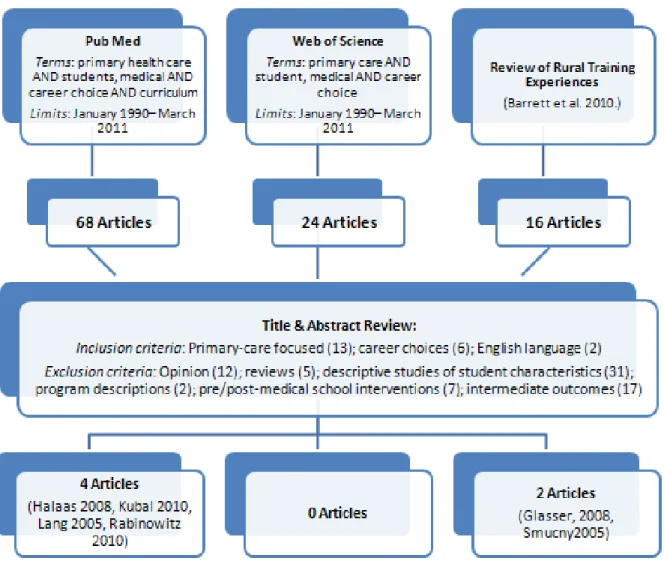
In order to identify published studies about undergraduate medical curricular experiences meant to enhance interest in primary care, we conducted a PubMed search using MeSH headings and keyword searching of the following terms: primary health care AND students, medical AND career choice AND curriculum. The search was limited to articles published from January 2005 to March 2011. We also conducted a search in Web of Science using the terms: primary care AND student, medical AND career choice; we limited the search to articles published since 2005. Finally, we reviewed the publications included in a recent review of rural training experiences for medical students.10
Study Selection
We reviewed the titles and abstracts of all articles to identify the publications that were likely to address the study question. Our inclusion criteria required that the articles be primary care focused, address career choice as an outcome, and be written in the English language. From these articles, we excluded all opinion pieces and review articles, to include only original
research. Because our focus was on curricular medical student experiences, we eliminated articles discussing interventions for pre-medical students, residents, and physicians in practice. Additionally, we eliminated descriptive studies that presented medical student or school factors that are associated with careers in primary care, and we eliminated articles that described a curricular intervention or program without providing outcomes data. We also excluded studies that reported only intermediate outcomes, such as attitudes, knowledge, or career intents. Instead, we included only studies reporting a specialty choice, such as percentage of students selecting a family medicine residency, as a measured outcome.
9
We analyzed each included study in its entirety to identify the following characteristics: the number of participants (sample size), the study setting, the length of follow-up, the presence of a control group, the source of data, the measured outcomes and their associated results. We also rated the relative strength of each study based upon three factors: study design, sample size, and outcome measure. We rated the study design on a scale of one to three: with one point given to studies consisting of a single cohort, two points given to cohort studies with a control group, and three points to randomized controlled trials. Sample size was also rated on a scale of one to three: studies with a sample size of fewer than 100 participants received one point, 101-500 participants received two points, and those with greater than 500 participants received three points. We rated the outcome measure on a two point scale: one point for studies measuring residency choice and two points for those studies measuring post-residency career choice.
Combining scores for all factors, the quality score for each study could range from three to eight.
Results
10
and the Physician Masterfiles of the American Medical Association.16 Outcomes measured included type of residency attended,13-15 type of medical practice (primary care vs. specialty) after residency,11, 12, 14-16 rural practice setting after completing residency,11, 12, 14-16USMLE Step 2 performance,16 and physician satisfaction.16 For the purposes of the present review study question, we have examined only the outcomes data regarding residency and practice type.
The number of students exposed to the curricular experience varied from 86 to 901 in the studies, with a mean of 308. The actual curricular experience examined in each study varied across all studies, though they all consisted of a clinical experience in a primary care setting. The length of the clinical experience ranged from 4 weeks13, 15 to 36 weeks12, 16 with an average experience length of 17 weeks. Each program placed the students with a primary care physician preceptor, with five programs specifically selecting preceptors in rural settings.11, 12, 14-16 Two of the studies evaluated programs that specifically recruited students before medical school
matriculation, from rural backgrounds and provided rural and primary care based curricular learning experiences throughout all four years of medical school.11, 14 These two programs also included non-binding requirements that graduates enter primary care practice in rural settings. Half of the programs included community-based health projects in the curriculum.12, 14, 16
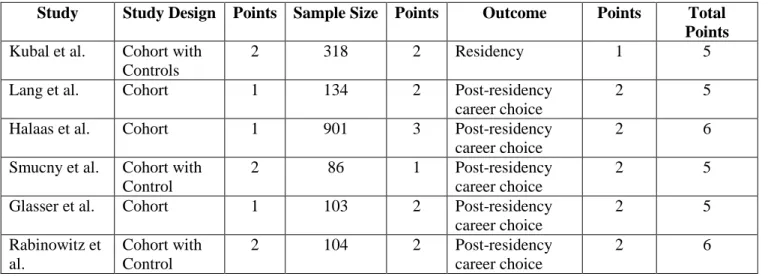
The quality scores of the included studies ranged from five to six out of a maximum possible score of eight (Table 2). Half of the studies evaluated only a cohort of program
11
design as there were no randomized controlled trials included. All but one study13 measured post-residency career choice, earning the full two points for outcome.
The most commonly studied outcome was post-residency career choice. Of the five studies that measured post-residency career choice12,11, 12, 14-16 two measured the proportion of graduates in family medicine,11, 16 and two measured the proportion of graduates in primary care,14, 15 defined as general internal medicine, general pediatrics, and family medicine. One study measured both of these outcomes.12 The study that measured residency choice13 also measured both proportion selecting family medicine residencies and proportion selecting primary care residencies (defined also as general internal medicine, general pediatrics, and family
medicine). Two of the studies reported ratios comparing the program participants to
non-participants.11, 13 One reported a risk ratio11 and the other reported an odds ratio,13 controlling for medical school and match year. In all cases, the studies found either an increased ratio of
students entering primary care or family medicine careers and residencies or a rate of entering primary care or family medicine that is higher than state or national averages.
Discussion
12
The direction of the effect is clearly in favor of these interventions encouraging primary care careers. The magnitude of this effect, however, is less clear. The included papers suggest that the studied curricular experiences result in outcomes ranging from a 24% match proportion into family medicine to 82.5% of participating physicians later practicing in primary care, with most falling closer to the higher proportion.13, 14 However, these numbers must be interpreted with caution for a number of reasons that highlight the limitations of our review.
The included studies describe a variety of curricular interventions that differed in length and content. They range from a four-week experience in a primary care office anywhere in California to a 36-week continuity experience including multiple assignments and community projects in rural Minnesota.12, 13 There does not appear to be any correlation between length or intensity of experience and proportion of participants entering primary care.
13
participants did in fact, have a higher pre-intervention probability of choosing a career in primary care.13, 15
Despite these limitations in methodology that prevent us from drawing absolute conclusions, there is still value in learning about ways of maintaining students’ interest in primary care throughout the often specialty-intensive clinical years of training. Future
evaluations of curricular experiences should carefully consider whether the goal of the program is generating new interest or strengthening pre-existing interest. Incorporating the use of
randomization, a control cohort, or adjustment for potential confounders known to be related to specialty choice could strengthen the study.
Another important consideration in study design is that residency specialty choice is not always an appropriate proxy for ultimate career choice, as only two percent of internal medicine residents did not plan to complete specialty fellowship training in 2008.3 Unfortunately, studying post-residency career choice requires longer follow-up, which may entail more resources than small curricular programs have available. Consequently, much of the literature studying medical curricula focuses upon intermediate outcomes such as grades, scores, interest, intended career or residency program matriculation. A strength of this review is its focus on specialty choice as an outcome, rather than intermediate outcomes that might be less tightly linked to ultimate career choice. All but one of the included studies included post-residency practice type as a primary outcome, and the included studies showed a consistent trend toward effectiveness.
14
primary care shortage in urban and even suburban communities in designing curricular experiences, particularly for students who may be more reluctant to participate in a rural experience.
Conclusion
Our review shows that special curricular experiences in primary care settings, often in rural areas, during undergraduate medical education are associated with career decisions favoring primary care. This evidence should be of interest to educators, funding sources, and policy makers as they work to meet the health needs of a growing population that has a shrinking
15
References
1. Bodenheimer TT. A lifeline for primary care. N Engl J Med. 2009;360(26):2693-2696. 2. Bodenheimer TT. Primary care: Current problems and proposed solutions. Health affairs (Millwood, Va.). 2010;29(5):799-805.
3. Hauer KKE. Factors associated with medical students' career choices regarding internal medicine. JAMA : the journal of the American Medical Association. 2008;300(10):1154-1164. 4. Pugno PA. Results of the 2009 national resident matching program: Family medicine. Fam Med. 2009;41(8):567.
5. Colwill JJM. Will generalist physician supply meet demands of an increasing and aging population? Health affairs (Millwood, Va.). 2008;27(3):w232-w241.
6. Long SK. What is the evidence on health reform in Massachusetts and how might the lessons from massachusetts apply to national health reform? Urban Institute. :January 12, 2011.
7. Rep Rangel CB. Patient protection and affordable care act. 2009;H.R. 3590. Available from: http://democrats.senate.gov/reform/patient-protection-affordable-care-act-as-passed.pdf Last Accessed: Nov 8, 2010.
8. Bennett KKL. Finding, recruiting, and sustaining the future primary care physician workforce: A new theoretical model of specialty choice process. Academic medicine. 2010;85(10):S81-S88. 9. Meurer LN. Influence of medical school curriculum on primary care specialty choice:
Analysis and synthesis of the literature. Acad Med. 1995;70(5):388-397.
10. Barrett FA, Lipsky MS, Nawal Lutfiyya M. The impact of rural training experiences on medical students: A critical review. Acad Med. 2010.
11. Rabinowitz HK, Diamond JJ, Markham FW, Santana AJ. Increasing the supply of rural family physicians: Recent outcomes from jefferson medical college's physician shortage area program (PSAP). Acad Med. 2010.
12. Halaas GW, Zink T, Finstad D, Bolin K, Center B. Recruitment and retention of rural physicians: Outcomes from the rural physician associate program of Minnesota. J Rural Health. 2008;24(4):345-352.
16
14. Glasser MM. A comprehensive medical education program response to rural primary care needs. Academic medicine. 2008;83(10):952-961.
15. Lang F, Ferguson KP, Bennard B, Zahorik P, Sliger C. The appalachian preceptorship: Over two decades of an integrated clinical-classroom experience of rural medicine and appalachian culture. Acad Med. 2005;80(8):717-723.
16. Smucny J. An evaluation of the rural medical education program of the state university of new york upstate medical university, 1990-2003. Academic medicine. 2005;80(8):733.
20
Table 2: Quality assessment of included studies
Table 2: The above table displays the quality rating for each study included in this review. Study design was graded on a scale of 1 to 3. Sample size was also rated on a scale of one to three and the outcome measure was rated on a two-point scale. Combining scores for all factors, the quality score for each study could range from three to eight.
Study Study Design Points Sample Size Points Outcome Points Total Points
Kubal et al. Cohort with Controls
2 318 2 Residency 1 5
Lang et al. Cohort 1 134 2 Post-residency
career choice
2 5
Halaas et al. Cohort 1 901 3 Post-residency
career choice
2 6
Smucny et al. Cohort with Control
2 86 1 Post-residency
career choice
2 5
Glasser et al. Cohort 1 103 2 Post-residency
career choice
2 5
Rabinowitz et al.
Cohort with Control
2 104 2 Post-residency
career choice
21
Figure
Figure 1: Selection methodology
22
Participation in a Rural Health Service-Learning Elective and Future Medical
Specialty, Community Engagement, and Practice Setting
Abstract
To address the growing shortage of primary care physicians in the United States, many medical schools are designing curricula to increase student interest in the field. The Bloomer Hill Rural Health Course is a service-learning elective offered to second year medical students at the
University of North Carolina at Chapel Hill. Through this course, students manage and volunteer at a free clinic, develop continuity relationships with patients, attend a monthly class covering primary care topics, keep a reflective journal, and complete a community project. To evaluate the impact of this course, we surveyed a sample of 257 alumni who graduated between 2003 and 2007 to determine their type of practice, location of practice, patient population, and degree of community engagement. After adjustment for characteristics known to be associated with specialty choice, such as sex, race, and intention to enter the field at medical school
23
Introduction
For the past decade, the United States (U.S.) has faced a shortage of primary care physicians.1 Sixty-five million Americans currently live in communities designated as primary care shortage areas.2 Since the mid-1990’s there has been a decline in primary care physicians entering the workforce. In 2007, only seven percent of graduating fourth year medical students planned careers in adult primary care,2 only two percent of internal medicine residents planned careers in general internal medicine in 2008,3 and only 7.4% of U.S. seniors matched in family medicine residency programs in 2009.4 Physician supply and population demographic modeling suggest significant shortages in generalists in the next fifteen years, especially if the number of generalist residency graduates continues to fall.5 With increased rates of insurance coverage projected under the Patient Protection and Affordable Care Act of 2010, an increase in primary care needs may be left unmet if the provider workforce is not increased, as Massachusetts experienced after expanding their Medicaid program.6, 7
In addition to strategies such as utilization of mid-level providers, retention of primary care physicians, and attraction of such physicians to needed settings, training more primary care physicians is also critical to meeting the country’s need for primary care providers. Evidence suggests that medical schools can increase the number of graduates choosing a career in primary care through techniques such as targeted recruitment of applicants, providing primary care experiences in medical school, and implementing measures to prevent accumulation of high debt.8 There is also evidence to suggest that certain curricular experiences are associated with increased interest in primary care. These experiences include: a required family medicine
24
Increasing exposure to these types of experiences may increase the number of medical students who match into primary care residency programs and ultimately practice in primary care settings. Many medical schools are implementing and evaluating new curricular experiences for students in hopes of finding successful ways of growing the primary care workforce.10-14
The University of North Carolina at Chapel Hill (UNC) School of Medicine offers a rural medicine elective course during the second pre-clinical year of training that involves monthly volunteer work at a student-run free clinic, The Bloomer Hill People’s Clinic, located in a rural community in eastern North Carolina. The clinic is organized through a partnership between UNC medical students, local community members, and the UNC Division of General Internal Medicine of the Department Medicine. Students involved in the elective rural health course volunteer at the monthly clinic as they work to manage patients with upper-level students and volunteer attending physicians. They also complete a community project, keep a reflective journal, and study evidence-based clinical guidelines for common primary care conditions. Many involved students participate in the clinic during other points of their medical school education. The clinic is staffed with volunteers from every year of medical school, providing a setting for experiencing continuity-of-care and building long-term relationships with patients. As the population served by this clinic is limited to approximately 75 regular patients, the Bloomer Hill People’s Clinic and course provide one of the few experiences in which medical students interact with the same patients over an extended period of time.
25
continuity-of-care (the Student Health Action Coalition, SHAC), and with a group of graduates who were not extensively involved in either of these clinic settings.
Methods
This mixed-methods study was designed to examine the relationship between participation in the Bloomer Hill course during medical school at UNC and future career decisions. The study consisted of an online survey of a random sample of alumni who had the option of participating in the course as well as all alumni who did participate in the course during a selected period. Additionally, we conducted key-informant interviews in order to learn how participation in the Bloomer Hill course influenced the career decisions of physicians who were student leaders in the course. This study was granted exempt status by the Institutional Review Board at the University of North Carolina-Chapel Hill (Study Number 11-0107)
Subjects
The study population consisted of physicians who graduated from the UNC School of Medicine between 2003 and 2007, as identified by the school’s Medical Alumni Affairs Office. All alumni who graduated between these years and who participated in the Bloomer Hill course were invited to participate in the survey (37 people). We also invited a random sample of 220 alumni who graduated during the same time period to complete the survey. Some of these alumni had held leadership positions within the SHAC and were stratified, after survey completion, into a third cohort for the purposes of data analysis and comparison.
26
availability of the course during the second year of medical school, students who graduated during the selected time frame and completed a joint MD/PhD degree were excluded, as the course may not have been available to them. Additionally, we excluded all students for whom the Medical Alumni Affairs office did not have an email address on file (17% of alumni) because the invitation and link to the online survey were provided by email. All survey respondents who participated in the Bloomer Hill course were invited, by email, to participate in an interview. Data Collection
We used an online survey to collect quantitative data from participants. The survey was
developed in order to identify those who selected a career in primary care, to define the practice setting of the physician, and to measure the physician’s level of community engagement
(Appendix A). Questions about residency training and fellowship training were used to
determine which respondents entered the primary care workforce, defined as family physicians, general pediatricians, and general internists. Practice setting was elucidated using a number of questions about geographic location (rural, urban, suburban), Health Provider Shortage Area (HPSA) or Medically Underserved Area/Population (MUA/MUP) status, and the proportion of uninsured patients and Medicaid patients cared for by the physician. Community engagement was measured by physician rating of the importance of community participation, political involvement, and collective advocacy, along with self-reported activities within these realms over the past two years. The questions used to measure community engagement were taken from a 2006 survey-based study, which showed that civic-mindedness may be wide-spread, while civic activity is associated with medical specialty and practice setting.15
The survey was initially piloted with a group of two physicians and three medical
27
the Qualtrics Survey Software version 18,425 (Qualtrics Labs Inc., Provo, UT). Participants were given a personalized link to the confidential survey, to which they could return if they did not finish in one sitting, but which would not allow them to take the survey more than once. After we disseminated invitations to the survey, subjects who did not complete the survey received a reminder email both one week and two weeks later.
The primary outcome of interest was proportion of alumni practicing primary care. Primary care, for the purpose of this study, was defined as family medicine, pediatrics, and internal medicine, without additional fellowship training beyond residency. We did not exclude physicians in these fields who completed fellowships in geriatrics or preventive medicine, as long as they were still practicing clinical medicine. Secondary outcomes of interest included: the proportion of alumni working in an underserved setting, the proportion of alumni working in a rural setting, and proportion of alumni with a high level of self-reported community
engagement. A high level of community engagement was defined by self-reported involvement in civic activity in at least two of three domains including community participation, political involvement, and collective advocacy, over the past two years. We classified respondents as serving an underserved practice population if they reported working in a Medically Underserved Area (MUA), in a Health Provider Shortage Area (HPSA), with a Medically Underserved Population (MUP), or with a patient population comprised of more than 70 percent Medicaid or uninsured individuals. We measured these outcomes for each of the three study cohorts: those who participated in the Bloomer Hill Course, those who held leadership positions in the Student Health Action Coalition, and those who did neither.
28
questioning focused on how the participant chose his or her specialty and how the course experience influenced career decisions related to specialty, practice setting and patient population, and involvement in the community (Appendix B). Interviews were conducted in-person or over the phone and were transcribed by one investigator (RL).
Data Analysis
Quantitative data from the on-line survey were analyzed using STATA version 10.1 statistical software (Stata Corporation, College Station, TX). We used univariable analysis to describe the sample characteristics. Pearson chi-square tests were used to compare differences in categorical variables among each of the three cohorts. We used logistic regression to examine the
relationship between Bloomer Hill course participation and primary care career, controlling for confounders known to be predictive of a career in primary care, such as sex and intention to enter the field upon matriculation.16 The odds ratios and 95% confidence intervals for the primary outcomes were calculated for the Bloomer Hill participants and the SHAC leaders, using the control population as the referent.
The transcriptions of the interviews were entered into the Atlas.ti qualitative analysis software version 6.0 (Scientific Software Development, Berlin, Germany). We identified and coded themes in the interviews for use in theory generating through the constant comparative method of qualitative analysis.17
Results
Study Population
29
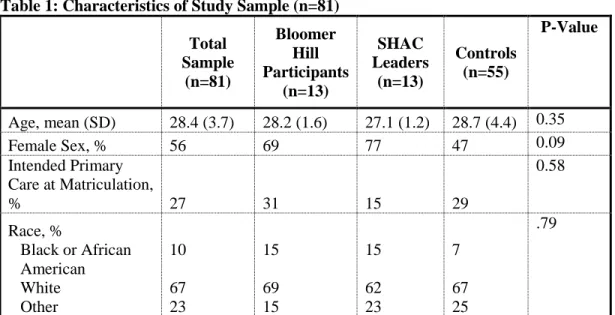
respondents, 13 participated in the Bloomer Hill Course, 13 held leadership positions in the SHAC clinic, and 55 were involved in neither, forming a control population. The mean age of the participants at medical school graduation was 28.4 years and 56% were female (Table 1). There were no statistically significant differences in age at graduation, intention to enter primary care at medical school matriculation, or race among the three cohorts (P = 0.35, 0.58, 0.79). The proportion of females in the SHAC cohort (77%) was higher than in the Bloomer Hill (69%) and control cohorts (47%) (P = 0.09), which is important given the greater likelihood for women to enter primary care fields.16
Primary and Secondary Outcomes
Twenty-five percent of the 81 respondents reported practicing in a primary care career (Table 2). The remaining 75 percent either matched into non-primary care residencies or were completing fellowship training in a medical specialty. A greater proportion of the Bloomer Hill cohort tended to have a primary care career, as compared with members of the SHAC and control cohorts ( 46% vs. 15% vs. 22%; P = 0.13). We did not find statistically significant differences among the three cohorts in relation to the secondary outcomes of practice setting, underserved practice population, level of community engagement, or providing more than eight hours of uncompensated care per week (Table 2).
After adjustment for characteristics associated with choosing a primary care career, Bloomer Hill participants had 5.5 times the odds of selecting a career in primary care, as
30
the SHAC and Bloomer Hill cohorts as compared with the control group did not show consistent trends or significant differences.
Qualitative Analysis
Five of the twelve Bloomer Hill survey respondents agreed to an interview, four in person and one over the phone. Two of the five participants practiced primary care medicine and four of the five were female. Four respondents knew, in general, what field of medicine they wanted to go into upon entering medical school; however, they each called Bloomer Hill a positive experience. Several themes emerged from the interview transcripts—those reported describe unique and influential aspects of the Bloomer Hill curriculum:
Underserved population. Four of the five participants reported that their experiences working at the Bloomer Hill clinic with a patient population with few resources influenced or reinforced their desire to work with underserved patients, both in residency and as a career. All participants noted the challenges they experienced in caring for low-income patients in a low-resource setting, as illustrated in the following comments:
So I think it was kind of eye opening in that way. Just because the resources were very limited and people wanted help and would come regularly and, still, your options were sometimes not all open.
Most of them were really poor and it’s not infrequent that they weren’t getting any other medical care, so you really felt like you were doing something meaningful.
31 I serve an underserved population just working at a state hospital. Bloomer
hill definitely influenced my desire to work with an underserved population.
Faculty exposure and mentoring. Four of the five participants described the interaction with the preceptors at Bloomer Hill as being unique, and more substantial than in other clinical settings. These participants noted that the preceptors and course directors served as role models in service, teaching, and medicine:
It was always kind of nice to have to spend an amount of time with one of the attendings who otherwise I just present patients to them and then they teach. But this way I could spend time with them and learn something about them, where they are from, and how they got to where they are… I’m realizing how important those connections are—understanding the different paths that people take is really important to choosing your own path. So that kind of mentorship and relationship is benefit of Bloomer Hill.
[One of the course directors] influenced me most. I found him to be a great role model and I loved that he was very involved with a student run clinic even though he is very busy.
The time I got to spend with the different preceptors who came out to the clinic helped me see the difference internal medicine and family medicine, and helped me see that family medicine philosophy was more in-line with my idea of medicine.
The preceptors were influential because they ended up being the ones most interested in doing hands on teaching and I wanted to learn from teachers like them in residency.
32 …and you get to see the same patients more than once and see what that is
like. Even though I work in the PICU, which is really different, I still feel like I get some of that—like I follow the whole course of an illness with a family. I was involved every year of school and I had some continuity with patients, but I felt like my relationship with the setting and with [the community coordinators] made me feel very tied to the community. The community leaders who helped coordinate the clinic were a huge inspiration to me. I think there were a couple of patients who we all saw multiple times. I think that is what I like about what I do…, knowing people well and being able to go in and not have to spend a ton of time having to get background
information and you can at least spend time talking to someone. It was also interesting to learn about the medical side of things by watching conditions over time as they change, which you don’t get from the kind of “one and done” kind of deal.
Practical skills and responsibility. All five participants noted and appreciated that the Bloomer Hill clinic provided the earliest opportunity in medical school to learn practical skills and take a more extensive role in providing clinical care:
One of my favorite parts of Bloomer Hill was obtaining blood, getting that practice on the patients was really fun, and probably my first exposure to invasive procedures. I like hands-on work—it’s one reason why I work in the ICU.
You had a lot more leeway to do stuff than you do in the hospital setting where there are residents that have to do their job and then you are not necessarily seeing patients first hand.
33 it was one of my first clinical experiences, certainly a little more autonomy
than I’d been given up to that point…[other experiences] were more like shadowing whereas this was more like actually working in the clinic.
Discussion
Prior research suggests that curricular experiences in rural settings are associated with medical students returning to practice in a rural setting. Similarly, one could hypothesize that primary care experiences during medical school would be associated with students selecting careers in primary care.10 We found that participation in the Bloomer Hill Rural Health Course at the UNC School Of Medicine was, in fact, associated with increased likelihood of practicing primary care. Similar curricular interventions in the primary care setting should be considered as a part of the effort to expanding the primary care workforce.
We chose to compare the Bloomer Hill participants to both a control group and the
SHAC leaders, which is unique among curriculum evaluations that often describe only those who participated in the curriculum.12, 14, 18 The SHAC leaders provided an interesting comparison group because these students likely had a similar baseline commitment to community service as the students who chose to volunteer with Bloomer Hill, which is important because volunteerism is a predictor of choosing a primary care career.19
Our study showed that involvement in the SHAC clinic did not translate to a significant association with entering the primary care workforce as Bloomer Hill participation did.
34
approximately ten minutes from the school. The difference in distance requires that students spend an entire weekend day traveling to, volunteering at, and returning from the Bloomer Hill clinic, while SHAC volunteers spend a weekday evening at a clinic closer to home. This may reflect a greater level of commitment to volunteer service among the Bloomer Hill participants. Volunteering at the SHAC clinic is independent of any coursework within the medical school, whereas a monthly course focusing on common health problems encountered in the primary care setting complements the volunteer work at the Bloomer Hill clinic. The curricular aspect of the Bloomer Hill experience, requiring academic effort, may select for students who are more committed to primary care.
Additionally, the patients encountered in the SHAC clinic tend to present with acute conditions or chronic conditions that are deferred and student volunteers are not likely to see a patient at that clinic more than once, while Bloomer Hill volunteers have a greater opportunity for continuity of care with the patients, who often present regularly for management of chronic disease. The key-informant interviews with past Bloomer Hill participants highlighted four unique components of the Bloomer Hill experience: early exposure to practical skills with greater responsibility, continuity with patients and the community, extensive exposure to teaching faculty, and work with an underserved population in a low-resource setting. These features were noted to influence residency, career, and patient population decisions, even though only two of the five key-informants had chosen careers in primary care.
35
small curricular programs have available. Consequently, much of the literature studying medical curricula focuses upon intermediate outcomes such as grades, scores, interest, intended career or residency program matriculation. 13, 20, 21 A strength of our evaluation is our use of specialty choice as an outcome, rather than intermediate outcomes that might be less tightly linked to ultimate career choice.
We did not find any significant associations between participation in the rural health course and the secondary outcomes of working in a rural area, having an underserved patient population, being highly engaged in the community, or providing more than eight hours of uncompensated care per week. The key-informant interviews suggested that the Bloomer Hill experience did influence some to choose residency programs and careers that allowed them to work with the underserved; however, this trend was not confirmed by the survey. This
discrepancy may be due to our limited sample size, or because these career choices are less amenable to influence by a curricular intervention. Alternatively, a larger study population may confirm a lack of association between Bloomer Hill and the secondary outcomes. It is surprising, however, that Bloomer Hill participants did not have an increased likelihood of practicing in a rural area, given the vast literature supporting the association between rural clinical experiences and rural practice location.10 The relatively young physicians involved in the study may later move to a rural location, as one key-informant planned to do.
36
Limitations
There are a number of limitations to our study. The self-reported data collected through the survey are subject to recall and other reporting biases. Social desirability may have influenced physicians reporting of their involvement in their communities; however, any over-reporting would likely be non-differential across all three respondent groups.
Because students were not randomized to this experience, we attempted to adjust for possible confounding by controlling for factors known to be associated with choosing a career in primary care. We suspected that these factors might also make individuals more likely to elect to participate in the Bloomer Hill or SHAC clinics. We did not, however, quantify student interest in primary care before participation in the Bloomer Hill course, but used recalled intention to enter primary care at medical school matriculation as a proxy. We did not ask survey respondents if they grew up in a rural community, a factor associated with entering primary care, and were therefore unable to adjust for this factor in our analysis.23 There may be other, unmeasured, variables associated with both choosing to participate in one of the volunteer opportunities and choosing a career in primary care, so confounding may persist.
The small sample size limits the power of our study. Our necessarily small study reflected the years during which the Bloomer Hill Rural Health course was offered to students and reflected our desire to measure primary care careers as an outcome, instead of an
intermediate outcome.
37
currently practicing at UNC may have overlooked the perspectives of participants who practice in rural areas or in community-based primary care.
Finally, this study faces an important limitation that is present in most curricular evaluations of its kind. Students who are interested in primary care may be more likely to seek experiences like the Bloomer Hill Rural Health course, making them pre-disposed to choosing a career in primary care. The experience may then be simply reinforcing that interest rather than generating new interest in the field. While there is value in retaining students’ interest in primary care, it would be useful to identify interventions that influence other students to enter the primary care workforce. We attempted to address this limitation by statistically adjusting for confounding variables and by comparing the Bloomer Hill participants to students who have a similar baseline commitment to community service. A prospective cohort study could better account for these factors through pre- and post-participation surveys and improved means of post-residency follow-up.
Conclusion
38
39
References
1. Bodenheimer TT. A lifeline for primary care. N Engl J Med. 2009;360(26):2693-2696. 2. Bodenheimer TT. Primary care: Current problems and proposed solutions. Health affairs (Millwood, Va.). 2010;29(5):799-805.
3. Hauer KKE. Factors associated with medical students' career choices regarding internal medicine. JAMA : the journal of the American Medical Association. 2008;300(10):1154-1164. 4. Pugno PA. Results of the 2009 national resident matching program: Family medicine. Fam Med. 2009;41(8):567.
5. Colwill JJM. Will generalist physician supply meet demands of an increasing and aging population? Health affairs (Millwood, Va.). 2008;27(3):w232-w241.
6. Long SK. What is the evidence on health reform in massachusetts and how might the lessons from massachusetts apply to national health reform? Urban Institute. :January 12, 2011. 7. Rep Rangel CB. Patient protection and affordable care act. 2009;H.R. 3590. Available from: http://democrats.senate.gov/reform/patient-protection-affordable-care-act-as-passed.pdf Last Accessed: Nov 8, 2010.
8. Bennett KKL. Finding, recruiting, and sustaining the future primary care physician workforce: A new theoretical model of specialty choice process. Academic medicine. 2010;85(10):S81-S88. 9. Meurer LN. Influence of medical school curriculum on primary care specialty choice:
Analysis and synthesis of the literature. Acad Med. 1995;70(5):388-397.
10. Barrett FA, Lipsky MS, Nawal Lutfiyya M. The impact of rural training experiences on medical students: A critical review. Acad Med. 2010.
11. Rabinowitz HK, Diamond JJ, Markham FW, Santana AJ. Increasing the supply of rural family physicians: Recent outcomes from jefferson medical college's physician shortage area program (PSAP). Acad Med. 2010.
12. Halaas GW, Zink T, Finstad D, Bolin K, Center B. Recruitment and retention of rural physicians: Outcomes from the rural physician associate program of minnesota. J Rural Health. 2008;24(4):345-352.
40
14. Glasser MM. A comprehensive medical education program response to rural primary care needs. Academic medicine. 2008;83(10):952-961.
15. Gruen RRL. Public roles of US physicians: Community participation, political involvement, and collective advocacy. JAMA : the journal of the American Medical Association.
2006;296(20):2467-2475.
16. Martini CJM. Medical school and student characteristics that influence choosing a generalist career. JAMA : the journal of the American Medical Association. 1994;272(9):661.
17. Goetz JP. Ethnographic research and the problem of data reduction. Anthropology & education quarterly. 1981;12(1):51.
18. Lang F, Ferguson KP, Bennard B, Zahorik P, Sliger C. The appalachian preceptorship: Over two decades of an integrated clinical-classroom experience of rural medicine and appalachian culture. Acad Med. 2005;80(8):717-723.
19. Owen JA, Hayden GF, Connors Jr AF. Can medical school admission committee members predict which applicants will choose primary care careers? Academic Medicine. 2002;77(4):344. 20. Lynch DC, Teplin SE, Willis SE, et al. Interim evaluation of the rural health scholars
program. Teach Learn Med. 2001;13(1):36-42.
21. Blue AV, Chessman AW, Geesey ME, Garr DR, Kern DH, White AW. Medical students' perceptions of rural practice following a rural clerkship. FAMILY MEDICINE-KANSAS CITY-. 2004;36(5):336-340.
22. Bland CJ, Meurer LN, Maldonado G. Determinants of primary care specialty choice: A non-statistical meta-analysis of the literature. Acad Med. 1995;70(7):620-641.
41
Tables
Table 1: Characteristics of Study Sample (n=81)
Total Sample (n=81) Bloomer Hill Participants (n=13) SHAC Leaders (n=13) Controls (n=55) P-Value
Age, mean (SD) 28.4 (3.7) 28.2 (1.6) 27.1 (1.2) 28.7 (4.4) 0.35
Female Sex, % 56 69 77 47 0.09
Intended Primary Care at Matriculation,
% 27 31 15 29
0.58
Race, %
Black or African American White Other 10 67 23 15 69 15 15 62 23 7 67 25 .79
Table 1: Age is described as a continuous variable and compared using a oneway analysis of variance. Pearson
chi-square (χ2) tests were used to compare differences among categorical variables among each of the three cohorts
Table 2: Primary and Secondary Outcomes, by Cohort
Outcome Total Sample (n=81) Bloomer Hill Participants (n=13) SHAC Leaders (n=13) Controls
(n=55) P-Value*
Primary Care Career (%) 25 46 15 22 0.13
Practice Setting Rural (%) Urban (%) Suburban (%) 12 53 35 15 54 31 8 38 54 13 56 31 0.62 Practice Population
Underserved (%) 26 23 15 29
0.57
Level of Community Engagement Low (%) Medium (%) High (%) 32 41 27 46 23 31 46 39 15 25.5 45.5 29 0.35
≥8 hours/week providing
uncompensated care (%) 23 15 15 27
0.50
42 Table 3: Relative Odds of Primary and Secondary Outcomes*
Outcome
SHAC Leaders Bloomer Hill Participants Relative
Odds
95% CI P-value Relative Odds
95% CI P-value
Primary Care Career** 0.79 (0.13, 4.9) p=0.8 5.5 (1.02, 29.1) p=0.047
Rural Practice Setting 0.57 (0.06, 5.1) p=0.6 1.25 (0.23, 6.8) p=0.8
Practice Population Underserved
0.44 (0.09, 2.2) p=0.3 0.73 (0.18, 3.0) p=0.7
High Level of
Community Engagement
0.44 (0.09, 2.2) p=0.3 1.1 (0.3,4.0) p=0.9
≥8 hours/week providing uncompensated care
0.48 (0.1, 2.4) p=0.4 0.48 (0.1, 2.4) p=0.4
*Odds ratios are compared to the control cohort.
**Adjusted for: sex, race, age at graduation, and intention to pursue primary care career at medical school matriculation
43
Appendix A: Quantitative Data Collection Materials
Electronic Survey:
Specialty Choice:
What type of residency program did you complete?
Family Medicine General Surgery Ophthalmology
Internal Medicine OB/GYN Anesthesiology
Pediatrics Radiology ENT
Dermatology Radiation Oncology Other:
What type of fellowship training have you completed, or are you currently completing? I have not received fellowship training
Internal Medicine sub-specialty Pediatric sub-specialty
Surgical sub-specialty OB/GYN sub-specialty Other:
Did you intend to go into primary care when you first entered medical school? Yes
No
I was considering it.
Practice Setting:
Are you currently in residency or in fellowship training? Residency
Fellowship Neither
How would you describe the setting in which you practice, primarily? Public hospital
Private hospital
Private outpatient setting
Community Health Center/FQHC
Not currently practicing clinical medicine Other:
How would you describe the geographic location? Rural
Urban Suburban
Do you work in a Health Provider Shortage Area (HPSA, population to primary care provider ratio ≥3,500:1) or a federally designated Medically Underserved Area/Population (MUA/MUP)?
44 No
I do not know
Approximately what proportion of your patients are Medicaid patients or uninsured? 0%-30%
30% to 70% >70%
Approximately what proportion of your patients are Medicare patients? 0%-30%
30% to 70% >70%
Community Engagement:
Approximately how many hours per week do you spend providing uncompensated care? None
1-3 4-8 >8
How important is it for physicians to provide health-related expertise to local community organizations (eg, school boards, parent-teacher organizations, athletic teams, and local media)?
Not at all important Not very important Somewhat important Very important
In the past 2 years have you provided health-related expertise to local community organizations? Yes
No
How important is it for physicians to be politically involved (other than voting) in health-related matters at the local, state, or national level?
Not at all important Not very important Somewhat important Very important
In the past 2 years have you been politically active (other than voting) on a local health care issue? Yes
No
How important is it for physicians to encourage medical organizations to advocate for the public’s health? Not at all important
45
In the past 2 years, have you encouraged your professional society to address a public health or policy issue that is not primarily concerned with physician welfare?
Yes No
Demographic Information:
Graduation Year:
What additional degrees did you earn during medical school? MPH
PhD MBA Gender:
Male Female Race:
Black or African American American Indian or Alaska Native Asian
Native Hawaiian or Other Pacific Islander White
Hispanic or Latino Other
Prefer not to disclose
Birth year:
Did you participate in the Bloomer Hill Course while you were in medical school at UNC? Yes
No
Did you hold a leadership position in the Student Health Action Coalition (SHAC)? Yes
46
Appendix B: Qualitative Data Collection Materials
Key Informant Interview Guide:
1. Tell me about your experience with the Bloomer Hill clinic during medical school?
a. Which years of your medical school training were you involved with the Bloomer Hill Clinic?
b. What was the most meaningful part of the experience for you?
2. How did your experience with the clinic influence your specialty choice?
a. What type of specialty were you interested in pursuing when you entered medical school? If this is different from what you ultimately chose, how did the Bloomer Hill course influence your decision?
b. What aspects of the program were influential in this decision (ex. the clinic itself, the preceptors or mentors you encountered, the continuity of care with patients, specific class components or assignments)?
3. How did your experience with the clinic influence the type of setting and population with which you’ve decided to practice or intend to practice?
a. What aspects of the program were influential in this decision (ex. the clinic itself, the preceptors or mentors you encountered, the continuity of care with patients, specific class components or assignments)?
4. How did your experience with the clinic influence the way in which you are engaged in your community (eg. volunteering your services, participating in political legislation)?
a. What aspects of the program influenced this decision (ex. the clinic itself, the preceptors or mentors you encountered, the continuity of care with patients, specific class components or assignments)?
5. What other aspects of medical school (ex. co-curricular or extracurricular experiences, mentors) influenced your specialty choice, your practice setting, and the way you are engaged in your community?
47
Acknowledgments
I would like to thank my adviser, Dr. Amy Denham, for her encouragement, creativity, and intellectual support through this project. This work would not have been possible without her guidance, experience, and eye for detail.
I thank Dr. Anthony Viera, my second reader, for his enthusiasm and frequent feedback on this work. His knowledge and experience in advising research projects was instrumental in the implementation of this project and production of this final product.
I am grateful for the opportunity to learn from these two excellent teachers and family physicians, who both show great dedication to primary care and to student development.