CAROB (CERATONIA SILIQUA): SUPER FOOD AND MEDICINE.
LITERATURE UPDATE
Abdullatif Azab
[a]*Keywords: Carob; antioxidant; cultivation; cocoa substitute; male fertility; gluten-free; molasses, nutrition.
Carob (Ceratonia siliqua) is one of the important nutritional and medicinal trees of the Middle East and Mediterranean basin, and in recent decades, it has been grown and cultivated in many other regions in the world. Realization and awareness to its unique nutritional and medicinal properties and biological activities are rising rapidly. A great effort of research has been invested and published since our comprehensive review article was published here, in this journal, in 2017. Most recent publications focus on nutrition and efforts to utilize Carob products for numerous food purposes, but medicinal activities of this tree are still drawing major attention, due to their high potential. In this review article, we are presenting a literature update of published research since late 2017. The main objective of this review is to highlight the nutritional applications of Carob products, which many industrial companies in the world, are trying now to convert to commercial food products.
*Corresponding Author Fax: +972-4-6205906 Phone: +972-50-5650025 E-Mail: [email protected]
[a] Eastern Plants Research Institute, Box 868, Arara, Israel 30026
INTRODUCTION
Carob (Ceratonia siliqua) is a tree that was domesticated in the Middle-East in ancient times, but it is currently cultivated in many other regions in the world.1 Since the publication of our comprehensive review about this tree in 2017,2 the average number of publication per a year is rising rapidly.
According to our literature study, it is clear that until 2017, most publications focused on studying medicinal activities of various products of this plant, such as extracts and oils. In recent years, nutritional research is gaining larger value and importance, yet, medicinal research is still interesting and exploring new activities. Consequently, in this review we will present in wider view the nutritional aspects of Carob research, and in the discussion section, we will relate to some notable cultivation efforts of this tree.
In the last three years, few important review articles were published about medicinal and nutritional properties of Carob. A. Loullis and E. Pinakoulaki discussed carob pod powder as a potential cocoa substitute.3 The key importance of this review is the presentation and comparison of active compounds in both foods, mainly phenolics, such as flavonoids and anthocyanins. I. Lakkab and her colleagues published a medium size excellent article about the neuroprotective activities of Carob.4 They presented the biological relation between oxidative stress and neurodegenerative diseases, medicinal activities of Carob focusing on antioxidant activity, general chemical composition and suggestions for future research. Polysaccharides content of various parts of Carob tree were clearly presented by B-J. Zhu and his colleages.5 They
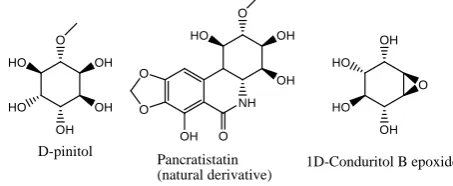
showed clear structures and discussed the current and possible applications of Carob nutrients. A small size, yet summarily written review was published by K. Ghedira and P. Goetz.6 It briefly presented botany, ecology, selected medicinal activities and some active compounds. Finally, a very important review was published by J. I. Lopez-Sanchez and his colleagues, and it discussed the importance of D-pinitol (Figure 1), an active polyhydroxy, cyclic alcohol found in Carob pods.7 Authors presented the structure, physical properties, natural sources, synthesis and many health promoting effects of this natural product. In addition, many synthetic derivatives are introduced along with their biological activities.
We present here some of these derivatives in Figure 1. Based on their presentation of D-pinitol, authors named this compound “super food”.
Figure 1. D-pinitol and some of its selected derivatives (ref. 7).
MEDICINAL, BIOLOGICAL AND OTHER
ACTIVITIES
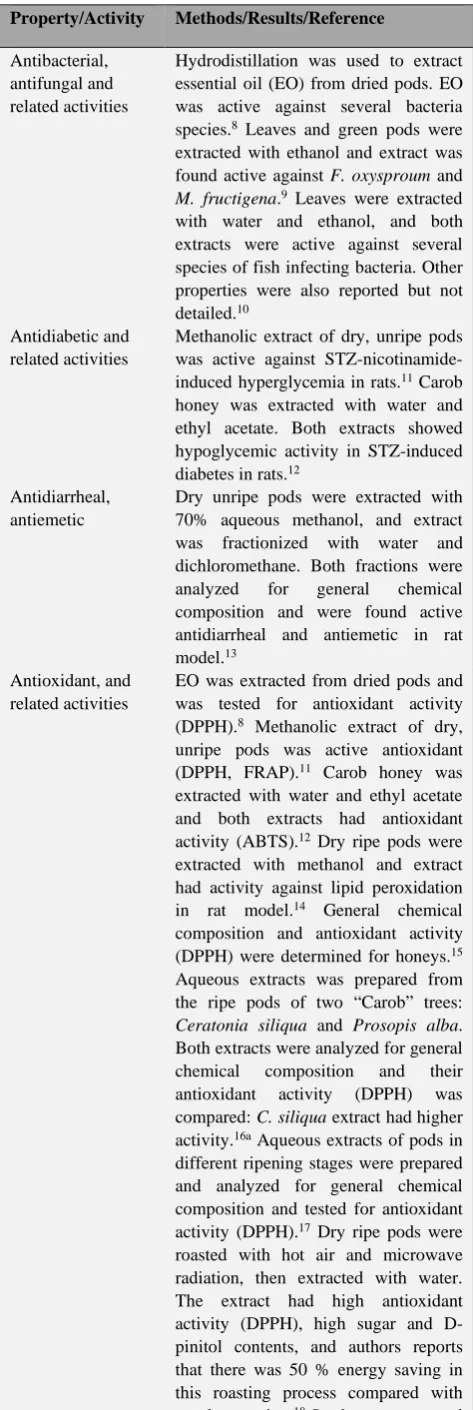
Research of classical medicinal and related properties is ongoing, but in the last three years, there has been a notable increase in the studies of Carob as food and nutrition source. It is important to emphasize that classical research is still exploring very new activities that were not reported in our previous publication, such as treatment of male infertility. A summary of these properties is presented in Table 1.
O
OH
OH HO
OH HO
D-pinitol
O
OH
OH HO
NH
O O
O
OH
Pancratistatin (natural derivative)
OH
HO
OH HO
O
Table 1. Medicinal, nutritional and other properties of C. siliqua.
Property/Activity Methods/Results/Reference
Antibacterial, antifungal and related activities
Hydrodistillation was used to extract essential oil (EO) from dried pods. EO was active against several bacteria species.8 Leaves and green pods were
extracted with ethanol and extract was found active against F. oxysproum and
M. fructigena.9 Leaves were extracted
with water and ethanol, and both extracts were active against several species of fish infecting bacteria. Other properties were also reported but not detailed.10
Antidiabetic and related activities
Methanolic extract of dry, unripe pods was active against STZ-nicotinamide-induced hyperglycemia in rats.11 Carob
honey was extracted with water and ethyl acetate. Both extracts showed hypoglycemic activity in STZ-induced diabetes in rats.12
Antidiarrheal, antiemetic
Dry unripe pods were extracted with 70% aqueous methanol, and extract was fractionized with water and dichloromethane. Both fractions were analyzed for general chemical composition and were found active antidiarrheal and antiemetic in rat model.13
Antioxidant, and related activities
EO was extracted from dried pods and was tested for antioxidant activity (DPPH).8 Methanolic extract of dry,
unripe pods was active antioxidant (DPPH, FRAP).11 Carob honey was
extracted with water and ethyl acetate and both extracts had antioxidant activity (ABTS).12 Dry ripe pods were
extracted with methanol and extract had activity against lipid peroxidation in rat model.14 General chemical
composition and antioxidant activity (DPPH) were determined for honeys.15
Aqueous extracts was prepared from the ripe pods of two “Carob” trees:
Ceratonia siliqua and Prosopis alba. Both extracts were analyzed for general chemical composition and their antioxidant activity (DPPH) was compared: C. siliqua extract had higher activity.16a Aqueous extracts of pods in
different ripening stages were prepared and analyzed for general chemical composition and tested for antioxidant activity (DPPH).17 Dry ripe pods were
roasted with hot air and microwave radiation, then extracted with water. The extract had high antioxidant activity (DPPH), high sugar and D-pinitol contents, and authors reports that there was 50 % energy saving in this roasting process compared with regular roasting.18 Seeds were extracted
with several solvents and analyzed for fatty acids, lipidic compounds, amino acids, phenolics, monosaccharides, all in details. Some activities of galactomannan fractions were tested. Antioxidant activity was determined by DPPH method.19
Cardioprotective, metabolic syndrome
Commercial aqueous extracts of pods and seeds, along with Carob fructooligosaccharides were supple-mented to mice. This resulted in cardioprotective activity and amelioration of metabolic syndrome in mice. Antioxidant capacity of this mixture was determined (ABTS).20
This comprehensive research used Carob industry by-products that were extracted with methanol and 50% aqueous methanol. Extracts were analyzed for general chemical composition, total phenolic content, and tested for antioxidant activity (4 methods), ACE inhibition, anti-inflammatory activity (3 tests, triglyceride content (metabolic syndrome).21
Fertility (male) Busulfan-induced infertility in mice was treated with Carob aqueous extract (plant part/s not reported). As a result, sperm quality improved, biochemical parameters related to fertility were also improved, including testosterone.22
Rabbits were treated with seeds aqueous extract, and there were positive changes in concentrations of sperm, plasma and testosterone.23
Infertile men were treated with 1500 mg capsules of mature pods aqueous extract, resulting improvement in sperm count and quality.24 Leaves and
fruits were extracted with water and extract was administered to normo-zoospermic aged men, resulting improvement of sperm and chromatin.25 Dried pods aqueous
extract was injected to mice. The dose of 200 mg kg-1 of body weight, was
most efficient in increasing testicular index, sperm parameters and decreased the level of oxidative stress.26 Infertile
men in ages 25-40 years were treated with a combination of Carob syrup and vitamin E. As a result, sperm and sex hormones increased.27 Dried pods were
extracted with 96% aqueous ethanol. The extract was supplemented to mice with Pb (lead) reproductive toxicity, resulting improvement of sperm, sex hormones and other biochemical fertility parameters.28
extract of ripe, dry pods was prepared and administered to rats that were exposed daily to tobacco waterpipe smoke. Positive results were recorded in amelioration of lung injuries.29
Neuroprotective and brain related activities
Dry unripe pods were extracted with 70 % aqueous methanol, and extract was fractionized with water and dichloromethane. Both fractions were antispasmodic in rat model.13 Aqueous
extract of ripe, dry pods was prepared and administered to rats that were exposed daily to tobacco waterpipe smoke. Positive results were recorded in amelioration of brain injuries.29 Rats
were fed with plus-maze resulting emotional disorders and estrogen deficiency. They were treated with pods aqueous extract that altered these diet effects.30 Parkinson disease model
was induced in Zebrafish by neurotoxic 6-hydroxydopamine. After treatment with leaves aqueous extract, antioxidant and anti-AChE activity was recorded, resulting improvement of cognitive function.31
Skin Protection Aqueous extract of fruits and leaves had notable activity of skin regeneration and wound healing.32 A
follow-up study by the same research group, but with clinical trials.33
Chemical applications, processing and extraction
Solid Carob waste from food industry was used for production of bio-hydrogen. The process was studied under various reaction conditions: pH, catalysis, nitrogen environment, water supply; and yield was compared to glucose a control substrate.34 Pods were
extracted with water and bacteria fermented. Several ionic liquids were tested for extraction of dry ethanol instead of ethylene glycol.35
Micro-wave assisted extraction of phenolics afforded higher yields than non-radiated extraction.36 Thin layer pulp
drying conditions were studied an optimized.37 Spray drying tested and
proved successful in improving the quality and yields for drying of Carob juice.38 Various roasting conditions
were tested in order to achieve optimal properties, such as sensory, antioxidant, aromas and physiochemical.39 Pods
were extracted for sugar content, using the mathematical Taguchi method to design the extraction. Practically, pods were extracted four times succes-sively.40 Powder of dry, ripe pods was
found successful absorbent of dye pollution (methylene blue).41 Leaves
aqueous extract was used to prepare CeO2 nanoparticles (NPs) by reaction
with Ce(NO3)3.6H2O. These NPs had
strong antioxidant and cytotoxic activities.42 Leaves aqueous extract was
reacted with Zn(CH3COO)2 to prepare
ZnO-NPs. These NPs had strong cytotoxic activity against human breast cancer cells.43
Chemical composition
Proteins, amino acids and sugar contents were determined in pods at different harvesting stages.44 Leaves
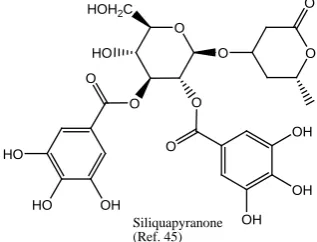
were extracted with pressurized hot water and fractionized with various solvents, resulting isolation and characterization of a new natural product, that researchers named siliquapyranone (Figure 2, below table, after note a).45 Solid-phase
micro-extraction / gas chromatography-mass spectrometry (SPME/GC-MS) analyses of flowers and fruits were performed, and detailed composition of volatile compounds is reported.46
Animal food Syrup was supplemented to Tilapia Fish(O.mossambicus) in different con-centrations. It was found that the optimal was 1.25%, which notably decreased serum glucose, triglyceride, cholesterol levels, it significantly increased the phagocytic activity, phagocytic index, respiratory burst and potential killing activity. No toxicity was recorded.47 Pods were supplied as
food to sheep resulting high nutritional values.48
Human food and nutrition
Candies were prepared from pod powder as wheat flour substitute, dates and olive fruits. Physical and chemical parameters (nutritional values, anti-oxidant capacity, FRAP) were reported.49 Near Infrared spectroscopy
technique was developed to detect Carob flour in cocoa powder.50 Cakes
were prepared from pod powder as cocoa powder partial substitute. Physical and chemical parameters (nutritional values, antioxidant capa-city, ABTS, DPPH) were reported.51
Pod powder was used to replace wheat flour (40 or 60%) in Cupcakes, and physical and chemical properties were improved, especially fat and sugar replacement.52 Soft drink was prepared
from pods pulp and it had high physical and chemical qualities.53 Analysis of
seed peel revealed 90% content of dietary fibers.54 Rice flour and pods
powder were used to prepare gluten-free cakes, and results of various tests are reported.55 Pods powder was used
as wheat flour substitute in muffins and positive physicochemical (weight loss, antioxidant, DPPH, ABTS) results were recorded.56 Bean molasses was used to
high nutritional values.57 Pods molasses
were mixed with sesame paste, resulting notable physical changes (color, viscosity) as will as rise in nutritional value (mainly proteins).58 A
follow-up study to the previous one, where pods molasses were analyzed for physiochemical characteristics.59
Detailed analysis of five samples of molasses to determine the content of 18 nutritionally important phenolic compounds.60 A comprehensive study
that analyzed different parts of Carob tree (excluding roots) for sugars, proteins, enzyme inhibition and other general chemical properties.61 High
quality and pioneering study that analyzed 20 commercial Carob food products used in Cyprus. Detailed analyses of major nutritional parameters are presented.62 Pastry
filling was prepared with pods flour and bean gum, and the rheological (texture, flow) were notably improved. Mathematical model was used for the products design.63 Adding Carob syrup
and/or flour to sponge cakes increased their protein, fiber and carbohydrate contents.64 Polyphenol-rich pod extract
was supplemented to Taekwondo athletes for 6 weeks. As a result, reduction of body weight and improvement of aerobic performance were recorded.65
(a) Authors of ref. 16 consider Prosopis albaas “White Carob” because in South America its common name is Algarrobo Blanco, which stands for “White Carob” in Spanish. We have related to the issue of common names in previous publications, and to the fact that they can be misleading. Ceratonia and Prosopis genera belong to the same family, Fabaceae, but they are not the same genus.
Prosopis is not Carob.
Figure 2. Structure of Siliquapyranone (ref. 45).
DISCUSSION
In the last two decades, the interest in Carob is rising rapidly, and according to research publications about this tree, it seems that it will have great importance in future human nutrition, economy and medicine.
Numerous studies were published about the optimal methods of cultivating this tree. In terms of environmental efficiency, P. J. Corriera and his colleagues recommended growing Carob in mixed orchards with another classical Middle-eastern crops, such as Fig, Almond and Olive trees.66 A. Gugliuzzo and his colleagues discuss the damage that natural enemies of Carob can do to this tree, especially insects (mainly Carob moth, Ectomyeloisceratoniae) and fungi.1 And in order to make the best selection of wild varieties for domestic cultivation, N. Korkmaz and her colleagues discuss the various parameters that affect tree morphology, fruiting yield, quality and composition, in wild-grown trees.67 Along with these studies, many have investigated the effect of growth stressors such as dry farming,68 or growth promoters like ultrasonic radiation,69iron and other nutrients70 and cytokinins.71
However, it seems that the hottest medicinal research of Carob in the next few years will be treatment of male infertility.22-28 To the best of our knowledge, this activity in regard of Carob tree, is not known in Middle-eastern medicines, contrary to female infertility, which is treated with pollen grains of this tree.72 Modern review articles did not recognize yet this very important medicinal activity of Carob,73 but since most studies agree that oxidative stress has major role in inducing male infertility,74 Carob has great potential of treating this global health concern.
CONCLUSIONS
(1) Medicinal properties of Carob have to be additionally studied, especially treatment of male infertility.
(2) The nutritional and economic potential of Carob are huge. In order to maximize them, more research should be invested in Carob’s health and nutrition benefits.
REFERENCES
1Gugliuzzo, A., Mazzeo, G., Mansour, R., Garzia, G. T., Carob
pests in the Mediterranean region: bio-ecology, natural enemies and management options, Phytoparasitica, 2019, 47, 605–628. https://doi.org/10.1007/s12600-019-00766-7
2Azab, A., Carob (Ceratonia siliqua): Health, Medicine and
Chemistry, Eur. Chem. Bull., 2017, 6, 456-469. DOI: 10.17628/ecb.2017.6.456-469
3Loullis, A., Pinakoulaki, E., Carob as cocoa substitute: a review
on composition, health benefits and food applications, Eur.
Food Res. Technol., 2018, 244, 959–977.
https://doi.org/10.1007/s00217-017-3018-8
4Lakkab, I., El Hajaji, H., Lachkar, N., El Bali, B., Lachkar, M.,
Ciobica, A., Phytochemistry, bioactivity: suggestion of
Ceratonia siliqua L. as neurodegenerative disease Therapy, J. Complement. Integr. Med., 2018, 15, Article 20180013. DOI: 10.1515/jcim-2018-0013
5Zhu, B-J., Zayed, M. Z., Zhu, H-X., Zhao, J., Li, S-P., Functional
polysaccharides of Carob fruit: a review, Chin. Med., 2019,
14, Article40. https://doi.org/10.1186/s13020-019-0261-x
6Ghedira, K., Goetz, P., Caroubier : Ceratonia siliqua (L.)
(Fabaceae), Phytotherapie, 2019, 17, 286-290. DOI: 10.3166/phyto-2019-0197
O
O
O HOH2C
HO
O O
HO OH
HO O
OH OH
OH O O
7Lopez-Sanchez, J. I., Moreno, D. A., Garcia-Viguera, C.,
D-pinitol, a highly valuable product from carob pods: Health-promoting effects and metabolic pathways of this natural super-food ingredient and its derivatives, AIMS Agric. Food,
2018, 3, 41-63. DOI: 10.3934/agrfood.2018.1.41
8Ouis, N., Hariri, A., Antioxidant and antibacterial activities of the
essential oils of Ceratonia siliqua, Banat’s J. Biotechnol.,
2018, 9, 13-23. DOI: 10.7904/2068–4738–IX(17)–13
9Yavuz, A., Onaran, A., Yanar, Y., Antifungal Activity of Leaf
Extract of Ceratonia Siliqua L. Plant Against Plant Pathogenic Fungi, Int. J. Agric. Nat. Sci., 2018, 1, 36-38.
http://ijans.org/index.php/ijans/article/view/413/401
10Ben Othmen, K., Elfalleh, W., Beltran, J. M., Esteban, M. A.,
Haddad, M., An invitro study of the effect of carob (Ceratonia siliqua L.) leaf extracts on giltheadseabream (Sparus aurata L.) leucocyte activities, Antioxidant,cytotoxic and bactericidal properties, Fish Shellfish Immunol., 2020,
99, 35-43. DOI:10.1016/j.fsi.2020.02.005
11Qasem, M. A., Noordin, M. I., Arya, A., Alsalahi, A., Jayash, S.
N., Evaluation of the glycemic effect of Ceratonia siliqua pods (Carob) on a streptozotocin-nicotinamide induced diabetic rat model, Peer J., 2018, 6, Article e4788. DOI: 10.7717/peerj.4788
12El-Haskoury, R., Al-Waili, N., El-Hilaly, J., Al-Waili, W.,
Lyoussi, B., Antioxidant, hypoglycemic, and hepatoprotective effect of aqueous and ethyl acetate extract of Carob honey in streptozotocin-induced diabetic rats, Vet. World, 2019, 12, 1916-1923.
www.doi.org/10.14202/vetworld.2019.1916-1923
13Hamid, I., Janbaz, K. H., Ethnopharmacological basis for
antispasmodic, antidiarrheal and antiemetic activities of
Ceratonia siliqua pods, Bangladesh J. Pharmacol., 2017, 12, 384-392. DOI: 10.3329/bjp.v12i4.33218
14Al-Seeni1, M. N., El Rabey, H. A., Al-Ghamdi, H., Al-Sieni, A.
I., Sakran, M. I., Mohammed, G. M., Assessment of the antioxidant activity of parsley and carob in hypercholesterolemic male rats, Biomed. Res., 2018, 29, 3370-3377.
https://www.researchgate.net/publication/328381662
15El-Haskoury, R., Kriaa, W., Lyoussi, B., Makni, M., Ceratonia siliqua honeys from Morocco:Physicochemical properties, mineral contents, andantioxidant activities, J. Food Drug Anal., 2018, 26, 67-73.
http://dx.doi.org/10.1016/j.jfda.2016.11.016
16Carbas, B., Salinas, M. V., Serrano, C., Passarinho, J. A., Puppo,
M. C., Ricardo, C. P., Brites, C., Chemical composition and antioxidant activity of commercial flours from Ceratonia siliqua and Prosopis spp., J. Food Meas. Charact., 2019, 13, 305–311. https://doi.org/10.1007/s11694-018-9945-7
17Ben Othmen, K., Elfalleh, W., Lachiheb, B., Haddad, M.,
Evolution of phytochemical and antioxidant activity of Tunisian carob (Ceratonia siliqua L.) pods during maturation, EuroBiotech J., 2019, 3, 135-142. DOI: 10.2478/ebtj-2019-0016
18Gunel, Z., Torun, M., Sahin‐Nadeem, H., Sugar, D‐pinitol,
volatile composition, and antioxidant activity of carob powder roasted by microwave, hot air, and combined microwave/hot air, J. Food Process.Preserv., 2020, 44, Article e14371. https://doi.org/10.1111/jfpp.14371
19Fidan, H., Stankov, S., Petkova, N., Petkova, Z., Iliev, A.,
Stoyanova, M., Ivanova, T., Zhelyazkov, N., Ibrahim, S., Stoyanova, A., Ercisli, S., Evaluation of chemical composition, antioxidant potential and functional properties of carob (Ceratonia siliqua L.) seeds, J. Food Sci. Technol.,
2020, 57, 1-10. https://doi.org/10.1007/s13197-020-04274-z
20Fuente-Fernández, M., Gonzalez-Hedstrom, D., Amor, S.,
Tejera-Munoz, A., Fernandez, N., Monge, L., Almodovar, P., Andres-Delgado, L., Santamaria, L., Prodanov, M., Inarejos-Garcia, A. M., Garcia-Villalon, L. A., Granado, M., Supplementation with a Carob (Ceratonia siliqua L.) Fruit Extract Attenuates the Cardiometabolic Alterations
Associated with Metabolic Syndrome in Mice, Antioxidants,
2020, 9, 339-363. DOI:10.3390/antiox9040339
21Rico, D., Martin-Diana, A. B.,Martinez-Villaluenga, C., Aguirre,
L., Silvan, J. M., Duenas, M., De Luis, D. A., Lasa, A., In vitro approach for evaluation of carob byproducts as source bioactive ingredients with potential to attenuate metabolic syndrome (MetS), Heliyon, 2019, 5, Article e01175. DOI: 10.1016/j.heliyon.2019
22Vafaei, A., Mohammadi, S., Fazel, A., oukhtanloo, M., Pour,
A.M., Beheshti, F., Effects of Carob (Ceratonia siliqua) on Sperm Quality, Testicular Structure, Testosterone Level and Oxidative Stress in Busulfan-Induced Infertile Mice,
Pharmaceut. Sci., 2018, 24, 104-111. DOI: 10.15171/PS.2018.16
23Ata, A., Yildiz-Gulay, O., Gungor, S., Balic, A., Gulay, M. S.,
The Effect of Carob (Ceratonia siliqua) Bean Extract on Male New Zealand White Rabbit Semen, World Rabbit Sci.,
2018, 26, 209-215. DOI:10.4995/wrs.2018.10154
24Mahdiani, E., Haghighian, H. K., Javadi, M., Karami, A. A.,
Kavianpour, M., Effect of Carob (Ceratonia siliqua L.) oral supplementation on changes ofsemen parameters, oxidative stress, inflammatory biomarkers and reproductive hormones in infertile men, Sci. J. Kurdistan Univ. Med Sci., 2018, 95, 56-66. https://www.researchgate.net/publication/328393315
25Faramarzi, A., Aghaz, F., Bakhtiari, M., Khazaei, M., In vitro
application of Ceratonia siliqua improved sperm parameters and chromatin quality after vitrifacation in normozoospermic aged men, Middle East Fertil. Soc. J., 2019, 24, Article 6.
https://doi.org/10.1186/s43043-019-0007-9
26Sadat, S. S., Mohammadi, S., Sazegar, G., Fazel, A.,
Ebrahimzadeh, A., Mobarhan, M. G., Beheshti, F., Attari, S. S., ShimaTavallaei, S., Effects of Carob Fruit Extract on Spermatogenesis, Antioxidant Status, and Apoptosis in Adult Male Mice, Pharmaceut. Sci., 2019, 25, 184-189. DOI: 10.15171/PS.2019.28
27Aghajani, M. M., Gorji, N., Mirabi, P., Mojab, F., Effect of Ceratonia siliqua (Carob) syrup and vitamin E on sperm parameters, oxidative stress index and sex hormones in infertile men: Protocol for a randomized controlled trial,
Caspian J. Intern. Med., 2019, 10, 452-457. DOI: 10.22088/cjim.10.4.452
28Soleimanzadeh, A., Kian, M., Moradi, S., Mahmoudi, S., Carob
(Ceratonia siliqua L.) fruit hydro-alcoholic extract alleviates reproductive toxicity of lead in male mice: evidence on sperm parameters, sex hormones, oxidative stress biomarkers and expression of Nrf2 and iNOS, Avicenna J. Phytomed.,
2020, 10, 35-49.
https://www.ncbi.nlm.nih.gov/pmc/articles/PMC6941692/
29Abdel-Rahman, M., Bauomy, A. A., Salem, F-E., Khalifa, M. A.,
Carob extract attenuates brain and lung injury in rats exposed to waterpipe smoke, Egypt. J. Basic Appl. Sci., 2018, 5, 31-40. DOI: 10.1016/j.ejbas.2018.01.004
30Ammari, M., Othman, H., Rtibi, K., Sakly, M., Abdelmelek, H.,
The Effects of Carob (Ceratonia siliqua L.) on Emotional Behavior Impairment and Metabolic Disorders Induced by Estrogen Deficiency in Rats, J. Med. Food, 2020, Ahead of print. DOI: 10.1089/jmf.2019.0187
31Abidar, S., Boiangiu, R. S., Dumitru, G., Todirascu-Ciornea, E.,
Amakran, A.,Cioanca, O., Hritcu, L., Nhiri, M., The Aqueous Extract from Ceratonia siliqua Leaves Protects against 6-Hydroxydopamine in Zebrafish:Understanding the Underlying Mechanism, Antioxidants, 2020, 9, 304-334. DOI:10.3390/antiox9040304
32Hare, M., Flagler, M., Henry, J., Impact of carob extract on
epidermal regeneration processes and cellular behavior invitro, J. Am. Acad. Dermatol., 2017, 76, Article AB403.
https://doi.org/10.1016/j.jaad.2017.06.059
33Flagler, M., Osborne, R., Mullins, L., d’Alessandro, B., Tamura,
M.,Ehrman, M., Dowdy, A., Ellis, K., In vivo efficacy of a cosmetic skin care product containing carob extract, J. Am. Acad. Dermatol., 2018, 79, Article AB165.
34Bahry, H., Abdallah, R., Chezeau, B., Pons, A., Taha, S., Vial,
C., Biohydrogen production from carob waste of theLebanese industry by darkfermentation, Biofuels, 2019,
10, 1-11. DOI: 10.1080/17597269.2019.1669862
35Sanchez-Segado, S., Salar-García, M. J., Ortiz-Martinez, V. M.,
Rios, A. P., Hernandez-Fernandez, F. J., Lozano-Blanco, L. J., Evaluation of Ionic Liquids as In Situ Extraction Agents during the Alcoholic Fermentation of Carob Pod Extracts,
Fermentation, 2019, 5, 90-101. DOI:10.3390/fermentation5040090
36Huma, Z‐E., Jayasena, B., Nasar‐Abbas, S. M., Imran, M., Khan,
M. K., Process optimization of polyphenol extraction from carob (Ceratonia siliqua) kibbles using microwave‐assisted technique, J Food Process. Preserv., 2018, 42, Article e13450. https://doi.org/10.1111/jfpp.13450
37Tagnamas, Z., Bahammou, Y., Kouhila, M., Lamharrar, A.,
Idlimam, A., Thin layer solar drying of Moroccan carob pulp(Ceratonia Siliqua L.), IOP Conf. Ser.: Earth Environ. Sci., 2018, 161, Article 012007. DOI:10.1088/1755-1315/161/1/012007
38Ali, H., Al-khalifa, A. R.,Aboelsood, W., Bareh, G., Farouk, A.,
Influence of spray-drying on improving the quality of dried carob juice, Qual. Assur. Saf. Crop. Food., 2019, 11, 391-399. DOI: 10.3920/QAS2018.1524
39Boublenza, I., Lazouni, H. A., Ghaffari, L., Ruiz, K.,
Fabiano-Tixier, A-S., Chemat, F., Influence of Roasting on Sensory, Antioxidant, Aromas, and Physicochemical Properties of Carob Pod Powder (Ceratonia siliqua L.), J. Food Qual.,
2017, Article4193672. https://doi.org/10.1155/2017/4193672
40Durmaz, U.,Ozel, M. B., An Experimental Study on Extraction of
Sugar from Carob Using with Taguchi Method, Sakarya Univ. J. Sci., 2019, 23, 916-923.
DOI:10.16984/saufenbilder.541940
41Gezer, B., Adsorption Capacity for the Removal of Organic Dye
Pollutants from Wastewater Using Carob Powder, Int. J. Agric. Forest. Life Sci., 2018, 2, 1-14.
http://www.ijafls.org/en/issue/37327/431667
42Javadi, F., Yazdi, M .E., Baghani, M., Es-haghi, A., Biosynthesis,
characterization of cerium oxide nanoparticles using
Ceratonia siliqua and evaluation of antioxidant and cytotoxicity activities, Mater. Res. Express, 2019, 6, Article 065408. https://doi.org/10.1088/2053-1591/ab08ff
43Raeisalsadati, A. S., Pouresmaeil, V., Neamati, A., Evaluation of
the cytotoxic effect of greens synthesized zinc oxide nanoparticles with Ceratonia siliqua extract on thebreast cancer cell line (MDA-MB231) and its antiangiogenic effects, J. Neyshabur Univ. Med. Sci., 2019, 7, 58-72.
http://journal.nums.ac.ir/article-1-561-en.pdf
44Simsek, S., Ozcan, M. M., Al Juhaimi, F., ElBabiker, E.,
Ghafoor, K.,Amino Acid and Sugar Contents of Wild and Cultivated Carob (Ceratonia siliqua) Pods Collected in Different Harvest Periods, Chem. Nat. Compd., 2017, 53, 1008–1009. https://doi.org/10.1007/s10600-017-2187-9
45Deans, B. J., Skierka, B. E., Karagiannakis, B. W., Vuong, D.,
Lacey, E., Smith, J. A., Bissember, A. C., Siliquapyranone: A Tannic Acid Tetrahydropyran-2-one Isolated from the Leaves of Carob (Ceratonia siliqua) by Pressurised Hot Water Extraction. Aust. J. Chem., 2018, 71,702-707.
https://doi.org/10.1071/CH18265
46Krokou, A., Stylianou, M., Agapiou, A., Assessing the volatile
profile of carob tree (Ceratonia siliqua L.), Environ. Sci. Pollut. Res., 2019, 26, 35365–35374.
https://doi.org/10.1007/s11356-019-04664-7
47Yilmaz, S., Sebahattin E. S., Celik, E.S., The Effect of Dietary
Carob (Ceratonia siliqua) Syrup on Growth Performance, Haematological, Serum Biochemical and Immunological Parameters in Tilapia (Oreochromis mossambicus), Turk. J. Agric. Food Sci. Technol., 2018, 6, 1820-1826.
https://doi.org/10.24925/turjaf.v6i12.1820-1826.2184
48Medjekal, S., Bodas, R., Bousseboua, H., Lopez, S., Evaluation
of Carob (Ceratonia siliqua) and Honey Locust (Gleditsia triacanthos) Pods as a Feed for Sheep, Iran. J. Appl. Anim. Sci., 2018, 8, 247-256.
https://www.researchgate.net/publication/325539371
49Radia, A., Boukhiar, A., Kechadi, K., Benamara, S., Preparation
of a Natural Candy from Date(Phoenix dactyliferaL.), Olive (Olea europaea L.), and Carob (Ceratonia siliqua L.) Fruits,
J. Food Qual., 2018, Article 9565931. DOI:
10.1155/2018/9565931
50Quelal-Vasconez, M. A., Perez-Esteve, E., Arnau-Bonachera, A.,
Barat, J. M., Talens, P., Rapid fraud detection of cocoa powder with carob flour using near infrared spectroscopy,
Food. Cont., 2018, 92, 183-189. DOI:
10.1016/j.foodcont.2018.05.001
51Pawlowska, K., Kuligowski, M., Jasinska-Kuligowska, I., Kidon,
M., Aleksander Siger, A., Rudzinska, M., Nowak, J., Effect of Replacing Cocoa Powder by Carob Powder in the Muffinson Sensory and Physicochemical Properties, Plant Food. Hum. Nutr., 2018, 73, 196–202. https://doi.org/10.1 007/s11130-018-0675-0
52El-Naggar, E. A., Hassan, E. M., Physicochemical evaluation of
carob pods (Ceratonia siliqua L.) powder and the effect of its addition on cupcake quality, Arch. Agric. Sci. J., 2018, 1, 44– 60. DOI:10.21608/aasj.2018.29934
53Marrugo-Ligardo, Y. A., Severiche-Sierra, C. A.,
Jaimes-Morales, J., Lafont-Mendoza, J. J., Fong-Silva, W., Quality Characteristics of a Refreshing Drink Based on Carob Pulp (Ceratonia siliqua), Int. J. Eng. Technol., 2018, 10, 540-544. DOI: 10.21817/ijet/2018/v10i2/181002075
54Dakia, P. A., Combo, M-M., Yapo, B. M., Brou, D. K., Paquot,
M., Dietary fibre content in Carob (Ceratonia siliqua L) seed husk, Int. J. Curr. Res., 2017, 9, 62190-62196.
https://www.journalcra.com/sites/default/files/issue-pdf/27577.pdf
55Berk, E., Sumnu, G., Sahin, S., Usage of carob bean flour in
gluten free cakes, Chem. Eng. Trans., 2017, 57, 1909-1914. DOI: 10.3303/CET1757319
56Cervenka, L., Fruhbauerova, M.,Velichova, H., Functional
Properties of Muffin as Affected by Substituting Wheat Flour with Carob Powder, Potravinarstvo Slovak J. Food Sci., 2019,
13, 212-217. https://doi.org/10.5219/1033
57Badem, A., Alpkent, Z., Production of Ice Cream with Carob
Bean Pekmez (Molasses), Int. J. Environ. Agric. Biotechnol.,
2018, 3, 28-32. http://dx.doi.org/10.22161/ijeab/3.1.5
58Tounsi, L., Kchaou, H., Chaker, F., Bredai, S., Kechaou, N.,
Effect of adding carob molasses on physical and nutritional quality parameters of sesame paste, J. Food Sci. Technol.,
2019, 56, 1502-1509. https://doi.org/10.1007/s13197-019-03640-w
59Tounsi, L., Ghazala, I., Kechaou, N. Physicochemical and
phytochemical properties of Tunisian carob molasses, J. Food Meas. Charact., 2020, 14, 20-30.
https://doi.org/10.1007/s11694-019-00263-9
60Sanli, S., Guneser, O., Kilicarslan, S.,S anli, N., Screening of
eighteen polyphenolic compounds in different carob pekmez by green capillary electrophoresis method, SN Appl. Sci.,
2020, 2, Article 576. https://doi.org/10.1007/s42452-020-2387-y
61Mahtout, R., Ortiz-Martinez, V. M., Salar-Garcia, M. J., Gracia,
I., Hernandez-Fernandez, F. J., Rios, A. P., Zaidia, F., Sanchez-Segado, S., Lozano-Blanco, L. J., Algerian Carob Tree Products: A Comprehensive Valorization Analysis and Future Prospects, Sustainability, 2018, 10, 90-99. DOI:10.3390/su10010090
62Papaefstathiou, E., Agapiou, A., Giannopoulos, S., Kokkinofta,
63Benkovic, M., Bosiljkov, T., Semic, A., Jezek, D., Srecec, S.,
Influence of Carob Flour and Carob Bean Gum on Rheological Properties of Cocoa and Carob Pastry Fillings,
Foods, 2019, 8, 66-82. DOI:10.3390/foods8020066
64Fidan, H., Petkova, N., Sapundzhieva, T., Baeva, M., Goranova,
Z., Slavov, A., Krastev, L., Carob Syrup and Carob Flour (Ceratonia siliqua L.) as Functional Ingredients in Sponge Cakes, Carpath. J. Food Sci. Technol., 2019, 11, 71-82.
https://www.researchgate.net/publication/332427585
65Gaamouri, N., Zouhal, H., Hammami, M., Hackney, A. C.,
Abderrahman, A. B., Saeidi, A., El Hage, R., Ounis, O.B., Effects of polyphenol (carob) supplementation on body composition and aerobic capacity in taekwondo athletes,
Physiol. Behav., 2019, 205, 22-28. DOI:
10.1016/j.physbeh.2019.03.003
66Correia, P. J.,Guerreiro, J. F., Pestana, M., Martins-Loucao, M.
A., Management of carob tree orchards in Mediterranean ecosystems: strategies for a carbon economy implementation,
Agroforest. Syst., 2017, 91, 295–306. DOI: 10.1007/s10457-016-9929-8
67Korkmaz, N., Akin, M., Koc, A., Eyduran, S. P., Ilhan, G.,
Sagbas, H. I. Ercisli, S., Morphological and biochemical diversity among wild-grown carob trees (Ceratonia siliqua
L.), Folia Hort., 2020, 32, 1-10. DOI: 10.2478/fhort-2020-0007
68Correia, P. J., Pestana, M., Exploratory Analysis of the
Productivity of Carob tree (Ceratonia siliqua) Orchards Conducted under Dry-Farming Conditions, Sustainability,
2018, 10, 2250-2256. DOI:10.3390/su10072250
69Zouari, N., Elmtili, N., Ultrasonic Influence on Carob tree
(Ceratonia siliqua L.) rooting under in-vitro conditions,
Moroccan J. Biol., 2018, 15, 18-27.
https://www.researchgate.net/publication/331935306
70Correia, P. J., Varennes, A., Gama, F., Saavedra, T., Pestana, M.,
Changes in nutritional homeostasis of Poncirus trifoliata and
Ceratonia siliqua as a response to different iron levels in nutrient solution, J. Plant Nutr., 2018, 41(16), 2103-2115. DOI:10.1080/01904167.2018.1497175
71Sayed, S. S., Gabr, A. M., Amin, M. A., Taha, L. S., Biochemical
characterization of micropropagated Ceratonia siliqua L. under effect of growth regulators and light quality, Bull. Nat. Res. Cent., 2020, 44, Article 26. DOI: 10.1186/s42269-020-0282-8
72Jaradat, N., Zaid, A., Herbal remedies used for the treatment of
infertility in males and females by traditional healers in the rural areas of the West Bank/Palestine, BMC Complement. Alternat. Med., 2019, 19, Article 194. DOI: 10.1186/s12906-019-2617-2
73Abarikwu, S. O., Onuah, C. L., Singh, S. K., Plants in the
management of male infertility, Andrologia, 2020, 52, Article e13509. https://doi.org/10.1111/and.13509
74O’Flaherty, C., Reactive Oxygen Species and Male Fertility,
Antioxidants, 2020, 9, 287-291.DOI:10.3390/antiox9040287