ORIGINAL RESEARCH ARTICLE
Fertility Preferences of Women Living with HIV in the Kumasi
Metropolis, Ghana
Akosua A.Gyimah*
1, Emmanuel K. Nakua
2, Ellis Owusu – Dabo
2, 3, Easmon Otupiri
2Kumasi South Hospital, Ghana Health Service, Kumasi, Ghana1; School of Public Health, Kwame Nkrumah University of Science and Technology, Kumasi, Ghana2; Kumasi Collaborative Centre for Research in Tropical Medicine, Kumasi, Ghana3
*For Correspondence: Email: [email protected]; +233244643136
Abstract
This study sought to determine fertility preferences and their predictors among women living with HIV. A survey of 295 women aged 18 to 49 years living with HIV, and attending two HIV/AIDS clinics in the Kumasi metropolis, was conducted between July and August 2012. We administered questionnaires, and retrieved records of clinical status for review. We conducted multiple logistic regressions with fertility preference as the dependent variable. Fifty-eight percent of the respondents desired to have a child. The desire to have children was associated with age > 40years (AOR 0.25; 95% CI: 0.06-1.00), parity >3 (AOR 0.07; 95% CI: 0.01-0.78), those that responded that their HIV status did not affect fertility preference were more likely to desire a child (AOR 4.37; 95% CI: 1.28-14.95) and those whose partner’s did not desire to have children were less likely to desire to have children (AOR 0.06; 95% CI: 0.02-0.18). Most of the respondents do not discuss their fertility preferences with healthcare providers. Policy makers should protect the health of women living with HIV by putting in place counselling and support services with regular antiretroviral medications. If implemented, this has the potential to reduce mother-to-child transmission of HIV. (Afr J Reprod Health 2015; 19[2]: 125-133).
Keywords: Desire to have a child, HIV- positive women, Kumasi
Résumé
Cette étude visait à déterminer les préférences de fécondité et leurs indices chez les femmes vivant avec le VIH. Une enquête de 295 femmes âgées de 18 à 49 ans vivant avec le VIH, et qui fréquentent deux cliniques du VIH / SIDA dans la métropole de Kumasi, a été menée entre juillet et août 2012. Nous avons administré des questionnaires, et avons récupéré les dossiers de l'état clinique pour les étudier. Nous avons effectué une régression logistique multiple avec la préférence de fécondité comme un variable dépendant. Cinquante-huit pour cent des interrogées ont souhaité avoir un enfant. Le désir d'avoir des enfants a été associée à l'âge> 40 années (AOR 0,25; IC à 95%: 0,06 à 1,00), la parité> 3 (AOR 0,07; IC à 95%: 0,01 à 0,78), celles qui ont répondu que leur état du VIH n'a pas affecté la préférence de la fécondité étaient plus susceptibles de désirer un enfant (AOR 4,37; IC à 95%: 1,28 à 14,95) et celles dont la partenaire n'a pas le désir d'avoir des enfants étaient moins susceptibles de vouloir avoir des enfants (AOR 0,06; IC à 95%: 0,02 à 0,18 ). La plupart des interrogées ne discutent pas leurs préférences de fécondité avec les fournisseurs de soins de santé. Les décideurs politiques devraient protéger la santé des femmes vivant avec le VIH en mettant en œuvres des services d’orientation et de soutien avec les médicaments antirétroviraux réguliers. Si ceci est réalisées, il a le potentiel de réduire la transmission du VIH de la mère à l'enfant (Afr J Reprod Health 2015; 19[2]: 125-133).
Mots-clés: désir d'avoir un enfant, femmes séropositives, Kumasi
Introduction
Globally, the rate of increase of number of people living with human immunodeficiency virus (HIV) has reduced. Additionally, the number of new infections appears to be levelling-off in most regions. In sub-Saharan Africa women continue to bear a greater brunt of the scourge of HIV, with 59% of the adult population of people living with
consequence, it is unclear what the fertility preferences of women living with HIV are, and in particular the factors associated with this fertility preference. The majority of studies state that women living with HIV desire to have children, and these studies identified factors associated with desire for a child among women living with HIV 3-9
. A study by Heard, I. and others found predictors of the desire for a child included factors associated with reproductive potential (younger age, already being a parent, regular relationship), the HIV status of the regular partner and ethnicity (African origin)10. Similarly, in another study the variables associated with desire for a child were age, marital status, number of children, current co-habitation, partner’s desire for a child, and current contraceptive use4.
Women living with HIV have reproductive rights “to decide freely and responsibly on the number, spacing of their children and to have access to the information and means to enable them to exercise these rights”11
. We therefore set out to determine the fertility preferences of women living with HIV (WLHIV), factors associated with the fertility preferences, and the related services provided to WLHIV at HIV/AIDS clinics in Kumasi, Ghana. This we believe will provide evidence-base for policy and programming to improve the sexual and reproductive health services offered to women living with HIV not only in Ghana but across the entire continent of Africa.
Methods
Study Setting and Design
We conducted this survey from 10th July to 15th August 2012 in the Kumasi Metropolis of the Ashanti Region, Ghana. Kumasi has a population of 2,035,064 with 52% being female12. Two public health institutions with HIV/AIDS clinics, namely the Kumasi South Hospital in the Asokwa sub-metropolis and the Suntreso Government Hospital in the Bantama sub-metropolis, served as the study sites. The HIV/AIDS clinics at the Kumasi South Hospital and the Suntreso Government Hospital have approximately 4000 and 2000 HIV positive clients respectively as at June 2012 with about
sixty percent (60%) being women. These clients base includes those that have ever been seen at the clinics. The clinics offer counselling and testing, care and treatment, and the provision of antiretroviral treatment. They also serve as referral centres for other clinics that do not provide antiretroviral drugs in the metropolis.
Study Population
Women living with HIV from the ages of 18 to 49 years attending clinic at these health facilities were studied. Participants included in the study were those who have attended the clinic for at least six months, in World Health Organisation (WHO) Clinical Stage of the HIV infection I to III and consented to be part of the study. Clients who were very sick or in WHO Clinical stage IV of the HIV infection were excluded from the study.
Sampling and Data Collection
Three hundred women living with HIV/AIDS were sampled to achieve a study power of 80% with point estimate prevalence up to 0.02% with a default alpha of 5% and 20% allowance for non-response rate. Using sampling proportionate to size of the number of HIV clients enrolled into care at these two sites, two hundred clients were sampled from the Kumasi South Hospital while one hundred clients were selected from the Suntreso Government Hospital. We aimed to recruit all eligible HIV/AIDS clients presenting at the clinic within the study period. The women were approached consecutively till the desired sample size was attained. If the client agreed to participate in the study, a participant information leaflet was read to her in the language of her choice, after which she signed or thumb-printed a consent form. In all, two hundred and ninety-five women living with HIV agreed to be studied, and a questionnaire was administered to them.
stigma and discrimination with clients giving examples of experiences. Hospital records were reviewed to collect information on the WHO clinical stage of the HIV infection and date of diagnosis of HIV of the client. Interviews were conducted in English or Twi, depending on the preference of the respondent, and it lasted between 10 to 15 minutes.
Ethical clearance was obtained from the Committee on Human Research, Publications and Ethics of the Kwame Nkrumah University of Science and Technology/ Komfo Anokye Teaching Hospital, Kumasi, Ghana.
We used STATA version eleven (Stata Corp., College Station, Texas: Stata Corp LP, USA), to analyse the data. Frequencies, percentages and odds ratios were calculated. Pearson chi-square and Fisher exact tests were used for categorical data. The outcome variable was the desire to have a child. Bivariate logistic regression was conducted to determine associations between independent variables and the desire to have a child. Sub-group analysis was done comparing parity status and time of HIV diagnosis, and among those with a history of miscarriage in relation to the time of their HIV diagnosis. Multivariate logistic regression model was fitted to simultaneously adjust for the effect of other covariates. Model building was preceded by including independent variables that were bivariate predictors of fertility desire at significant level of 0.05. Subsequently, variables that were not predictors were entered into the final model one at a time and retained as multivariate predictors if log likelihood ratio test p-value was 0.1514-15. Due to the relevance of age and marital status to fertility desire they were kept constant in building the model. The variables ever given birth and parity were considered to be the same indicator so ever given birth was omitted from the model and parity kept in the model.
Results
Two hundred and ninety five (295) women living with HIV consented to participate in the study of the total number of 300 eligible individuals, giving a response rate of 98.3%.
Fertility Preferences of Respondents
About 58% of women living with HIV want child (ren). About 42% of the women who desire to have children desired two children with 38.9% desiring a child. For most (73.8%) of the women, who desire to have children, the sex of the child did not matter. Fifty-seven percent (57%) of those who desire to have a child do not receive material/ economic support from their extended family.
Socio-demographic and Health Characteristics of Respondents
The mean age of the respondents was 35 years (SD ±5.51). Among those who desire to have a child 90.7% were aged 18-39 years. About 51% of those who desire to have a child were married. Majority (83.1%) of the respondents were Christians, and among those who desire to have a child 80.2% were Christians. Majority (56.2%) of the respondents who were employed earned less than GH¢100.0 a month (minimum wage per day in Ghana in 2012 was GH¢4.48 per day) while 23.4% were unemployed13. Among those who desire to have a child, 51.2% earned below GH¢100 per month. Most of the respondents (97.3%) were on antiretroviral treatment. Among those who desire to have a child, 3.5% were not on antiretroviral treatment. (Table 1)
Reproductive Health Characteristics of
Respondents
Most of the respondents (92.5%) have ever given birth. Among those who desire to have a child, 11.6% had not given birth. Most (80.9%) of the respondents have given birth more than once. Forty-one percent of the respondents have a history of miscarriage. Among those who desire to have a child 90.1% were menstruating regularly. (Table 2)
Partner Characteristics of Women Living with HIV
Table 1: Socio-demographic and Health Characteristics of Women Living with HIV According to Desire to have a Child
Characteristics Desire to have a child Total P – value
Yes(n=172) No(n=123)
n(%) n(%) n (%)
Age Group <0.001
18 – 39 years 156 (90.7) 73 (59.4) 229 (77.6) 40 - 49 years 16 (9.3) 50 (40.6) 66 (22.4)
Marital Status 0.01
Married 88 (51.1) 59 (48.0) 147 (49.8) Single without a Partner 20 (11.6) 17 (13.8) 37 (12.5) Single with a Partner 12 (7.0) 1 (0.8) 13 (4.4) Divorced/Separated 14 (8.1) 17 (13.8) 31 (10.5) Cohabiting 19 (11.1) 6 (4.9) 25 (8.5) Widow 19 (11.1) 23 (18.7) 42 (14.3)
Religion 0.02
Christian 138 (80.2) 107 (87.0) 245 (83.1) Moslem 33 (19.2) 12 (9.8) 45 (15.2) Traditional/Spiritualist 1 (0.6) 4 (3.2) 5 (1.7))
Education Status 0.15
None 22 (12.8) 23 (18.7) 45 (15.3)
Basic* 124 (72.1) 89 (72.4) 213 (72.2) Higher Education** 26(15.1) 11 (8.9) 37 (12.5)
Employment status 0.99
Unemployed 41 (23.8) 29 (23.6) 70 (23.7) Self employed 115 (66.9) 82 (66.7) 197 (66.8) Private/Government employed 16 (9.3) 12 (9.7) 28 (9.5)
Monthly income 0.05
GHȼ<100 67 (51.2) 60 (63.8) 127 (56.2) GHȼ > 100 64 (48.8) 34 (36.2) 99 (43.8)
Total 131 93 224
Duration of HIV Diagnosis (months)
0.91
<12Months 12(7.0) 9(7.3) 21(7.1) > 12 Months 160(93.0) 114(92.7) 274(92.9)
WHO Clinical Stage 0.54
I 27 (15.7) 25 (20.3) 52(17.6)
II 39 (22.7) 24 (19.5) 63(21.4)
III 106 (61.6) 74 (60.2) 180(61.0)
ARV Treatment 0.34
Yes 166 (96.5) 121 (98.4) 287(97.3)
No 6 (3.5) 2 (1.6) 8(2.7)
*Basic education=Primary, Middle/Junior High School **High Education=Senior High School and Tertiary
Table 2: Reproductive Health Characteristics of Women Living with HIV According to Desire to have a
Child
Characteristics Desire to have a child Total P – value
Yes No
n(%) n(%) n(%)
Ever given birth 0.001
Yes 152 (88.4) 121 (98.4) 273(92.5)
No 20 (11.6) 2 (1.6) 22(7.5)
Total 172 123 295
Parity <0.001
2 55 (36.2) 30 (24.8) 85(31.1)
3 35 (23.0) 30 (24.8) 65(23.8)
>3 15 (9.9) 56 (46.3) 71(26.0)
Total 152 121 273
Parity Status 0.46
After HIV Diagnosis 50 (32.9) 45 (37.2) 95(34.8) Before HIV Diagnosis 102 (67.1) 76 (62.8) 178(65.2)
Total 152 121 273
History of miscarriage 0.03
Yes 80 (46.5) 42 (34.2) 122(41.4)
No 92(53.5) 81 (65.8) 173(58.6)
Total 172 123 295
History of miscarriage* 0.17
Before HIV diagnosis 60 (75.0) 36 (85.7) 96(78.7) After HIV diagnosis 20 (25.0) 6 (14.3) 26(21.3)
Total with miscarriage history 80 42 122
Menstruating Regularly <0.001
Yes 155 (90.1) 86 (69.9) 241(81.7)
No 17 (9.9) 37 (30.1) 54(18.3)
Total 172 123 295
*Number with miscarriage history among those who desire children n = 80 and among those who do not desire children n=4
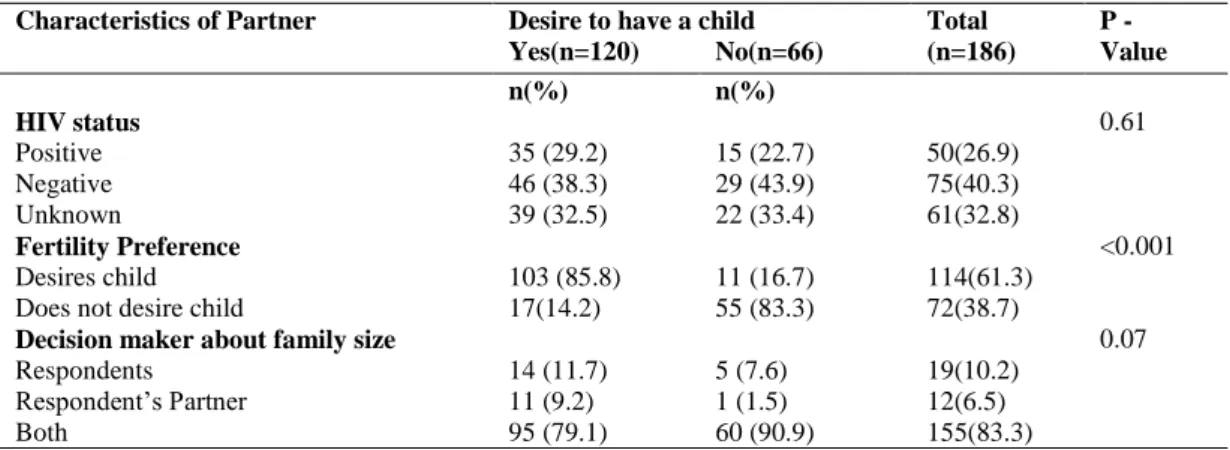
Table 3: Partner Characteristics among Women Living with HIV According to Woman’s Desire to have a
Child
Characteristics of Partner Desire to have a child Total P -
Yes(n=120) No(n=66) (n=186) Value
n(%) n(%)
HIV status 0.61
Positive 35 (29.2) 15 (22.7) 50(26.9)
Negative 46 (38.3) 29 (43.9) 75(40.3)
Unknown 39 (32.5) 22 (33.4) 61(32.8)
Fertility Preference <0.001
Desires child 103 (85.8) 11 (16.7) 114(61.3) Does not desire child 17(14.2) 55 (83.3) 72(38.7)
Decision maker about family size 0.07
Respondents 14 (11.7) 5 (7.6) 19(10.2) Respondent’s Partner 11 (9.2) 1 (1.5) 12(6.5)
Both 95 (79.1) 60 (90.9) 155(83.3)
Table 4: Bivariate and Multivariate Analysis of Factors Associated with Fertility Preference among
Women Living with HIV
Factor Crude OR Adjusted OR
OR 95% CI AOR 95%CI
Age Group
< 40 years Ref 1.00
> 40 years 0.15 0.08, 0.28 0.25 0.06, 1.00 Marital Status
Married Ref 1.00
Single without a Partner 0.79 0.38, 1.63 Single with a Partner 8.05 1.01, 63.53 Divorced/Separated 0.55 0.25, 1.21
Cohabiting 2.12 0.80, 5.63 0.72 0.14, 3.83
Widow 0.55 0.28, 1.11
Religion
Moslem 2.13 1.05, 4.33 Traditional/Spiritualist 0.19 0.02, 1.76
Parity
1 Ref 1.00
2 0.20 0.07, 0.54 0.28 0.03, 2.98
3 0.12 0.04, 0.35 0.16 0.01, 1.81
>3 0.03 0.01, 0.08 0.07 0.01, 0.78
Level of monthly income
< GHȼ100 Ref
> GHȼ100 1.71 1.00, 2.94
Regular menses
Yes Ref 1.00
No 0.25 0.14, 0.48 0.52 0.14, 1.94
Ever given birth
Yes Ref
No 7.96 1.82, 34.73
Partner’s fertility preference
Desires children Ref 1.00
Does not desire child 0.03 0.01, 0.08 0.06 0.02, 0.18 HIV status affect fertility desire
Yes Ref 1.00
No 1.88 1.10, 3.21 4.37 1.28, 14.95
PMTCT affect fertility desire
Yes Ref 1.00
No 0.19 0.09, 0.42 0.27 0.07, 1.08
known HIV partner status were in a discordant relationship. Most of the partners of the respondents desire to have a child. Eighty-three percent (83%) of the respondents made decisions about family size with their partners. (Table 3)
HIV status, knowledge of PMTCT, disclosure of status to partner, stigma and discrimination
Seventy-five percent (75%) of the respondents said their HIV status did not affect their desire to have a child. Among those who desire to have a child, 80% reported their HIV status did not affect their desire to have a child (p = 0.02). Eighty two percent (82%) of the respondents had knowledge about PMTCT; 24% of these respondents stated that it affected their fertility preference. Among those who desire to have a child, one-third noted that their knowledge of PMTCT affected their fertility preference (p<0.001). Fifteen percent (15%) of the respondents have not disclosed their status to their partners. Among those who desire to have a child 81.7% had disclosed their status to their partners. About 91% of those who do not desire to have a child had disclosed their status to their partners (p = 0.10). Few of the respondents (5%) had experienced external stigma and discrimination from their relatives and neighbours
because most people were not aware of their HIV status, and among those that desire to a have a child, 5.2% had experienced stigma and discrimination (p = 0.89). (data not shown).
Predictors of fertility preference
Age was a predictor of fertility preference (AOR 0.25; 95% CI: 0.06- 1.00) with women under 40 years more likely to desire to have a child. Women with higher parity (> 3 children) were less likely to desire to have a child (AOR 0.07; 95% CI: 0.01-0.78). Partner fertility preference was also a predictor of the desire to have a child (AOR 0.06; 95% CI: 0.02-0.18) compared to those whose partner’s did not desire to have a child were less likely to desire to have a child. Women who said their HIV status did not affect their fertility preferences were more likely to desire to have a child (AOR 4.37; 95% CI: 1.28-14.95). (Table 4)
Services provided to women living with HIV on fertility preferences
Discussion
Our study revealed that the predictors of fertility preference among women living with HIV were age (> 40 years), parity (>3), partner preference and those that responded that their HIV status affected their fertility preference. Women who were 40 years and above were less likely to desire to have a child, those with more than 3 children were less likely to desire to have a child, women with partner’s who did not desire to have a child were less likely to desire to have a child and women who said their HIV status did not affect their fertility preferences were more likely to desire to have a child.
Women in reproductive age are expected to have children, and it is more likely for younger women to desire children than the older ones. The older women could have completed childbearing. This was similar to findings from studies in Papua New Guinea4 and other countries6-8,10,16. Women are advised not to give birth with advancing maternal age in view of the obstetric complications associated with advanced age17-19. In Ghana the HIV prevalence in 15-19 year old was 1.9 and this has clinical implications as the younger groups are being infected20.
Women living with HIV desire to have a child with or without a partner in the Kumasi Metropolitan Area. Marital status was not a predictor of desire to have a child. Some of the women said because of their HIV status, their partners have deserted them, and others were afraid to get into a relationship. Some of the respondents were not sure whether men would accept them should they disclose their status to them. About a third of those who desire to have a child do not currently have a partner.
Children are important in the African setting, and most women would desire to have a child. In our study, women with no children were more likely to desire to have a child while those who had more than three children were less likely to desire a child. This was confirmed by other studies in Papua New Guinea and Canada4,8.The ideal number of children desired was one (38.9%) or two (41.9%). The sex of the child did not matter for most of the respondents who desired to have a child.
Women with partners who do not desire a child were less likely to want a child; partner’s fertility preference is therefore important in the desire for a child. This was similar to findings from other studies4,7. Sixty-two percent (62%) of the respondents had a partner. About 83% of those with partners reported that decision-making about family size was made by both the women and their partners; 6.5% by their partners only and 10.2% by the women only. When counselling women on fertility preferences it is important to consider their partner’s preference and if possible couple counselling could be done if the woman has disclosed her HIV status to the partner. About 15% of the respondents with partners had not disclosed their status to their partners. This was, however, not significant; but it is worth considering since it can influence the partner’s desire for a child. Forty percent (40%) of those in a relationship were in a sero-discordant relationship and of these, 61.3% desire to have a child. This may call for counselling and proper adherence to treatment to prevent the transmission of the infection to the partner. Women living with HIV in sero-discordant relationships could use the condom when they are not in their fertile period.
Women who reported that their HIV status did not affect their fertility preference were more likely to desire to have a child. This shows that some women have been able to accept the infection as a chronic infection and have gained enough knowledge to know that the infection does not make them less capable of having children. Most of the respondents had knowledge of the prevention of mother-to-child transmission programme, and about 34% had already benefitted from the programme.
and on antiretroviral treatment. The women attending the clinic may also be compliant clients who adhere to treatment and counselling, and hence caution should be taken in interpreting the results. Additionally, women who were very sick and/or in WHO Clinical Stage IV of the HIV infection were excluded from this study. This is likely to affect assessing the health status and fertility preferences of all women living with HIV in general. Majority of the study population were young (18-39 years) perhaps accounting for the high desire for children reported. These limitations notwithstanding, the findings from this study provide a good source of information for improving the services to women living with HIV. The issue of PMTCT arises with high fertility desires among women living with HIV. In Ghana, Prevention of Mother-to-Child Transmission involves the mother being put on antiretroviral drugs during early pregnancy even if her CD4 count is above 350mm/UL. This may call for a regular, uninterrupted supply of antiretroviral drugs to the mother, and adherence to treatment by the mother to prevent mother-to-child transmission. This study population, however, had little financial support from their extended families, and most of them earned a monthly income of less than GHȼ100 which is far below the minimum wage in Ghana. The attention that is being given to the elimination of stigma and discrimination against people living with HIV/AIDS should be encouraged so that people will appreciate women living with HIV, and families give them the needed support25.
Most of the women living with HIV however did not discuss their fertility preferences with the healthcare providers even though they indicated that the healthcare providers were supportive most of the time. This may call for a new approach in which healthcare providers initiate such discussions with women living with HIV. Women living with HIV might first get pregnant before informing the healthcare providers. If the pregnancy is not reported early, some of the interventions or counselling which are important to prevent transmission of the infection to their partners or the baby might be late.
The predictors of fertility preference are: age, parity, partner preference and HIV status. Most of
the women did not discuss their fertility preferences with healthcare providers. Healthcare providers were most of the times supportive of the fertility preferences of the women. Majority of the women knew of the services that were provided to pregnant women and about a third of them have benefitted from the PMTCT programme.
Conclusion
Healthcare providers could initiate discussion on fertility preferences with women living with HIV especially if they are young and with no child. There may also be the need for increased access, and uninterrupted supply of ARV with increasing services and support for pregnancy planning in all HIV/AIDS clinics. There is however the need for more research in this area in other regions of the country.
Contribution of Authors
AAG, EKN and EOD made substantial contribution to the study’s conception, were involved in drafting all sections of the manuscript and gave final approval of the version to be published. EO made substantial contributions to the conception and interpretation of data and was involved in drafting the manuscript.
Acknowledgements
We thank the Kumasi Metropolitan Health Directorate for their support and technical assistance. We also thank the staff at the HIV/AIDS clinics in the Kumasi South Hospital and the Suntreso Government Hospital. We greatly acknowledge all the respondents who were part of the study.
References
1. UNAIDS. UNAIDS World AIDS Day Report. Geneva, Switzerland 2011.
2. Ghana Country AIDS Progress Report. Reporting Period January 2010 – December 2011. Available at: <URL http://www.unaids.org/en/.../countryprogressreports/2 012countries/ce_GH_Narrative_Report[1].pdf> [Accessed 19 November 2012]). 2012.
Reproductive Intentions and Choices among HIV – Infected Individuals in Cape Town, South Africa; lessons for reproductive policy and service provision from a qualitative study. Policy Brief, 2005. Available at: <URL:http://www.popcouncil.org/pdf/Repro_ intentions_PolicyBrief.pdf> [Accessed 26 October 2011].2005.
4. Aska M, Chompikul J, Keiwkarnka B. Determinants of fertility desires among HIV positive women living in the Western Highlands Province of Papua New Guinea. World Journal of AIDS. 2011;1(4):198-207. 5. Kirshenbaum S, Hirky A, Correale J, Goldstein R,
Rotheram-Borus M, Johnson M, Ehrhardt AA. "Throwing the dice": Pregnancy decision-making among HIV-positive women in four U.S. cities. Perspectives on Sexual and Reproductive Health. 2004;36(3):106-13.
6. Craft S, Delaney R, Bautista D, Serovich J. Pregnancy decisions among women with HIV. AIDS Behav. 2007;11(6):927-35.
7. Nóbrega A, Oliveira F, Galvão M, Mota R, Barbosa R, Dourado I,Kendall C, Kerr-Pontes LR. Desire for a child among women living with HIV/AIDS in Northeast Brazil. AIDS Patient Care STDS. 2007 Apr. 2007;21(4):261-7.
8. Loutfy MR HT, Mohammed SS, Su D, Ralph ED. Fertility Desires and Intentions of HIV-Positive Women of Reproductive Age in Ontario, Canada: A Cross-Sectional Study. PLoS ONE. 2009;4(12). 9. Chen JL, Phillips KA, Kanouse DE, Collins RL, Miu A.
Fertility desires and intentions of HIV-positive men and women. Family Planning Perspectives. 2001;33(4):144-52 & 65.
10. Heard I, Sitta R, Lert F. Reproductiv choice in men and women living with HIV: evidence from a large representative sample of outpatients attending French hospitals (ANRS-EN12-VESPA Study). AIDS. 2007;Suppl 1:S77-82. 11. Convention on the Elimination of all Forms of Discrimination against Women (CEDAW), 1979. Article 16: Marriage and Family Life.
12. Ghana Statistical Service. 2010 Population and Housing Census: Preliminary Report. Accra, Ghana 2012. 13. "Minimum Wage Now GH4.48-ModernGhana.com.
www.modernghana.com/.../minimum-wage-now-gh4...Retrieved 2013-10-18
14. Hosmer DJ, Lemeshow S. Applied Logistic Regression. 2nd ed2000.
15.Sun G-W, Shook T, Kay G. Inappropriate Use of Bivariable Analysis to Screen risk factors for use in Multivariable Analysis. J Clin Epidemiology. 1996;49(8):907-16.
16. Stanwood N, Cohn S, Heiser J, Pugliese M. Contraception and fertility plans in a cohort of HIV-positive women in care. Contraception. 2007;75(4):294-8.
17. National Population Policy (revised) 1994. Government of Ghana. Available at:<URL www.npc.gov.gh/assets/ NationalPopulationPolicyataGlance.pdf>.[Accessed 26 October 2011].
18. Jolly M, Sebire N, Harris J, Robinson S, Regan L. The risks associated with pregnancy aged 35 years and older. Human Reproduction. 2000; 15(2); 2433-2437. 19. Cleary-Goldman J, Malone FD, Vidaver J, Ball RH,
Nyberg DA, Comstock CH, Saade GR, Eddleman KA, Klugman S, Dugoff L, Timor-Tritsch IE, Craigo SD, Carr SR, Wolfe HM, Bianchi DW,and Mary D’Alton M. Impact of Maternal Age on Obstetric Outcome. The American College of Obstetricians and Gynecologists 2005; 105 (5); 983-990.
20. Ghana Health Service, NACP. 2011 HIV Sentinel Survey Report. Accra, Ghana: National AIDS/STI Control Programme, Ghana Health Service, Ministry of Health, Accra, Ghana, 2012.
21. Oladapo O, Daniel O, Odusoga O, Ayoola-Sotubo O. Desires and intention of HIV-positive patients at a suburban specialist centre, Sagamu, Ogun State, Nigeria. Journal National Medical Assoc. 2005;97:672-1681.
22. Finocchario-Kessler S, Sweat M, Dariotis J, Trent M, Kerrigan D, Keller J, Anderson JR. Understanding high fertility desires and intentions among a sample of urban women living with HIV in the United States. AIDS Behav. 2010 Oct, 2010;14(5):1106-14.
23. Kaida A, Laher F, Strathdee AS, Money D, Janssen AP, Hogg SR, Glenda G. Contraceptive Use and Method Preference among Women in Soweto, South Africa: The Influence of Expanding Access to HIV care and Treatment Services. PloS ONE. 2010;5(11).
24. Tamene W FM. Fertility desires and family planning need among HIV-positive men and women on follow up care in Addis Ababa antiretroviral treatment units 2006. Available from: http://www.jhsph.edu/research /.../...HIV/Tamene_addis.pdf2012.
25. UNAIDS/PCB(26)/10.3 Available at: