INVESTIGATION OF NUTRITIONAL BIOMARKERS ASSOCIATED WITH METABOLISM OF INORGANIC ARSENIC AND INFANT BIRTHWEIGHT
Jessica E. Laine
A dissertation submitted to the faculty at the University of North Carolina at Chapel Hill in partial fulfillment of the requirements for the degree of Doctor of Philosophy in the
Department of Epidemiology in the Gillings School of Global Public Health.
Chapel Hill 2017
Approved by:
ABSTRACT
Jessica E. Laine: Investigation of Nutritional Biomarkers Associated with Metabolism of Inorganic Arsenic and Infant Birthweight
(Under the direction of David B. Richardson)
Exposure to inorganic arsenic (As) in utero represents a critical window of susceptibility for iAs associated adverse birth outcomes. Ingested iAs undergoes hepatic methylation
generating mono- and di-methyl arsenicals (MMA and DMA, respectively), a process that facilitates urinary As elimination. Differences in pregnant women’s metabolism of As (e.g. increases in %MMAs and decreases in %DMAs) are a risk factor for adverse birth outcomes. One carbon metabolism (OCM), the nutritionally-regulated pathway essential for supplying methyl groups, plays a role in As metabolism and is understudied during the prenatal period. In this cross-sectional study from the Biomarkers of Exposure to ARsenic (BEAR) pregnancy cohort in Gómez Palacio, Mexico, we assessed the relationships among OCM indicators (e.g. maternal biomarkers of serum B12, folate, and homocysteine (Hcys)), and levels of iAs and its metabolites in maternal urine and in neonatal serum. We also estimated the relationship between OCM indicators, iAs metabolism, and infant birthweight using a causal mediation approach, where we measured the total effect (TE) and the natural direct effects (NDE) of OCM indicators on infant birthweight, and controlled direct effects (CDE) of both OCM indicators and maternal metabolism of iAs on infant birthweight.
To all the women in science that came before me, and to those that will come after me: Let us continue to defy stereotypes, let us continue to overcome marginalization, let us embody respect and equality in our work, research, and life- but, most of all, as Vonnegut said, “Science is magic
ACKNOWLEDGEMENTS
I would like to thank Dr. Rebecca Fry, as she has been the fundamental person in my development into a successful research scientist. She is my primary research advisor and has supported me throughout my doctoral studies. She has installed a drive in me that I never dreamed possible. Rebecca has helped me develop into a highly productive and successful independent scholar and research scientist, and has supported my efforts for numerous publications and scientific communication. She was an integral part of a prestigious award that I received from the National Institute of Environmental Health Sciences, the KC Donnelly Externship Award. Furthermore, because of the innovative work outside of the focus of my dissertation, and under her research umbrella, I have landed a successful
competitive postdoctoral research position at Imperial College London (upon the completion of my degree at UNC). She was an integral part of that process as she encouraged me to apply for the position. I have immense gratitude for her mentorship, unsurpassed dedication to my success, support, and friendship. She embodies attributes of the woman, the scientist, the mentor, and the leader that I hope to be.
I would like to thank Dr. David Richardson, my chair of my thesis work and advisor in Epidemiology. David has been an integral part of this work and has been extremely
supportive throughout my time at UNC. I cannot thank him enough for taking on this project, which encompassed several emails/meetings/and work sessions- all essential to my
very stylish shoes (literally, his awesome cowboy boots) as I continue to strengthen my Epidemiological methods.
I would also like to thank my other committee members: Dr. Amy H. Herring, Dr. Julie L. Daniels, and Dr. Stephen R. Cole. Amy’s support has been incredibly helpful, and her time commitment is unsurpassed. I thank Amy for the weekend emails and for meeting with me several times to aid in my statistical methodology development. Julie has been critical in my development as a student in the Epidemiology department from the beginning. Specifically, she has mentored me in reproductive/perinatal epidemiological methods in course work and outside of class. Additionally, Julie was incredibly helpful in expanding my grant writing skills and in improving the quality of my scientific writing. Steve has been supportive of my efforts to explore the application of Epidemiological methods in several contexts. I owe him a great deal of gratitude for introducing me to several advance methods, and I greatly appreciate his expertise and encouragement. I would also like to thank all collaborators of this work and the University of North Carolina (UNC) Epidemiology and Environmental Engineering and Sciences departments. I am also deeply grateful for the funding I have received that enabled me to pursue this research.
many miles ran, all of my mentors academic and not, current and past, food that fueled me, coffee that gave me consciousness, poetry that scripts my soul, feminist ideologies, my amazing family, and all the outstanding scientists that have come before me!
But most importantly, I thank my mother. You are my heart, my rock, my number one fan, my inspiration, and without you, I would not be the amazing woman that I am. Your support is what has been the voice in my head and the beat of my determined heart. I walk in your shoes, in your shadow, and side-by-side holding your hand. To you I am forever
TABLE OF CONTENTS
LIST OF TABLES ... xiii
LIST OF ABBREVIATIONS ... xvi
CHAPTER I: SPECIFIC AIMS ... 1
Aim 1 ... 3
Aim 2a ... 4
Aim 2b ... 4
Aim 3 ... 5
CHAPTER II: OVERALL SIGNIFICANCE ... 6
Prenatal exposure to environmental contaminants, a global public health problem ... 6
CHAPTER III: BACKGROUND ... 8
Birthweight, an important perinatal outcome ... 8
Sources of exposure to inorganic arsenic... 11
Properties of inorganic arsenic ... 15
Prenatal exposure to iAs ... 16
Exposure to iAs and later in life diseases ... 21
Metabolism of iAs and disease ... 24
Factors that influence metabolism of inorganic arsenic ... 25
Nutrient status has the ability to modify iAs diseases and metabolism of iAs ... 27
Current efforts in preventing exposure to iAs and altering metabolism
of iAs ... 34
Application of mediation analysis ... 37
Overall study design and methods ... 40
Source of iAs in the study area ... 40
Study population ... 41
Previous findings in the BEAR cohort ... 44
REFERENCES ... 47
CHAPTER IV: MATERNAL ONE CARBON METABOLISM AND ARSENIC METHYLATION IN A PREGNANCY COHORT IN MEXICO ... 64
Overview ... 64
Introduction ... 65
Materials and methods ... 67
Cohort selection ... 67
Determination of exposure to iAs ... 68
Determination of one-carbon metabolism indicators ... 69
Statistical analyses ... 70
Results ... 72
Demographic characteristics ... 72
Exposure to iAs ... 72
One carbon metabolism indicators ... 73
Relationship among OCM indicators and the methylated iAs arsenicals ... 74
Discussion ... 76
CHAPTER V: MATERNAL FOLATE LEVELS MODIFY THE RELATIONSHIP BETWEEN MATERNAL B12 LEVELS AND INTERACTIONS WITH MATERNAL ARSENIC METABOLISM ON
INFANT BIRTHWEIGHT. ... 94
Overview ... 94
Introduction ... 95
Materials and methods ... 98
Study population ... 98
Determination of exposure to iAs ... 99
Determination of OCM indicators ... 99
Statistical analyses of the relationship of one carbon metabolism indicators with birthweight z-score ... 100
Mediation analysis ... 101
Results ... 104
Discussion ... 108
REFERENCES ... 126
CHAPTER VI: LOW LEVELS OF EXPOSURE TO INORGANIC ARSENIC IN DRINKING WATER MAY MODIFY THE RELATIONSHIP BETWEEN MATERNAL SERUM LEVELS OF HOMOCYSTEINE, AND INFANT BIRTHWEIGHT. ... 129
Overview ... 129
Introduction ... 130
Materials and methods ... 132
Study population ... 132
Assessing the levels of inorganic arsenic in drinking water ... 133
Determination of inorganic arsenic metabolism ... 134
Statistical analyses of the relationship of the drinking water levels of inorganic arsenic (iAs) to metabolism of iAs and one carbon
metabolism indicators. ... 135
Mediation methods ... 135
Results ... 138
Discussion ... 141
REFERENCES ... 157
CHAPTER VII: CONCLUSIONS ... 160
Major findings of Chapter IV ... 161
Limitations of Chapter IV ... 165
Strengths of Chapter IV ... 168
Future directions related to Chapter IV ... 170
Major findings of Chapter V ... 173
Limitations of Chapter V ... 177
Strengths of Chapter V ... 182
Future directions related to Chapter V... 184
Major findings of Chapter VI ... 188
Limitations of Chapter VI ... 190
Strengths of Chapter VI ... 191
Future directions related to Chapter VI ... 191
Overall conclusions Chapters IV, V, VI ... 192
LIST OF TABLES
Table 4.1. Selected demographic characteristics of participants of the
Biomarkers of Exposure to ARsenic (BEAR). ... 82 Table 4.2. Levels of arsenicals and one carbon metabolism indicators from
participants+ of the Biomarkers of Exposure to ARsenic (BEAR) cohort. ... 83 Table 4.3. Spearman rank correlation coefficients (rs) for the levels of in
organic arsenic (iAs) in drinking water, maternal urinary arsenicals, and
neonatal serum arsenicals. ... 84 Table 4.4. Levels of one carbon metabolism indicators by nutritional
categories of carbon metabolism indicators from participants of the
Biomarkers of Exposure to ARsenic (BEAR) cohort. ... 85 Table 4.5. Spearman rank correlation coefficients (rs) for the nutritional
biomarkers (B12, folate, and homocysteine) and exposure indicators of iAs in
the BEAR cohort. ... 86 Table 4.6. Levels of arsenicals by nutritional categories of one carbon
metabolism indicators from participants of the Biomarkers of Exposure to
ARsenic (BEAR) cohort. ... 88 Table 4.7. Multivariableτ relationship of arsenicals and one-carbon
metabolism indicators from participants of the Biomarkers of Exposure to
ARsenic (BEAR) cohort. ... 89 Table 5.1. Coding of variables used for mediation models to estimate the
relationships between one carbon metabolism indicators, arsenicals, and infant
birthweight. ... 115 Table 5.2. Selected demographic characteristics, levels of arsenicals, and one
carbon metabolism indicators of participants of the Biomarkers of Exposure to
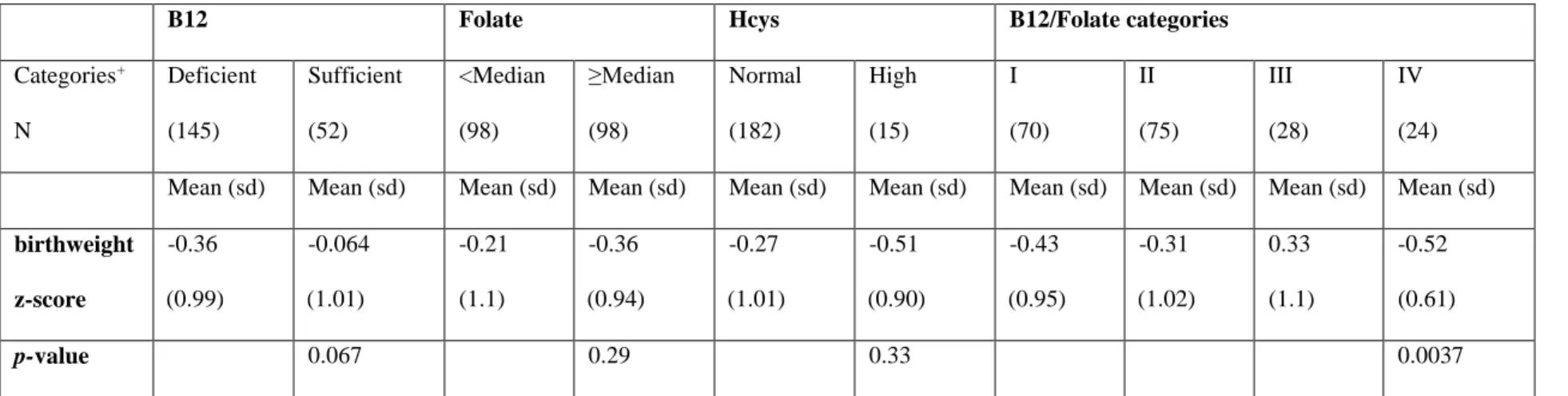
Arsenic (BEAR). ... 116 Table 5.3. Mean birth weight-for-gestational age z-score by categories of
maternal serum one carbon metabolism indicators (OCM indicators). ... 118 Table 5.4. Multivariable# linear regression models testing relationships
between each individual OCM indicators and birthweight z-score. ... 119 Table 5.5. Multivariable# linear regression to determine effect measure
modification of B12 to birth weight-for-gestational age z-score by categories
Table 5.6. Mediation analysis of Model 1#, to estimate the relationship between B12 deficiency with and without interaction between the potential mediators of maternal iAs metabolism and B12 (iAs, MMAs,
%U-DMAs) on infant birthweight z-scores. ... 121 Table 5.7. Mediation analysis of Model 2#, to estimate the relationship
between folate levels with and without interaction between the potential mediators of maternal iAs metabolism and folate (iAs, MMAs,
%U-DMAs) on infant birthweight z-scores. ... 122 Table 5.8. Mediation analysis of Model 3#, to estimate the relationship
between Homocysteine (Hcys) status (higher vs. normal) with and without interaction between the potential mediators of maternal iAs metabolism and
Hcys (%U-iAs, %U-MMAs, %U-DMAs) on infant birthweight z-scores. ... 123 Table 5.9. Mediation analysis to model the effects of B12 deficiency in strata
of above or below the median levels of maternal serum folate, allowing for an interaction between the potential mediators of maternal iAs metabolism and
B12 (%U-iAs, %U-MMAs, %U-DMAs)... 124 Table 5.10. Mediation analysis to model the effects of B12 deficiency in strata
of above or below the median levels of maternal serum folate, without interaction between the potential mediators of maternal iAs metabolism and
B12 (%U-iAs, %U-MMAs, %U-DMAs)... 125 Table 6.1. Coding of variables used for mediation models to estimate the
relationships between one carbon metabolism indicators, arsenicals, and infant
birthweight. ... 147 Table 6.2. Selected demographic characteristics, levels of arsenicals, and one
carbon metabolism indicators of 197 participants of the Biomarkers of
Exposure to Arsenic (BEAR) cohort study from 2011 to 2012. ... 148 Table 6.3. Spearman rank (rs) and mean level comparison of drinking water
inorganic arsenic (iAs) levels to maternal urinary arsenicals and maternal one carbon metabolism indicators (OCM) in the entire Biomarkers of Exposure to Arsenic (BEAR) cohort study and stratified by below or equal to/above the World Health Organization (WHO) recommended guideline for allowable
levels of inorganic arsenic in drinking water (10ppb). ... 150 Table 6.4. Mediation analysis to model the effects of B12 deficiency in strata
of above or below the World Health Organization’s recommended guideline for allowable levels of inorganic arsenic in drinking water (10ppb), allowing for an interaction between the potential mediators of maternal iAs metabolism
Table 6.5. Mediation analysis to model the effects of B12 deficiency in strata of above or below the World Health Organization’s recommended guideline for allowable levels of inorganic arsenic in drinking water (10ppb), without interaction between the potential mediators of maternal iAs metabolism and
B12 (%iAs, %MMAs, %DMAs). ... 152 Table 6.6. Mediation analysis to model the effects of folate in strata of above
or below the World Health Organization’s recommended guideline for allowable levels of inorganic arsenic in drinking water (10ppb), allowing for an interaction between the potential mediators of maternal iAs metabolism
and B12 (%iAs, %MMAs, %DMAs). ... 153 Table 6.7. Mediation analysis to model the effects of folate deficiency in strata
of above or below the World Health Organization’s recommended guideline for allowable levels of inorganic arsenic in drinking water (10ppb), without interaction between the potential mediators of maternal iAs metabolism and
B12 (%U-iAs, %U-MMAs, %U-DMAs)... 154 Table 6.8. Mediation analysis to model the effects of Hcys deficiency in strata
of above or below the World Health Organization’s recommended guideline for allowable levels of inorganic arsenic in drinking water (10ppb), allowing for an interaction between the potential mediators of maternal iAs metabolism
and B12 (%iAs, %MMAs, %DMAs). ... 155 Table 6.9. Mediation analysis to model the effects of Hcys deficiency in strata
of above or below the World Health Organization’s recommended guideline for allowable levels of inorganic arsenic in drinking water (10ppb), without interaction between the potential mediators of maternal iAs metabolism and
LIST OF ABBREVIATIONS
iAs Inorganic Arsenic
WHO World Health Organization
EPA United States Environmental Protection Agency FOAD Fetal Origins of Adult Disease
LBW Low Birthweight
MMAs Monomethylated Arsenicals DMAs Dimethylated Arsenicals
CHAPTER I: SPECIFIC AIMS
Arsenic (iAs) is a toxic metal of particular concern for human health risks is, as it is currently ranked the highest priority toxic agent by the Agency for Toxic Substances and Disease Registry (ATSDR).1 Contamination of drinking water supplies from iAs is a critical global public health problem. Regulation of iAs for drinking water is based only on these levels of iAs in drinking water, where the EPA and WHO standard is set to not exceed 10ppb; however, differences in human metabolism of iAs may play a more significant role in disease etiology than just exposure to iAs alone. Additionally, certain populations may be more significantly impacted by exposure to iAs than others. Poor efficiency in metabolism of iAs has been associated with the development of several adverse health outcomes in humans, including urinary bladder cancer, non-melanoma skin cancers, carotid atherosclerosis, and chromosomal aberrations (as reviewed in 2).
The prenatal period is a critical development window of susceptibility to iAs exposure is during the prenatal period. Prenatal exposure to iAs is associated with adverse birth outcomes and susceptibility to later in life diseases.3 Specifically, prenatal iAs exposure has been associated with lower birth weight, preterm birth, reduced height and head
The inclusion of metabolism efficiency, and in particular in susceptible populations, would be a more informative approach to the assessments of risks and regulation for iAs- and thus prevention of iAs-associated diseases. In addition, metabolism of iAs and toxicity of iAs is influenced by many nutritional factors- where many vitamins are known to be important cofactors in both S-adenosyl methionine (SAM) synthesis and one-carbon metabolism, which play a key role in iAs methylation/biotransformation. Specifically, there is a relationship between folate, vitamins B12 and B6, cysteine and homocysteine choline, betaine, and methionine in the human methylation pathway.6 This has been demonstrated in animal models where suboptimal intake of many vitamins and nutrients that are required for SAM synthesis, including methionine, choline, folate, and vitamin B12, or the knockout of the folate receptor impaired iAs methylation and increased susceptibility to both carcinogenic and non- carcinogenic effects from iAs exposure.7-9 For example, Vitamin B12 plays an integral role in folate-dependent homocysteine metabolism as a rate-limiting co-factor in the conversion of homocysteine to methionine.10 Studies have also suggested that metabolism of iAs can be altered via folate supplementation,11 though this effect is less clear during
pregnancy.12 Additionally, removal of homocysteine is a prerequisite for adequate one-carbon metabolism and iAs methylation because the precursor to homocysteine, S
-adenosylhomocysteine, is a strong feed-back inhibitor of the SAM-dependent methylation reactions, including the methylation of iAs.6 This betaine-mediated remethylation of homocysteine is may be important in individuals with low folate/B12 intake.
The central hypothesis of this research is that nutrients involved in one-carbon
metabolism (B12, folate, cysteine, and homocysteine) influences arsenic metabolism and
metabolism of iAs, as measured by the levels and proportions of monomethylated arsenicals (MMAs) in maternal urine, was associated with significant decreases in birthweight.5
Second, our preliminary data suggest that there are relationships between maternal nutritional biomarkers and iAs metabolism and birthweight.
In this proposed work I aim to investigate factors that may underlie the relationship between prenatal exposure to iAs and metabolism of iAs, maternal nutritional biomarkers, and birthweight in a cross-sectional study with the following three aims:
Aim 1: Examine whether levels of maternal nutritional biomarkers involved in
one carbon metabolism (B12, folate, cysteine, homocysteine) as measured in maternal
serum at delivery are associated with metabolism of arsenic.
Metabolism of arsenic is measured by the percentages of iAs, MMAs, and DMAs, as well as the two methylation steps (i.e., primary methylation, defined as the ratio between MMA and iAs, and secondary methylation step, defined as the ratio between DMA and MMA), in both maternal urine and fetal cord serum measured at delivery. This aim addresses the following hypothesis (Hyp1): Maternal nutritional biomarkers are associated with a woman’s metabolism of arsenic and the biomarkers of potential fetal exposure to arsenic and
it’s metabolites. Specifically, decreased levels of B12 or folate or Cys and increased levels of
homocysteine are associated with a decrease in metabolism of arsenic; specifically, there will
be an decrease in %MMAs and DMAs/MMAs (second methylation step), and an increase in
Aim 2a: Estimate the total effect of maternal nutritional biomarkers involved in
one carbon metabolism (B12, folate, cysteine, homocysteine) as measured in maternal
serum at delivery on infant birthweight.
The total effect is any effect that is operating through the path of maternal nutritional biomarkers involved in one carbon metabolism (B12, folate, cysteine, homocysteine), iAs metabolism, and birthweight.
This aim addresses the hypothesis (Hyp 2a): Maternal nutritional biomarkers are associated with infant birthweight. Specifically, deficiencies in folate, B12, and cysteineare predicted to be associated with decreases in infant birthweight and elevated levels of
homocysteine are predicted to be associated with decreases in infant birthweight.
Aim 2b. Estimate the indirect effect of maternal nutritional biomarkers involved
in one carbon metabolism (B12, folate, cysteine, homocysteine) as measured in maternal
serum at delivery on infant birthweight that operates through iAs metabolism.
The indirect effect is the effect of maternal iAs metabolism arsenic as measured by the percentages of iAs, MMAs, and DMAs, as well as two methylation steps (i.e., primary methylation, defined as the ratio between MMA and iAs, and secondary methylation step, defined as the ratio between DMA and MMA), in maternal urine on infant birthweight. Mediation analysis will be carried out using the Baron-Kenny approach and the mediator will be allowed to vary naturally. This aim addresses the hypothesis (Hyp 2b): The effects of maternal nutritional biomarkers involved in one carbon metabolism (B12, folate, cysteine,
homocysteine) on birthweight operate via the pathway of iAs metabolism that then effects
Aim 3: Investigate the total and indirect effects of maternal levels of nutritional
biomarkers involved in one carbon metabolism (B12, folate, cysteine, homocysteine) on
infant birthweight by different levels of drinking water iAs.
CHAPTER II: OVERALL SIGNIFICANCE
Prenatal exposure to environmental contaminants, a global public health problem
Disease burdens associated with impaired fetal development, including disabilities, loss of human capital, and deaths (among others) are vastly impactful to many across the globe 13. Underlying several of these burdens are preventable exposures to environmental contaminants. Exposures during the prenatal period are important, as it is a critical and sensitive time period for development. This period of exposure puts infants and children at risk for several adverse health outcomes. In fact, while an estimated 23% of all deaths globally are attributable to environmental factors in adults, this proportion significantly increases among children of 0–14 years of age, where the proportion of deaths attributable to environmental exposures is 36% 14. Additionally, across the globe the per capita number of healthy life years lost to environmental risk factors is about 5-fold greater in children under 5 years of age than in the total population. Furthermore, estimated perinatal conditions,
including low birth weight, prematurity, birth asphyxia and birth trauma that environmental causes account for is an average of 6% (range of: 2—10%) in developed countries, and an average of 11% (range of 3— 25%) in developing countries 14. Importantly, many of these and other health impacts associated with prenatal exposures persist into childhood and later into adult life.
cell division, differentiation, and tissue growth. Prenatal exposure to environmental toxicants is associated with several adverse reproductive, pregnancy, and birth outcomes as well as later in life diseases. Susceptibility to later in life diseases from prenatal exposures is a theory that was put forth by Barker termed, “fetal origins of adult disease” (FOAD) 15. The basis behind this theory is that there are specific developmental periods whereby an organism is “plastic” or “sensitive” to its environment and exposures can alter fetal programming- meaning when a stimuli or exposure occurs during early development, this may lead to permanent changes that persist throughout life 15. One toxicant of particular concern for adverse birth, early life outcomes, and FOAD is iAs. The impacts of iAs on infant birth weight and FOAD are just beginning to be unraveled. Interestingly, as it relates to the research questions here, FOAD as a theory was originally founded based on the perinatal outcome of infant birthweight- a measurement that is still highly relevant and of great public health concern today.
The proposed work here is significant in that it addresses the highly toxic and
CHAPTER III: BACKGROUND Birthweight, an important perinatal outcome
Birthweight, an easily measurable health outcome, is simply the weight of an infant at birth. Specifically, infants’ weights are measured within the first hour of birth, to avoid any amount of postnatal loss of weight. On a population scale, the distribution of birthweights follow an almost normal frequency distribution with an extended lower tail 16.
Several terms are used to classify different categories and health descriptors of an infant’s birthweight. An infant is classified as being born “low birthweight” (LBW) if it weighs 2500 grams or less, regardless of gestational age. LBW is further categorized based on gestational ages, where both “premature” or “preterm LBW” are terms to describe infants who weigh less than 2500 grams and are born before the completion of 37 weeks of
gestation; “term LBW” is used to describe those that weigh less than 2500 grams and are born between 37 and 42 complete weeks of gestation; “postterm LBW”, are those infants that weigh less than 2500 grams and are born after the completion of 42 weeks of gestation 17. Two other descriptors used for infants’ weight for both clinical and non-clinical purposes are, “small-for-gestational-age” (SGA) and “large-for-gestational-age” (LGA). These are
statistical calculations based on a standard curve for the weight of infants by weeks of
the condition of high mortality of LBW babies who are born at term and is based on any etiology that limits the potential for intra-uterine growth of the fetus that results in low birthweight 16.
The rate for LBW in the US is 8% of all live births 18. Being born at a sub-optimal birthweight has many health consequences, starting at birth, through childhood, and later into adulthood 19. It has been suggested that LBW in itself may not be a cause of poorer health outcomes, instead abnormal birthweight may actually be an indication of abnormal fetal growth due to an underlying problem 16. Additionally, the relationship between birthweight an infant mortality is non-linear, in that there is an increase in risk for mortality at both lower and higher birthweights; this shape varies little among populations 17. The lowest mortality of birthweight occurs at a weight just above the mean birthweight, a finding consistent across all known populations 20. The relationship between birthweight and infant mortality should be interpreted with caution, for even though birthweight is highly predictive of infant
mortality, it isn’t necessarily deterministic of neonatal survival- as there are many paradoxes with this association 21.
Majority of perinatal studies focus on the association between LBW, SGA, and smaller babies, however, those with normal birthweights, and LGA may still be at risk for adverse health outcomes in early life and for FOAD 26-29. For example, infants who are born bigger or LGA have an increase risk for diseases, including obesity and insulin resistance. This is likely based on changes in maternal behavior where LGA children are less likely to receive breast milk and may exhibit more weight gain in the first 6 months of life compared to those who were not LGA 30, 31. Additionally, there may be exposure-specific biological mechanisms, for example disruption of molecular pathways that may regulate factors related to weight. Therefore, it is important to recognize this U-shaped relationship with both high birthweight and low birthweight for risks for later in life diseases.
Not only is birthweight an important outcome for public health purposes, it is also a widely available variable in reproductive/perinatal epidemiological studies as it is
consistently recorded and measured well. The most direct measurement of this variable on a population level is to examine the entire distribution of birthweight, rather than classifying it into LBW, SGA, or LGA 16.
Up to 40% of fetal growth is influenced by genetic factors, and the remaining is thought to be due to environmental exposures 17. Specifically, genetic and hereditary factors underlying neonatal growth include maternal and paternal birthweight, the sex of the infant, chromosomal anomalies, and alterations in the regulators of gene expression (i.e.
cardiorespiratory disease and other disorders that involve hypoxemia, genitourinary
anomalies, autoimmune diseases and inherited or acquired thrombophilia, obstetrical history, gestational hypertension and diabetes, pregnancy weight gain, parity and time in between births, placental abnormalities, vaginal bleeding, increased α-fetoprotein, anemia, infections, fetal congenital anomalies, prenatal care, maternal stress, including work and psychosocial stress, maternal nutrition and the placenta’s ability to supply nutrients, (amino acids, glucose, fat, oxygen, and growth-stimulating hormones) maternal and second hand smoking, alcohol consumption, caffeine consumption, maternal and paternal drug consumption, and
environmental toxicants (as reviewed in 17).
Clearly there are several known associations between environmental exposures and an infant’s weight at birth, yet many of these remain generalities and there is much still unknown about specific mechanisms, ways to prevent extremes in infant birthweights, as well as FOAD associated with alterations in infant growth. Additionally, the role of
environmental toxicants in the etiology of these health outcomes is still an area of research that is in need of further investigation. One toxicant of particular concern for adverse birth outcomes, and in particular neonatal growth is exposure to iAs, as in utero exposure has been associated with reduced growth, and several other adverse health outcomes, discussed in detail below.
Sources of exposure to inorganic arsenic
iAs mobilization 32. In addition to natural sources of iAs, human activity can introduce iAs into the environment from both commercial and industrial uses, with contamination from mining and smelting for the production and use of transistors, lasers and semiconductors, processing of glass, pigments, textiles, paper, metal adhesives, wood preservatives, coal, pesticides, feed additives, and pharmaceuticals 33.
People are exposed to iAs through a multitude of ways, including via ingestion from contaminated drinking water, using iAs-contaminated water in food preparation and bathing, and through the consumption of food sources irrigated with iAs-contaminated water or grown in contaminated soils, and through inhalation from smoking and occupational exposures. However, drinking iAs-contaminated water is the primary source of exposure to iAs for most individuals, where it is estimated that more than 200 million people are exposed to elevated levels of iAs from drinking water worldwide. In particular, iAs contaminated drinking water has been observed globally in China, including Taiwan, Bangladesh, Japan, Korea, Iran, India, Chile, Argentina, Mexico, Europe, and in the US 4.
The levels of iAs allowed in drinking water that are acceptable and enforced by regulatory agencies vary by region. The WHO and Australia, have a set guideline level of 10 μg/L for iAs in drinking water and the U.S. Environmental Protection Agency’s (EPA) maximum contaminant level (MCL) is 10 μg/L. However, in many countries (e.g.
Bangladesh) 50 μg/L is still the commonly adopted guideline, and in Mexico the MCL is set at 25 μg/L. It has been suggested that these differences in regulation may primarily be due to the difficulties in remediating iAs below the designated MCLs 33.
contaminated drinking water is in Bangladesh. When exposure in this region was first studied up to 94% of tube wells in certain regions and 35% of all wells in the country contained > 50 µg/L iAs 34. A recent review has highlighted the levels of iAs in drinking water samples across populations globally, where the levels in Argentina range from less than 10 µg/L up to 7,550 50 µg/L, in Chile 600 to 800 µg/L, in China less than 50µg/L to 4,400 µg/L, in Ghana < 2 µg/L to 175 µg/L, in India < 10 µg/L to >800 µg/L, and in Taiwan < 1 µg/L to 3,000 µg/L 4.
While the U.S. has adopted the WHO’s standard for municipally supplied water, there are still several areas in the U.S. that have exposure to iAs in drinking water through
Carolina 1,436 had iAs concentrations greater than the MCL, and a maximum level of 806 µg/L was found 42.
While drinking water is the primary source of exposure for iAs there can be exposure to both organic and inorganic forms of arsenic from food sources. These sources include fish, shellfish, meat, poultry, dairy products, and cereals- notably, arsenic in seafood is mainly in the form of the organic arsenic, a less toxic organic form 33. While majority of food exposure form iAs is thought to be low, a recent report on iAs in foods from the European Food Safety Agency (EFSA) identified rice, seafood, algae, wheat bread and rolls, and bottled water as the top food sources that contributed most to the intake of iAs by the European population (outside of drinking contaminated iAs water) 43. The daily dietary exposures were within the range of reference values, however the authors concluded that the possibility of increased exposure to iAs from food can not be excluded 43.
Properties of inorganic arsenic
The chemical properties and forms of arsenic are important in terms of biological fate of arsenic, and are essential for assessing associated risks in human populations. Arsenic has four oxidation states: +5, +3, 0, and −3, represented by arsenate, arsenite, elemental arsenic, and arsine, respectively. In living organisms arsenic is found mostly in the pentavalent (+5) and trivalent oxidation (+3/-3) states.
In considering arsenic exposure from water sources (e.g. natural ground water) arsenic is typically present in inorganic forms (iAs3 + and/or iAs5 +). Organic forms of arsenic are rare in water because they are a result of biological activity; however, organic arsenic is found in seafood, with arsenobetaine and different arsenosugars being the most common forms.
iAs can exist in either the trivalent form (iAs3 +) or pentavalent states (iAs5 +). iAs3 + is generally considered to be more toxic than iAs5 + based on its biological availability, as well as physiological and due to its increased toxicological effects 50, 51. IAs5 + is rapidly reduced to iAs3 + when ingested and will exert toxicity to similar endpoints, however it has different toxicokinetics 51. iAs3 + is considered about 60 times more toxic than the iAs5 +, because arsenite’s ability to react with sulfydryl groups, whereas arsenate does not have this reaction in humans 52.
Once iAs is ingested by humans, it is metabolized in the body to produce
metabolism of iAs is thought to take place in the liver, however, there is increasing evidence that the microbiome in the gut may play an important role in metabolism and impact
absorption/excretion of iAs (60,86).
In humans the average half-life iAs in the body is about 10 days (79,80). Several different biomarkers are used to assess exposure to iAs. Specifically, in some studies, iAs concentrations are measured in urine, 54 blood, 55 and toenail samples 56. Urinary iAs is used most often as a biomarker of exposure and is considered to be a reliable short-term measure of iAs exposure that remains consistent in adults, even during periods of pregnancy. In terms of metabolism of iAs, studies that have examined multiple biomarkers suggest strong a correlation between metabolites excreted and retained in the same individuals, with positive correlations between blood and urine metabolites as well as iAs measurements in hair and nail samples 57.
iAs has many toxicological properties. It is genotoxic and has multiple effects on cellular signaling, cellular proliferation, DNA structure, epigenetic regulation, and apoptosis 58-60. These properties can be set even before birth from prenatal iAs exposure.
Prenatal exposure to iAs
with adverse neurological outcomes 66, 67, increased cardiovascular disease, pulmonary diseases, susceptibility to infection, including inflammation and infectious disease, and later in life cancers (as reviewed in4).
Neurological impairments observed in children from prenatal and early life iAs exposure include a decrease in motor function 66, impairments in verbal and full-scale IQ in girls, 68 and cognitive impairments in children at 6 and 10 years of age 67; these impairments may persist into adulthood and lead to a vast array of neurological based FOAD.
Cardiovascular impacts from prenatal iAs exposure have also been identified. A retrospective study of Chilean adults who were exposed to high levels of iAs prenatally and as very young children had a high standardized mortality ratio (SMR) from acute myocardial infarction compared to those who were not exposed to iAs 69. Another study found an
increase in blood pressure (both systolic and diastolic) at 4.5 years of age, with increases in iAs exposure, measured by maternal urinary markers 70. The authors suggest that these changes, if sustained, may be damaging and long-term, particularly in genetically susceptible populations 70.
in the lungs of children has been observed from exposure to iAs in utero and from early life exposure 74.
Exposure to iAs during pregnancy and childhood is also associated with increased incidence and mortality from various cancers both during childhood and later in life 69, 72, 73, 75. One study found that childhood liver cancers were 9–14 times higher for those exposed to iAs as young children as compared with those who were not exposed 75. The same trend was observed for childhood liver cancer, where SMRs were 14.1 times higher for individuals exposed to iAs in utero and during childhood as compared with individuals exposed to iAs during other periods of their lives 71- indicating that the prenatal period is a sensitive time for the development of liver cancer.
There is also evidence that exposure to iAs in utero is associated with an increase in inflammation, risk for infection, immune dysfunction and diseases associated with these. Altered immune-related health outcomes, including an increased risk for lower respiratory infections and diarrhea has been observed in infants and children from prenatal iAs
exposure76. Changes in immune-related gene expression and cytokine production in lymphocytes have also been observed in infants exposed to iAs 77, 78. Additionally, studies have indicated that prenatal iAs exposure induces an inflammatory response where reduced numbers of T cells as well as altered cytokine profiles from cord blood were identified 63 as have changes to the number of specific CD4 + T cell populations present in cord blood, increased cord blood T cell proliferation, and greater IL1β expression in the placenta- indicating that this could potentially lead to immune dysregulation in the infant 79.
thymic function in infants, which is linked to reduced immune function in children and adults 80.
In addition to the detrimental health consequences observed in children and adults from exposure to iAs during the prenatal period, several adverse perinatal, pregnancy outcomes, and birth outcomes have been observed 3. Perinatal and birth outcomes of increased infant mortality, increased spontaneous abortion and stillbirth, gestational age, preterm birth 81-83, as well as changes in fetal growth factors, including birthweight 5, 84-87 and height and head circumference have been associated with in utero iAs exposure 86. A recent meta-analysis examined iAs exposure and the risk of spontaneous abortion, stillbirth, preterm delivery, birthweight, and neonatal/infant mortality 88. The authors of this study concluded that there was an excess risk of 102% for spontaneous abortion, 84% for stillbirth, 51% for neonatal mortality, 35% for infant mortality, and a 53-g reduction in birthweight from prenatal iAs exposure 88.
of maternal-child pairs from Tokyo who had low iAs exposure 93. Other fetal growth
implications have been suggested from iAs exposure where there was a negative association between iAs exposure and Ponderal Index in children that were overweight/obese and this thought to be driven by longer birth length in boys, but by lower birthweight in girls- to which the authors suggest this potential mechanistic differences in adiposity at birth could influence later growth trajectories 86. Their findings are also supported by a study of mother-infant pairs where prenatal exposure to iAs was associated with an inverse relationship between children’s weight, height, and growth velocity at age 5 94.
The exact mechanism by which iAs might lead to fetal growth is largely unknown, however a few studies have suggested some potential mechanisms. iAs increases oxidative stress 95 and inflammatory processes 63, 64, and given that these factors are associated with growth restriction 86, this could be a potential underlying mechanism. iAs-associated
alterations in fetal growth could also have molecular underpinnings, either through epigenetic modification, 96 and/or altered transcription 97. One study found increased expression of the iAs transporter AQP9 in placental tissue, and the authors suggests that this could cause a decrease expression of the adipose tissue-derived ENPP2, 98 a gene that regulates adipose tissue growth 99. In addition, iAs could influence fetal growth through other mechanisms such as endocrine disruption 100. Furthermore, iAs exposure may worsen factors during pregnancy that can contribute to low birthweight, including gestational age and maternal health 101. For instance, prenatal iAs exposure is linked to increases in both nausea and vomiting, 84 which this may influence maternal weight gain during pregnancy 101 and
equation modeling that prenatal iAs exposure was associated with decreased birthweight in a dose-dependent manner, and the effect was mediated by both gestational and maternal weight gain during pregnancy- with greatest effect being gestational age 87. Additionally, differences in metabolism may contribute to the underlying mechanism of iAs associated fetal growth patterns, as previous work from our lab found that maternal metabolism of iAs was
associated with alterations in fetal growth and pregnancy outcomes. Specifically, maternal urinary MMAs were negatively associated with birthweight and gestational age, and iAs was negatively associated with birth length and gestational age 5.
In addition to these many early life adverse health outcomes, prenatal iAs exposure, as well as exposure throughout life, is also associated with diseases later into adulthood.
Exposure to iAs and later in life diseases
Diseases from iAs exposure are vast, and the disease burdens from exposure may be mostly observed later in life. The International Agency for Research on Cancer (IARC) classifies arsenic as a Group I known human carcinogen. Additionally, several non-cancer effects have been observed from iAs exposure 1, 33, 103. Furthermore, iAs exposure from drinking water has also been associated with an overall high mortality rate 104. In fact, no bodily system is free from potential damage as iAs affects the integumentary, cardiovascular, renal, nervous, hepatic, endocrine, respiratory, immune, endocrine, and hematological
systems 105.
Interestingly, the relationship between iAs and cancer was first identified via epidemiological studies, as animal models were inconclusive for inducing cancer from iAs exposure. Ecological studies in Taiwan have demonstrated that there is an increase in
kidney cancers has also been observed in Argentina and Chile 71, 72, 75. Case-control and cross-sectional studies have also identified an association with exposure to iAs <500 ug/L and cancers, including total and cancer mortality, 107 bladder 108 skin cancer 56, 109, and skin lesions 54, 110. From these and other studies, we now know that the excess cancer risk from lifetime iAs exposure at iAs drinking water concentrations greater than the WHO/U.S. EPA limit of 10 µg/L is approximately 1 in 300. For comparison, this risk is much higher than cancer risks estimates for exposures to other known carcinogens in drinking water at
concentrations equal to current U.S. drinking-water standards 34. The estimated dose response relationship between iAs exposure to cause a 1 % increased risk of lung, skin and bladder cancer is 0.3 and 8 μg/kg bw/day 111.
One of the first clinical manifestations of chronic iAs exposure is cutaneous lesions and alterations of cutaneous texture, thickness, or color of the skin around them and can occur within months or after several years of exposure- even after exposure has ceased. Specific skin diseases from exposure to iAs include, hyperpigmentation (melanosis), hyperkeratosis (keratosis), squamous cell carcinoma in situ (Bowen’s disease), invasive squamous cell carcinoma, and basal cell cancer 4. Epidemiological studies of skin lesions indicate that lesions can occur at levels less than 50 ug/L, however most reports of lesions are from exposure greater than 100 µg/L 112, 113. Even though lesions are one of the main clinical manifestations of exposure, the vast majority of iAs exposed individuals will not develop lesions, but are still at risk of iAs-related skin and internal cancers and other non-cancer diseases 4, 104, 109
endpoints, including neurological disorders, respiratory diseases, immune dysfunction, cardiovascular disorders, and endocrine related disorders.
There are a few studies that have found associations between exposure to iAs and cognitive dysfunction. This includes learning and memory deficits and mood disorders, where exposures to iAs may result in memory loss and emotional instability neurological and cognitive dysfunction114. Specifically, peripheral neuropathy has been observed from those exposed to iAs contaminated ground water in West Bengal, India115. Additionally, long-term exposure, even at low levels has been associated with the development of Alzheimer disease and its associated disorders 116. Also, there have been links to scoring lower on tests of cognitive ability and lower education levels in adults from iAs exposure 117.
Studies have suggested that exposure to iAs has impacts on lung function, acute respiratory tract infections, respiratory symptoms, and non-malignant lung disease mortality- particularly at high levels of exposure, as identified by a recent review and meta analysis that examined associations between iAs and respiratory health118. Specifically, iAs exposure is associated with poorer lung function (particularly forced vital capacity) and increased reports of coughing and breathing problems. For example, in Bangladesh impaired lung function and tuberculosis was observed with both low and moderate exposure to iAs 119 and iAs exposure was associated with chronic cough, blood in the sputum, and other breathing problems120.
pregnancy as a recent study found an increase in blood pressure over the course of pregnancy from concurrent iAs exposure127. Mechanisms that may underlie these iAs-associated
cardiovascular health endpoints are increased inflammation, disruption of lipid metabolism, endothelial dysfunction123, 128.
Additionally, there are several endocrine effects from iAs exposure, this is evident from both animal and epidemiological studies. These include, but are not limited to, effects on the endocrine system via disruptions in hormone regulation via the retinoic acid, thyroid hormone, and estrogen receptors100, 112, 129, 130.
Interestingly, differences in disease susceptibility is attributed to many factors included dosimetry of iAs- where low vs high exposures may have a difference in disease etiology, genetics of the person exposed to iAs, nutrition, as mentioned previously- timing of exposure to iAs-where there is increased susceptibility during critical time periods of growth and development, and differences in metabolism of iAs.
Metabolism of iAs and disease
There has been recent evidence that an individual’s ability to metabolize iAs
efficiently may play a role in the development of many of the diseases discussed previously- in fact this may play a larger role in disease etiology than any other factor. Again, efficient metabolism is one’s ability to convert iAs into MMAs and DMAs and inefficient metabolism is characterized by the proportions of these in various biomarkers and tissues.
For example, differences in methylation of iAs has been associated with the
development of several adverse outcomes in humans including urinary bladder cancer, non-melanoma skin cancers, carotid atherosclerosis, and chromosomal aberrations (reviewed in2).
metabolism), may be more important at lower exposure levels where at higher levels of exposure the risk of developing skin lesions did not depend heavily on the efficiency of the first methylation step131.
Furthermore, pregnancy can be a period where metabolism efficiency of iAs is
particularly important53. Inefficient metabolism of iAs has recently been associated decreases in birth and placental weight5.
Factors that influence metabolism of inorganic arsenic
There are many factors that may influence methylation/metabolism of iAs including, but not limited to, the level of exposure to iAs in drinking water or food, age, gender, pregnancy, nutritional status of folate, homocystein, and protein, creatine, and genotype for arsenic 3 methyltransferase (AS3MT). While many of these associations have been
established, the exact mechanisms remain unclear, and there have been very few replications of these associations across multiple populations. Additionally, even fewer investigations have been focused on the mediation of exposure disease relationships by factors that regulate metabolism of iAs.
independent of fetal genotype for AS3MT136. Perhaps the most strong and intriguing evidence for AS3MT’s role in metabolism of iAs comes from indigenous populations in northern
Chile137 and northern Argentina138 where individuals are exposed to high levels of iAs drinking water, yet even at levels known to impair iAs metabolism have efficient arsenic metabolism139- this is because they have a very functional genotype for AS3MT. Furthermore, a recent study has suggested that there may be differences in AS3MT SNPs for different steps in metabolism, where certain SNPs are more important in the second step of metabolism of iAs as AS3MT binding affinity differs between methylation steps131. While genotype for
AS3MT is important for metabolism of iAs, comparisons across studies indicate that majority of populations do not carry the very functional genotype and therefore most efficiencies in metabolism of iAs would not be observed based on an individual’s genotype136.
The levels of iAs in drinking water also influence the levels of metabolites in urine. It has been suggested, that the ability to methylate MMA to DMA is reduced with increasing exposures- though this is not very clear. These levels of iAs in drinking water may influence the second methylation step. Previous studies have found that this step is inhibited at
increased exposure levels (particularly elevated levels of iAsIII and MMAIII) both in the experimental setting and in human observational studies131. A recent study suggests that metabolism of iAs and the development of disease may depend on drinking water exposure levels where efficiency of the methylation steps of iAs was effected by lower vs higher levels of iAs 131.
It has been suggested that the efficiency of metabolism during pregnancy, may be increased61, 83, 139, however this is unclear and may depend on the levels of exposure to iAs. A recent study found that in the second trimester at high iAs exposures (≥ 50 μg/L),
methylation was inhibited, to which the authors suggested that this could lead to
unmethylated iAs and MMAs in fetus blood plasma, and this could threaten fetal survival and growth131.
Nutrient status has the ability to modify iAs diseases and metabolism of iAs
Diet and nutrition may have a large influence on iAs metabolism and/or
iAs-associated diseases. This is intriguing from a public health perspective in that it may provide a way to mitigate the health effects from iAs exposure.
and betel nut could alter lipid and protein metabolisms, which would increase the toxic impacts from iAs150.
Animal studies of vitamin supplementation have demonstrated that there are
alterations in iAs-associated mechanisms of disease. For example, when rats were exposed to iAs with folic acid (vitamin B9) or vitamin B12, or both folic acid and vitamin B12 there was reduction in oxidative damage, apoptosis, and downstream changes in hepatic
mitochondria151. Additionally, treatment of iAs exposed rats with Ascorbic acid (vitamin C) has shown to improve mitochondrial functions 152. The benefits of vitamin supplementation may also occur during the prenatal period, where supplementation with zinc and vitamins C and E had an impact on the reduction of some of the deleterious effects (cholesterol levels, TBARS levels and catalase activity) from iAs exposure in rats and pups during gestation and lactation153, 154. In addition, increased intakes of pyridoxine (Vitamin B6), thiamin (Vitamin B1), and Vitamins A, C and E could lower the number of skin lesions in individuals from iAs exposure 155. A reduction in risk of iAs-related urothelial carcinoma has been observed with supplementation of Alpha-tocopherol (Vitamin E)156.
There are a few potential ways that vitamins may affect iAs metabolism and toxicity. One is that vitamins as antioxidant can act as free radical to reduce oxidative damage induced by iAs. Also, many vitamins are known to be important cofactors in both S-adenosyl
exposure7-9. For example, Vitamin B12 plays an integral role in folate-dependent
homocysteine metabolism as a rate-limiting co-factor in the conversion of homocysteine to methionine10. More specifics of folate and those co-factors are discussed below.
Folate is a source for the generation of endogenous methionine to add methyl groups in the methylation process- this process of adding a methyl group to many chemical
compounds is involved in hundreds of essential chemical/biological reactions in the body. As is pertinent to iAs exposure and metabolism of iAs this is important for the reduction of iAs to MMAs and DMAs. This methylation process is driven by an enzymatic response by methyltransferases that use S-adenosyl methionine (SAM) as a methyl group donor. Methionine, as a source of methyl group in the methylation cycle, transfers a methyl group but only when it is activated by ATP to form SAM. Folic acid can increase methionine to promote iAs methylation. Notably, iAs may cause a reduction in SAM157. SAM, the methyl donor for As methylation, relies on folate-dependent one-carbon metabolism158. By
increasing methylation of iAs to DMAs, folate aides in the elimination of As in urine, thus this may be an indication of a lower amount of iAs in the body 158. While this process is well understood, there are still many factors that regulate and can alter these biochemical reactions in the body and more in vivo and in vitro experiments, as well as epidemiological studies are needed to further demonstrate the influence of folate and other folate-dependent vitamins on iAs metabolism and toxicity.
Interests in folate’s role in the metabolism of iAs have been a focus of a few
adults exposed to iAs11. Interestingly, the researchers found that after 24 weeks, people taking a 800 µg dose of folic acid, including the ones who switched to placebo halfway through, had an average decline in arsenic levels of 12%, compared with 2% for those taking placebo11. Furthermore, these findings were also strong in people who already had adequate blood levels of folate, where a higher dose of folate lowered the levels of iAs 11. These findings could significantly influence the amelioration of the numerous disease burdens from iAs exposure.
Additionally, many of the other micronutrients essential for one-carbon metabolism and potentially iAs metabolism were not fully measured in these studies. Of course, these measurements and classification of these interactions in human studies remains quite difficult, costly, and require higher volumes of biological samples. In particular, there is a strong interaction between folate, vitamins B12 and B6, choline, betaine, and methionine in the human methylation pathways161, 162 and it has been suggested that the betaine-mediated remethylation of homocysteine may be particularly important in individuals with low folate intake 6. Therefore further classifications of diet and nutrition as it relates to iAs exposure in these and other populations are needed. Homocysteine must be removed because it can act as an inhibitor for this SAM dependent process (via hydrolyzation of SAH). This removal of homocysteine can occur via three ways, the folate-dependent pathway, betaine-dependent pathway, or via transsulfuration. Thus, lower folate and B12 are associated with higher homocysteine and this can cause a decrease in iAs methylation. However, homocysteine can also effect arsenic methylation independently. Previous studies suggest the potential positive association between homocysteine and %MMAs and negative association with %DMAs is likely to reflect inhibition of the second methylation step11.
Notably, both of the previous mentioned RCTs were in highly exposed iAs
The role of one carbon metabolism indicators in pregnancy and birthweight
Not only is folate an important factor for the metabolism of iAs, it also plays an important role in pregnancy and birth outcomes. Clearly, the maternal diet during the peri-conceptional period and later in pregnancy is an important factor for the development and subsequent health outcomes of the developing fetus164. Interests in the role of folate during pregnancy and supplementation with folic acid has been a massive public health effort in the U.S. and elsewhere, as women with insufficient folate are at increased risk of giving birth to infants with neural tube defects 165. Additionally, lower maternal folate status has also been associated with low infant birthweight, preterm delivery, and fetal growth retardation166.
For clarity, folic acid refers to the oxidized form of the vitamin found in fortified foods and in supplements, whereas folate is the reduced form of the vitamin naturally in foods and in biological tissues. The bioavailability of folate can depend on the form, where there is a higher availability in supplementation of folic acid and lower bioavailability in foods167. The CDC recommends that women take 400 μgof folic acid a day, including for women that are of reproductive age and/or planning to get pregnant167. Additionally, it is recommended that supplementation with higher levels of folic acid, 600 μgof a day during pregnancy and 500 μga day during breast feeding167.
Folate deficiency status is measured by concentrations in the plasma, serum, or red blood cells, Serum and plasma reflect recent dietary intake, with serum folate levels less than 6.8 nmol/L (3 μg/L) suggest that there is a deficiency167. For long-term concentrations red blood cells are most representative of tissue levels, however these concentrations are affected by vitamin B12 deficiencies. Another measurement used to determine folate
homocysteine, an “elevated value” is most often set at 16 micromoles/L, although slightly lower values of 12 to 14 micromoles/L have been used165.
This measurement of homocysteine may be important as folate and vitamin B12 have a synergistic relationship and their role in the conversion of homocysteine to methionine along with the role of B6 in the conversion of cystathionine, and during early fetal development may be influenced directly by elevated total homocysteine or through other downstream effects of folate impairments167.
This interplay between prenatal folate, vitamin B12 and homocysteine has been established as important factor for birthweight. Folate is important for cellular functioning, in particular in the synthesis and repair of DNA and in gene expression, through the process of DNA methylation 169. Elevated total serum homocysteine have been associated with,
placental vasculopathy170, 171 which influences fetal growth 172. Additionally, limited supply of vitamin B12 during pregnancy may have an impact on fetal growth. Specifically, vitamin B12 is known to be a significant predictor of tHcy levels in neonates, with relatively greater importance in the first few months of life, before folate assumes primacy as the predictor of tHcy173.
Previous researchers have established the association between maternal folate status and infant birthweight. One study found a twofold greater risk for low birthweight for infants whose mother’s had a lower mean daily folate intake (<240 μg/d) at 28 weeks gestation166. A positive association between maternal folate intake infant birthweight was found from maternal folate levels at weeks 18 and 30 gestation174 Additionally, low serum folate levels at 30 weeks gestation and a an increase in fetal growth restriction has been observed175.
restriction166. Such studies suggest a role for maternal folate in the determination of infant birth weight. Moreover, several studies have explored the relationship between tHcy and birth weight, with mixed findings 176-178. It remains unclear whether tHcy is merely a
biomarker of folate status or is deleterious in itself. Three intervention studies have shown a significant increase in birth weight associated with the use of prenatal multivitamin
supplements, which included folate, whilst three other studies have failed to show an
effect179. Clearly, the exact mechanism behind the relationship between maternal folate status and birthweight remains to be determined.
Current efforts in preventing exposure to iAs and altering metabolism of iAs
Reducing exposure to iAs from contaminated drinking water and preventing the associated health effects from iAs exposures is a multifactorial problem. Exposure levels, metabolism of, and susceptibility to iAs can be highly individualized. For example, there are many differences in exposure levels of iAs in drinking water across the globe, where the levels in drinking water may be based on proximity to naturally occurring iAs in bedrocks and sediments and/or proximity to hazardous waste sites. Therefore, drinking-water sources with both low and high iAs concentrations can exist in very close proximity to one another. Additionally, an individual’s differences in susceptibilities to the toxic effects from
there are many obstacles that need to be assessed in risk assessment and future regulatory actions to prevent iAs-associated diseases.
Mitigation efforts in areas where there has been high exposure to iAs have included pond sand filters, home-based “3-pitcher” filters, rainwater harvesting, digging deeper wells, and switching drinking water sources180-183. In an area that has experienced and is still experiencing perhaps the most widespread exposure to iAs contaminated drinking in Bangladesh there have been many mitigation efforts to prevent exposure to iAs and iAs-associated diseases. For example, wells that contained more than 50 μg/L of iAs were painted red, and residents were encouraged to collect their drinking water from nearby green painted wells that had lower concentrations of iAs. Other strategies that have been put into place across the globe are suggesting that individuals switch to bottled water for drinking and cooking, installing treatment systems that focus on a single area of water use, such as a kitchen sink (commonly referred to as point-of-use or POU), and treatment systems that treat all the water entering the home (commonly referred to as point-of-entry or POE) 184. Bottled water and POU treatments have been most commonly used in many areas, exemplified from a survey of central Maine residents with well water iAs levels above 10 μg/L, where more than 65% of respondents indicated they were using either bottled water or a POU treatment system to reduce exposure185. Interestingly, these two intervention strategies remained the most common methods even for households with higher iAs levels in drinking water (above 100 μg/L)185.
high cost of water filters and their monitoring and maintenance, the limited effectiveness of water filters in real-world settings (e.g adherence), and the limited availability of low iAs wells in some regions 11. Additionally, long-term chronic exposure to iAs may lead to an increased body burden of As that persists long after exposure is removed.11 For example, after a bottled water intervention in Arizona there was only a modest reduction (21%) in urinary iAs levels observed 186. For bottled water and POU treatment strategies, effective iAs exposure reduction is also highly dependent on behavioral factors such as willingness to use only treated water or bottled water for beverage and food preparation, as well as for drinking. Of importance, even the occasional use of untreated water for beverage or food preparation after switching to bottled water or installing a POU treatment system could still lead to dangerous exposures to iAs, especially if water iAs levels are high- this exposure may also result from bathing-related contact with untreated water187.
Taken together, these studies indicate that the primary focus of removing the source of exposure to iAs (via drinking water) may present several issues and limit the ability to eradicate iAs-associated diseases. There is a need to investigate the potential for providing nutritional supplementation, as it may be a low-risk and affordable treatment option for those who are at risk for iAs-associated diseases including those currently and/or those who have had past exposure. The ability to investigate this relationship outside of expensive clinical trials has been a limitation, however the research suggested here could fill this limitation and research gap.
Application of mediation analysis
Knowing if an exposure or treatment causes an adverse health outcome within the same individual would be the ultimate study design for an epidemiologist, which is why the randomized trial is considered the gold standard for many epidemiological studies. However, with many exposures and specifically environmental exposures or treatments it is not
Currently, many epidemiological studies measure associations of exposures/disease relationships and associations instead of assessing causality. To clarify, an “association” of an exposure/disease relationship is determined by a difference in an effect measure from two individuals in a population, where the individual’s actual exposure/treatment is either that of exposed or unexposed, whereas causation is the difference in an effect measure in the entire population under two different treatment/exposure values188. While this is a good and
appropriate approach for many disease/exposure relationships and epidemiological questions, there may be reasons to delve further into causality, and in particular to the topic here
provide information that may allow for direct public health change across populations. Recently, there has been much development in causal inference methods to address the potential of modeling interventions and applying these to environmental health studies. As this relates to mediation analysis, causal inference methods can greatly improve many of the current limitations by traditional mediation analyses. The question addressed for
applications.189 Instead, I suggest the use of causal/counterfactual framework. New advances in causal mediation analysis include using g-computation (the g-formula) and have been recently applied to mediation analyses.189 These methods allow for the identification and decomposition both the total effect (i.e. the external exposure, mediator, and outcome relationship) direct (i.e. external exposure to outcome) and the indirect effects (i.e. the relationship between an exposure, a causal intermediate). Using a causal framework allows for nonlinear models and interactive effects, while addressing the potential bias arising from overly restrictive statistical analyses and suboptimal study design190. Furthermore, by examining the controlled direct effects, mediators can be set or fixed to levels of interest across the entire sample. However, the application of these methods for both environmental and reproductive epidemiological research is lacking.
Causal mediation analysis in detail has been described fully by Vanderweele and others189. Specific to this thesis work, methods include those described by Valeri and
Vanderweele 191. Where the following is denoted: a reference (baseline) level of exposure, a0 and a new level, a1; let m denote the mediator, for both a natural and a fixed level. Under this framework investigators can measure: the Natural direct effect (NDE), which can be