SYNTHESIS AND CHARACTERIZATION OF GREEN
Cu
2
O /PANI NANOCOMPOSITES
C.Ramesh
1, K.Gopalakrishnan
2, M.Hari Prasad
3, V.Ragunathan
41
,
3Department of Chemistry, SSM College of Engineering, Komaraplayam, Tamilnadu, (India)
2
Department of Physics, SSM College of Engineering, Komaraplayam, Tamilnadu, (India)
3
Department of Chemistry, Kandaswami Kandar’s college, P.Vellur, Tamilnadu, (India)
ABSTRACT
Nanotechnology is gaining tremendous impetus in the present century due to its capability of modulating metals
into their nanosize. Research in nanotechnology highlights the possibility of green chemistry pathways to
produce technologically important nanomaterials. The present study deals with cost effective and environment
friendly given synthesis of copper oxide from Benedict’s reagent, through the leaf extract of Tridax procumbens,
as reducing as well as capping agent and also Cu2O/doped polyaniline (PANI) is prepared by an insitu
polymerization method using Cu2O as the addition agent and H2O2 as the oxidizing agent. The products are
characterized by UV–Vis, FT-IR, XRD and SEM.
Keywords: Benedict’s reagent, Cu
2O /PANI nanocomposites, Tridax procumbens.
I. INTRODUCTION
Inorganic materials, such as metals, semiconductors, and metal oxides, have been the subject of intensive
research because of their potential applications in electronics, photonics, and catalysis [1-2]. Copper oxide
(Cu2O) is one of the most attractive inorganic materials because of its wide range of potential applications in
solar energy conversion, catalysis, sensing, magnetic storage and electrode materials in lithium ion batteries etc.
[3-5].
The use of plants for synthesis of nanoparticles is a comparatively new and under-researched technique.
Synthesis of metal and metal oxide nanoparticles using plant extracts is very cost effective, so it can be used as
an economic and valid alternative for the large-scale production of metal nanoparticles. The Tridax procumbens
leaves posses biomolecules, such as polysaccharides, reducing sugars, amino acids and vitamins, which could be
used as reductants to react with copper ions and as scaffolds to direct the formation of Cu2O NPs in solution.
In addition to inorganic/ inorganic composites, inorganic nano- composites containing conducting polymer have
attracted a great deal of interest from researchers because of their unexpected hybrid properties, which are
synergistically derived from each component [6]. In this area polyaniline (PANI) is one of the most promising
conducting polymers. It is easy to prepare and often exhibits unusual electromagnetic properties combined with
moderate electrical conductivity. New inorganic/PANI nanocomposites are triggering increased interest on
nanocomposites, have been reported in the literature. In this paper, Cu2O /PANI nanocomposites are prepared
by an in situ polymerization method.
II. MATERIALS AND METHODS
2.1
Materials
All the chemicals including CuSO4.5H2O, sodium citrate, sodium carbonate, potassium thiocyanate, potassium
ferrocyanide, aniline and H2O2 were of analytical grade and were used as received from Merck without further
purification.
2.2 Preparation of Benedict’s Reagent
Benedict’s reagent is prepared by dissolving 10 g of sodium citrate, 3.75 g of sodium carbonate and 6.25 g of
potassium thiocyanate in 32mL of hot distilled water. Then it is mixed with 5 mL of 8.38% (w/v) of
CuSO4.5H2O solution followed by the addition of 0.3 mL of a 5% solution of potassium ferrocyanide and the
mixture is stirred well using a mechanical stirrer. The resultant solution is then made up to 50 mL by adding
distilled water.
2.3
Preparation of Tridax Procumbens Leaf Extract
About 20g of freshly, taxonomically authenticated healthy leaves of Tridax procumbens were collected, washed
thoroughly with distilled water, cut into fine pieces and boiled with 100 mL distilled water in Erlenmeyer flask
for 8- 10 min. The extract was cooled to room temperature and filtered through Whattman filter paper (No.42).
2.4
Preparation of Cu
2O Nanoparticles
In a typical experiment, 10 mL of the Tridax procumbens leaf extract was added to 10 mL of a Benedict’s
solution. After 10 minutes a brick-red precipitate was obtained, indicating the formation of cuprous oxide
nanoparticles. The precipitate was then washed with distilled water and dried at room temperature.
2.5
Preparation of Cu
2O /PANI nanocomposite
In the typical experiment, 2.7 g aniline was dissolved into 300 mL of distilled water in a 500 mL beaker and
1.08 g Cu2O nanoparticles were added into this solution followed by adding 68 mL of 4% H2O2 slowly. The
mixture is stirred well using a mechanical shaker for 23h at a constant stirring rate. The final product was
filtered, washed with distilled water and then dried.
2.6
Characterization
Characterization of the Cu2O/PANI nano-composite was carried out by different analytical techniques. UV-VIS
spectra were measured using a TU-1901 model UV- VIS double beam spectrophotometer (Beijing Purkinje
General Instrument Co., Lt, China). FTIR spectra were performed and recorded with a Fourier-transform
infrared spectrophotometer Nicolet 870 between 4000 and 400 cm-1, with a resolution of 4cm-1. The
morphologies and compositions were examined by Scanning Electron Microscopy (SEM), using a LEO 1455
VP equipped with energy dispersive. X-Ray Diffraction (XRD) patterns were recorded with a Philips analytical
III. RESULTS AND DISCUSSION
The addition of Benedict’s solution to the leaf extract containing carbohydrates (glucose) which have aldehyde
groups causes the reduction of copper ions resulting in the formation of brick red precipitate of Cu2O. The
chemical reaction may be expressed in the following equation:
RCHO + 2Cu
2++ 2H
2O
RCOOH + Cu
2O +4H
+Therefore, we took advantage of the ready reactivity of solution with reducing sugars to innovate a facile
method for the synthesis of Cu2O nanoparticles.
The characteristic peaks of PANI at 301 and 334 nm as shown in Fig. 3.1 are assigned to the π – π* transition of
benzenoid ring which is related to the extent of conjugation between the adjacent phenylene rings in the
polymeric chain [12]. The absorption peak at 259 nm in the nanocomposite confirms the presence of copper
oxide nanoparticles in Cu2O/ PANI nanocomposite [13].
Fig. 3.1 UV-Vis Spectrum of Cu
2O/PANI Nanocomposite
The characteristic FTIR peaks at 1569, 1494, 1297, 1146, 815 and 658 cm-1 are shown in Fig. 3.2. The
stretching mode of N=Q=N ring, N-B-N ring and C-N (Caromatic-N) deformation are assigned to the bands at
1569, 1494 and 1297 cm-1 respectively (where B refers to benzenoid ring and Q refers to Quinonoid ring). The
band at 1146 cm-1 is assigned to C-N stretching vibration of secondary aromatic amine. The observed band at
815 cm-1 attributes to the out-of-plane vibration of C-H on 1, 4-disubstituted aromatic rings [14]. The peak at
.
Fig. 3.2 FTIR Spectrum of Cu
2O/PANI Nanocomposite
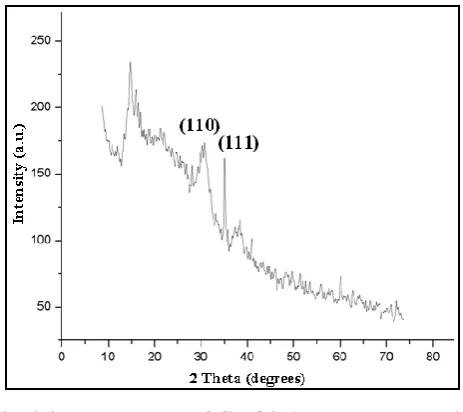
Fig. 3.3 demonstrates the presence of Cu2O nanoparticles and PANI in the nanocomposites. The characteristic
broad peak between 13.0° and 18.0° as shown in Fig. 3.3 indicates partial crystalline structure of PANI. The
peaks at 30.82° and 36.47° corresponding to the crystal planes of (110) and (111) show the presence of Cu2O in
the nanocomposite [16].
Fig. 3.3 XRD Pattern of Cu
2O/PANI Nanocomposite
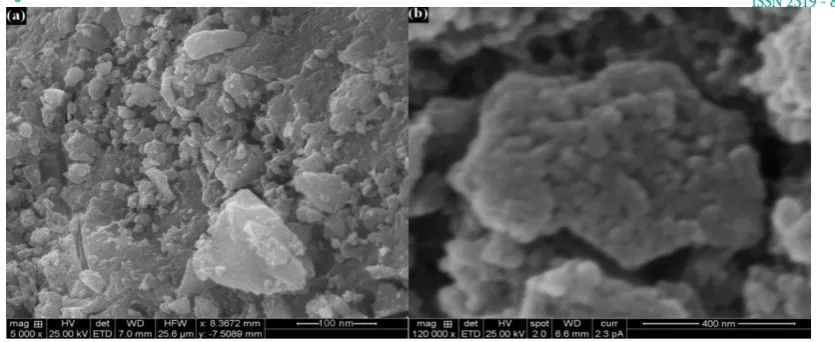
In Fig. 3.4 (a&b) the SEM images reveal that the filler particles of Cu2O nanoparticles were incorporated well in
the matrix of PANI as appeared in the light. Further, it shows that many aggregations of agglomerated Cu2O
Fig. 3.4 SEM Images of (a) Cu
2O Nanoparticles and (b) Cu
2O/PANI Nanocomposite
IV. CONCLUSION
The “green” route for nanoparticle synthesis is of great interest due to eco-friendliness, economic prospects,
feasibility and wide range of applications in nanomedicine, catalysis medicine, nano-optoelectronics, etc. Here,
we have reported a simple, eco friendly and low-cost approach for preparation of stable copper oxide
nanoparticles by reduction of Benedict’s reagent, with a green method using Tridax procumbens leaf extract as
the reducing agent. The Cu2O /PANI nanocomposites were successfully prepared by an in situ polymerization
method. The characteristics of the nanocomposites were studied using UV, FTIR, XRD and SEM techniques.
REFERENCE
[1] Y.Q. Kang, M.S. Cao, J. Yuan, L. Zhang, B. Wen and X.F. Fang, Preparation and microwave absorption
properties of basalt fiber/nickel core–shell heterostructuresm, J Alloys Compd. 495, 2010, 254.
[2] C. Gong, J. Zhang and X. Zhang, Synthesis of Ni3N/SiO2 nanocomposites and investigation of their
intrinsic static and dynamic magnetic properties , J. Phys. Chem. C, 114, 2010, 10101.
[3] H.G. Zhang, Q.S. Zhu, and B.Yu, One-pot synthesis and hierarchical assembly of hollow Cu2O
microspheres with nanocrystals composed porous multishell and their gas-sensing properties, Adv. Funct.
Mater., 17, 2006, 2766.
[4] S. Somasundaram, C.R.N. Chenthamarakshan, N.R. Tacconi and K. Rajeshwar, Photocatalytic
production of hydrogen from electrodeposited p-Cu2O film and sacrifcial electron donors, Int. J.
HydrogenEnergy, 32, 2007, 4661.
[5] X. Ren, D. Chen and F. Tang, Shape –controlled synthesis of copper colloids with a simple chemical
route, J. Phys. Chem., B, 109, 2005, 15803.
[6] G.K.S. Prakash, P. Suresh, F. Viva and G.A. Olah, Novel single step electrochemical route to γ-MnO2
nanoparticle-coated polyaniline nanofibers: Thermal stability and formic acid oxidation on the resulting
nanocomposites , J. Power Sources 181, 2008, 79.
[7] X.L. Dong, X.F.Zhang, H.Huang and F.Zuo, Enhanced Microwave Absorption in Ni/Polyaniline
[8] C.C.Yang,Y.J.Gung,W.C.Hung,T.H.Ting and K.H.Wu, Infrared and microwave absorbing properties of
BaTiO3/polyaniline and BaFe12O19/polyaniline composites ,Compos.Sci.Technol., 70 , 2010, 466.
[9] C.Yang, H.Li, D.Xiong and Z.Cao, Hollow polyaniline/Fe 3O 4 microsphere composites: Preparation,
characterization, and applications in microwave absorption, React.Funct.Polym. 69, 2009,137.
[10] P.Saini, V.Choudhary, B.P.Singh, R.P.Mathur and S.K.Dhawan, Polyaniline–MWCNT nanocomposites
for microwave absorption and EMI shielding, Mater.Chem. Phys. 13, 2009, 919.
[11] S.W.Phang, M.Tadokoro, J.Watanabe and N.Kuramoto, Microwave absorption behaviors of polyaniline
nanocomposites containing TiO2 nanoparticles, Curr.Appl.Phys.8 , 2008, 391.
[12] S.D.D.V. Rughooputh, S. Hotta, A. J. Heeger and F. Wudl, Chromism of soluble polythienylenes,
J. Polym Sci.B, 25 , 1987, 1071.
[13] C. Ramesh, M. Hariprasad and V. Ragunathan, Antibacterial Behaviour of Cu2O Nanoparticles against
Escherichia coli; Reactivity of Fehling’s Solution on Manihot esculenta Leaf Extract. Current
Nanoscience, 5, 2011, 770.
[14] W. Feng, X.D. Bai, Y.Q. Lian, J. Liang, X.G. Wang and K. Yoshino, Well-aligned
polyaniline/carbon-nanotube composite films grown by in-situ aniline polymerization, Carbon, 41, 2003, 1551.
[15] M. Kooti and L. Matouri, Fabrication of Nanosized Cuprous Oxide Using Fehling's Solution,