PERSISTENT COMMUNITIES:
ENTANGLED LANDSCAPES OF AGRICULTURE, ENVIRONMENT, AND FAIRTRADE DEVELOPMENT IN ST. LUCIA
Caela Brighid Casey O’Connell
A dissertation submitted to the faculty at the University of North Carolina at Chapel Hill in partial fulfillment of the requirements for the degree of Doctor of Philosophy in the
Department of Anthropology in the Graduate School.
Chapel Hill 2014
Approved by: Arturo Escobar Karla Slocum Margaret Scarry Deanna Osmond
© 2014
ABSTRACT
Caela Brighid Casey O’Connell
Persistent Communities: Entangled Landscapes of Agriculture, Environment, and Fairtrade Development in St. Lucia
(Under the direction of Drs. Arturo Escobar and Karla Slocum)
This dissertation offers a multi-sited study of the social, economic, and environmental practices of banana farming communities in Saint Lucia at a time when banana farmers are navigating changing global markets, climate change, disasters, and shifts in domestic
economics and cultural practices. It investigates the practice and sustainability of Fairtrade as an alternative model of economic and social development and environmental conservation in the midst of successive crises: economic recession, drought, extreme weather, and a plague of Black Sigatoka disease. Working from a relational framework, I integrate the geography and ecology of the island with the history, culture, and political economy of St. Lucia’s banana farming communities to illustrate the ways in which the vulnerability of agrarian populations and natural environment are rooted in ongoing patterns of land tenure and use, exploitative sociopolitical networks, environmental degradation, and global economic policies. Through exploring the cultural practices of banana production, Fairtrade,
environmental conservation policy, and rural life in St. Lucia this dissertation offers a view of the Fairtrade model from the perspectives of St. Lucian farmers. In St. Lucia, the
certification system that have intensified hierarchy and scrutiny within St. Lucian industry stakeholders. This most recent chapter in the St. Lucian banana industry is underscored by the presence of Fairtrade, but it has not been defined by it. The exceptional complexity and instability of life in St. Lucia for banana farmers as farmers respond to a series of consecutive and linked crises as they persist through extreme weather events and agricultural plague. The difficulties farmers face in recovering highlight the interrelated and plural dynamics involved in agricultural production, environmental conservation, and adaptation to disasters and climate change with which farmers in the 21st century must cope. This dissertation
To my mother, Helen O’Connell, who gifted me her love for the environment with the many treks through streams, swamps, and woods that filled my childhood.
ACKNOWLEDGMENTS
I have often heard people discuss what an isolating process writing a dissertation can be and I would inwardly respond with dread. However, when I reflect on the process of making this dissertation— preparing, researching, and writing— the only thing that I can claim singularly as my own, is the responsibility for any errors or omissions in this dissertation. Everything else is the product of exchange and would not have been possible without the support from the many individuals and communities of which I have been fortunate to be a part of over the last 7 years. For this, I am exceptionally grateful. To begin with, I would not have set out on this path without the early mentoring and leap of faith from Dr. Hugh Campbell at the University of Otago, New Zealand. The underlying questions, ideas, and approach infused across my intellectual development were outlined in the indelible ink of our conversations so many years ago. To Hugh, Chris Rosin, and the rest of the
CSAFE folks, a hearty and fond thank you from your former intern.
sixth committee member. My cohort, especially Claire Novotny, Tomás Gallareta-Cervera, Bill Westermeyer, David Cranford, and Saydia Kamal have been intellectually challenging and supportive from the very beginning. It is with amazement that I can trace the way that my ideas and understanding of the world have grown through networks of people and ideas. Most notably, I want to thank Jeff Mantz for hours on the phone, Brad Walters for the
longest brunch ever, and Gavin Fridell, Dana Hoag, Michaeline Crichlow for always offering good questions. Many thanks for Marisol de la Cadena for an especially thoughtful trip to the airport. Thank you as well to Deborah Thomas and the Department of Anthropology at University of Pennsylvania for hosting me as a visiting scholar while I finished writing.
The advice, reassurance, and friendship from those who traveled this road a few years ahead of me, most notably Ashley Carse, Dana Powell, Kristina Killgrove, Joe Wiltberger, Seth Murray, and Gina Drew, made all the difference. To my writing group, Erin Stevens Nelson, Martha King, Claire Novotny, Bill Westermeyer, Laura Wagner, and Laurel Bradley, I would not have made it without each of you and the scaffolding we built around our
writing. George and his bakery café, Bread and Butter, offered the perfect writing
environment to get me through many a rough patch while writing. Skype work sessions with Emily Cubbon Ditto have been everything!!! I also give many thanks to Andrew Ofstehage for his thoughtful questions, comments, and humor. You may be a latecomer to our little community, but it was so worth the wait. Finally, thanks to the Department for the Room of Requirement— a much needed space for our dissertation-writing group.
funding my pre-dissertation research and keeping it on track with travel, language and conference funding. At ISA, I would like to thank to Beatriz Riefkohl Muñiz and Shelley Clarke for being ever supportive and a joy to visit over the years. Fieldwork for 20-months is a huge undertaking and it was made possible by the extraordinary financial support for my dissertation research from the National Science Foundation, Inter-American Foundation, Fulbright-Hays, National Geographic Conservation Trust, and the ISA Mellon. The PEO Scholar Award and UNC Dissertation Completion Fellowship made writing and finishing this year a reality. Thank you to all of these organizations for breathing life into my project through your sponsorship.
Chapel Hill and Carrboro have grown to be a place that I will always think of when I hear the word “home.” This is due in large part to the many people I have been lucky enough to know and befriend. Many thanks to Emily Ann Guhde, Byron Woods, the Vail family, the Kofodimos-Dover family, the Trotta-Wilson family, Ali Groves, Amanda Johnson, David Nelson, Beth Cranford, the BST group in Wilson Park, and also to Master Tippens and the folks at Chapel Hill-Carrboro Taekwondo for support, understanding and giving me many reasons to strive for a work life balance.
introducing me to training with the BST gang. You guys kept my sanity and burpees in good shape! Every so often in life you cross paths with someone who stays with you forever— Jerry Bethell is one of those people. My time in St. Lucia was better off for every
conversation, interaction and relaxing evening spent with Jerry, a kind character, lively storyteller and provider of all things mechanical. Charlie, Ben and the folks at Café Ole were privy to the many afternoons and rainy days I spent writing fieldnotes and analyzing data out on the patio accompanied by their much-coveted coffee.
I also enjoyed frequent use of the Folk Research Centre library and had many
discussions with the extraordinarily helpful and knowledgeable staff and members, especially Dr. Kentry Jn.Pierre, Robert Lee, Lindy-Ann Alexander and Dr. Travis Weekes. I could not have completed this research with the same depth of cultural understanding without the insights and adventures I shared with St. Lucian ethnobotanist, Laurent Jn. Pierre— Mèsi Anpil Jomo! I also had wonderful times and learned much about birds from my fantastic research assistant, Hans Mathurin, the most apt hitchhiker I’ve ever picked up. Malisia Evelyn was a most attentive research assistant and her observations and commentary on her experience growing up in the countryside brought new insights and good chuckles for us both. I also offer thanks in the memory of Robert Devaux who passed away last year. Robert shared his extensive knowledge and time to teach me about the history of the Marquis River and the Marquis Estate.
Novotny, Meg Kassabaum, Anna Semon, Emily Cubbon Ditto and Tomás Gallareta-Cervera with mapping and other fieldwork tasks. Thank you to Jolien Harmsen for writing a more comprehensive history of St. Lucia, creating a cozy place at the Reef, and most especially for sharing her trove of historic maps of St. Lucia. To the entire Foucher family, especially Hyercinthia, Anthony, Joseph and Cooper, many thanks for housing me, and making mad dashes across island for forgotten laptops and heroic repairs after the hurricane. Thank you to Lenn Isidore and the folks at MOFA for being helpful and doing the important work. I would not have made it without my St. Lucian Taekwondo family, Master Samuel Decallie is a true inspiration and Shaka St. Ange and Len Prospere are the best.
I have had an embarrassment of riches in the category of mentors and counseling. My advisors, Arturo Escobar and Karla Slocum have been a dynamic team— I would not be here today without your guidance, questions, and patience. “Thank you” is simply not enough. My committee members Deanna Osmond, Margie Scarry and Rudi Colloredo-Mansfeld have always offered critical suggestions and support in all the right moments. I count all five of you as friends and teachers and thank you for your trust and encouragement as I set forth slightly off the beaten-path with my research, methods and attitude.
ethnographer, who could make a friend and strike up a conversation with every soul, thanks for your love and kindness. My brother has always been there for me in every way. Also, thank you for taking care of my dog Kiwi for eternity (even if you did get her fat); to my 3 sisters who have always known exactly what to say when I needed it the most; to my parents for their reassuring patience and unwavering love; and to my mother-in-law for being the only one who truly understood my writing process, thank you. Thank you all for
understanding my absences, celebrating the good times and cheering me on when the going was rough. To my pups, Gus and Kiwi, thanks for keeping me company late into the night and for making it clear when it was time for us all to head to bed.
PREFACE
I would like to open by saying that in spite of the contents of this dissertation, and my ultimate conclusions, I still encourage the purchase of Fairtrade certified products. This may be surprising because as I will show, in a growing number of cases, and in certainly in St. Lucia, where this dissertation is focused, Fairtrade is not engendering sustainable
development, democracy, or environmental conservation. Nor are the prices charged for the products close to a fair exchange of goods and production costs etc. Still, I believe that it makes sense to buy Fairtrade products because the producers of these products very much want to sell them, notwithstanding labels, Fairtrade ideology, or reassurances, Fairtrade producers are fighting to sell their bananas, coffee, tea or flowers. For many Fairtrade producers, such as the banana farmers in St. Lucia, Fairtrade represents their only access point to the global agricultural market and in many cases to a livelihood. In a nation with 22.3% unemployment1 and a rapidly transforming society, most job opportunities are in the tourism and services sectors, the aging population of farmers has few alternatives to the banana industry. Most farmers have heavy investment (read debt) in their farmland and there are no reliable markets for diversified agricultural products. So despite its many failed aims, as a niche market Fairtrade maintains an option for farmers to sell bananas in an economic climate that would otherwise shut them out, and that too is an issue of social justice.
TABLE OF CONTENTS
LIST OF TABLES ... xvi
LIST OF FIGURES ... xvii
LIST OF ABBREVIATIONS ... xix
GLOSSARY OF TERMS & CONCEPTS ...xx
CHAPTER 1: UNDER THE BANANA ...1
1.1 Hurricanes Howl, Situating the Anthropologist ...3
Jounén Tomas ...5
1.2 Situating the Research ...10
The study location: St. Lucia ...10
Study population: St. Lucian Banana Farmers ...10
1.3 The political ecology of banana farming in St. Lucia: History, Networks, and Ontologies ...13
Reimagining Political Ecology ...17
1.4 Assembling a methodology for the socioecology of Fairtrade landscapes ...20
Participant Observation ...22
Interviews and Surveys ...26
Environmental Assessments ...29
GIS Mapping and Archival Research ...34
1.5 Outline of the Dissertation ...37
CHAPTER 2: ROOTED COMMUNITIES, ASSEMBLED LANDSCAPES: SITUATING HUMAN-ENVIRONMENT RELATIONSHIPS IN SAINT LUCIA ...41
2.1 Birth by Fire: Lava landscapes & colonial confrontations ...42
2.2 Positioning Agricultural Communities in St. Lucia ...50
Colonization and the development of agriculture in St. Lucia ...50
Situating the banana industry in St. Lucia 1880 to 2000: “Green Gold” and other tales ...56
Bananas in St. Lucia and the rise of transatlantic trade for the banana industry 1880-1942 ...63
Bananas in St. Lucia Green Gold and the rise of Neoliberal trade policy 1950-2000 ...63
Bananas in St. Lucia and the rise of Fairtrade in 2000 ...69
2.3 Rural livelihoods and community in St. Lucia ...69
Mountain Communities— Plas Hòtè ...70
Valley Communities— Lawivyè Tounen ...75
2.4 The relationality of St. Lucia’s agrarian landscape ...81
CHAPTER 3: “NO FAIRTRADE, NO BANANAS” ...83
3.1 Fair Trade: From Movements to Markets ...86
Fair Trade as Concept ...88
Early Fair Traders the 1940’s to the 1980’s ...93
3.2 The Birth of the Contemporary Fairtrade ...97
Regulating Social Relationships and Selling Fairtrade ...99
Promoting Alternative Trading ...108
3.3 Fair Fare? Evolving Views on the Fairtrade Markets
and Ethical Consumption ...112
Fairtrade in Practice ...117
CHAPTER 4: SEEING FAIRTRADE ...119
4.1 Practicing and Performing Fairtrade in St. Lucia ...121
4.2 Shallow Grassroots: Social Groups and Social Premiums ...122
Fairtrade Premiums Beget Social Capital ...131
4.3 The Anatomy of an Audit ...137
Local Audits, Local Arguments ...138
Global Audits, Global Approaches ...144
Power and Performance in the Audit ...145
4.4 Producing Fairtrade and Trading Bananas ...147
Allocation: Yours, Mine, and Theirs… ...148
Zombies vs. Aliens: Labor and exploitation in St. Lucia ...154
4.5 The Precarious Practice of Fairtrade of the Dissertation ...160
CHAPTER 5: WHEN DISASTER IS NOT YOUR PROBLEM: THE LIMITATIONS OF FAIRTRADE IN THE AGE OF CLIMATE CHANGE ...163
5.1 Through the Lens of Crisis: Situating the materiality of disasters ...166
Hurricane Tomas ...166
Black Sigatoka ...171
Theorizing Disaster: Learning moments in the lucidity of crisis ...174
5.3 People, Place, and Plants: Complex Adaptive Strategies ...179
Josephine and the Hurricane ...179
Institutional Breakdowns and the (Mal)Practices of Fairtrade Networks ...185
Riparian Buffer Zones as the Frontline in the Conservation Battle ...191
When the trees fell (Paul) ...195
Successfully Functioning Buffers (Vera and Herman) ...199
Partially Functioning Buffers (Darren, Josephine, and Paul) ...201
Unsuccessfully Functioning Buffers (Lady, Grace, and Geraldine) ...205
The Cutback ...208
5.4 Thinking Through Adaptation in Socioecological Processes Cutback ...212
CHAPTER 6: BURIED UNDER THE BANANA ...216
6.1 Conclusion ...216
APPENDIX 1: Select GIS and Causal Maps of Farms ...221
APPENDIX 2: Economic and Wellbeing Survey Questions ...224
APPENDIX 3: Interviews Questions ...233
APPENDIX 4: Riparian Buffer Zone Survey Protocol ...241
LIST OF TABLES
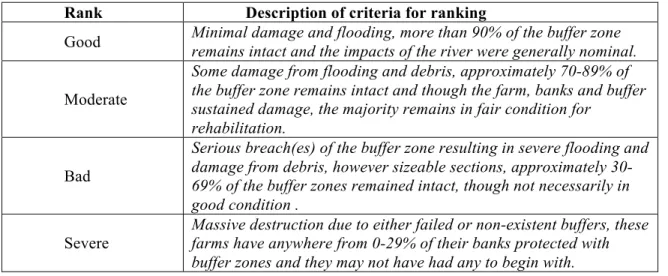
Table 1.1Function Ranking Criteria of damage to farm riparian buffers ...30
Table 3.1 Global Fairtrade Sales 2000 to 2013 ...101
Table 5.1 Results for yearlong erosion from buffer zone study ...194
Table 5.2 Buffer zone behavioral practices and outcomes ...195
LIST OF FIGURES
Figure 1.1 Even the local grocery, Super J was
decorated for Jounén Kwéyòl ...4
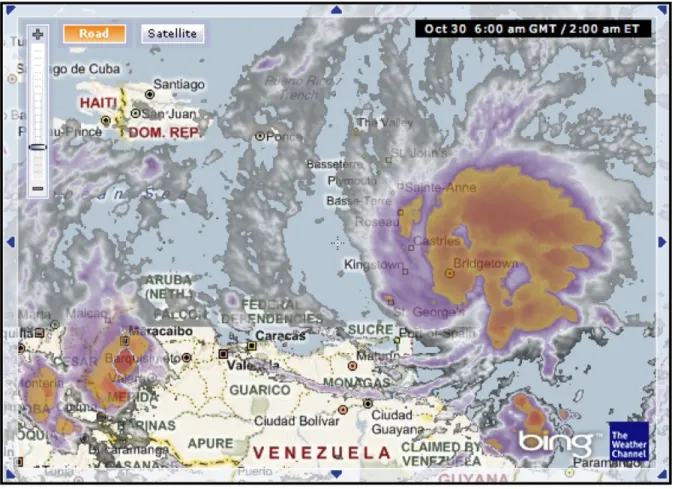
Figure 1.2 Screenshot of Hurricane Tomas October 30, 2010 ...6
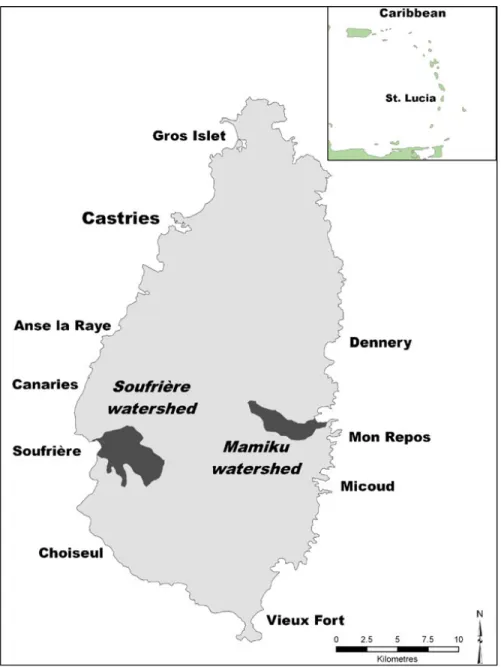
Figure 1.3 Map of St. Lucia ...11
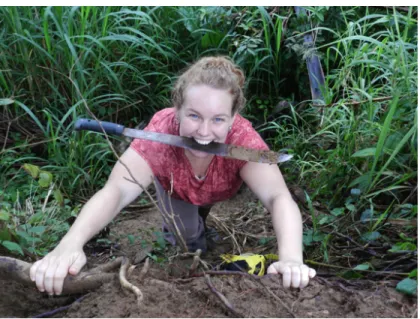
Figure 1.4 I eventually became a little too comfortable with my cutlass ...23
Figure 2.1 Geological Map of St. Lucia 1984 ...44
Figure 2.2 Colonial Map of St. Lucia 1784 by Lefort de Latour ...55
Figure 2.3 Agriculture, forests, vegetation and land use of Saint Lucia ...56
Figure 2.4 Map of St. Lucia’s 37 Watersheds indicating the Roseau and Marquis rivers/watersheds ...71
Figure 2.5 View from the mountainside looking east into the Marquis River valley flowing out to the Atlantic Ocean ...73
Figure 2.6 Design plan for the new resort development at the mouth of the Marquis River on the Atlantic coast ...73
Figure 2.7 Crumbling remnants of colonial buildings, sugarcane mills at Marquis Estate ...74
Figure 2.8 A farmer collecting coconuts to sell in market on a banana farm in the Roseau Valley Lucia ...79
Figure 2.9 Map of Model Farms Plantation no date, but before 1986 ...80
Figure 3.1 Farmers at a Fairtrade group meeting ...85
Figure 3.2 Six of the 19 fair trade labels in circulation in 1996, now unified under FLO’s label the FAIRTRADE Mark® ...102
Figure 3.3 Governance Structure of FLO International ...107
Figure 4.2 Organizational Structure of Fairtrade for St. Lucian Farmers ...123
Figure 4.3 Organizational Structure of the Banana Industry in St. Lucia ...124
Figure 4.4 FLO Global Uses of Fairtrade Premium for 2010-2011 ...135
Figure 4.5 Posters and flyers freshly hung in haste… ...140
Figure 4.6 Cleaning, sorting and bagging bananas for Products 144, 53 and 148 take 3-4 workers packing ...150
Figure 4.7 Harvest day on the farm ...151
Figure 5.1 Drought and Hurricane through monthly rainfall in St. Lucia ...168
Figure 5.2 An unpaved road filled in by fallen trees and 4’ of mud ...179
Figure 5.3 Measuring sedimentation depths ...180
Figure 5.4 The edge of the debris pile ...182
Figure 5.5 Taking GPS points atop of the debris pile ...182
Figure 5.6 Tonnage of bananas exported from St. Lucia between 2006 and 2011 ....189
LIST OF ABBREVIATIONS
AOTs – Alternative trading organizations
FLO – Fairtrade Labeling Organization, now known as Fairtrade International
FLO-CERT – Fairtrade Labeling Organization-Certification, Independent FLO organization NFTO – St. Lucia National Fairtrade Organization
Winfresh – Most recent name for WIBDECO, exporting company WINFA – Windward Islands Farmers Association
WIBDECO – Exporting Company, a corporation made up of Windward Island Governments and former WEBDECO
SLBGA – St. Lucia Banana Growers Association BGW – Banana Growers Association
CBC – Canadian Buying Company
BPMU – Banana Pest Managmenet Unit, St. Lucian Governement
GLOBAL G.A.P. – Global Good Agriculture Practices, an international certification and auditing body serving European Grocery chains
Windward Islands – Dominica, St. Lucia, St. Vincent and the Grenadines, Grenada
SML – Sugar Manufacutrers Limited, company producing and manufacturing sugar in the Roseau Vally of St. Lucia
Model Farms – Large company farming bananas for export in the Roseau Valley Geest – British exporting and shipping company
GLOSSARY OF TERMS & TOPICS
There are several topics and terms that I use in this dissertation which are discussed, defined and at times examined in great detail at one point or another, but must be employed throughout. Therefore I offer a concise introduction to the following with the consideration that a more thorough coverage will be presented within the following chapters.
Fairtrade: Fairtrade first came to St. Lucia, at the behest of the country’s banana farmers, as the island’s banana industry was faltering following a decade of market deregulation in global agricultural policy in 2000. Farmers are affiliated with the Fairtrade Labeling
Organization, or FLO, the largest Fairtrade organization worldwide certifying over 5 million farmers in 78 countries. FLO is not part of what might be called traditional fair trade
(emphasis on the two words fair and trade as separate) as direct, small-scale, equity driven trading partnerships between producers or artisans and buyers2. Similarly, drawing from Fairtrade Labeling Organization International (FLO) and other fair trade organization’s published materials and marketing3, FLO employs what I define as the contemporary Fairtrade model: an ethically driven marketing organization that aims to achieve economic justice, rural development, farmer empowerment, and environmental conservation using a certification and regulation model. FLO operates through this model utilizing though a multifaceted approach that combines consumer marketing; universalized production, development and conservation aims for Fairtrade affiliated producers; and a third-party certification and auditing system to ensure compliance on the part of producers and
accountability for consumers. FLO situates itself as an alternative trade model and agrarian development project. It employs the language of ‘sustainability’ and ‘environmental health’ alongside ‘social-justice’ as key descriptors for its goals, demonstrating a new focus on the social and environmental betterment of producers and their communities4. The standing definition of Fairtrade for FLO and other contemporary Fairtrade organizations is as follows:
Fair Trade is a trading partnership, based on dialogue, transparency and respect, that seeks greater equity in international trade. It contributes to sustainable
development by offering better trading conditions to, and securing the rights of, marginalized producers and workers – especially in the South.
Fair Trade organisations (backed by consumers) are engaged actively in supporting producers, awareness raising and in campaigning for changes in the rules and practice of conventional international trade.5
2 Fridell 2006; Dolan 2008; Guthman 2007
Because all exporting farmers in St. Lucia are certified by FLO and the focus of this
dissertation is on St. Lucian banana farmers, with exception of the discussion in Chapter 3 on the origins of the fair trade movement, all references to Fairtrade used throughout are
referring to FLO and the contemporary Fairtrade model6.
Bananas: There are many misconceptions about bananas. First, bananas are called “fig” or “figs” in St. Lucia whether people are speaking Kwéyòl and English. The root of calling a banana fig comes from the Arabic reference to the “tree of Paradise” depicted as a banana tree in the Koran with the word “fig”. When bananas were first introduced to Europe in the 10th century, they were called “figs”7. Bananas originated in East Asia and the many
hundreds of species both wild and domesticated share an origin with this region of the world. Despite the trunk looking appearance, bananas are herbaceous plants with a pseudo stem, not trees. From the time that a young plant sends out shoots to harvest of green fruit take
anywhere between six to nine months dependent on temperature, rainfall, and amounts of fertilizer applied. Bananas are the worlds fourth most important food source and only 15-20% of bananas are exported on the international market.
Hurricane Tomas: Hurricane Tomas was a category 1 hurricane that struck St. Lucia on October 30, 2010. The hurricane delivered record-breaking rains and caused a lot of
destruction nationwide, particularly impacting the banana industry with a national report of 100% of the industry destroyed from production.
Black Sigatoka: A disease affecting 80% of the worlds’ banana producing regions caused by the fungus Mycosphaerella fijiensis. Black Sigatoka was first identified in St. Lucia in the spring of 2010 and became an island wide problem in the months following hurricane Tomas reaching epidemic proportions in the banana industry in July 2011.
East Caribbean Dollar: The East Caribbean dollar (ECD or more commonly just “EC”) is a unified currency shared in common between 8 Organization of East Caribbean States (OECS) member states and affiliates Anguilla, Antigua and Barbuda, Dominica, Grenada, Montserrat, St. Kitts and Nevis, St. Lucia and St. Vincent and the Grenadines and pegged to the US Dollar with a constant exchange rate of 1USD: 2.70EC since 19768
6 For an in-depth discussion of the important differences between traditional “two word” fair trade
and “one word” contemporary Fairtrade see Chapter 3.
CHAPTER 1: UNDER THE BANANA
Following the destruction from Hurricane Tomas, young shoots, called “suckers”, emerge from the damaged plants’ stalks
Here is the test of wisdom,
Wisdom is not finally tested in schools,
Wisdom cannot be pass’d from one having it to another not having it, Wisdom is of the soul, is not susceptible of proof, is its own proof, Applies to all stages and objects and qualities and is content,
Is the certainty of the reality and immortality of things, and the excellence of things; Something there is in the float of the sight of things that provokes it out of the soul. Now I re-examine philosophies and religions,
They may prove well in lecture-rooms, yet not prove at all under the spacious clouds and along the landscape and flowing currents.
Walt Whitman Song of the Open Road9
I traveled to St. Lucia in the eastern Caribbean to study the “Practice and Prospects of Fairtrade for St. Lucian Banana Farmers. My objective was to investigate how well Fairtrade works or does not work in the context of rural development, environmental conservation and sustainability. I quickly learned that Fairtrade was not working, and so my questions shifted to asking, “Why not?” However, this question was eventually displaced as I delved further through the murky layers of enmeshed fieldwork, consecutive disasters, and a deeply unsettling question of why people in St. Lucia are selling bananas at all given the ecology, sociology, and economy of banana farming in the early twenty-first century. From my fieldwork a set of themes emerged surrounding the processes in which farmers position and reposition themselves and alter their strategies in response to interactions with and relations to shifts in the environment, their social networks, and the banana industry (including Fairtrade and other industry stakeholders). Ultimately, I found that I was studying farmers’ prospects for a future while digging through their past and present to ask and perhaps understand a much larger question than Does Fairtrade work as a sustainable development model?”
following chapters I aim to capture all of these themes. I begin by breaking them down chapter by chapter without completely simplifying their interwoven nature or reducing a complex set of forces into a commentary on the Fairtrade model or banana production as if these were isolated actors. These are my aims, though they are a most certainly a work in progress, and to thoroughly capture the depth of give and take and complexity is beyond my intellectual understanding at this time and beyond the scope of a single dissertation.
Nonetheless, I have tried to weave the threads of this story in such a manner that they are clear as I connect emergent themes from the St. Lucian context and link them to fundamental questions about agricultural production, development and climate change.
1.1 Hurricanes Howl, Situating the Anthropologist
Many anthropologists like to tell a story of their arrival in the field, hilarious assumptions upturned, hardships persevered through, or forging rapport with their
interlocutors, à la Clifford Geertz and his wife’s tale of fleeing with villagers when officials busted an illegal Balinese cockfight.10 These different approaches endeavor to position the researcher and capture a reflexive moment, or series of interactions that were formative for the researcher, fundamentally shifting one’s position, understanding, or experience of
fieldwork. Perhaps oddly for an anthropologist, my own moment was 36-hours spent entirely alone. Nonetheless, it is here that I will begin, because without question, Hurricane Tomas and navigating all that followed after the storm is the lens, rubric, and reality through which my fieldwork was completed. It fundamentally shaped the interactions, relationships, stories and understanding that I pursued throughout my 20-months in St. Lucia.
Friday October 29, 2010: I was hurrying out of the Super J grocery toward the minibus stand when my friend Cooper, a taxi driver stationed outside waiting to drive shoppers home, shouted across the lot, “Are you running for the rain?” teasing me. The clouds were indeed thick, but with no rain falling, I crossed over to say hello and talk about Jouné Kwéyòl, the national holiday celebrating St. Lucia’s Kwéyòl language and cultural heritage. Jouné Kwéyòl was the next day and everywhere I went people were decorating, preparing traditional foods and bustling to get ready for the multiple fèts (parties) that would be held across the island (Figure 1.1). Cooper approved as I told him my plans to spend the morning at local festivities and cultural demonstrations in Monche, pass through “town”11 for
activities in Derek Walcott Square, and finally finish up celebrations accepting an invitation from a banana farming family in the eastern coastal town of Dennery. As we were wrapping up our
conversation, I asked Cooper if he thought the day of rain predicted for the next day would dampen the festivities. He laughed and shook his head, and told me something to the effect, “Not for Jouné Kwéyòl! People spending too much
11
Colloquial term for the capital city of Castries
time, eh eh, nothing stopping that fèt.” I said my goodbyes and headed home, less than a mile away, but with two minibus rides and a 15-minute walk loaded with groceries an hour had passed by the time I arrived and the rain had begun to lightly fall.
Jounén Tomas
I remember that evening vividly, because as the rain and wind picked up, I began to wonder if Jouné Kwéyòl would indeed have to be canceled. I checked the weather before going to bed about 9pm, the tropical depression had suddenly been upgraded to a Tropical Storm, named Tomas. Luckily the trajectory was south of St. Lucia and the National
Hurricane Center had issued a “watch” for heavy rains and high seas. Sometime in the night I got a text from the local cellphone operator Digicel updating that the tropical storm had been upgraded to a “warning”. The rain and winds continued to intensify and by 3am on Saturday (2am Eastern Time), I could no longer sleep. I got up and logged on to weather websites— the alerts were surprising— Tomas was now a hurricane and heading straight for St. Lucia! Like all good social media members, I took a screenshot of the storm (Figure 1.2) and updated my Facebook account, just before I lost power.
Saturday October 30, 2010: The following 24-hours is a vivid blur. The two things that standout the most in memory are red wax and noise. In case you have never had cause to experience or read about it, hurricanes are LOUD! The wind howls. Objects blowing in the wind crash and clatter. The shattering of glass is startling as the windows of the apartment above mine imploded from the pressure. My neighbor’s roof peeled off their home, not in one fell-swoop as in a tornado, but in a process— over hour after painful hour— the
went by my apartment began to flood, despite being 16’ or so off the ground. The rains were so heavy the barriers to the outside world were being breached. Rain that pounded on the roof, windows, and doors gradually gave way to eerie dripping and flowing noises as water began to seep through the cinderblock walls, around the windows seals, and under and through the pine door. Fortunately for me, from time to time I had been able to send or receive text
Figure 1.2 Screenshot of Hurricane Tomas 2am Eastern Time October 30, 2010
“suck it up” and that this was all part of the fieldwork experience and more importantly it was part of living in the Caribbean.
At some point later in the night I began to get scared: the hurricane seemed to never end and the sounds were starting to sound more like the actual earth was creaking. I could hear water rushing by like a river beside my house, and images of landslides and building collapses began to run through my head. I had no place to go, and going outside seemed a poor option, so I slowly packed my backpack walking back and forth to retrieve essentials (fieldnotes, passport, laptop) from the now flooded rooms in my apartment. I carried the red candlestick to light the way and the hot wax dripped down to the floor, cooling into small chunks in the water and sticking to the tiles where I passed. Backpack prepped and shoes on ready to flee, I huddled in the dark kitchen, having used up the candle while the hours passed. Exhausted from the noise and tension, much later when the noise died down, I drifted asleep. Sunday October 31, 2010: The next morning I awoke hot, confused, and thankful the hurricane was gone. Trails of red wax dots marked the path I had traveled the night before, my backdoor was broken, and 2/3 of the apartment had standing water on the floor. Outside was a new world, the birds, donkeys, chickens and dogs shouted out in joy, but humans were slow to rouse. I cautiously explored a few close by neighbor’s homes, but most had traveled to visit family for Jouné Kwéyòl before the storm hit or later evacuated to shelters in the middle of the night. Over the coming days I would learn that the island was cut into thirds by landslides and collapses of roads and bridges triggered by 36-hours of rainfall. The national newspaper, the St. Lucia Voice published an op-ed titled “Jounén Tomas” musing on the
unpredictability and powers of nature, Lucian cultural practices, and lost holiday12. Though
Tomas was only a category 1 hurricane, it was classified as a 1:1,000+ year extreme
hydrological event13, and the world left behind seemed to have been reshaped in every way
imaginable. The landslides and flooding were severe, slowing important disaster relief efforts
on the part of the Government, NGOs, the British Navy, and the U.S. Army Corps of
Engineers.
There is too much to tell about the days following the hurricane. The basics: figuring
out how to clean up after a hurricane; helping my neighbors clean up their homes; pulling the
foam out of our couch cushions to use as giant sponges to soak up floodwaters; cleaning fine
silty-mud out of electrical sockets with a toothbrush at a farmer friend’s home. Exceptional
kindnesses: my previously unknown neighbor came to check on the “fanm blan”14 who
lived up on the hill spent hours hammering and wedging my door back on out of concern that
I might sleep safely the first night. Two days later my landlord’s uncle traveled 5 hours
across back roads to help me more securely board up my doorway until a new door could be
obtained off-island. Impressive acts: how quickly power was restored to most parts of the
island and two local food-processing businesses that rapidly mobilized their generators and
resources to prepare and distribute meals via boat in ice cream containers to places along the
west coast and the southern end of the island cut off from most resources. Frustrating
realities: for several weeks following Hurricane Tomas, large ships carried potable water
from neighboring islands; but they only distributed it to the thousands of tourists staying at
damaged costal resorts. Meanwhile the rest of St. Lucia tried to source drinking water from
streams and springs until damaged damns and regional water supplies could be repaired.
13
Fridell et al. 2010 14
These are the events and observations that shaped my early perspective of fieldwork, the
stories that farmers and I shared as part of an affirmation of knowing the hurricane intimately
in opposition to people who came later specifically to ask about Tomas. These events and
experiences shaped the foundation of my positionality as a researcher in St. Lucia, but they
did not define it, too much was yet to come.
I could go into more detail about the measures of Hurricane Tomas in the immediacy
after the disaster, but such descriptions are not the story that I want to tell, and they can run
dangerously close to what some critics are calling “disaster porn” meaning the images and
discourses in the wake of disaster that we have become intimately familiar with thanks to the
confluence of 24-hour media and the increasing frequency of natural disasters.15 Images,
statistics and counts, these are the expected and often only kinds of information that
researchers, journalists, and observers use to discuss and represent disasters. How many
people are missing or dead? How much rain fell? How wide are the landslides? How
powerful was the wind? How high did the waters rise? How many people have no homes? To
be sure, in the right moment, in the right set of hands, these figures represent critical details
to help with rapid assessments and vital responses to disasters and the people most impacted
by them. However, more often than not, such figures are used trying to quantify or express
the experience of the disaster, to represent lives disrupted or people changed. They convey
very little about the ongoing processes involved in navigating the temporal and physical landscapes of disaster in St. Lucia. Nor how people continued to live their lives with, in spite of, and because of the effects of Hurricane Tomas in 2010 and the plague of Black Sigatoka,
a fungus that ravaged the banana industry in 2011. That is precisely the story that I will now endeavor to tell.
1.2 Situating the Research The study location: St. Lucia
St. Lucia is an independent nation of approximately 170,000 people located in the eastern Caribbean. The island is 14 miles long and 6 miles wide at its widest comprising a total of 238 square miles. I opted to complete my research in St. Lucia, for both practical and intellectual reasons. At the time I was developing my proposal St. Lucia was the largest Fairtrade banana producing country in the Caribbean16 and had converted to fully Fairtrade exports. Perhaps more compelling was that the banana industry in St. Lucia was in the midst of transition and presented a timely situation to examine the complex socio-economic, cultural, and ecological processes at stake as the smallholder banana farmers in St. Lucia. I was particularly interested in how farmers managed their access to international agricultural markets through alliance with Fairtrade while endeavoring to maintain a minimum of autonomy over the process.
Study Population: St. Lucian Banana Farmers
At the time of this research, the people farming bananas were stalwart remnants of a much larger population of banana farmers. Today just 500 people are exporting bananas while as recently as 1997 St. Lucia had over 15,000 registered banana farmers.17 St. Lucian farmers are on average 56 years old with 18 years of experience producing bananas
16
It has since been surpassed in volume of exports by the Dominican Republic 17
(Appendix 2). Many farming tasks are fairly gender divided, with tasks such as digging drains and heavy manual labor typically preformed by men, while washing and packing bananas more frequently preformed by women. However the farms themselves are held and run by men and women alike, with approximately 70% male farmers and 30% female farmers.
Figure 1.3 Map of St. Lucia18
This aging population of smallholders typically farms between 2 to 20 acres with an average farm size of 3.5 acres per person. The ways in which people gain access and hold land vary dramatically, representing the shifting strategies of land tenure employed during slavery and plantation systems, land reform and independence, and more recently pressures from economic development to privatize land holdings and conform with capitalist systems of human-land relations.19 Approximately 50% of people farm family-land, land that is held by their larger family network, while others farm through a combination of rented (30%) or privately owned (30%) land and less than 10% engage in profit sharing or “Otye”
arrangements.
The pervasiveness of smallholdings is related to the biogeography of St. Lucia’s landscape and the sociopolitical events that shaped land settlement, distribution and reform over the last two hundred years.20 St. Lucia’s steep mountains and flat valley floors with flowing rivers and heterogeneous ecology discourages large agricultural plots and
infrastructure such as agricultural machinery and favors small parcels with labor intensive farming. Following the emancipation of slaves in 1838, freed people settled unclaimed lands in valleys, ridges and forests creating “surge in smallholder farming”.21 Much later in the mid-twentieth century land reform of plantations and corporate sugar operations led to a second wave of smallholder farm growth.22 Today smallholders predominantly produce bananas for local and export markets along with subsistence crops for household use and fruits and vegetables for local and regional markets. The challenges they face by both local
19 Barrow 1992
20 Slocum 2006; Grossman 1999; Barrow 1992; Trouillot 1988 21
Walters 2012:866 22
and global pressures speak to the ongoing political and social engagements of farmers in the banana industry in the past documented by my co-adviser Karla Slocum.23 The history of multi-scaled sociopolitical engagement coupled with farmers’ strategies and discourses of navigating the global agricultural market and changing pressures made St. Lucia an excellent location for a critical study of Fairtrade development, environmental change, and agrarian communities in the twenty-first century.
1.3 The political ecology of banana farming in St. Lucia: History, Networks, and Ontologies “Banana farming is both seemingly over, and simultaneously, seems like it could never be over. I get this sense from the farmers, from the culture, from what I see…” I reflected one evening in my fieldnotes. I was referring to the reality that St. Lucian Fairtrade farmers are both vulnerable smallholder agricultural producers in a crumbling banana
industry and global entrepreneurs actively engaged in negotiating their positions globally through local recourses. Calling to mind that through the “friction” of globalization
“hegemony is made as well as unmade”24 these roles and identities are not at odds with one another for Lucian farmers, although peasants and agrarian identities have been often represented in simplified and more singular politically fashioned ways within some literatures.25 To understand how farming in the east Caribbean contributes to St. Lucian farmers’ vulnerability in the banana industry and to farmers’ rooted engagement with global agriculture markets and the environment I developed a framework of political ecology informed by interrelated ideas from historical ecology, rooted networks, and relational
23 Slocum 2006 24
ontologies. I use this framework as explained in the following section throughout this dissertation to examine relevant ideas from literatures on adaptation and complexity, landscapes, and disasters in individual chapters.
Insight into to the ease and practice with which farmers negotiate their situation comes from Michel-Rolph Trouilott who reminds us that globalization is hardly a process limited to the twentieth and twenty-first centuries, “If by globalization we mean the massive flow of goods, peoples, information, and capital across huge areas of the earth’s surface in ways that make the parts dependent on the whole, the world has been global since the 16th century.”26 To understand the complexity of factors involved in St. Lucian farmers’
positioning, I follow Trouilott’s application of a historical political economy perspective and add environmental perspective through political ecology. These complementary viewpoints contribute to developing a “historical and multilayered approach” that recognizes “how place and identity are continually negotiated in relation to spaces that are understood to be bounded in one way or another”.27
Though I draw on many literatures throughout this dissertation, political ecology is the broad umbrella under which I situate my research and how I make sense of a
socioecological landscape of banana farms and farmers who simultaneously present the impression of an industry that is “slipping away”28 and enduring socially, economically and environmentally. I use the term ‘socioecological processes’ throughout this dissertation for three reasons. First, to emphasize the entangled relationships between these categories and to focus on the processes as ongoing, thus reinforcing the history, current presentations and
26 Trouillot 2001:128 27
Slocum and Thomas 2007:14 28
future possibilities of these entanglements. Secondly, I find use and a certain flexibility to the concept of processes. Recognizing the dynamic and ever changing state of being in human and ecological relations.Third, though a number of efforts have been made to bridge the separation of nature and culture and scholars are attempting to create a new way of talking about these relationships, I find this the most holistic term. The development of coupled human and natural systems29, and an array of Latourian influenced natures/cultures30 terms and theories have been put forward but they are disappointing in their ability to change the conceptualization of humans as independent actors from the environment. Meanwhile both the term and theory of an ecosystem fundamentally includes humans as one of many parts in an unranked and complex whole. So I employ the term ecosystem in alliance with this branch of thinking. However, as anthropologist, I am fundamentally focused on those interactions involving humans in some form, so I emphasize this focus by my use of “socio”.
Consequently I use socioecological processes to encompass “the interaction between changing environment and the socio-economy, in which landscapes and the physiographic processes acting upon them are seen to have dialectical, historically derived and iterative relations with resource use and the socioeconomic and political sets of relations which shape them”.31 This is a tall order, but one that the collective body of individuals have been
building to for a long time.
There is a vast literature focused on environment and society, loosely collected under the field of political ecology. Political ecology as a field emerged in the 1970’s as social scientists, ecologists and biologists alike noted the interdependence of human and
29 Liu et al. 2007; 30
environmental systems, and the shortcomings of studying environmental degradation separately from socio-cultural issues.32 The political ecology framework developed quickly in the decade following Rachel Carson’s Silent Spring, in a period when environmental activism and awareness were on the rise. The young and growing field combined ecological and human-environmental concerns the area studies, cultural ecologists and later ecological anthropologist with the more Marxist approach of political economy that focused on power and production while often neglecting the environment.33 Early on, Vayda and McCay urged for the development of “event ecology” to examine the outcomes and influences of actual hazards on changes in human-environment relations in the mid nineteen seventies.34 Shortly thereafter Moran had identified an emphasis in environmental anthropology concerned with human adaptability and the environment.35 The 1980’s also developed understandings of environmental degradation as social problems. Blakie and Brookfield’s summation that “land degradation should by definition be a social problem. Purely environmental processes such as leaching and erosion occur with or without human interference, but for these processes to be described as ‘degradation’ implies social criteria which relate land to its actual or possible use,”36 brought further focus on the links between vulnerable human populations and environmental problems. This contribution helped to develop ideas about scale and
32
Rappaport 1971; Blaikie 1985; Dove 1993; Hanna et al. 1996 33 Biersack et al 2006; Robbins 2004
34 Vayda and McCay 1975 35
Moran 1982 36
hierarchy, dynamism, and unpredictability of human and natural systems across political ecology37.
Reimagining Political Ecology
By the 1990’s questions from post-structuralist scholars problematized political ecology’s constructions of culture and a tendency to employ Cartesian dualist representations of nature and culture leading to a reconfiguring of the field.38 In Reimagining Political Ecology, Biersack and Greenberg call for an invigorated “post-disciplinary” political ecology that transcends not only nature/culture but idealism/materialism binaries.39 To achieve this transcendence, Braun suggests that it will necessitate a “shift [from] dualistic to relational ontologies within the study of society-environment relations”40. Whether thinking about the use and futility of predicting an avalanche in sand piles and complex self-organizing
systems41 or animate and inanimate actants assembled in non-deliberate agencement42, there is something that everyone is trying to explain and understand: how biotic beings and abiotic objects and processes interrelate.
The ontological turn43 as it is sometimes termed has been gaining traction among scholars interested in socioecological processes. Proponents of this approach argue that it
37 Hanna et al. 1993
38
Biersack et al 2006; Robbins 2004, Escobar 1999 39
Biersack et al 2006 40 Braun, 2008:667 41 Kaufman 1995 42
offers the potential to strengthen political ecology through its focus on relational processes and plural modes of being. As Mol explains,
“Ontological politics is a composite term. It talks of ontology – which in standard philosophical parlance defines what belongs to the real, the conditions of possibility we live with. If the term ‘ontology’ is combined with that of ‘politics’ then this suggests that the conditions of possibility are not given. That reality does not precede the mundane practices in which we interact with it, but is rather shaped within these practices. So the term politics works to underline this active mode, this process of shaping, and the fact that its character is both open and contested.”44
Thus an ontological approach to political ecology helps to reconcile discomfort with historically situated but contemporarily informed processes that can be open, contested and changing. This facilitates the inclusion of historically situated processes as continued actants upon contemporary realities, just as William Cronon argues, “By integrating New England ecosystems into an ultimately global capitalist economy, colonists and Indians together began a dynamic and unstable process of ecological change which had in no way ended by 1800. We live with their legacy today.”45 A relational explanation draws connections between related processes but allows for differences in form, power and meaning between different actors at different times without eliminating the context of past or future engagements. As Laura Ogden explains, “…the world’s properties (material semiotic, human, and nonhuman) come into being only through their relations. There is no finality to these relations becoming. Instead, there are only temporary sites of assemblage.”46
This perspective is particularly helpful for considering the types of questions and concerns in the field of political ecology where “complicated ecological interactions create a world of unintended consequences and surprises defying even the most careful political
44 Mol 1999:75 45
Cronon 1983 (2003 edition):170 46
assessments or predictions.”47 As Tim Ingold writes, “if every organism is not so much a discrete entity as a node in a field of relationships, then we have to think in a new way not only about the interdependence of organisms and their environment, but also about their evolution.”48 At the heart of these theoretical debates everyone is trying to address complex self-organizing sets of entities that overlap, interrupt and replace one another in constant acknowledgement. With the increasing volatility of climatic events, hazards and global change, the flexible capacity of relation explanations of existence may determine our ability to understand socioecological reality not only as constituted on sets of entangled relations that are influenced, but not static, and therefore mutable.
In the Political Ecology of Bananas, Grossman writes, “local and regional differences in cultural and historical backgrounds will affect such patterns [of production]… Arising from the environmental rootedness of agriculture, they will persist as significant forces shaping contract farming and human-environment relationships.”49 Years later, I too am interested in how the rootedness of agriculture and differences in cultural and historical backgrounds shape the practice of Fairtrade banana farming in St. Lucia. I employ these theoretical approaches outlined above to understand these socioecological processes in conjunction with global development and the “asymmetrical relations”50 of Fairtrade banana production in St. Lucia. Because trade, fair or otherwise, is based on transactions surrounding material goods on the global market as Fridell points out,
“The arguments for and against alternative trade are part of a much broader battle taking place in all corners of the globe about what role the state should play in
47 Robbins 2004: xvi 48 Ingold 2000: 19 49
regulating the market. This battle is as old as capitalism itself. Just as “free traders” have sought historically to “liberate” the market from social regulations, so too have an array of political and social movements (Labor, socialist, feminist, farmer,
environmentalist) pressured the state to adopt new regulations (income taxes, labour legislation, public service provision, trade and investment barriers) to tame the market to attain social ends.”51
Understanding the impacts of how these material goods are and have been produced, extracted or grown, and how the people involved in this process perceive their role in the socioecological world around them brings me to political ecology as a field of discourse, thought and future research. By connecting literatures on adaptation and complexity, landscapes, and disasters with the questions of political ecology and the dynamism of a relational ontology explanation, this dissertation provides a critical analysis of the Fairtrade model as practiced in St. Lucia while situating its shortcomings in the larger processes of global change.
1.4 Assembling a methodology for the socioecology of Fairtrade landscapes
This dissertation research focused on two banana farming communities, Plas Hòtè and Lawivyè Tounen, situated less than 10 miles from one another, but as fairly distant spheres in the eyes and experiences of their residents. The following section details the methods developed and employed over the course of 20 months of dissertation research completed between October 1, 2010 and May 31, 2012. In preparation for undertaking fieldwork and to answer my primary research questions about the interactions and processes between agricultural communities, Fairtrade development, and the environment, I developed an experimental interdisciplinary research methodology. I selected a range of qualitative and quantitative methods because I wanted to understand the relationships and negotiations
51
between these different socioecological processes. Recognizing the challenge of
understanding and communicating the complex and dynamic intersection of human and environment relations, I undertook data collection drawing from methods in cultural anthropology, soil science and ecology. My intent was to create sets of data that could help answers questions about what, how, and why about my results. In recognition that increasing our understanding of and solutions to the critical environmental issues of our era must be collaborative, dynamic and scalable, I set out to try blend new approaches together in spite of the inherent difficulties in crossing disciplinary philosophies and methods. I believe there is a great need for work that integrates different kinds of data –social, economic, ecological and geographic. This methodology features my efforts to construct a relational analysis of banana farming in St. Lucia.
My preliminary dissertation work, completed in the summers of 2008 and 2009, located four multigenerational banana-farming communities willing to participate in my future dissertation research. I eliminated one community because it had been part of several other research investigations and selected the remaining three communities, which had not been studied previously, for comparative study. Although physically close (allowing visits to multiple sites in a short time), the three sites were located in ecologically diverse areas in the north and south highlands and western valleyof St. Lucia, echoing the immense physical heterogeneity within Caribbean islands.
by the natural disaster. Informed by the 5 months of participant observation and informal interviews I completed after Hurricane Tomas, I reformulated my research plan and methodology through avid consultation with my advisors and committee members. The resulting experimental interdisciplinary methodology was explicitly designed in an effort to reflect the layered complexity of processes and factors discussed in the first half of this chapter. The following four sections— 1) participant observation, 2) Interviews and surveys, 3) Environmental Assessments, 4) GIS mapping and archival research— detail the design, implementation and analysis of the methods undertaken in the collection and preparation for writing this dissertation.
Participant Observation
The ethnographic method lends itself to a particularly varied and thorough approach to understanding the many levels and practices of Fairtrade banana production in St. Lucia. To gather these “thick descriptions” and learn through practice, I engaged in a variety of participant observation strategies, many of which resulted in blisters for me and/or laughter on the part of my interlocutors.52 In this context, participant observation includes regularly accompanying farmers for routine farming activities such as crop management, harvesting, planting and packing days, as well as visiting farm households after work hours and
interactions with FLO auditors as they inspected the farming operations distributed among the two communities and headed by producers of different genders and durations as Fairtrade farmers. This strategy contributed key narratives and context of important intersections of farmers and Fairtrade.
52
It sounds quite simple to say that I worked on banana farms weekly throughout much of my fieldwork. The reality of those actions however was far from simple and my
cultivation of this work played a significant role in shaping my relationships with farmers and my own subjectivity as participant-observer. I worked on farms belonging to individuals and participated in two different “work-share groups,” where farmers exchange their labor by working on one another’s farms, beginning in December of 2010. It was difficult to convince farmers that I was serious about wanting to work with them on the farm with no experience.
At the outset I offered more liability than help and anyone who did take me on probably observed that my presence made the work take longer with my clumsy cutlass strokes, uncertain footing and many questions. Fortunately for me, even applied
in the St. Lucian banana farming communities, Amy Trauger’s observations about independent female farmers being more likely to take risks socially and technically proved true.53 I was first welcomed by a few of the women farmers who allowed me to help in the basic cleanup of their farms after Hurricane Tomas and taught me the steps involved in planting new banana plants.
Gradually as I acquired new skills and more confidence, I was invited to work on
53
more farms and learn new tasks such as digging drains in the thick clay soil to channel heavy rains or flooding between rows of bananas, “trashing” the diseased or dying leaves on a banana plant by cutting it down and covering the undergrowth to limit weed growth, and eventually about a year into my fieldwork I was trusted with the more precise jobs of
washing and packing bananas on harvest day. My efforts to acquire these various skills were greeted with bemusement, encouragement, teasing, and a great deal of gentle coaching on how to safely wield a cutlass (Figure 1.4). All reflexively waxing jests aside, it was in these moments that rapport was fostered and strengthened. For example, a day of working with a group of male farmers who were disbelieving of my ability to dig drains, a task mainly undertaken by men, changed our relationships for the duration of my fieldwork. They had invited me to join them for their weekly workday54 as a novelty, hearing that I had been working on community member’s farms.
Early in the day as I worked, some of the guys snapped photos of me on their phones to post on Facebook or share a chuckle over dominoes later that night. They teased me and joked to one another in Kwéyòl about the “fanm blan” or “piti madanm”55 digging drains. However, by the time that I made it to the end of the row, successfully constructing the drain and exhausting my shoulders and back,56 their smiles remained but the atmosphere had changed and my role shifted from novelty to welcomed presence. The working group
members invited me to join them on weekly workdays whenever I could and treated me more
54 The group was made up of 5 farmers who rotated working on one another’s farms every Thursday, week by week saving work that made sense to do as a large group for their “turn” See Chapter 3 for more of a discussion of group working habits.
55
Piti madanm is Kwéyòl for petite lady, this was another frequent term used for me, with a bit more affection or familiarity than “fanm blan”.
56
earnestly in our future interactions. Although I did not join them every week, when I did the conversations and banter of the group provided an intimate dialectic way to access unique perspectives and stories on everything from life and local gossip to serious debates about banana industry. These and the hundreds of days spent on farms over the duration of my fieldwork formed an essential part of my data collection and shaped the context, arguments and observations made throughout this dissertation.
A less labor intensive but equally vital part of my participant observation included attending the organizational functions of Fairtrade. Observing meetings and trainings was important because farmers are required to attend and they are where concerns and
information are introduced, discussed and debated. This included sitting through and occasionally participating in each community’s monthly Fairtrade group meeting, local and regional level meetings concerning certification, auditing, farmers’ trainings and pest and disease eradication meetings and the National Fairtrade Organization’s (NFTO), the
governing body of Fairtrade in St. Lucia, Annual General Meetings. At meetings I observed how they were structured and in what ways farmers participated while identifying and following key controversies that affect the dynamics of each group. More specifically I would observe and document interactions, attendance, farmers’ concerns, social networking and power dynamics at play in the interactions between various stakeholders. Meetings provided a fertile space to compare difference between community networks and social interactions, understand issues and how the organizational structure of Fairtrade worked in practice in St. Lucia.
with the 258 required standards by FLO for Fairtrade certification. By observing routine farm practices and the role that certification and audit plays within those practices on a cross-section of Fairtrade farms I was able to look for indicators of how well farmers understood the standards and auditing process while documenting how they resolved issues with compliance to standards and preparing their farm for the annual audits.
In total I attended 30 monthly Fairtrade group meetings, 15 trainings and industry meetings, 2 NFTO Annual General Meetings, and 5 farmer recertification or audits on farms. Through these activities along with an array of more personal shared time with farmers and their families including holiday meals, attending church services, playing dominoes, trips to the beach, community karaoke nights and more, I documented the everyday lives, practices, concerns, and challenges of farmers through their conversations, social interactions, and navigation of Fairtrade as an organizational presence in the St. Lucian banana industry.
Interviews and Surveys
While the stories and experiences farmers shared with me in day-to-day interactions and group settings were fundamental to my data collection and understanding of life for banana farmers in St. Lucia, some types of information and data were more appropriately collected through surveys and interviews. To better document and understand the effects of Hurricane Tomas, Black Sigatoka, and Fairtrade economics on farming households I collected quantitative data tracking shifts in finances and wellbeing for 50 farmers in a longitudinal survey. Designed in consultation with anthropologist Dr. Daniel Jaffee who conducted an extensive household survey of Fairtrade coffee farmers in Mexico in 200357, I
57