PARENT EMOTION SOCIALIZATION AND EMOTION REGULATION IN SUBSTANCE ABUSING FAMILIES
Julia Madeleine Shadur
A dissertation submitted to the faculty at the University of North Carolina at Chapel Hill in partial fulfillment of the requirements for the degree of Doctor of Philosophy in the Department
of Psychology (Clinical Psychology).
Chapel Hill 2013
Approved by: Andrea Hussong
Donald Baucom Martha Cox Deborah Jones
© 2013
Julia Madeleine Shadur ALL RIGHTS RESERVED
ABSTRACT
Julia Madeleine Shadur: Parent Emotion Socialization and Emotion Regulation in Substance Abusing Families
(Under the direction of Andrea Hussong)
The current study examined emotion socialization behaviors among mothers in addiction treatment and explored risk mechanisms that may explain emotion regulation deficits in young children of substance-abusing mothers. Variability within the sample was explored in order to evaluate who is at risk (i.e., those with greater severity of drug use) and when they are at risk (i.e., while using) for engaging in less effective emotion socialization behaviors. On average, mothers reported engaging in “emotion coaching” styles of socialization involving more consistent and supportive reactions and fewer non-supportive reactions to children’s emotions, consistent with general population studies. However, the context of drug use negatively impacted how well mothers balanced these types of reactions: mothers engaged in significantly higher levels of non-supportive and inconsistent reactions during periods of problematic drug use compared to periods of sobriety. Findings support a mediated risk mechanism such that more severe impairment related to maternal substance use predicted higher levels of non-supportive reactions to children’s negative emotions which, in turn, predicted poorer child emotion regulation. Implications for prevention and treatment suggest that non-supportive emotion socialization behaviors may be an appropriate target for supporting emotion regulation within contexts of maternal drug use.
To my mentor, Andrea Hussong, thank you for your continuous guidance, support, and mentorship along the way. This dissertation would not have been possible without you. Thank you for always believing in me. With your exceptional model of mentorship as a guide, I hope
that someday I can provide the same type of support to my own students. To the many mothers who participated in this project, I am inspired by your strength, perseverance, and dedication to your children. Thank you for being willing to share your stories
with me.
ACKNOWLEDGEMENTS
This research was funded by the Predoctoral Training Fellowship National Research Service Award at the Center for Developmental Science, University of North Carolina in Chapel Hill: T32-HD0007376, awarded to Julia Madeleine Shadur.
This dissertation would not have been possible without the many mothers who were willing to spend time considering and disclosing how their own addiction histories and the lives of their children have intertwined over the years. I am also indebted to the addiction treatment program providers and staff who so willingly allowed me into their programs and helped to facilitate my recruitment efforts. I would also like to express deep gratitude for the unwavering encouragement and support from my family and friends—thank you for believing in me.
I would like to acknowledge my dissertation committee members, Dr. Andrea Hussong, Dr. Donald Baucom, Dr. Martha Cox, Dr. Patrick Curran, Dr. Deborah Jones, and Dr. Eric Youngstrom, who have all dedicated significant time, energy, and support throughout the duration of the dissertation and have provided me with extremely thoughtful and fruitful feedback. I am extremely fortunate to have had your input and thoughts on this project, and to have had the opportunity to engage in such rich and productive conversations.
Finally, I would like to extend my sincere appreciation and gratitude to my mentor and committee chair member, Dr. Andrea Hussong, for her outstanding mentorship, guidance, and support over the last five years and for years to come. This dissertation would not have been possible without your support. You have continuously offered gentle guidance to help me find my path not only through the process of the dissertation and through graduate school, but with respect to my career and personal life trajectories as well. I am so very grateful.
TABLE OF CONTENTS
LIST OF TABLES………...….………..…ix
LIST OF FIGURES………..………....x
LIST OF ABBREVIATIONS………..……...…xi
CHAPTER 1: INTRODUCTION………..……..1
Defining Emotion Regulation………..……...…….4
Emotion Regulation in Children of Substance-abusing Parents………..……...….5
Defining Parent Emotion Socialization………...…..………..9
Parent Emotion Socialization and Emotion Regulation Relations………...……….13
Parent Emotion Socialization Mediating the Effect of Substance Abuse Behaviors on COSs’ Emotion Regulation……….………...…….16
Effects of current substance use and substance abuse/dependence on parental responsiveness, sensitivity, and warmth ………....17
Effects of current substance use on the emotional climate of the home……...….18
Effects of postnatal substance use exposure on attachment and the mother-infant relationship………..…………..…..19
Effects of current substance use on level of consistency of parenting behaviors………...……….19
Effects of patterns of substance abuse history on the caregiving environment more broadly……….…20
Additional contextual risk factors that compromise parent emotion socialization behaviors………...……21
Conclusion……….22
The Current Study………..22
Hypothesis 1………..………..………...23
Hypothesis 2………..………..………...23
Hypothesis 3………..………..………...23
Hypothesis 4………..………..………...24
Hypothesis 5………..………..………...24
Significance and Impact……….25
CHAPTER 2: METHOD……….………..26
Participants……….26
Procedure………...…27
Measures………...…….29
Demographics………29
Maternal Substance Abuse……….……29
Parent Emotion Socialization……….32
Environmental Stressors………...….35
Parenting Style……….……..36
Child Emotion Regulation……….37
Maternal Emotion Regulation………38
Child Psychopathology……….……….38
Maternal Psychopathology………39
CHAPTER 3: RESULTS……….………..41
Preliminary Analyses……….41
Checking Assumptions……….…….41
Descriptive Statistics……….……….41
Exploratory Factor Analysis………..42
Confirmatory Factor Analysis………44
Hypothesis 1………...45
Hypothesis 2………...47
Hypothesis 3………...47
Hypothesis 4………...48
Sensitivity analysis for hypothesis 4: Exploring effects of maternal substance abuse on emotion socialization during periods of drug use (context specific)………49
Hypothesis 5………...50
Model Building Strategy………50
Structural Equation Modeling………...….52
CHAPTER 4: DISCUSSION……….………..………..54
Measurement of Emotion Socialization among Substance-abusing Mothers………54
Characteristics of Emotion Socialization among Substance-abusing Mothers………...57
The Impact of Maternal Substance Abuse on Emotion Socialization Practices…………60
Mechanisms Explaining Emotion Regulation Deficits among Children of Substance-abusing Mothers………..…….66
Strengths, Limitations, and Future Directions………...……68
Conclusions and Implications………...……….72
TABLES AND FIGURES………...….…….………..………..75
REFERENCES……….…….………..………..91
LIST OF TABLES
Table 1: Descriptions of General Population Samples Included in the Aggregate
Mean for Hypothesis 1………...………75 Table 2: Maternal and Child Characteristics by Treatment Program, Recruitment Site,
and Full Sample………...………..76 Table 3: Mean Scores for Key Variables by Treatment Program, Recruitment Site,
and Full Sample……….77 Table 4: Zero-order Correlations between Key Variables……….………78 Table 5: Exploratory Factor Analyses testing Unidimensionality of the CCNES
subscales: Step 1………79 Table 6: Exploratory Factor Analyses testing Unidimensionality of the CCNES
subscales: Step 2………80 Table 7: Means, Reliability Estimates, and Zero-order Correlations between the final
CCNES Subscales Resulting from Factor Analyses……….…….81 Table 8: Means and Reliability Estimates for the CCNES Scales across Contexts…………..….82 Table 9: Results of Regression with Maternal Substance Use Predicting Typical
Emotion Socialization (Hypothesis 4)………..…….83 Table 10: Sensitivity Analyses: Results of Regression with Maternal Substance Use
Predicting Emotion Socialization during periods of Drug Use (Hypothesis 4)……...…..84
LIST OF FIGURES
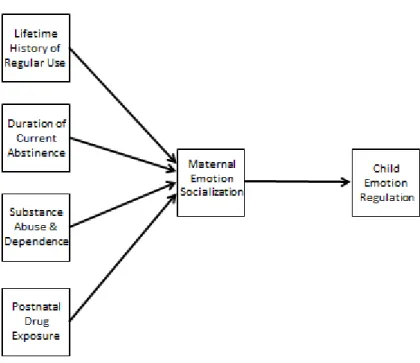
Figure 1: Substantive model indicating that maternal emotion socialization behaviors will mediate the relationship between maternal substance abuse factors and child
emotion regulation……….…………85 Figure 2: Example of a time-line follow-back administration from a mother with a
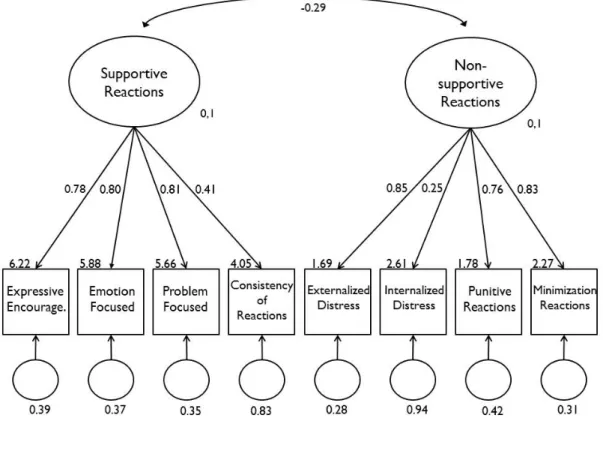
6-year-4 month old child………..………..86 Figure 3: Two-factor confirmatory factor analysis of the Coping with Children’s Negative
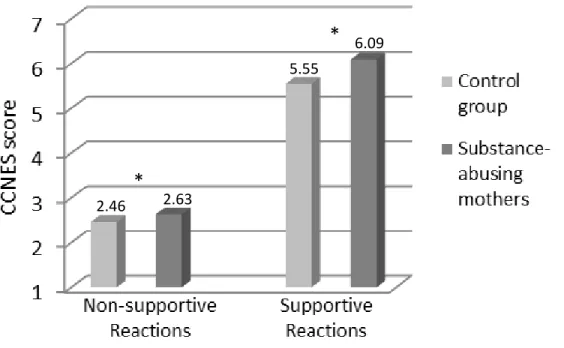
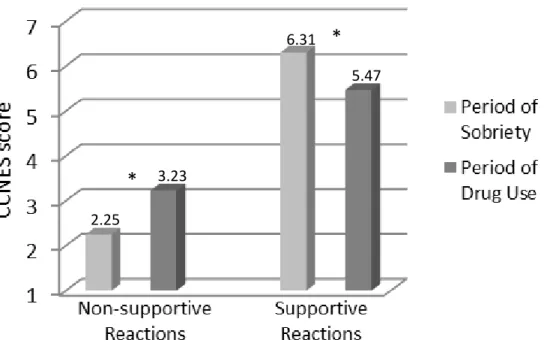
Emotions Scale………..…….87 Figure 4: Results from hypothesis 1………..88 Figure 5: Results from hypothesis 2………..………89 Figure 6: Final structural equation model testing the indirect of effect of maternal substance
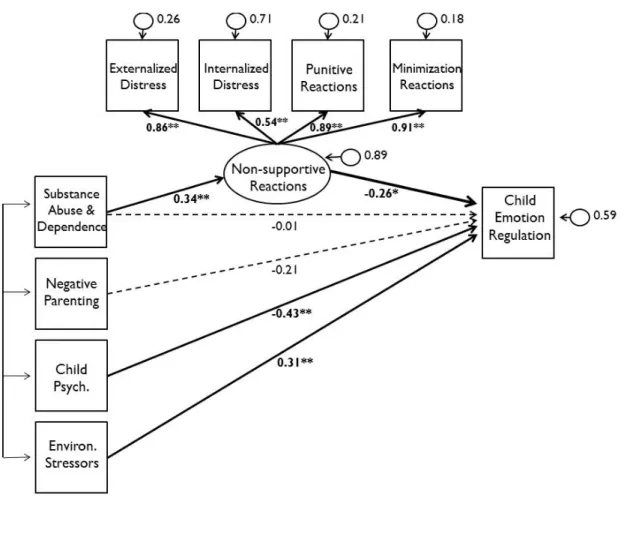
abuse/dependence on child emotion regulation via non-supportive reactions………..….90
LIST OF ABBREVIATIONS
CCNES Coping with Children’s Negative Emotions Scale CFA Confirmatory Factor Analysis
COSs Children of Substance-abusing parents EFA Exploratory Factor Analysis
SEM Structural Equation Modeling SUD Substance Use Disorder
CHAPTER 1: INTRODUCTION
Nearly 12% of children (>8.3 million) in the United States are living with at least one parent with an alcohol or illicit substance use disorder (SUD), and 3.4 million have mothers with a SUD (SAMHSA, Office of Applied Studies, 2009b). Children of Substance-abusing parents (COSs) are at increased risk for multiple negative outcomes, including increased rates of anxiety, depression, oppositional behavior, conduct problems, aggressive behavior, and substance use, lower rates of self-esteem and social competence, and compromised emotion regulation abilities (e.g., Chassin, Rogosch, & Barrera, 1991; Eiden, Edwards, & Leonard, 2004; Hussong, Zucker, Wong, Fitzgerald, & Puttler, 2005; Martin, Earleywine, Blackson, Vanyukov, Moss, & Tarter, 1994; Roosa, Sandler, Beals, & Short, 1988; see Solis, Shadur, Burns, & Hussong, in press). Importantly, compromised emotional and behavioral functioning in COSs is evidenced as early as two- to three years of age (Hussong, Flora, Curran, Chassin, & Zucker, 2008; Hussong, Wirth, Edwards, Curran, Chassin, & Zucker, 2007). Exposure to drug use in-utero may account for part of this risk, as children who are prenatally exposed also exhibit deficits in emotion regulation, issues with attention and distractibility, impulsivity, poor peer relations, and conduct and behavior problems (Kaplan-Sanoff & Leib, 1995; also see Mayes & Truman, 2002, for a review). This concern is especially salient given that 10% of pregnant women report current use of alcohol, 4.4% report drinking five or more drinks on one occasion, and 4.5% report using illicit drugs in the past thirty days (SAMHSA, 2010).
The parenting context within substance-abusing families is one key factor contributing to increased risk for negative outcomes among COSs. Impaired parenting is one significant and
common deficit among substance-abusing parents (see Mayes & Bornstein, 1995, for a review), holding large implications for the growing population of children who are exposed to parental substance abuse. Parents who abuse substances are more likely to have compromised parenting skills (e.g., see Mayes & Truman, 2002, for a review) and to engage in child
maltreatment/neglect (Street, Whitlingum, Gibson, Cairns, & Ellis, 2008). Mothers who abuse substances are generally less engaged and less responsive, exhibit less warmth and
encouragement while interacting with their children (e.g., Eiden, Edwards, & Leonard, 2002; Solis, Shadur, Burns, & Hussong, in press), and many believe that holding a crying infant would spoil him/her (Velez, Jansson, Montoya, Schweitzer, Golden, & Svikis, 2004). Notably,
parenting behavior has been found as a mediator of the relations between parental alcohol use and various child outcomes, including children’s emotion regulation (Eiden, Edwards, & Leonard, 2007; 2004), social competence (Eiden, Colder, Edwards, & Leonard, 2009), and adolescent substance use (Chassin, Curran, Hussong, & Colder, 1996).
Substance-abusing parents and their children have been identified as important targets for intervention and prevention efforts to reduce a variety of negative outcomes, including substance use in these children. One particular interest in this population comes from a push within the field to gain insight into the mechanisms that may explain the intergenerational transmission of substance abuse and deficits in emotion regulation that are likely to occur in families with substance use involvement. It has been established that parental substance abuse is associated with children’s emotion regulation (e.g., Eiden, Lewis, Croff, & Young, 2002), and the parenting context may mediate these relations in some families (Eiden, Edwards, & Leonard, 2007; 2004), but there is a need to identify additional mediators to help further elucidate why this relationship exists and ultimately to serve as potential treatment targets.
Children’s emotion regulation is an important focus within this line of research because longitudinal work shows that emotion regulation predicts multiple indices of child adjustment later in development (e.g., internalizingand externalizing symptoms;see Eisenberg, Spinrad, & Eggum, 2010 for a review; social competence; Maszk, Eisenberg, & Guthrie, 1999; Trentacosta & Shaw, 2009). Within the context of substance-abusing families, emotion regulation has been shown to mediate relations between parental substance abuse and other notable negative outcomes over time (e.g., elevated externalizing symptoms; Eiden, Edwards, & Leonard, 2007; poor social competence; Eiden, Colder, Edwards, Leonard, 2009), indicating that the
development of effective emotion regulation strategies may protect children from progressing to psychiatric symptoms and perhaps disorder. Indeed, emotion regulation plays a key role in two developmental pathways leading to substance use disorder, including an internalizing pathway (i.e., inhibited temperament early in development that predicts internalizing symptoms and compromised emotion regulation throughout adolescence, and comorbid affective and substance use disorders later in life; Hussong, Jones, Stein, Baucom, & Boeding, 2011) and an
externalizing pathway (i.e., difficult temperament early in life that predicts conduct disordered behavior and compromised emotion regulation, and subsequent antisocial behavior and
substance use disorder; Tarter, Vanyukov, Giancola, Dawes, Blackson, Mezzich, et al., 1999). Emotion regulation is thus an important target to prevent intergenerational transmission of substance use disorders, and gaining a deeper understanding of the mechanisms of risk that impact emotion regulation would allow more precise and effective tailoring of prevention and intervention efforts.
Defining Emotion Regulation
It has been challenging for the field to agree upon the construct of emotion regulation (Thompson, 1994; Thompson & Goodman, 2010), and the various dimensions of emotion regulation that have been recognized cover a range of indices including but not limited to emotionality, vagal tone, effortful control, impulsivity, behavioral inhibition, behavioral regulation, ability to down regulate, and the extent to which external sources of regulation are needed and are effective (e.g., Eisenberg & Fabes, 2006; Eisenberg, Smith, & Spinrad, 2011; Gottman, Katz, & Hooven, 1996). The primary source of debate in the field is whether emotion itself and the process of emotion regulation are discrete constructs; however, a thorough review of the controversy is beyond the scope of this paper and can be found elsewhere (Thompson & Goodman, 2010).
The definition of emotion regulation employed for the current study pulls from that of various scholars (Calkins & Leerkes, 2011; Eisenberg & Fabes, 2006; Eisenberg, Liew, & Pidada, 2001), stating that emotion regulation is the actions and strategies that serve to modify, dampen, maintain, or increase emotional experience (e.g., level of anxiety) or associated behaviors (e.g., crying). Importantly, this definition excludes the mere experience of arousal or emotionality itself. The rationale for excluding arousal itself is that regulation implies efforts to control, maintain, or change emotion, whereas arousal or emotionality conveys the mere experience of emotion. It is acknowledged here that it may be possible that any given level of arousal or emotionality could be a result of efforts to control or modify emotions (and thus may directly reflect regulation), but this is not always true (Campos, Frankel, & Camras, 2004). It is thus more conservative to maintain a view of emotion regulation that only includes indices that
clearly dictate efforts to control or modify emotional experiences, which does not include arousal or emotionality.
Emotion Regulation in Children of Substance-abusing Parents
Emotion regulation development begins at approximately the age of 2 years and
continues to progress rapidly through the preschool years (Blair & Diamond, 2008). Parents are one of the greatest sources of support and socialization for children’s emotional development, especially for younger children whose principal source of socialization comes from primary caregivers. Parents play a critical role in children’s development of effective emotion regulation strategies (Gottman, Katz, & Hooven, 1997). Importantly, the development of adaptive emotion regulation skills is critical for children’s social competence and minimizes risk for externalizing and internalizing symptoms and aggressive behavior (see Eisenberg & Fabes, 2006; Eisenberg, Spinrad, & Eggum, 2010; Parke, McDowell, Cladis, & Leidy, 2006, for reviews). Without appropriate skills for regulating emotion, children are at a disadvantage among peers, especially in particularly challenging social contexts and interactions that demand self-control and test children’s coping and regulation abilities (e.g., Thompson, 1994).
Emotion regulation is one area that is impacted by exposure to parental substance abuse (e.g., Eiden, Edwards, & Leonard, 2004). Research suggests that COSs exhibit less adaptive and less effective emotion regulation strategies compared to children of non-substance-abusing parents (e.g., Eiden, Lewis, Croff, & Young, 2002). It has been argued that the context of parental substance abuse leads to compromised functioning in the process of co-regulation within the mother-infant dyad (i.e., the shared process whereby mothers help support infants’ self-regulation, see Beeghly & Tronick, 1994, for a review), thus emphasizing the shared process of regulation that becomes dysfunctional within these families starting very early in
development. Substance-abusing mothers have a particularly unique role in children’s emotion regulation development, as research shows that substance-abusing fathers are absent in the large majority of families where any parental substance use occurs (Gruber & Taylor, 2006; Osborne & Berger, 2009).
The fields of developmental psychopathology and developmental science have embarked on a journey of discovering why emotion regulation tends to be compromised among COSs. There are several factors that may account for part of this risk, including confounding risk factors that often occur in substance-abusing families, such as increased rates of comorbid maternal psychopathology (Mayes & Bornstein, 1996) as well as in-utero drug exposure (e.g., cocaine: Bendersky & Lewis, 1998; Schuetze, Eiden, & Danielewicz, 2009; cigarettes: Schuetze, Lopez, Granger, & Eiden, 2008). Support has been found for a dose-dependent effect of prenatal cocaine exposure such that heavier exposure predicts greater deficits in emotion regulation during early infancy (Schuetze, & Eiden, 2006), indicating that the extent of use matters for children’s
emotion regulation development. Findings also suggest, however, that unique effects of postnatal substance exposure (i.e., parental substance abuse in the home) also negatively impact children’s emotion regulation (Eiden, Lewis, Croff, & Young, 2002; Hickey, Suess, Newlin, & Spurgeon, 1995).
There is also a shared genetic risk among parents and their children that contributes to findings showing that COSs exhibit deficits in emotion regulation. Effective emotion regulation in children depends in part on the extent to which the environment supports the development of adaptive regulation skills, but also depends on a biological predisposition for functional
regulatory capabilities at the neurological level (Thompson, Lewis, & Calkins, 2008). There is clear support for the role of genetics in emotion regulation (Hariri & Forbes, 2007), and thus
parents’ own emotion regulation abilities can serve as a proxy for the genetic component predicting children’s emotion regulation. Extensive research documents that substance abusers tend to have compromised emotion regulation abilities (Keller & Wilson, 1994; Taylor, Bagby, & Parker, 1997), especially for those with comorbid psychopathology (e.g., Litt, Hien, & Levin, 2003). For some substance abusers, drugs are specifically used as a mechanism to reduce the experience of negative affect (i.e., self-medication; Kassel, Hussong, Wardle, Veilleux, Heinz, Greenstein, et al., 2010). Thus, COSs face the combined risk of environmental and genetic factors associated with compromised emotion regulation abilities.
Nonetheless, there is theoretical and empirical support indicating that the parenting and caregiving context is a critically important component of the mechanism that explains why COSs are at increased risk for emotion regulation deficits, beyond the effects of prenatal exposure, comorbid psychopathology, and maternal deficits in emotion regulation. Indeed, parenting behaviors and the caregiving environment are important predictors of emotion regulation among COSs (e.g., Eiden, Lewis, Croff, & Young, 2002). For example, substance-abusing mothers tend to be less responsive and sensitive which compromises the extent to which they can support their infants’ regulation of emotion (Beeghly & Tronick, 1994). Importantly, parenting behaviors have been shown to mediate the relations between parental alcohol problems and children’s emotion regulation (Eiden, Edwards, & Leonard, 2007; 2004). Longitudinal work shows that mothers’ and fathers’ sensitivity and warmth when their children were two years old mediated relations between fathers’ alcohol use disorder when children were 12-18 months of age and children’s self-regulation at three years of age (Eiden, Edwards, & Leonard, 2007; 2004). These findings emphasize the important role of parenting behaviors in linking parental alcohol use disorder and child regulation outcomes over time. Although this pattern has been evidenced among less severe
populations (i.e., non-treatment seeking alcohol abusers, as noted above), there are no reported tests of this mechanism for a more general effect of parenting style on children’s emotion regulation among more severe groups of substance abusers (i.e. treatment seeking illicit substance abusers). Thus, one contribution of the current study involves testing parenting behaviors as a mediator of the relation between substance abuse history and children’s emotion regulation among primarily illicit-substance-abusing women in treatment.
Inconsistent and unpredictable caregiving may specifically compromise the development of appropriate emotion regulation skills among COSs. The lifestyle tendencies of substance abusers in addition to the direct effects of drug use and withdrawal symptoms (i.e., less inhibition, more irritability, fatigue) can lead to a chaotic and unpredictable caregiving environment (Kaplan-Sanoff, & Leib, 1995) that may also be characterized by violence and conflict (e.g., Gruber & Taylor, 2006) which can directly elevate levels of distress among
children, as in social learning theory (Bandura, 1977) and theories of emotional security (Davies, Harold, Goeke-Morey, & Cummings, 2002). These experiences associated with exposure to parental substance abuse increase arousal and stress levels for children, making the development of self-regulatory skills more challenging, and making it more difficult to use such skills or to get support for emotion regulation within this type of unpredictable home environment (e.g.,
Söderström & Skårderud, 2009). Indeed, chaotic home environments characterized by family stress and conflict directly impact children’s emotion regulation abilities (El-Sheikh & Cummings, 1997). Greater instability in the caregiving environment is also associated with poorer emotion regulation among infants of polysubstance-abusing mothers (Eiden, Lewis, Croff, & Young, 2002). Thus, inconsistency in parenting and unpredictability in the caregiving
context are especially problematic for COSs and compromise children’s ability to develop effective emotion regulation strategies.
In sum, robust effects indicate that factors related to parenting behaviors (e.g., responsiveness, sensitivity, warmth) and the caregiving context more broadly (e.g., conflict, stress, unpredictability) in part explain why parental substance abuse impacts children’s emotion regulation abilities, and consistency and predictability in parenting is especially important for COSs. Thus, although various factors contribute risk to children’s emotion regulation within the context of parental substance abuse (e.g., prenatal exposure, comorbid maternal
psychopathology, maternal emotion regulation difficulties), the effects of compromised parenting and exposure to substance abuse within the caregiving context (i.e., postnatal
exposure) may be especially unique and salient predictors of children’s emotion regulation. The next step in the field is to gain a more sophisticated and complex understanding of the
mechanism(s) within the parenting context that can explain why parental substance abuse impacts emotion regulation in COSs. An extension of previous work would suggest that parent emotion socialization may be an important mediator of the relationship between parental substance abuse and child emotion regulation. There are no reported empirical tests of this question, and a contribution of the current study is to examine this mechanism of interest.
Defining Parent Emotion Socialization
Parents socialize their children around emotions in several key ways, including their reactions to their children’s emotions (supportive or non-supportive), their own modeling of emotion (emotional expressiveness), their awareness and acceptance of emotions, and direct teaching about or coaching of children’s emotional expression (e.g., Eisenberg, Cumberland, & Spinrad, 1998; Gottman, Katz, & Hooven, 1997). Thus, parent emotion socialization broadly
includes the ways in which parents explicitly and implicitly provide messages to their children about if, when, and how it is appropriate to feel and express emotions, and how to manage or cope with negative emotions.
Gottman, Katz, and Hooven (1997) provide a useful framework for understanding parent emotion socialization and describe “parental meta-emotion philosophy” as the combination of parents’ beliefs and behaviors around their children’s emotional expression. Gottman et al. (1997) describe the primary components of parental meta-emotion philosophy along the
dimensions of awareness and acceptance of their own and children’s emotions, and reactions to children’s negative emotions. Based on parents’ pattern of socializing their children around emotion, parents’ behavior is either categorized as emotion “coaching” or emotion “dismissing/ disapproving” (Gottman et al., p. 49). Emotion-coaching parents are aware and accepting of their children’s negative emotions and respond to children’s expression of negative emotion in a supportive manner with an aim to validate, teach, and problem-solve. Emotion-dismissing or emotion-disapproving parents, on the other hand, minimize children’s negative emotions and avoid teaching or problem-solving around children’s emotional experiences. Although parent emotion socialization around positive emotions certainly plays a role in children’s emotional development (e.g., Fredrickson, 1998), emotion socialization around negative emotions is especially critical for fostering adaptive emotion regulation development in young children and helping them learn to cope with distress (Gottman, 2001).
Indeed, although there are multiple indices of parent emotion socialization (i.e., parental reactions to children’s emotions, parental emotional expressiveness, beliefs and discussions about emotions), there is a strong theoretical rationale indicating that parental reactions to negative emotions in particular may be especially important for children’s emotion regulation.
Children whose parents respond in supportive and adaptive ways to their children’s expression of negative emotions (e.g., emotion coaching, problem solving) and who are accepting of their children’s emotions are provided with the skills needed to develop their own emotional
regulation abilities (e.g., Eisenberg, Cumberland, & Spinrad, 1998; Gottman, Katz, & Hooven, 1997) and tend to have a better understanding of emotions more generally (i.e., “emotional intelligence,” Salovey & Mayer, 1990). Emotion regulation skills that develop in the context of a supportive parent-child relationship subsequently set the foundation for children’s emotional functioning later in development (Thompson, 1994).
Following this rationale, parental reactions to children’s negative emotions is the key element of parent emotion socialization that is reviewed and tested in the current study. Parental reactions to children’s negative emotions have been characterized across six qualitatively unique dimensions, including problem-focused reactions (i.e., parental efforts to help solve the problem causing children’s negative emotions), emotion-focused reactions (i.e., parental efforts to help the child feel better), expressive encouragement (i.e., parental support of children’s emotional expression), minimization reactions (i.e., parental reactions that devalue children’s concern and/or their emotional expressiveness), punitive reactions (i.e., the use of punishment as means to control children’s emotion expressions), and distress reactions (i.e., the extent to which parents become distressed by their children’s emotional expressions) (Fabes, Poulin, Eisenberg, & Madden-Derdich, 2002).
Consistent with Gottman, Katz, and Hooven’s (1997) theory regarding two broad patterns of parental reactions to children’s negative emotions, these six dimensions can be categorized as supportive / emotion coaching (i.e., problem-focused, emotion-focused, expressive
encouragement) or non-supportive / emotion dismissing (i.e., minimization, punitive reactions,
distress reactions). Such patterns of parental reactions are described in the literature as stable traits of emotion-related parenting behaviors, yet there are no reports of empirical tests capturing how stably or consistently these reactions actually occur. A novel contribution of the current study involves capturing the level of consistency in parental reactions to children’s negative emotions as a seventh dimension of parent emotion socialization that is hypothesized to be particularly important for emotion regulation in COSs.
Parent emotion socialization is embedded within the larger construct of “parenting” and overlaps with the more general parenting literature (e.g., permissive, authoritarian, authoritative styles, Baumrind, 1966), and indices of parent emotion socialization are strongly associated with parenting styles (e.g., Chan, Bowes, & Wyver, 2009; Gottman, Katz, & Hooven, 1997). General parenting style is important to consider within the context of the relations between parent
emotion socialization and emotion regulation (Eisenberg, Cumberland, & Spinrad, 1998; Gottman, Katz, & Hooven, 1997), and parenting style is strongly related to children’s emotion regulation (Eisenberg, Chang, Ma, & Huang, 2009; Walton & Flouri, 2010). However, although general parenting style and parent emotion socialization are related, parent emotion socialization encompasses a unique set of parenting practices that are especially important for children’s emotion regulation. Indeed, general warmth and responsiveness from parents (components of broader parenting styles) do not always indicate that a parent is comfortable and supportive in processing children’s emotional experiences (Gottman, Katz, Hooven, 1996; 1997). The critical component of parent emotion socialization is the extent to which parents do (supportive
reactions) or do not (non-supportive reactions) respond by using children’s emotional expression and emotional experiences as opportunities to teach or problem-solve, and not simply whether or not they are warm and supportive, which taps a more general parenting construct (Gottman,
Katz, Hooven, 1996). There is also empirical support showing that both general parenting style and parent emotion socialization uniquely predict children’s behavior, which further supports the need to control for general parenting in models that predict child outcomes from parent emotion socialization.
Parent emotion socialization is also conceptually related to “attachment,” (Contreras & Kerns, 2000). Secure attachment is indicated by infants’ expectations that caregivers will
respond appropriately and sensitively to infants’ cues and needs (Ainsworth, 1979). This concept of parental responsiveness strongly parallels the adaptive and positive form of parent emotion socialization where parents are responsive and sensitive to their children’s emotions (e.g., Gottman, Katz, & Hooven, 1997). However, parent emotion socialization is uniquely specific to children’s emotional development and the emotional needs of children, whereas attachment style reflects parents’ responsiveness to children’s more general needs, which may include but are not limited to emotional needs (e.g., feeding, response to crying; Ainsworth, 1979). Thus, parent emotion socialization behaviors represent a unique set of parenting practices that are particularly salient for children’s emotional development, yet also overlap with related parenting indices, including general parenting style and attachment.
Parent Emotion Socialization and Emotion Regulation Relations
There are currently no reported empirical tests of the relation between parent emotion socialization and children’s emotion regulation in substance-abusing families, and no reports on measurement of parent emotion socialization among substance-abusing parents. However, there is empirical work indicating that parental reactions to children’s negative emotions (as a
component of parent emotion socialization) is an important predictor of children’s emotion regulation both in samples of “normative” or “typical” children (e.g., see Eisenberg, Smith, &
Spinrad, 2011; Gottman, Katz, & Hooven, 1997; Morris, Silk, Steinberg, Myers, & Robinson, 2007, for reviews) and also in at-risk samples, including low-income families (Brophy-Herb, Stansbury, Bocknek, Horodynski, 2011) and maltreated children (Shipman, Schneider, Fitzgerald, Sims, Swisher, & Edwards, 2007).
Children’s expression of negative emotion provides an opportunity for parents to model and teach effective emotion regulation strategies. For example, parental reactions that encourage problem-solving may provide children with skills for managing negative affect adaptively, whereas dismissive reactions may teach children not to express emotions and may keep them from learning appropriate emotion regulation skills (Gottman, Katz, & Hooven, 1997). One possible explanation is that parent emotion socialization practices may impact children’s emotion regulation skills via the impact that parenting strategies have directly on children’s regulatory functioning at a physiological level (e.g., vagal tone; Gottman, Katz, & Hooven, 1996). For example, children whose parents engage in supportive emotion-coaching strategies have higher vagal tone (i.e., an indicator of more effective regulation abilities; Gottman, 2001). It is also important to note that parent emotion socialization may mediate relations between parental emotion regulation and children’s emotion regulation (Valiente, Lemery-Chalfant, & Reiser, 2007), suggesting that emotion socialization practices may be one factor connecting shared genetic risk that directly impacts children’s physiological self-regulatory systems.
Supportive (emotion-coaching) and non-supportive (emotion-dismissing) reactions to children’s negative emotions predict variability in children’s ability to regulate their emotions. Emotion dismissing parenting behavior predicts less adaptive emotion regulation skills in children (e.g., Lunkenheimer, Shields, & Cortina, 2007), whereas emotion coaching behavior predicts higher levels of emotion regulation skills in children (Gottman, Katz, & Hooven, 1997),
and has also been found to buffer the negative effect of emotion dismissing behavior
(Lunkenheimer et al., 2007). There is also support for the relationship between parents’ coaching strategies in response to children’s negative emotions and physiological indicators of children’s emotion regulation (namely resting vagal tone and suppression of vagal tone), and there is longitudinal support for this effect over time (Gottman, Katz, and Hooven, 1997). Parental reactions to children’s negative emotions also predict children’s ability to regulate emotions in specific social contexts. For example, higher levels of maternal anger in response to children’s negative emotions significantly predicted children’s maladaptive anger reactions while
interacting with preschool peers (Garner & Estep, 2001).
Similar research documents this relation in at-risk populations. For example, depressed mothers of young children exhibit fewer supportive and more non-supportive reactions to children’s negative emotions compared to non-depressed mothers, and such reactions predict increased internalizing symptoms in children one year later (Silk, Shaw, Prout, O'Rourke, Lane, & Kovacs, 2011). Additionally, mothers who maltreat their children tend to engage in
invalidating emotion socialization behaviors that are characterized by less supportive and fewer emotion coaching reactions to their children’s negative emotions (Shipman, Schneider,
Fitzgerald, Sims, Swisher, & Edwards, 2007). Furthermore, maternal emotion socialization behaviors mediate relations between maltreatment and children’s emotion regulation abilities (Shipman et al., 2007). There is also research showing a direct link between maternal emotion socialization behaviors and toddlers’ emotion regulation abilities among low-income families (Brophy-Herb, Stansbury, Bocknek, Horodynski, 2011), suggesting that these relations emerge within the context of demographic risk as well.
Thus, the way parents react to children’s negative emotions is a critical predictor of emotion regulation development. Consistent effects indicate that supportive reactions promote positive emotion regulation development in children, whereas non-supportive reactions
compromise children’s emotion regulation. These effects have been found in general population studies but also in at-risk samples, and mothers at-risk are more likely to engage in
non-supportive emotion socialization behaviors compromising their children’s emotion regulation development. These findings suggest that the context of parental substance abuse may be a risk factor predicting compromised emotion socialization and subsequent emotion regulation difficulties in children.
Parent Emotion Socialization Mediating the Effect of Substance Abuse Behaviors on COSs’ Emotion Regulation
There is a theoretically-informed rationale suggesting that parent emotion socialization may be an important factor impacting emotion regulation in COSs. Importantly, as noted above, parent emotion socialization is strongly associated with parenting style (Chan, Bowes, & Wyver, 2009; Gottman, Katz, & Hooven, 1997), and more general parenting behaviors and the
caregiving context strongly predict emotion regulation among COSs (e.g., Eiden, Lewis, Croff, & Young, 2002, as noted above) and also mediate relations between parental substance abuse and emotion regulation (Eiden, Edwards, & Leonard, 2007). Additionally, parent emotion
socialization is an important predictor of emotion regulation in other at-risk samples (maltreating parents; Shipman, Schneider, Fitzgerald, Sims, Swisher, & Edwards, 2007; low-income families; Brophy-Herb, Stansbury, Bocknek, Horodynski, 2011, as noted above).
However, characterizing parent emotion socialization among substance-abusing mothers is an unexplored area and thus its effect on emotion regulation in these families is unknown. Nonetheless, it is possible to generate a theory describing what parent emotion socialization may
look like in these mothers by integrating literature from parenting style and caregiving behaviors among substance-abusing parents, attachment patterns between COSs and their parents, and research characterizing parent emotion socialization in other at-risk samples. Pulling from these various literatures informs a theory suggesting that parent emotion socialization practices among substance-abusing mothers will be characterized by more unsupportive reactions and fewer supportive reactions, and will also be characterized by inconsistent reactions to their children’s emotions. Furthermore, it is theorized that more severe and pervasive substance abuse histories as well as the extent of current substance abuse will be associated with more compromised emotion socialization behaviors. The specific substance abuse factors that are expected to predict emotion socialization behaviors include: lifetime history of use, length of current abstinence, severity of use (i.e., symptoms of abuse and dependence indicating substance use disorder), and maternal substance abuse during the child’s lifetime (i.e., postnatal exposure). To the extent possible, research that supports the relationship between substance abuse factors and parenting behaviors more generally are reviewed below to generate support for this theory.
Effects of current substance use and substance abuse/dependence on parental responsiveness, sensitivity, and warmth
Active substance use can directly impact a mother’s style of interacting with her children, and the extent to which she engages and responds positively to her children’s needs may depend on whether or not she is currently using (Kerwin, 2005). Substance-abusing parents tend to be less responsive and sensitive to their children’s cues and needs (e.g., Eiden, Edwards, & Leonard, 2002), and the large majority of mothers seeking substance abuse treatment do not recognize infants’ cues indicating stress or over-stimulation, which is particularly problematic due to COSs’ increased difficulty with sensory integration and self-regulation (Velez & Jansson, 2008; Velez et al., 2004).
Current parental alcohol use disorder (i.e., abuse or dependence symptoms) also directly predicts lower levels of parental warmth and sensitivity (Eiden, Edwards, & Leonard, 2007; 2004), and mothers’ polydrug (alcohol, marijuana, cocaine) abuse and dependence symptoms predict compromised parenting as indicated by less warmth and more aggression, rejection, and neglect (Locke & Newcomb, 2004). Importantly, parenting behaviors that lack supportiveness and sensitivity compromise emotion regulation in COSs (e.g., Beeghly & Tronick, 1994), and sensitivity and warmth have also been shown to mediate the relation between parental alcohol use disorder and child emotion regulation over time (Eiden, Edwards, & Leonard, 2007; 2004). As an extension of this work, these findings suggest that the same characteristics describing impaired parenting may also describe maternal emotion socialization behaviors, and such emotion socialization behaviors may also be predicted from current substance use patterns and symptoms of abuse or dependence. Especially relevant for the current study, these findings also suggest that non-supportive emotion socialization may mediate relations between exposure to problematic parental substance abuse (indicated by abuse and dependence) and children’s emotion regulation.
Effects of current substance use on the emotional climate of the home
COSs may find it challenging to interpret their parents’ behaviors and changing emotions that result from intoxication (Gruber & Taylor, 2006), and children may also find that emotional support provided by their parents is often erratic during periods of use (Stanley, Cleaver, & Hart, 2010). Notably, mothers’ emotional responses to their children may be dependent on whether or not mothers are actively using. For example, mothers participating in a qualitative study reported that when they were using (specifically methamphetamine) they exhibited more extreme
negative emotions with their children and would generally ignore or would not tolerate their
children’s emotional expressions (Brown & Hohman, 2006). Although specific parental reactions to children’s emotions were not measured in Brown and Hohman’s study, these qualitative data suggest that substance-abusing mothers may be unsupportive in response to their children’s emotions and that such responses may depend in part on current drug use.
Effects of postnatal substance use exposure on attachment and the mother-infant relationship Parenting deficits that are directly associated with maternal substance abuse can also impact attachment patterns within these dyads. For example, failure to recognize infants’ cues of stress or overstimulation, or not responding supportively to a crying infant can have a negative effect on the shared mother-infant relationship and development of secure attachment (Velez, Jansson, Montoya, Schweitzer, Golden, & Svikis, 2004). Furthermore, infants whose parents abuse substances postnatally (Eiden, Edwards, & Leonard, 2002) and who are exposed to substances prenatally (Rodning, Beckwith, & Howard, 1991; Swanson, Beckwith, & Howard, 2000) tend to develop insecure attachment styles, although most of the work in this area does not account for both prenatal and postnatal exposure simultaneously. In one study that attempted to parse effects, postnatal substance use exposure impacted attachment patterns among mother-infant dyads even while accounting for prenatal exposure (Seifer, LaGasse, Lester, Bauer, Shankaran, Bada, et al., 2004). Thus, there is some support indicating that postnatal substance abuse exposure plays a unique role in the security of the mother-infant relationship and the extent to which mothers respond supportively to their children’s needs.
Effects of current substance use on level of consistency of parenting behaviors
Perhaps most obvious, active drug use and the direct effects of being under the influence can severely compromise parenting behaviors. Indeed, the direct effects that drugs have on mothers’ functioning, including a compromised ability to attend to social cues, misattribution of
children’s behaviors (e.g., attributing negative intent), and increased emotional arousal (Kerwin, 2005) as well as impaired memory and inhibition (Mayes & Bornstein, 1995), all can contribute to inconsistent parenting behaviors. Active drug use and intoxication compromise the extent to which parents are available to provide basic care (e.g., food) for their children (Stanley, Cleaver, & Hart, 2010). Moreover, active substance abuse and associated behaviors (e.g., spending time acquiring drugs, spending time intoxicated) can lead to parents’ physical absence (Gruber & Taylor, 2006) and separation from infants (Eiden, Lewis, Croff, & Young, 2002). This level of inconsistency and unpredictability ultimately leaves children not knowing what they can expect from their parents. Importantly, whether or not parents are actively using substances directly impacts the consistency and predictability of their parenting behaviors and is thus expected to hold similar implications for parent emotion socialization behaviors in the current study. Effects of patterns of substance abuse history on the caregiving environment more broadly
The unpredictable, chaotic, and cyclical pattern of active drug use, sobriety, and relapse that define substance abuse histories for most individuals with a substance use disorder can lead to inconsistency in the caregiving context more broadly (Stanley, Cleaver, & Hart, 2010).
Indeed, the caregiving environment provided by polydrug-abusing mothers is often characterized as more unstable compared to non-substance-abusing mothers, evidenced by lack of an adult male at home and infants who sleep and are fed less than average (Eiden, Lewis, Croff, &
Young, 2002). Substance-abusing families’ lifestyles are often characterized by transient housing and unpredictable caretaking and are often experienced as chaotic (Gruber & Taylor, 2006). Such unpredictable and inconsistent home environments are directly related to periods of drug abuse and intensity of use such that while parents are using, parenting behaviors are
compromised and children may not receive proper attention and supervision, whereas relative predictability is more likely during periods of sobriety (Barnard & McKeganey, 2004).
In general population studies, mothers’ report of a more chaotic and disorganized home environment predicts less supportive emotion socialization practices in response to children’s expression of negative emotion (Nelson, O’Brien, Blankson, Calkins, & Keane, 2009; Valiente, Lemery-Chalfant, & Reiser, 2007). Because chaotic home environments are common among substance-abusing families and tend to be related to patterns of use (i.e., more chaotic during periods of use), a reasonable extension of this work would suggest that the combination of substance abuse behaviors and the corresponding disorganization that follows may predict less supportive reactions to children’s negative emotions, particularly during periods of heavier use.
Additional contextual risk factors that compromise parent emotion socialization behaviors Although maternal emotion socialization behaviors described in general population studies suggest that mothers tend to engage in more supportive and fewer non-supportive reactions (see Table 1 for details), opposite findings have emerged from studies with at-risk mothers. For example, mothers who report physically-abusing their children engage in emotion socialization behaviors characterized by less supportive reactions, invalidating responses, and lower levels of emotion coaching behaviors in response to children’s negative emotions, compared to non-maltreating mothers (Shipman, Schneider, Fitzgerald, Sims, Swisher, &
Edwards, 2007; Shipman, Schneider, & Sims, 2005). Although maternal substance abuse was not reported or indicated in Shipman et al.’s (2007; 2005) work, the populations of maltreating women and substance-abusing women clearly overlap, as nearly 50% of substance-abusing mothers are involved with child protective services (Street, Whitlingum, Gibson, Cairns, & Ellis, 2008). Thus, although emotion socialization practices have not been reported within samples of
substance-abusing mothers specifically, these findings indicate that the same pattern of
unsupportive reactions that are found among maltreating mothers may emerge among substance-abusing mothers as well, as both maternal maltreatment and substance abuse may represent parallel and perhaps additive risk for compromised emotion socialization behaviors. Conclusion
In sum, various maternal substance abuse factors (i.e., current/regular substance use, more severe use and abuse/dependence diagnoses, postnatal exposure, and patterns of substance abuse history) predict compromised parenting abilities (less consistent, less sensitive, less responsive), dysfunction of the mother-child relationship, and more impulsive and unpredictable maternal behaviors that often co-occur with chaotic and inconsistent home environments. A parallel of these findings suggests that substance abuse factors may also predict variability in parent emotion socialization practices. Moreover, parent emotion socialization in other at risk samples is more compromised than in general population studies, suggesting that family risk factors can predict more compromised emotion socialization behaviors as well.
The Current Study
The current study addresses several gaps in the literature by assessing parent emotion socialization in a sample of treatment-seeking, substance-abusing women and by capturing a unique component of emotion socialization in this sample (i.e., consistency of maternal reactions to children’s negative emotions). The study design also addresses the question regarding
substance-abusing parents in comparison to the general population and draws on a meta-analytic technique to estimate levels of parent emotion socialization in reports of general population studies in order to compare socialization behaviors across these populations. The current study also focuses on factors that predict variability in parent emotion socialization and emotion
regulation within COSs based on maternal substance abuse history, and tests the mediating role of parent emotion socialization in the relation between maternal substance abuse behaviors and children’s emotion regulation. These mechanisms were explored among substance-abusing mothers specifically given that children are more often exposed to maternal drug use than paternal drug use (Osborne & Berger, 2009). The target age range for children in the current study was 3-8 years of age because it is during early childhood that emotion regulation
development is rapidly progressing, and early risk factors for intergenerational transmission of emotion regulation deficits and substance abuse are identifiable in COSs this early in
development (e.g., Hussong, Flora, Curran, Chassin, & Zucker, 2008). Hypothesis 1
Substance-abusing mothers will engage in reactions to their children’s negative emotions that are characterized as significantly higher on non-supportive reactions and significantly lower on supportive reactions compared to the reactions that characterize mothers more generally (as estimated by secondary analysis of previously published studies).
Hypothesis 2
The likelihood of engaging in supportive reactions will vary between periods of abuse and sobriety, such that maternal emotion socialization will involve fewer supportive and more non-supportive reactions during periods of substance abuse, and maternal emotion socialization will involve more supportive and fewer non-supportive reactions during periods of sobriety.
Hypothesis 3
Mothers’ emotion socialization behaviors will be more consistent within periods of sobriety than within periods of active substance abuse, such that the level of consistency of
reactions within periods of sobriety will be significantly higher than the level of consistency within periods of substance abuse.
Hypothesis 4
Variability in maternal substance abuse factors will predict variability in three key indices of emotion socialization, such that more severe patterns of use will predict less supportive, more non-supportive, and less consistent reactions to children’s negative emotions. Specifically, it is hypothesized that 1) a longer lifetime history of regular substance use, 2) a shorter period of current abstinence, 3) a greater number of abuse/dependence criteria met during the target child’s lifetime and 4) a longer duration of use during the target child’s life (i.e., longer
postnatal exposure) will be associated with greater non-supportive reactions, lower supportive reactions, and lower levels of consistency of reactions. These effects are hypothesized to remain significant above and beyond general parenting style and control variables that have been shown to impact parenting behaviors, including maternal psychopathology and maternal emotion regulation.
Hypothesis 5
Indicators of parent emotion socialization (supportive reactions, non-supportive reactions, and level of consistency in reactions) will mediate relations between maternal substance abuse factors (lifetime history of regular substance use, length of current period of abstinence, number of abuse/dependence criteria met, and duration of children’s postnatal exposure) and children’s emotion regulation (see Figure 1 for substantive model). Prenatal drug exposure is expected to have only a direct effect on children’s emotion regulation. It is expected that the mediated effects will emerge even when related variables that have been implicated in this mechanism are
included in the model (i.e., maternal psychopathology, child psychopathology, maternal emotion regulation).
Significance and Impact
Gaining a deeper understanding of parent emotion socialization among substance-abusing mothers and the relationship between parent emotion socialization and children’s emotion
regulation in this population provides an opportunity to inform translational research efforts by identifying potential targets for prevention and intervention. If parent emotion socialization impacts children’s emotion regulation within families where substance abuse occurs, then parent emotion socialization may be an ideal target for treatment efforts focused on supporting
children’s emotion regulation and subsequent social competence across development. Furthermore, identification of the substance abuse factors within this population that
differentially predict parent emotion socialization may identify substance abuse behaviors or patterns of use that should be most strongly targeted by substance abuse treatment programs.
CHAPTER 2: METHOD
Participants
The current study employed a multisite cross-sectional design which involved
interviewing 78 mothers in substance abuse treatment programs (n= 44 outpatient methadone maintenance, n= 5 intensive outpatient without medication, n= 8 residential program with opiate agonist medication, or n= 21 residential program without medication) across North Carolina (n= 37) and Maryland (n=41). Mothers seeking addiction treatment were asked to participate if they met the following eligibility criteria: 1) have at least one biological child between the ages of three and eight years old with whom they have at least weekly contact; 2) have a history of at least one 2-month period involving regular substance use and at least weekly contact with the target child; 3) have a history of at least one 2-month continuous period of sobriety and at least weekly contact with the target child; and 4) speak English sufficiently to complete informed consent and study procedures. Mothers seeking treatment for any type of substance abuse (e.g., alcohol, opiates, cocaine, etc.) were invited to participate. Primary reasons for ineligibility included lack of contact with the target child (n=4), no substance use during the child’s lifetime (n=3), and no periods of sobriety during the child’s lifetime (n=3). In cases where mothers had more than one child meeting eligibility criteria between the ages of three and eight years old, one child was randomly selected. As noted previously, the exclusion of fathers is a common
consequence of conducting work with these families, as the family context in substance-abusing families often involves little contact with fathers (Gruber & Taylor, 2006).
Four participants had significant missing data due to failure to complete the interview and were subsequently dropped from the current sample, resulting in a final sample size of 74.
Maternal and child characteristics by treatment program, by recruitment site, and for the full sample can be found in Table 2. The number of women from outpatient and residential treatment programs were distributed similarly across recruitment site (North Carolina: 60% outpatient, 40% residential; Maryland: 62% outpatient, 38% residential). The mean age for mothers was 31.5 (SD= 6.68; range 19-45 years) and they self-identified as Caucasian (n=39), African American (n=23), biracial/multiracial (n=6), American Indian (n=3), Hispanic (n=2), and Asian (n=1). Regarding maternal education level, seven mothers completed 8th grade or below, 19 started high school but did not graduate, 27 completed high school or earned a GED, 13 started college but did not graduate, and eight completed college or technical/vocational school. Children were 57% female with a mean age of 5.2 (SD= 1.72; range 3-8 years), and they were identified by their mothers as Caucasian (n=32), African American (n=23), biracial/multiracial (n=12), American Indian (n=3), Hispanic (n=3), and other (n=1). Forty-five percent of mothers reported past and/or current Child Protective Services involvement related to their target child. Eighty two percent of target children also had a substance-using biological father.
Procedure
Recruitment efforts involved posting flyers and making announcements in waiting areas, during group times, and during dosing hours for those in methadone maintenance. Women who were interested in participation completed a private screening procedure to determine eligibility and, if eligible, an informed consent procedure was completed. Efforts were made to maintain participant anonymity due to the sensitive nature of recruiting from a high-risk sample; women were not required to provide their names or signatures and thus informed consent was completed
verbally. Participants were also provided with a copy of the consent form to take home. Participants’ first names and phone numbers were only collected in cases where mothers requested to set up an appointment for a later date and this information remained entirely unlinked with the data or with identification numbers. The principal investigator completed all informed consent procedures and conducted all interviews in a private room provided by the treatment centers or in the women’s homes for those in residential care.
Additional precautions were taken in order to protect participant confidentiality and to increase the likelihood that mothers felt comfortable to respond honestly to sensitive items. All responses for the majority of the interview were made anonymously by using a Computer Assisted Self-Interview (CASI) system (i.e., mothers were not asked to make their responses out loud to the examiner). Participants were given the option to either complete the questionnaire on their own (selected by n=48) or have the examiner read the entire questionnaire aloud to them (selected by n=15). A number of individuals requested to change administration methods
partway through the interview (n=11). When requested, the examiner read aloud each item from the interview corresponding to the same items that appeared on the participant’s private
computer. If the participant requested to complete the questionnaire on her own, she was able to make her responses directly on the computer after reading each item to herself. Two small portions of the interview (a time-line follow back procedure and items regarding alcohol and drug abuse and dependence) were conducted in a more formal clinical-interview format in order to help the participants arrive at their answers more easily and efficiently. In addition to
providing privacy, the purpose of the one-on-one interview was to allow for rapport and to ensure that participants understood each item and could ask for clarification when needed, given that reading ability is often low in this population (Davis, Jackson, George, & Long, 1993).
Each interview was completed in approximately two hours. Mothers were provided with a $25 Wal-Mart gift card for their participation (part of which included a $10 "bonus" for
completing the full interview). If mothers elected to terminate participation before completing the full interview, the payment was prorated and they earned $5 per 30 minutes up to a maximum of $15. Child care was provided by trained undergraduate research assistants.
Measures
Demographics
Mothers were asked to report their age, ethnicity, and highest level of education, as well as the gender, age, and ethnicity for their target child.
Maternal Substance Abuse
Lifetime history of regular substance use, drug of choice, and duration of current abstinence were assessed by completing portions of the Drug/Alcohol Use grid from the Addiction Severity Index (ASI; McLellan, Kushner, Metzger, Peters, Smith, Grissom, et al., 1992). Lifetime history of regular substance use was assessed by asking mothers to report on the total number of years in their lifetime that they were using drugs and/or alcohol regularly (i.e., at least three times per week). The maximum number of years reported for either drug or alcohol use was employed in the current set of analyses, with an average of 10.34 years of regular use (SD=7.55; range 4 months to 33 years). Mothers were also asked to report their drug of choice which was dummy coded. The majority of mothers identified their drug of choice as opiates (n=28) or identified themselves as polysubstance users (n=27 selected two or more drugs of choice). Additional drugs of choice included cocaine (n=8), marijuana (n=5), alcohol (n=3), and hallucinogens (n=2). Drug of choice data were missing for one individual. Finally, mothers were asked “How long has it been in months since you have used any alcohol or drugs?” For
each mother, the shortest length of abstinence from either alcohol or drugs represents the
duration of current abstinence. All prescription drugs that were taken as prescribed were not included in this estimate (e.g., methadone). The average length of current abstinence was 4.52 months (SD= 7.31; range 0 to 32 months). At the time of the interview, 24% of mothers (n=18) were in a period of active drug use, and an additional 24% (n=18) had been clean for 30 days or less. Fourteen percent of mothers had been abstinent for a year or longer (n=10).
Substance abuse/dependence criteria met during the target child’s lifetime was assessed by asking mothers the four alcohol/substance abuse items and the seven alcohol/substance dependence items from the E module of the Structured Clinical Interview for DSM-IV Axis I Disorders (SCID-I; First & Gibbon, 2004) in regards to the most problematic period of use during their target child’s life. The abuse and dependence questions were asked for the class(es) of drugs they endorsed using regularly and having problems with during this period of time. The total number of abuse (maximum of four) and dependence (maximum of seven) criteria met for the most problematic substance was used to quantify the number of substance
abuse/dependence criteria met during the target child’s life, with a total maximum score of eleven. The abuse criteria were asked as a way to capture less severe use (e.g., legal
consequences, substance use in physically hazardous situations) and the dependence criteria captured more severe use (e.g., tolerance, withdrawal, desire and unsuccessful efforts to cut down on use), in accordance with the definition of substance use disorders in the DSM-IV (American Psychiatric Association, 2000). Substance dependence supersedes substance abuse (i.e., an individual cannot be diagnosed with both abuse and dependence for the same substance), and one of four criteria must be met in order to diagnose substance abuse, whereas three of seven criteria must be met in order to diagnose substance dependence (DSM-IV; American Psychiatric
Association, 2000). In the current sample, 15 mothers met criteria for alcohol dependence, 2 met criteria for alcohol abuse, and 57 reported no problems with alcohol; 71 met criteria for drug dependence, 1 met criteria for drug abuse, and 2 reported no problems with drugs. Endorsement rates for all 11 items were summed together in the current analyses, with an average score of 9.07 endorsed criteria (SD=2.17; range 1 to 11) for the most problematic substance.
Duration of use during the target child’s life (i.e., postnatal exposure)was assessed in order to capture the proportion of the target child’s life during which each mother was in regular contact with the child and also using substances (i.e., postnatal substance exposure). Mothers reported the number of months during which they had less than weekly contact with their target child since he/she was born. Weekly contact was defined as a period of time lasting at least two hours during which the mother was directly interacting with the child. With respect to the periods of time when mothers were in contact with their child, they reported the number of months of regular substance use (i.e., at least three times per week). In order to increase the reliability of mothers’ report, a time-line follow-back procedure adapted from Sobell, Maisto, Sobell, and Cooper (1979) was employed by using a life history calendar to overlay periods of use and periods of contact during the target child’s life (see Figure 2 for an example time-line follow-back administration). To quantify postnatal substance abuse exposure, a ratio was calculated by dividing the number of months of mothers’ regular substance use while in contact with the child by the child’s age in months. The resulting number takes into account the periods of time when the mother was using but was not in contact with her child (i.e., periods of use that do not coincide with child exposure), thus yielding a better estimate of the number of months that substance use and contact with children overlap. This value represents duration of postnatal