The role of institutional delivery in preventing early neonatal
mortality in Bangladesh
By
Rashida-E Ijdi
A paper presented to the faculty of
The University of North Carolina at Chapel Hill
in partial fulfilment of the requirements for the degree of
Master of Public Health in the Department of Maternal and Child Health
In
The Gillings School of Global Public Health, Chapel Hill, North Carolina, USA.
April 14, 2020
Approved by:
Page 1 of 16
The role of institutional delivery in preventing early-neonatal mortality in
Bangladesh
ABSTRACT
Objective
Bangladesh has achieved the Millennium Development Goal target 4 well ahead of time by reducing under-5 mortality. However, evidence indicates that reduction in neonatal mortality has been stagnant in the recent years. The purpose of this study is to identify the factors affecting early neonatal mortality (ENNM), which represents more than 80% of the neonatal mortality in Bangladesh, with a specific focus on place of delivery.
Methods
In this study, 2014 Bangladesh DHS data was analyzed on early-neonatal survival in children born in the three years preceding the survey. The role of place of delivery on ENNM was examined by using multivariate logistic regression models adjusted for clustering and relevant socio-economic, pregnancy and newborn characteristics.
Results
Between 2012 and 2014, there were 4,905 deliveries in 17,863 sampled households, 38% of which were delivered at health facilities. The estimated early neonatal mortality rate during this period was 24 deaths per 1,000 live births. We found that the odds of early-neonatal mortality when the mother delivered the child at a health facility is 3.5 times the odds of early-neonatal mortality among children delivered at home (aOR: 3.50; 95% CI: 1.48-8.27). In addition, the newborn who had received a higher level of essential newborn care components are 86% less likely to die during the first seven days of their lives compared to their counterparts (aOR: 0.14; 95% CI: 0.06-0.34). Logistic analysis also found that antenatal care by a medically trained provider and postnatal care significantly reduce the odds for early neonatal mortality.
Conclusion
Page 2 of 16
INTRODUCTION
Early neonatal mortality (ENNM), defined as the death of a newborn between zero and six days after birth, represents 73% of all neonatal deaths worldwide1. As such, the early neonatal period is the most
vulnerable time for a child’s survival. ENNM reflects the quality of care received by the mother during the antenatal period and at childbirth2-3. The availability, accessibility and quality of skilled birth attendants and emergency obstetric care are considered important for reducing the burden of early-neonatal deaths3-4.
Globally, the neonatal mortality rate fell by 49% from 37 deaths in 1990 to 18 deaths per 1,000 live births in 2017, but that decline was slower than the decline in mortality among children aged 1-59 months5. In 2018, 2.5 million children died in the first month of life - approximately 7,000 neonatal deaths every day –, with one third dying on the first day of life6. There also exist marked disparities in neonatal mortality across regions and countries. Regionally, neonatal mortality was highest in sub-Saharan Africa and South Asia, with each estimated at 28 and 26 deaths per 1,000 live births in 2018, respectively6. Almost 99% of neonatal deaths occurred in low and middle-income countries7. The regional variation of ENNM are shown in Figure 18.
Source: The DHS Program STAT Compiler
In Bangladesh, there has been a steady downward trend in childhood mortality with a 46% decline in neonatal mortality and 65% decline in under-five mortality9 over the last two decades, resulting in Bangladesh achieving the fourth Millennium Development Goal target well ahead of time10. As the overall rates have decreased, mortality has become increasingly concentrated in the earliest months of life, especially in the early-neonatal period. Comparison of early-neonatal, infant, and under-5 mortality rates in Bangladesh over the last 20 years reveals that ENNM declined at a slower pace than infant and child mortality, with the result that early-neonatal deaths have changed from 30% of all infant deaths in
Figure 1: Number of early-neonatal deaths for the five year period preceding the DHS survey
Bangladesh ENNM = 183
Page 3 of 16
1993-1994 to 58% in 2010-20149. To achieve the United Nations’ Sustainable Development Goal (SDG) target 3.2 (reduction of neonatal deaths to at least as low as 12 per 1,000 live births), Bangladesh has to further reduce under-five mortality by 46%, and at the same time also reduce neonatal deaths by 57%11. An important next step in meeting the SDG goal for developing countries is to provide universal access to skilled care at birth as the key intervention to reduce neonatal mortality12-13. To increase access to skilled birth attendants, some developing countries, including Bangladesh, are attempting to move all deliveries out of home to health facilities. In Bangladesh, 62% of all births occur at home and most of those are attended by non-skilled birth attendants (e.g. traditional birth attendant, unqualified doctors, relatives or friends etc.)9.
The main causes of ENNM differ from the causes of deaths of older children. In low-and-middle-income-countries, like Bangladesh, neonates predominantly die because of preterm birth and intrapartum-related complications and infections, such as sepsis, meningitis, and pneumonia. Birth is the time of highest risk, when more than 40% of maternal deaths (total about 290,000) and stillbirths or early-neonatal deaths (5.5 million) occur every year13. In Bangladesh, asphyxia was the most common cause of death (63.8%) for babies who died in the first 24 hours. Infection is the predominant cause of early neonatal and neonatal deaths, comprising 49% and 58% deaths respectively14. Delivery in a health facility with a skilled provider should reduce ENNM, as has been shown in some contexts15-16. Facilitating skilled attendance at delivery is thus likely to be a major pathway via which proximity to care can
improve early neonatal survival15, albeit not the only one, as access to care for complications occurring after birth, e.g. neonatal sepsis, is also important.
However, in contexts where most deliveries occur at home, those seeking care at facilities may well be complicated cases, with a higher risk of early neonatal death. In a study using demographic data collected between 1987 and 2005 in Matlab, Bangladesh, maternal and ENNM rates were much higher among women delivering in a health facility, especially in a higher-level facility, than among those delivering at home17. Over the course of the period of observation for this study, the percentage of women seeking skilled attendance rose from 5% to more than 50% and, in turn, the relationship between skilled care and maternal death weakened. When uptake of skilled birth attendance or comprehensive obstetric care is low, women will only seek skilled care when they are ill, and they may do so too late for a midwife or doctor to be able to save the lives of the mothers or neonates17. Notably, this difference decreased as the percentage seeking skilled delivery care increased over time17– which is consistent with the hypothesis that as coverage of pregnancy care increases, more women who are less at risk will seek care; thus, average mortality in those seeking care will decrease. Unfortunately, it is difficult to obtain valid and comparable data on complications for home and facility deliveries in order to ascertain the true relationship between place of delivery and ENNM in Bangladesh. Even in high-income settings, it is impossible to capture all risk factors for complications that direct women towards choosing a facility delivery18.
Page 4 of 16
have been carried out to date focusing on these issues and most of them were small-scale, and clinically oriented23-25. To our knowledge, this is the largest cross-sectional study to investigate the association between place of delivery and ENNM in Bangladesh. This information will assist planners and other collaborators in the health sector to formulate appropriate strategies and interventions to provide good-quality health services and a series of well-timed interventions that should further improve newborn and maternal health.
METHODOLOGY
Conceptual framework
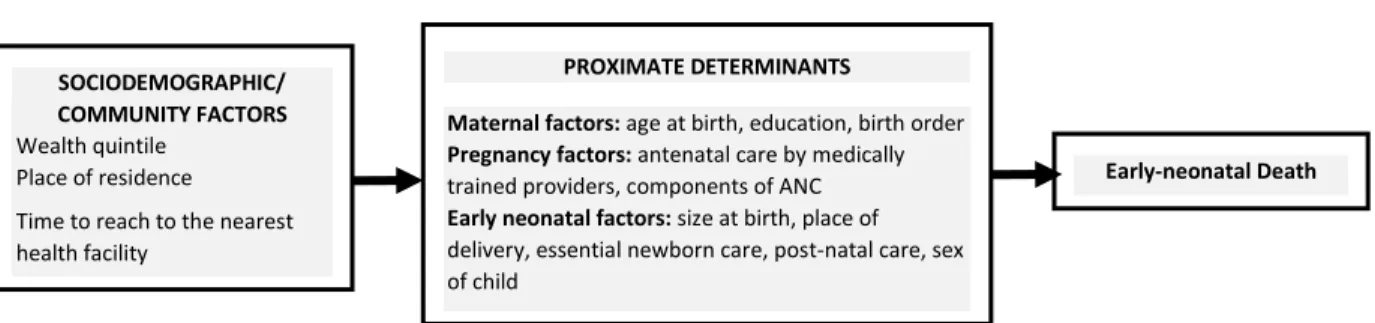
In this study, the conceptual framework for ENNM is adapted from Mosley and Chen’s framework for study of child survival in developing countries26. This framework seeks to identify factors that directly and indirectly impact the outcome. The primaryoutcome is ENNM,which comprises deaths within the first seven days (0-6 days) of life. Potential risk factors for ENNM are depicted the conceptual framework shown in Figure 2.
The modified conceptual framework groups the independent variables/proximate determinants into three categories: maternal, pregnancy, and early-neonatal factors. Admittedly, there are a number of distal determinants that could be included in our analysis but for the purpose of this study we chose to focus on two socio-demographic factors: household wealth quintile and place of residence (urban or rural) and one community factor: time to reach to the nearest health facility which is a proxy for distance to the nearest health facility.
In this study, we hypothesized that mothers who had delivered their children in a facility were less likely to lose their newborns in the first week of life. Based on the literature review, we recognize that the relationship between facility delivery, as the primary exposure, and ENNM, as the outcome, may be confounded by mother’s socio-demographic factors such as mother’s age, education, place of residence,
wealth quintile and time to reach to the nearest health facility. We also identified other pregnancy and delivery care factors such as ANC by medically trained providers, components of ANC, birth order, size of
Figure 2: Conceptual frameworkof early neonatal mortality
SOCIODEMOGRAPHIC/ COMMUNITY FACTORS
Wealth quintile Place of residence
Time to reach to the nearest health facility
PROXIMATE DETERMINANTS
Maternal factors: age at birth, education, birth order
Pregnancy factors: antenatal care by medically trained providers, components of ANC
Early neonatal factors: size at birth, place of delivery, essential newborn care, post-natal care, sex of child
Page 5 of 16
child at birth and sex of child, which may act as mediators of this relationship. Other potential exposures are postnatal care of child and essential newborn care components.
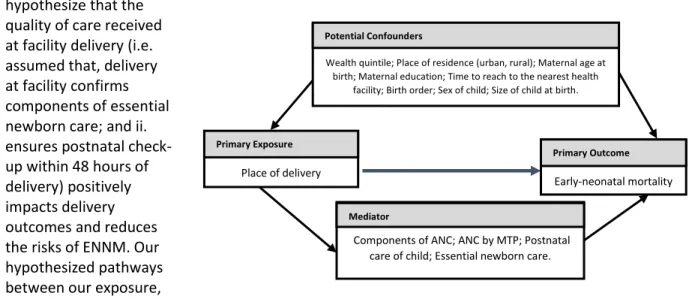
In this study, we hypothesize that the quality of care received at facility delivery (i.e. assumed that, delivery at facility confirms components of essential newborn care; and ii. ensures postnatal check-up within 48 hours of delivery) positively impacts delivery outcomes and reduces the risks of ENNM. Our hypothesized pathways between our exposure,
outcomes and covariates are depicted in the DAG in Figure 3. Data Source
The study used data from 2014 Bangladesh Demographic and Health Survey (BDHS) - a nationally representative survey which is cross-sectional in nature and followed a two-stage stratified random sampling of households. The detailed methodology can be found in the 2014 BDHS report (2014 BDHS). The survey collected information from 17,863 ever-married women ages 15-49 years who were asked to provide a complete history of their live births. BDHS collected birth history for all births from mothers of reproductive age, but it collected information on pregnancy and delivery care for the most recent live births occurring in the three years preceding the survey. Thus, in this study 4,905 live births were included for final analysis where 116 children died during the early neonatal period.
In this study we focused on the Child record (KR) and Community record (SQ) subsets of the BDHS dataset. The child records include information on pregnancy, delivery and newborn care. These records were merged with the community level dataset, which includes the variable ‘time to reach to the nearest health facility’ - a distal factor included in the framework.
Data analysis
Outcome variable: Early-neonatal mortality (ENNM) was the outcome variable in this study, which
refers to the death of a live-born child within the first seven days of life (0-6 days) who was born within three years preceding (2012-2014) the BDHS 2014 survey. The outcome variable for the study was
recorded as a binary variable in the datasets, recorded as ‘1’ for ENNM and ‘0’ for survived.
Independent Variables: The explanatory variables included in this study are maternal sociodemographic
and community factors; and pregnancy, and early neonatal factors are discussed together as child factors.
Figure 3: Directed Acyclic Graph (DAG) of place of delivery and early neonatal mortality
Place of delivery
Primary Exposure
Early-neonatal mortality
Primary Outcome
Components of ANC; ANC by MTP; Postnatal care of child; Essential newborn care.
Mediator
Wealth quintile; Place of residence (urban, rural); Maternal age at birth; Maternal education; Time to reach to the nearest health
facility; Birth order; Sex of child; Size of child at birth.
Page 6 of 16
Our main exposure variable is place of delivery, categorized as home and facility delivery. Facility delivery was defined as births occurring in any health facility including hospitals, health centers, clinics. We defined home births as births occurring in the home of the women.
Postnatal care within 48 hours after birth, components of essential newborn care, size of child at birth and sex of the child, were the independent variables relevant to the child. Essential newborn care was a composite indicator focusing on the use of sterilized instruments to cut the umbilical cord, applying nothing to the cord, immediate drying (within 5 minutes), keeping baby warm, delaying bathing to 72 hours after birth, and initiating breastfeeding within 1 hour of delivery. Other child factors were aligned with maternal pregnancy care factors, like ANC by medically trained providers, components of ANC, mothers age at birth, education. Components of ANC is another composite indicator comprising blood-pressure taken, urine tested, blood sample taken, weighed, did ultrasonogram, and discussed about dangers signs at least once during any of the ANC visits. Detailed information on the assessed and measured study variables can be found in 2014 BDHS report9.
Before conducting the logistic regression analysis, continuous (e.g. maternal age) and discrete variables
(e.g. birth order) were converted into categorical variables. The composite indicator ‘components of ANC’ was comprised with six components. Assuming equal weight, a score of one was awarded for each of the components when they were present (e.g. 0, 1, 2, …., 6). A cumulative score of 0, 1, 2 and 3 was based on whether a respondent received none, 1-3, 4-5 or all 6 ANC components respectively. Another
composite indicator ‘essential newborn care’ also scores as 0, 1, 2, ….,5 divided into two categories as low and high (0 and 1) for whether the child has received 0-2, 3-5 components respectively.
Statistical analysis: Descriptive analysis was performed to assess the distribution of the variables, and Chi-square test was used to perform bivariate analysis to test the association between each of the independent variables in the conceptual framework with the main exposure variable place of delivery (home vs. facility).
Logistic regression models were used to calculate odds ratios (ORs) and 95% confidence intervals (CIs) to assess the odds of early-neonatal deaths by mother’s pregnancy care and socio-demographic status and exposure to various levels and quality of newborn care.
In the analysis, standard sampling weights were applied to ensure generalizability of survey results to the national level. This analysis included one live birth per women as a single unit. Initially, crude ORs were calculated to examine the bivariate relationship between each of the covariates and the main outcome of interest (ENNM). Adjusted ORs were then calculated in two final models adding
sociodemographic, maternal-pregnancy care factors and newborn care factors. Odds ratios were
Page 7 of 16
RESULTS
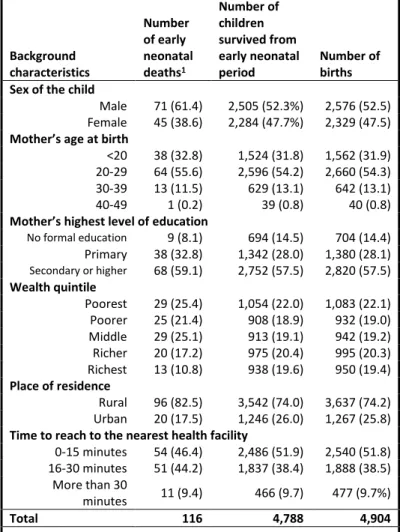
Table 1 describes the background characteristics of live births in the three years preceding the survey by ENNM status (i.e. death or survival). Almost half of the early-neonatal deaths were of children with mothers between the ages of 20-29 years. Among the early neonatal deaths 61.4% are male child compared to 38.6% of female child. There was a higher risk of ENNM among mothers living in the rural areas (82.5%) than the mothers living in urban areas (17.5%). The proportion of ENNM is inversely related with quintile, thus lowest among children born in the richest wealth quintile (10.8%) group compared to highest in the poorest wealth quintile (25.4%).
Table 2 presents the outcome
characteristics of 4,904 births included in the analysis. Overall, 1,842 deliveries (37.6%) occurred in a health facility, and 3,053 deliveries (62.3%) occurred in a home setting. The remaining 9 deliveries (0.2%) place of delivery were missing. A total of 116 early-neonatal deaths occurred during the included timeframe, for an overall ENNM rate of 23.7 deaths per 1,000 deliveries. The ENNM rate was
significantly higher for home deliveries (25.2) than for deliveries at health facilities (18.5).
Table 2: Early neonatal outcome (in three years preceding the survey) by place of delivery, Bangladesh DHS 2014
Health Facility Home Missing Number of births n (%) n (%) n (%) n
Total number of deliveries (%) 1,842 (37.6) 3,053 (62.3) 9 (0.2) 4,904 Early neonatal deaths 34 (29.8) 77 (66.9) 4 (3.4) 116
Late neonatal deaths 10 (40.8) 15 (59.2) 0 (0) 25
Early Neonatal Mortality rate (per 1000 live births) 18.5 25.2 23.7
Deliveries occurring in health facilities differed from those that occurred at home across several key variables, as presented in Table 3. Facility delivery increases sharply as mother’s highest level of
education increases. Mothers lived in rural areas were more likely to deliver at home (69.3%). Mothers who received antenatal care from medically trained providers and those who received all the ANC components during ANC visits were more likely to deliver at health facilities. Finally, neonates who were male, with average to larger size at birth and receipt of postnatal care within 48 hours after deliver were
Table 1: Background characteristics of the study population, Bangladesh DHS 2014
Background characteristics Number of early neonatal deaths1 Number of children survived from early neonatal period Number of births Sex of the child
Male 71 (61.4) 2,505 (52.3%) 2,576 (52.5) Female 45 (38.6) 2,284 (47.7%) 2,329 (47.5)
Mother’s age at birth
<20 38 (32.8) 1,524 (31.8) 1,562 (31.9) 20-29 64 (55.6) 2,596 (54.2) 2,660 (54.3) 30-39 13 (11.5) 629 (13.1) 642 (13.1) 40-49 1 (0.2) 39 (0.8) 40 (0.8)
Mother’s highest level of education
No formal education 9 (8.1) 694 (14.5) 704 (14.4) Primary 38 (32.8) 1,342 (28.0) 1,380 (28.1)
Secondary or higher 68 (59.1) 2,752 (57.5) 2,820 (57.5)
Wealth quintile
Poorest 29 (25.4) 1,054 (22.0) 1,083 (22.1) Poorer 25 (21.4) 908 (18.9) 932 (19.0) Middle 29 (25.1) 913 (19.1) 942 (19.2) Richer 20 (17.2) 975 (20.4) 995 (20.3) Richest 13 (10.8) 938 (19.6) 950 (19.4)
Place of residence
Rural 96 (82.5) 3,542 (74.0) 3,637 (74.2) Urban 20 (17.5) 1,246 (26.0) 1,267 (25.8)
Time to reach to the nearest health facility
0-15 minutes 54 (46.4) 2,486 (51.9) 2,540 (51.8) 16-30 minutes 51 (44.2) 1,837 (38.4) 1,888 (38.5)
More than 30
minutes 11 (9.4) 466 (9.7) 477 (9.7%)
Total 116 4,788 4,904
Page 8 of 16
more likely to be delivered at a health facility. Almost 46% of mothers delivered at health facility when the time to reach to the nearest facility was 0-15 minutes.
After assessing variance inflation factors (VIF) variables were deducted from the logistic regression model as these variables created multicollinearity (e.g. number of ANC visits with Components of ANC; delivery by skilled birth attendants with place of delivery). In the country context, it is assumed that all the facility deliveries were conducted by skilled birth attendants, and children born at facility have received essential newborn care (i.e. cord cutting with sterilized instrument, wrapping, early initiation to breastfeeding, delayed bathing) after birth9.
Finally, results of the logistic regression models 1, 2 and 3 were presented in Table 4, where model 1 is the crude or unadjusted model, and models 2 and 3 were adjusted for potential maternal and newborn characteristics. For crude model 1 we found mothers highest level of education, wealth quintile, place of birth (urban-rural), ANC by medically trained providers, components of ANC, newborn postnatal care
Table 3: Maternal, pregnancy, and newborn characteristics by place of delivery, Bangladesh DHS 2014
Home Health Facility
Chi-square
p-value
Home Health Facility
Chi-square
p-value Early Neonatal deaths 77 (69.2) 34 (30.8)
0.276 Mother’s Pregnancy Care Survived from ENNM 2,976 (62.2) 1,807 (37.7) ANC by Medically Trained Providers1 (MTPs)
Total number of
births 3,053 (62.4) 1,842 (37.6)
ANC received by
non-MTP 1,543 (82.0) 339 (18.0) 0.000***
Mother’s Socio-demographic Characteristics ANC received by MTP 1,511 (50.1) 1,503 (49.9)
Maternal age at birth (years) Total 3,053 1,842
<20 997 (63.9) 564 (36.1)
0.121
ANC components
20-29 1,605 (60.5) 1,048 (39.5) No components 1,104 (86.3) 176 (13.7)
0.000***
30-39 421 (65.5) 221 (34.5) 1-3 components 888 (73.5) 320 (26.5)
40-49 31 (77.8) 9 (22.2) 4-5 components 759 (55.3) 613 (44.7)
Total 3,053 1,842 All 6 components 302 (29.3) 733 (70.7)
Birth order Total 3,053 1,842
1 1,057 (53.5) 917 (46.5)
0.000***
Neonatal characteristics
2-3 1,441 (64.0) 810 (36.0) Sex of child
4-5 404 (80.4) 99 (19.6) Male 1,567 (60.9) 1,007 (39.1)
0.053*
6+ 151 (90.6) 16 (9.4) Female 1,486 (64.0) 835 (36.0)
Total 3,053 1,842 Total 3,053 1,842
Maternal highest level of education Size of child at birth
No formal education 590 (84.1) 111 (15.9)
0.000***
Small/very small 644 (66.0) 333 (34.0)
0.081* Primary 1,020 (74.1) 357 (25.9) Average or larger 2,408 (61.5) 1,509 (38.5)
Secondary or higher 1,443 (51.2) 1,374 (48.8) Total 3,052 1,842
Total 3,053 1,842 Child Postnatal Care (PNC)
Maternal place of residence Never 1,415 (79.9) 356 (20.1)
0.000*** Rural 2,514 (69.3) 1,114 (30.7)
0.000*** After first 48 hours 243 (72.0) 94 (28.0) Urban 539 (42.6) 728 (57.4) Within first 48 hours 1,183 (47.0) 1,334 (53.0)
Total 3,053 1,842 Total 2,841 1,785
Wealth Quintile Community level characteristics
Poorest 919 (85.1) 161 (14.9)
0.000***
Time to reach to the nearest health facility
Poorer 705 (75.8) 225 (24.2) 0 - 15 minutes 1,381 (54.5) 1,155 (45.5)
0.000***
Middle 619 (65.9) 320 (34.1) 15 – 30 minutes 385 (80.9) 91 (19.1)
Richer 534 (53.7) 461 (46.3) More than 30
minutes 385 (80.9) 91 (19.1)
Richest 276 (29.1) 674 (70.9) Total 3,053 1,842
Total 3,053 1,842
*p<0.10 **p<0.05 ***p<0.001
1 Medically trained provider includes: qualified doctor, nurse/midwife/paramedic, family welfare visitor (FWV), community skilled birth attendant
Page 9 of 16
and essential newborn care emerged as statistically significant predictors of early-neonatal deaths in Bangladesh in bivariate models.
The regression Model 2, adjusted with maternal socio-demographic, pregnancy and delivery characteristics showed that that the odds of early neonatal death among births to women with secondary or higher education are 2.76 times to the odds of ENNM among births to women with no formal education; i.e. more educated women have higher ENNM, which contradicts general
assumptions regarding the relationship between education and health outcomes. The combination of
receiving components during antenatal visits for a mother was inversely related to their child’s risk of
dying. Our result shows that babies born to women who had received at least three of the ANC
components during antenatal visits had 78% lower odds of ENNM compared to babies born to mothers who had not received any components of ANC during their visits (aOR 0.22; 95% CI: 0.07, 0.68). The
analyses also showed that mother’s age at birth, urban-rural differences, birth order, ANC by MTP, place of delivery and time to reach to the nearest health facility did not have any statistically significant impact on the likelihood of ENNM for their last-born child.
Page 10 of 16
Table 4: Multivariate analysis to estimate association of early neonatal mortality with maternal demographic, delivery and early-neonatal characteristics, Bangladesh DHS 2014
Background characteristics
Unadjusted Model 1 (n=4,904)
Adjusted Model 2 (n=4,895)
Adjusted Model 3 (n=4,625) OR (95% CI) OR (95% CI) OR (95% CI) Socio-demographic characteristics
Mother’s age at birth
<20 1.00 1.00 1.00
20-29 0.99 (0.51, 1.91) 1.22 (0.69, 2.16) 1.10 (0.50, 2.44)
30-39 0.84 (0.37, 1.94) 1.75 (0.60, 5.10) 1.97 (0.53, 7.31)
40-49 0.23 (0.03, 1.88) 0.46 (0.04, 4.47) 0.87 (0.07, 9.63)
Mother’s highest level of education
No formal education 1.00 1.00 1.00
Primary 2.08* (0.93, 4.65) 2.24* (0.95, 5.27) 2.45* (0.85, 7.08) Secondary or higher 1.82 (0.80, 4.14) 2.76** (1.03, 7.35) 2.71 (0.79, 9.27)
Wealth quintile
Poorest 1.00 1.00 1.00
Poorer 0.97 (0.48, 1.97) 1.01 (0.47, 2.18) 0.52 (0.23, 1.17)
Middle 1.14 (0.39, 3.28) 1.27 (0.40, 4.08) 0.34** (0.14, 0.83)
Richer 0.73 (0.36, 1.45) 0.97 (0.41, 2.29) 0.39* (0.15, 1.00)
Richest 0.47** (0.22, 0.99) 0.64 (0.23, 1.77) 0.24** (0.08, 0.69)
Place of residence
Rural 1.00 1.00 1.00
Urban 0.60* (0.34, 1.04) 0.85 (0.48, 1.48) 0.98 (0.51, 1.90)
Birth order
1 1.00 1.00 1.00
2-3 0.91 (0.46, 1.78) 0.77 (0.43, 1.39) 0.68 (0.33, 1.41)
4-5 0.73 (0.35, 1.56) 0.55 (0.21, 1.46) 0.82 (0.26, 2.61)
6+ 0.55 (0.11, 2.81) 0.35 (0.05, 2.11) 0.69 (0.10, 4.57)
Delivery characteristics ANC by Medically trained Provider (MTP)
ANC by no-MTP 1.00 1.00 1.00
ANC by MTP 0.38*** (0.22, 0.64) 1.14 (0.44, 2.94) 1.77 (0.60, 5.19)
ANC Components
No components 1.00 1.00 1.00
1-3 components 0.26** (0.12, 0.56) 0.22** (0.07, 0.68) 0.67 (0.23, 1.91) 4-5 components 0.21*** (0.09, 0.50) 0.17** (0.03, 0.76) 0.55 (0.13, 2.21) All 6 components 0.34** (0.15, 0.78) 0.29* (0.06, 1.22) 1.06 (0.26, 4.28)
Place of delivery
Home 1.00 1.00 1.00
Health Facility 0.73 (0.41, 1.28) 0.99 (0.53, 1.84) 3.50**(1.48, 8.27)
Newborn characteristics Sex of the child
Male 1.00 - 1.00
Female 0.68 (0.39, 1.21) 0.83 (0.46, 1.49)
Size of child at birth1
Small/very small 1.00 - 1.00
Average or larger 0.94 (0.50, 1.76) 0.83 (0.42, 1.66)
Child received postnatal care (PNC)
Never 1.00 - 1.00
After 48 hours of birth 0.04** (0.006, 0.35) - 0.04** (0.005, 0.315)
Within 48 hours after birth 0.47** (0.25, 0.86) - 0.39** (0.20, 0.76)
Essential Newborn Care
Low (None to any 2 components) 1.00 - 1.00
High (Any 3 or more components) 0.48** (0.26, 0.90) - 0.14*** (0.06, 0.34)
Community Characteristics Time to reach to the nearest health facility
0-15 minutes 1.00 1.00 1.00
16-30 minutes 1.28 (0.73, 2.25) 0.08 (0.58, 2.02) 0.89 (0.50, 1.60)
More than 30 minutes 1.08 (0.50, 2.34) 0.72 (0.28, 1.86) 0.45 (0.13, 1.54) *p<0.10 **p<0.05 ***p<0.001
Page 11 of 16
DISCUSSION
Using data on 4,905 births in Bangladesh we found 116 deaths within the first week of life yielding an early-neonatal mortality rate of 23.7 per 1,000 live births, disaggregated as 18.5 for delivery at health facility and 25.2 for delivery at home. From our analysis, several factors have been identified to determine ENNM. From the study findings it is evident that simply motivating women to deliver in health facilities is unlikely to reduce ENNM in Bangladesh. Our results suggest that facility delivery is associated with significantly higher mortality after controlling for newborn characteristics. Possible explanations for the ENNM rate in health facilities may include delays in seeking referral, delays in providing appropriate care for complicated pregnancies, and sufficient quality of newborn and obstetric care in facilities23. Furthermore, components of antenatal care during visits, child essential newborn care, and child postnatal care, along with higher socioeconomic status significantly decreases ENNM in Bangladesh.
The ENNM is a key indicator of the overall health condition of a country because of its relationship with the quality of health services during pregnancy3. ENNM is related to the health and care condition at birth for both mother and child, and after delivery specifically for the child. With the increase in facility births, there is a great opportunity for providing essential newborn care, along with identifying and managing high risk newborns. Our study found that 62% of deliveries occurred at home, where 92% are assisted by non-medically trained providers.
Existing evidence indicates that essential newborn care practices can contribute to describing the incidence of early-neonatal morbidity and mortality, where only 5% of these newborns have been found to have all the elements of essential newborn care 28. A review of recent research found that a
significant proportion of neonates born at home in low-and-middle income countries experienced hypothermia, which contributed as a comorbidity to major causes of neonatal deaths such as infection, asphyxia, and preterm birth17. Another study found that proper essential newborn care practice has an effect on reducing mortality of neonates28, which also aligns with our study findings.
Increasing the number of births in health facilities is necessary to reduce ENNM30, as large proportion of neonatal deaths occur during the 24 hours following delivery30. In addition, the first two days after delivery are critical for monitoring complications for both mothers and their newborns. Postnatal care is a crucial component of safe neonatal health. Postnatal checkups provide an opportunity to assess and treat delivery complications and to counsel mothers on how to care for themselves and their newborns. Findings of this study on the role of PNC are, therefore, in line with other studies in Bangladesh and neighboring countries31-34.
Our analysis also showed that ANC from a medically trained provider has a significant and positive influence on reducing the risk of ENNM. ANCs are crucial in detecting pregnancy complications for appropriate management and referral to facility. Women who receive adequate and quality ANC services are also more likely to seek skilled delivery care and have lower risk of experiencing early-neonatal death. Our result is a confirmation of this effect as has been demonstrated by previous studies in Bangladesh and elsewhere35-38.
Page 12 of 16
Our analysis did not find any statistically significant effect of birth size on mortality. This is counterintuitive, given that birth size is associated with birth weight and would therefore also be associated with mortality, as confirmed in earlier studies40-41. A further review of previous studies indicates that this association may relate to intrauterine growth restriction and extents of prematurity42. A possible reason for such result could be the low validity of this data as the size of a child at birth was
entirely based on the mother’s self-report. Other studies also failed to establish a significant association between size at birth and neonatal mortality while using DHS data39.
In this study we have taken time to reach to the nearest facility as a proxy for distance to the nearest health facility with the assumption that Bangladesh is a low-and-middle income country with high population density and lack of proper transportation facilities. We hypothesized that both better geographic accessibility and higher level of delivery at the closest facility could increase facility use for delivery which would enable prevention and treatment of delivery complications through skilled intrapartum care and thus reduce ENNM. But we found no association between time to reach to the nearest health facility with ENNM.
Strength and limitations: This study has limitations that warrant discussion. First, the reliability of mortality estimates calculated from retrospective birth histories depend upon the extent to which birth dates and ages at death are accurately reported and recorded. Omission of either births or deaths is a serious problem since they affect the accuracy of the mortality estimates. Errors in reporting of birth dates may cause a distortion of trends over time, while errors in reporting of age at death can distort the age pattern of mortality. Secondly, information on essential newborn care is collected only for births at home, assuming that all the facility delivery would get this care. This assumption may hide cases of births in hospitals that did not receive all essential newborn care. Thirdly, information on pregnancy and delivery complications were also not available for all of the pregnancies, therefore it was not possible to know the causes of ENNM, especially deaths within first 48 hours. Fourthly, as the surveys were not planned to estimate ENNM rate at the disaggregated level, the estimates of ENNM for different
categories need to be interpreted with caution. Finally, we have collinearity between selected variables which makes it hard to disentangle the effects of different variables, particularly facility delivery and essential newborn care.
Despite these limitations, the study has many strengths. First, the BDHS data are nationally
representative and cover all administrative divisions and districts. Second, the average response rates of the BDHS data are very high (98%) such that selection bias is unlikely to affect the study findings. Third, the BDHS used a standardized questionnaire for data collection with a large number of covariates. Fourth, high-quality interviews reduce the possible interview bias while multilayer monitoring systems such as regular field visits by survey team, re-interviewing the respondents, and spot-checking the completed questionnaire by quality control teams ensure the high quality of the data. Fifth, the larger sample size increases the statistical power to generalize the findings to other populations with similar characteristics. Sixth, this study provides evidence on ENNM risk factors for national policy makers and health experts who aim to reduce the high ENNM of the country.
Recommended interventions for preventing ENNM in Bangladesh: Based on the findings from the
Page 13 of 16
1. Planning on shifting from home to facility delivery by preparing public facilities to handle
deliveries is fundamental. Recent initiatives on developing midwifery-led maternity care need to be strengthened to increase availability of trained staff in the primary-level health facilities and foster related institutional arrangements (e.g. ensure availability of drugs and equipment). 2. Improving and ensuring the quality of care of delivery services from health facilities and
providing good quality pre-discharge postnatal care is of critical importance. PNC needs to ensure that mothers and other caregivers are aware of the components of essential care; counseling of the mother prior to discharge would be beneficial in this regard11.
CONCLUSION
In conclusion, our study indicates that despite an increasing number of health facility deliveries, ENNM is still high compared to home delivery, raising the importance of strengthening emergency obstetric services during the delivery and postnatal period. Though substantial progress has been made in reducing ENNM since 1990, increased efforts are still required to improve progress to achieve the SDG target by 2030. It would be beneficial to ensure safe delivery as well as setting up early neonatal care centers in all the healthcare facilities. In this study, we identified a number of regulatory risk factors of ENNM such as maternal socioeconomic status, pregnancy care, delivery and newborn care. These findings need to be addressed through undertaking large-scale community-based interventions focusing on ensuring proper care during the antenatal, delivery, and postnatal periods to reduce early childhood mortality.
Ethics approval and consent to participate: BDHS data are public access data and were made available
to us by MEASURE DHS upon request. While conducting survey, an informed consent was obtained from the respondents prior to the interview. Ethical clearance to conduct the BDHS was approved by the Government of Bangladesh. The IRB approval also taken (on March 30, 2020) from University of North Carolina at Chapel Hill, USA before proceeding this study.
Page 14 of 16
Reference:
1. Liisa Lehtonen, Ana Gimeno, Anna Parra-Llorca, Maximo Vento. Early neonatal death: A challenge worldwide. Seminars in Fetal & Neonatal Medicine. 22(2017)153-160. Doi: https://doi.org/10.1016/j.siny.2017.02.006 2. Ngoc N, Merialdi M, Aleem H, Carroli G, Purwar M, Zavaleta N. et al. Causes of stillbirths and early neonatal
deaths: data from 7993 pregnancies in six developing countries. Bulletin of the World Health Organization. September 2006; 84(9): 699-705.
3. World Health Organization (WHO). Neonatal and Perinatal Mortality – Country, Regional and Global Estimates.
World Health Organization. 2006, Geneva, Switzerland.
4. Lawn JE, Lee A, Kinney M, Sibley L, Carlo WA, Paul VK, et al. Two million intrapartum-related stillbirths and neonatal deaths: Where, why, and what can be done? International Journal of Gynecology and Obstetrics. 2009; 107 (S5-S19).
5. United Nations Population Division. Level and Trends in Child Mortality Report 2018. Department of Economic and Social Affairs.
https://www.un.org/en/development/desa/population/publications/mortality/child-mortality-report-2018.asp; Accessed April 14, 2020.
6. UNICEF. Neonatal mortality: The neonatal period is the most vulnerable time for a child. 2019. The United Nations Inter-agency Group for Child Estimation (UN IGME).
https://data.unicef.org/topic/child-survival/neonatal-mortality/. Accessed April 14, 2020.
7. Belizan JM, McClure M, Goudar S, Pasha O, Esamai F, Patel A. et al. Neonatal Deathin Low-to Middle-Income Countries: A Global Network Study. 2012. American Journal of Perinatology. 2012; 29(8).
8. ICF. The DHS Program STST compiler. Funded by USAID. http;//www.statcompiler.com. Accessed April 18, 2020. 9. National Institute of Population Research and Training (NIPORT), Mitra and Associates, and ICF International
2016. Bangladesh Demographic and Health Survey 2014.
https://dhsprogram.com/pubs/pdf/FR311/FR311.pdf. Published March 2016. Accessed April 14, 2020.
10.Government of the People’s Republic of Bangladesh. Millennium Development Goals: End-period Stocktaking and Final Evaluation Report (2000-2015). General Economic Division (GED), Bangladesh Planning Commission. Published September 2016. Accessed April 14, 2020.
11.National Institute of Publication Research and Training (NIPORT), and ICF International. Bangladesh Demographic and Health Survey 2014: Policy Briefs. NIPORT and ICF International. Dhaka, Bangladesh and Rockville, Maryland.
https://dhsprogram.com/pubs/pdf/PB10/PB10.pdf, Published March 2016. Accessed April 14, 2020.
12.WHO, UNICEF. Every Newborn: an action to end preventable deaths: Executive summary. Whorl Health Organization. 2014. Geneva.
13.Lawn JE, Blencowe H, Oza S, You D, Lee AC, Waiswa P. et al. Every Newborn: progress, priorities, and potential beyond survival. Lancet. 2014 Jul 12;384(9938):132.
14.Halim A, Dewez JE, Biswas A, Rahman F, White S, Broek NVD. When, Where, and Why Are Babies Dying? Neonatal Death Surveillance and Review in Bangladesh. PLoS ONE 2016.11(8): e0159388.
https://doi.org/10.1371/journal.pone.0159388.
15.Malqvist M, Sohel N, Do TT, Eriksson L, Persson LA. Distance decay in delivery care utilization associated with neonatal mortality. A case referent study in northern Vietnam. BMC Public Health. 2010. 10: 762.
16.Titaley CR, Dibley MJ, Roberts CL. Type of delivery attendant, place of delivery and risk of early neonatal mortality: analyses of the 1994–2007 Indonesia Demographic and Health Surveys. Health Policy Plan. August 2012;27(5):405-16. Doi:10.1093/heapol/czr053.
17.Ronsmans C, Chowdhury ME, Koblinsky M, Ahmed A. Care seeking at time of childbirth, and maternal and perinatal mortality in Matlab, Bangladesh. Bull World Health Organ. 2010. 88: 289–296.
18.. Birthplace in England Collaborative Group. Perinatal and maternal outcomes by planned place of birth for healthy women with low risk pregnancies: The Birthplace in England national prospective cohort study. BMJ 2011; 343:d7400. doi: https://doi.org/10.Stein C. 1136/bmj.d7400
Page 15 of 16 20.Ronsmans C, Graham WJ. Maternal mortality: who, when, where and why. Lancet Maternal Survival Series
Steering Group. Lancet. 2006;368:1189–200. doi:10.1016/S0140-6736(06)69380-X.
21.Baqui AH, Darmstadt, Williams EK, Kumar V, Kiran TU, Panwar D. et al. Rates, timing and causes of neonatal deaths in rural India: implications for neonatal health programmes. Bulletin of the World Health Organization. September 2006; 84(9).
22.Campbell OMR, Grahan W, Ronsmans C, Borghi J. et al. Maternal Survival 2: Strategies for reducing maternal mortality: getting on with what works. The Lancet; October 2006; 368, 9543; ProQuest pg. 1284.
23.Kunkel M. Marete I, Cheng E, Bucher S, Liechty E, Esamai F. Place of delivery and perinatal mortality in Kenya.
Elsevier: Seminars in Perinatology. 2019; 43. 252-259.
24.Fottrell E, Osrin D, Alcock G, Azad K, Bapat U, Beard J. et al. Cause-specific neonatal mortality: analysis of 3772 neonatal deaths in Nepal, Bangladesh, Malawi and India. Global Child Health. 2015; 100:F439-F447.
doi:10.1136/archdischild-2014-307636.
25.Abir T, Ogbo FA, Stevens GJ, Page AN, Milton AH, Agho KE. The impact of antenatal care, iron-folic acid supplementation and tetans toxoid vaccination during pregnancy on child mortality in Bangladesh. PLOS One. 2017.12(11):e0187090.
26.Kibria GM, Burrowes V, Choudhury A, Sharmeen, Ghosh S, Mahmud A. Determinants of early neonatal mortality in Afghanistan: an analysis of the Demographic and Health Survey 2015. Globalization and Health. 2018;14:47.
27.StataCorp. Stata Statistical Software: Release 15. College Station, Tx: StataCorp LLC; 2017.
28.Seward N, Osrin D, Li L, Costello A, Pulkki-Brännström A-M, Houweling TA et al. Association between clean delivery kit use, clean delivery practices, and neonatal survival: pooled analysis of data from three sites in South Asia. PLoS Med 2012; 9: e1001180.
29.Akter T, Dawson A, Sibbritt D. What impact do essential newborn care practices have on neonatal mortality in low and lower-middle income countries? Evidence from Bangladesh. Journal of Perinatology. 2016; 36,225-230. 30.UNICEF. Committing to Child Survival: A Promise Renewed – Progress Report 2014. United Nations Children’s
Fund. September 2014. ISBN: 978-92-806-4770-9.
31.Baqui AH, Arifeen SE, Darmstadt G, Ahmed S, Williams E, Seraji H. et al. Effect of community-based newborn-care intervention package implemented through two service-delivery strategies in Sylhet district, Bangladesh: a cluster-randomized controlled trial. The Lancet. July 2008; vol 371.
32.Bhutta ZA, Memon ZA, Soofi S, Salat MS, Cousens S, et al. Implementing community-based perinatal care: results from a pilot study in rural Pakistan. Bull World Health Organ. 2008; 86(6): 452-459.
33.Kumar V, Mohanty S, Kumar A, Misra RP, Santosham M, et al. Effect of community-based behaviour change management on neonatal mortality in Shivgarh, Uttar Pradesh, India: a cluster randomized controlled trail. The
Lancet. 2008; 372(9644): 1151-1162.
34.Gogia S, Sachdev HS. Home visits by community health workers to prevent neonatal deaths in developing countries: a systematic review. Bull World Health Organ. 2010; 88(9): 658B-666B.
35.Bloom SS, Lippeveld T, Wypij D. Does antenatal care make a difference to safe delivery? A study in urban Uttar Pradesh, India. Health Policy Plan. 1999; 14(1): 38-48.
36.Pervin J, Moran A, Rahman M, Razzaque A, Sibley L, et al. Association of antenatal care with facility delivery and perinatal survival - a population-based study in Bangladesh. BMC Pregnancy Childbirth. 2012; 12: 111.
37.Adjiwanou V, Legrand T. Does antenatal care matter in the use of skilled birth attendance in rural Africa: A multi-country analysis. Soc Sci Med. 2013; 86: 26-34.
38.Schmiegelow C, Minja D, Oesterholt M, Pehrson C, Suhrs HE, et al. Factors associated with and causes of perinatal mortality in Northeastern Tanzania. Acta Obstet Gynecol Scand. 2012; 91(9): 1061-1068. 39.Mekinnen Y, Tensou B, Telake DS, Degefie T, and Bekele A. Neonatal mortality in Ethiopia: trends and
determinants. BMC Public Health. 2013; 13:483.
40.Hossain B, Mistry SK, Mohsin M, Khan MHR. Trends and determinants of perinatal mortality in Bangladesh. Plos One. 2019.
41.Katz J, Lee AC, Kozuki N, Lawn JE, Cousens S, et al. Mortality risk in preterm and small-for-gestational-age infants in low-income and middle-income countries: a pooled country analysis. The Lancet. 2013; 382(9890): 417-425.