INDIVIDUALITY AND ANONYMITY IN ARCHAIC GREEK SCULPTURE:
QUESTIONS OF FORM IN THE KORE TYPE
Rachel A. Aubuchon
A thesis submitted to the faculty of the University of North Carolina at Chapel Hill in partial fulfillment of the requirements for the degree of Master of Arts in the Department of Art (Art History)
Chapel Hill 2013
Approved by:
Dr. Mary C. Sturgeon
Dr. Lyneise Williams
ABSTRACT
RACHEL A. AUBUCHON: Individuality and Anonymity in Archaic Greek Sculpture: Questions of Form in the Kore Type
(Under the direction of Dr. Mary C. Sturgeon)
This thesis examines the relationship between formal appearance and function in
Archaic korai statues. It first considers the social and historical context surrounding these
sculptures and then situates the type within the greater sculptural corpus and religious
tradition of votive offerings in the Archaic period. First, the korai are placed within the
Archaic sculptural tradition, and their lineage is illustrated in order to prove continuity
despite changing form and, perhaps, contemporary reading. Second, modern interpretations
of the type are analyzed, focusing on the problematic teleological schema of Greek sculptural
progress identified best by A. A. Donohue. Finally, as a check to this teleology, the thesis
suggests new avenues and questions for study. All of the gathered information is used to
suggest new readings of form and style that can be applied to all series within the type. The
objective is to re-insert the Akropolis series into the visual lineage of the kore type in order to
ACKNOWLEDGEMENTS
I have incurred a great debt to my friends and colleagues at UNC-Chapel Hill,
especially the Wednesday night dinner group. For the patience, assistance, and cupcakes, I
thank Dr. Lyneise Williams. I am also grateful to Dr. Mary Pardo for her comments and
analysis, as well as Dr. Glaire Anderson and Robin Holmes for keeping me in line during the
Spring of 2013. I am grateful to my parents, for everything I’ve ever needed and more; to
Patrick, for generously sharing laughter and love; and Annie and Mac, for waking me up
every morning. To all Classical art historians who struggle with the tension between art
history, archaeology, and philology: this work is for you. Most of all, I thank my advisor, Dr.
TABLE OF CONTENTS
LIST OF FIGURES ... VI
INTRODUCTION: DEFINING AND PLACING THE KORE TYPE ... 1
CHAPTER ONE: CREATING A VISUAL LINEAGE ... 11
BEGINNINGS ... 15
THE KORE TYPE IN EAST GREECE AND THE ISLANDS ... 17
STYLISTIC SHIFT IN THE WEST... 22
STANDARD ATTIC FORMS ... 24
THE PEPLOS KORE AND HER TWIN: THE APEX OF AKROPOLIS STYLE?... 29
FINDINGS ... 32
CHAPTER TWO: MODERN INTERPRETATIONS ... 28
CHAPTER THREE: NEW AVENUES FOR STUDY ... 44
FIGURES ... 50
vi
LIST OF FIGURES
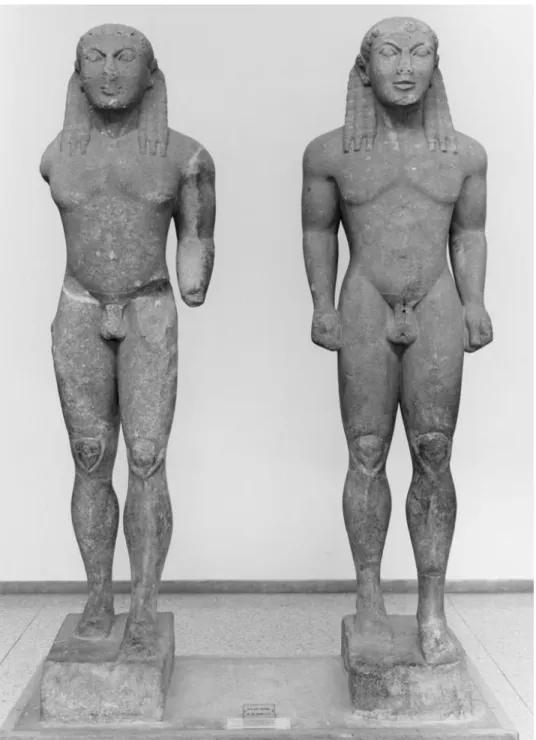
Figure 1. “Kleobis and Biton” / Delphi 1524 and 467. Delphi. Marble. H. 1.97m (restored). c. 580 B.C.E. ARTstor (Harvard University).
Figure 1b. “Kleobis and Biton” inscription/ Delphi 1524 and 467. Delphi. Marble. Boardman 1978, fig. 70.
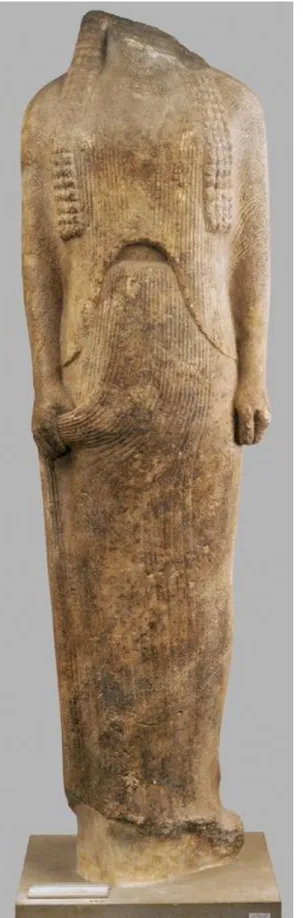
Figure 2. Nikandre Kore/ Athens NM 1. Marble. Delos. H. 1.75 m. c. 650 B.C.E. ARTstor (University of California, San Diego).
Figure 2b. Nikandre inscription. Athens NM 1. Boardman 1978 fig. 71.
Figure 3. “Auxerre goddess” / Louvre 3098. Limestone. Crete? H 0.65m. c. 640-630 B.C.E. ARTstor (Erich Lessing Fine Arts Archives/ ART RESOURCE N.Y.).
Figure 4. Auxerre goddess and Nikandre Kore. Boardman 1978, fig. 71.
Figure 5. Samian Perirrhanterion (Berlin 1747), Samos, c. 650-600 B.C.E. and restored line drawing of same. ARTstor (University of North Carolina- Chapel Hill/ Berlin State Museums); Boardman 1978, fig. 75.
Figure 6. Perirrhanterion from Isthmia, Isthmia Museum (IS 3 + 161 – 165 + 220 + 270) (restored), c. 650-600 B.C.E. and line drawing of same. Sturgeon 1987, pls. 1, 2b.
Figure 7. Philippe. Vathi Museum (no MA nbr.; Karakasi 61) Samos. c. 560 B.C.E. ARTstor (Art Images for College Teaching).
Figure 8. Ornithe. Berlin 1739. Samos. c. 560 B.C.E. ARTstor (Gisela Geng/ Berlin State Museums).vii
Figure 9. Louvre 686. Samos. c. 560 B.C.E. ARTstor (Reunion des Musees Nationaux/ Art Resource N.Y.).
Figure 10. Berlin 1750. Samos. c. 560 B.C.E. ARTstor (Gisela Geng/ Berlin State Museums).
Figure 11. Berlin 1791. Miletos. c. 560 B.C.E. ARTstor (Ingrid Geske/ Berlin State Museums).
Figure 12. Louvre 3303. Klazomene. c. 530 B.C.E. Karakasi 2003 pl. 57.
Figure 13. Delos A4064. Delos. c. 525-500 B.C.E. Karakasi 2003 pl. 68.
Figure 14. Akropolis 619. Athens. c. 560-550 B.C.E.
Figure 15. Akropolis 677. Athens. c. 560-550 B.C.E. Karakasi 2003, pl. 127.
vii
Figure 17. Akropolis 680. Athens. c. 530-520 B.C.E. Karakasi 2003, pls. 248-249.
Figure 18. Akropolis 682. Athens. c. 530-520 B.C.E. Karakasi 2003, pls. 146-147, 252.
Figure 19. Akropolis 670. Athens. c. 520 B.C.E. Richter 1968, figs. 377-379.
Figure 20. Akropolis 674. Athens. c. 500 B.C.E. Karakasi 2003, pls. 269-271.
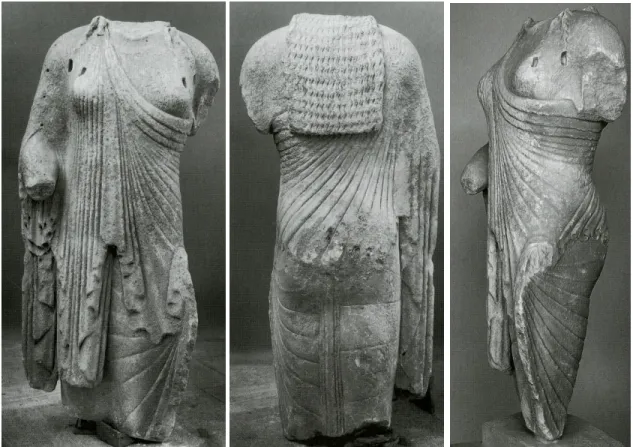
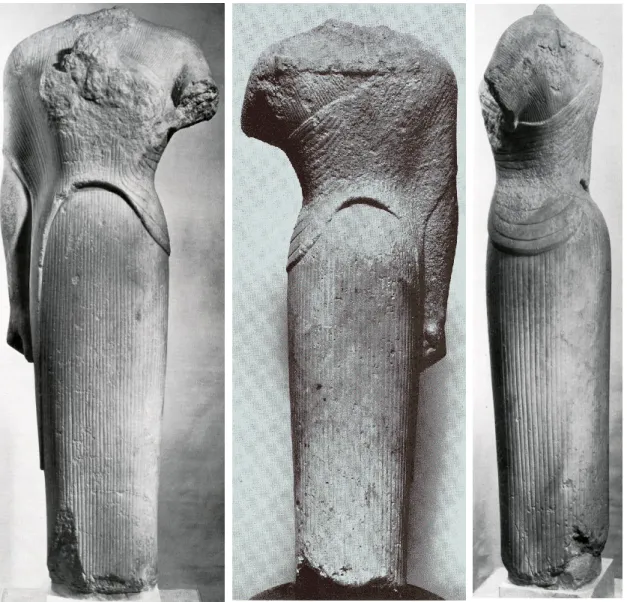
Figure 21. Peplos Kore/Akropolis 679. Athens. c. 530 B.C.E. Karakasi 2003, pls. 244- 247.
Figure 22. Akropolis 678. Athens. c. 530 B.C.E. Karakasi 2003, pls. 242-243.
INTRODUCTION: Defining and Placing the Kore Type
In Archaic Greece, votive offerings formed or completed a contract between
votary and deity, but the object did not need to be aesthetically or functionally related to
that contract. Extant offerings made by washerwomen, athletic victors, and rulers prove
that the practice of euche, making a vow to keep or honor a promise, occurred in every
social class. Inscriptions on the bases of these objects, inventory lists of temples, or
writing on the object itself usually allow a clear understanding of who gave these objects
to which deity.1 Certain aspects of Archaic votive offerings maintained a sense of
regularized conventionality, while others were the choice of the dedicator or artist.
Objects dedicated on the Athenian Akropolis, for example, were often (but not always)
offered to Athena, the patron deity of the city. The size or cost of a votive object was
generally subjective, based on the wealth of the votary: some votive objects were
inscribed dekate (tenth, or tithe) or aparche (first-fruit offering) rather than referring to
the subject of the vow.
Among the many forms of votive objects, figures in the round appear to be the
most numerous. In Athens, frontal sculptures of standing young women, often wearing
Ionic dress, were commonly offered on the Akropolis as votives. At the Samian Heraion,
frontal sculptures of standing young women wearing Eastern Greek clothing were offered
to Hera both individually and in association with larger family sculpture groups. In
Miletos, where the Sanctuary of Apollo Delphinios is located, several frontal standing
female sculptures have been found. Each of these sculptural monuments belongs to the
same kore type, explaining their similar forms.
Votive and funerary sculptures in the form of women are known as korai (kore,
singular), or maidens. Gisela Richter, in her major catalogue of korai, uses the term kore
“to signify the draped standing Greek maiden of the Archaic period.”2
The korai, as
figural sculptures, at first seem transparent: young women, carved from stone, offered to
a deity as a pleasing gift. The word “kore” as defined by modern scholarship is a
sculptural type: the term, deriving from the Greek word meaning girl or maiden, refers to
the frontal, standing image of a young woman, draped in garments. This simple definition
means the kore type offered a great deal of artistic flexibility in individual characteristics,
which led to uniqueness of form, and possibly diversity of reading, while the function
remained the same. As Brunilde Ridgway wrote in her 1970 review of Richter’s Korai,
“to say that all korai look the same is a truism comparable to the saying that all Doric
temples look alike. Miss Richter has rightly stressed the similarities, […]; we can now
proceed to build on them our own speculative superstructures on differences and
regionalisms.”3 My project is to create a visual lineage that includes all series of korai
and affords each series equal importance in the development of the type.
2
Richter 1968, “Directions for the use of this book,” x.
What made the korai such a flexible type, both in reading and style? The korai are
freestanding, though similar images appear in architectural sculpture and on votive or
funerary reliefs. The basic characteristics occur in enough figures to merit definition as a
type. The kore type was created in several periods and styles; those in the early Archaic
period (c. 680-550 B.C.E.) retain features of the older, Cretan Daedalic style4 but are
typologically continuous with korai created in the later Archaic period (c. 550-480
B.C.E.). The Archaic korai often appear to have individualized physiognomies, which has
elicited the question of identity—who do they represent? Are they portraits, generic
images, or something in between? As a group, they are simply “girls,” but individually, a
kore was possibly meant to express something more. There were funerary korai as well as
votive: these look similar, and are part of the physical type, but they function differently,
so the funerary ones will be set aside for this discussion.
The Archaic kore type occurs throughout Greece, and is given a typological
terminus ante quem of 480/479 B.C.E., after the Persian invasion of Athens.5 The most
obvious counterpart to the korai, the kouroi (kouros, singular) or young, frontal, nude
male sculpted types, are so numerous that they are typically used to chart the evolution of
the Archaic style in Greek sculpture. These male sculptures share a mien of idealization
with the Archaic korai, and yet often possess individualized faces and body shapes.
Kouroi similarly functioned both as funerary monuments and votive offerings in the
Archaic period; many more funerary kouroi are extant than funerary korai, but bases
4 Daedalic sculpture is frontal, focuses on exterior patterning rather than interior modeling, and reveals
Eastern influences. Wig-like hair often accompanies a triangular face, large eyes, and a prominent nose. The body is rendered geometrically with angular, squared forms.
5 Scholars disagree on specific dates for the Archaic korai; see a summary in Karakasi 2003, 115. Dates in
survive in sufficient numbers to compare the functions of korai and kouroi. In general,
from Attica most surviving kouroi are funerary and most korai votive, but this pattern
does not suggest that the types functioned separately. Two votive kouroi from the
Athenian Akropolis survive. It may therefore be more correct to say that each type was
commemorative. Kouroi and korai from other areas are preserved in varied numbers of
each type, funerary or votive, further supporting the suggestion that these types were
generally commemorative.
The korai cannot be called realistic, yet specific details in the clothing, facial
features, and other characteristics give each kore the appearance of an individual. These
female sculptures do not appear to be portraits, based on the limited evidence that exists,
and so most are anonymous, at least to us. It is rare that the name of the individual
represented can be connected with the figure. As a result, it has been conventional to read
these figures as generic or based on real models whose identity mattered little. This
assumption stems from the lack of epigraphic data on the identity of the sculptural
referent. Where statue bases still exist and can be connected to specific sculptures, the
patron, maker, and deity are often named in the inscription. If the identity of the figure
itself mattered, it should follow that the name of the individual depicted would have been
included as well. The individuality of these images raises problems in our understanding
of their function as votives. As part of a contract with a deity, votive offerings could and
often did have ambiguous features. This individuality may be related to the fact that the
kore type could also function as a funerary monument. G. Richter, J. Boardman, and
others tend to group funerary and votive offerings together as “commemorative” objects6,
which allows them to be considered comparable in function and to explain similarities in
the forms of sculpture from each group. I have separated these groups in order to ask
questions about the votive type specifically; the funerary korai seem much more
continuous with other funerary practices and only borrow the physical type.
Addressing the problem of unique, unrepeated forms within the type requires a
focus on votive korai, because it is clear how these statues functioned as offerings in
sanctuaries such as the Athenian Akropolis. The Athenian Akropolis group, dated c. 550-
480 B.C.E., is often analyzed separately from other Athenian and Attic korai, and
privileged as a model for interpretations of the type. Korai appear in many sanctuaries
outside of Athens, however, and it is well to keep in mind the widespread nature of the
type when discussing the korai from the Akropolis or any other location. Korai have been
found as far away from Athens as Samos and western Anatolia, yet the Akropolis statues
are often discussed as the model group, largely because korai occur in larger numbers in
Athens than in any other location. Fourteen of these female statues were uncovered near
the Erechtheion in 1886.7 Since then, some seventy-four korai have been pieced together
from fragments found on the Akropolis. At least fifteen bases survive that were used for
korai, judging from the shape and size of their plinth cuttings. Only a handful of the
surviving statues can be matched to a base, so interpretation based on epigraphy is not
always possible.
To function as a votive, a figure would need to be considered appropriate for the
deity in question. It is unclear how these sculptures were activated by their audience and
why certain forms of votive sculpture were considered more appropriate for certain
7
deities. Many korai were offered to Athena and other goddesses such as Hera (with a
notable exception dedicated on the Akropolis to Poseidon), while kouroi were dedicated
to male gods elsewhere in Greece, as in the Sanctuaries of Apollo on Delos and on Mt.
Ptoion, and the Sanctuary of Poseidon at Sounion. Two life-size votive kouroi (figure 1a)
from Delphi, c. 580, are linked to the mythical figures Kleobis and Biton by the
inscriptions8 reconstructed on the top of their plinths (figure 1b). Herodotos wrote that
Kleobis and Biton were put to death in their sleep (“the greatest boon for mortals”9) and
that the Argive citizens dedicated a sculptural group of the two at Delphi. Epigraphical
evidence, almost always fragmentary, can sometimes be read through a lens of
mythology; although the inscriptions on the Delphi pair are not completely preserved, the
partially preserved names of the artist and one figure, the findspot, and the style led to
their identification with the twins in the myth.
Older korai that predate the Archaic style often seem to be of Eastern influence;
the oldest images come from Crete, Delos, and East Greece. The Nikandre kore, c. 650
B.C.E.10 (figure 2) from the sanctuary of Artemis on Delos, predates the Archaic style but
corresponds to the kore type. This sculpture is similar to the smaller (and slightly later, c.
640-630 B.C.E.) Auxerre statuette (figure 3) believed to be from Crete.11 Both of these
sculptures, although different in size (figure 4), are of the Daedalic style. These figures
8 Fragmentary; base A: “…ton t… t… ra…” restored as “[Bi]ton t…”; base B is translated as
“[Poly?]medes the Argive made [this].” See Jeffery 1961, 154-156. Statue A, Delphi Mus. 467; Statue B, Delphi Mus. 1524. The figures are probably Argive in style; the inscription is in the Argive style, as shown by Jeffery, who links this group to that of Dermys and Kittylos from Tanagra.
9 Boardman 1978, 58; see Herodotos, Histories, Book 1, 31.
10 Richter 1968, 26, fig. 25-28; Boardman 1978, 25, fig. 71.
11 Richter 1968, 32, fig. 76-79; Boardman 1978, 25, fig. 28, 71. The date is from Boardman 1978; Richter
are much more rigid in pose and their facial features are less naturalistic than the later
Archaic korai, yet the Auxerre statuette and the Nikandre kore share the characteristics of
slender, proportional bodies and seemingly meaningful poses. The Nikandre kore is
inscribed along her left side:
Nikandre dedicated me to the far-shooter of arrows, the excellent daughter (kore) of Deinomenes the Naxian, sister of Deinomenes, wife of Phraxos n(ow?).12
The dedication of Nikandre stands as a precedent for monumental votive offerings in the
form of women. This sculpture refers to a female dedicant, but separates the image from
the dedicator herself. Nikandre is, aside from being named, also identified by her father,
brother, and husband; this too will set a precedent for votive sculpture inscriptions,
although they will generally be placed on the sculpture plinths or bases. Similar female
figures come from the Sanctuary of Hera on Samos, where representations of the female
form are appropriate to the female deity and occur in the context of both sculpted family
groups13 and individual votive offerings.14
Similar to the Nikandre statue and the Auxerre statuette are the female figures
supporting monumental perirrhanteria (marble water basins), which are precedents for
the Archaic style of kore. These figures were not freestanding—they were attached at the
back of the head to the support for the bowl—but they convey a visual sense of
independence from the basin. The perirrhanterion is a ritual object that likely contained
12 Boardman 1978, 59; Boardman also notes that “[Nikandre] was no doubt a priestess” and directly
visually compares the Nikandre statue to the Auxerre statuette in figure 71.
13 The “Geneleos Group” included, among other sculptures, three korai—of which two mostly survive. c.
560-550 (see chapter 1).
14 The “Cheramyes Kore” from Samos bears a striking similarity to Akropolis 619 (see chapter 1). The
water for purification. Perirrhanteria with figural supports are found at Samos (figure 5)
in the sanctuary of Hera, Isthmia (figure 6) in the sanctuary of Poseidon, and elsewhere.
In these monuments three or four female figures support a shallow bowl, though their
bodies show no effect of bearing weight, and they often hold the leashes or tails of large
felines. The women are about a half-meter tall.
Statue bases and inscriptions are necessary elements for understanding votive
sculpture. Votive statues were almost always placed on inscribed bases to associate the
work with the dedicator and, sometimes, the artist. Inscriptions on the bases or directly on
the figures also offer information about the type of offering being made and the identity
of the deity. Separated bases and statues provide information as well, but must be
considered in relation to those votive offerings that can be restored more completely. The
bases of the korai are a source of important information as well. The “Euthydikos’ kore”
is named for its dedicator, while “Antenor’s Kore” is signed by the artist who created it.
Votive offerings and bases often occur in typological groups, suggesting that their form
was not entirely arbitrary, but these types afford such diversity that the interpretation
remains unclear. Diversity within a coherent type has resulted in a variety of
interpretations for many figural types of sculpted offerings, especially the korai. This
diversity has raised the problem of how the individualized appearances of the korai aided
in their activation. The individuality of their forms is the focus of this study.
A great deal of modern scholarship regarding the Archaic korai from Athens and
other Greek sites focuses on the subjects of the sculptures and the possibility that these
images were originally understood as portraits, whether or not they can now be read that
stylistically, in order to address the question of identity. The paucity of epigraphical
information makes identifications tenuous for most of the sculptures, unless the
inscriptions on statue bases can be associated and are specific. There is no surviving
Archaic mention of the figures, though Classical and later Greek historians mention older
artistic practices. Attempting to determine the identity of the korai has been the most
common method of interpretation, yet it has not yielded a unanimous conclusion.
Individual arguments may appear sensible, yet they are often mutually exclusive.
In this investigation of the Archaic korai, I augment the established discourse by
advancing an argument regarding the motivation and need for unique forms within a
coherent type. This can most successfully be achieved by incorporating a synthesized
historiography into future research; the arguments that have so far been made should be
familiar to any scholar wishing to advance an original one. Chapter One focuses on
creating a visual lineage of the type through formal analyses; this chapter forms concrete
links between korai of different sanctuaries. In Chapter Two, I acknowledge the work of
prior researchers and discuss the state of the discipline. Chapter Three generates a
framework for new avenues of study. This chapter utilizes the arguments and theoretical
foundation given by A. A. Donohue in her book, Greek Sculpture and the Problem of
Description, to reject the implicit teleological view of Greek sculptural development that
places the Akropolis series of korai in the role of normative example. Ultimately, the
Akropolis series will be framed as a continuation of the traditional type, the form of
which perhaps incurred a iconatrophic15 slippage during the later Archaic period, rather
15
than significantly different from other korai. This iconatrophy may continue today; the
reading of the Akropolis group has become separated from that of the other groups. The
type will be shown to be continuous despite stylistic differences and regional variations.
become associated with the art whether or not they were originally linked. Catherine M. Keesling (Keesling 2005a) has recently applied the term to Roman reception of Greek sculpture. Keesling’s work suggests that a lack of epigraphic information would likely hasten iconatrophy and lead to a
CHAPTER ONE: Creating a Visual Lineage
The korai type can summarily be described, as follows: sculpted women, standing
frontally, clothed in light garments (often the chiton). These sculptures often display long
hair that frames their temples and is pulled back past the ears in elaborate hairstyles; the
head can be covered or left unfinished. Where heads remain, many korai wear a stephane,
fillet (hair ribbon), or other adornment. Jewelry is a common, though not consistent,
addition; it can be carved in stone or attached in metal. The girls generally have wide
shoulders, small, high breasts, slender waists, and rounded hips and buttocks. Later korai
sculptures emphasize the shapely strength of the legs and buttocks. Korai were often
painted, both on body features and clothing. The paint served to heighten the visual
appeal of the figures and differentiate them one from another; two physically similar
korai might, once painted, look quite different.
The kore type appeared in the mid-7th century B.C.E. (as described in the
introduction), but the statues in the Akropolis series derive from the century c. 580-480
B.C.E. The Akropolis statues are often discussed as key examples of the korai type, as
more sculptures of this type were found on the Athenian Akropolis than in any other
location and these sculptures are mostly well-preserved and naturalizing. The naturalizing
aspect of the Akropolis series leads scholars to place this series at the pinnacle of kore
type development. I wish to reject this view, founded as it is upon the idea that stylistic
these objects functioned differently in divergent locations. A systematic, chronological
presentation of the korai would give primary emphasis to the appearance of these
sculptures rather than their stylistic differences, which are often dependent upon regional
variation or even personal artistic choices.
Variations occur frequently enough to suggest individuality in the figures. Hair
styles fall into stylistic groups, clothing style and decoration are arranged in a multitude
of ways, and the facial features are always unique. These sculptures resemble each other,
but most are similar rather than identical. This makes close similarities even more
surprising, as we will see below. One of the most adaptable areas of variation is that of
attachments. Because most attachments have been removed or have disappeared over
time, this category is easily overlooked yet serves to differentiate the korai.
Many of the extant korai were ornamented with added metal or stone; attachment
holes might remain on the chest, hips, or near the shoulder, and there are also a number of
metal attachments and attachment holes on the crowns of the heads. The head
attachments are intriguing, but the number of korai missing heads creates a problem in
understanding what these attachments were for and how many of the figures had them.
Scholars have called the attachment rods on the heads evidence of meniskoi, metal
crescents mounted on a metal spike to protect statues from birds, though no meniskoi
have been preserved.16 Another repeated feature of the type is the gesture; one arm is
usually down against the side, but the other arm is bent across the body and pressed to the
breast, or extended with the palm up and open. Both of these gestures involve an object
16 Ridgway 1990, 587. For a historiography of meniskoi on korai and the argument that Aristophanes’ use
being held or offered. One hand might also grasp the skirt.
Were the votive korai representatives of real women? Perhaps, but the evidence
for this is scant. Priestesses were, in later periods, commemorated in sculpture on the
Akropolis: Lysimache, “who had been a priestess of Athena for 64 years”17 during the
later 5th and first half of the 4th centuries B.C.E., and Syeris, a diakonos18 of Lysimache,
were honored with bronze portraits of which the marble bases still survive. There is no
evidence, however, of the practice of dedicating such portraits in the Archaic period. In
any case, most scholars agree that portraits of women did not appear in Greece until the
Classical period.19
Archaic votive korai named by their inscriptions do exist. The korai from the
Geneleos group set up at the Samian Heraion are but two examples. These sculptures
have stylistic doubles within the Akropolis group; that is, they are very similar to the
“Naxian” korai, Akropolis 619 and 677. Their functions and identities, therefore, should
be considered as a balance to the Akropolis series. The Geneleos korai are unique
because they are identified with names, which is uncommon for votive offerings that are
preserved; the group originally included six figures, presumed to represent a family
group, and was offered to Hera in total as a votive.20 The names of the figures are
inscribed on their bodies, and the two pendant seated figures also offer more information:
the leftmost figure bears the inscription, “Geneleos made us,” and the rightmost figure is
17
Pliny, Natural History xxiv, 76.
18 Under-priestess or sub-priestess. Pliny, Natural History xxvii, 4.
19 See Dillon 2010, 2: “In fact, if we were to rely on the extant statues alone, we might conclude that female
portraiture was a phenomenon only of the later Hellenistic period.”
20
inscribed, “I am …oche, who has also dedicated it to Hera.” Of the other four figures,
two korai remain: Philippe21 and Ornithe.22 Their inscriptions, combined with the stylistic
similarity between the Geneleos korai and Akropolis 619 and 677, may support the idea
of the korai having individual identities. The supportive evidence would be provided by
connecting them with bases inscribed with female personal names; these have not come
to light. Hence, it is not impossible for the Akropolis korai to represent individuals, but
there is no epigraphical evidence to support this assumption.
Deborah Tarn Steiner, in her book Images in Mind: Statues in Archaic and
Classical Greek Literature and Thought, uses Jean-Pierre Vernant’s theory of the
dynamics of exchange to differentiate representational images from mimetic imitations.23
Images can represent individuals without incorporating realism. The stylistic dating of
korai based on the apparent increasing verisimilitude is understandable, but can lead to
the tautology that korai needed to be more and more realistic to fulfill their functions. In
Steiner’s view, statues could represent and even replace24 living persons in certain ways,
but the statues were always identified as replacements. The identity of the statue
experienced no mixing with the identity of the memorialized; in other words, the statue
Geneleos group inscriptions: 60-62. Also Richter 1968, 49-50; Freyer-Schauenburg 1974, 107-109, pls. 46-47; Boardman 1978a, fig. 91. The reclining last figure carries a dedicatory inscription: - - -]ιλάρχης ήμάς [άνέ]ϑ[ηκε] τηί Ήρηι (“I am ...oche, who has also [dedicated it] to Hera.”) Freyer-Schauenburg 1974, 116-23, pls. 51-53; Richter 1968, 49-50; Boardman 1978, 69, fig. 93.
21 Samos; inscription, on the drapery at the right side, says Φιλίππη (“Philippe”). Richter 1968, 49-50, figs.
217-20; Freyer-Schauenburg 1974, 113-15, pls. 49, 53; Boardman 1978, fig. 91; Franssen 2011, 60-62.
22 Berlin 1739; inscription, below the right hand, says Όρνίϑη (“Ornithe”). Richter 1968, 50, figs. 221-24;
Freyer-Schauenburg 1974, 115-16, pls. 50, 53; Boardman 1978, 70, fig. 91, 92; Franssen 2011, 60-62.
23 Steiner 2003, 11; from Vernant 1990, 75: “Without resembling him, the equivalent is capable of
presenting someone […] It does so not by virtue of similarity with the external aspect of the person (as in a portrait), but through a sharing in ‘value,’ a concordance in the matter of qualities tied to prestige.”
referred to the person but did not function as a visual double for the person. Figural
statues in general, and possibly korai in particular, may have represented real persons with
the function of referring to the person or reminding the viewer of that person, rather than
replacing the person with a verisimilar image, according to Steiner.
I argue that verisimilitude was unnecessary to the votive korai. Realism may have
been the goal of the artists, but in fact the characteristics that continue throughout the
kore type are what allowed the type to spread across Greece and fulfill more than one
function. To demonstrate this, I must create a visual lineage of korai from the earliest
examples, namely the Nikandre Kore and the Lady of Auxerre, to the latest and most
unique examples from Attica and Mainland Greece. This visual lineage will circle back
upon itself as we consider a pair of korai from the Athenian Akropolis conventionally
called “twins” (one of which has been highly problematic for interpreters of the series),
as they show direct visual evidence of their descent from older Eastern Greek styles of
korai as well as specifically Attic variations in style and clothing.
BEGINNINGS
Nikandre’s Kore, NM 125 (figure 2) is one of the earliest (c. 650 B.C.E.26) life-
size Greek marble sculptures at 1.75m, and includes one of the earliest Greek
inscriptions. The statue is worked in one piece and comes from the sanctuary of Artemis
25 Richter 1968, 23-26, pl. 25-28; Boardman 1978, 25, fig. 71; Ridgway 1993, 124-125; Karakasi 2003, 67-
78, pls. 62-63, 219.
at Delos. She is slender27 and badly worn—it is difficult to ascertain how much detail was
originally included in the figure. Her hair falls in individual locks over her shoulders,
surrounding her long face with large eyes, a badly weathered nose and mouth, and a
square chin. Under the hair, the shoulders rise high, almost in a shrugging gesture. The
breasts are small and undifferentiated under the long peplos, which is belted at the waist
with a wide belt, pulling the garment close to the body. The arms, roughly finished as if
suggesting sleeves, hang straight beside the body; at the back, the sleeves are not fully
carved out, suggesting a cape. Clenched fists adhere to the body and are drilled with
attachment holes for objects. The peplos is tightly fitted but gives only a minimal
suggestion of the body beneath; perhaps the fabric depicted was quite heavy. The skirt
hangs long with no break for the knees, arching gently over the shod feet protruding atop
the plinth. Nikandre’s Kore also bears an inscription down the side of her left leg (see p.
7). Ridgway has interpreted the Nikandre kore as a representation of Artemis28 because of
the piercings in the hands for metal objects, presumably arrows.
The Lady of Auxerre, Louvre 309829 (figure 3) is under life-size and un-
inscribed, and she differs from the Nikandre kore in several other ways as well: the
material is limestone rather than marble; the height of the figure is 65 cm; the provenance
is unknown; and the date (based on stylistic comparison) is c. 640-630 B.C.E.30 She is
better preserved than the Nikandre, so it is clear that her hair has been parted into several
27 Often referred to as “plank-like” (see Richter 1968, 23) but see A. A. Donohue’s Greek Sculpture and the
Problem of Description for a problematizing of this characterization.
28
Ridgway 1993, 124.
29
Richter 1968, 23-27, pl. 76-79; Boardman 1978, 25, fig. 28, 71; Karakasi 2003, 67, pl. 53.
fat, braided locks (divided both vertically and horizontally) with short spiraling curls
along her forehead. Her face is wide at the forehead and tapers down to a full, rounded
chin; the eyes are large and diamond-shaped, with defined brows and lids, while the nose
displays a squared but narrow bridge. The lips are pursed together but separated at the
corners. She wears a peplos underneath a garment that is not often seen on later korai: a
symmetrical cape connected over the chest. The cape is unusual in that at the back it
adheres to the arms and back of the figure, almost as though it is pinned to an
undergarment. Her shoulders are quite broad. Rather than holding both arms straight
against her sides, only her left arm descends; the right arm is bent upward so the hand
rests between the breasts, which are small and high with clearly carved nipples and
naturalizing separations from the chest. The waist is narrow and belted with a wide
girdle, more ornately carved than that on the Nikandre kore; the silhouette is hourglass-
shaped from the front as well as the side view. The skirt is long and columnar, similar to
that of the Nikandre, but it is finely incised with a vertical, geometric pattern of
concentric squares and preserves traces of pigment. The hips are wide but narrower than
the shoulders; the buttocks and pelvic region are rounded beneath the peplos skirt but
again the fabric is rendered heavily, with no indication of clear anatomy beneath. The
Lady of Auxerre has long feet with long toes extending out beneath her skirt.
THE KORE TYPE IN EAST GREECE AND THE ISLANDS
Philippe31 and Ornithe32 (approx. c. 560 B.C.E.) are the korai remaining from
the Geneleos group from Samos. This group originally included six figures, as shown by
31 Richter 1968, 49-50, figs. 217-20; Freyer-Schauenburg 1974, 113-15, pls. 49, 53; Boardman 1978, 70,
cuttings in the extant base. Both of these korai are headless, but otherwise they are quite
well preserved. The figures are inscribed with their names and are dressed in similar
styles of clothing. Philippe (figure 7), now in the Samos Museum at Vathy, has wide
shoulders and thick arms. Her hair is rendered in individual (beaded?) strands lying in a
rectangular mass over her back, with no strands escaping to the front; her breasts are
rounded, high, and widely separated. The chiton sleeves are formed from buttoned fabric
flowing down the shoulders and upper arms, and these buttons cause pleats in the fabric,
continuing down the body though interrupted by a waistband or belt that is hidden
beneath the drapery. The chiton is draped somewhat loosely at her sides, although it is
tight over her buttocks and the back of her legs. She holds her skirt in her right hand,
pulling the material in pleats from the front of the skirt. Both fists are clenched at the
sides of the body; below the right fist, in a drapery fold, is the inscription. Her skirt splays
a little to expose long toes on the left foot; the skirt gathered in her right hand exposes her
right foot, although this has broken away. Ornithe (figure 8), Berlin 1739, is broken
beneath the chin, so her neck remains. Her throat is thick-set and the chiton neckline, like
Philippe’s, is barely indicated. Ornithe has a hairstyle similar to Philippe’s at the back,
but four long locks hang down the upper torso in front. These front locks are placed
towards the side of the torso, as if to reveal the breasts. The shoulders are wide, like
Philippe’s, and her body is similarly rectangular in front and back views; her waist is not
emphasized, even though her button-sleeved chiton divides her upper half from her lower
half. From a side view, however, her back and buttocks curve away from her waist,
creating a slender silhouette. Her hands are positioned the same as Philippe’s, and her
32
inscription is in the same position. The shape of her left leg is perhaps slightly more
emphasized; her feet and plinth have broken off, but it seems that her right foot would
also be exposed.
The Cheramyes Korai, Louvre 68633 (figure 9) and Berlin 175034 (figure 10)
were found in Samos, in the sanctuary of Hera. Both are missing their heads, but retain
inscriptions from their dedicator, Cheramyes, along the edges of their drapery. These
korai, also dated c. 560 B.C.E., are remarkably different from the Geneleos korai, despite
their contemporaneity and shared sanctuary. The silhouettes are similar—rounded yet
rectangular from the front and back, despite high, round breasts and a belt, with wide
shoulders; yet side views show the curve of the back and buttocks. However, these korai
wear the long epiblema or veil down their backs and left sides (covering their hair, which
therefore is not visible) and short himatia over their chitons; folds in the himatia are
asymmetrical and there is more differentiation in the rendering of fabrics and pleats. Each
kore holds an offering in her upraised left hand, pressed to the chest, and extends the right
arm down the side with the right hand closed in a fist. Louvre 686 is damaged, so the
offering cannot be discerned; she holds her epiblema in her right hand and allows her skirt
to hang freely. The skirt is symmetrical with delicate pleats all around, contrasting
with the asymmetrical epiblema, and the long toes protrude as if the skirt were cut
around them. Her inscription reads, “Cheramyes dedicated me to Hera as an offering
(agalma).”35 Berlin 1750 clearly holds a rabbit on her left hand, and though her
33 Richter 1968, 46, figs. 183-185; Boardman 1978, 69, fig. 87; Karakasi 2003, 13-20, 22, 24-28, pls. 4-7.
34 Richter 1968, 46, figs. 186-189; Karakasi 2003, 13-20, 22, 24-28, pls. 8-9.
35
right hand is closed in a fist it does not hold anything. Her skirt and epiblema are of a
kind with those of Louvre 686, though her protruding toes cause the chiton to fold
slightly. This inscription reads, “Cheramyes dedicated me to the goddess as a beautiful
offering (agalma).”36 Because of their inscriptions and the addition of the epiblema and
diagonal himation, they stand out among their contemporaries.
Berlin 179137 (figure 11) was found at Miletos and is contemporaneous with the
Samian examples.38 This kore is also headless, but significantly smaller than its
contemporary sculptures.39 Other than the difference in size, she wears the same three-
part costume of the Cheramyes korai; she supports an offering, a bird, on her hand, and
extends her right arm straight down her body, with her right hand in an empty fist. Her
breasts are small, more comparable to the Geneleos korai than the Cheramyes korai; her
chiton is rendered more artistically at the shoulders and her himation is draped in stacked
folds down her right side rather than lying flat like those of the Cheramyes korai. Her
chiton skirt is rendered with a narrow, flat panel running down the midline of the front;
her buttocks are apparent, but her legs are less emphasized than those of her Samian
counterparts. Her feet, shod, are exposed under her chiton, which is shorter at the front
and longer at the back.
36
Richter 1968, 46.
37 Richter 1968, 47, figs. 190-193; Karakasi 2003, 35-45, pls. 40-41.
38 Richter 1968, 47: “second quarter of the sixth century B.C.”
39 Philippe is 1.6m; Berlin 1739 (Ornithe) is 1.68m; Louvre 686 is 1.92m; Berlin 1750 is 1.67m. All these
Louvre 330340 (figure 12) is an Eastern Greek example of the korai type from
Klazomene. Only the torso, from neck to knees, remains; Louvre 3303 is dated c. 530
B.C.E. by Richter.41 The continuity of the type is obvious: the figure holds an offering,
wears the chiton and short himation, and wears the hair massed in the back with two
frontal strands on each side. The most remarkable feature of this figure is the smoothness
of her drapery; although stacked folds abound, they flow smoothly into one another and
the stone is finished flat rather than incised with detail. The chiton may be reminiscent of
linen, with its multitude of small scores, but this seems more like damage than a
conscious finish. The offering is unclear, but may be a bird, an apple, or a pomegranate.42
Because the location of the break on the left side of the object suggests a neck, it was
most likely a bird.
Delos A406443 (figure 13) remains from her neck to her knees and is dated by
Richter to the last quarter of the sixth century B.C.E. Delos A4604 is physically similar to
Akropolis 680, 682, and 670 (see below); their contemporaneity is evident in her
similarity to these sculptures, although her scale is more like that of Berlin 1791. Delos
A4604 has massed zig-zag locks of hair over her neck and shoulders, and two locks are
brought to the front on each side. Her shoulders are of average width, and her breasts are
round and full beneath her drapery. She wears a chiton and a long himation, with the
himation arranged asymmetrically with a pin at the right shoulder and long folds down
40 Richter 1968, 92, figs. 520-523; Karakasi 2003, 63, pl. 57. Richter presents the torso as Louvre 3380 and
a lower part of a sculpture as Louvre 3303, but Louvre 3303 now refers to the kore torso described here.
41 Richter 1968, 92.
42 Richter 1968 calls it a bird; although broken, the form appears globular enough to be a fruit.
the sides; it is wrapped around the back and left side tightly to emphasize the ribcage and
bosom, and the folds are stacked and rolled as if slightly windblown from the back. Her
buttocks and legs are emphasized by the tight bunching of her skirt that was originally
held in her left hand (now broken), but the folds of the skirt are rendered at the back to
show her left leg advancing and her right leg tightly enclosed in fabric; the advanced left
leg is also apparent through the drapery in front. Attachment holes remain above her
breasts for jewelry or the ends of her hair locks.
STYLISTIC SHIFT IN THE WEST
Akropolis 61944 (figure 14) is one of the earliest Akropolis korai discussed here
(c. 560-550 B.C.E.).45 This sculpture adopts the second of the conventional gestures
described above; the right arm is straight and held tightly against the body, while remains
of the broken left arm indicate it was bent so the hand, holding an offering, was pressed
against the chest. Akropolis 619 wears a typical chiton and a short himation wrapped
around the body. The epiblema is pulled tightly around her body, emphasizing her
narrow waist. The skirt of her garment is incised vertically depicting narrow folds but
shows no modeling of the body beneath, nor is there a break for a knee. The himation
terminates in a long trailing end on the right side and a kolpos, a curving swath that forms
a pouch by being pulled over the belt, on the left. The ends of long locks of hair are still
evident across the shoulder blades in a flat and rectangular style. The right arm is
elongated with a squared thumb facing forward. The clothing of Akropolis 619 bears a
44
Langlotz 1939, 63, fig. 33; Richter 1968, 47, figs. 194-197; Boardman 1978, 70-71, fig. 98; Karakasi 2003, 115, 117, 124-127, pl. 128.
striking resemblance to the korai of the Geneleos group from Samos as well as to that of
a kore from Miletos, the “Cheramyes Kore” from the sanctuary of Hera at Samos, and
Akropolis 677 (see below).
Akropolis 67746 (c. 560-550 B.C.E.47) (figure 15) remains only from the chest up.
Her garments, a chiton and mantle, are comparable to those of Akropolis 619. Her facial
structure and hairstyle are different from the bulk of the Akropolis korai (discussed later);
however, the fact that this kore and Akropolis 619 were made of Naxian marble and in an
Eastern style common in Miletos and on Samos suggests that they were objects adhering
to an already-established visual paradigm that changed only after it was imported to
Athens. The hair on top of Akropolis 677’s head and above her forehead is rendered by
wavy ridges, which shift into straight rectangular tresses down the back. A fillet is tied at
the back in a Herakles knot.48 Akropolis 677 has a flat, oval face with arched upper
eyelids, a blunt nose, straight lips, and a weak chin. She holds a pomegranate in her left
hand.
Akropolis 59349 (c. 560-550 B.C.E.50) (figure 16) wears a long thin mantle over
her clothing.51 Her head is broken off, but her hair is arranged in wide locks; three hang
46
LeChat 1903, 91; Langlotz (in Schrader) 1939, 64, fig. 34; Richter 1968, 47, figs. 198-200; Boardman 1978, 70-71, fig. 99; Karakasi 2003, 115-120, pl. 127.
47 Boardman 1978, 70. Richter gives “2nd quarter of 6th century B.C.”
48 The Herakles knot, also called the square or reef knot, was used on hairstyles and clothing in ancient
Egypt and Archaic Greece. Ancient literary sources attested its apotropaic power. See Nicgorski 1995, passim, for a full analysis of the uses of the Herakles knot in Greek clothing and sculpture.
49 LeChat 1903, 91; Langlotz (in Schrader) 1939, 64, fig. 34; Richter 1968, 47, figs. 198-200; Boardman
1978, 70-71, fig. 99; Karakasi 2003, 120, 124, pls. 129, 238.
50
Boardman 1978, 70. Richter gives “2nd quarter of 6th century B.C.”
51 The long mantle also appears on Akropolis 671 over a typical chiton; the Attic “Berlin Kore” (Brl. 1800),
over the front of her body, while at the back her hair is rendered as a flat rectangle with
one lock carved out on each side. She wears both a chiton and a peplos, a heavier tunic
than the chiton, with a girdle at the waist. Akropolis 593 is striking in many ways, but the
fact that she wears a peplos is often overlooked. The flat skirt makes it clear that this is a
peplos, but the sleeves of a chiton appear under the peplos at the right elbow. The
combination is only seen again in Akropolis 679, the “Peplos Kore.” Akropolis 593 is
jeweled in a similar fashion to the Phrasikleia52 kore; her choker of pointed pendants is
almost exactly the same as that worn by the Phrasikleia, but she lacks the bracelet that
Phrasikleia wears. Akropolis 593 holds a wreath down by her side in her right hand; her
left arm is bent at the elbow but pressed in to her chest, where a pomegranate is supported
by her fist.
STANDARD ATTIC FORMS
Akropolis 68053 (figure 17) continues the stylistic trends of the series while
appearing radically different from Akropolis 619. This example is dated c. 530-520
B.C.E.54 and is extant from the crown of the head to the knees; it represents the standard
style of Akropolis korai. Hair at the crown is finely incised with individual strands of hair
held against the scalp by a fillet that bears traces of pigment; the fillet is raised slightly
from the forehead at the top, giving the impression of stiffness, but it is clearly a
a few other examples.
52 A funerary kore found at Merenda in Attica. Boardman 1978, 73, 75, fig. 108.
53
LeChat 1903, 91; Langlotz (in Schrader) 1939, 64, fig. 34; Richter 1968, 47, figs. 198-200; Boardman 1978, 70-71, fig. 99; Karakasi 2003, 118, 124, 129, pls. 144-45, 248-51.
continuous, single band of fabric (like that of Akropolis 677) rather than a stephane, the
thick diadem worn by later korai (see below) that could stop at the ears or be secured by a
fabric band behind the head. Her hair is crimped and falls in individual locks above the
ears, is pushed back over the ears and beneath the fillet to flow down the shoulders and
back. Four locks hang over each shoulder in front and the remaining hair is a single mass
in back. Akropolis 680 wears large, round earrings carved of stone that also bear remains
of pigmentation. Akropolis 680 has a squared oval face with gently protruding carved
eyebrows and eyes pointed at the corners with delicately carved lids. The nose, now
broken, was not wide; the bridge of the nose is smooth and angular. The mouth is carved
in an “Archaic smile,” closed and drawn up at the corners. Her lower lip is full, and her
cheekbones are evident by modeling. Akropolis 680 wears a chiton and short himation ;
the himation looks comparable in fabric weight to that of Akropolis 619, but here it is
worn loosely rather than tightly wrapped. The chiton is high-necked; a meander pattern
marks the neckline of the garment, which falls in ripples from the neck and the clasps on
the left arm. Over the chiton “blouse” is the decorated himation; one corner is draped
over the right shoulder, around the body, and tucked in to the left side of the himation
below the breast. Akropolis 680 wears a carved bracelet on her left wrist and holds an
apple or pomegranate in her outstretched right hand. The himation falls in draped pleats,
longer on the right side and shorter on the left; the upper edge is folded over. Beneath the
himation, the chiton skirt is light, showing the contours of the buttocks and legs as well as
painted ornamentation on the descending over-fold. Akropolis 680 originally grasped the
chiton skirt in her left hand, pulling it tightly across her hips and thighs. Modeling at the
below the knees, the left leg appears to stride forward. There is an attachment hole on her
right thigh, pierced through the lower edge of the himation; this may indicate a pieced
addition.
Akropolis 68255 (figure 18) is in many ways similar to Akropolis 680. This
sculpture, c. 530-520 B.C.E.56, bears a comparable raised stephane around the head,
similar facial features, and clothing of the same arrangement and style. This example is
better preserved than Akropolis 680, missing both of her hands but otherwise complete.
The most noticeable difference in Akropolis 682 is her hairstyle; although she wears a
similar fillet her forehead is covered in tiny vertical locks terminating in snail-shell curls,
and her hair descends from behind her ears in coiling locks of varying lengths. Again,
four carved locks hang over the shoulders in front, but at the back the hair is divided into
locks that are banded at the ends, suggesting braids that hang together within a
rectangular mass. The head also includes a metal attachment rod about two inches behind
the fillet. This kore has a face more oval than squared, and the eyes are heavily lidded
and pointed at both ends. Facial features include a long and slender nose, highly modeled
cheekbones, an Archaic smile, and a slightly protruding chin. This kore also wears large,
round earrings that turn outward from her head. This turning is in contrast to Akropolis
680, whose earrings and ears lie flat against her skull. Akropolis 682 has a longer neck
than Akropolis 680; her shoulders seem more proportional to her hips, though her bosom
is fuller than most others. The chiton “blouse” is similar to that of Akropolis 680, but the
left sleeve displays a patterned edge and the neckline is clearly delineated at the
55 LeChat 1903, 83; Langlotz (in Schrader) 1939, 86, figs. 53-56; Richter 1968, 73-74, figs. 362-367;
Boardman 1978, 83, fig. 151; Karakasi 2003, 117, 125, 130, 147, pls. 146-47, 252-53.
collarbone. The himation here is remarkably similar in arrangement to that of Akropolis
680, including the overfold along the diagonal edge, but it is more detailed in the softly
crinkled fabric around the right shoulder. Her muscular legs are visible underneath her
chiton skirt, which is pulled taut to the left side by a bracelet-bedecked hand and displays
the rounded musculature of the legs and buttocks as well as the richly patterned
descending hem. Her sandaled feet are positioned apart with the left foot slightly forward,
but her body does not show evidence of a weight shift.
Akropolis 67057 (figure 19) represents a shift in the conventional dress of the
korai. Dated c. 520-510 B.C.E.58, Akropolis 670 appears to be wearing a cap or some
fabric over the crown of her head; an attachment rod is extant, but bent. The convention
of four long locks arranged over the front of each shoulder is continued here, although the
locks are angular and accordion-folded; at the back, the hair is rendered in a folding
pattern that is separated at the middle. Akropolis 670 wears a stephane, or diadem, rather
than a fillet; this clearly stands up on her head, painted with a vegetal design, and is
secured behind the ears with a fabric band. Above her forehead fat, rounded curls are
parted at the center. The face is rounded, with a slightly protruding chin, Archaic smile,
and a wider nose than has been previously seen. Her cheekbones are connected
naturalistically to her nostrils, and the bridge of the nose is angular and flattened. There
are no eyebrows per se, only the sharply modeled ocular cavity with slanting, almond-
shaped eyes and heavy lids. The eyes display traces of pigmented irises. Akropolis 670
wears large, round earrings that are again close to the skull. Her neckline has a wide
57 LeChat 1903, 92; Langlotz (in Schrader) 1939, 50, figs. 14-16; Richter 1968, 76-77, figs. 377-380;
Boardman 1978, 83, fig. 153; Karakasi 2003, 118-120, 130, pls. 152-154, 257-258.
edge, and appears slightly lower than the previous examples. Her neck seems longer
because of this lower neckline, but is in fact not that long; her heavily carved hair adds to
this effect. Akropolis 670 wears no himation, only a chiton with a long, crinkly “blouse”
and sleeves that gape at the elbows. The right arm is broken between the wrist and the
elbow, but was bent at the elbow in an offering gesture. Below the waist the chiton is
belted under the over fold and continues as a light “skirt” which is gathered to display the
legs and buttocks. This gathering, or paryphe, is held in the center of the body, below the
navel, rather than off to one side. The skirt is draped symmetrically away from this
gathering in front, and the legs are positioned together though the feet are lost. Akropolis
670 seems less shapely than others of the Akropolis series because of the loose upper
portion of the chiton, but the curving small of her back and her high breasts are still
evident beneath.
Akropolis 67459 (figure 20), the “Pouting Kore,” is late in the series, dated to c.
500 B.C.E.60 This kore is extant from the mid-thighs up, and is well known for her unique
facial expression. Beneath a curving stephane, which seems to float atop the head and is
unsecured at the back, Akropolis 674 has dark painted eyebrows, heavily lidded and
painted eyes, a slender nose with a rounded bridge, and a mouth set naturalistically at
rest. She does not truly “pout,” but contrasting her mouth with those with “Archaic
smiles” makes her seem so.61 In fact, the corners of her lips curve upwards. Her
cheekbones are evident from the slight upward curve of the lips, and her face is full and
59 LeChat 1903, 86; Langlotz (in Schrader) 1939, 93, figs. 62-67; Richter 1968, 81-82, figs. 377-380;
Boardman 1978, 86, fig. 158; Karakasi 2003, 118, 123-125, pls. 178-179, 269-272.
60 Richter 1968, 81.
61 For a convincing pout, see the face of Akropolis 686, possibly the upper half of Akropolis 609, the
round. Her chin does not protrude, and her neck is long. Her shoulders are quite narrow
compared to previous examples, and her hairstyle has been reduced to only three long
locks in front. The forehead is covered with wavy, massed locks that flow continuously
without a part and seem held at the ears by the large disc earrings. Around the back of the
head, Akropolis 674 has thick, angular tresses that abruptly terminate; the hair at her back
waves in a regular, zig-zag pattern. There is no band or tie separating the two styles of
hair, although the change of style follows the curve of the stephane at the front of the
head. The diadem is broken, but appears to stand up from the head. An attachment rod
remains visible at the top of the head. The chiton is typical, crinkled at the top and
flowing underneath the himation; the himation is asymmetrical and banded (with an
overfold at the diagonal edge) as seen in Akropolis 680 and 682. Although the arms are
broken at the elbows, it seems that Akropolis 674 grasped her bunched skirt in her left
hand and made an offering gesture with her right. The bunched skirt highlights the
curving thighs and buttocks, and the fabric is more naturalistically rendered as drawn to
the side. Exaggerated tightness across the buttocks is still evident, as is the painted over-
fold edge of the chiton.
THE PEPLOS KORE AND HER TWIN: THE APEX OF AKROPOLIS STYLE?
The Peplos Kore (Akropolis 679)62 (figure 21) and her “twin” Akropolis 67863
(figure 22): (both c. 530 B.C.E.)64 The Peplos Kore, arguably the best known of the
62
LeChat 1903, 78; Langlotz (in Schrader) 1939, 53, figs. 3-8; Richter 1968, 72, figs. 349-354; Boardman 1978, 75, fig. 115, 129; Karakasi 2003, 85, 118-124, pls. 138-139, 244-247.
63 LeChat 1903, 88; Langlotz (in Schrader) 1939, 53, figs. 20-21; Richter 1968, 71-72, figs. 345-348;
Akropolis series, has been interpreted in several different ways. She is often described or
considered apart from the Akropolis series because she is dressed differently, which can
conceal the fact that facially, she is continuous with Akropolis 678. Akropolis 679 and
Akropolis 678 wear different garments (a chiton, peplos, and cape on Akropolis 679 and
a typical chiton covered by a mantle on Akropolis 678), but their hairstyles and faces are
strikingly similar. On both statues, the hair is arranged in waves over the forehead,
restrained by a fillet, and the top of the head is carved in detailed individual locks rather
than incised with strands. These locks continue down the back in a massed, yet somewhat
more naturalistic manner than in other examples. Attachment holes are evident around
the head of each kore. Akropolis 678 has “twenty-four holes above and seven below”65
her beaded wreath; Akropolis 679 has two rows of thirty-five drilled holes66 irregularly
spaced all the way around her head. Akropolis 678 wears a beaded wreath around her
head, in contrast to her “twin.” The statues share a serene, rounded facial structure with
wide cheekbones, gently carved eyebrows and heavily defined eyelids around wide eyes,
a wide nose with a rounded bridge, and a mouth set not in the deep Archaic smile but
with upturned corners and full lips. Both examples have attachment holes in their ears for
earrings, which would have been comparable to other examples but made of metal rather
than carved from the same stone.
The most striking difference between these two is their clothing types; Akropolis
678 wears the belted chiton and a mantle, while Akropolis 679 wears a peplos over a
64 Boardman 1978, 75.
65 Ridgway 1990, 608.
chiton. Akropolis 678 seems, from comparison with the previous descriptions, to be
wearing a typical Akropolis kore costume, but her himation is positioned symmetrically,
with vertical stacked folds radiating out from the center of her body. The himation also
displays no opening, and the folds do not continue at the shoulders; it almost seems, from
visual evidence, that the “himation” is in fact an elongated over-hanging piece of the
chiton, falling from the neckline and sleeve buttons into this symmetrical arrangement.
Her pose is rather more typical; her right arm, now broken, is positioned to hold the
bunching skirt that is evident on her right side. The left arm is completely missing, but
“was doubtless brought forward and held some offering”67
in the typical manner.
Akropolis 678 is dressed differently from the korai discussed previously, but not
as different as Akropolis 679. Recalling the Nikandre kore and Auxerre statuette,
Akropolis 679 wears a peplos over a chiton, and possibly a patterned cape that opens
under her left arm in stacking folds that are echoed in the folds of the peplos that follow
each outer leg. Akropolis 679 seems fuller than her twin, likely because of the tightly-
belted peplos that seems to cinch the waist; the curves above and below the belt suggest
flesh underneath the fabric. This belt is knotted at the front and center of the waist, and
the ties hang down symmetrically along the inner thighs. Aside from a slight indentation
demarcating each leg in the center, the peplos skirt is smooth; it stops high enough to
reveal the crinkling chiton skirt beneath. Akropolis 679 is also posed differently, although
not in a surprising way; her right arm descends along her side, with the hand clenched in
a fist, while the left arm was bent at the elbow, presumably to hold an offering (though
the forearm is now lost).
FINDINGS
It is evident from this selection of korai that their stylistic differences are
superseded by their typological continuity. From Nikandre’s Kore to the “Pouting Kore,”
this type is visually more continuous than divergent. Styles change from place to place,
but always with an eye on the foundations of the type. The Peplos Kore and Akropolis
678, for example, share “Eastern” style facial features seen in older Akropolis korai, but
the Peplos Kore wears a garment that recalls older clothing styles, which had gained
popularity as a particularly Doric mode of dress through the mid sixth century. The
peplos is only seen on a few other Archaic korai, most of which are much earlier. The
clothing of Akropolis 678, on the other hand, links the pair firmly to their Akropolis
counterparts. This pair suggests a new aspect in the kore type, something that refers to the
past that has both a present referent and an older one. The Peplos Kore is dressed in a
style unique among the Akropolis korai, yet her facial features are echoed by Akropolis
678; her style is at once archaizing, contemporary, and unique. Consideration of style is
therefore necessary in the reading of these figures, but it must be considered in the
CHAPTER TWO: Modern Interpretations
Henri LeChat was the first to categorize the korai, specifically referring to the
Akropolis series, as a definite group; he referred to them as generic images. This has
become the conventional interpretation, echoed by modern writers such as John
Boardman68 and John G. Pedley.69 Korai were interpreted before they were fully
catalogued; Ernst Langlotz produced the first descriptive catalogue of all known korai in
1939. At that time, most known korai were from the Athenian Akropolis, so the catalogue
is limited to a stylistic arrangement of these objects; however, Langlotz included all of
the known fragments associated with korai as well as the larger pieces. Those korai intact
enough to interpret were arranged stylistically by clothing or other major appointments.
The monograph explored the social function of the korai; he suggested that these figures
were not simply generic females, but role models70 for aristocratic young women, and
from the stone examples these ideals spread to women of the lower classes by virtue of
the korai fervor. Langlotz was the first scholar to include literary sources in his research
of these objects. Gisela Richter (1968) was next to catalogue the now-expanded corpus of
korai; she included those from other geographic areas but avoided concrete interpretations
of the type or identifications of individual korai, preferring instead to focus on the stylistic
similarities and differences between regions.
68
Boardman 1991, 66-67.
69 Pedley 2002, 180-182.
Brunilde Ridgway has suggested several interpretations of the korai over time; in
her second edition of The Archaic Style in Greek Sculpture (1993), Ridgway put forward
the idea that perhaps figures of the kore type were originally understood as major
divinities,71 but previously Ridgway had interpreted these sculptures as attendants of
Athena72 or nymphs and lesser deities.73 This progression of arguments responds to
publications by various scholars, and shows the dynamic nature of the field. However, it
may also suggest that the korai are more difficult to define than scholars believe. In her
1990 article, “Birds, ‘Meniskoi,’ and Head Attributes in Archaic Greece,” Ridgway
suggests that all Akropolis74 korai represent divinities and “to say [this] is to do no more
than extend to these luxurious marble offerings the same interpretation that is routinely
given for any terracotta statuette found in a sanctuary.”75 Ridgway has also discussed the
Attic korai generally and the Peplos Kore specifically elsewhere. Ridgway’s adaptive
arguments seem well suited to the study of the korai, especially since she considers
individual examples, small groups, and regional divisions rather than discussing the corpus
as a whole. The chapter on korai in Ridgway’s 1993 edition of The Archaic Style in Greek
Sculpture highlights the fact that “until fairly recently only the korai recovered from the
Athenian Akropolis were well known as a group”76 and deals with some of the
71 Ridgway 1993, 124.
72
Ridgway 1977a, 50, 108-112.
73 Ridgway 1982, 123-127.
74 Ridgway 1990, 610: “To be sure, not all Greek korai represent divinities, and some with an inscribed
name … should be statues of mortal women.”
75
Ridgway 1990, 610.