USAID Trade Project
USAID/Pakistan
Office of Economic Growth & Agriculture
Contract Number: EEM-I-03-07-00005
August 2014
Disclaimer:
This report is made possible by the support of the American people through the
United States Agency for International Development (USAID). The contents of this report are
the sole responsibility of Deloitte Consulting, LLP.
USAID Trade Project
Customs Compliance Risk Management:
Gap Analysis and Roadmap for
Table of Contents
List of Acronyms ... 1
Executive Summary ... 2
1.
Introduction ... 5
2.
Background ... 5
3.
Methodology ... 5
3.1 Relationship to other Strategic Documents ... 6
4.
Expected Results ... 6
5.
An Overview of Compliance Risk Management ... 8
6.
Goals, Objectives and Expected Results of a Customs Compliance Risk Management
System ... 13
6.1 Goals ... 13
6.2 Objectives ... 13
7.
Gap Analysis of the Compliance Risk Management Environment in Pakistan
Customs ... 14
7.1 Administration and Legislation ... 14
7.2 Client Services ... 22
7.3 Compliance Assessment (Risk Based Procedures) ... 25
7.4 Enforcement and Recognition ... 39
8.
The Way Forward – A Roadmap to Improve Compliance Risk Management... 41
8.1 Administration and Legislation ... 41
8.2 Client Services ... 46
8.3 Compliance Assessment (Risk Based Procedures) ... 48
8.4 Enforcement and Recognition ... 57
9.
Action Plan to Implement the Roadmap ... 59
9.1 Phase 1 (Immediate, 0 – 6 months) Strategic Decisions – Accept Recommendations, Identify Priorities, Business Cases, Administrative and Funding Approvals ... 60
9.2 Phase 2 (Short Term, 6 – 12 months) Confirming and Institutionalizing Change ... 61
9.3 Phase 3 (Short - Medium Term, Years 2 and 3) Implementing Functions and Technology for Compliance Risk Management ... 61
9.4 Phase 4 (Medium Term, Years 4 and 5) Evaluating, Refining, and Improving ... 62
9.5 Phase 5 (Long Term, 5 Years and Beyond) Complete the Implementation Process ... 63
10.
Conclusion ... 63
Annex 1: Compliance Risk Management Meetings Matrix ... 65
Annex 2: List of Documents and Statistics for Review ... 67
Annex 3: Compliance Risk Management Survey and SWOT Analysis (Strengths,
Weaknesses, Opportunities, Threats) ... 70
Annex 4: Comparison of Customs Websites ... 91
Annex 5: Summary of Training Needs Analysis Recommendations ... 92
Annex 6: The Risk Management Process ... 94
Annex 7: Evolution of Risk Management and Compliance Management ... 100
Annex 8: Pakistan Customs Organogram ... 101
Annex 9: Australian Customs Service Practice Statement – Risk Management ... 102
Annex 10: Australian Customs Service Practice Statement-Compliance Management . 103
Annex 11: Draft Code of Conduct ... 104
Annex 12: Angolan Customs Business Plan 2009 ... 108
Annex 13: Liberia BCE Business Plan 2010-2011 ... 131
Annex 14: Angola Anti-Smuggling Work Area Plan 2009... 145
Annex 15: Risk Register Template... 153
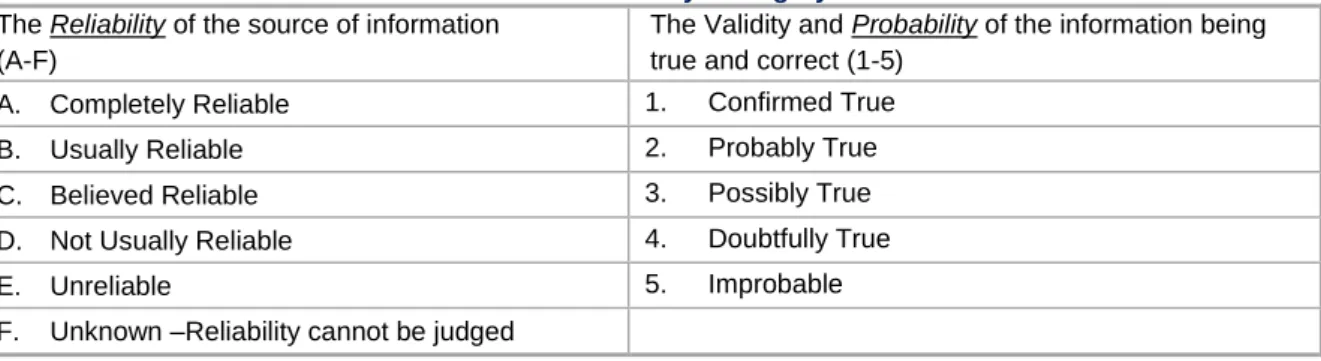
Annex 16: Admiralty Rating System for Intelligence ... 155
Annex 17: Integrated Intelligence Targeting and Monitoring ... 156
Annex 18: Entity-Based Selectivity ... 157
Annex 19: Risk Profile Performance and Evaluation Sheet ... 158
Annex 20: Action Plan for the Roadmap to Improve Compliance Risk Management ... 159
List of Tables and Figures
Figure 1: The Risk-Based Compliance Management Pyramid ... 11Table 1: Summary of Pakistan’s Legislation Compliance with the RKC ... 16
Table 2: Disciplinary Cases BPS 16 and Below and BPS 17 and Above ... 18
Table 3: Comparison of Selectivity Rates... 29
Figure 2: Proposed Organogram with 1x New Customs Chairman, 2x New Customs Members and Retention of Existing Directorates and Collectorates ... 42
Figure 3: Proposed Organogram with New Member Compliance and Enforcement, Directorate General Compliance Management and Directorate General Enforcement... 43
Figure 4: Customs Planning and Performance Reporting Framework ... 45
Table 4: The Admiralty Rating System ... 50
List of Acronyms
AEO Authorized Economic Operator
APPTA Afghanistan-Pakistan Transit Trade Agreement
ASO Anti-Smuggling Organization
ATF World Trade Organization Agreement on Trade Facilitation (Bali Agreement)
CCC Customs Cooperative Council
CCTV Closed Circuit Television
CRM Compliance Risk Management
CMPG Compliance Management Project Group
DGI&I Directorate General of Intelligence and Investigation
DGRM Directorate General of Risk Management
DGTR Directorate General of Training & Research
FATE Facilitation and Taxpayers Education
FBR Federal Board of Revenue
GoP Government of Pakistan
IAU Internal Affairs Unit
MoF Ministry of Finance
NCCOCA National Committee of Customs Officers and Customs Agents
NCCOCC National Customs Communication and Operational Command Centre
NVG Night Vision Gear
PACCS Pakistan Automated Customs Clearance System
PCA Post Clearance Audit
RKC Revised Kyoto Convention- The International Convention on the Simplification
and Harmonization of Customs Procedures
RMC Risk Management Committee
RMS Risk Management System (of WeBOC)
SWOT Strengths, Weaknesses, Opportunities, Threats
TNA Training Needs Analysis
ToR Terms of Reference
UNODC United Nations Office on Drugs and Crime
WeBOC Web Based One Customs (Automated customs clearance system)
WCO World Customs Organization
WCO SAFE
Framework WCO Safe Framework of Standards to Secure and Facilitate Global Trade WTO World Trade Organization
Executive Summary
Customs administrations around the world have seen dramatic increases in workload, due to increases in trade volumes promoted by economic growth, as well as with the increased speed of multi-modal transport across borders.
To facilitate this continually growing movement of goods, Pakistan Customs needs to implement an effective and robust Customs Compliance Risk Management (CRM) system. This will not only allow Pakistan Customs to improve their internal procedures and systems, but will also provide them with the capability to address their issues of compliance and non-compliance of traders, while ensuring that adequate resources are allocated to address the identified risk areas.
Pakistan Customs has initiated various reforms over the last few years, especially in developing an automated customs clearance system, and may now be suffering from reform fatigue. The fatigue is a result of prolonged effort towards reforms, however, they have been poorly planned, managed, and implemented; and not necessarily completed. The failure to understand the intention and application of the Post Clearance Audit (PCA) function to achieve its broader objectives means Pakistan Customs has implemented PCA without having the supporting foundations of structured Risk Management in place. In consequence, sophisticated audit techniques are not being conducted. Effective PCA would enable the identification of issues of non-compliance, and, more importantly, identify entities with high levels of compliance so that trade facilitation privileges can be granted to them.
Further highlighting the issue of “reform fatigue” or absence of “the will” to reform, is the lack of participation by senior officials in the completion of the Trade Project’s CRM Survey and the Strengths Weaknesses Opportunities and Threats (SWOT) analysis. In fact, only two senior Pakistan Customs Managers took the time to complete this survey.
Without effective reform, Pakistan Customs will trail behind neighboring countries in adopting international best practice, and implementing World Customs Organisation (WCO) initiatives. They will struggle to regain full compliance of trading entities that will have embedded themselves into a culture of non-compliance with customs legislation.
This Gap Analysis contains forty-four (44) recommendations for the Federal Board of Revenue (FBR) to carefully consider, prior to embarking on a reform program to improve the CRM environment in Pakistan Customs. The following report is a summary of the recommendations for action, condensed into sixteen (16) strategic areas.
1. Organizational Structure
Pakistan Customs needs to be streamlined and restructured to provide a greater level of autonomy within the framework of the FBR. Restructuring should include the creation of a post for Customs Chairman and two additional Customs Members. One of these two new Customs Members should have the role of overseeing the Customs Wing for Compliance and Enforcement (Reference Recommendations 1, 2, and 3).
A separate Customs Internal Affairs Unit should investigate integrity issues and report directly to the Chairman (Reference Recommendation 6).
2. Legislative Reform
Pakistan Customs/FBR should consider revising the Customs Act in compliance with the requirements of the Revised Kyoto Convention (RKC) (Reference Recommendation 4).
3. Policy Reform
Pakistan Customs/FBR needs to introduce new policy, or improve existing policy, in the areas of Compliance Management, Risk Management, Integrity and Human Resources (Reference Recommendations 5, 6 and 7).
4. Recruitment and Training
Pakistan Customs/FBR needs to take urgent action to recruit new staff before impending retirements decimate the organization’s numbers. As a greater priority, Customs should increase the capacity of the Directorate General of Training and Research (DGTR) to design and deliver quality training programs to new recruits and existing staff (Reference Recommendations 7and 8).
5. Strategic Planning and Reporting
Pakistan Customs should adopt a strategic planning and reporting framework to produce an annual Customs Business Plan, Strategic and Operational Work Area Plans, and Risk Management Plans (Reference Recommendations 9, 10, 11, 12, and 13).
6. Improved Client Services
Pakistan Customs/FBR needs to significantly improve its level of service to clients. This can be achieved by establishing a Customs Cooperative Council; increasing the amount of information on its website; establishing “Help Desks”; automating its internal and external communication systems; and commencing work in accordance with the documented Government Service hours (Reference Recommendations 14-20).
7. Risk Management Committee (RMC)
The Terms of Reference (ToRs) for the Risk Management Committee (RMC) should be redefined and institutionalized as a strategic level committee, as opposed to its current status as an operational level committee (Reference Recommendation 21). It will be the responsibility of the RMC to oversee and ensure that the implementation of government policy, and agreed facilitation rates, are achieved (Recommendation 27).
8. Intelligence
The Intelligence function should be devolved from the Collectorate level and administered centrally by the proposed Directorate General of Enforcement. The proposed Intelligence and Risk Management Directorate must include targeting and performance monitoring units. These units will drive selectivity in the Web Based One Customs System (WeBOC) Risk Management System (RMS) with parameters that are documented, accountable, and entity-based (Reference Recommendations 22, 23, 24, 28, 29 31 and 34).
Establishing suitable Intelligence targeting and monitoring units will require an increase in human resources and specialist trainings. In addition, these units will require the introduction of a fully automated and integrated intelligence database and intelligence management system (Reference Recommendations 25 and 26).
9. WeBOC Development
The WeBOC RMS and statistical reporting modules need to be more intelligent and robust. The RMS requires dramatic improvements to include: entity based selectivity, better examination reporting, automatic manifest acquittal, and useful statistics for analyzing the performance of selectivity profiles (Reference Recommendations 29, 30, 32, and 33).
10. Anti-Smuggling Organization (ASO)
The ASO function should be devolved from the Collectorate level and administered centrally by the proposed Directorate General of Enforcement. By increasing human resources, specialist trainings, equipment and access to specialized technology, the ASO can become the lead agency in anti-smuggling areas, and manage coordinated interagency enforcement operations (Reference Recommendations 35 and 36).
11. Technology Unit and Operational Command Centre
Pakistan Customs should introduce a Technology and Operations section in the proposed Directorate General of Enforcement. This section will be responsible for the procurement, deployment, and maintenance of expensive non-intrusive intervention equipment. In addition, Pakistan Customs should establish a National Customs Communications and Operational Command Center (NCCOCC) to coordinate and oversee all customs strategic and tactical operations (Reference Recommendations 37 and 38).
12. Investigations Unit
All Investigation functions should be devolved from the Collectorate level and administered centrally by the proposed Directorate General of Enforcement. This will require substantial efforts in capacity building, with increased human resources and specialist trainings to establish an Investigations unit capable of conducting large scale investigations, including those involving international cooperation to prosecute offenders (Reference Recommendations 39 and 40).
13 Post Clearance Audit (PCA)
Pakistan Customs should build the capacity of the PCA unit to enable the conducting of better quality audits at the premises of traders. Audits should be carried out with the objective of improving compliance levels, and provide greater quality assurance for risk-managed entities that have increased levels of self-assessment (Reference Recommendations 41).
14 Customs Agents Licensing and Regulation
Pakistan Customs should strengthen the Customs Agents Licensing and Regulation provisions as per international best practice. This will lead to improvement of the quality of Customs Agents through: Customs to Trade cooperation, more stringent testing, and ongoing professional development programs.
15 Warnings and Penalties
Pakistan Customs needs to produce and apply a documented formal warning and penalty system to ensure consistent application of policy on a national basis (Reference Recommendation 43).
16. Trusted Trader Facilitation Program
Pakistan Customs should initiate a formal Trusted Trader program for entities that have maintained high levels of compliance, where compliance levels have been confirmed by audits over a period of three consecutive years (Reference Recommendation 44).
This initiative should be further developed into an Authorized Economic Operator (AEO) program.
In order to achieve the wide range of reforms detailed above, it will be first necessary to gain high level approval from the FBR. Subsequently, additional higher level approval will be required for the expected investments in human resources, technology, and equipment. Revenue leakage, due to smuggling and other fraudulent activities of the trading public, is estimated to be in excess of USD 1 billion per year. As such, it is clear that there is plenty to be gained from investing in CRM, and persisting with the required reform agenda.
1. Introduction
Deloitte Consulting LLP is under contract with USAID to implement the Trade Project. The goal of the project is to improve the trade environment in Pakistan, resolve trade challenges and support trade reform through the provision of technical assistance.
The FBR has requested the Trade Project to provide technical assistance in improving the CRM capability of Pakistan Customs/FBR so that the broader goals of the Project can be achieved using an approach that intervenes less in real time but is still able to control a number of different risks after the release of goods into the economy.
The Trade Project’s Work Plan Activity for the development of a CRM Roadmap requires the completion of a “gap analysis” in the first instance, identifying the current situation in Pakistan and evaluating the Compliance Management Framework, before recommending changes in a roadmap (documented in the later stage of this report).
2. Background
Modern Customs Administrations are challenged by the demands of increased trade volumes, faster multi-modal transport and commercial transactions that are finalized with the push of a button on the computer. These challenges can be met through the adoption of a Compliance Management Program, built on the solid foundations of Risk Management principles and application.
Compliance Management is paramount in managing all trade facilitation measures that Customs can provide to trading entities. It operates on the concept of allowing entities identified as having high levels of compliance to be rewarded; whereas those entities identified as not compliant are penalized. An increase in the number of traders identified as compliant, in turn, allows Customs to focus its limited resources on the non-compliant traders that pose a greater threat to organizational objectives.
The supporting foundations for this approach lie with a robust, but flexible, legislation and a commitment to recognize traders as “clients”. Client focus, service, and advice on legal obligations, are known to lead to greater compliance levels.
Compliance Management allows for minimal physical intervention, and relies more on post clearance interventions. This is driven via the correct application of Risk Management parameters, while maintaining the expected levels of control over revenue collection, integrity, and supply chain security.
3. Methodology
The approach taken to collect information for the Gap Analysis was focused on engagement, at the highest level and at every opportunity, between the Trade Project and the core component beneficiary: Pakistan Customs/ FBR. The Trade Project’s planned activities were undertaken in consultation with the FBR to obtain prior approval for all workplace visits.
Despite receiving high-level approval and support, the Trade Project team faced difficulties in accessing relevant information and data from the FBR. Some information requests were never fulfilled during the period of research. In order to obtain the required information, it was often necessary to conduct multiple visits, to a number of locations nationally, to provide the Trade Project with the best chance of producing a quality report for the benefit of Pakistan Customs.
The approach to obtaining information included the following activities:
Formal and informal meetings with senior officials of Pakistan Customs/FBR in Islamabad, Karachi, and Lahore
Workplace visits to operational areas of declaration processing and examinations, and ad-hoc
discussion with staff members in Karachi, Lahore, and Islamabad. A complete table of meetings and visits can be found in Annex 1
Submission by the Trade Project of formal requests for documentation and data for analysis appear in Annex 2
Preparation of a CRM Survey and SWOT Analysis form for completion by senior FBR/Customs officials. A copy of the form and a summary of the answers is provided in Annex 3
Review of Trade Project strategic documents, such as the RKC Gap Analysis
Analysis of open source documents previously prepared by other donors
Analysis and comparison of the websites of a number of Customs administrations to that of the Pakistan Customs website appear in Annex 4
Training Needs Analysis (TNA) survey and focused group meetings on training matters with the staff of Pakistan Customs. A compilation of TNA Report recommendations is attached as
Annex 5
Review of Risk Management-specific training courses in the United Nations Office on Drugs and Crime (UNODC) computer-based training programme.
Note – As mentioned above, despite numerous requests, a significant amount of requested information such as risk management practices, profiles and selectivity, Risk Management Committee Minutes, and statistics were never provided. As a result, the Trade Project treated this lack of information as gaps in the Compliance Management Framework.
3.1 Relationship to other Strategic Documents
A number of documents have been prepared during the life of the Trade Project that prompted the need to look more closely at the status of CRM in Pakistan Customs. These documents have served as starting points for background information and research.
These documents are as follows:
CRM Concept Note, prepared by the Trade Project in 2012
The Assessment of Pakistan’s Customs Border Post at Wagah-Attari in 2013
Legal Gap Analysis, Consistency of Pakistan Customs Regime with the Revised Kyoto Convention in 2013
Analysis of Afghanistan-Pakistan Transit Trade Agreement (APTTA) in 2013
Gap Analysis and Implementation Roadmap for the Directorate General of Post Clearance Audit (PCA) in Pakistan Customs in 2014
CRM Training Needs Analysis (TNA) in 2014
Dwell Time Study of Afghan Transit Trade in 2014
Authorized Economic Operators (AEO) Concept Report in 2014
Customs Agents Licencing and Regulation Report in 2014
The adoption and implementation of the recommendations contained in all of these reports will greatly assist with improving the CRM environment in Pakistan.
4.
Expected Results
The expected results of this Gap Analysis and Implementation Roadmap are as follows:
Acceptance and endorsement of the document by the FBR’s executive authorities.
Further endorsement and support by the Ministry of Finance (MoF) and the Government of Pakistan (GoP).
Recognition that implementation will require funding and further technical assistance to support the range of reforms. Including: organization restructuring; specialized staff
development; introduction of technology to improve targeting; performance monitoring mechanisms; and an increase in non-intrusive interventions.
Complete and effective implementation of this strategic plan within the recommended timeframes.
Acceptance and implementation of the critical recommendations and actions needed to effect the necessary change will require a commitment and strong leadership of FBR/Pakistan Customs officials.
5. An Overview of Compliance Risk Management
Customs Administrations are empowered to ensure compliance with the statutory provisions for which they have administrative responsibility. These statutory provisions may be directly related to Customs legislation, or to other agency legislation, which Customs administers on behalf of these other agencies. Furthermore, Customs is expected to achieve a balance between regulatory control and trade facilitation.
An effective application of the Risk Management principles is fundamental to achieving an optimum balance between control and facilitation. As the use of Risk Management becomes more effective, the relationship between facilitation and control improves.
In June 1999, the Council of the World Customs Organization (WCO)1 approved the revised International Convention on the Simplification and Harmonization of Customs Procedures (i.e., the Revised Kyoto Convention (RKC)). The RKC is seen as the international `blueprint` for Customs Administrations, and is aimed at addressing concerns from the international trading community, minimizing customs intervention in cargo movements, and maximizing levels of trade facilitation. Essentially, the RKC is intended to promote the achievement of a highly facilitative international travel and trading environment, while maintaining appropriate levels of regulatory control across all member administrations. This trading environment would therefore mirror the objectives of the WCO and those of any modern and efficient Customs administration by:
Eliminating divergence between the Customs procedures and practices of contracting parties that can hamper international trade and other international exchanges
Meeting the needs of both international trade and Customs authorities for facilitation simplification and harmonization of Customs procedures and practices
Ensuring appropriate standards of Customs control
Enabling Customs authorities to respond to major changes in business and administrative methods and techniques
Ensuring that the core principles for simplification and harmonization are made obligatory on contracting parties
Providing Customs authorities with efficient procedures, supported by appropriate and effective control methods
Chapter 6 of the RKC General Annex Guidelines relates specifically to Customs control and emphasizes the need for Customs to place less emphasis on ‘gateway’ controls:
Customs administrations have to apply efficient and effective controls by implementing Risk Management techniques, in order to simultaneously fulfill the responsibility of collecting revenue, implementing trade policy, safeguarding public interests, managing the increase in world trade and tourism, reducing Customs personnel, and offering trade facilitation to legitimate traders and travelers.
Customs administrations should shift from frontier based, movement controls towards greater levels of trader-focused, audit-based controls, (e.g. shifting from the introduction of simplified procedures to allowing an authorization for trader self-assessment). This will enable Customs to manage the growth in world trade and the increasing demand to reduce resources, as well as the need for greater trade facilitation.
Risk Management is the key element in achieving this objective, and is integral to the control program of a modern Customs administration.
1The World Customs Organization (WCO) is an inter-governmental organization with headquarters in Brussels, Belgium. With
its worldwide membership, the WCO is recognized as the voice of the global customs community. The WCO maintains the international Harmonized System (HS) goods nomenclature, and administers the technical aspects of the World Trade Organization (WTO) Agreements on Customs Valuation and Rules of Origin.
The initial approach to an effective regulatory compliance program can be shown in the Risk Management Model adopted by the WCO. The WCO model addresses five main areas:
Establish the Context: At this stage it is essential to consult with stakeholders, both internal and external, to ensure that those involved in Risk Management are fully aware of any policies, directives, legislation, etc. that may impact a Risk Management project.
Identify the Risks: This cannot be achieved without communication / consultation with those who have responsibility for activities / processes under review.
Analyze Risks: Those involved in identifying risks will be an important resource in analyzing risk, their likely impact, and the occurrence of risks.
Assess and Prioritize Risks: At this stage of the process it is imperative to have management input, as management will be accountable for any Risk Management decisions taken. It should be noted that managerial input becomes more important as the risks addressed become more strategic in nature. In prioritizing risk, it is essential that those responsible for a particular area are consulted, and that agreement within the Risk Management project is reached to identify and classify risk as low, medium, or high.
Address / Mitigate Risks: At this point discussions will take place on how to address the risk through selecting preferred options that will mitigate it.
Throughout these five steps, it is essential to continually monitor, review, and highlight Compliance Management. Feedback from stakeholders during this process is essential so that the levels of risk can be regularly reviewed and the current, appropriate, risk level agreed.
A more in-depth explanation of the Risk Management model’s components listed above is provided in
Annex 6.
Furthermore, the WCO has designed standards to secure and facilitate the ever-growing flow of goods in international commerce. These standards are set in the SAFE Framework of Standards which was adopted by the WCO Council in 2005. A vast majority of WCO Member administrations have expressed the intention to begin the process of implementing the SAFE Framework’s provisions.
SAFE sets out a range of standards to guide international Customs administrations toward a harmonized approach, based on Customs-to-Customs cooperation and Customs-to-Business partnership. SAFE is based on four core elements:
1) Harmonizing advance electronic cargo information
2) Introducing a Risk Management approach to address security threats
3) Performing outbound inspections of high-risk containers and cargo at the request of the receiving customs administration
4) Defining benefits that Customs will provide to businesses that meet minimal supply chain security standards and best practices
In addition to the Risk Management model adopted by the WCO, a number of other Compliance Management styles are available for Customs administrations to consider.
One such style compares key elements of a risk managed style of Compliance Management with the more traditional ‘gatekeeper’ style.2
This Compliance Management style focuses on four main areas: Legislative Framework; Administrative Framework; Risk Management Framework; and Information Technology (IT) Framework.
Another model uses risk-based Compliance Management pyramids to draw together the various elements of a Risk Management style and provide a structured approach to the management of compliance. The risk- based compliance management pyramid used in this gap analysis is presented below.
2
Widdowson (2004), Managing Risk in the Customs Context, page 95 in: Luc De Wolf & Jose B Sokol (eds) Customs Modernisation Handbook. World Bank DC, retrieved on various dates, April / May 2012
Figure 1: The Risk-Based Compliance Management Pyramid3
3 Source Widdowson 2004 Enforcement / Recognition Compliance Assessment Client Service Legislative Base Persuasion Formal Warning Penalty Simplified procedures Increased self-assessment Intervention by exception Reduced regulatory scrutiny Periodic payment arrangements Less onerous reporting requirements Modification of Ayres and Braithwaite (1992) Enforcement Pyramid Reward compliance using administrative discretion Enforce noncompliance using administrative discretion Balance between control and facilitation
Focus on identifying compliance and non-compliance Information management focus Pre-arrival assessment, clearance and release Real time intervention in high-risk cases Post-transaction focus in majority of cases Audits of industry systems and procedures Investigation where non-compliance suspected Risk-based Procedures:
Consultation and cooperation Clear administrative guidelines Formal rulings Education and awareness Technical assistance and advice Appeal mechanisms Recognises respective responsibilities of government
and industry Provides for electronic communication Establishes sanctions for non-compliers Enables flexibility and tailored solutions Breaks between goods and revenue liability
Customs Administrations have implemented Compliance Management using various approaches. For example:
Mozambique Customs maximized revenue collection and enhanced trade facilitation through innovative public cooperation initiatives, including tax education and awareness sessions for the trade sector.4
Peru Customs transformed Customs-to-Business relations through a modernization program and reported an increase of 435 % in revenue collected within the first six years.5
Mongolian Customs concentrated its efforts on reducing costs to businesses through trade facilitation and other actions, including: simplifying Customs documentation; reducing clearance times; and encouraging online declarations.6
South African Customs benefited from a Risk Management strategy which has developed specialized units such as the Customs Risk Management Division, whose main purpose is the identification, classification, dissemination, and mitigation in compliance risk.7
French Customs introduced the Authorized Economic Operators scheme, where those accredited benefited from reduced Customs inspections.8
Cameroon Customs combined trade facilitation with enforcement, by adopting ASYCUDA. Comparisons between the 1st quarters of 2010 and 2011 saw the declaration process at the port reduce from 11 to 3 hours, revenue collection increased by 22% and poor practices, which are potential sources of corruption, declined.9
The Brazilian Customs reform process has been supported by an alliance of Brazilian Companies (Procomex). Their experience has shown that the greatest progress is made with issues identified through consultation with the trade.10
Dominican Republic Customs’ successful reform processes were built on facilitation, post-clearance control, and Risk Management, alongside professional and well-trained staff.11
Furthermore, the World Trade Organization Agreement on Trade Facilitation12 (the Bali Agreement of December 2013) re-enforces many of the RKC’s standards applicable to CRM and, in some instances, expands on these to further increase the capacity to facilitate trade.
Customs administrations have adapted their control mechanisms and approach to regulating laws over time. The evolution from high levels of interventions to minimal interventions with high levels of compliance is depicted as the “Evolution of Risk Management and Compliance Management” in
Annex 7.
4
WCO News No 61, February 2010 (p28)
5
WCO News No 61, February 2010 (p32)
6
WCO News No 61, February 2010 (p43)
7
WCO News No 62, June 2010 (p27)
8 WCO News No 63, October 2010 (p39) 9 WCO News No 65, June 2011 10
WCO News No 66, October 2011 (p42).
11
WCO News No 67 February 2012 (p28)
12
6. Goals, Objectives and Expected Results of a Customs Compliance Risk
Management System
6.1 Goals
The goal of implementing a CRM Framework into the Pakistan Customs administration is to increase the levels of voluntary compliance and self-assessment by traders, and decrease the levels of those traders identified as being non-compliant with Customs Law and Regulations.
6.2 Objectives
6.2.1 Revenue Protection
Customs collects revenues for the Government in accordance with its national legislation. To ensure that the traders / stakeholders are fully advised of their own reporting and record keeping responsibilities, and are afforded the opportunity for voluntary compliance, Customs needs to work closely with its client base of importers, exporters, and brokers. In instances where a non-compliant activity occurs, Customs has the mandate to identify criminal intent or fraudulent activity, and take the appropriate action to ensure that any lost revenue is collected, plus any sanctions imposed or prosecutions affected.
6.2.2 To Facilitate Trade While Maintaining Supply Chain Security
Customs activities have an impact on all forms of international movement, involving the movement of people, means of transport, cargo and postal items, entering, exiting or transiting through the country’s territory. The functions and activities undertaken by Customs for its own statutory requirements, or on behalf of other agencies, need to be done in a transparent manner and with an emphasis on the use of Risk Management. Risk Management allows legitimate trade and travellers to be processed quickly and with minimal intervention, while those considered a higher risk are subjected to closer scrutiny and higher levels of intervention, thus mitigating the risk to revenue loss and community.
Certain customs enforcement activities can support facilitation initiatives and ensure that compliance is enforced without having a detrimental effect on the supply chain and delivery time of goods. These risk management initiatives should be risk-based, ideally non-intrusive, and undertaken until such a time that Customs is satisfied with the level of compliance. Overall, targeted interventions will reduce assessment / inspection time spent on conducting 100% examinations.
By taking enforcement action and penalizing or prosecuting offenders appropriately, Customs can promote higher levels of voluntary compliance as the preferred alternative to non-compliance.
6.2.3 To Protect the Community and Maintain Border Integrity
In a majority of countries, including Pakistan, Customs is considered to be the primary “frontline” border agency. This natural perception, and operational reality, comes about by virtue of the functions that Customs authorities perform in line with their legal jurisdiction of regulating the international movement of people, goods and means of transport across borders. Very often, this jurisdiction also extends to domestic vessels operating in territorial waters.
Customs has a major responsibility to protect Society from a variety of prohibited or restricted goods such as: narcotic drugs; weapons; and sub-standard goods. Other responsibilities include significantly contributing to the global battle to eliminate terrorism, human trafficking, and other transnational crimes.
Criminals can use legitimate means of transport, trade routes, and points of entry, combined with falsified documentation to disguise the origins and nature of consignments. They can also engage in direct smuggling across borders, at locations not set aside for legitimate entry or exit.
7. Gap Analysis of the Compliance Risk Management Environment in Pakistan
Customs
Managing risks and compliance for a Customs administration requires a systematic application of Risk Management principles to ensure all strategic business objectives are achieved. Pakistan Customs has fundamental and systemic challenges within its administrative and management structures.
The Gap Analysis has identified areas of concern, or where specific issues arise, and includes recommendations that, if accepted and implemented, will provide the foundations to manage risk and raise compliance.
7.1 Administration and Legislation
Customs administrations exist and operate as regulatory bodies based on legal foundations. In order for Compliance Risk Management to be implemented and indeed achieved the organizational structure must be efficient; the legislation and policies must be robust and flexible; and strategic planning and reporting should be driving the administration’s goals and direction.
7.1.1 Organizational Structure
At the time of this report, Pakistan Customs was headed by the Member of Customs supported by seven (7) Directorate Generals with technical or specialized responsibilities, and nine (9) Chiefs responsible for customs operational activities and administrative policy.
The number of Directorates is considered excessive, with many overlaps of functions. For example, each Collectorate has their own intelligence and investigation function whereas there is already a “specialist” Directorate General of Intelligence and Investigation. The staff of the DG I&I have raised concerns that very few cases are referred to them by the Collectorates for in-depth detailed investigation.
The current structure is overbearing on the Member Customs; excessive numbers report directly to the position. It should be structured to produce a more effective and efficient Pakistan Customs. To illustrate the excessive structure, an Organogram of the Customs administrative structure has been prepared by the Trade Project. This is presented in Annex 8.
In the broader structure of the FBR, it is apparent that the tax streams of Inland Revenue and Customs are two disparate entities with separate operations and specialized functions. Of the few functions that are common to streams such as the DG FATE, DG Legal, and DG HRM, their focus is dependent on the background and discretion of the incumbent Member. The result is disjointed working relationships, negative competition, and ‘turf wars’.
To ease the burden at the leadership (Member) level, there are a number of options, but ideally any changes to administrative structure should follow a path that allows Customs to be more autonomous within the current FBR. A model similar to that of India, which includes a Chairman of Customs, would be most beneficial.
Recommendation 1
It is recommended that the GoP restructure FBR/ Pakistan Customs Wing to create a separate Board of Customs, reporting to the Secretary Revenue Division. The existing work assignment
between different Directorate Generals / Collectorates should be reviewed and re-allocated to remove overlapping areas and gaps.
7.1.1.1 Compliance Risk Management in the Administrative Structure
Directorate General of Risk Management is established in law in Section 3BBB of Pakistan’s Customs Act 1969. The “Risk Management Directorate” was formed in 2011 with the aim to increase the Tax to Gross Domestic Product (GDP) ratio and to stop under-invoicing.13 In 2012, the FBR announced its decision to implement a Directorate General of 'Reforms, Automation and Risk Management' to deal with all customs-related reforms including computerization, automation, risk-management systems, and monitoring/functioning of the WeBOC clearance system. The directorate was to be headed by the Director General Reforms, Automation and Risk Management.14
Progress has been slow and through 2013 and into 2014, the positions of DG Reforms, Automation and Risk Management and the Director Risk Management had not been filled. The Directorate General of Risk Management is still not functional and exists only in name.
Recommendation 2
It is highly recommended, and seen as a matter of urgency, that Pakistan Customs create and staff an appropriate office of the Director Risk Management until such time as it is ready to consider, and implement, a new Wing for Compliance and Enforcement per Recommendation 3.
Collectorates / Directorates are considered to be excessive in number within Pakistan Customs’ current administrative structure. This has resulted in Collectorates and Directorates working in isolation, rather than in coordination and collaboration. Therefore resources should be directed towards developing the right balance between executive, managerial, and operational staff.
The following directorates and Collectorates currently exist in Pakistan Customs: DG of Risk Management; DGPCA; DG Facilitation and Compliance (F&C); DG Intelligence and Investigations (I&I); and Preventive Collectorate (Anti-Smuggling Organizations). It is preferred that these areas work under a single focused command to collaborate and deliver on national objectives effectively.
Recommendation 3
It is recommended that as part of a broader administrative restructure identified in Recommendation 1, the FBR consider creating a position of a Customs Member for Compliance Management, which supervises the work of all related Directorates and Collectorates.
This recommendation will allow a strategic shift to a functional based structure that centralizes key areas for nationally driven compliance risk management activities, and removes the existing duplication of effort conducted in isolation by current Collectorates and Directorates in a territorial based structure. For example, the current Preventive Collectorate has territory which includes appraisement and anti-smuggling. Additionally, each Collectorate has Intelligence and Investigation cells.
13
Published in The Express Tribune, March 8th, 2011. Available at: http://tribune.com.pk/story/129206/fbr-to-set-up-risk-management-directorate/
14
Business Recorder, April 1st, 2012. Available at: http://www.brecorder.com/taxation/181:pakistan/1171080:customs-related-reforms-fbr-to-set-up-new-directorate-general/?date=2012-04-01
7.1.2 Legislation – Pakistan Customs Act 1969
The Trade Project has undertaken a major task of conducting a “Gap Analysis” of the Pakistan Customs law and has benchmarked it against the Revised Kyoto Convention (RKC) to measure its compliance against International Standards and required best practice.
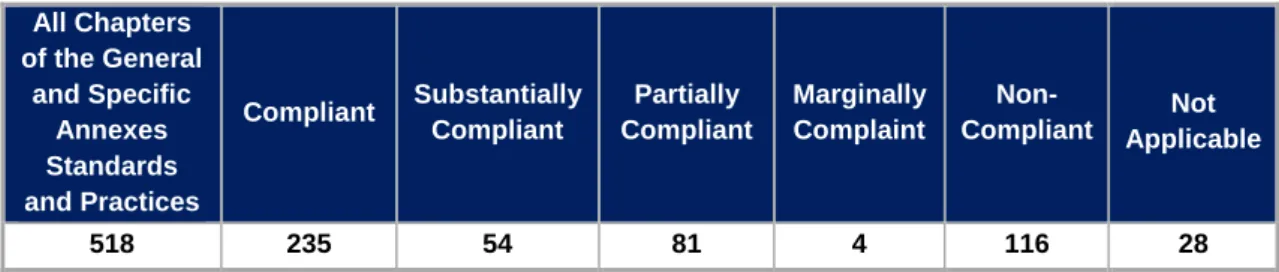
Table 1: Summary of Pakistan’s Legislation Compliance with the RKC
It was previously believed that Pakistan Customs laws were substantially compliant with the requirements of the RKC. Pakistan Customs Legislation is compliant against only 45.36% of the RKC’s elements; against 22.39% of the elements it is totally non-compliant, and is somewhere in-between for the remaining 32.25%.
Additionally, the WTO Agreement on Trade Facilitation (Bali Agreement) will have an impact on existing legislation, and require future legislative reform. This matter will also be addressed in great detail by the Trade Project in combination with the RKC roadmap.
The overall assessment, or conclusion, is that Pakistan’s Customs Law is structurally outdated and too cumbersome. Therefore, upgrading legislation to an acceptable level will be an extremely challenging task. While reviewing and implementing a new Customs Act and Regulations will be problematic, time-consuming and expensive; new legislation should be more robust and progressive enough to deal with the requirements of the international trading community and customs compliance activities in the future.
Recommendation 4
It is recommended that a new Pakistan Customs Act and Regulations be written and enacted so as to be compliant with the RKC.
7.1.3 Policy
The disjointed administrative structure and procedures of Pakistan Customs result in incoherent and disconnected administrative areas responsible for policy. For example, a Collector is able to publish a Statuary Regulatory Order (SRO) which applies to a particular location or region. Customs law is national law and, therefore, all policy documents of ‘how’ Customs will interpret and apply law should be uniform across all Collectorates.
Consistent national Customs policy forms part of the Risk Management and Compliance Management approach. These are critical to creating and implementing effective Compliance Management mechanisms.
7.1.3.1 Risk Management Policy
Pakistan Customs does not have a Risk Management (RM) Policy that outlines the administration’s legal basis to use RM principles and their intention to apply it. This would be the responsibility of the Directorate of Risk Management.
All Chapters of the General and Specific Annexes Standards and Practices Compliant Substantially Compliant Partially Compliant Marginally Complaint Non- Compliant Not Applicable 518 235 54 81 4 116 28
7.1.3.2 Compliance Management Policy
There is no policy document for Compliance Management. The policy document should incorporate elements of RM and refer to the RM policy. The Director General of Compliance Management/Risk Management or its equivalent would be responsible for the above.
Recommendation 5
It is highly recommended that a Customs Compliance Management Policy, incorporating Risk Management, be prepared as a driving document to implement Compliance Management
7.1.3.3 Staff Integrity Policy
Transparency International has ranked Pakistan, in its 2013 publication, as the 43rd most corrupt country in the world, of the 177 countries covered.15 Although the perception of corruption is considered to be higher for tax collection officials than for Customs, as the single biggest revenue collection agency in the country, Pakistan Customs is at high risk to contribute to these perceptions.
At a country level, the National Accountability Bureau (NAB) is tasked with the responsibility of eliminating corruption through a holistic approach of awareness, prevention and enforcement.16 Later, the National Anti-Corruption Strategy (NACS) project was initiated by NAB to further increase the national efforts towards transparency and accountability. Moreover, the Federal Investigation Agency (FIA) is also empowered to investigate and prosecute corruption. While the former agency takes cognizance of large / serious cases of corruption, the latter agency routinely investigates small-to-medium cases of corruption.
Within Pakistan Customs, the DG I&I is charged with the responsibility of investigating breaches of the Code of Conduct as well as a wide range of other fiscal fraud offenses. It would be preferable to separate the functions, so that those responsible for internal security do not deal with fiscal fraud.
Recommendation 6
It is recommended that Customs consider introducing a separate Internal Affairs Unit (IAU) to promote integrity and educate staff on the Code of Conduct, investigate the more common reports of poor integrity, and work closely with other government agencies for higher level investigations into corruption.
The integrity policy implemented in Pakistan Customs comes under the umbrella of the Code of Conduct, formulated in March 2004, to comply with the Public Service Efficiency and Discipline Rules.
The Code of Conduct is signed by each staff member to acknowledge receipt; however, the Trade Project was unable to obtain any documentary evidence of the distribution and acknowledgement of the Code of Conduct, nor was any Collector-level officer able to produce a copy of the Code of Conduct. The signed copy of the document should be part of the manager’s management profile, and a copy should also be contained in individuals’ human resource files.
The following chapters of the Code of Conduct were reviewed by the Trade Project: Expected Norms of Behaviour; General Work Environment; Personal Conduct; and Implication of Misconduct:
While the Code of Conduct is all encompassing in its scope and, for all intent and purposes, fulfils the needs, it could benefit with strengthened commentary specific to Customs Officers and Customs Agents in areas related to Conflict of Interest.
15
http://issuu.com/transparencyinternational/docs/cpi2013_brochure_single_pages?e=2496456/5813913
16
In August 2011, personnel from a Collectorate of Pakistan Customs researched compliance vis-a-vis a number of different Codes of Conduct for Customs Administrations, prepared a draft version, and presented this to the FBR. The draft document highlights sixteen (16) key areas to improve and ensure higher levels of integrity.
Although in draft form, this document is a good example for Customs to adopt in a more autonomous manner and demonstrate that Customs is willing to take the initiative in relation to integrity. The Trade Project suggests further refinement and improvement, including ways of documenting consequences and action to be taken against breaches of the code of conduct, to instil confidence that breaches are appropriately investigated, proven, or disproven.
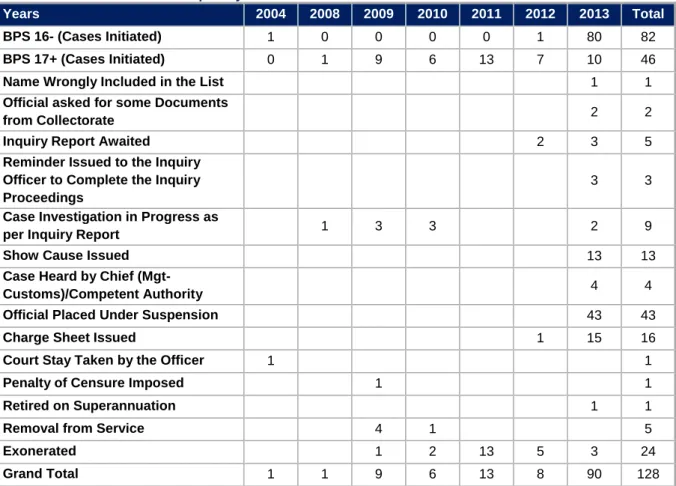
The following table populated with statistics provided by the Directorate of HRM suggests that it has taken at least five years for this policy to gain either acceptance, or momentum, in implementation. Considering 2013 in comparison to previous years, there is a significant increase of disciplinary cases initiated.
Table 2: Disciplinary Cases BPS 16 and Below and BPS 17 and Above
Years 2004 2008 2009 2010 2011 2012 2013 Total
BPS 16- (Cases Initiated) 1 0 0 0 0 1 80 82
BPS 17+ (Cases Initiated) 0 1 9 6 13 7 10 46
Name Wrongly Included in the List 1 1
Official asked for some Documents
from Collectorate 2 2
Inquiry Report Awaited 2 3 5
Reminder Issued to the Inquiry Officer to Complete the Inquiry Proceedings
3 3
Case Investigation in Progress as
per Inquiry Report 1 3 3 2 9
Show Cause Issued 13 13
Case Heard by Chief
(Mgt-Customs)/Competent Authority 4 4
Official Placed Under Suspension 43 43
Charge Sheet Issued 1 15 16
Court Stay Taken by the Officer 1 1
Penalty of Censure Imposed 1 1
Retired on Superannuation 1 1
Removal from Service 4 1 5
Exonerated 1 2 13 5 3 24
Grand Total 1 1 9 6 13 8 90 128
The FBR must acknowledge that poor integrity is a problem, and that corruption is a crime. Until this acknowledgement and appropriate handling of such situations, Customs will be unable to achieve its full potential for operating efficiency (e.g., maximizing revenue collection). The FBR receives regular negative coverage in print and online media.
It is essential that Pakistan Customs, and more broadly the FBR, is considered by the public to be an administration of the highest integrity. Otherwise, it is only natural that the trading community will be less interested in Customs endeavours to increase their voluntary compliance levels.
7.1.3.4 Human Resource Management (Recruitment and Training)
The administrative management of customs contributes indirectly to total Compliance Management and risk mitigation through higher standards of professionalism, performance, and aptitudes of the workforce.
The Trade Project has been able to establish and report through the CRM Training Needs Analysis (TNA), that it has been in excess of 22 years since a recruitment exercise was completed for staff at level BPS16 and below. The average age of these officers in Customs is 49 years and 3 months17 and there are 7283 employee falling under this category level. The average age of the smaller sample group that completed questionnaires for the Trade Project was 54 years.
Therefore, it is anticipated that in the next 10 – 15 years, many of these employees are going to reach the retirement age. This means that Pakistan Customs needs to be initiating recruitment and induction training for approximately 700 people per year in order to replace the staff due to retire.
The Trade Project is concerned that the Directorate General of Training & Research (DGTR) will not be able to provide quality training given their current capacity in staffing levels and training material. The DGTR, although capable of managing externally provided e-learning courses, is limited in its ability to deliver Compliance Management trainings such as Risk Management, Intelligence, Investigations, Anti-smuggling, or Audit. Furthermore, there is also limited ability to deliver basic Tariff Classification, Rules of Origin, and WTO Valuation courses.
Recommendation 7
It is highly recommended that the FBR take urgent steps to review its staffing needs beyond 2020, and ensure that its Human Resource Management Policy and Staffing Strategy is able to fulfil the recruitment and induction training needs.
Recommendation 8
Additionally it is highly recommended that the human resources and technical capacity of the DGTR is significantly increased in order for the department to be prepared to deliver extensive and comprehensive induction training courses for new recruits in the coming years.
7.1.4 Strategic Planning and Reporting
The use of strategic planning should be an integral part of any organization. Strategic planning outlines the broad-based goals intended to be achieved, the high level sets of actions (strategies) to be implemented, and the expected results that will be reported against calendar-specific timeframes. High level strategic plans and their reports provide important information to governments to aid the decision-making process on areas such as staffing, budget support, and income. These plans and reports need to be transparent and freely available to members of the public.
The FBR Year Book 2012-2013, produced by the “Strategic Planning Reporting and Statistics” wing of the FBR, indicates that there is some form of higher level reporting of results across all the functional bodies of FBR including Customs. It identifies the FBR’s Vision, Mission and Values as follows:
Vision Statement: To be a modern, progressive, effective, autonomous and credible organization for optimizing revenue by providing quality service and promoting compliance with tax related laws.18
17
Source of statistics, Secretary Management Customs-II - Mr Masood Ahmed
18
Mission Statement: Enhance the capability of the tax system to collect due taxes through application of modern techniques, providing tax payer assistance and by creating a motivated, satisfied, dedicated and professional workforce.
FBR Values: Integrity, Professionalism, Teamwork, Courtesy, Fairness, Transparency and Responsiveness
Although these statements would conceivably originate from a Business Plan, against which the FBR is reporting, the Trade Project was unable to find evidence of the FBR’s Business Plan for review.
A strategic planning regime in Customs Administrations should incorporate a top to bottom approach: incorporating Business Planning, Operational Work Planning, and Risk Management Planning.
Recommendation 9
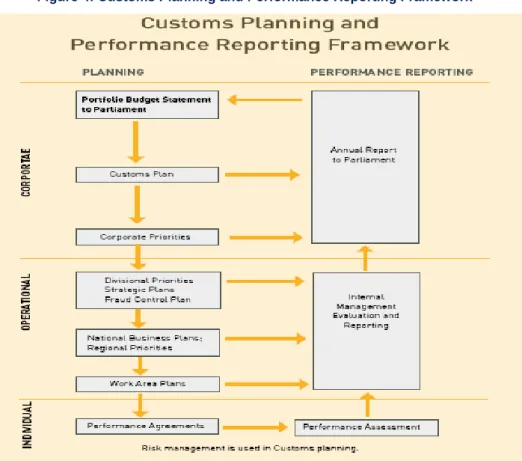
It is highly recommended that Customs adopt and implement a strategic planning and reporting model, which links Customs to higher levels of the Government of Pakistan
7.1.4.1 Annual Customs Business Plan and Report
There is no published Customs Annual Plan that states a high level “Mission Statement” for Customs or objectives that identify “Key Result Areas” to report against. It is the annual business plan that starts the strategic planning process for subsequent lower level plans.
Risk Management, in the first instance, is applied to ensure the achievement of objectives or desired outcomes. If objectives are not documented in an annual plan and in the underpinning lower level operational plans, then Risk Management is not able to be applied.
Recommendation10
It is highly recommended that the Member Customs produce, and present, an Annual Customs Business Plan, plus an Annual Report of Customs Activities, to the Government of Pakistan (GoP), Customs workforce and the public of Pakistan.
7.1.4.2 Operational Work Planning and Reporting
Customs administrations that have a structured planning framework in place will produce a high level annual Operational Work Plan that expands on the content and objectives of the Business Plan. This ‘Business Plan’ incorporates a series of activities, objectives, key result areas, and reporting responsibilities identified.
The operational planning system works its way down the administrative chain of command to the Chief Collectors, Collectors, and possibly Deputy Collectors. As the planning documents go down the chain, the content becomes more specific to particular activities to be performed, at each level, to meet overall objectives. For example, a lower level work plan for the Anti-smuggling Unit will have revenue targets and activities related to “beyond the border” interventions, whereas an Examination Unit will have activities related to “customs control” areas.
By following the same objectives and key results through the chain of planning, an operational work plan ensures that all reports appropriately address the same criterion when reporting.
Pakistan Customs does not have any documented operational plan. The only source of planning that could be ascertained is in the form of revenue targets. This information was not forthcoming from Pakistan Customs.
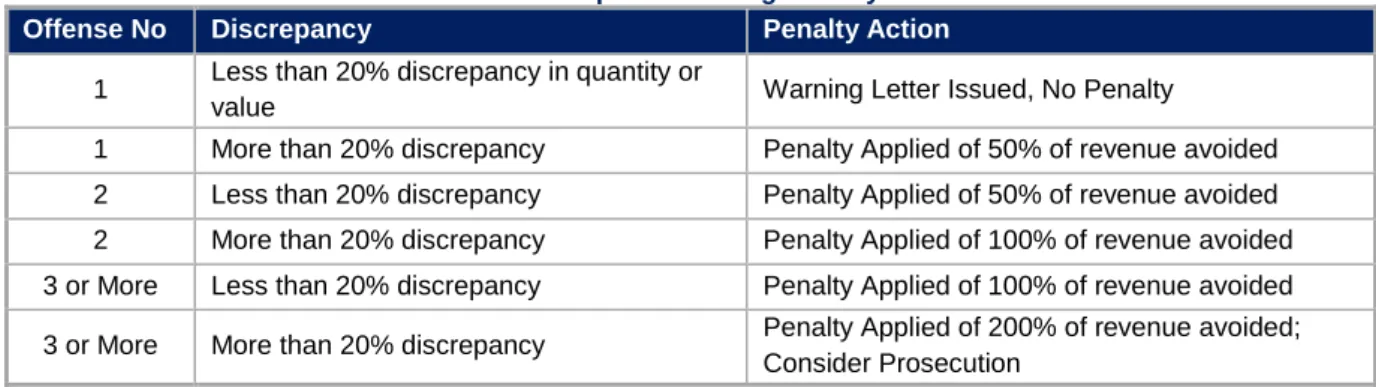
The Collectorates do, however, produce revenue statistical reports for management in Islamabad. These have been developed over time to meet the needs of the FBR. Even though the “revenue theme” is consistent, however, the details of the report are not necessarily so. Some reports use only ‘revenue collected’, while others include a comparison to targets and previous reporting periods. Some also include the nature of the discrepancy, but do not necessarily identify the follow-up action related to warnings or penalties.
Recommendation 11
It is recommended that Customs implement a more structured and comprehensive Operational Work Area Planning and Reporting system, which includes high and operational level objectives, activities, key result areas, responsibilities and deadlines where applicable.
7.1.4.3 Risk Management and Compliance Management Planning and Reporting
Risk Management is required to ensure that business objectives are achieved and that Compliance Management additionally involves the identification of compliance and non-compliance within the current Customs legislation. These plans will need to address the operational and business plans respectively.
The FBR and Pakistan Customs do not use Risk Management or Compliance Management plans. These would normally be produced in the first instance by the Directorate of Risk Management, which would work with the Collectorates to produce lower level RM Plans.
As with the operational work planning system, there should be a series of plans from a notional level Customs Risk Management Plan that works its way down through the chain of command to include Risk Management plans for individual Collectorates, or even lower to individual units.
The risks to be included will be a combination of external and internal risks to customs business objectives.
Recommendation 12
It is recommended that Customs implement a structured and comprehensive Risk Management Planning and Reporting system and, thereafter, expand on this to a more encompassing Compliance Management Planning and Reporting System
7.1.4.4 Training for Strategic Planning
To ensure success in developing and implementing plans and reporting mechanisms, a robust and effective training regime must be in place. This will include training for appropriate staff at all planning and reporting levels (i.e., strategic, operational, and tactical). Furthermore, for staff in these positions, training must be considered mandatory. The Trade Project delivered training courses covering Strategic CRM and Risk Management Profiling and Targeting, and implemented a Train the Trainer Program to assist the FBR with ongoing delivery of said training courses.
Recommendation 13
It is recommended that all staff with a responsibility for planning and reporting attend the relevant courses for Strategic Compliance Management.
7.2 Client Services
The second element of the Compliance Framework relates to client services. Traditionally, Customs has been the “gatekeeper” with the ability to impose power over the trading or travelling community with little respect for the time lost, or hardship, that their actions cause. The evolution of Compliance Management has necessitated a change of attitude by Customs to refer to these communities as clients and to develop more cooperative approaches to not only achieve government objectives but also to fulfil the needs of legitimate and compliant trade.
7.2.1 Cooperation and External Relationships
Pakistan Customs is of the opinion that it has a good working relationship with the trade and, in particular, the customs agents industry; however, the industries’ views appear to be different. The trading community complain of the constant need to visit Customs on a daily basis to resolve numerous outstanding issues related to valuation and classification. This can suggest either a high degree of incompetence on the part of the Customs Agents; high levels of attempted fraud; or inconsistent application of valuation and classification by Customs.
Recommendation 14
It is recommended that Customs initiates an institutional attitude change to treat the trading community and public as clients, and take a facilitative approach to compliant taxpayers.
Pakistan Customs needs to improve public relations, integrity, and efficiency as well as to engage the trade and public in a more formalized manner so as to ensure that they are better informed of their legal obligations and the background regarding Customs decisions. Currently, Pakistan Customs does occasionally meet with the various Chambers of Commerce and the Customs Agents Associations, but this is done on the initiative of the Collectorates and on an informal basis, which has the potential to provide opinions of individuals rather than an organizational policy of Pakistan Customs.
Recommendation15
It is recommended that a Customs Cooperative Council be established and meet regularly on a formal basis, so that ongoing problems, or recent policy and procedural changes, can be discussed and explained in a formal setting
7.2.2 Clear Administrative Guidelines
The administrative guidelines are issued by the Administration Wing of the FBR, in the form of letters and are also published on the FBR website. There may be instances, however, where the Member Customs might ask the Collectorates to form guidelines related to critical matters in order to avoid ambiguity - such as assessment guidelines pertaining to various importable goods to avoid revenue loss.19
7.2.3 Decisions and Formal Rulings
Pakistan Customs has the ability to establish a Classification Committee to provide for advance rulings on Customs classifications as per Chapter – II of the Customs General Order 12 of 2002. The ruling is valid for 12 months and this is communicated to the importer and the relevant customs Collectorates.
There is also a system of standing valuation rulings for particular commodities or products. This, however, is contrary to the rules of the WTO Valuation Agreement to which Pakistan Customs is obliged to comply. Pakistan Customs, at present, do not possess the ability to deal with valuation
19