Original Research Article
Hypoglycemia in low birth weight neonates: frequency, pattern, and
likely determinants
Aanchal Saini
1, Bablu Kumar Gaur
1*, Parvinder Singh
2INTRODUCTION
Low birth weight (LBW) has been defined by World Health Organization (WHO) as a birth weight of an infant of 2499gm or less, regardless of gestational age.1
Annually 6 to 8 million low birth weight infants are born in India.2 There is high incidence of low birth weight
babies in our country, intra uterine growth retardation (small for date) accounts for higher number of low birth
weight babies rather than preterm babies. The most important marker for adverse perinatal and neonatal outcome is the birth weight. There is increased risk of mortality among low birth weight by 2-3 times as compared to normal birth weight babies due to infection. There is three times more risk of developing neurodevelopmental sequelae of birth asphyxia in low birth weight babies as compared to normal weight babies. In babies with birth weight of less than 1800 g or babies
1Department of Pediatrics, Maharishi Markandeshwar Institute of Medical Sciences and Research, Mullana, Ambala
Haryana, India
2Department of Respiratory Medicine, Maharishi Markandeshwar Institute of Medical Sciences and Research,
Mullana, Ambala Haryana, India
Received: 17 December 2017
Accepted: 20 January 2018
*Correspondence:
Dr. Bablu Kumar Gaur, E-mail: [email protected]
Copyright: © the author(s), publisher and licensee Medip Academy. This is an open-access article distributed under the terms of the Creative Commons Attribution Non-Commercial License, which permits unrestricted non-commercial use, distribution, and reproduction in any medium, provided the original work is properly cited.
ABSTRACT
Background: Hypoglycemia is the commonest metabolic disorder of neonates. If not detected in time, it can lead to
considerable morbidity and mortality. Hypoglycemia both symptomatic and asymptomatic can lead to long term neurological sequelae. Therefore, it needs early management to prevent brain damage in a developing neonate. The objective to study the frequency and pattern of hypoglycemia in low birth weight neonates (LBW) and the factors associated with hypoglycemia.
Methods: All neonates less than 2500 gm were carefully examined, and a detailed antenatal, natal and postnatal history was obtained. The measurement of blood glucose was estimated by glucometer by taking blood sample by prewarmed heel prick and the same time venous blood sample was sent for laboratory confirmation by glucose oxidase method. Blood glucose was estimated by glucometer at 0, 1, 2, 3, 6 and every 6 hours till 72 hours and the clinical profile of these neonates was recorded.
Results: Out of 50 neonates, 12 (24%) had one or more episode of hypoglycemia overall 20 episodes were recorded
15(75%) in first 24 hours and 5(25%) between 49-72 hours all the episodes were asymptomatic. Out of 12 hypoglycemic neonates 7 (58.3%) were small for gestational age (SGA) and 5 (41.7%) were AGA (P = ns). Sepsis was significantly noticed after hypoglycemia (p = 0.00). The pattern of blood glucose levels was significantly different among hypoglycemic babies and normoglycemic babies over first72 hours.
Conclusions: Hypoglycemia was frequent among low birth weight babies more so in SGA babies in first 24 hours.
Keywords: Hypoglycemia, Low birth weight newborn, Small for gestational age
born before 35 weeks of gestation have inactivity, lethargy and uncoordinated sucking and swallowing which is due to immaturity of central nervous system. The poor hepatic glycogen stores, delayed feeding, respiratory distress syndrome and birth asphyxia further lead to development of hypoglycemia.2
Low birth weight babies have high risk of developing hypoglycemia, hypocalcaemia, acidosis hypoxia and hypoproteinaemia. The clinical problems and outcomes of small for gestational age babies are very difficult as compared to preterm babies. Symptomatic hypoglycemia, birth asphyxia, polycythemia, congenital malformations and pulmonary hemorrhage is more common in term small for gestational age babies as compared to preterm small for gestational age babies. Other problems like hyaline membrane disease, apnoeic attacks, inability to suck and swallow, aspiration of feeds, junctional obstruction, enterocolitis, hypothermia, hyperbilirubenimia, susceptibility to infections and intraventricular hemorrhage is more common in preterm small for gestational age babies as compared to small for gestational age babies.2
There is high incidence of metabolic derangements in newborn babies especially among preterm infants, due to physiological and biochemical immaturity. Hypoglycemia is historically one of the most metabolic problems seen in both the new-born nursery and neonatal intensive care unit.
Operational threshold has been defined as BGL of less than 40 mg/dL (plasma glucose level less than 45 mg/dL).2,3
Hypoglycemia occurs in about 15% of small for gestational age babies.2 It generally manifests between 24
hours to 72 hours and is preventable by early feeding. There are direct correlations between blood glucose levels, gestational maturity and birth weight of the baby. The low hepatic glycogen stores and high incidence of hypoxia, hypothermia and respiratory distress syndrome contribute to hypoglycemia. The incidence of hypoglycemia is higher in babies with a birth weight of less than 50th percentile for gestational age up to 15% in
small for gestational age infants and in preterm babies varies between 5 to 10%. Hypoglycemia is common following severe birth asphyxia, hypothermia, septicemia and polycythemia.
The clinical report, from the APP committee on fetus and New born, offered a practical guide for the screening and subsequent management of neonatal hypoglycemia in at-risk late preterm (34-36 weeks) and term infants, but with a number of cautions about the lack of supporting evidence. Screening for and treating low neonatal blood glucose levels should only be done in newborns known to be at risk for neonatal hypoglycemia.4 We therefore
propose to study clinical profile of low birth weight babieswithreferencetooccurrenceofhypoglycemia.
METHODS
All neonates less than 2500 gm admitted in NICU during study period were included.
They were carefully examined, and a detailed antenatal, natal and postnatal history was obtained. The neonate’s birth weight, gestational age, sex, mode of delivery, indication for any interventions, immediate postnatal events like Apgar score and if any resuscitation done, were recorded in a predesigned proforma.
Capillary blood was collected by heel prick after proper aseptic measure for screening by reagent strips method (Glucometer) and the same time venous blood sample was sent for laboratory confirmation by glucose oxidase method. Blood glucose was estimated by glucometer at 0, 1, 2, 3, 6 and every 6 hours till 72 hours and the clinical profile of these neonates was recorded. Other investigations were done as per the clinical condition. Hypoglycemia was defined as blood glucose less than 45 mg/dl. An episode was defined from the time hypoglycemia was detected until it resolved. If hypoglycemia recurred after resolution it was considered as second episode and so on. Lethargy, jitteriness and seizures, tremor, apnea, poor feeding etc were considered to be clinical signs of hypoglycemia if they were unexplained by other diagnoses and corrected with the provision of glucose. Infants were considered as asymptomatic if low plasma glucose concentration was not associated with clinical signs. All neonates were weighed at birth with an electronic weighing machine with an accuracy of ±5g. Gestational assessment was done by the new ballard score. Neonates were managed as per the standard protocol. Asymptomatic hypoglycemia was first treated by adjusting the enteral feeding regimen. If this approach failed, intravenous therapy was instituted.
Exclusion criteria
Neonates born to diabetic mothers, Beckwith-Wiedemann syndrome.
Method of estimation of blood glucose
The data collected was entered into MS Excel and analyzed by using SPSS version 20 (statistical package for social sciences). Descriptive statistics was applied on continuous data. Frequency and percentage were calculated using SPSS version 20. Proportional comparison was made on basis on Chi-Square test, Fischer exact, Yate’s corrected test wherever applicable. Mean comparison of parameters for hypoglycemic and normoglycemic infants was made using t-test.
RESULTS
The age of mothers ranged from 22 years to 36 years. Mean with SD age of mothers was 27.5±4.1 years. Nineteen (38%) were of the age group 21 to 25 years, eighteen (36%)were of the age group 26 to 30 years and thirteen (26%) were of age group more than 30.
Table 1: Anthropometric profile, vital signs and first feed time of the low birth weight infants enrolled in the study.
Variables Minimum Maximum Median Mean SD
Birth weight (in kg) 0.800 2.400 1.910 1.850 0.40
Length (in cm) 37.0 50.0 43.0 43.4 2.9
Head circumference (in cm) 26.0 34.0 31.0 30.9 1.9
Heart rate/minute 110.0 172.0 140.0 139.0 13.0
Respiratory rate/minute 32.0 80.0 46.0 48.0 12.0
Systolic blood pressure mmHg 56.0 97.0 66.0 66.0 7.0 Diastolic blood pressure mmHg 28.0 68.0 41.0 42.0 6.0 First feed time (in hours) 0.0 100.0 12.0 17.8 22.6 Glucose infusion rate (mg/kg/minute) 2.0 6.1 4.2 4.3 1.0
Table 2: Comparison of hypoglycemic and normoglycemic neonates with respect to birth weight.
Birth weight (in Kg) N
Infants
X2 df p-value
Hypoglycemic
(n = 12) %
Normoglycemic
(n = 38) %
Extremely low (≤1.000) 1 0 0.0 1 100.0
2.945 NS 2 0.206#
Very low (1.001-1.500) 12 5 41.7 7 58.3 Low (1.501-2.500) 37 7 18.9 30 81.1
# Fisher’s exact test
Total 15 neonates had maternal morbidities out of which eight had leaking per vagina. Statistically no significant maternal morbidity was associated with occurrence of hypoglycemia (p=0.806).
Apgar score at 1 min ranged from 2 to 8 with mean of 7±1 and at 5 min ranged from 7 to 9 with mean of 9±1. Majority of neonates at 1 minute had APGAR of 7 or 8 and APGAR of 9 at 5 minutes.
Thirty-three (66%) were given intravenous fluids at the time of birth. Oral feeds and intragastric feeds were given to seventeen (34%) and two (4%) respectively. Majority of neonates were given intravenous fluids initially. Out of 50, 38 neonates (76%) were normoglycemic and 12 neonates (24%) had hypoglycemic episodes. Cumulative frequency of hypoglycemic episodes were analysed. Total hypoglycemic episodes noticed till 72 hours were 20. Fifteen (75%) of hypoglycemic episodes were seen in first 24 hours followed by 5 (25%) in 49-72 hours. No hypoglycemic episode was seen in 25 to 48 hours. Majority of hypoglycemic infants were born with low birth weight (1.501-2.500 kg). There was no
significant association between birth weight and episodes of hypoglycemia (P value = 0.206).
Majority of hypoglycemic infants were male. There was no significant association between gender and episodes of hypoglycemia (p=0.979). Majority of hypoglycemic infants were born between the gestational age of 34-36 weeks. There was no significant association between gestational age and episodes of hypoglycemia (p=0.282). Majority of hypoglycemic infants were delivered by normal vaginal delivery. There was no significant association between gender and episodes of hypoglycemia (p=0.393).
Out of twelve hypoglycemic infants seven were small for gestational age and five were appropriate for gestational age. 50% of all the small for gestational age neonates were hypoglycemic and 13.9% of all the appropriate for gestational age were hypoglycemic. This was statistically significant (p value = 0.021). Hypoglycemia was more common in small for gestational age infants.
Majority of hypoglycemic infants were born to mothers with blood group O+. There was no significant association between mothers’ blood group and episodes of hypoglycemia (P = 0.055). Majority of hypoglycemic
infants were born to mothers with age group 21 to 25 years. There was no significant association between age of mother and episodes of hypoglycemia (p=0.149).
Table 3: Comparison of hypoglycemic and normoglycemic neonates with respect to gestational size.
Gestation
size N
Infants
X2 df p-value
Hypoglycemic (n = 12) % Normoglycemic (n = 38) %
AGA 36 5 13.9 31 86.1
5.363* 1 0.021#
SGA 14 7 50.0 7 50.0
# Yate’s corrected test; AGA: Appropriate for gestational age; SGA: Short for gestational age.
Table 4: Comparison of hypoglycemic and normoglycemic neonates with respect to type of first feed.
Type of feed N
Infants
X2 df p-value
Hypoglycemic
(n = 12) %
Normoglycemic
(n = 38) %
Intravenous 33 10 30.3 23 69.7
2.874 NS 2 0.207
Intragastric 2 1 50.0 1 50.0
Oral 17 2 11.8 15 88.2
Figure 1: 24 hourly distribution of hypoglycemic episodes.
Distribution of infants with respect to hypoglycemia and type of first feed was analysed. Thirty-three neonates were given intravenous fluid as first feed. Statistically no significant difference was found with respect to 3 types of feed (intravenous, intragastric and oral) p = 0.207. Blood glucose levels at different time interval in hypoglycemic and normoglycemic infants were analysed and found statistically significant result.
Various co-morbidities which occurred before hypoglycemia were analysed in normoglycemic and hypoglycemic group. There was no significant association between various co-morbidities. Sepsis (p =
1.000), hyaline membrane disease (p = 1.000), neonatal jaundice (p = 0.480), hypoxic ischemic encephalopathy (p = 1.000) and apnea of prematurity (p = 1.000) and episodes of hypoglycemia.
Various co-morbidities which occurred after hypoglycemia were analysed in normoglycemics and hypoglycemic group. Significant difference was analysed with sepsis occurring in hypoglycemic infants (p=0.000).
DISCUSSION
Hypoglycemia is the commonest metabolic disorder of neonates. If not detected in time, it can lead to considerable morbidity and mortality. Hypoglycemia both symptomatic and asymptomatic can lead to long term neurological sequelae. Therefore, it needs management to prevent brain damage in a developing neonate. Low birth weight babies especially SGA babies are at very high risk of developing hypoglycemia. The incidence of hypoglycemia in low birth weight neonates in our study was 24%. Different studies in literature have reported varying incidences. Dias E and Gada S reported the incidence of hypoglycemia (Blood glucose <40mg/dl) to be 17% wheares Jonas D et al reported 11.7% incidence of hypoglycemia.5,6 Yoon JY et
al reported 20% incidence in which hypoglycemia was defined as blood glucose level of less than 40mg/dl up to 24 hours and less than 50mg/dl thereafter.7
Dashti N et al reported hypoglycemia incidence to be 15.15% which was less as compared to our study as in this study blood sugar during 1-3 hours, 3-24 hours and
15
0
5
0 2 4 6 8 10 12 14 16
after 24 hours were labelled hypoglycemia when blood sugar was less than 35 mg/dl, 40 mg/dl and 45 mg/dl
respectively whereas in our study blood sugar levels less than 45 mg/dl were labelled as hypoglycemia.8
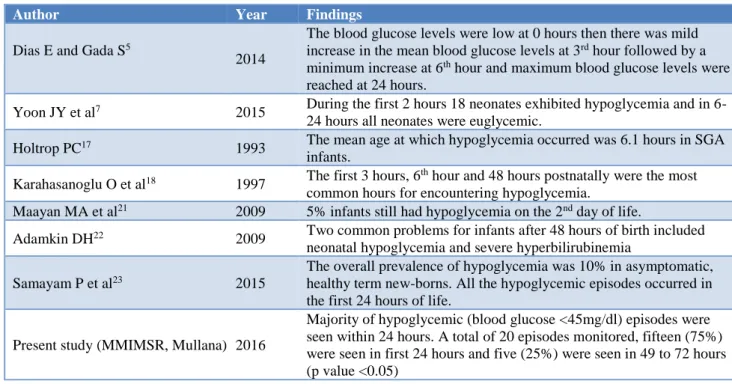
Table 5: Summary of the studies that were done to examine the Pattern of hypoglycemia.
Author Year Findings
Dias E and Gada S5
2014
The blood glucose levels were low at 0 hours then there was mild increase in the mean blood glucose levels at 3rd hour followed by a
minimum increase at 6th hour and maximum blood glucose levels were
reached at 24 hours.
Yoon JY et al7 2015 During the first 2 hours 18 neonates exhibited hypoglycemia and in
6-24 hours all neonates were euglycemic.
Holtrop PC17 1993 The mean age at which hypoglycemia occurred was 6.1 hours in SGA
infants.
Karahasanoglu O et al18 1997 The first 3 hours, 6th hour and 48 hours postnatally were the most
common hours for encountering hypoglycemia.
Maayan MA et al21 2009 5% infants still had hypoglycemia on the 2nd day of life.
Adamkin DH22 2009 Two common problems for infants after 48 hours of birth included
neonatal hypoglycemia and severe hyperbilirubinemia Samayam P et al23 2015
The overall prevalence of hypoglycemia was 10% in asymptomatic, healthy term new-borns. All the hypoglycemic episodes occurred in the first 24 hours of life.
Present study (MMIMSR, Mullana) 2016
Majority of hypoglycemic (blood glucose <45mg/dl) episodes were seen within 24 hours. A total of 20 episodes monitored, fifteen (75%) were seen in first 24 hours and five (25%) were seen in 49 to 72 hours (p value <0.05)
The weight of neonates ranged from 800g to 2400 g. maximum number of neonates (n=37) 74% were between the range 1501 gram to 2500 g. Mean birth weight of neonates was 1850 g with SD of 400 g. different studies in literature have reported varying weight distribution. Budhathoki S et al in their study reported the mean birth weight of enrolled neonates was 1640 g with SD of 344g.9 In the present study correlating with hypoglycemia
depicted that out of 12 hypoglycemic infants 58.3% were low birth weight, 41.7% were very low birth weight. But no significant association was found. (p value >0.05). Although studies of Burdan DR et al mentioned that new born with low body weight are at greater risk of hypoglycemia.10 Similarly Hawdon JM et al stated the
most common risk factor for hypoglycemia was low birth weight or borderline low birth weight.11
Range of maternal age was 22-36 years. Mean age was 27.5 with SD of 4.1. Mothers age was studied as a determinant of hypoglycemia, but p value came out to be non-significant. Shrestha S et al concluded that one of the common risk factors is maternal age of less than 20 years.12
Correlation of hypoglycemia was done with gender but no significant association was seen. this was similar to the study done by Jonas D et al who reported hypoglycemia in male:female is 1:1 which shows no significant association whereas Simchen MJ et al found
that SGA boys had hypoglycemia more often than SGA girls.6,13
Distribution of infants according to their hypoglycemic status and gestational age revealed that hypoglycemic episodes were more common in the neonates born with gestational age of 34-36 however it was not statistically significant (p=0.2). Narayan S et al studied that hypoglycemia was encountered in a variety of neonatal conditions among those prematurity was one.14 Kayiran
SM and Gurukan B observed that the blood sugar level rise with increasing gestational age.15 Dias E and Gada S
noted that the mean blood glucose was low in 34-36 weeks than in 40-42 weeks neonates at birth. However, later at 3 hours the mean blood glucose levels were high in 34-36 weeks neonates but remained low in 40-42 weeks neonates.5 In the present study though majority of
hypoglycemic infants were seen in the gestational age of 34-36 weeks, but it was not a significant determinant as the p value is more than 0.05.
episodes were noted in babies delivered by lower segment caesarean section as compared to normal vaginal delivery.5 Burdan DR et al studied that newborns born by
caesarean section are at risk of hypoglycemia.10 Kayiram
SM and Gurakan B stated that vaginal delivered infants were found to have a significantly higher mean blood glucose concentration compared with those delivered by caesarean section which is in contrast to the result of the present study.15
In the present study 41.7% of hypoglycemic neonates were appropriate for gestational age and 58.3% were small for gestational age which was of significant difference with p value of 0.021 which indicates small for gestational age is an important determinant of hypoglycemia. Various studies have analysed gestational size as a determinant for hypoglycemia. Tenovuo A in 1988 concluded a fivefold risk for hypoglycemia was seen in SGA infants.16 Holtrop PC studied the frequency
of hypoglycemia in large for gestational age infants as 8.1% and in small for gestational age infants to be 14.7%. More hypoglycemia was reported in small for gestational age than large for gestational age.17 Karahasanoglu O et al
studied the frequency of hypoglycemia in small for gestational age neonates was significantly higher (p=0.009) than in appropriate for gestational age neonates.18 Burdan DR et al analysed that small for
gestational age preterm neonates are at greater risk of neonatal hypoglycemia.10 Yoon JY et al concluded that
SGA were at risk of hypoglycemia both within 24 hours and during 2nd to 7th day of life.7 Results of present study
matches with results of the studies which indicates small for gestational age is a significant determinant for hypoglycemia.
In present study maternal morbidity was analysed as a determinant of hypoglycemia which came out to be non-significant (p value = 0.806). Write LL et al concluded that mean plasma glucose levels were lower in infants born to mothers with pre-eclampsia (57.2±2) versus 69.7±2.3 mg/dl p value less than 0.005.19
In the present study seventeen (34%) were on breast feed, two (4%) were on intragastric feed and thirty-three (66%) required intravenous fluid at the time of birth. Staffler A et al studied that very low birth weight preterm infants are at risk of hypoglycemia once on total enteral nutrition.20 In present study association of type of feed
was seen with hypoglycemia which came out to be non-significant (p value >0.05).
CONCLUSION
The findings of present study provided an overview of the clinical profile of low birth weight neonates. The present study highlighted frequency pattern and likely determinants of hypoglycemic neonates. According to our observation, the incidence of hypoglycemia in low birth weight neonates in our study is 24%. Small for gestational age is a significant determinant for
hypoglycemia. Hypoglycemic episodes were significantly noticed in first 24 hours as compared to other time interval. Various co-morbidities were analysed in normoglycemic and hypoglycemic infants of which sepsis was significantly noticed after hypoglycemia.
Funding: No funding sources Conflict of interest: None declared
Ethical approval: The study was approved by the Institutional Ethics Committee
REFERENCES
1. World Health Organization, International statistical classification of diseases and related health problems' tenth revision. World Health Organization, Geneva; 1992.
2. Singh M. Care of the new-born. 8th ed. New Delhi:
CBS Publishers; 2015:299-18.
3. Cloherty JP, Eichenward EC, Hansen AR, Stark AR. Manual of neonatal care. 7th ed. New Delhi;
2011:340.
4. American academy of paediatrics. Issue guide for neonatal hypoglycaemia. 2011.
5. Dias E, Gada S. Glucose levels in newborns with special reference to hypoglycemia: a study from rural india. J Clin Neonatol. 2014;3(1):35-8. 6. Jonas D, Dietz W, Simma B. Hypoglycemia in
newborn infants at risk. Klin Pediatr. 2014;226(5):287-91.
7. Yoon JY, Chung HR, Choi CW, Yang SW, Kim BI. Blood glucose levels within 7 days after birth in preterm infants according to gestational age. Ann Pediatr Endocrinol Metab. 2015;20(4):213-9. 8. Dashti N, Einollahi N, Abbasi S. Neonatal
hypoglycemia: prevalence and clinical manifestations in Tehran children’s hospital. Pakistan J Med Sci Online. 2007;23(3):340-3. 9. Budhathoki S, Poudel P, Bhatta NK, Singh RR,
Shrivastava MK, Niraula SR, et al. Clinic epidemiological study of low birth weight newborns in eastern part of Nepal. Nepal Med Coll J. 2014;16(2-4):190-3.
10. Burdan DR, Botiu V, Teodorescu D. Neonatal hypoglycemia. The incidence of the risk factors in savatorvuia obstetrics gynecology hospital, Arad. Timisoara Med J. 2009;59(78):5.
11. Hawdon JM, Beer J, Sharp D. Neonatal hypoglycemia: learning from claims. Arch Dis Child Fetal Neonatal Ed. 2016:2016
12. Shrestha S, Dangol SS, Shrestha M, Shrestha RP. Outcome of preterm babies and associated risk factors in a hospital. JNMA. 2010;50(180):286-90. 13. Simchen MJ, Weisz B, Zilberberg, Morag I,
14. Narayan S, Aggarwal R, Deorari AK, Paul VK. Hypoglycemia in the newborn. Indian J Pediatr. 2008;75(1):63-7.
15. Kayiran SM, Gurakan B. Screening of blood glucose levels in healthy neonates. Singapore Med J. 2010;51(11):853.
16. Tenovuo A. Neonatal complications in small for gestational age neonates. J Perinat Med. 1988;16(3):197-203.
17. Holtrop PC. The frequency of hypoglycemia in full term large and small for gestational age newborns. Am J Perinatol. 1993;10(2):150-4
18. Karahasanoglu O, Karatekin G, Kose R, Nuhoglu A. Hypoglycemia in small for gestational age neonates. Turk J Pediatr. 1997;39(2):159-64.
19. Wright LL, Stanley CA, Anday EK, Baker L. The effect of early feeding on plasma glucose levels in SGA infants. ClinPediatr (Phila). 1983;22(8):539-41.
20. Staffler A, Klemme M, Mola-Schenzle E, Mittal R, Schulze A, Flemmer AW. Very low birth weight
preterm infants are at risk for hypoglycemia once on total enteral nutrition. J Matern Fetal Neonatal Med. 2013;26(13):1337-41.
21. Maayan MA, Lubin D, Kuint J. Hypoglycemia rates in the first days of life among term infants born to diabetic mothers. Neonatol. 2009:96(2):80-5. 22. Adamkin DH. Late preterm infants: severe
hyperbilirubinemia and postnatal glucose homeostasis. J Perinatol. 2009;29(2):S12-7.
23. Samayam P, Ranganathan PK, Kotari UD, Balasundaram R. Study of asymptomatic hypoglycemia in full term exclusively breastfed neonates in first 48 hours of life. J Clin Diagn Res. 2015;9(9):SC07-10.