Abstract: Voice classification is new area of interest for researchers in data mining. The system detect speech represent us that speech in words. In new android or IOS application mobiles this facility is available. The mobile operate by voice of any person. We have to speak in microphone speaker of any device and it will work same function which we want. Speech classification is part of data mining. Many methods have been functioned till now for this purpose but some limitations exist in each technique. In this research work we will take existing technique HMM (Hidden Markov Model) and modify DWT (discrete wavelet transform). SVM is already exist technique which work in two dimensional classification. But we modify it for working in multi-dimensional classification. Due to good characteristic of Multi-SVM it will perform better than available. Data is taken of some voices in .wav format. We take some word’s voice like apple, banana, kiwi, lime, orange, peach, and pineapple. These voices are input of work. Data trained and tested first of all then classify using SVM. The performance of classification is by multi-SVM is better than available HMM technique.
Keywords: Data mining, Speech Recognition, HMM, Multi-svm,
I. INTRODUCTION
The real data mining work is the automatic or semi-automatic analysis of huge quantities of data to access previously unknown interesting structures as like gathering of data records (cluster analysis) [1], unusual information (anomaly detection) and dependencies (association rule mining). This usually considers using database method as like spatial indices [2]. These structures can then be look as a kind of summary of the input information, and may be used in further analysis or, for example, in machine learning and predictive analytics. For example, the data mining step might identify multiple groups in the data, which can then be used to obtain more accurate prediction results by a decision support system [3]. The data gathering, data correctness, nor result interpretation and intimation are part of the data mining process, but do relate to the overall KDD process as extra steps.
II. SPEECHSEGMENTATION
Speech segmentation is the process of identifying the boundaries between words, syllables, or phonemes in spoken natural languages [4]. The term executes both to the mental steps used by humans, and to artificial processes of natural language processing. Speech segmentation is a subfield of general speech perception and an important sub problem of the technologically focused field of speech recognition, and cannot be adequately solved in isolation [5, 6].
III.PROBLEMSTATEMENT
As in many natural language processing facts, one must face into account context, grammar, and semantics, and even so the result is often probabilistic categories (statistically based on likelihood) rather than a categorical one. Though it seems that co-articulation - a phenomenon which may happen between adjacent words just as easily as within a single word - presents the main challenge in speech segmentation across languages.
V. TOOLUSED
MATLAB (MATRIX LABORATORY) is giving us a platform for computation in mathematical form and we can call it a programming language of new generation. Math Works developed it, there is matrix manipulations, interaction with user, create functions, compatible with other languages as like C, C++ etc.
By survey it found that near about one million users are available in market which follows MATLAB for programming and numerical computing. Students from any stream like engineering, science etc can use this tool for implementation of proposed algorithm. Many research institutes also use MATLAB as research platform tool.
In technical computing MATLAB perform a vital role. It provides a integration of three environment as like computation, visualization, and programming. There many in built data types and functions that are very useful for developer and make it easy to perform. This also support object oriented programming. Due to these types of tools MATLAB is point of attraction for all researchers.
VI.RESULTANALYSIS
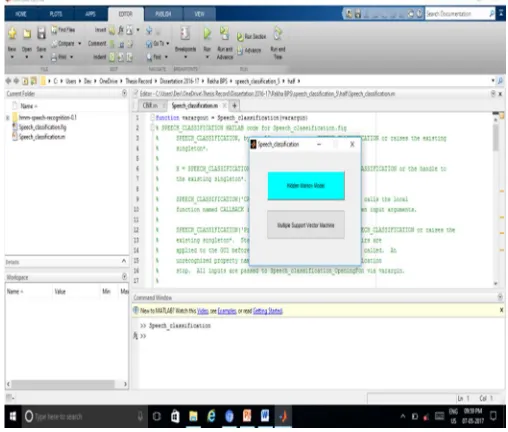
[image:3.612.184.438.509.725.2]Select scripts file ‘Speech_classification.m’ and run it on Matlab development environment. After complete execution we get a GUI window as showing.
Figure 3 Load audio signals for implementation
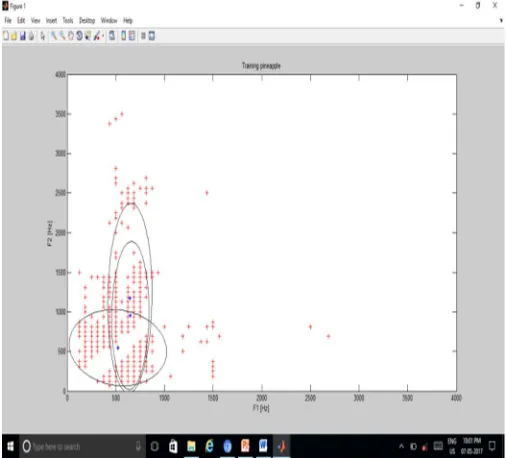
[image:4.612.185.438.281.510.2]There is requirement of clusters from a database which we use for HMM perfromance. So in the next step we make clusters as following.
Figure 4 Result of HMM to create clusters and detect words.
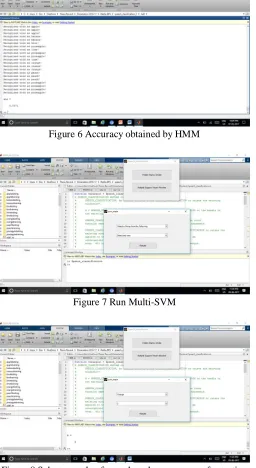
[image:4.612.184.439.538.721.2]Figure 6 Accuracy obtained by HMM
[image:5.612.187.443.92.560.2]Figure 7 Run Multi-SVM
[image:5.612.187.440.585.717.2]Figure 8 Select sample of speech and any category for testing
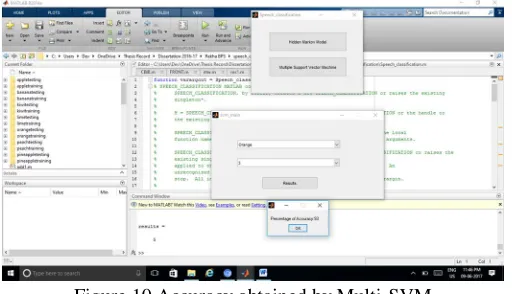
Figure 10 Accuracy obtained by Multi-SVM
VII. CONCLUSIONS
Successful completion of the voice classification of the given voice files for both algorithms. Along with this we have the completion of classification for the two algorithms of modified SVM & HMM classification techniques. Comparison is performed by these algorithms on voice data. Only some samples of voice are taken and classify voice according words. We got the accuracy percentage of both techniques that is like 93% for Multi-SVM and 57% for HMM. So finally we conclude that Multi-svm give better results as compared to HMM. In future the proposed algorithm can be applied on video files. The quality and quantity of data is constant in this model so in future we can vary these facts also.
REFERENCES
[1] Nisbet, Robert A. (2006); Data Mining Tools: Which One is Best for CRM? Part 1, Information Management Special Reports, January 2006.
[2] Bertram, Raymond, Alexander Pollatsek, and Jukka Hyönä. "Morphological Parsing and the Use of Segmentation Cues in Reading Finnish Compounds." Journal of Memory and Language 51.3 (2004): 325-345. 27 Apr. 2014.
[3] Newberg, L. (2009). "Error statistics of hidden Markov model and hidden Boltzmann model results". BMC Bioinformatics 10: 212. [4] Wong, W.; Stamp, M. (2006). "Hunting for metamorphic engines". Journal in Computer Virology 2 (3): 211–229.
[5] Karl Rexer, Heather Allen, & Paul Gearan (2011); Understanding Data Miners, Analytics Magazine, May/June 2011
[6] Ma, Y.; Guo, Y.; Tian, X.; Ghanem, M. (2011). "Distributed Clustering-Based Aggregation Algorithm for Spatial Correlated Sensor Networks". IEEE Sensors Journal 11(3): 641.