International Journal of Computer Applications (0975 – 8887) Volume 76 – No.10, August 2013
A Survey on Sentiment Analysis
Preeti Routray
School of Computer Scienceand Engineering Institute of Technical Education
and Research Siksha ‘O’ Anusandhan
University
Chinmaya Kumar Swain
School of Computer Scienceand Engineering Institute of Technical Education
and Research Siksha ‘O’ Anusandhan
University
Smita Prava Mishra
School of Computer Scienceand Engineering Institute of Technical Education
and Research Siksha ‘O’ Anusandhan
University
ABSTRACT
The explosive growth of the textual information on the web in the past few decades has brought radical change in human life. In the web, people share their opinions and views (sentiments) in many forms about products or services they are aware of. This creates a large collection of opinions and views in the form of texts, which needs to be analysed to know the efficacy of the product or service. Opinions are usually subjective expressions that describe person's sentiment, feelings towards the object or service. The sentiment can be positive or negative. This survey is a summary of the work on sentiment analysis, covering the new challenges which appear in sentiment analysis as compared to traditional fact based analysis. Currently there are four research challenges for sentiment analysis. Those are subjectivity classification, word sentiment classification, document sentiment classification and opinion extraction. This survey discusses related issues of sentiment analysis and main approaches to those problems.
Keywords
Sentiment Analysis, Machine Learning, Sentiment Classification, WordNet, Support Vector Machine, Naive Bayes, Maximum Entropy, Language Model.
1.
INTRODUCTION
Sentiments can be described as emotions, judgements, opinions or ideas prompted or coloured by emotions (Boiy et al. 2007) [1]. In Computational Linguistics, the focus is on opinions rather than on sentiments, feelings or emotions. The words `sentiment' and `opinion' are often used interchangeably. Textual information can be divided into two types: factual and opinionated information. While facts are objective expressions about entities, events and their properties, opinions are usually subjective expressions that describe sentiments of the people, appraisals or feelings towards entities, events and their properties (Liu 2010) [2].Kim &Hovy (2004) [3]. An opinion can be described on the basis of four terms: Topic, Holder, Claim and Sentiment. The Holder believes a Claim about a Topic, and often associates a Sentiment, such as `good' or `bad', with the belief. That describe a Sentiment as an explicit or implicit expression in text of the holder's positive, negative or neutral regard toward the claim about the topic.
Sentiment analysis (also sentiment mining, sentiment classification, opinion mining, subjectivity analysis, review mining or appraisal extraction and in some cases polarity classification) deals with computational treatment of opinion,
sentiment and subjectivity in text (Pang & Lee 2008) [12]. From multiple opinions it is difficult to draw a conclusion (positive/negative). So mining or analysis of opinion is necessary. Opinion is nothing but the person's feeling or sentiment or attitude towards certain topic. The subjectivity analysis is to determine whether a sentence is subjective or objective. Suppose a person is interested to purchase a product. So definitely he/she will collect information in terms of opinions from people. But from huge collection of opinions it is difficult to derive a conclusion whether the product is good or bad. So mining of opinion is introduced and from opinion mining goodness and badness about the product can be inferred.
This survey started with definition of sentiment analysis and next section will focus on some applications of sentiment analysis. Section - 3 discusses various challenges of sentiment analysis. Section - 4 discusses different computational model by which different researcher's had worked for sentiment analysis. Section -5 discusses various evaluation systems for sentiment analysis. Different tools available for sentiment analysis are being discussed in section-6 and last section concludes with some future directions.
2.
APPLICATIONS
2002 [5]; Taboada, Gillies, &McFetridge, 2006) [7].Sentiment analysis can be used to determine critic opinions about a given product (e.g. a Mobile, digital camera, movie, etc.) by classifying online product reviews from websites such as Amazon and C-Net (e.g. Dave, Lawrence & Pennock 2003[8]; Hu & Liu 2004)[9], RottenToma-toes.com (e.g. Pang & Lee 2004)[10] and IMDb (e.g. Pang, Lee &Vaithyanathan2002)[11], which can prove to be very helpful for opinion oriented questions in question answering (Pang & Lee 2008)[12]. Tracking the shifting attitudes of the general public toward a political candidate by mining online forums is also a useful application (Esuli & Sebastiani 2006) [13].Sentiment analysis can be helpful for market research (i.e. quality control, information gathering from Internet without conducting a survey (Boiy et. al. 2007)) [1], which is needed for advertising and market intelligence companies and trend watchers. Sentiment analysis can also be used for recommendation systems, since any recommendation system should not recommend something that receives negative remark. The detection of `flames', overly heated or antagonistic language, in e-mails or on social networking websites will benefit from sentiment classification. Monitoring newsgroups and forums, where fast and automatic detection of flaming is necessary (Boiy et al. 2007) [1], will also get spectacular improvements.Opinion spam detection is another application of sentiment analysis. While e-mail and Web spam are quite familiar, opinion spam is still new to the general public. Because of the enormous growth of user-generated content on the Web, it is now a common practice for people to find and read other's opinions. Opinion spam refers to human activities that try to deliberately mislead readers or automated opinion mining systems by giving undeserving positive opinions to some target objects (in order to promote the objects, i.e. hype spam) and/or by giving unjust, malicious or false negative opinions to other objects (to damage their reputations, i.e. defaming spam) (Liu 2010) [2]. These opinions are also called fake opinions or bogus opinions. This kind of spam detection can also be considered as a classification problem, i.e. into spam and non-spam categories. The problem of detecting spam opinions will become more critical, because consumers and organizations will increasingly use the Web to search for opinions. However, identifying spam opinion is a very difficult task, even for humans. A related problem that also has been receiving more attention over the past few years is the determination of the usefulness, helpfulness or utility of a review, which determines how helpful a review is to a user.
A large number of text processing applications have already employed techniques for automatic sentiment analysis (Banea et al. 2008) [6], for example automatic expressive text-to-speech synthesis (Alm, Roth & Sproat 2005) [14], text semantic analysis (Wiebe & Mihalcea 2006 [15]; Esuli & Sebastiani 2006 [13]); tracking sentiment timelines in online forums and news (Lloyd et al. 2005[16]; Balo et al. 2006 [17]); mining opinions from movie reviews (Hu & Liu 2004) [9], and question answering (Yu & Hatzivassiloglou 2003) [18].
3.
CHALLENGES
• Automatically extract sentiment information from a variety of documents in different languages and from different domains.
• Named Entity Recognition: What is the person actually talking about, e.g. is 300 Spartans a group of Greeks or a movie?
• Anaphora Resolution: The problem of resolving what a pronoun or a noun phrase refers to. We watched the movie and we went to dinner; it was awful. What does It refer to? Anaphora Resolution the problem of resolving what a pronoun, or a noun phrase refers to. We watched the movie and went to dinner; it was awful. What does It refer to?
• Parsing: What is the subject and object of the sentence, which one does the verb and/or adjective actually refer to?
• Sarcasm: If you don’t know the author you have no idea whether bad means bad or good.
• Twitter, Facebook, You Tube abbreviation, lack of capitals, poor spelling, poor punctuation, poor grammar etc.
4.
COMPUTATIONAL APPROACHES
FOR SENTIMENT ANALYSIS
There are different approaches to sentiment analysis, but Bartlett and Albright (2008) [47] group the entire set of approaches into two broad categories:
1. Linguistic Approach
2. Statistical Approach
The linguistic approach relies on disambiguation using back ground information such as set of rules and vocabularies. Thus a system that is built in accordance with linguistic approach normally contains lexicons, which consist of words and their polarity values (positive, good, negative, bad etc.). Another important part of such systems is set of rules that help to produce more accurate results. Hatzivassiloglou and McKeown (1997) [21] attempt to predict the orientation of subjective adjectives by analysing pairs of adjectives. Those adjectives may be conjoined by and, or, but, either-or, or neither-nor. For conjoined adjectives, if `and' is used then two adjectives of the same orientation and if `but' is used then the orientation of the two adjectives are opposite. For example let us consider the following sentences:
“The project proposal was simple and well received by people.”
“The project proposal was simplistic but well received by people.”
For analysing the orientation of adjectives with conjunctions, a supervised learning algorithm can used, which consists of the following steps:
1. Given the set of documents all conjunctions of adjectives to be extracted.
2. Using a log-linear regression classifier, classify the pairs of adjectives either same or different orientation. The hypothesized same orientation or different orientation links between all pairs form a graph.
3. The graph produced in step-2 can be clustered into two groups using clustering algorithm. By using the intuition that positive adjectives tend to be used more frequently than negative ones, the cluster containing the terms of higher average frequency in the document set is deemed to contain the positive terms.
same-orientation, the clustering algorithm calculates an objective function Φ scoring each possible partition P of the adjectives into two subgroups C1 and C2 as,
where is the cardinality of cluster i, and d(x, y) is the dissimilarity between adjectives x and y.
Lexical relation method presents a strategy for inferring semantic orientation from semantic association between words and phrases. It follows a hypothesis that two words tend to be the same semantic orientation if they have strong semantic association. Therefore, it focused on the use of lexical relations defined in WordNet to calculate the distance between adjectives. The distance measure d(t1, t2) between terms t1 and t2 on adjectives graph, which amounts to the length of the shortest path that connects t1 and t2 (with d(t1, t2) = +∞ if t1 and t2 are not connected). The orientation of a term by its relative distance (Kamps et al., 2004) [25] from the two seed terms good and bad, i.e.,
The adjective t is deemed to belong to positive if SO(t) > 0, and the absolute value of SO(t) determines, as usual, the strength of this orientation (the constant denominator d(good, bad) is a normalization factor that constrains all values of SO that belong to the range [-1,1]. Analysis by gloss method based on the fact that it exploits the glosses (i.e. textual definitions) that is from online "glossary", or "dictionary". Its basic assumption is that if a word is semantically oriented in one direction, then the words in its gloss tend to be oriented in the same direction (Esuli&Sebastiani, 2005 [22]; Esuli&Sebastiani, 2006 [13], 2006 [23]). For instance, the glosses of good and excellent will both contain appreciative expressions; while the glosses of bad and awful will both contain derogative expressions.
Andreevskaia and Bergler (2006) proposed an algorithm named STEP (Semantic Tag Extraction Program). This algorithm starts with a small set of seed words of known sentiment value (positive or negative) and extend the small set of seed words by adding synonyms, antonyms and hyponyms of the seed words supplied in WordNet. Then it goes through all WordNet glosses, identifies the entries that contain in their definitions, the sentiment-bearing words from the extended seed list, and adds these head words to the corresponding category positive, negative or neutral.
4.1. Machine Learning Approaches for
Sentiment Classification
There are various machine learning approaches for automatic sentiment classification, e.g. Naive Bayes theory, Maximum Entropy (ME), Support Vector Machine (SVM), etc.
4.1.1. Naïve bayes model
Despite its simplicity, the Naive Bayes classifier is a popular machine learning technique for text classification, and it performs well in many domains (Domingos and Pazzani, 1997) [26]. During its operation, Naive Bayes assumes a stochastic model of document generation. Using Bayes rule, the model is inverted in order to predict the most likely class for a new document.
Here the assumption that documents are generated according to a multinomial event model (McCallum and Nigam, 1998) [27]. Hence, a document is represented as a vector di = (xi1, …………., xi|v|) of word counts where V is the same size of the vocabulary (vol.) for all documents under an experiment, here vol = {w1, w2, …….., wi|v|}. Each xi t {0, 1, 2, …….} indicates how often wt is present in a certain document Di. Given model parameters p(wt|cj) and class prior probabilities p(cj) and assuming independence of the words, the most likely class for a document di is computed as
=
wheren(wt,di) is the number of occurrences of wt in di. p(wt|cj) and p(cj) are estimated from training documents with known category, using maximum likelihood estimation with a Laplacean prior:
The information gain (IG) method was then applied as the feature selection technique in this method.
4.1.2. Support vector machine
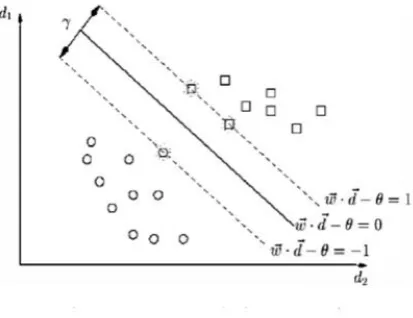
[image:3.595.323.530.550.709.2]SVMs have been shown to be highly effective at traditional text categorization, which generally outperform Naive Bayes (Joachims, 1998) [28]. SVMs seek a hyperplane represented by vector w that separates the positive and negative training vectors of documents with maximum margin [48].
Findings in this hyperplane can then be translated into a constrained optimization problem. Let yi equal +1(-1), if document di is in the class + (-). The solution can be written as
Where are obtained by solving a dual optimization problem. The above equation shows that the resulting weight vector of the hyperplane is constructed as a linear combination of . Only those examples that contribute for
which the coefficient is greater than zero. Those vectors are called support vectors, since they are only document vectors contributing to .
4.1.3. N-gram based character language model
The N-gram based character language model is a new model in natural language processing (Carpenter, 2005) [29]. It is derived from the N-gram language models. Instead of taking words as the basic unit, this model takes characters (letters, space, or symbols) as the basic unit in the algorithm.
The N-gram character language model provides a probability distribution p(s) defined for strings s ∑▒* over a fixed alphabet ∑. The chain rule factors p(sc) = p(s).p(c|s) for a character c and string s. The N-gram Markovian assumptions restricts the context to the previous n-1 characters, taking
The maximum likelihood estimator for N-grams is thus:
WhereC(sc) is the number of times the sequence sc was observed in the training data and
C(sc) is the number of single-character extensions of sc. This classifier depends on an N-gram based character language model with a generalized form of Witten-Bell smoothing (Carpenter, 2005) [29].
4.1.4. Maximum entropy
For sentiment analysis maximum entropy(ME) classification is an alternative technique which has proven to be effective(Berger et al. 1996) [30]. Nigam et al. (1999) [31] show that it sometimes, not always, outperforms Naive Bayes at standard text classification. It estimates P(c|d) which takes the following exponential form:
Where Z(d) is a normalization function. Fi, c is a feature/class
function for feature fi and class c, defined as follows:
Unlike Naive Bayes, ME make no assumptions about the relationship between features, and so might potentially perform better when conditional independent assumptions are not met. The i, c share feature-weight parameters; inspection
of the definition PME shows that a large i, c means that is considered a strong indicator for class c. The parameter values are set so as to maximize the entropy of the induced distribution(hence the classifiers name) subject to the constraint that the expected values of the feature/class functions with respect to the model are equal to their expected values with respect to the training data. The underlying philosophy is that we should choose the model making the fewest assumptions about the data while still remaining consistent with it, which makes intuitive sense.
4.1.5. Neural network
Zhu Jian et al. (2010) [32] used the individual model based on ANNs to divide the movie review corpus into positive, negative and fuzzy tone. They designed a system which is divided into three steps to simulate peoples thinking and judging processes for text sentiment polarity, which is described here:
Step 1: Model the thinking of human individuals by building 1000 individual models to simulate human population. Each individual model includes set of sentimental features, weight value and prior knowledge base.
Step 2: Input training samples or testing samples and make 1000 individual models to judge the sentiment polarity of text. First, adopting prior knowledge base to carry out the comparison of sentence similarity, then using neural network algorithm to simulate the judging procedure of humans and carry out the judgment of the whole text.
Step 3: According to group effect, get the final judging result from summarizing the judging results of 1000 individual models. If the input text is a training sample, which means the sentiment polarity of this text is known; the individual model with accurate judgments will automatically correct the individual models with false judgments and get the accurate judgments. This procedure is called dialogue between individuals. If the input text is a testing sample and its sentiment polarity is unknown, the summarization of final judging results will adopt the judging result of individual models in a large majority.
4.1.6. Weighted SCL model
Recently, transfer learning has been recognized as an important topic in machine learning research [33]. Several researchers have proposed new approaches to solve the problems of transfer learning (Ando &Zhang (2005) [34], Blitzer et al. (2006, 2007) [35, 36], Chelba&Acero (2004) [37], Dai et al. (2007) [38], Daume&Marcu (2006) [39], Du et al (2010) [40], Jiang &Zhai (2007) [41], Li &Bilmes(2007) [42], Chuong Do and Andrew Y. Ng (2005) [43], Tan et al. (2007) [44], Tan et al. (2009) [45], Wu et al. (2009) [46]). However, up to this time, only a little work has been conducted on sentiment transfer learning.
Structural Correspondence Learning (SCL) attempts to learn a correspondence relationship between one source domain and another target domain. It works with situation where both domains have enough unlabelled data, but only the source domain has labelled data. Generally speaking, SCL can be divided into four steps: choosing pivot features, learning pivot predictors, computing principal pivot features and training a classifier on augmented feature space. The following steps are to be followed:
Second, we need to compute the pivot predictors (or mapping vectors) using selected pivot features. The pivot predictors are the key job, because they directly decide the performance of SCL. For each pivot feature k, we use a loss function Lk like SVMs,
where xi is an example from the source domain or the target domain, and the weight vector w encodes the covariance of the non- pivot features with the pivot feature k.
The third step is to calculate the principal pivot predictors of the original pivot features. From the perspective of statistics, the principal pivot predictors can capture the variance of the original pivot predictor space as best as possible in K’ (< K) dimensions.
5.
EVALUATION OF SENTIMENT
ANALYSIS
Performance of sentiment analysis system usually being done through experimentation and following metrics is used to evaluate the system such as: Accuracy, Precision, Recall and F-measure [Somasundaran and Wiebe, 2008] [19].
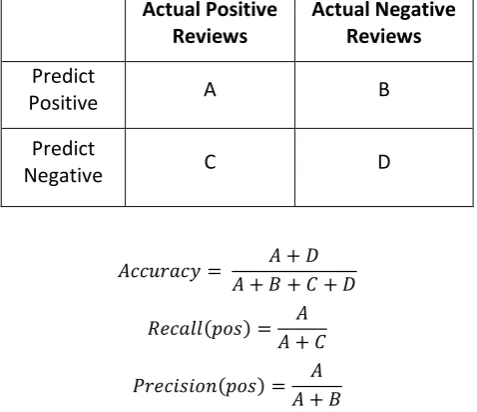
[image:5.595.48.287.510.716.2]The indexes can be calculated according to the figures in Table - 1 and the following formulas, respectively,
Table 1: Contingency table for performance evaluations
Actual Positive
Reviews
Actual Negative
Reviews
Predict
Positive
A
B
Predict
Negative
C
D
Here, Recall(pos) and Precision(pos) are the recall ratio and precision ratio for actual positive reviews. Recall(neg) and Precision(neg) are the recall ratio and precision ratio for actual negative reviews. Accuracy is the overall accuracy of certain sentiment classification model.
Another evaluation strategy, the correlation coefficient which indicates how accurate the sentiment classification is and what is the degree of deviation of a sentiment as predicated by the model which is under study (Mishne& de Rijke, 2006) [20]. A correlation coefficient of 1 means that there is a perfect linear relation between the prediction and the actual values; whereas a correlation coefficient of 0 means that the prediction is completely unrelated to the actual values. The correlation coefficient is a standard measure of the degree to which two variables are linearly related, and is defined as
Where
where pi is the estimated value for instance i, ai is the actual value for instance i, is the average of x, and n is the total number of instances.
The relative error can be calculated , the mean difference between the actual values and estimated ones, and is defined as:
For the benchmark of sentiment classification the experiments must be done on the following conditions:
1. On the same collection of objects. (i.e., same documents and same categories);
2. The splitting of training and test set must be same.
3. The evaluation measure should be same.
which may be of varying difficulty to identify for participant systems, i.e. some bloggers may make opinionated comment on the topics of interest, while others report factual information. A user may be interested in blogs which show prevalence to opinionatedness. For this facet, the values of interest are 'opinionated' vs 'factual' blogs. The Blog track 2010 refines the tasks of 2009, using more queries and two stage submission procedures. In particular, the two following tasks run again:
Faceted blog distillation: a refined version of the blog distillation task that addresses the quality aspect of the retrieved blogs.
Top stories identification: A task that addresses news-related issues on the blogosphere.
6.
SENTIMENT ANALYSIS TOOLS
There are a variety of sentiment analysis tools available now. Some are stand-alone; some are attached to specific social media applications. Depending on the level of depth and reporting, different tools make sense. Some let viewers see the top positive and top negative posts. Some of the tools described here.
1. OpenAmplify: OpenAmplify is a system to understand
the actual meaning of text makes it a powerful platform for the development of social applications. With unique analysis `Signals' such as topic, sentiment, action, intent and emotion.
2. Social Mention: Social Mention is one of the most prominent tools on the Internet for measuring the brand's buzz. This free tool will scan blogs, social bookmarks, social networking sites, comments, images, news, video, events, micro blogs and the rest of the social web.
3. Amplified Analytics: This tool is geared primarily toward product reviews and marketers interested in tracking those reviews across multiple sites.
4. Jodange: Automatically filters and aggregates
thoughts, feelings and statements from traditional and social media.
5. Lithium: Lithium Social Media Monitoring: It’s easy to configure, works in real-time, and finds the best stuff from millions of social media sources.
6. SAS Sentiment Analysis Manager: Part of SAS Text
Analytics program, the Sentiment Analysis Manager: crawls content sources, including mainstream Web sites and social media outlets, as well as internal organizational text sources, it creates reports that describe the expressed feelings of consumers, customers and competitors in real time.
7. Trackur: Trackur is an online reputation and social media monitoring tool designed to assist user in tracking what is said about the user on the internet.
8. AlchemyAPI: Identify positive, negative, and neutral opinions within any web page or textual document.
9. Twitter sentiment analysis tool: Discover the positive and negative opinions about a product or brand.
10. AlertRank: A web-based service that adds reporting and analysis capabilities to the web monitoring of Google Alerts. The system ranks and alters items using a quality score, providing results in email, RSS and a web interface.
7.
CONCLUSION
As opinionated text are widely available in World Wide Web, so sentiment analysis has wide variety of applications like classifying reviews, distinguishing synonyms and antonyms, which is used for intelligent web search, summarizing the reviews, tracking opinions through online discussions and analysing the survey responses. This paper covers many approaches of sentiment analysis and it is being discussed by different researcher that machine learning techniques deemed to be the efficient way to analyze the sentiment laden terms in a document. Here different aspects of sentiment analysis for text documents are being reviewed. Though we had discussed different challenges of sentiment analysis, but those aspects seem to be solved in near future, as many researchers had shown so much interest in this area of research.
In future, more work is needed for improving the quality of the system in terms of accuracy, which had been found out by previous researchers. This paper is to convey the reader about the sentiment analysis problem and different methods to solve that problem.
8.
REFERENCES
[1] Boiy, E. Hens, P., Deschacht, K. &Moens, M.F., “Automatic Sentiment Analysis in Online Text," In Proceedings of the Conference on Electronic Publishing(ELPUB-2007), pp. 349-360 , 2007.
[2] Liu, B., “Sentiment analysis and subjectivity,” In Handbook of Natural Language Processing, Second Edition, N. Indurkhya and F. J. Damerau, Eds. CRC Press, Taylor and Francis Group, Boca Raton, FL. ISBN 978-1420085921, 2010.
[3] Kim, S.-M. &Hovy, E., “Determining the Sentiment of Opinions,". In Proceedings of the International Conference on Computational Linguistics (COLING 2004), pp. 1367-1373, 2004.
[4] Hiroshi, K., Tetsuya, N. & Hideo, W., “Deeper Sentiment Analysis Using Machine Translation Technology," In Proceedings of the 20th International Conference on Computational Linguistics, pp. 494-500, 2004.
[5] Morinaga, S., Yamanishi, K., Tateishi, K., & Fukushima, T., “Mining product reputations on the web", In Proceeding of ACM SIGKDD 2002, pp. 341 - 349, 2002.
[6] Banea, C., Mihalcea, R., Wiebe, J. & Hassan, S., “Multilingual Subjectivity Analysis Using Machine Translation" In Proceedings of the 2008 Conference on Empirical Methods in Natural Language Processing, pp. 127-135, 2008.
[7] Taboada, M., Gillies, M. A., &McFetridge, P., “Sentiment classification techniques for tracking literary reputation", In Proceedings of LREC 2006, pp. 36 - 43, 2006.
[8] Dave, K., Lawrence, S. &Pennock, D.M., “Mining the Peanut Gallery: Opinion Extraction and Semantic Classification of Product Reviews", In Proceedings of the 12th International Conference on World Wide Web, pp. 519-528, 2003.
177, 2004.
[10]Pang, B. & Lee, L., “A Sentimental Education: Sentiment Analysis Using Subjectivity Summarization Based on Minimum Cuts", In Proceedings of the 42nd Annual Meeting of the Association for Computational Linguistics, pp. 271 - 278, 2004.
[11]Pang, B., Lee, L. &Vaithyanathan, S., “Thumbs Up? Sentiment Classification Using Ma-chine Learning Techniques", In Proceedings of the Conference on Empirical Methods in Natural Language Processing, pp. 79 - 86,2002.
[12]Pang, B. & Lee, L., “Opinion Mining and Sentiment Analysis", Foundations and Trends in Information Retrieval,Vol. 2 (1-2), pp. 1 - 135 , 2008.
[13]Esuli, A. &Sebastiani, F., “Determining Term Subjectivity and Term Orientation for Opinion Mining", In Proceedings the 11th Meeting of the European Chapter of the Association for Computational Linguistics, pp. 193 - 200, 2006.
[14]Alm, C. O., Roth, D. &Sproat, R., “Emotions from Text: Machine Learning for Text-Based Emotion Prediction", In Proceedings of the Human Language Technologies Conference/ Conference on Empirical Methods in Natural Language Processing, pp. 347 - 354, 2005.
[15]Wiebe, J. &Mithalcea, R., “Word sense and subjectivity", In Proceedings of COLING-ACL, pp. 1065 - 1072, 2006.
[16]Lloyd, L., Kechagias, D. &Skiena, S., “Lydia: A System for Large-Scale News Analysis", In String Processing and Information Retrieval, pp. 161-166, 2005.
[17]Balog, K., Mishne, G. & De Rijke, M., “Why Are They Excited? Identifying and Explaining Spikes in Blog Mood Levels", In Proceedings of the 11th Meeting of the European Chapter of the Association for Computational Linguistics, pp. 207-210 , 2006.
[18]Yu, H. &Hatzivassiloglou, V., “Towards Answering Opinion Questions: Separating Facts from Opinions and Identifying the Polarity of Opinion Sentences", In Proceedings of the Conference on Empirical Methods in Natural Language Processing, pp. 129 - 136, 2003.
[19]SwapnaSomasundaran and JanyceWiebe,”Recognizing Stances in Online Debates", in Proceedings of the Association for Computational Linguist (ACL), 2008.
[20]Mishne, G., & de Rijke, M., “Capturing global mood levels using blog posts", In AAAI-2006 spring symposium on computational approaches to analysing weblogs, 2006.
[21]Hatzivassiloglou, V., &McKeown, K. R., “Predicting the semantic orientation of adjectives", In Proceedings of the 35th annual meeting of ACL, 1997.
[22]Esuli, A., &Sebastiani, F., “Determining the semantic orientation of terms through gloss classication", In Proceedings of CIKM-05, the ACM SIGIR conference on information and knowledge management, Bremen, DE, 2005.
[23]Esuli, A., &Sebastiani, F., “SentiWordNet: A publicly available lexical resource for opinion mining", In Proceedings of LREC, 2006.
[24]Andreevskaia, A., &Bergler, S., “Mining WordNet for a fuzzy sentiment: Sentiment tag extraction from WordNet glosses", In Proceedings EACL-06, Trento,Italy, 2006.
[25]Kamps, J., Marx, M., Mokken, R. J., & de Rijke, M.,”Using WordNet to measure semantic orientation of adjectives", In Proceedings of 4th international conference on language resources and evaluation, Lisbon, PT (Vol. IV, pp. 1115 - 1118), 2004.
[26]Domingos, P., Pazzani, M. J., “On the optimality of the simple bayesian classifier under zero-one loss", Machine Learning, 29(2-3), pp. 103 - 130, 1997.
[27]McCallum, A., and Nigam, K., “A comparison of event models for Naive Bayes text classification", In AAAI-98 workshop on learning for text categorization, pp. 41 - 48, 1998.
[28]Joachims, T., “Text categorization with support vector machines: Learning with many relevant features", In Proceedings of 10th European Conference on Machine Learning (ECML-98), pp. 137 - 142, 1998.
[29]Carpenter, B., “Scaling high-order character language models to gigabytes", In Proceedings of the 2005 association for computational linguistics software workshop, pp. 1 - 14, 2005.
[30]Adam L. Berger, Stephen A. Della Pietra, and Vincent J. Della Pietra, “A maximum entropy approach to natural language processing", Computational Linguistics, 22(1): 39 - 71, 1996.
[31]Kamal Nigam, John La erty, and Andrew McCallum, “Using maximum entropy for text classification", in Proceedings of the IJCAI-99, pp. 61 - 67, 1999.
[32]Zhu Jian, Xu Chen & Han-shi, “Sentiment classification using the theory of ANNs", The Journal of China Universities of Posts and Telecommunications, 17(Suppl.): 58 - 62, 2010.
[33]Songbo Tan and Yuefen Wang, “Weighted SCL model for adaptation of sentiment classification", Expert Systems with Applications, 38, pp. 10524 - 10531, 2011.
[34]Ando, R., & Zhang, T., “A framework for learning predictive structures from multiple tasks and unlabeled data", JMLR, 6, pp. 1817 - 1853, 2005.
[35]Blitzer, J., Dredze, M., &Pereir, F., “Biographies, bollywood, boom-boxes and blenders: Domain adaptation for sentiment classification”, in Proceedings of 45th annual meeting of ACL, 2007.
[36]Blitzer, J., McDonald, R., & Pereira, F., “Domain adaptation with structural correspondence learning", Proceedings of EMNLP, 2006.
[37]Chelba, C., &Acero, A., “Adaptation of maximum entropy capitalizer: Little data can help a lot", in Proceedings of EMNLP, 2004.
[38]Dai, W., Xue, G., Yang, Q., & Yu, Y., “Transferring Naive Bayes classifiers for text classification", In Proceedings of the 22nd AAAI Conference on Artificial Intelligence (AAAI 2007), July 22-26, 2007.
[39]Daume, H.III, &Marcu, D., “Domain adaptation for statistical classifiers", Journal of Artificial Intelligence Research, 26, pp. 101-126.
information bottleneck method for automatic construction of domain-oriented sentiment lexicon", in Proceedings of WSDM, 2010.
[41]Jing Jiang and ChengXiangZhai, “A two-stage approach to domain adaptation for statistical classfiers", In Proceedings of the ACM 16th Conference on Information and Knowledge Management (CIKM'07), pages 401-410, 2007.
[42]Xiao Li and Je Bilmes, “A Bayesian Divergence Prior for Classifier Adaptation", in Proceedings of Eleventh International Conference on Artificial Intelligence and Statistics (AISTATS-2007) , San Juan, Puerto Rico, March 2007.
[43]Chuong Do and Andrew Y. Ng, “Transfer learning for text classification", Advances in Neural Information Processing Systems, Volume: 18, Issue: 3, Pages: 299 - 306, 2006.
[44]Songbo Tan, Gaowei Wu, Huifeng Tang, Xueqi Cheng, “A novel scheme for domain-transfer problem in the context of sentiment analysis, in Proceedings of CIKM 2007,pp. 979 - 982.
[45]Songbo Tan, Xueqi Cheng, Yuefen Wang, HongboXu, “Adapting Naive Bayes to Domain Adaptation for Sentiment Analysis", in Proceedings of ECIR, pp. 337 - 349, 2009.
[46]Yuanbin Wu, Qi Zhang, Xuanjing Huang, and Lide Wu., “Phrase dependency parsing for opinion mining", In Proceedings of the 2009 Conference on Empirical Methods in Natural Language Processing, pages 1533 - 1541,USA, 2009.
[47]Bartlett, jake, and Albright, Russ, “Coming to a TheaterNear You! Sentiment Classification Techniques Using SAS Text Miner", in Proceeding of SAS Global Forum, 2008.