A REVIEW OF KEY FACTORS OF CLOUD ENTERPRISE
RESOURCE PLANNING (ERP) ADOPTION BY SMEs
1USMAN MUSA ZAKARI USMAN, 2MOHAMMAD NAZIR AHMAD, 3NOR HIDAYATI
ZAKARIA, 4AHMED ALAA HANI ALKURDI
1,3Department of Information Systems, Faculty Computing, Universiti Teknologi Malaysia
81310 Skudai, Johor, Malaysia
2University Kebangsaan Malaysia
4Nawroz University, Duhok, Iraq, Department of Computer Science
Email: 1[email protected], 2[email protected], 3[email protected], 4[email protected]
ABSTRACT
The adoption of cloud ERP is influenced by several factors. However, the significant factors can contribute to the adoption of ERP among SMEs which are unclear and the minimum attempts made to summarize for examination in the existing research. The aim of this paper is to provide better understanding of the significant factors which influence on the adaption of cloud ERP for SMES. The approach followed in this paper is based on the Systematic Literature Review. The presented review relates to the advantages such as compatibility, complexity, top management support, Cloud awareness, technology-readiness competitive pressure, and government regulations, amongst others, featured as prior factors that can be considered as the most influential for the adaption of Cloud ERP. This study briefly discusses the adoption of the cloud ERP among SMEs, by pointing out the most influential factors of the adoption cloud ERP. The output of this study adds structure to the previously discussed papers which are based on the adaption of cloud ERP in addition; this paper presents systematic reviews on the relevant literature. This study highlights an insight into the identification of the potential issues and challenges for the advancement of theories in the Information Systems field. Further, this study focuses on the direction for research and contributes to determinants for the adoption of Cloud ERP. The result increases the understanding of the influential factors of the cloud ERP which are based on the benefits of SMEs.
Keywords:Cloud, Review, Enterprise Resource Planning, adoption, SMEs.
1. INTRODUCTION
In the today’s globalized world, the Small and Medium Enterprises (SMEs) experience numerous challenges and problems compared to the big corporation, this is due to SMEs which allocates the lower budget, whereas they have a smaller workforce. Hence, their computing environment is less complex. On the other hand, SMEs also experience the similar demands as the large companies have higher expectation. Consequently, there is a call for enhancing their level of services to fulfil the specified business goals. In addition, these goals control and minimize the production costs, as well as adapt the activities to suit the needs of their IT departments [1]. The Cloud ERP is a modern type of technology that enables installation of software which provides an access to ERP software for organizations, users and individuals via on-demand internet access [2]. Through this Cloud facility, SMES are not required to onward IT infrastructure but only required to
packages [6]. However, in spite of such limitations, there is still need for SMEs to discover a suitable resolution in the implementation of ERP that SMEs can maintain their competitiveness in the global market. In alternate, there would be suggestion for reduction in cost as compared to the traditional solutions of ERP. The vague understanding of what constitutes Cloud ERP and its advantages can discuss growth of the theories, models and measurements related to cloud ERP. Therefore, providing a transparent conceptualization and developing an understanding of Cloud ERP is integral to set the pace on the topic.
In this light, there are varieties of the cloud ERP service models available which assists for developing in deployment methods in the current market. As a result, the advantages and challenges on the Cloud ERP will allows prospective Cloud clients to formulate themselves this novel IT-based venture before embarking. While the existing work on Cloud ERP involving SMEs in developing countries is still in its infancy, such as [7], [8], [9] and [10] are researchers which have been identified the adoption factors based on the cloud ERP. The number of studies has been increasing, yet, there is an on-going attempt to systematically review past studies in this field. This is to ensure they can be useful for researchers and practitioners in the future. Thus, it is integral to synthesize the practicality and accuracy of these studies. The aim of this study to employ the approach of Systematic Literature Review (SLR) in order to explore the determinants of the Cloud ERP adoption and presents a comprehensive outline of the current practices for researchers and practitioners. Secondary objective of this study consists of collecting, analyzing and synthesizing the existing studies based on the adopted methodologies. Further, the potential research gaps require more research which can be revealed through this study. Consequently, therefore, research questions have been formulated as follows;
1. What are the current studies regarding Cloud ERP adoption among SMEs?
2. What are the reasons/factors to adopt the Cloud ERPs among SMEs?
3. What are the key adoption factors among SMEs?
4. What are the current research limitations and gaps?
5.
2. BACKGROUND
Cloud ERP has recently been reached to an important milestone and become a fast-growing technology in the field of Information Systems development. The Cloud ERP system consists of a Cloud hosted ERP system and is offered as a service to customers. ‘Cloud ERP’ means that there is an ERP service provider who manages the hosting of their customers’ ERP system. In this paper, the Cloud ERP solutions are evaluated independently based on the chosen service delivery model. These emerging trends have been addressed by many researchers; in addition to the present the need for systematize the results of the past studies. Thus, these researchers have been provided reviews on the accumulated knowledge. This section provides an overview of Cloud ERP where it highlights the concept of the Cloud ERP and summarizes the core definitions which obtained from literature.
2.1 Cloud ERP and SMEs
innovation and concentrate on the core business. Meanwhile, the technical driver comprises of ability to expedite time to market products, accommodating users’ need to concentrate on their core business, pressure to keep up with competitors and services, as well as flexibility for business innovation [15].
3. REVIEW METHOD
A systematic literature review is presented in this paper. The realization of protocol is an important phase in SLR. This protocol outlines the steps that need to be followed in conducting review. Here, the standard protocol was developed and followed for all steps. The protocol begins first by identifying the key search criteria for research before identifying the search strategy. The searching strategy is refined using “quasi-gold” standard to search a string. Furthermore, the researcher identified and developed a list of inclusion and exclusion criteria in this search of stage. The criterion specifies the quality evaluation of the studies chosen for the review. Consequently, the researcher decided on the elements of data obtained from the chosen studies. Finally, the data obtained were analyzed in the last step.
3.1 Review protocol
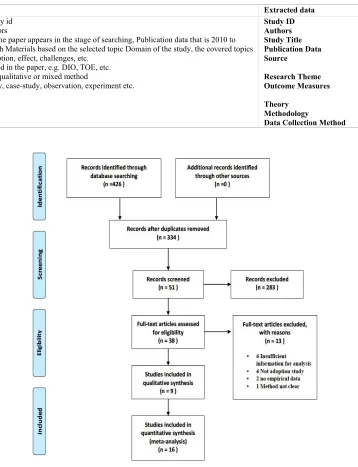
The systematic review builds the general understanding of the readers which assists in finding of the research gap. Sometimes, it comprises of background, study selection process, Search strategy, research questions, quality assessment, reasoning based extraction of data and data extraction [16]. Figure 1 illustrates research questions, background of cloud ERP and search process for this study.
3.2 Inclusive and exclusive criteria
The aims of the SLR to include quality papers which supports cloud background and strategies followed in the cloud with reasonable suggestions. The selections of papers are based on the research questions which have been carried out in SLR as aforementioned. The selected papers have been come from Scopus digital libraries based on the research questions. Based on the final selection of the papers, there were 426 papers selected which shown in the appendix.
3.3 Search strategy
The search strategy plays a vital role in the selection of qualitative papers based on the research questions. [17]. The search strategy assists to find out the relevant papers related to the literature which helps in utilization of knowledge through search techniques, digital libraries, thesaurus, and filed of interest. Hence, the followed approach focuses on the identification of the research gap, contributions of the research communities in the perspective fields, criticality-based selection of the paper, data extraction, followed experimental techniques are assessed through data synthesis.
3.4 Study selection process
Figure 1 depicts chosen studies for each stage in this SLR. In all, the search came out with 526 matches, and the duplicate papers were eliminated from the search. Moreover, the shorter versions of the papers were also eliminated. The papers were filtered based on their titles and abstracts. However, some of the papers were obtained in the next search of analysis if the title and abstract has insufficient information on their relevance. Papers with less as than 4 pages and do not contain the full text were also deemed as irrelevant. Further, the selected papers are based on the adoption of cloud services involving software teams. Finally, the included papers are 68 found to meet criteria.
3.5 Quality assessment (QA)
3.6 Data extraction and synthesis
The data extraction and synthesis have been achieved by reading selected articles which have been stored and managed in Mandalay. The aiming of such reading of articles is to extract information and save them accordingly as described in the questions as shown in Table 1. Further, the study id is used to identify the research article, title of the article, authors with publication data along with keyword and the publisher’s information. These datasets assist to analysis research questions and their objectives. The classification of the schemes, methodologies used, tools and techniques and other domains of knowledge have been mapped accordingly to the objectives.
4. RESULTS
This section assists in the analysis of the results which have been extracted during paper reading of papers. The extraction of the outcomes of the papers were based on the selected sources, number of citations, publication whether it is Scopus or else, and their proposed methodologies. Based on these information, this paper analysis the results as follows in the subsequent section.
4.1 Overview of the publication sources
The selected studies for this paper have been published in the quality journals and conferences where they have higher citation results. Sourcing the papers from highly ranked, high impact sources illustrate the prospective impact of this systematic review, and the general quality of the assessment. The sources of primary studies are presented in Fig. 2. As observed, most primary studies were sourced from journals (n= 59; 60%), conference articles (n=32; 35%) and published in workshops and symposiums (n = 3; 5%)
4.2 Research methodologies
Figure 2 shows the distribution of the studies which have involved in regards to the search methodologies. In addition, it is observed that quantitative and qualitative methods were commonly adopted. In some of the studies, both qualitative and quantitative were combined together to complement each other. As shown in Figure 6, there are 51 qualitative works, 34 papers were on the quantitative works, 26 papers on the conceptual works, and only 4 mixed method
papers.
4.3 Factors of cloud ERP
After the selection and extraction of primary studies, the research questions can be derived from 716 studies analyzed. The study was mapped accordingly based on the most relevant questions and the same studies of research articles were combined together. Table 3 presents the outcomes of the research questions which have been carried out in Section 1 as follows
5. DISCUSSION
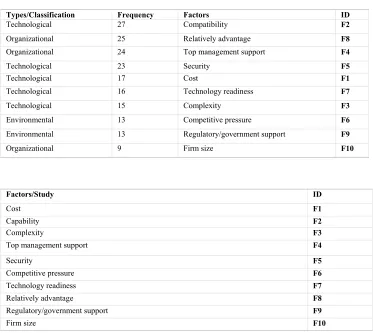
The systematic review has been done including cloud ERP with the support of SMEs. The review discusses either to use SME with cloud computing adoption or not. However, this does not mean that the remaining factors do not possess influential impact on Cloud ERP adoption. Some factors yield the same meaning as other factors. For instance, ‘ease of use’ is perceived as simplicity and ‘regulatory support’ as ‘governmental support’. These factors have been examined based on the frequency of use because some researchers have used similar terms on different occasions. For example, the terms ‘relative advantage’ and ‘perceived usefulness’ have been used in the same study [19]. The factors that have the biggest influence on Cloud ERP adoption based on the literature reviews will be discussed. These Cloud ERP adoption factors that were sourced from related literature reviews have been ranked based on frequency to indicate priority. The process involved sourcing for pertinent factors from each article and these factors are recorded in the right context (Refer to Table 3). Subsequently, the factors are assigned with a tick (√) based on their frequency in each study (Refer to Appendix 1). The ranking of the factors increased accordingly.
insights for practitioners and researchers. Table 4 is a presentation of the most frequent factors according to the reviews. Compatibility topped the list with a frequency of 27 followed by relative advantage with a frequency of 25, top management support with a frequency of 24 and security with 23. These were seen as the most frequent factors found in the previous studies. Other frequent factors include production costs with a frequency of 17 followed by technological readiness, complexity, competitive pressure, government regulation and support as well as firm size. Based on the classification found in previous studies, the considered vital factors are technological, organizational, and environmental. Compatibility and complexity were considered by previous studies as technological factors. In terms of relative advantage, some considered this as an organizational factor while others perceived it to be a technological factor. Factors such as security and trust were deemed as technological factors while technological readiness and top management support were considered as organizational factors. On the other hand, governmental regulations and support as well as firm size are considered as environmental and organizational factors respectively. Table 4 highlights the various factors, frequency and categories.
The findings also showed that factors in relation to Diffusion of Innovation (DOI) were highly frequent. Researchers claimed that DOI is part of the TOE framework [20]. Many researchers have criticized this framework since the model was described in terms of taxonomy of variable which is not fulfilling the requirements of the suggested theories in the articles. Due to this, we have thoroughly examined their proposed solutions whether it is sufficient for cloud ERP or not. Similarly, another study highlighted that the TOE framework does not possess major constructs in each context [21], [22]. This framework is limited in explaining technological adoption [23], [24], [25], [26]. It has also been observed that the suggested solutions are not constructive according to the content of the clouding computing [27] and [28]. This framework was adapted by a number of researchers and they altered the model to include a variety of technological factors. These include DOI factors such as compatibility and complexity [29], [30], and [31]; [32] and [33]; [34], [35], and [36] as well as other factors such as security [37], [38] and [39]; [40] and [41] and trust [42], [43] and [44]. This was probably due to the fact that past studies have used TOE which highlights factors of DOI as technological factors. Another interesting finding
form the literature is the decision making to relate the existing methods with ERP based cloud adoption. These parameters are managerial support, competitive pressure, previous experiences. While there is a prevalent and considerable amount of emphasis on providers’ trustworthiness and reputation, Cloud ERP applicability for ERP systems has not been investigated in-depth. Consequently, not many studies have been discussed and highlighted in related scientific literature. In addition, the lack of opportunity to work with products for a substantial period of time and minimal information on product uses among firms have affected the usage of Cloud ERP to a certain extent. The scientific value and credibility of the findings may have been affected by these reasons. The lack of information regarding negative aspects of Cloud ERP is also prevalent in most of the articles that were reviewed. A large number of authors focused mainly on the benefits instead of potential problems.
6. CONCLUSION
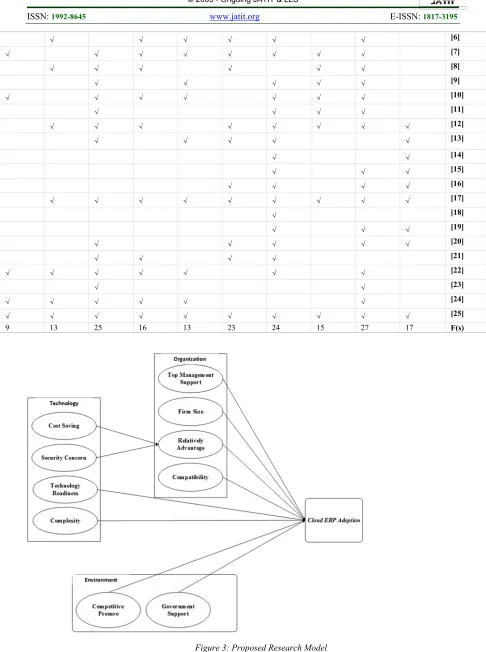
context categorization, the adopted method in the literature for analysis was employed and the results of the analysis were presented. Besides that, empirical results from the articles were synthesized to identify the key Cloud ERP adoption factors. The summarized results regarding adoption factors (Refer to Table 3) to answers the second research question. Finally, a number of important findings from the review were discussed and results for researchers and practitioners as well as research limitations and gaps were pointed out. It is suggested that service providers based on the cloud ERP allocates maximum advantages to their business with reduction of performance of services. The key factor is the adoption of the Cloud ERP for decision making and has been recommended for industry, and all organizations for reducing cost. In essence, more quantitative and qualitative studies should be conducted to test and examine the pertinent factors with rigorously and consequently, come up with key factors that may affect Cloud ERP adoption. This will be a step in the right direction. It is important to mention that this is an ongoing research. Therefore, the proposed model (figure3) should be validated empirically for future research in order to form a valid and comprehensive framework.
REFERENCES
[1] Lian, J. W. 2015. Critical factors for cloud based e-invoice service adoption in Taiwan: An empirical study. International Journal of Information Management. Vol. 35, pp. 98-109. [2] Yang, Z., Sun, J., Zhang, Y., and Wang, Y. 2015. Understanding SaaS adoption from the perspective of organizational users: A tripod readiness model. Computers in Human Behavior. Vol. 45, pp. 254-264.
[3] Picoto, W. Crespo. N. Kahn. F. 2013. Cloud Computing Usage and Organizational Mobility An Empirical Assessment.
[4] Borgman, H. P., Bahli, B., Heier, H., and Schewski, F. 2013. Cloud rise: exploring cloud computing adoption and governance with the TOE framework. In System Sciences (HICSS), 46th Hawaii International Conference on pp. 4425-4435.
[5] Kuiper, E., Van Dam, F., Reiter, A., and Janssen, M. 2014. Factors influencing the adoption of and business case for Cloud computing in the public sector. In eChallenges e-2014Conference. pp. 1-10.
[6] Sulaiman, H., and Magaireah, A. I. 2014. Factors affecting the adoption of integrated cloud-based e-health record in healthcare
organizations: a case study of Jordan. In Information Technology and Multimedia (ICIMU), 2014 International Conference, IEEE. pp.102-107.
[7] N. Alkhater, R. Walters, and G. Wills. 2014. An investigation of factors influencing an organization’s intention to adopt cloud computing, International Conference on Information Society (i-Society 2014). pp. 337– 338.
[8] N. Alkhater, R. Walters, and G. Wills. 2014. An investigation of factors influencing an organization’s intention to adopt cloud computing, International Conference on Information Society (i-Society 2014). pp. 337– 338.
[9] Gangwar, H., Date, H., and Ramaswamy, R. 2015. Understanding determinants of cloud computing adoption using an integrated TAM-TOE
[10] Low, C., Chen, Y., and Wu, M. 2011. Understanding the determinants of cloud computing adoption. Industrial management & data systems. Vol. 111, pp. 1006-1023
[11] Lin, A., and Chen, N. C. 2012. Cloud computing as an innovation: Perception, attitude, and adoption. International Journal of Information Management. Vol. 32, pp. 533-540.
[12] Lian, J. W., Yen, D. C., and Wang, Y. T. 2014. An exploratory study to understand the critical factors affecting the decision to adopt cloud computing in Taiwan hospital. International Journal of Information Management. Vol. 34, pp 28-36.
[13] Asatiani, Aleksandre, "Why Cloud? - A Review of Cloud Adoption Determinants in Organizations" (2015). ECIS 2015 Completed Research Papers. Paper 13. ISBN 978-3-00-050284-2 h p://aisel.aisnet.org/ecis2015_cr/13 [14] Nicholas A. Ogunde and jorn Mehnen. 2013. Factors affecting cloud technology adoption: Potential user’s perspective. Pp 77-88. 10.1007/978-1-4471-4935-4_4
[15] Jlelaty and Monzer, 2012. Cloud computing adoption. University of Lund, department of informatics.
https://lup.lub.lu.se/luur/download?func=down loadFile&recordOId=2796971&fileOId=2796 982
[16] Yeboah-Boateng, EO & Essandoh, KA 2014, 'Factors Influencing the Adoption of Cloud Computing by Small and Medium Enterprises (SMEs) in Developing Economies'
13-20.
[17] Khamis Haji Salum, and Mohd Zaidi Abd Rozan. 2016. Exploring the challenge impacted SMEs to Adopt cloud ERP. Indian Journal of Science and Technology, Vol 9(45), DOI: 10.17485/ijst/2016/v9i45/100452. [18] Zhong and Rohde, 2014. Cloud computing and
ERP. Australasian conference on information systems.
http://aut.researchgateway.ac.nz/bitstream/han dle/10292/8108/acis20140_submission_63.pdf ?sequence=1
[19] Bjorn Johansson and Pedro Ruivo. Exploring factors for adoption ERP as SaaS. Association for Promotion and Dissemination of Scientific Knowledge. doi: 10.1016/j.protcy.2013.12.010 [20] Adnan Mustafa AlBar, Md Rakibul Hoque. 2015. Determinants of Cloud ERP Adoption in Saudi Arabia: An Empirical Study. International Conference on Cloud computing. 10.1109/CLOUDCOMP.2015.7149637 [21] Shima Ramezani Tehrani and Farid Shirazi.
2014. Conference: the 16th International Conference on Human-Computer (HCII-2014), Volume: Crete: Greece. 10.1007/978-3-319-07863-2_60
[22] S.M. Salleh, Z. Bohari, and L.Y. Khedi. 2013. Factors influencing the adoption of cloud computing; A review of literature.
[23] Mathews Z. Nkhoma, and Duy P.T. Dang. 2013. Contributing factors of cloud computing Adoption: A Technology-Organizational-Environmental Framework Approach. International journal of information systems and engineering(IJSE) Vol 1, No 1. ISSN: 2289-3709
[24] Fasil Alemeye and Fekada Getahun. 2014. Cloud Readiness assessment framework and
recommendation system.
http://www.hilcoe.net/docs/papers/Volume2N 2/V2N2Paper4.pdf
[25] Khamis Haji Salum, and Mohd Zaidi Abd Rozan. 2015. Barriers and drivers in cloud ERP adoption among SMEs. Journal of Information Systems Research and Innovation. 9(1), 9-20,
[26] Alshamaila, Y., Papagiannidis, S., & Li, F. (2013). Cloud computing adoption by SMEs in the north east of England: A multi-perspective framework. Journal of Enterprise Information Management, 26(3), 250-275. doi:10.1108/17410391311325225
[27] Oliveira, T., Thomas, M., & Espadanal, M. (2014). Assessing the determinants of cloud computing adoption: An analysis of the manufacturing and services sectors.
Information & Management, 51, 497-510. doi:10.1016/j.im.2014.03.006
[28] Chin-Sheng Chena, Wen-Yau Liangb, & Hui-Yu Hsu. (2014). A cloud computing platform
for ERP applications.
http://dx.doi.org/10.1016/j.asoc.2014.11.009 [29] Saedi, Amin and Iahad, Noorminshah A., "An
Integrated Theoretical Framework for Cloud Computing Adoption by Small and Medium-Sized Enterprises" (2013). PACIS 2013
Proceedings. Paper 48.
http://aisel.aisnet.org/pacis2013/48
[30] Ali, Omar; Soar, Jeffrey; McClymont, Hoda; Yong, Jianming; and Biswas, Jit, "Anticipated Benefits of Cloud Computing Adoption in Australian Regional Municipal Governments: An Exploratory Study" (2015). PACIS 2015
Proceedings. Paper 209.
http://aisel.aisnet.org/pacis2015/209
[31] Mayank Yuvaraj , (2016),"Determining factors for the adoption of cloud computing in developing countries A case study of Indian academic libraries ", The Bottom Line, Vol. 29 Iss 4 pp. 259 – 272 Permanent link to this document: http://dx.doi.org/10.1108/BL-02-2016-0009
[32] Garverick, Michael L., "Motives and Barriers to Cloud ERP Selection for SMEs: A Survey of Value Added Resellers (VAR) Perspectives." Dissertation, Georgia State
University, 2014.
http://scholarworks.gsu.edu/bus_admin_diss/3 6
[33] Fathey M. O. I. Norafida Ithnin , (2016),"Factors influencing cloud computing adoption for e-government implementation in developing countries: instrument development", Journal of Systems and Information Technology, Vol. 18 Iss 3 pp. -Permanent link to this document: http://dx.doi.org/10.1108/JSIT-01-2016-0001 [34] Usman, U.M.Z., Ahmad, M.N. & Zakariya,
N.H., 2016. Factors influencing cloud enterprise resource planning adoption in SMEs. In K. J. Kim & N. Joukov, eds. Lecture Notes in Electrical Engineering. Singapore: Springer Singapore, pp. 235–245. Available at: http://dx.doi.org/10.1007/978-981-10-0557-2_24
[36] Jiunn W. Liana,1, David C. Yenb, &Yen-Ting Wangaa (2013). An exploratory study to understand the critical factors affecting the decision to adopt cloud computing in Taiwan hospital
[37] Salleh, S. and Teoh, S. (2012). “Cloud Enterprise Systems: A Review of Literature and its Adoption.” In: Proceedings of the 16th Pacific Asia Conference on Information Systems (PACIS) 2012. Ho Chi Minh city: Vietnam.
[38] Haddara, M., Fagerstrøm, A., & Mæland, B. (2015). Cloud ERP Systems: Anatomy of Adoption Factors & Attitudes. Journal of Enterprise Resource Planning Studies (JERPS), 2015, 22.
[39] Lenart, A. (2011). ERP in the Cloud-Benefits and Challenges Research in systems analysis and design: Models and methods (pp. 39-50): Springer.
https://www.researchgate.net/publication/2826 43279
[40] Gill, R. (2011). Why cloud computing matters to finance. Strategic Finance, 92 (7), 43-47. [41] Liberati A, Altman DG, Tetzlaff J, Mulrow C,
Gotzsche PC, Ioannidis JP, et al. (2009) The PRISMA statement for reporting systematic reviews and meta-analyses of studies that evaluate health care interventions: explanation and elaboration. PLoS medicine; 6(7): e1000100. Epub 2009/07/22. doi: 10.1371/ journal. pmed.1000100 PMID: 19621070 [42] (kitchenham, B., & charters, S. (2007, Pp.
1051. Guidelines for performing systematic literature reviews in software engineering (Vol. 2) Keele University and University of Durham.)
[43] Kitchenham, B., & Charters, S. (2007). pp. 1051. Guidelines for performing systematic literature reviews in software engineering (Vol. 2) Keele University and University of Durham.
[44] Nidhra, S., Yanamadala, M., Afzal, W., & Torkar, R. (2012). Knowledge transfer challenges and mitigation strategies in global software development-a systematic literature review and industrial validation. International Journal of Information Management, 33(2), 333-355
[45] Saad Yasser ChadliEmail author, Ali IdriEmail author, Joaquín Nicolás Ros, José Luis Fernández-Alemán,
Juan M. Carrillo de Gea and Ambrosio Toval. (2016). Software project management tools in global software development: A systematic mapping study. 10.1186/s40064-016-3670-7
[46] Gangwar, H., Date, H., and Ramaswamy, R. 2015. Understanding determinants of cloud computing adoption using an integrated TAM-TOE model. Journal of Enterprise Information Management. Vol. 28. pp. 107-130.
[47] Low, C., Chen, Y. and Wu, M. (2011). “Understanding the determinants of cloud computing adoption.” Industrial Management & Data Systems, 111 (7), 1006–1023.
[48] Yang, Z., Sun, J., Zhang, Y., and Wang, Y. 2015. Understanding SaaS adoption from the perspective of organizational users: A tripod readiness model. Computers in Human Behavior. Vol. 45, pp.254-264.
[49] A. Polyviou and N. Pouloudi. 2015. Understanding Cloud Adoption Decisions in the Public Sector. 48th Hawaii International
Conference on System Sciences. pp. 2085– 2094.
[50] Zhang, W., and Chen, Q. 2010. From E-government to C-E-government via cloud computing. International Conference on E-Business and E-Government. pp. 679-682. [51] Parikh, S. M. 2013. A survey on cloud
computing resource allocation techniques. In Engineering (NUiCONE), Nirma University International Conference, IEEE. pp. 1-5. [52] Kuo, A. M. H. (2011). Opportunities and
challenges of cloud computing to improve health care services. Journal of Medical Internet Research, 13(3), e67.http://dx.doi.org/10.2196/jmir.1867 [53] Lin, C. H., Lin, I. C., Roan, J. S., & Yeh, J. S.
(2012). Critical factors influencing hospital’s’ adoption of HL7 version 2 standards: An empirical investigation. Journal of Medical Systems, 36(3), 1183–1192.
[54] Lisa, B. A. (2011). Hospital uses cloud computing to improve patient care and reduce
costs. Available from
http://www.microsoft.eu/cloud- computing/case-studies/hospital-uses-cloud- computing-to-improve-patient-care-and-reduce-costs.aspxAccessed 20.02.13Liu [55] Low, C., & Chen, Y. H. (2012). Criteria for
the evaluation of a cloud-based hospitals information system outsourcing provider. Journal of Medical Systems. 36(6), 3543-3535 [56] Alshamaila, Y., Papagiannidis, S. and Li, F.
(2013). “Cloud computing adoption by SMEs in the north east of England: A multi-perspective framework.” Journal of Enterprise Information Management, 26 (3), 250–275. [57] Saedi, A. and Iahad, N. (2013). “An Integrated
Enterprises.” In: Proceedings of the in: Proceedings of the 17th Pacific Asia Conference on Information Systems (PACIS) 2013. Jeju Island: Korea
[58] Seethamraju, R. (2013). “Determinants of SaaS ERP Systems Adoption.” In: Proceedings of the 17th Pacific Asia Conference on
Information Systems (PACIS) 2013. Jeju Island: Korea.
[59] Dillon, T., Chen, W., & Chang, E. (2010). Cloud computing: issues and challenges. In Advanced Information Networking and Applications (AINA), 2010 24th IEEE International Conference on (pp. 27–33) [60] Lie, Q., Yan, W., & Orgun, M. A. (2013).
Cloud service selection based on the aggregation of user feedback and quantitative performance assessment. In Services Computing (SCC), 2013 IEEE International Conference on (pp. 152–159)
[61] Trigueros-Preciado, S., Pérez-González, D. and Solana-González, P. (2013). “Cloud computing in industrial SMEs: identification of the barriers to its adoption and effects of its application.” Electronic Markets, 23 (2), 105– 114.
[62] Yang, H. and Tate, M. (2012). “A descriptive literature review and classification of cloud computing research.” Communications of the Association for Information Systems, 31 (2), 35–60.
[63] Schneider, S. and Sunyaev, A. (2014). “Determinant factors of cloud-sourcing decisions: reflecting on the IT outsourcing literature in the era of cloud computing.” Journal of Information Technology.
[64] Suh, J. and Chang, S. (2013). “An Empirical Study on the Enterprise Cloud Service Adoption.” In: Proceedings of the 17th Pacific Asia Conference on Information Systems (PACIS) 2013. Jeju Island: Korea.
[65] Lee, S.-G., Chae, S.H. and Cho, K.M. (2013). “Drivers and inhibitors of SaaS adoption in Korea.” International Journal of Information Management, 33 (3), 429–440.
[66] Lewandowski, J., Salako, A.O. and Garcia-Perez, A. (2013). “SaaS Enterprise Resource Planning Systems: Challenges of Their Adoption in SMEs.” In: Proceedings of the IEEE 10th International Conference on e-Business Engineering, IEEE. Coventry: United Kingdom, pp. 56–61.
[67] Lin, A. and Chen, N. (2012). “Cloud computing as an innovation: Perception, attitude, and adoption.” International Journal of Information Management, 32 (6), 533–540.
[68] Loske, A., Widjaja, T. and Buxmann, P. (2013). “Cloud Computing Providers’ Unrealistic Optimism Regarding IT Security Risks: A Threat to Users?” In: Proceedings of the International Conference on Information Systems (ICIS) 2013. Milan: Italy.
[69] McGeough, B.T. and Donnellan, B. (2013). “Factors that Affect the Adoption of Cloud Computing for an Enterprise: A Case Study of Cloud Adoption Within Intel Corporation.” In: Proceedings of the 21st European Conference on Information Systems (ECIS) 2013. Utrecht: Netherlands.
[70] Mell, P. and Grance, T. (2011). “The NIST Definition of Cloud Computing, Recommendations of the National Institute of Standards and Technology.” National Institute of Standards and Technology.
[71] Morgan, L. and Conboy, K. (2013). “Factors Affecting the Adoption of Cloud Computing: An Exploratory Study.” In: Proceedings of the 21st European Conference on Information Systems (ECIS) 2013. Utrecht: Netherlands. [72] Nkhoma, M. and Dang, D. (2013).
“Contributing Factors of Cloud Computing Adoption: A Technology-Organisation-Environment Framework Approach Mathews.” International Journal of Information Systems and Engineering, 1 (1), 38–49.
[73] Arnesen, S. (2013). Is cloud ERP solution right for you. Strategic Finance, 95(2), 45-50. Babbie, E. R. (2013). The basics of social research: Cengage Learning.
[74] Columbus, L. (2014). Why Cloud ERP Adoption Is Faster Than Gartner Predicts.
Retrieved from
http://www.forbes.com/sites/louiscolumbus/20 14/02/07/why-cloud-erp-adoption-is-faster-than-gartner-predicts/Rambøll Consulting. (2015). IT I Praksis.
[75] Haddara, M., & Elragal, A. (2013). ERP adoption cost factors identification and classification: a study in SMEs. International Journal of Information Systems and Project Management, 1(2), 5-22.
[76] Haddara, M., Fagerstrøm, A., & Mæland, B. (2015). Cloud ERP Systems: Anatomy of Adoption Factors & Attitudes. Journal of Enterprise Resource Planning Studies (JERPS), 2015, 22.
[77] Lenart, A. (2011). ERP in the Cloud-Benefits and Challenges Research in systems analysis and design: Models and methods (pp. 39-50): Springer.
[78] Jain, L. & Bhardwaj, S. (2010). Enterprise cloud computing: key considerations for adoption. International Journal of Engineering and Information Technology, 2 (2), 113-117. 29
[79] Winfred Yaokuma, Rebecca Adowoa Amponsah. (2017). “Examing the contribution factors for cloud computing adoption in a developing country” journal of enterprise information systems, 13(1), 10.4018/IJEIS.2017010102
[80] Yuvaraj, M. (2016), “Perception of cloud computing in developing countries: a case study of Indian academic libraries”, Library Review, Vol. 65 Nos 1/2, pp. 33-51.
[81] Trivedi, H. (2013). Cloud computing adoption model for governments and large enterprises, Massachusetts Institute of Technology. [82] Zwattendorfer, B. and A. Tauber (2013). "The
public cloud for e-government." International Journal of Distributed Systems and Technologies (IJDST) 4(4): 1-14.
[83] Dutta, G.C.A. Peng, A. Choudhary, (2013) Risks in enterprise cloud computing: the perspective of IT experts, J. Comput. Inf. Syst. 53, pp. 39-48.
[84] Kinuthia J. "Technological, Organizational, and Environmental Factors Affecting the Adoption of Cloud Enterprise Resource Planning (ERP) Systems"; 2015.
[85] Gangwar, H., Date, H. and Ramaswamy, R. (2015) Understanding Determinants of Cloud Computing Adoption Using an Integrated TAM-TOE Model. Journal of Enterprise Information Management, 28, 107-130. http://dx.doi.org/10.1108/JEIM-08-2013-0065 [86] Lee, T. (2015). Regression Analysis of Cloud
Computing Adoption for US Hospitals. LAMBERT Academic Publishing. (Doctoral dissertation), ProQuest Dissertations and Theses database
[87] Ross, V. (2010). Factors influencing the adoption of cloud computing by decision making managers. (Doctoral dissertation), ProQuest Dissertations and Theses database (UMI No. 3391308). [Accessed 1 April 2016] [88] Trinh, M. (2014). Investigating acceptance of
cloud computing in the United States health care industry. (Doctor of Philosophy's thesis), Capella University, ProQuest Dissertations and Theses database
[89] Masrom, M. and Rahimli, A. (2014). A Review of Cloud Computing Technology Solution for Healthcare System', Research Journal of Applied Sciences, Engineering and Technology, vol. 8, no. 20, pp. 2150 -2153
[90] Mell, P. and Grance, T. (2011). The NIST definition of cloud computing. 1st ed [PDF]. National Institute of Standards and Technology. Available at: http://csrcnistgov/publications/nistpubs/800-145/SP800-145pdf. [Accessed 30 Jan. 2016] [91] Ratnam, K., Dominic, P. and Ramayah, T.
(2014). A Structural Equation Modeling Approach for the Adoption of Cloud Computing to Enhance the Malaysian Healthcar e Sector. Journal of Medical Systems
[92] Senyo, P. K., Effah, J., & Addae, E., (2016) “Preliminary insight into cloud computing adoption in a developing country”, Journal of Enterprise Information Management, Vol. 29, Number 4.
[93] Schneider, S. and Sunyaev, A. (2014). “Determinant factors of cloud-sourcing decisions: reflecting on the IT outsourcing literature in the era of cloud computing.” Journal of Information Technology
[94] Yuvaraj, M. (2014), “Determinants of cloud computing applications adoption in university libraries”, SRELS Journal of Information Management, Vol. 51 No. 5, pp. 279-286. [95] C. Leyh, “Which Factors Influence ERP
Implementation Projects in Small and Medium-Sized Enterprises?” in Proceedings of the 20th Americas Conference on Information
Systems (AMCIS 2014), Savanah, Georgia, USA, 2014.
[96] Kuiper, E., et al. (2014). Factors influencing the adoption of and business case for Cloud computing in the public sector. eChallenges e-2014, 2014 Conference, IEEE.
[97] Lian, J.-W., et al. (2014). "An exploratory study to understand the critical factors affecting the decision to adopt cloud computing in Taiwan hospital." International Journal of Information Management 34(1): 28-36.
[98] Mohammed, F. and O. Ibrahim (2015). "Models of Adopting Cloud Computing in the E-Government Context: A Review." Jurnal Teknologi 72(In Press).
[99] Yuvaraj, M. (2015), “Problems and prospects of implementing cloud computing in university libraries: a case study of Banaras Hindu University library system”, Library Review, Vol. 64 Nos 8/9, pp. 567-582. [100] Alhammadi, A., Clare, S., and Alan, E.
[101] Alkhater, N., Wills, G. and Walters, R. (2014) Factors Influencing an Organisation’s Intention to Adopt Cloud Computing in Saudi Arabia. Proceedings of the IEEE 6th International Conference on Cloud Computing Technology and Science, Singapore, 15-18 December 2014, 1040-1044
[102] Gutierrez, A., Boukrami, E. and Lumsden, R. (2015) Technological, Organisational and Environmental Factors Influencing Managers’ Decision to Adopt Cloud Computing in the UK. Journal of Enterprise Information
Management, 28, 788-807.
http://dx.doi.org/10.1108/JEIM-01-2015-0001 [103] Li, M., Zhao, D. and Yu, Y. (2015) TOE
Drivers for Cloud Transformation: Direct or Trust-Mediated? Asia Pacific Journal of Marketing and Logistics, 27, 226-248. http://dx.doi.org/10.1108/APJML-03-2014-0040
[104] Awa, H. O., Ukoha, O., Bartholomew, O. and Emecheta, C. (2015) Integrating TAM, TPB and TOE Frameworks and Expanding Their Characteristic Constructs for E-Commerce Adoption by SMEs. Journal of Science & Technology Policy Management, 6, 76-94. http://dx.doi.org/10.1108/JSTPM-04-2014-0012
[105] Amini, M. (2014) The Factors That Influence on Adoption of Cloud Computing for Small and Medium Enterprises. Masters Dissertation, Universiti Teknologi Malaysia, Johor
[106] Rohani, M.B. and Hussin, R.C. (2015) An Integrated Theoretical Framework for Cloud Computing Adoption by Universities Technology Transfer Offices (TTOs). Journal of Theoretical and Applied Information Technology, 79, 415-430.
[107] Sallehudin, H., Razak, R.C. and Ismail, M. (2015) Factors Influencing Cloud Computing Adoption in the Public Sector: An Empirical Analysis. Journal of Entrepreneurship and Business, 3, 30-45 [108] Maklouf, M., Allal-Cherif, O. & Dumas,
M. (2016). Determinants of the Decision to Transform Towards Cloud: An Exploratory Analysis of 225 CISCO Case Studies. 49th HICSS, IEEE xplore, 3948-3958
[109] Muhammed, K., Zaharaddeen, I., Rumana, K. & Turaki, A.M. (2016). Cloud Computing Adoption in Nigeria: Challenges and Benefits. Proceedings of The Fourth Academic Conference of Mediterranean
Research.
[110] Rezaei, H., Karimi, B., & Hosseini, S. J. (2016). Effect of cloud computing systems in terms of service quality of knowledge management systems. Lecture Notes on Software Engineering, 4(1), 73.
Appendix
Table 1: Quality assessment (QA)
ID Questions
QA1 Have the selected objectives been clearly defined for this paper?
QA2 Are the selected papers highlights the issues of the cloud ERP?
QA3 Have the data collection method been explained in the paper?
QA4 Does the paper provide sufficient contributions for academic and industry communities?
[image:12.612.136.494.244.711.2]QA5 Have the findings of the paper clearly explained and assisted in the results explanation?
Table 2 Extracting data from primary studies
Extracted data Description
Study ID Authors Study Title Publication Data Source
Research Theme Outcome Measures
Theory Methodology
Data Collection Method paper search by id
Name of authors
The name of the paper appears in the stage of searching, Publication data that is 2010 to 2016, Research Materials based on the selected topic Domain of the study, the covered topics that were adoption, effect, challenges, etc.
Theory adopted in the paper, e.g. DIO, TOE, etc. Quantitative, qualitative or mixed method
Such as survey, case-study, observation, experiment etc.
Fig2: Distribution Of Studies Based On Source Of Publication
Table: 3 Selected Primary Papers And Identified Factors
Objective/Result Methods
Factors Authors(s)
The studies explored and developed the SME cloud computing based on the adoption model. The model is hypothetically based on the TOE framework. The TOE framework has technological, organizational, and
environmental which are linked to each other. Qualitative
Market scope Trialability, Uncertainty, Complexity, Innovativeness, related advantage, Top management support, Compatibility, Size, Prior IT experience, Competitive pressure, external computing support and Industry Supplier efforts [26]
The focus on different potential factors that influenced on the cloud-based ERP system among SMEs. The research model derived from TAM-DTM model
Review Technical diffusion, Industrial associate
Subsidies, Top management, Privacy, Cost, Benefit, Security, Flexibility
Compatibility, Competitors, Customers/supplies, Government support
Performance gab, Operational requirements [34]
The aim of this paper is to find their proposed adoption techniques for cloud computing, innovative characterization and used based on the environment context in organization. Their proposed model is based on DOI and TOE. Quantitative
Regulatory support, Security concerns
Relatively advantage, Compatibility Complexity, Technology readiness, Cost savings, Top management support, pressure, Firm size [27]
Cloud ERP platform is defined and is based on how enterprise customers can select web services and customize a unique ERP system to fulfil their specific needs. Provides flexible services of entire ERP service through multiple vendors.
Review Cost, Vendor, Flexibility
[28]
The study explored theories thoroughly, and accordingly. It has been proposed a new framework and integrated into cloud computing for small and medium enterprises. This work assists to improve existing framework for future Mix
(Qualitative and Quantitative) Compatibility Cost-savings, Privacy, Service-level
agreement Accessibility, Lack of Data, Security, Lack of Data, Size, Size of IT, Advises, Resources, Intention, , Competencies, , Relative advantages, Pressures, Support,
directions.
The government department now adopts services of the cloud computing for reducing with flexible IT communication because of reducing of human interactions.
Futher, the time-effective and convenient services could be delivered to the public. Qualitative
Provide better service, Cost, Remote, Disaster recovery, Back-up, Flexibility, Availability, Storage capacity
[30]
The study showed that library professionals have strong desire to use cloud for their internet sites, integrated library cataloguing system for cataloguing, acquisition and repository systems as well as library loan system. This indicates that observed usefulness, perceived ease of use and ubiquitous availability is strong drivers of cloud computing technologies in libraries. Moreover, attitude is significantly correlated with the behavioural intention to adopt cloud computing services, but among, security risk is the biggest issue that obstructs the intentions to adopt cloud computing in the academic libraries Quantitative
Behavioral intention, Ease of use, perceived usefulness, Availability, Scalability, Return on time, Security risk, Privacy risk, Attitude [31]
- Quantitative Flexibility, Faster time, Concentration, IT cost,
Scalable, Cost, Advantage, Reliability [32]
The study proposed a theoretical model to explore the influencing factors. It presents instrument to measure the effect of these factors on making the decision for adoption of cloud computing.
Review Relative Advantage, Compatibility, Complexity,
Trailability, Security, Top Management Support, Cloud Knowledge, IT Infrastructure
[33]
This study considers empirical studies based on the cloud computing for developing of innovative theories like Diffusion of Innovation and the Technology Acceptance Model. Review
Compatibility, Relatively advantage, Complexity, Image, Security, Trust
[34]
The study illustrates five factors that influence the use of clouds usage for business
communities, with difference needs and business requirements compared to large enterprises
Quantitative Cost, Ease of used, Reliability, Sharing and
collaboration, Security and privacy [35]
Data security, observed industry pressure across adoption of CIO innovativeness, top
management, compatibility, and sufficient resources for hospitals.
Quantitative Relative advantage, Top man ager’s support
Adequate resource, Benefits Environment, Government policy, Perceived industry pressure, Security, Complexity, Compatibility, Cost [36]
The e-Government based noticed risk has been identified and made relationship for adopting of e-invoicing.
Quantitative Performance expectation
-Effort expectation, Social influence, Trust in e-Government
-Perceived risk, Facilitating conditions Security concerns
[1]
All the variables strongly influence the adoption of SaaS and the intentions and attitudes toward SaaS.
Quantitative Organizational readiness, IT infrastructure, Top
management, Technological advancements, Relative advantage, Simplicity, Compatibility, Experience ability, Environmental readiness, Competitor pressure, Partner pressure [2]
The research showed that aspects like entrepreneurial orientation compatibility, convenience, organizational innovativeness, and believing on the suppliers are important influence using cloud.
Quantitative Technology; Lack of interoperability, Convenience,
Compatibility, Organizational, Innovativeness, Entrepreneurial orientation
Environment; Trust in supplier, Competitive pressure, Organizational Mobility
[3]
A Survey was carried out on 699 IT experts from countries like USA, Germany, Austria and Itay
Quantitative Relative advantage, Technology complexity,
of business, users, Competition intensity, Government Regulatory environment
The findings showed that relative advantage, compatibility, complexity, trainability, observability, collaboration, traceability, trust and auditability, convincing IT manager, security and legal issues, view on the term cloud and risk were the most important factors for cloud adoption.
Qualitative This was an exploratory study
using case study [5]
The cloud computing improves the healthcare sectors based on the cloud computing that includes security, and reliability of information. Qualitative
Technological; Privacy, Security, Reliability, compatibility, Organizational; Top management support, Technology readiness, Environmental, Government policy, Legal environment, Competition
[6]
The Availability, Reliability, Security, Privacy, Trust provides for innovation in technological advancements for organization.
Review This was a literature review study done to identify
the factors that may influence an organization’s intention to move towards adopting the cloud. [7]
Findings show that from technological perspective, relative advantage compatibility and complexity are important factors. From the organizational perspective, desire for interoperability, reduction of IT management overheads, need for meeting security, transparency of processes desire, and environmental policies, were identified as to be positively influencing the adoption. From the Environmental angle, political matters, bureaucracy, and legal issues seemed to be influencing cloud adoption in public sector. Most of the factors hindering the cloud computing adoption were seen to be related to the environmental context.
Review Technological, Relative advantage, Compatibility,
Complexity, Organization, Interoperability, Focus on key, Business processes, more organization, Meet security, Standards, Meet environmental Standards, Transparency of Processes standards Environment, Bureaucracy, Political matters, Legal issues
[8]
The findings depict organizational competency, compatibility, relative advantage, complexity, top management commitment, training, and education, were important variables for affecting cloud computing adoption.
Quantitative Relative advantage, Compatibility
Complexity, Organizational readiness, Training and education, Top management support, Perceived usefulness, Perceived ease of use, Trading partner support, Competitive pressure
[9]
The findings show that aspects like firm size , relative advantage, top management support, , competitive pressure, and trading partner pressure characteristics can significantly impact the adoption of cloud computing
Quantitative Technology; Relative advantage, Complexity,
Compatibility, Organization, Top management support, Firm size, Technology readiness Environment, Competitive pressure, Trading partner pressure
[10]
IT managers and software engineers should adopts services of the cloud computing for with minimum cost.
Qualitative Relative advantage; Compatibility, Complexity,
Trialability, Observability [11]
Reducing of cost and adoption of cloud computing is the important technology for reduction of cost.
Quantitative Technology; Data Security, Complexity,
Compatibility, Costs Human; CIO innovativeness, perceived technical, competence, Environment, Government policy, Perceived industry, pressure Organization; Relative advantage, Top manager support, Adequate resources, Benefits [12]
Use of cloud computing is based on the 43 factors for internal and external organization. .
Qualitative Cost advantage, Fast implementation,
Opportunities for innovation, Strategic flexibility, Focus on core competences, Accessibility, Trialability, Relative advantage
The research community should need to aware of the challenges influenced on the organization and its benefits.
Quantitative Security, Awareness, Cost, Service Availability,
Compliance and Perceived Usefulness [14]
This study highlights that the research community should aware the organization regarding deployment of cloud and organizations should not ignore its facilities. Qualitative
Reliability, Security, Performance Scalability, Compliance/compatibility, Cost Feature, Time to market, Innovation integration [15]
The reduction of cost for maintaining IT infrastructure up using cloud computing, has been discussed in this article. However, the drawback of this paper is knowledge in terms of minimum internet connection.
Qualitative Cost reduction, Scalability, Lack of knowledge,
Poor internet connectivity, Security, Lack of trust, Top management support, Trialability,
Competence, Compatibility [16]
This study has been focused on the barriers and drivers based on the ERP cloud adopting using SMEs.
Review Technology; Data Security, Complexity,
Compatibility, Costs, Human; CIO innovativeness, perceived technical, competence, Environment, Government policy, Perceived industry, pressure, Organization; Relative advantage, Top manager support, Adequate resources, Benefits [17]
Efficiency, Flexibility, Ubiquity, and Security have been highlights in the cloud for resolving challenges.
Review Security, Flexibility, Efficiency, Ubiquity
[18]
There are ten factors used for managing SaaS model in the ERP cloud.
Qualitative Cost, Security, Availability, Usability,
Implementation, Ubiquity, Flexibility, Compatibility, Analytics, Best- practices [19]
The TOE and DOI used as framework in the public and private sectors of the Saudi Arabia country.
Quantitative Accessibility, Trialability, Relative advantage,
Security, Privacy, Cost, Service Availability, Compliance/compatibility, Perceived Usefulness, Top management support
[20]
The innovation based two theories has been used in this study.
Quantitative Decision makers cloud knowledge, Cost advantage,
Opportunities for innovation
Strategic flexibility, Focus on core competences Accessibility, Relative advantage, Online collaboration, Top management support, Attitudes towards technology, Security & privacy, Performance risks
[21]
The pragmatic based adoption of the cloud computing suggested.
Review Technological, Organizational, Environmental,
Perceive value, Perceive challenge [22]
The barriers and drivers in the cloud computing usage have been investigated with the support of conceptual model which is used in the statistical model.
Qualitative Environmental, Economic, Innovation, Human
Vendor [23]
The study proposed a framework for cloud readiness assessment and an expert system. And heighted various factors toward the adoption of cloud computing.
Quantitative Organizational context, Technological context,
Environmental context, Compatibility, Relative advantage, Triaability, Usefulness, ease of use [24]
The proposed study is based on literature for resolving issues of barriers and drivers in cloud. Review
Table 4. The Most Frequented Factors In Selected Studies And Their Classification ID Factors Frequency Types/Classification F2 Compatibility 27 Technological F8 Relatively advantage 25 Organizational F4 Top management support
24 Organizational F5 Security 23 Technological F1 Cost 17 Technological F7 Technology readiness 16 Technological F3 Complexity 15 Technological F6 Competitive pressure 13 Environmental F9 Regulatory/government support 13 Environmental F10 Firm size 9 Organizational ID Factors/Study F1 Cost F2 Capability F3 Complexity F4 Top management support
F5 Security F6 Competitive pressure F7 Technology readiness F8 Relatively advantage F9 Regulatory/government support F10 Firm size
Appendix 2: Factors And Their Frequency Appearance From Selected Studies.
[6] √
√ √
√ √
√
[7] √
√ √
√ √
√ √
√
[8] √
√ √
√ √
√
[9] √
√ √
√ √
[10] √
√ √
√ √
√ √
[11] √
√ √
√
[12] √
√ √
√ √
√ √
√
[13] √
√ √
√ √
[14] √
√
[15] √
√ √
[16] √
√ √
√
[17] √
√ √
√ √
√ √
√ √
[18] √
[19] √
√ √
[20] √
√ √
√ √
[21] √
√ √
√
[22] √
√ √
√ √
√ √
[23] √
√
[24] √
√ √
√ √
√
[25] √
√ √
√ √
√ √
√ √
√
F(s) 17
27 15
24 23
13 16
25 13
[image:18.612.63.549.62.714.2]9